

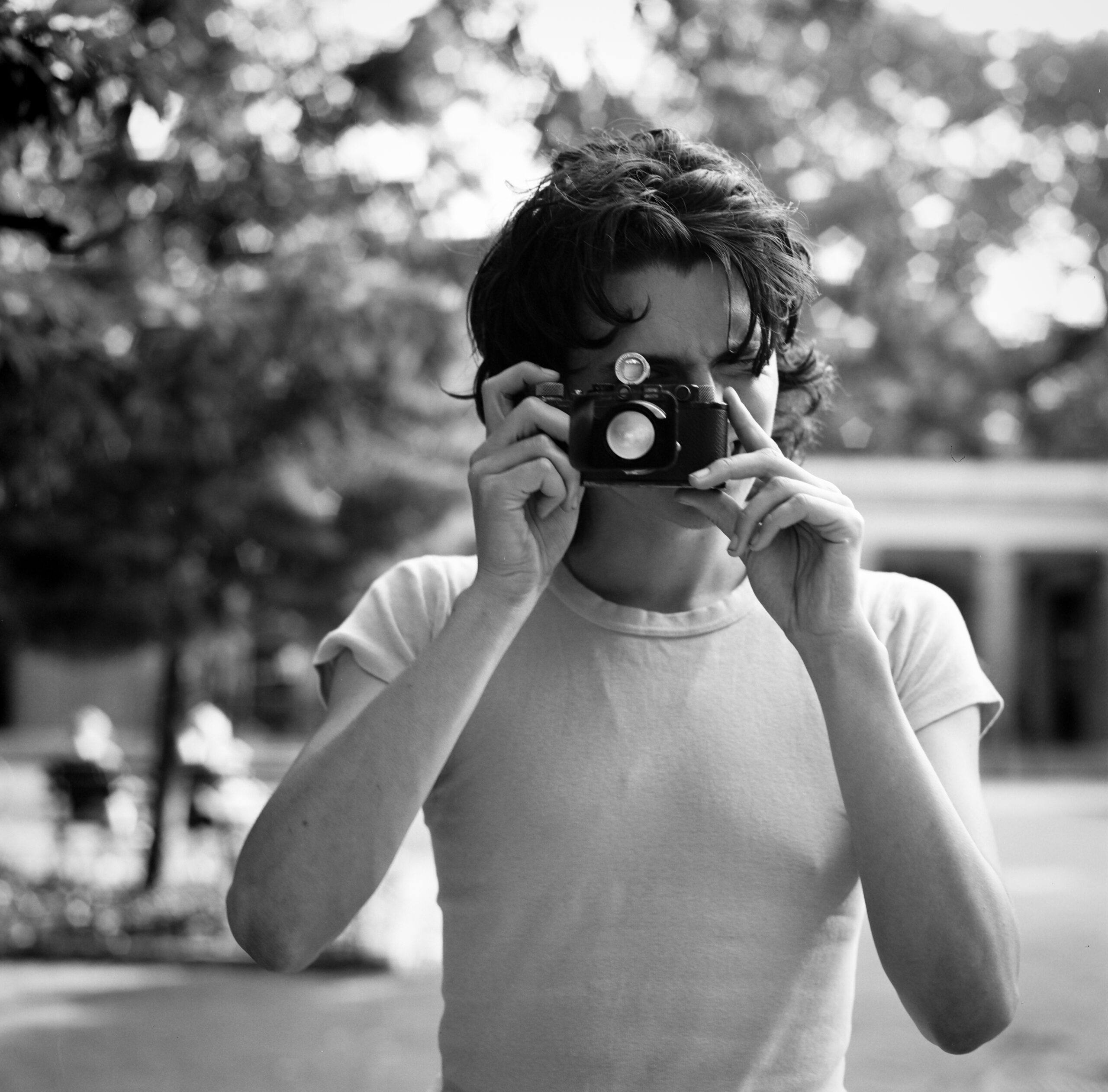
I didn’t think all that deeply on what it means to shoot film when a well-used Hasselblad 500CM and Leica M2 fell into my lap completely out of the blue a little over two years ago. Returning to analog photography wasn’t a long gestating plan, or dream, or the return of a creative passion from an earlier era of my life; I just had to try those famous old cameras, well, ‘because they were there.’ From the first time I took them out, those vintage film cameras awakened a new and strong creative passion I didn’t know I had. I found the process of using a 35mm rangefinder and a medium format SLR with a waist level finder utterly fascinating in their own very different ways, not the least of which is that neither camera had a single electronic part — no automated functions, no digital screens, not even a battery — just highly engineered metal, leather and glass designed to interact meaningfully with photosensitive chemicals.
I was determined to learn how to shoot film the old school way with top end old school equipment — an ongoing process that continues to this day.
However, as much as I love it and how much it has meant for me creatively over the past two plus years, in my heart of hearts shooting film has felt like a bit of a luxury pursuit — or a hipster/connoisseur’s medium, not unlike preferring vinyl records to mp3’s. For the record (pardon the expression) while I listen to mp3’s all the time on various devices, I still believe that vinyl records provide the superior listening experience for recorded music compared to any formats that came before or after. I find the sound warmer and fuller as well as enjoying the more curated and sequential sonic journey of an LP compared to random shuffling on my phone’s iTunes library. I feel similarly about film vs. digital photography. In some ways, a roll of film has some of the qualities of an LP — some hits, some misses, a bit of filler and capturing a moment in my creative life and evolution as a photographer.
In terms of the shooting process, I actively dislike navigating touchscreen menus and having a bewilderingly large array of options and choices. While film photography is endlessly subtle and allows for many creative nuances as one learns the craft, there are only three basic controls and there is something tactile and satisfying about controlling them with mechanical buttons and dials. And for me there is no comparison between framing while looking looking through optical glass at natural light and shadow versus looking at glowing pixels on a digital screen. And above all, there is the quality of the images! From the very first roll, I immediately fell in love with my favorite film photos in a way that I never managed with any digital camera I’ve tried. Digital photos offer instant gratification and the ability to correct mistakes in real time and the best can be very impressive, but the digital ‘sheen’ leaves me cold visually compared to a well-made film image.
Sometimes progress isn’t progress.
For me, film vs digital was a creative and aesthetic choice as opposed to a political act or statement. Or was it? A recent photo outing has led me to re-examine this question in new ways…
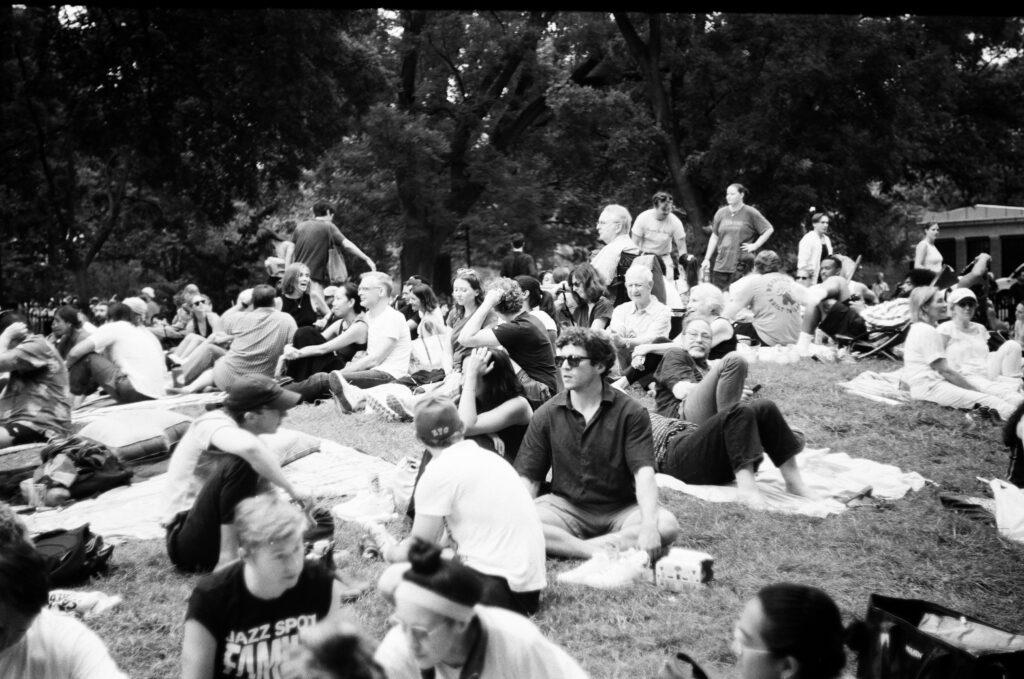
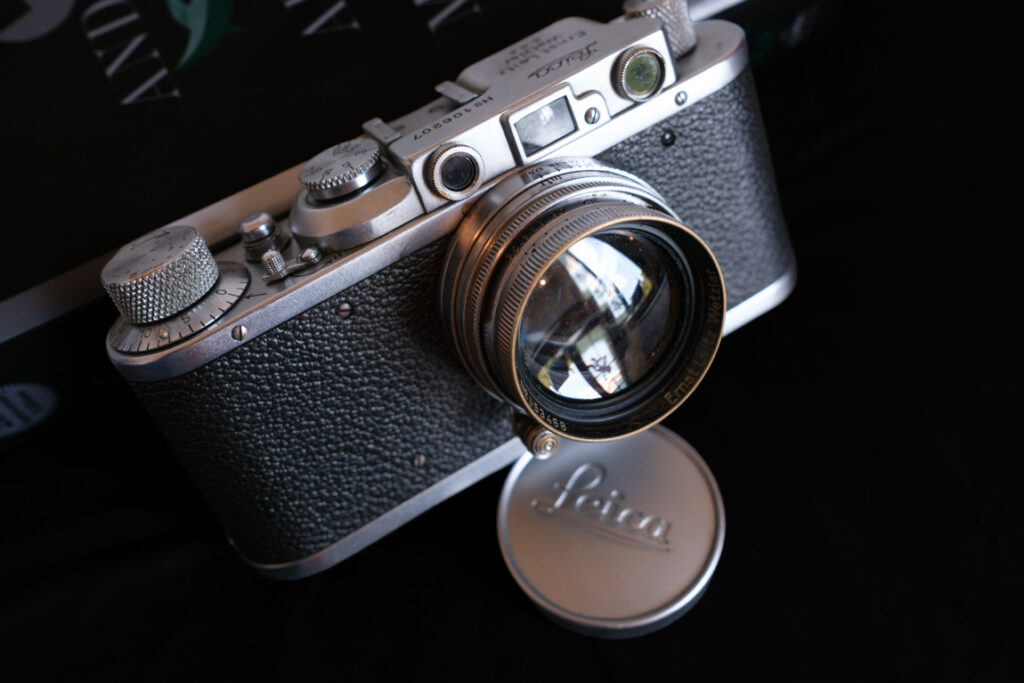
It was a lovely Sunday afternoon in late August and I took both my late model Hasselblad and my recently acquired1932 Leica iiD to Tompkins Square Park, thinking it might be interesting to compare the two vastly different camera systems. But when I got there, it felt like a bit of a bust; there was a big jazz concert that had taken over my favorite section of the park. I wasn’t able to get close enough to shoot the performers well and I didn’t find the idea of shooting audience shots all that interesting, so I decided it wasn’t happening in that location, but wasn’t sure whether to head over to Washington Square Park or just pack it in for the day.
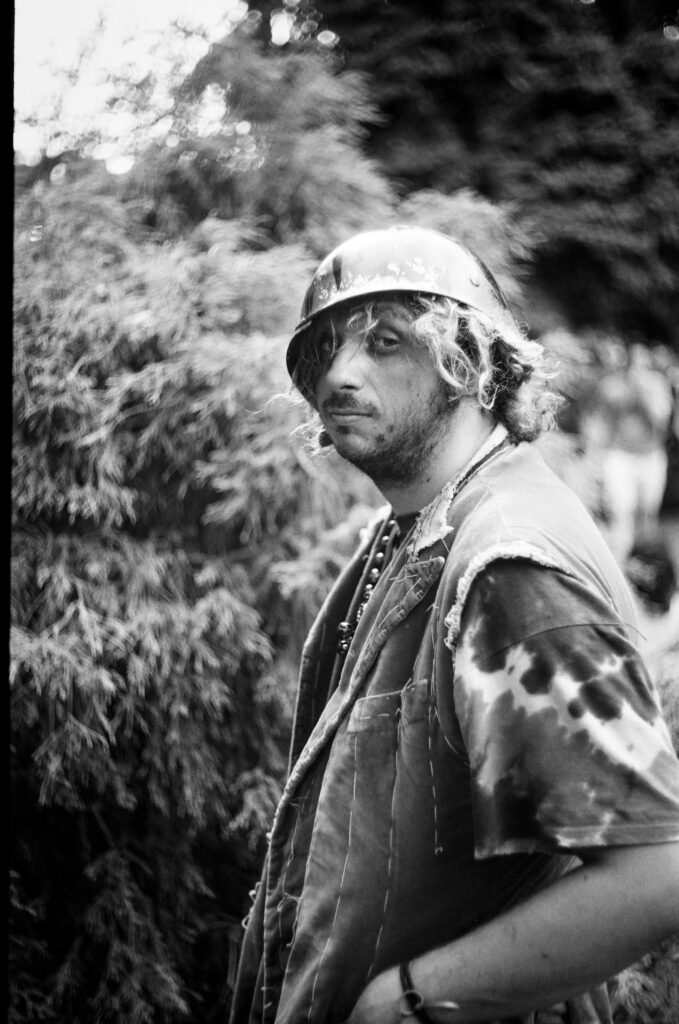
As I was slowly working my way back to the car, I grabbed a couple of shots of interesting characters I encountered, but I wasn’t feeling the ‘flow’ that makes for a good photo outing. For some unknown reason, I decided to leave the park by another route than I usually do, which took me through an old brick colonnade that has the look of a 1930’s era WPA project (Works Progress Administration) FDR’s giant federal program to put Americans back to work during the Great Depression.
As I was walking along in a desultory way feeling a bit deflated and wondering if I just didn’t have it that day, I heard a voice from over my shoulder. “That’s an interesting camera.” He was referring to the Hasselblad that I had slung over my right shoulder.
Always happy to talk to the friendly strangers that I meet out and about with my cameras, often as an entry point to taking some photos, I proceeded to explain the Hasselblad as an all manual, medium format still camera from Sweden that started as a WW2 era aerial spy camera that evolved to become the dominant high end professional medium format camera of the 2nd half of the 20th Century, and just happened to be the camera that NASA sent to the Moon.
I introduced myself to Aidan, and asked if I could take a photo.
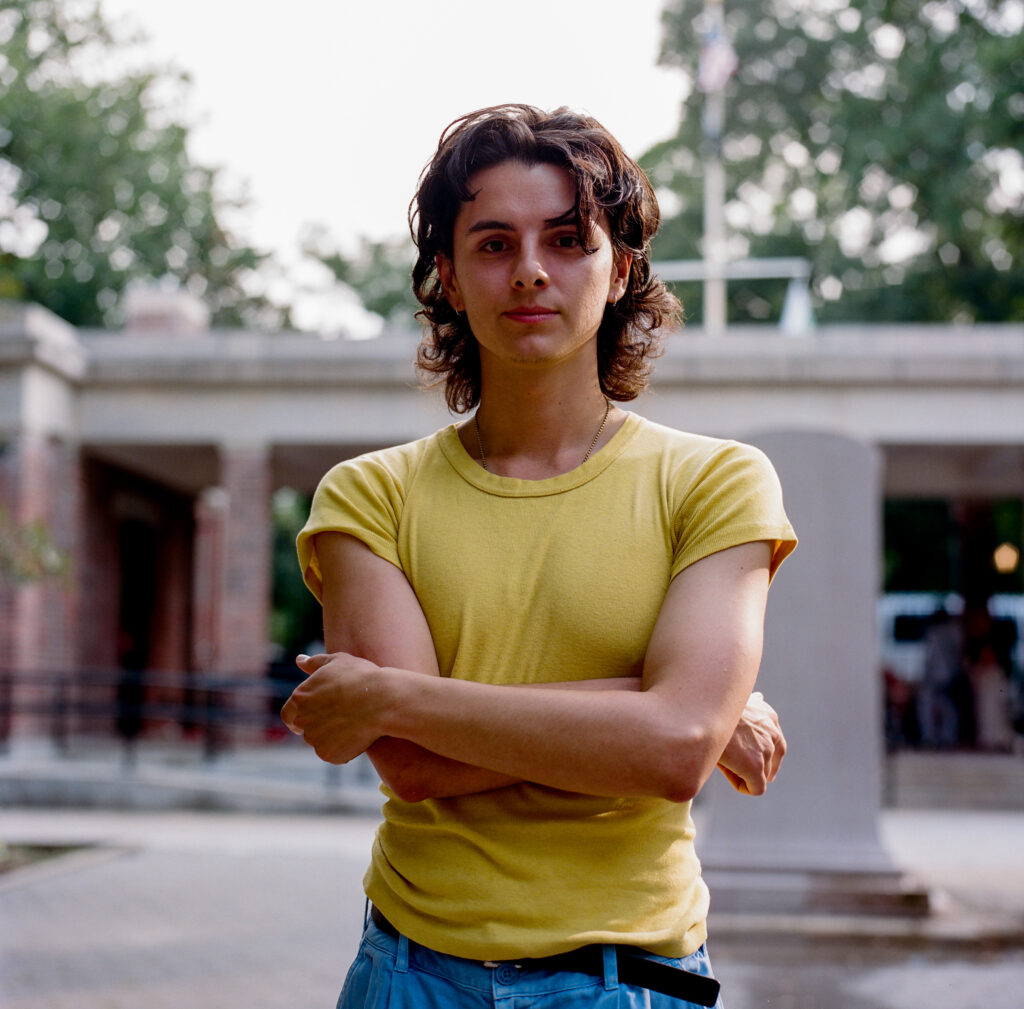
Aidan, who is very photogenic with striking looks, was happy to let me take a few shots with the Hasselblad. I also showed him the 1932 Leica iiD that was hanging off my left shoulder and asked if I could take a black & white shot with the early Barnack.
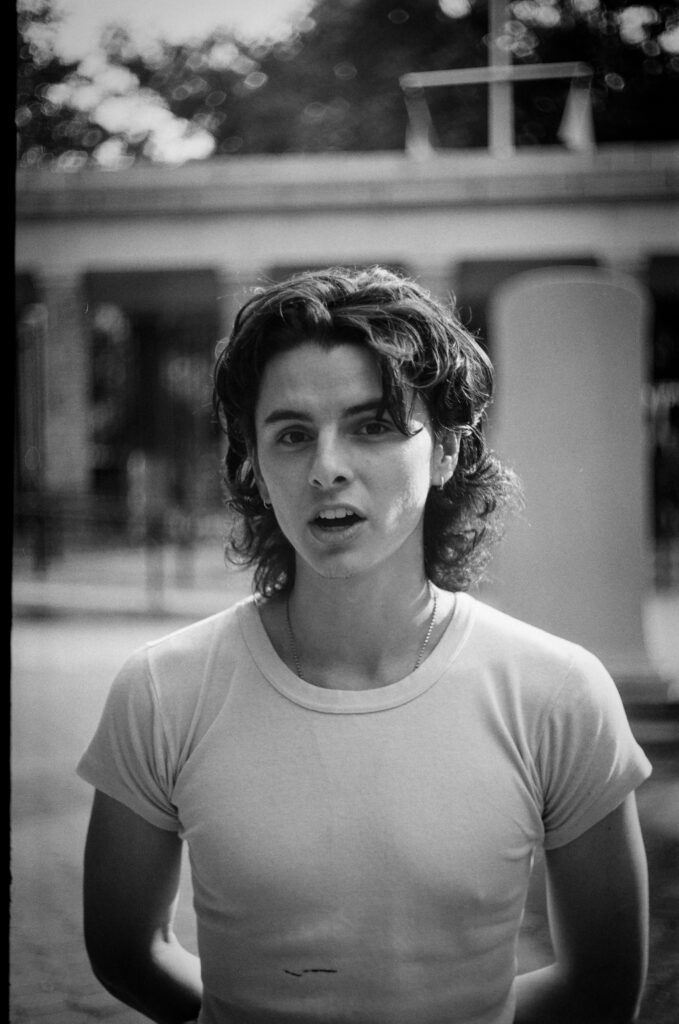
As I took these photos, Aidan told me that he was a Luddite, and therefore enjoyed that I was using old school non-digital tech. He invited me to come to where the Luddites were meeting that afternoon.
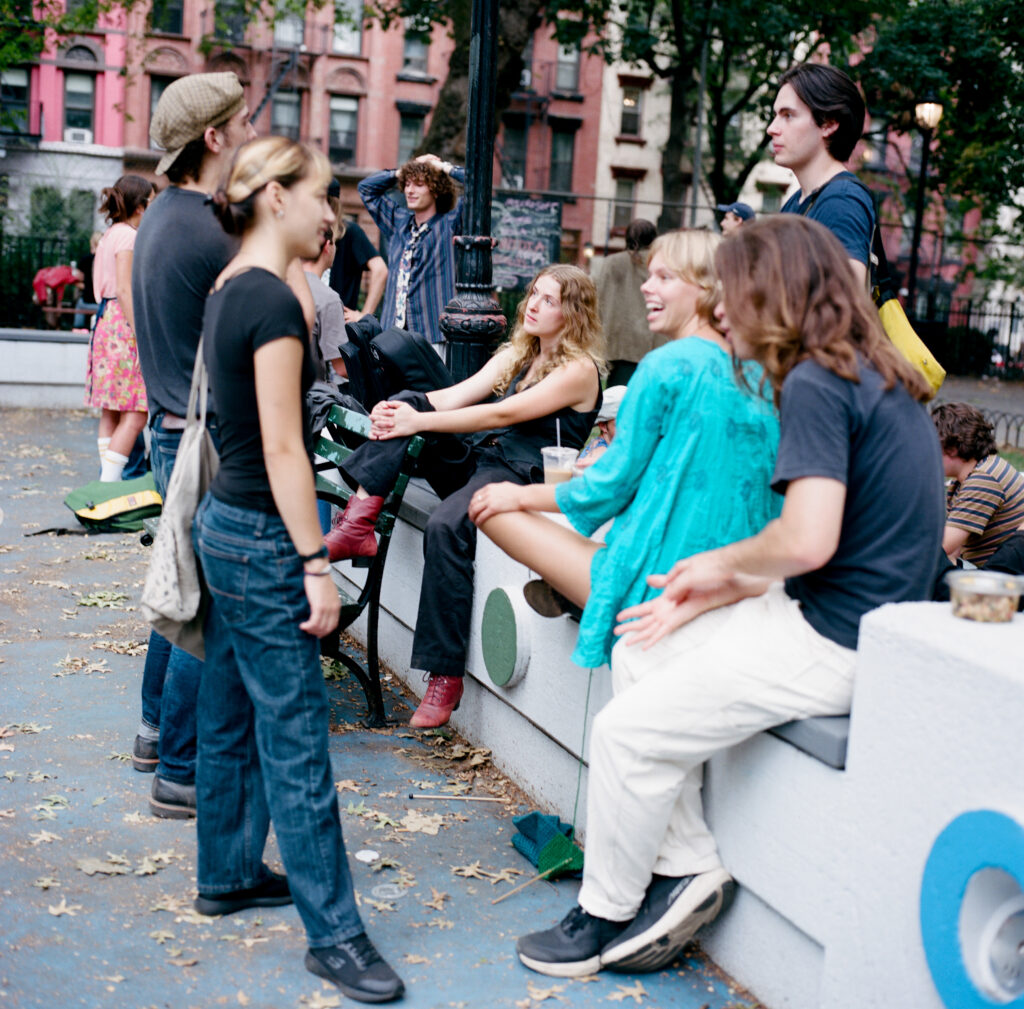
There was a small group of mostly young people hanging out and talking in the little WPA pocket park within Tompkins Square Park, and Aidan brought me over and started introducing me around. The vibe was warm and welcoming, and people were interested in my two very different cameras, and the fact that I was shooting on film, which met with general approval.
Part of my style of photographing people I meet out and about is to keep a conversation going as I go about fiddling with the camera, setting exposure and focusing — it slows me down a little, but loosens everyone up (including me) and we relax into the moment.
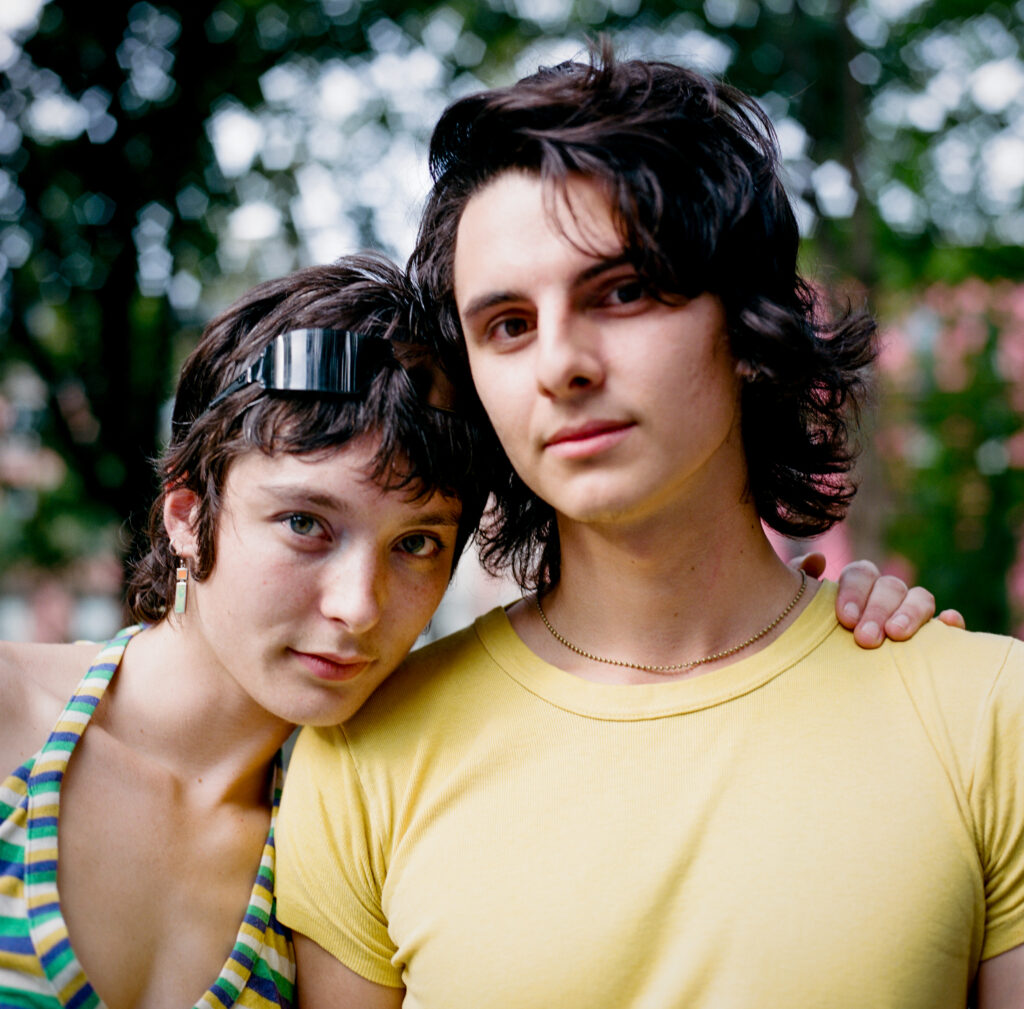
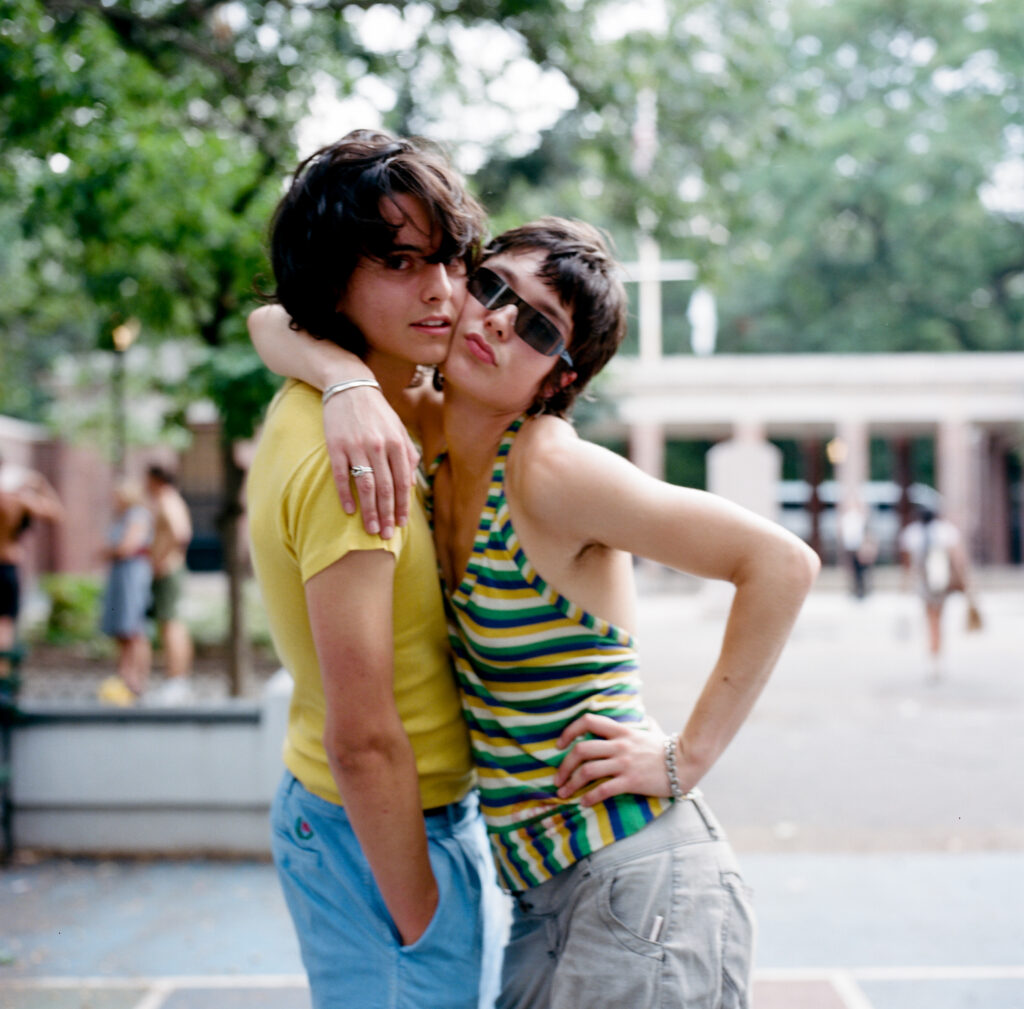
AIDAN & MOLLY, Hasselblad 503CW, Zeiss Planar CFE 80mm f2.8, Kodak Portra 400
Sometimes I let people look through the cameras between shots; as I did in the feature image with Aidan and the Leica ii — the yellow filter gives the lens an odd and interesting glow in that light. Molly was very intrigued by the Hasselblad after looking through the waist level finder — she was equal parts astonished by the brightness and clarity of the reflected image on the matte screen, and disoriented because people are not used to looking at the world in reverse-motion through a single mirror viewfinder.
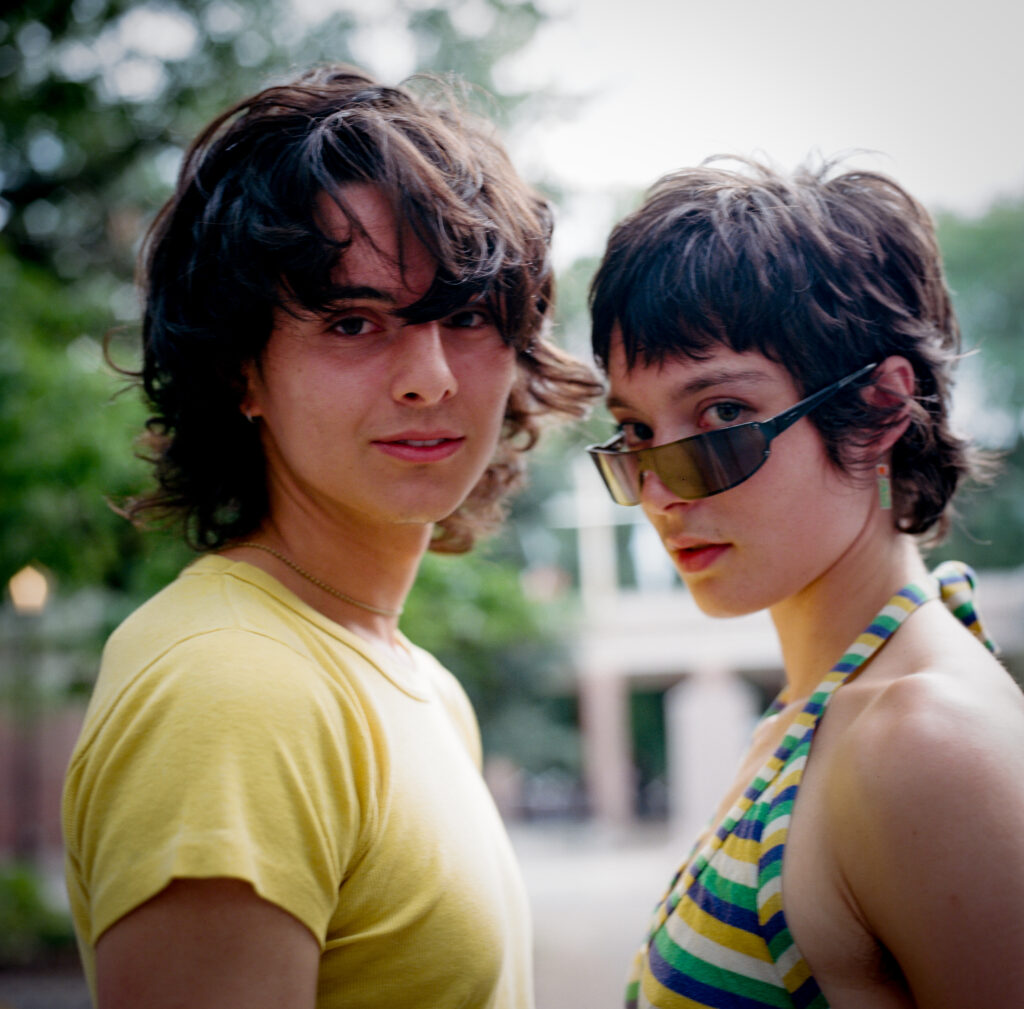
Aidan and Molly were fun to shoot, liked vamping a bit for the camera, and looked amazing together!
After that first series, I started circulating around the group and taking shots with the Leica ii.
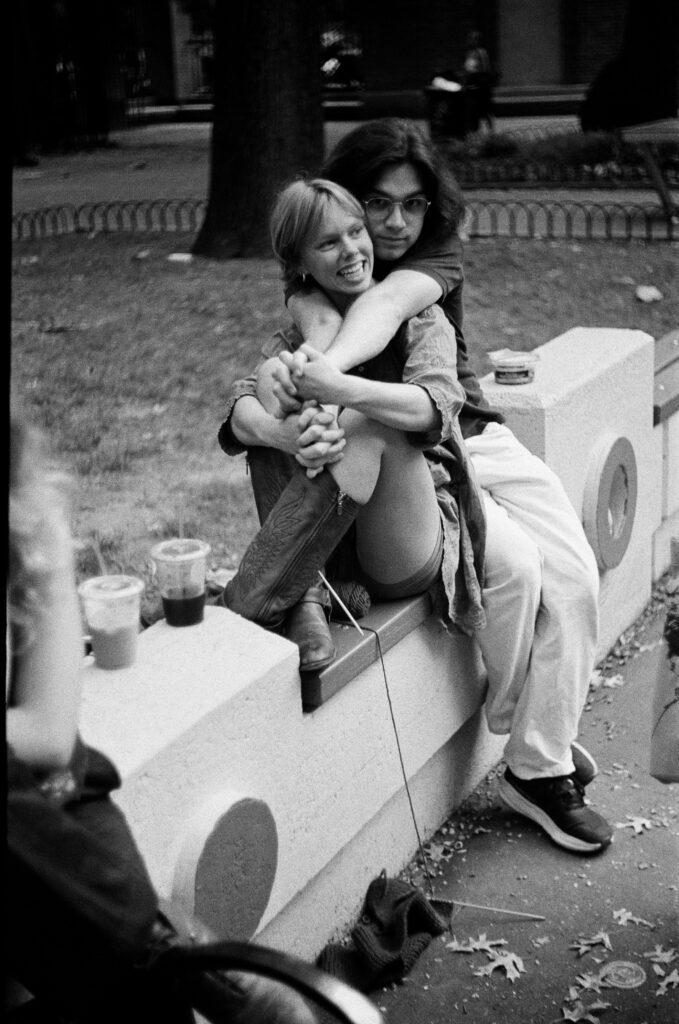
Some people paid more attention to my presence with a camera than others, even within the same shot. I noticed that one of the young women, Mayla, was knitting. Later I learned that the original Luddites were early 19th century English textile workers protesting against the introduction of industrial looms into their workplaces, so it felt fitting that a modern day Luddite would be doing hand crafts like knitting.
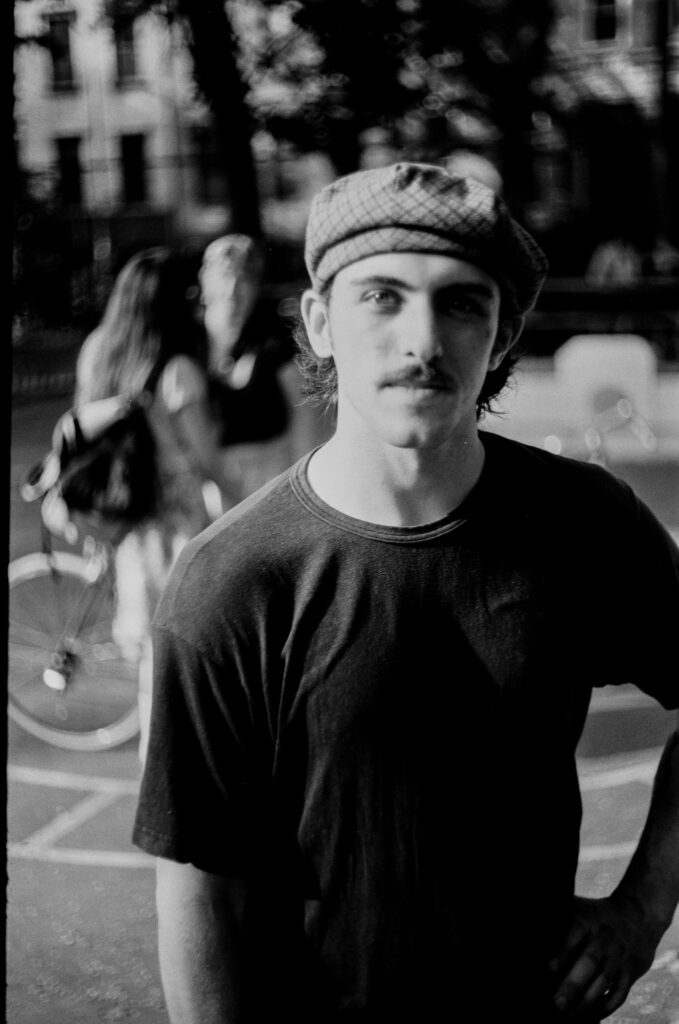
I tend to like shooting in late afternoon light, and with a slower stock like Delta 100, it’s not hard to miss focus by a small margin, but I’m still learning the Leica ii and the Summar, so am not yet sure where the inherent qualities of a 90+ year old uncoated lens stop and ‘operator error’ begins. Ok, it’s almost always operator error… All that notwithstanding, I sometimes find virtues in shots that may have other qualities than pure technical perfection, and I really like this shot of Gavin with strong contrast between the almost blown highlights on the right side of his face (camera left) and the nearly lost shadows on the left, along with very interesting deep blacks and shapes in the bokeh in the background. It has a ‘lost photograph’ timeless feel to me.
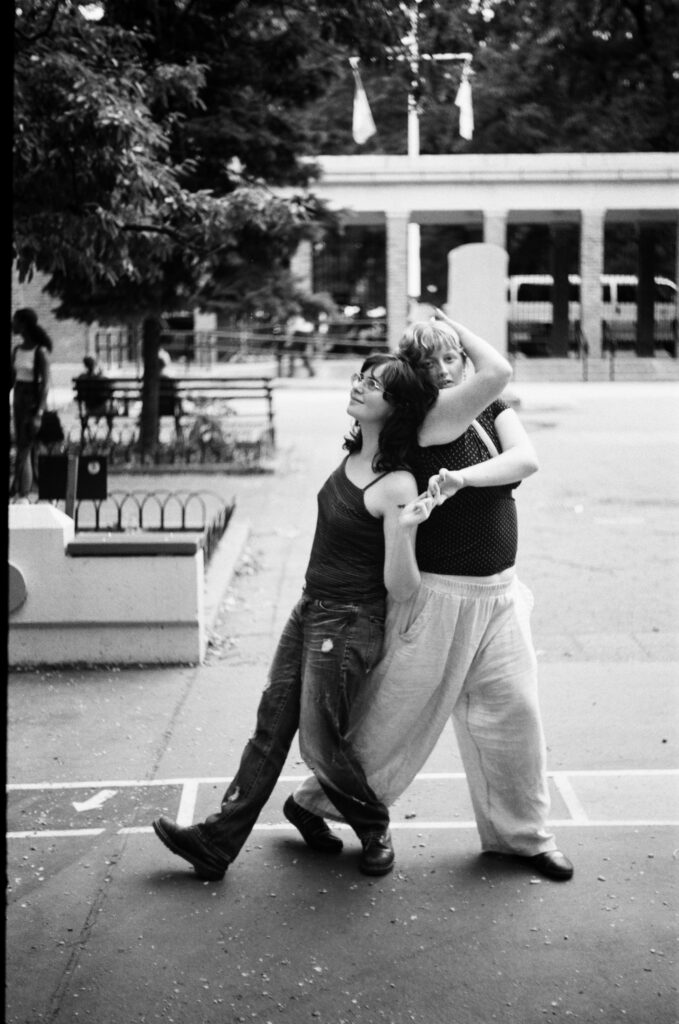
These young women were having a good time striking intertwining poses for a camera from the early 1930’s.
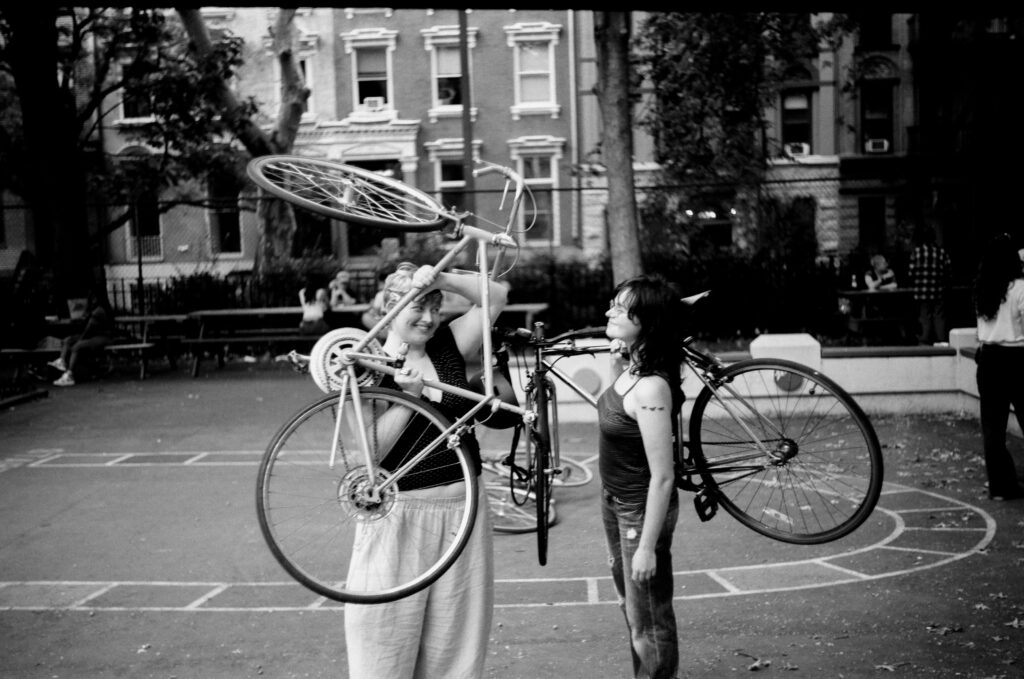
When Lyra and Sophia asked what I wanted them to do for the next shot, following my usual technique I said that they should do whatever they wanted to do, it was their photo too. They decided they wanted me to take a shot of them holding their bicycles aloft. I was happy to let them do their thing, and you can see their pride about their bicycles and the warm friendship they share.
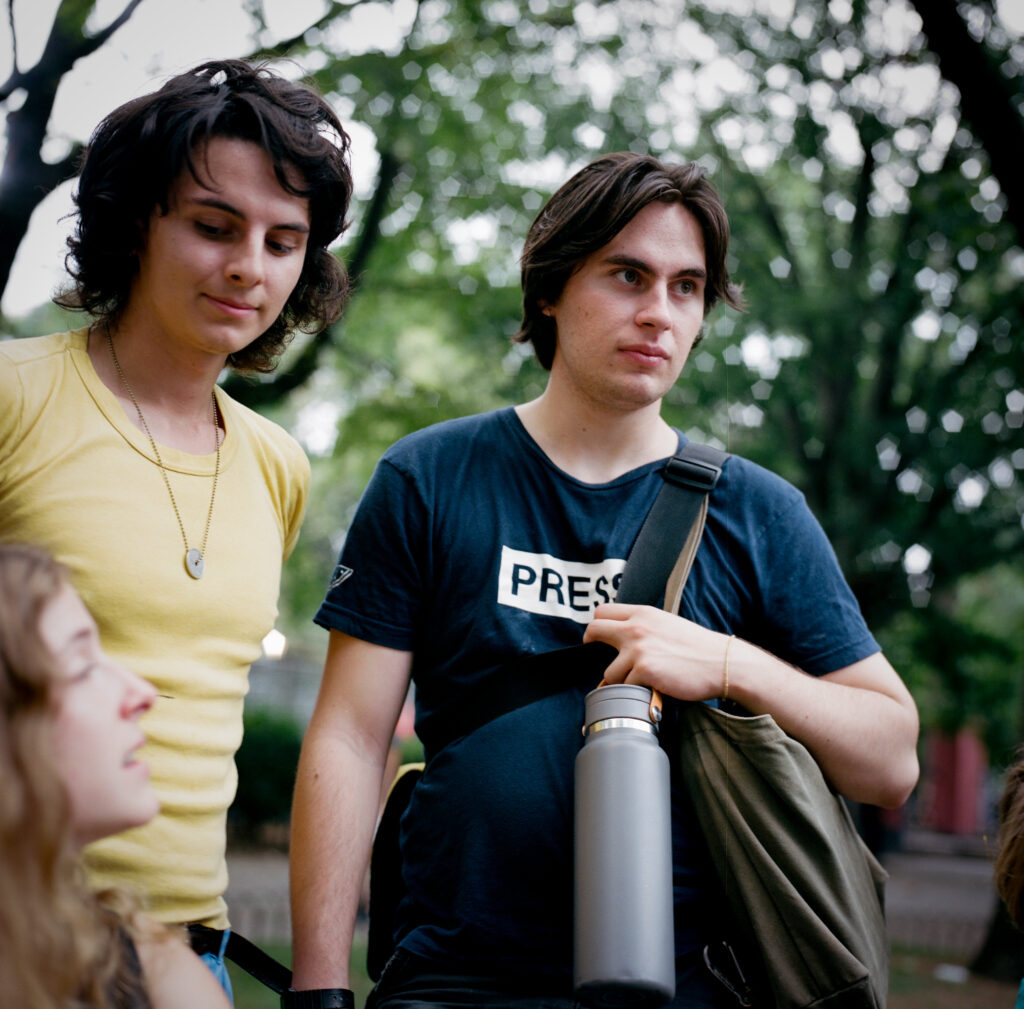
I don’t think the Ludd Club is particularly hierarchical, but Bucky, in the ‘Press’ T shirt above, seems to be the ‘house intellectual’ of the group and led the meeting that happened a little before I arrived. The club evolved out of the ‘Summer of Ludd’, an eight day festival in June held at Tompkins Square Park. The Tompkins Square group formed in the aftermath to keep that spirit going; they hold regular meetings, talks and teaching sessions in the Park to which all are welcome.
When I asked Bucky what the Luddites would hope to achieve in the event their longterm goals were realized, he mentioned ideas like a more communal and cooperative organization of communities and collective ownership of businesses. We may be a long way from collective ownership, but I have a lot of sympathy for people who want to shift the orientation of our current system toward being friendlier to working people and those left out of the division of spoils that overwhelmingly favor the ‘owner/donor’ classes. I think groups like the Luddites gain popularity at times when people feel a threat to their way of life because of the emergence of new technologies. We are going through that now, and the principal focus of the 21st Century Ludd Club is Big Tech in general, and AI in particular.
I found it interesting that my choice of shooting film, an older medium that has largely been overtaken by newer digital technology seemed to align with the political leanings and philosophy of the Ludd Club. Coming out of this encounter, I agreed not to share any of my Ludd Club photos on Instagram, as a division of one of the Silicon Valley Tech giants they oppose.
I will note that at least some of these 21st century Luddites do use email, and they were open to me sharing my photos on 35mmc. I would learn that the original 19th century Luddites were not entirely against Industrial Revolution era technology; they were more focused on worker’s rights, preserving jobs and giving skilled textile workers in the new industrial mill facilities a fair share of the proceeds of the economic value they helped to create. The early Luddites objected to factory owners using automation to lower wages and impose harsh working conditions, including child labor, and replacing people with machines. In many ways, they were precursors of the modern labor union movement as opposed some kind of proto hippie “back to nature” movement that many associate with the word ‘Luddite’ today.
After a very unpromising start, I was having a lovely afternoon with lots of interesting people to photograph, alternating between the old Barnack and the late model Hasselblad.
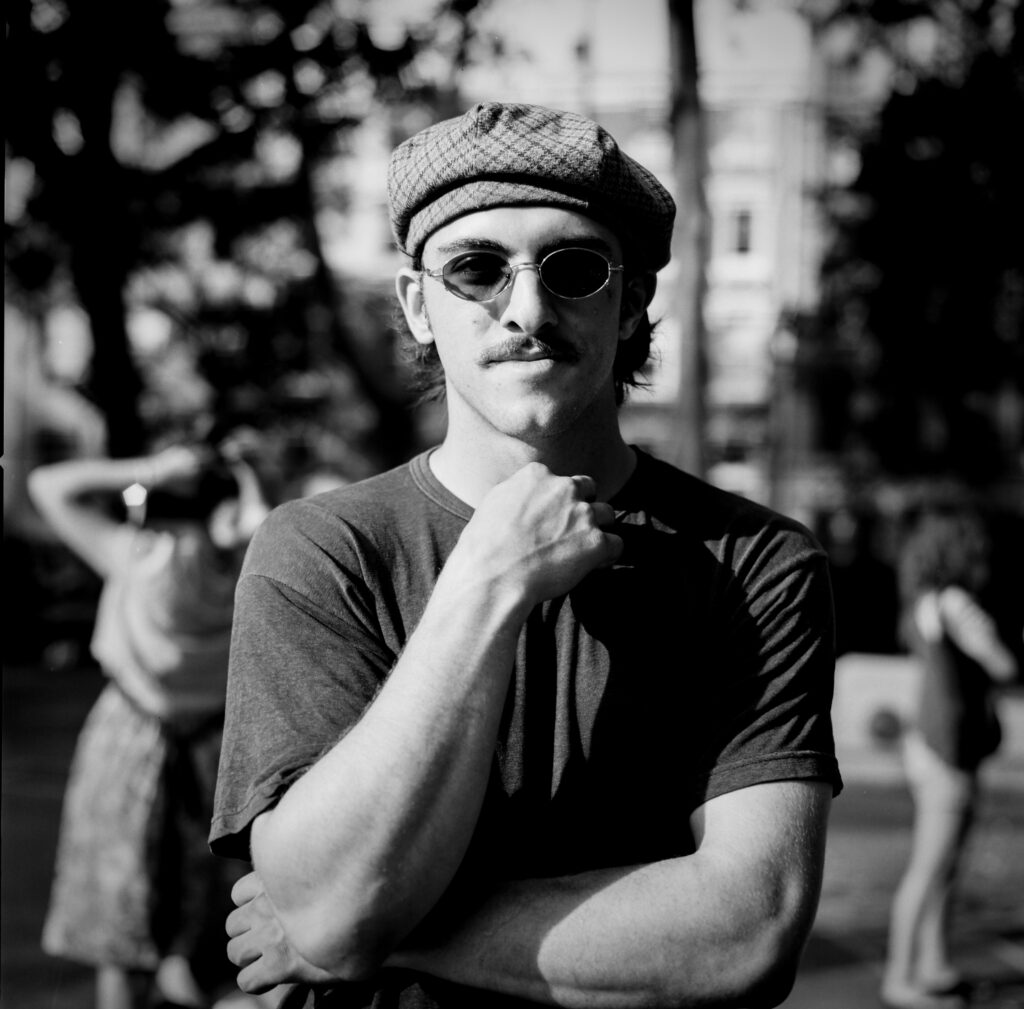
This shot of Gavin made with the Hasselblad was shot on the same stock in more or less the same light as the earlier Leica ii frame, but has a completely different look and feel photographically. The combination of highly engineered early 21st century glass and medium format film vs 35mm with a 92 year old uncoated lens is significant, but I really like both looks a lot!
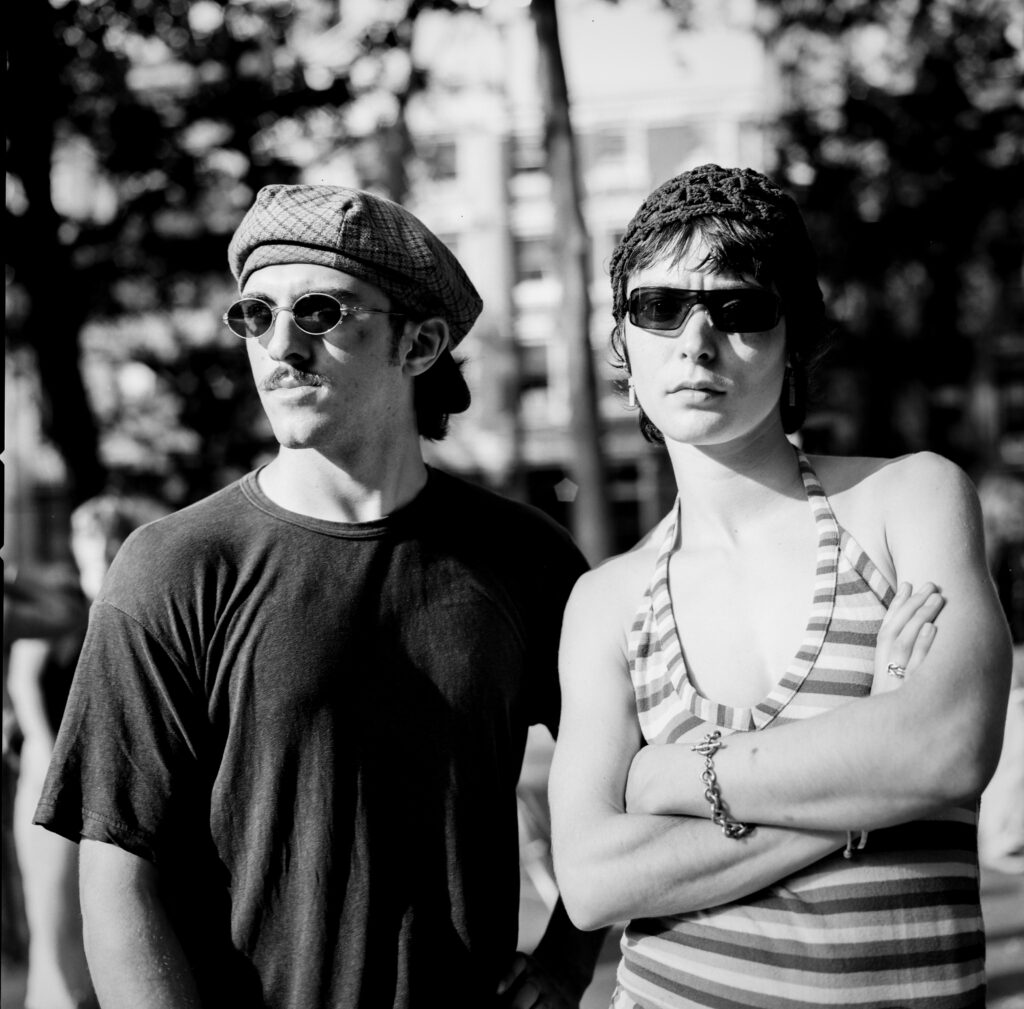
Molly sidled up to strike a pose with Gavin, now sporting shades like he was. They look totally awesome and badass.
Happy warriors, ready to take on AI!
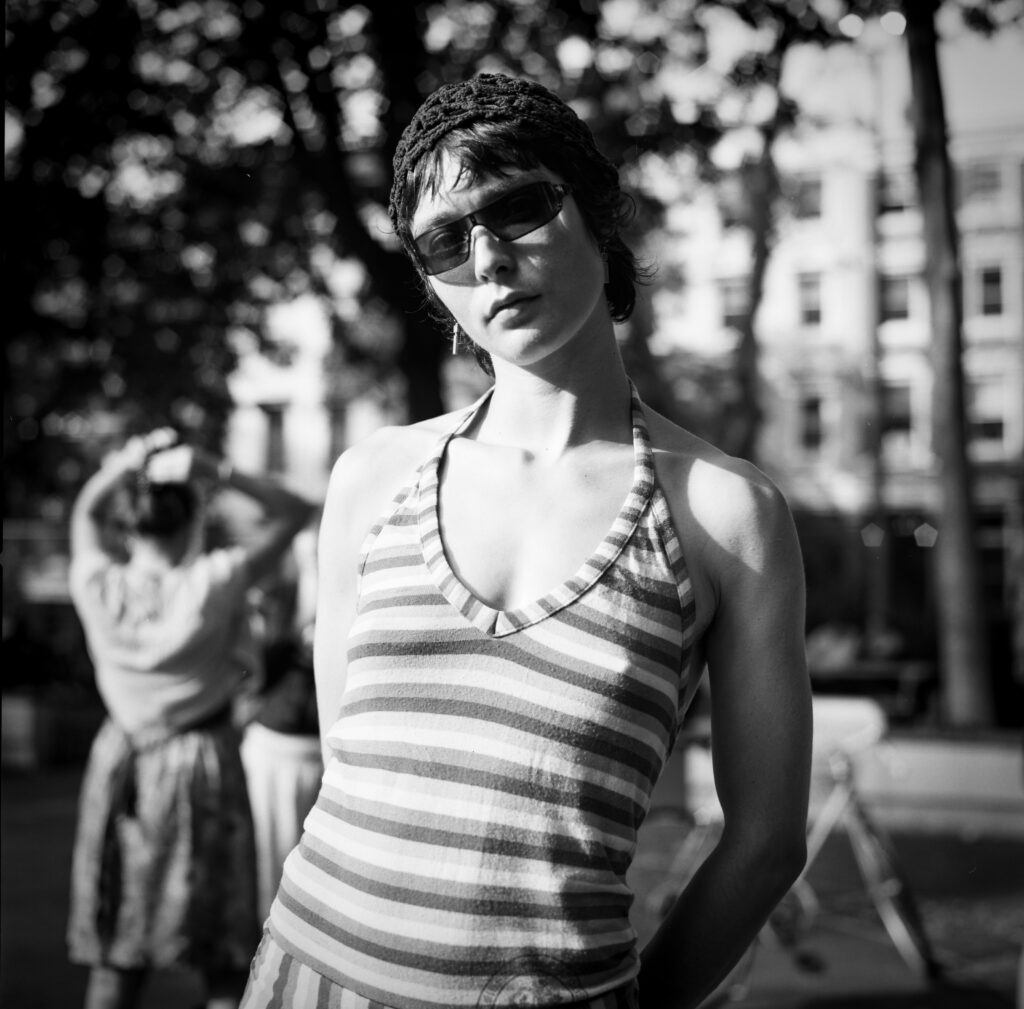
Back in the group conversation, Aidan and Mayla were sharing a laugh about something. For anti-establishment activists devoted to overthrowing the entrenched power of the biggest corporations in the world, the vibe among the Luddites was unexpectedly warm and happy, as well as welcoming to a stranger from another generation who showed up with some funny looking cameras.
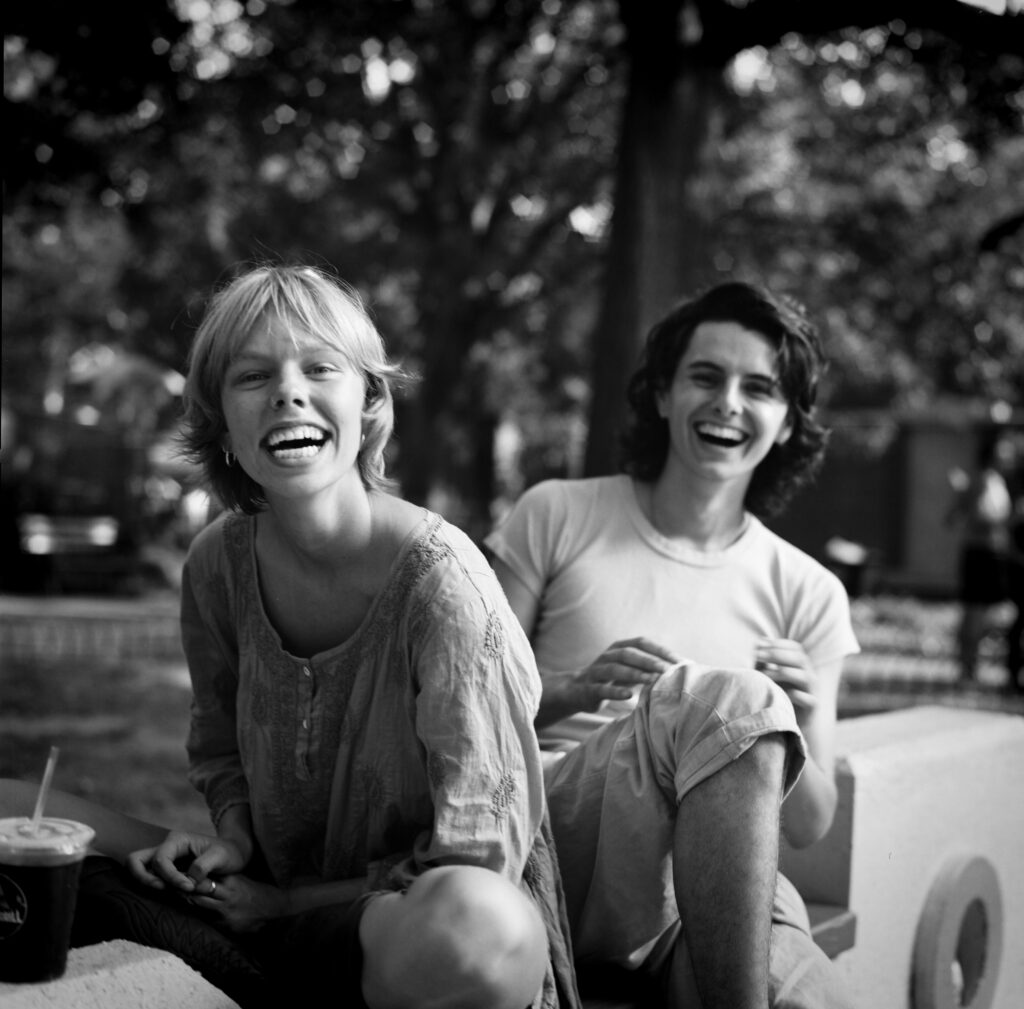
The fact that the Luddites approved of film photography got me thinking about the politics of film vs. digital photography. I think there are arguments that digital media is more accessible to a wider number of people due to the lower cost, whereas 21st century film photography is mainly available to people with the means to afford the rising costs of film & processing. However, there are counter arguments that the use of digital media is controlled by various corporate conglomerates, whereas film, in theory, can exist outside the digital ecosystems controlled by Big Tech, especially for people with darkroom gear and know how.
I also think that there is a different business ethos and philosophy that prevailed when my Leica ii was hand-assembled by a skilled craftsman at a bench working with high quality durable materials designed so that it works more or less equally well today as it did when it came off the line in Weimar Germany. Conversely, 21st century digital cameras are manufactured based on a ‘planned obsolescence’ model and are virtually unusable if older than about 25 years, and are designed and planned to be outdated or surpassed within a few years of their release. I’ve probably owned close to a dozen digital cameras over the last 20 or so years, and all but one of them are more suited to landfill that quality photography in 2026. I think this is an issue that would have interested the original Luddites; one of their major complaints about the introduction of industrialized textiles was the dramatic loss of quality between mass market goods made on machines vs. top quality handmade goods made in small ‘cottage industries’ by highly skilled artisans.
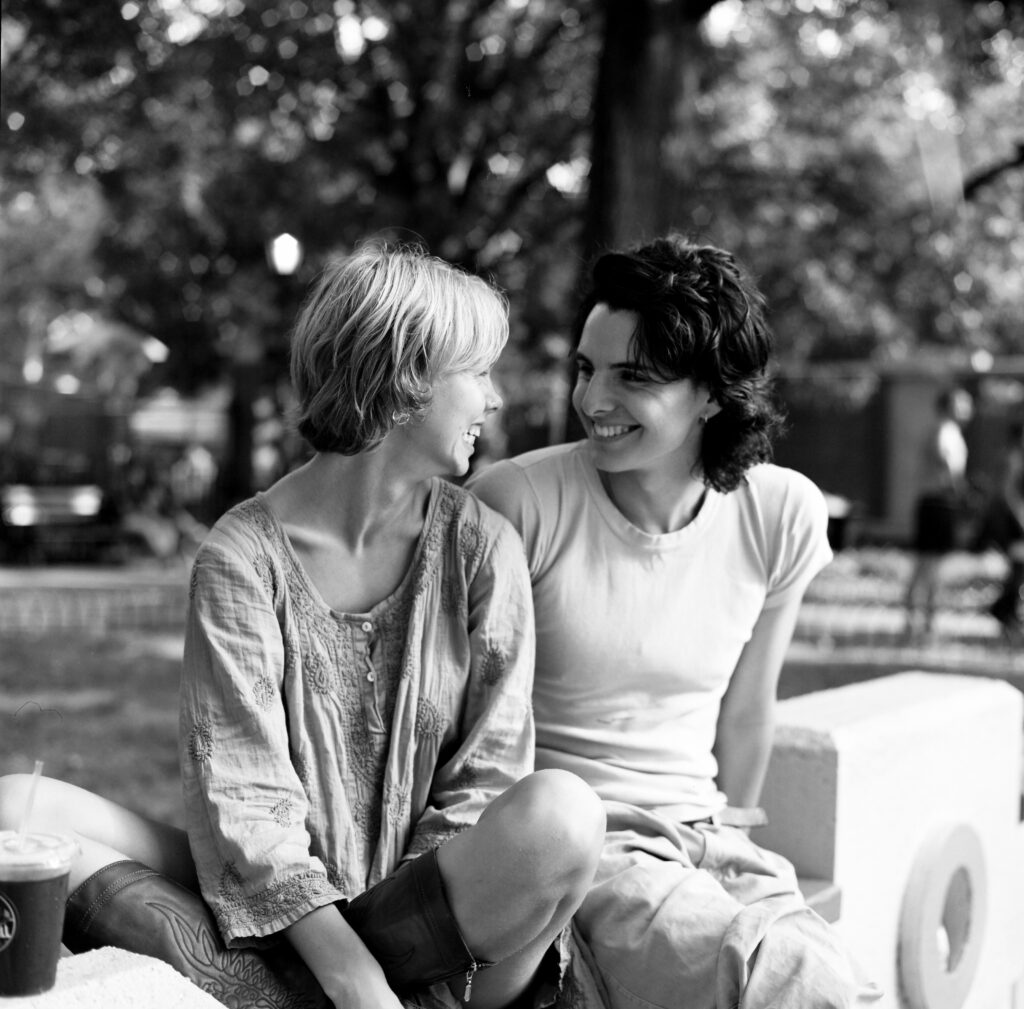
I think Aidan and Mayla look fantastic on Medium Format and 35mm film. I love both looks!
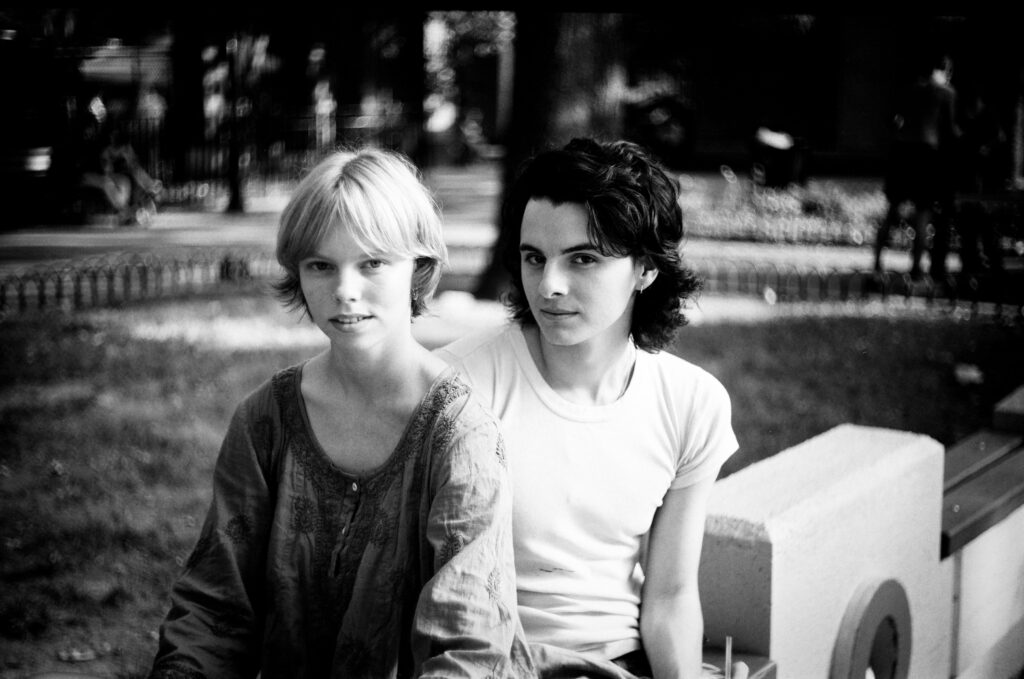
This Leica ii/Summar shot has a very warm vintage ‘timeless’ look that I love, with almost ‘painterly’ rendering of shadows and highlight in b&w. It’s one of my favorite shots taken so far with my newest/oldest camera. I love the unexpected magic of a beautiful film frame, and I have no idea how I would ever match results like this with a digital camera with any amount of post processing in Lightroom.
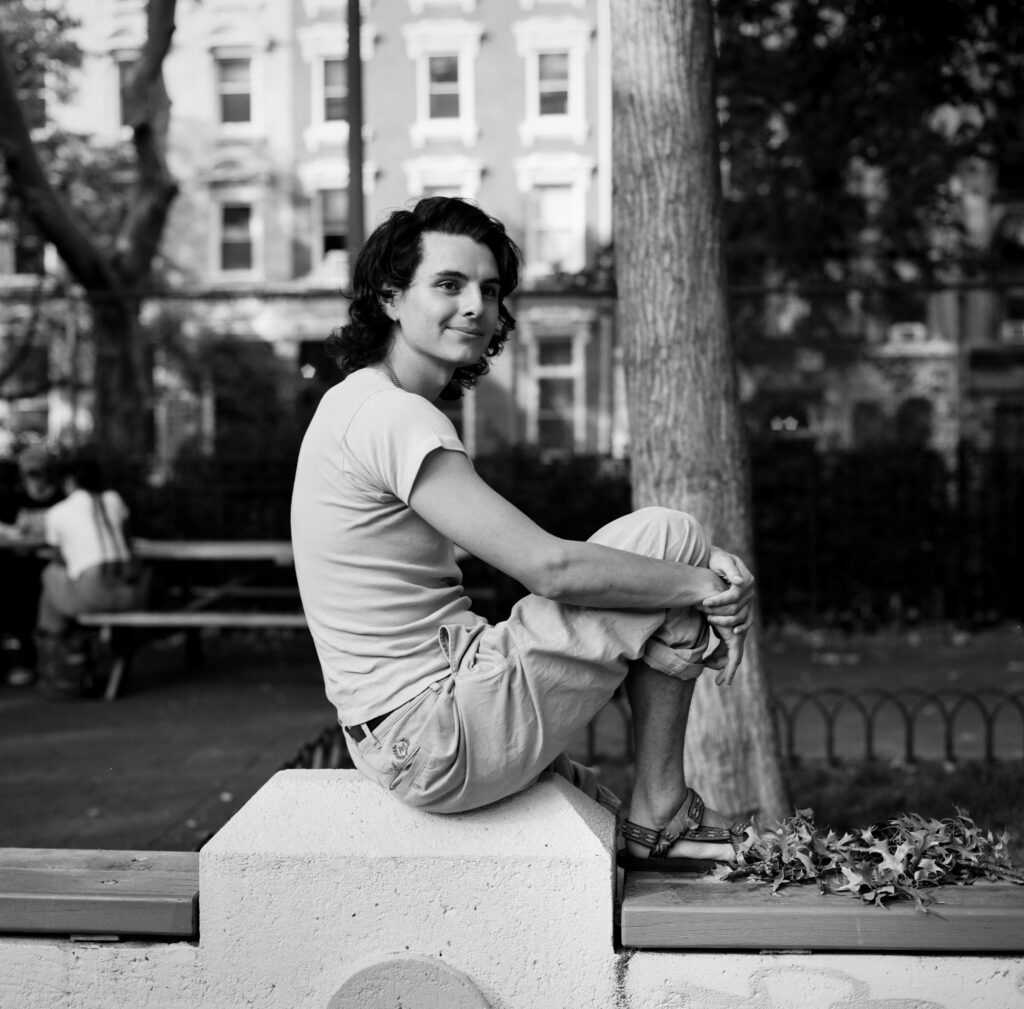
I grabbed a couple more Hasselblad portraits, including this posed shot of Aidan…
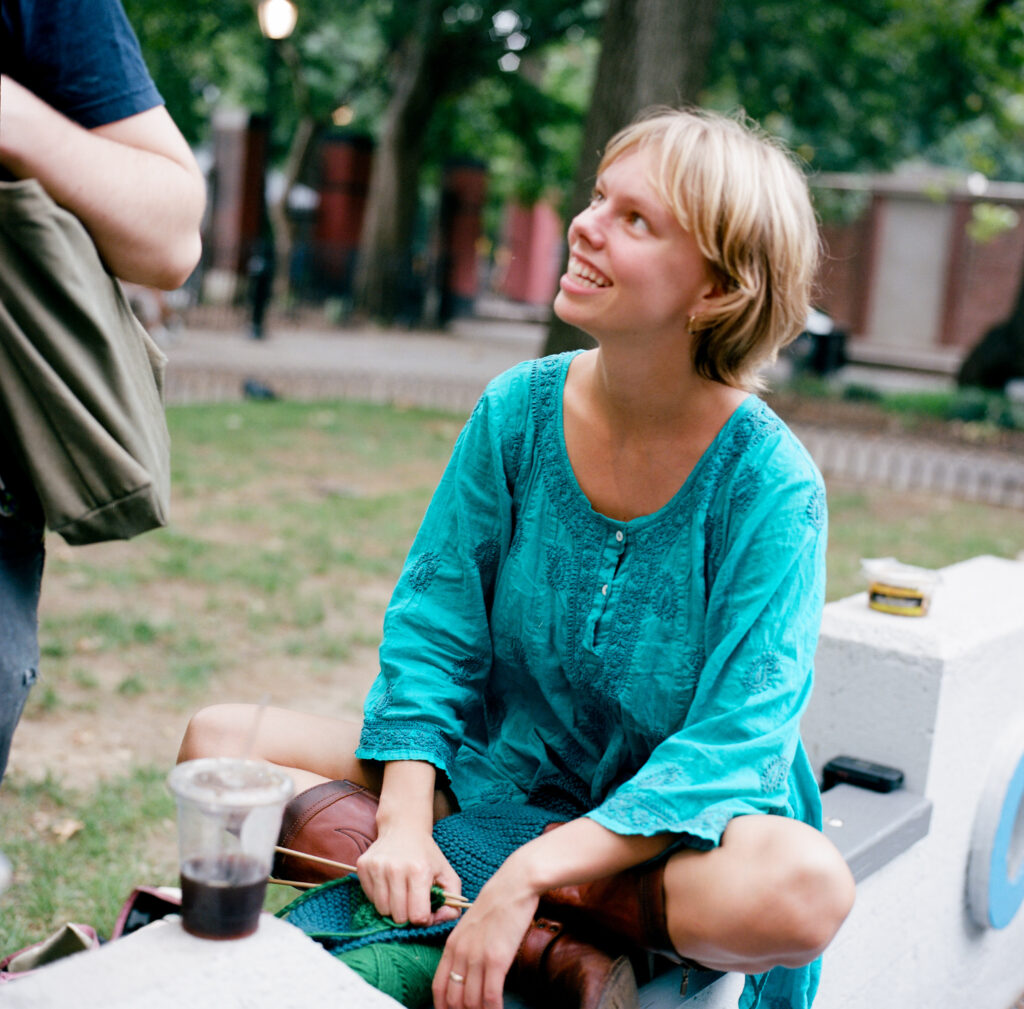
…and this more candid shot of Mayla.
Mayla was aware of and accepting of my presence with the camera, but didn’t ‘play to it’ the way some of her friends did. But she is very photogenic, and I finally I summoned the nerve to ask her for a couple of shots, which evolved into her doing a lovely free dance while I shot away. I am still struggling a bit with shooting moving subjects, especially in the late afternoon light that was starting to drop at that point; I asked her to try to stay at a consistent distance to help. While these shots are a little softer than would be ideal, I love the freedom and joy that came out in this series.
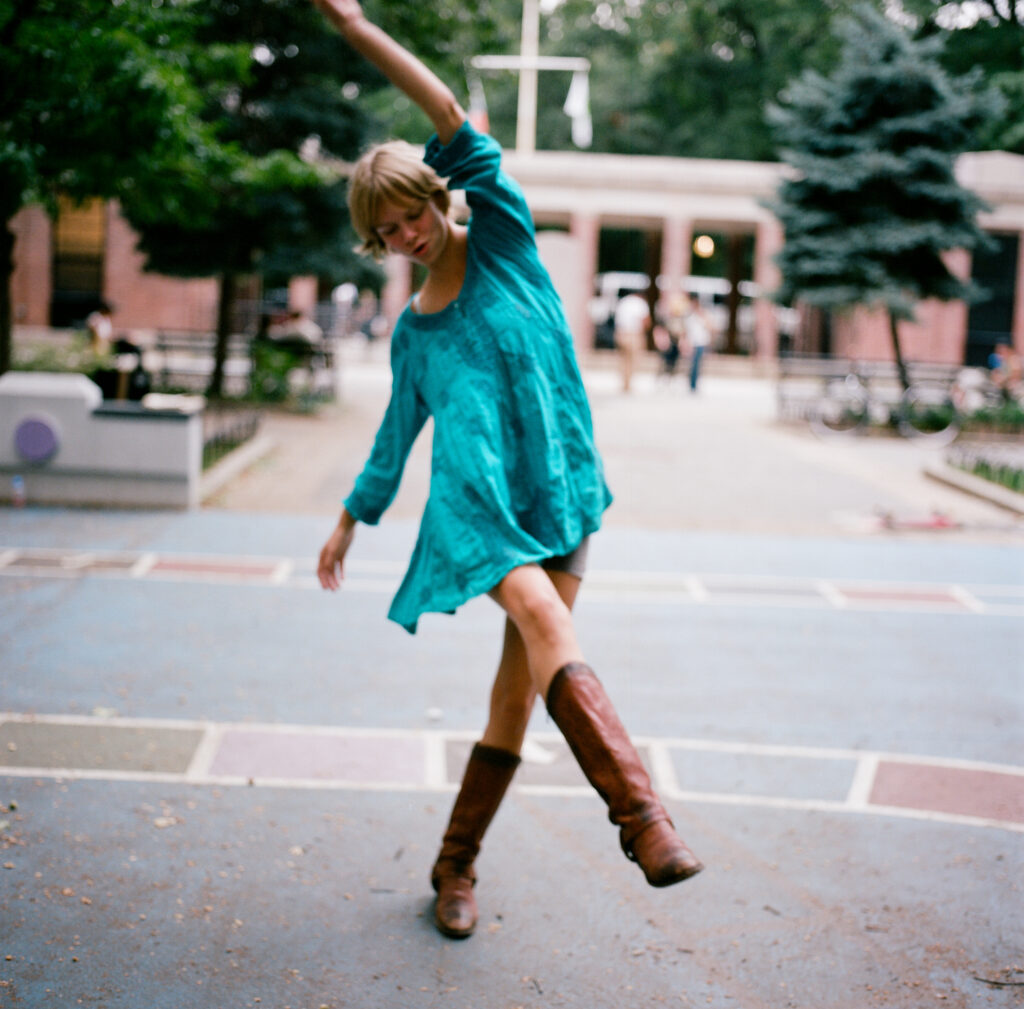
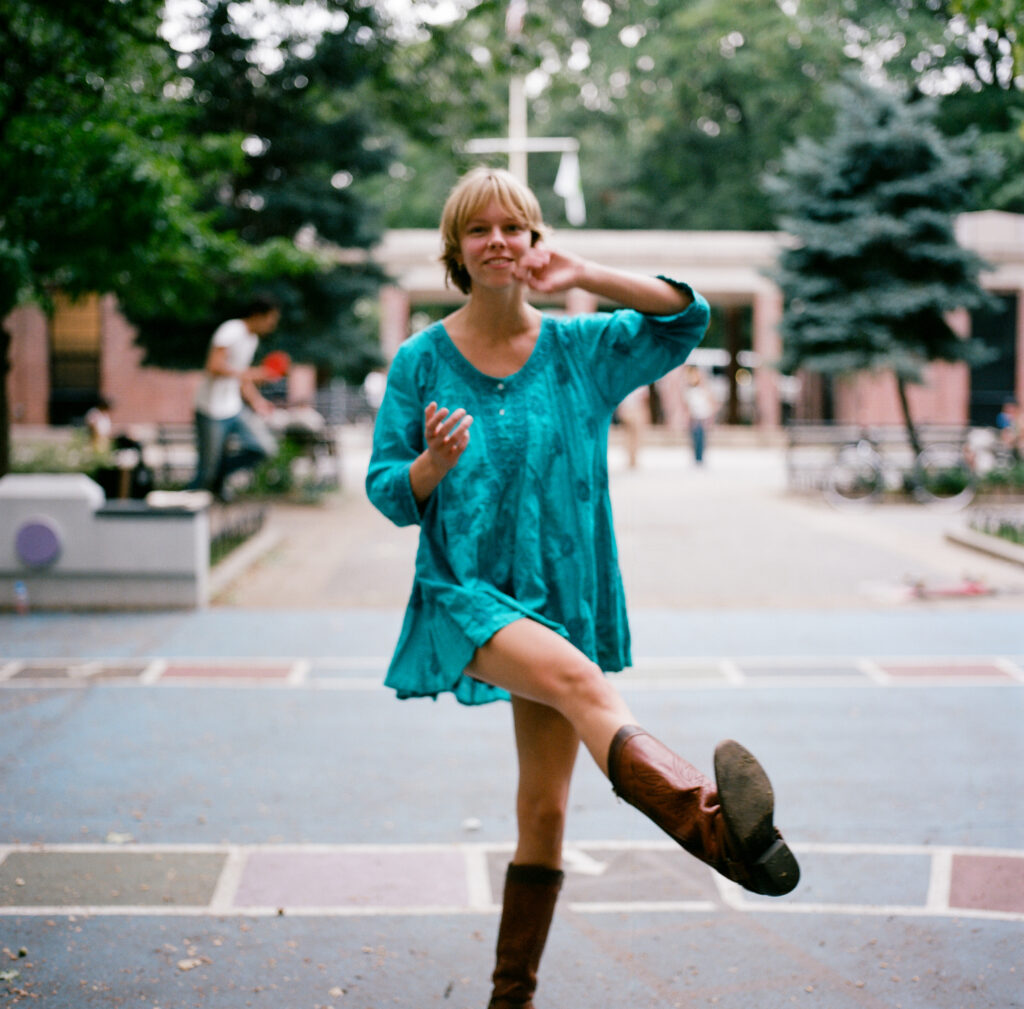
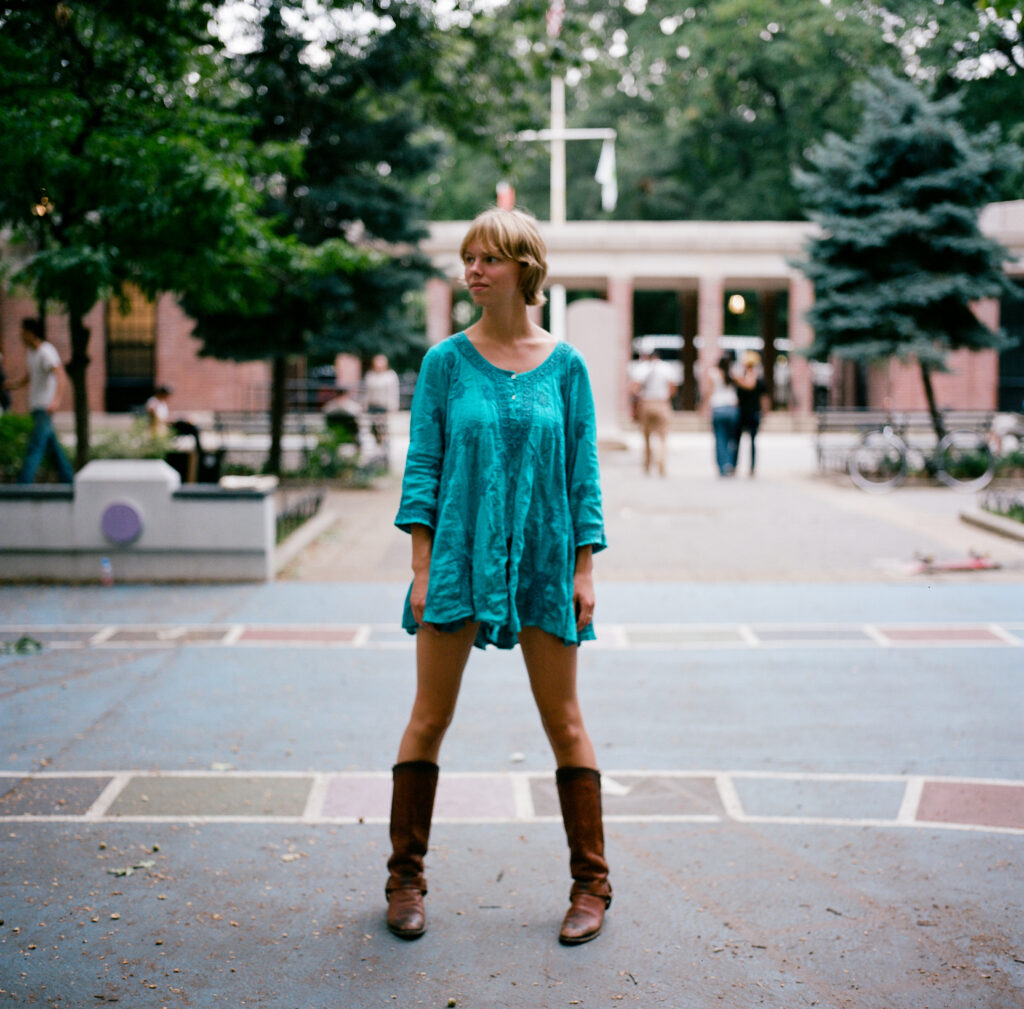
It was certainly fun to shoot smart, switched-on and appealing people, like Bucky, Mayla, Aidan, Gavin & Molly and the others. When I ran out of Portra 400 in the Hasselblad, I swapped over to the Barnack with HP5 and switched camera direction.
The dance continued in the fading light of a beautiful afternoon.
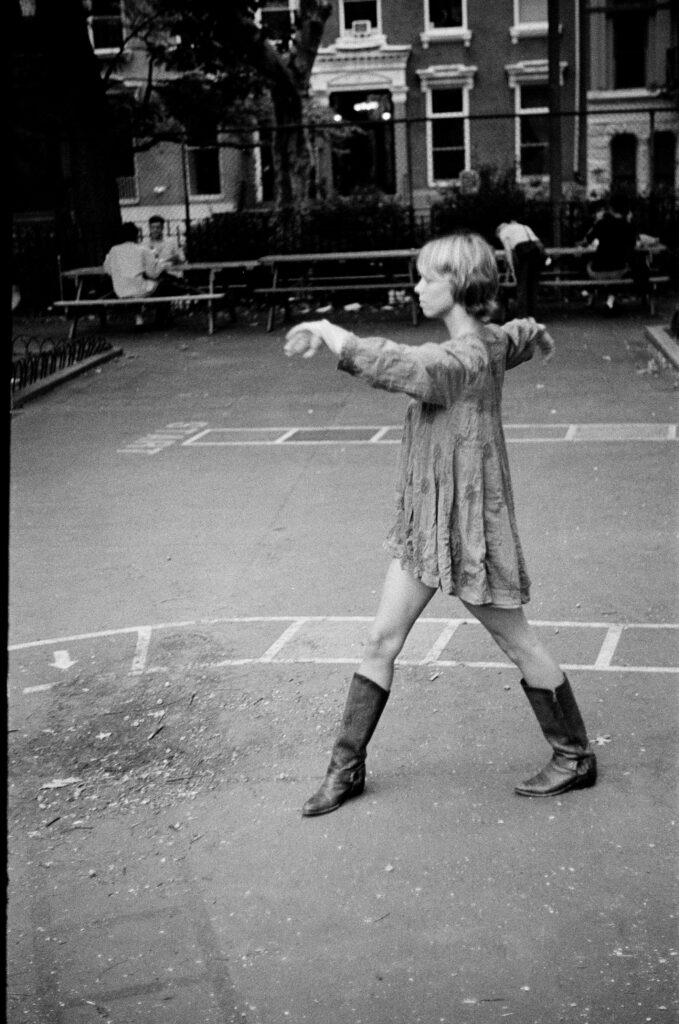
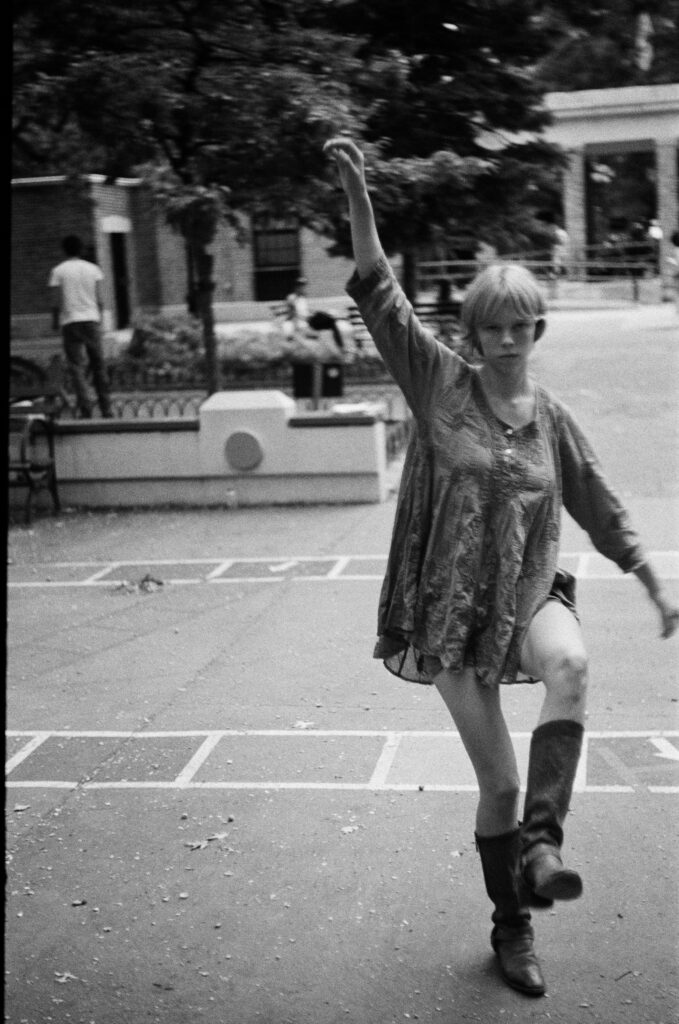
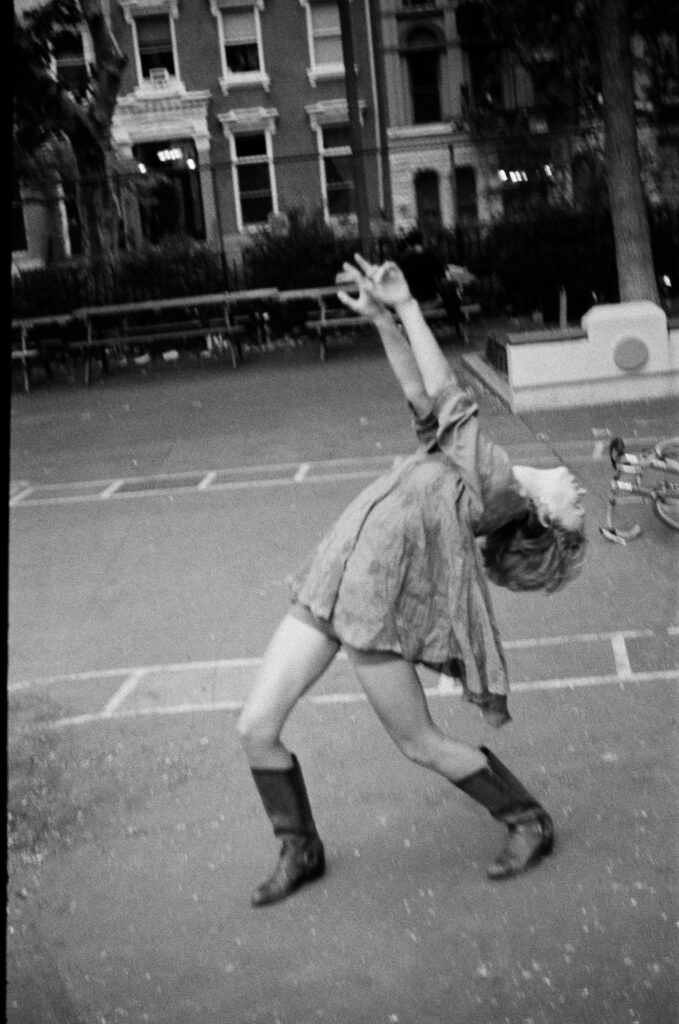
I know some 35mmc readers and contributors object to posts that contain overt political content. And while I respect your right to your opinions and look forward to your reactions whether good or bad, I feel that in our current moment virtually every photograph I take has some level of political meaning — whether it’s landscapes reshaped by melting glaciers in Canada and Iceland or photos that celebrate how easy it is to share the public spaces of our city and country with people who look, think, worship and love differently than we do — not unlike the many brilliant photos taken in the 1930’s by WPA photographers like Dorothea Lange, Walker Evans and Gordon Parks. (At the same time as hiring skilled and unskilled construction workers and other trades people to build infrastructure, Roosevelt’s WPA programs also put many artists and writers to work chronicling and celebrating America in that era.)
I don’t think I can hold a candle to those giants of photography, but at least I can follow in their footsteps and bear witness to the people of my time.
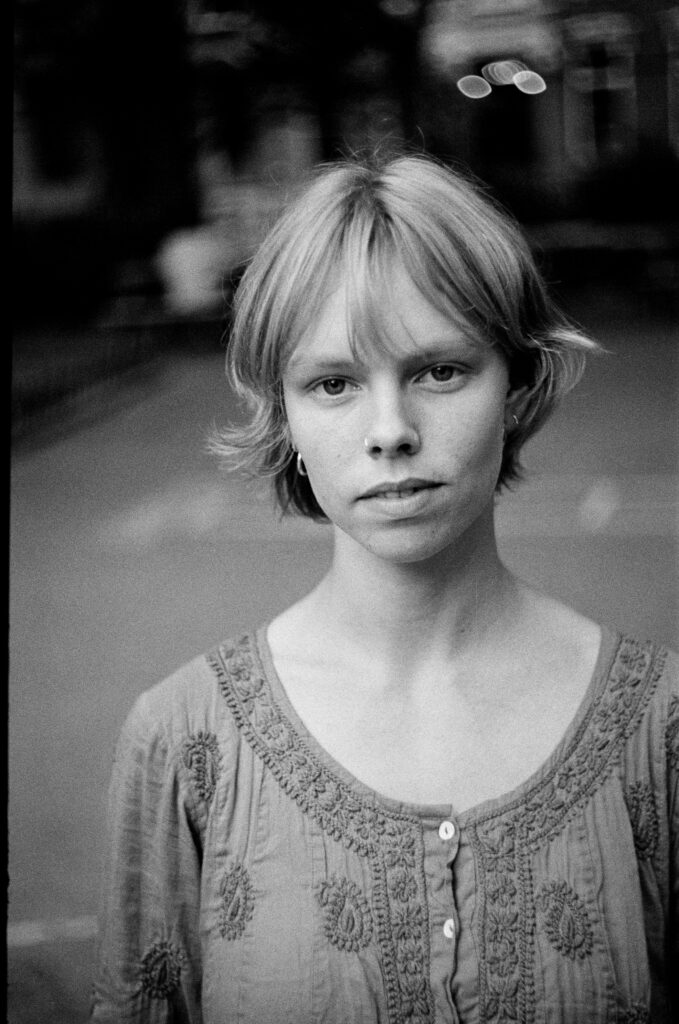
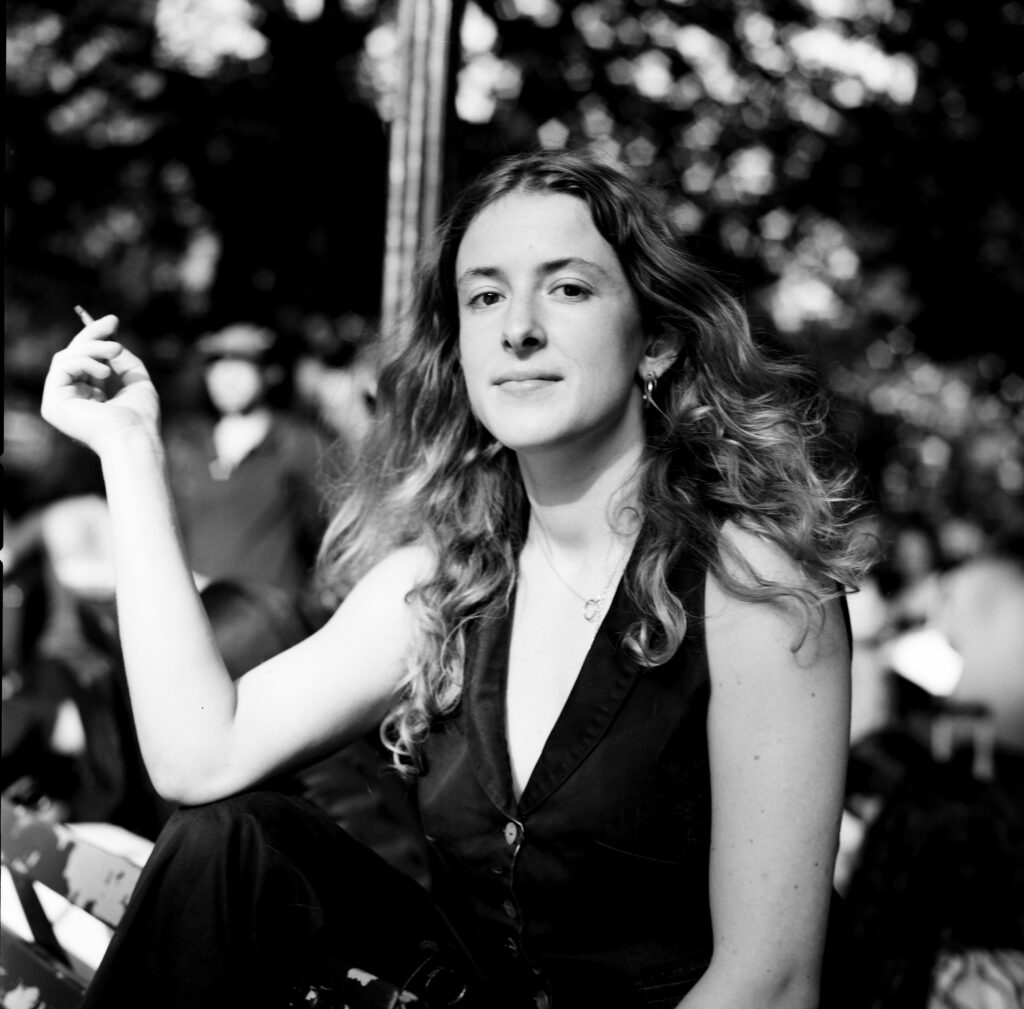
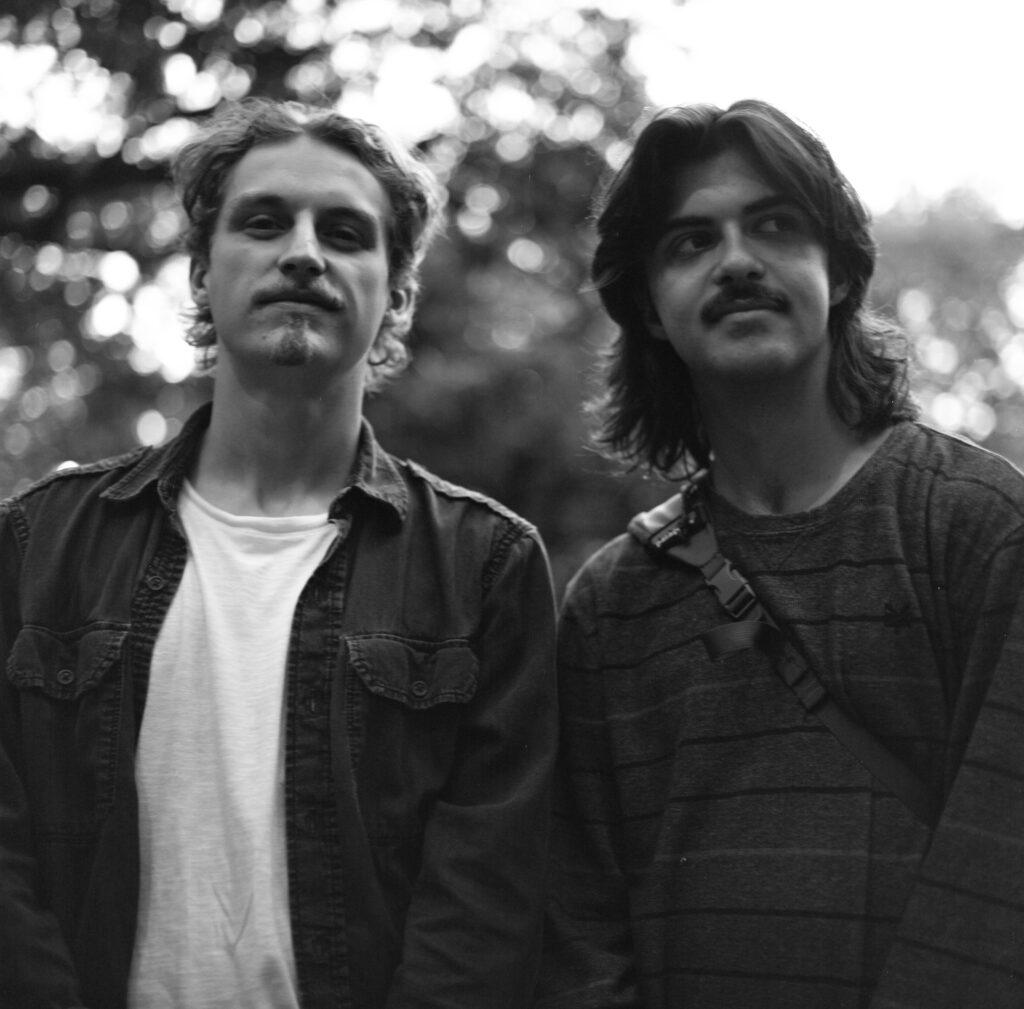
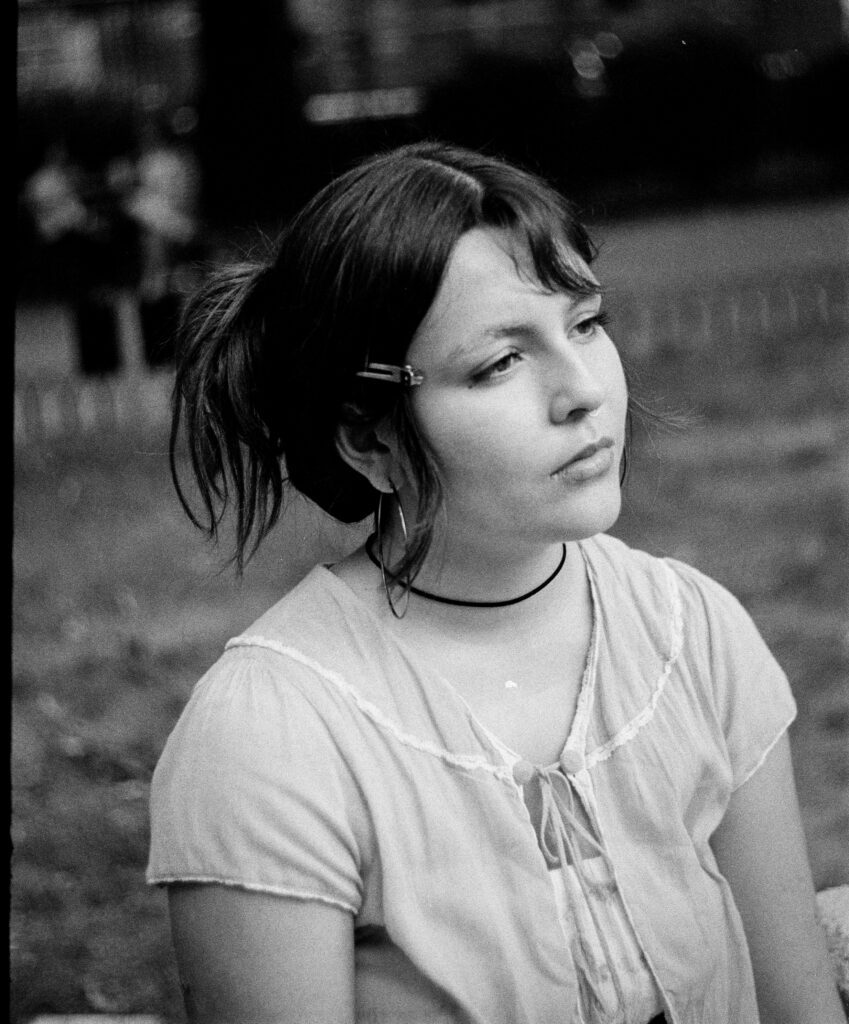
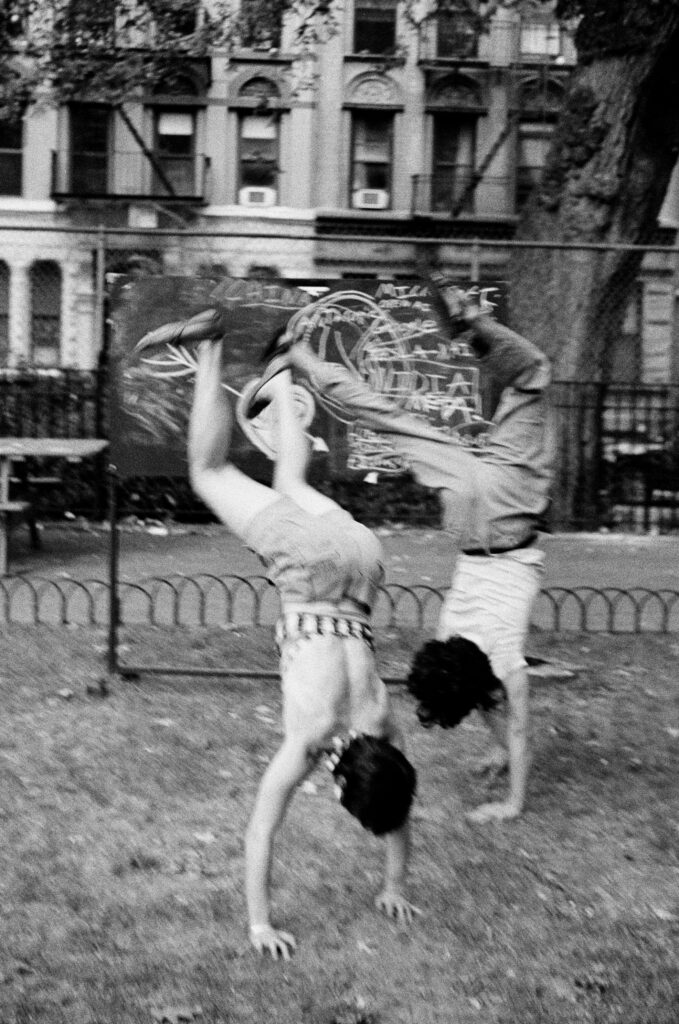
Meanwhile, Aidan and Molly decided to do some handstands over by the area where Bucky had given the day’s Ludd lesson. You can see the chalked highlights of the lesson that prominently feature some of the major tech companies along with a graphic representation of Luddism in a heart with an arrow through it.
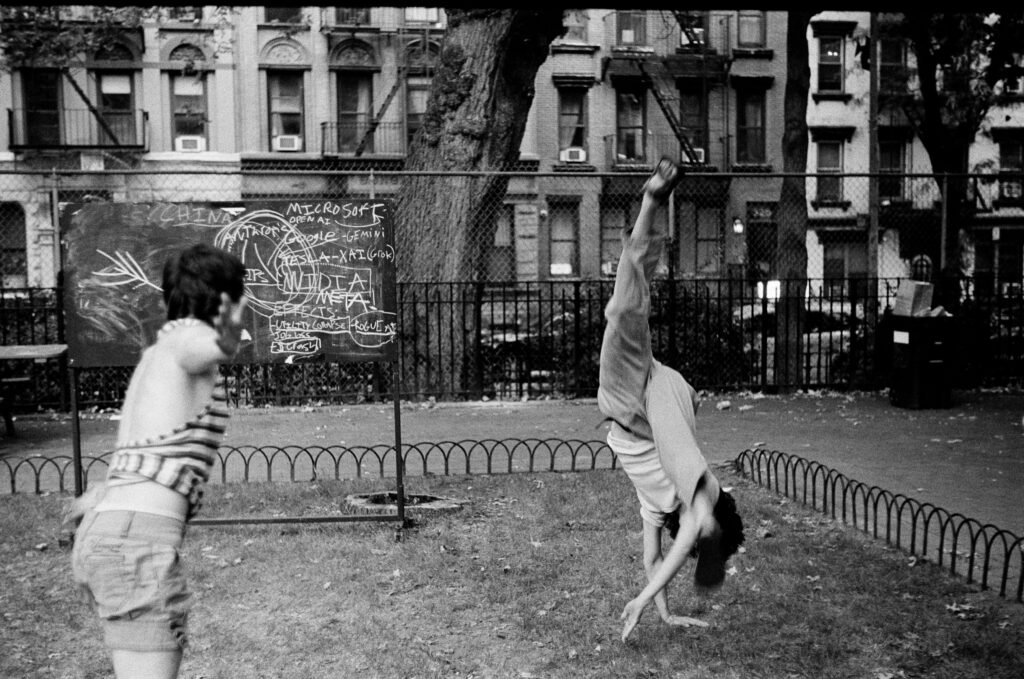
To me, the Ludd Club feels interestingly different than what I’m used to in terms of counter-culture activism. There seems to be a notable lack of the kind of anger (perhaps righteous) or apocalyptic handwringing (possibly warranted) that I’ve seen from people who want to take on ‘the establishment’ — whether it’s people like punks & different ‘outsider’ groups, or insiders trying to work within the traditional two party system. Perhaps this was the way things felt in the early days of the ‘Flower Power’ movement before more radical and violent activism started to emerge in the late 1960’s.
In any event, these 2026 Luddites make the revolution look fun!
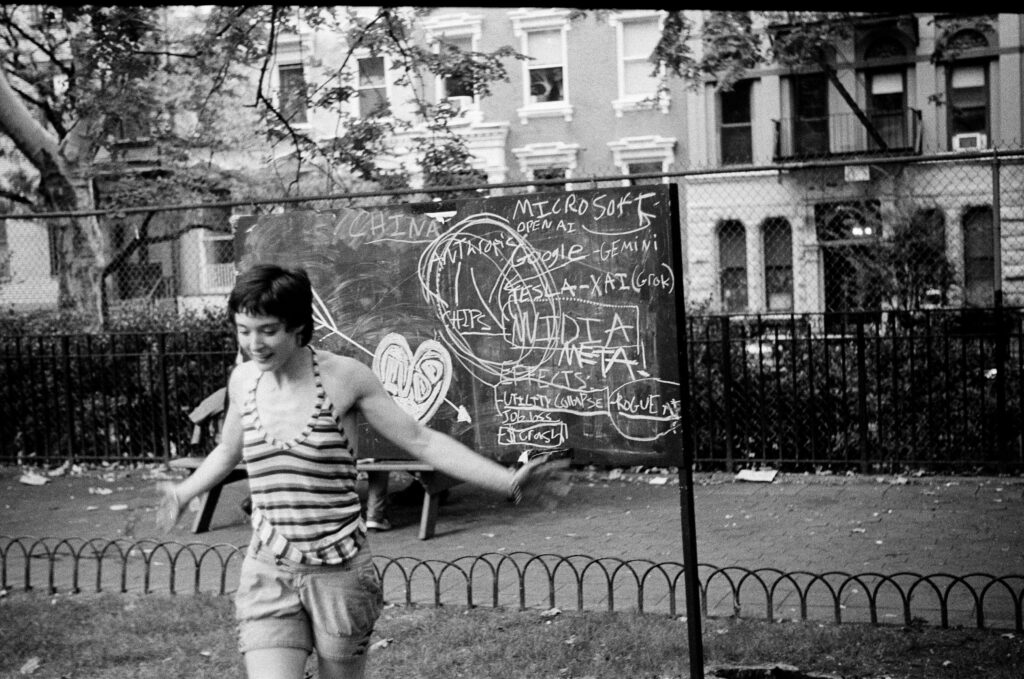
Maybe there’s no better way to change society than putting down our phones and doing something fun and free like dancing or doing handstands in the park.
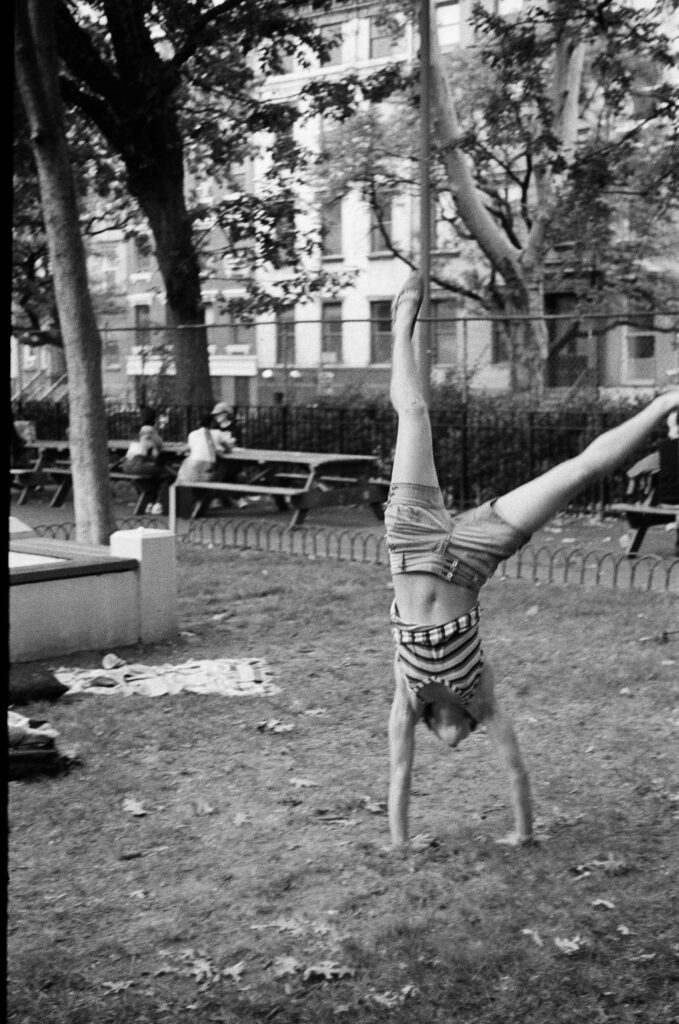
What better way to upend the social order than upending yourself first?
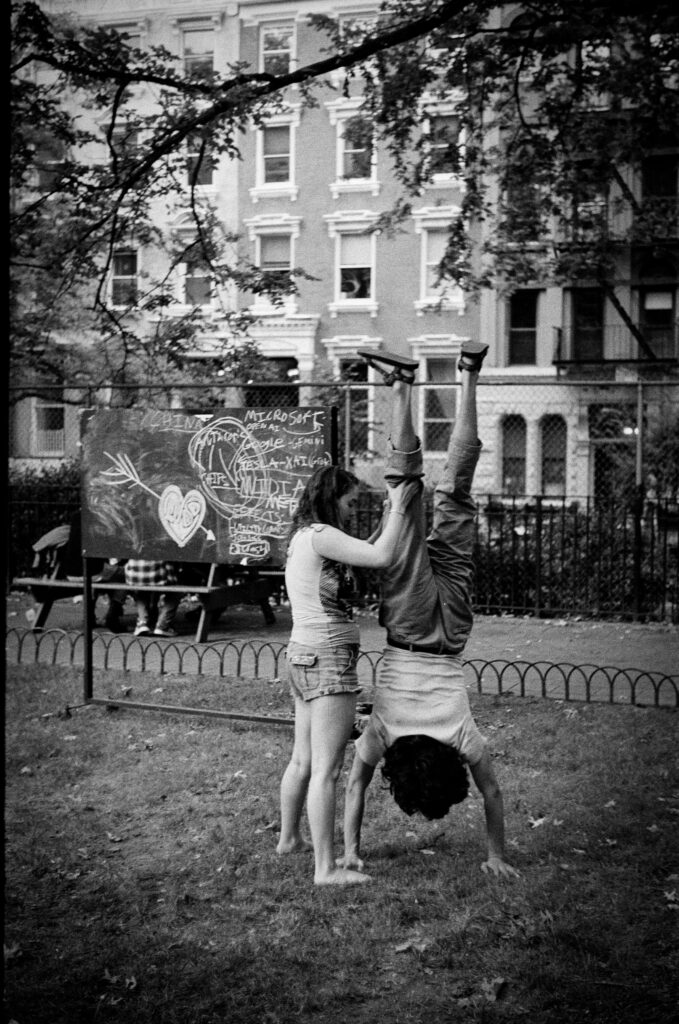
I don’t think I have the answers, and maybe the Luddites don’t have them either, but it was a real pleasure to meet them and take some photographs of them.
Analog photos…
What started as an almost failed photo expedition turned into one of the best times I’ve ever had with a camera. I suspect there will be more photo expeditions featuring the Luddites in my future.
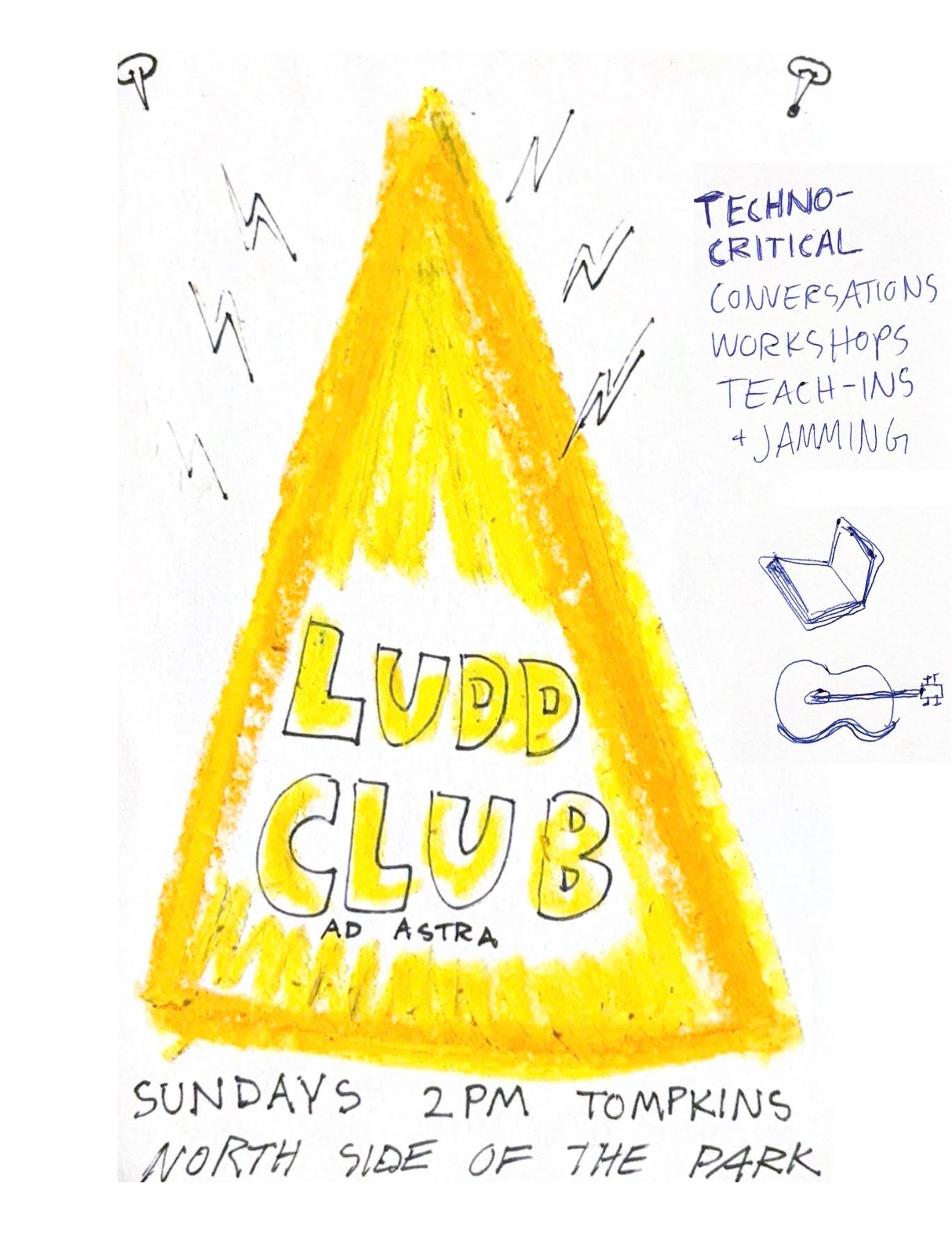
And if you’re in New York City, maybe I’ll see you at a future Ludd Club gathering!
Share this post:


Comments
No comments found