

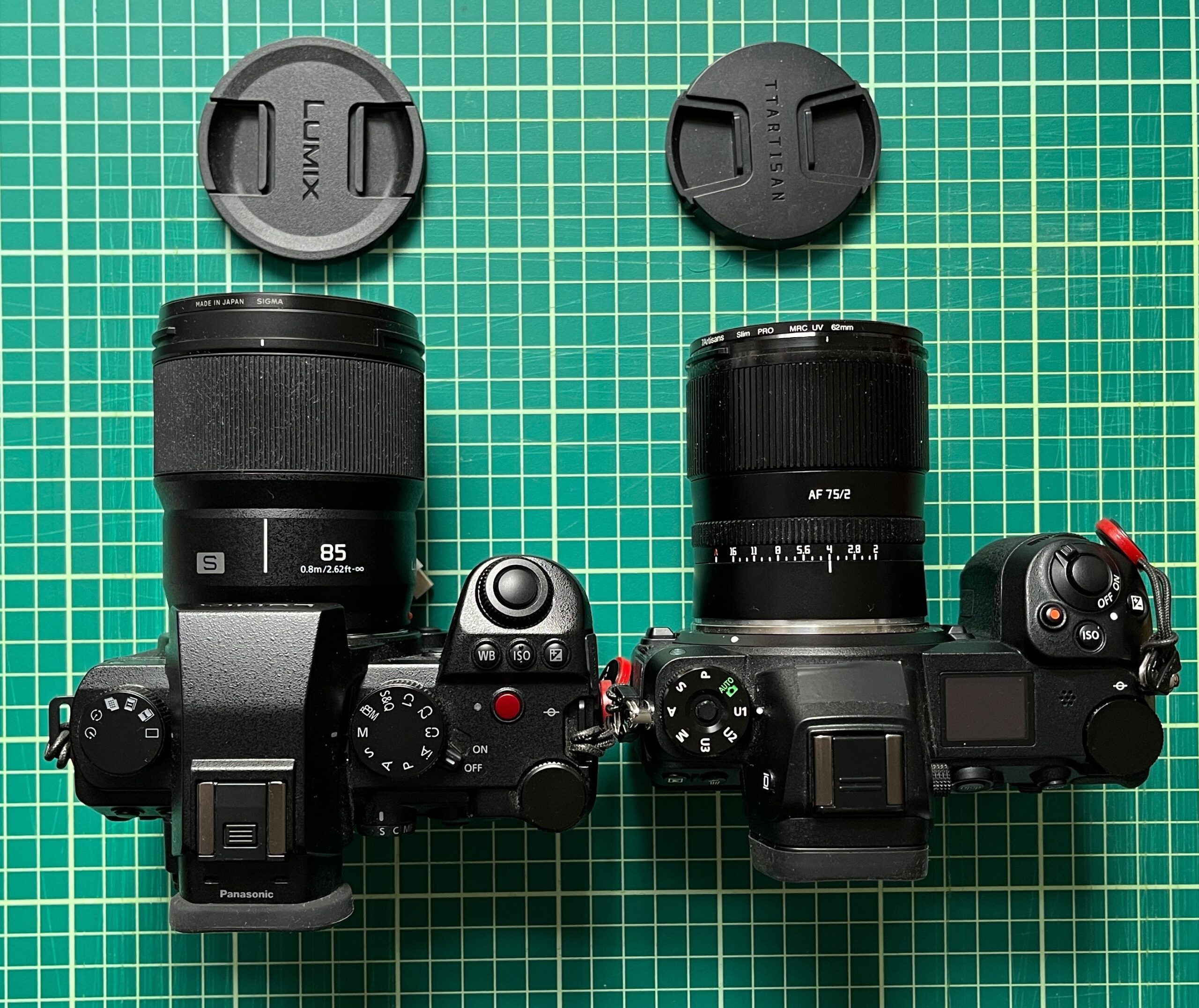
Recently, several 75mm lenses for full-frame cameras were presented by Chinese lens manufacturers. Only few 75mm lenses were produced in the past, like the Zeiss Biotar 75mm (a remake is available) and the Leica 75mm lenses for M-mount cameras. Leica never produced R-mount 75mm lenses. They do offer now a 75mm lens for L-mount cameras. The standard short telephoto focal length has always been the 85mm. So nowadays, the obvious question is, why should I choose one focal length over the other, given this small difference in 10mm?
This difference doesn’t matter for portrait photography, the most often mentioned use case for short telephoto lenses. One can keep a larger distance from the person with a 85mm focal length, but the difference in other lens parameters can be negligible. A 75mm lens allows you to include more foreground in landscape and in street photography though. If you can’t change your position, the field of view of a 85mm lens can be just a bit too small. This is why a like to use my 75mm lenses a lot. My first short fixed-focal length lens (“prime”) was a 85mm lens. It used to be my preferred focal length, but it got a tough competitor, when I bought also a 75mm lens for my rangefinder camera.
I was looking for a telephoto lens for my Zeiss Ikon ZM rangefinder camera and I found a Voigtländer 75mm f2.5 Color Heliar for a good price. This lens has a L(M)39 lens mount and so I needed a L-mount adapter. The native M-mount 75mm lenses show the 50 and 75mm frame lines in Leica cameras (there are also Voigtländer Bessa models with 75mm frame lines), but the Zeiss Ikon ZM lacks 75mm frame lines. I would see only the 50mm frame lines. That I had to get an L-mount adapter was therefore in fact a good thing. I chose the 28/90mm M-mount adapter, so I see the 85mm frame lines of the Zeiss Ikon ZM. The 75mm field of view corresponds very well to the outer rim of the 85mm frames lines. I don’t really have to guess what will be in the photo, in contrast to the much bigger 50mm frame lines.
Later, I also found the Zeiss ZM 85mm f/4 lens for a good price. However, I prefer the Voigtländer 75mm Color Heliar over the ZM 85mm, and not because it is the smaller lens of the two. Neither lens body gets even close to the 85mm frame lines. This Voigtländer lens is just good enough at f2.5, especially for b&w. Above that, it is sharp and has a beautiful color rendering. I did try it on my Nikon Z6 on a bright, sunny day and did not like the results. Others reported that it works just fine in combination with Sony cameras. The ZM 85mm works perfectly with the Z6 and as reported also with Sony cameras.
So, I decided to get myself the TTArtisan 75mm f/2 for my Nikon Z6. First of all, it wasn’t a huge investment for just under 200€. Secondly, my Z6 didn’t get much use since I also own a Lumix camera. I do like using this 75mm lens and I use my Z6 now more frequently now. I am not at all a fan of my Nikon 24-70mm f/4 kit lens and zooms in that range in general. This TTArtisan lens has been reviewed on 35mmc with other cameras and I can confirm the experiences described in those articles. I develop those raw files in Capture One using the ICC-profile ‘Nikon Z6 generic’ and ‘film’ or ‘linear’ by the way. Using the ‘standard’ will give bold high contrasts and bold highly saturated colors and there is usually too much green in the yellow spectrum too. This is easily fixed in the green channel in the RGB-profile.
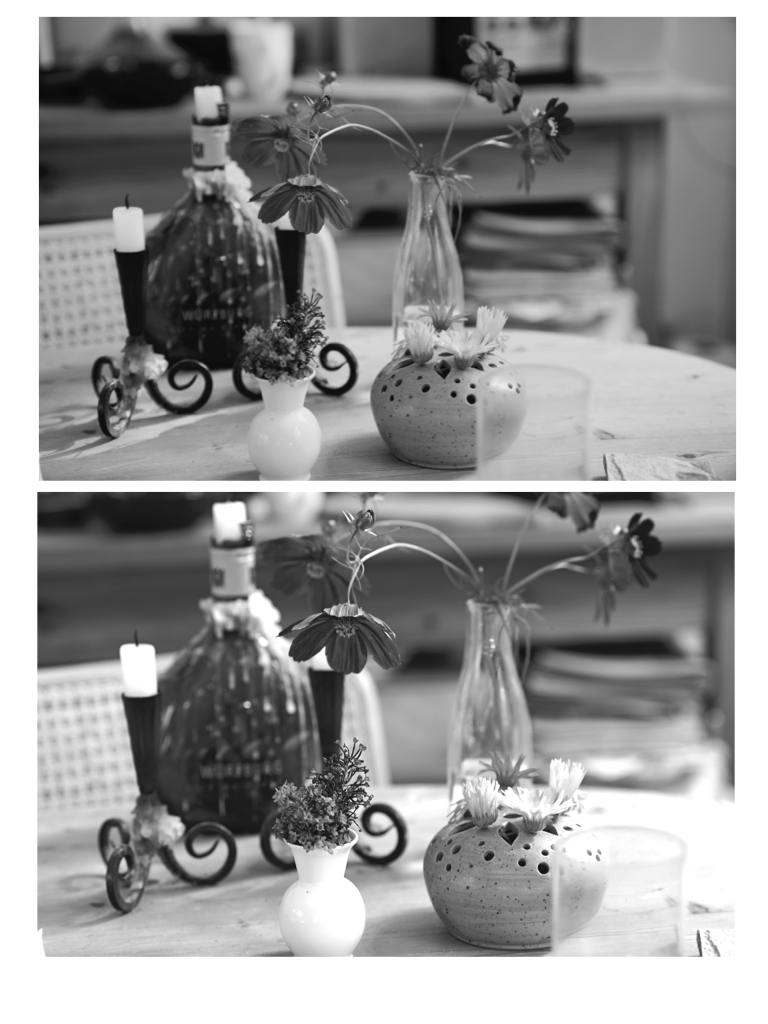
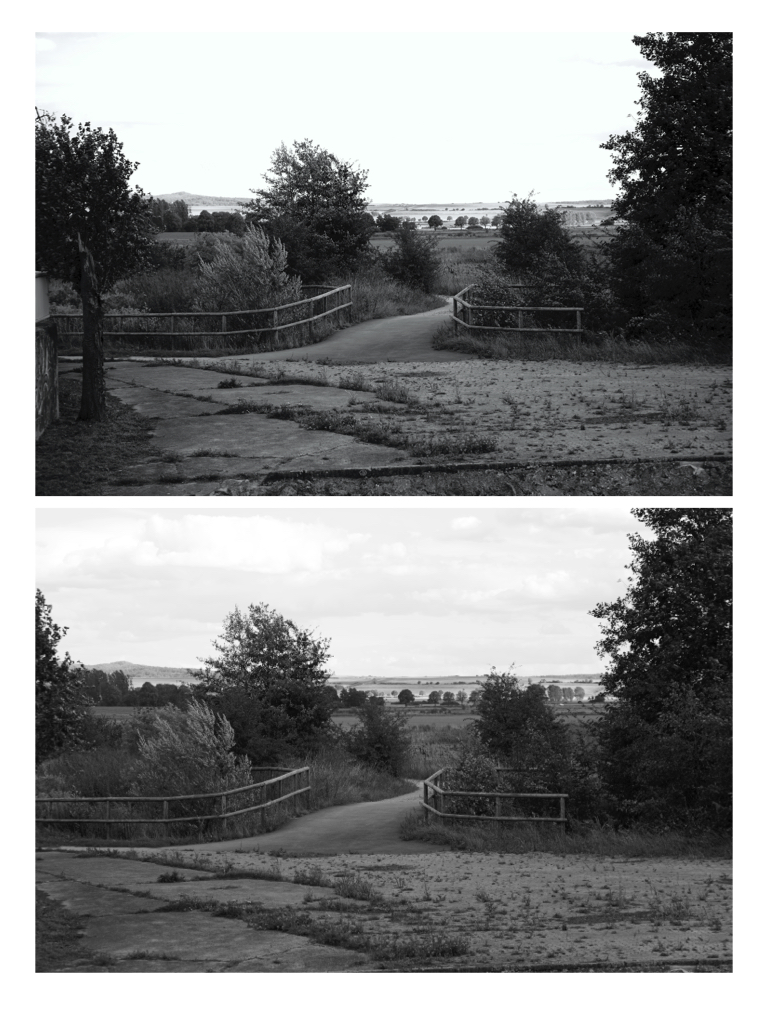
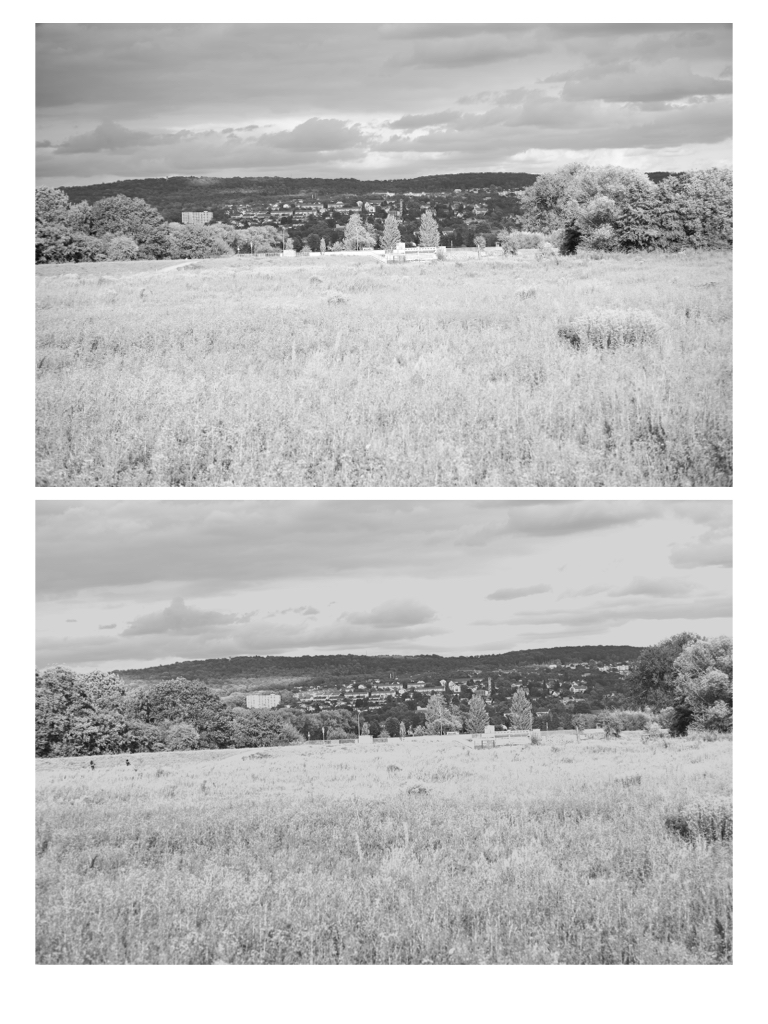
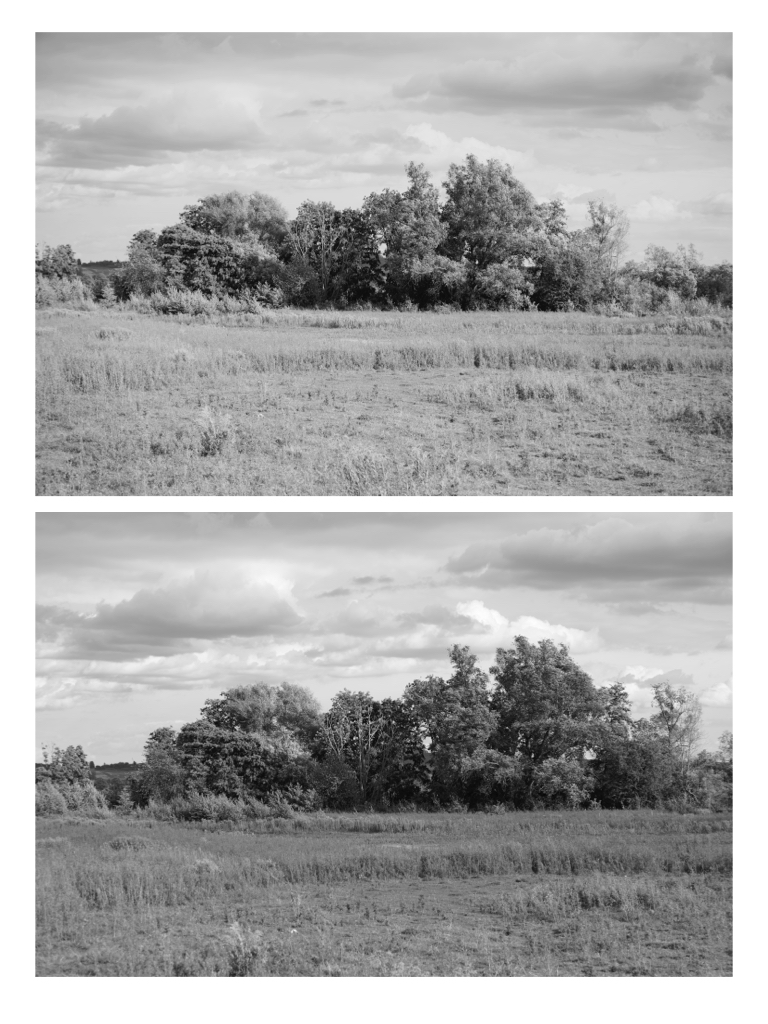
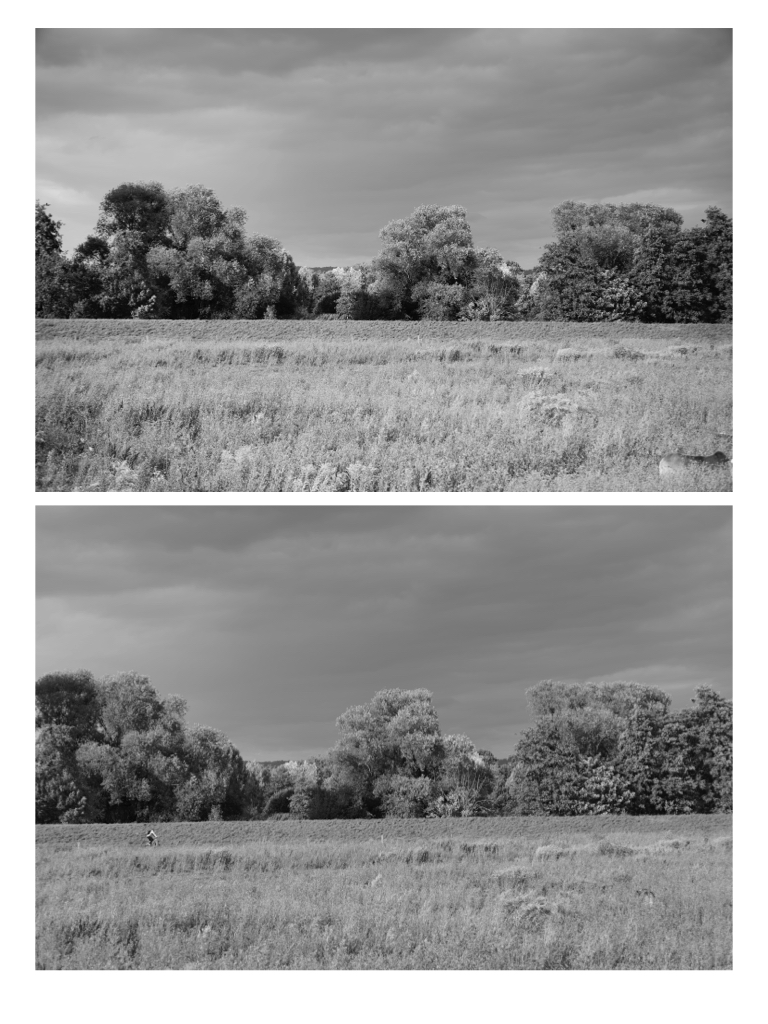
I took a few sample photos with the TTArtisan 75mm, which has a 32° diagonal field of view, on my Z6, and the 85mm f/1.8 which has 29° diagonal field of view, on my Lumix S5 IIx. All photos were taken at f4.0 and ISO 100. It was windy and so the clouds moved fast and the light changed.
Z6: Raw files imported into Capture One 20, no green-channel adjustments > Nikon monochrome > jpeg.
S5 IIx: out of camera Leica monochrome jpeg.
I adjusted a little bit the exposure of the photos, because the two cameras and lenses behaved differently. You’ll notice differences in gray scale and contrast, which could be adjusted in the files from the 75mm lens. The differences in the field of view between 75 and 85mm are minor, as expected, but this small difference can allow one to include just a bit more and this can be an important difference.
I hope that this description of my experiences can be helpful for people, who think about purchasing a short telephoto lens and who are not sure whether to get a 75mm or a 85mm lens.
Share this post:





Comments
Michael Murray on 5 frames with a 85mm and a 75mm lens – Does it make a difference?
Comment posted: 14/10/2026
Gary Smith on 5 frames with a 85mm and a 75mm lens – Does it make a difference?
Comment posted: 14/10/2026