Photography Does Not Exist (Until the Eye Makes It)

By Andrea Monti

This post is the first of a series meant to organise in a logical and structured corpus the ideas collected in this blog throughout years of taking photos in various environments.

Introduction

A preliminary misunderstanding that should be addressed immediately is that a photography does not exist per se.

The photograph begins only when the eye intervenes—when it selects, isolates, and organises a continuous visual field indifferent, in itself, to interpretation. This means that an image is not discovered but constructed, and this construction may even fail, as when a narrative is imposed that later proves to be incorrect.

From the outset, therefore, photography must be understood as an active process of interpretation of the reality.

The Eye as the Origin of the Image

Once photography is framed as construction, the centrality of the eye becomes unavoidable.

It is tempting—especially at the beginning—to attribute failure to external factors: autofocus inaccuracies, lens limitations, sensor performance.

This explanation, though, collapses under scrutiny. If the same errors recur across different systems, they reveal their true origin: the photographer. Training, therefore, must focus both on perception and technique, to make the most out of what the camera has to offer.

The Moment as a Construct of the Eye

The “moment” is often treated as  something that exists independently and must simply be captured. Is that actually so?

It is a recurring assumption in this short text that a fleeting interaction—a gesture between a grandfather and a child—becomes a photograph not because it exists, but because it is recognised as such. This is apparent when an image is not extracted from a burst but captured in a single exposure, thus showing that the photograph is the result of a decision.

At the same time, the admission that such an image may be “pure luck” introduces an important nuance. Construction does not always imply or require control, questioning the possibility to consider as human-made an image extracted from a burst, where the photographer only pressed the shutter and let the camera do the heavy lift.

Meaning as an Imposition

There are cases in which the image, taken on its own, does not carry any particular weight. Yet, when framed within a narrative—here, the transformation of a neighbourhood under the pressure of urban development—it acquires meaning.

Such a mechanism is not exceptional, as if it is true that photography is a vehicle for meaning, it also true that meaning can be assigned at different levels of connection with the image.

Composition as Learned Vision

If the photograph is made by the eye, then composition cannot be reduced to a set of rules. Therefore the statement that “the eye sees what the mind is prepared to comprehend” should be taken literally.

The reference to classical painting in the linked post is not incidental, as it points to the role of cultural and visual education in shaping perception. Mind, though: photography, in this sense, resembles painting, but under radically different temporal constraints. In painting, time tends to infinite, in photography it collapses in fraction of seconds. Photography is painting in (almost) real time, without the possibility of correction.

Imperfection as a By-product of Vision

Technical imperfection is often treated as a defect. In practice, it may be consistent with the logic of the image.

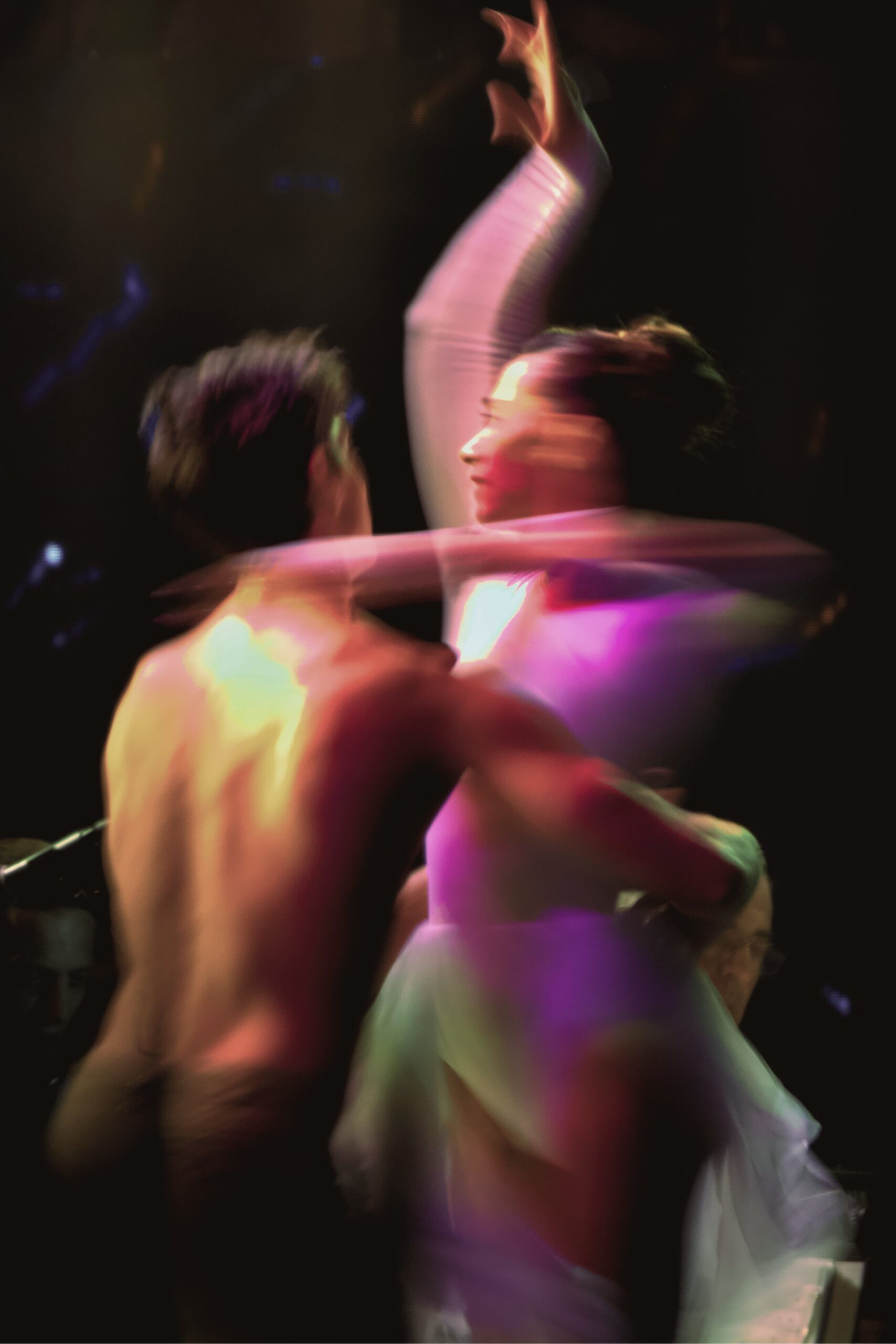
A blurred and out-of-focus photograph would, by conventional standards, be considered a failure, yet it may still convey a sense of speed, tension, and action. The image “works,” despite—or because of—its flaw.

In other words, this means that technical criteria are insufficient to evaluate a photograph. What matters is whether the image matches the act of seeing that produced it. Imperfection, in this context, is not an anomaly but a possible outcome of prioritising meaning over precision. However, this approach cannot be an ex post excuse for a sloppy command of technique and rules.

Recognition, Validation, and Professional Practice

External validation introduces a different set of considerations.

Awards, mentions, and competitions provide recognition, but their relationship to photographic practice is ambiguous.

Receiving an honourable mention may create a sense of achievement, but it also raises questions. Does this recognition improve the photographer? Does it reflect something intrinsic to the image, or does it depend on contingent criteria?

There are no definitive answers. On the one hand, competitions may or may not contribute to the development of an individual style but , in some instances, they may even distract from it. Practice, therefore, whether professional or not, cannot (or, at least, cannot only) be grounded in external validation. It must rely on a continuous process of refinement, informed by experience and critical reflection.

Conclusion

As mystical as this ‘closing argument’ may sound, photography does not exist independently of the photographer; photography is the photographer and vice versa.

A photo is not embedded in reality, waiting to be extracted. A photographer builds reality when the eye—trained, fallible, and situated—decides that what is in front of it makes sense, or at least enough sense to justify pressing the shutter.

Everything else is secondary.

Share this post:

About The Author

By Andrea Monti
My name is Andrea Monti. I’m an Italian free-lance journalist, photographer and – in my spare time – an hi-tech lawyer. The works I am more proud of are covering live jazz, pop and rock concerts for an Italian online music magazine and Opera and prose for a 200 years-old theatre. I also do sport photography mainly in athletics and fighting disciplines. You may find out more about me on https://andrea.monti.photography
Read More Articles From Andrea Monti

Find more similar content on 35mmc

Use the tags below to search for more posts on related topics:

Donate to the upkeep, or contribute to 35mmc for an ad-free experience.

There are two ways to contribute to 35mmc and experience it without the adverts:

Paid Subscription – £3.99 per month and you’ll never see an advert again! (Free 3-day trial).

Subscribe here.

Content contributor – become a part of the world’s biggest film and alternative photography community blog. All our Contributors have an ad-free experience for life.

Sign up here.

Make a donation – If you would simply like to support Hamish Gill and 35mmc financially, you can also do so via ko-fi

Donate to 35mmc here.

Comments

David Hume on Photography Does Not Exist (Until the Eye Makes It)

Comment posted: 18/04/2026

Thank you for this Andrea. I found it a well constructed and thoughtful survey of your observations. It is, of course, highly personal and while my own views are quite different from yours in many areas, it serves as a good reminder of the value of interrogating one's own ideas and finding structure in them by comparing them with the ideas of others, as well as the very valuable experience of keeping a dialogue going with those who are pondering similar questions.

I'll share with you a nice quote I found recently from the contemporary arts writer Belinda Howden: "Photogtaphy... The image as surface to be understood both as an object created and as a trace of the world around us."

Thanks again for the post, David.
Reply

Leave a Reply

Your email address will not be published. Required fields are marked *

Andrea Monti replied:

Comment posted: 18/04/2026

Well, I think we are going metaphysical :) David, I am not sure I can support the idea that a photo is, quoting, 'a trace of the world around us'. The idea of 'trace', on the one hand, implies the ideat that the trace is there to be observed and validated by anyone who looks at it. On the other hand, traces may be interpreted in different ways —think of what happens in court, where expert witnesses 'brawl' about the signifiance of a piece of DNA or other crime scene remnants (sorry, here is my lawyer side taking over:)) I rather think of photography, but that's just me, as a projection of my capability to build the reality around me. Still, nothing is carved in stone so I will keep challenging my assumptions... Best! Andrea

Reply

Leave a Reply

Your email address will not be published. Required fields are marked *

David Hume replied:

Comment posted: 18/04/2026

Hi Andrea, cheers - that's interesting. Yes, I saw "trace" in this case to mean something that is there, but barely discernible. (a trace of strychnine in the victim's blood?) But everyone brings their own experience. And yes, the language of the courtroom, that is often adversarial or didactic was noticed. But the "visarts" as we sometimes call it, does have its own secret language too, and one thing I think is important is that the arts can communicate and engage with a generalist audience. My family has a good mix of lawyers, scientists and artists in it, and I am probably most impressed with what has happened in the sciences in this area recently. When my daughters were completing their PhDs they were constantly given training in simplifying their very complex projects into messages that were rigorously correct and yet could be very simply conveyed. And I use this as something of a test myself. One of the best communicators I have come across is the physicist Richard Feynman who had the adage, "if you can't explain it simply it means you don't understand it." I try to apply this to myself! (And often fail.)

Reply

Leave a Reply

Your email address will not be published. Required fields are marked *

Andrea Monti replied:

Comment posted: 18/04/2026

David, This Feynman reference is quite funny because this is what I wrote in a pending post: "Why Writing About Photography Matters (or: The Importance of Re-inventing the Wheel)". But you must wait for Hamish to schedule it to read it:) Andrea

Reply

Leave a Reply

Your email address will not be published. Required fields are marked *

Tony Warren on Photography Does Not Exist (Until the Eye Makes It)

Comment posted: 18/04/2026

I totally agree with you Andrea with one caveat. It should be that creative photography etc. The spray and pray phone user, dashcam or security cameras are photography after all. It is using the camera as a creative tool that produces Photography with a capital P. There is a competitive urge in many that gives pleasure to many people. Mainly though it is most useful to hear the opinions of others and consider them an invaluable resource. The thing is to remain objective and receive the comments constructively. If you win an award all the better. I have seen wild life images recently where rare and reclusive species have been captured with a motion sensing camera but which have nevertheless received awards. Did the author's knowledge of his subject and the planning and visualisation needed make it any the less of an achievement?
Reply

Leave a Reply

Your email address will not be published. Required fields are marked *

Andrea Monti replied:

Comment posted: 18/04/2026

Tony, Your point ' Did the author's knowledge of his subject and the planning and visualisation needed make it any the less of an achievement?' made me think. What I can say is that I see a difference between the 'capital P' photography that you rightly mentioned and an achievement where the role of photographer is less or none at all relevant. Knowing how to set a camera to capture images in challenging environment, understanding the complexities of the task and so on are absolutely commendable skills. In fact, also if the photo is not taken by a deliberate choice of the photographer but as a result of a burst or an automatic shutter triggering it keeps its value as an outcome. What comes to my mind is, for instance, the underwater capture of an unknown species or a perspective impossible to get by ordinary means. However, this photo doesn't attain the level to deserve the capital 'P' because it is not the result of a direct - and I think that direct is the keyword - between mind, eye and the pressing of the shutter. Best! Andrea

Reply

Leave a Reply

Your email address will not be published. Required fields are marked *

Tony Warren replied:

Comment posted: 18/04/2026

I mostly agreee Andrea, but with the technology available these days it almost becomes a matter of 'horses for courses' when seeking the solution for obtaining the image you have conceived in your minds eye. Regards. Tony.

Reply

Leave a Reply

Your email address will not be published. Required fields are marked *

Bill Brown on Photography Does Not Exist (Until the Eye Makes It)

Comment posted: 18/04/2026

On the topic of imperfection. The photographer I process, retouch and print work for has recently started a new photo project with flowers as the subject. His approach has been to deconstruct what most people would consider a technically produced flower image and find a way to take the viewer from the position of observer to being immersed and entangled in the flowers themselves. Using vintage projection lenses and his knowledge of what each of these lenses brings to the "look" of the composition he has pushed out the boundaries of flower photography. Focus is only one aspect of an acceptable image but is not a requirement. As you stated "Imperfection, in this context, is not an anomaly but a possible outcome of prioritising meaning over precision. Getting to see this project evolve has been enlightening for me and has broadened my own visual criteria for a beautiful and interesting image. His vision for the end product is the driving force and the overarching thread that ties it all together. The camera is his tool for getting there.
Reply

Leave a Reply

Your email address will not be published. Required fields are marked *

Andrea Monti replied:

Comment posted: 18/04/2026

Bill, Your point about the camera being a tool for pursuing a vision, is crucial in this discourse because, to me, it highlights the importance of having a cultural background and a hands-on, life-honed experience to avoid - has sometimes happens in music and painting - that a sloppy or casual work is presented as a 'piece of art', or to be lost in endless musing to find a meaning where, actually, there is none (a matter more interesting for psychoanalysts, though:)) Best! Andrea

Reply

Leave a Reply

Your email address will not be published. Required fields are marked *

Jalan on Photography Does Not Exist (Until the Eye Makes It)

Comment posted: 18/04/2026

"photography does not exist independently of the photographer" is absolutely how I feel Andrea! We start out loving light and photography is just a way to capture what we see. But the gear and "stuff" and the appearance of the final image seduce us and we forget about what it is we were trying to capture.
Reply

Leave a Reply

Your email address will not be published. Required fields are marked *

Tony Warren on Photography Does Not Exist (Until the Eye Makes It)

Comment posted: 18/04/2026

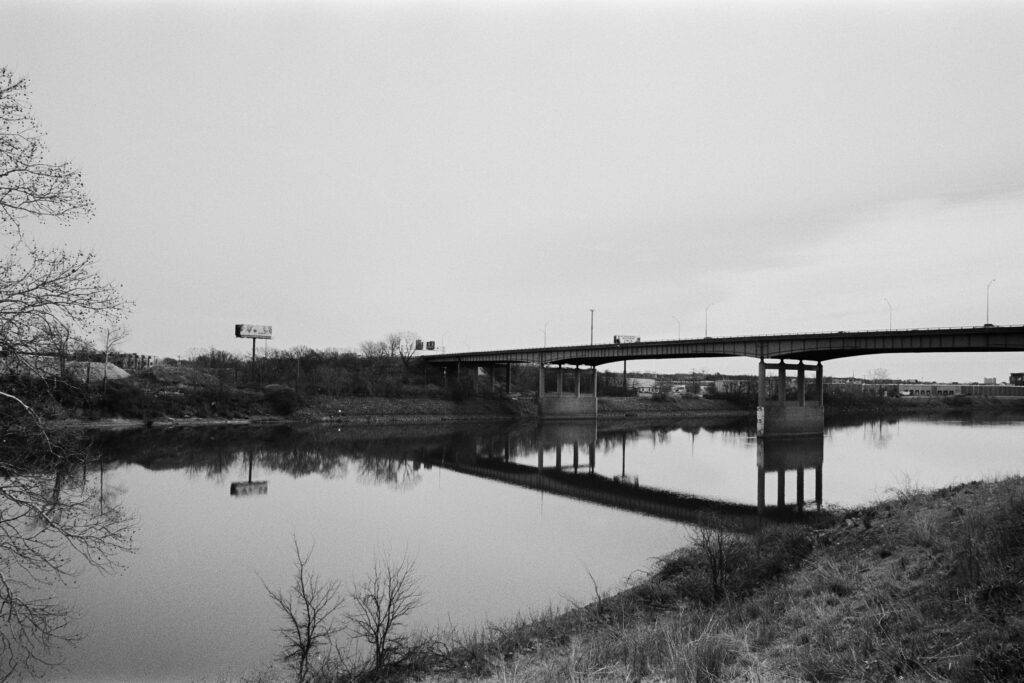
PS: I love your feature image, very reminiscent of Haas' classic bullfighter.
Reply

Leave a Reply

Your email address will not be published. Required fields are marked *

Gary Smith on Photography Does Not Exist (Until the Eye Makes It)

Comment posted: 20/04/2026

Andrea, I'm not sure that I agree with: "...A photo is not embedded in reality, waiting to be extracted..."

I will often "see" a photo, even when I have no camera with me. In many cases, I can return with a camera and capture the photo that I previously saw "embedded in reality."
Reply

Leave a Reply

Your email address will not be published. Required fields are marked *

Andrea Monti replied:

Comment posted: 20/04/2026

Gary, I think that when you come back the photo is not going to be the same that you previously saw. The subject (let's say, a static object) may be the same, but the light, the shooting angle, the FOV... everything else change. It is an Heraclitean assumption: as you can't bath twice in the same river, you can't shoot twice the same photo...

Reply

Leave a Reply

Your email address will not be published. Required fields are marked *

Gary Smith replied:

Comment posted: 20/04/2026

I suppose the photo that I thought I saw wouldn't be there for me to see again.

Reply

Leave a Reply

Your email address will not be published. Required fields are marked *

Thomas Wolstenholme on Photography Does Not Exist (Until the Eye Makes It)

Comment posted: 04/05/2026

Why obsess over this stuff. Put away your mobiles and computers and go take some photographs. With a camera, you know, that mechanical contrivance that records situations either chemically or electronically so we can re-visit that particular view at some future time. Forget the philosophy: this is akin to asking "How many photograhers can dance on the head of a pin?" Go make some photographs!
Reply

Leave a Reply

Your email address will not be published. Required fields are marked *

Andrea Monti replied:

Comment posted: 04/05/2026

Well, a very simple answer is that if you want to impose the copyright over a photography you need to show (in Court) a certain degree of creativity. Therefore, a 'taoist' approach to photography might limit the possibility to claim for legal protection over an image (being the one who press the shutter doens't make him an 'author' in the legal meaning of the word). Another answer is that I believe that there is a difference between shooting casually a hundred of pictures and pick a posteriori a keeper, and shooting deliberately to properly express oneself. If you like, this is the difference between uttering nonsense which - sometimes, means something - and delivering a proper discourse. A third one is that film is expensive and it makes no sense to waste it waiting to get some decent exposure.

Reply

Leave a Reply

Your email address will not be published. Required fields are marked *

Leave a Comment

Leave a Reply

Your email address will not be published. Required fields are marked *