

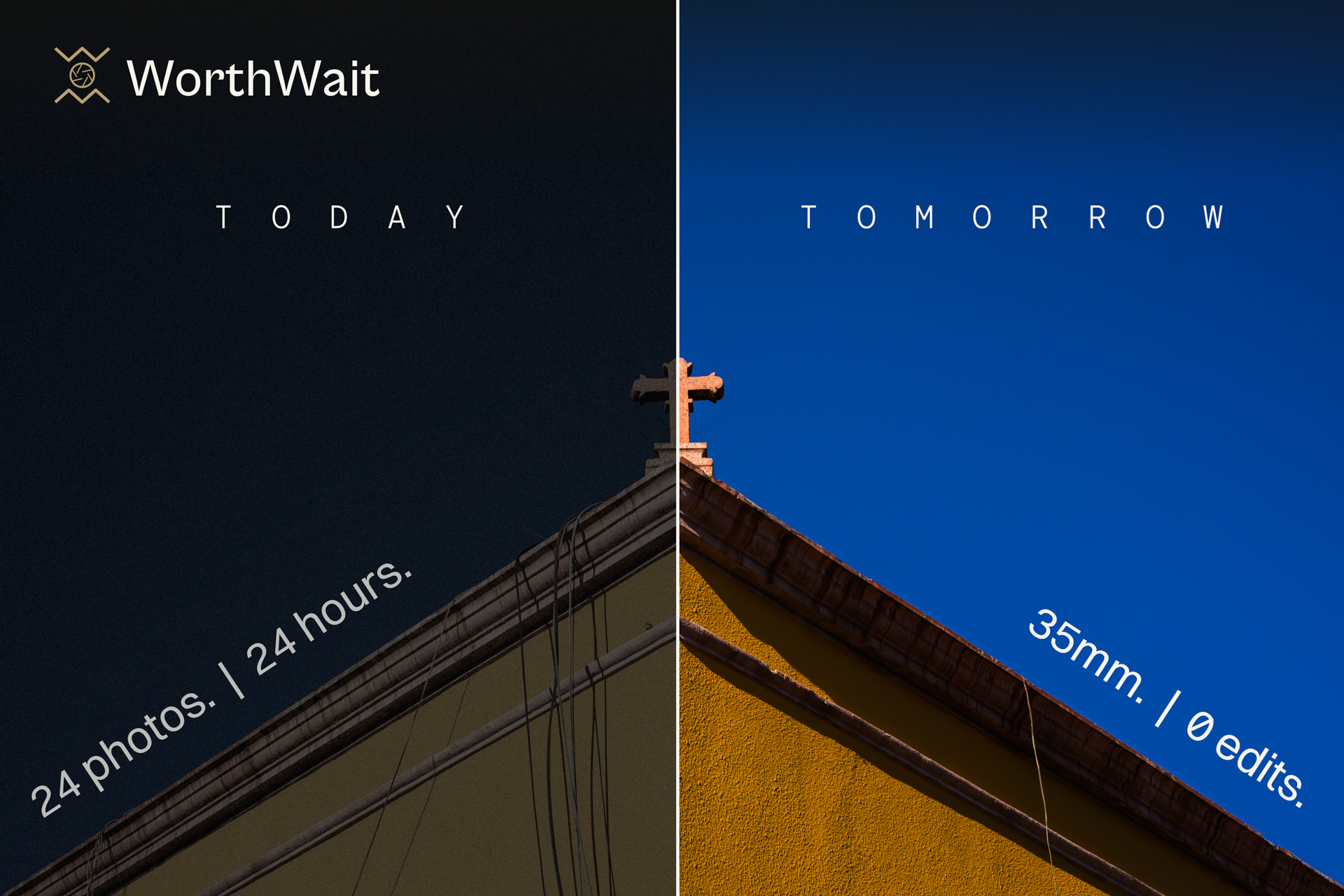
I discovered photography almost thirty years ago. Deciding to take it seriously, and eventually to make a living from it, turned out to be one of the most important decisions of my life. But it started small. In my family there were never many albums, never many pictures of us. So when I was still very young, I felt the need to document my own life: my days, my friends, my family, my trips, the things I cared about. It didn’t stay small for long. Soon I was shooting almost every day. Photography grabbed me so hard that it became an obsession. The good kind, but an obsession. I bought a compact point-and-shoot and took it to my favorite park. Some frames were of my friends; others were my attempts at fine art – no offense to anyone – without knowing exactly what that meant. I loaded a black-and-white roll, the kind that’s developed in C-41, like color film, and the prints came back with a sepia tone. Back then I didn’t mind much. Looking at them now, I wish I’d just shot color.
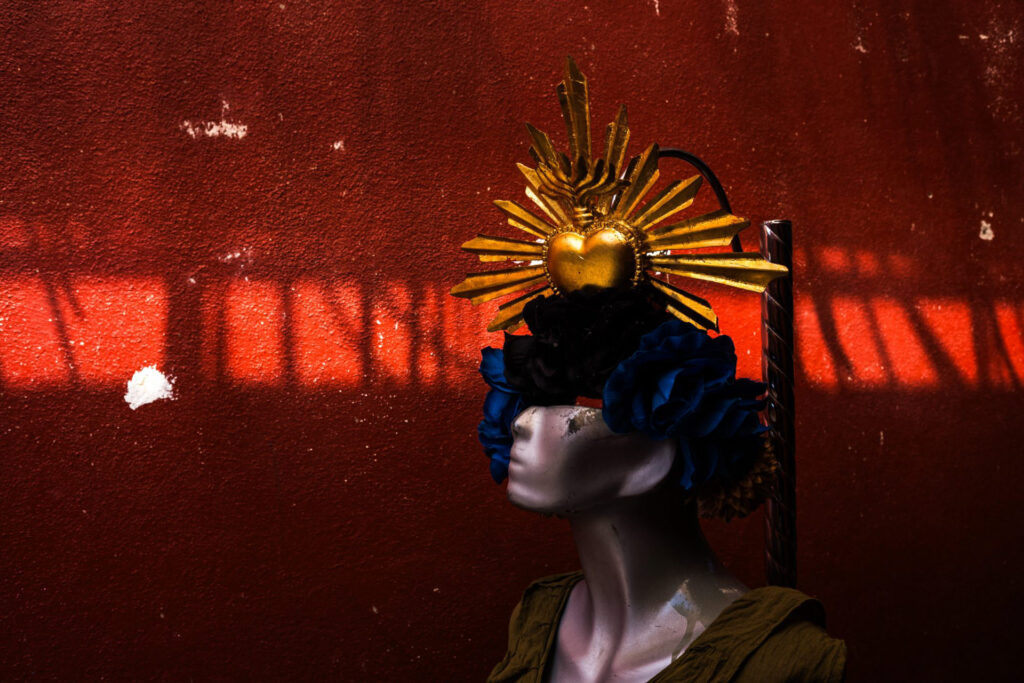
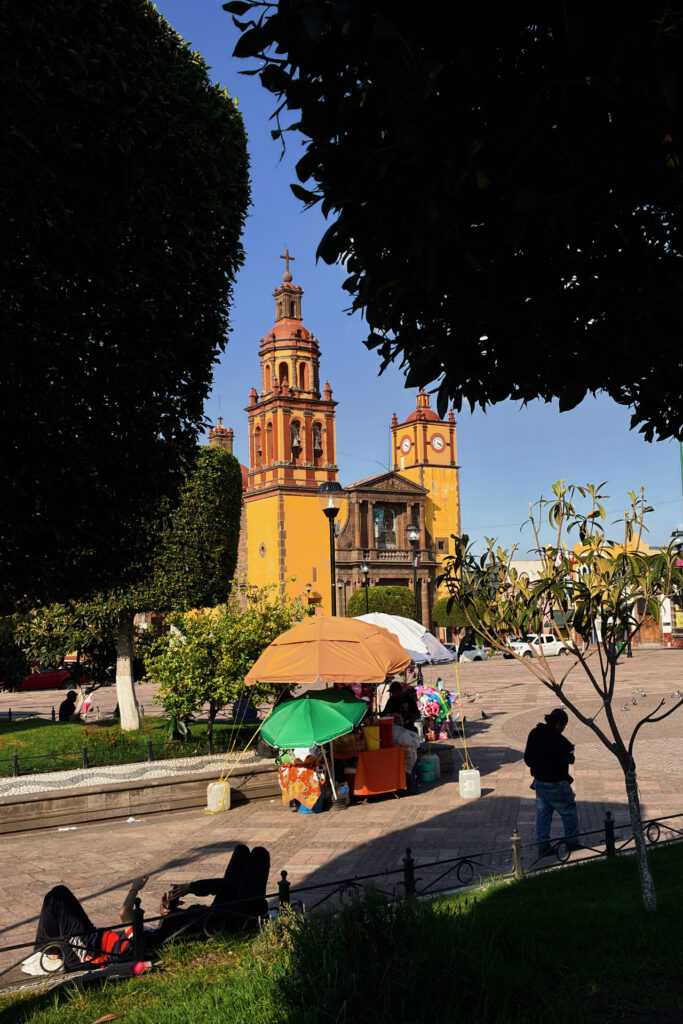
Twenty-four frames, and I remember two feelings at once. On one side, butterflies: I was enjoying this far more than I expected, frame after frame. On the other, a restless kind of anxiety. I wanted to see what I had done. In my town in Italy, developing a roll was fairly cheap, and the lab took 24 hours. If you wanted it in one hour, it cost about three times as much. Anyone who has ever handed a roll across a counter knows that moment: the pictures exist somewhere, and you can’t see them yet. I’ll tell you later what I did with that first roll.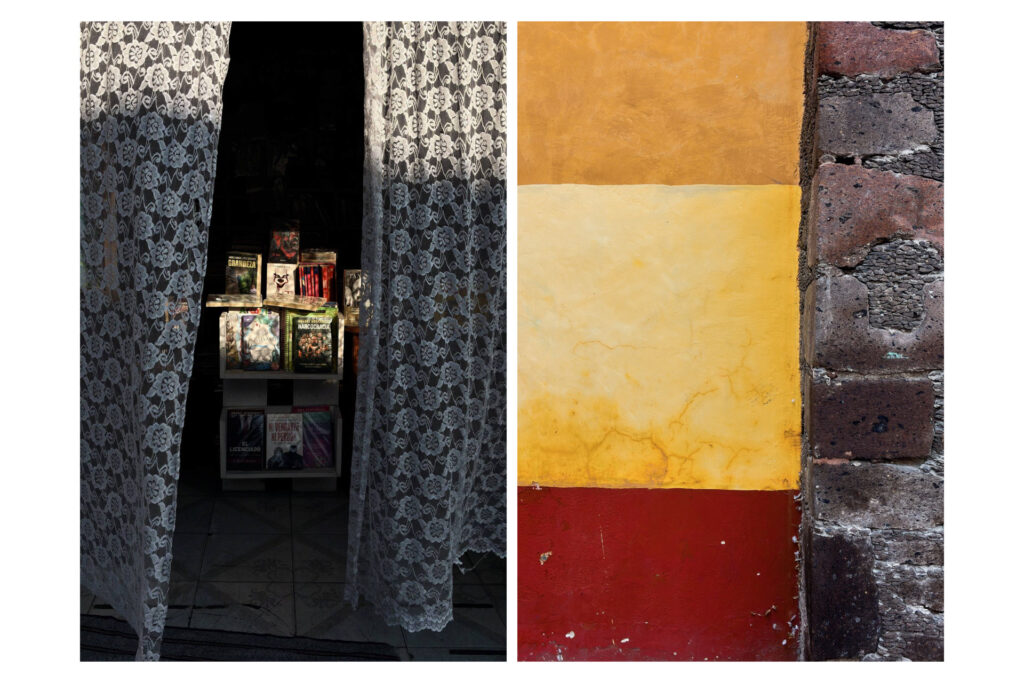
Then we stopped waiting
Years went by. I kept shooting, started traveling, started working, and eventually made photography my living. Then came digital, and the photo was on a screen before you’d even lowered the camera. Then came the phone, and the photo was on the other side of the world a minute later. I won’t pretend this was a bad thing. It’s useful, and it helps us connect with people: we can share our photos right away, on social media and everywhere else. But something quiet disappeared along the way: the wait. Not knowing yet. Wondering, after the work of shooting, how it went and how the pictures came out. Something else changed too. Because photos became free, instant and easy, we can take far more than we need, and sometimes we do. One frame becomes several, just in case. They pile up in the camera roll, take up space, and many are never looked at again.
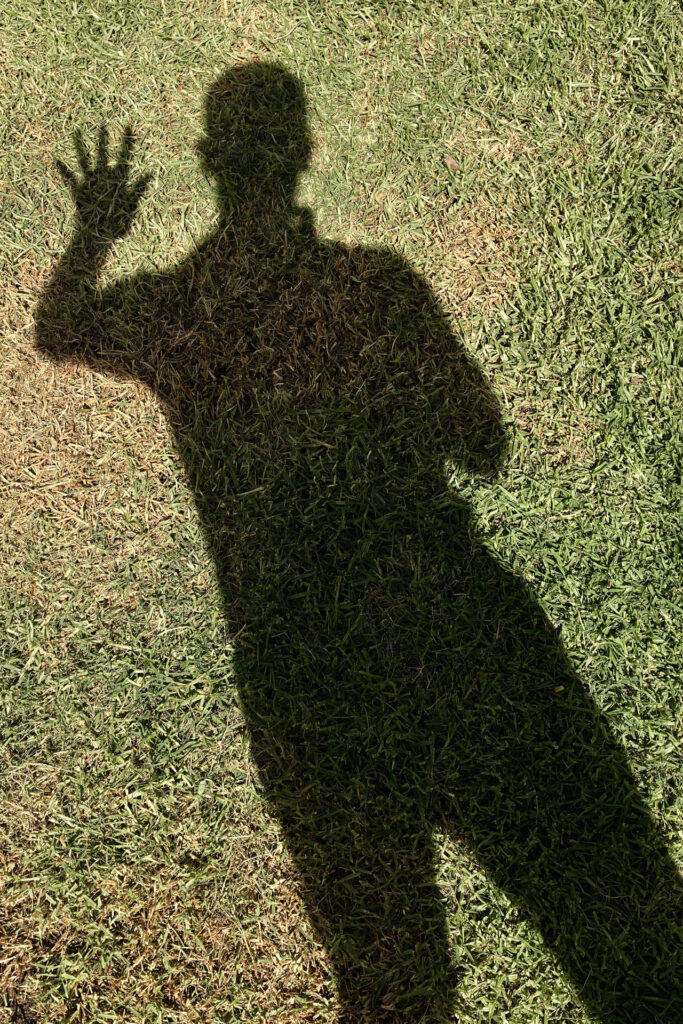
Who’s writing this
I’m a documentary photographer based in a small town in Querétaro, Mexico. For commissioned work (weddings, hospitality, brands) I shoot with a Nikon Z8. For my own documentary projects and street photography, it’s a Leica M10, almost always with a 35mm on it.
Whenever someone asks me which lens I’d take to a desert island, the answer has been the same for years: the 35. It gives you context without distortion, and it works for storytelling, for portraits, for street photography, for weddings, for everything. I own a 21 and a 90 that I rarely use and refuse to sell, and five 35mm lenses, each with its own character and its own job. If you own more than one lens of the same focal length, you understand. If you don’t, you don’t know what you’re missing.
I also started shooting street photography with a phone back in 2013, with a humble iPhone 5c, and it taught me a lot about seeing. So now you know three things about me: I love photography, I love the 35mm, and I’m always shooting.
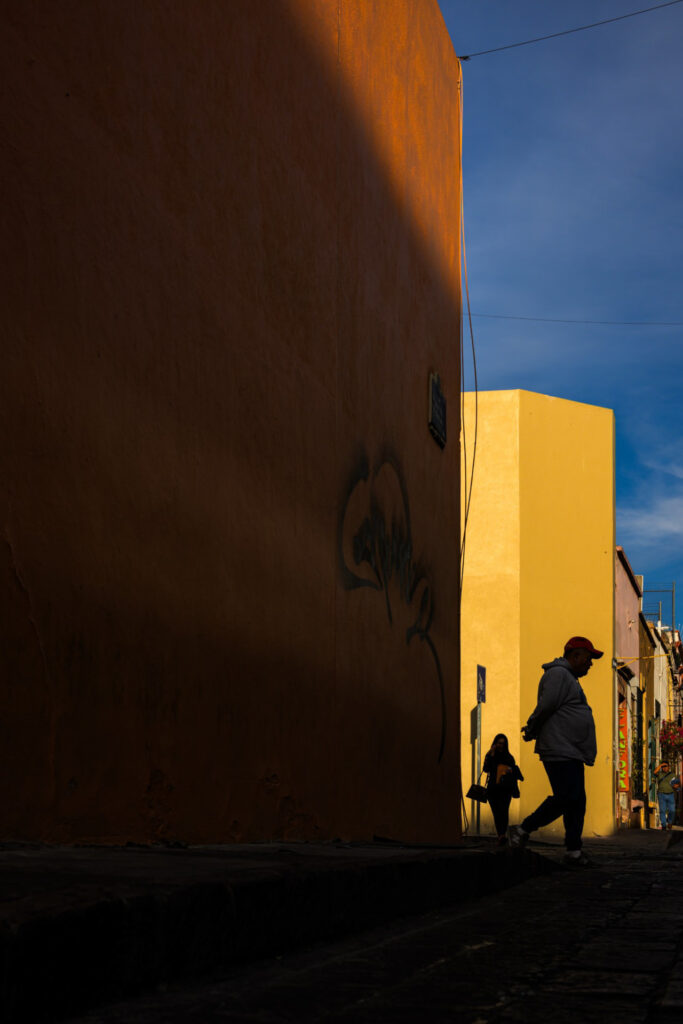
The problem film couldn’t solve for me
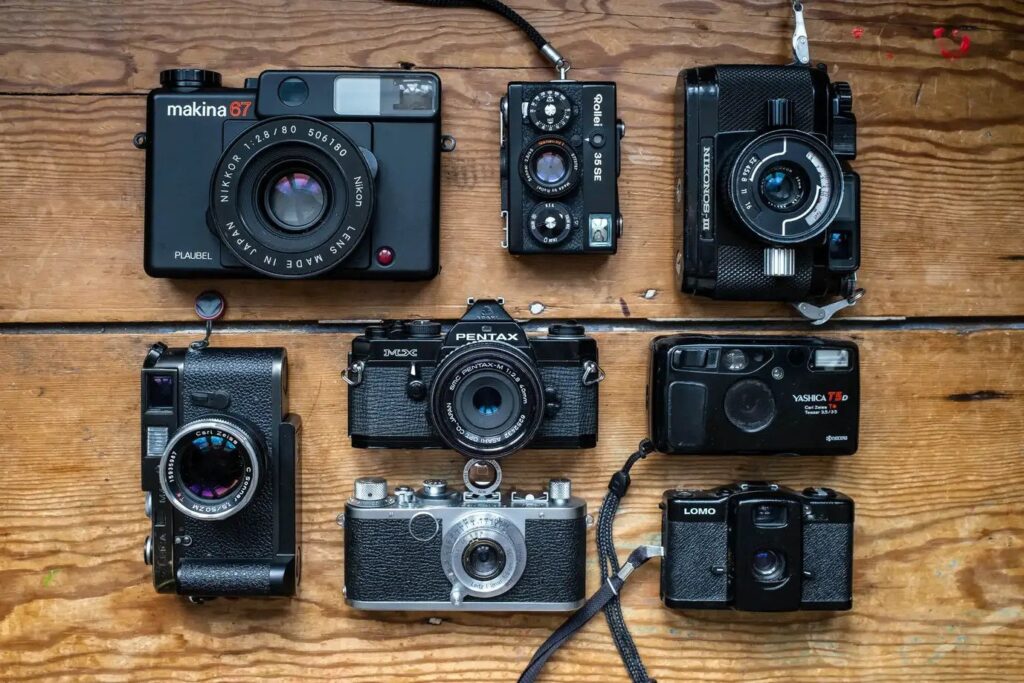
I miss the wait. Not being able to see what I had just shot made me concentrate more on the frame. I wanted it more, I worked it more. Fewer photos, more care. The opposite of spray and pray. The obvious answer is film. But where I live there’s practically no lab, and sending rolls by courier doesn’t give me peace of mind. What’s inside is too valuable, and a lost or ruined negative has no second chance. So I only shoot film when I travel, with a Nikon FM, in places where I can hand the roll to someone in person. Call me paranoid, but a roll lost in the mail is my worst nightmare.
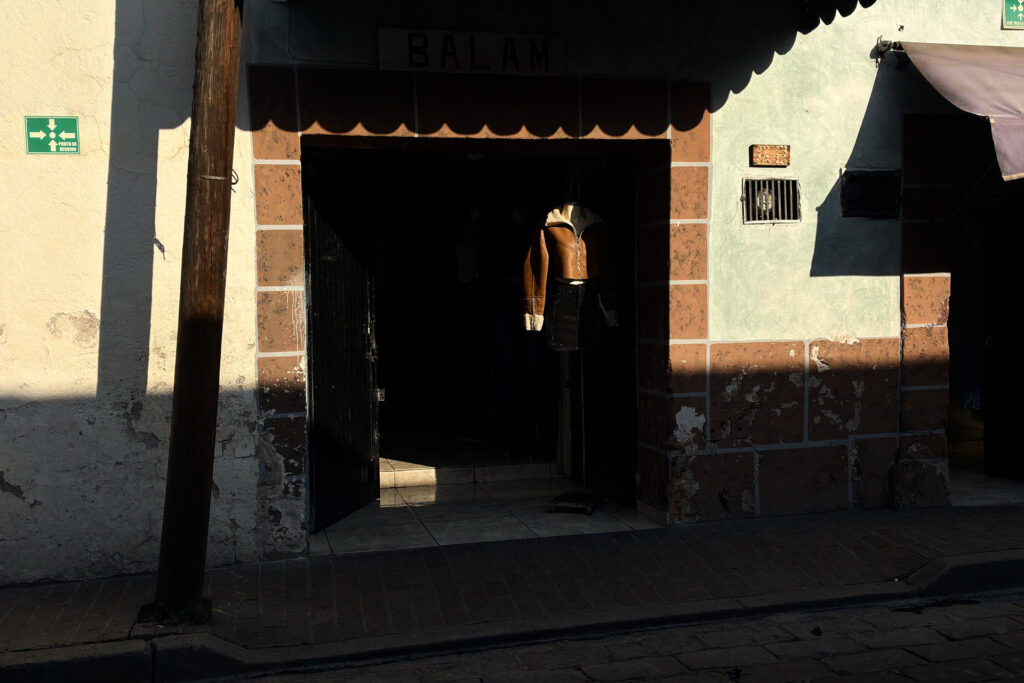
One day I caught myself asking: is film the only way to get that feeling back? It isn’t. The feeling comes from the constraints, not from the chemistry. The limited roll, the frames you can’t check, the wait. Some cameras already get close. The Leica M10-D has no screen on the back at all. And on almost any digital camera, you can turn off image review and simply never look. But it isn’t the same. Having a screen and choosing not to look is not the same as having nothing to look at.
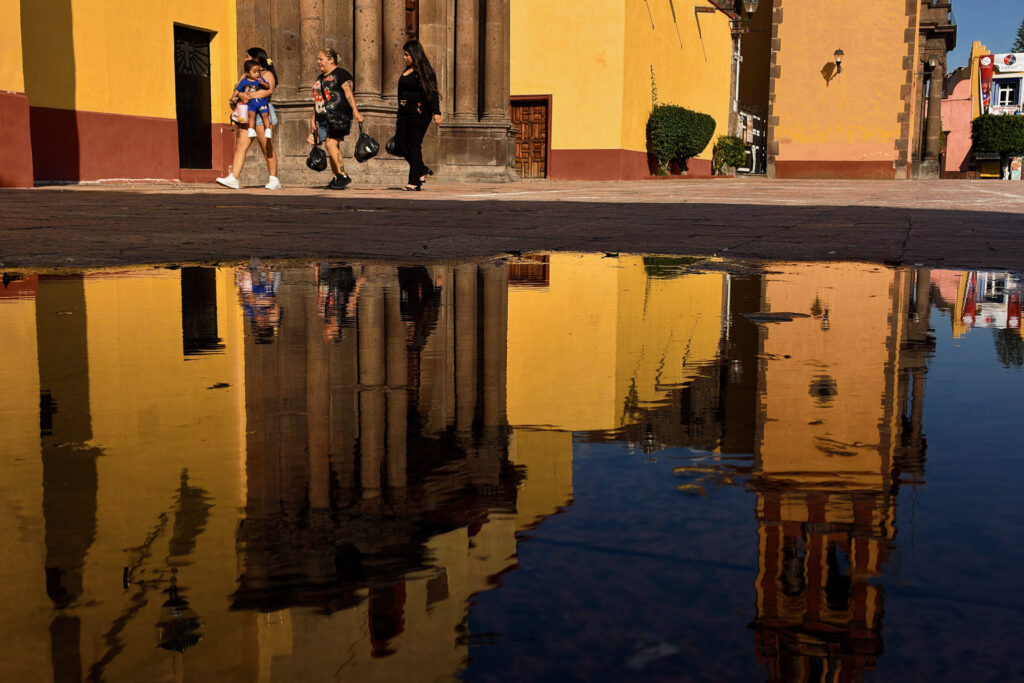
So I decided to build those constraints into the camera I always have with me. That’s how WorthWait Camera was born. Many months of work later, it’s on the App Store and Google Play.
How it works
WorthWait is a digital disposable camera. One fixed 35mm lens, no zoom. You load a roll of 24 (or 36 with the full version) and choose one film before the first frame:
Original is the phone’s sensor as it is, for those who want a straight photo.
Negative has the warm, forgiving look of a consumer color negative.
Positive is closer to slide film: more contrast, more saturation, more punch.
Flat is low contrast and a little cinematic, good for night and quieter scenes.
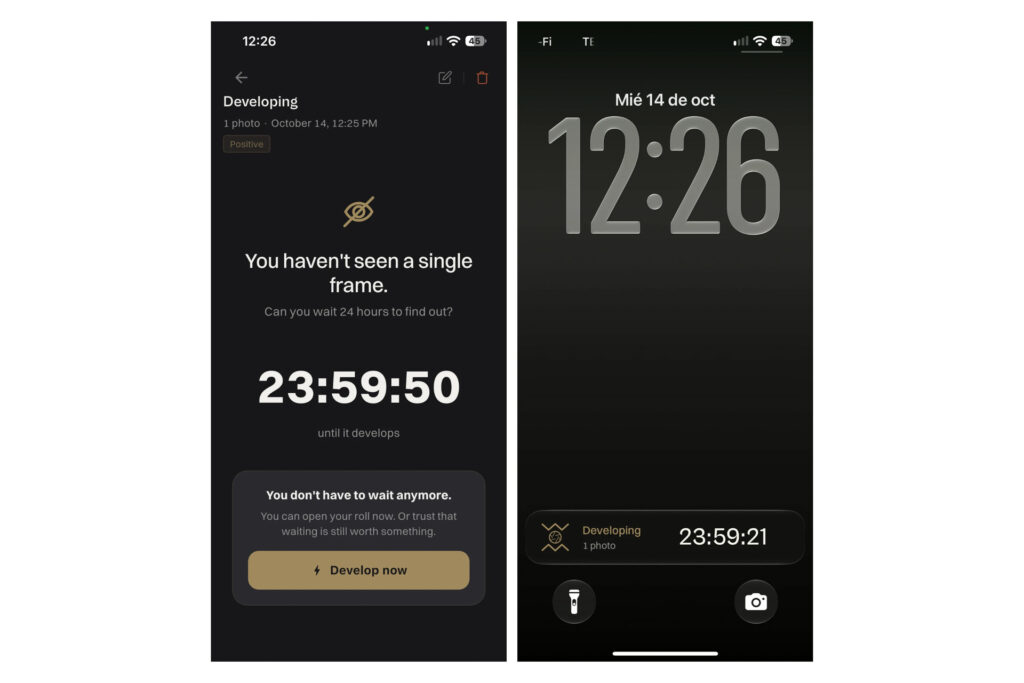
Then you shoot. You raise the phone, frame, press, and the counter drops by one. That’s all. Once a frame is taken, it’s gone from your sight. No preview, no delete, no edit. When the last frame clicks, the roll rewinds on its own and the app tells you it will be ready in 24 hours.
For some people that’s a shock. For others it’s a very good shock: “Oh, so I really have to wait.” Like a real roll. You don’t have to finish a roll in one afternoon, either. Has it ever happened to you? You start a roll, and then it sits in the camera for a while, a few frames here, a few there, whenever the light lines up. When you finally finish it and drop it off, you know the photos you took are in there, and also a few you’d forgotten taking. It’s always a good surprise, and a beautiful one. With WorthWait it happens the same way. That surprise is half the point.
Back to that first roll
I couldn’t resist. The excitement was too much, so I paid three times the price and had it developed in an hour. And I was amazed. I loved what I saw. I was still in school and had no idea what I was going to do with my life, but I remember thinking: this. I’m going to keep doing this. I never paid for the one-hour service again, though. It felt like cheating. If the lab is fast, fine. If you develop at home, fine. But if it takes 24 hours, you wait. You don’t suffer through it; you get used to it, and the result tastes better when it finally arrives.
That’s the whole idea behind the app. WorthWait is free for everyone: one roll of 24 a day, with the 24-hour wait. There’s also a full version, called Plena, a one-time purchase of US$14.99, no subscription. It gives you rolls of 24 or 36, up to five rolls a day, and the option to develop without waiting. But it doesn’t do it for you. When the roll closes, it asks: develop now, or wait 24 hours anyway? Taking the wait away by default would remove the point. Leaving the choice in your hands, like that one-hour counter at the lab, changes everything.
What I like most
Blind Mode. Turn it on and the viewfinder goes dark. You already couldn’t see the photo afterwards; now you can’t see it while you take it either. It’s a game, a training exercise, a challenge between friends. It makes you trust the light, your instinct, and where your hand is pointing. Shooting from the hip, the way street photographers always have.
Exposure, done simply. There’s no shutter priority, no manual ISO, and no white balance to fiddle with: it’s fixed at 5500 K, the way daylight film is balanced. The camera is automatic. That isn’t a limitation; it’s a choice. What you do get is exposure compensation, plus or minus two stops, built into the viewfinder itself: slide your finger left or right anywhere in the frame. A small lock next to the frame counter holds it between shots. Anyone who has tried to grab that tiny sun icon in the iPhone camera will understand why.
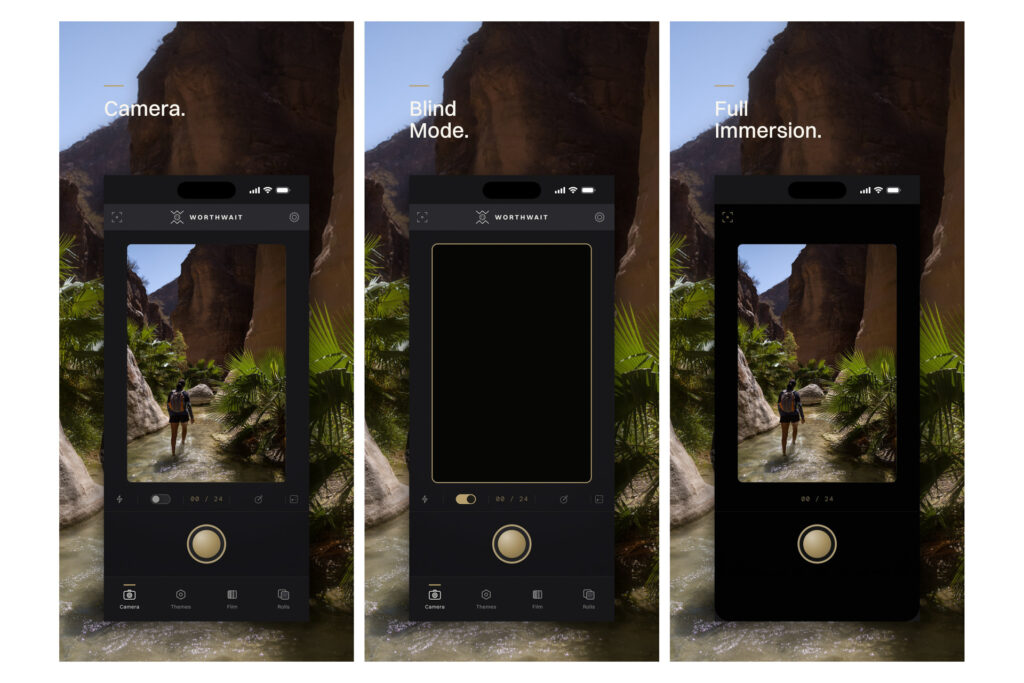
Full Immersion. Sometimes even a minimal interface is too much. One tap, and everything disappears except the viewfinder and the shutter button. Nothing to look at but the frame.
Then there are smaller things I enjoy: five shutter sounds, from disposable to point-and-shoot to Polaroid, and the option of a fine grain. I also spent weeks taking the edge off the oversharpening that phones, and iPhones in particular, love so much, so the files feel a little softer and less digital.
What it is, and what it isn’t
It’s a phone sensor, and the photos are JPEGs: enough to enjoy and to print at reasonable sizes. There’s no RAW. It isn’t for everyone, and it isn’t meant to be. It’s available on iPhone and Android.
And it isn’t a replacement for film. If you have a good lab around the corner, keep shooting film. WorthWait is for the days you don’t, with the camera that’s already in your pocket.
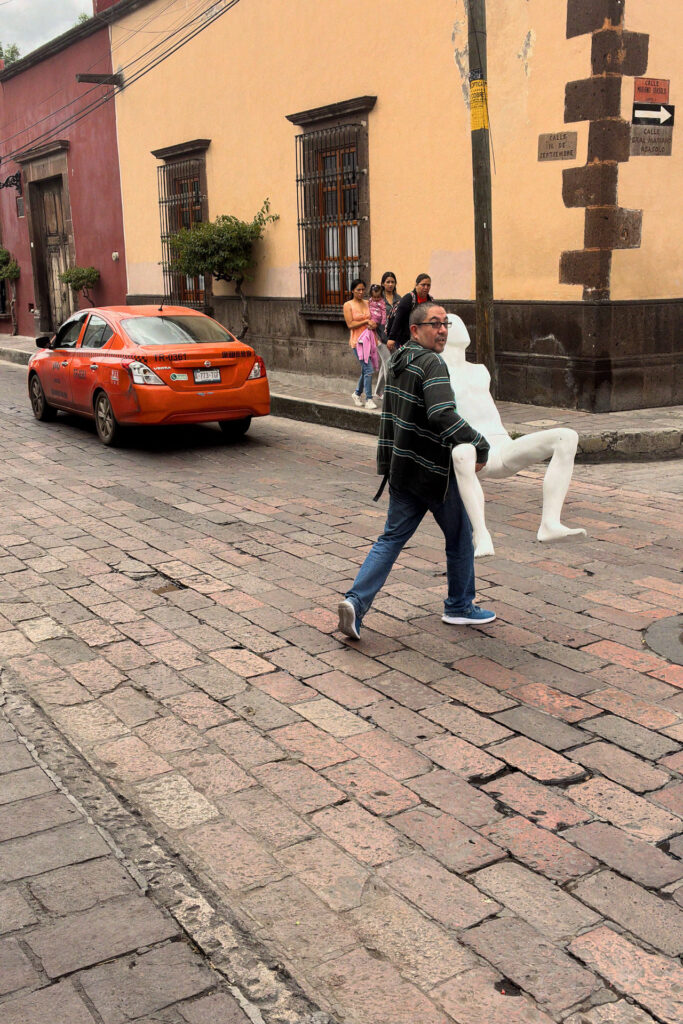
Thank you
Thank you for reading this far. This is my first article on 35mmc, a site that has helped me with more than one lens decision over the years, and I’m glad it’s this one.
If you’d like to try it, you’ll find it at worthwaitcamera.com. Shoot a roll, wait a day, and tell me in the comments what you found inside.
WorthWait is free on iPhone and Android:
App Store
Google Play
One more thing. From November 24 to December 17, WorthWait is running a free worldwide challenge: shoot one full roll, at your own pace, from wherever you are, and share your best frame. You’ll find the details inside the app.
Shoot a roll, wait a day, and tell me in the comments what you found inside.
Good clicks and good vibes,
Dennis Berti
You can find me here:
WorthWait Website: worthwaitcamera.com
Instagram @worthwaitcamera
My Portfolio: dennisberti.com
My Instagram: @dennis_berti
Share this post:


Comments
Eric Rose on WorthWait – A 35mm Disposable Camera App, and the Lab I Missed
Comment posted: 19/11/2026