

If you want an analogue picture, shoot analogue. I would rather say that in the first line than bury it somewhere near the bottom. I still shoot film. I have a drawer of negatives nobody commissioned and nobody paid for, and they are the reason I started. But I photograph beauty and fashion for a living out of Offenbach am Main, and that work is digital. It has to be. The client needs the files by Thursday, the set costs money by the hour, and nobody is waiting three days for a lab. That is not a preference, it is the job.
So there are two halves. One I love, one that pays. For twenty years they looked like they came from different planets, and every tool I tried to close that gap with failed in the same way.
Eventually I stopped buying tools and started scanning. Two years of my own negatives, on my own scanner, because I wanted the material itself rather than somebody’s idea of it. That part matters more than anything else in this piece, so it gets its own section further down.
One slice of the puzzle
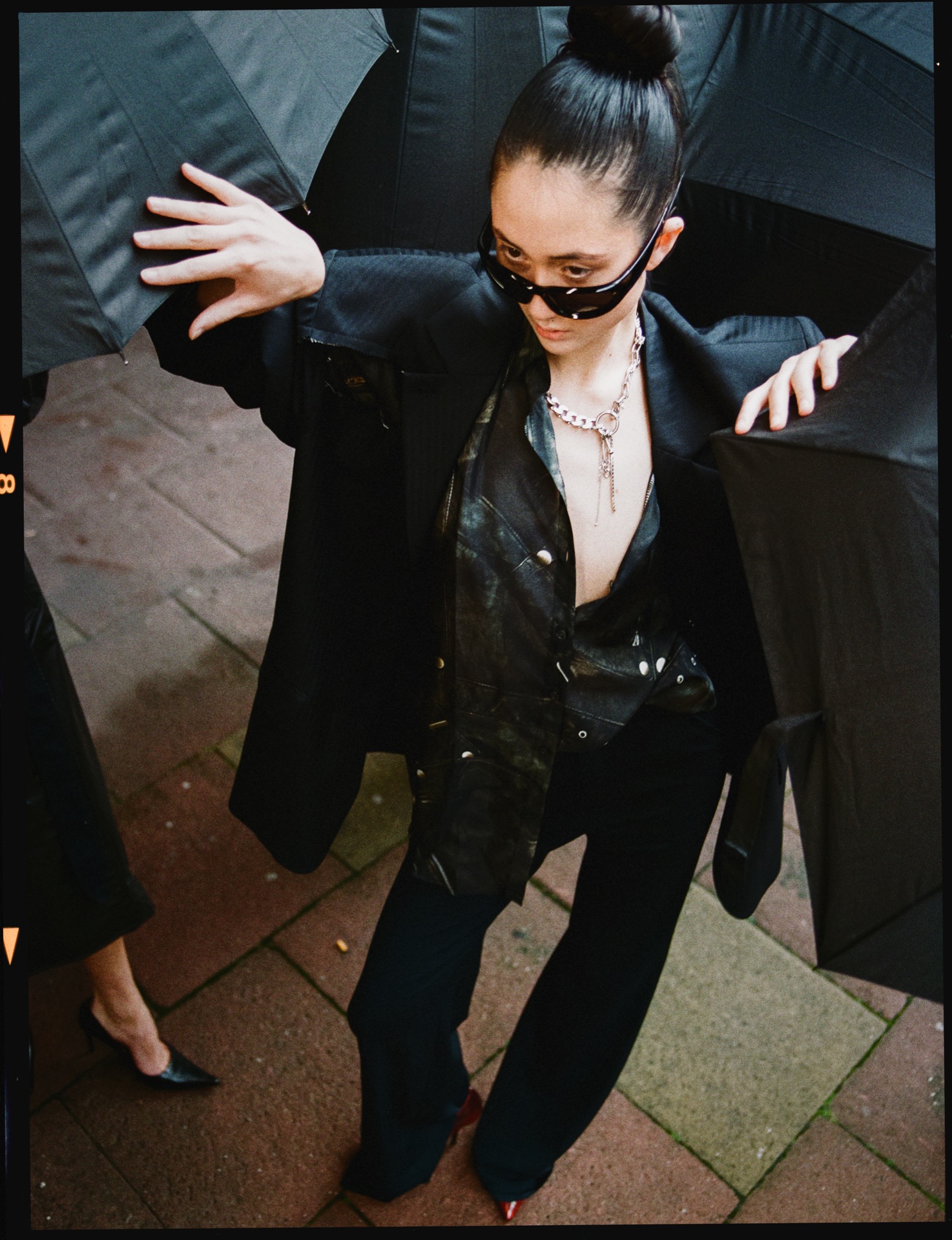
Nearly everything on the market sells you a film look. A stock, a set of curves, a colour response with a name on it. And it is not wrong, the stock really is part of it.
It is just one part. An analogue photograph is what comes out at the end of a whole physical chain, and every stage on the way leaves something behind.
The emulsion decides the colour and the tonality. The way light spreads inside that layer gives you halation and bloom around the bright things. The size and structure of the grain is not a setting either, it falls out of how big the negative was and how fast the film was. Then the paper it went onto rolled off the highlights in its own way. Then a scanner read the whole thing back and changed it again. And you judged the result on a contact sheet, which is the moment you chose the frame in the first place.
All of that happens to every analogue picture, whether anyone thinks about it or not. Skip a stage and the eye notices. It usually cannot say what is wrong, it just reads the picture as digital with something on top.
That is the reason a film look on its own never gets there. It is one slice of a stack, laid over an image that went through none of the rest.
So we built the whole run
Not a look. The stages, all of them, in the order they actually happen: grain, film stock, halation, paper, scanner, and the contact sheet at the end.
Each one switches on and off by itself, so you can see what it contributes instead of getting a finished result dropped on your picture. The order is not decoration either. Halation over grain behaves differently from grain over halation, the same way it did in a lab.
I am not claiming we invented any of these individually. Grain, halation and bloom have been in software for years, by people who know exactly what they are doing. What I had not seen is somebody going after the whole chain rather than one stage of it.
And then we packed it into a minilab, because that is where you used to hand your film in and where all of those stages happened under one roof. The name is the wink. The chain is the substance.
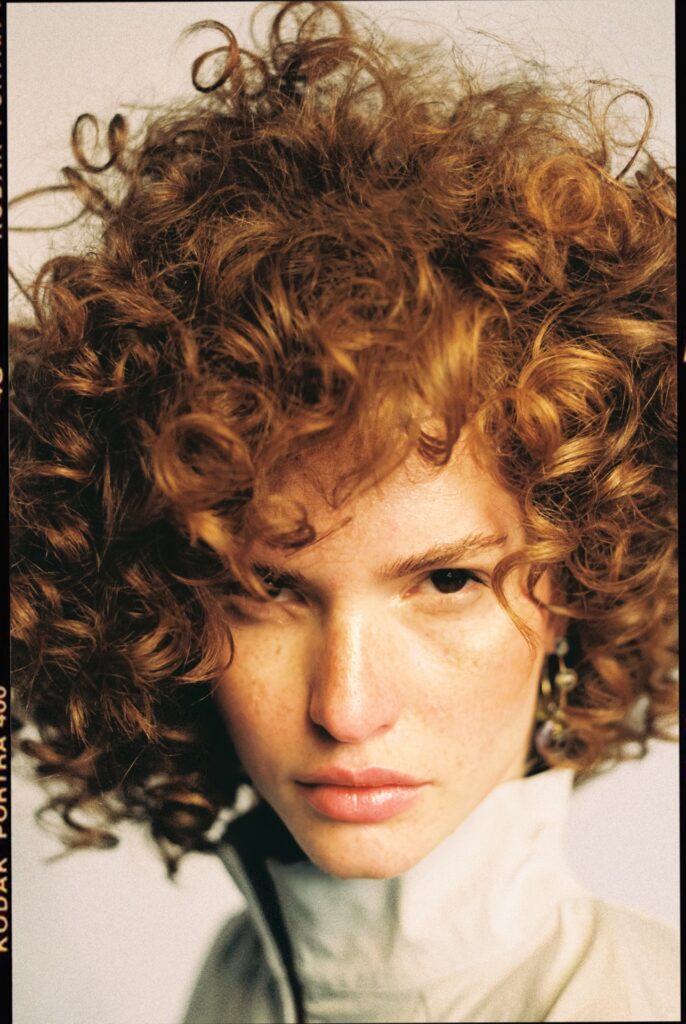
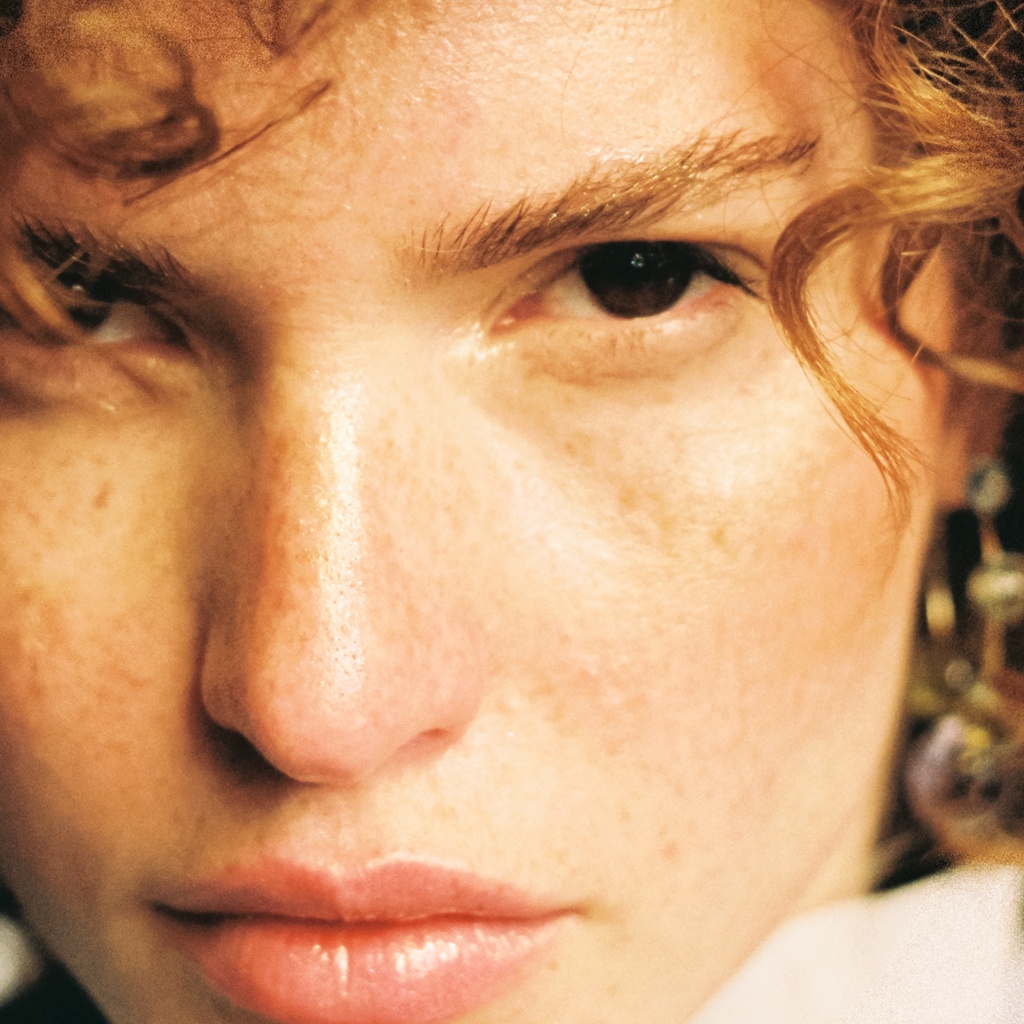
The grain is not calculated. It was photographed.
This is the part I care about most, and the part that took the longest.
A lot of the grain you can add to a picture is computed. Noise, generated by an algorithm and then shaped until it looks like silver. It can look convincing. It is still a drawing of grain.
Ours is not drawn. It was photographed. Every piece of grain in the tool comes off my own negatives, exposed by me, developed at a lab, and scanned here at my desk over about two years of doing this far more obsessively than is good for anyone. Real silver, real dye clouds, from rolls I shot on real jobs and on afternoons nobody paid for.
And it is not one sample stretched over everything. Grain is not one texture. It changes with the format and with the speed of the film, so it had to be taken from different rolls, in different formats, at different speeds, and kept apart. That is a lot of scanning for something most people will never consciously see. It is also the only way I know to end up with something that behaves instead of something that resembles.
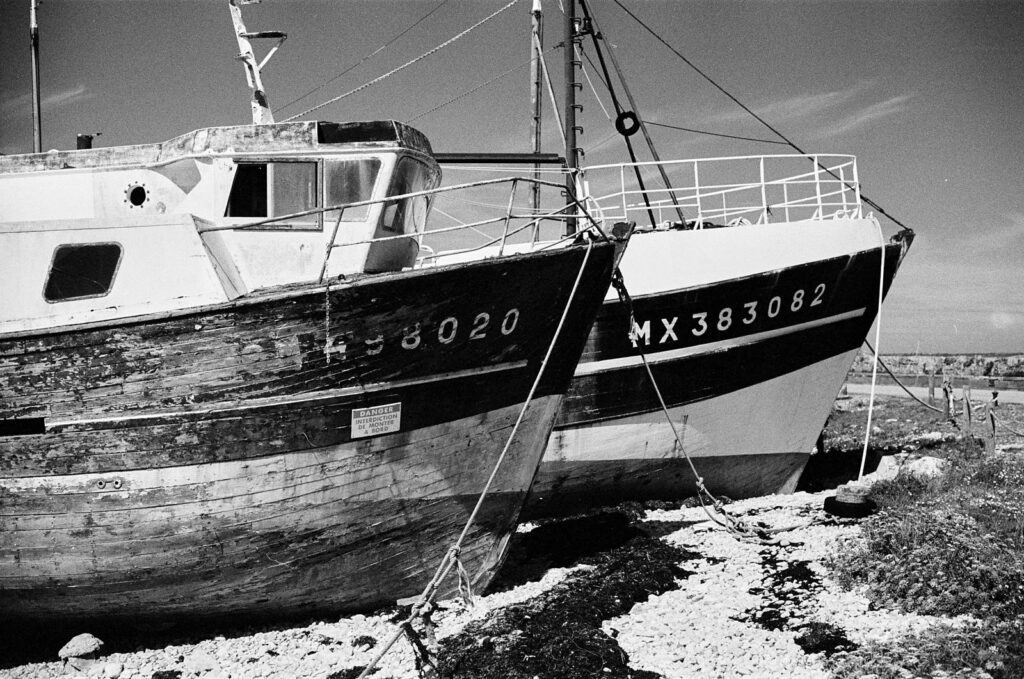
I shoot almost exclusively the Kodak Professional line, whatever the Portra range offers, medium format and 35mm alike, and for my own frames I happily reach for Kodak Gold, partly for the price and partly because I still like the look. The black and white rolls are their own case and are kept that way. So that is what is in there, and I can show you the rolls it came off. The edge print is right there in the frame in the pictures above.
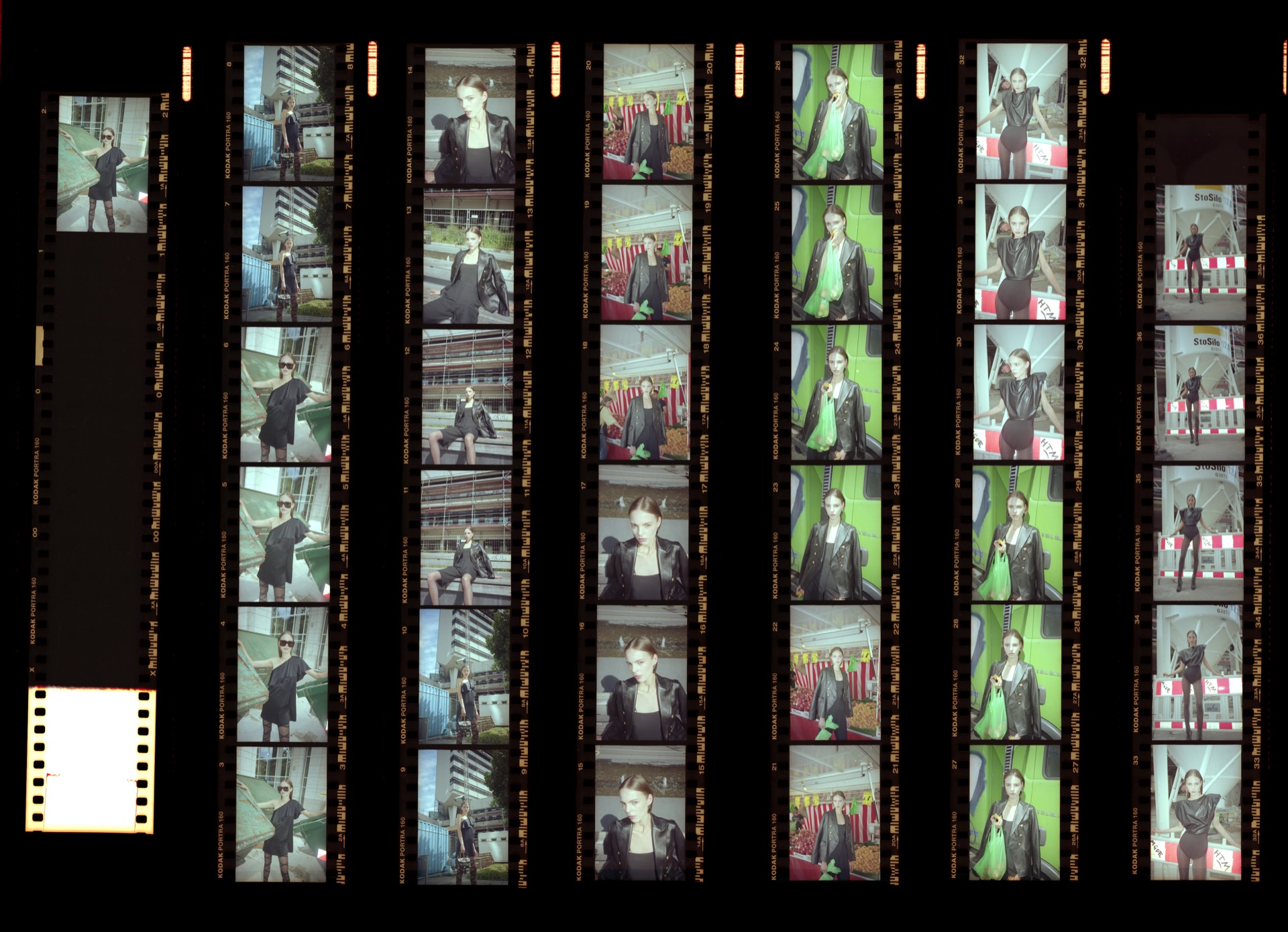
If that sounds like a lot of effort for a texture, then yes. That is rather the point. You do not do that for a market. You do it because you love the material and cannot stand seeing it faked badly.
What I will not tell you
That our colours were measured off film stock. What software calls a film profile is a profile, a set of curves that produces a plausible result, built against a reference. It is not a measurement. Anyone in this business who claims otherwise is asking you to take their word for something they have not shown you, and that includes me if I ever slip and phrase it that way.
And that it is film. It is not, it will not be, and the day somebody tells me an export fooled a film photographer is the day I go and check what they actually did.
The practical part
It runs in a browser. There is no upload and no account, and the files stay on the machine they started on, which matters when the pictures belong to a client who never agreed to anything else.
The free version is the whole thing, every stage, at full quality. The only thing it will not do is save. The paywall sits at the end, on export, not at the door. Settings save as a recipe, so frame sixty gets the same treatment as frame one, which is the part that actually earns its keep on a job.
Why we bothered
Because film is not a market to us, it is the reason we started. Because the half of the work that pays should not have to look like it came from another planet than the half we love. And because if an analogue picture is the sum of a whole chain, then the honest way in is to rebuild the chain from the real thing, scanned rather than invented, instead of selling one slice of it and calling it film.
It is a 1.0, the price is deliberately low, and what it becomes depends on what people tell us. I would rather have somebody who has thought about this longer than I have telling me where it is wrong than make a sale.
It is at minilab.photo. Two working photographers have put their own sets through it and left the results on the site, which says more than anything I could write here.
And if this made you want to load a roll instead, good. That was always the better answer.
Chris Klutsch photographs and directs out of Offenbach am Main. MINILAB.PHOTO is an AiLaik™ product – run by VERMILION™ est. by Chris Klutsch
Share this post:


Comments
WhereSs on A film look is one piece of the puzzle – That is why it never quite works
Comment posted: 23/10/2026
Comment posted: 23/10/2026
Comment posted: 23/10/2026
Jeffery Luhn on A film look is one piece of the puzzle – That is why it never quite works
Comment posted: 24/10/2026
David Hume on A film look is one piece of the puzzle – That is why it never quite works
Comment posted: 24/10/2026
Hamish Gill on A film look is one piece of the puzzle – That is why it never quite works
Comment posted: 24/10/2026
The post describes his process of capturing real grain and then using the patterns he’s captured to make an online tool to add grain and film like colours to uploaded digital images.
I thought it was quite interesting, and as a creative, I have no issue with someone expressing themselves creatively with how they write.
As the “admin(s)” I am quite comfortable it staying where it is.
Comment posted: 24/10/2026
Gary on A film look is one piece of the puzzle – That is why it never quite works
Comment posted: 24/10/2026
Christoph Klutsch on A film look is one piece of the puzzle – That is why it never quite works
Comment posted: 24/10/2026
First up: sorry for the confusion, I clearly lost quite a few of you somewhere around paragraph two. And second, honestly, thank you for the criticism. I mean that. Criticism is the whole reason I put MINILAB out there in the first place (ask Hamish, he's heard it more than once). It was always meant for people who love the same things and wrestle with the same problems as me and my crew, and it only gets better when someone tells me where it falls short.
If I could wish for one thing, it's that you'd gone one step further. Not stopping at the text or the website, but throwing a few of your own pictures at the app and then telling me what's missing, what's clunky or what's just plain wrong. That's the kind of feedback I can actually work with.
Still, fair's fair: the text isn't good, and I won't dress it up. It came together while far too much was going on at once. As one of you spotted, I'm currently setting up two more companies, and German bureaucracy is nobody's idea of a good time. MINILAB started as a side project, but it's a labour of love, and those need looking after too. In all my excitement I left out the one thing that mattered: what it actually is. I figured my process and my way into film would be more interesting here, and I really didn't want it to sound technical or salesy. Lesson learned. So here's the short version.
I've been shooting beauty and fashion for a living for more than twenty years. My first professional steps were still in the film days, and my first assisting jobs in London were with photographers who shot nothing but film. That's where I fell for analogue, and I never fell out of it. It's also where I watched digital creep into the business, and saw how warily the established names greeted it.
Two decades on, I see the same shift with AI. I was a sceptic, and in many ways I still am. But I also see what lands on my booker's desk. So trust me, the demand is already there. And I see what it can do as a tool: open up creative options and give a freelancer, who these days has to be an expert in about a dozen things, time back for the actual creative work. So the scepticism now shares a room with a fair bit of excitement. MINILAB is one result of that.
Which brings me to the point. Whenever we shot digital - me, my assistants, lots of people around me - we were chasing that analogue aesthetic. Presets and the usual Adobe suspects get you part of the way. But anyone who knows how film works knows it's a lot more than a colour response and a bit of grain. So a few months back, purely for myself, I built a tool with AI (yes, vibe coding - guilty as charged) that takes a digital file through the stages that really shape a film image: stock, ISO, paper, scanner, scan software and settings. One step after another, the way a lab would. It sat on my desk, did the rounds among friends, people loved it, and that's when the idea came up to share it with everyone who ticks the same way.
From there it got a lot more time. Instead of generating grain with an algorithm, we pulled it from scanned film and use it as real overlays. Same with the paper textures and the contact sheet: scanned, not drawn. Halation and bloom are tuned to fixed numeric targets rather than eyeballed. What we didn't want was to tell an algorithm "make it look like film, please".
So what is it? A browser app, and you can use all of it for free - every stage, no account, no watermark, no time limit. You only pay once it turns into work: exporting, and saving recipes for a whole job. That's why I'd love for it to be seen as a community project rather than a money-making exercise. I'm a photographer, and that's what pays the bills. The other bits some of you spotted are test balloons, responding to demand I see in my own corner of the industry. Like it or criticise it, both are fine - I'm having that debate on plenty of platforms and happy to have it with you too, just not under this post.
Every bit of real feedback helps. We've already collected loads, and V2 is on the way, with answers to a lot of what's been raised and a few new features on board.
That was the only reason for the article. Sorry again to anyone it rubbed up the wrong way, or who'd like those five minutes back. That was never the plan. Still, thank you all for the chance to talk it through with you here - and thanks to Hamish for the platform and for letting me have my say.
Best from Frankfurt (Offenbach, to be precise) / Germany - cheers, Chris
Comment posted: 24/10/2026
Evgenii Chernikov on A film look is one piece of the puzzle – That is why it never quite works
Comment posted: 28/10/2026
Mission statement: author's paid digital work should match his personal film work. film image is the output of a whole physical chain, so single-stage tools (grain slider + colour preset) read as digital with something on top.
Software solution (as shipped, october 2026): a browser film-emulation app, local processing (hmmm, webasm tricks?), no upload; free tier capped at 1600 px, licence exports up to 6000 px. "Free ver. is full IQ", huh?
Implementation process: vibe-coded with AI in a few months, after ~2 years of scanning. (Not gonna lie, the substrate dataset is real and the effort invested into dataset is commendable on it's own.)
Pipeline tech brief: a fixed-order pipeline, each stage switchable: grain to stock colour to post-FX (halation, bloom, glow, variation, analog limiter, tonal contrast), then scanner behaviour (Noritsu, Frontier), then paper emuls (4 papers, 3 scanned textures, 5 damage scans) and then contact sheet (provided is a scan of one of author's own rolls).
Grain texture sourced from Kodak Portra/Gold negatives, binned 4 formats × 4 speeds × 4 input sizes. Colour is ten stocks as 3D LUTs baked from "real profiles". Halation, bloom, contrast are "tuned to fixed numeric targets, matched to 0.60 of 255".
(Those numbers mean what? Good, bad?)
Gaps and omissions:
1. Thesis is self-refuting. "Skip a stage and the eye notices" is asserted, but haven't been proven experimentally. Show ussss.
2. Grain's this thing raison d'oetre. Grain structure overgeneralised across stocks. Sampled from Kodak C-41, applied by format/ISO to Velvia, Ektachrome, Tri-X, HP5, CineStill. Come on. Cubic silver & dye clouds from C41? May look good, but how does it aligns with authenticity idea?
3. Chain order is just wrong. Halation happens at exposure, before development; chain places it after colour. Article: paper, then scanner. Site: scanner, THEN paper. Minilab prints come from negative scans, exposed by LEDs / lasers, and contact sheets are optical. Contact sheets are not part of the chain at all btw.
Dude, you made a nice thing (mb not real film, but looks cool), just clean up the tech oversell and don't state full quality for free when there's 1600px cap for trials.