

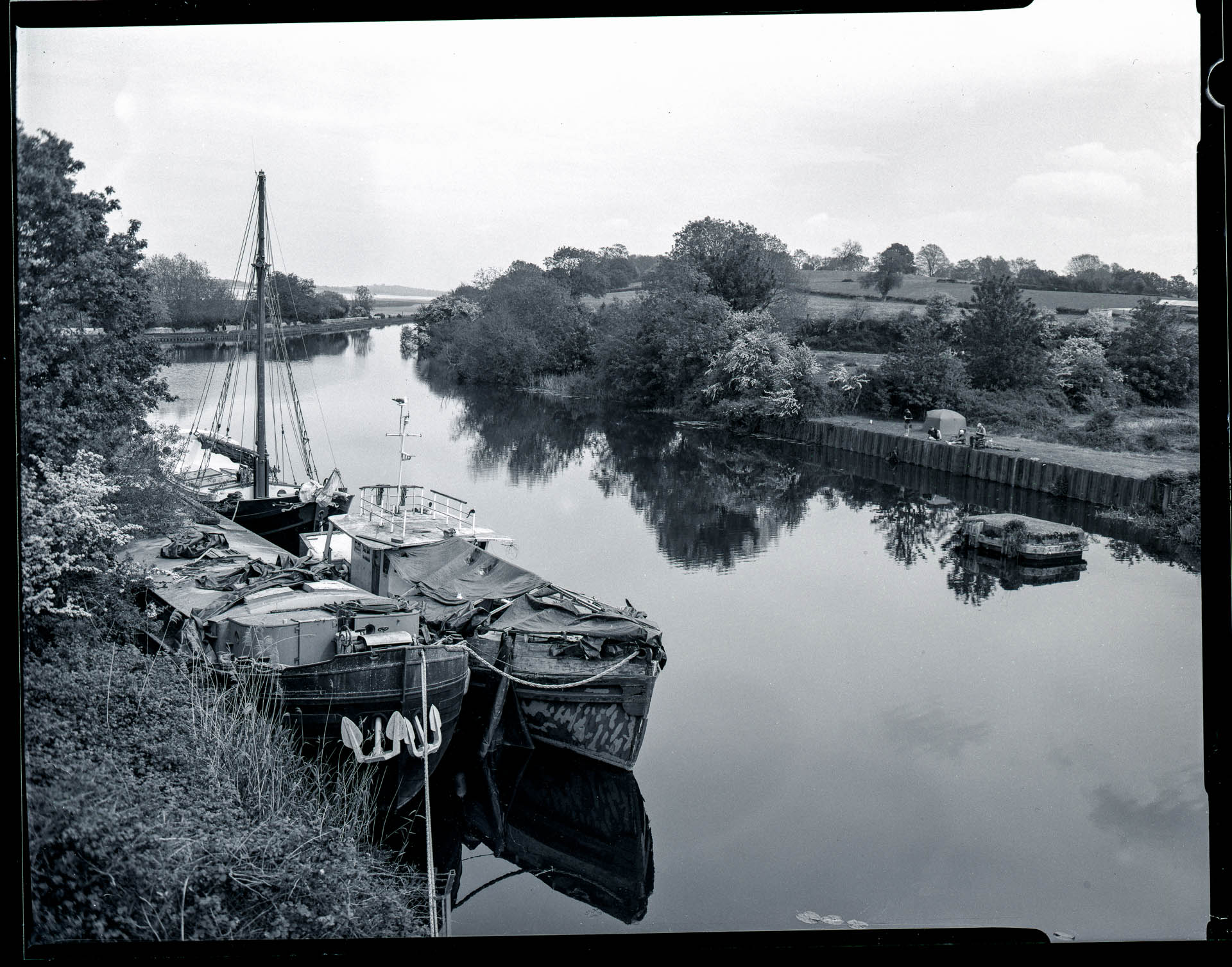
Sharpness Docks in Gloucestershire, UK, lies on the edge of the Severn Estuary and is still a working dock. The original dock opened in 1827 at the same time as the Gloucester – Sharpness Canal. The current, larger, New Dock opened in 1874 to accommodate bigger vessels.
The place is a fascinating mix of industry, surrounded by the beauty of the estuary and its ebbing and flowing tides – the River Severn is the longest river in the United Kingdom at 220 miles long, and also has one of the highest tidal ranges in the world of around 15 metres.
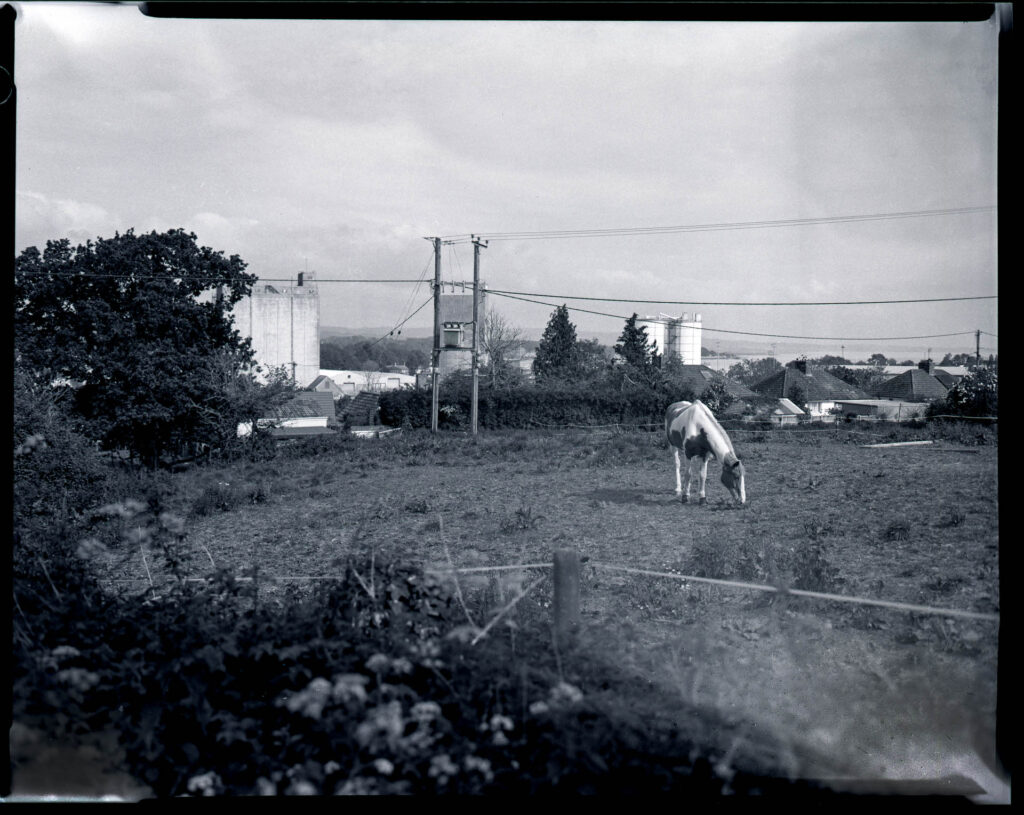
In early May myself and my daughter joined ‘Let’s Walk – Sharpness Photography Workshop’, hosted by the Canal and River Trust and led by photographers Zach Knott and Laura Foster. The walk was part of a larger event, an art exhibition called ‘OverLOOKed’, curated by mixed media artist Lynda Knott, which aimed to draw attention to the sometimes-overlooked area and explore the history and wildlife of the area.
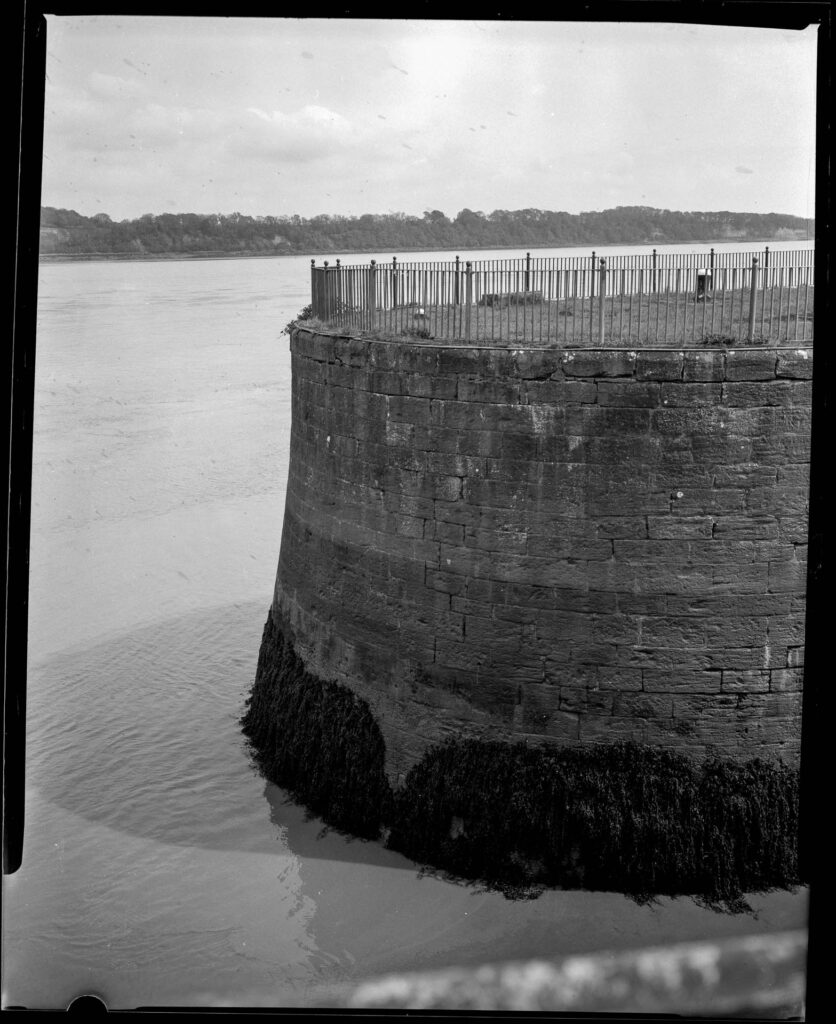
The photo walk promoted ‘Mindful Photography’, encouraging participants to take a slower approach and think more about how and why they were photographing the landscape. With this in mind I chose to use my 5”x4” Razzle Dog Polaroid conversion, made by the late Dean Jones who lived in Australia and named the cameras after his pet dog. It’s based on a Polaroid 110b Pathfinder instant camera that has been adapted to take 5”x4” double dark slides (DDS). Mine is fitted with a Prontor shutter with speeds from 1-second to 1/300th second and has a Rodenstock Ysarex 127mm f/4.7 lens.
The original Polaroid instant film was smaller than the 5″x4″ film it now uses, but there is enough coverage from the lens with no drop-off at the edges. I used ten sheets of expired Fomapan 400, rated at 200 ISO, and developed in Bellini Euro HC, a modern version of the classic Kodak HC-110 liquid developer. Having never used the developer before, I did plenty of research online and ended up developing four sheets at a time in a Paterson Orbital processor, 1:47 dilution at 20C for eight minutes.
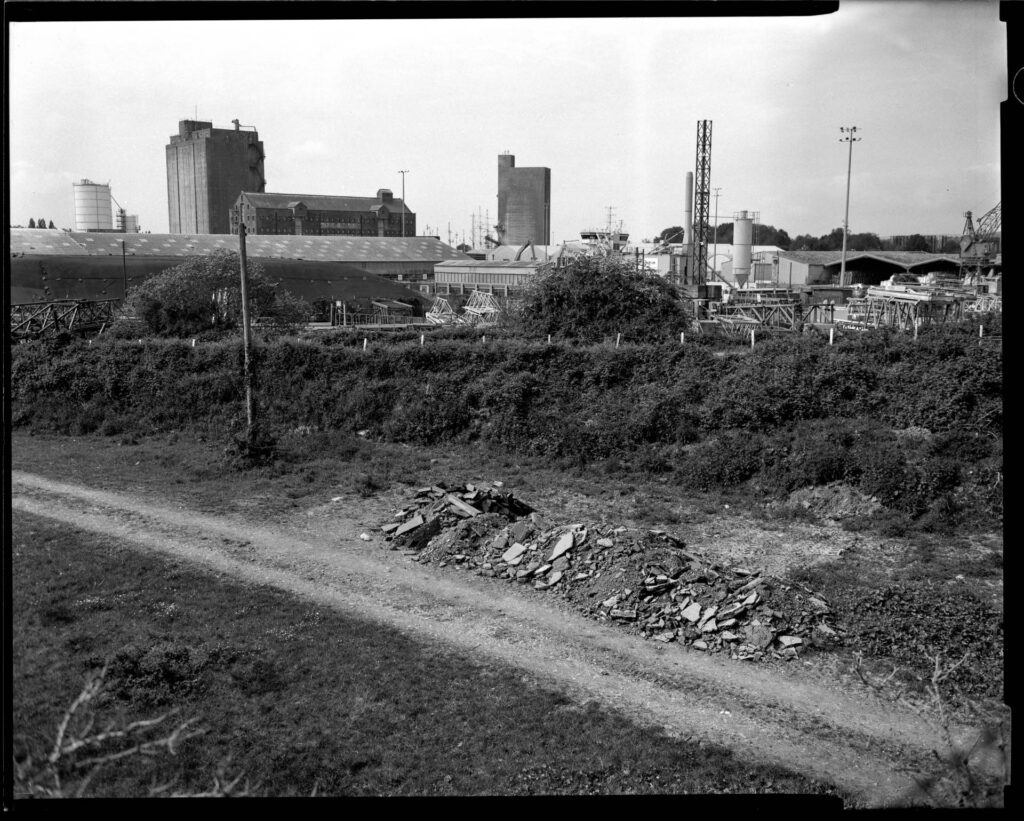
I scanned the negatives on my Epson 4990 flatbed scanner, which I’ve owned for over 20 years, and tweaked the scans in Lightroom as well as removing dust and blemishes. The results were quite pleasing, having been a few years since I had developed and sort of film.

The project has motivated me to get back into large format photography, and I plan on experimenting with Zebra Dry Plates, orthochromatic glass plates rated at 2 ISO and further explore the area around Sharpness.
Share this post:


Comments
Ibraar Hussain on 5 frames with a Razzle Dog Polaroid conversion
Comment posted: 20/06/2026
I also have a 4990 - seldom used now (I kept it for larger formats but I only shoot 35mm) and I think it has started to play up as the scanning has gone to pot. Mines also 20 years old!
Comment posted: 20/06/2026
Comment posted: 20/06/2026
Max Tiraquon on 5 frames with a Razzle Dog Polaroid conversion
Comment posted: 20/06/2026
Comment posted: 20/06/2026
Erik Brammer on 5 frames with a Razzle Dog Polaroid conversion
Comment posted: 20/06/2026
Comment posted: 20/06/2026
Comment posted: 20/06/2026
John Fontana on 5 frames with a Razzle Dog Polaroid conversion
Comment posted: 20/06/2026
Comment posted: 20/06/2026
Gary Smith on 5 frames with a Razzle Dog Polaroid conversion
Comment posted: 20/06/2026
Your choice of Fomapan 400 shot at 200 seems to have been an exquisite selection. Your images are nice and crispy!
Comment posted: 20/06/2026
Simon Foale on 5 frames with a Razzle Dog Polaroid conversion
Comment posted: 21/06/2026
Comment posted: 21/06/2026
Michael Jardine on 5 frames with a Razzle Dog Polaroid conversion
Comment posted: 21/06/2026
It's funny 'cos I used loads of Fomapan in 35mm to work through basic mistakes when I jumped back into film photography. I felt I'd earned the right not to use it any more, but then I acquired the MPP, and realised that the price point at 4" x 5" makes it hard not to use Fomapan and usually shoot it at half box speed because it comes up so much nicer.
Anyway, here's power to your shutter finger- glass plates sounds awesome.
Comment posted: 21/06/2026