

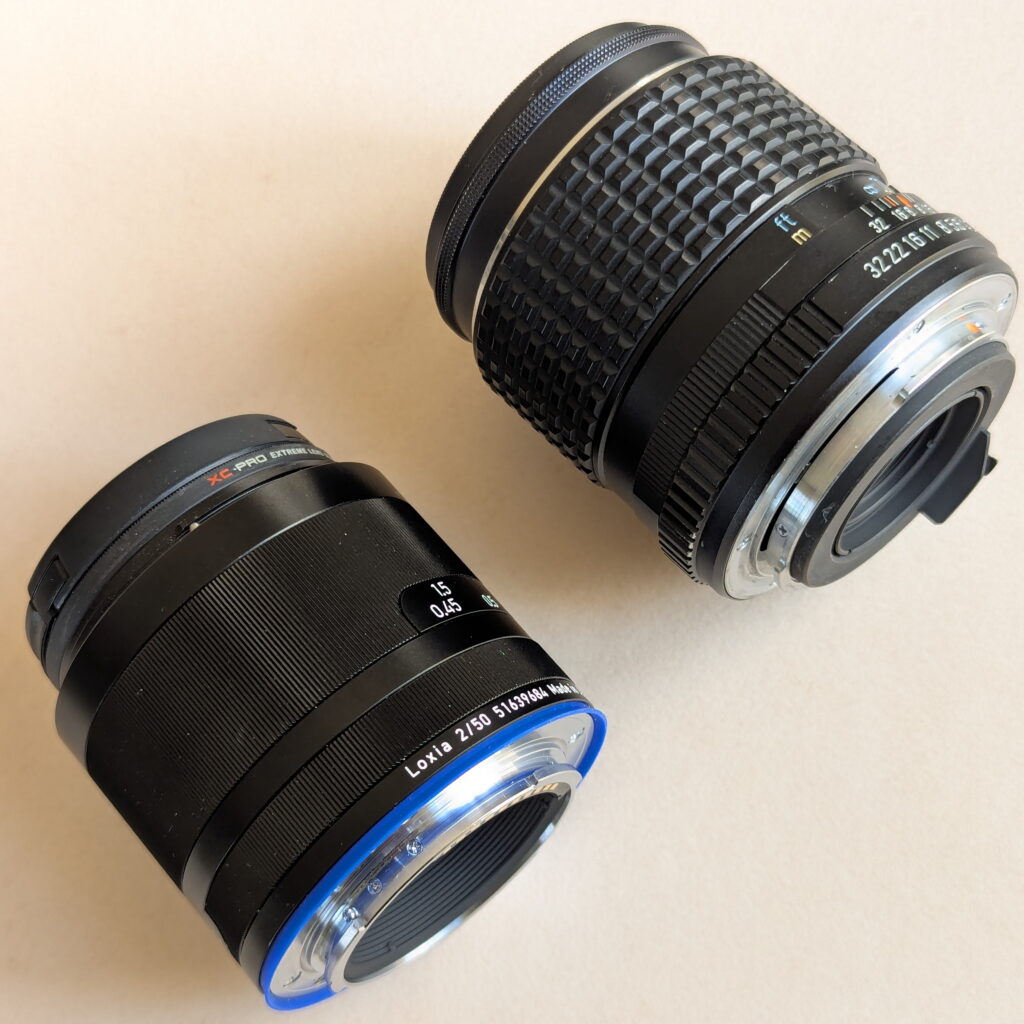
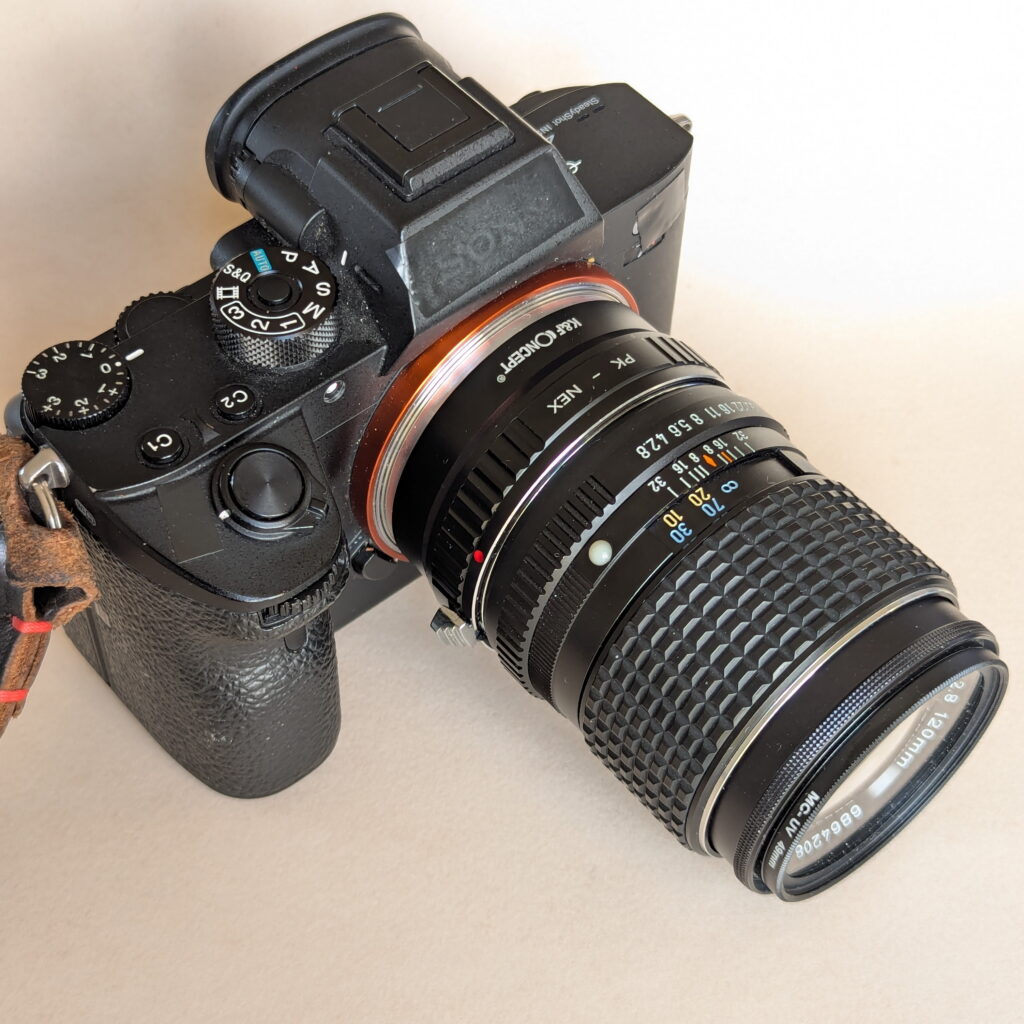
The initial attraction of the Pentax-M 120mm f2.8 is its compact size and light weight – virtually the same size as a Zeiss Loxia 50mm f2 lens and nearly 20% lighter. In addition the lens – like most ‘vintage’ lenses – is inexpensive compared to modern AF or wired lenses. Mechanically it is solid, well made, and ergonomically excellent. The shots below compare the two lenses, and show the Pentax with an adapter on my Sony A7Riii
My photographic interests are primarily buildings, and B&W photography. What matters to me is sharpness and high contrast, plus certain intangibles, together with easy portability. On a longer-than-normal lens flatness of field is less important because of the narrow depth of field – even at f8 – on subject matter that is around 10m away. Generally I’m shooting at f8 or f5.6, rarely wider than f4. On top of my main interests we can add “general photography” – holiday snaps for example.
Sharpness
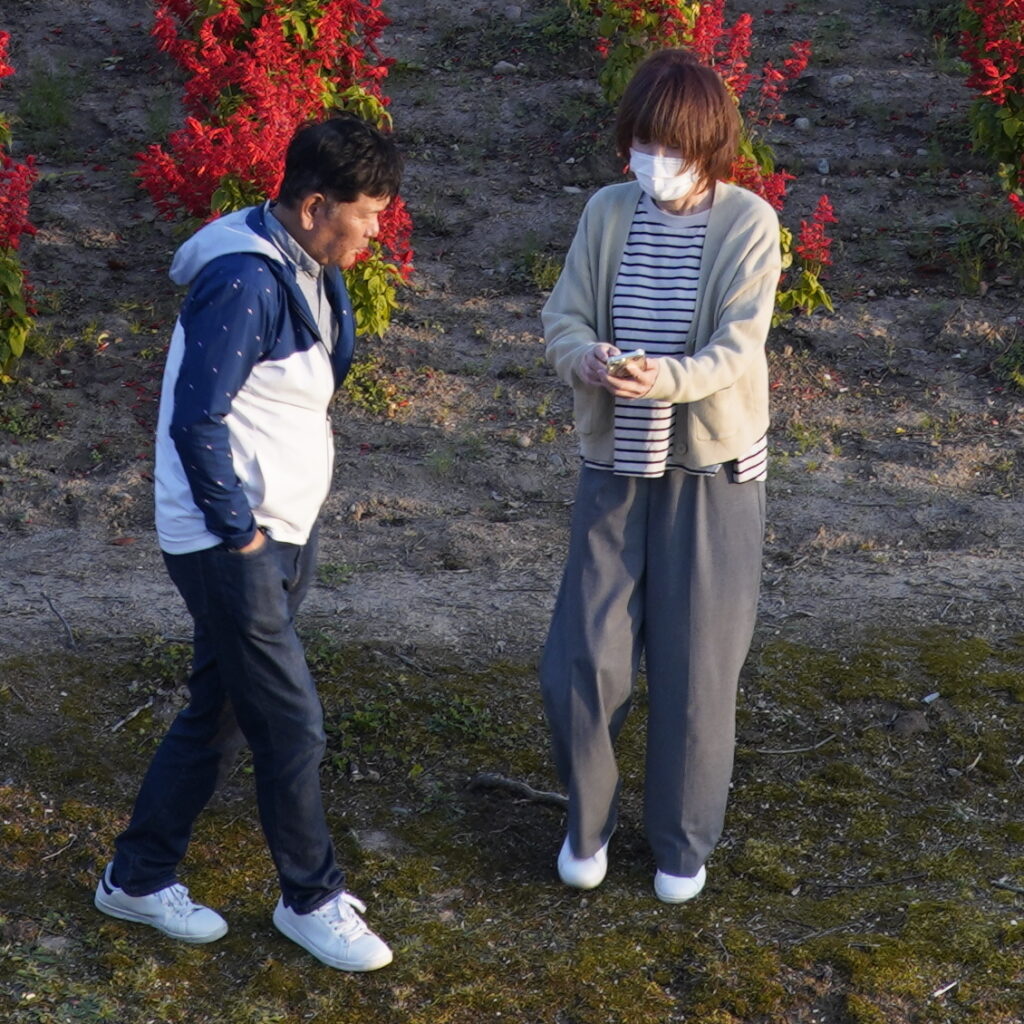
The featured image was taken at f8 in sunlight with focus on the couple. The crop (maximum enlargement) below shows the lens can be very sharp, even at the edge of the frame, at this aperture.
Flare
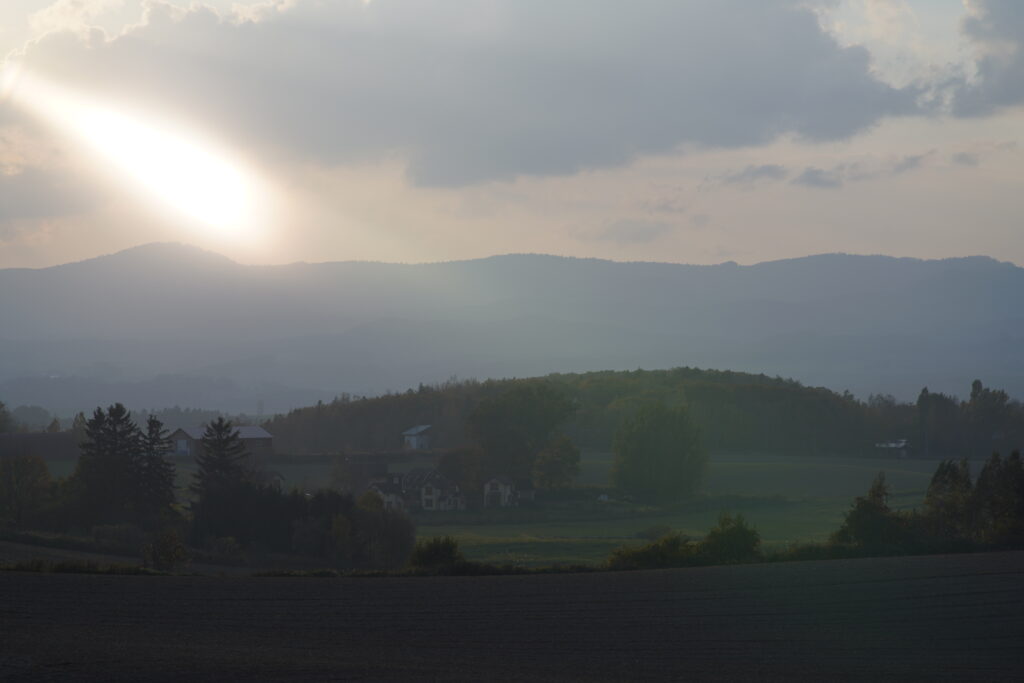
The Pentax-M 120mm f2.8 has a built-in (extensible) hood but even with the hood extended if the sun is just outside the frame flare can become a significant issue.
Bokeh
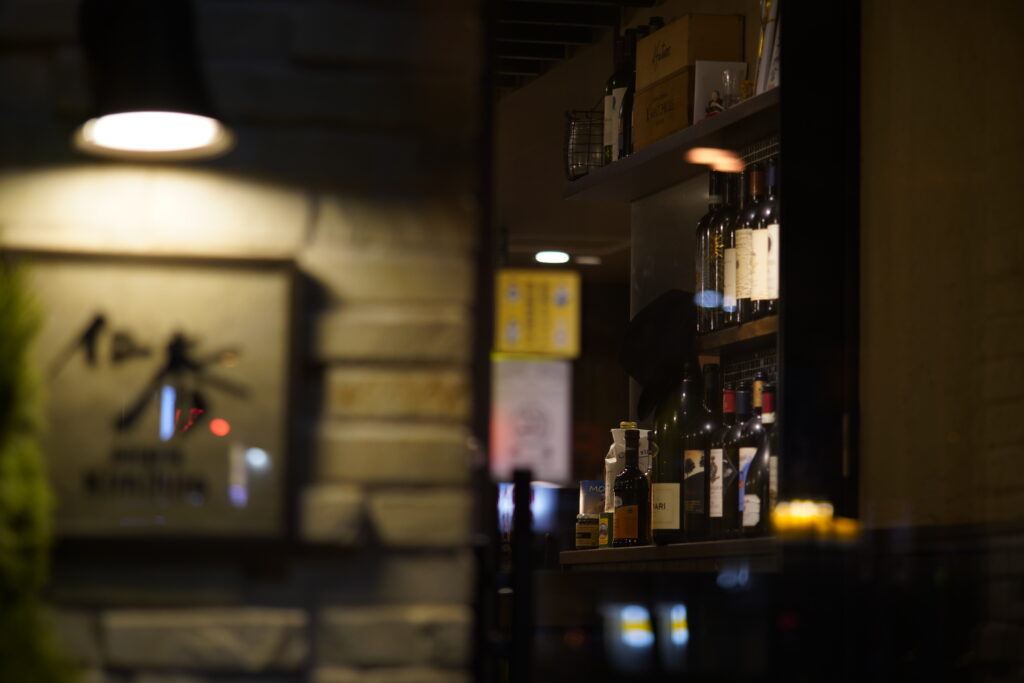
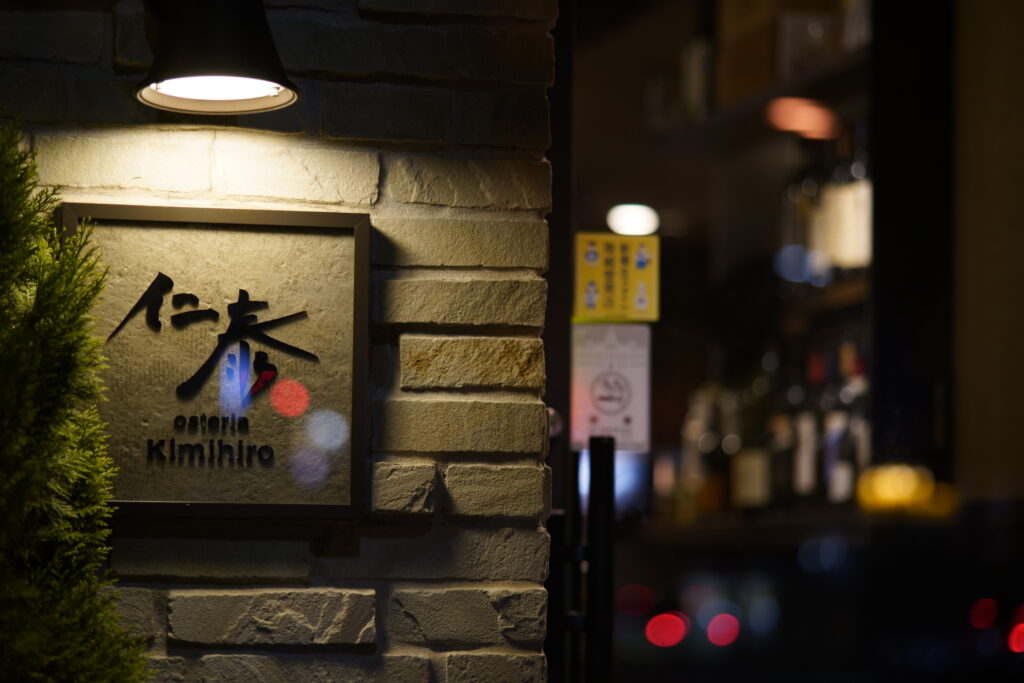
The shots below (one focused on the sign, the other on a bottle inside the restaurant) taken at f2.8 at night show what seems to me to be perfectly satisfactory OoF images – an even, non-distracting blur. Red lights are reflections of car lights. (Incidentally an inexpensive and very high quality Italian restaurant offering meat or fish based courses in addition to an a la carte menu, just in case you want to pop over to Asahikawa.)
Colour
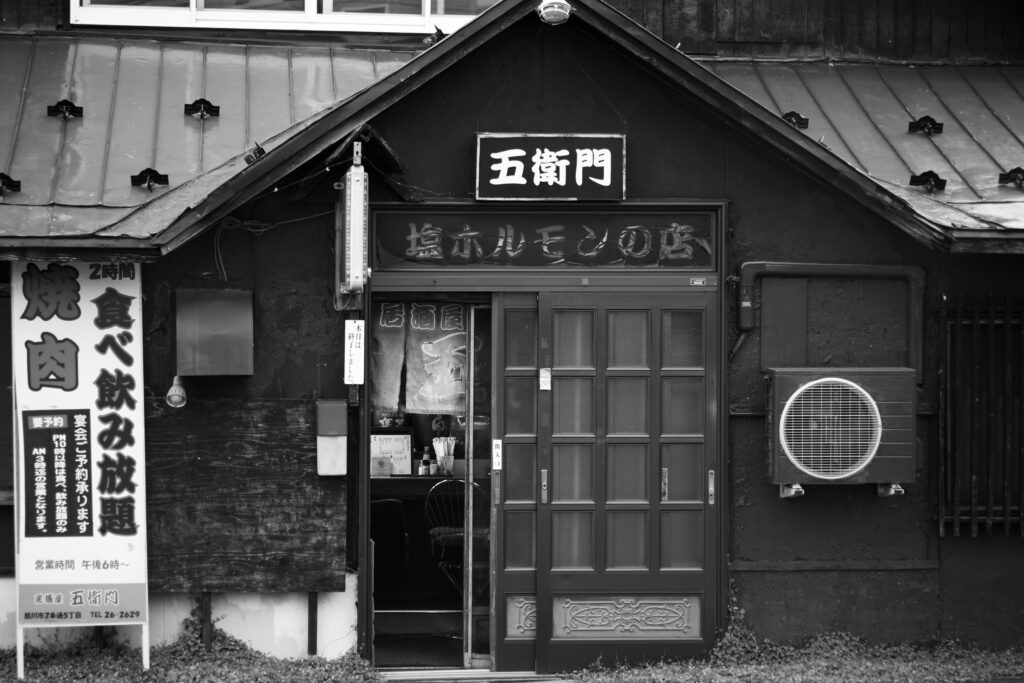
The following shots taken at f8 (in-camera jpgs on normal setting) show to my eye rather subdued colours compared to the actual scene – somewhat lacking in punch.



Edge effects
At maximum enlargement where there is strong local contrast the image often shows red on one side and blue on the other, something that can be corrected in post – though I take the view “corrected in lens” is the better option – and if left uncorrected will lower contrast in B&W. The effect is however very small so not a big deal as far as I’m concerned.

Conclusions
At f8 and f5.6 I found the Pentax-M 120mm f2.8 entirely satisfactory, problems were very minor or easily avoided, though by f2.8 the image became soft at high enlargements. It must be realised though that a slight focusing error can easily produce greater softness than that inherent in the lens – on film lens softness is unlikely to be noticed and even on digital it is something that that has to be looked for.
Nevertheless I find myself slightly uneasy about the lens – something is lacking perhaps in comparison to the punch I get from my Zeiss ZM lenses. But it can still produce some fine images.
All above images at 160asa in-camera jpgs on normal setting unless stated otherwise.

Share this post:


Comments
Gary Smith on Pentax-M 120mm f2.8 SMC lens on Mirrorless
Comment posted: 20/11/2026