

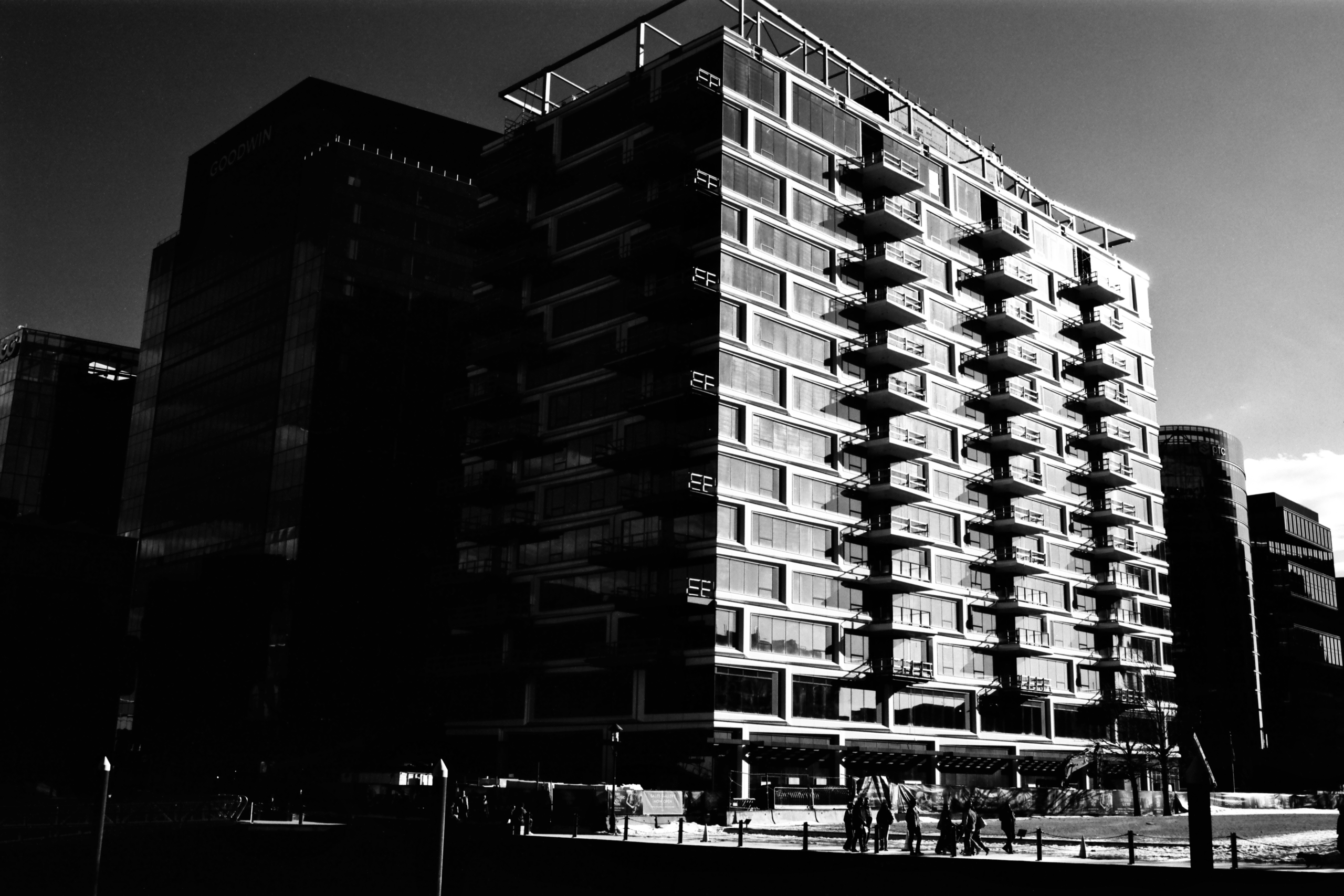
Agfa’s Aviphot family may be what comes to mind the most when aerial film is mentioned, but turns out, it isn’t the only panchro aerial film option available new. In exchange for digging around a bit, you might come across rolls loaded with a very different looking panchro film – including the subject.
Continuing my quest for obscure and unusual films, or “toys” as my wife has started referring to my hoard by, led to a listing on FPP’s website for “Tasma NK-2”. Packaged in a metal cannister with a smart looking label, my interest was piqued. Especially since the branded name was not one found anywhere else here. It was claimed to be a cine film, but its description very clearly was that of an aerial film… but not Aviphot? My interest was piqued. Of course, what can I say, my fingers worked quickly, and a few days later, I received a few rolls to try! Research led me to discover, while in the process of shooting, that this was a Tasma made aerial film, specifically their medium-speed option, Type 25L.
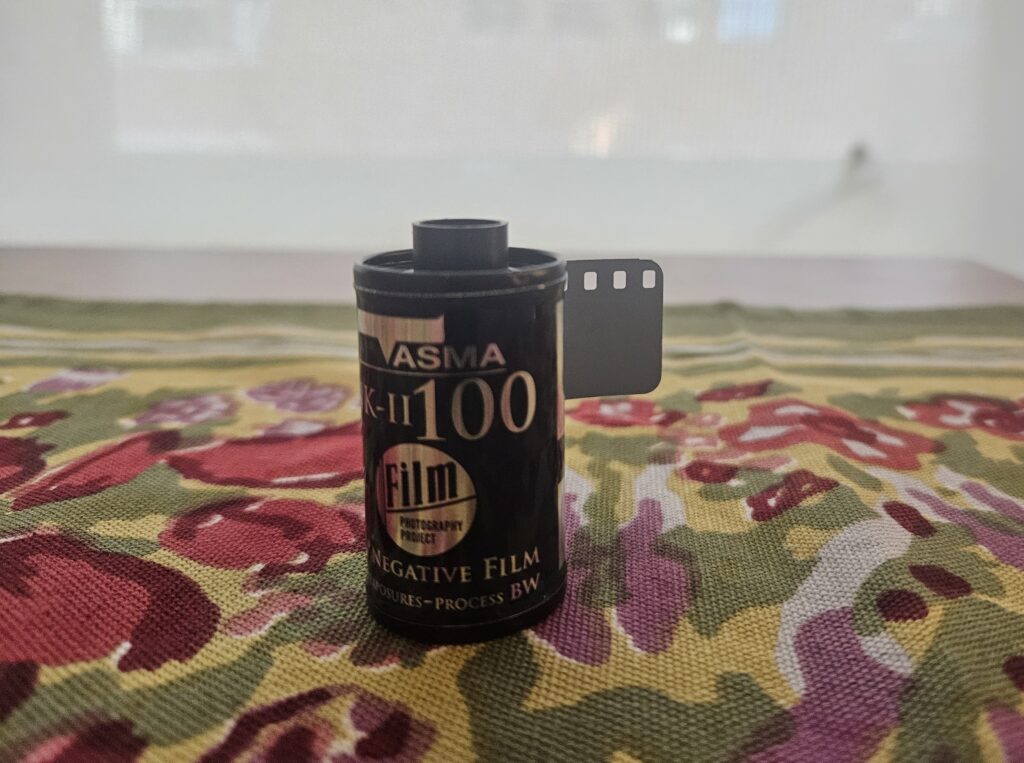
Tasma..Who?
Enter Tasma. Tasma, in Kazan, Russian Tatarstan, was one of the two giants of the Soviet film industry, along with Svema in Shotska, Ukraine. Like Svema, they made a wide variety of consumer and technical films, but importantly, they specialized in aerial films, handling the Red Army’s photographic needs in WW2 and beyond. Particularly, their Type 17 aerial film was the darling of Soviet photographers, as described by Roman Yarovitsyn in his article on Kosmo Foto. The company proudly proclaims that their film was even used to take the first pictures of the dark side of the moon, aboard the Luna 3 probe!
When the USSR collapsed, Svema also went bankrupt, but Tasma was kept just barely afloat by its government contracts. Today, it still produces two aerial photograhic films, Type 25L and Type 42L, in addition to technical and industrial materials. From what I’ve found, these films in Eastern Europe have/had the same status as Aviphot here – a cheap, widely available, yet decent stock respooled as an alternative to more expensive Kodak or Ilford films. But, at least in America, it was hardly possible to find. At least, until recently.
Buying and Shooting Guilt-Free
Before continuing, I wanted to address the elephant in the room. Tasma is a Russian company, and this is film that is being freshly produced in Russian Tatarstan, with their biggest customer being the Russian military. Of course, none of us want to condone Russia’s horrific invasion of Ukraine in any way, directly or indirectly, so how do we get around giving our money to a Russian company?
Thankfully, after a little digging, it’s actually rather easy. The Ukrainian company Astrum, who brought up the surviving remnants of Svema and still respools film under the Svema brand, sells this stock under the name “NK-2”. Presumably, they acquired & froze some pancakes of this film before the Russian invasion. From Astrum, FPP resells it under the Tasma NK-2 name, which is how I acquired it. And, in the UK, Dragonfilm sells it as Dragonfilm No.1. I’m not too aware of any other major respooler of Tasma film, but anything that is called NK-2 and is a modern film, is most likely Type 25L being sourced from Astrum/Svema.
So, we can be a little relaxed knowing that any money spent on this film via Astrum, actually goes into the Ukrainian economy. Ironic for Tasma, perhaps.
Some Technical Details
Tasma’s website provides a very limited yet interesting set of technical information about Type 25L.
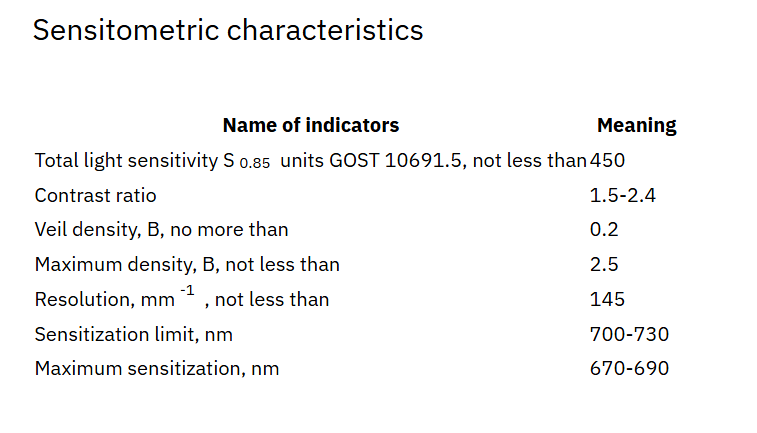
Just look at that contrast ratio – makes Aviphot seem restrained!
Probably the most critical difference between Type 25L and Agfa’s Aviphot family, is that it is an isopanchromatic, not panchromatic film. Isopanchromatic is an old Eastern Bloc term for an otherwise panchromatic film with reduced red sensitivity and heightened green & blue sensitivity. As can be seen, it peaks in the yellow and sensitivity ends in the red, no IR sensitivity like Aviphot here! Therefore, it behaves a bit differently than a typical panchromatic film; by my personal reckoning Neopan Acros II is likely the most similar film in terms of spectrum.
Unusual for a modern film, sure, but this unusual sensitivity is typical of Eastern Bloc film stocks. Interestingly, Helmut Stapf claims in his book Fotografische Praxis, which was widely circulated across the Eastern Bloc, that it produces red and green tones more similarly to the human eye. While I can’t remotely verify that it looks like how my eyes see things, I think this slight difference in sensitivity helps give Type 25L some character. Also, if your camera has an IR frame counter, this won’t get fogged by it unlike Aviphot, which is perhaps a more tangible advantage.
Speed-wise, it is rated at ISO 450. However, that is for aerial photography, where mid-tones are intended to be minimal, so using it at box speed will result in extreme contrast. On the ground, you’ll always want to add a stop or two for any aerial film; in this case, everywhere I’ve seen gives it a box of ISO 100, including FPP, and I went with that for my photos in this article.
Last but not least, much like Aviphot, this is also on a thin PET base, and anecdotally I found it even thinner, though it is definitely very tough. Load this up in subdued light, because it definitely light pipes just as hard as Aviphot.
The Results
Enough blabbering, let’s see the results!
As mentioned before, I first put a roll of FPP’s respool through my old LOMO Voskhod with its triplet lens in the summer. More recently, I then ran a roll through my Contax RX and its excellent assortment of Zeiss glass.
Both times, I shot at the respooled “box” speed of EI 100, and I always used a light yellow filter: a matching Soviet ZhS-17 for my Voskhod, and a B+W 022 for my Contax lenses. I did compensate for the filter but due to this film’s high yellow sensitivity, it may not have been necessary. All photos were developed by my local lab in TMax developer.
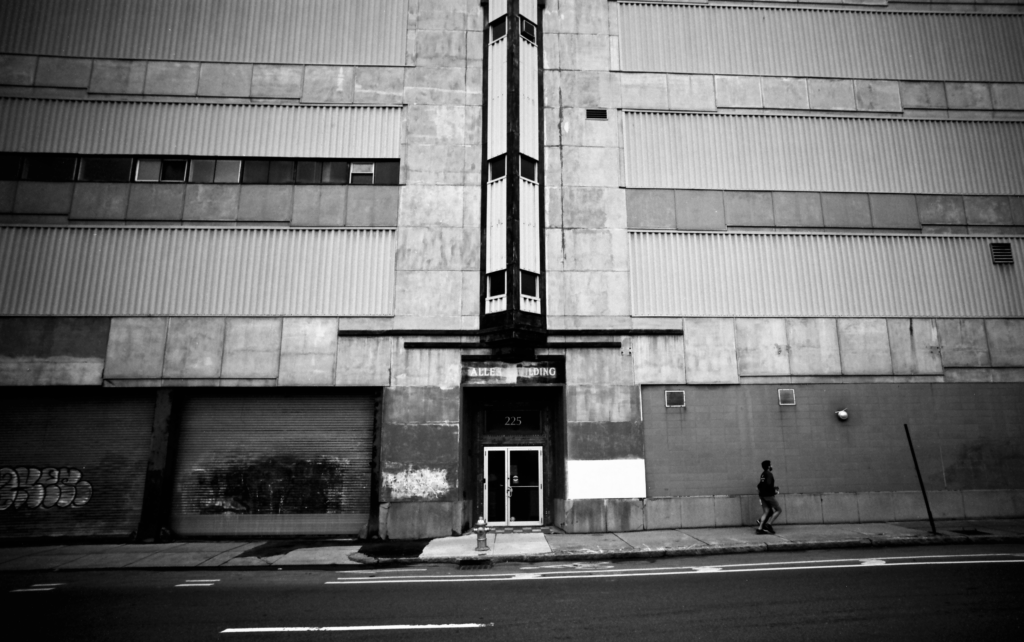
Films with sharp contrast, like Adox HR-50, are my go to for emphasizing the shape and lines of a scene, so in both test rolls, architecture and urban geometry/abstraction compositions make up a lot of what I photographed.
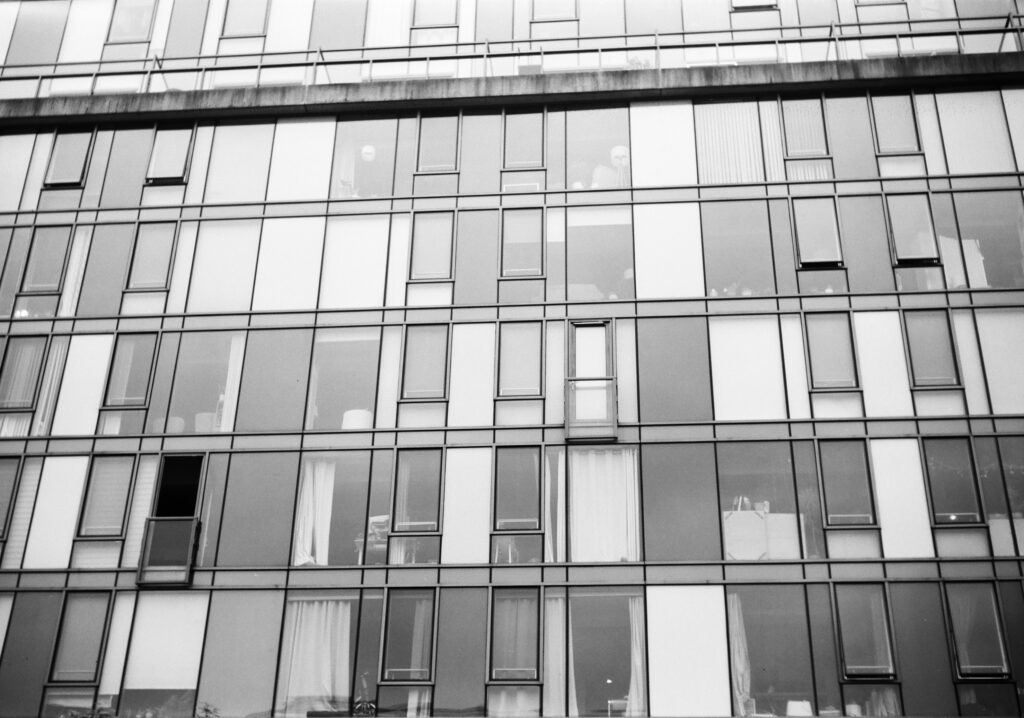
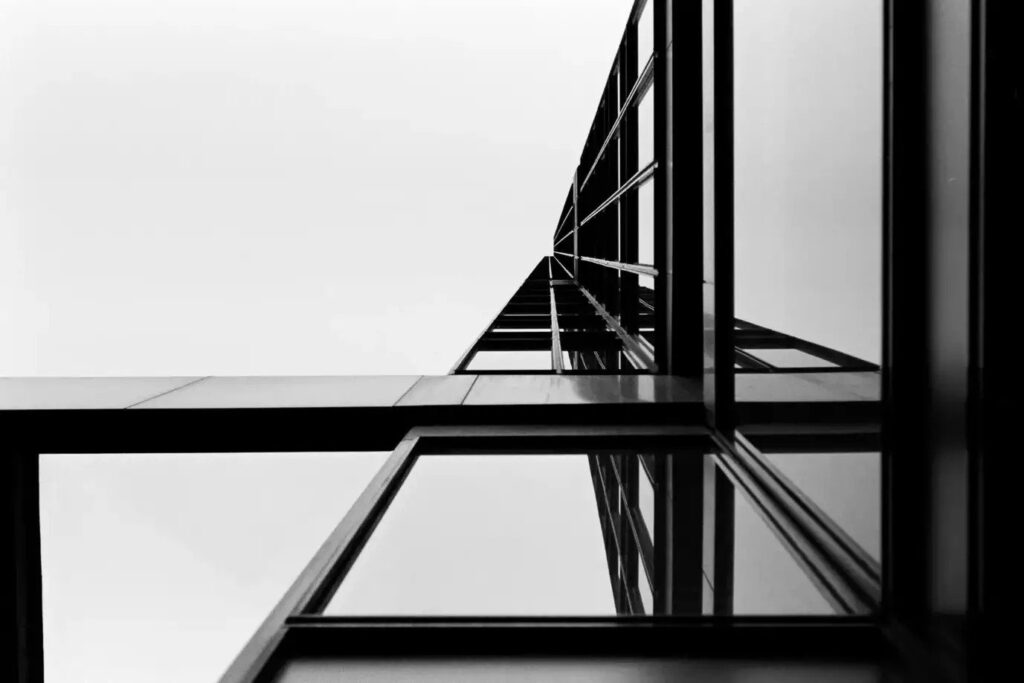
Kicking this off with a typical example of this subject, it as hoped did a good job of highlighting the basic lines of these windows. While the softness of the Voskhod’s lens takes away a little of the bite of the film, the sharpness can still be felt. Grain is surprisingly good too given that its supposed to be an ISO 450 film.
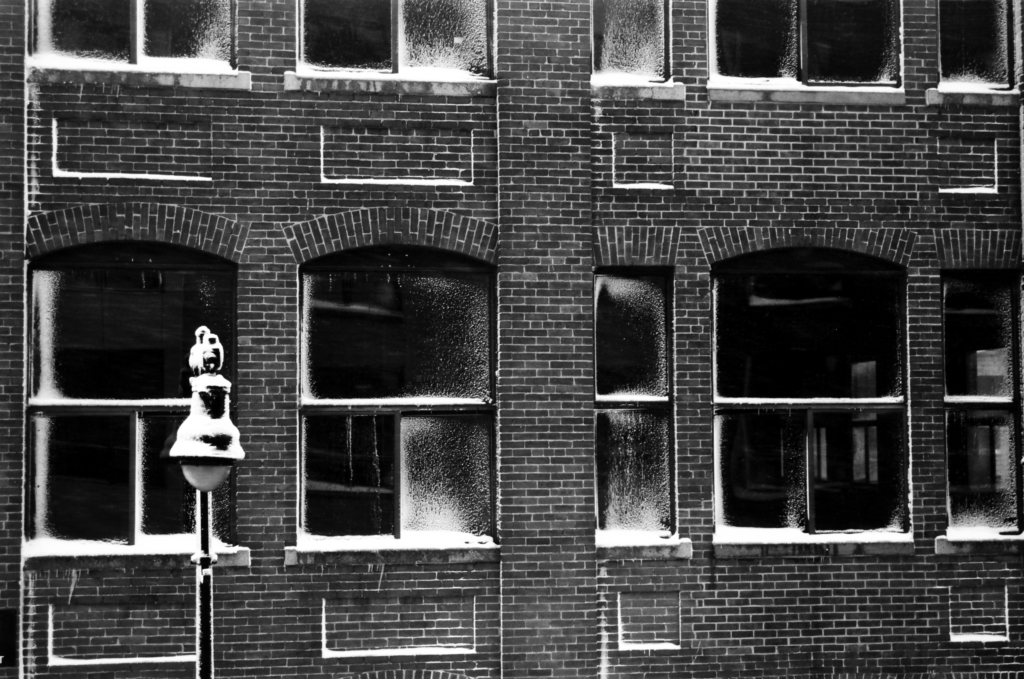
Type 25L has a richness to its shots, with lots of dark, inky, finely separated tones. This is really the main attraction of this film to me. It’s a more artistic look, sharp & bold but not overly harsh, not dissimilar to Ferrania P30 but with better separation of tones. Tonality is clearly one of the main strengths of this film, and this gives it flexibility in conveying the mood of a shot. Based on the lighting conditions, I found an interesting duality of mood in shooting my rolls.
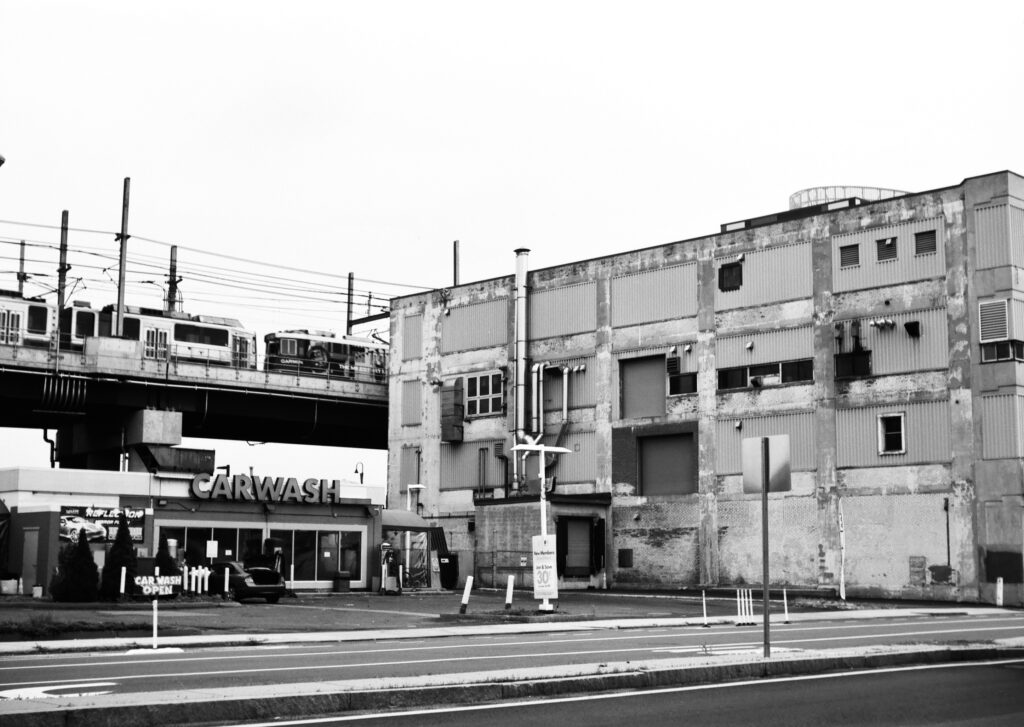
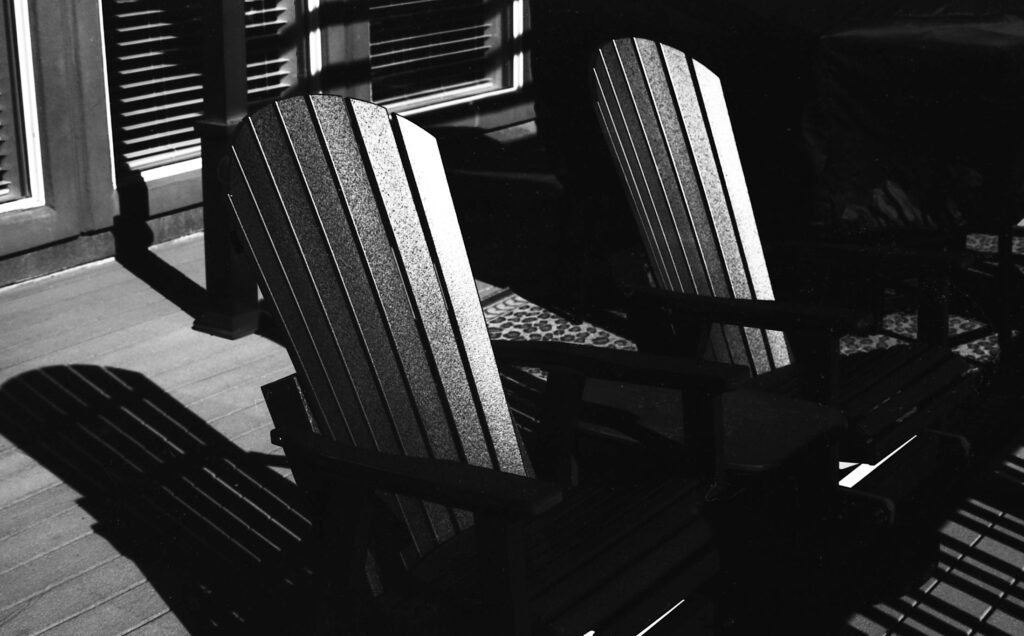
Overcast conditions of course give the most controlled spread of tones. I find that it adds a feeling of grit – excellent for moody urban scenes like this. With all the snowstorms we got in Boston this season, this side of Type 25L complements the weather rather well.
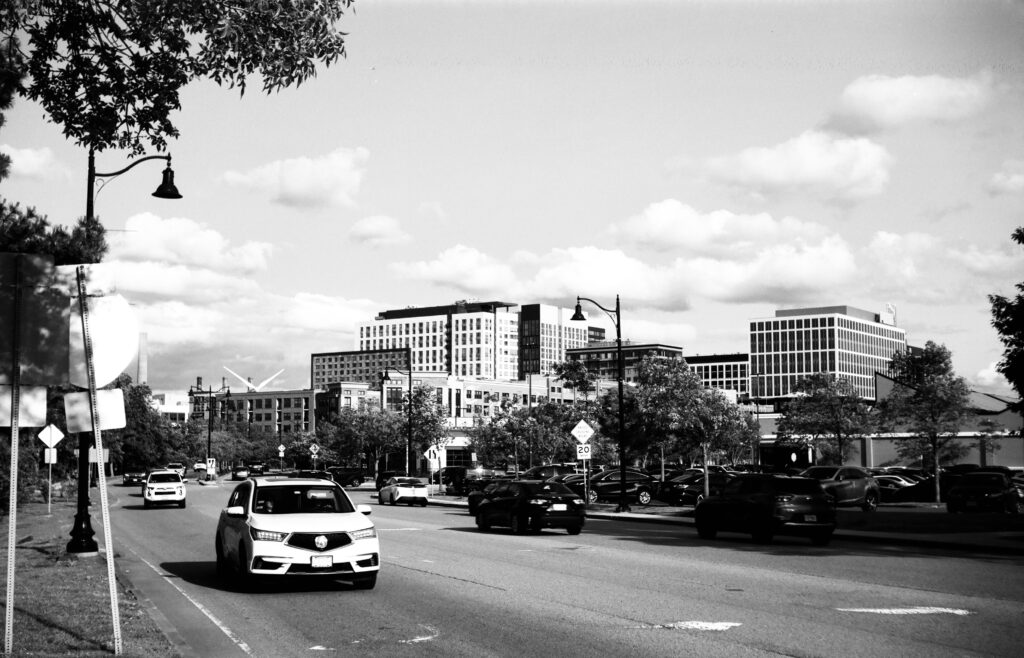
Sunshine & summer though, give an equally interesting yet completely different feeling, one that is bright and expressive. Very impressive! I think this is the film at its best, in this sort of balanced, bright light, with lots of details to make out. The level of detail is immediately apparent; the individual LEDs and some of the grille details on the foreground car can be seen, and shadows & highlights are strong yet defined. Note the light skies, a sign of this film’s high sensitivity in the blue spectrum. There is one issue though, which has been noticeable in multiple shots…
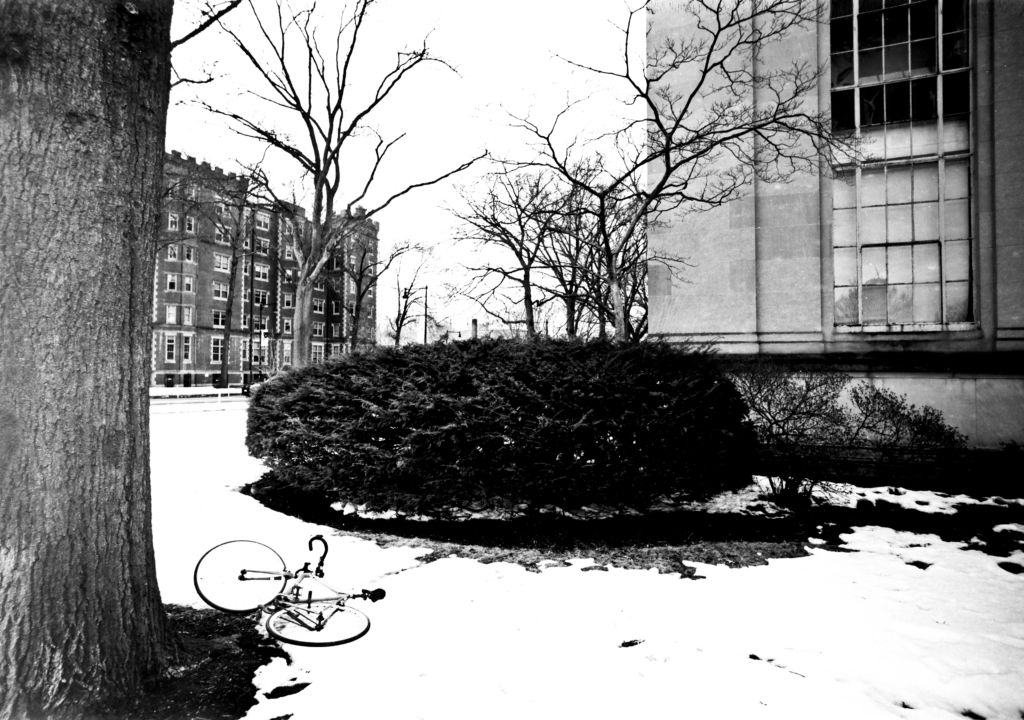
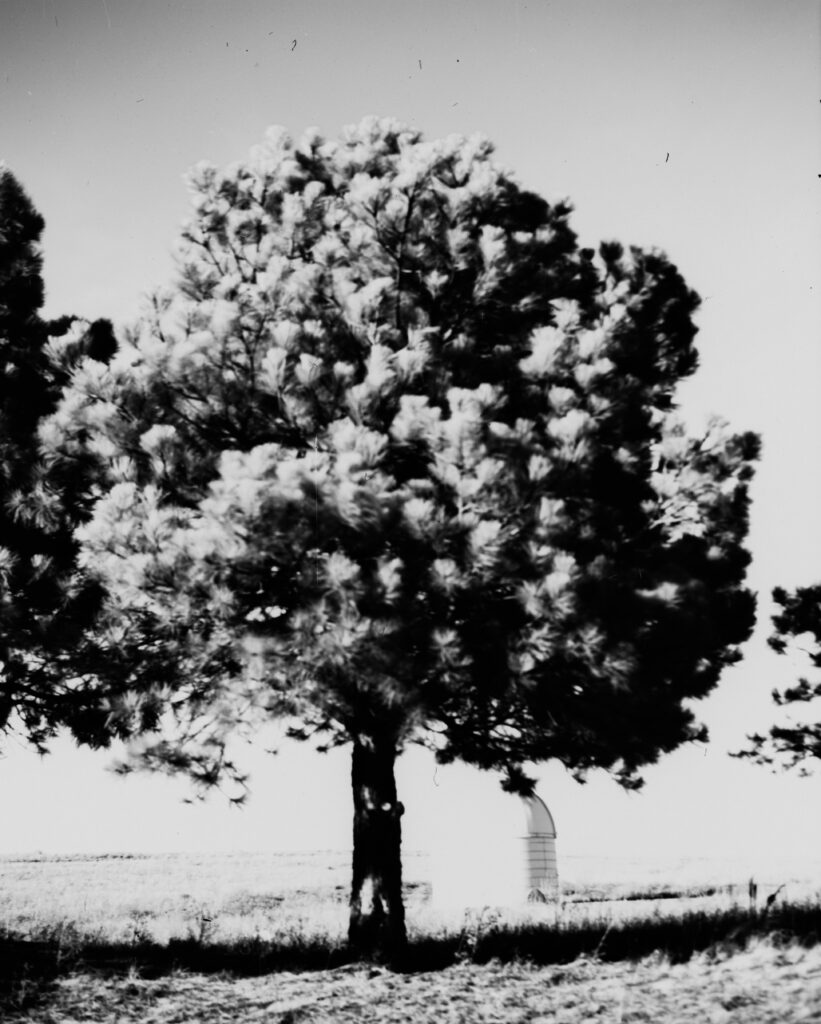
Blowing out the highlights, or just keeping them controlled, was a problem I repeatedly ran in to with this film. Dynamic range appears to be rather limited with this film, so nailing the exposure is a bit more important in high contrast scenes. At least digitally, it is possible to recover a good amount of information from the highlights, so erring on the side of mild overexposure as with most negative film is probably a good idea.
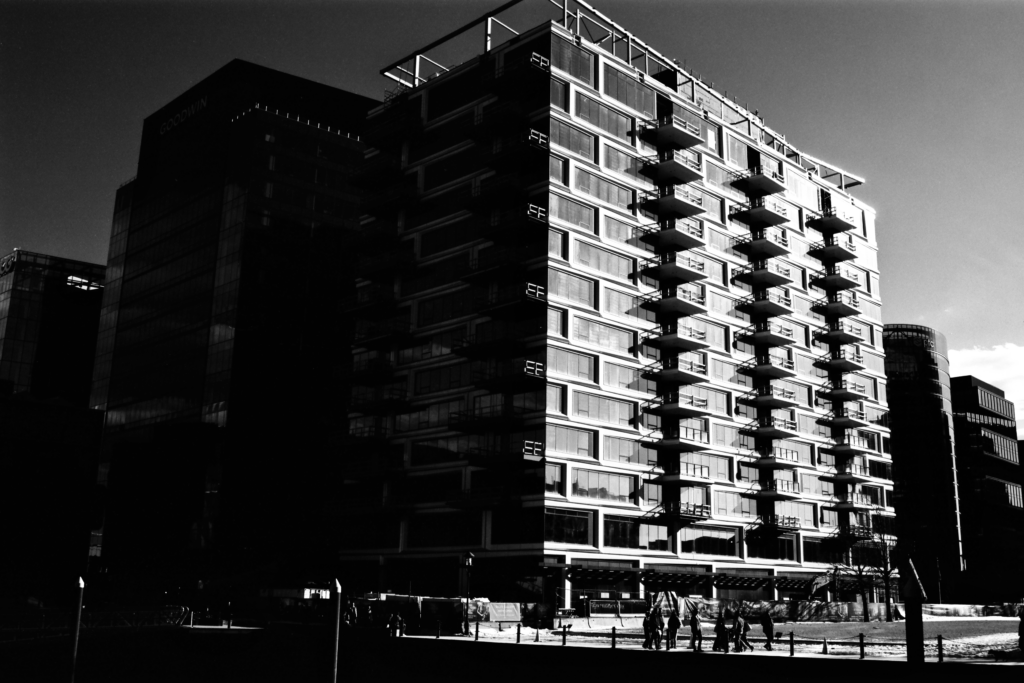
Deliberately crushing the shadows though, can generate some very striking scenes. Like this, my favorite shot on either of the rolls. And a good amount of shadow detail is still visible too!
That is something I found surprising about Type 25L, at least when shot at EI 100, it still retains a lot of information in both highlights and shadows. Making the comparison again to Ferrania P30, it feels much easier to use Type 25L despite also being high in contrast, it feels easier to predict how a scene will look based on your metering, and missing exposure isn’t as punishing. Opening up in GIMP, it feels noticeably easier to balance a scene on this film, versus say Ferrania P30. My workflow is hybrid, so my endpoint is a digital scan or an inkjet printed image, but I’d like to see if that translates to the darkroom as well.
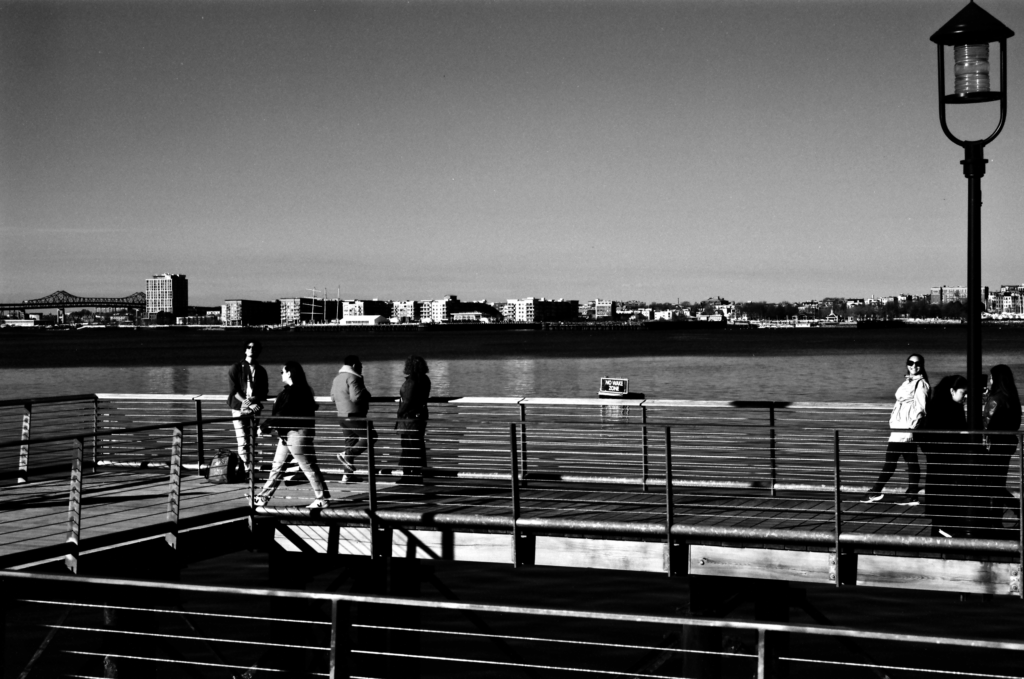
Peoplewatching is something I enjoy, but looking back at my rolls, I realized that I barely took any photographs of people. Admittedly, I’m not the best at street, but I still wanted to share this as an example. Results in the sunlight seem pretty similar to Aviphot for me, if a tad less pallid. If you like that high contrast look for street photography, I think Type 25L delivers well. In overcast weather, I can imagine the high blue sensitivity of this film would give some real gritty, hard portraits, but I haven’t had the chance to test that yet.
Well, sadly, the rolls from FPP were only 24 shots apiece, so my time with this film was cut way too short! Nevertheless, it was quick enough for me to form a very positive opinion, about this rather different film stock.
In Conclusion
To my eyes, Tasma Type 25L is a rewarding, pleasant film, if you’re not afraid of contrast. Photos shot on this stock have a certain ink drawing look to it, a rich sharpness that differentiates itself from not just other aerial film, but other high contrast films like Ferrania P30 too.
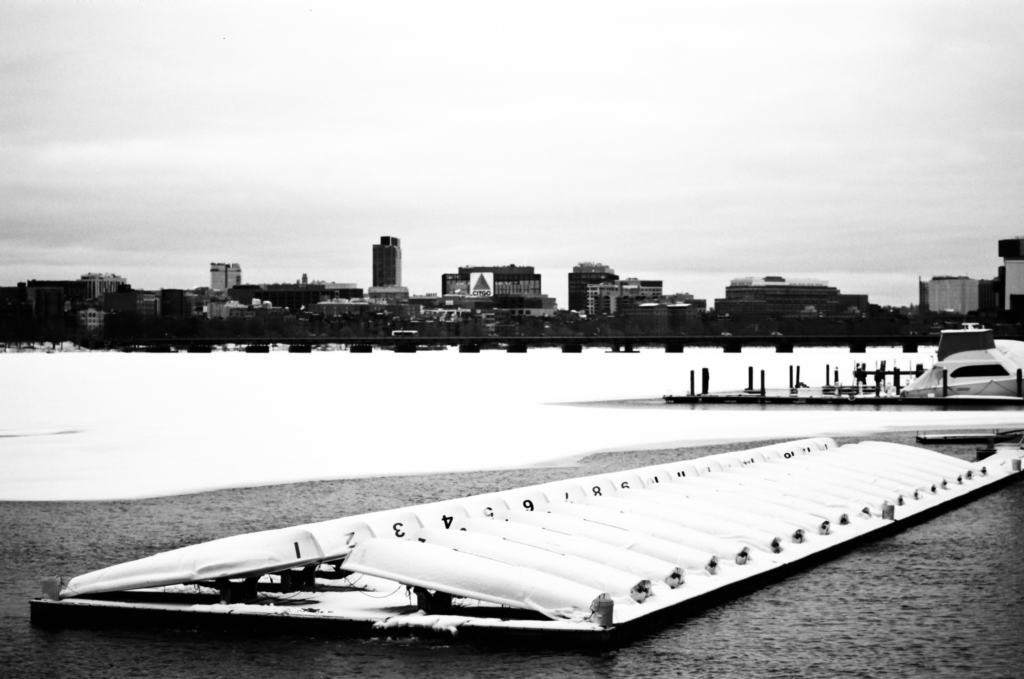
And to me, it is a look that goes well with many scenes, anything that benefits from a dash of boldness. Such as the depths of winter, as I’ve shown in multiple shots here. Or, alternatively, the bright, hot energy of summer.
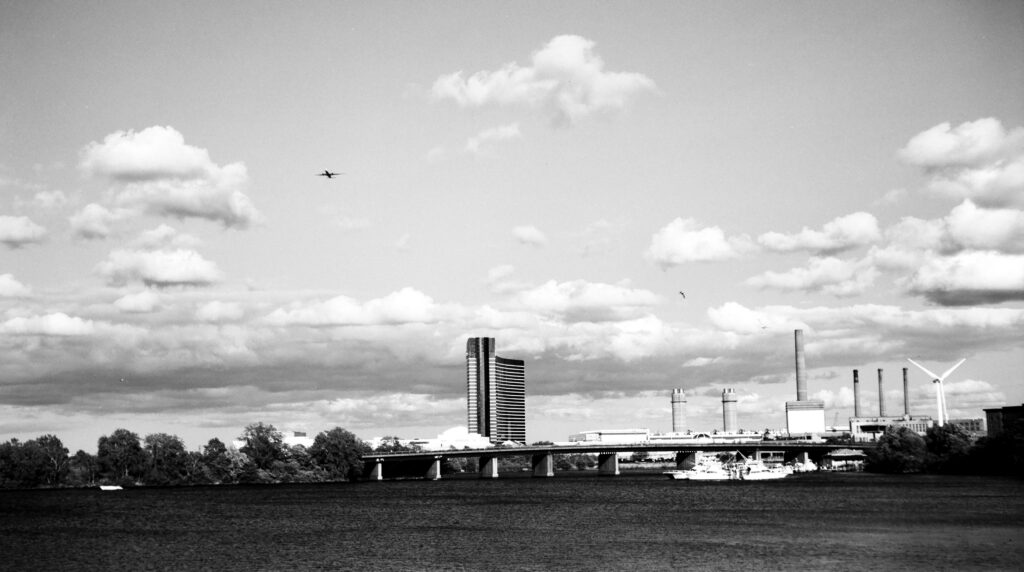
Particularly, I am happy by how distinctly different it looks, it isn’t just a film from a different source, but it is truly different, a film with its own niche and own merits to be picked. Even better, despite the contrast, it isn’t a challenging film to use. I never felt overly frustrated using it…except for light piping on my first roll. Well, it is an aerial film after all.
A couple of things that I’d like to try in the future, is to push this film to 400 – ie. try to use it at its aerial rated speed – and to do a more direct comparison to Acros II. My mind kept wandering to Aviphot and Ferrania P30, but Neopan Acros II is shot at 100 as well, and it should have a similar spectrum. That makes me wonder, how much of Tasma’s favorable look is due to its chromatic sensitivity?
I hope you enjoyed this review, thank you so much for taking the time to read. If you have any experience with this film, please share!
Share this post:


Comments
David Brancaleone on Tasma Type 25L – Painting with Ink
Comment posted: 24/04/2026
Comment posted: 24/04/2026
Eric Rose on Tasma Type 25L – Painting with Ink
Comment posted: 24/04/2026
Comment posted: 24/04/2026
Gary Smith on Tasma Type 25L – Painting with Ink
Comment posted: 24/04/2026
Comment posted: 24/04/2026
Jeffery Luhn on Tasma Type 25L – Painting with Ink
Comment posted: 25/04/2026
These are striking images! Pop, pop, pop! Especially the architectural subjects! Wow! I'd like to know a bit about the grain, or lack of it. High contrast films, like the old litho emulsions, had no visible grain. They were around ISO 15. But the had no midtones. You have some midtones. How is your grain?
Thanks for an intro to this emulsion.
Jeffery
Walter Reumkens on Tasma Type 25L – Painting with Ink
Comment posted: 26/04/2026
This is my own opinion, formed on the basis of recent research I have carried out on the internet in German. It is clear from this that Svema no longer manufactures its own products; the trademark owner merely assembles them, sourcing the goods from various suppliers and often labelling them ‘Svema’. As for Tasma, one can only speculate. But is it worth making further comparisons when you don’t know what’s inside the next cartridge? Perhaps someone here knows more about it.
Don’t get me wrong, these are pure conjectures and I’m still in my right mind. Your engagement with the subject is to be commended. For me personally, the contrast in this film is too high. Or is it down to the lab’s workflow, which can’t be adapted to every film? As I learnt 50 years ago. Thanks for your report and your photos, Omar.