Instant Fine Art

By Michael McGrath

Once upon a time, titans of photography such as Ansel Adams and Andy Warhol were creating art with instant film. Today, when we think of instant photography, we often imagine low-resolution, fuzzy, saturated images. Today, a “Polaroid” camera is typically used for fun and to share original images. That is all true, but instant film, in all its modern forms, is a versatile tool that can be used in many different ways and is an excellent medium for fine art photography. For those of you who have more cynical feelings toward Instant film, I invite you to open your mind and join me on a journey to explore just a few of the artistic possibilities.

Limitations

Instant photography is often seen as the preserve of automatic, fun cameras with poor quality lenses and fuzzy, saturated images.  Used by teenagers and millennials at parties and nights out.  All of this is probably true, but Instant film can produce higher-quality, sharper images than you might expect. With a small investment of time, you can produce high-quality Fine Art images with this famous analogue technique.

Most instant cameras are designed for consumers with low-quality, plastic lenses and automatic functions. However, there are options to improve this, such as using legacy or modern lenses, or even no lens.

Is Instant photography special?

Yes!  Undoubtedly.  Firstly, instant photography sits at the intersection of modern immediacy and the unique nature of analogue photography.  Every image is unique; whilst copies can be made, the original image is distinctive and irreplaceable.  You are creating a physical object.  It has immediacy, presence, texture, and it even has physical weight, unlike a digital photograph.  As with all analogue photography, you need to embrace imperfection and possibly slow down.  You also have that moment of waiting to see the finished picture.  My personal journey started with an old Polaroid Sun 600 camera bought from a “British Heart Foundation” charity shop.

Fine art potential

Fine Art photography is the practice of taking photographs to create art.  It is done intentionally for the joy, satisfaction, or possibly frustration of creating the image.  Most fine art photographers are looking for at least two key properties from film.  Typically, they need control and high-quality film.  By quality, I am primarily thinking in terms of consistency and high resolution.  Let’s consider the film’s quality first. To my knowledge, there are three manufacturers of instant film.  Fuji produces Instax film; Polaroid produces Polaroid 600, I-Type (the same emulsion as 600), SX-70, and Large Format film; and Supersense produces peel-apart and 8×10 film.

Brand  Film Type  Image Dimensions (mm)  Image Dimensions (in) Options
Fujifilm  Instax Mini  62 × 46  2.4 × 1.8 Colour & Black and White
 Instax Square  62 × 62  2.4 × 2.4 Colour & Black and White
 Instax Wide  99 × 62  3.9 × 2.4 Colour & Black and White
Polaroid  SX-70  79 × 79  3.1 × 3.1 Colour & Black and White
 600 / i-Type  79 × 79  3.1 × 3.1 Colour & Black and White
 Go  48 × 48  1.9 × 1.9 Colour & Black and White
 8×10  190 × 240  7.5 × 9.5 Colour & Black and White
Supersense ONE INSTANT Type 100  74 × 95  2.9 × 3.75 Colour, Black and White & Choco
ONE INSTANT 8×10  190 × 240  7.5 × 9.5 Black and White

All of these are medium or large-format films.  That offers the fine art photographer the potential for greater depth of field than most digital cameras, even those with typical medium-format sensors.  In addition, there is a larger image size and sometimes a larger negative or positive image to work with.  Instant film, certainly from Fuji and Polaroid, offers the peculiar property of improving with age, to a point, at least.  They seem to keep developing slowly!  The image will be slightly sharper after 24 hours than it was 15 minutes after development, and sometimes it looks even better a month post exposure.  Another property of interest is that, when scanned, they reveal more detail than the human eye can see. A well-scanned instant photograph is a great starting point for those who are versed in post-production tools such as Photoshop and Lightroom.

The rendition of both black & white and colour varies by film type.  Instax film is somewhat saturated, particularly when it comes to capturing greens and blues.  Polaroid 600 and I-Type film are less saturated, while Polaroid SX-70 film looks slightly more saturated.  That ignores the black and white films produced by both companies and the colour, black and white, and “Choco”, a sepia-like film, produced by Supersense (I won’t address these variants in this article).

There is also considerable variation in film sensitivity: Instax film is rated at ISO 800, Polaroid 600/I-Type at 640, and SX-70 at 160.  Instant film, in particular Instax film, has a very narrow exposure tolerance range, and so metering is particularly important, even if you are using a camera with automatic exposure.  With Instax, it is best to meter toward the highlights; as a rule of thumb, Polaroid is slightly less prone to blowing out highlights.

Instant photography is an area where precise metering and filters can be invaluable.

The Cameras

For me, I like to have as much control as possible, so I shoot instant film in cameras that can be manually controlled, and I have a variety of such cameras, which could be classified as modern instant cameras, modified legacy instant cameras, legacy non-instant cameras, and pinhole cameras.  Examples of these would include:

  • Pinhole: Custom Vermeer 40mm pinhole camera mounted with the Lomograflok (Instax Wide). A fixed-aperture and focal length camera, without a lens.
  • Legacy Camera: Hasselblad 503cw with a HassyPB Instax back (Instax Square). A classic camera with lot of options and accessories.
  • Modern Instant: Polaroid I-2 camera. A modern camera that can offer automatic and manual settings.
  • Updated instant: Polaroid 180, modified by Analogue Studio to take a Lomograflok Back. A classic camera with high quality glass lenses and manual controls.
  • Non-instant medium or large format cameras. I often use a 1914 ICA Teddy 146 camera with Instax film instead of regular sheet or plate film.

Taking pictures, a few examples, a pinhole camera

Pinhole photography is, to my mind, the purest form of picture taking.  I use Instax film, sometimes with ND or Circular polarising filters.  At ISO 800, exposure times can be very short, requiring a filter.

Figure 1: A Vermeer Pinhole camera with a Lomograflok Instax Wide back.

Instax colour film reacts with a magenta hue with long exposures. Because of the way Instax Black & White operates, you will see different responses between the red and blue ends of the spectrum.  But the results are attractive both in colour and black and white.
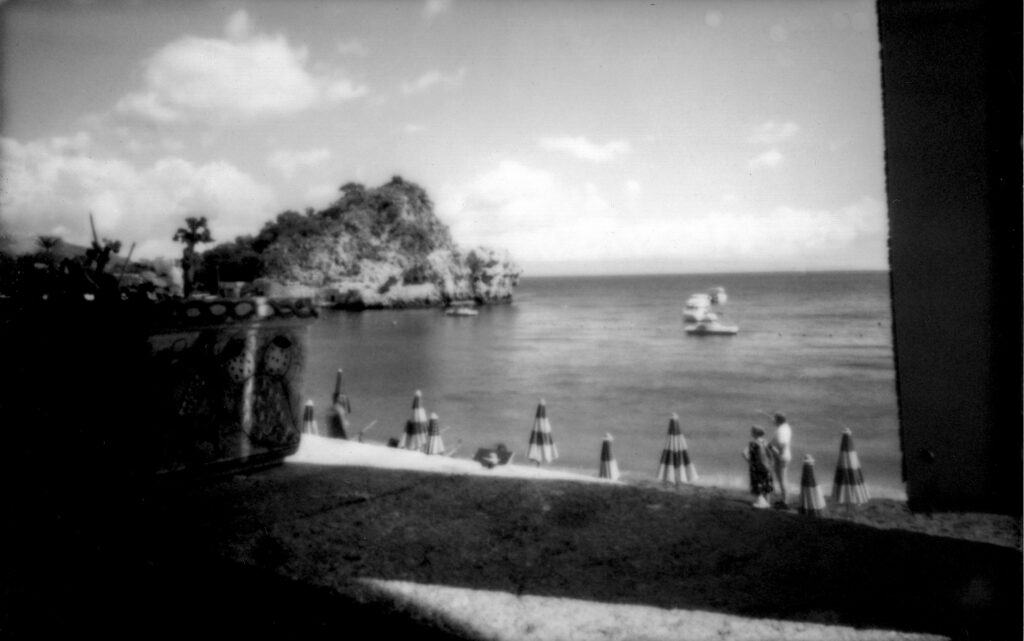
Figure 2: At the beach with a pinhole camera
Figure 3: Colour with some magenta shift. A polarising filter was used to balance the sky with the foreground.

Legacy Cameras

One of the benefits of modern instant photography is that you can use film backs on your legacy camera.  The photograph, below, shows a standard Hasselblad macro setup with an Instax back from HassyPB.  This illustrates two points. The first is that this could be any camera setup, macro, landscape, astro, or anything else you can do with a manual camera.

Figure 4: HassyPB instant film back

The second point this illustrates is the image quality you can capture when using a high-quality lens with Instant film.  There is a range of different camera backs for medium and large format cameras.  When you combine these cameras and lenses available, image quality is not the challenge you might imagine.
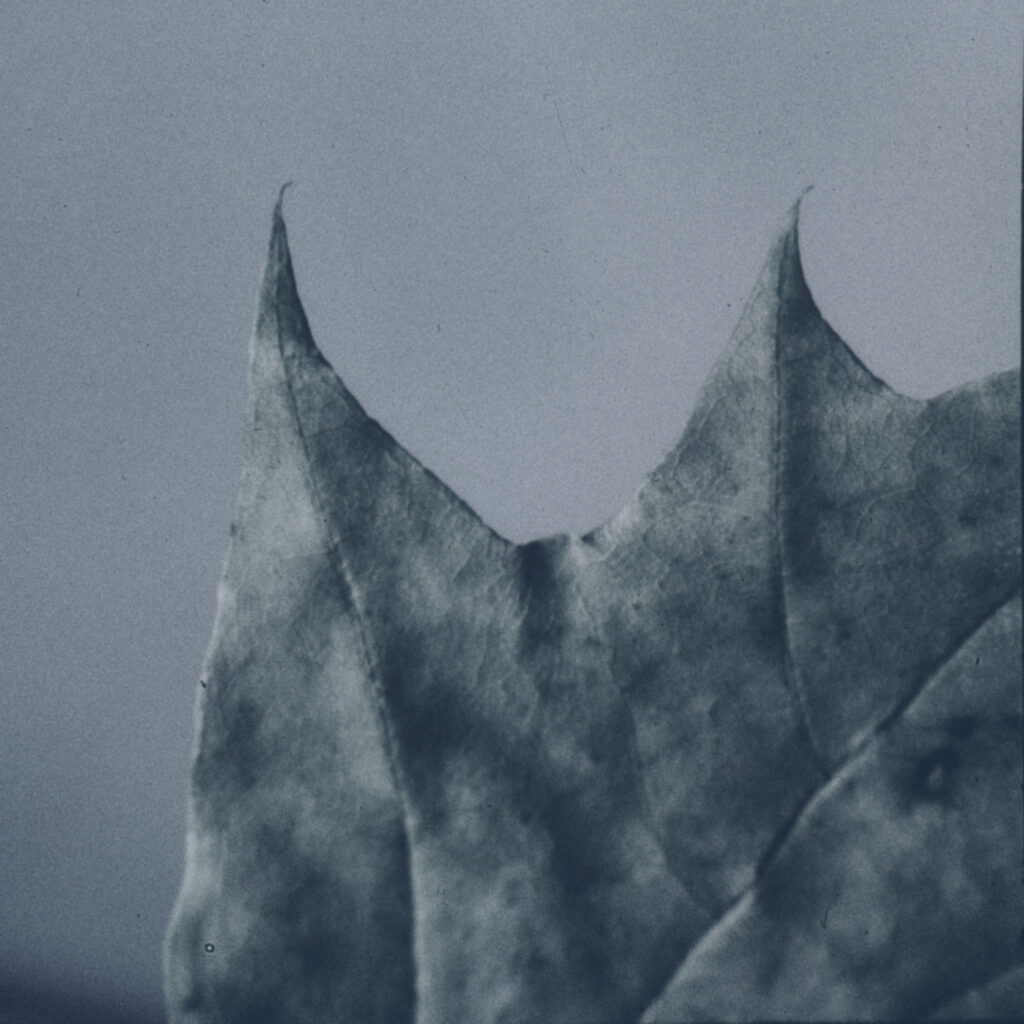
Figure 5: Medium format: A macro image captured on Instax Square film, using the above set-up
Figure 6 Large Format: An example of an image taken with a Linhof Technika camera and a Lomograflok back

Non-instant film camera

If you are comfortable with a dark bag, the range of cameras available to you is vast.  That is because you can manually place the film into the camera in the dark and use an instant camera to process the image.  Theimage of St. Paul’s Cathedral was taken on a 1914 camera using a sheet of Polaroid film, then processed in a Polaroid I-2 camera with the lens covered to prevent exposure.  Fuji Instax, Polaroid, and Supersense instant film is processed by pushing or pulling the film through a set of rollers.  This process busts pods filled with chemicals to develop and fix the image.  To achieve this when shooting instant film in a non-instant camera, I place the exposed images back into a cartridge, insert the cartridge into a camera, and use the camera to run the film through the rollers, developing the film.  This is done inside a dark bag or in a dark room.
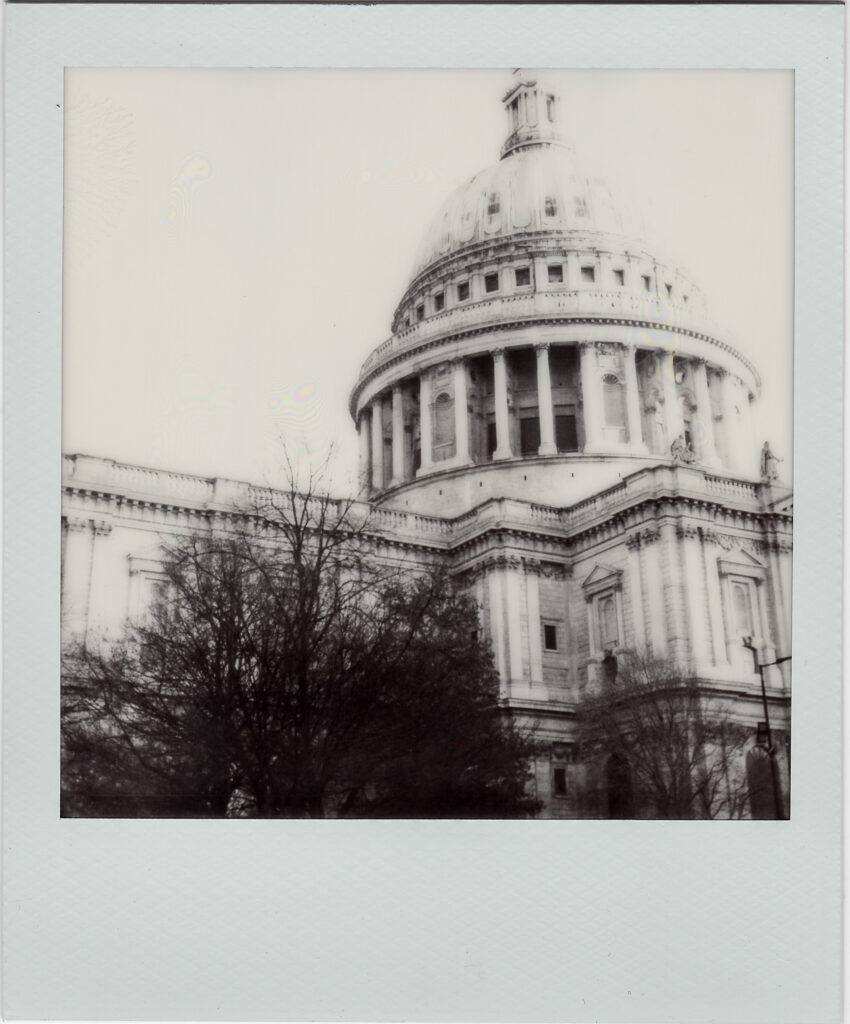
Figure 7: St. Paul’s Cathedral in London

Other creative possibilities

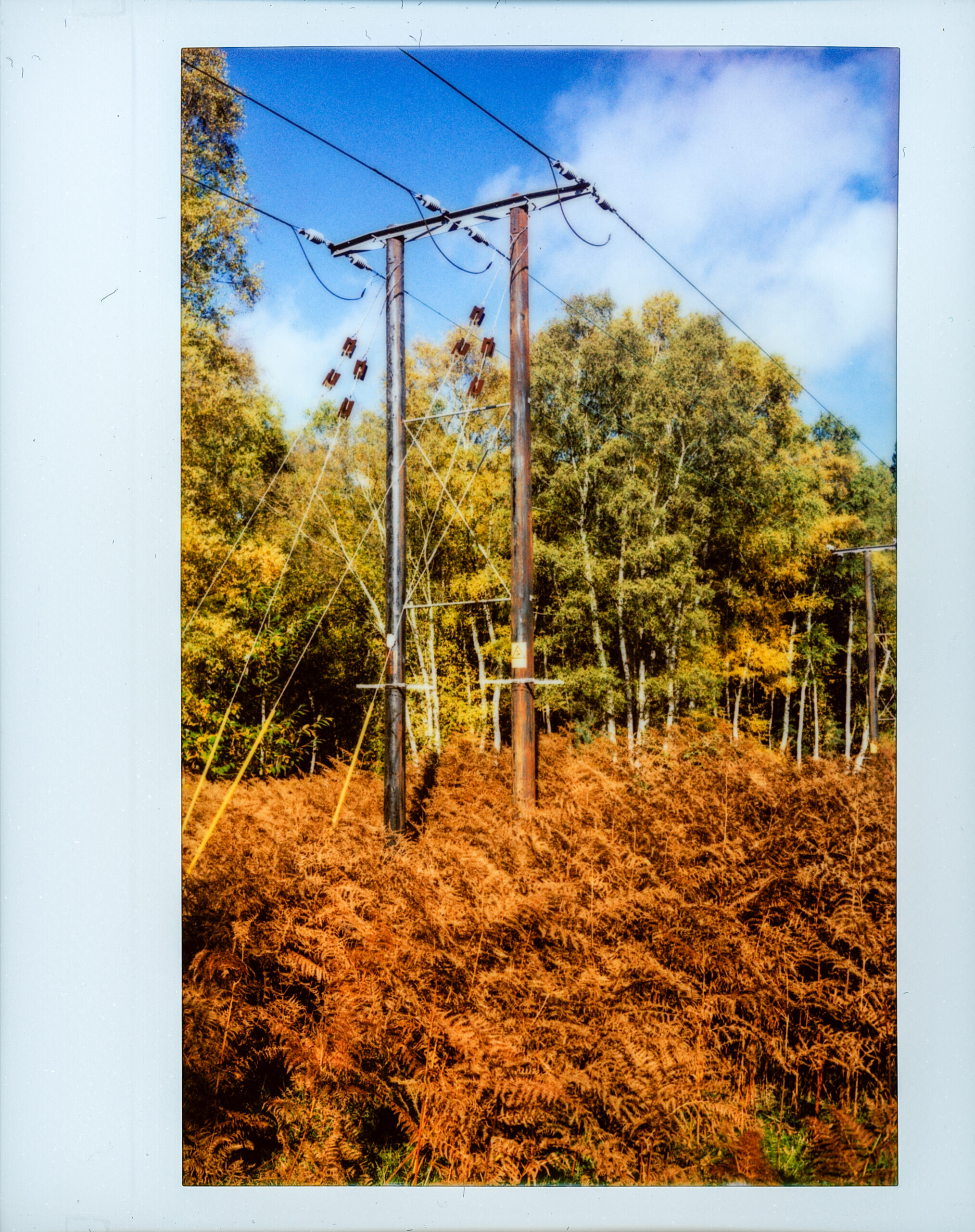
Instant film offers all sorts of unusual and sometimes unique creative possibilities.  There is not enough space here to cover negative recovery, film soups, image lifts, and multiple exposures, to name a few.  One of my favourites is Instax’s creative possibilities, such as solarisation when sufficiently overexposed.  Polaroid film does not appear to have this property.  An example is shown below in Figure 8 An example of Instax’s solarisation.

Figure 8 An example of Instax’s solarisation

Another dimension of film’s creativity to consider is how the film renders an image.  Instax is generally very precise and predictable.  Polaroid is sometimes more pleasant when slightly underexposed.  Supersense film is hand-produced in Vienna and is best considered an artisan product.  It is the least predictable but also has the most distinctive look and probably the most attractive if you want some randomness and enjoy “happy accidents!”

There are two other “properties” of instant photography I would like to cover.  The first is the satisfaction of having the image shortly after it is captured.  I appreciate that it is “instant gratification” and in today’s age, it is something we are used to, but that leads to the other property, which it enhances.  This is a physical image.  I belong to the school of thought that would say a photograph is not truly completed until it is printed.  With instant photography, you have the physical image, and a unique one at that, in your hand.  The image is there for you to see, share, and enjoy.  There are few other forms of art where the object is completed in minutes.

Conclusion

Instant film is alive and well and is an excellent medium for any Fine Art photographer.  My hope is that this short article gives some of you a flavour of the variety of film and cameras available, of what can be done with instant film, and what to expect from it.  The creative opportunities are limitless, and since the images scan so well, size is not a limitation for the final product.  I encourage you to explore the exciting world.  Instant film blends new and old photography.  It slows me down, anchors me in the moment, and then it quickly returns the physical photography to its most tactile form.

Resources

I referenced several products and suppliers.  I have no affiliation with any of these, but I use their products.  Here are references you might find helpful:

Share this post:

Find more similar content on 35mmc

Use the tags below to search for more posts on related topics:

Donate to the upkeep, or contribute to 35mmc for an ad-free experience.

There are two ways to contribute to 35mmc and experience it without the adverts:

Paid Subscription – £3.99 per month and you’ll never see an advert again! (Free 3-day trial).

Subscribe here.

Content contributor – become a part of the world’s biggest film and alternative photography community blog. All our Contributors have an ad-free experience for life.

Sign up here.

Make a donation – If you would simply like to support Hamish Gill and 35mmc financially, you can also do so via ko-fi

Donate to 35mmc here.

Comments

Jukka Reimola on Instant Fine Art

Comment posted: 11/03/2026

This is interesting, but isn`t it somewhat counter-intuitive to put out so much time and effort to get INSTANT pictures?
Reply

Leave a Reply

Your email address will not be published. Required fields are marked *

Michael McGrath replied:

Comment posted: 11/03/2026

Hi, firstly, thanks for taking the time to read teh article, I appreciate it and the fact that you have made the effort to write a comment. You are abolutly right, it is counter intuative in the age of super shart lenses and high spec sensors, but I think it has a few things in its favour, - It offers a way to shoot with cameras that have obsolete film formats, and these have great characer and charm - It places limitations on you as an artist, but I believe constraint often lead to more creative work - It becomes another media for expression - The unpredictable nature of some of the stocks means you are always surprised; and - The quick tunrn around of a unoique analoge image is, IMHO, very appealing. Ultimatly, it is a question of personal preference.

Reply

Leave a Reply

Your email address will not be published. Required fields are marked *

Erik Brammer replied:

Comment posted: 11/03/2026

Instant film can be fun! And that can be the motivation despite the cost and potential frustration.

Reply

Leave a Reply

Your email address will not be published. Required fields are marked *

Michael replied:

Comment posted: 11/03/2026

Totally!

Reply

Leave a Reply

Your email address will not be published. Required fields are marked *

sneakerzoom on Instant Fine Art

Comment posted: 11/03/2026

Very interesting article, Michael, thank you for that! I was not even aware there are options for large format instant photography. We tend to keep an Instax around in our household as the gift of an instantly printed photograph is something that seemed lost to entire generations but creates tactile, lasting memories. The only experience I've had myself with 'fine art' instant photography would be an old, refurbished Polaroid Spectra with Impossible film (PZ600 - when Impossible, now Polaroid, was still reverse-engineering the chemical recipes for their films). The results were very pleasing to me though the archival capabilities were rubbish at the time.
Reply

Leave a Reply

Your email address will not be published. Required fields are marked *

Michael McGrath replied:

Comment posted: 11/03/2026

Hi, thanks for your comment. I really appreciate it. I couldn’t agree more; I’ve been surprised how much my photography has shifted towards instant photography over the years. Aside: You mentioned Spectra cameras. I’ve achieved excellent results after converting my Spectra camera to work with Regular Polaroid 600 film. That’s a story for another day.

Reply

Leave a Reply

Your email address will not be published. Required fields are marked *

Erik Brammer on Instant Fine Art

Comment posted: 11/03/2026

Thank you for the overview, Michael!
I would add the NONS Instant Back for Instax Square film for the Hasselblad 500 series. I have the first version which leaves a somewhat uneven black border at the edge of the image, 1 mm to 2 mm. Version 2 extends the distance of the film plane to avoid the black border and offers adapters for correct focussing. It also exposes vertically and thus comes closer to Polaroid, albeit the smaller image size overall. Would love to have version 2 but I don’t use it often enough to justify the cost of upgrading.
Best,
Erik
Reply

Leave a Reply

Your email address will not be published. Required fields are marked *

Michael McGrath replied:

Comment posted: 11/03/2026

Thanks Erik, That is entirely true; I have never had the chance to use the Nons back, so I haven’t gained personal experience. The black border is unavoidable because the area of the Instax picture is slightly larger than the original Hasselblad (56mm?). On my HassyPB, the edge is even and has two small extrusions which HassyPB’s creator calls Victor’s (Hasselblad's) fingers! There are a few other Instax backs, but they seem mechanical to me, and my concern would be the uneven spread of the chemicals. For the LasnCameras, there is also the Newland manual back, which I have not tried. I am always impessed withthe quality of the Instax film, and when you scan it, you can print it up to quite a size. Thanks, Michael.

Reply

Leave a Reply

Your email address will not be published. Required fields are marked *

David Hume replied:

Comment posted: 11/03/2026

Hey crew - I'll write a longer comment below, but I did a review on 35mmc of the NONS back when it first came out, and I reckon it's nice to have the black border and not have to adjust focus distance (you can swap back outs for regular film for example. Anyway Michael - great article, thanks, and keep'em coming!

Reply

Leave a Reply

Your email address will not be published. Required fields are marked *

Keith Devereux on Instant Fine Art

Comment posted: 11/03/2026

What an excellent article! I tend to use legacy cameras with my Instax film, I have several folders from the 1920s and load the film holders with Instax Wide film. It's a bit dodgy framing, but works. I've also used similar mounts in a Polaroid Big Shot. There is so much that can be done with instant film in old cameras, and you've encouraged me to get them out again. Thank you.
Reply

Leave a Reply

Your email address will not be published. Required fields are marked *

Michael McGrath replied:

Comment posted: 11/03/2026

Hi Keith, Thanks for your kind words. I am with you 100%. It's an easy way to breathe new life into an old camera, and as the image of St. Paul’s Cathedral shows, the images are perfectly fine. Michael.

Reply

Leave a Reply

Your email address will not be published. Required fields are marked *

Justin on Instant Fine Art

Comment posted: 11/03/2026

Thanks for the article. I have used Instax backs, hacked Fuji cameras and 3D-printed bodies with Mamiya Press medium format lenses quite a bit over the last five years. I had a blast making, altering and hacking the cameras and of course shooting instax with them. However, I eventually got extremely frustrated by the limitations of Instax film. Although the color and sharpness can be great the latitude is so limited and poor that I eventually switched back to regular film. If you meter for the highlights then the shadows wind up black; if you meter for the shade the sky is white. Very bright lights turn blue or black. I felt like I was back in the early 2000s shooting with a crappy digital camera with poor latitude/dynamic range. I don't need perfection but what I want is beauty, and this is more to be found in film, which has extraordinary range.
It is frustrating that Fuji does not really seem interested in improving their films, nor are they interested in making cameras for anyone other than toddlers. They seem reluctant to show interest in their own film products, so I just moved on.
Reply

Leave a Reply

Your email address will not be published. Required fields are marked *

Michael replied:

Comment posted: 11/03/2026

Justin, thanks, You have a very interesting photo history. I would like to know more about your camera hacks. I am an inveterate camera hacker. The range of exposures is limited, the dynamic range is 4-6 stops. I choose to see it as a chalenge to be worked around, sometimes with metering, sometime with filters, sometime both! Perhaps I should write something on that. :-) I would love to see an affordable high quality instax camera. There are some option from Lomography adn from Mint. Should we gauge interest in a kickstarter campaign?

Reply

Leave a Reply

Your email address will not be published. Required fields are marked *

Justin replied:

Comment posted: 11/03/2026

Hi Michael, You're right that filters, etc. would help — and accepting the challenges as an opportunity. I guess I just lost patience and realized that for me this was a gateway back to medium format film, and to 3D printed hacked medium format bodies. The original camera hack I bought was from this site, linked below. The guy who ran it (I don't think he sells them anymore) first sold hacked Instax Wide cameras that had a printed Mamiya Press mount added, which is what I bought. Then when Lomography came out with their Instax back he sold a 3D printed body for that (same lens mount). I have that as well. It works perfectly. You can now print these parts if you have access to a 3D printer. I have a Graflex Crown Graphic so next I need to get the Lomography Instax back to work properly on that camera (I have to adjust the infinity stops correctly). https://sprkplg.com/wide300mod/ https://www.printables.com/@SPRKPLG BTW, I also used the Lomo Diana Instax square camera, which actually was my favorite. But it's so junky that the shutter is already broken, unfortunately. The set that it comes with is amazing and has assorted lenses and great little viewfinders, which can be used on other cameras.

Reply

Leave a Reply

Your email address will not be published. Required fields are marked *

Justin replied:

Comment posted: 11/03/2026

You're right that filters, etc. would help — and accepting the challenges as an opportunity. I guess I just lost patience and realized that for me this was a gateway back to medium format film, and to 3D printed hacked medium format bodies. The original camera hack I bought was from this site, linked below. The guy who ran it (I don't think he sells them anymore) first sold hacked Instax Wide cameras that had a printed Mamiya Press mount added, which is what I bought. Then when Lomography came out with their Instax back he sold a 3D printed body for that (same lens mount). I have that as well. It works perfectly. You can now print these parts if you have access to a 3D printer. I have a Graflex Crown Graphic so next I need to get the Lomography Instax back to work properly on that camera (I have to adjust the infinity stops correctly). https://sprkplg.com/wide300mod/ https://www.printables.com/@SPRKPLG BTW, I also used the Lomo Diana Instax square camera, which actually was my favorite. But it's so junky that the shutter is already broken, unfortunately. The set that it comes with is amazing and has assorted lenses and great little viewfinders, which can be used on other cameras.

Reply

Leave a Reply

Your email address will not be published. Required fields are marked *

Danilo Leonardi on Instant Fine Art

Comment posted: 11/03/2026

Wonderful article, Michael! You’ve brought together a remarkable amount of information that is usually scattered across many different places, and combined it with the results of your own thoughtful experiments. Having had the pleasure, over time, of hearing a little about the various trials and ideas you were exploring, I know how much work, smart thinking and curiosity sits behind all this. And your photographs are excellent, making such good use of the qualities (and quirks!) of instant film.
Reply

Leave a Reply

Your email address will not be published. Required fields are marked *

Michael replied:

Comment posted: 11/03/2026

Danilo, Thank you very much for your kind comments. It is part of my philosophical approach to art that constraints stimulate creativity, and I enjoy that challenge. That said, there are probably two failed images for every good one, so the real cost of an image is probably £4!

Reply

Leave a Reply

Your email address will not be published. Required fields are marked *

Martin Siegel on Instant Fine Art

Comment posted: 11/03/2026

Great to read article. I use instant far too less. I need to get my Fuji 100 and Supersense film in a camera - this spring maybe? Let's see. Thanks for sharing your adventures!
Reply

Leave a Reply

Your email address will not be published. Required fields are marked *

Michael on Instant Fine Art

Comment posted: 11/03/2026

Hi Martin,

I can only encourage you. Thanks for your comments.

Michael.
Reply

Leave a Reply

Your email address will not be published. Required fields are marked *

David Hume on Instant Fine Art

Comment posted: 11/03/2026

Michael - thanks for this... great article. I hope that now you'll follow up with a series of detailed ones - there are many things you've touched on that made me curious for more! The St Paul's Cathedral shot is brilliant and definitely worth a story of its own. Likewise the feature image (is that Instax wide? The colours looks lovely and not Instaxy to me - apologies if I jut missed the details in the story_) And I love the detail and tones in the macro leaf. Sure, Instant limitied DR as someone said (maybe four stops IMO) but all films have their character/limitations. We're in a gret time now that we can digitise and enlarge the films so easily. Anyway - start writing, please!
Reply

Leave a Reply

Your email address will not be published. Required fields are marked *

Michael McGrath replied:

Comment posted: 11/03/2026

Thanks David, It is great you enjoyed the article. I accept your challenge! Kepe an eye out for more. Michael.

Reply

Leave a Reply

Your email address will not be published. Required fields are marked *

Jeffery Luhn on Instant Fine Art

Comment posted: 11/03/2026

Michael,
Great article on instant photography! It got me wondering about getting an SX-70. I bought one for my parents when it first came out, and also gave them 20 double packs of film. They took the camera to Europe and had a great time giving away pictures. About half of all exposures went to strangers! It was such a great way to meet people. Then I showed Mom how she could squish the emulsion around and she had a blast doing that. I have no idea where that camera went. After reading your article I thought about buying a used one and trying it out with new film. WOW it's expensive! Unless my calculations are off, it looks like $4.40 a shot. GULP! I guess Polaroid has always been pricey. We went through at least $1,000 per month of 4x5 and 669 for pro shooting in my studios, but I just chalked it up as a business expense that the clients paid for. Now it's on me. Hmmm. Gotta think this through.
Thanks for a great article! Good stuff!
Jeffery
Reply

Leave a Reply

Your email address will not be published. Required fields are marked *

David Hume replied:

Comment posted: 11/03/2026

Jeffrey I'll piggyback on your comment because I'm also interested in SX-70. I shot it back in the day, and still have a beautiful camera, but when the Impossible Project (now Polaroid) film was re-issued shot a few packs but it was such utter crap that it put me off. I don't know if it's better now - I think it must be, but yes, it's four times the cost of the ever-reliable Instax square. One thing I would offer is that the Lomography Instax square camera (glass lens) is pretty good. I thought I'd love shooting Instax in my Blad, but handholding with the narrow DOF of the lens wide open is a faff, which makes the Lomo with its slower lens quite appealing.

Reply

Leave a Reply

Your email address will not be published. Required fields are marked *

Michael replied:

Comment posted: 11/03/2026

Hi Jeffery, Thanks for your comment. You've covered a lot of ground there. I have extensive experience with them and have even managed to revive a few. I currently own seven or eight, which I need to do something about. The folding SX-70s are simply a thing of beauty and a mechanical marvel. Would love to hear more about your thoughts on getting back to the SX-70. There are interesting upgrade opportunities these days. Polaroid also makes a few nice, non-SLR cameras.

Reply

Leave a Reply

Your email address will not be published. Required fields are marked *

Michael Flory on Instant Fine Art

Comment posted: 12/03/2026

Michael, thank you for this collection of essential information. I played with Polaroid 665, 55, and SX-70 film long ago and converted a Polaroid Pathfinder to use pack film, recovering very pleasing, somewhat pastel negatives from Fuji FP-100C, but as the old films were discontinued and the Impossible Project's products proved so disappointing I lost interest. Just lately, though, I started looking into what's emerged in the past few years, and I think your article may serve as a jumping-off point. (I found a couple of articles about DIY instant film as well, but I think that may be a little much for me.)
Reply

Leave a Reply

Your email address will not be published. Required fields are marked *

Michael replied:

Comment posted: 12/03/2026

Michael, It's great to hear from you. I have never seen a Pathfinder camera before; I will have to look that up. I have a fridge with a few boxes of Pack film, which I shoot on my non-converted Polaroid 180. I would love it if you could send me some references to the DIY Instant film. I would like to investigate that further. As for getting back to instant film, do. I have a few converted (to shoot Polaroid 600) Spectra cameras, if you would like to compare notes.

Reply

Leave a Reply

Your email address will not be published. Required fields are marked *

Michael Flory replied:

Comment posted: 12/03/2026

You may know the Pathfinders as the Polaroid 110 series (https://camera-wiki.org/wiki/Polaroid_Pathfinder). There were a 110, a 110a, a 110b, and a Japanese-market 120, quite similar, beautifully made cameras with a front that drops down to extend the bellows. They have 127mm lenses, variously made by Wollensak, Rodenstock, and Yashica, and (I think) all three varieties will cover 4x5 (at least without swings or tilts). There has even been a post here on 35mmc about them: https://www.35mmc.com/27/03/2023/polaroid-pathfinder-shooting-120-film-in-my-father-in-laws-essentially-obsolete-camera-by-brashtown-czar/ ("Brashtown Czar" -- quite a name!). There are a few sites showing how to convert them to packfilm use. A couple of them are at https://www.instantoptions.com/wp/how-to/110a-packfilm/ and https://cornelissen.me/writing/ph/110conversion.html -- though they're just the results of a quick search and they don't look familiar, so I think I must have used a guide that's gone offline. I found several sites with DIY instructions for making instant film. Even though I have lots of beakers and rubber gloves, I still don't think I'm ready for it, but I'd love to hear the results if you try! https://petapixel.com/2023/10/01/how-to-make-your-own-instant-film/ https://www.diyphotography.net/how-to-create-your-own-diy-instant-film/ https://www.instructables.com/Making-instant-film-at-home-polaroid-55-/ https://www.diyphotography.net/how-make-instant-film-home/ There's even a kit for sale, described in this 2023 article: https://petapixel.com/2023/11/22/save-pull-apart-film-from-extinction-by-making-your-own-with-this-diy-kit/ ... I looked and they still seem to be in business, selling kits or premade packs "lovingly hand-crafted in our Vienna manufactory." https://supersense.com/oneinstant/ I'd never heard of converting a Spectra camera for 600 film. Yes, it would be great to hear more about that! Maybe as I clean up here I'll find some of the shots I've taken with my converted 110A. I don't remember making a photographic record of the construction, unfortunately (it was many years ago) but I'll have to haul the thing off the shelf and photograph it. I promised Hamish a piece on my infrared experiments ages ago, but maybe I could do a post about my packfilm experiments too, and include pinhole shots I've done with a crude adaptation of a lensless Polaroid pack film body that must have been part of some scientific apparatus.

Reply

Leave a Reply

Your email address will not be published. Required fields are marked *

Michael McGrath replied:

Comment posted: 12/03/2026

I know those cameras, now! Thanks. Thanks for all the links. I will probably follow-up with you ;-)

Reply

Leave a Reply

Your email address will not be published. Required fields are marked *

Omar Tibi on Instant Fine Art

Comment posted: 12/03/2026

Great article Michael, thanks for writing it up! I got my start with Polaroid; I don't shoot it much now because of cost and properly scanning it demands time that I lack, but I always appreciate seeing others make use of this medium. In fact, I think shooting modern Polaroid helped me become a better photographer, because it is more punishing of bad light and bad composition, than regular CN 35mm film. As you've alluded to in your article, these are basically large format negatives, so they have considerable detail and resolving power, and a skilled hand can twist the imperfections of the medium to generate quite amazing photos.

On Flickr, twice a year, they hold Polaroid Week to celebrate instant film. If you don't already partake I highly recommend it!

Wishing you many more great shots in the year ahead.
Reply

Leave a Reply

Your email address will not be published. Required fields are marked *

Michael replied:

Comment posted: 12/03/2026

Hi Omar, Thanks for your comments. I am delighted you enjoyed the article, I put a lot of myself into it. Thanks for pointing out ‘Roid Week on Flickr. I have never submitted anythign to it before, but I will make the effort this year. I am due to be traveling to Luxembourg that weekend, so something new to shoot.

Reply

Leave a Reply

Your email address will not be published. Required fields are marked *

Leave a Comment

Leave a Reply

Your email address will not be published. Required fields are marked *