

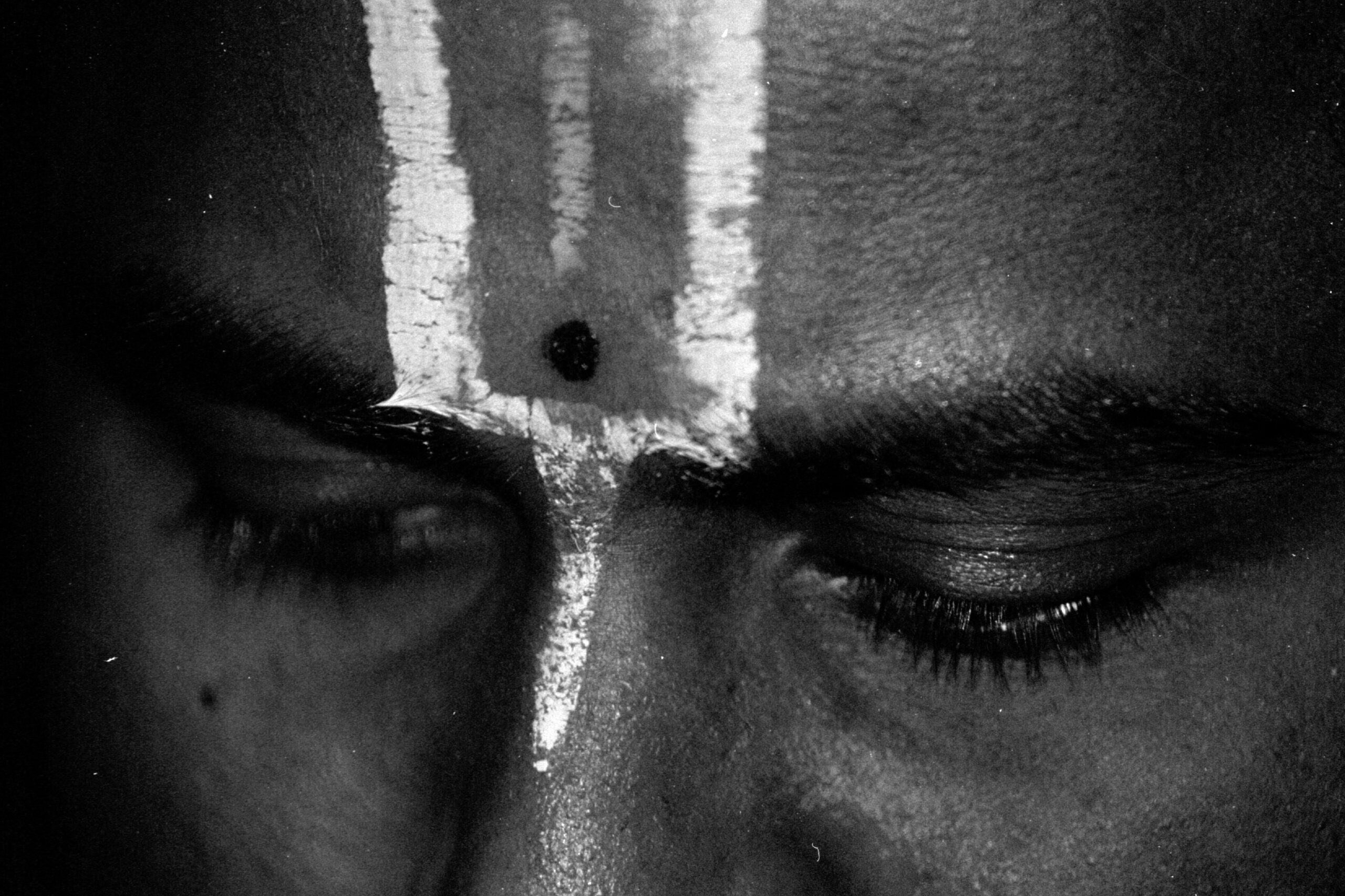
It’s quite easy to justify staying in a comfort zone once we find ourselves there, and making decisions we know have achieved great results in the past is easy to justify when the alternative is potentially messing up while engaging in an unfamiliar practice. In photography, I often find myself reaching for the same tools, refining the techniques I know best. However stepping out of our comfort zones doesn’t always result in the greatest images, but the attempt still serves to shake up our expectations and force us to examine visual potentials differently than we may have been relying on.
When I normally photograph at Hindu temples, and other places of worship, I rarely use anything longer than 90mm, or slower than f/2.8. This keeps me concentrated on contextual scenes, somewhat “standard” portraits, and forces me to continuously move through the space to keep my images fresh. A bright aperture allows me to work without the need for flash, and with slower films I can anticipate lighting conditions fairly well ahead of time in order to arrive prepared, and make creative decisions based on that restriction.
During a celebration of Mahashivratri I decided to switch things up, choosing my Nikon F3 with 500mm f/8 mirror lens (which I’ve written about previously) along with my Vivitar 530FD, which is my favourite and most reliable non-pocket sized flash unit. This was a stark contrast with my recent general use of 21/35/50 (although I did have a 21mm with me as well just in case, but primarily used the 500) and allowed me to frame scenes in a fairly unique (to me) way due to its characteristics. I liked the almost macro ability to render minute details from just a few steps away.
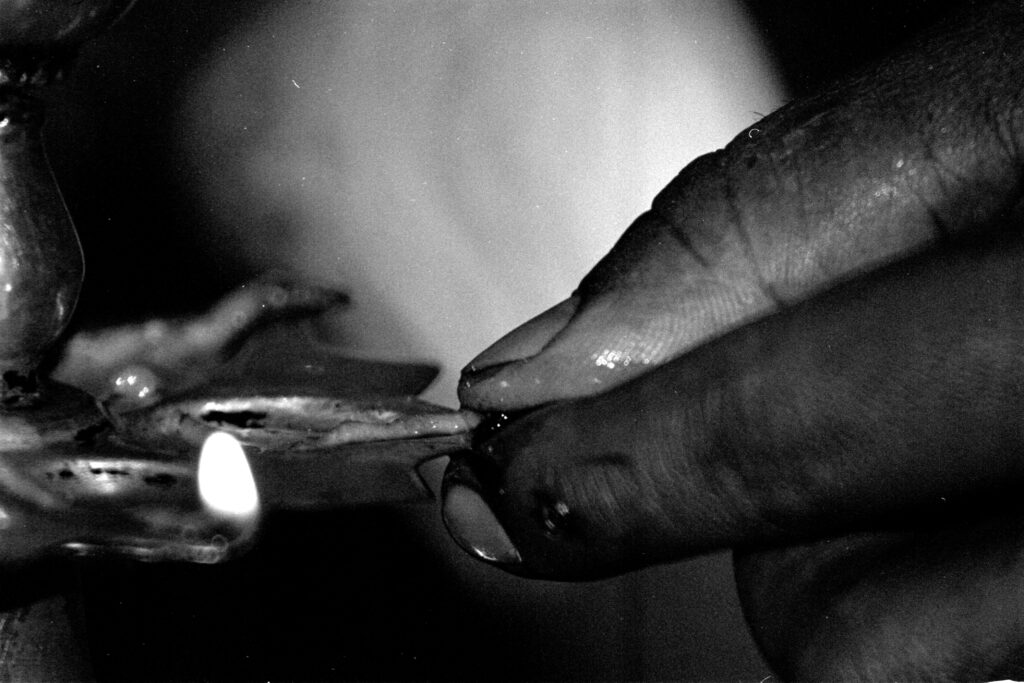
The minimum focusing distance on this lens is 1.5 meters, which was a little too close for what I was after, so using the flash distance settings to select the right film, I opted for the classic and versatile Ilford HP5+, at EI400 which allowed me a working distance between 2 and 5 meters. A 100 speed film would have needed me to work just a little closer, and I wanted to make sure I wasn’t setting myself for an unachievable task.
The temple environment during a festival is crowded, dimly lit (not just during festivals), and filled with intricate symbolism, which is overall less than ideal conditions for me at the best of times. Where a 200mm lens might give me a clear full view of a face, and maybe even include some context, the 500mm forced me to focus on the even smaller details within those faces: a reflection in the eye, or delicate marks on a forehead.
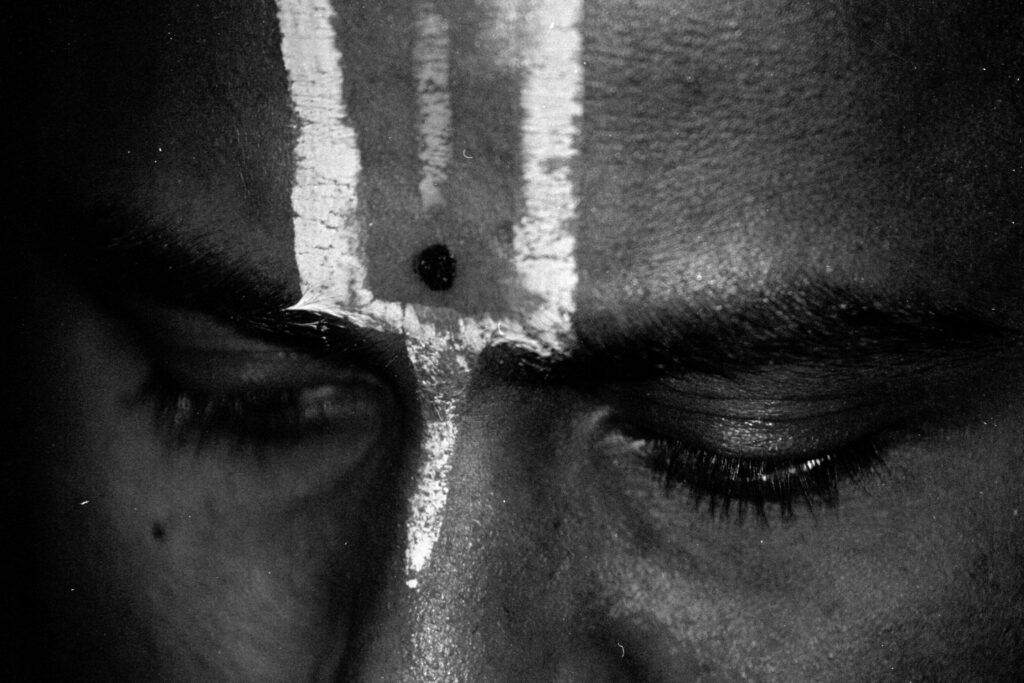
The mirror lens, with its fixed aperture of f/8, is a challenge in low-light environments, and controlling exposure can be tricky when both aperture and film speed is locked. I wouldn’t have been able to achieve any of this without my carefully planned out use of flash, achieving proper exposures within my chosen distance range, while avoiding dramatic lighting effects, so the flash didn’t dominate the aesthetic.
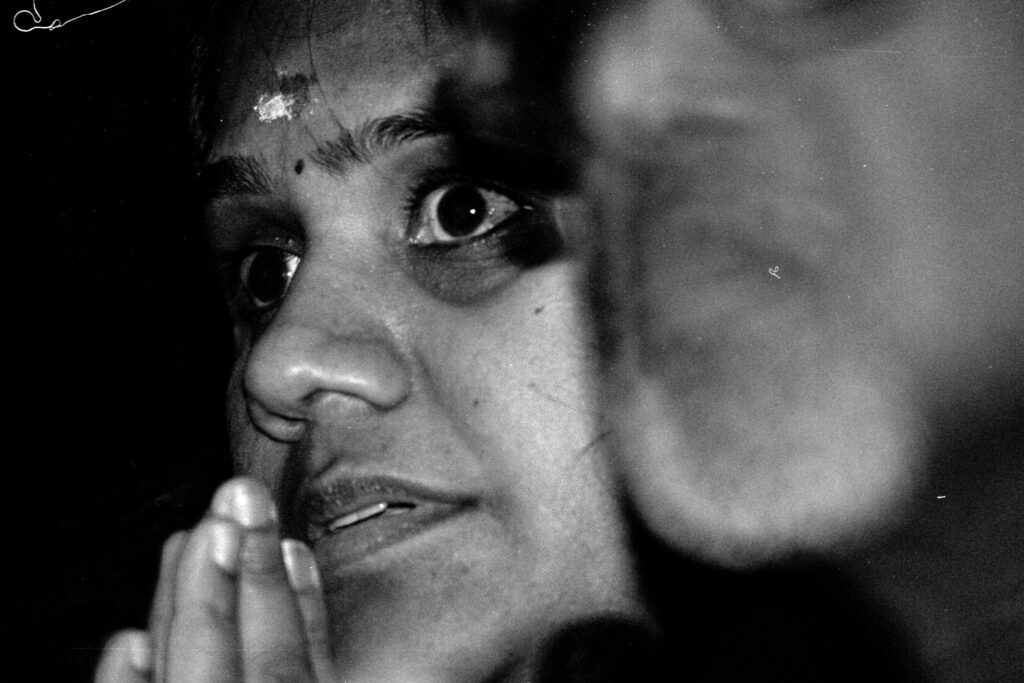
Focusing with the split prism in such low light with often blacked out areas of the viewfinder/focusing screen was a challenge, especially with such razor thin depth of field. Luckily, there was no fast moving action and I had time to really slow down and make adjustments until I was really sure and happy with how it looked in the viewfinder.
The photographs themselves are quite unconventional crops, far from my usual result. It isn’t easy to make the kind of image I usually do with a 500mm, my aesthetic tends to be wider and more inclusive of context and layers, structure within the scene. At 500mm it is a case of bowing to it rather than twisting it to my desired vision. It is a unique approach so I am more than comfortable making those considerations in this learning process, working towards the right balance and use case for this focal length.
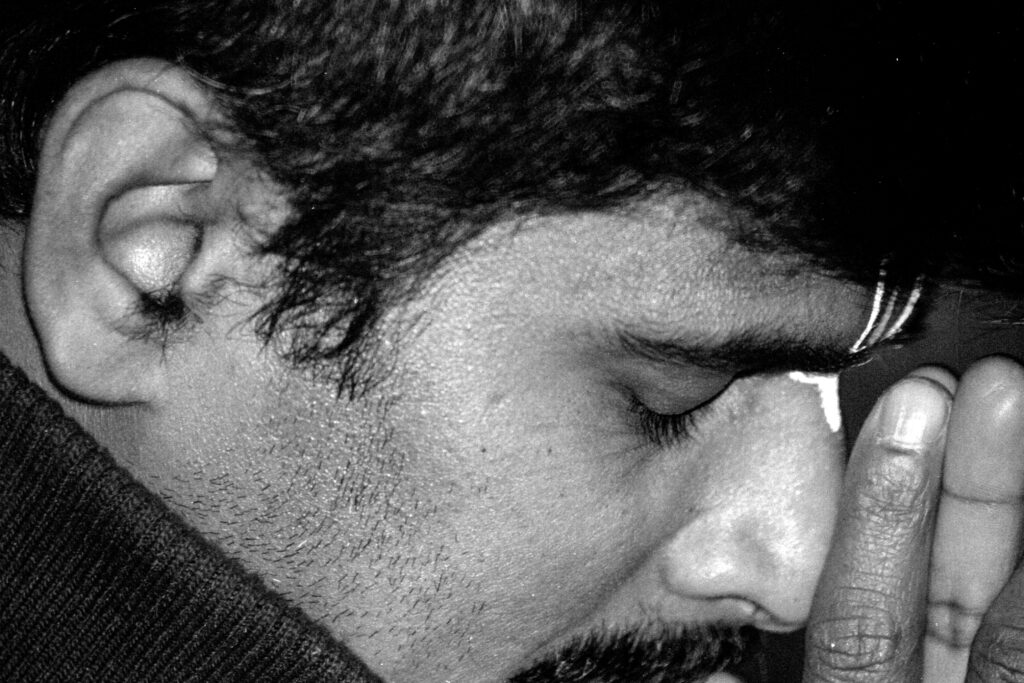
It’s clear in comparison between my usual photographs and these ones that this way of working offers something special and different, definitely a distinct visual option I can turn to when needed. Stepping out of my comfort zone, using tools in ways I might not normally consider can open up new possibilities, something that often seems obvious to hear but is amplified by results such as these.
While mirror lenses are often neglected (especially in film photography) my experience here with the 500mm f/8 has proven to me that with a few tweaks and the right context there is great value to be found: an intimate exploration of the details that make up a scene, that I might otherwise overlook.
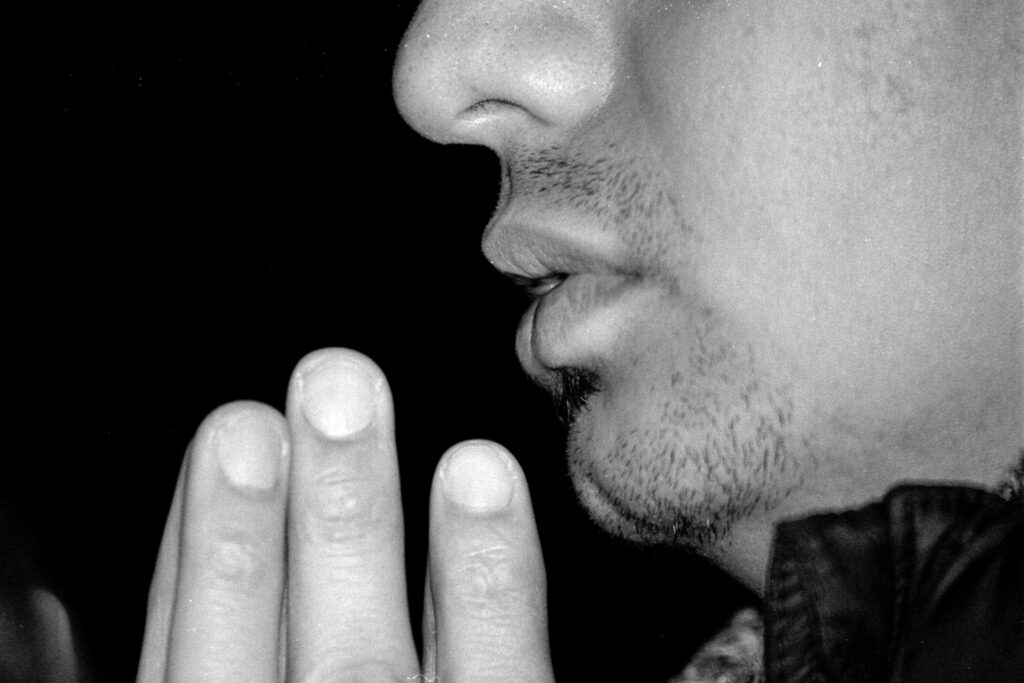
Next time I try this I think I will limit the lens to the closest focus and work on even tighter details, and see how those end up.
Thanks for reading! I hope you enjoyed any insight I had on using this kind of lens for this kind of photography. If you liked my thoughts, consider checking out my YouTube Channel, where I share more about my process and approach. Alternatively, you can follow me on Instagram, where I share a rolling feed of images from my archive.
Share this post:

Comments
Charles Young on Documenting a Local Mahashivratri Celebration with 500mm, Flash, and Ilford HP5+
Comment posted: 25/02/2026
I am inspired to use my 500 mm lens more.
Maybe my choice would have been to use my zoom at it's max extension.
So many old cameras here .. enjoyed collecting them ...so little time. Been retired here for 20 years. We lost our university darkrooms aboout 15 years ago.. Replaced by computers and good printers!
Chuck (in Michigan)
Comment posted: 25/02/2026
Adrian Riu on Documenting a Local Mahashivratri Celebration with 500mm, Flash, and Ilford HP5+
Comment posted: 25/02/2026
Comment posted: 25/02/2026
Jeffery Luhn on Documenting a Local Mahashivratri Celebration with 500mm, Flash, and Ilford HP5+
Comment posted: 25/02/2026
Wow, those are sharp and well composed. A very tough lens to work with under those dim conditions! I can't manage my 500mm indoors, or even in dimly lit dusk situations. KUDOS TO YOU!!! That lens is a real bargain. Check out my article about it on 35mmc:
https://www.35mmc.com/16/09/2024/nikon-500mm-mirror-lens-the-short-fat-cheap-deal/
I've done side by side comparisons with it and the Nikkor 70-300 AF zoom, adjusting for the magnification differences. The zoom is sharper, and of course easier to focus, but the unusual characteristics of the 500 mirror lens makes it a cheap lens with personality. Really good for sports! I've gotten my best surfing photos with it! Also good for birding.
Jeffery
Alexander Seidler on Documenting a Local Mahashivratri Celebration with 500mm, Flash, and Ilford HP5+
Comment posted: 26/02/2026
Comment posted: 26/02/2026
David Pauley on Documenting a Local Mahashivratri Celebration with 500mm, Flash, and Ilford HP5+
Comment posted: 26/02/2026
Comment posted: 26/02/2026