

Although my career has been mostly studio product or location editorial shooting, I’ve enjoyed doing shots of musicians for publicity, album covers and as favors. I never get to photograph big names, which is good, because my subjects didn’t have major attitudes. Some are fellow musicians that I play with. I’ll be posting some of my favorite shots in this and future submissions. I hope you enjoy them.
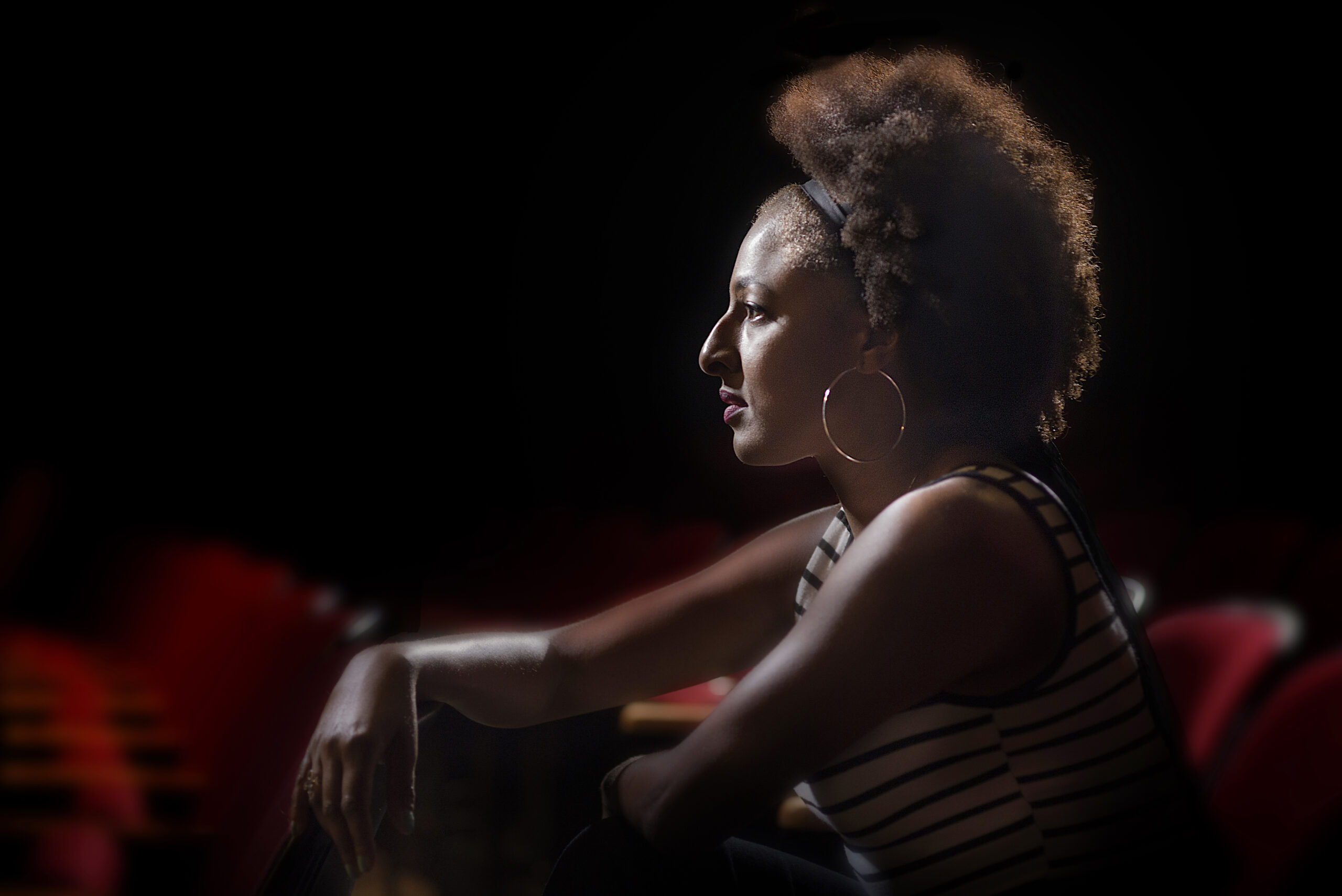
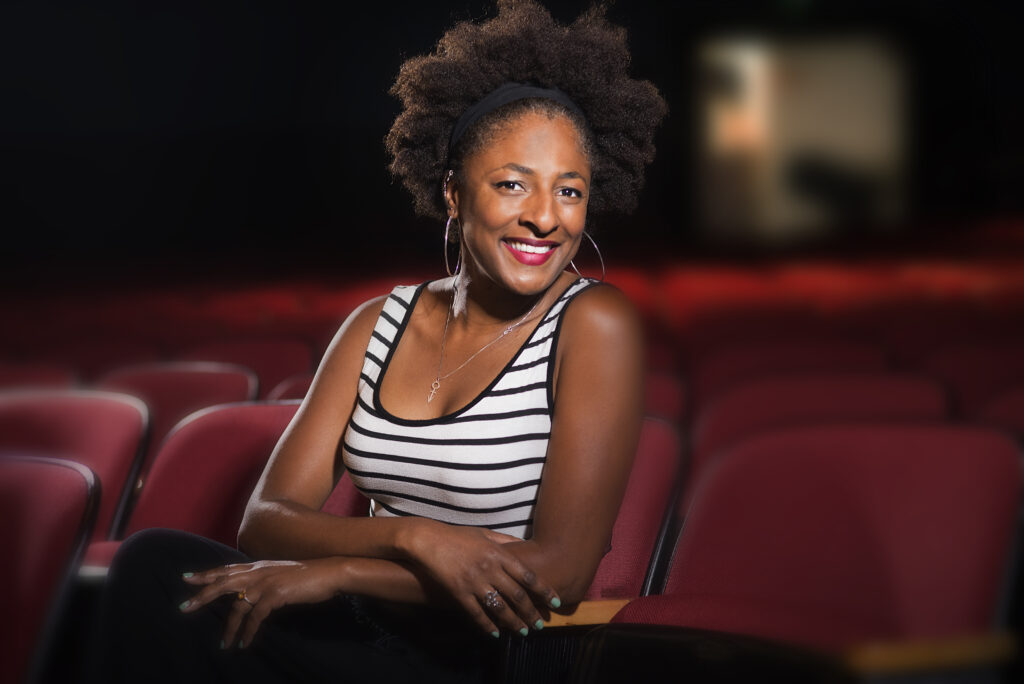
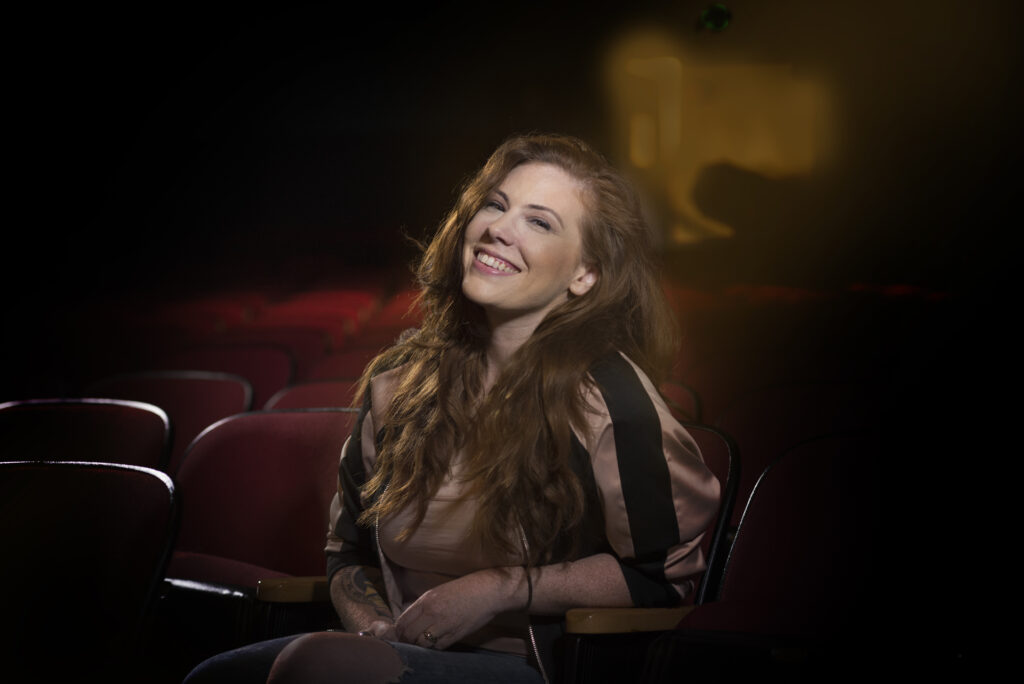
One of my favorite subjects has been Lisa Taylor. She has many different looks and performs with a lot of bands. Always a pleasure to work with. As you can see, this approach involves controlled lighting and intentional posing. Time is very tight in these situations, as I only had 40 minutes to produce individual portraits of 26 band members. I used small battery powered strobes and radio triggers. Usually a three light setup that I can control from the sending unit on the camera. This was the opening photo of the 40-minute session. I had tested four different setups and placed the lights before the session started. The following shot was done first, but it lacked drama, so I posed her differently and did a very different lighting scheme.
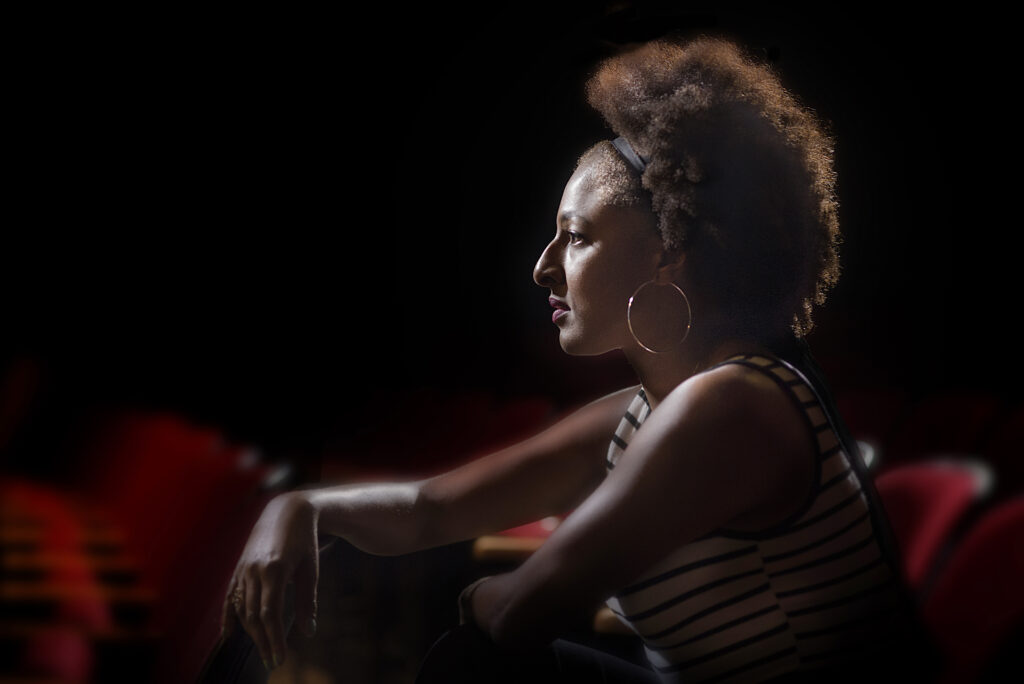
Having seen how Lisa’s profile looked with various lighting, I planned to use a narrow beam light to enhance the shape of her exotic facial features.
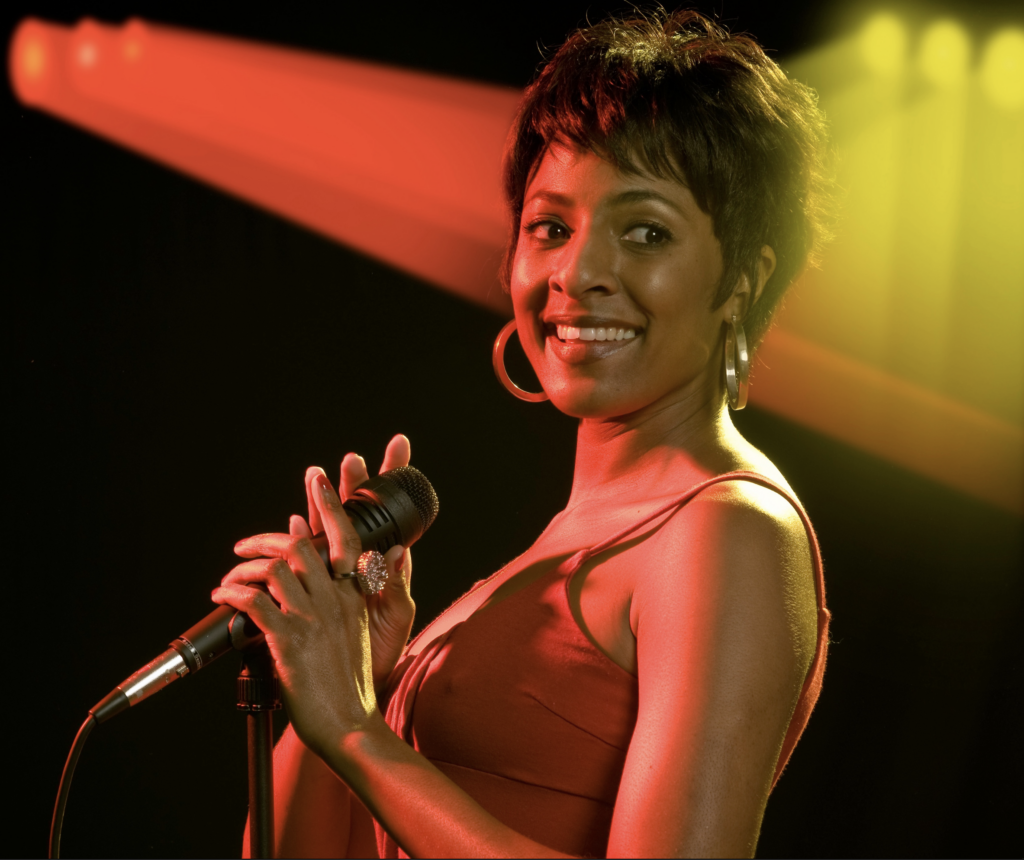
This next shot was the first session I did with Lisa. It was for a CD cover. We wanted to create a stage shot, but getting exactly what you want in a live performance is above my pay grade, so I did a studio shot and added the spotlights in Photoshop
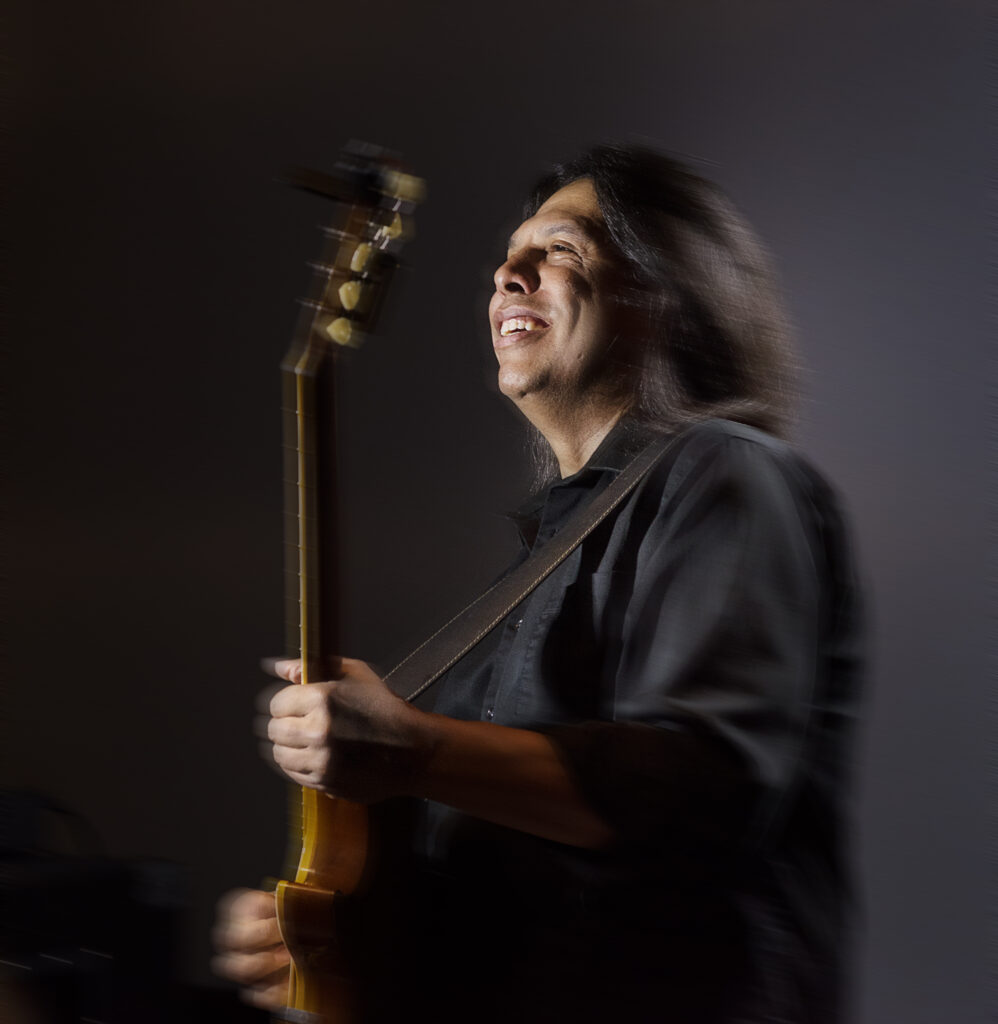
This is Ken. The BLUR effect was used in Photoshop to simulate ‘dragging the shutter.’ Yes, it looks obviously altered and I wouldn’t use it for a principle shot. This shot was used as an inset in a CD cover. It was done on the same day as the profile shot of Lisa, but I lowered the camera angle to avoid the theater chairs. Once you set the lights for a specific scheme, it’s best to get as many shots as you can before making a change. Many of the band members were done this way, and then came back for additional shots once the lighting was changed. In that way, hectic shooting can be dealt with in a conveyor belt fashion.
Here’s the same lighting set up used with the vocalist and drummer, also named Lisa. I softened the key light a bit with thin diffusion material and increased the fill light. It’s necessary to make scene brightness adjustments depending upon skin tones and textures. The earlier shots of Lisa Taylor and Ken had much more contrast because their dark rich skin color needs a full stop more exposure and benefits from direct unfiltered light. This shot was seriously overexposed with that previous set up. This is where digital cameras with large LCD displays makes it possible to dial in changes in seconds. A job like this with film would have involved lots of bracketing and still resulted in unpleasant results.
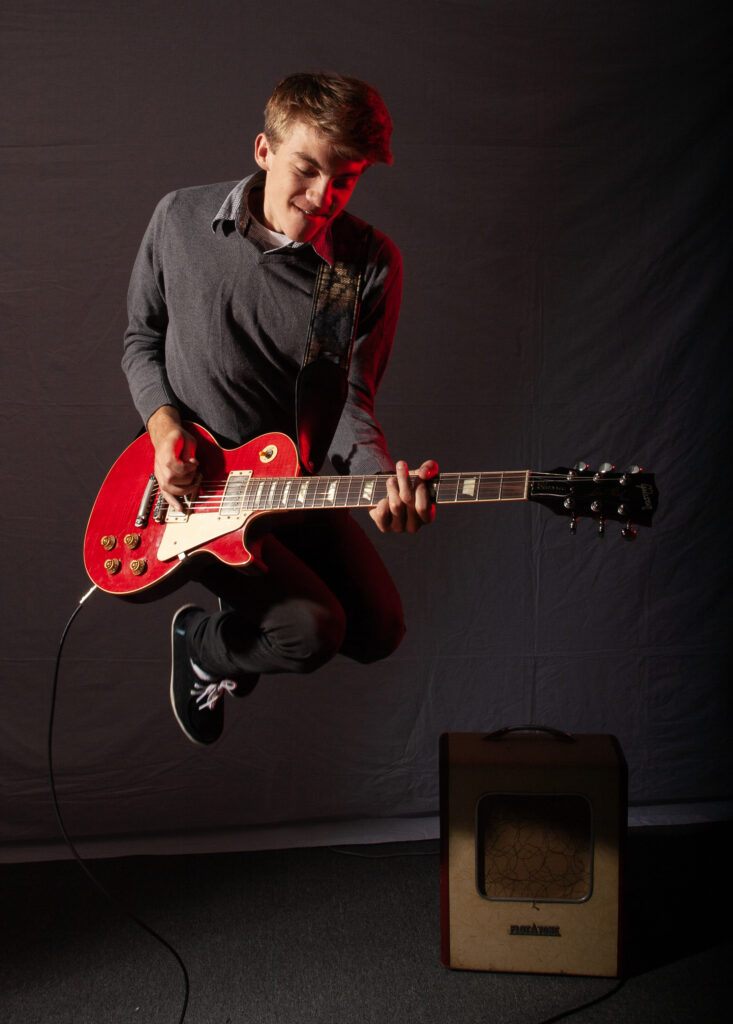
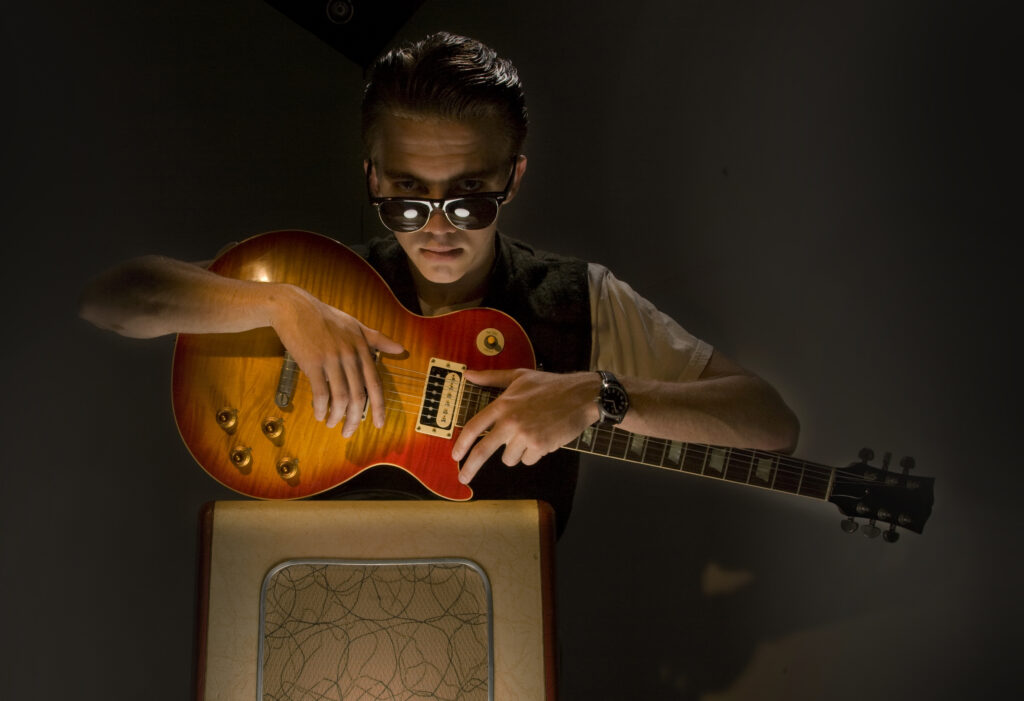
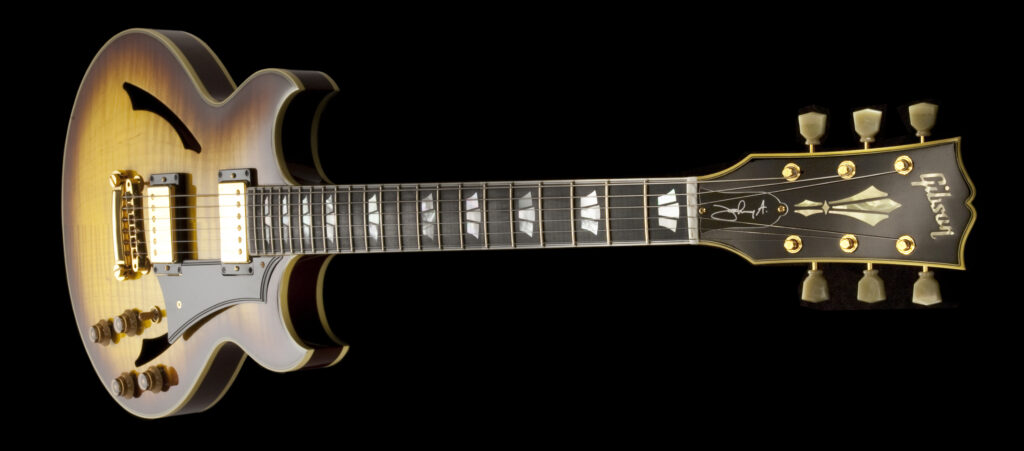
I had another job the following week to photograph a collection of guitars for Gibson. They sent 40 guitars to my studio and provided me with some models. I’m sorry I cannot remember the full names of these folks. It was a busy week! This young player flew in from Texas. I only remember him as Michael. I liked this test shot, but it wasn’t selected so it was never cleaned up in post.
Michael brought the bowler hat he performs in
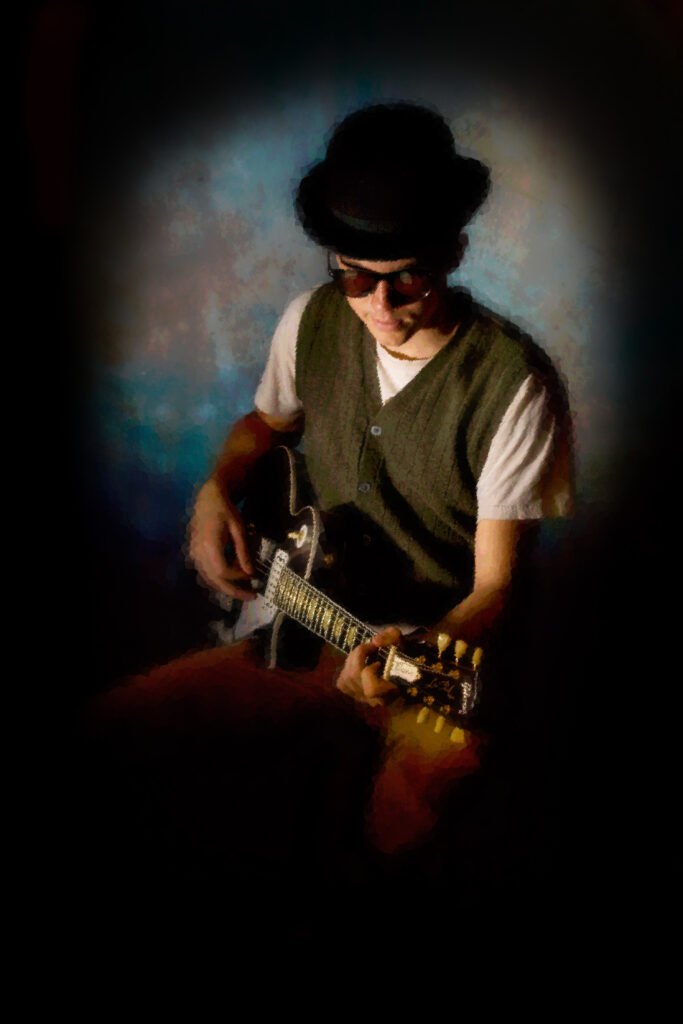
Maybe a reader will recognize him. He was a flaming good player. I used a bright globe light below his eye level to get a spooky look. In fact, this lighting scheme is often called Spooky or Boris Karloff.
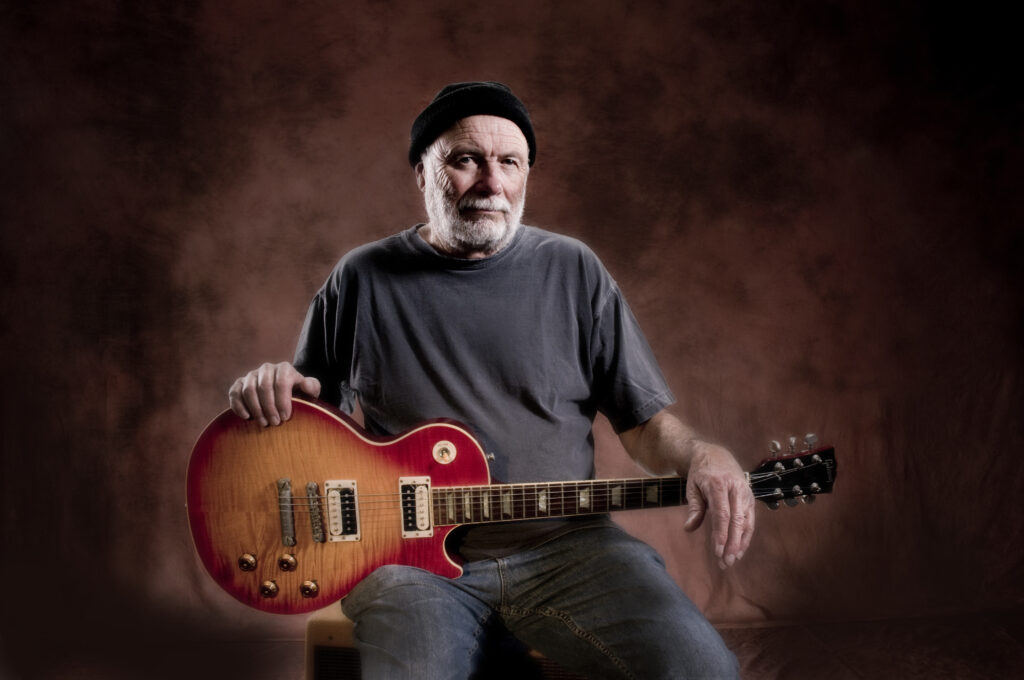
This is Doug. He’s a guitar designer and luthier for several companies. It was his job to prep and polish the guitars.
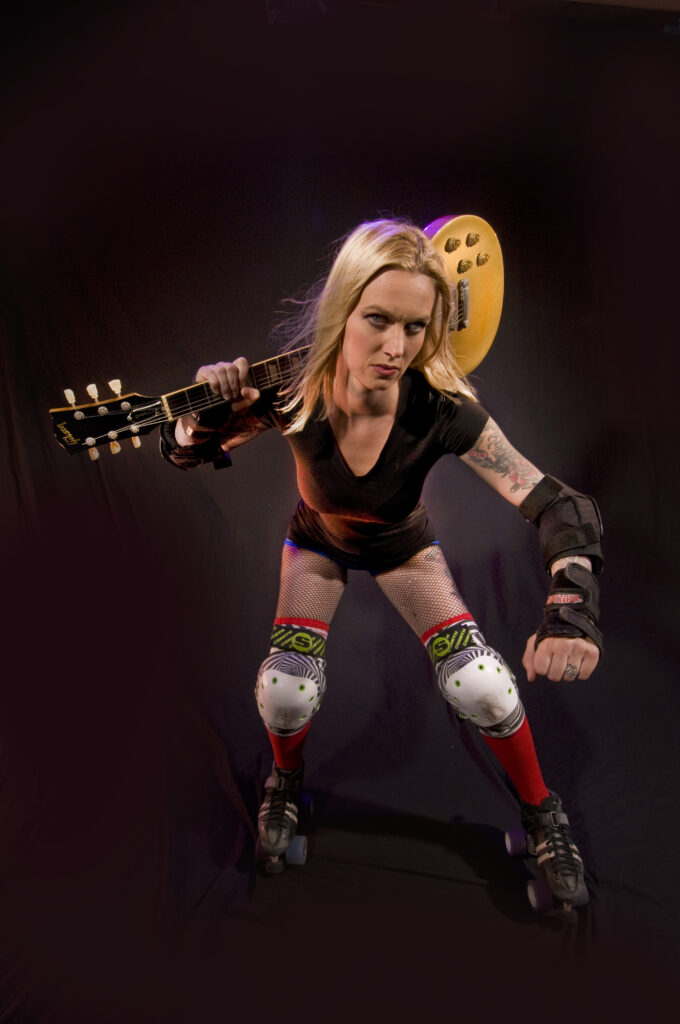
Virginia is in a punk band and skates with a professional roller derby team.
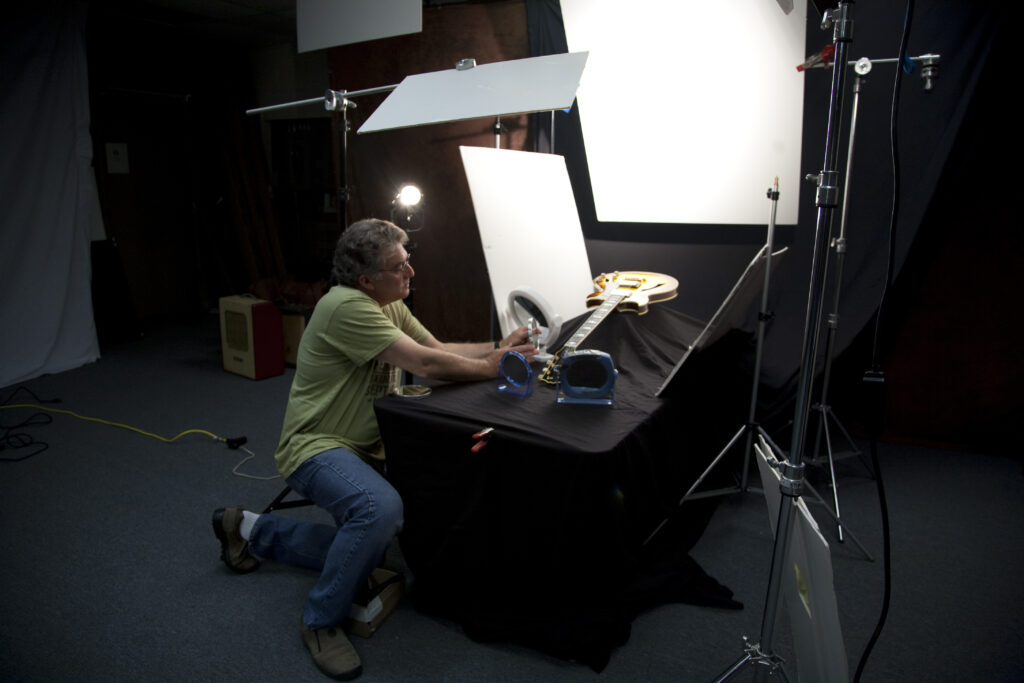
More than half of this job involved photographing the guitars. When you’re shooting reflective objects, you must control the highlights to make the surfaces look flawless. The goal is to achieve milky white highlights looking like they were poured over the surfaces. There’s no way to get perfect reflections in post-production. They always look phony. You must take the time in set-up before clicking the shutter. In the olden days we shot boxes of Polaroid to dial in the look. Now the LCD makes things easier. Every surface needs to have its own highlight that can be adjusted in position and intensity. Note the many small mirrors used to produce small individual highlights on the headstock and tuning keys.
Finished shot
All the photos were taken with a Nikon D610 or a Canon D MKIII
Share this post:


Comments
No comments found