

There is a lot of talk these days about the new CT scanners in airports and how they’ll fry your film with one pass. I don’t really know how true this is but I also don’t really feel like asking to get my film hand-checked because I have an artificial knee and I seem to take enough time getting through security without holding everyone up any more than I already do.
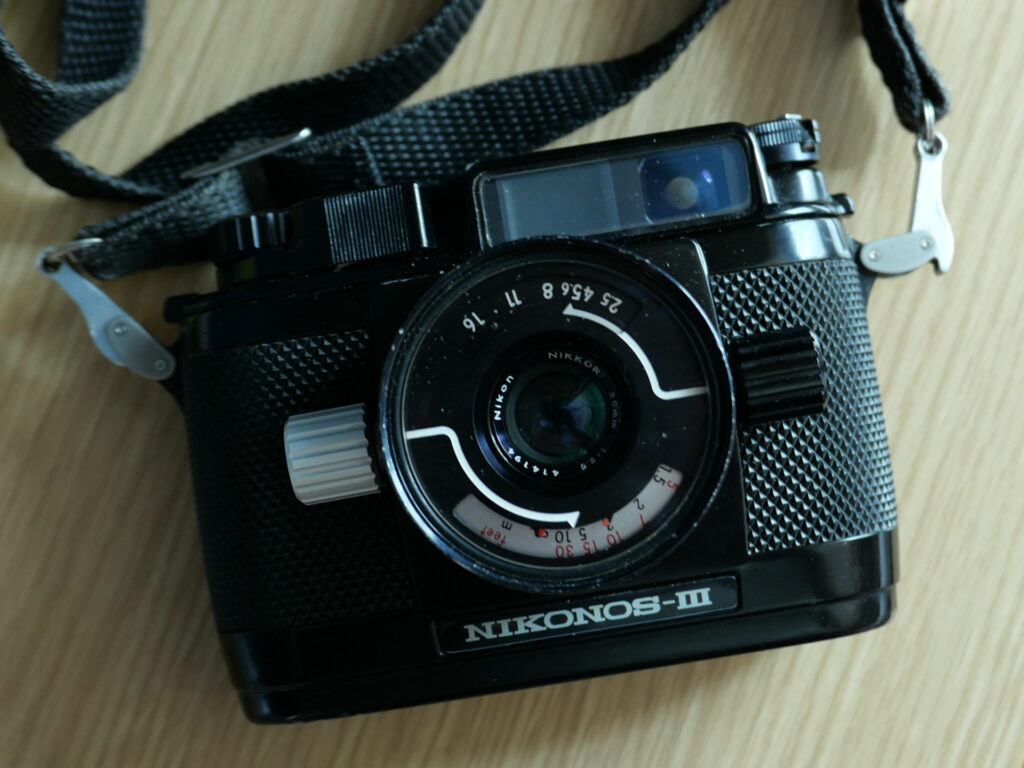
So in planning our trip to South Korea I was not intending to take a film camera. Then about two days before we left I realised this was a sillly idea so gave it some thought and threw my Nikonos III in to my bag. It occurred to me that in Seoul there was bound to be the opportunity to buy film and get it processed, and I thought that would also be an interesting journey of discovery. A little bit of reading told me that indeed there was a pretty vibrant film community in the city and I thought it would be fun to track it down.
Fun it was indeed. It was an eye-opener to see rows of super-clean used film and digital cameras lined up asking to be bought, fun being in the camera department of a department store and picking up a couple of rolls of Kodak ColorPlus 200 and fun mounting the stairs of an unprepossessing building to drop my film off for processing and scanning.
Why the Nikonos? Well, I figured I could stick it in my checked luggage and it would survive anything the baggage handlers could (literally) throw at it. I could use it in the rain or while riding a bike, and it would be good for street or landscape photography. It’s a beautiful and very practical bit of kit, and if I wanted to wear it like a badge or put it conspicuously on the table next to my beer it would be a cool conversation starter. I felt confident it would tick boxes I didn’t even know existed.
So having bought my film I loaded up the Nikonos and we set out for the day. I made a dozen or so frames in the Museum of Modern and Conteporary art and had two dozen frames remaining when we set out for dinner as the light was fading. This was deliberate, as before we’d even left the country I had my mind set on some Saul Leiter inspired night pics; neon glow and deep shadows but transported from New York across to Seoul. Technically, I figured that the Nikonos would be a good choice for these – or at least not a bad choice.
In its favour it has:
- Great zone focusing. The distance scale is clearly marked on the lens – the 35mm f2.5 amphibious in this case – and a set of pincers moves in and out around this distance as the aperture changes to let you know the depth of field. It’s quite brilliant in my opinion.
- A beautiful viewfinder. Big and clear with 35mm framelines at the edges.
- A quiet “snick” of the shutter with no mirror slap and an idiosyncratic pincer action that once you get used to it is very discreet and allows shooting and winding with the camera held against the chest rather than up to the eye. You’re guessing the framing if doing this of course, but I don’t think Koreans welcome in-your-face Bruce Gilden types anyway.
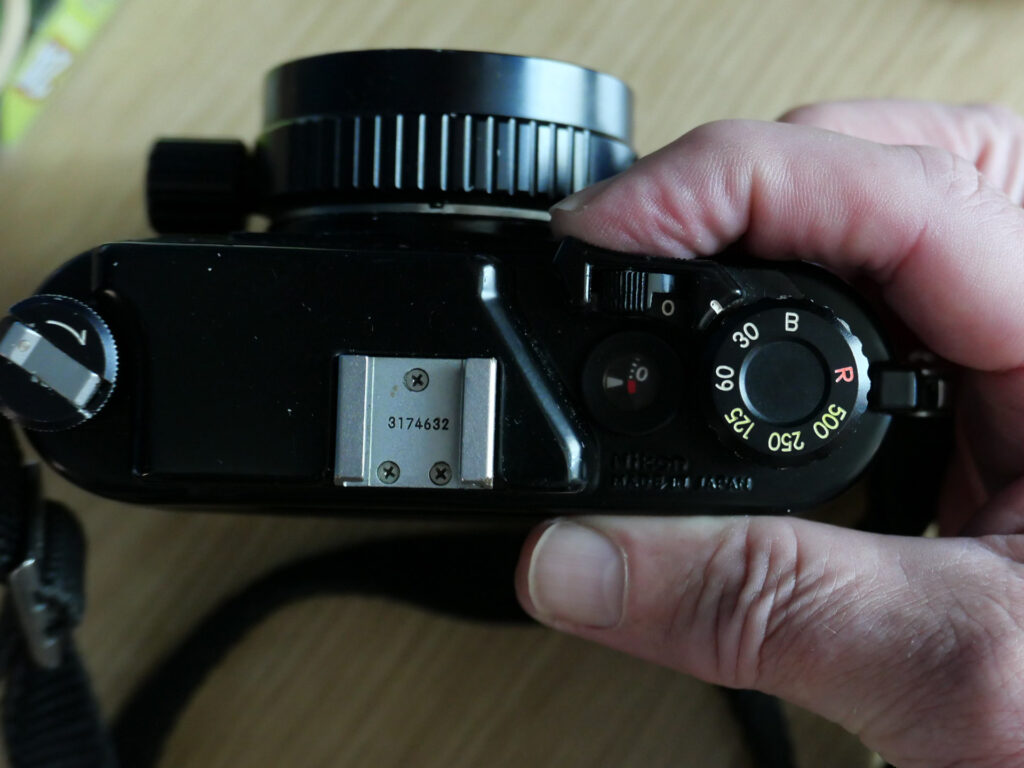
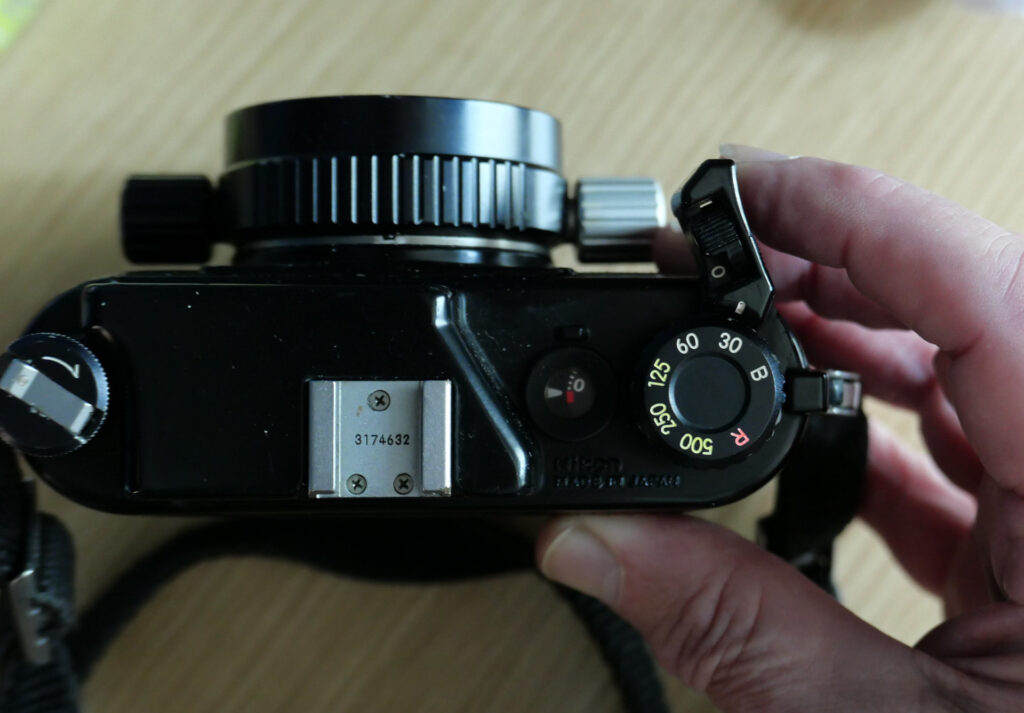
The downside is mainly:
- The slowest selectable shutter speed is 1/30s. To shoot slower than this you need to do it via the B setting. I’d never done this before, but I actually had pretty good success with it.
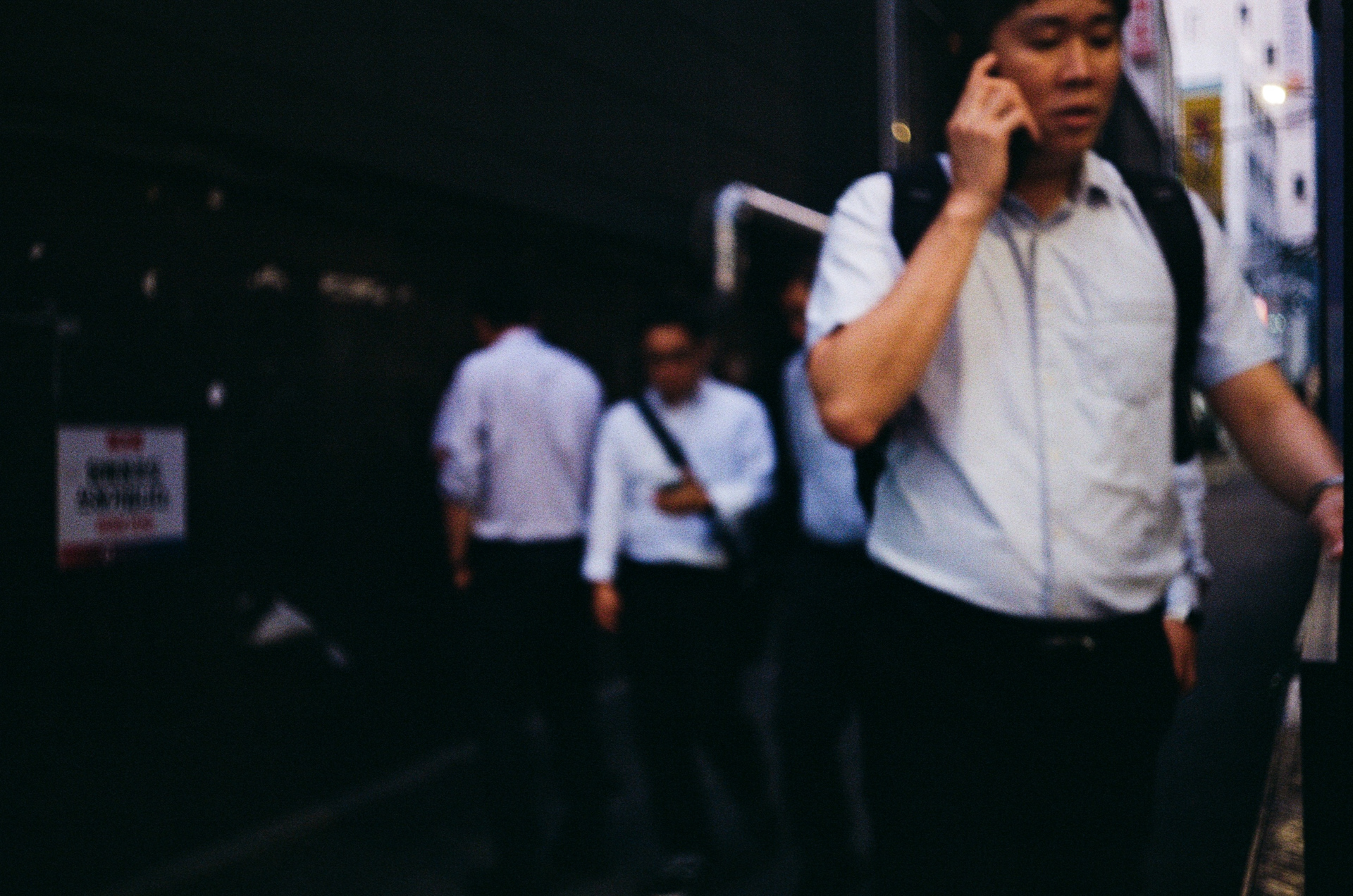
So – let’s have a look at what I got. I shot the 1/30s frames with the camera at my chest, not looking through the viewfinder. I don’t remember how I shot the slower ones but I may have held it up to my eye. I finished the roll as the light fell and took it to get processed the next day. The scans were ready in 24 hours and were great. I’m a firm believer that a scan should contain as much of the info on the film as possible, leaving it to the photographer to set black and white points, and these did that really well, so the scans I’m posting here are with my adjustments, which amount to pretty simple curves adjustments, and bit of cropping.
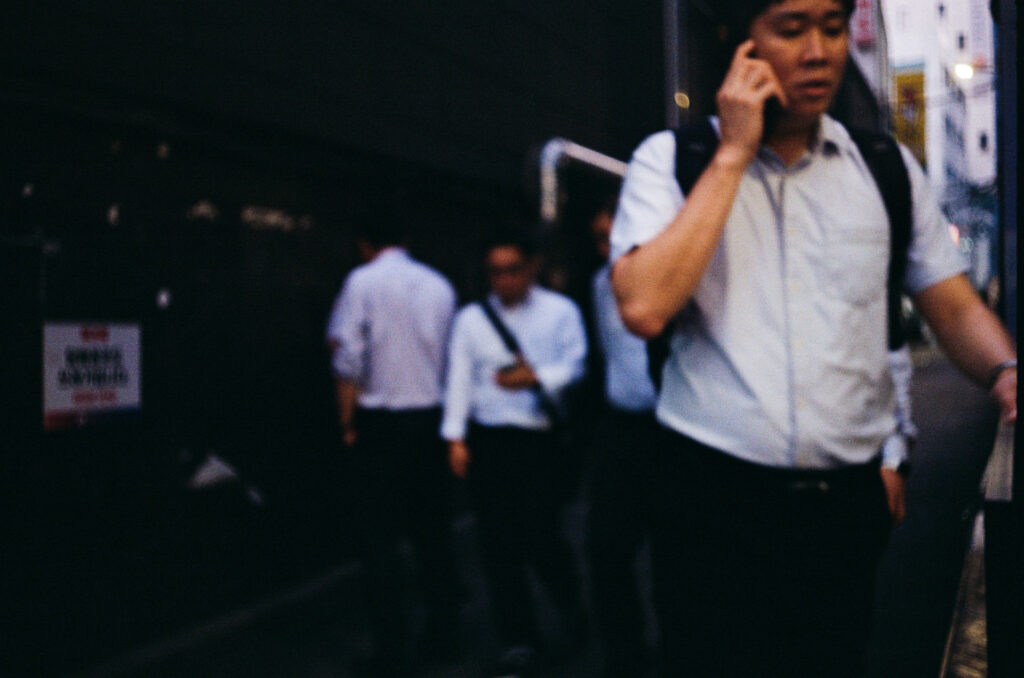
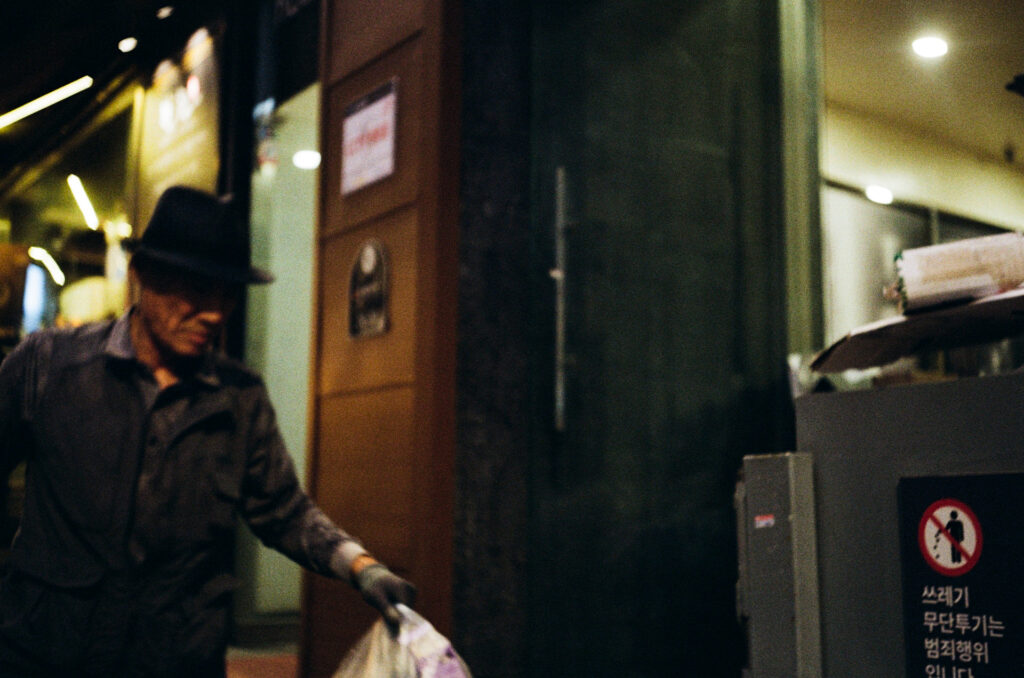
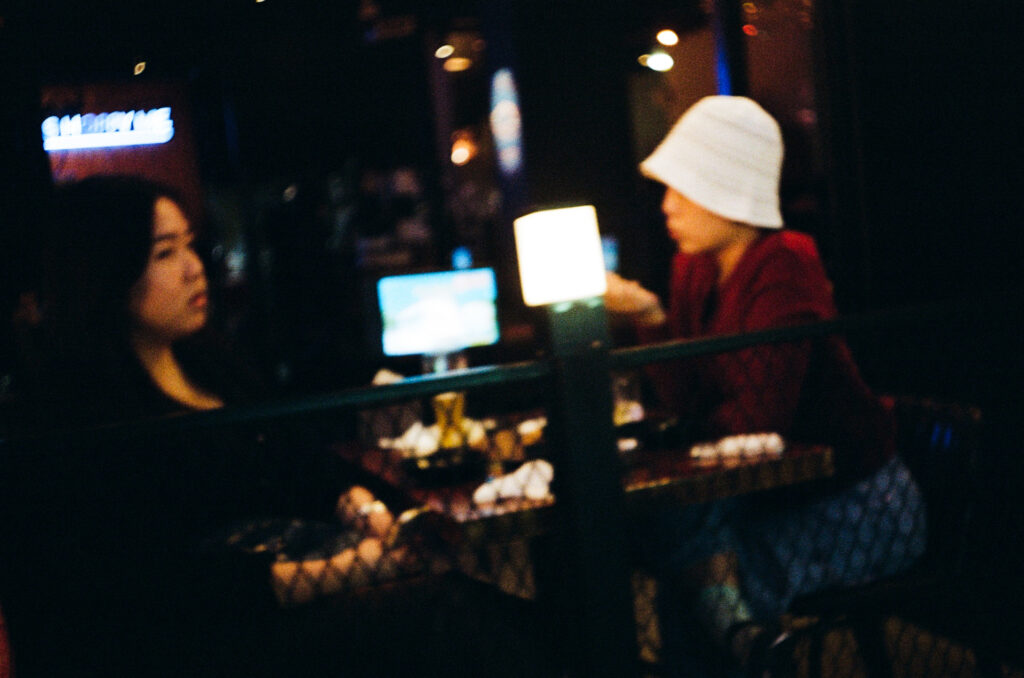
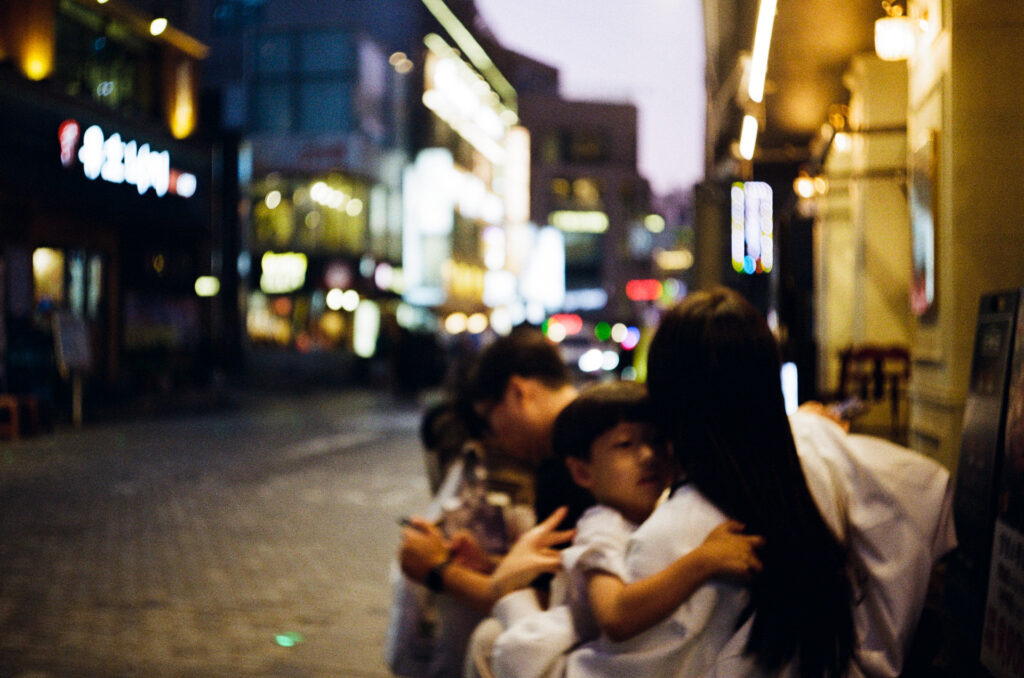
The first lot were wide open at 1/30s as there was just enough light for that. Using a spot reading from my phone light meter app seemed to work, and spot metering on a mid-tone area for this sort of thing is fine for colour neg I feel.
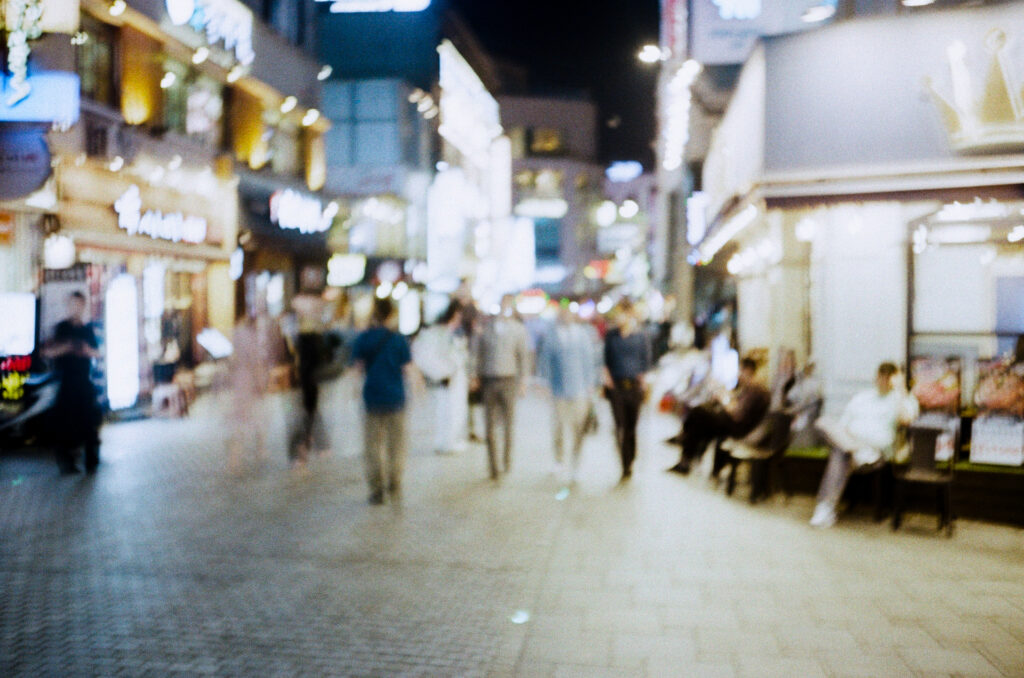
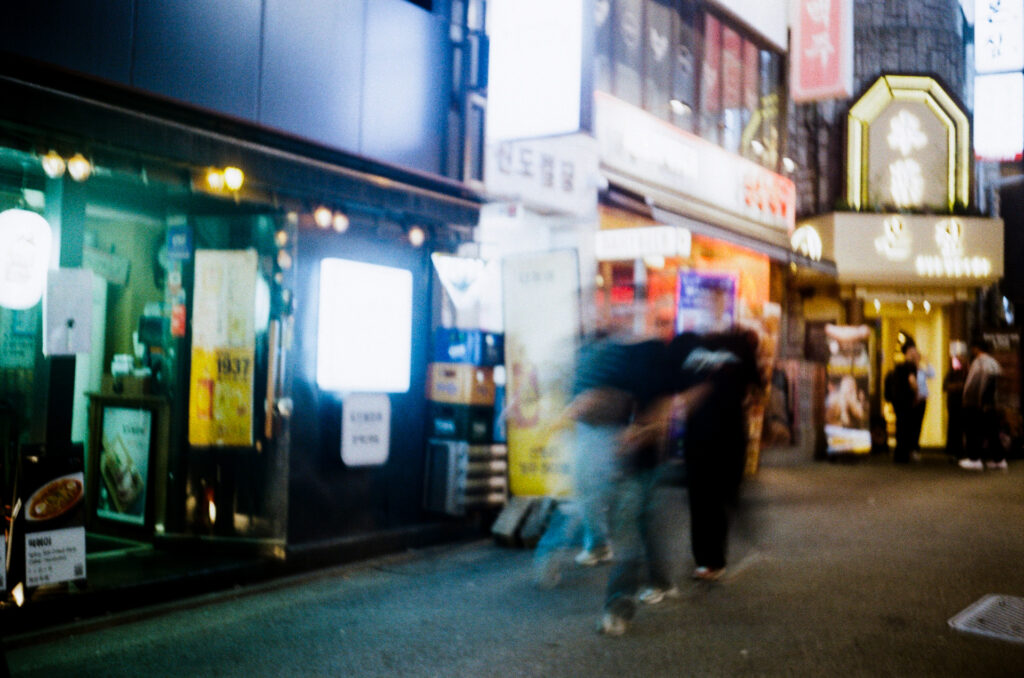
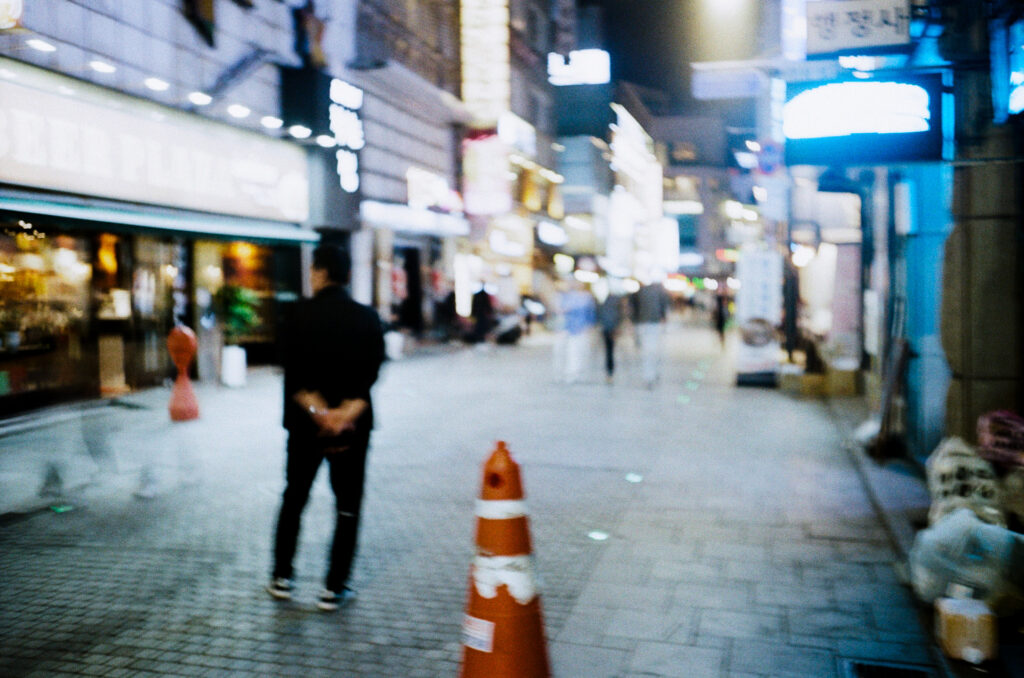
Then as the light fell further I needed to switch over to using the B setting. I figured I’d be relying on the generosity of colour neg’s latitude here, and was probably aiming for about 1/4s to 1/2s. The only way I have of judging what the exposures actually were is by looking at how much the moving people have ghosted. They’re quite different in feel, but I find them interesting in their own right. I was enthusiastic about the 1/30s set when I saw them, and less so about the longer ones, but really, it’s too early for me to be sure about either.
It’s a deliberate call though to shoot, process and edit while I’m still in Korea. I see these frames as a companion to the cycling shots I did on a digicam and wrote about here. I’m neither pleased nor displeased with these, but I view them mostly as a lesson. I’m feeling that what I did in both these pieces was bring a preconceived notion of the style I’d use with me, rather than respond to South Korea and see what that might bring into some new work. I’m not satisfied with that, and In a way I want to rule a line under these and move on. The quality of the shots is secondary in importance to this feeling of wanting to reflect more about what this trip is teaching me. Even before digesting it all I fell I’ve learned a huge amount, and seeing where that takes me is the main game at the moment.
Updates and notes on the Nikonos III:
This is the second piece from the Korea trip. The first is about a one-week cycling tour and shot on a digicam. After I wrote the Nikonos piece I actually shot the other roll I bought in another camera I took with me; a little 35mmc Panasonic C-2200ZM. I didn’t mention that in the piece because it was totally unexpected that I’d shoot the roll until I’d written this piece and thought, “Well, why not?” It was then a stroke of pure luck that we were having lunch two days before we left 400m away from a different film processing place so I dropped the film there and got great scans back the same day. I’ve seen but haven’t really looked at those properly yet. That roll was more about what it was like in the old days where I’d budget about a roll a week for recording a holiday. I’ll write that up though as Part III of the S. Korea trilogy.
In case you didn’t notice, I love this camera, even thought I don’t use it often. I don’t go in to much detail about it here, so if you want to know more you can look at the other Nikonos pieces I did on 35mmc here or here, or a review by Hamish here.
Thanks for reading!
Share this post:

Comments
Erik Brammer on Saul for Seoul – A Nikonos III Shoots Street
Comment posted: 29/10/2026