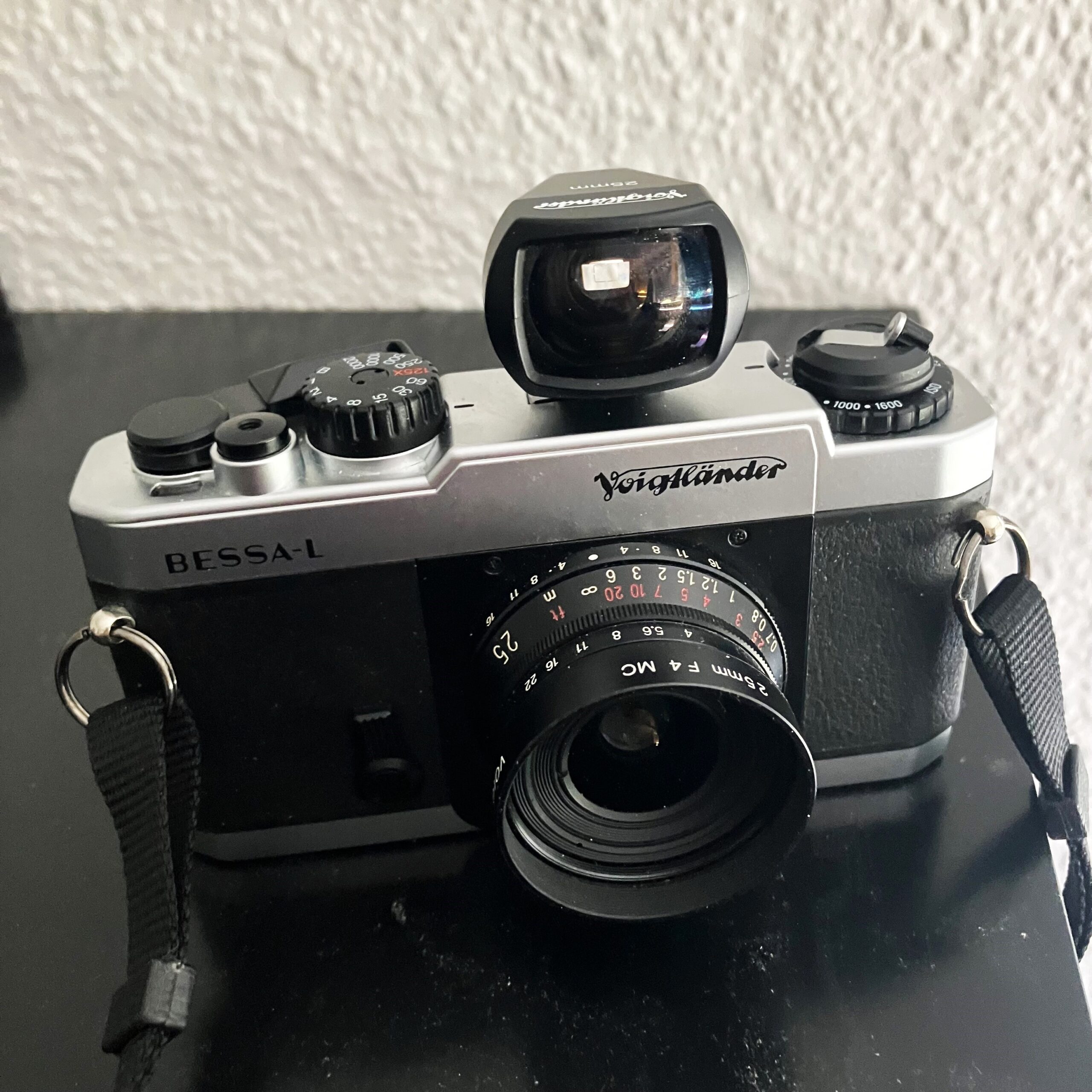
5 frames with a Voigtländer BESSA L

By Walter Reumkens

What sort of camera is this? It is not a rangefinder; it has no built-in viewfinder, but it does feature integrated TTL metering with LED lights. It accommodates interchangeable 39mm screw-mount lenses (LTM), and the corresponding external viewfinder can be attached to a hot shoe-style mount. The Bessa uses 35mm 35mm film. The camera only requires a battery for exposure metering. It is likely common knowledge that the camera was manufactured by Cosina in Japan, which now also owns the trademark rights to ‘Voigtländer’ and produces high-quality lenses under this name for a range of camera mounts, which need not shy away from comparison with competitors.
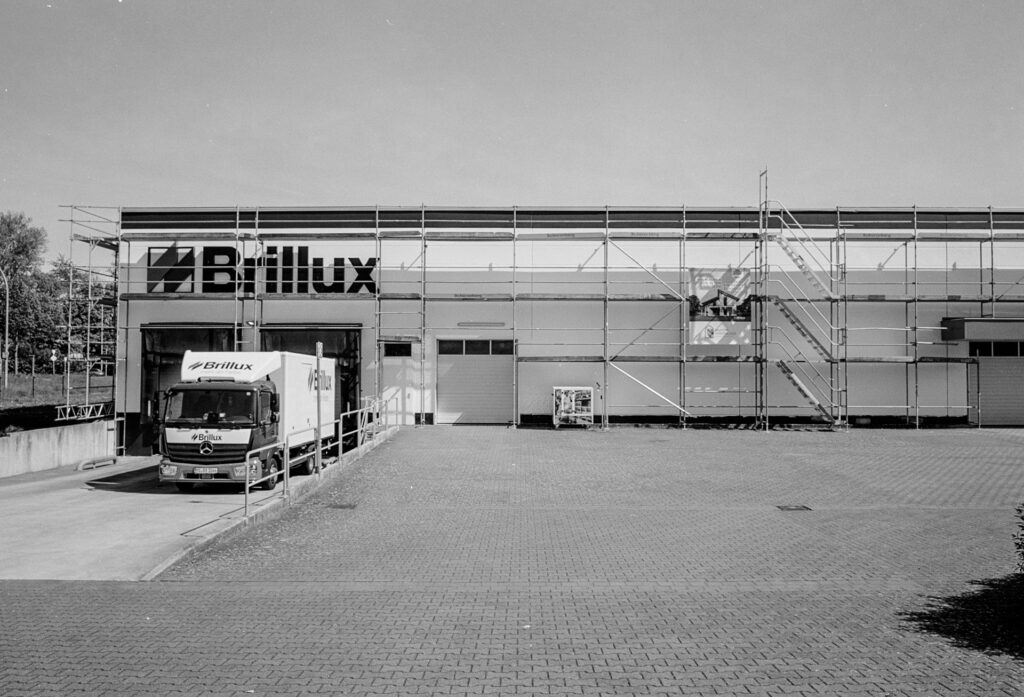
I’ll spare you the details about this Bessa L, but suffice to say it was manufactured from 1999 to 2005 and was followed by further Bessa models. It was launched with 15mm and 25mm Voigtländer lenses, but it is also compatible with other lenses. As it was actually designed for use with ultra-wide-angle lenses, the lack of a rangefinder is not really a drawback.
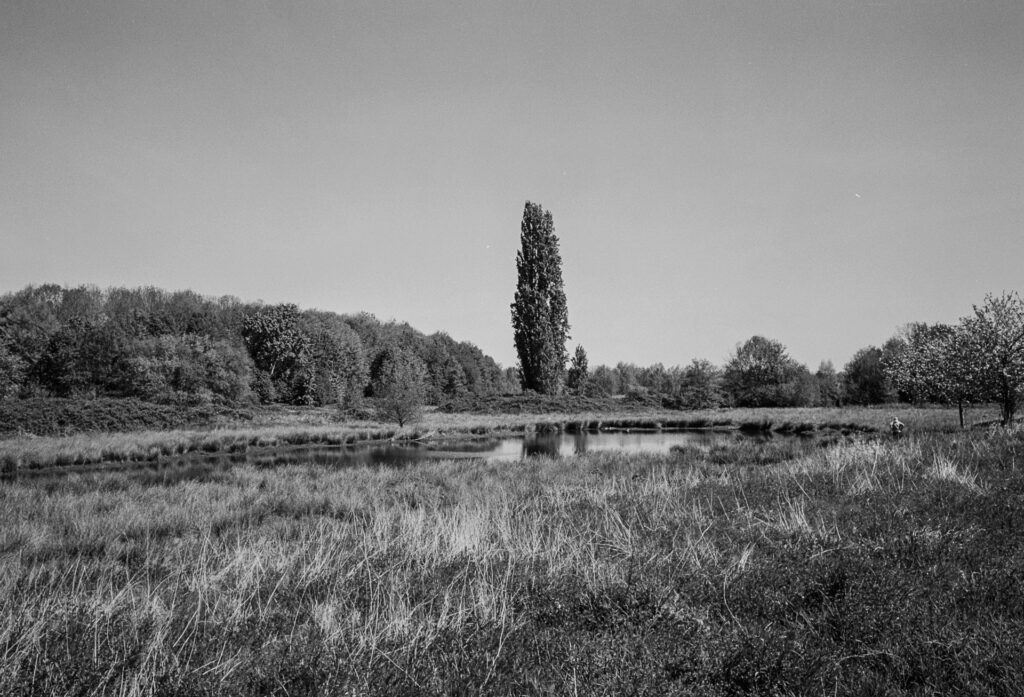
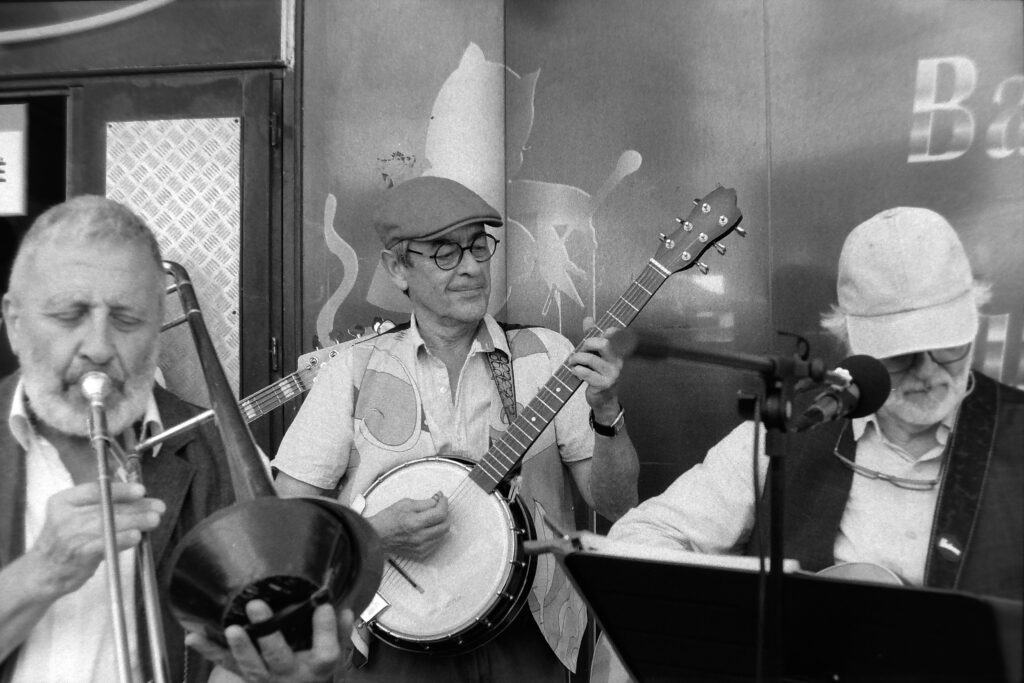
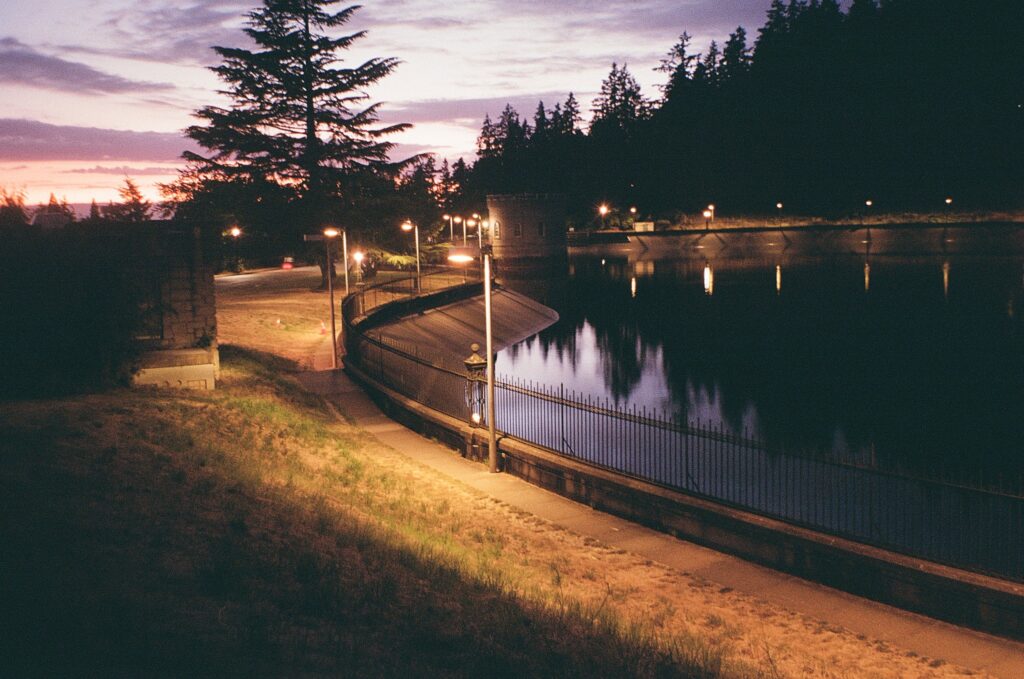
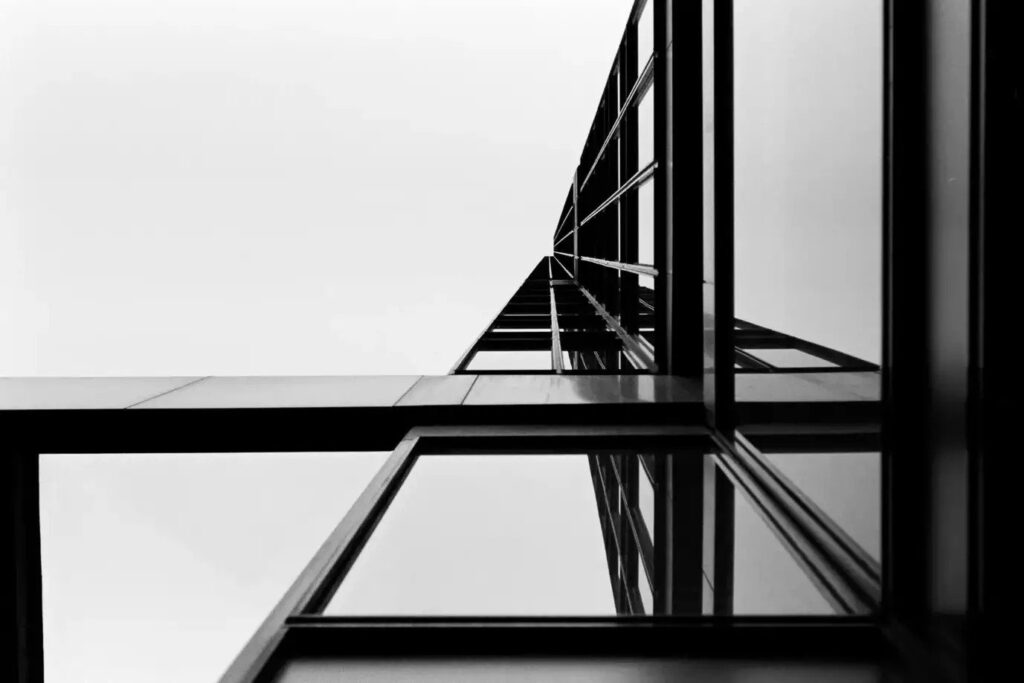
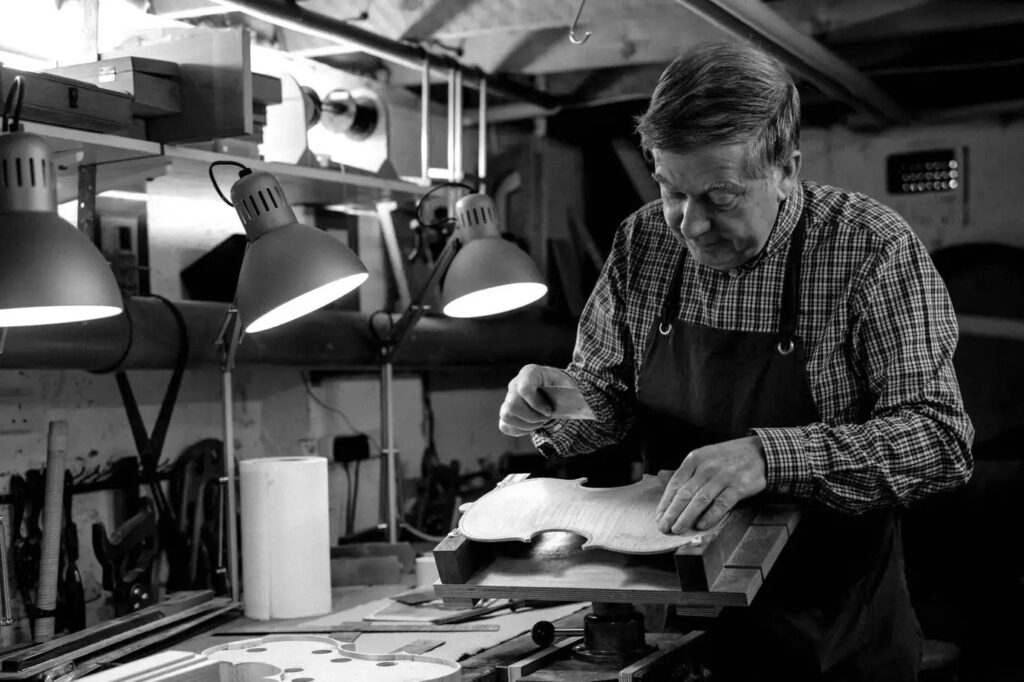
I am the proud owner of both ultra-wide-angle lenses, which I use with the Bessa R and the Bessa R3M, as well as adapting them for use on APS-C cameras from Sony and Ricoh. The photographs shown here were taken with the Voigtländer Snapshot-Skopar 25mm F4 MC. I loaded the camera with Ilford XP2 Super 400, which I exposed at box speed. Exposure metering was carried out using the Sekonic Twinmate L-208. The Bessa’s internal metering is fine, but at the moment I prefer to use my external meters and favour incident light metering with the dome cover extended. The film was developed using the C41 process by a specialist lab. There, the film was also scanned at 4K resolution. I then made minor adjustments to the gradation myself in LrC. Here I am showing 5 images from the 36-exposure roll; all the images were taken on different days in my local area, and I was always out and about on my bike.
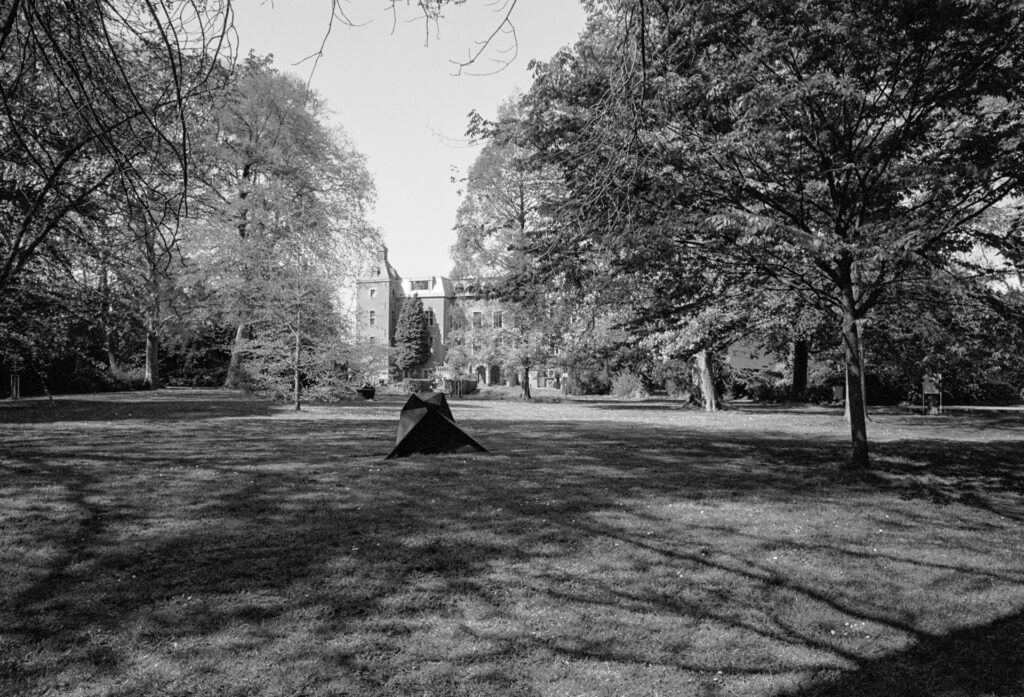
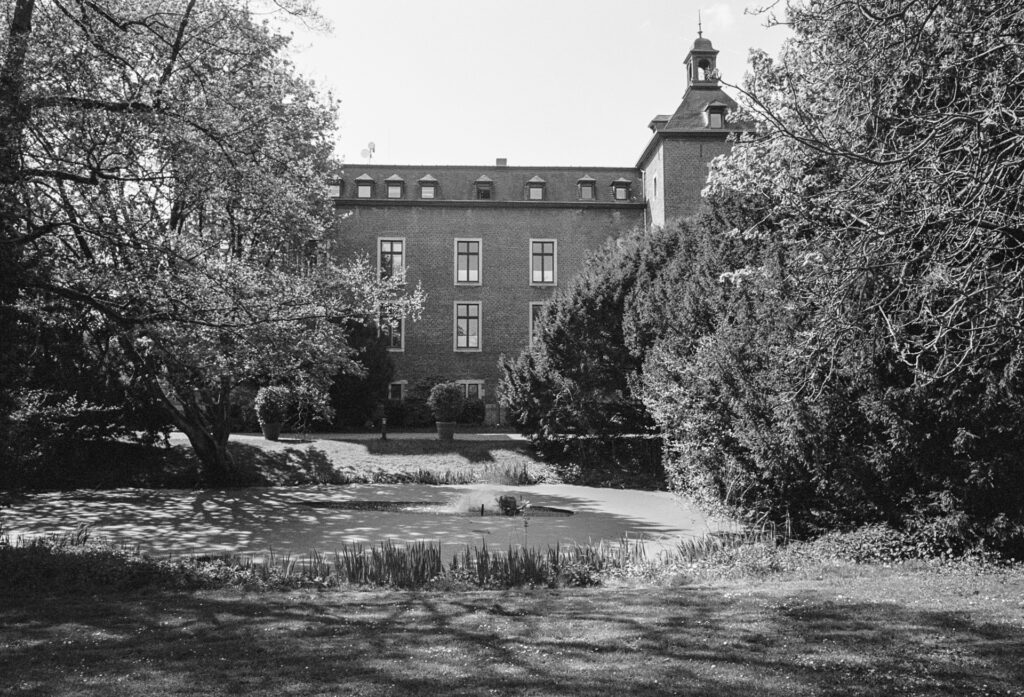
I’m more than happy with the results; for me, the XP2 is also a good alternative to black-and-white film, especially as I no longer develop my own film. The film is relatively inexpensive to buy and can be developed using the standard C41 process at low cost. In my lab, I paid €8.50 for a 36-exposure roll, including development and a 4K scan. The JPEG image files were made available to me via Dropbox three days later.
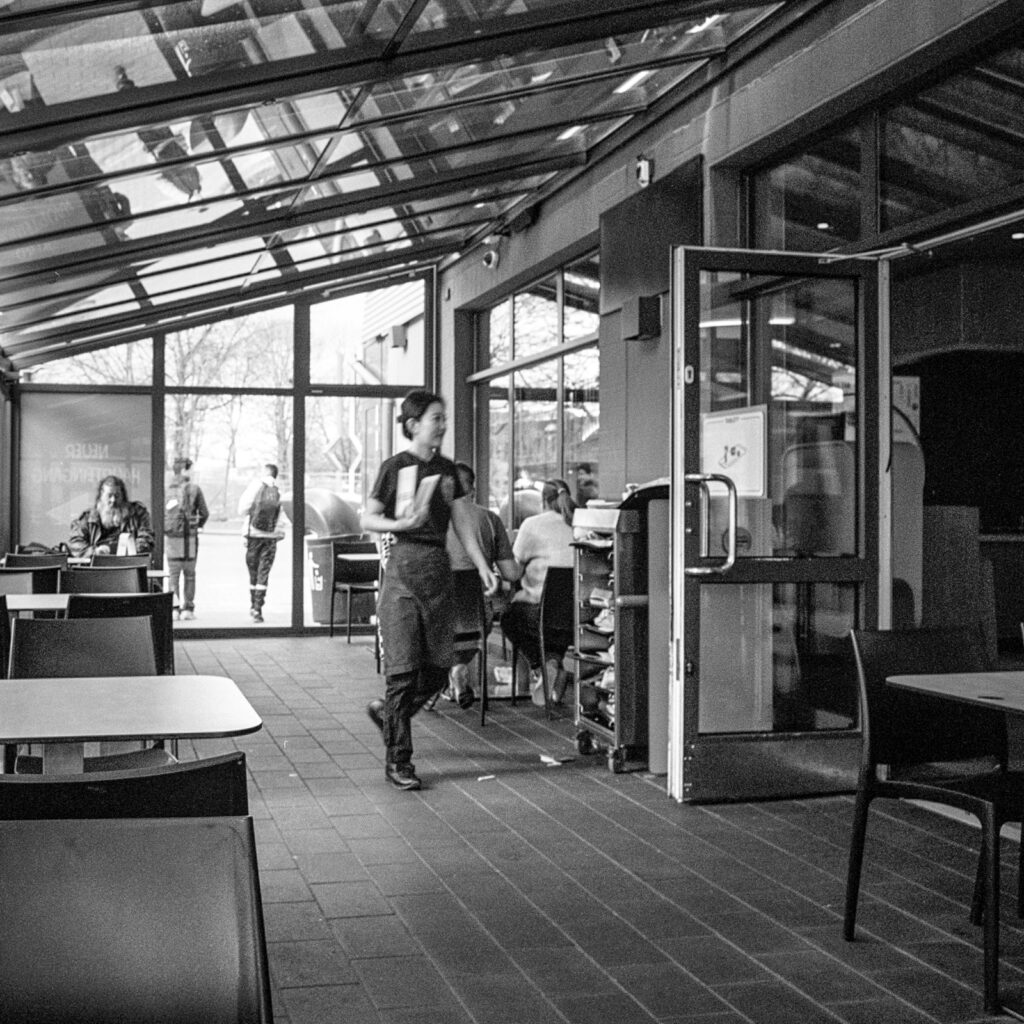
I’m sharing my photos here without much further description. That way, everyone can form their own opinion. I’d be delighted to receive comments with questions, criticism and suggestions. Thank you for your interest.

Share this post:

About The Author

By Walter Reumkens
Walter Reumkens lives in Mönchengladbach, a medium-sized town in North Rhine-Westphalia, Germany. He is a retired graduate in public administration, worked in the IT sector for 40 years and has been a passionate photographer for over 50 years. In addition to numerous analogue and digital Nikon cameras (SLR, DSLR, DSLM), he also uses cameras and lenses from other manufacturers. To find out whether, alongside the ‘typical, highly touted luxury cameras’, other manufacturers also produce very good, reliable and user-friendly products that fully satisfy experienced photographers.
Read More Articles From Walter Reumkens

Find more similar content on 35mmc

Use the tags below to search for more posts on related topics:

Donate to the upkeep, or contribute to 35mmc for an ad-free experience.

There are two ways to contribute to 35mmc and experience it without the adverts:

Paid Subscription – £3.99 per month and you’ll never see an advert again! (Free 3-day trial).

Subscribe here.

Content contributor – become a part of the world’s biggest film and alternative photography community blog. All our Contributors have an ad-free experience for life.

Sign up here.

Make a donation – If you would simply like to support Hamish Gill and 35mmc financially, you can also do so via ko-fi

Donate to 35mmc here.

Comments

Oliver G. on 5 frames with a Voigtländer BESSA L

Comment posted: 30/05/2026

Hello Walter,

beautiful photos taken with a beautiful camera.
I haven't used this film in over 20 years.
Does it still have that slight brown tint, or did you remove it during scanning?

Best regards,
Oliver
Reply

Leave a Reply

Your email address will not be published. Required fields are marked *

Walter Reumkens replied:

Comment posted: 30/05/2026

Thanks for the nice comment, Oliver. I don’t know him from that time. I exposed the XP-2 at 400 ASA in consultation with a photo lab in Bonn, developed it using the C41 standard process, and had it scanned there at a resolution of 3578x2433 in JPEG. As mentioned in the article, I only edited the files slightly in LrC (gradation). According to the histogram, all the photos were well exposed. Other labs sometimes recommend 250 ISO for best results. But that always depends on the lab’s specific workflow, which is why I always ask in advance. Unlike conventional black-and-white films, the XP-2 uses ICE technology during the scanning process with a specialised scanner. All the best!

Reply

Leave a Reply

Your email address will not be published. Required fields are marked *

Michael Jardine on 5 frames with a Voigtländer BESSA L

Comment posted: 30/05/2026

These are nice- I'd always wondered about these, and the Leica's without either rangefinder or viewfinder. Can I assume that you're zone-focussing and calculating exposure based on smaller aperture to allow hyperfocal distance to take up the slack? It's an effective approach and It's how I learned to take photos when I was very young, in the '80s, with a '50s (German) Voigtlander, appropriately enough, and it set me up very well for years until I allowed myself to open the aperture and let the lovely light in!
Reply

Leave a Reply

Your email address will not be published. Required fields are marked *

Walter Reumkens replied:

Comment posted: 30/05/2026

Thanks for the kind comment, Michael. Cosina/Japan released the Bessa-L primarily for use with the 15mm f/4.5 Super Wide Heliar and the Snapshot Skopar 25mm f/4, which I used for my shots. It features a zone focusing mechanism with tactile click stops at 1 m, 1.5 m and 3 m, which means you can preset the focus, stop down to f/8 and shoot all day without touching the focus ring. It turns your camera into a wide-angle compact with rangefinder optics. Perfect for travel, street photography or those moments. The ideal complement here was the Ilford XP-2 Super, which I exposed at 400 ISO. I have the matching clip-on viewfinder for both lenses and it works quite well. I managed to buy the Bessa-L very cheaply a good 10 years ago; the built-in light meter is okay, it sits comfortably in the hand and it’s fun to take photos with. I only use it with those two lenses. I use my longer VL focal lengths with the Bessa-R or Bessa-R3M, which have a built-in viewfinder with a framing guide. As I said, the Bessa-L body costs next to nothing. Actually ideal for the purpose. All the best, Michael.

Reply

Leave a Reply

Your email address will not be published. Required fields are marked *

Fred Nelson on 5 frames with a Voigtländer BESSA L

Comment posted: 30/05/2026

I've been looking at these cameras for a while. I like the wid angle concept. If it hard to get an infinity focus?
Reply

Leave a Reply

Your email address will not be published. Required fields are marked *

Walter Reumkens replied:

Comment posted: 30/05/2026

As I explained in my reply to Michael, the Bessa-L was designed primarily for UWW lenses. I also place great importance on maximum depth of field and work using the hyperfocal method. Here, with the 25mm lens, apart from the interior shot, the distance was set to 3m and, at f/8 or f/11 (400 ISO), I had a depth of field ranging from 1.2m/1.5m to beyond infinity. I haven’t checked exactly where ‘beyond infinity’ is. I only use the L with these two lenses and prioritise the earliest possible sharpness, depending on the subject, of course. Thanks for your interest and comment, Fred.

Reply

Leave a Reply

Your email address will not be published. Required fields are marked *

Gary Smith on 5 frames with a Voigtländer BESSA L

Comment posted: 30/05/2026

Great photos Walter! I was thinking about a Bessa L for a while and decided that I have the ability to take VWA shots with other cameras (and that I don't really have room for anymore). Thanks for your post! Cosina seems to be a good steward for the Voigtländer brand.
Reply

Leave a Reply

Your email address will not be published. Required fields are marked *

Walter Reumkens replied:

Comment posted: 30/05/2026

Thanks for the comment, Gary. I’m glad you like the photos. You don’t necessarily need a Bessa L either; it was my first camera – bought second-hand – that had a VL lens with an LTM mount. I used it on my NEX-6 and the rather unusual Ricoh GXR. It wasn’t long before I started experimenting with the Bessa L, and I added more VL LTM/M lenses, as well as a Bessa R and a Bessa R3M. Cosina began manufacturing cameras and lenses for third-party manufacturers at an early stage. They also built the Zeiss Ikon ZM and various Sony lenses, and with the acquisition of the Voigtländer brand rights and the production of the Bessa-R models, they took the step towards becoming a reputable, recognised manufacturer that continues to surprise with new, high-quality products. All the best, Gary

Reply

Leave a Reply

Your email address will not be published. Required fields are marked *

David Kieltyka on 5 frames with a Voigtländer BESSA L

Comment posted: 30/05/2026

I had a Bessa L back in the day, which I used with the 15mm Heliar and a 21mm f/2.8 Kobalux (still have both). I also shot a lot of XP-2 with this setup. I liked to overexpose somewhat, at EI 320 or even 250, because I didn't like how the shadows looked if I underexposed by mistake. Once I loaded the L + 15mm with a roll of Kodachrome 200 and ended up taking my all-time favorite photo of my dad, on his 90th birthday, wearing a vivid blue jacket and a bright orange hat. 8-)
Reply

Leave a Reply

Your email address will not be published. Required fields are marked *

Walter Reumkens replied:

Comment posted: 30/05/2026

Thanks for your comment, David. The XP-2 actually produces the best results even with EL320 and EL250. I’ve used EL400 here after consulting with my new lab. They recommended box speed for their workflow. The Bessa-L is just gathering dust here, but I enjoy taking photos with it and the 15mm or 25mm Voigtländer lenses I have for it. I can picture your favourite photo of your father right now and it reminds me of my old Kodachrome days. All the best, David!

Reply

Leave a Reply

Your email address will not be published. Required fields are marked *

Russ Rosener on 5 frames with a Voigtländer BESSA L

Comment posted: 30/05/2026

I had a Bessa L for a few years and recently sold it. I did not have the Ultra Wide Voigtlander lenses it was designed for. But I did use it with the Voigtlander Ultron 35mm F1.7 with good results. I loved that the Bessa L has a very accurate light meter built right in, and the camera weighs very little. Also M39 lens mount is very good. But since I have a Leica IIIF and Lecia M3 the Bessa L was not much good for me anymore.
Reply

Leave a Reply

Your email address will not be published. Required fields are marked *

Walter Reumkens replied:

Comment posted: 30/05/2026

Thanks for your comment, Russ. The Bessa-L does indeed have a built-in light meter. Nevertheless, I still use my little Sekonic L-208 Twinmate with an Invercone and take two preliminary readings (highlight/shadow). This way, when used with the 15mm or 25mm lens set to hyperfocal distance, I’m quicker and more discreet than any rangefinder. All the best, Russ!

Reply

Leave a Reply

Your email address will not be published. Required fields are marked *

Reinhold Graf on 5 frames with a Voigtländer BESSA L

Comment posted: 30/05/2026

Nice images you made with this combination. Can you shine a alight on the lab you were using?
Reply

Leave a Reply

Your email address will not be published. Required fields are marked *

Walter Reumkens replied:

Comment posted: 30/05/2026

Thank you for your kind comment, Reinhold. The Ilford XP-2 Super was developed and scanned by Foto Brell in Bonn. It’s a standard photo lab in a specialist photography shop, the sort you’ll find in any major city. I’m not from Bonn, but Brell can also develop and scan high-quality black-and-white film in 35mm and 120 roll formats at reasonable prices.

Reply

Leave a Reply

Your email address will not be published. Required fields are marked *

Reinhold Graf replied:

Comment posted: 30/05/2026

Hallo Walter, vielen Dank!

Reply

Leave a Reply

Your email address will not be published. Required fields are marked *

Scott Ferguson on 5 frames with a Voigtländer BESSA L

Comment posted: 30/05/2026

Interesting piece of gear. While I'm more of a native 50mm shooter, and like getting closer to my subjects both in terms of the focal length an the physical distance while shooting much of the time, I'm intrigued by a pure 'zone focusing' set up like this with neither a rangefinder or slr option. Do find that it is freeing not to worry about focus? I suppose it's really not much of a worry when you are shooting mostly wider landscape shots more on the infinity side of the dial than toward minimum focus. From time to time I'll shoot with a 28mm or 35mm when I'm in a very dynamic situation, like a street party or a protest, and still find myself instinctively trying to dial in focus when its not as necessary as on a longer lens. Force of habit, I guess. A camera like this might cure me of that impulse...
Reply

Leave a Reply

Your email address will not be published. Required fields are marked *

Ibraar Hussain replied:

Comment posted: 30/05/2026

Worth getting a zone/scale focus cam, or put a 35mm on your camera, set f8 - f11 - set distance to 6ft and snap away, it is all quite liberating and faster than any AF

Reply

Leave a Reply

Your email address will not be published. Required fields are marked *

Walter Reumkens replied:

Comment posted: 30/05/2026

In 1999, the Bessa-L was part of the double whammy that caused quite a stir in the photography world at the time and jolted the folks at Leica out of their slumber – and it fully deserves its illustrious reputation! -- The second part was the lens, an affordable 15mm super-wide-angle with a 110° angle of view, corresponding to 11 times the image area of a 50mm ‘standard lens’ or five times that of a 35mm wide-angle. With an f/4.5 aperture, it wasn’t particularly fast, but at 102g – despite its metal body and high-quality build – it is by far the lightest on the market. Together with the camera, the combo weighs 462g. A rangefinder isn’t strictly necessary at this focal length, though a viewfinder could be attached. It’s more suited to landscape photographers or for experimenting with street photography. That was just the start; more Bessas and lenses followed. These photos were taken with the 25mm Snapshot Skopar, which I use quite often, including for street photography. I don’t do much of that, though, because it’s not as feasible in Germany as it is in New York. You don’t need a new camera, but rather a suitable viewfinder, a lens with a scale, and the intention to consistently avoid using the built-in viewfinder. The approach is truly liberating. As early as the late 1970s, I spent whole nights at parties taking photos with the Nikon FM2 + 35mm/2 without changing my settings, naturally using a manually reduced Metz flash. With the settings I chose, I achieved a depth of field ranging from 2m to 5m; anything more wasn't necessary at all. Thanks for your comment, Scott.

Reply

Leave a Reply

Your email address will not be published. Required fields are marked *

Walter Reumkens replied:

Comment posted: 30/05/2026

You’re absolutely right, Ibraar. I do sometimes adjust the ‘6 feet’ setting when I want maximum depth of field and align the lens’s ‘infinity’ mark with the corresponding aperture setting (f8–f11) on the scale. The Skopar snapshot used here even has fixed stops for 1m, 1.5m and 3m. You don’t even have to keep an eye on it if you’ve changed your mind at the last minute.

Reply

Leave a Reply

Your email address will not be published. Required fields are marked *

Ibraar Hussain replied:

Comment posted: 30/05/2026

Yes, you can 'shoot from the hip'

Reply

Leave a Reply

Your email address will not be published. Required fields are marked *

Ibraar Hussain on 5 frames with a Voigtländer BESSA L

Comment posted: 31/05/2026

A nice camera, intriguing as I do like shooting using scale/zone focus, as most of the time I stop down and don't need fast apertures. But probably way out of my budget anyway.
Good shots my friend and lovely tones!
Reply

Leave a Reply

Your email address will not be published. Required fields are marked *

Walter Reumkens replied:

Comment posted: 31/05/2026

Hello Ibraar! I’ve had the Bessa-L with the 15mm Heliar and clip-on viewfinder for a good 10 years now; they were widely available at the time and quite cheap. When it first came out, it was a ‘must-have’, but then it ended up in the cupboard because of the focal length – and why? Because I hadn’t got to grips with the scale/zone focusing. Today it probably costs more; the body alone goes for €150–200. But with the right lens, you can do that with any camera. There’s also a digital alternative: an Olympus PEN P2 or P3 with an Oly Body Cap Lens 9mm or 15mm with a fixed f/8 aperture and no autofocus. Glad you like the photos and the camera. I intend to keep using the Ilford XP-2. All the best!

Reply

Leave a Reply

Your email address will not be published. Required fields are marked *

Ibraar Hussain replied:

Comment posted: 31/05/2026

Thanks again. I have a small collection of Voigtlanders, German ones. I tend to use them (and my Zeiss Ikons) as scale focus

Reply

Leave a Reply

Your email address will not be published. Required fields are marked *

Tony Warren on 5 frames with a Voigtländer BESSA L

Comment posted: 31/05/2026

Excellent quality Walter, from both film and lens, and with some sensitive attention in post. Cosina have really kept Voibtländer's reputation for quality alive. Such clarity, sharpness and geometry. Impressive.
Reply

Leave a Reply

Your email address will not be published. Required fields are marked *

Walter Reumkens replied:

Comment posted: 31/05/2026

I’m particularly pleased to hear your comment, Tony. Cosina had, of course, already been manufacturing cameras and lenses for well-known brands. The ‘Cosina’ brand used to be something of a laughing stock. But with the Zeiss Ikon ZM, the Bessas and, today, the Voigtländer lenses for various mounts, they’ve built up a good reputation. Taking photos with this combination is really fun; the Ilford XP-2 produces good results and scans very well. All the best, Tony

Reply

Leave a Reply

Your email address will not be published. Required fields are marked *

Jeffery Luhn on 5 frames with a Voigtländer BESSA L

Comment posted: 31/05/2026

Walter,
Nice shots! I would never have considered owning a camera with no viewfinder or rangefinder, but that rig is beautiful. I mostly photograph people and that camera would make close portraits difficult. For general shooting it would be fine. Certainly a fine machine. I like XP2 a lot and find processing it to be super easy...once you get used to the high temperature demand. The sharpness and latitude is quite good, and the grain....well, there really isn't any grain. Thanks for the nice article.
Reply

Leave a Reply

Your email address will not be published. Required fields are marked *

Walter Reumkens replied:

Comment posted: 31/05/2026

I’m particularly pleased to hear your comments, Jeffery. Please don’t mind that I wrote the same thing to Tony. I see the Bessa-L’s main use as being in landscape photography with the two super-wide-angle lenses – the 12mm and 15mm focal lengths. With the 25mm Snapshot Scopar used here, which has three clips for distance settings (1m, 1.5m and 3m), I see things a bit differently. But that’s no reason to question your tried-and-tested approach. All the best! Thanks, Jeffery!

Reply

Leave a Reply

Your email address will not be published. Required fields are marked *

Leave a Comment

Leave a Reply

Your email address will not be published. Required fields are marked *