

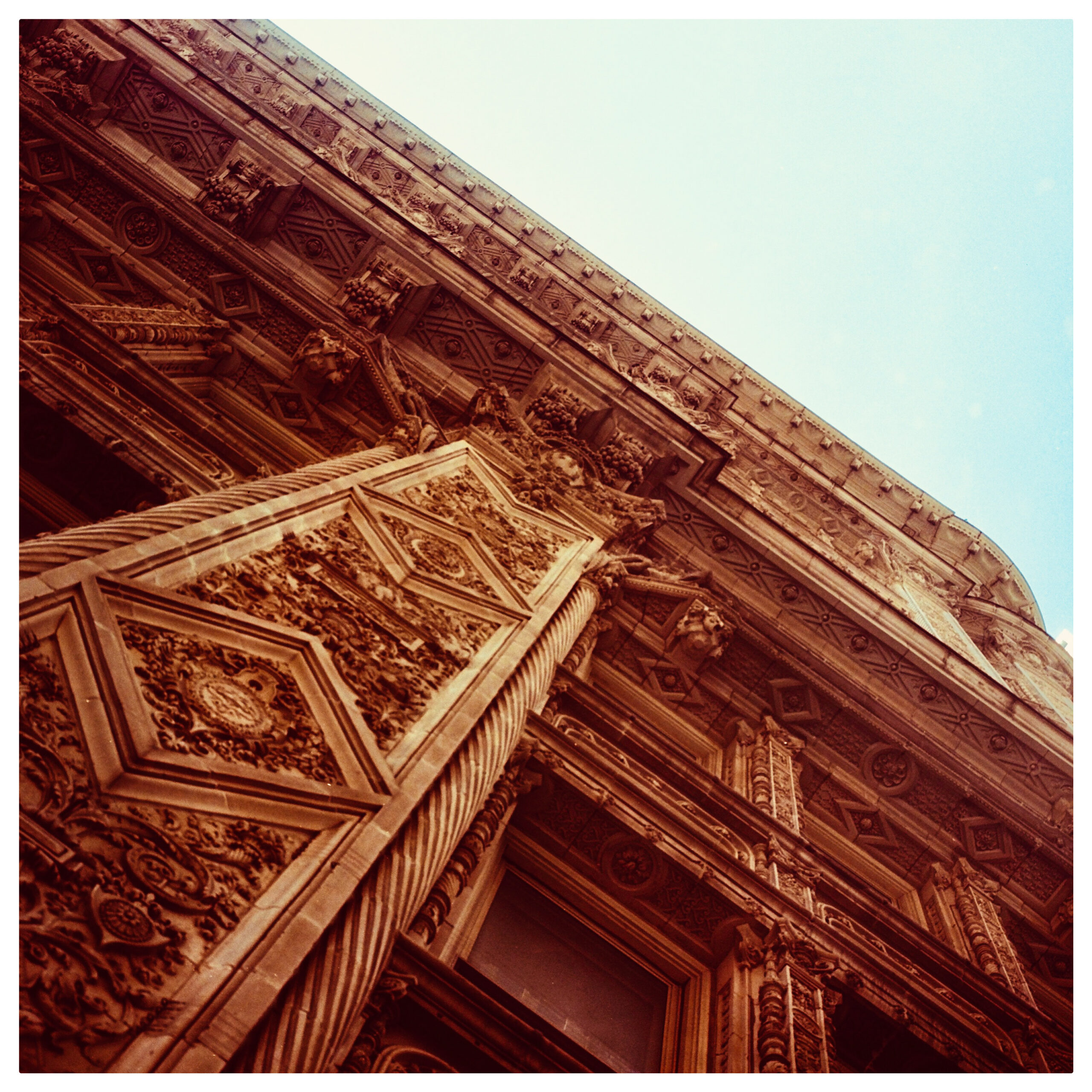
My photographic archive, viewed from a certain altitude, resembles nothing more than a collection of rectangles and squares. The rectangles come from my 35mm cameras, while the squares owe their existence to my twin lens reflexes, arguably my most often-used bit of kit. Many readers of this blog may recall that I made a New Year’s resolution to use only the Rolleiflex 2.8F for 2025; I stuck with my pledge for about three months, but as the seasons changed I once again added my 35mm cameras back to the rotation.
My one-camera pledge was probably doomed from the start, yet this thought experiment led to some interesting questions which continue to percolate. One such question involves the shape of the photos I make, and how the dimensions of the negatives of a particular camera influence my workflow and the success or failure of the photos that result from them. It might be a stretch to say that I broke my 2025 New Years Resolution solely because I grew tired of making square photos, yet this variable—which I’d not given much thought to previously—was, I would wager, probably at the very least a contributing factor in that choice.
The photo that brought all of this to mind for me recently is one of the “outtakes” from my visit with Scott Ferguson to Coney Island on New Year’s Day, 2026.
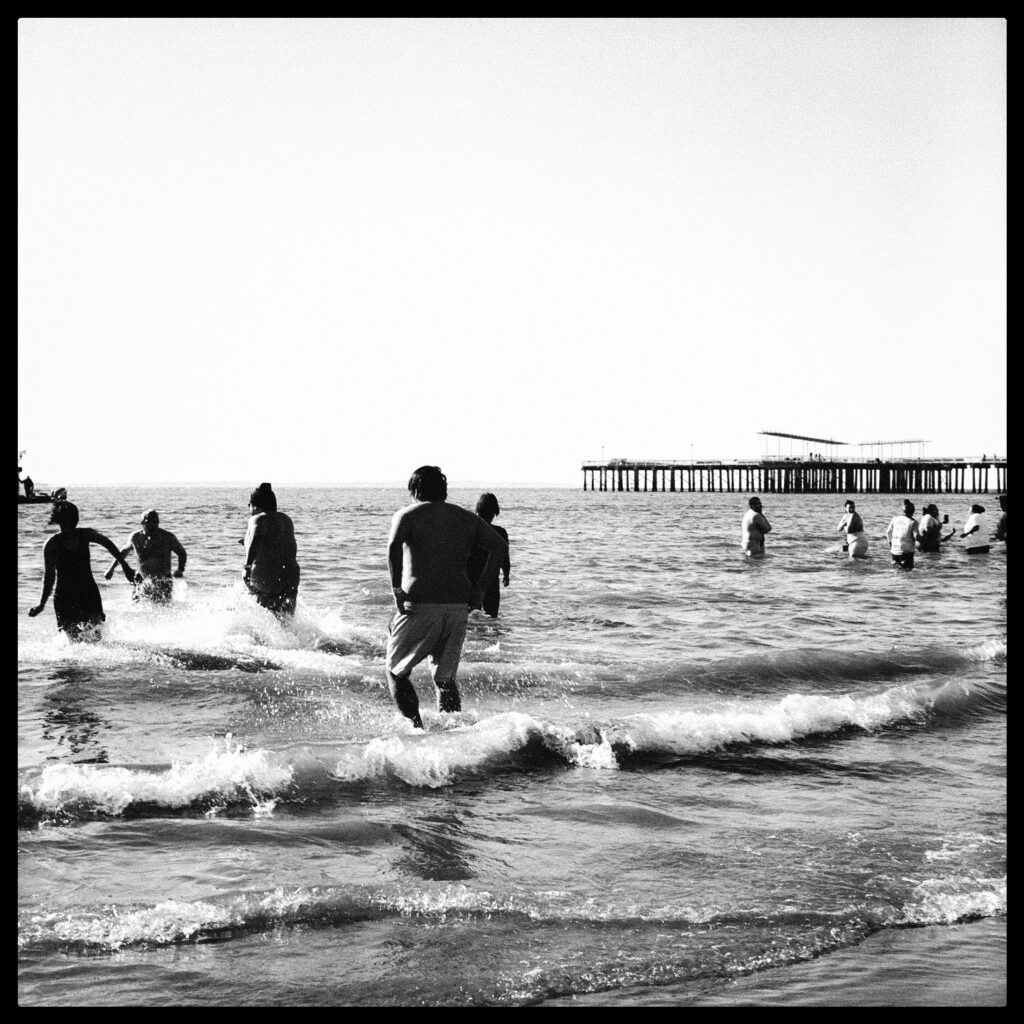
Though properly exposed, this backlit, monochrome image has little to recommend it. Not only does it say next to nothing about the distant figures in the water—we could be anywhere, in any season, with any random group of people—its composition is generic and, dare I say it, rather boring. A photo editor would be more than justified in cropping out the acres of sky, as they add nothing to the image, and in fact probably subtract from it by forcing a symmetry that deprives the photo of dynamism.
The frame from the same roll I included in my post, in contrast, while perhaps a bit less pleasing to the eye, makes better use of the Rolleiflex’s square format and is also more successful in telling a story about that day.
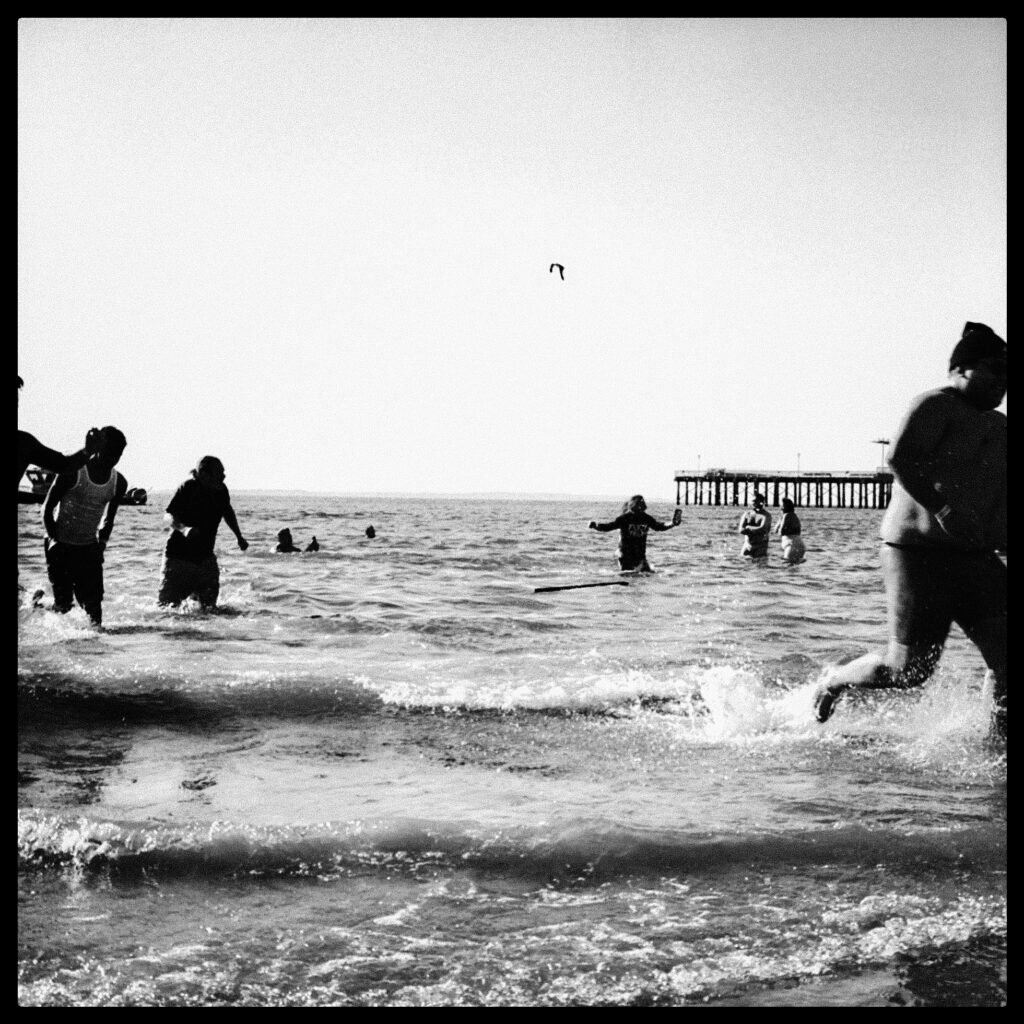
While the Rolleiflex, a storied portrait camera, draws the photographer almost involuntarily toward tight framing of subjects in the viewfinder’s bullseye (a formula many of my photos from the Plunge followed), this photo succeeds by playing against that expectation. The center of the frame here is almost entirely vacant. The photo’s chief human subject, the runner, is kinetic; he splashes down and to the right of the frame, partially escaping from view before the shutter catches him. His diagonal movement away from waves and seagull and people and camera not only enlivens the photo and earns its square format, but for me makes it a bit more effective in documenting the day’s events: this Polar Bear is eager, as we might also be, to get the hell out of the freezing water on a frigid New Year’s Day.
Even within the realm of portraiture for which it is often used, the square-format Rolleiflex in my mind rewards compositions that resist its pull toward tight central grouping. (Though as Richard Avedon demonstrated, with the right subject a balanced negative can turn out just fine). Unlike a standard 35mm photo, whose orientation—portrait or landscape—supplies viewers with a visual floor upon which to anchor their perceptions, the 6×6 square frame is mum on such questions. Received wisdom among photographers states that rectangular photos align with the natural way that humans perceive the world, while square images, in their failure to pick a dominant side, feel a bit alien to our perceptual apparatus, and can read as alternatively formal, distant or cerebral.
The following Rolleiflex photos, each fairly formal in composition, nonetheless contain elements that depart from the central axis, adding a bit of tension and (one hopes) engaging the viewer’s attention.

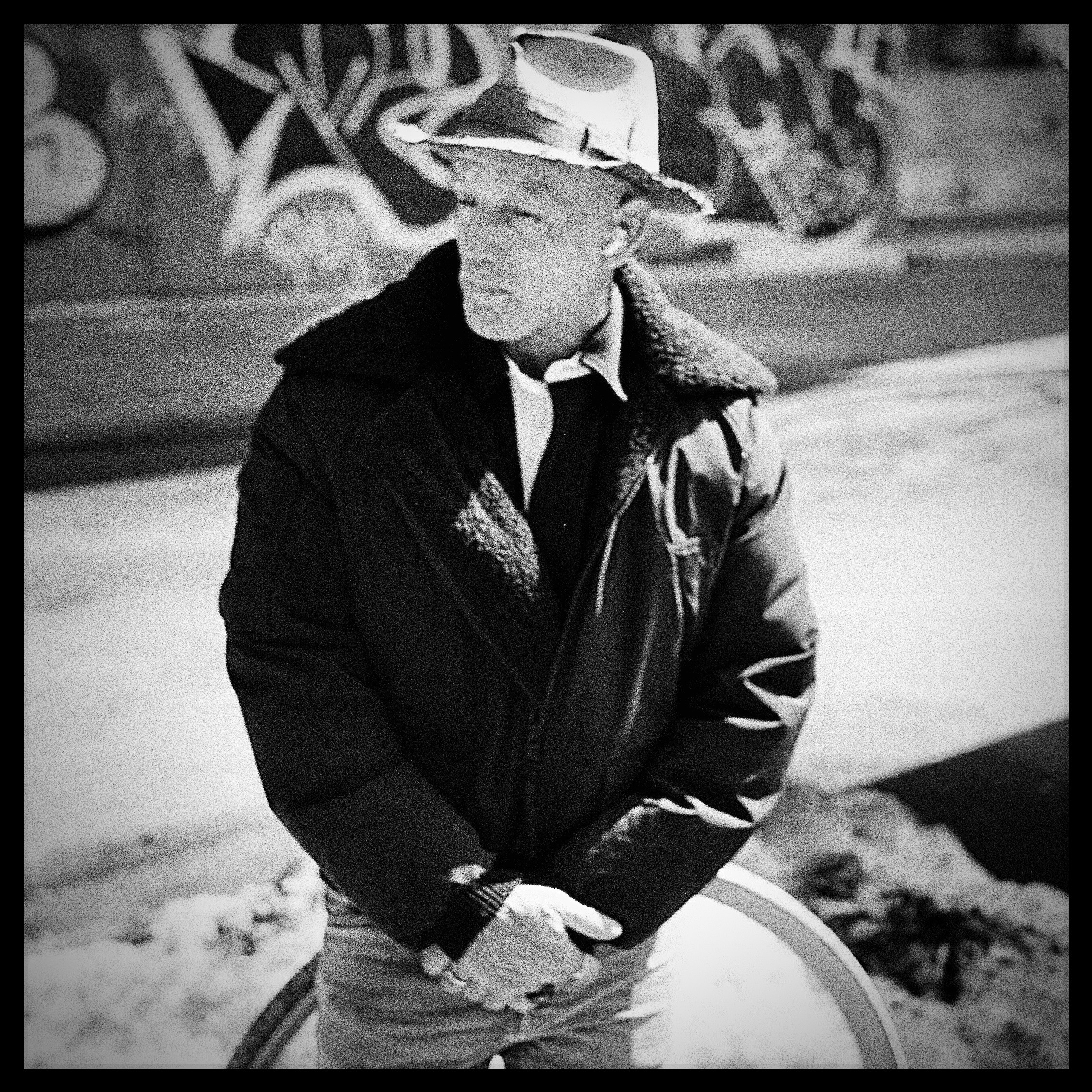
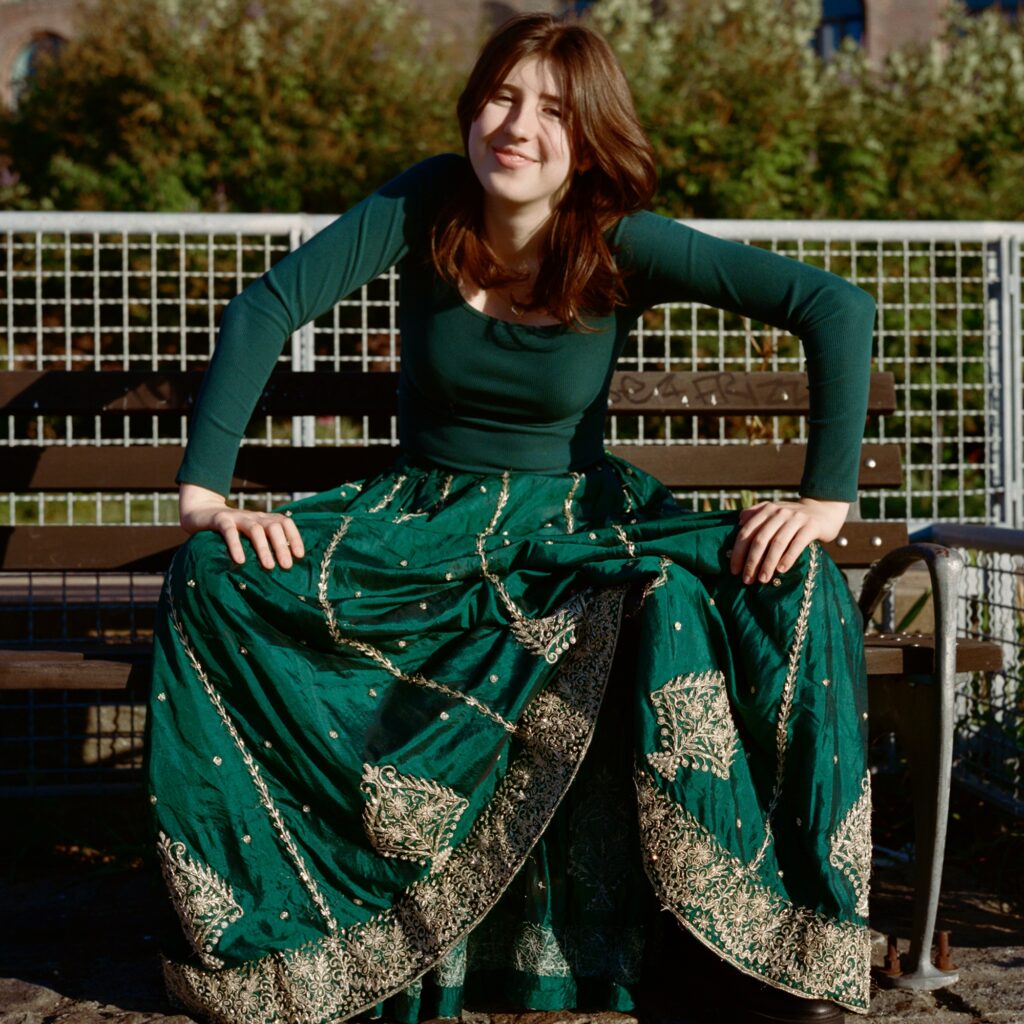
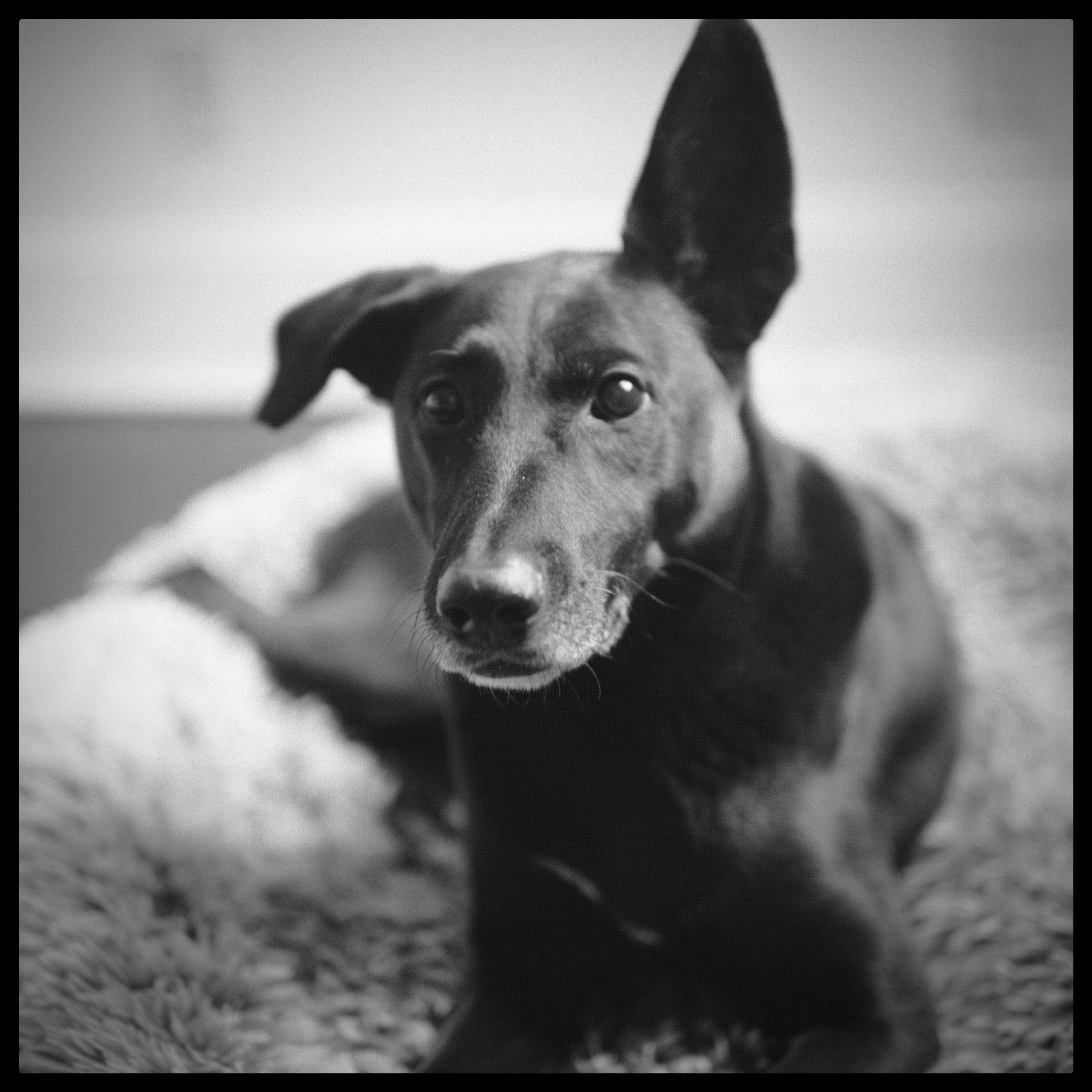
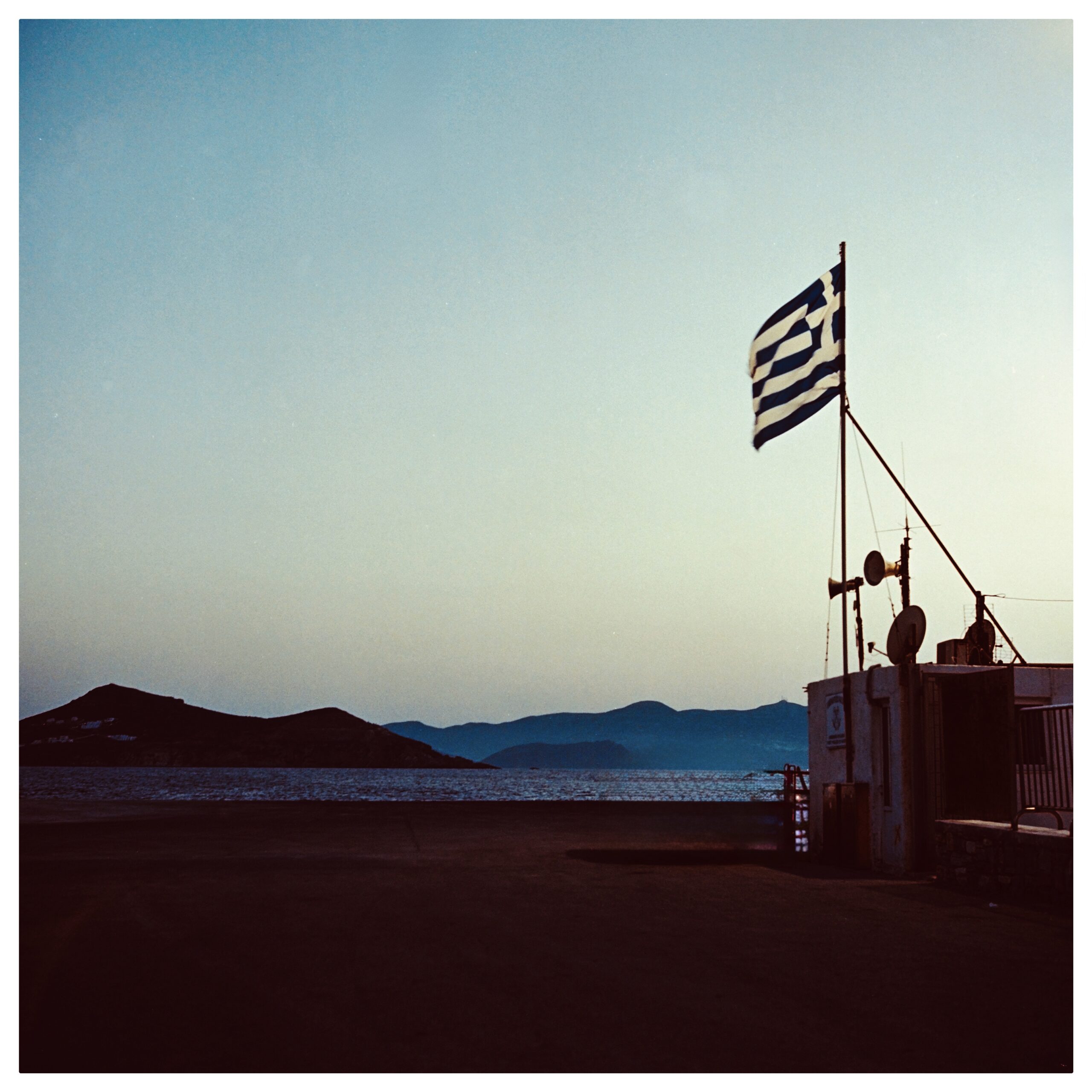
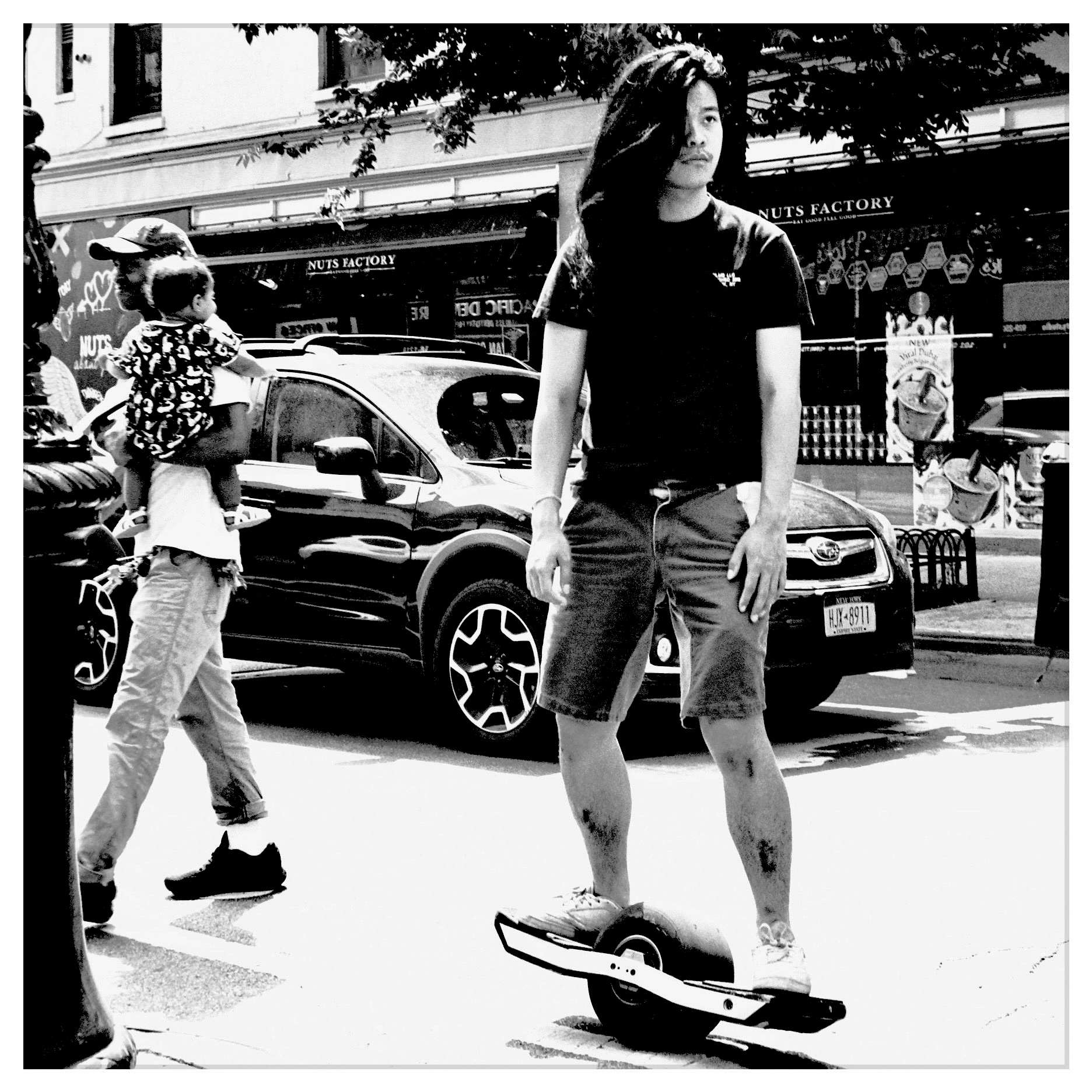
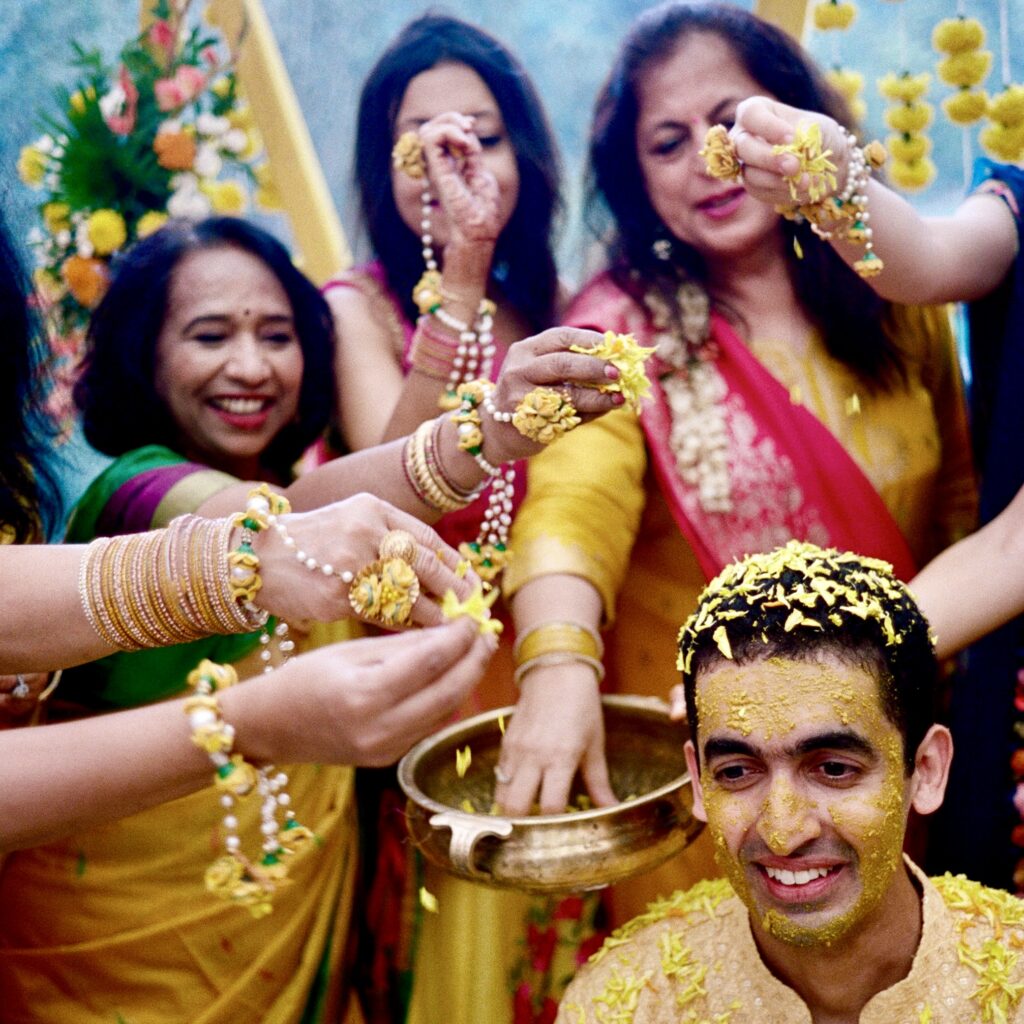
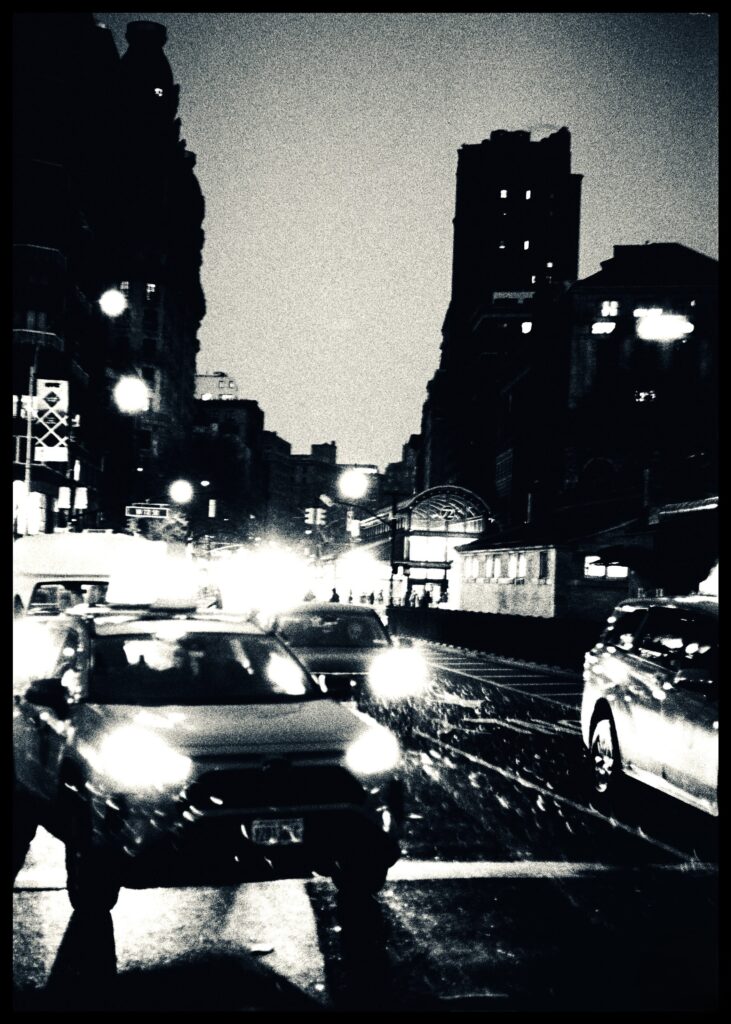
For all of the merits of the Rolleiflex and of 6×6 negatives in general, there are moments when I tire of the strictures of square photographs, when in fact I yearn for the immediacy and perhaps messiness that in my mind can only come from a rectangular setup. In choosing to orient my 35mm camera horizontally or vertically in the heat of the moment, I am in fact already interpreting the scene before me, in the process moving a step closer to the action in a way that the Rolleiflex, with its square frame’s formality and stillness, does not, in my hands at least, so easily permit.
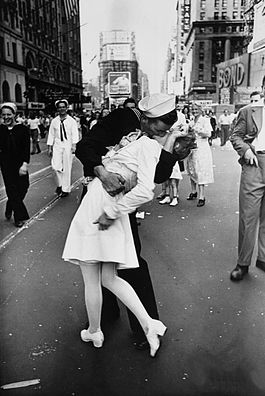
I’ll conclude this post by referring to a famous image from the history of photography, Alfred Eisenstadt’s 1945 “VJ Day in Times Square.”
As many readers may know, Eisenstadt was not the only photojournalist on hand in Times Square on August 14, 1945, the day of the Allied victory over Japan in World War II. A U.S. Navy photographer, Victor Jorgensen, caught the same scene from the waist level (very likely using a Rolleiflex) at almost the exact instant that Eisenstadt clicked his shutter.
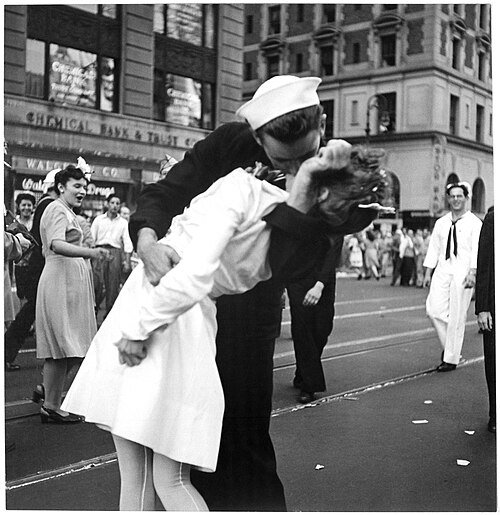
Looking at the two images side by side, one can readily see the advantages of each different camera orientation. With his square-format camera, Jorgensen, closer to his subjects, fastens his gaze on the pair in the center of his frame. While his photo also makes room for the reactions of a number of pedestrians in the background, his frame, like a similar but far better known Rolleiflex photograph from Robert Doisneau from five years later, could clearly be read as a private romantic moment, devoid of larger context. Notwithstanding this slight limitation, the New York Times used Jorgenson’s excellent photo in its coverage.
In choosing a vertical orientation to capture the couple’s full bodies and faces while aligning them with the crowded vista of Times Square just behind, in contrast, Eisenstadt uses his Leica to place that swooning kiss at the center of a public event at the core of a metropolis that had until then long been at a state of war—its rectangular frame and slightly wider perspective better matching the enormity of the occasion. From that recognizable urban intersection, his iconic photo made it into Life magazine, and from there into history.
Postscript: On Digital Squares and Rectangles
As I was writing this piece, I found myself wondering how and indeed if it applies to digital photography. While digital photographers can, like us “filmies,” crop any image into whatever shape pleases them in post, as far as I know there has never been a camera with a dedicated square-format sensor on the digital market. When one uses a vintage film camera such as a Rolleiflex, Hasselblad or any of the high-quality Japanese equivalents, in contrast, one apprehends the world through a square window. This not only cuts against normative expectations—the natural human bias toward rectangles that I have alluded to earlier—but has practical implications for the images as they move downstream toward eventual printing. While I have heard from my husband’s family in India that square photographs were the norm in analog weddding photography there up until the late 1970s, no darkroom I have ever seen gives that shape such preferential treatment. Darkroom easels, developing trays and—most consequentially—photographic paper come in a variety of sizes, but always in rectangular shapes. Though my enlarger is equipped with negative carriers that make it easy to print square images (like Diane Arbus, I have filed down the edges of one set of carriers to artfully expose the black border of the frame), the rectangular bias in the rest of the darkroom persists, and has real-world implications. If I want to make a full-sized enlargement of a square image, say 18×18 inches, for example (a size I almost never attempt), I must use a very large 20×24 sheet of photographic paper, single examples of which can cost up to $20, and waste a good portion of it in the bargain. And as anyone who has spent time in a darkroom can attest, one sheet, even for a straightforward negative in the hands of an experienced printer, is seldom adequate to get the job done.
Thanks for reading.
FEATURED IMAGE: Alwyn Court Cornice, NYC, 2025. Rolleiflex 2.8F, Kodak Portra 400
You can see more of my photos at www.leica1933.com.
Share this post:

Comments
Andrew Moore on Squares vs. Rectangles in Photography
Comment posted: 14/03/2026
Many years ago I had the use of a Minoltaflex 120 TLR, and still love square images. Whilst I haven't looked for a digital camera to capture square in camera, I set the aspect ratio in the iPhone camera app to 1:1, and am always happy with the results. I enjoyed your pictures and writing, thanks.
Comment posted: 14/03/2026
Bill Brown on Squares vs. Rectangles in Photography
Comment posted: 14/03/2026
Comment posted: 14/03/2026
Peter Schu on Squares vs. Rectangles in Photography
Comment posted: 14/03/2026
I guess the square format requires more careful composing the image, because it draws the eye to the center and what's not in the center has to support the center. That*s not an easy task, at least not for me. So, some scenes can just not be recorded in square format. I use a Bronica SQ and so I can switch to 6x4.5. I am starting to use that format much more often than the square format, but I am happy to have the option to use the square as well. I always have both film backs with me. The 6x4.5 is close to the 36x24 rectangle, but the difference matters and I find 6x4.5 much more pleasing most of the time. If I crop my 36x24 images, it is either into a panorama format or a format closer to the 6x4.5 ratio. I always thought about getting a smaller MF camera, but in the end the option to use different formats is more imortant.
Comment posted: 14/03/2026
Wendell Cheek on Squares vs. Rectangles in Photography
Comment posted: 14/03/2026
Comment posted: 14/03/2026
Tony Warren on Squares vs. Rectangles in Photography
Comment posted: 14/03/2026
Comment posted: 14/03/2026
Comment posted: 14/03/2026
Comment posted: 14/03/2026
Walter Reumkens on Squares vs. Rectangles in Photography
Comment posted: 14/03/2026
I use 6 x 6, 4.5 x 6, 24 x 36 and 24 x 24 formats on the Zeiss Ikon Taxona, and 18 x 24 on the PEN-FV, alongside the variety of formats available on DSLRs and DSLMs, which also support the square 1:1 format as a screen grid. It’s not easy to keep switching formats, because the composition of the image is completely different. You really need to be skilled at it, have experience and also have the right subjects. Fewer snapshots, more landscapes, still lifes, nature and architectural shots. And that’s where the problems start for some snapshot and street photographers.
I only started shooting 120 roll film again a few months ago; the light-well viewfinder is a real pleasure compared to a rangefinder – the whole experience, the time involved, the mindful way of taking photos with just 12 or 15 shots rather than 36, which are often simply too many. And I won’t even get started on the negative size and the quality reserves.
I also find it very difficult to commit to a single format for a long period of time, and therefore don’t think it makes much sense. There are so many subjects worth photographing that you need to be flexible and take the most suitable equipment with you. Camera, format, focal length, film – everything should be just right. I usually take just one camera with a single lens. I think about what to expect beforehand. If it doesn’t work out, then you’re just out of luck. Which has rarely been the case for me so far – after all, you’ve still got legs to move around on.
Comment posted: 14/03/2026
Comment posted: 14/03/2026
Comment posted: 14/03/2026
Scott Ferguson on Squares vs. Rectangles in Photography
Comment posted: 17/03/2026
Very interesting post, as usual. And it was nice to be reminded of our Coney Island venture. I think your posts first came to my attention in the run up to choosing the Rollei as the camera you would use for all of 2025, and I love the way you think and write, even if I wasn't totally surprised when you started 'straying' into 35mm as the year rolled along. I'm quite interested in your thoughts on the square format vs. rectangular. I like shooting square with the Hasselblad, but also have a 645 back so I can do rectangular frames as well. I tend to frame pretty intuitively and if I have an area that I want to be more conscious of as I shoot, I think framing and composition is the next frontier for me. Too often as a default I tend to center the subject on both 35mm and 120 because the focusing patch is dead center and I'm often so intent on getting focus perfect on close up portraits that I don't think enough about the frame when I snap the shutter. I also find that I'm very loose on leveling the frame -- not sure why -- it might be that I'm 'leveling' some element within the frame like a person's face as opposed to checking the horizon. Some times I like the effect, and it kind of pulls you in to a bit of a visual vortex, but often it's just something to correct in Lightroom.
As I think more about framing and composition going forward, I might have more thoughts on the meaning of the square frame vs. the rectangle, but for now it feels like the experience is defined a little more by the way my mind reacts to a waist level mirror finder which tends to be a little more formal and composed and a rangefinder window, which tends to be a little more immediate and spontaneous. I like both cameras very much for street portraits, my favorite mode of shooting these days, but probably would lean toward the Leica for anything that is more dynamic and documentary, where speed and timing is more important (while still being too slow for my liking.) I also think the rectangular frame does work better for documentary and narrative shooting, whether vertical or horizontal as your brilliant Eisenstadt illustration shows. I loved learning about the nearly identical shot from the Times!
Thanks,
s
Comment posted: 17/03/2026
Geoff Chaplin on Squares vs. Rectangles in Photography
Comment posted: 17/03/2026
Comment posted: 17/03/2026