

For an analogue photographer, the 28mm focal length is the gold standard for street photography, and it is a great focal length to document daily life. Yet finding a high-quality wide-angle compact without spending “luxury” prices (like for a Ricoh GR1 or Nikon 28Ti) is a real challenge. Most affordable point-and-shoots from the 90s are fixed at 35mm or 38mm.
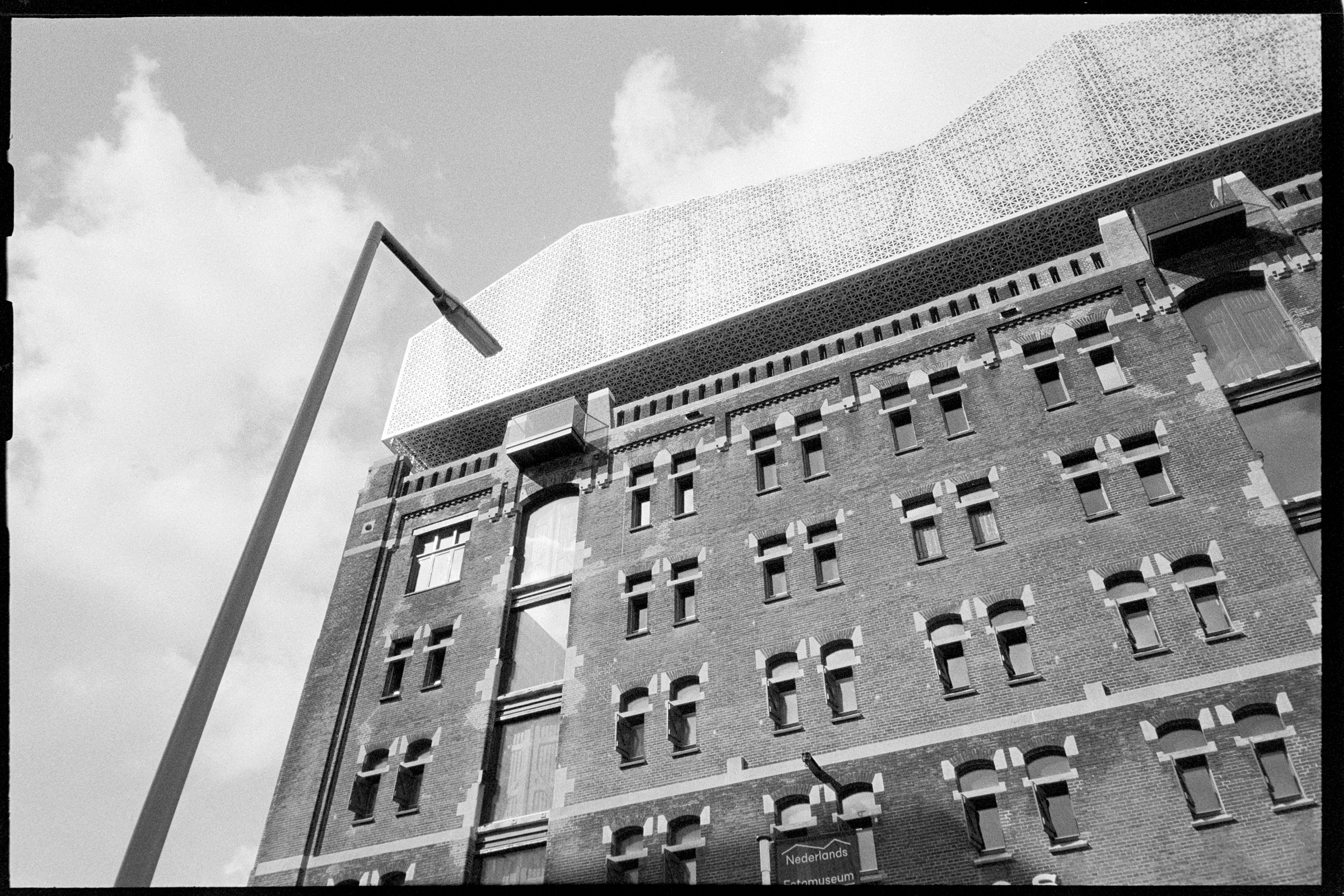
After hunting for some bargains online, I tested four cameras. I shot all the cameras on the same day with the same film (Rollei RPX400) and developed and scanned the film myself. Using the cameras side-by-side really highlighted the differences that matter, and mostly it wasn’t the optics! For a small daily carry camera, the ease-of-use features are critical, and I learned that triplet 28mm lenses perform really well.
The Test Group
My test covers the Nikon AF600 (Lite Touch AF), Pentax Espio Mini (UC-1), Fuji DL-510P (Cardia Everyday OP), and the Fuji DL-500 (Cardia Travel OP). These cameras range in weight from 175g to 226g. Most are compact enough to be forgotten in a jacket pocket, though the DL-500 is notably larger (comparable to a Yashica T5) and does not comfortably fit in a jeans pocket.
Camera Details
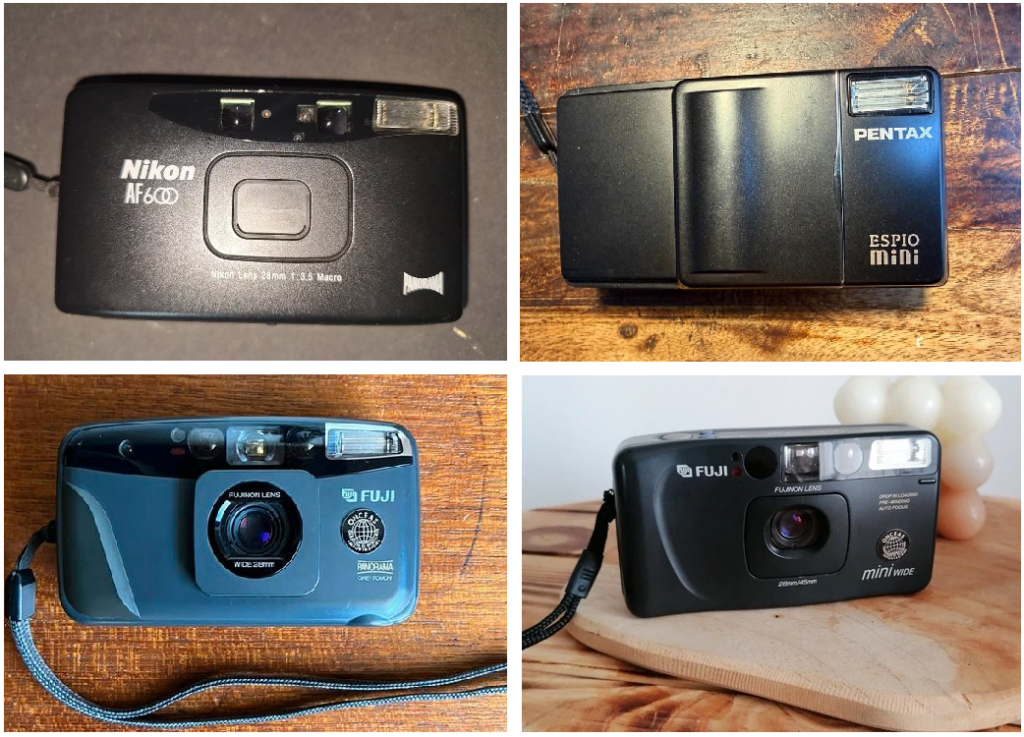
Nikon AF600 / Lite Touch AF
- Size: At 108x62x32mm, it is the thinnest model. Its rounded corners make it the most pocketable.
- Viewfinder: A real-image type with 82% coverage. While small, it is the sharpest in the group, though cluttered by permanent panorama frame lines.
- Operation: The shutter button is soft with poor feedback. A significant drawback is the default startup mode: it resets to red-eye reduction flash every time, which introduces a delay when you take the shot. Without clear tactile feedback, this is confusing. Luckily the flash off mode is one button press away, and this is how I shoot this camera.
- Performance: Features the best lens and exposure accuracy in the group. The 28mm f/3.5 (3/3) lens provides high sharpness and the least corner fall-off. It is clearly less wide the the Fuji cameras in the test, and closer to the 32mm Pentax.
- Assessment: Best suited as a visual diary camera due to its sharp lens and slim profile, despite the small buttons that will slow you down.
- Price: EUR 70 second hand.
Pentax Espio Mini / UC-1
- Size: 105x55x37mm. The build is solid, though the sliding lens cover feels delicate. The boxy shape makes pocketing it more difficult.
- Viewfinder: Real-image type viewfinder 85% coverage. It includes an LCD in the light path that dynamically compensates for parallax error by darkening the cropped area. It is very clean, though slightly darker than the Nikon’s.
- Operation: The most responsive camera in the test. The shutter button is almost “trigger happy,” and the motors are the quietest of the group. The only camera with a data back that doesn’t stop at the year 2019.
- Performance: The 32mm f/3.5 (3/3) lens offers high sharpness and contrast, on par with the Nikon. AF is the fastest in the group. It’s not a real 28mm, but in practice the difference was small.
- Assessment: The most usable for street shooting. The combination of responsiveness and a sophisticated viewfinder makes it a personal favourite.
- Price: EUR 130 second hand.
Fuji DL-510P / Cardia Everyday OP
- Size: 115x64x37mm. Feels sturdy and well-built, shaped like a bar of soap it is easy to put into any pocket.
- Viewfinder: Albada type 80-85% coverage. Large window, but reflected frame lines are fat and often hard to see.
- Operation: Uses a “drop-in” loading system where the film is fully pre-wound. This protects images but loading it is fussier than a regular camera. The first frame of a bulk-rolled film may be a half exposure, rather than the last.
- Performance: 28mm f/4.5 (4/4) lens. While resolution is high, it lacks contrast compared to the others and flares easily.
- Assessment: A disappointment in terms of image contrast, despite the high build quality and good ergonomics.
- Price: EUR 60 second hand.
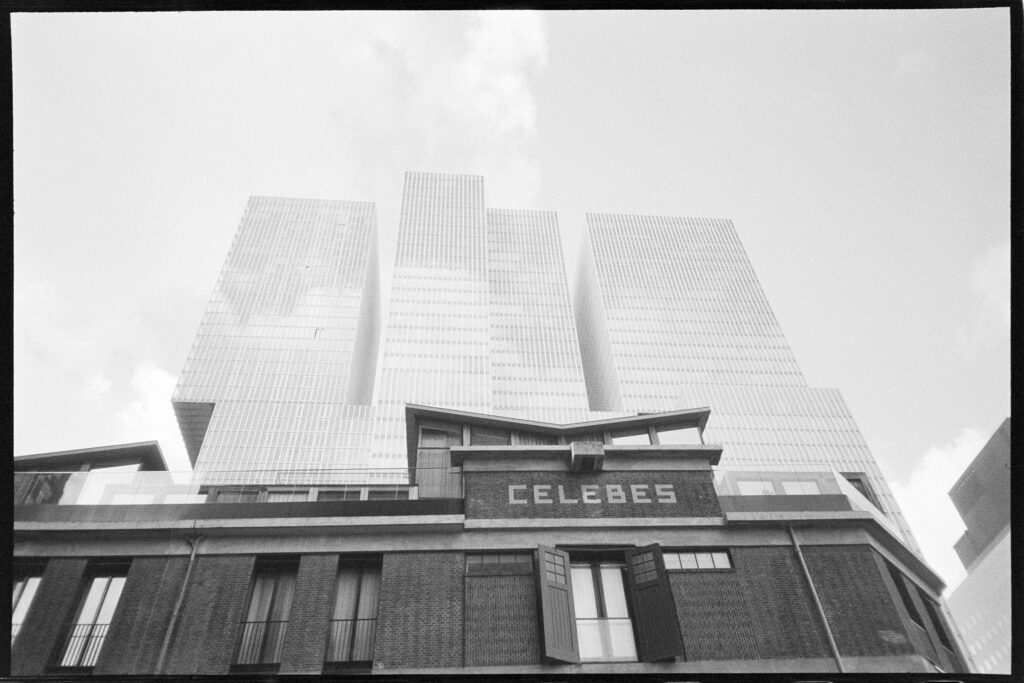
Fuji DL-500 / Cardia Travel OP
- Size: 121x65x41mm. The largest camera; it failed the “squeeze test” for build quality. Motors are noisy, and the gear train sounds like cheap plastic. It’s not bad but the others are built better.
- Viewfinder: Zooming Albada type 80-85% coverage, that shifts for the 28mm and 45mm focal lengths. Prone to flare in the viewfinder.
- Operation: The power button is positioned on the right, allowing for one-handed operation, a little slower in operation compared to the other cameras in the test.
- Performance: Dual lens 28mm f/3.5 (3/3) and 45mm f/5.5 (5/5). The 28mm lens is surprisingly good, better than the DL-510P, offering high sharpness and contrast. The 45mm was not tested for this comparison but does not live up to the 28mm.
- Assessment: A genuine bargain for those who want a quality 28mm lens and don’t mind the slightly bigger size and noisier operation.
- Price: EUR 35 second hand.
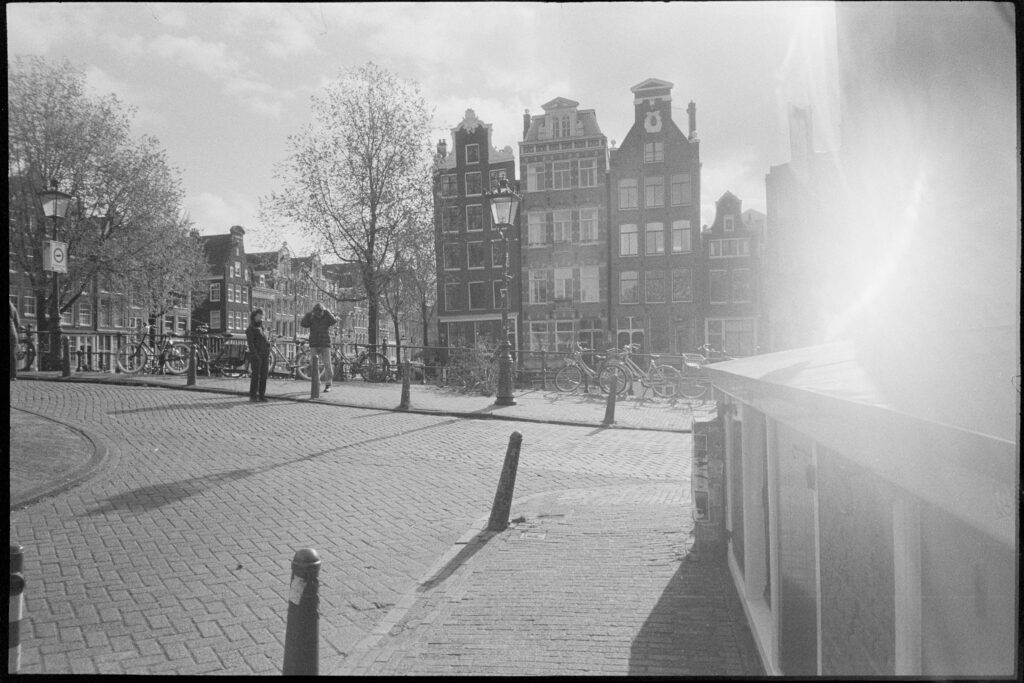
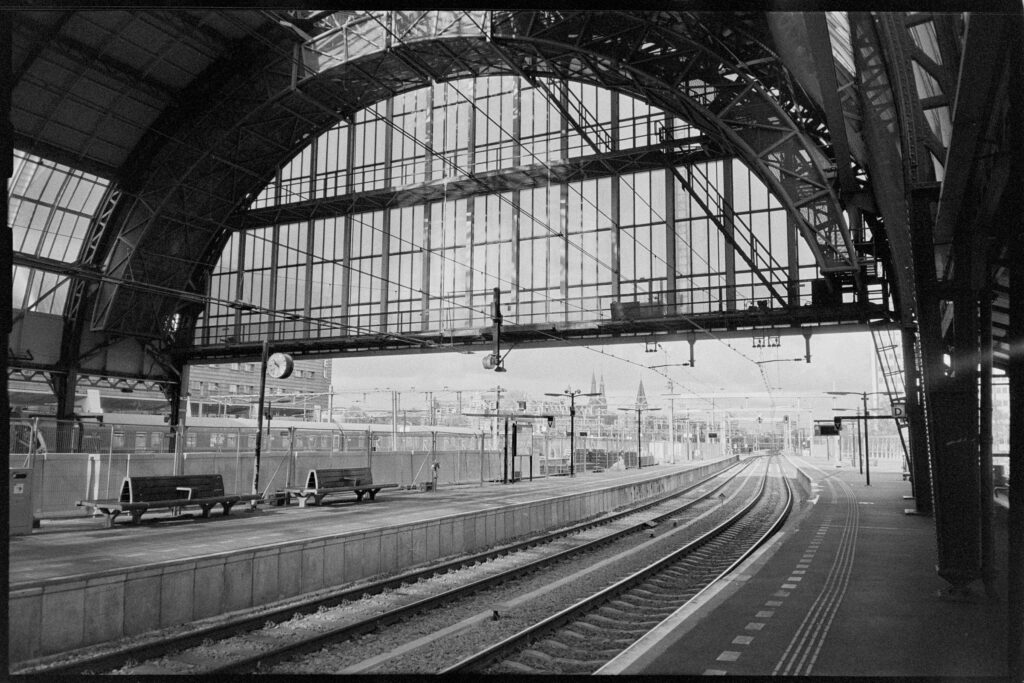
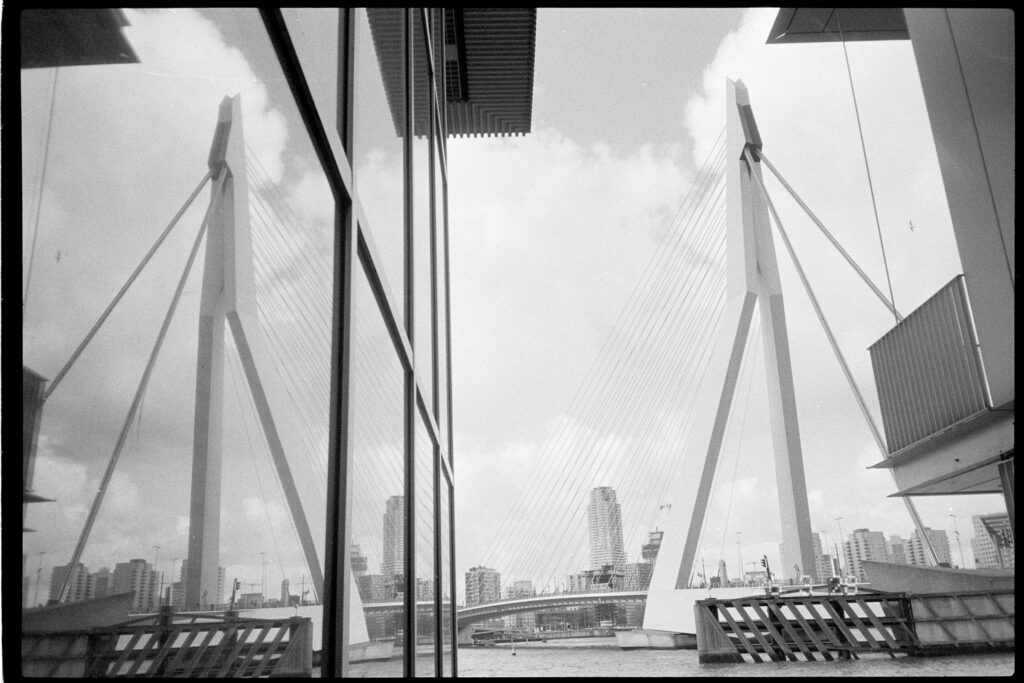
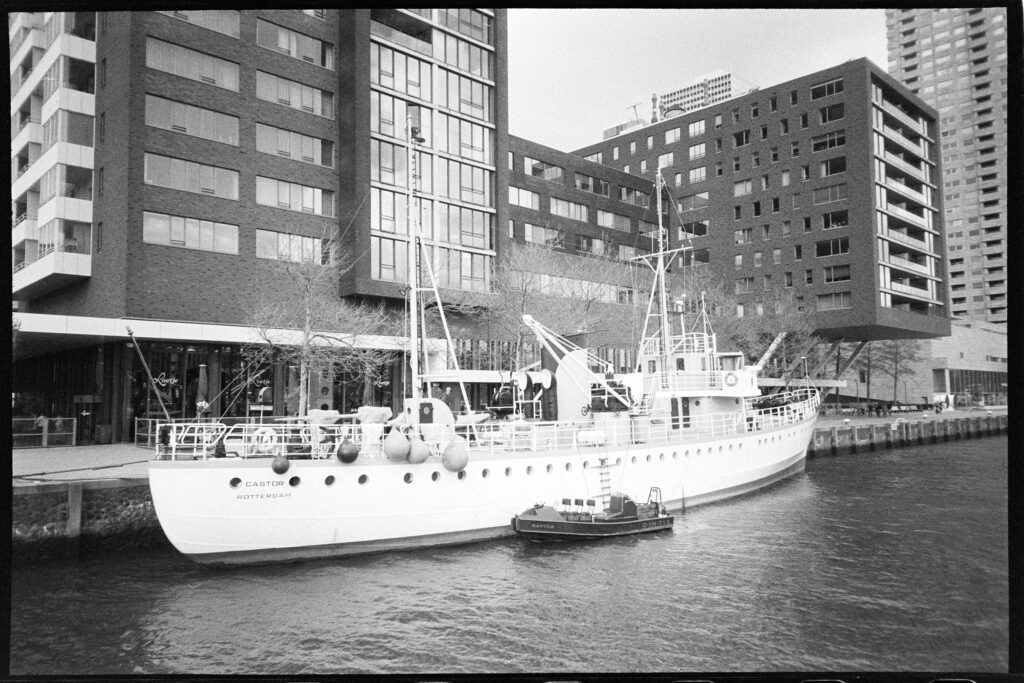
All the cameras in the test make nice images, shot outside on a photowalk. They are after all fixed lens cameras and perform a cut above your average zoom compact. But which one is best? Because I’m looking for a camera to live in my jacket pocket, I care about ease-of-use just as much as image quality. I also don’t want to walk around with a EUR 1,000 premium compact every day either. So, do any of these cameras fit my requirements, and what are the differences in daily use?
1. Form Factor
While all four are lightweight, their “pocketability” varies. The Nikon AF600 is the thinnest (32mm) and highly pocketable, on account of its rounded corners and edges. The Pentax is also very small, though its boxy shape is less ergonomic than the Nikon. The Pentax has a sliding lens cover that has a tendency to slide open accidentally when pushed into tight pockets. The Fuji DL-510P is shaped like a bar of soap and easily stored. The Fuji DL-500 is the outlier; it is significantly larger and does not comfortably fit in standard trouser pockets. It is comparable in size to a Yashica T5.
2. The Viewfinder Experience
I like the smaller viewfinders on the Nikon and Pentax more because they are sharper and more comfortable to look at.
- Real-Image Finders (Nikon & Pentax): These provide a much sharper, high-clarity view with black framelines. The Nikon has the highest clarity but is cluttered with panorama frame lines. Other reviewers give the Nikon a bad reputation for its viewfinder size, but that really isn’t a problem. The Pentax is the most advanced, with an internal LCD that darkens the edges to dynamically compensate for parallax error and panorama mode, though the LCD makes the view slightly darker.
- Albada-Type Finders (Fujis): These offer higher magnification but rely on reflected frame lines that can be difficult to see. The DL-500 features a dual-magnification finder that physically zooms when switching between the 28mm and 45mm lenses.
3. The ergonomics
The “feel” of these cameras makes the difference between a fast convenient shooter, and a camera you need to think about too much:
- Shutter Response: The Pentax is the most responsive, almost “trigger happy.” The Nikon suffers from a “mushy” shutter button with poor tactile feedback. The Fuji DL-510P provides good feedback because the lens physically moves upon focus acquisition.
- One-Handed Use: The Pentax and Fuji DL-500 allow for true one-handed operation. The Nikon and Fuji DL-510P have the power button on the left-hand side of the camera.
- Flash Modes: The Nikon defaults to red-eye reduction mode on startup, which causes a delay before the shutter fires—a significant annoyance. However, it only requires one button press to turn the flash off. The Pentax and Fuji DL-500 require two presses, while the Fuji DL-510P requires three presses. Once you memorise this, it becomes less annoying.
4. Drop-in loading is unhelpful
The Fujis have a “drop-in” loading system is supposed to make loading the camera easier. It doesn’t. It also pre-winds the entire roll of film. This is a safety feature; if the camera back is accidentally opened, the photos you have already taken are safe inside the canister. The Nikon and Pentax use traditional loading and winding, which I prefer. Note that the Fuji DL-510P and DL-500 motors can be noisy and may struggle with bulk-rolled film in reused cassettes.
5. Optical Quality and Exposure
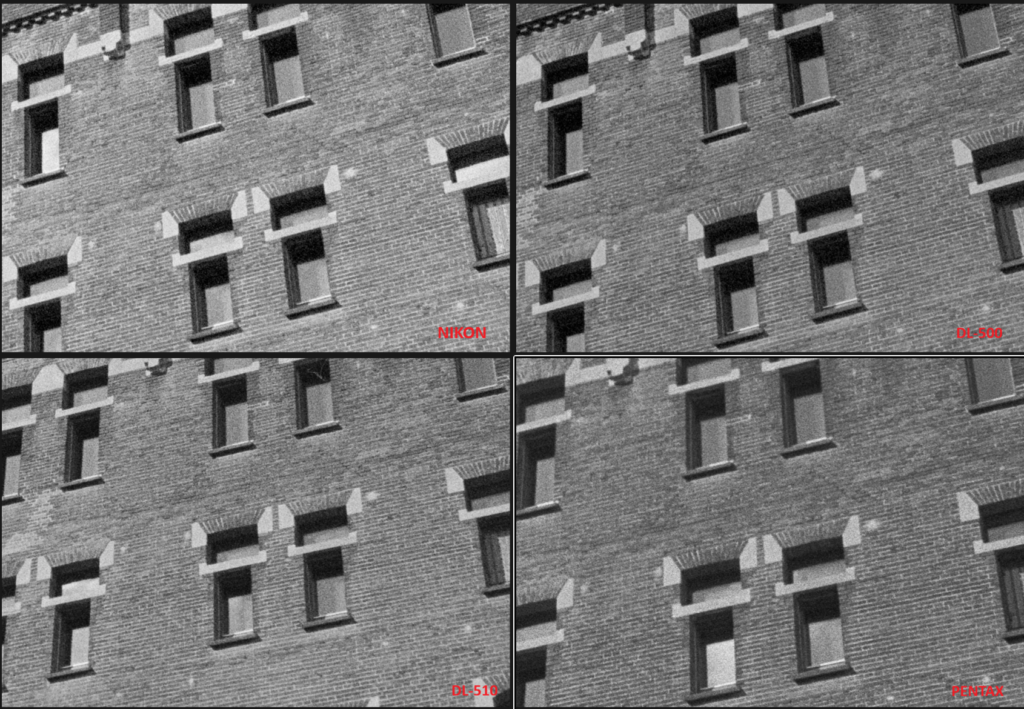
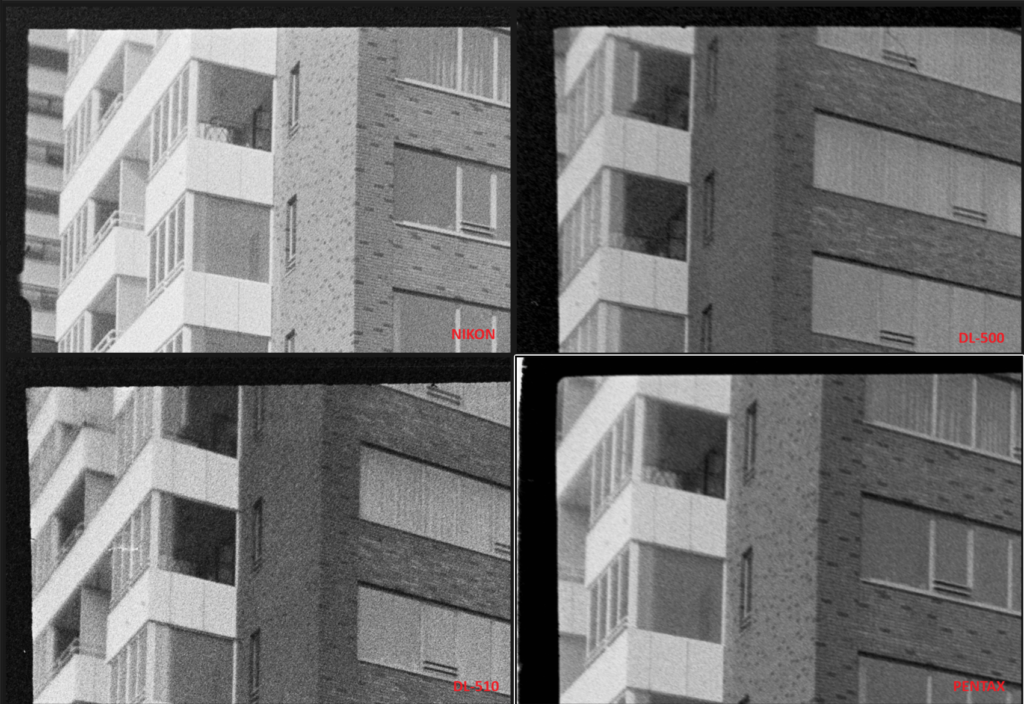
- Sharpness and Contrast: The Nikon features the best lens, offering the highest contrast and the least corner fall-off. The Fuji DL-500’s 28mm lens is surprisingly good, outperforming its sibling, the DL-510P, which lacks contrast and has lower perceived sharpness. The Pentax is just below the Nikon, but only just.
- Flare Resistance: The Nikon and Pentax are highly flare-resistant. Both Fuji models flare easily when bright light sources are within the frame. This may be caused by the permanent UV filter on the front. The Fujis have to lens cover.
- Exposure Control: The Nikon has the most consistent exposures, and was spot on most of the time. The Pentax was consistent too but overexposed slightly. The Fujis were less consistent but offer a +2 EV backlight compensation mode. My take is the Nikon and Pentax don’t need it (unless you are shooting a snowy landscape).
Which model to choose?
- Pick the Pentax Espio Mini if you want the best all-around experience. Its responsive shutter, quiet motor, and sophisticated, clean viewfinder make it the most “professional” tool in the group. It’s my preferred camera.
- Pick the Nikon AF600 if image quality is your absolute priority. The lens is the sharpest in the group and the camera is the slimmest, provided you can tolerate the cluttered viewfinder and work the tiny buttons with your finger nails.
- Pick the Fuji DL-500 if you are on a budget. You get a 28mm lens that is really good, plus the flexibility of a 45mm secondary lens. It is slightly larger but by no means large.
- Only pick the Fuji DL-510P if you want a camera that is smaller than the Fuji DL-500, you aren’t focused on sharpness as much, and you really want the backlight compensation feature.
My Winner
The Pentax Espio Mini is the winner of this comparison. While the Nikon AF600 has a slightly better lens and a slimmer profile, the Pentax wins on usability. Its responsive shutter, better parallax-correcting viewfinder, and quiet operation make it the most effective tool for actual photography, particularly in street environments where speed and discretion are important. For those on a strict budget, the Fuji DL-500 is the recommended alternative, providing very good optical performance for the price of 3 rolls of film!
Share this post:

Comments
Charles Young on Reasonably Wide and Sensibly Priced – 28mm Compacts Comparison
Comment posted: 27/04/2026
Charles Young on Reasonably Wide and Sensibly Priced – 28mm Compacts Comparison
Comment posted: 27/04/2026
Chuck
Comment posted: 27/04/2026
Charles Young on Reasonably Wide and Sensibly Priced – 28mm Compacts Comparison
Comment posted: 27/04/2026
Andrew on Reasonably Wide and Sensibly Priced – 28mm Compacts Comparison
Comment posted: 27/04/2026
Comment posted: 27/04/2026
Comment posted: 27/04/2026
Comment posted: 27/04/2026
Sneakerzoom on Reasonably Wide and Sensibly Priced – 28mm Compacts Comparison
Comment posted: 27/04/2026
Comment posted: 27/04/2026
Roger on Reasonably Wide and Sensibly Priced – 28mm Compacts Comparison
Comment posted: 27/04/2026
Unfortunately, a quick search suggests that these cameras are much more expensive in the UK, deterring me from making an impulse purchase based on your advice.
Comment posted: 27/04/2026
Huss on Reasonably Wide and Sensibly Priced – 28mm Compacts Comparison
Comment posted: 27/04/2026
I much prefer my Fuji Work Record Pano - yes it is too big to be pocketable but the 28mm lens is superb, the VF is huge, the VF blocks off in pano mode when needed, the flash is very powerful, exposures are great, you can manually set the focus and it never auto turns off! So it is always ready to go.
It also is weather resistant and quite rugged. The standard Work Record does not have the pano capability nor is able to set focus manually - but on ebay they are the same price so get the pano version!
Comment posted: 27/04/2026
Gary Smith on Reasonably Wide and Sensibly Priced – 28mm Compacts Comparison
Comment posted: 27/04/2026
Actually, the Voigtländer Perkeo II folder will fit in my jeans pocket, but I don't consider it to be a camera that I'd just stick in my pocket to go out wandering with. Shooting 6 x 6 film is usually intentional for me and not really a casual exercise.
Thanks for your review!
Comment posted: 27/04/2026
Mats on Reasonably Wide and Sensibly Priced – 28mm Compacts Comparison
Comment posted: 27/04/2026
Jeffery Luhn on Reasonably Wide and Sensibly Priced – 28mm Compacts Comparison
Comment posted: 28/04/2026
Thank you for an informative comparison and review! I'm not actively looking for a pocket sized 35mm camera because my Zeiss Contessa fits the bill....but....it's totally manual. All of the cameras you talked about could take 8 shots in the time it takes me to shoot a single shot with the Contessa. Also, I like to have auto exposure cameras for my challenged students. I'll be on the lookout for the Pentax and Nikon you reviewed. Thank you!! Jeffery
furlongphoto on Reasonably Wide and Sensibly Priced – 28mm Compacts Comparison
Comment posted: 30/04/2026
Ibraar Hussain on Reasonably Wide and Sensibly Priced – 28mm Compacts Comparison
Comment posted: 30/04/2026
I too really like these comparisons
Makes me want to research other wide lens compacts
Wondering if Olympus or Ricoh made one?
Comment posted: 30/04/2026
Comment posted: 30/04/2026
Comment posted: 30/04/2026
Comment posted: 30/04/2026
Comment posted: 30/04/2026