

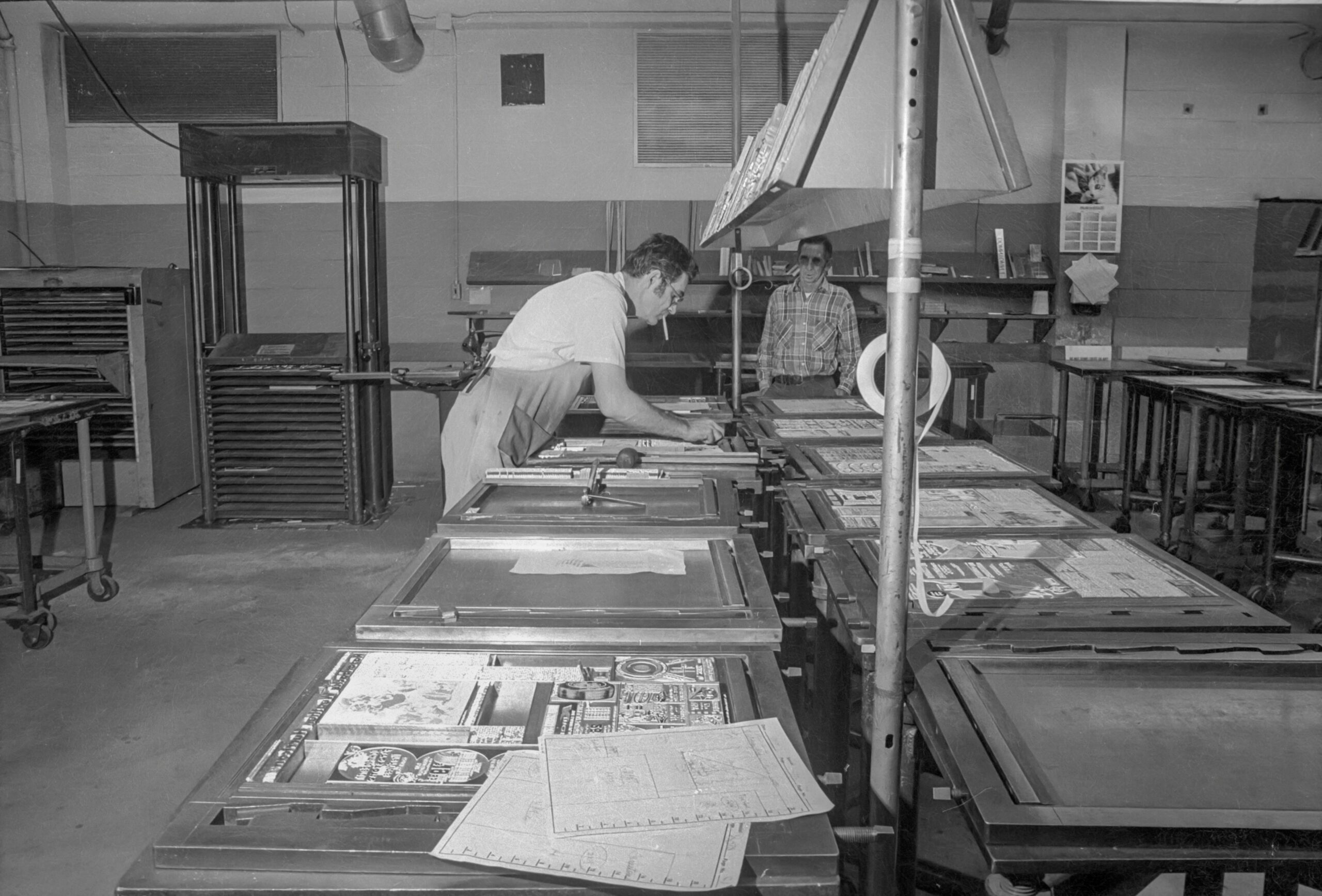
Image above: Rows of galleys and pages. And yeah, most everyone smoked back then.
Sept 25, 1977. I was a year out of journalism school and working the first of my eventual five newspaper jobs. I was the newest and youngest person on staff. My job was working on the sports desk writing headlines and such in the morning and shooting assignments the rest of the day.
I started at the newspaper before I graduated and I’m sure I didn’t look a day over 14. I would go to a shoot and when I arrived the people often thought I was there to collect for their subscription.
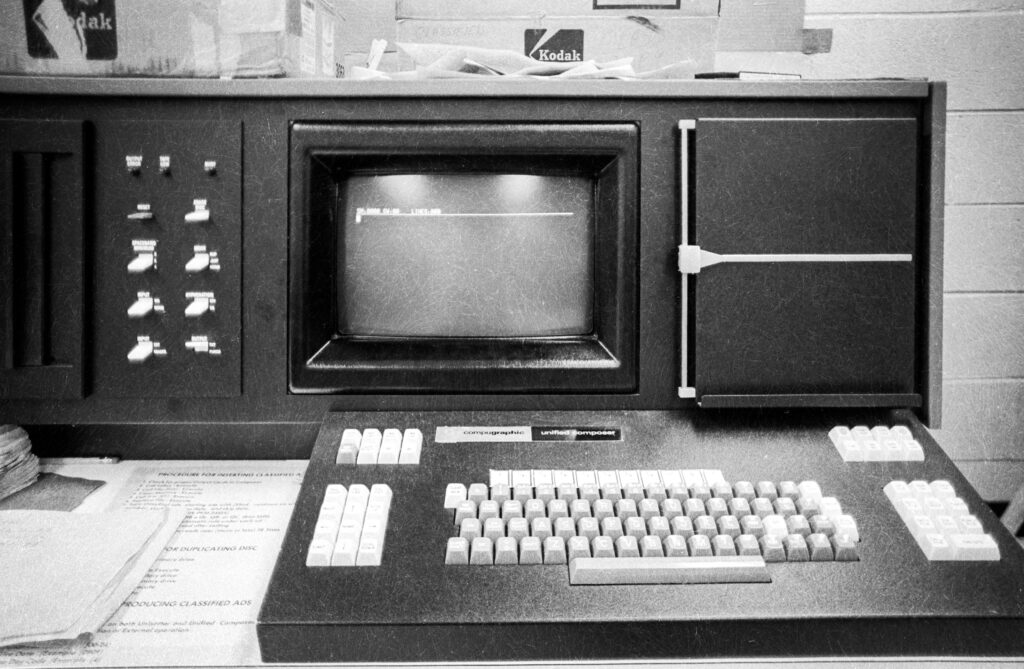
But this September day was the last ‘hot type’ day for the paper, the last of its kind in the state. The NY Times was already transitioning as well. But we were a small-town newspaper.
‘Hot Type’ meant the type was formed from hot melted lead. It was late 19th century technology. It was noisy, physically demanding, slow and a specialized craft.
It may have revolutionized newspapers in the late1880’s but was now disappearing fast across the country as the cleaner quieter faster computer-based ‘cold type’ took over. It was as much of a revolution as the change from film to digital.
Many of the ‘back shop’ men, all men of course, had been working with these linotype machines their whole working career. The machines were very old and often while one man would type another would have tools in hand to keep it working.
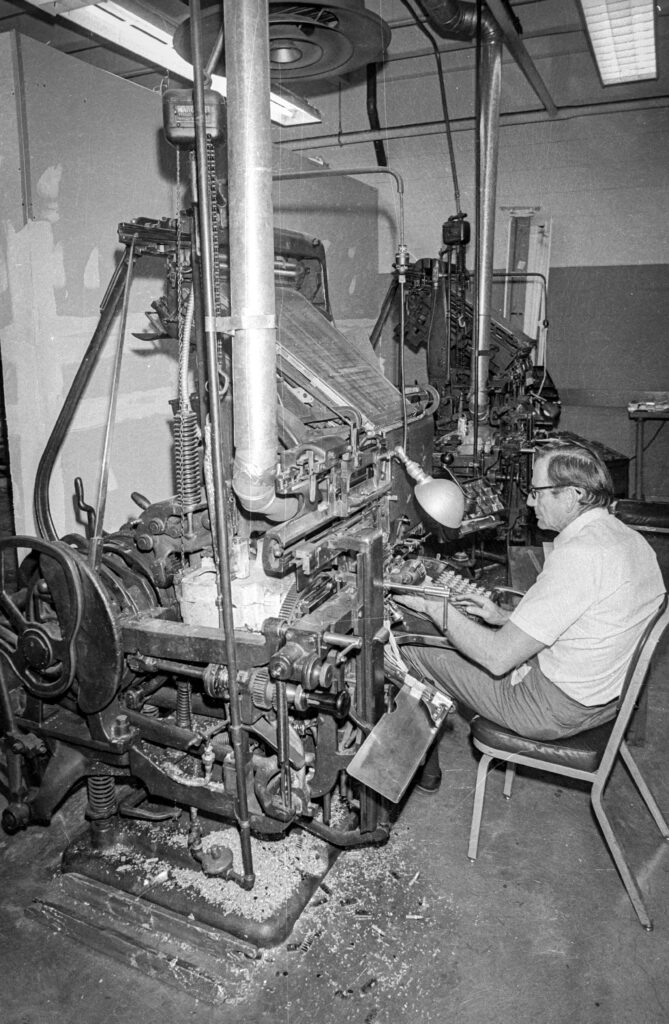
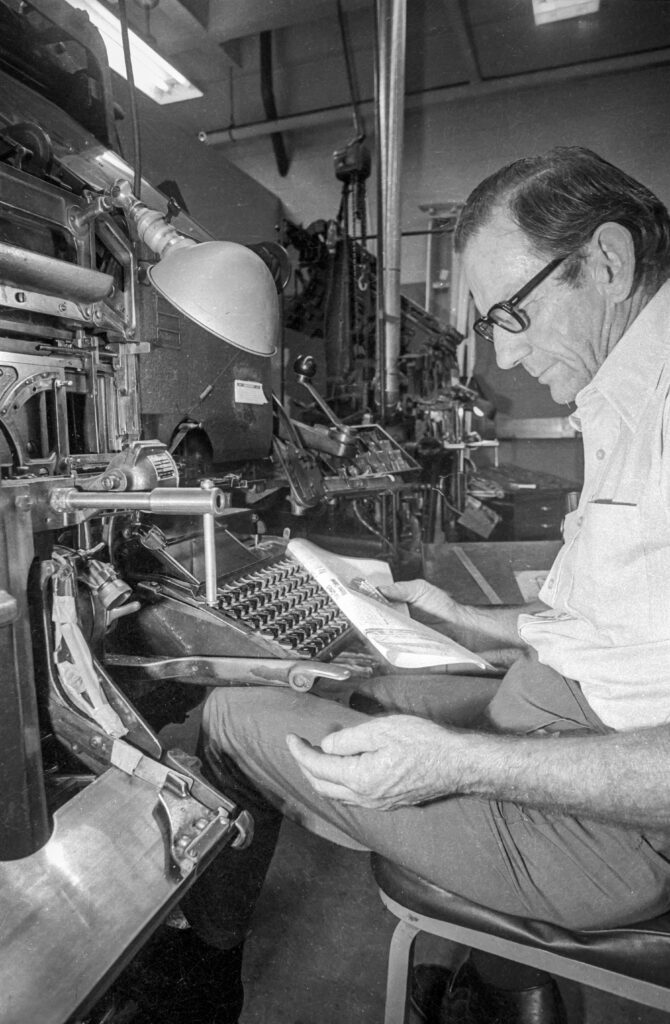
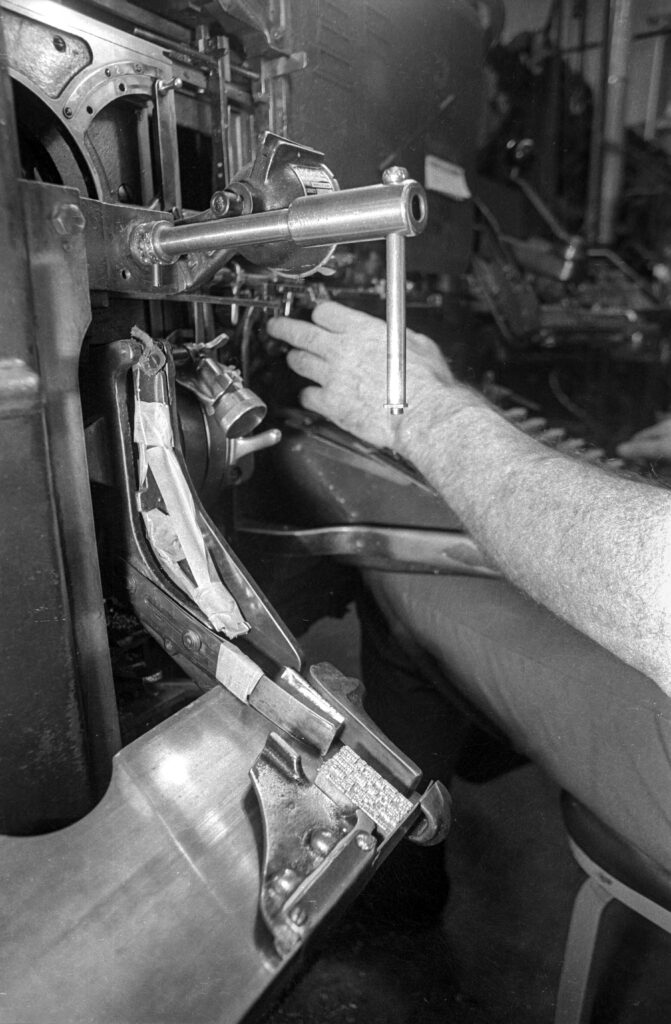
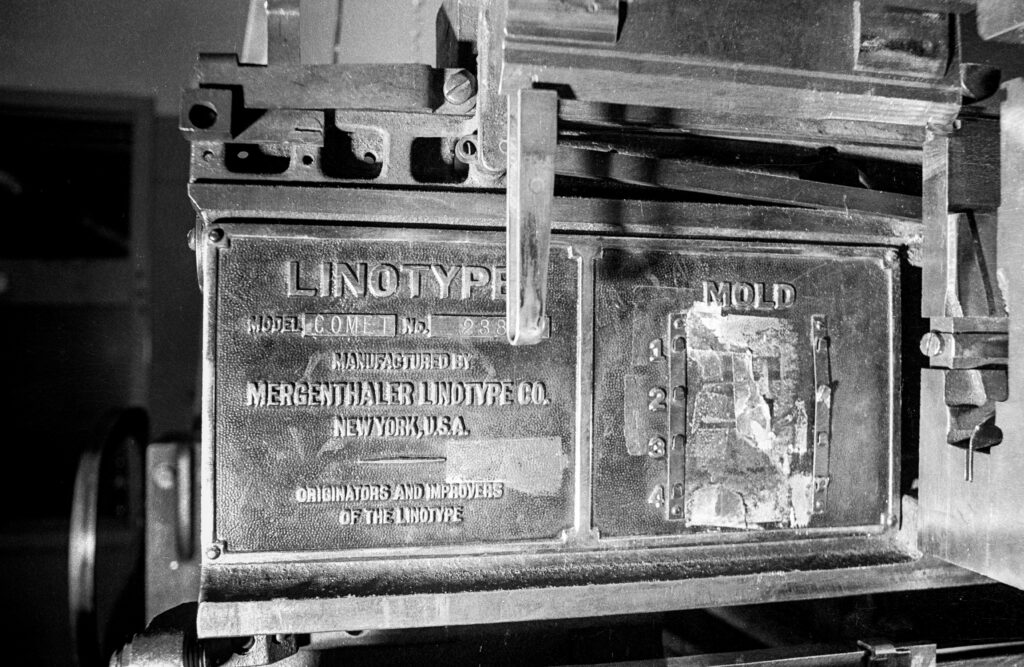
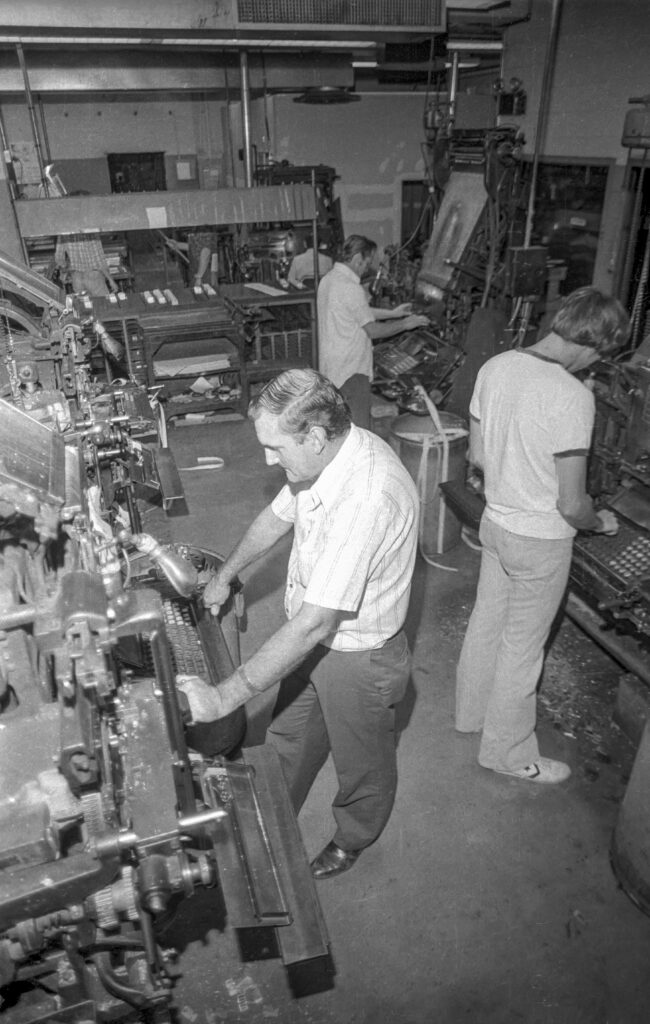
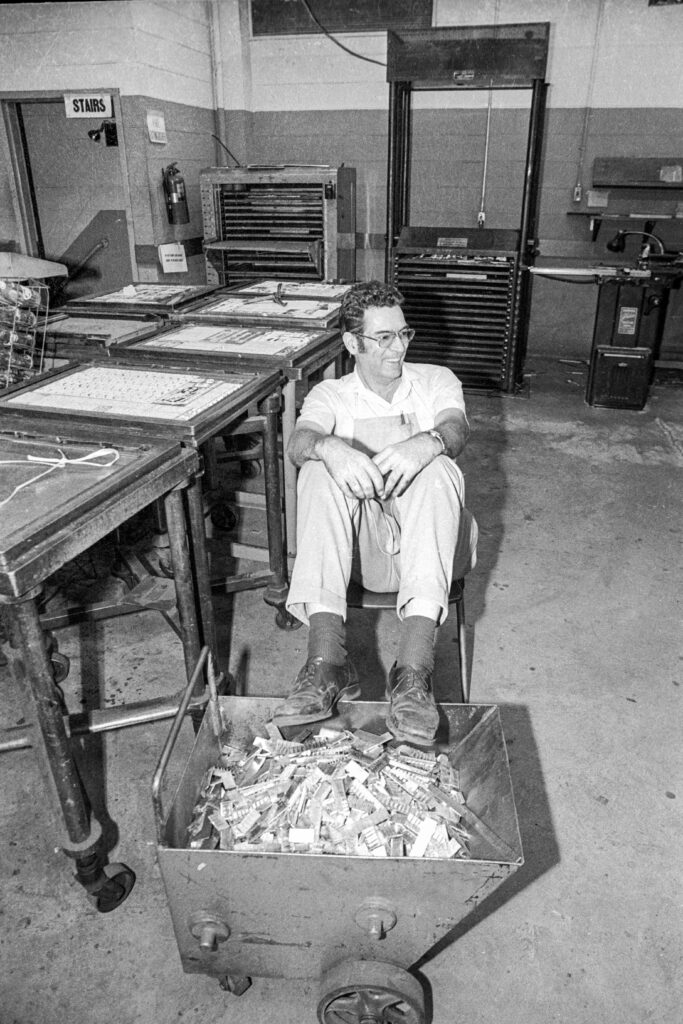
As someone typed a story into the linotype, each key sent the letter up into a matrix to cast lines of text from molten lead into metal slugs, lines of type one column wide. The slug would then slide back down, stacking up to create that story. Each linotype had a long lead ingot or ‘pig’ hanging over a heated pot on the machine and slowly lower to melt it. Each stack of slugs would then be placed into a ‘galley’ on a cart and the page would be assembled. At the end of the day all the type would be melted down and reformed into new lead bars.
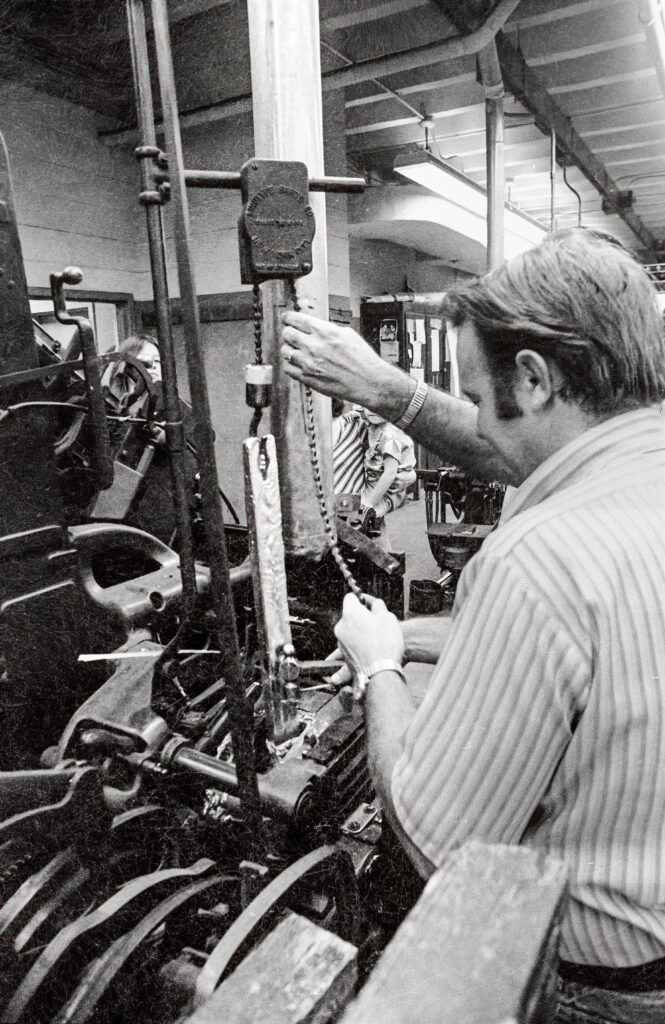
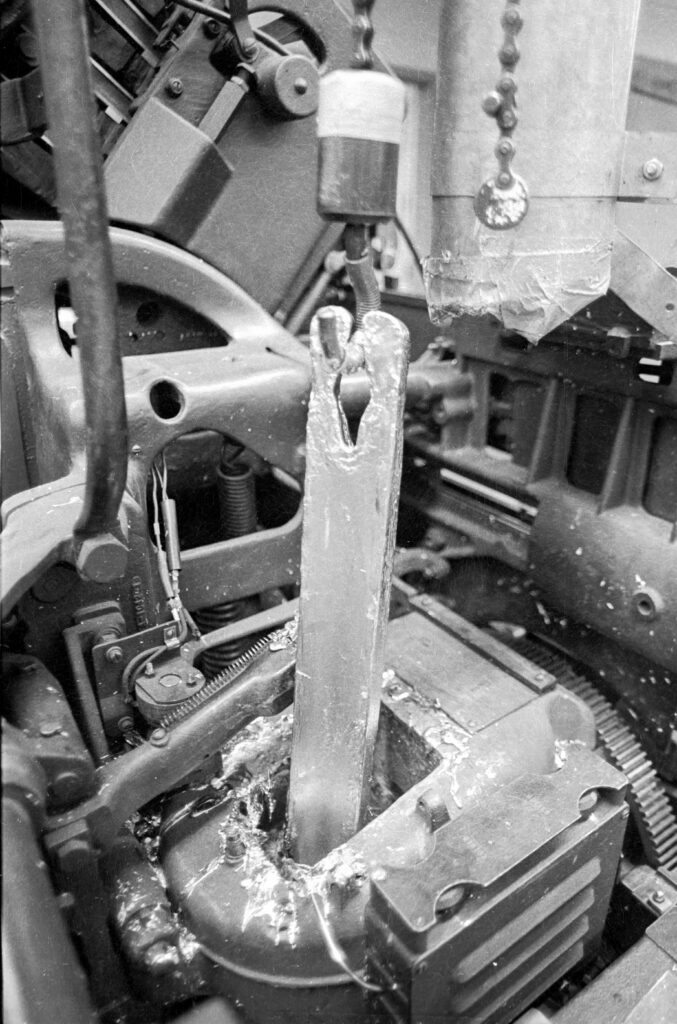
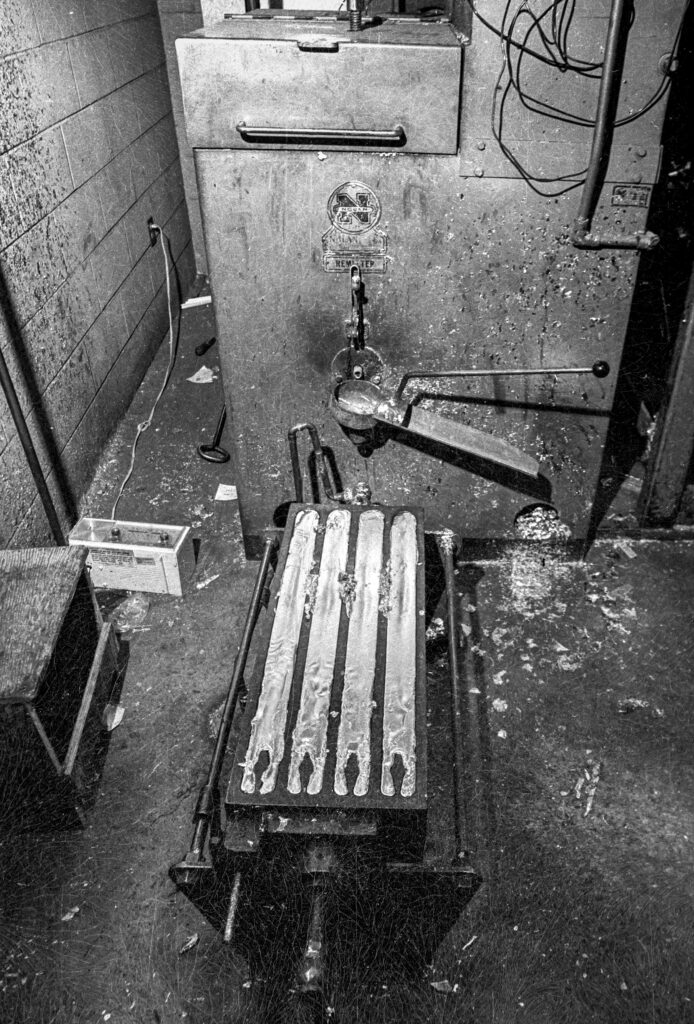
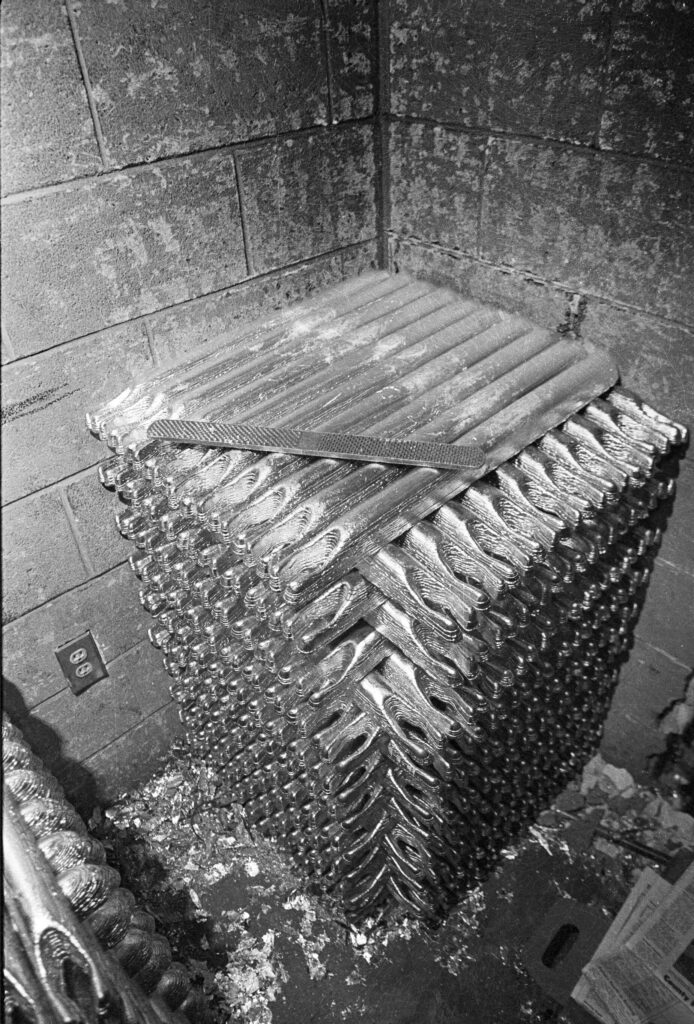
The back shop would run ‘proof’ on galley section pages after assembled to look for mistakes. But those guys would always prefer you didn’t find a mistake. They didn’t like having to break open a galley and make corrections.
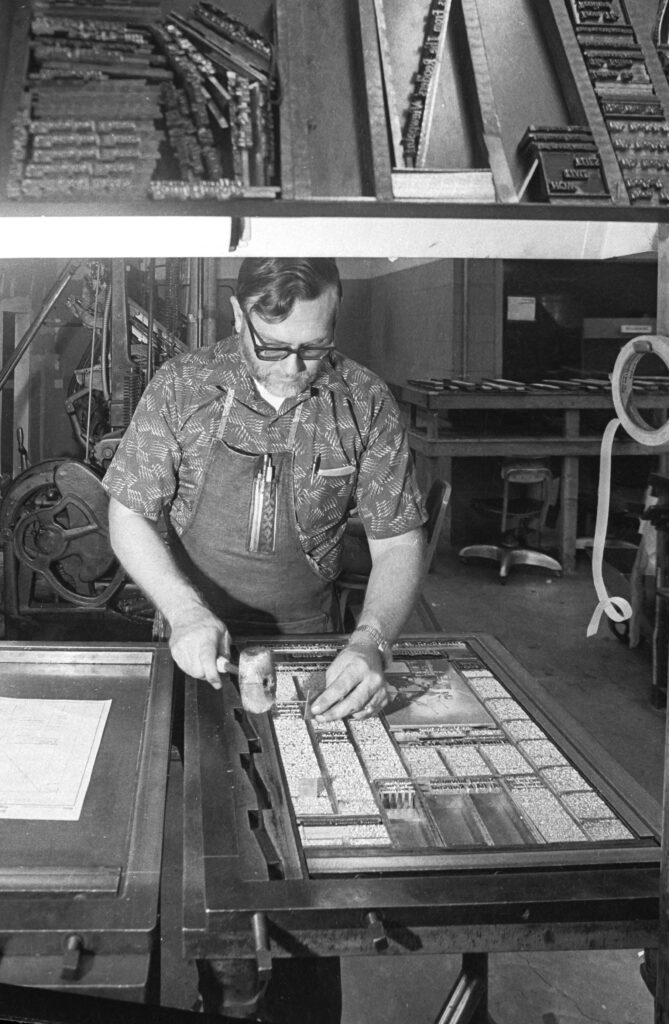
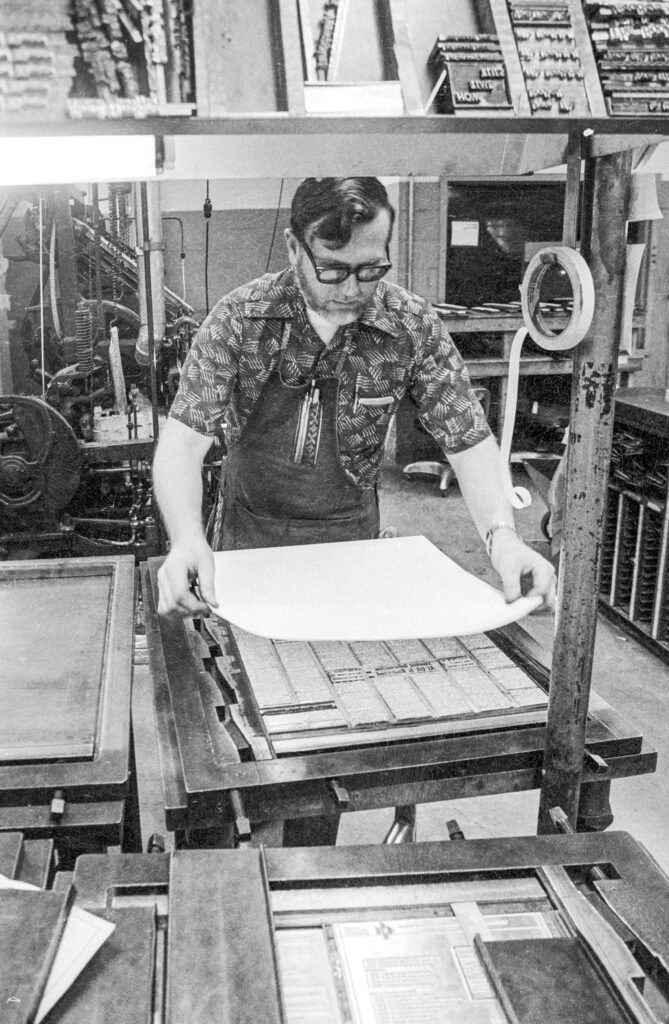
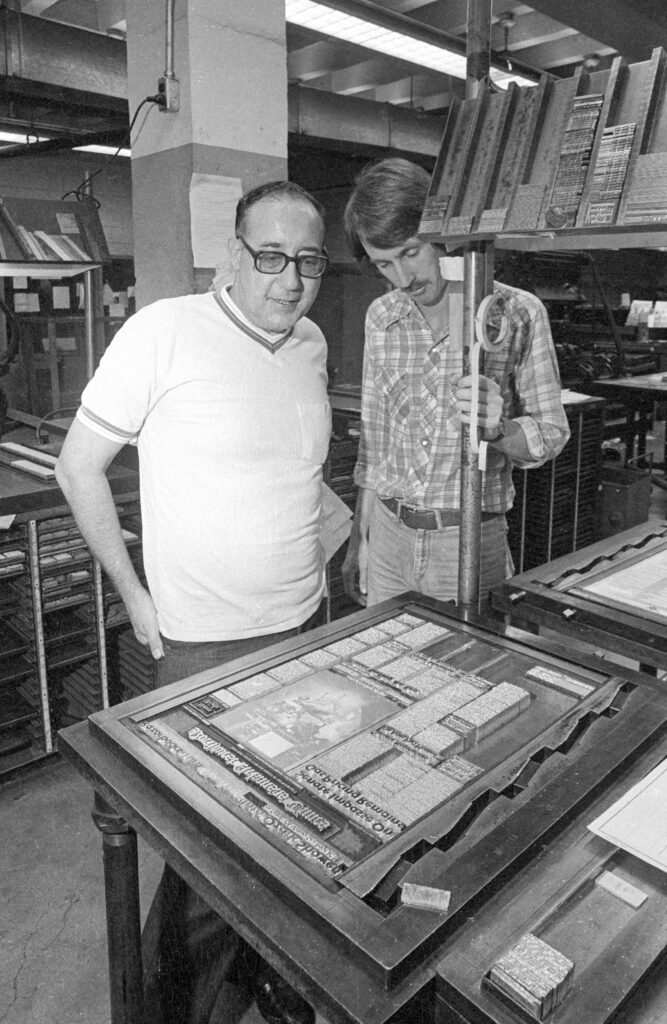
They wouldn’t normally run a proof on interior pages. In my sports desk job I was expected to go back and read the galley upside down and backwards to check for mistakes. The type was backwards and from the other side of the galley where I was allowed the type was upside-down as well. It’s surprising how often I was ‘accidentally’ kicked in the shins to keep me away. But I did learn to read upside down and backwards.
The galleys would eventually end up as curved metal pages that were wrapped onto the press.
When the pressmen assembled the whole thing and the presses cranked up the whole building would shudder. In the newsroom when the floor shook we all knew it was time to grab lunch and get started on tomorrow’s issue.
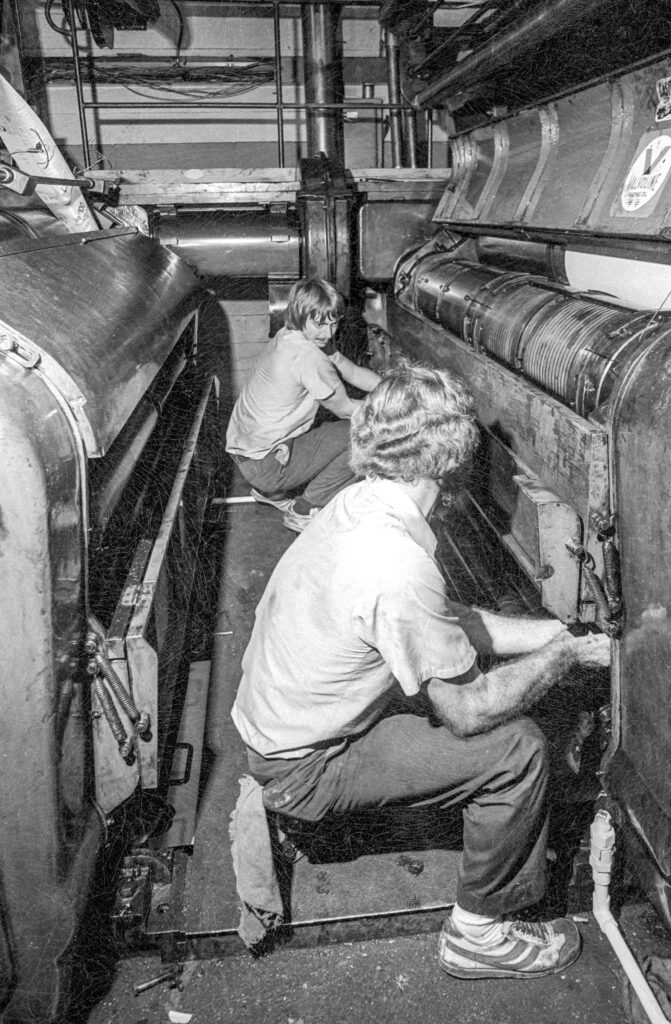
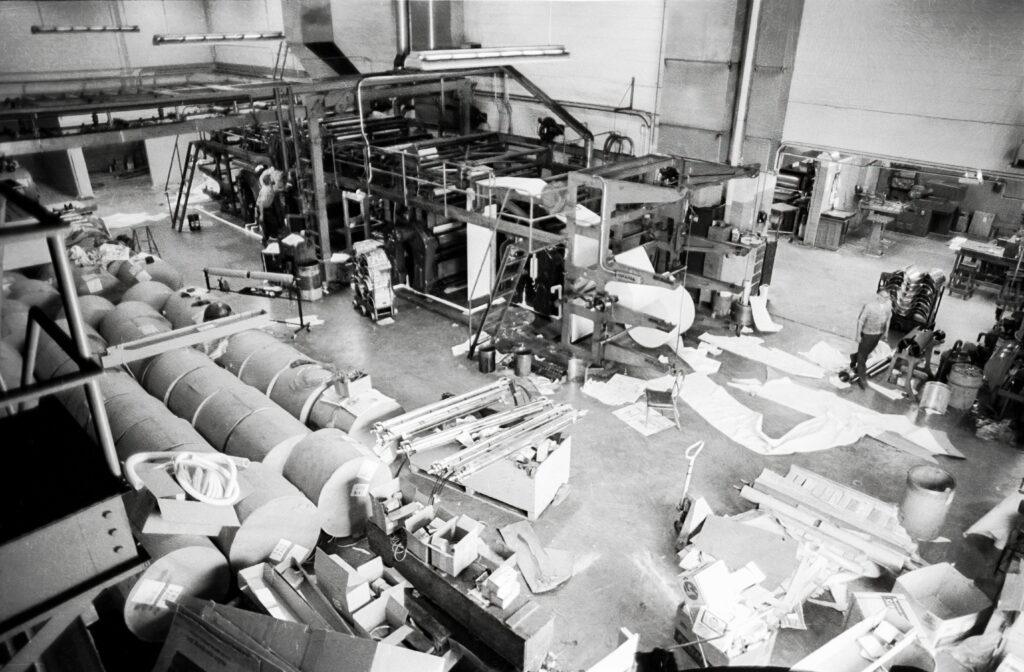
Some of the back shop men were able to transition to the new process. But there were some who just could not make the change and lost their jobs. It was a great early career lesson to me that change was inevitable. To succeed you have to embrace it.
One of the all-time great experiences is to stand at the end of a press watching the papers come off with a photo you shot hours before staring back from page one. I would often go back when I had a front page shot and watch. The press guys at first didn’t love having me hanging about but soon came to enjoy it when they saw how much it meant to me.
I count myself lucky to have experienced and documented that moment at the beginning of my career. And now it’s fun to look back from this end of my career.
If I made mistakes in my descriptions of the process forgive me. It’s been 49 years.
Share this post:

Comments
Matthew Bigwood on Looking back from the other side
Comment posted: 22/02/2026
Comment posted: 22/02/2026
Michael Zwicky-Ross on Looking back from the other side
Comment posted: 22/02/2026
Comment posted: 22/02/2026
Simon Bohrsmann on Looking back from the other side
Comment posted: 22/02/2026
You take me back! Linotype, hot metal, lead, proofs, cigarettes, the vacuum chute thing and so on. I started as a copy boy. My name was "Boy!" and I was 17. Skipped university and competed for a cadetship on the (Sydney Australia) Daily Telegraph. Your images seem otherworldly in the neater, tidier, cold metal future that was just around the corner. But the stories remain the same. I remember the warmth coming off an armful of the first papers from the night's print run. We'd take those up to the subs and every paper was a new thing.
Comment posted: 22/02/2026
Comment posted: 22/02/2026
Walter Reumkens on Looking back from the other side
Comment posted: 22/02/2026
Comment posted: 22/02/2026
Ibraar Hussain on Looking back from the other side
Comment posted: 22/02/2026
And lovely historical captures
Great stuff Art
Comment posted: 22/02/2026
David Pauley on Looking back from the other side
Comment posted: 22/02/2026
Comment posted: 22/02/2026
Dave Powell on Looking back from the other side
Comment posted: 22/02/2026
Comment posted: 22/02/2026
Matthias on Looking back from the other side
Comment posted: 22/02/2026
Comment posted: 22/02/2026
Gary Paudler on Looking back from the other side
Comment posted: 22/02/2026
Comment posted: 22/02/2026
Jukka Reimola on Looking back from the other side
Comment posted: 22/02/2026
Comment posted: 22/02/2026
Bill Brown on Looking back from the other side
Comment posted: 22/02/2026
I worked there 3 1/2 years and during that time I met the photographer Bank Langmore. I quit the lab and went to work for Bank as his personal print finisher. Meisel and Bank set me on my life's path. I'm still print finishing so 2026 marks my 50th anniversary. I have photographs of my lab mates and your photoset brings back so many fond memories of those guys, gals and times. Thanks for giving us a small glimpse into your world with this great set of images. No face recognition or autofocus but great photography was possible! You nailed it.
Comment posted: 22/02/2026
Kevin Saruwatari on Looking back from the other side
Comment posted: 22/02/2026
John F. on Looking back from the other side
Comment posted: 22/02/2026
Thanks for what you shared, I appreciate it.
Comment posted: 22/02/2026
Ben Mackey on Looking back from the other side
Comment posted: 22/02/2026
You mention exacto knives and paste for page layout. That was newly installed state of the art at my high school paper. Forget the make (Compugraphic maybe) but computers replaced linotype monsters like your Mergenthalers about when I arrived. The output was paper equivalents to hot type slugs. Then the knives and paste would come out. Thanks for the trip down memory lane.
Comment posted: 22/02/2026
Martin Siegel on Looking back from the other side
Comment posted: 22/02/2026
A few years back Flo "Doc" Kaps, the man behind the Impossible Project, saved one of the last functioning Linotypes machines of Europe to be used in his Supersense manufacury. So another relation between the Linotype and photography ;)
Tony Warren on Looking back from the other side
Comment posted: 22/02/2026
Comment posted: 22/02/2026
Comment posted: 22/02/2026
Comment posted: 22/02/2026
Comment posted: 22/02/2026
Comment posted: 22/02/2026
Comment posted: 22/02/2026
Gary Smith on Looking back from the other side
Comment posted: 22/02/2026
Nice article and shots Art!
Comment posted: 22/02/2026
Leon Winnert on Looking back from the other side
Comment posted: 23/02/2026
Wonderful!!
Of course on this side of the pond those of us of a certain vintage have rosy memories of the mythology and excitement of the Street of Shame*. Heidelberg being the name synonymous for a print machine. Arthur Christiansen legendary editor of the Daily Express. Victor Blackman renowned staff photographer of the Daily Express who communicated with and inspired many an amateur photographer.
Keeping with the name checking of Press Photographers there is Sir Don McCullen chronicler of the down trodden and many wars. Jane Bown, portraitist, who spent her entire career at the Observer.
All gone now. Gone down river to Wapping. But as we keep noting from high profile court case the Street of Shame’s lack of ethics in certain quarters has relocated there too and are alive and well.
However, whist technology may have changed the means of production and the industry shrunk in size it’s output hasn’t. Its just delivered to us in diverse formats now. There are many, many excellent journalists and photographers doing great work even though you might not personally agree with their outputs.
* Fleet Street.
p.s Sir Don McCullen at 90 yeras of age is till very much alive and well.
Comment posted: 23/02/2026
Zach on Looking back from the other side
Comment posted: 24/02/2026
The pace of technology is brisk and waits for no one! The change from hot type, to cold type, to dedicated word processor software as outlined by Dave Powell's comment, it's a technological shift that many work environments can attest to. Heck, I remember hearing about a fast food joint I worked at getting cameras and sensors and other gizmos for monitoring the food; years prior, we thought the digital timers and thermometers on the fryers were neat!
You've inspired me to continue a personal project of mine in taking photos of places as I knew them and change as it happens
Comment posted: 24/02/2026
Alexander Seidler on Looking back from the other side
Comment posted: 24/02/2026
Geoff Chaplin on Looking back from the other side
Comment posted: 24/02/2026
Very evocative story snd images, thanks.
Comment posted: 24/02/2026
Comment posted: 24/02/2026
Bradley Newman on Looking back from the other side
Comment posted: 24/02/2026
Comment posted: 24/02/2026
Justin on Looking back from the other side
Comment posted: 25/02/2026
It really hits home for me since my dad had a design business in New York City for 50 years starting in the 60's. I grew up hanging out and eventually working in his office. I remember the Compugraphics machines that he used into the 1990s, and the galleys, hot wax, and paste-ups. I eventually started working there and today still work in the print (packaging) industry. Sadly newspapers are almost gone, but printing still lives on in consumer packaging.
Around 1996 I went to Cuba and happened to stumble into a store-front linotype printing facility — still in operation printing daily newspapers! Even then it was such a dinosaur, since desktop publishing had already taken over in the US. The press guys were really excited to show me their machinery and even set lines of lead type for me to take home as souvenirs. I even brought a line of type for my father who had not seen lead type at that point for more than 25 years.
Have you seen ‘Farewell, Etaoin Shrdlu’? It's a documentary from 1978 about the final days of the linotype machines at the New York Times.
https://www.nytimes.com/video/insider/100000004687429/farewell-etaoin-shrdlu.html
Thanks again for a great piece!
Comment posted: 25/02/2026
Neven Jovanovic on Looking back from the other side
Comment posted: 25/02/2026
Comment posted: 25/02/2026
Comment posted: 25/02/2026