

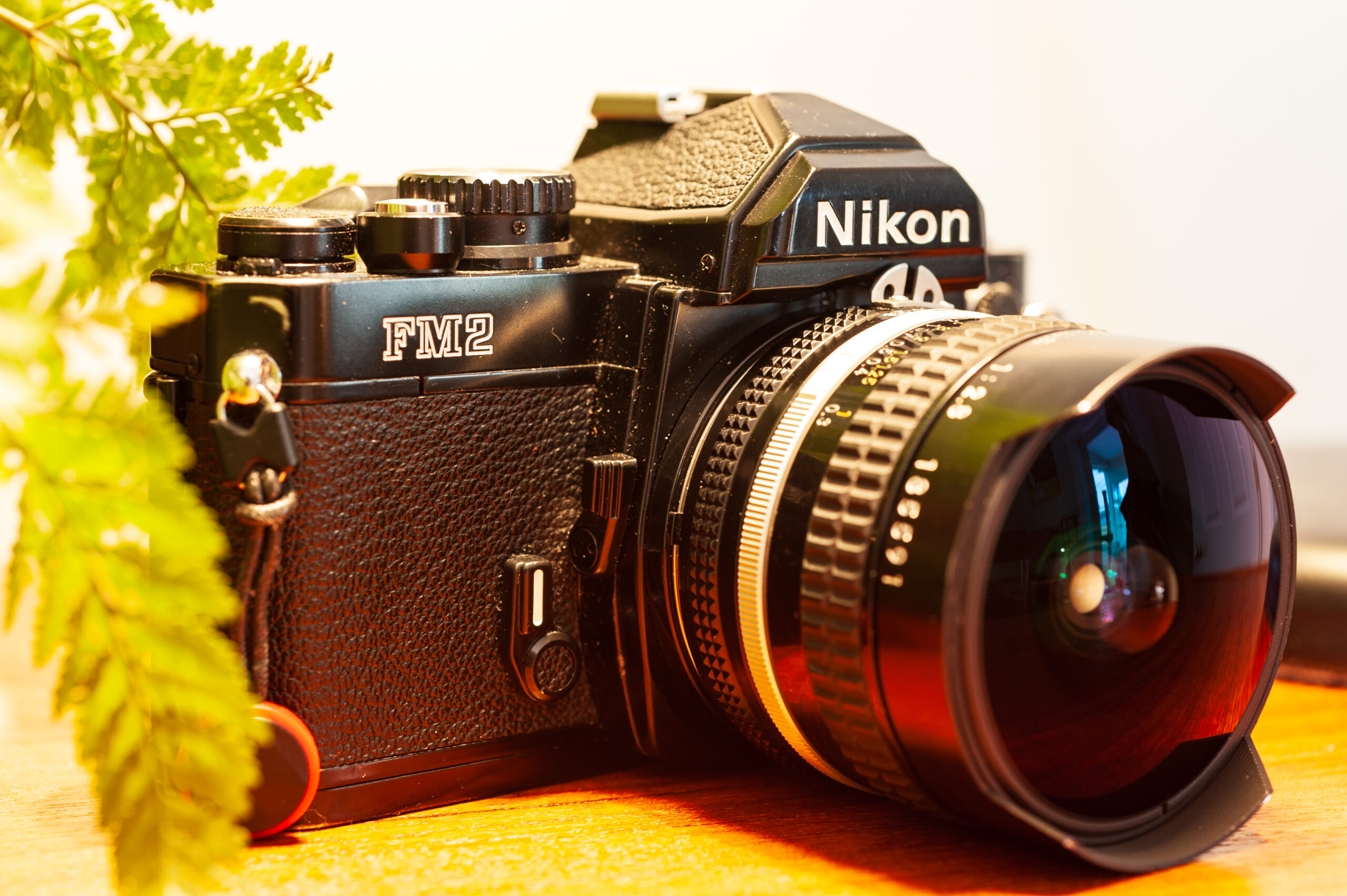
In 2025 I was fortunate enough to travel quite a bit. A Nikon was with me for almost all of those adventures. In March, my girlfriend and I spent a week and a half in Florence, Italy. I brought my trusty Nikon F2S, a Nikkor 28mm f2.8 AIS and a Pre-AI Nikkor-P 105mm f2.5. Fast forward to a May road trip to Montreal, my F2 was again around my neck with the 28mm and a AI’d Nikkor-H 85mm f1.8. In August, a family trip to New Orleans was captured by the F2 and a AI’d Nikkor K 50mm 1.4. Most recently, a return to Montreal coincided with an exciting acquisition, a Nikkor AI-S 16mm f2.8 Fisheye.
The Nikkor fisheye was on my wishlist for quite some time. Andrea Monti’s article from 2024 inspired me to start hunting for one. A few weeks ago I walked into my local camera store, Lezot Cameras in Burlington, Vermont, and a Nikkor AIS 16mm f2.8 fisheye was sitting on the counter alongside a myriad of recently-inspected lenses awaiting the display case. After handling the lens, mounting it on my camera and taking a few test shots in the lobby, I reluctantly gave it back and left the shop. Why didn’t I buy it on the spot? I wanted to develop the few shots and make sure the lens lived up to my expectations. Unsurprisingly, it did. I returned to Lezot a few days later for the lens. This copy was in pristine condition and accompanied by the full gamut of rear-mounted filters, often lost over the years or thrown away.
Twenty four hours later, my girlfriend and I were en route to Montreal for a weekend of dumplings, mocktails, pastries and plants. The pictures below were all taken with a Nikon FM2N using the Nikkor 16mm f2.8 AI-S fisheye. For this trip I shot TMAX 400 developed in HC110b and scanned with a Nikon D700 and a Nikon 55mm macro lens.
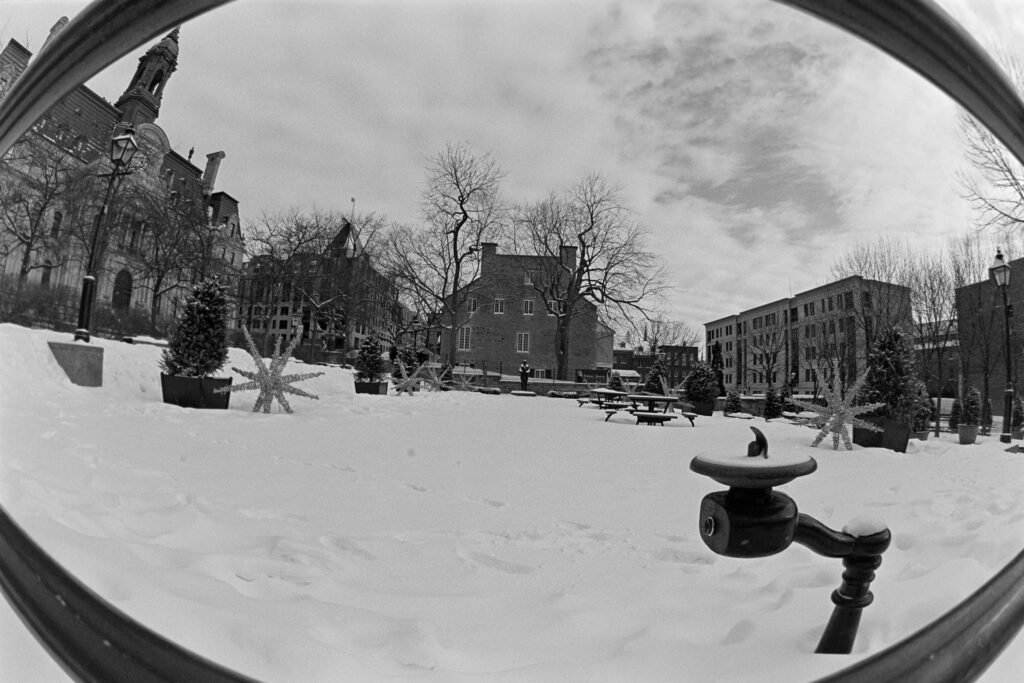
The distortion of the fisheye can make even a relatively mundane scene interesting. I found myself searching for scenes with symmetry, like the oversized ornaments in the periphery of this shot and the complimentary trees framing the building in the center of the image.
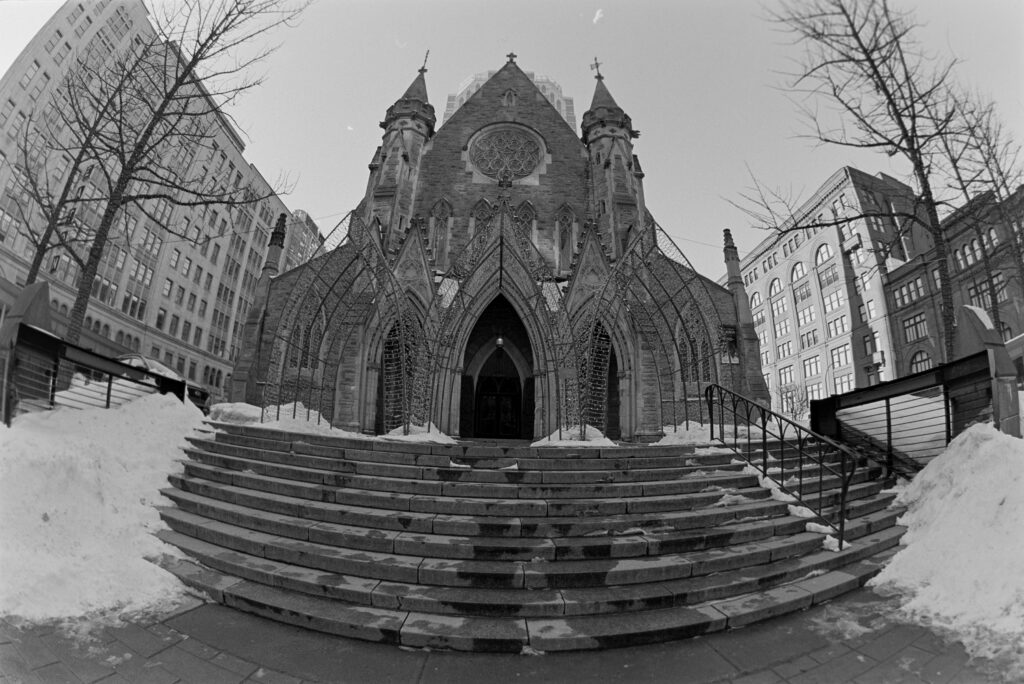
Another example of symmetry in composition and the character of the lens. The decorative arches in front of the Cathédrale appear to loom over the street in a way they didn’t in-person.
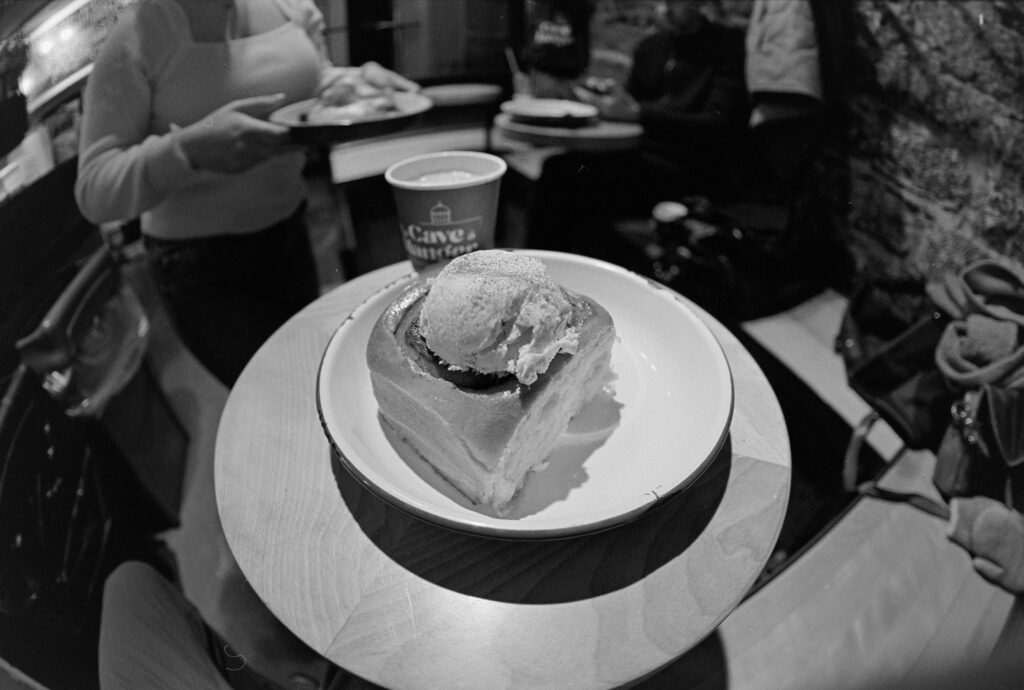
There’s definitely a learning curve to using this lens. I believe this photo was shot wide open at f2.8.
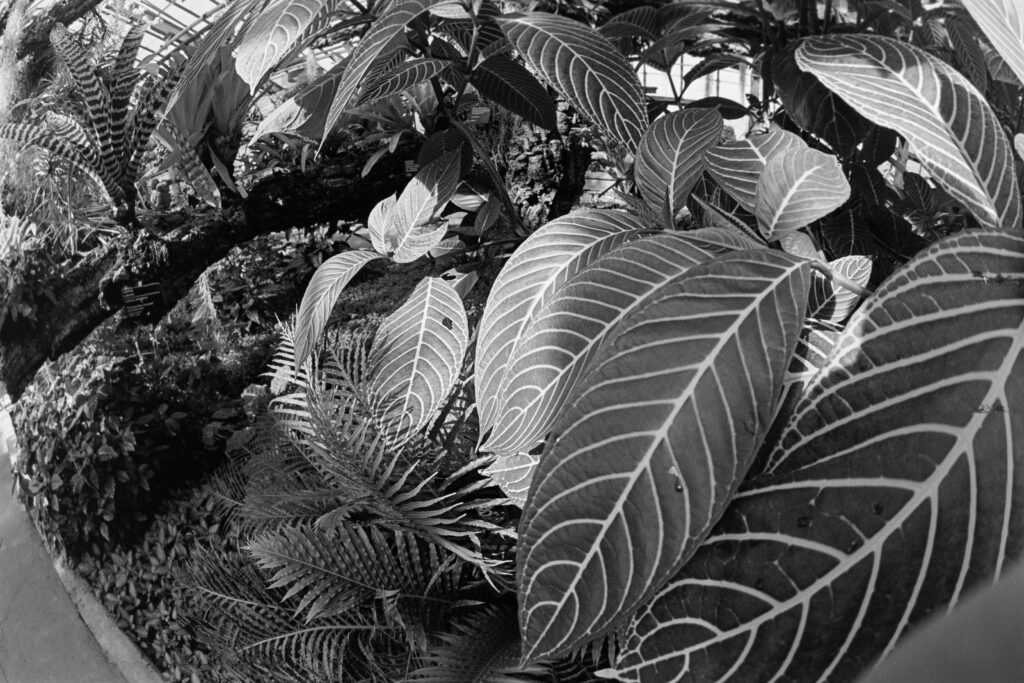
The Botanical Gardens proved to be a wonderful testing environment for this lens. I shot a full roll of TMAX here before my girlfriend loaded up a roll of Ultramax and proclaimed the fisheye hers to use for the afternoon.
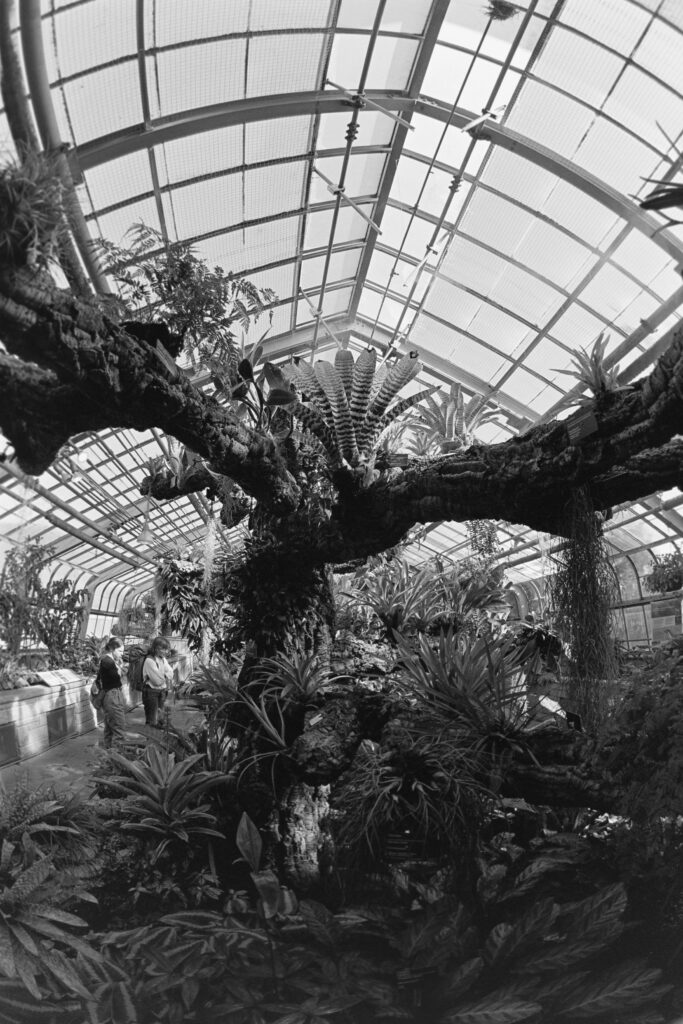
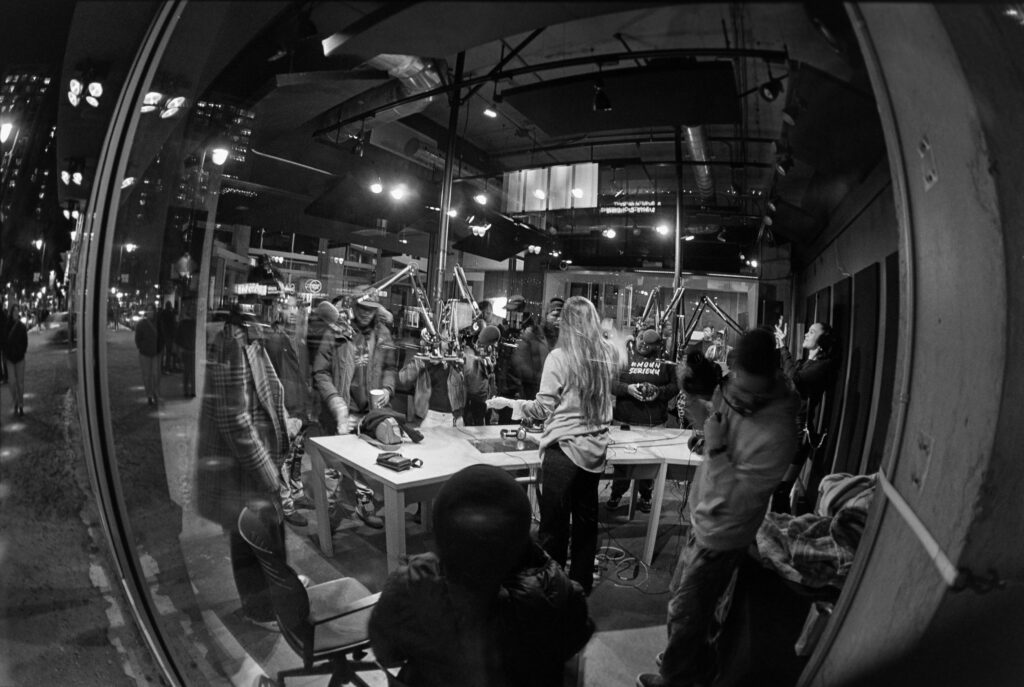
In addition to the fisheye, I brought a Nikkor 50mm that I expected to use for most of the weekend. I didn’t use it once. I had so much fun shooting the fisheye that I really never considered swapping lenses. The lens is a mountain of fun to use, although the shooting experience is not without its share of quirks. First, it’s super easy to capture your body in the image. My right pointer finger ended up in the bottom right corner of three of the images in this article. My left elbow ended up in another five or six images from the weekend. The toes of my boots were present in a few shots too. This isn’t necessarily a fault in the lens design, just something to be cognizant of when composing! Second, there is definitely a decline in sharpness as you get farther from the center of the image. Given the realistic use case for this lens I don’t believe this is a huge issue. I really only noticed the softening in certain landscape shots anyway. In the case of my images, a certain amount of softness in the edges can likely be attributed to my negatives not being perfectly flat when scanned. Lastly, don’t lose the lens cap! I’ve read online that they’re expensive to replace. Considering there’s no filter ring on the front of this lens to protect the front element, I’d recommend just leaving the lens cap on until you’re ready to shoot. Unless you’re shooting in a super fast-paced environment, I doubt this’ll be much of an issue.
After running a few rolls through this lens, I can confidently say it won’t be leaving my collection any time soon. Do you shoot fisheye lenses? I’d love to hear your opinions and experiences.
Share this post:


Comments
jfbonnin on Nikon FM2N & Nikkor 16mm – A Fisheye in French Canada
Comment posted: 05/04/2026
David Pauley on Nikon FM2N & Nikkor 16mm – A Fisheye in French Canada
Comment posted: 05/04/2026
Danilo Leonardi on Nikon FM2N & Nikkor 16mm – A Fisheye in French Canada
Comment posted: 05/04/2026
Comment posted: 05/04/2026
Thomas Wolstenholme on Nikon FM2N & Nikkor 16mm – A Fisheye in French Canada
Comment posted: 05/04/2026
Comment posted: 05/04/2026
Comment posted: 05/04/2026
Andrea Monti on Nikon FM2N & Nikkor 16mm – A Fisheye in French Canada
Comment posted: 05/04/2026
I'm glad you found inspiration in my poor use of this lens! It looks like you're getting the most out of it!
Benjamin Chan on Nikon FM2N & Nikkor 16mm – A Fisheye in French Canada
Comment posted: 05/04/2026
Gary Smith on Nikon FM2N & Nikkor 16mm – A Fisheye in French Canada
Comment posted: 05/04/2026
Neil Lloyd on Nikon FM2N & Nikkor 16mm – A Fisheye in French Canada
Comment posted: 08/04/2026
Omar Tibi on Nikon FM2N & Nikkor 16mm – A Fisheye in French Canada
Comment posted: 09/04/2026