

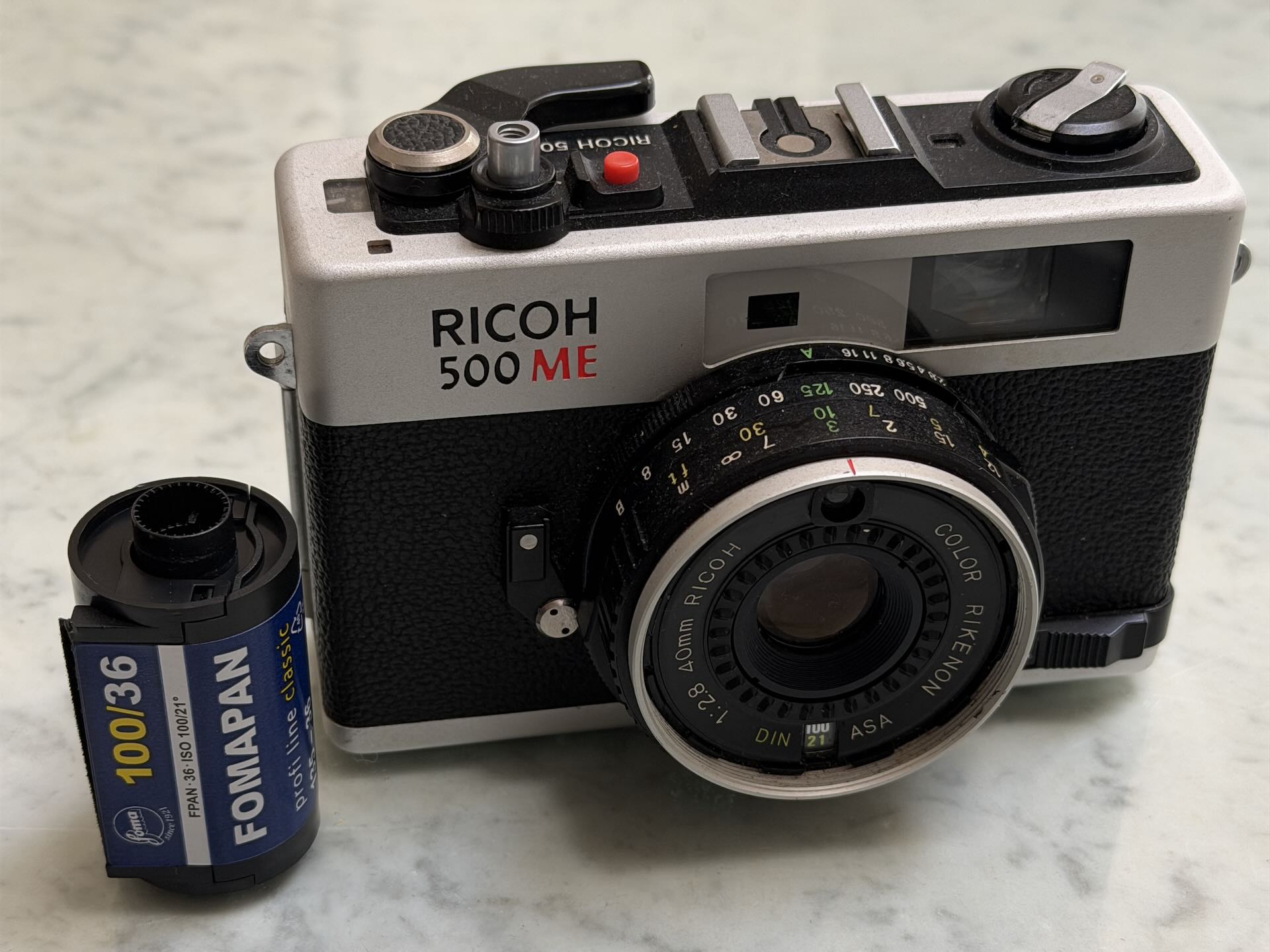
I took these photographs at two very different moments. The first were made on the Norfolk coast. I was very unwell at the time. The trip was meant to get me out of the house, to shift the mood, to interrupt the routine of hospitals and waiting. I carried the Ricoh 500 ME, without much intention beyond getting out of the house.
Then the camera sat. For about eighteen months. When I picked it up again, the battery had corroded inside. The camera meter was effectively dead. I cleaned it out with vinegar, put in a hearing aid battery, and it came back to life. I finished the roll close to home, including a double exposure in a graveyard. It felt appropriate. I was still here.
This is a small rangefinder camera from the early 1970s. Compact, mechanical, modest. A 40mm Rikenon lens, a simple meter, and a reputation for doing one thing particularly well – letting you shoot without overthinking. That includes a handy multi-exposure switch. Hence the name “ME.” It’s not a precision instrument. The film is Fomapan 100. Cheap, widely available, and often dismissed for its grain and inconsistency. That’s precisely why I like it.
These five frames are less about the places they depict and more about what the film is doing to them.
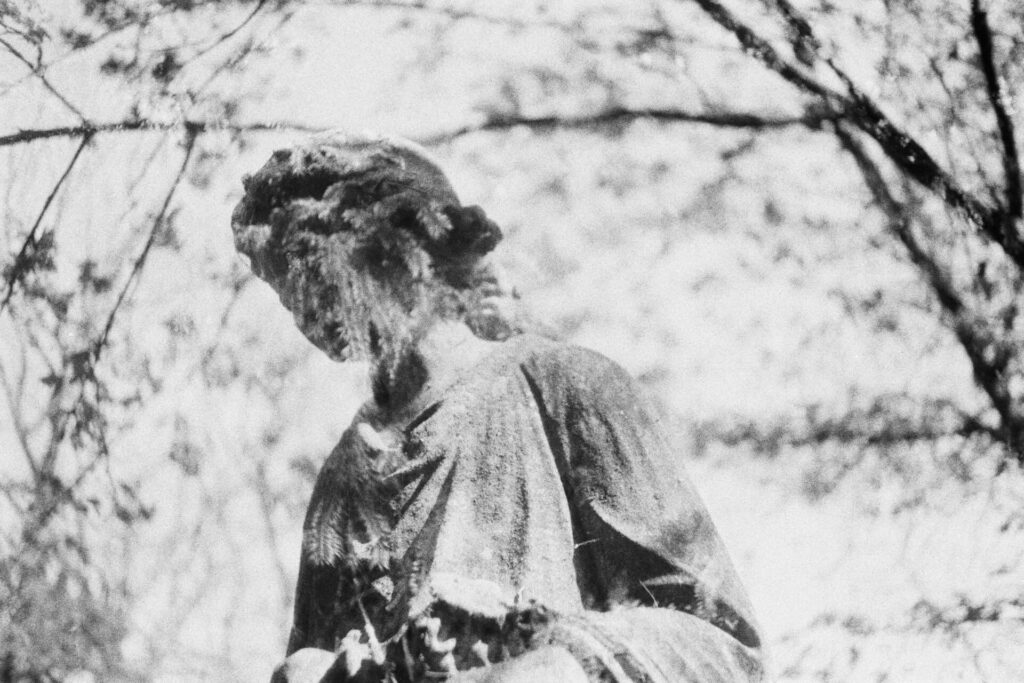
Almost the final frame on the roll. A statue and branches layered into each other. The grain sits across both exposures and binds them together. Without it, the images would feel separate. With it, they kind of morph into a single surface. It turns a technical trick into something more cohesive and less controlled. In digital photography, a double exposure often looks like two transparent layers in Photoshop. Here, because the grain structure is consistent across the entire frame regardless of the light levels of the two exposures, it creates a “material unity.” The statue doesn’t look like it’s on the branches; they look like they are made of the same crumbling stone.
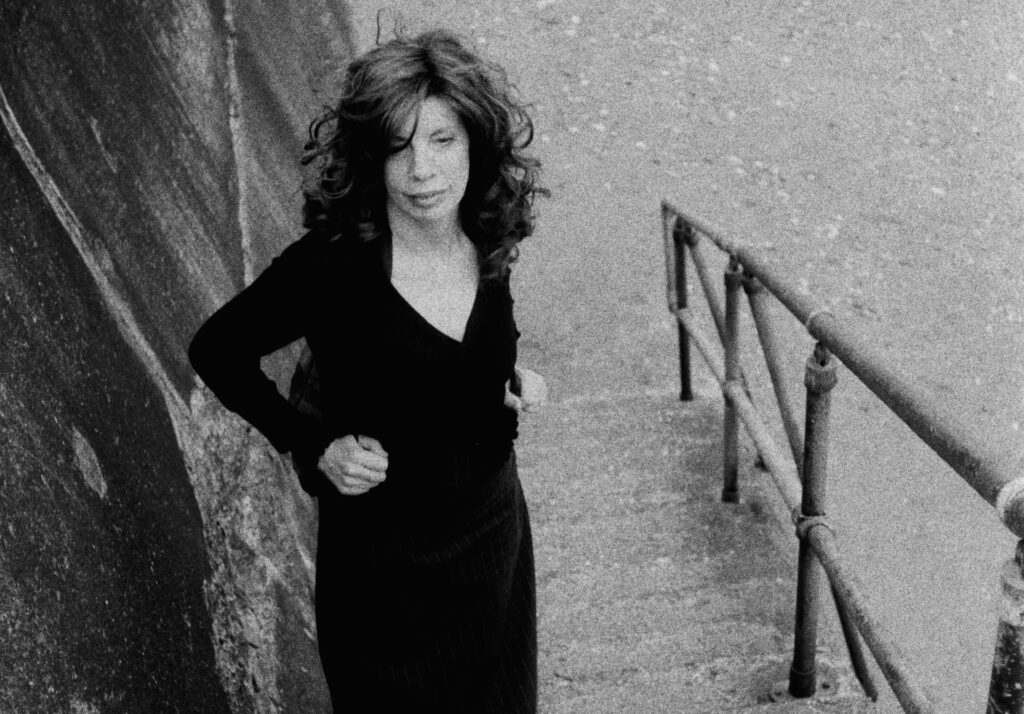
A simple portrait, but the grain interferes with clarity. It holds on the clothing, on the structure of the scene, but begins to break down the face. Not enough to lose it, but enough to resist clean reading. Grain here introduces distance. And my wife says the bags under her eyes are gone…so good job!
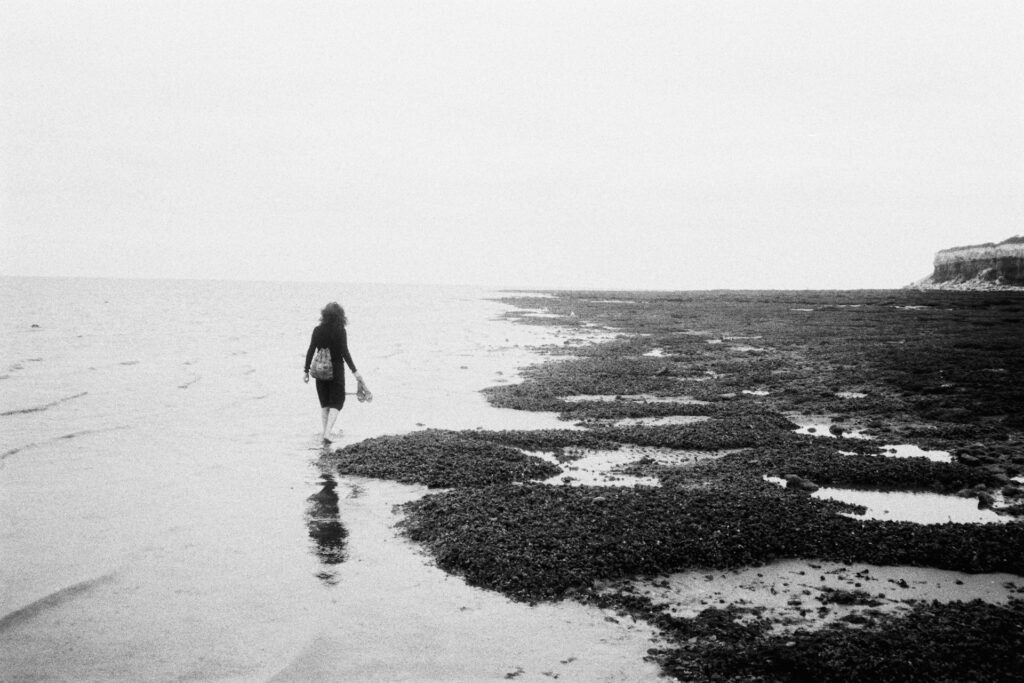 My wife moving along the edge between sea and rock. The grain softens the sky and water, keeping them from falling into a flat, empty white. It doesn’t dominate the image, but it stops the space from feeling blank or digital. The photograph is about distance and boundary, and the grain just holds that space together.
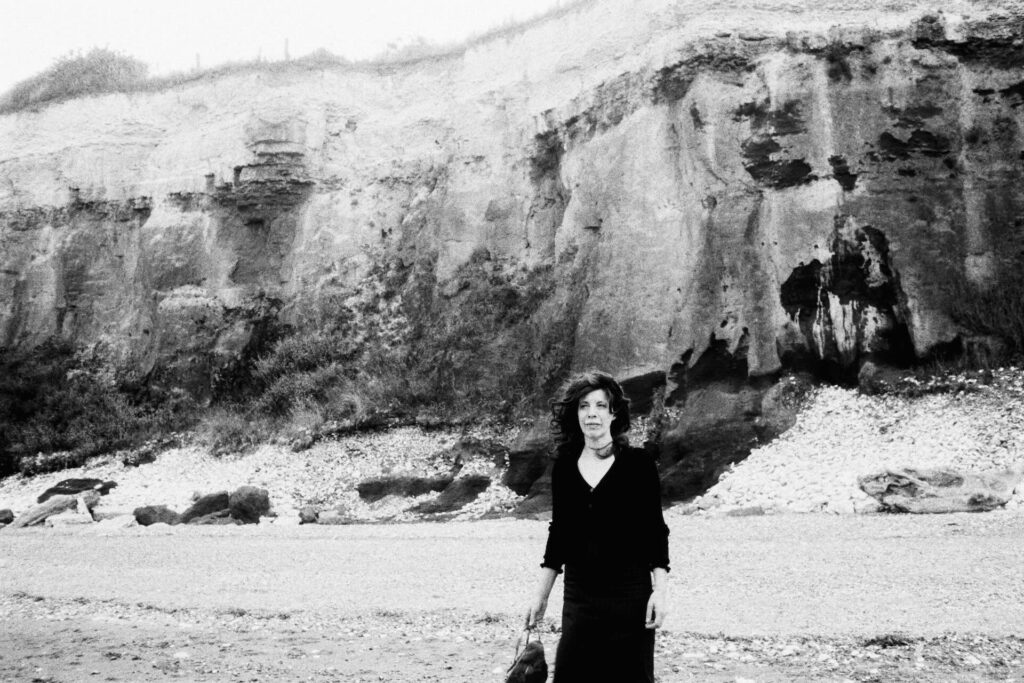 Here the grain does something more aggressive. It breaks the cliff face into texture, into something closer to a drawing or a print than a photograph. Detail is lost, but something else is gained. The background becomes unstable, expressive. It is almost as if it has been painted.
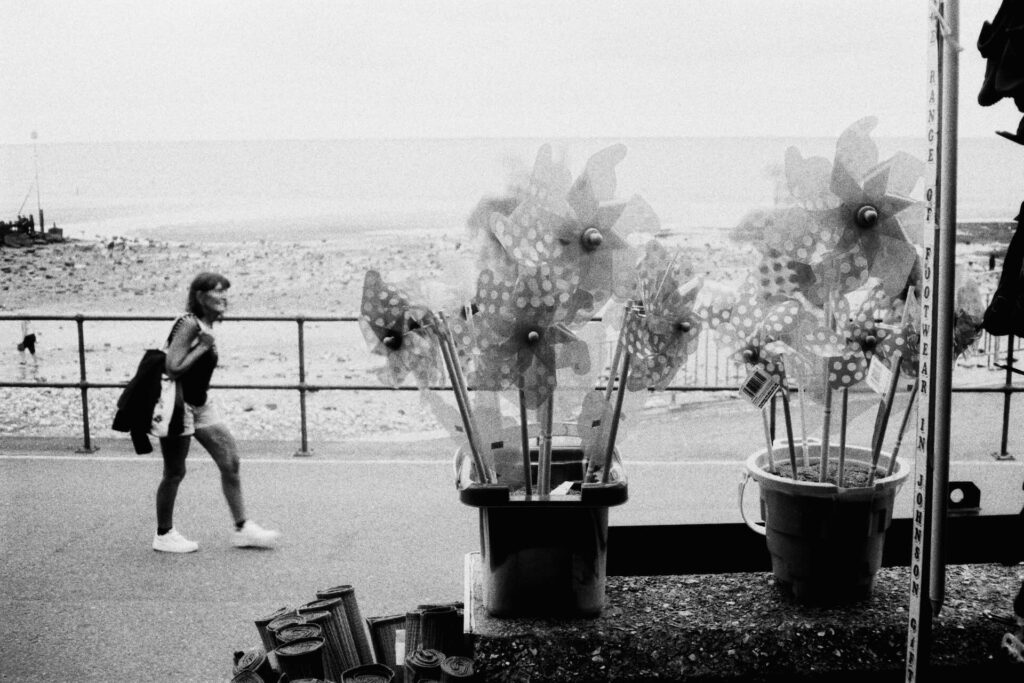 A seaside stall. Plastic pinwheels, a passing figure, a familiar scene. This is where grain becomes interference. It sits on top of motion and on top of transparency. It disrupts what should be light and decorative. The pinwheels begin to feel ghosted. The image slips away from straightforward documentation.
What Grain Does
Grain is often treated as a flaw. Something to minimise, to correct, to avoid. But I feel that it can bind images together. It interrupts clarity. It adds weight to empty space. It transforms surfaces. It interferes with movement. It shifts the emotional register of what you are looking at.
These photographs were not made carefully. The roll was interrupted, neglected, and almost lost. The camera itself nearly failed. The photographer also went through the mill. The film is imperfect. That is the point.
Grain is not just a characteristic of the film. It is part of the image-making process. It changes what the photograph becomes. In a world of 100-megapixel sensors and AI sharpening that removes every hint of noise, these images feel a bit more real, at least to me. People shouldn’t be afraid of using it.
Share this post:

Comments
Charles Young on 5 Frames with the Ricoh 500 ME – What Grain Does.
Comment posted: 19/05/2026
Comment posted: 19/05/2026