

There have been more than a few interesting posts over the last couple of months exploring various approaches to shooting in a panoramic format, including Simon Foale’s piece “XPan on the Cheap” and Ellie Kim’s piece on her Sasquatch 617 home built camera, but I think the story that rekindled my interest in revisiting panoramic still photography was Christian Fiedler’s post, “Revolution on the Green” recounting a painstaking but ultimately successful and very impressive recreation of the ultra wide Cirkut Camera format, including reproducing a photograph from 1910.
Coming into still photography from a cinema background, I’m not unfamiliar with panoramic aspect ratios, and have enjoyed seeing the work of still photographers who are good at shooting ‘widescreen’ stills, including notably Jeff Bridges who has famously been shooting wonderful behind the scenes photos on his Widelux for many years. Every now and then, if I had a photo that had interesting details that were all found in the middle 1/3rd of the frame, I’d try a panoramic crop, like this group of Canadian Hell’s Angels I bumped into at one of the wilderness parks in Kananaskis, near Calgary in July, 2024 two months after getting my vintage all manual cameras.
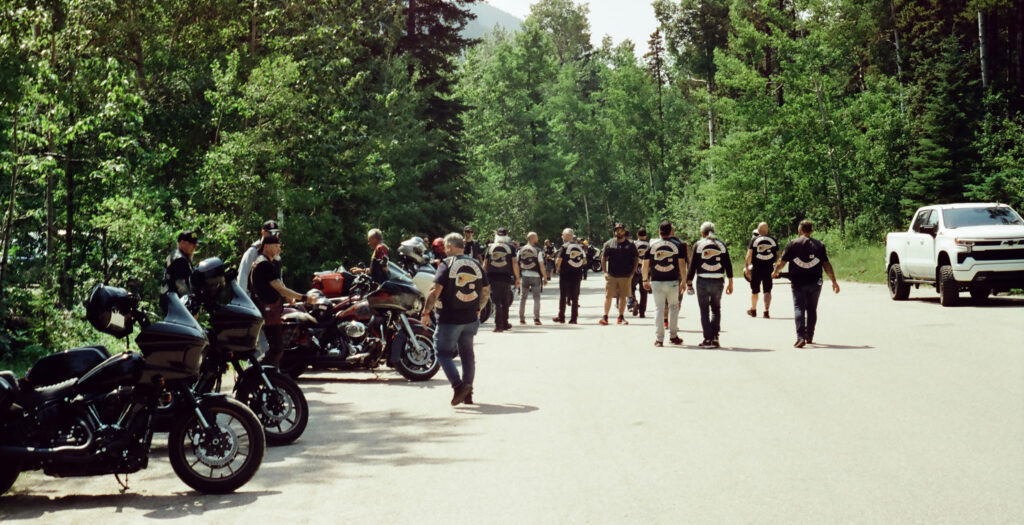
This would be the real ‘poor man’s pano’ approach, simply cropping a 35mm image -certainly an option, but limited in terms of the resolution based on the negative size compared to other panoramic formats like the Xpan or Widelux that shoot across multiple frames. At one point a few months after I had started shooting film fairly seriously, the camera service tech I was working with from Calgary offered to sell me a Hasselblad XPan kit with two lenses, all in excellent condition. It was tempting, and I had lusted after the XPan or Fujifilm TX-1 after reading about them in online camera forums and seeing the cool shots that good panoramic shooters were making with them. But after doing my due diligence R&D, I declined the offer, mainly because of the eventuality/certainty that one of the electronic components would someday fail and the camera would become a very expensive paperweight.
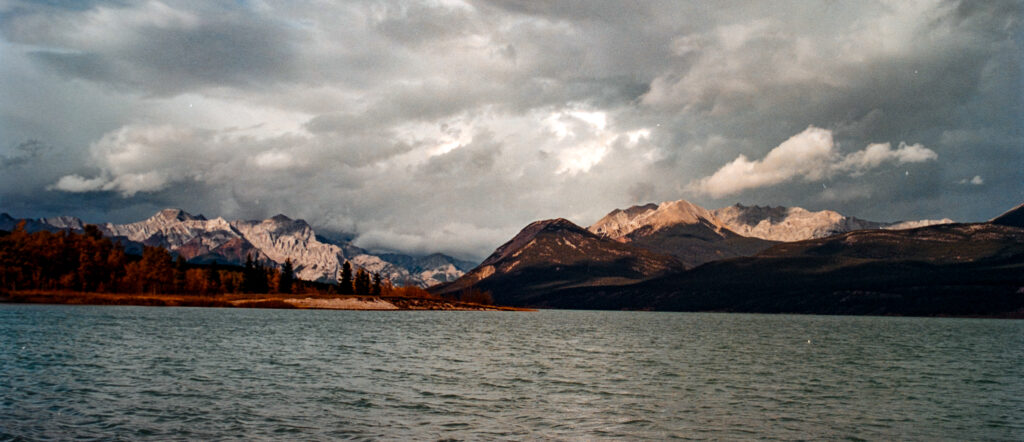
Still intrigued to try my hand at shooting pano, as a workaround, I bought a 3-D printed XPan mask for my Hasselblad 500CM’s waist level viewfinder. My theory was to try shooting my low tech version of panoramic photos on 120 film by composing widescreen images using the mask. My feeling was that a 56mm wide negative on a single frame of 120 was ‘close enough for rock and roll’ to the 65mm width of an Xpan negative on two frames of 35mm. This was my first attempt, shot in late September, 2024 during Larch Season on Lake Abraham, a glacial lake deep in the wilderness north of Calgary and east of Lake Louise.
This is how the image looked cropped into a widescreen format. Nice dramatic clouds, maybe a little softer than it should be on the ‘blad, maybe due to motion blur because of the mirror slap.
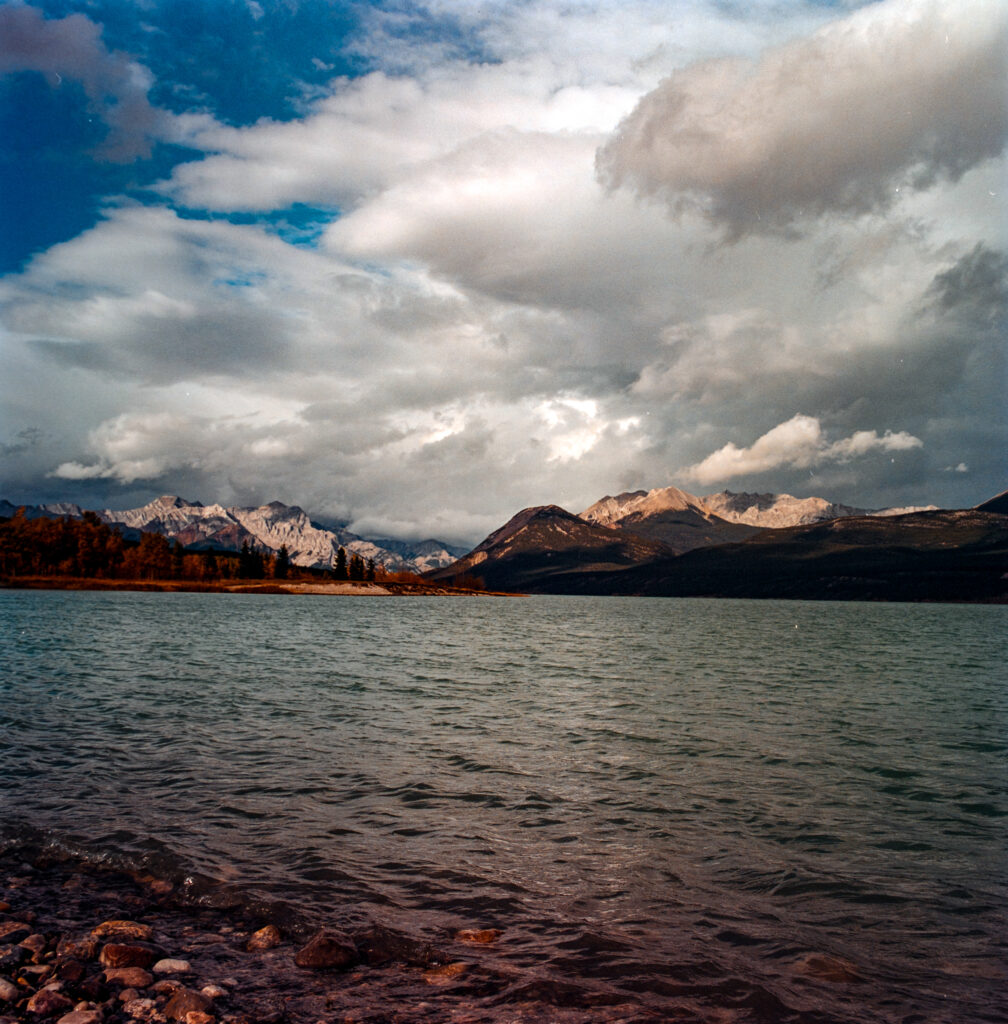
And this is the full frame image without cropping. Looking back now, I think I like the full frame image better with the dramatic clouds, the gorgeous deep blue sky in the upper left and the foreground lakebed gravel on the lower left. Which brings up one bonus of shooting my panoramic frames on the Hasselblad 500CM — I might end up with a better shot than I planned when I see the full frame!
On that note, shooting a wider format on a full frame negative is a technique I am familiar with from cinema, where the most popular theatrical film aspect ratio of 1.85:1 was most commonly shot on a full 1.37:1 Academy frame with frame lines in the viewfinder to guide the Camera Operator, and then ‘masked’ in the projector to a 1:85 frame for exhibition. Occasionally high end DoP’s would advocate to ‘hard matte’ the negative so that no-one could reframe from the image that had been photographed. Studios tended to veto the request to retain maximum control.
Eventually I picked up an older 645 back to reduce the amount of wasted negative when shooting panoramic shots. With the 645 back I could get 16 frames per roll of 120 – not far behind the 20-21 frames you get on a 36 exposure roll of 35mm film on the Xpan, with the added flexibility of ‘code’ switching any time I felt like shooting a full 645 frame, or the occasional unexpected bonus where the full frame was better than the pano frame. I guess you can also ‘code switch’ on the Xpan to shoot a traditional 35mm negative, but then you’re no longer shooting a medium format image. While anything with that distinctively elegant Scandi Hasselblad typeface on it can’t be called ‘cheap’ the total price of the mask and the filmback was in the ballpark of $250 US, a tiny fraction of the cost of an XPan camera with one or more lenses. And since I’d gotten my Hasselblad as an incredibly generous gift, maybe it really was on the cheap side, at least for me.
I was pretty happy with my relatively inexpensive workaround, but once I tried a few landscapes that way, the Xpan mask ended up in a pocket of the ‘extra gear’ bag and didn’t come out again until I read the Cirkut Camera piece. I liked having the 645 back and composing in 645 from time to time, but I really wasn’t feeling like the panoramic format spoke to me. Especially after coming back to New York and shifting my emphasis from landscape to street photography in general, and to portraits in particular.
Then in early March when the weather was making it difficult to do the kind of street shooting I’ve been focusing on, Christian’s Cirkut Camera post came out and I decided to give the old Xpan Mask another go after a giant dump of 16 inches of snow in early March, venturing out as far as my back yard.

Here’s an iphone shot of my Hasselblad ‘pano’ set up with the XPan mask and the 645 back when I was making that shot of the Adirondack Chairs.
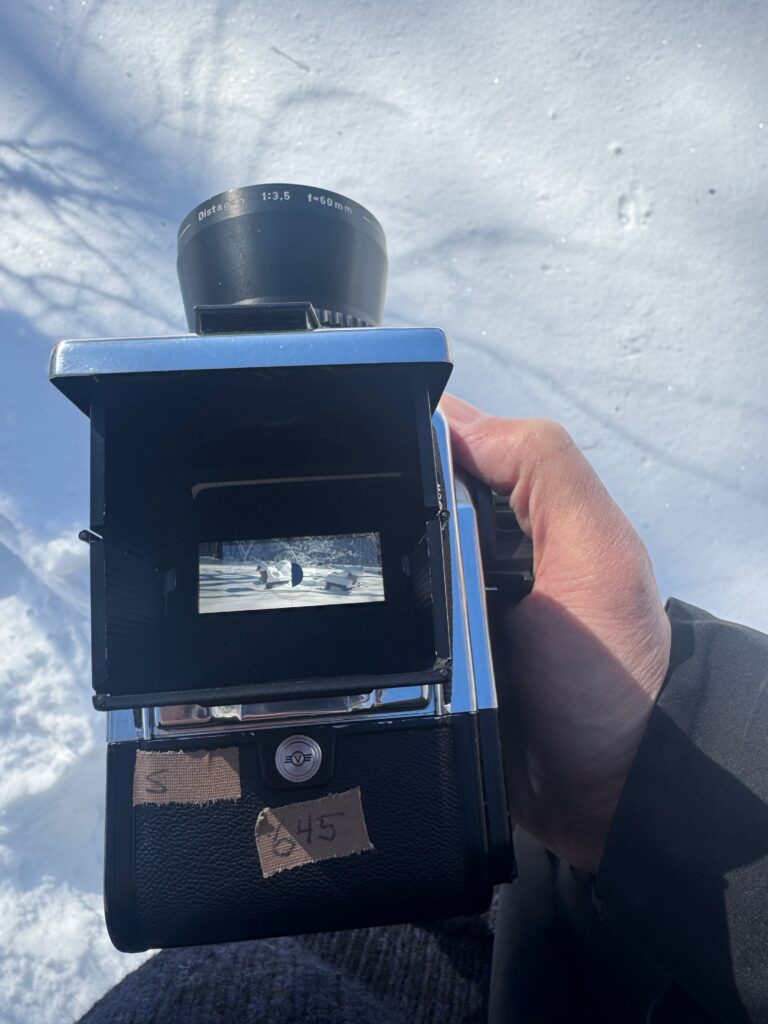
Again, based on my cinematic background, I have cropped my pano images to 2.35:1 rather than matching the Xpan’s slightly wider 2.7:1. I think I find that slightly ‘taller’ frame a little more pleasing, perhaps from familiarity from watching films over many years. I’ve worked on a couple of feature films that were widescreen using Anamorphic lenses by Panavision, which are designed to compress the image onto the 35mm negative, and then project the film with corresponding lenses that stretch it to the widescreen ratio, which was the dominant approach for shooting widescreen film in the last few decades of the 20th century. Another older technique that has been recently revived for films like “The Brutalist” is Vistavision, an earlier widescreen technology developed in the 1950’s to compete with television, which achieves its widescreen image by turning the 35mm negative sideways and shooting on conventional “spherical” lenses on a wider horizontal frame — pretty much the same technique as the Xpan, but on a cinema camera. (One of Oscar Barnack’s decisions when creating the early Leica cameras that were designed to shoot on respooled cinema film was to turn the film sideways to get a larger negative on still film.)
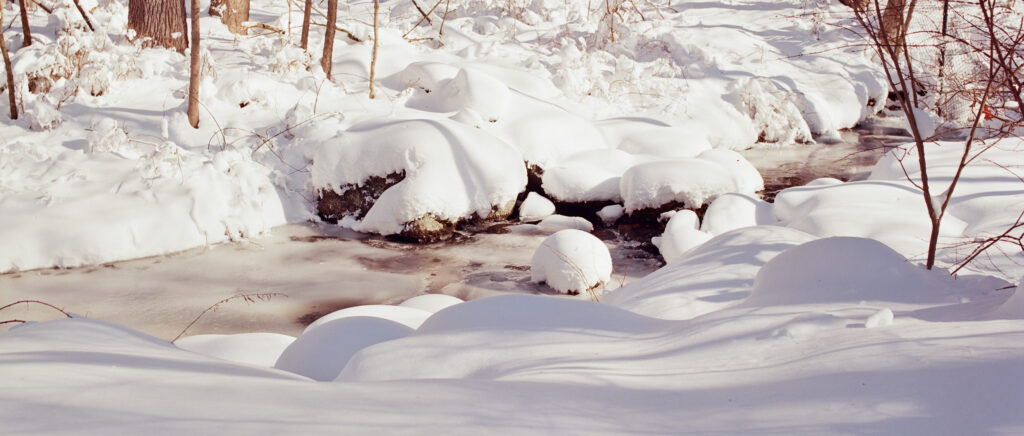
These backyard shots were interesting, and while nothing special, I do like the depth of detail I get with a medium format negative, which feels much richer than cropping a standard 35mm negative to achieve a similar composition at the cost of lower resolution.
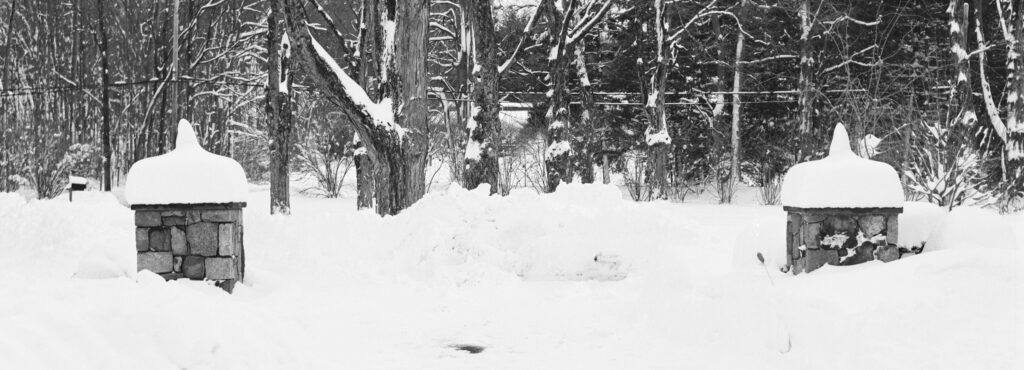
I shot a roll of color and a roll of b&w and enjoyed the results; and it was something to do on those “snow days”. But I think that XPan mask may have gone back in the ‘extra gear bag’ for good if Simon Foale’s piece hadn’t come out and got me thinking about trying out the technique again on my spring trip to Iceland where I felt like there would be some great opportunities for wide horizontal frame, better than anything my back yard had to offer.
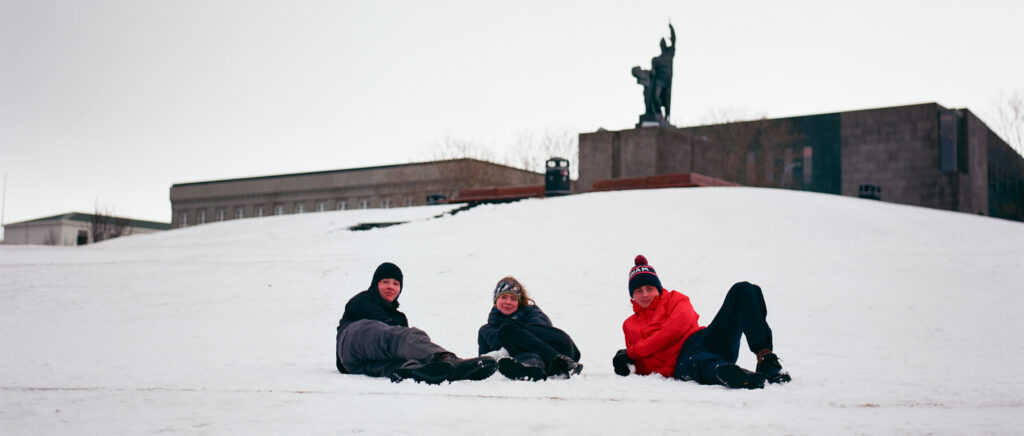
While I packed the mask in my actual camera bag for the trip, once I was out in the icy field I decided I didn’t really like shooting with the mask. It was a bit of a time suck to put it in and take it out, requiring removing the film back and the waist level or prism viewfinder and then putting them back for switching formats, not to mention taking my gloves off in freezing weather whenever it was time to do the switch. If I wanted a pano image, all I really had to do was compose for widescreen in the middle 1/3rd of the viewfinder whenever I saw an image where widescreen looked like the most interesting framing, like this three shot of some UK students enjoying their spring break in Reykjavik.
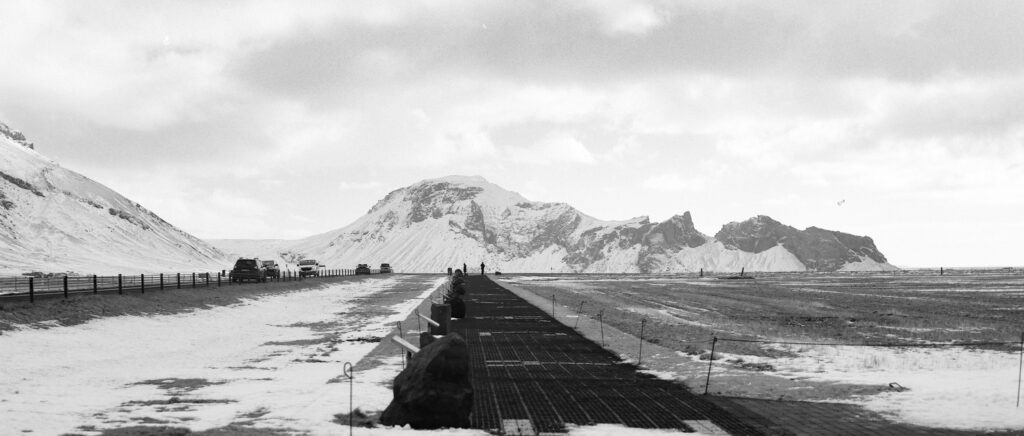
Or this scenic vista on the ring road on Iceland’s south coast.
Or this small waterfall on the hills above our hotel.
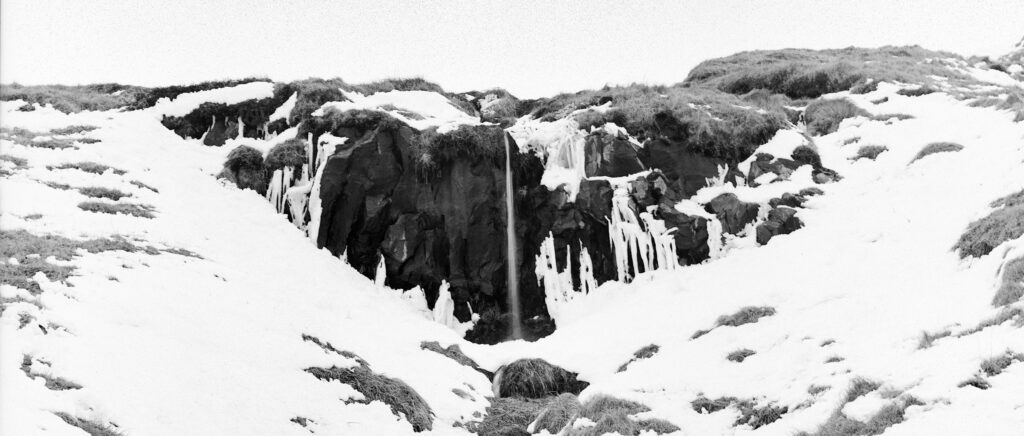
I like some of these images very much, and it was fun to frame for widescreen when I was at a distance where all of the most interesting elements of a shot were in the middle section of the frame horizontally.
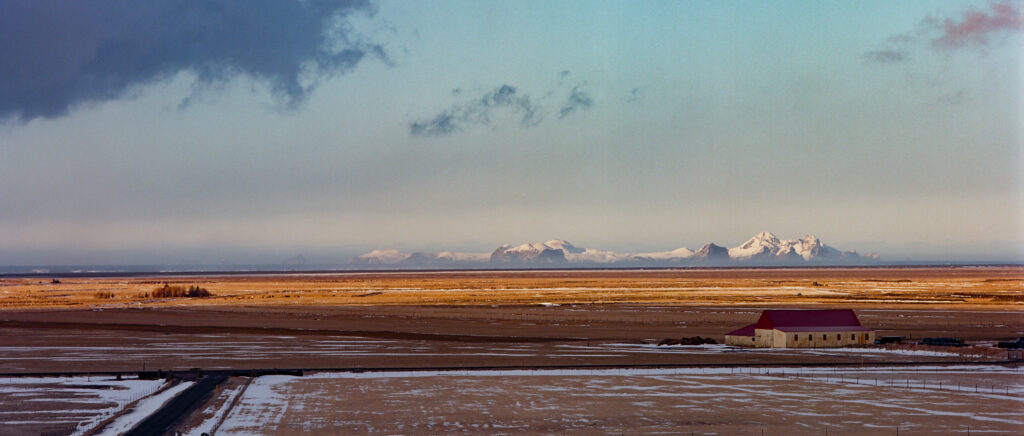
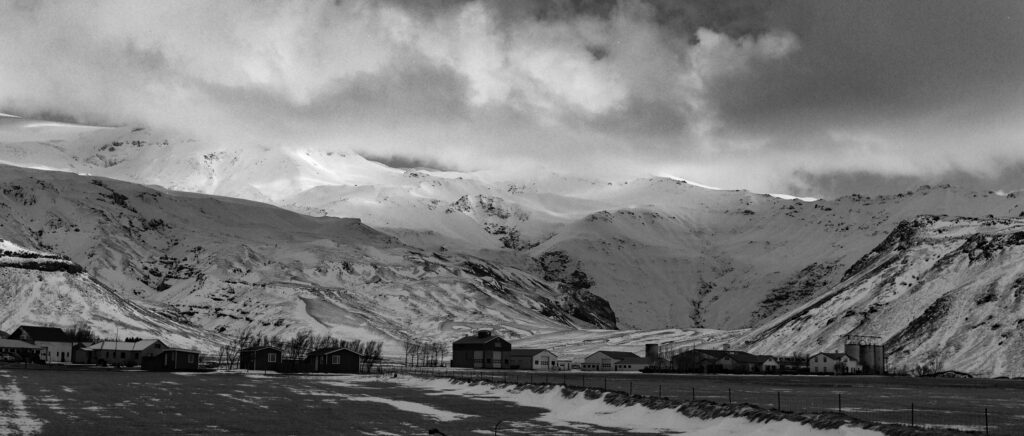
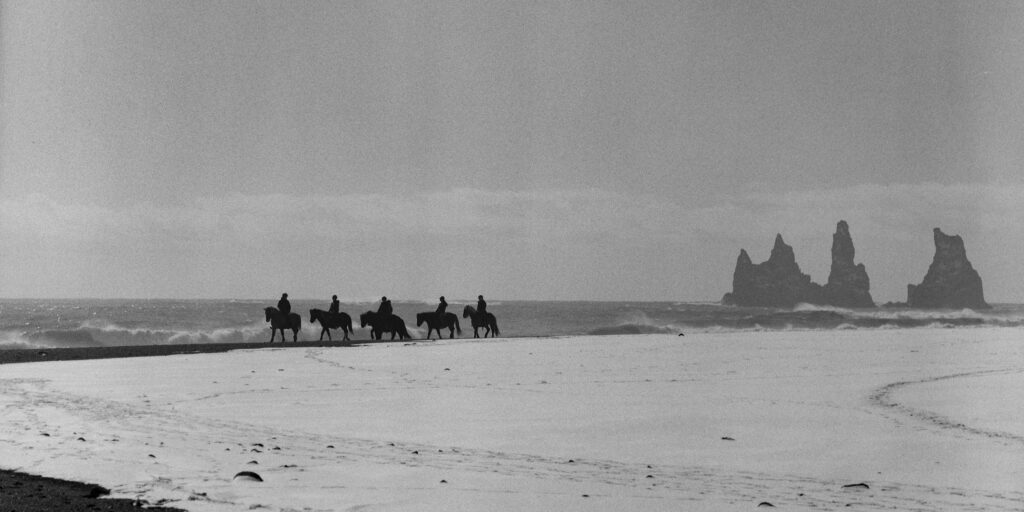
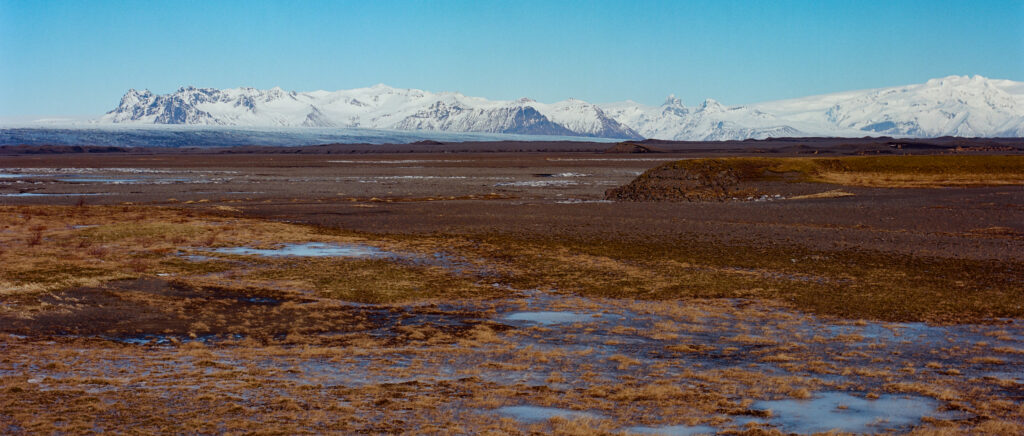
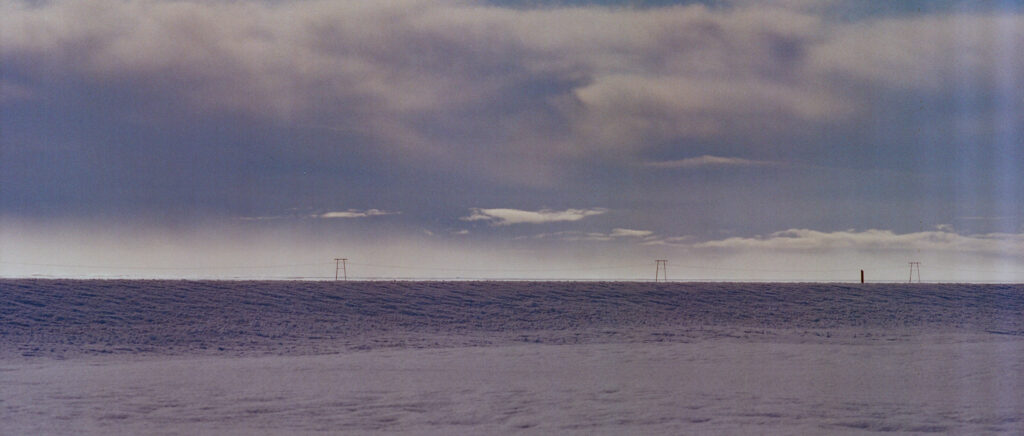
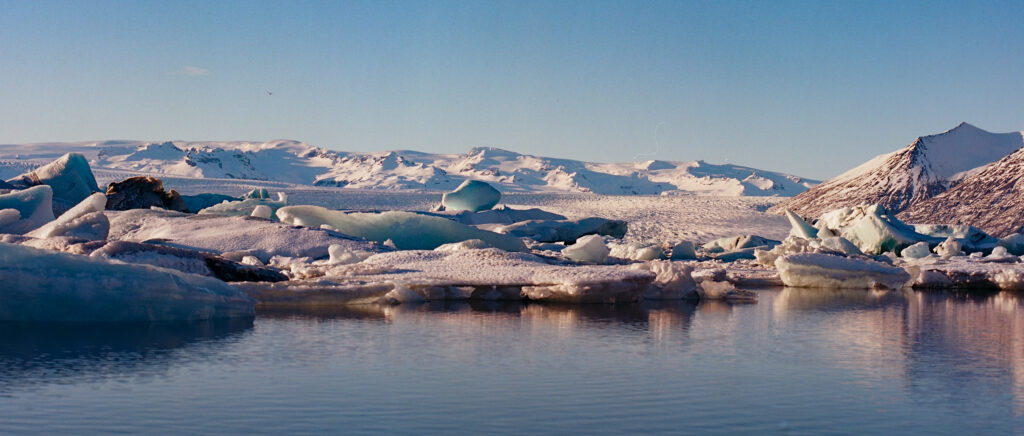
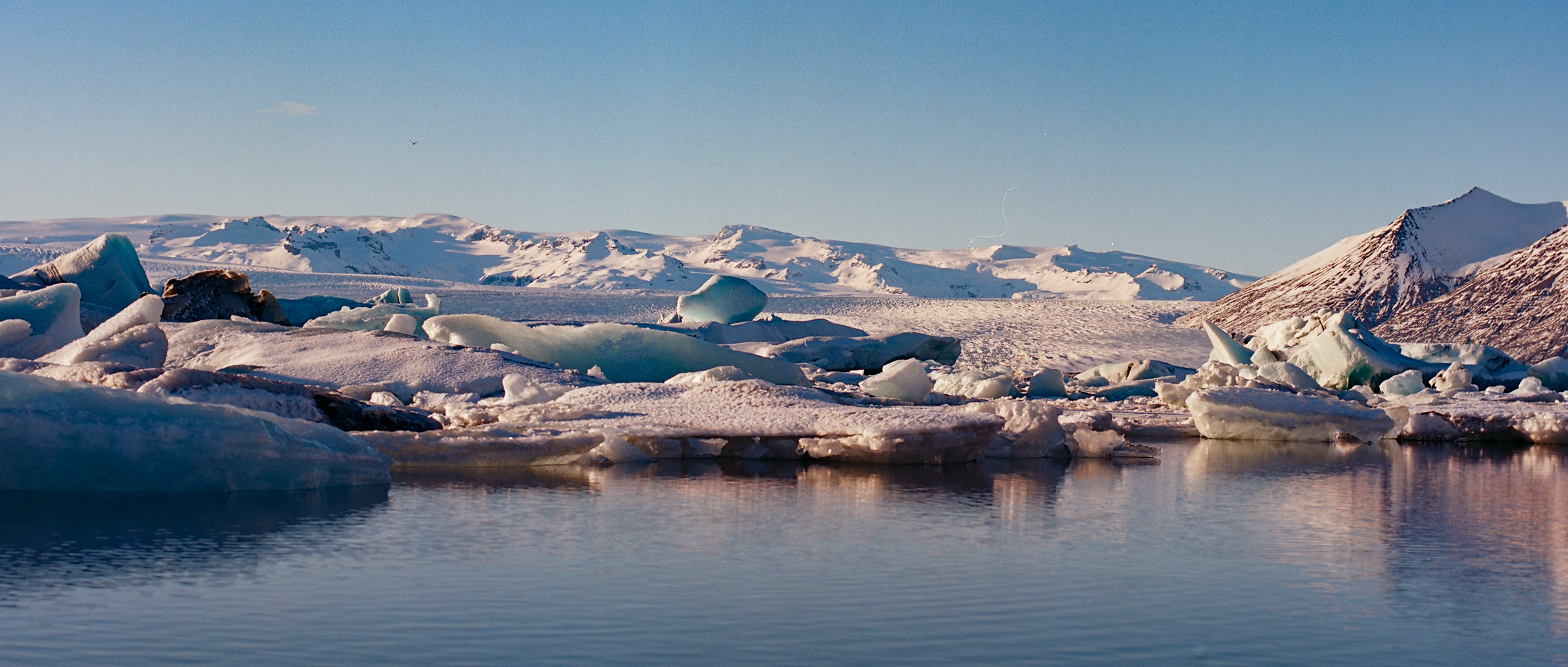
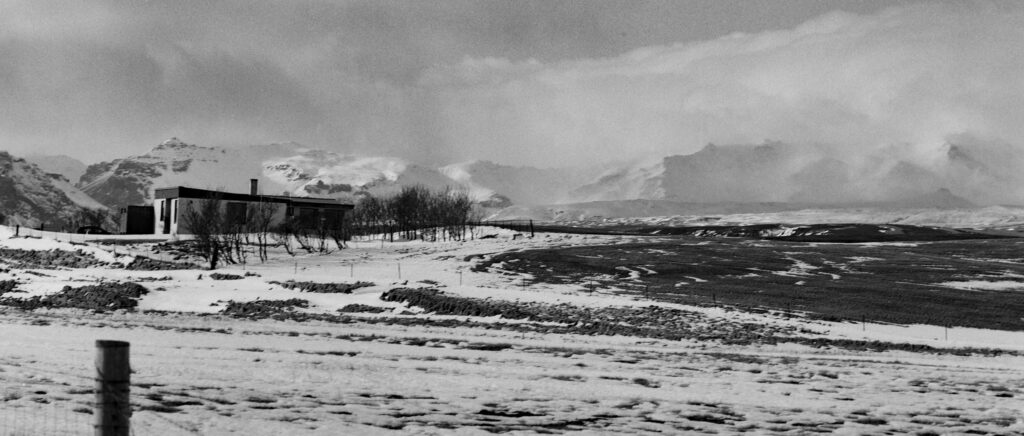
I shot far more 6×6 and 645 frames than I did panoramic frames over the course of the trip, but it was fun to think about pano shots when I saw something that felt like it might look cool, like this color shot of glacial ice floes in Jokulsarlon’s Glacier Lagoon or this shot of a lonely house against a backdrop of misty mountains.
I’m impressed with people who have learned to shoot more complex images using the XPan or similar dedicated panoramic cameras, and really understand how to compose in the format. And by all accounts the XPan is a really well designed and manufactured camera with great lenses. But I’m glad I didn’t talk myself into buying one in Canada; even if it was a relatively affordable and had the nearly endless shelf life of a Leica M, I don’t know that I would have ended up using it all that much in the long run. I find the more traditional formats of a standard 35mm frame, or the 645 & 6×6 options on the Hasselblad much more compelling for the kinds of shooting I am most attracted to. Having the option to shoot a panoramic image every now and then when the world is giving me a great widescreen frame, but not being tied to that format for frame after frame, roll after roll seems like the best of both worlds, at least for me.
Share this post:

Comments
Simon Foale on Shooting Pano on a Hasselblad
Comment posted: 07/05/2026
Comment posted: 07/05/2026
Bill Brown on Shooting Pano on a Hasselblad
Comment posted: 07/05/2026
The owner of the camera sold it in 2019 and I fondly recall our short time together. I wrote up a post about my first frames shot with that camera but never submitted it. Maybe now would be the time with all the interest in pano format being discussed. I don't have a problem with the poor mans approach on my Canon F1-n or Contax G2. Printed up to 24" they are still quite acceptable to me.
As I write this I'm thinking maybe I should do a methodology comparison article. I shot my first multi-frame pano in 1970 on a family roadtrip while passing through Arizona. Having no simple way to join the images in pre digital times never stopped me from taking those shots. When I first stepped into digital in 2006 I scanned and stitched one of my panos from 1994 that I shot on a family vacation. Seeing my vision for that moment finally come to completion was very fulfilling. A 10" x 30" matted print hangs in my studio. I think shooting wide is like seeing in b&w in that you need to see it first in your head.
Thanks for the inspiring post! I don't think it matters how you get there. Just fulfill your vision.
Comment posted: 07/05/2026
Gary Paudler on Shooting Pano on a Hasselblad
Comment posted: 07/05/2026
But 65mm? Pfff! Fuji, who makes the XPan, made a 90mm-wide format camera and you can get 5 for the price of one XPan.
Or, just buy one and use the $5000 that you saved for film (8 exposures per roll) or ski trips or drugs and prostitutes. I'm pretty crazy about my Fuji GSW690III with a fixed 65mm lens that's about like a 28mm lens on a 35mm camera. With a simple adjustment it will also make 90mm TALL images.
I got mine broken for $300 from a guy in Venice, fixed it and it's really one of my favorites.
Comment posted: 07/05/2026
CHRISTOF RAMPITSCH on Shooting Pano on a Hasselblad
Comment posted: 07/05/2026
Comment posted: 07/05/2026
Art Meripol on Shooting Pano on a Hasselblad
Comment posted: 07/05/2026
Comment posted: 07/05/2026
Gary Smith on Shooting Pano on a Hasselblad
Comment posted: 07/05/2026
Clearly Jeff Bridges has stoked a revived interest in the format. I suppose I struggle with the interest as having spent the last 20 years or so digitally editing my shots, wide format is a simple crop option. I don't think I've printed anything of note in those 20 years and I find the film v. digital divide to be all in one's head. Don't get me wrong, I have plenty of film cameras.
Comment posted: 07/05/2026
Comment posted: 07/05/2026
Comment posted: 07/05/2026
Comment posted: 07/05/2026
Comment posted: 07/05/2026
Roger on Shooting Pano on a Hasselblad
Comment posted: 07/05/2026
You really show the advantage of the format, and the advantages must surely shine when you do large prints. Thanks for posting.
Comment posted: 07/05/2026
Jeffery Luhn on Shooting Pano on a Hasselblad
Comment posted: 08/05/2026
Great photos, as I've come to expect from you!
I always think of panorama shots as being ultra wide. Some cropped images from normal or slightly wide lenses like the Hass 60mm can have a bit of that if they are distant horizon shots, but if there are objects in the foreground the shots don't look wide. For me it's just a cropping choice. The pano shots I prefer are at least a 38mm Biogon SWC Hasselblad. That's a starting point. I know I'll take a lot of flack for this, but the best pano shots I do are from my iPhone. That feature has made a lot of money for me with architects, engineers, interior designers, etc. Especially for interiors. The 'bubble effect' cane be corrected in Photoshop. It isn't as sharp as a series of Nikon or Pentax 645 frames stitched together, but for online portfolio pieces it's remarkable. I've tried stitching stitching together frames from the 35mm lens on my Pentax 645 camera and they aren't as good as the iPhone. I know it's going to raise the hackles of fellow photographers here, but that's my experience.
Comment posted: 08/05/2026
Comment posted: 08/05/2026
Comment posted: 08/05/2026
David Pauley on Shooting Pano on a Hasselblad
Comment posted: 09/05/2026
I would've loved this post even if the text were in Icelandic and translation apps weren't an option. The Iceland panos -- especially the ice floes -- are the kind of images I can stare at until my eyes go out of focus. Then start again! But I also appreciate the depth of thought and you apply to discussing to wide formats, their connections to cinema and the original Barnack Leicas and of course much later to cult cameras such as the Xpan. I haven't been bitten as yet by the pano bug, but did recently buy a Hasselblad SWC/M. Have a post in the pipeline.
Echoing others I think some of these deserve to be printed and framed. They're exceptional. Thanks Scott!
Comment posted: 09/05/2026