

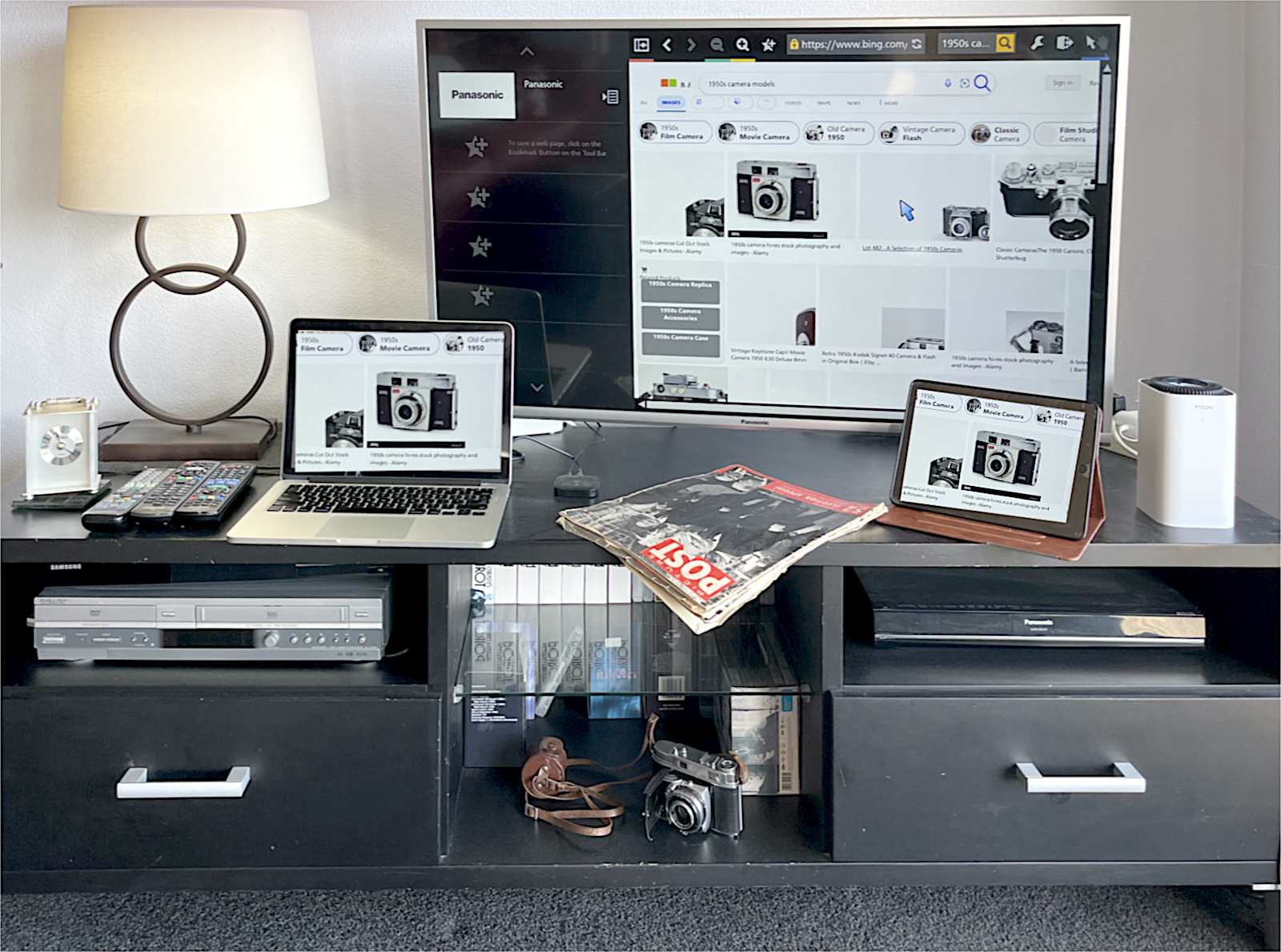
These past 20+ years of investigating so many cameras since I retired, plus recently discovering 35mmc and the rpf, have stimulated my interest and frankly stopped me from just sitting back and watching daytime TV, quietly vegetating as I am expected to in my late 80s.
But photography has been my stimulus and basic support almost all my life, helping me through both good and bad times.
It has also been the cause of both too but I won’t go into that.
Suffice to say, my darkroom was my safe place, where I could absorb myself in creating a beautiful (to me) 20×16 print on a lusciously toned paper ready for mounting and exhibition.
So what?
Well, I was born almost exactly 100 years after the birth of photography itself, with the announcement to the world of the inventions of Daguerre and Fox Talbot in 1839, and just prior to the outbreak of World War II. Arguably, this and other 20th century conflicts did much to advance photographic technology at an accelerated pace.It also brought it to the attention of a wider public through iconic images. I’m sure most of us can bring to mind Capa’s Falling Soldier from the Spanish Civil War or Rosenthall’s (restaged) image of US Marines raising the Stars and Stripes over Iwo Jima and many many others. And publications like Picture Post in the UK and similar ones elsewhere also helped.
What these images did was to show that photography was accessible and not an exclusive, demanding, mysterious art that required complicated equipment and much study. Those stirring images created by courageous men and women who risked life and limb, in one case saved by his camera that took the bullet that was heading for him. They showed that a camera could be carried into the most challenging places to bring back a telling visual record. When peace returned, cameras appeared allowing a family to create its own record at a domestic level with something considerably better than the first consumer box camera with better lenses and exposure meters in some cases.
Manufacturers recognised this development too and greater and greater efforts were made in the years following WWII to realise Kodak’s 1888 claim of “You push the button, we do the rest”. To an extent, colour print films and the growing processing trade helped this along whilst automation of the camera gradually achieved “…the rest”.
So everything that is taken for granted nowadays needed a great deal of investment and effort from designers and manufacturers over the years to bring us what we can enjoy now.
Again, so what?
So nothing really! Human nature is very accepting, especially with things that help their own, personal, every day endeavours. I am taking it for granted that this laptop I am writing this with will work as I want it to and I don’t think much about the many people going back to Babbage who have made it possible as I use it. Like my cameras, it is a tool that allows me to carry out what I choose to spend my time doing or need to do.
But the thing is I do know how they have come about so I can appreciate them all the more in a different context. That other side of human nature that is curiosity makes me take an interest in the history and design developments that have made them possible. For others it will take them down different paths and maybe lead to amazing discoveries. Á chacun son goût.
So?
So I get much more from them by appreciating the effort that has gone into everything. For example, I really applaud what Nissan have done for the environment with their Leaf and e-motion ranges. Very unsung but a huge factor in planting the early seeds that have allowed other manufacturers to feel more confident entering the field of EVs.
In fact, photography has played a massive role itself in helping shape so many things we use and take for granted today, including my car. The early integrated circuits were drawn out by hand and photographed before being reduced and transferred onto silicon, all processes I saw on a visit to Texas Instruments around 1970. Their capacity was dependent on the resolution of film and optics, now left way behind by modern manufacturing techniques, but they no doubt were major contributors to the new methods that produced their replacements.
But in the end…
It doesn’t really matter whether you consider something a tool or a work of art. What matters is that it is one or the other, or something in between, to the person it serves. It didn’t matter to a bricklayer’s apprentice that someone had decided on the sizing, shape and capacity of his hod as he toiled up the scaffolding with a full load of bricks, simply that it is just heavy enough to carry and balances well on his shoulder. He was replaced by mechanical hoists of course later on.
Now, as we approach another century on from Daguerre and Fox Talbot, instead of the aspirational Leica, Contax or Rolleiflex of 1939, I can now dream of using a 100Mp mirrorless from Panasonic or Hasselblad. And a digital bridge can take the place of my box camera. Such is the march of progress.
I feel very fortunate to have lived to see it unfolding and enjoy it all along the way.
Share this post:


Comments
Paul Quellin on So what is it all about, really?
Comment posted: 09/04/2026
Comment posted: 09/04/2026
Reed George on So what is it all about, really?
Comment posted: 09/04/2026
Much of what you say matters to me. Not the least is that you’ve enjoyed many years of photography and camera interest in retirement. I’m planning to begin that phase sometime soon and really do not want to vegetate on the couch. Little chance of that, really. I have too many interests. Thanks again for stretching our thoughts out here.
Reed
Comment posted: 09/04/2026
Jalan on So what is it all about, really?
Comment posted: 09/04/2026
Comment posted: 09/04/2026
Comment posted: 09/04/2026
Comment posted: 09/04/2026
John Bennett on So what is it all about, really?
Comment posted: 09/04/2026
Speaking of which, looking at your 35mmc About The Author bio, I'm glad that you are a dyed-in-the-wool antique, and not died-in-the-wool antique.
One letter makes all the difference.
Keep a-goin’!
Comment posted: 09/04/2026
Walter Reumkens on So what is it all about, really?
Comment posted: 09/04/2026
Comment posted: 09/04/2026
Miguel Mendez on So what is it all about, really?
Comment posted: 09/04/2026
Comment posted: 09/04/2026
Gary Smith on So what is it all about, really?
Comment posted: 09/04/2026
Comment posted: 09/04/2026
Comment posted: 09/04/2026
Comment posted: 09/04/2026
David Pauley on So what is it all about, really?
Comment posted: 09/04/2026
Comment posted: 09/04/2026
Jerry Scoby on So what is it all about, really?
Comment posted: 09/04/2026
Comment posted: 09/04/2026
Ibraar Hussain on So what is it all about, really?
Comment posted: 10/04/2026
Photography or rather taking pictures of things has helped me through times good and bad. To me it’s just about creating something which gives me pleasure
I’ve not much interest in 100mpx mirrorless cameras to be honest - though I wish I had a Leica S2 DSLR for that Kodak sensor
Comment posted: 10/04/2026
Alexander Seidler on So what is it all about, really?
Comment posted: 10/04/2026
Comment posted: 10/04/2026
pessoist on So what is it all about, really?
Comment posted: 10/04/2026
Thus whatever you do, relevant inspiration is all that counts for legacy.
Whether Kodak or AI made a point or not, whether you used a leica or silvered glass, irrelevant.
Who you take on this journey for life changing experience matters more.
Comment posted: 10/04/2026
Comment posted: 10/04/2026
Comment posted: 10/04/2026
Comment posted: 10/04/2026
Comment posted: 10/04/2026
Geoff Chaplin on So what is it all about, really?
Comment posted: 10/04/2026
I remember being very disappointed with my first high end digital nonesense, hating the imfinite repeatability of every perfect print. Not what i wanted at all. So i came to appreciate the work of those who invented more than 100 ways of making a photographic print where every print would be slightly different.
It's the journey that matters.
Comment posted: 10/04/2026
Jeffery Luhn on So what is it all about, really?
Comment posted: 12/04/2026
I'm 73 and mostly retired, except for teaching one photo class per semester at a local college. The beauty of this part-time gig is the access to a great darkroom anytime I want. That's a big deal! Why? Because it's a safe innersanctum place to concentrate and create.
I always enjoyed doing my own B&W, except when it was for stressful commercial purposes. The fun of photography evaporated during those 30+ years. When digital came online, I thought film was dead, and I was happy about that. Fast forward 25 years and I found myself teaching both digital and film classes. Digital...meh. Film...hurray! It's such a joy to wrestle with the challenge of film again. It adds so much meaning to life!
Comment posted: 12/04/2026