

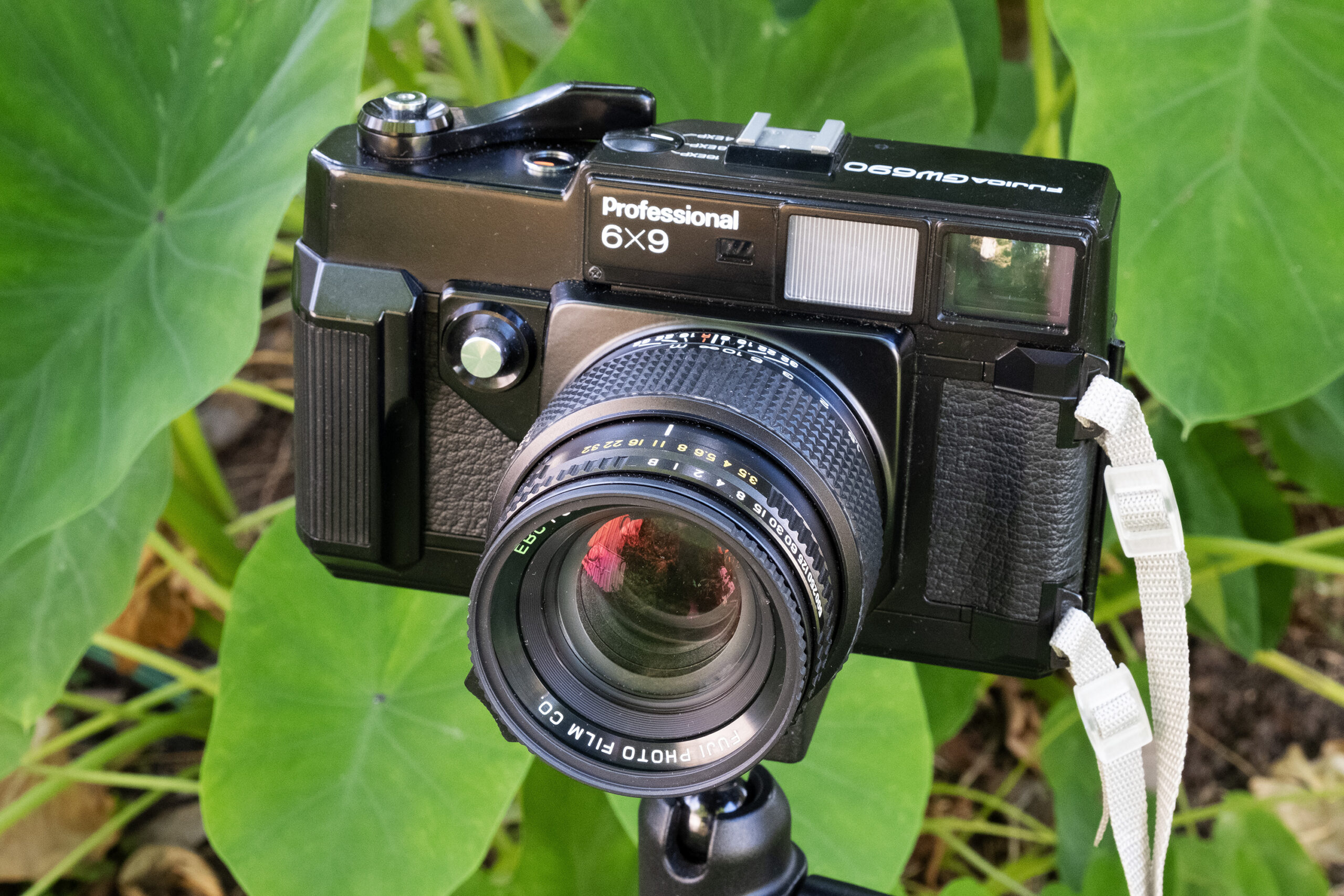
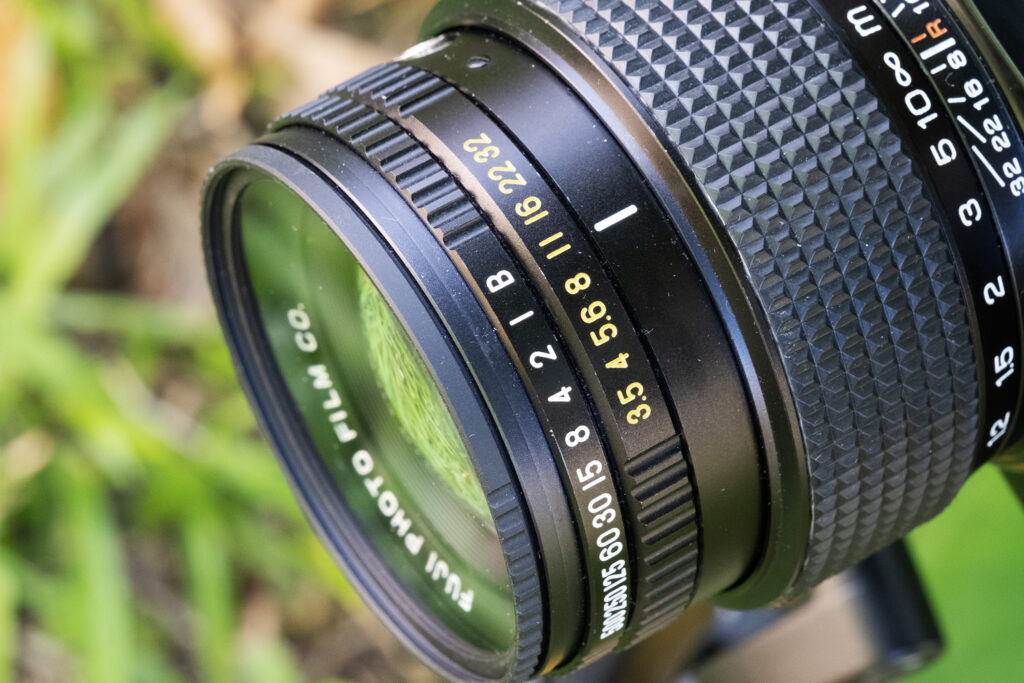
I spotted this camera online while looking for something else and, after double checking that it really was a Fujica GW690 with an actual B setting on the shutter speed ring, I snapped it up. It was in good nick and reasonably priced. I had already read about the quite unpopular T setting that most of these cameras have instead of B, and even though I already have the older Fujica GL690 system with interchangeable lenses (all of which have B settings on the shutter speed ring), I couldn’t resist this one. The GW690 cameras with their fixed 90mm F3.5 lens are significantly lighter and slightly smaller than the G690 and GL690 models with their standard 100mm lens attached. At least this is what I told myself by way of managing my GAS guilt. I was also quite curious to see for myself how the five-element multi-coated ‘EBC’ 90mm F3.5 lens on the GW690 cameras performs relative to the ‘single coated’ 100mm F3.5 four-element Tessar used with the older Fujica 690s.
I found a couple of mentions of the Fujica GW690 with a B setting online here and here, but there doesn’t appear to be much information available about them. Anyway I’ll spare you too much talk and let’s have a look at some images. The pictures here were made on Bindal, Wulgurukaba and Warrgamaygan country. I processed all film at home in a small tank and scanned negs and transparencies on a Nikon LS9000 ED scanner using Vuescan.
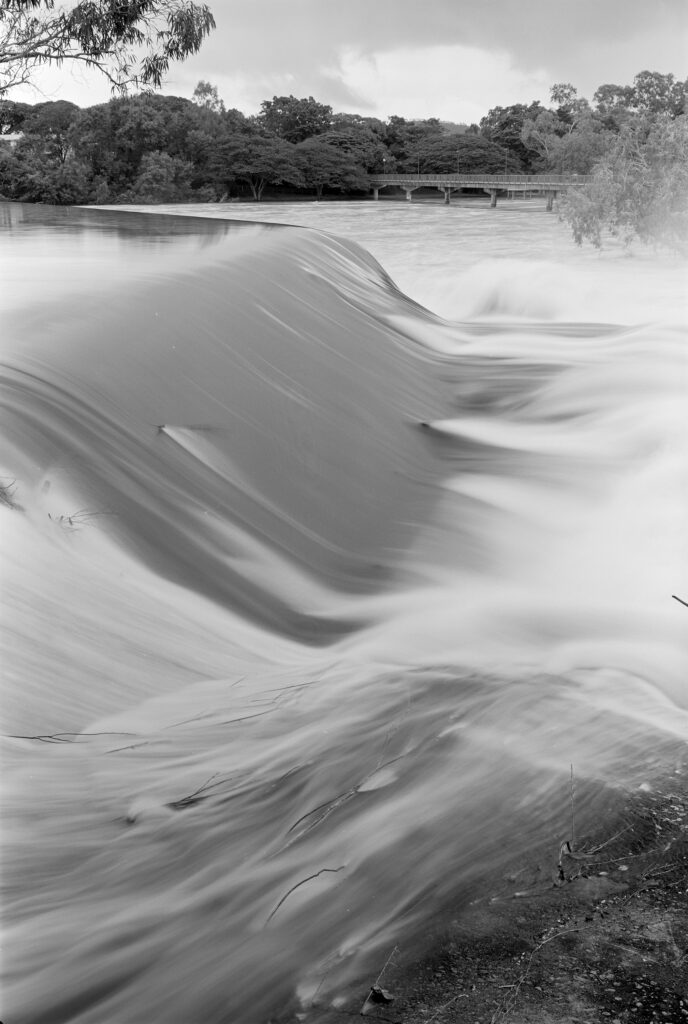
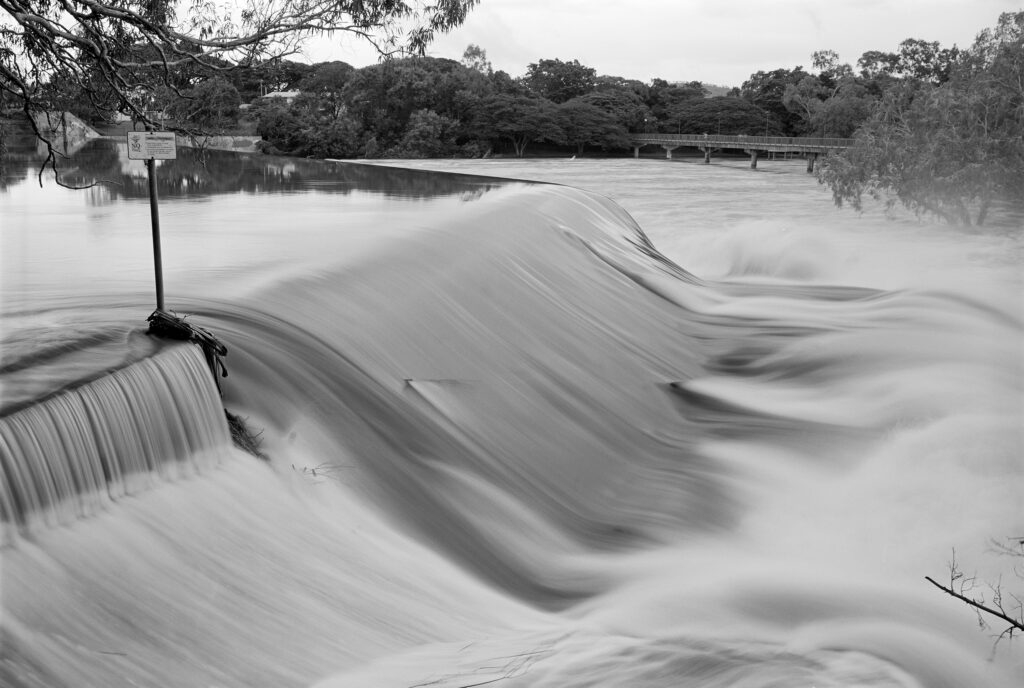
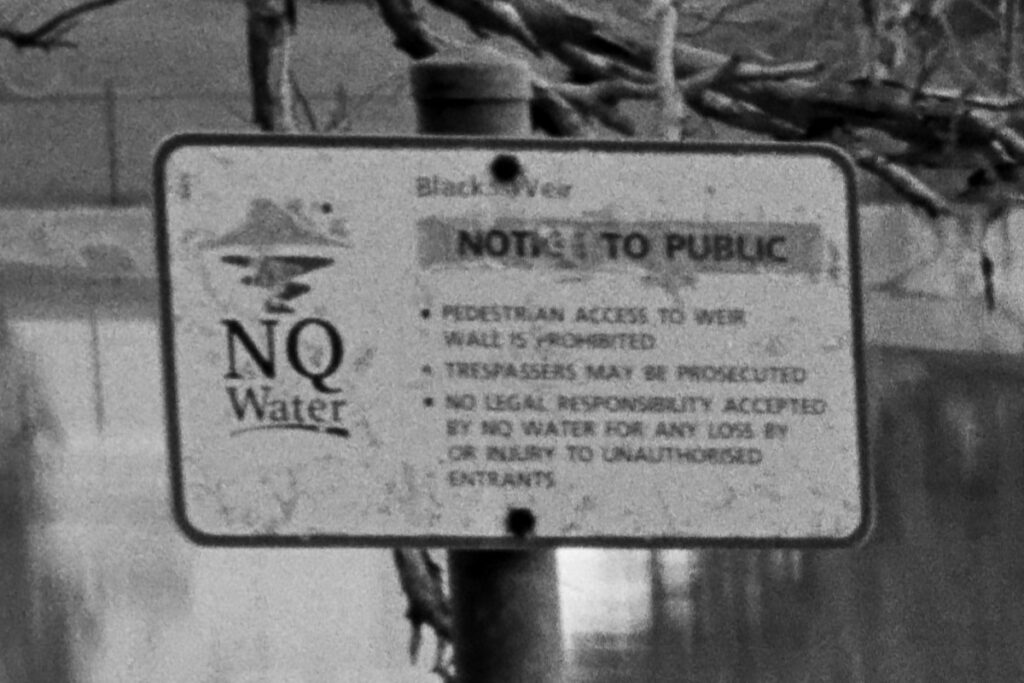
First, Black Weir on the Ross River, at the height of the wet season in early 2025. Fuji Acros II. This and the next frame are both two-second exposures using the B setting, at F16. Exposures between two and say, eight seconds are likely to be the trickiest to manage with the T setting on standard GW690s, because you can’t close the shutter again with the shutter release button (or cable release). So you have to find a way to end the exposure without causing the camera to move (replace lens cap, or put a black cloth or a hat over the lens) before making the shutter close by either winding on the film or moving the shutter speed dial to another setting.
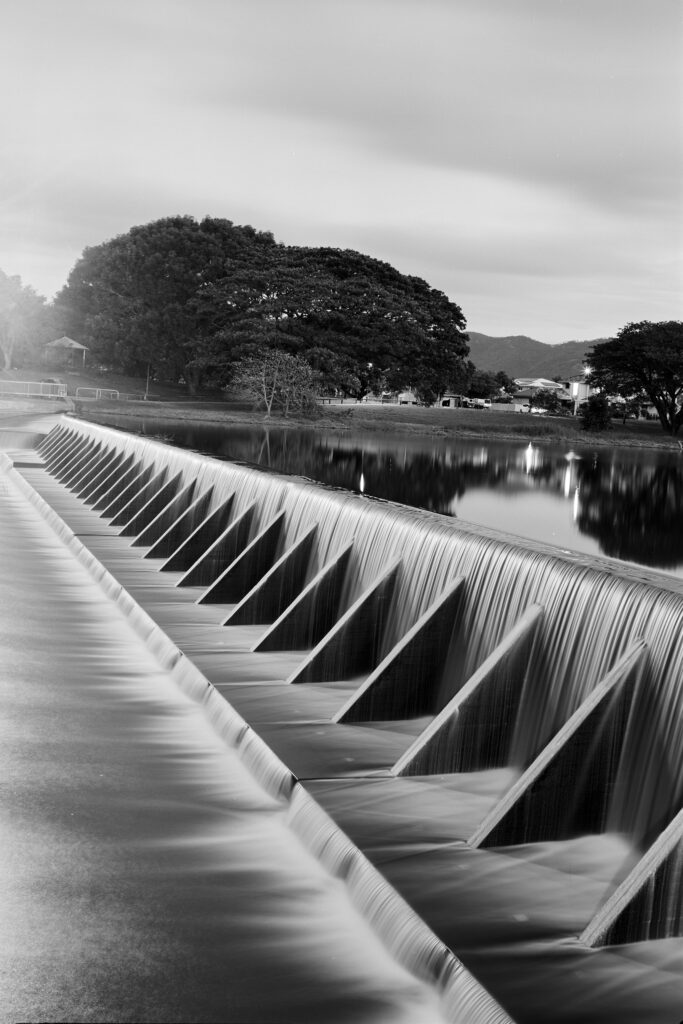
Moving on to Aplin’s Weir, also on the Ross River, at a different time of year, quite late in the day. Fuji Acros II. This is a 60 second exposure. The veiling flare you can see at the top left of the image is from street lights on the foot bridge I was standing on to make the image. Should have attached a hood.
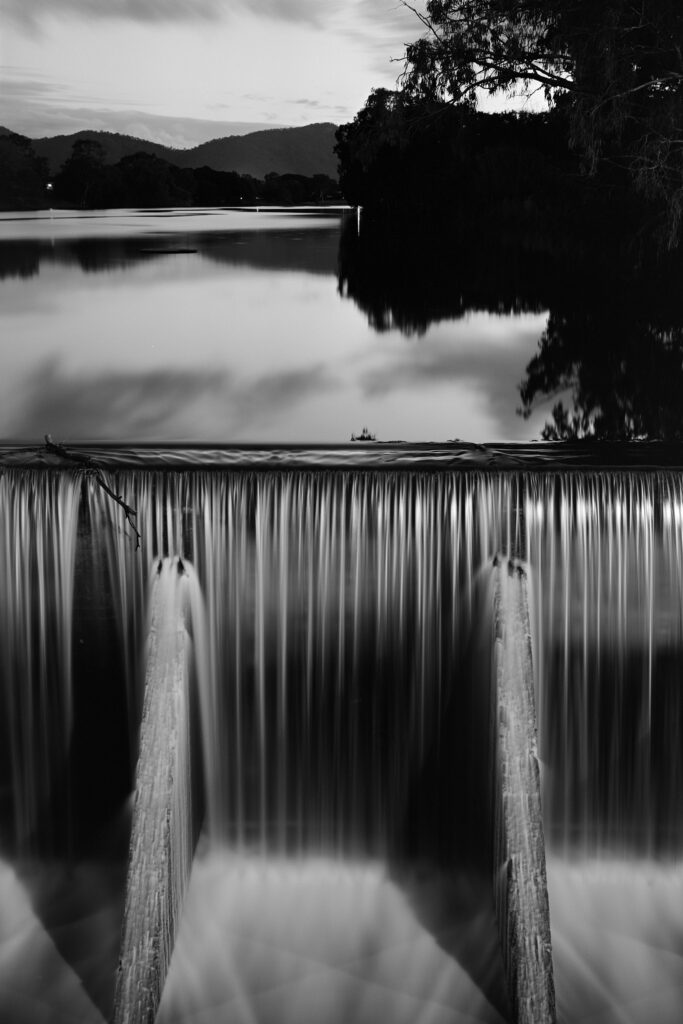
Aplin’s Weir, looking up-river, same time as previous image. Fuji Acros II, 60 second exposure. As with the previous image, the water flowing over the weir is lit by street lights on the foot bridge I was standing on.
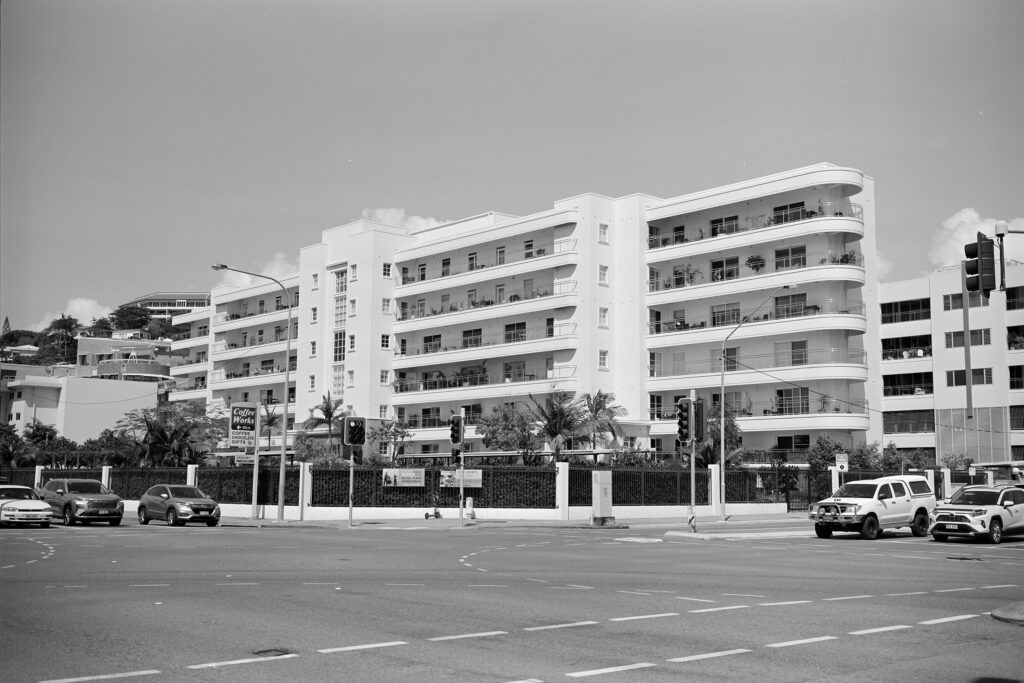
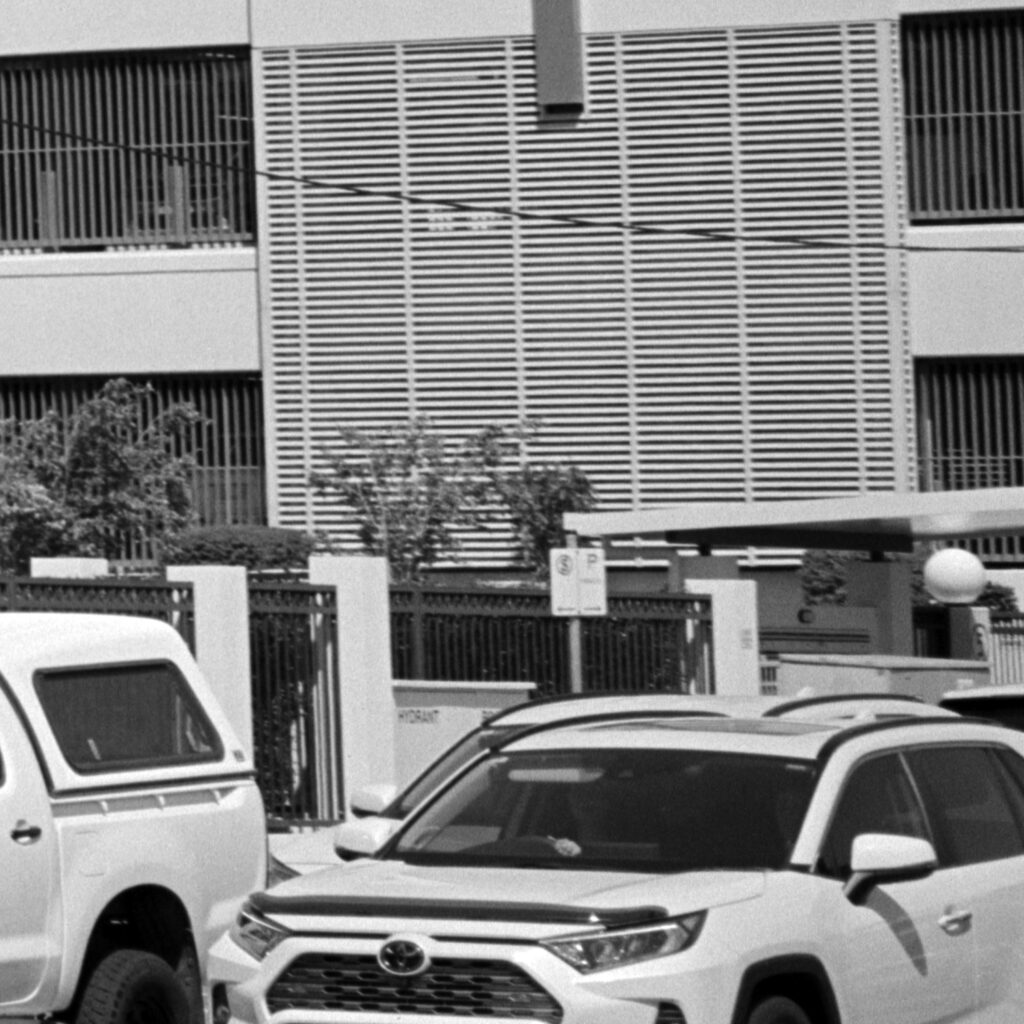
Next, the former Townsville General Hospital (now flats). I was interested in the performance of this camera’s lens at the frame edge at wider apertures, compared to the 100mm Tessar that I use on my Fujica GL690. The edges of this frame are impressively sharp at F5.6 ½. I would say that the 90mm is perhaps very slightly better at the wider apertures than the Tessar but there is really not much in it.
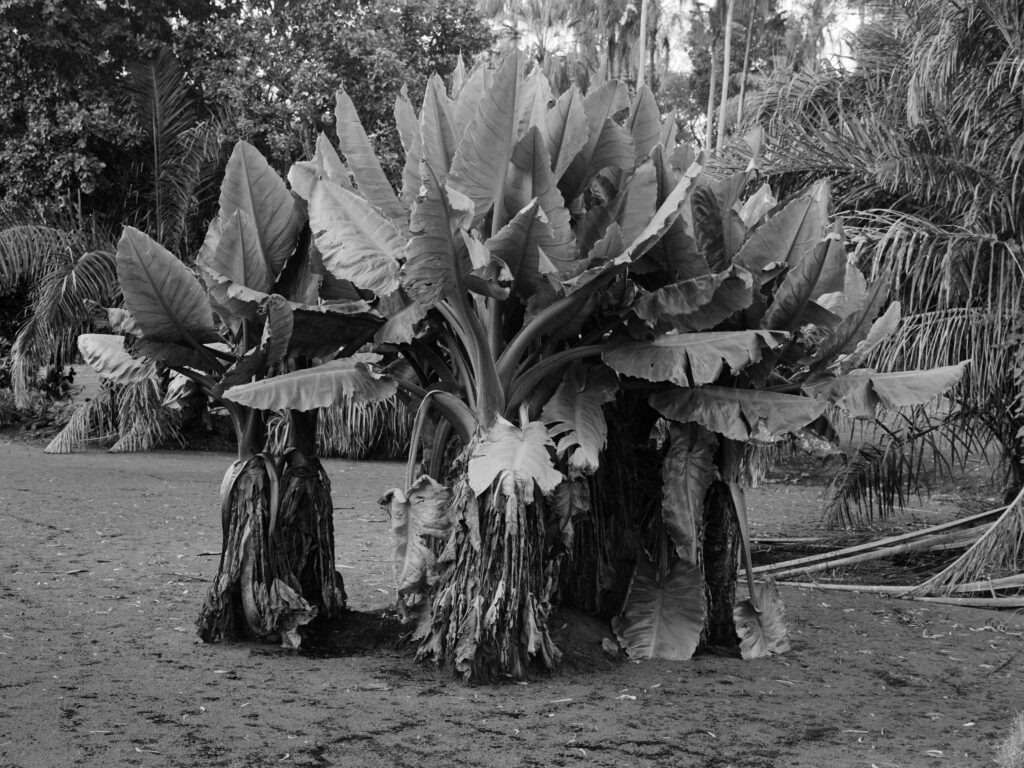
Alocasia macrorrhizos (I think) at Townsville Palmetum.
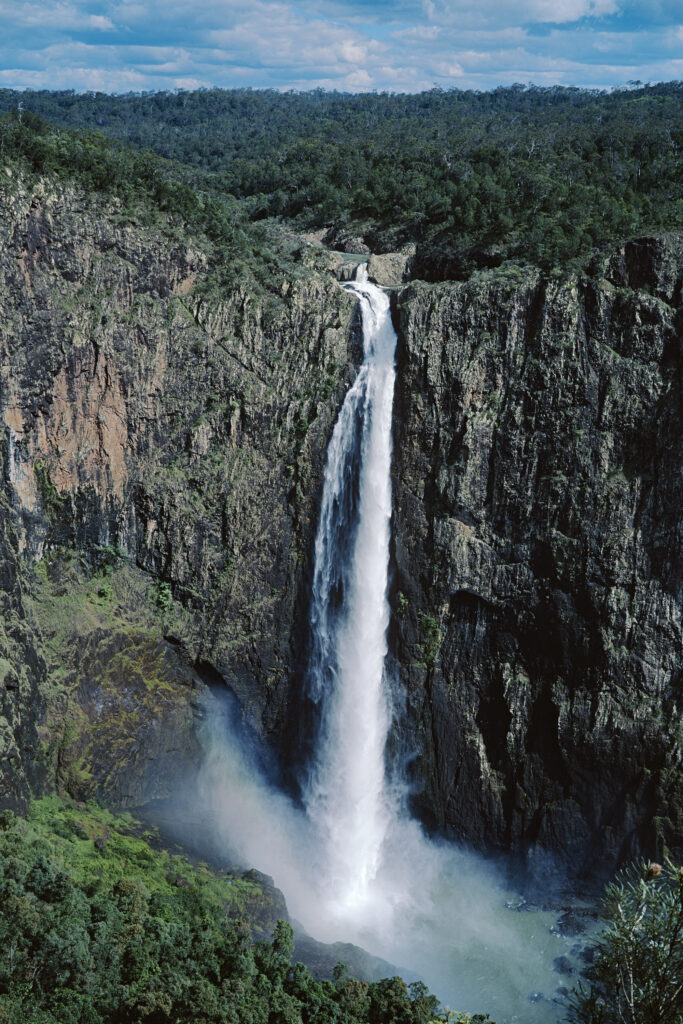
Wallaman Falls. One unexpected upside with this particular subject is that the 90mm lens can fit some sky into the frame along with the whole length of the waterfall, which is not possible with the 100mm lens of the GL690 from the same viewing position (and there aren’t any easily accessible alternative spots that I’m aware of).
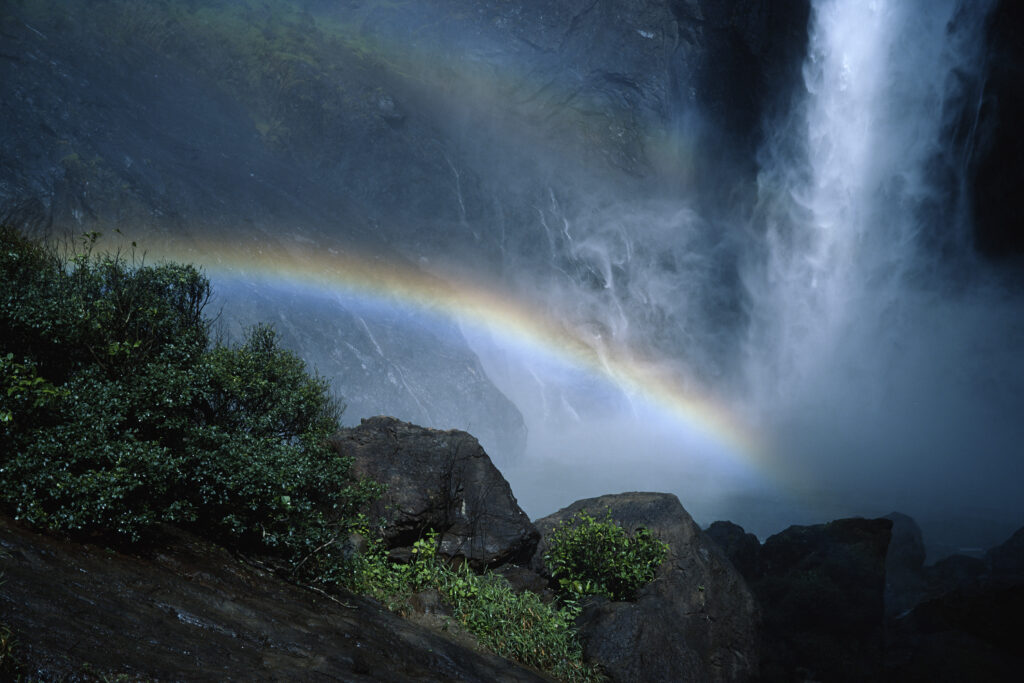
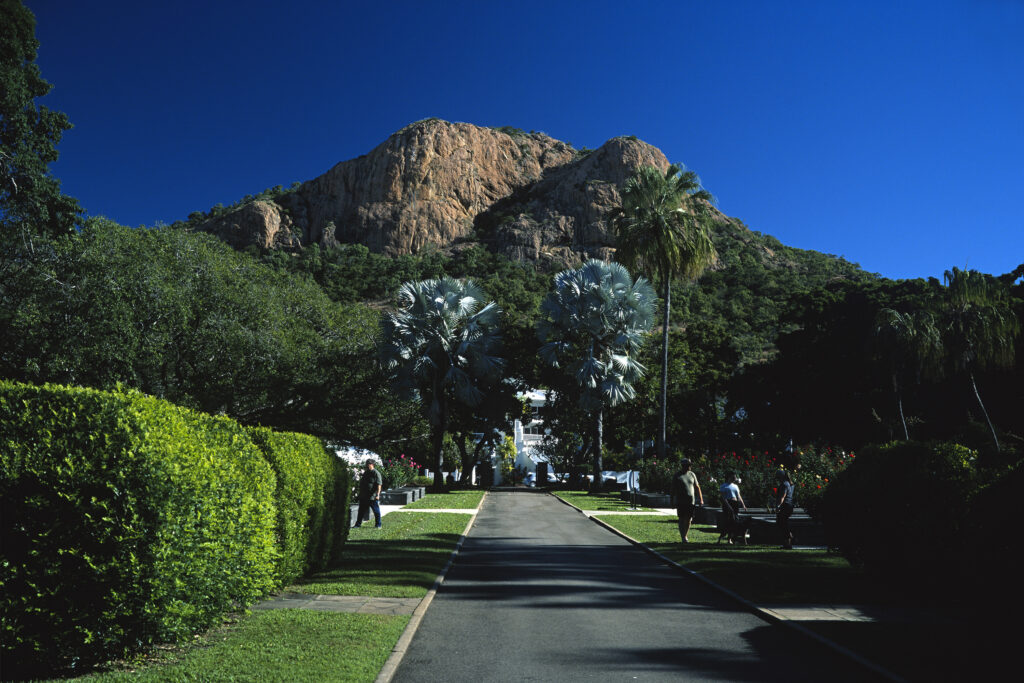
Castle Hill from Queens Gardens, Townsville.
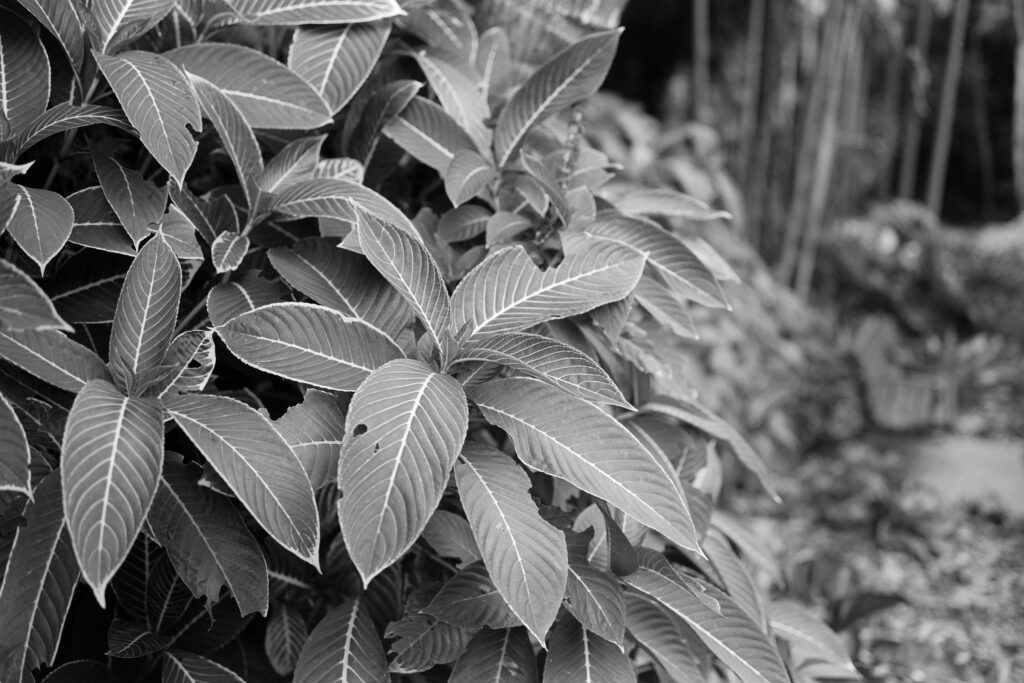
Sanchezia sp. foliage and park bench. I wanted to do a ‘bokeh’ shot, as I had read mixed reports about how this camera’s lens performs. This looks OK to me, but there aren’t any super bright highlights in the background.
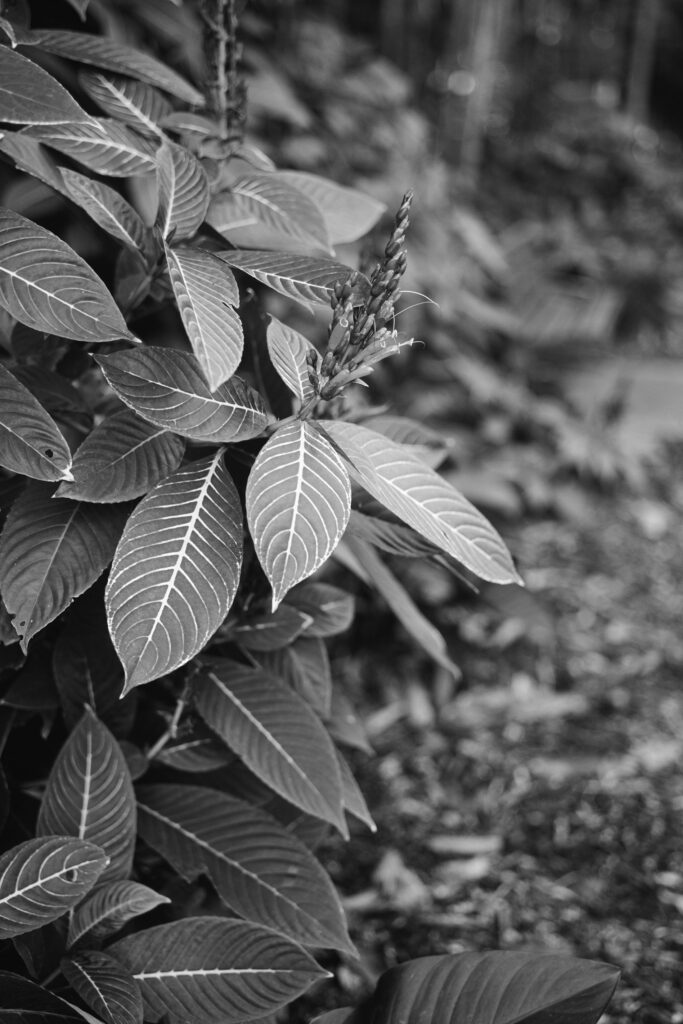
The same scene but vertical orientation and made with the GL690 and 100mm Tessar lens. The film was Kodak E100 which I converted to black and white in post. Also shot at F4. Not sure I can see any big difference between this and the GW690 image.
That’s my quick and dirty review of the Fujica GW690 with Bulb shutter capability. I like the camera and will continue to use it, along with my GL690 system, which, aside from its greater weight, is definitely no less impressive in terms of the image quality it delivers, and can of course use several different lenses. If anyone knows any historical details about why Fuji made some of the GW690s with a B setting, and how many might be out there, I would be interested to hear from you.
Share this post:

Comments
Christian on Fujica GW690 with Bulb Setting – Mini Review
Comment posted: 20/05/2026
It seems, although being "fixed lens", maybe a technician could interchange the lenses, as my camera basically "was" a GSW with 65mm lens,
but now is a 90mm. I never used the T or B mode, I will have a look at mine when I come home... I think it also was only T-mode.
Great shots you did with your cam in B-mode!
Comment posted: 20/05/2026
Erik Brammer on Fujica GW690 with Bulb Setting – Mini Review
Comment posted: 20/05/2026
Comment posted: 20/05/2026
Bruce Parker on Fujica GW690 with Bulb Setting – Mini Review
Comment posted: 20/05/2026
I do want to point out (nit picker that I am) that a number of times you describe the B setting as residing on the aperture ring. I bring this up so that those less experienced and/or unfamiliar with the camera don't become confused. Thanks.
Comment posted: 20/05/2026
Jeffery Luhn on Fujica GW690 with Bulb Setting – Mini Review
Comment posted: 20/05/2026
The first photo is my favorite, but all the long exposures are great. I like the 6x9 format, but don't have a Fuji camera. Mine is a Zeiss Ikonta and a Horseman. It makes for nice enlargements. Keep shooting! I enjoy your postings!
Comment posted: 20/05/2026
David Hume on Fujica GW690 with Bulb Setting – Mini Review
Comment posted: 20/05/2026
Comment posted: 20/05/2026
Comment posted: 20/05/2026
Gary Smith on Fujica GW690 with Bulb Setting – Mini Review
Comment posted: 21/05/2026
Comment posted: 21/05/2026
Comment posted: 21/05/2026