

The Alfie [BOXX] has just launched on Kickstarter – you can find the campaign here!
I had a wonderfully analogue photography experience a week or so back! Dave Faulkner from Alfie Cameras visited me with his [BOXX] camera to give me a demo and a hands-on go with his near-production prototype. I’m more of a “hybrid” photographer when it comes to my film shooting – I don’t even scan my own film at the moment, never mind developing it myself – so having a pure, start-to-finish analogue experience was a bit of a break from my norms for sure, and you know what, I really enjoyed the experience!
Dave’s been all over social media recently, promoting the launch, gathering people for his pre-launch VIP club, and generally shouting about the [BOXX], so I am sure some of you have heard about this camera. But in case you haven’t, this is a totally new camera from Alfie – built from the ground up, it’s essentially a small box camera that works a little like a simple large format camera in terms of the basic shooting process, but the film backs are designed to take darkroom paper cut into 6 x 9cm sheets. The film backs are also designed to allow development chemicals to be poured directly into them – Dave is promoting the idea with a reversal printing method meaning the resulting mini-prints are positive too. All this can be done without the need for a darkroom, or really any specifically in-depth skills. This isn’t the first camera like this I have seen (the Pinsta being another that came out a few years ago) – but the Alfie [BOXX] is the first I have seen that’s quite as refined as this, and comes with proper interchangeable lenses!
I took a whole load of images over the course of the few hours I spent with Dave making photos, so rather than a more traditional review, the following is literally a walk-through of my experiences.
My day with the Alfie [BOXX]
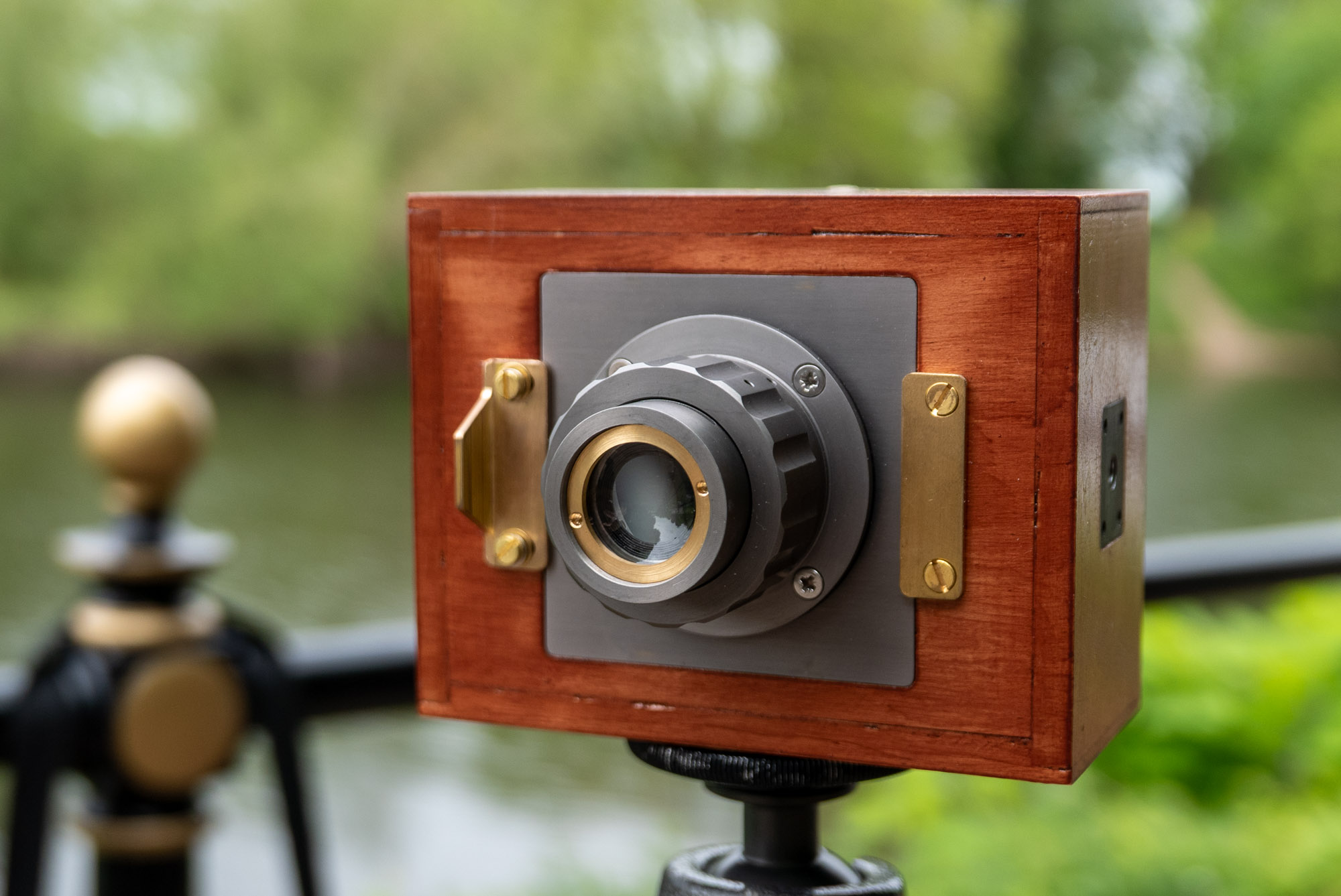
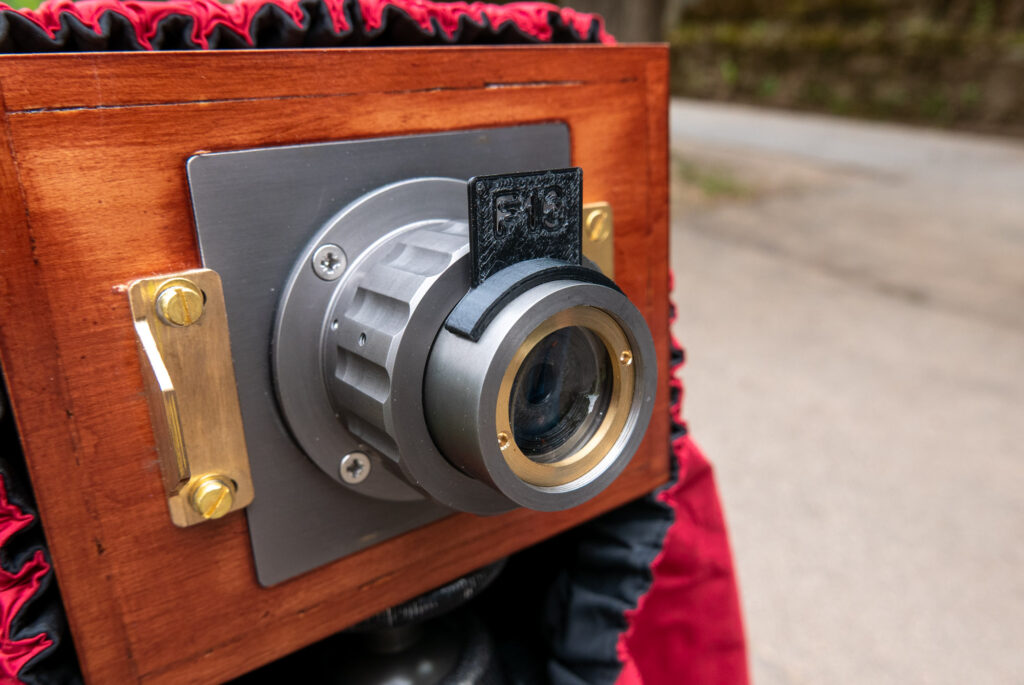
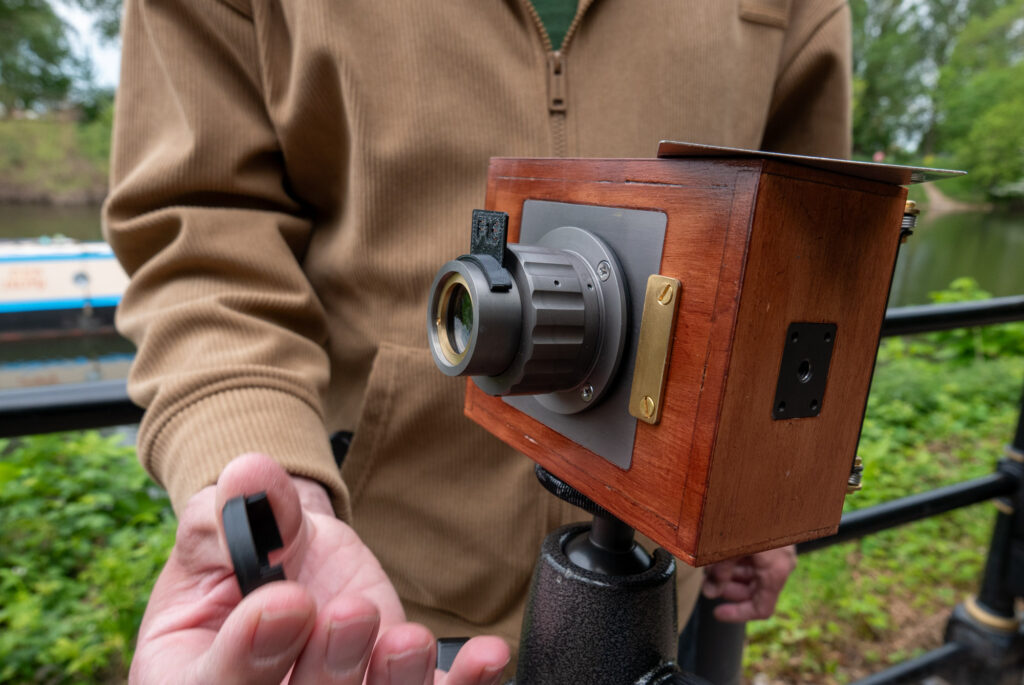
The Alfie [BOXX] is a wooden box camera with a fairly simple, but actually pretty impressive design. On the front there is a interchangeable lens mount that’s designed to work with Dave’s own lenses. The boards are held to the camera with two brass clips. Looking at the front of the camera as in the picture below, the left clip slides out of the way to allow the board to drop in and out. Currently Dave offers 3 lenses, a 100mm (pictured above) that has a slot for drop-in stops, a 55mm fixed-f/16 and a 65mm pinhole. Both 55mm and 100mm lenses have been designed by Dave and both can be focused using the screen on the back of the camera. In this next photo, you can see the focusing screen on the back of the camera. I will come to the film holders in a second, but also see at the top of the screen the mechanism that allows the screen to be pulled out and the film back to be slotted in.
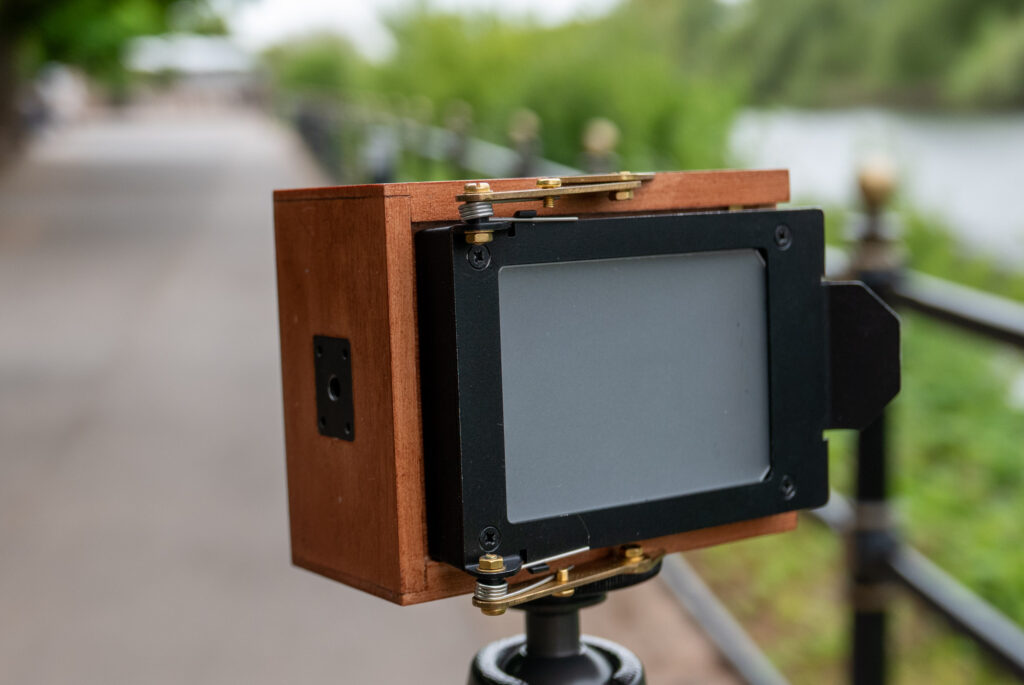
Regrettably, I didn’t take a photo of the back of the camera under the dark cloth, but at least with the 100mm – which is a f/5.6 without a stop inserted – it was really bright and pretty easy to focus and frame with.
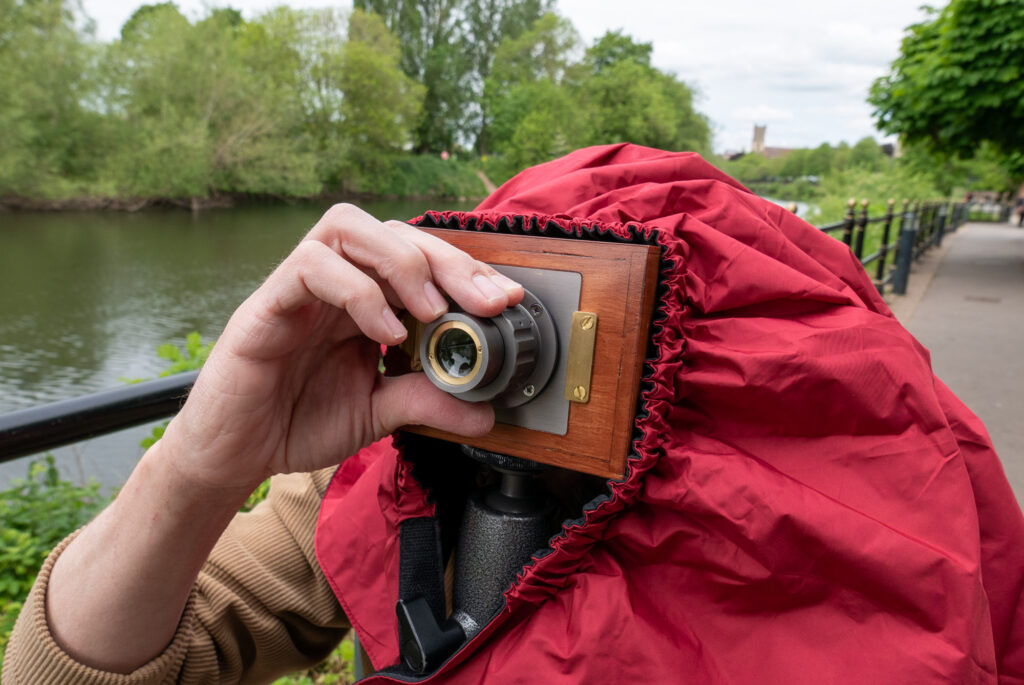
The lens itself has a metal housing – it’s not the most sophisticated lens design I have ever seen, not least because the aperture is created with drop-in stops. There’s also no shutter in the lens – since exposures are so long, they are achieved by simply removing and replacing a lens cap. But actually, despite – or maybe because of – this simple approach to the concept, I was really quite impressed by how solid and well made it feels, not to mention how smooth the focusing mechanism is. The fact that the slot for the stops always remain in the correct orientation – i.e. the whole lens doesn’t rotate when focused – really impressed me too! In this next photo, you can see the slot for the drop-in stops.
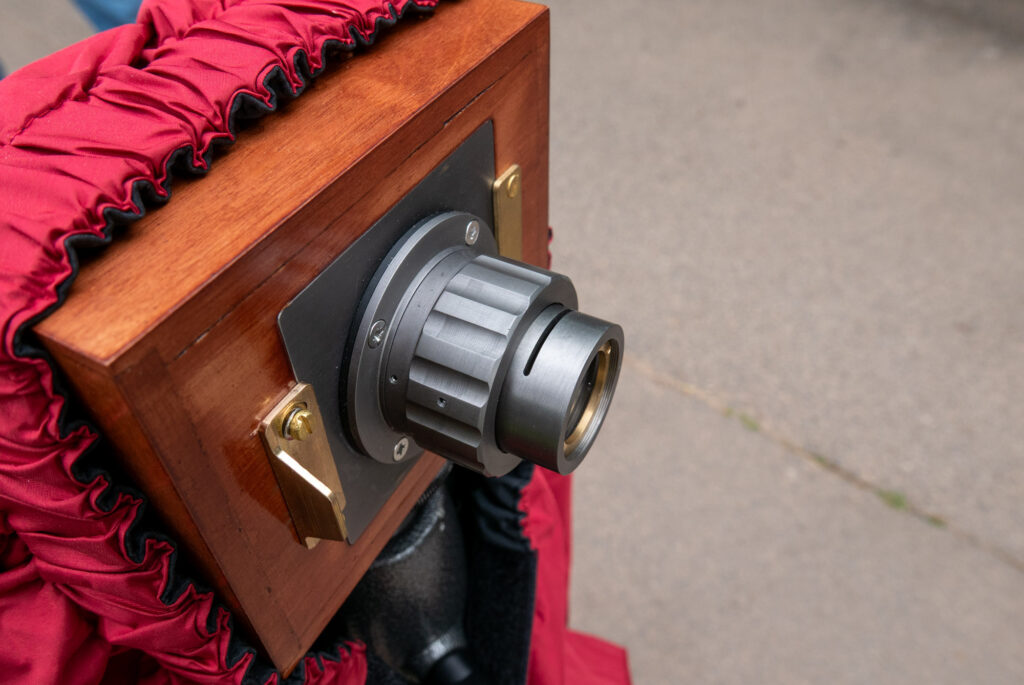
The stops are 3D printed at the moment, but Dave tells me that (assuming the Kickstarter is successful) these will be injection moulded for the final lens.
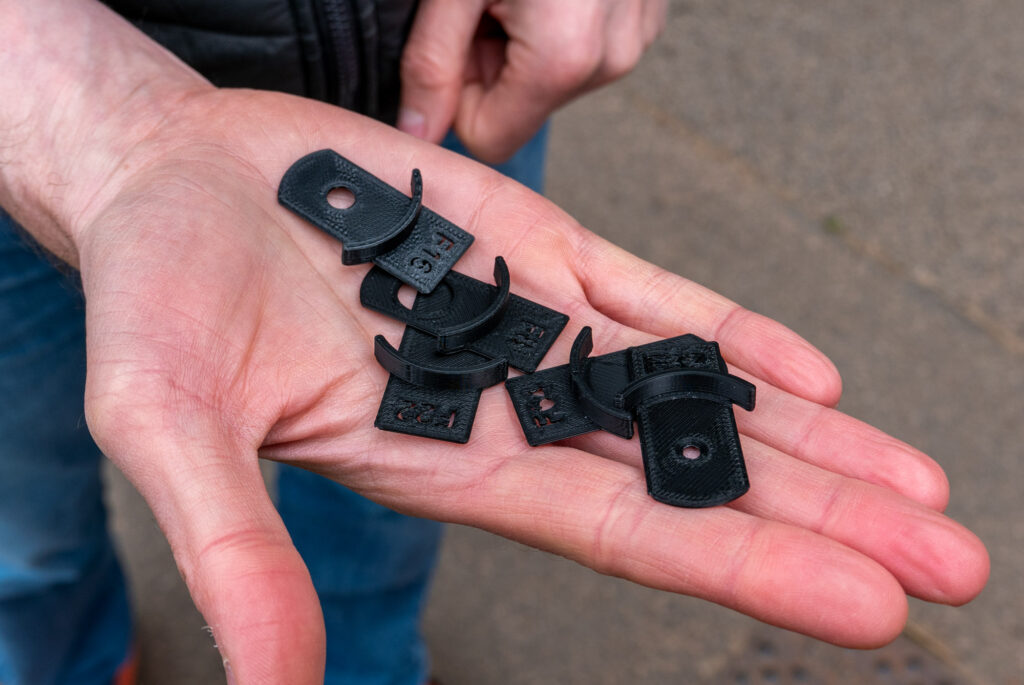
The lens is focused and the composition set with the lens wide-open. When ready, a stop is dropped in – in this case f/16.
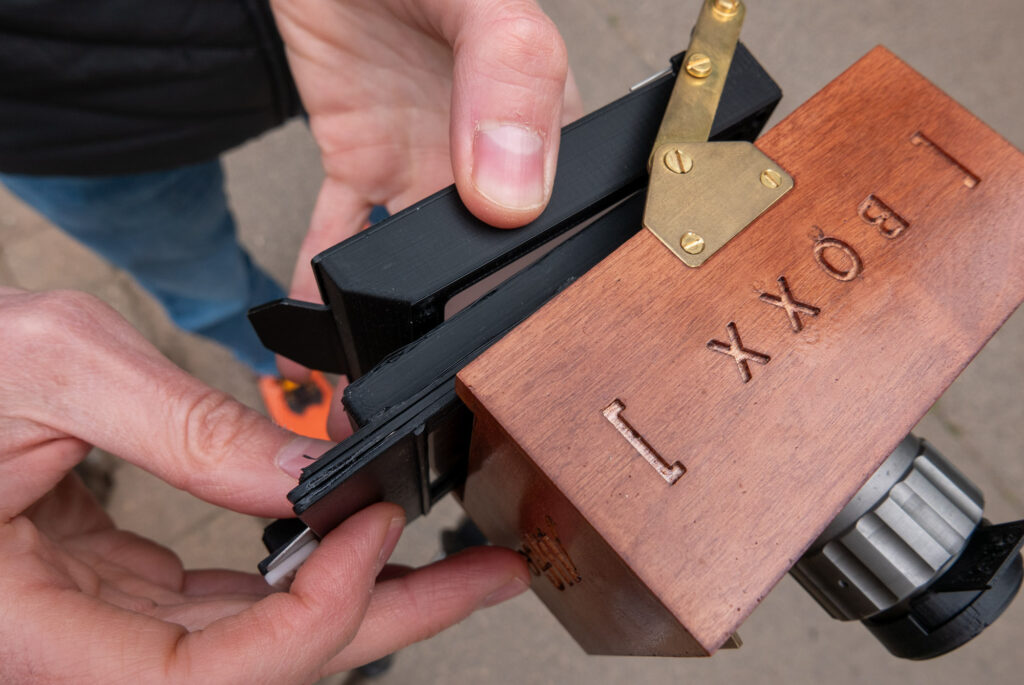
Next I inserted the film holder. I honestly couldn’t have been more impressed with the brass mechanism that holds it in place – aside from looking the part, it is both easy enough to pull out to insert the film holder and springy enough to feel like it is holding it tightly in place. A very nice bit of design that!
The next step was to calculate exposure. Dave recommended using EI3, which, with the f/16 stop, gave us a 3 second exposure for the first shot. When ready, the lens cap is placed on the lens, and the dark slide is removed. As mentioned, to capture the photo, it is just a case of removing the lens cap for the desired amount of “Mississippis” (seconds).
And that’s it, photo taken. Dave has designed the film holders to have both the white/unexposed and black/exposed system large format photographers will be familiar with, but if you look in the shot below, you will see that the dark slide also covers the inlet for the chemicals when the film is unexposed, and reveals it when exposed. Another nice little design touch!
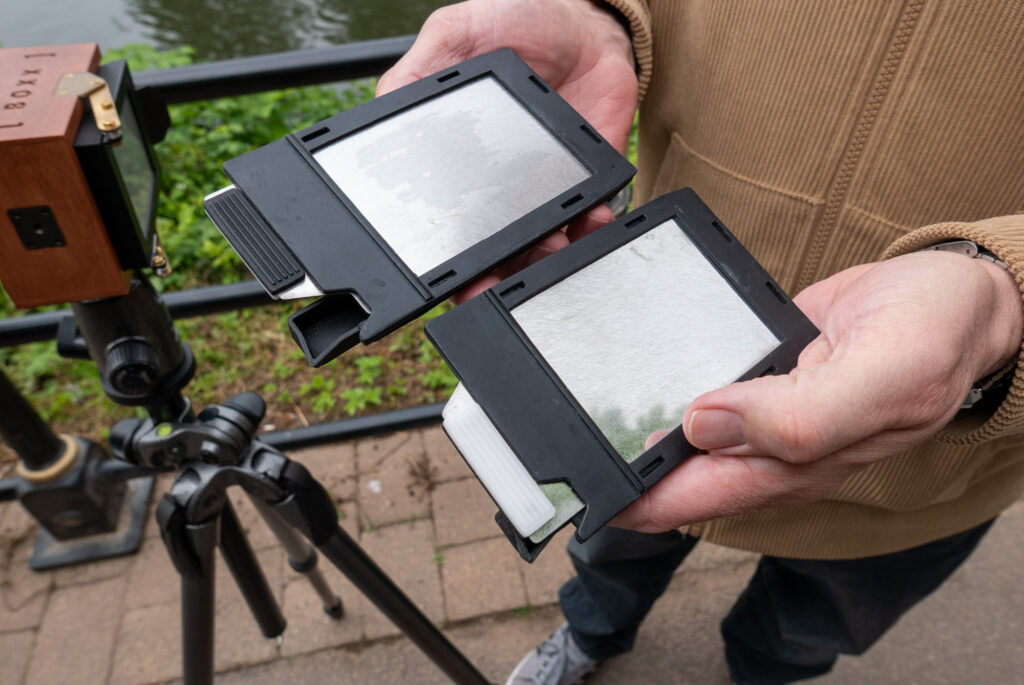
After this first shot I was ready to go on and take more. Dave had loaded 4 film holders for me, so we shot one more with the 100mm and the f/32 stop, and then two with the 55mm f/16 lens.
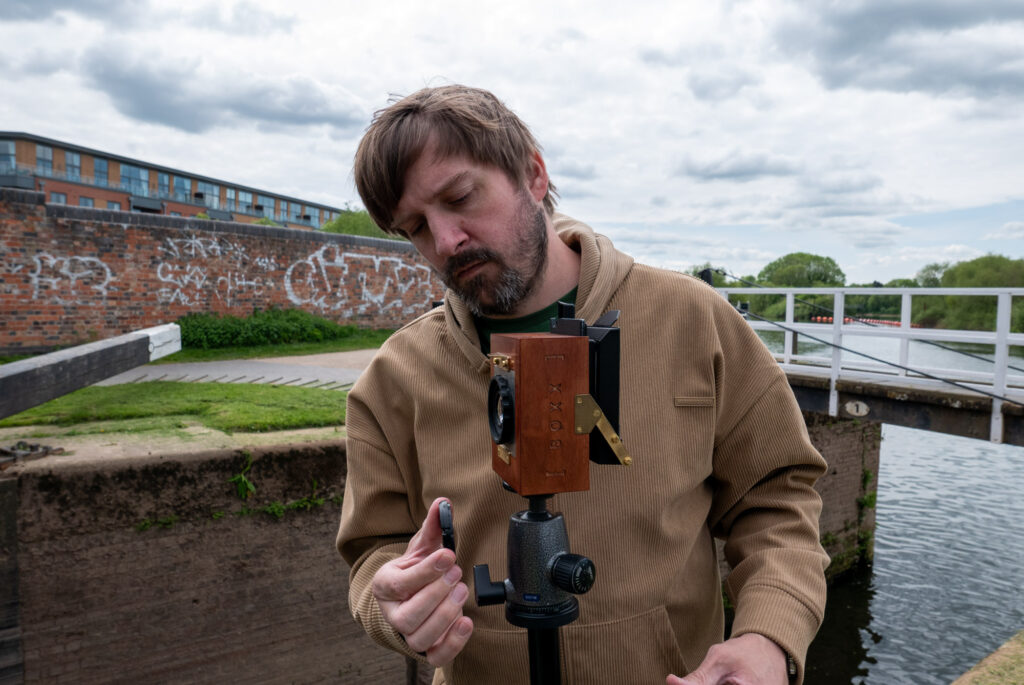
The Alfie [BOXX] has a tripod thread on two sides which allows it to be shot both in portrait and landscape orientation.
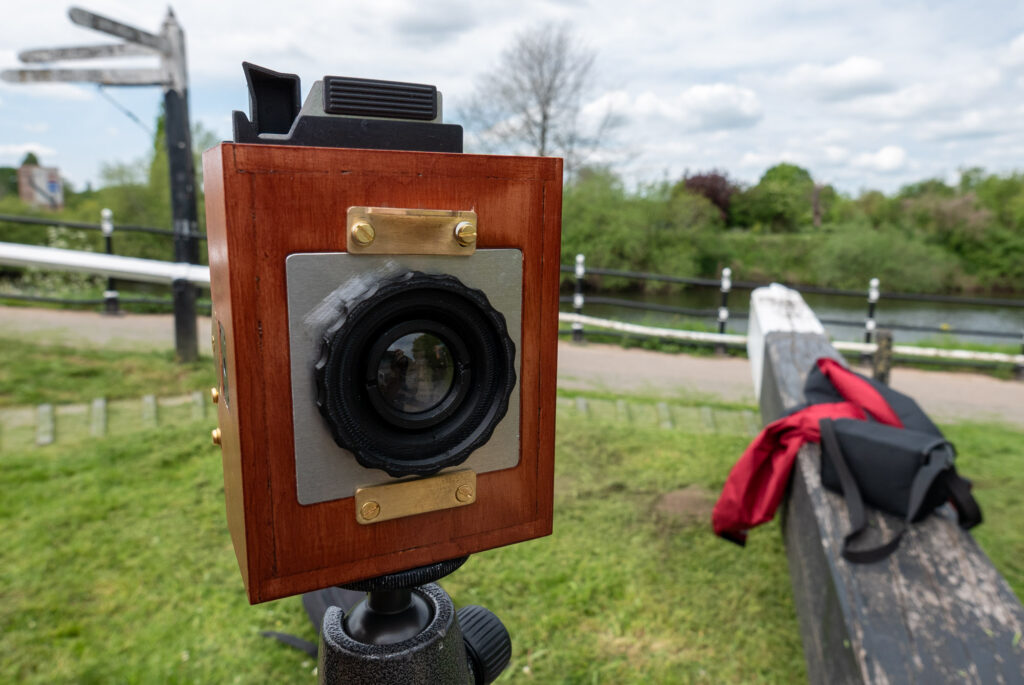
Back to my office for some developing fun…
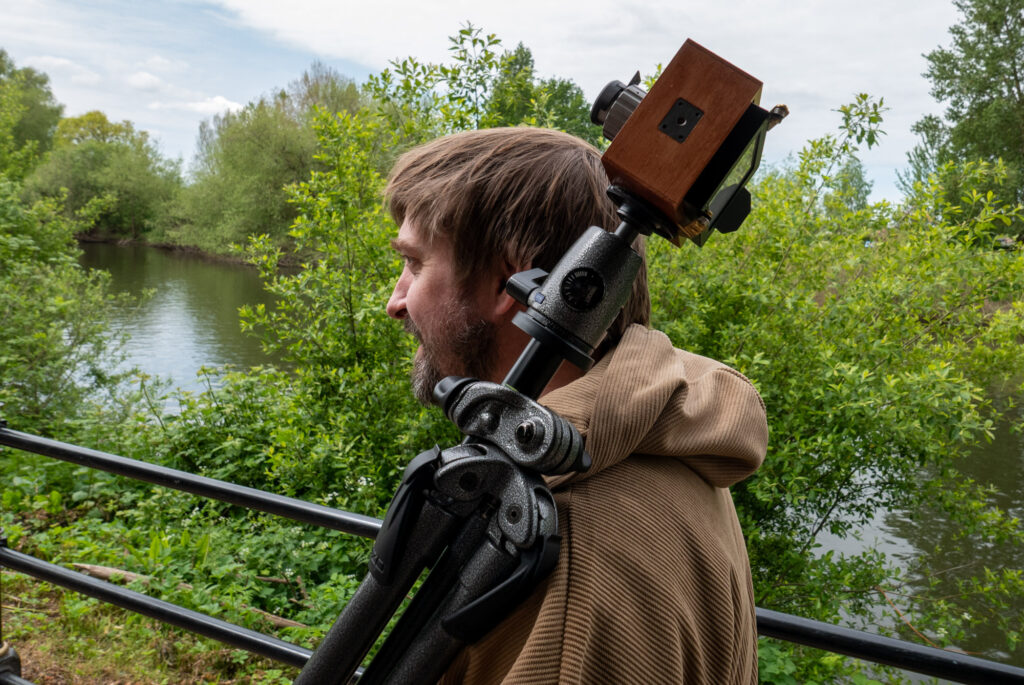
A little note on the final results…
Unfortunately our results weren’t perfect – though Dave did warn me at the beginning of the day that this might happen. He has been experimenting with chemicals recently, and had expected to bring some different ones with him today, but having had a failed experience with them yesterday, he decided to revert to some that he knew would give us some sort of result. Unfortunately, he just hadn’t had the time to prepare them fresh, so we had to use some chems he knew were probably toward the exhausted end of their lifespan. As it turned out, they were a little more dead than expected, but we did have something to show for our efforts, and to be honest, the whole experience itself was so much fun, I didn’t really care… and you can use Dave’s other test shots below as your basis for judging the capability of the camera anyway.
The Development Process
On the way back to The Kiln (my office), Dave grabbed a little box of chemicals and kit. He initially suggested we dev the shots in the boot of his car – after all there’s no reason this process can’t be undertaken out and about. In the end though, we decided to head back to The Kiln – I wanted to be able to concentrate on what was going on, and the car was on a bit of a slope which just added an unnecessary layer of complexity.
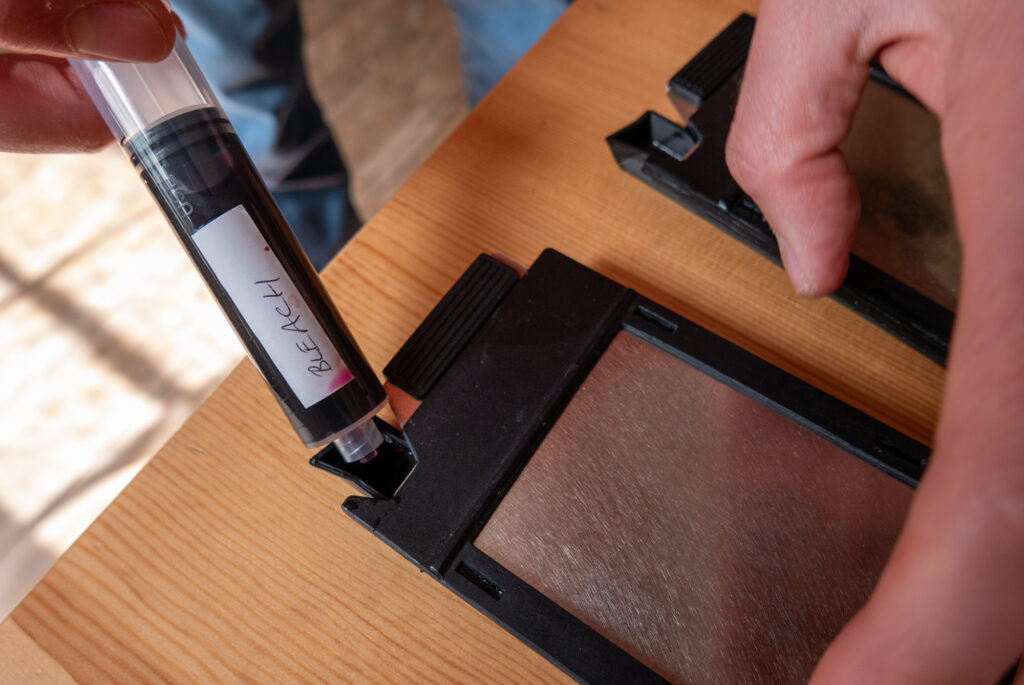
We got back to The Kiln and Dave got all the bits out we needed. Essentially, the reversal process involves three chemicals: dev, bleach and clarifier.
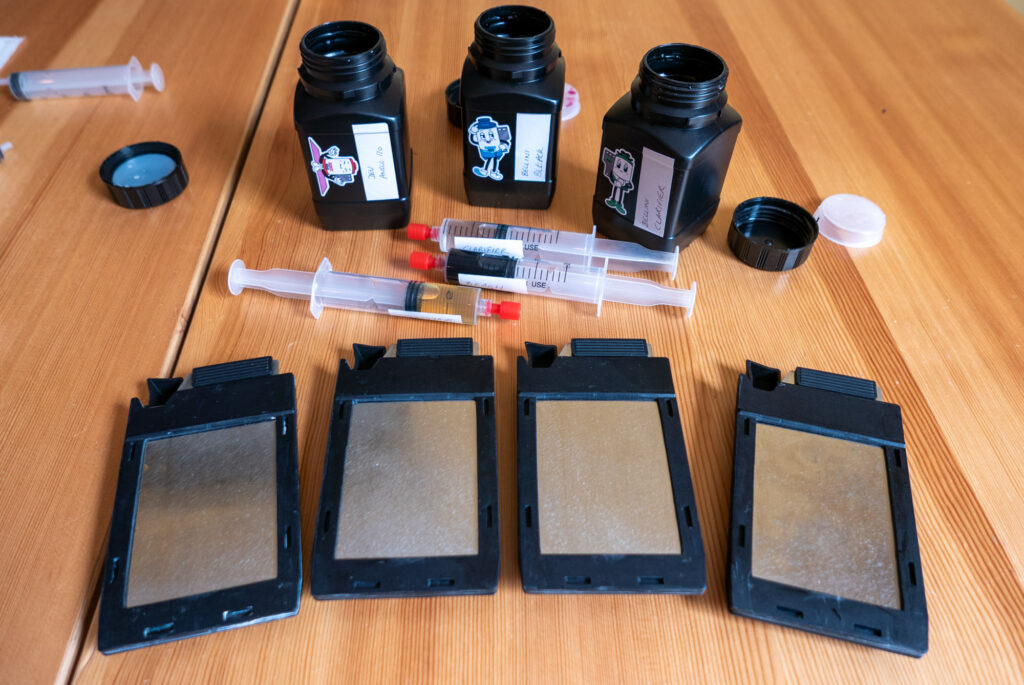
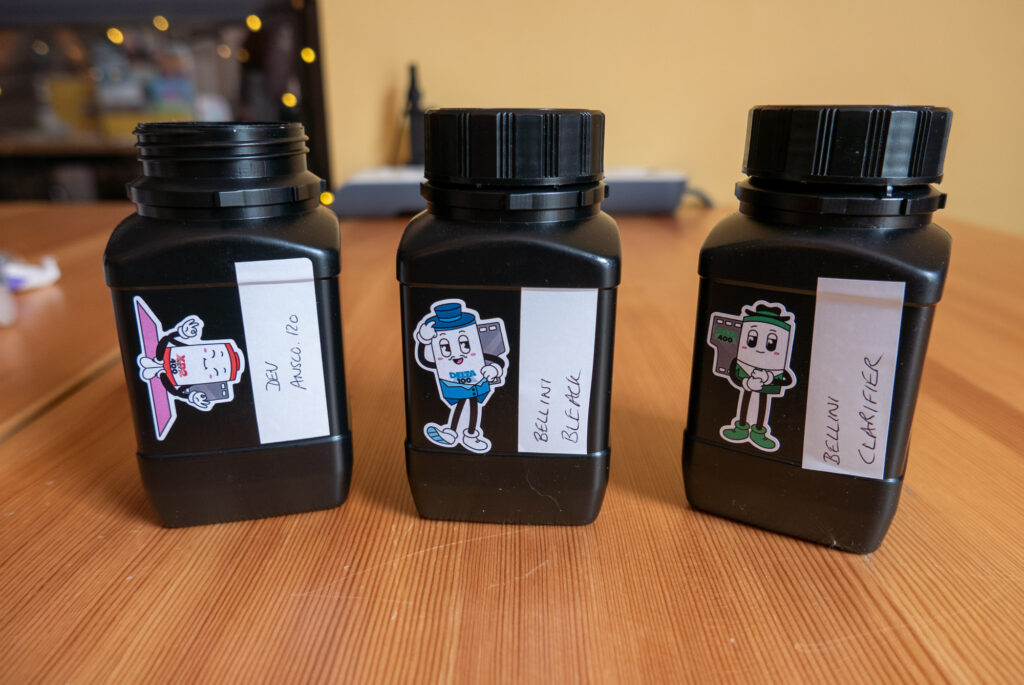 Alongside the chemicals, some water, a couple of jugs, a few syringes are pretty much all you need.
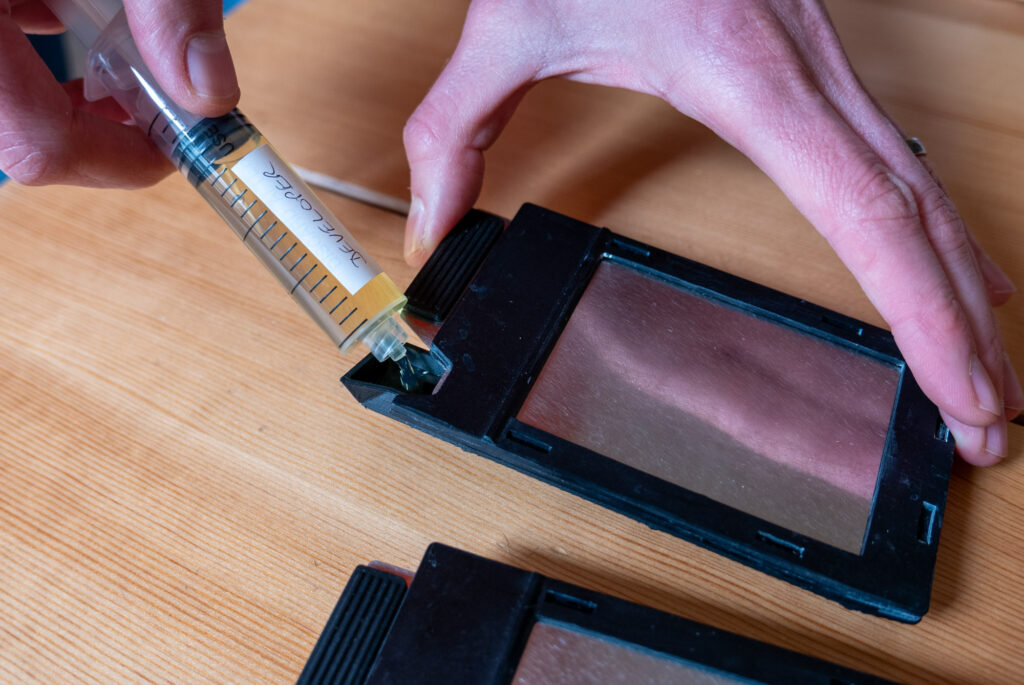
Step one is to squirt the dev into the little channel in the corner of the holder.
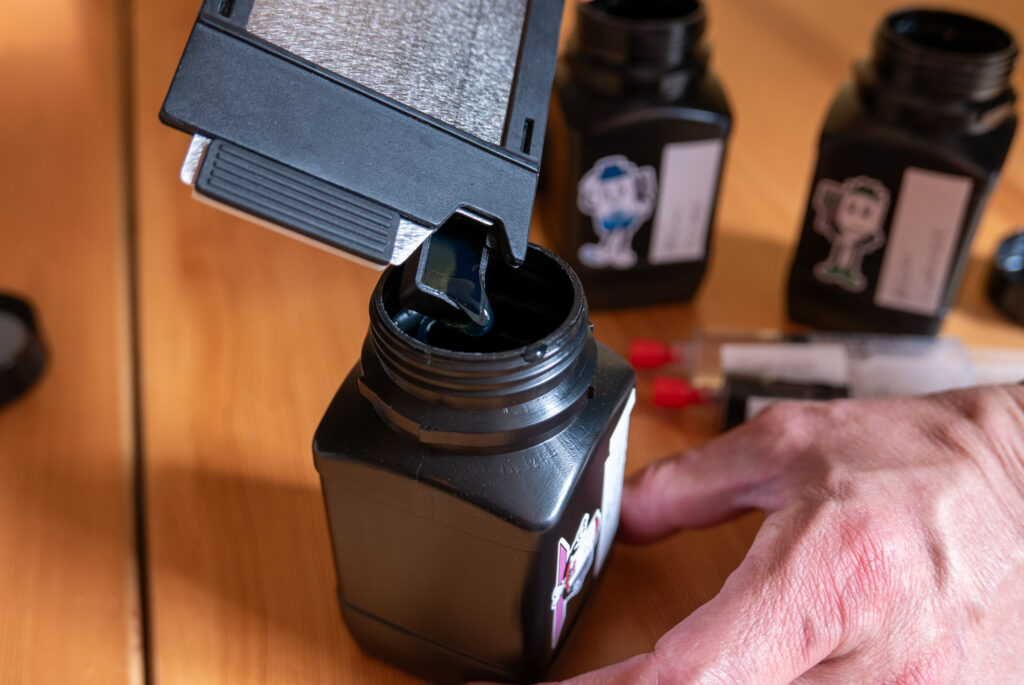
After that, you gently swish it around a bit and leave it for a minute or so depending (I think) on the chemical used. It can then be poured out.
It is then rinsed with water, and the process is then repeated for the bleach and then the clarifier. Chemical, rinse, chemical, rinse.
Once this three stage process is undertaken, there is a final dev stage that happens after the dark slide is taken out. Dave demonstrated that once the dark slide is removed, the paper is effectively re-exposed to light. At this stage, as soon as the image begins to appear on the paper, more developer should be squirted over the surface. I am sure someone with greater knowledge of this reversal process can explain why it works like this.
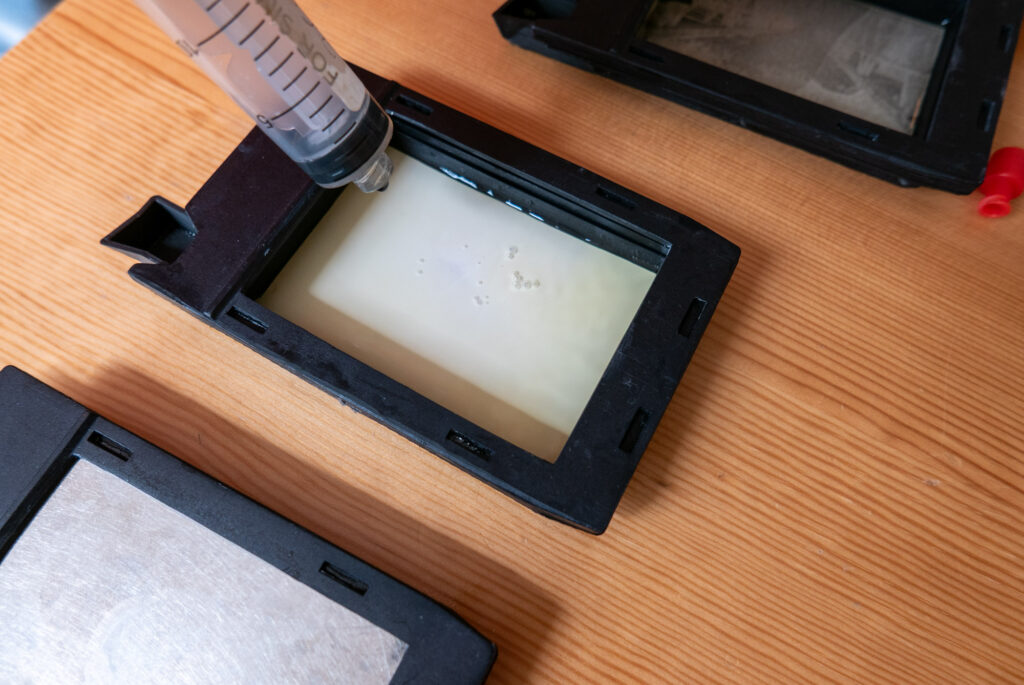
From then, the image begins to really reveal itself… or, well, not, if you’ve done something wrong…
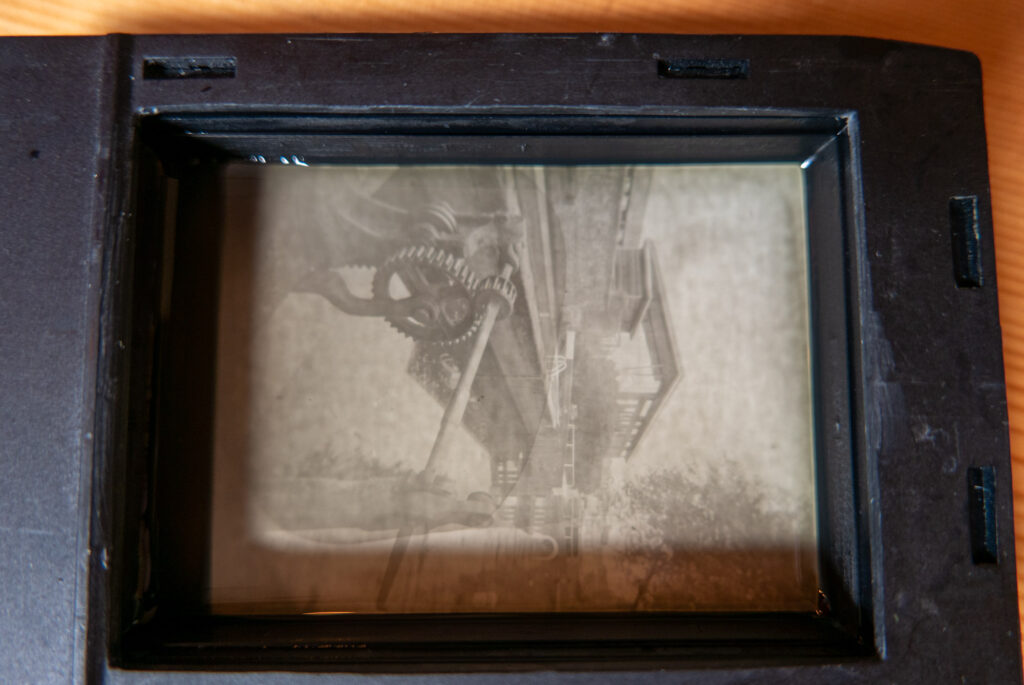
Dave was quite pleased that at least one of the images to come out reasonably well for me, though he did point out that this shot would have been even nicer had we used fresh chemicals.
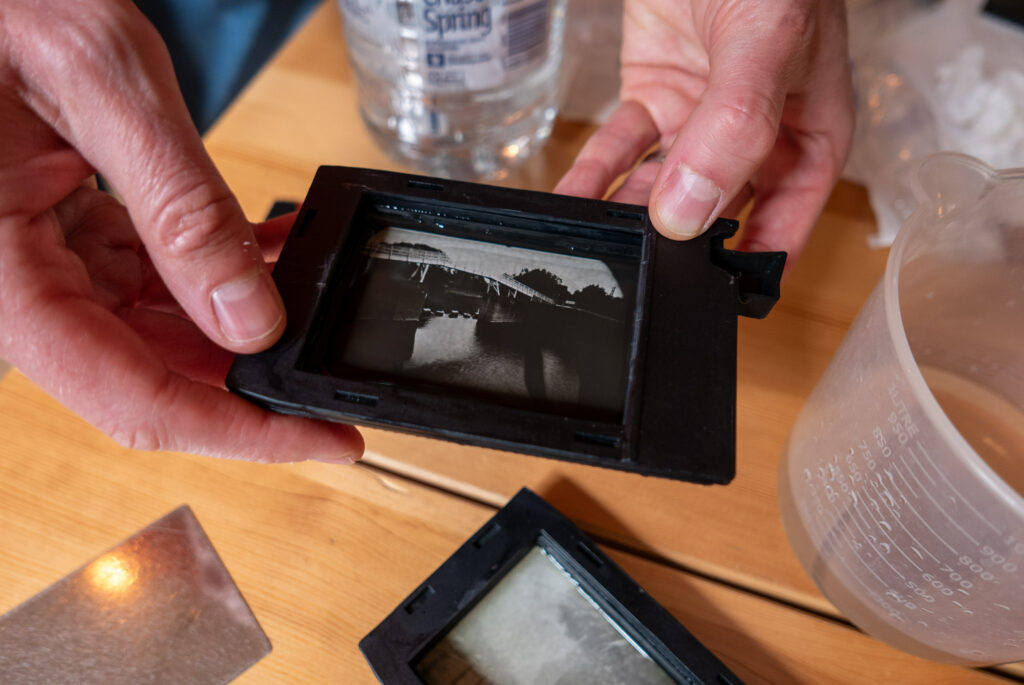
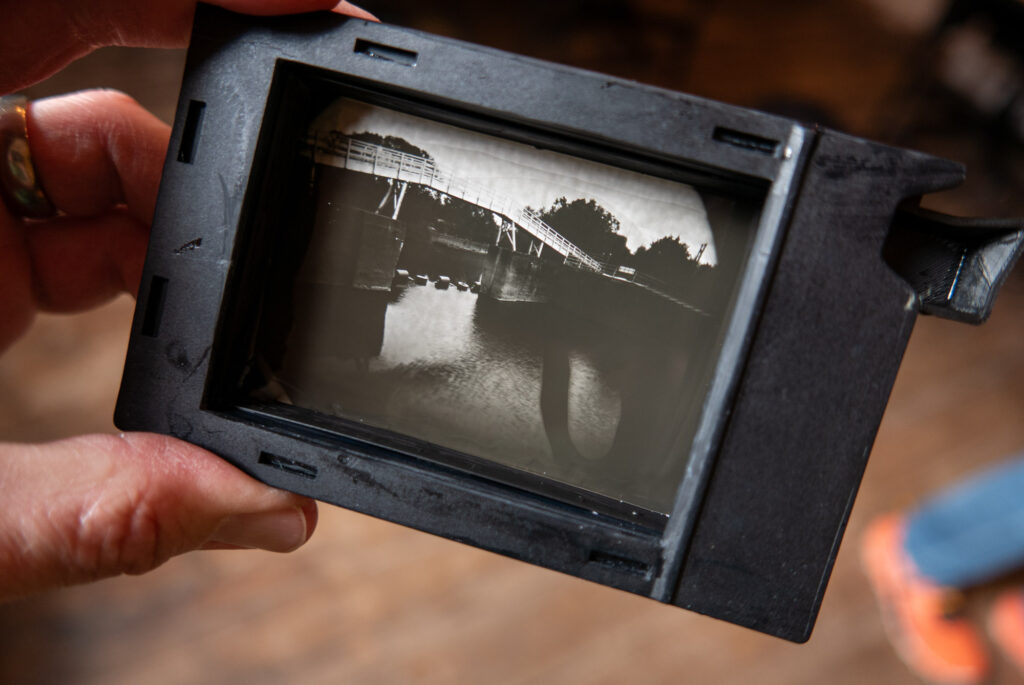
The scans
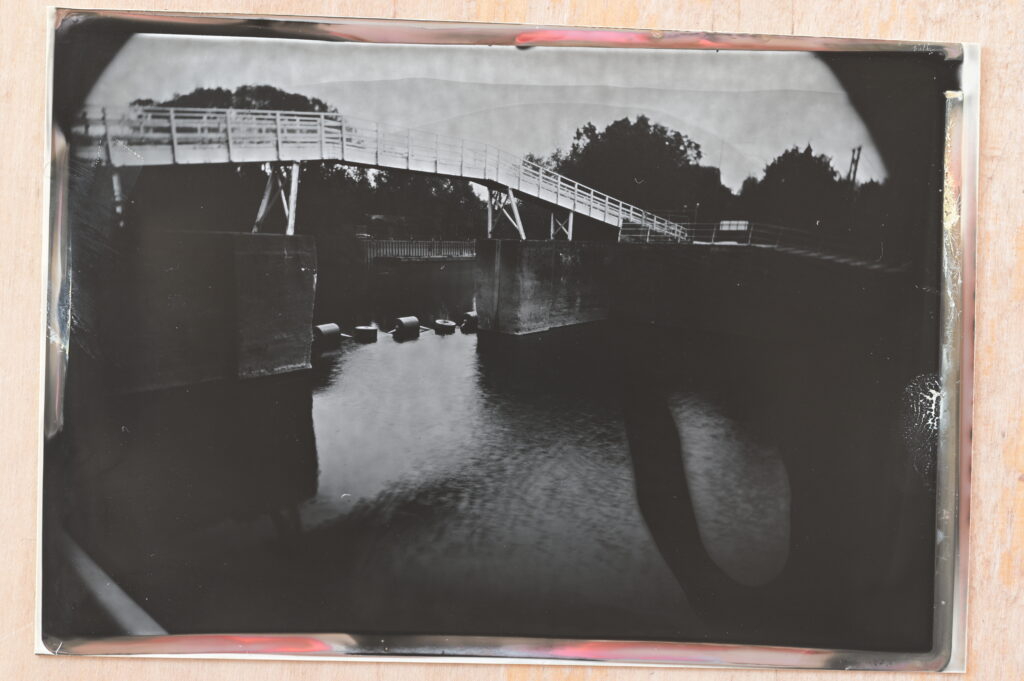
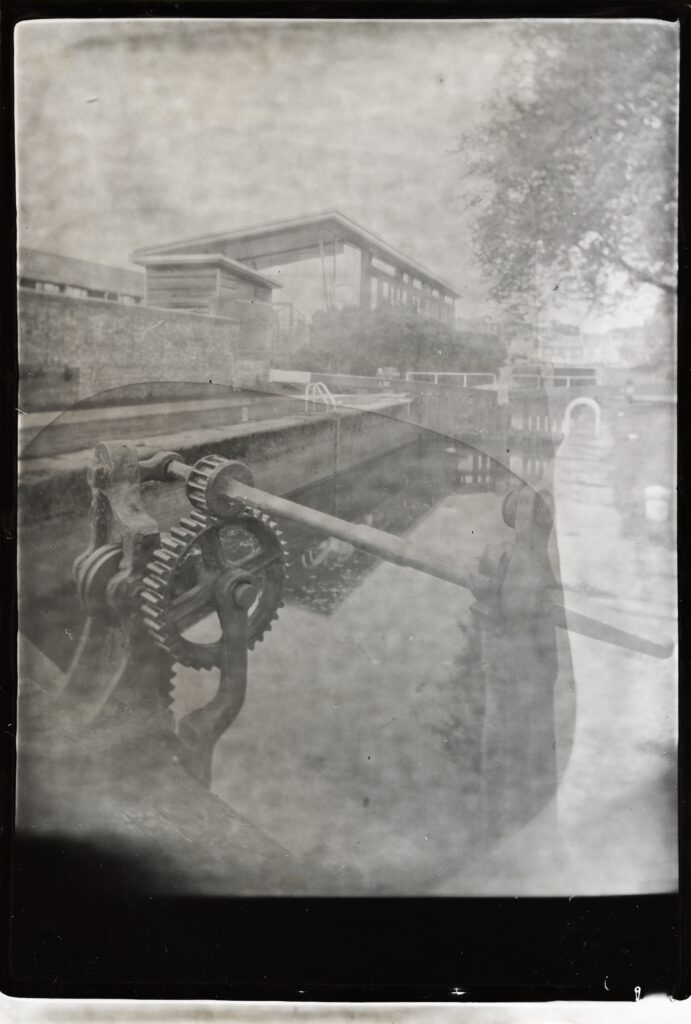
Some of Dave’s images
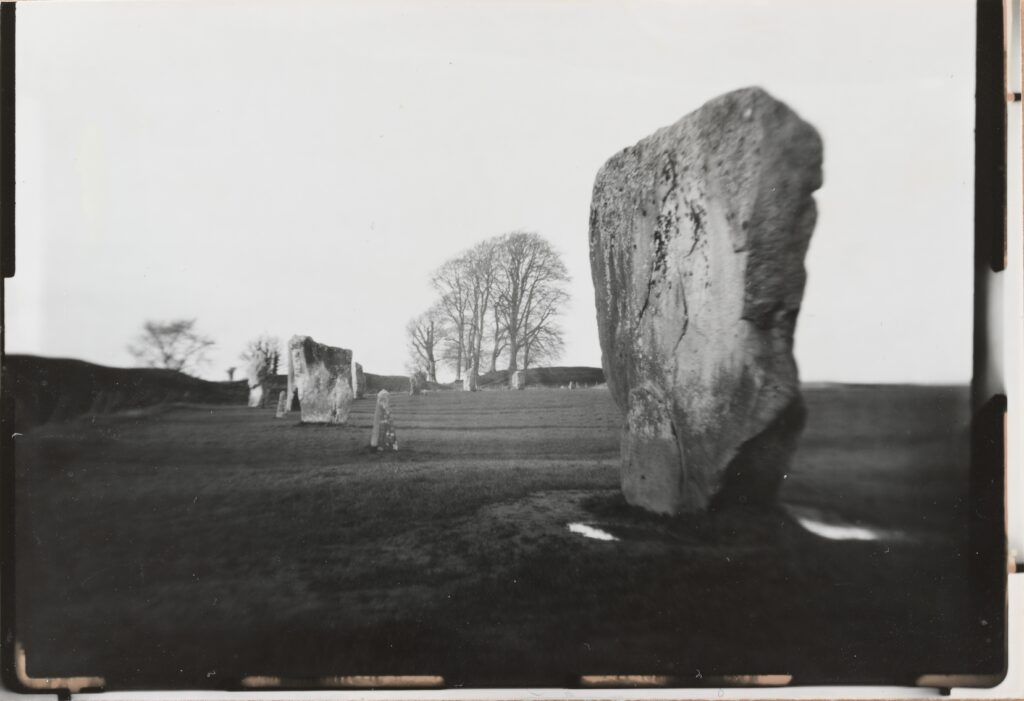
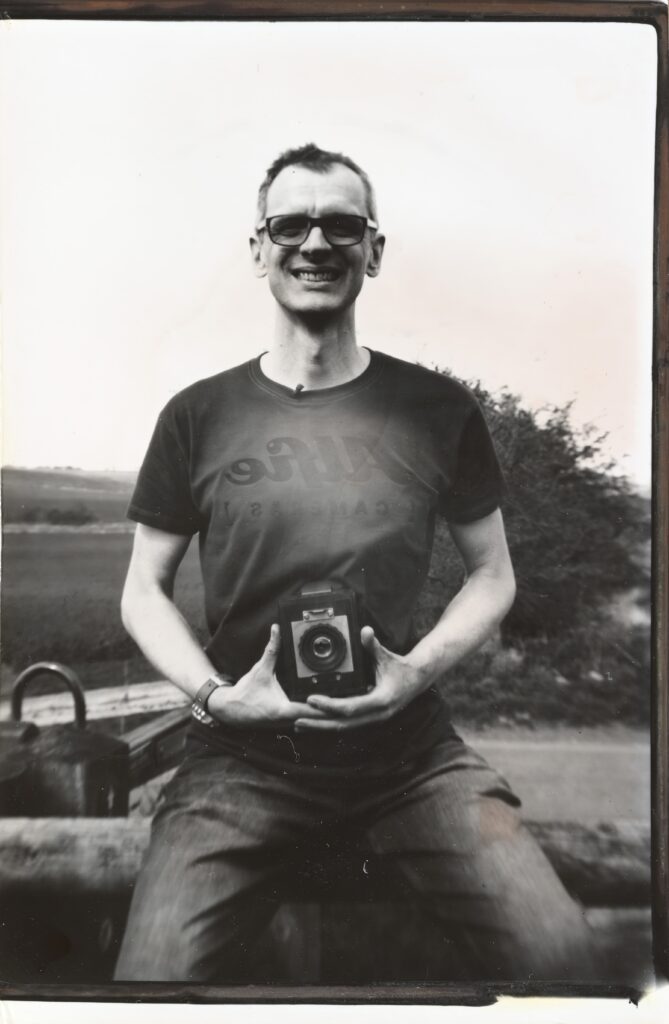
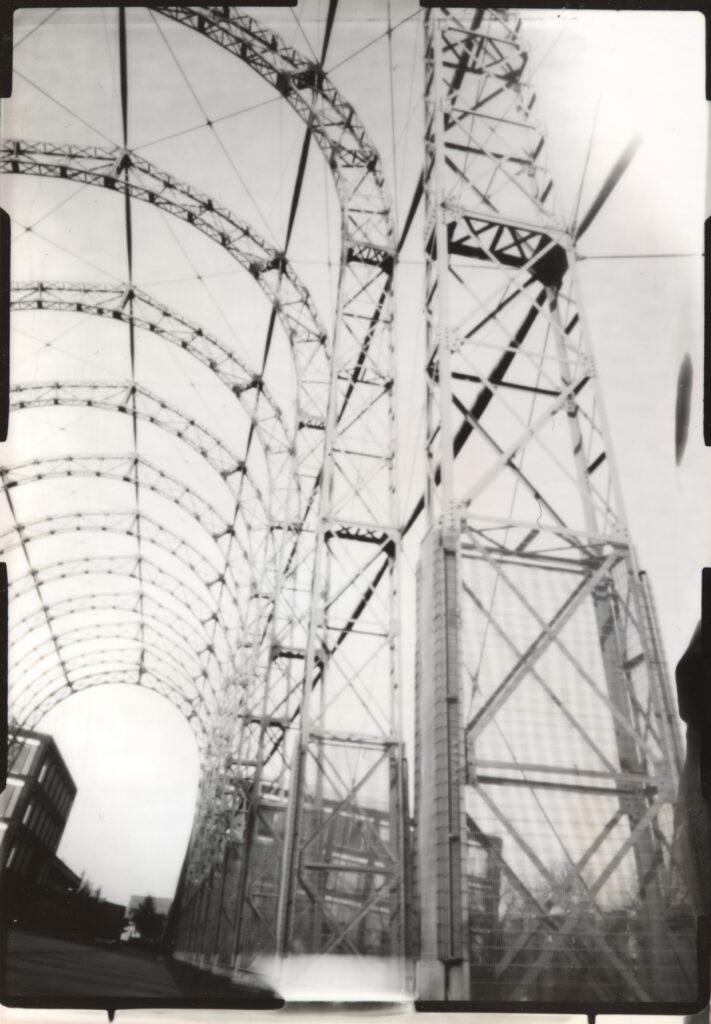
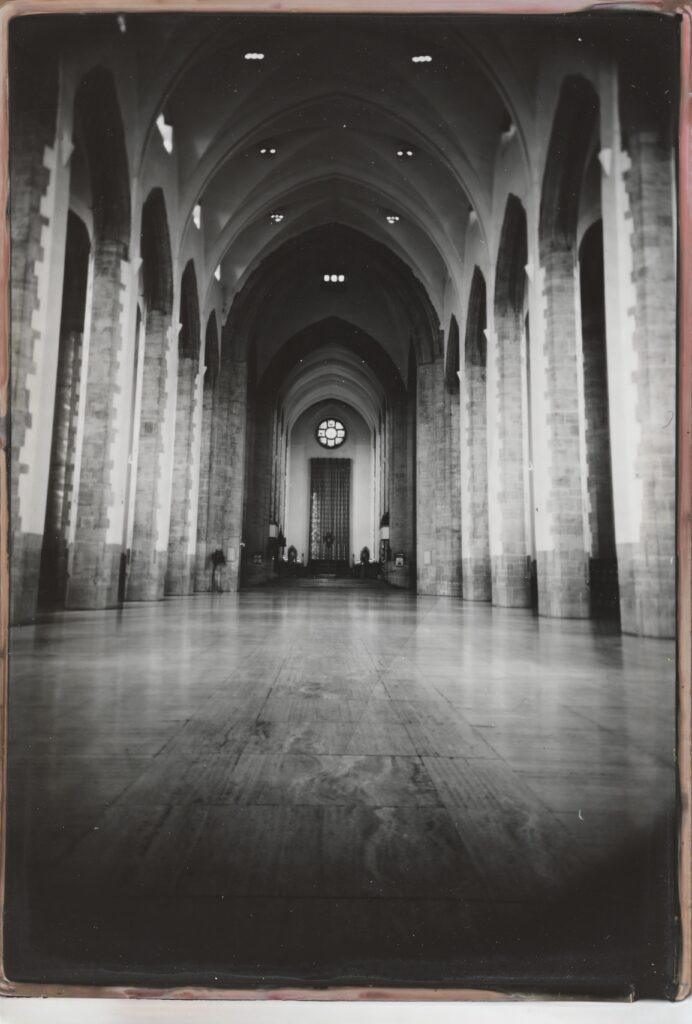
Goals of the project
Dave and I spoke extensively about the camera, the process, and his goals for the whole project over the course of the time we played with the camera. What’s quite fascinating about all of this is really Dave’s motivations – he himself is, and was, really intrigued by the idea of making a camera like this, but actually didn’t really start out as someone who knew a lot about things like reversal processing. He wanted to learn, but as someone who is very capable of applying his specific set of design and manufacturing skills to all this, he ultimately wanted to teach too.
With the release of this camera will come full and detailed instructions on how to use it. There’s options on the Kickstarter to buy just the camera, but it can also be bought with all the little required accessories and chemical too – even the little bits like dark cloths and loupes for focusing will be available. The beauty of all these options is that the [BOXX] will become accessible to anyone who wants to try it, not just photographers with specific sets of skills. Of course, there will be a bit of a steeper learning curve around some of the concepts for total novices, but it’s Dave’s intention to minimise as many of these obstacles as possible. I really have a lot of respect and time for this!
Final thoughts
As I have said, regardless of the final results, I really enjoyed the whole process. I really am not someone who regularly partakes in the chemical part of film photography. I enjoy it when I do though, and I have to say, the Alfie [BOXX] really does make for a very enjoyable way to partake. Beyond the process though, there’s also a very nicely made camera. I know a few people who make cameras for a living, and the best of them all seem to have a very keen eye for little ingenious details. Dave is absolutely one of those people. The lenses he’s designed are really smart, the camera itself is obviously very simple – it’s just a box really – but every detail seems very well thought out. And then there’s the film holders that allow the paper to be developed within them. He himself would probably tell you that nothing here hasn’t been done before and that he’s taken loads of inspiration from other cameras out there. The trick here though is how he has put it all together into a package that just feels so uncomplicated and well thought out. It feels so much like it could be enjoyed by a total ammeter at one end of the spectrum, but also an expert with loads of experience in this type of photography at the other… not to mention people like me who sit somewhere in the middle. I loved my experience with the Alfie [BOXX] today, and strongly suspect – whoever you are, with whatever level of skill or interest in photography – you would too! Good luck with the Kickstarter, Dave!
If you would like to back this project, it has just launched on Kickstarter here – it’s actually really beneficial for the success of a kickstarter if as many people back it early on, so if you think you might go for it, I would urge you to take the plunge soon, not least as the early-bird prices take the outlay down a little bit!
Share this post:

Comments
Ibraar Hussain on Alfie [BOXX] Mini-Review – A Wonderful and Truly Analogue Experience – Launched Today on Kickstarter!
Comment posted: 19/05/2026
Dave has some very nice results as well
Definitely something I’d consider at some point
Gary Smith on Alfie [BOXX] Mini-Review – A Wonderful and Truly Analogue Experience – Launched Today on Kickstarter!
Comment posted: 19/05/2026
...so you pour your chemistry into your film holder.
Martin on Alfie [BOXX] Mini-Review – A Wonderful and Truly Analogue Experience – Launched Today on Kickstarter!
Comment posted: 19/05/2026
Jon Callas on Alfie [BOXX] Mini-Review – A Wonderful and Truly Analogue Experience – Launched Today on Kickstarter!
Comment posted: 20/05/2026
Since you asked about reversal photography, here's how the chemistry works. Everything said here applies both to prints and film.
Let's start with a surface, film or paper. That surface has silver halide salts spread over it, along with other stuff. We care about the silver. Halides are just elements in the column of the periodic table where fluorine, chlorine, bromine, ... all live.
First, let's expose the surface -- as Captain Obvious would let us know, we let in a bunch of light, and every place where a photon smacks a silver atom, that atom goes into an excited state. It just vibrates around. Silver atoms are special because they stay in this excited state for a long, long time. Years. When we develop exposed film that has been sitting around for years, it works because for all those years the silver atoms stay in their excited state.
Okay, second -- we put in developer. Developer is a chemical that will turn silver halide salts into silver metal. The silver metal is what makes the black on the surface, which is kinda counterintuitive because we think of silver being shiny, but in this case it's going to be black. The developer converts the excited silver atoms more quickly than the unexcited ones. If we wait long enough, the surface will be all black, so we time how long it is and only convert some of them, and this is what gives us a grayscale on the surface. The more light, the more atoms get converted and the more black we get on them.
Third, here's where the magic happens. In normal negative-based development, we put in a "fixer" which is a different chemical that dissolves away silver halide salts but not silver metal. In positive photography, we do the opposite -- we put in a "bleach" which dissolves the silver metal while leaving the salts still there.
Recapping, we exposed the surface to the light of the image. We turned some of the silver atoms to silver metal. And then positive photography, we dissolved away that silver metal. There's still silver halide left, and it is a temporary negative still inside the dark area. Where there was a lot of light, we dissolved away a lot of silver, and where there wasn't much, there's still silver there.
Then we expose the whole surface to light again, and all the atoms get put into that excited state. And as I noted above, the silver is not applied evenly any more because of the developer-then-bleach ritual.
Now we put more developer in it again, and the developer turns all the silver into black on the surface. Because we thinned it out, we get lots of black silver metal where we want a black picture, and places that were really bright are all dissolved away, so we see the white of the paper (or clear of the film) underneath.
Tada! You have a positive print, not a negative one, because we used "bleach" instead of fixer, and then re-exposed and re-developed.
If this isn't clear -- it's all about as close to magic as there is in science -- I would be happy to explain more.
Comment posted: 20/05/2026
Comment posted: 20/05/2026
Comment posted: 20/05/2026
Comment posted: 20/05/2026
Gunny on Alfie [BOXX] Mini-Review – A Wonderful and Truly Analogue Experience – Launched Today on Kickstarter!
Comment posted: 20/05/2026
Comment posted: 20/05/2026
Bill White on Alfie [BOXX] Mini-Review – A Wonderful and Truly Analogue Experience – Launched Today on Kickstarter!
Comment posted: 21/05/2026