

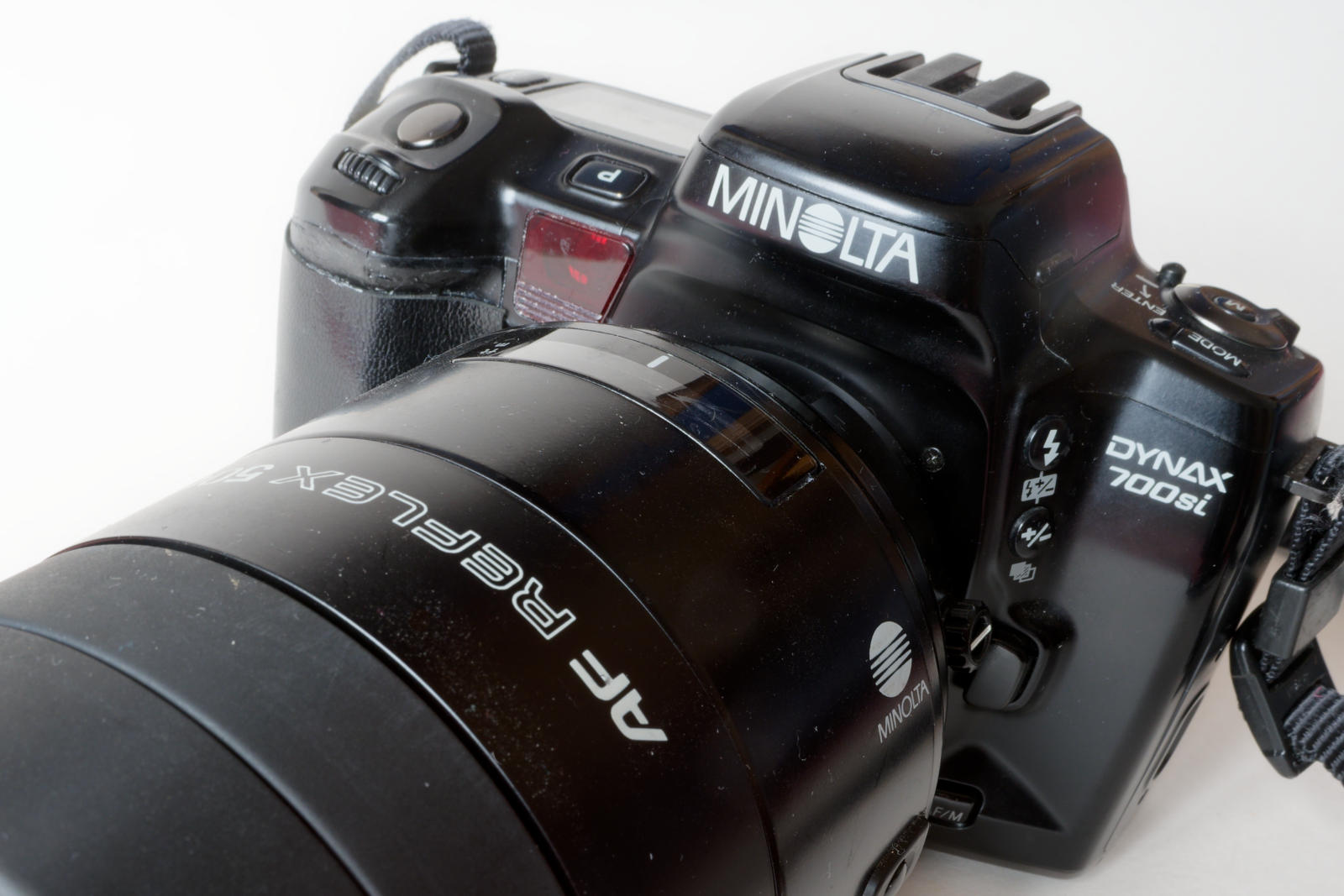
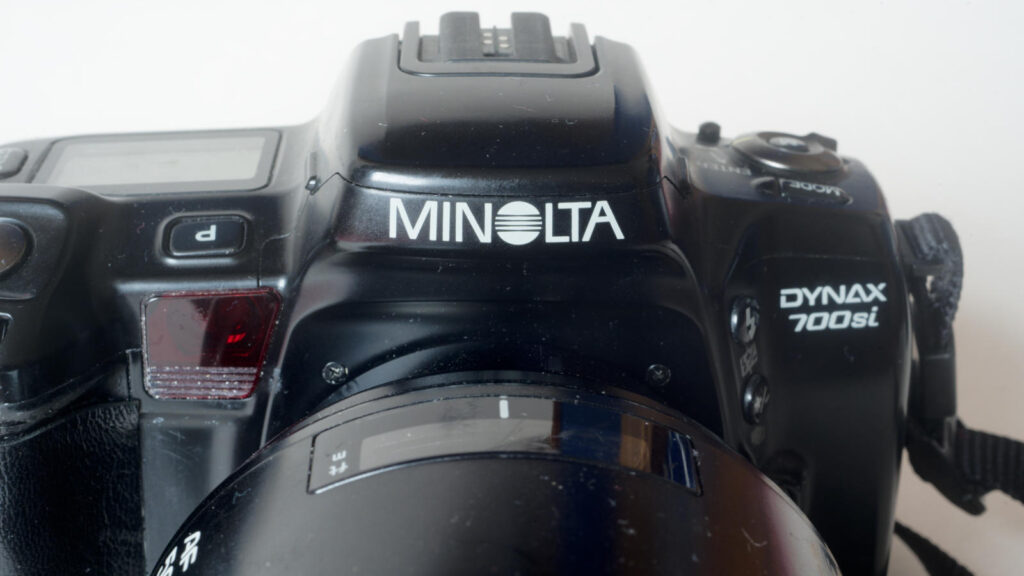
In 1993 Minolta released their latest enthusiast autofocus SLR, just two years after the release of the previous model. It was called the Alpha 707si in Japan, Dynax 700si in Europe, and Maxxum 700si in American markets. My sample copy is a Minolta Dynax 700si, but I’ll just be calling it the Dynax 700si from here on.
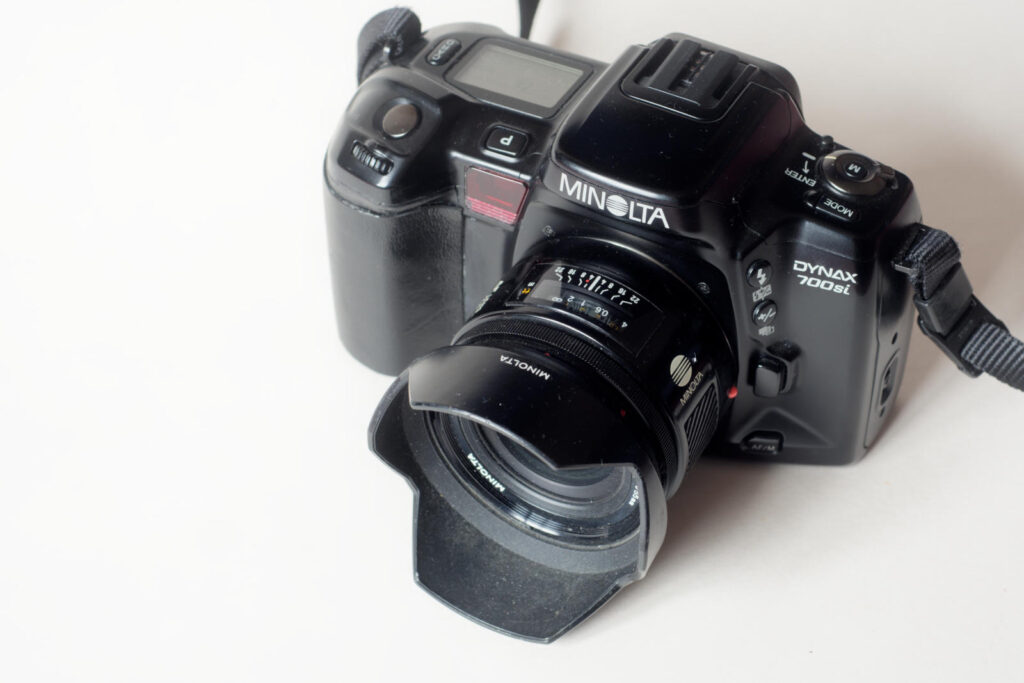
A tour around the camera
Headline Dynax 700si specification:
- A shutter with a top speed of 1/8000
- Advanced flash capabilities, including:
- A built-in flash capable of 24mm coverage
- The capability of using the built-in flash to trigger and control remote flash units wirelessly
- Ratio flash, enabling the control of more than one group of wireless flashguns to give different outputs
- A flash Sync speed (for built-in or attached flashes) of 1/200
- High Speed Sync (HSS)
- Twin control wheels, positioned at the front of the grip and rear of the camera for operation by the right hand
- Matrix metering using 14 segments
- Three frames per second continuous drive
Of these, the 24mm pop-up flash coverage and HSS capability were new to the 700si, all the rest is shared with the 7xi, which actually had a higher continuous drive specification.
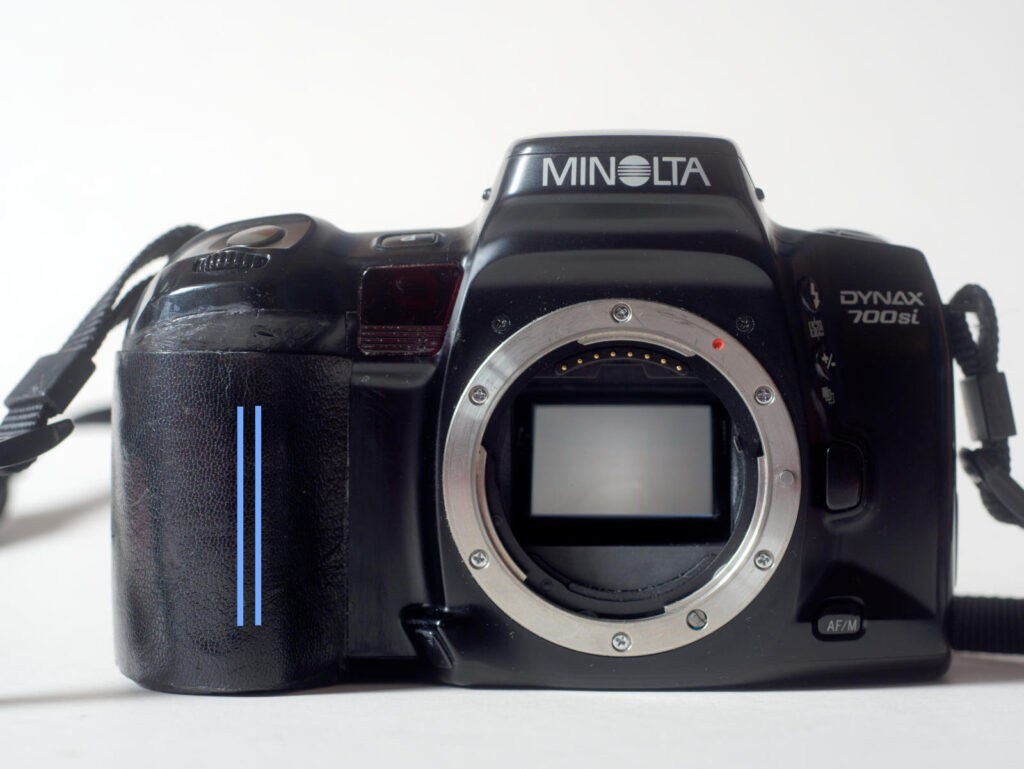
The Dynax 700si has lots of dedicated buttons and controls.
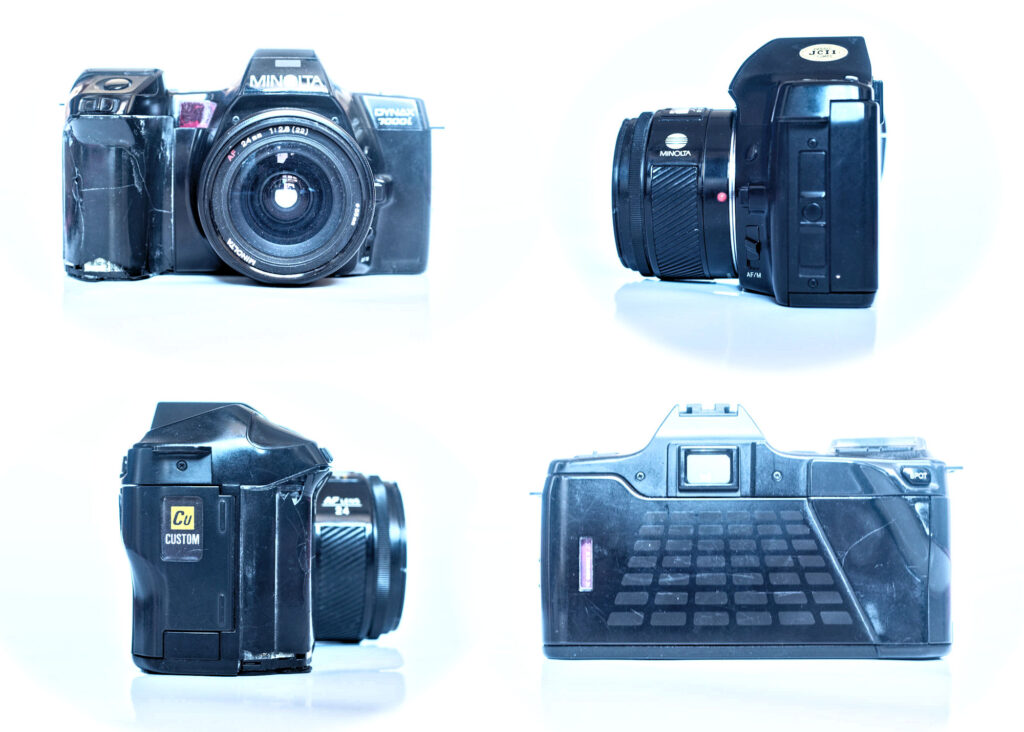
Bottom-left of the lens mount, you can see the depth-of-field preview button, with the AF illuminator top left. Over on the right side of the mount, the top button forces flash in P mode, for fill-flash, while the one below it is the exposure compensation button (covering ambient and flash). Further down are the lens release button and ‘Autofocus/Manual focus’ selector.
The Blue lines overlaid on the above image show the approximate position of the grip sensor. In the case of this camera, I needed to repair and re-cover the grip to make the camera usable; as I don’t use eye-start, I simply covered the sensor with a bit of leather. It would not be too difficult to cut a slot in the cover if you use eye-start.
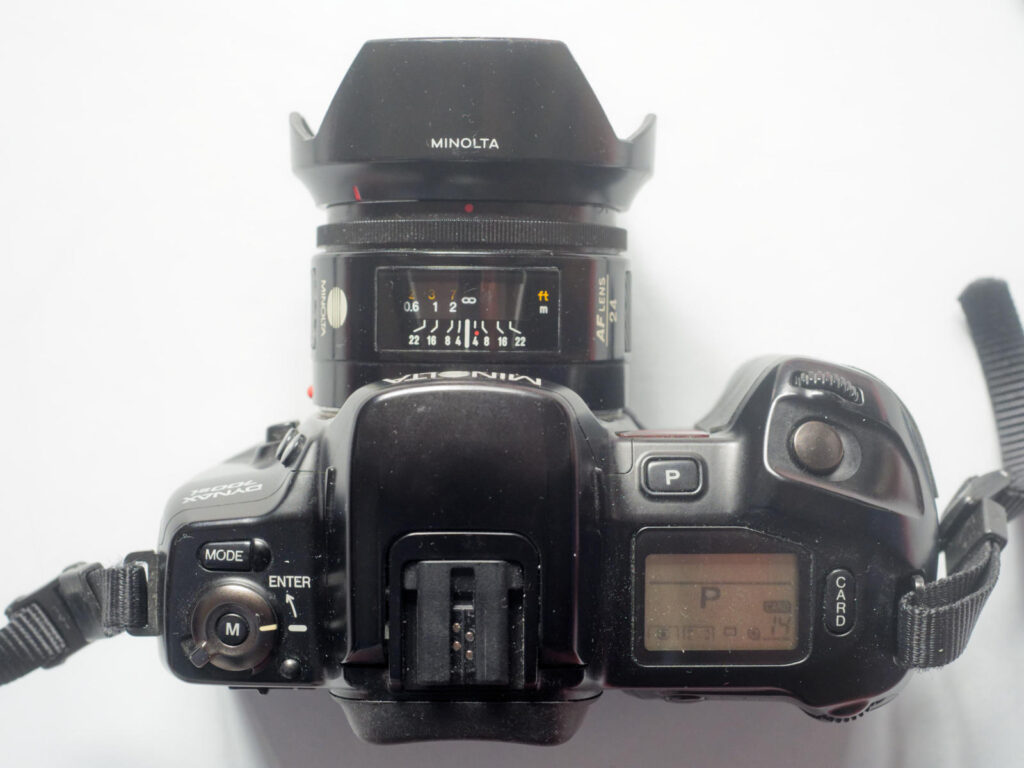
On the top-plate we see the mode button and Memory button/setting ring on the left. The pentaprism ‘hump’ has little lugs on each side to manually raise the pop-up flash and features Minolta’s locking ‘iISO’ hotshoe. On the right, we have the ‘P’ reset button, LCD screen, shutter release, and 45-degree angled front control dial. Also present is a ‘card’ button.
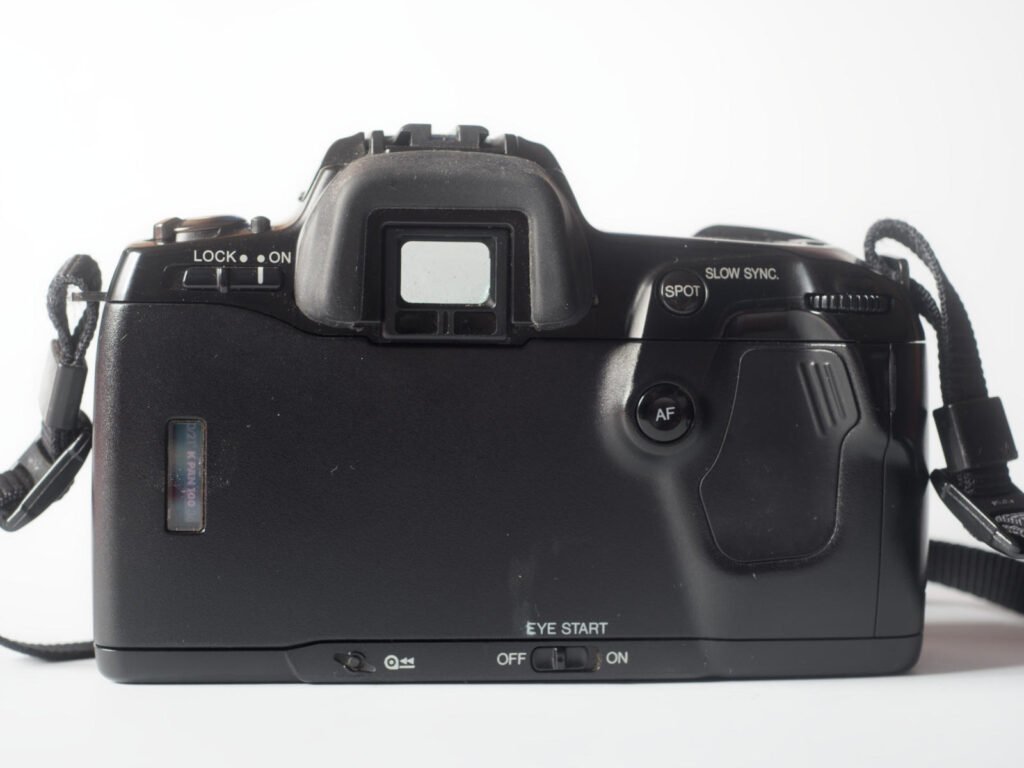
The top edge of the back features the on/off switch, eye-sensor under the viewfinder, spot metering button (forcing slow sync when using flash in P or A modes), and rear control dial.
The hinged back has a window to display the film loaded and an AF button, while the bottom edge has a (protected) button for manual rewind and a switch to control eye-start (moot on this camera, as I’ve covered the grip sensor).
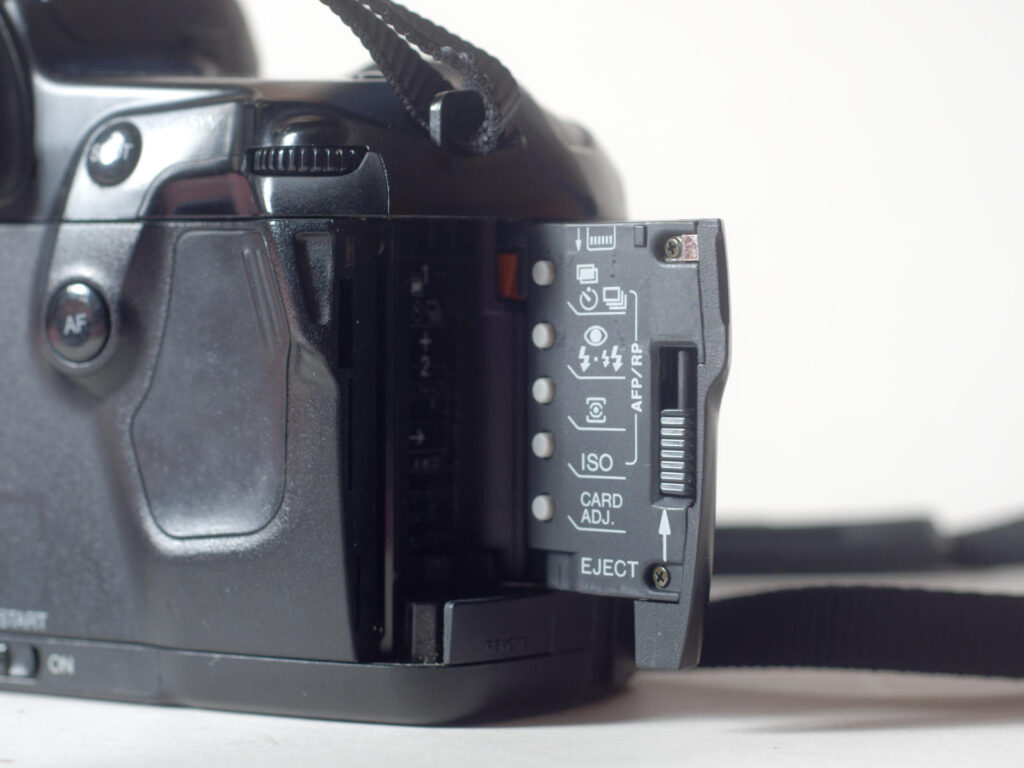
As well as a slot for cards on the top edge, the door has buttons for drive mode, flash mode (standard, anti-red-eye, wireless), default metering areas (matrix, spot, average), manual ISO selection, and card adjust, as well as a slider to eject the card. Pressing the drive and ISO buttons simultaneously lets you select between release priority or AF priority.
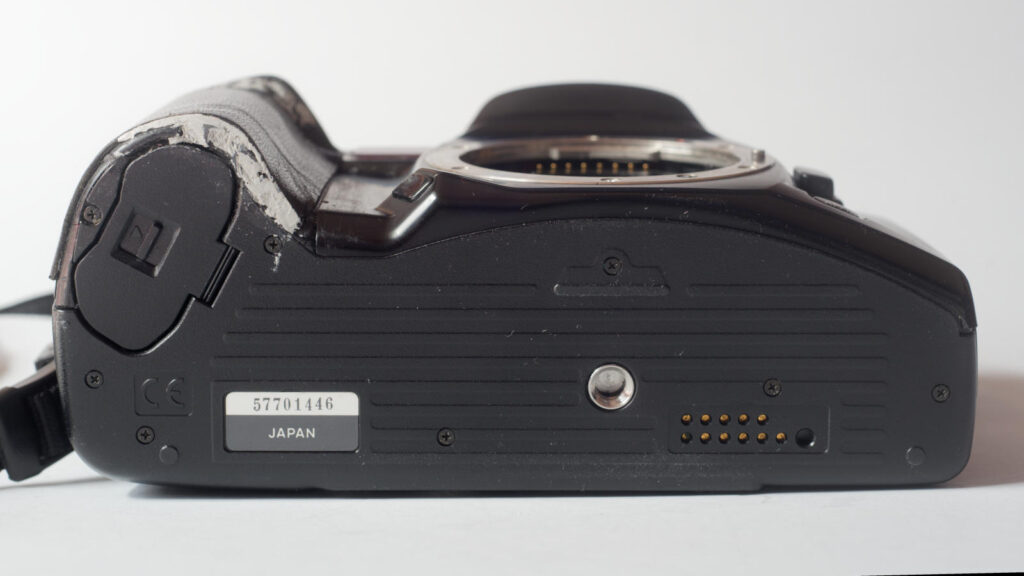
On the camera base, we have the battery compartment, tripod bush, and contacts for attachment of a battery/vertical grip (VC-700). The door of the battery compartment detaches and fits into a recess in the grip for storage.
Economies
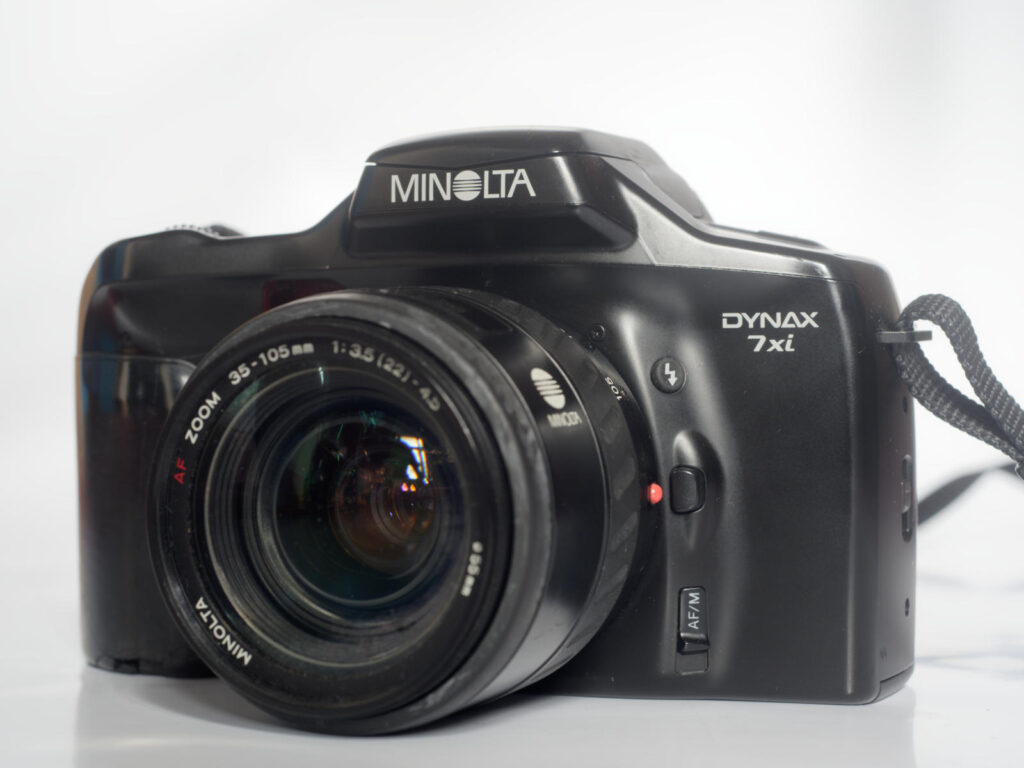
There is some evidence that economies were being made with the Dynax 700si in comparison to the 7xi. These mainly concern materials and build quality. As with the 7xi, the Dynax 700si uses plastics extensively, but the plastics in the 700si feel a bit less substantial in comparison to the (extremely solid) 7xi. Looking at the fit of the body panels, the Dynax 700si also shows signs of less careful construction. The material used for the grip has reverted to plastics similar to the 7000i, and it suffers from crumbling in the same way.
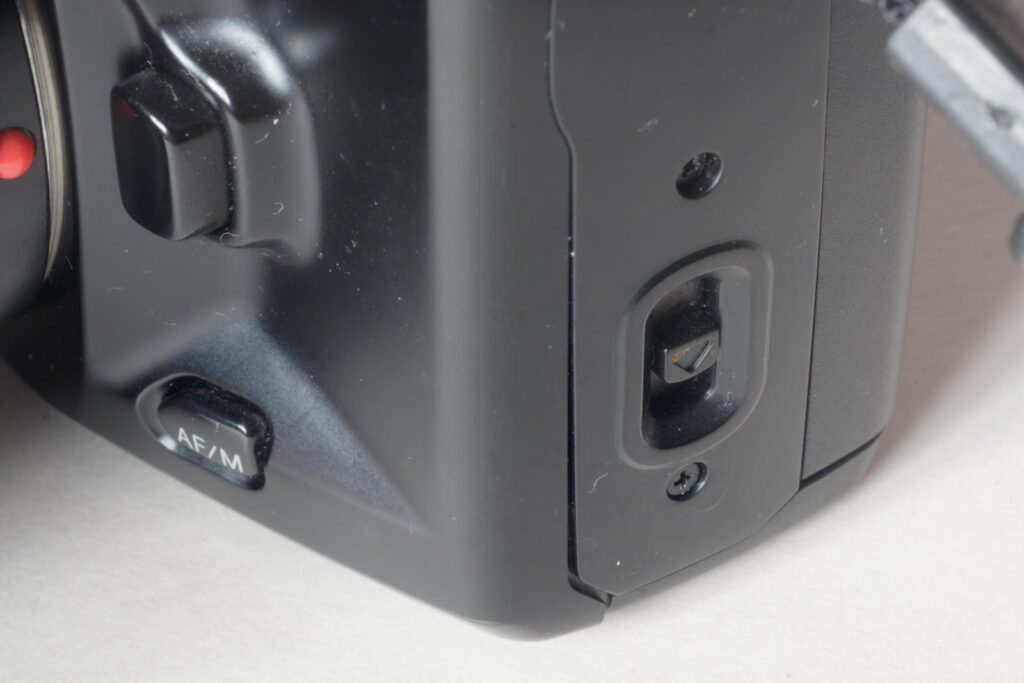
While the control dials are very usable, they are smaller in diameter than the ones used on the 7xi. The card door at the side of the grip is also less substantial than the one on the 7xi, and the lens release button mechanism, while perfectly serviceable, is simpler in its construction (and it creaks a little when pressed).
The specification of continuous drive has also been pegged back; rather than the high (4fps) and low speed (2fps) advance of the 7xi, we just get an intermediate speed of 3fps, which is a return to the 7000i spec.
Flash
The pop-up flash is now manually deployed, a slight cosmetic blemish (due to the little lugs required on each side of the pop-up), but far more practical. The button on the side of the mount no longer deploys the flash, but forces flash for fill-flash in P mode. The Dynax 700si also allows for flash compensation.
The pop-up is the same output as the one on the 7xi, but the coverage is usefully wider, extending out to cover the field of view of a 24mm lens.
The other major change to the flash system is the addition of High-Speed Sync (HSS). Because higher speeds on focal plane shutters do not expose all the film at the same time, flash is normally limited to the fastest speed where the shutter is completely open so that the brief but intense flash can illuminate the whole film gate at the same time.
HSS produces a much longer burst of light, spanning the whole time the slit in the focal plane shutter is travelling across the film. This means that speeds faster than the traditional sync speed can be used. The technical problem is getting an electronic flash to be consistent in intensity across the entire exposure. The practical downside is that the range of the flash is much reduced with the longer pulse.
As with the two previous cameras, the Dynax 700si does not have a studio flash PC terminal on the camera body.
Control dials
The Dynax 700si continues with the twin-dial concept, although the front dial is moved from a vertical position in front of the shutter release to a 45 degree angle at the front edge of the grip – a position similar to the jog-dial on the 7000i.
In a welcome move, both dials work in all exposure modes.
Dedicated buttons
The Dynax 700si does not have a function button, but it does see the return of the Mode button, which allows you to set P-A-S-M exposure modes by turning the front control dial while the mode button is held down.
As well as being used for accessing exposure mode, the 7xi used its function button to set exposure compensation, metering mode (matrix, spot or CW average), and AF sensor selection. On the Dynax 700si, each of these gets its own button.
The Dynax 700si trades the AEL button of the 7xi for a Spot button (another return to the setup on the 7000i). It also gains a ‘memory’ button and a memory set dial and gets a switch to disable eye-start.
The manual rewind button moves from the card door to the bottom back edge of the camera.
On the whole, this button-and-dial interface seems a far more intuitive version of modal control than we had in the xi series.
Eye-start
Eye start is still available on the Dynax 700si, although the camera gives a switch to turn it off if you are not a fan. The grip sensor moves to the front edge of the grip. You can’t see it on my ‘tour’ photos because the grip on my copy was falling apart to such an extent that I needed to repair it with a mixture of Araldite and plastic filler and cover the grip and sensor with a patch of leather to make the camera usable. It should be possible to cut the leather to expose the grip sensor contacts, but as I tend to turn eye-start off in any case, I went for the easier fix.
Viewfinder
The Dynax 700si retains the LCD overlay in the viewfinder, but restricts it to showing exposure compensation and AF points. As well as the standard ‘G’ focus screen, there were options for an L screen with a grid pattern, and an S screen with a graticule. Screens appear to be held in place with a sprung bar rather than the releasable cage of the 7000i. It looks like screens are intended for installation at a service centre. They are different from the original interchangeable screens. As I didn’t have a suitable alternative, I left well alone.
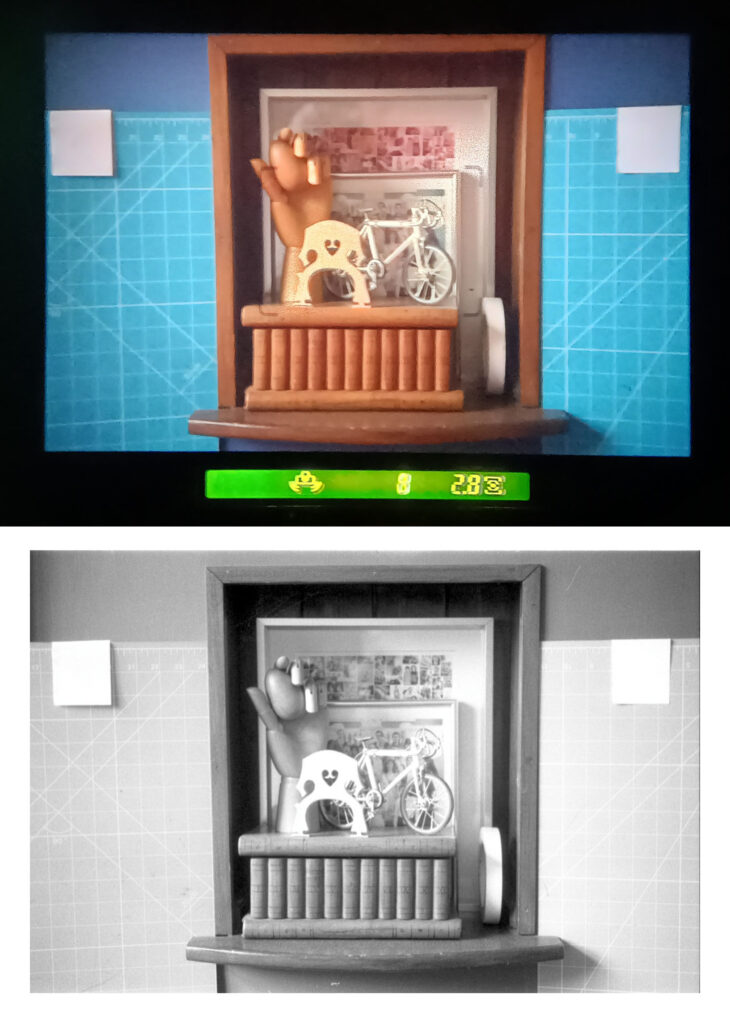
Viewfinder accuracy looks pretty good, about 96% horizontally and 95% vertically, about 91% overall, and reasonably centred.
Release/focus priority
When using autofocus, Minolta’s AF SLR cameras had always waited until they got an autofocus lock before releasing the shutter. What Minolta introduced on the Dynax 700si, was an alternative mode where you could tell the camera to fire the shutter, even if it hadn’t got a solid lock. In effect, giving priority to getting the picture, rather than to getting the subject in perfect focus.
Release or focus priority doesn’t quite get its own dedicated button; instead, you set release mode by holding down the Drive and ISO buttons in the card door and then choosing between autofocus priority (AFP) or release priority (RP).
Metering
Metering is sound. Matrix metering had been impressive from the get-go and had been improved over time. The spot metering function regains a dedicated button on the Dynax 700si, which makes it far more practical to use in unusual lighting conditions. Centre weighted average metering is also available as an option.
Memory
Minolta had long included a ‘P’ button to their AF SLR cameras. This returned the camera’s settings to a standard exposure mode (program), drive mode (single), metering (matrix) and exposure compensation (none). The Custom xi card allowed you to define your own settings that the camera would go back to once the P button was pressed.
On the Dynax 700si, Minolta introduced an ‘M’ button. In effect, the M button gives you a second customizable button to switch the camera to your own choice of settings for exposure mode, aperture, shutter speed, drive mode, flash mode, exposure and flash compensation, metering mode, focus area, and shutter release mode.
To memorise settings, simply set up the camera exactly as you want, then press the little lock button and shift the M dial around to SET. You should get a ‘memory’ message on the LCD display showing that the camera has recorded your settings, at which point you can return the M dial to its original position.
Whenever you press the M button, the settings should return to your memorized settings.
Double exposures
The Dynax 700si gains a ‘double exposure’ option on the drive options. This feature is designed to take just two shots (the first without winding on). The first shot shows as M1 in the LCD display, while the second shows as M2. After the second shot, the camera winds on and the double exposure setting is cancelled. If you are recording shot information on a data card, only the M2 settings are recorded.
If you want to take more than double exposures, you can deliberately ‘confuse’ the camera by going into double exposure drive mode and then, before taking the first ‘M1’ shot, entering the current settings into the memory for the M button. If you take the first shot and then press the M button, the camera will reset to M1 and take the first shot again without winding on afterwards. This feature/kludge allows you to expose the same frame as many times as you like – pressing the M button between the M1 and M2 shots until you want to stop. This isn’t what the camera was designed to do, but it seems to work. If you take this path, exposure is going to be an exercise in trial and error.
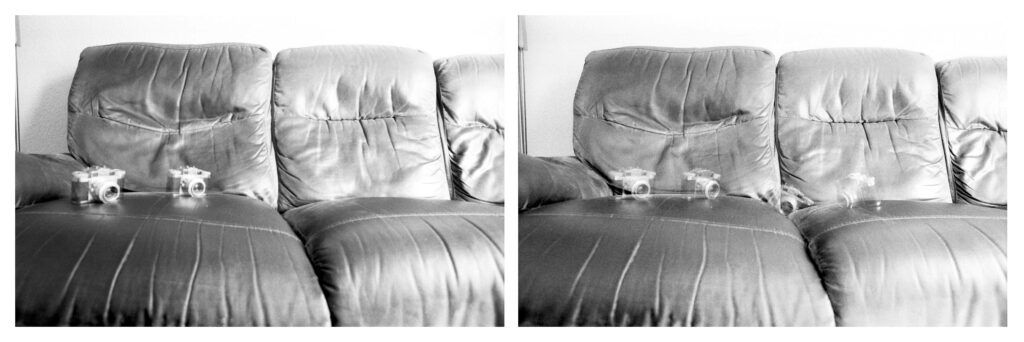
My experiments suggest that going into double exposure mode does not affect exposure measurement, so you will have to apply your own compensation.
Powered zoom
The Dynax 700si does not have a ‘wide’ button, so it can’t do the 7xi/9xi trick of showing you what is just outside the frame and then zooming in when you take the picture when using one of the five ‘xi zooms’. To my mind, this is not a huge loss.
The xi zooms are still usable though, as power is still supplied to the zoom motors via the mount. Because it relies on a control on the lens rather than the camera, I’m also told that the Image Lock Size (ILS) feature continues to work.
Card support
The Dynax 700si still has a card door and supports most of the creative cards. The ones that simply don’t work are the A/S mode card (designed for the 5000i, and offering functions that the high-end cameras could do in any case) and the original Custom card (replaced by the Custom xi card for the later cameras). Full details on compatibility are in the 700si user manual.
This is the only camera in the si series to take creative expansion cards, and it was also the last camera Minolta produced that used them. Later cameras tended to have the features offered by the cards built in.
Missing
What the Dynax 700si doesn’t have (possibly due to the AF button on the film door) is a date back. It isn’t a huge loss, but Minolta did produce a special ‘QD’ version of the camera with date imprinting built in. I’m not familiar with the 700si QD, but in general Minolta date imprinting backs support years up to 2019.
No longer missing..
Depth of Field (DoF) preview
The Dynax 700si has a depth of field preview! However, because AF focus screens are biased towards light transmission, it is not going to give a great idea of true depth of field on the final image.
Surrendering to user demand (even if it was for a feature that wasn’t very useful) did mean that Minolta could stop making excuses and didn’t need to provide substitutes like the 7xi’s DoF overlay. The DoF preview is quite noisy when deployed, and you can’t change aperture while it is set.
Verical/Battery Grip
Minolta introduced a grip for the Dynax 700si called the VC-700. It requires you to remove the battery and the battery door from the bottom of the camera so that the ‘spike’ of the grip can supply power to the contacts in the battery box.
I used one of these about 15 years ago. It is good, but isn’t as nice to use vertically as more modern grips – the vertical bit of the grip is a bit narrow and doesn’t fit your hand as well as the standard grip on the camera.
What it does allow is for you to power the camera from a 2CR5 battery or four AA cells, and it gives you duplicate dials and buttons when used vertically. It also includes the welcome addition of a studio PC flash socket.
The 800si – a Dynax 700si on steroids
Having started the si series with the 700, Minolta followed up with an ‘enhanced’ version in 1997. The 800si (807si in Japan) took the basic 700si specification and built on it. In particular, it added:
- A big built-in flash with a guide number of 20 (about 2/3 additional range compared to the 700si)
- A PC flash terminal
- Sixteen built-in custom functions and five selectable subject program modes (making up for the lack of a card slot)
- Built in recording of exposure details for each frame on up to 9 rolls of film (another feature only previously available via the Data or Data 2 card)
- Three separate selectable memory setups
It is a famously ugly and highly capable camera. I had a couple of these back in the day, one of which was my first Analogue AF Minolta. One of the examples had a seized rear dial, but that didn’t matter so much because the front dial could substitute, and in any case I used that one with a VC-700 grip. I ended up trading one for a Minolta 9000, while the other went to one of my sons.
Pictures
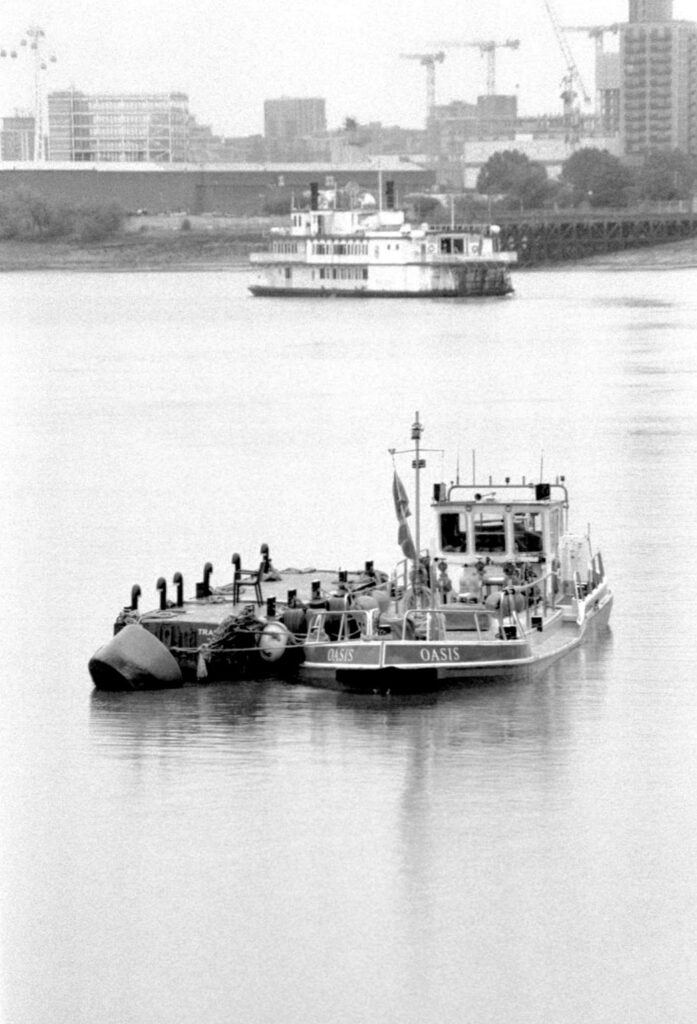
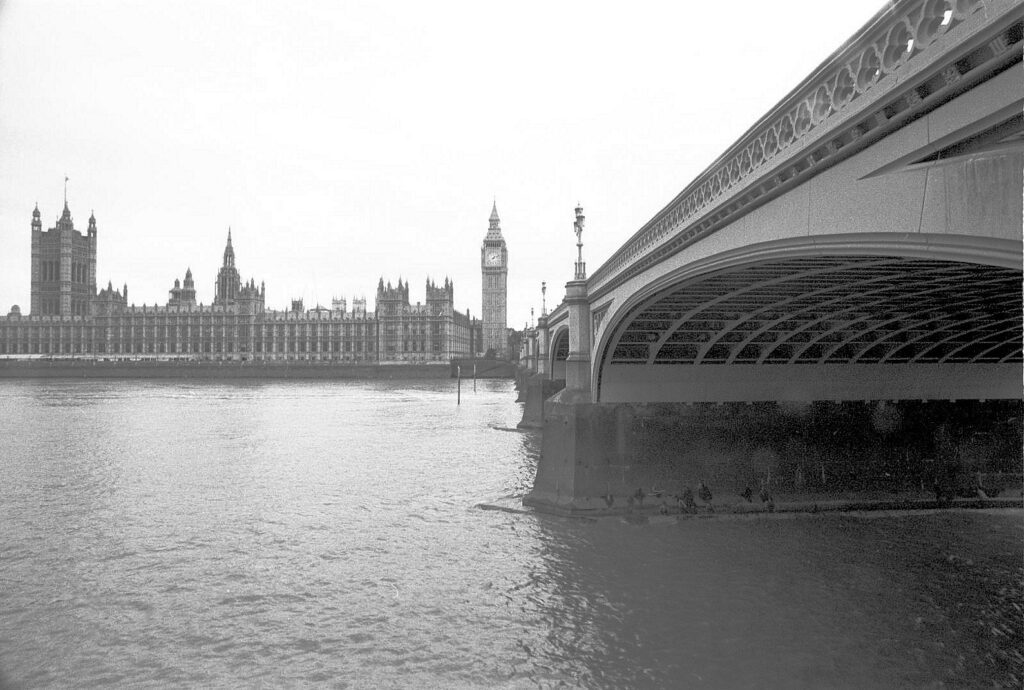
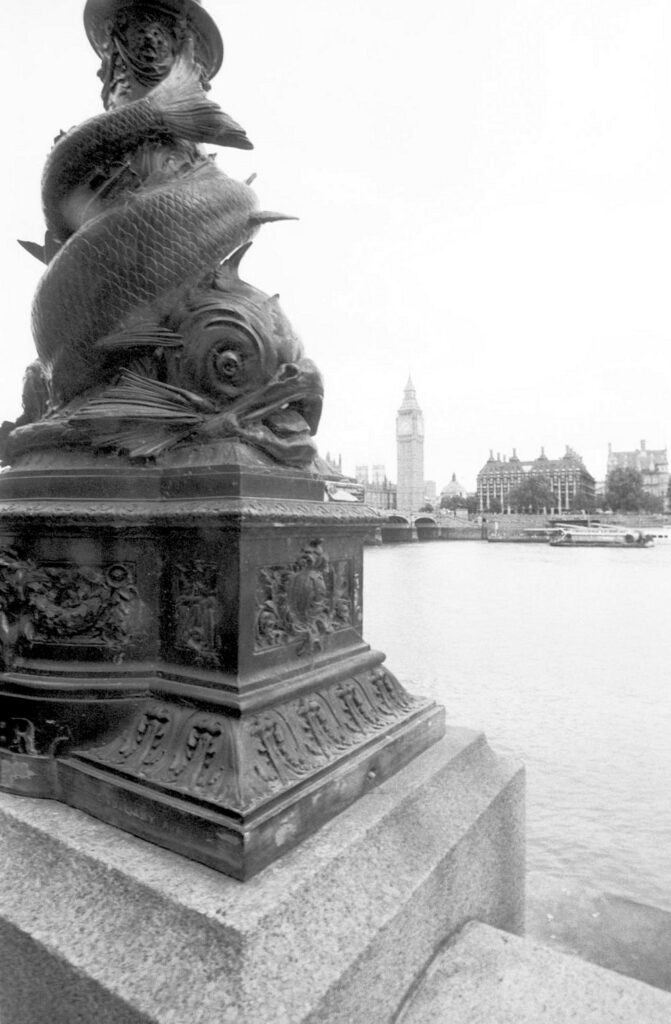
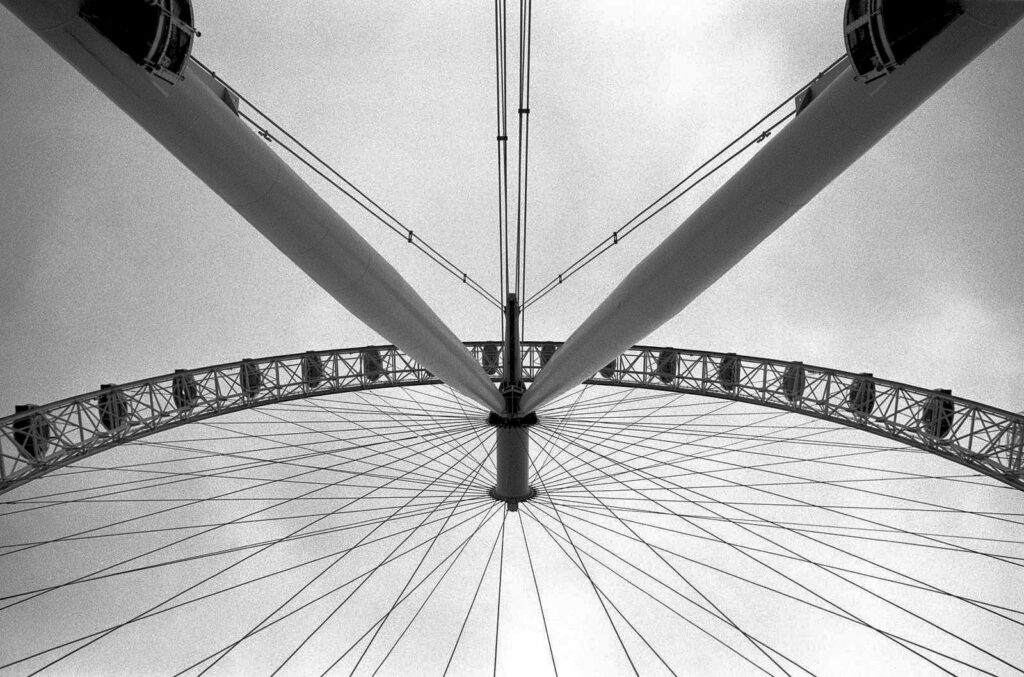
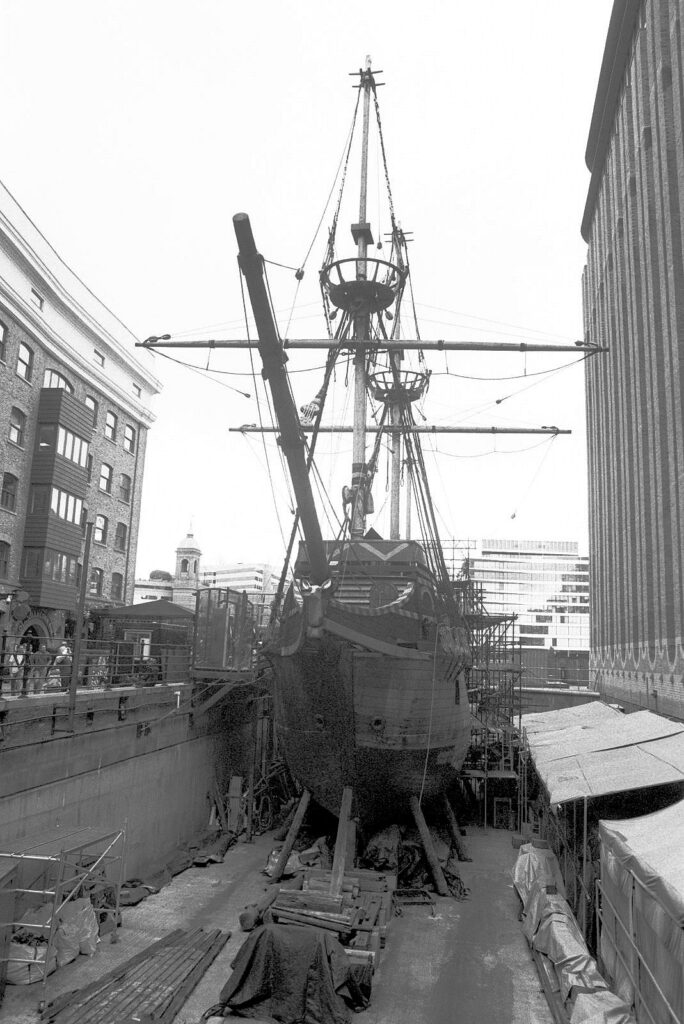
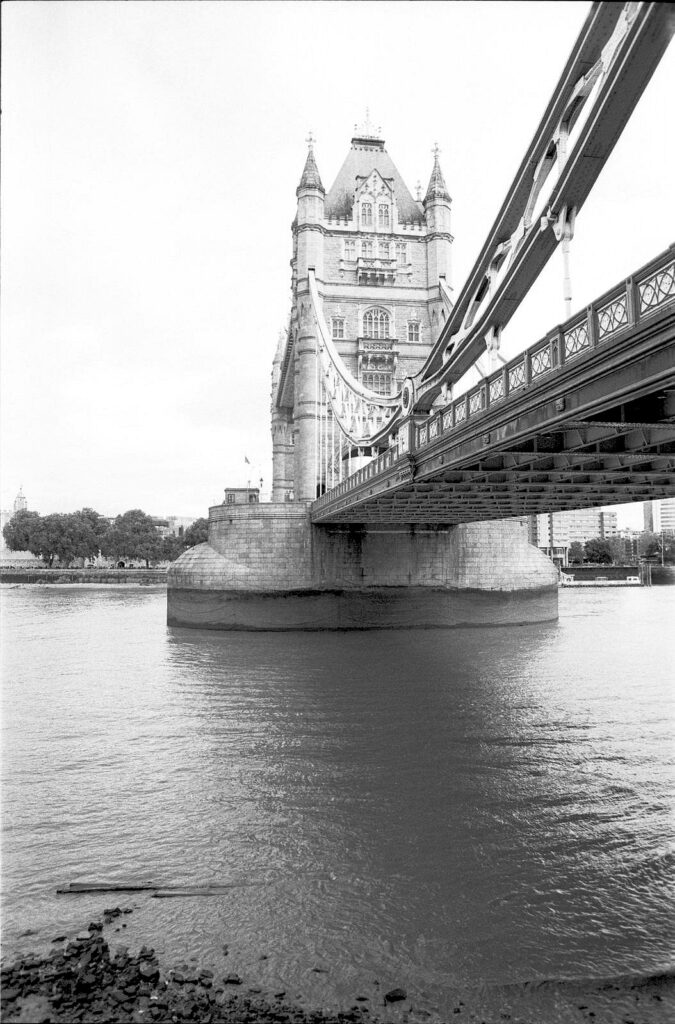
Summing up
Compared to the 7xi, the Dynax 700si is rather a different beast.
For me, the Dynax 700si solves so many of the frustrations I encountered in using the 7xi. It is intuitive and ergonomic. I don’t know whether the 7xi continued to be available after the release of the 700si: the 7xi was still a relatively new camera so the build differences and higher frame rate might have supported both cameras for a time. If that wasn’t the case, I can only guess that the powers that be were just not willing to stump for the same production standards as for the previous camera.
While the 7xi appears to be an engineer’s camera, the 700si seems to have had far more photographers’ input. Features are easy to use and, while the P button still takes you to Minolta’s settings of choice, there seem to be fewer penalties for preferring aperture or shutter priority if you are that way inclined. The memory button (later to be expanded on the 800si and then to get its own mode dial settings on the Dynax 7) is a really useful way to accommodate those who walk a different path.
The Dynax 700si is a joy to use, right up until I change a lens. At that point, the creaky/pingy lens release mechanism reminds me of some corners being cut – but it is a minor annoyance.
All in all, the Dynax 700si is an extremely practical way of using any of Minolta’s native 94 screw drive MAF/A-mount lenses (Minolta only made two lenses with built-in motors). It also gives full functionality on 17 of Sony’s A-mount lenses. Native lenses with internal motors (20 from Sony and 2 from Minolta) will give proper exposure, but require manual focus.
There are also lots of screw-drive lenses (over 250) that were produced by third-party vendors. Full details of A-mount lenses are available at Dyxum.com.
…and then
The Dynax 700si of 1993 might well have been justifiably regarded as a pinnacle of Minolta’s high-end enthusiast cameras, had it not been eventually overtaken by three even better-specified and equally intuitive cameras, the 800si (1997), the 9 (1998) and the 7 (2000).
Share this post:



Comments
Martin on Minolta Dynax 700si review – On the button
Comment posted: 09/11/2026
Bill Thoo on Minolta Dynax 700si review – On the button
Comment posted: 09/11/2026