

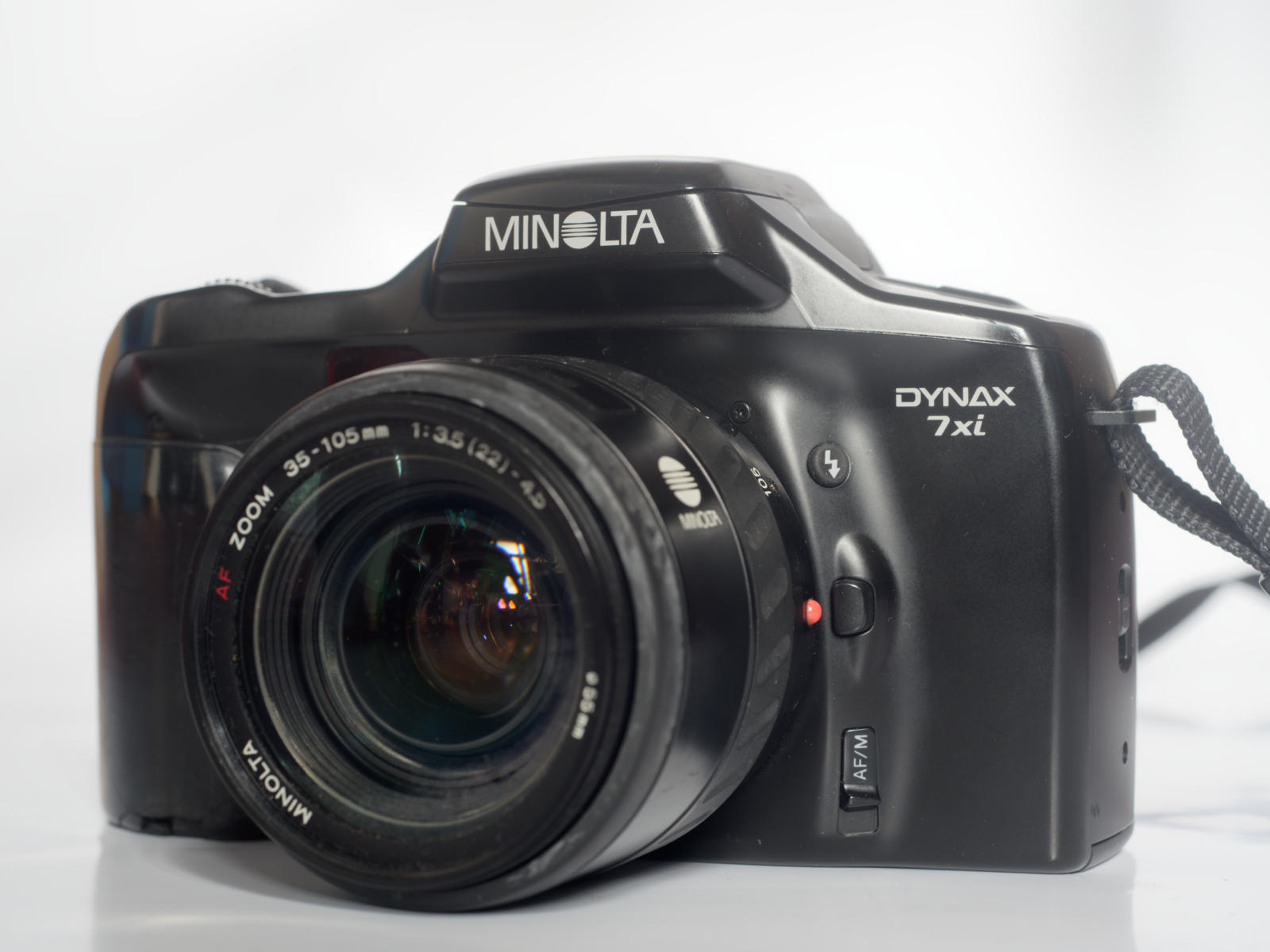
The Minolta Dynax 7xi (also known as Alpha or Maxxum 7xi) was released in 1991 as a replacement for the Alpha/Dynax/Maxxum 7000i which had been Minolta’s ‘enthusiast oriented’ autofocus 35mm SLR since 1988.
My sample copy is a Dynax 7xi
The xi bit is said to stand for expert intelligence.
An impressive specification
Looking at the spec sheet, pretty much everything about the camera had been ‘turned up to 11’.
The Dynax 7xi features:
- A shutter with a top speed of 1/8000
- Advanced flash capabilities, including:
- A built-in flash capable of 28mm coverage
- The capability of using the built-in flash to trigger and control remote flash units wirelessly
- Ratio flash, enabling the control of more than one group of wireless flashguns to give different outputs
- A flash Sync speed (for built-in or attached flashes) of 1/200
- Twin control wheels, positioned at the front/top and rear of the camera for operation by the right hand
- An increased number of segments (14) for matrix metering
- A choice of high (4 fps) or low speed (2fps) for continuous drive
- A dedicated auto exposure lock (AEL) button
- Support of xi zoom lenses that contain built-in zooming motors and which allow:
- The ability for the viewfinder to show a wider view with the lens zooming in to the central portion on full depression of the shutter release
- The ability for the camera to automatically zoom to frame what it sees as a good starting point for your subject
- The ability to automatically zoom to keep a subject at the same size in the viewfinder
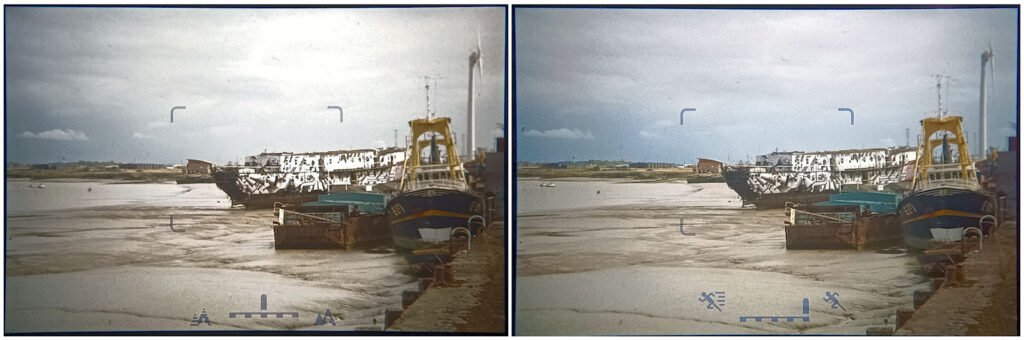
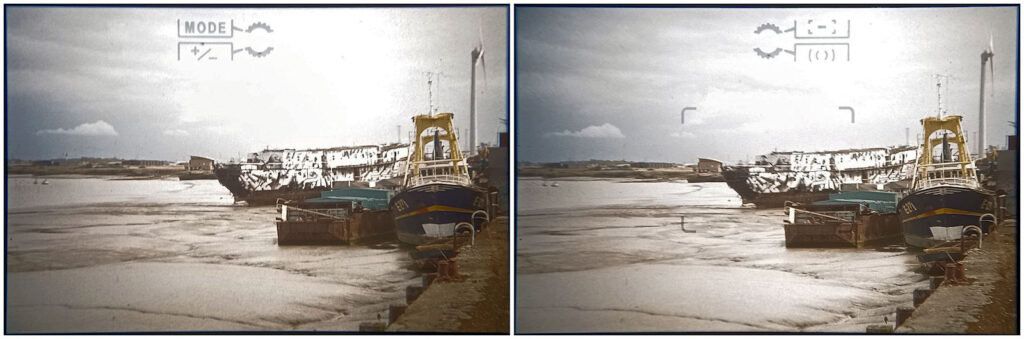
- Context-dependent overlays in the viewfinder providing extra information including the amount of motion blur and depth of field available with the current settings
Eye-start
The Dynax 7xi was the first appearance of eye-start.
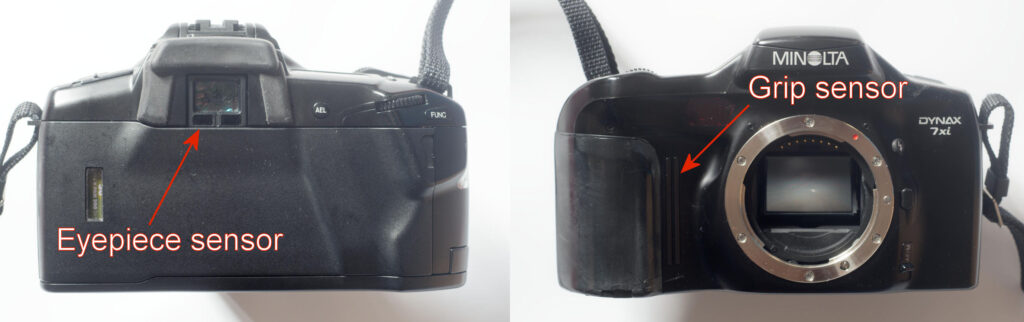
The idea was for the camera to know when to usefully meter and focus without wasting battery power. By combining an IR sensor under the viewfinder that could detect if the camera was being held close to an object (such as a face) with a sensor on the grip which could detect if the grip was being held, the camera could judge when it was being brought up to someone’s eye to compose a shot and start metering and focusing early. Metering and autofocus would also be turned on if the shutter release was half-pressed.
There is a brown savoury yeast spread which originated in the UK under the brand name Marmite. It is a rich vegan-friendly source of folic acid and B vitamins. Due to its distinctive taste, it tends to divide opinion with regards to palatability. It has been marketed under the strap-line ‘Love it or hate it’.
The concept of a ‘Marmite’ product has embedded itself into British popular culture (if that is not a non-sequitur) as one that divides opinion.
Eye-start is Marmite.
I think that eye-start is an instance of someone solving a problem that isn’t a problem for everyone. If you wear your camera on a neck strap without holding the grip and want the camera to be acquiring autofocus on subjects as soon as the camera is brought up to your face, I would imagine that eye-start could be a real boon. The thing about cameras is that people use them in all sorts of ways.
If you carry your camera on a wrist strap with your hand on the grip, an eye-start camera is going to AF whenever the viewfinder comes close to your thigh. If you have a longer lens attached, the early start-up can lead to the camera racking out the focus to the wrong end of its focus range by the time you point it at your subject.
My own problem with eye-start is that, because there is no cue of the AF operating on a half-press, I find it more difficult to judge when the shutter is going to release.
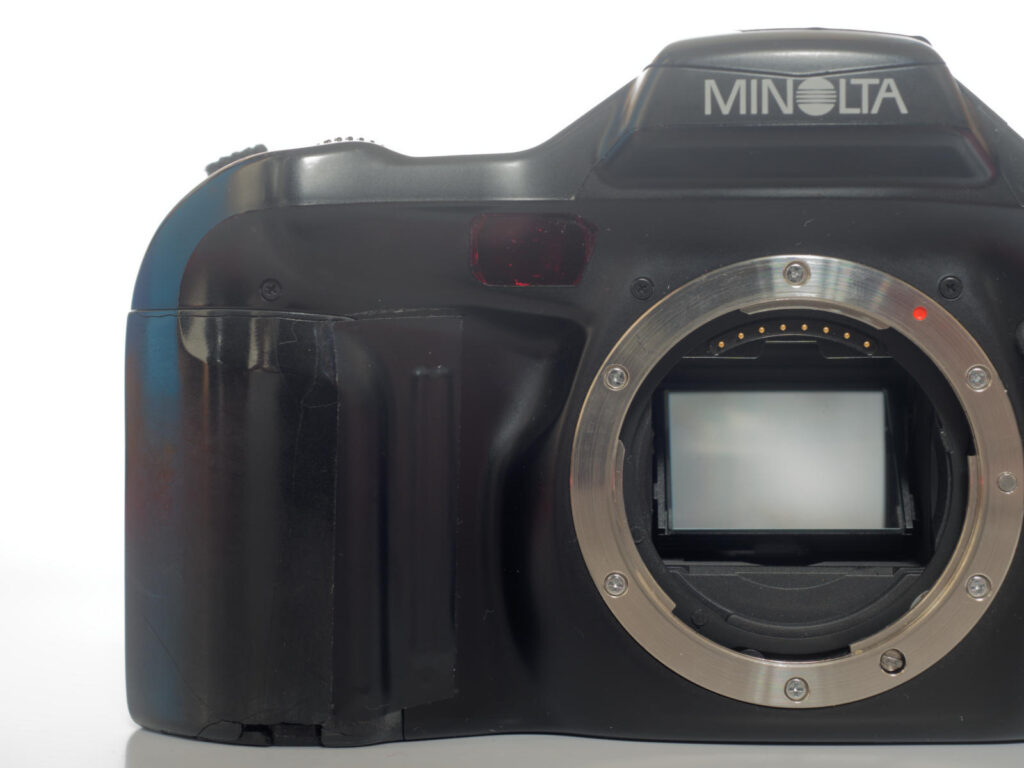
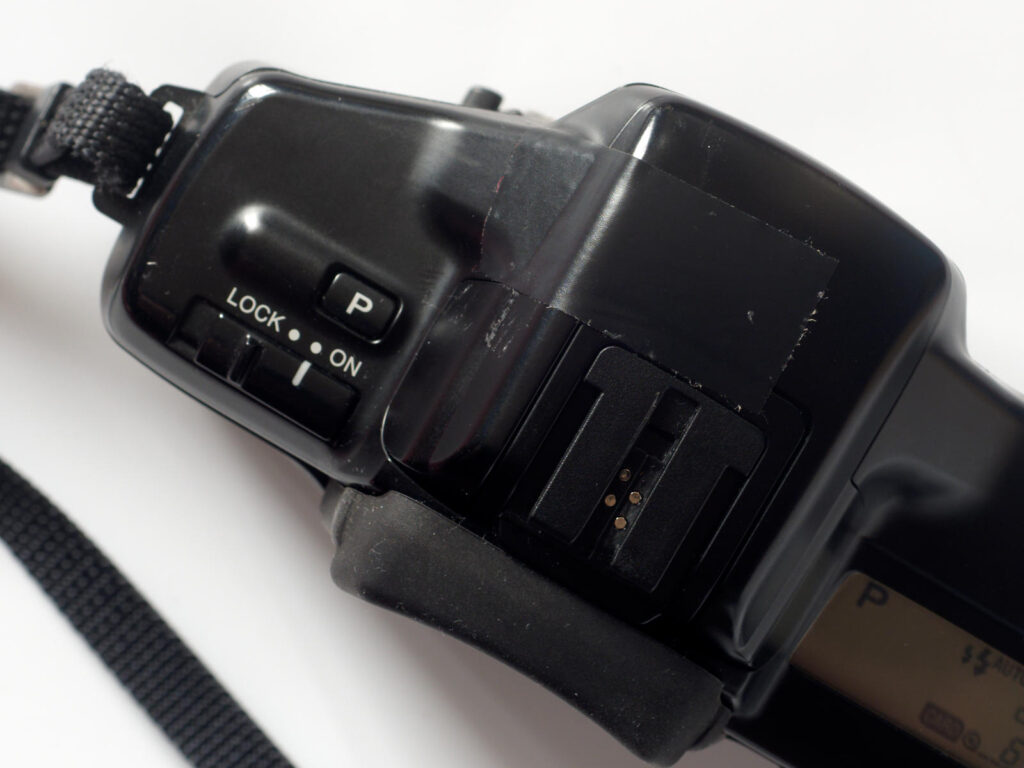
The Custom xi card (see later) gives you the ability to disable the grip sensor so that AF and metering will only be invoked by a half-press of the shutter release. If you really can’t get on with eye-start and don’t have access to a Custom xi card, you can disable the grip sensor by sticking some black insulating tape over it.
Later series of Alpha/Dynax/Maxxum cameras allowed photographers to turn off eye-start on models that included it if they wished.
What eventually saw off eye-start (under Sony’s tenure) was EU legislation that banned the exposed nickel alloy used in the grip contacts (it can trigger skin allergies). This would seem to have been a logistics problem too far for selling in multiple markets, and Sony went back to a more ‘global’ specification that eliminated the grip sensor after their a850 digital full-frame SLR.
Viewfinder
Much is said of the LCD overlay in the viewfinder of the xi cameras. It is often cited as the reason for the xi series of cameras having a slightly darker viewfinder than contemporary cameras.
I’ve got no way of empirically judging screen brightness of two viewfinders, but I thought it would be interesting to compare the viewfinder of the 7000i (which doesn’t have the overlay) and the Dynax 7xi (which does).
Although I don’t have two copies of the same lens to compare directly, I have got two wide primes of the same maximum aperture. To make the playing field as level as possible, I put the standard ‘G’ screen into the 7000i and used a 24/2.8 on one camera and a 20/2.8 on the other. I then switched the lenses around.
To my eye, there was very little in it. If anything, the Dynax 7xi viewfinder looked slightly brighter than the 7000i viewfinder with both the 20 and the 24 lenses.
Note that the viewfinder magnification of the 7xi is down from that of the 7000i (0.75 against 0.84). If I hold up one camera to each eye, I can just about see that, but the difference in magnification isn’t much, in the same way that the difference in brightness isn’t much.
I am left wondering whether I’m seeing the Dynax 7xi viewfinder as slightly brighter due to its lower magnification (same amount of light in a smaller space).
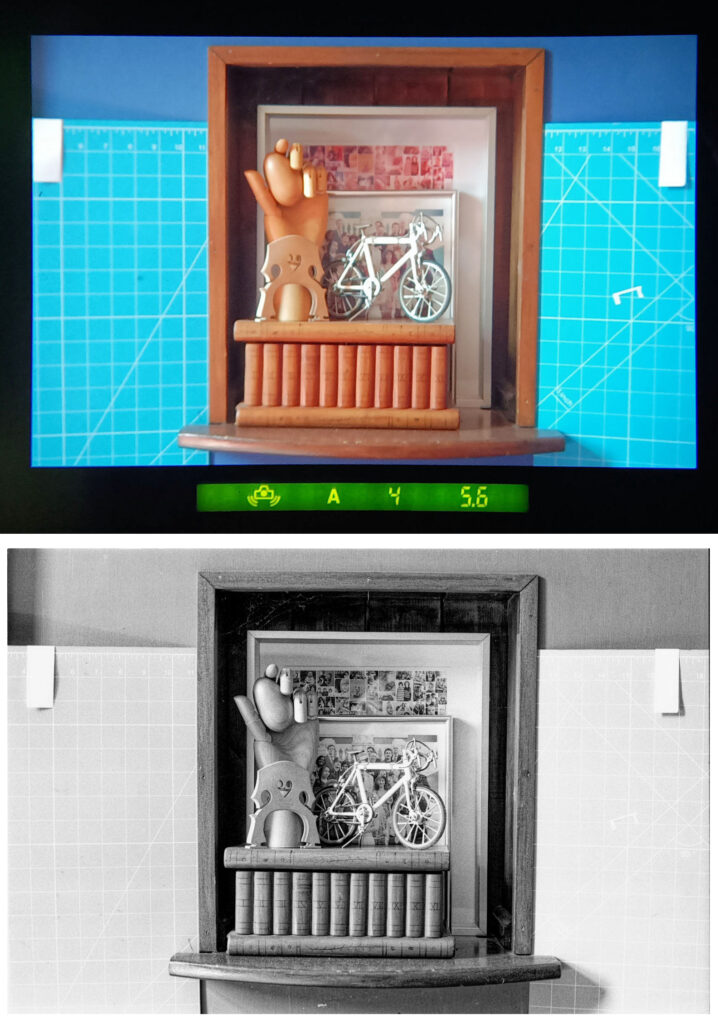
The viewfinder is reasonably accurate; my measurements suggest it shows 94% of the width and 93% of the height. Nice and central with about 88% coverage overall.
The Dynax 7xi does not take user-interchangeable screens, which may be something to do with the need to integrate with the LCD elements. I have seen references to alternate screens, but I’m assuming these would have been fitted by service centres as there is no drop-down cage.
AF
Autofocus speed is fine, but I’m not sure it is any better than the 7000i. That the professional-spec 9xi, released a year later (1992) had such exceptional AF makes me think that it used more advanced sensors (possibly fed by more light through the semi-silvered mirror, as I do remember that viewfinder being darker) and an autofocus motor with more ‘oomph’.
Metering
The matrix metering that had been introduced with the 7000i gets an upgrade with the Dynax 7xi. The earlier camera had six ‘zones’ while the updated version has 14. The diagram of the zones in the manuals shows 13 hexagons, arranged as a bank of four, over a bank of five in the centre, and then another lower bank of four beneath that. The 14th zone is made up of the rest of the screen.
Matrix metering deals with challenging lighting situations to produce surprisingly well-exposed negatives. If you think that the lighting is just too tricky, you can opt for a spot option (which just meters the central ‘zone’). For the unconvinced, there is also the option of a more traditional centre-weighted average.
A tour around the camera
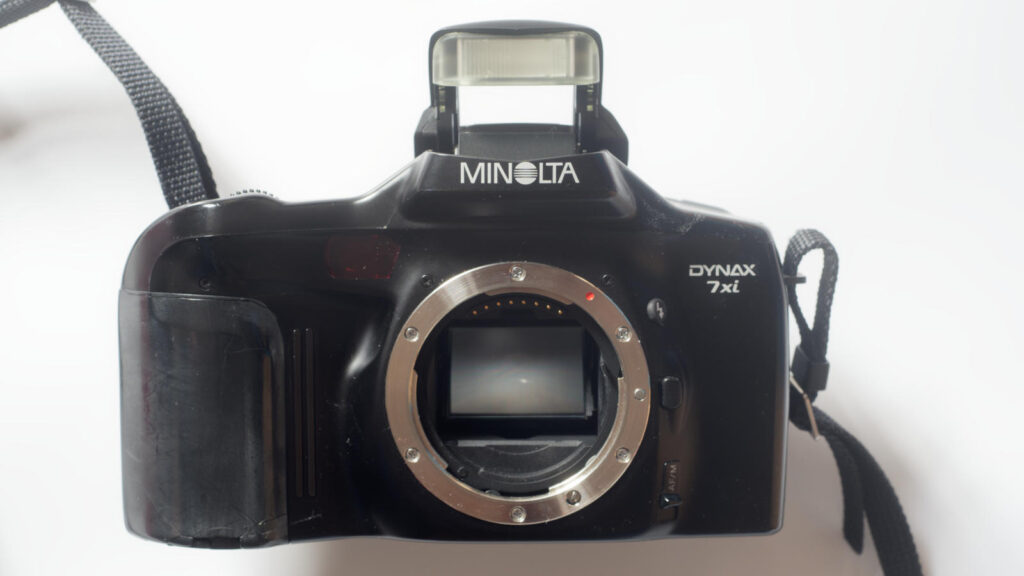
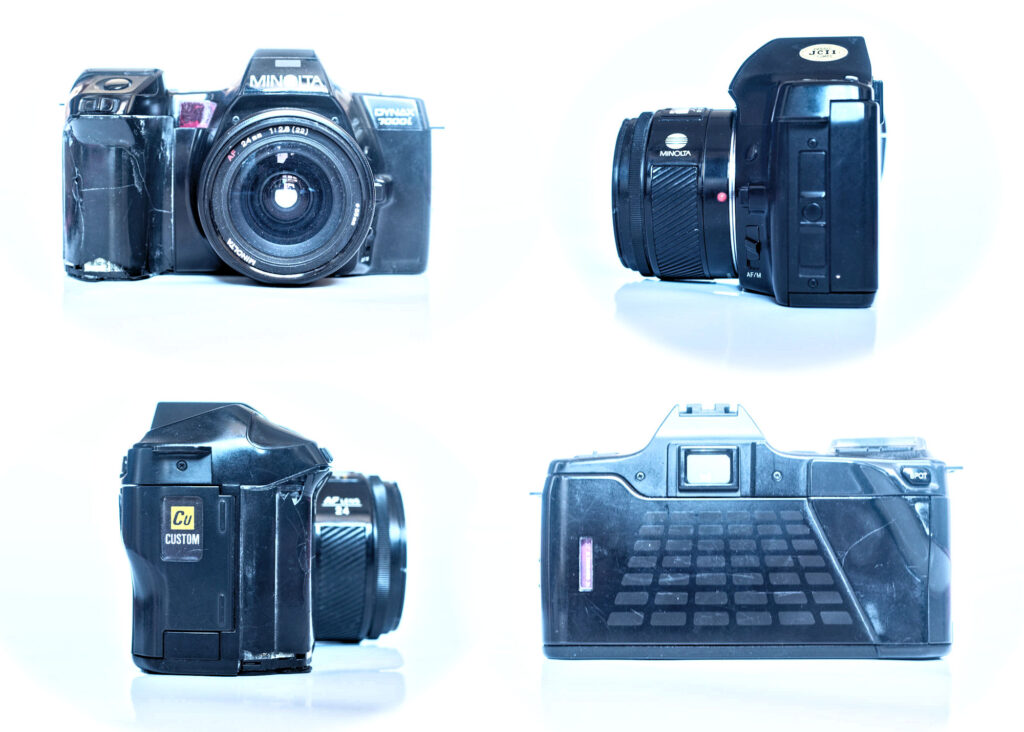
The front of the camera features – from the left: A wider and lower-profile grip than that of its predecessor; you can also just see the top edge of the front/top control dial on the right-hand top plate. As well as the grip sensor (the two grey vertical bars), we have the mount (with extra electrical contacts for motors in the xi zoom lenses), the pop-up flash, flash deployment button (at a NE position relative to the mount), lens release button and AF/MF switch.
Minolta changed to a rubberised material for the Dynax 7xi grip. It wears reasonably well, but it is still prone to a bit of cracking. My example has lost a little chunk out of the bottom of the grip due to an impact. Still something to look out for, but nowhere near the problem of the 7000i grip.
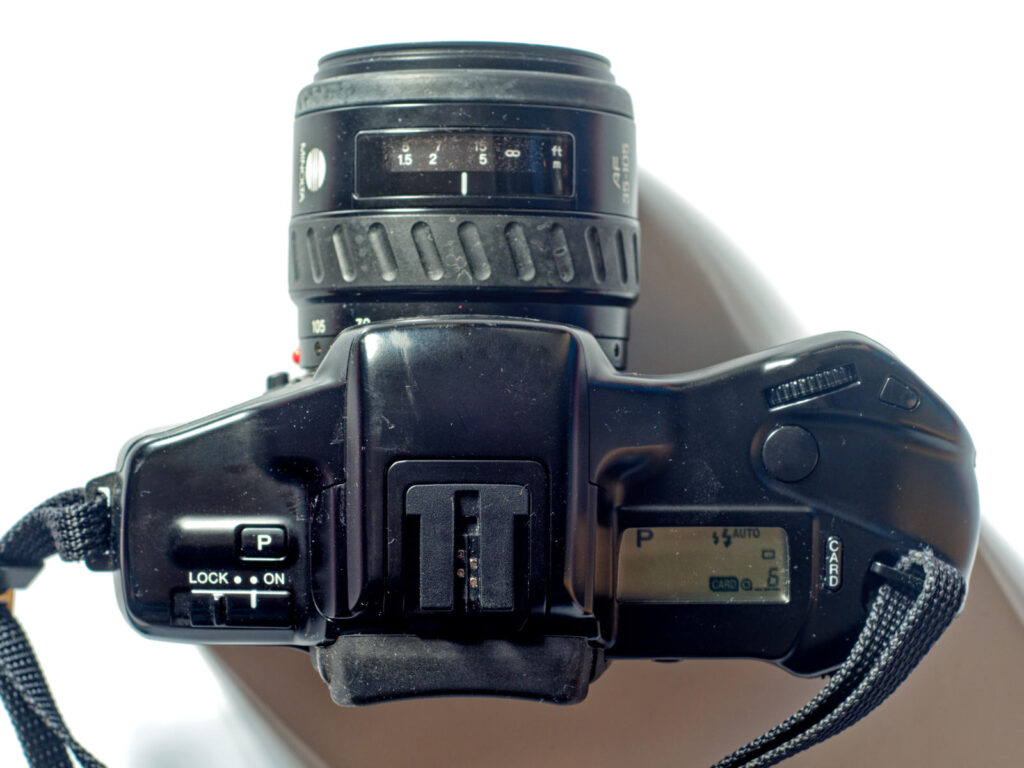
The top of the camera features – from the left: the sliding power switch, P reset button, iISO shoe, LCD info screen, shutter release, top/front control dial and card button. The little triangular button to the right of the control dial invokes ‘wide-view’ with the powered xi zooms (so for most A-mount lenses it is a wasted button). One curious touch was the angling of the right strap bar on the back edge of the top plate. It works OK, but I’ve not seen it repeated elsewhere.
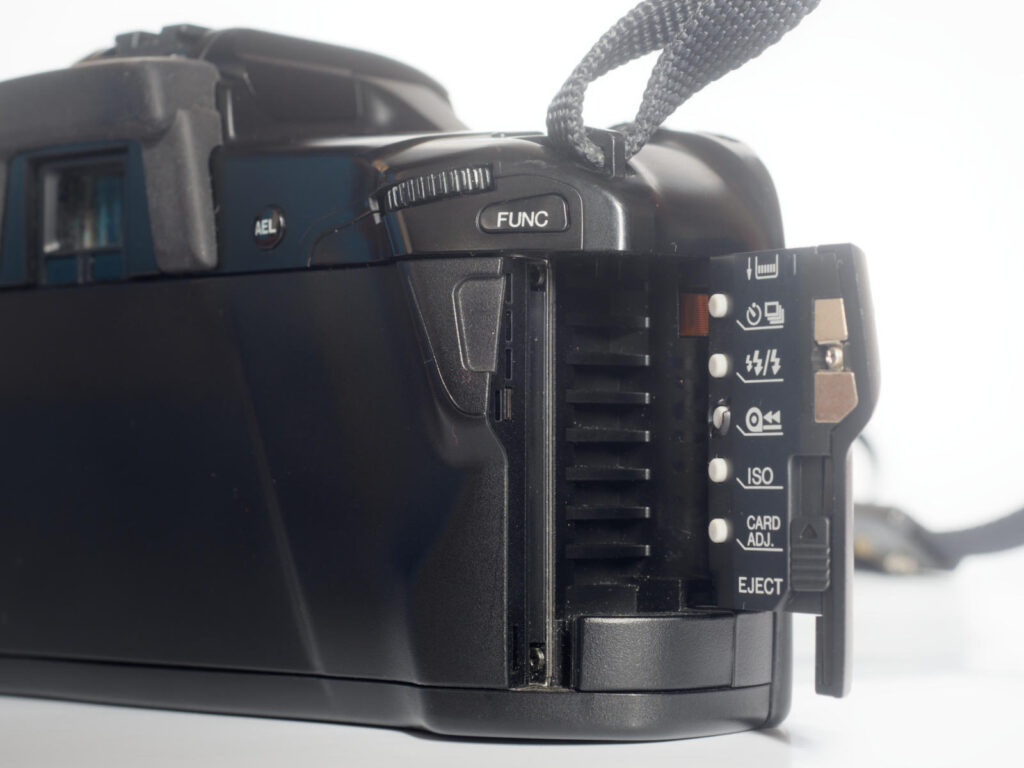
In the picture above, we can see the AEL button just to the right of the viewfinder, along with the rear control dial and FUNC button on the back of the camera, plus the open card door. Buttons in the card door control drive mode/self-timer, flash mode, manual rewind, ISO setting, and card adjustment. There is also a slider to eject a loaded card. Beneath the door is a cover for the wired remote release.
The vulnerability of the flexible board next to the drive mode button to fracture due to repeated opening of the door makes me wince a bit (particularly if you are opening it frequently to switch the auto flash off), but I guess it has lasted 35 years so far, which is a bit beyond the guarantee.
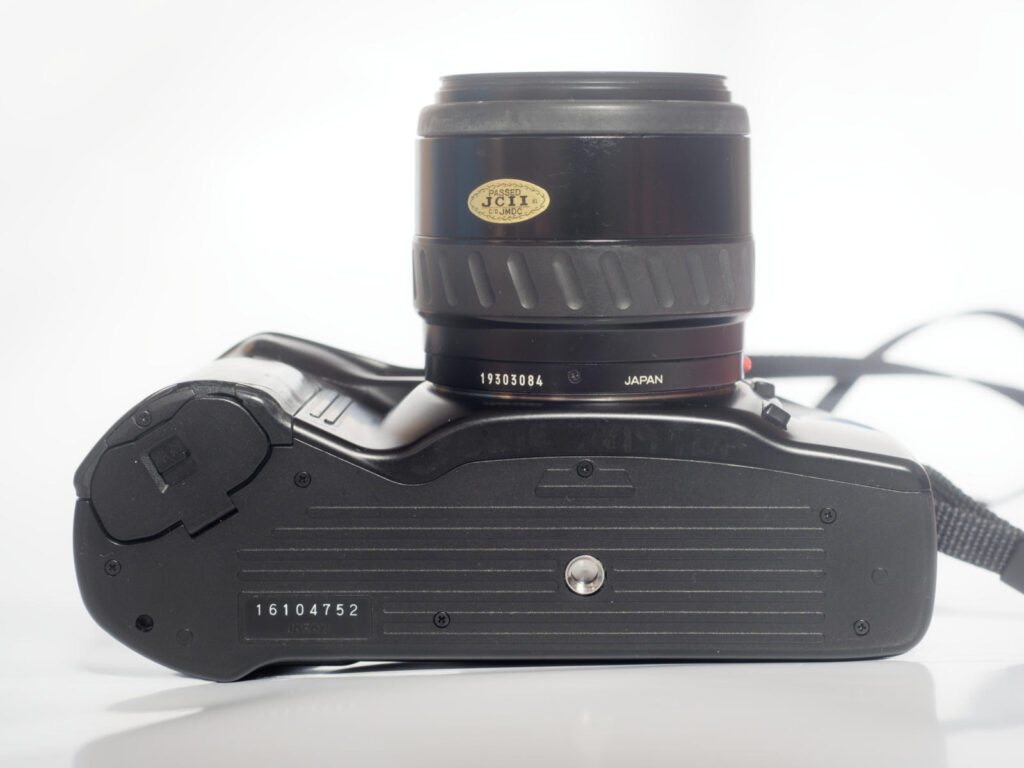
The bottom of the camera is almost featureless, other than the hinged battery door for the 2CR5 battery (an improvement on the detachable one on the 7000i), a ribbed foot-plate, and a standard tripod mount.
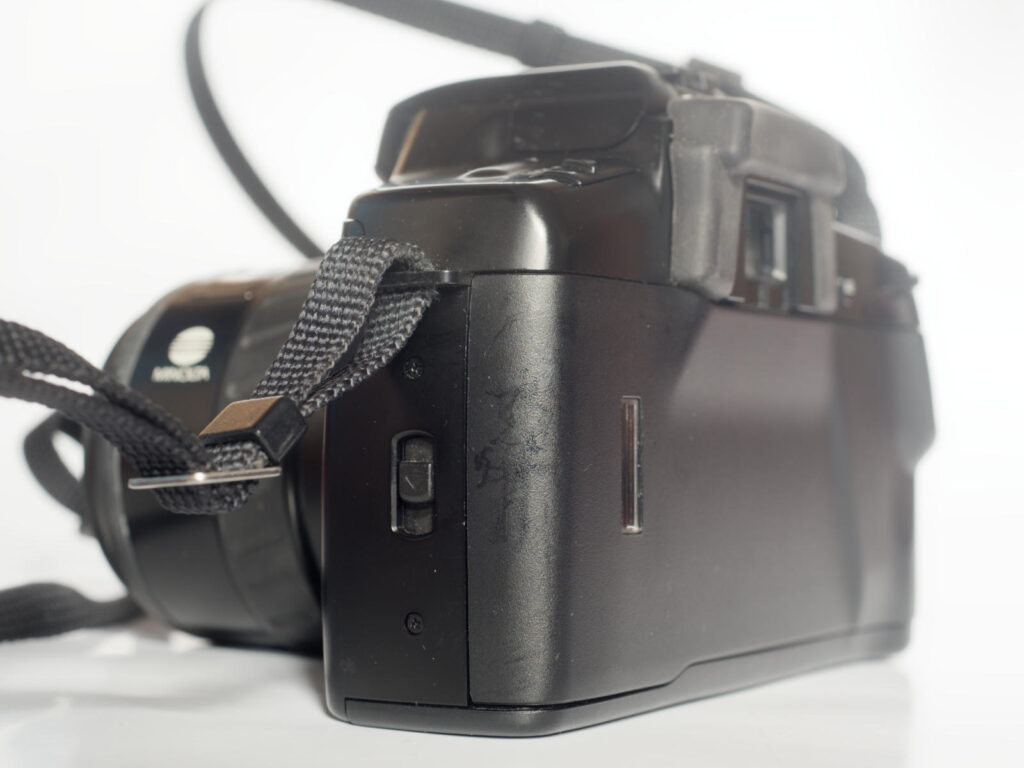
The left side of the camera just features a simple sliding catch to open the back along with a more conventionally placed strap bar.
Powered zoom features
One of the new features of the xi range was the introduction of powered zooms. These enabled:
- Wide view mode: Wide view zooms the lens out to show a wider view than the lens is actually set to, with the frame border indicated by an overlaid box within the viewfinder. The idea is that, like a rangefinder camera, you can see what is just outside the frame. On fully depressing the shutter release, the camera zooms in to just record what was displayed within the box. For this to work, you need to have the lens set at the longer end of the zoom range so that it can zoom out for the wider view.
- Auto standby zoom: With ASZ, the camera automatically sets the zoom focal length as a starting point when eye-start is initiated based on subject distance. The camera leaves the photographer in total charge once an initial starting point has been selected. ASZ can be disabled by pressing the function button on the lens when turning the camera on.
- Image size lock: When the function button on an xi zoom is pressed, the camera automatically zooms the lens to keep the main subject the same size in the viewfinder, regardless of whether they approach or retreat from the camera. The manual includes disclaimers about zoom range and subject speed of movement.
Minolta only ever produced 5 ‘xi zooms’ that supported these features, covering 28-80, 28-105, 35-200, 80-200 and 100-300 focal length ranges. They seem like reasonable enough zooms for the time, but don’t have the reputation of the (non-xi) 70-210 f4 ‘Beercan’ or the 100-300 APO zooms, let alone anything with a ‘G’ badge. Full user reviews can be found over at Dyxum.com.
To be clear, I’ve not used any of these lenses or features. They didn’t last beyond the xi series. The 9xi user manual only mentions wide view mode, so I’m not even sure that ASZ lasted the year between the release of the 7xi and 9xi.
I confess myself as sceptical about the usefulness of these features to the extent that I didn’t try one for my 9xi review and I’ve still not been tempted to pick one of these lenses up to try with the Dynax 7xi. If anyone reading this has feedback on these features, please feel free to reply in the comments, and I’ll look at ways of integrating any information back into the review (with suitable acknowledgements).
Still missing
Like the 7000i, the Dynax 7xi does not have a depth of field (DoF) preview or a battery pack. Like the 7000i, it doesn’t need/wouldn’t greatly benefit from either. The 7xi does have a DoF overlay diagram in the viewfinder. This diagram displays a scale and places a marker on it dependent on the focal length, aperture, and focus distance. It is a reasonable stab at helping a photographer judge DoF, but this didn’t reappear in later generations of cameras.
The Dynax 7xi also does not have a PC flash socket. As with the 7000i, if you want to trigger a flash with a PC lead, you have to fit one of Minolta’s OS-1000 flash shoe adapters, which fits on the iISO shoe and features a PC socket as well as adapting to a more conventional shoe.
I note in my 7000i review that the camera has a little bump bottom left of the mount as you look at it, almost like a vestigial DoF preview button.
The Dynax 7xi does not feature contacts for the CG-1000 flash grip, but the inclusion of wireless flash control means it isn’t needed so much.
Accessories
Cards
The Dynax 7xi takes the standard set of cards from the earlier series. The only ones that won’t work are the A/S card (designed for the 5000i – ‘7’ level cameras can already do these functions natively) and the original ‘Custom’ card. Instead, the 7xi uses the ‘Custom xi’ card.
The Custom xi card is quite useful. It allows you to set:
- What settings the camera reverts to when the P button is pressed, with regard to Exposure mode, exposure compensation, metering mode and AF area
- Whether the frame counter counts up or down from whatever the DX coding says the capacity of the film cassette is
- Whether to wind the film back automatically at the end of a roll or stop and wait for the manual rewind button to be pressed
- Whether the film leader should be rewound into the cassette or left visible after rewind
- Whether the camera should apply any variance to the DX coding to new films
- Whether automatic flash in P mode should be disabled
- What any focus hold button on an attached lens does
- Whether the grip sensor should be active or not
As with the previous custom card, these are not added features, just ones where you need the card loaded to initially set them up on the camera. Once set, you don’t need to keep the card in the camera: the camera should remember these preferences even if left without a battery.
Data back
There is also a data back called the ‘QD-7”. I confess, I’ve not been able to find out much about it. Due to the later ‘7’ cameras having integrated controls on the back, the Dynax 7xi was the last of this class of cameras to have an interchangeable back. Of the later cameras, the 700si had a ‘QD’ version with data-imprinting facilities, while the feature was built-in on the ‘7’.
Niggles
I originally had this section titled as ‘Issues’ but in truth they are better described as ‘niggles’: They are not fatal flaws, but they do affect how useful the new features are and how enjoyable the camera is to use.
Flash
While the flash control capabilities of the Dynax 7xi are impressive even by modern standards, the implementation of the pop-up flash on the 7xi is problematic.
It is not the presence of the pop-up in itself (while direct flash might not often be needed, there are times when it could make the difference between getting a shot or not). Being able to use the pop-up to control other off-camera flashes is great, and if you don’t want the effect of the direct flash in addition to the off-camera flashes, you can cover the flash tube with something that will block visible light while still allowing control of the off-camera flashes through the infrared spectrum.
The problem is rather that, in P mode – the very mode that Minolta’s AF cameras default to, the flash will automatically pop up if the camera thinks it might need it. It doesn’t do this in the other exposure modes (A, S or M).
You can disable this auto-deployment by opening the card door, pressing the flash button and moving the front/top control dial two notches, but auto-deployment (with an attention-seeking ‘clunk’) will return as soon as you press the P ‘reset’ button.
There is a workaround: Tape the pop-up flash down with a bit of black electrical tape. When the camera wakes up, you will hear a click as the camera tries to deploy the pop-up flash. Once it senses that the flash did not deploy, the camera will meter for ambient light.
If you want to use wireless flash, you can free the pop-up and then use the same bit of electrical tape to put across the flash tube: The IR signal to the slave flash will still get through, but no direct light will.
Control dials
This is the first implementation of twin control dials on an SLR that I’m aware of. As with the 9xi, both dials work perfectly well in program mode. Unfortunately (as with the 9xi), the rear dial is disabled in shutter priority mode, while the front/top dial is disabled in aperture priority mode. People tend to favour one dial or another; why not allow adjustment with either, just as you can with P mode?
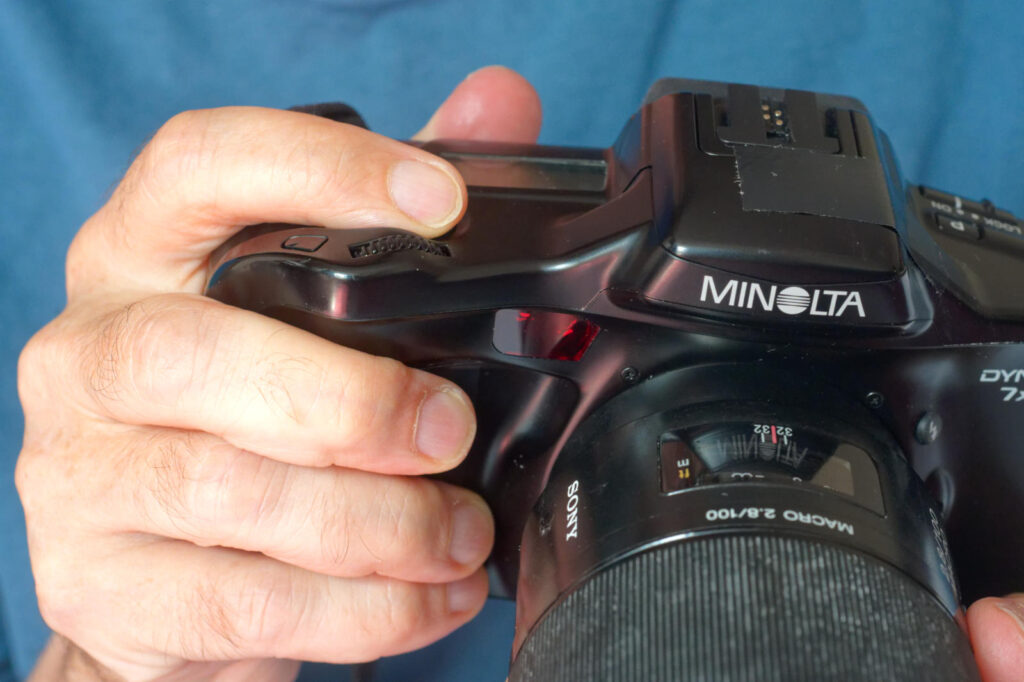
The use of control dials rather than jog-switches is a great idea, but (for me at least) the angle of the front/top control dial on the Dynax 7xi does not follow the line of my index finger. The shaping of the body around the shutter release suggests that I’m not holding the camera in a peculiar manner. It is almost as if someone has deliberately placed it to stop you from simply rolling your finger over it. The front/top dial on the 9xi, released the next year, was much improved in this respect.
Dedicated buttons
The Dynax 7xi has a dedicated ‘AEL’ (auto exposure lock) button, but it loses the ‘Spot’ button of the 7000i. The 8000i (which has the same shutter spec as the 7xi) had a dedicated button for both. It is a shame that the 7xi doesn’t follow the lead of the 8000i.
Modal control v2
The modal implementation on the 7000i relied on a pair of buttons on the left of the body, one (labeled Mode) selecting exposure mode and one (labeled Func) giving access to exposure compensation, drive mode or AF area selection, with the selection of options being made using the single jog-switch.
With the Dynax 7xi there is only a single function button. If it is pressed once, the front/top dial will cycle through exposure modes, while the rear will set exposure compensation. Pressing the function button a second time gives a different set of options: choice of any of the four AF points or wide area with the front/top dial and matrix, average or spot metering with the rear dial.
It probably ends up being nigh-on the same number of operations, and the 7xi does give you a context-sensitive overlay of what each dial does in the viewfinder. Despite the overlay, the xi version of modal control seems slightly less intuitive. It needs the extra overlay in the viewfinder.
Pictures



Summing up
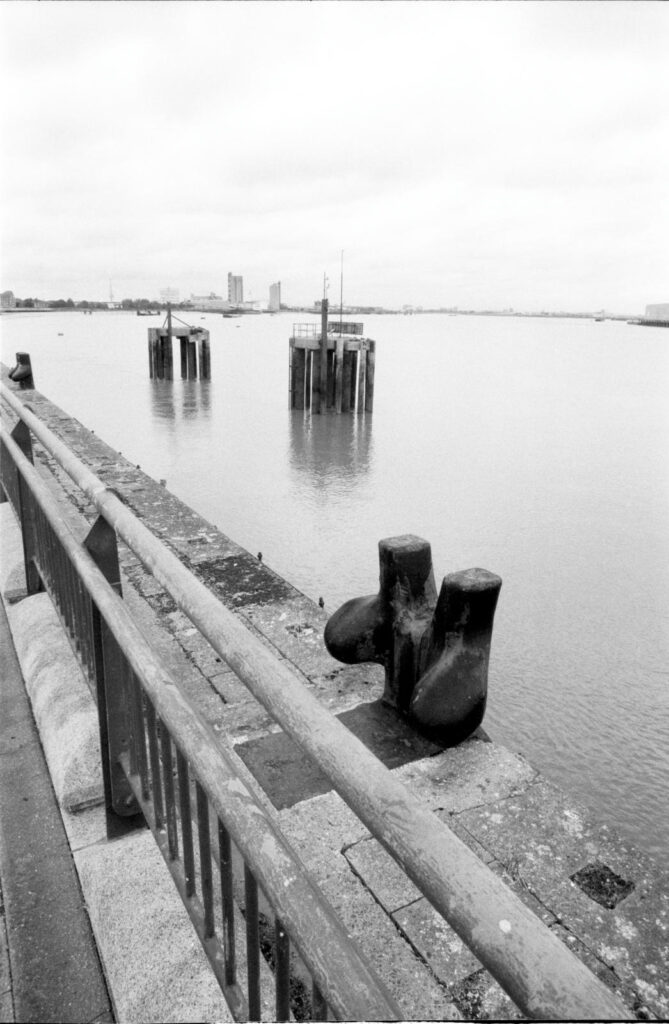
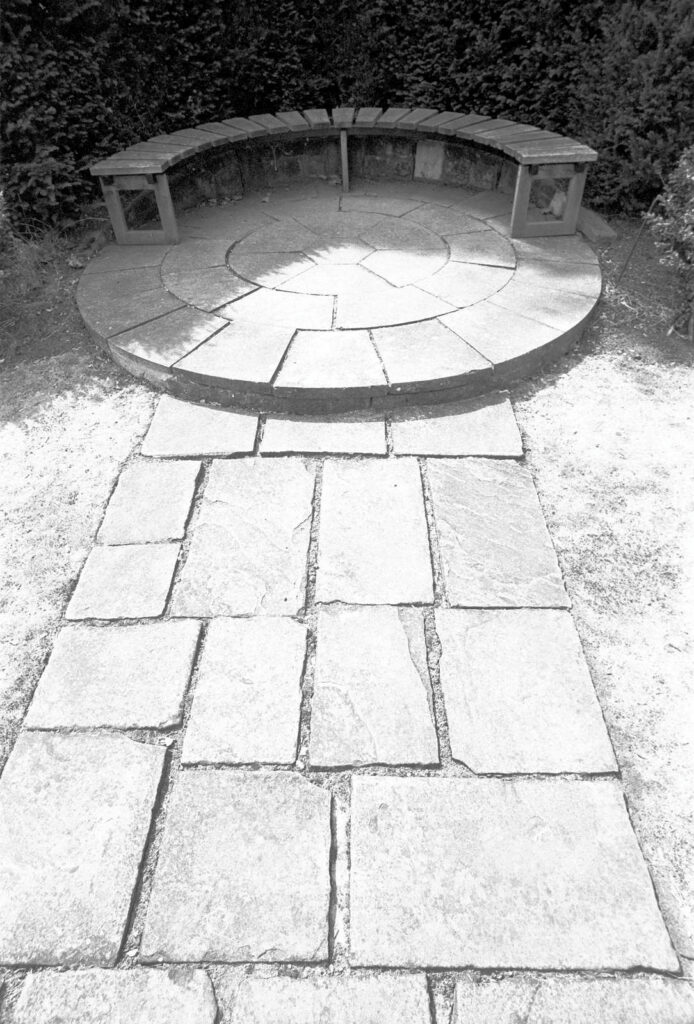
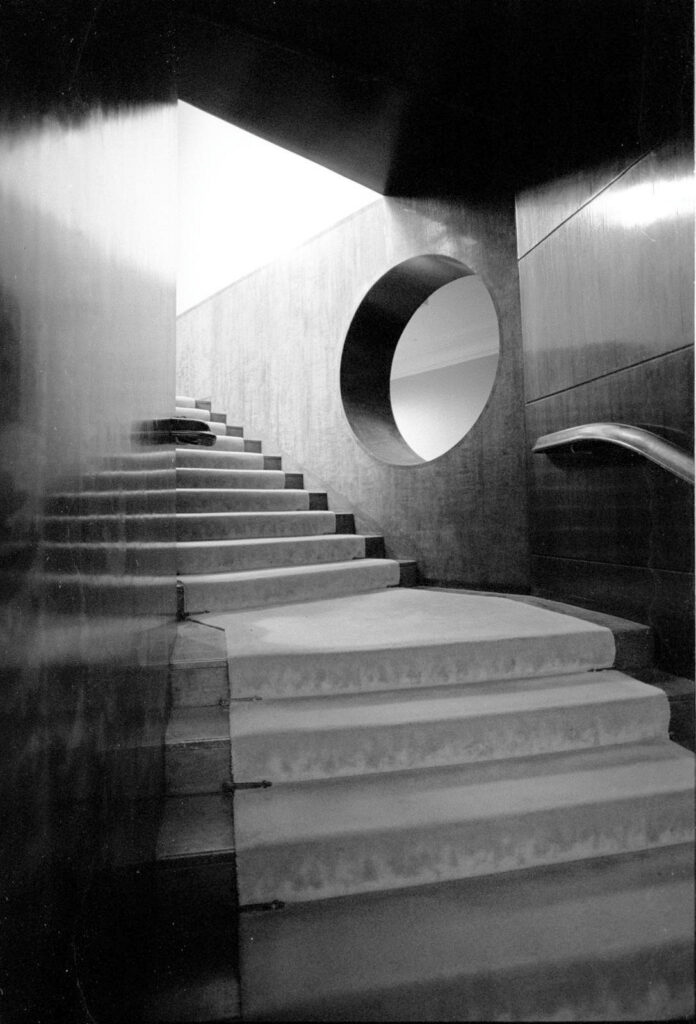
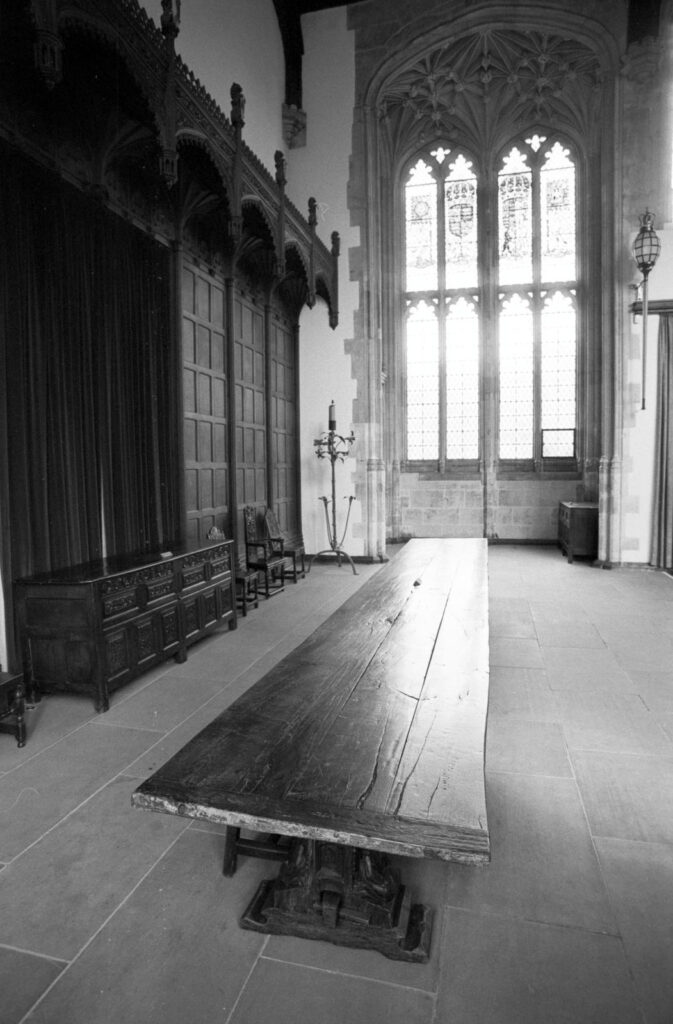
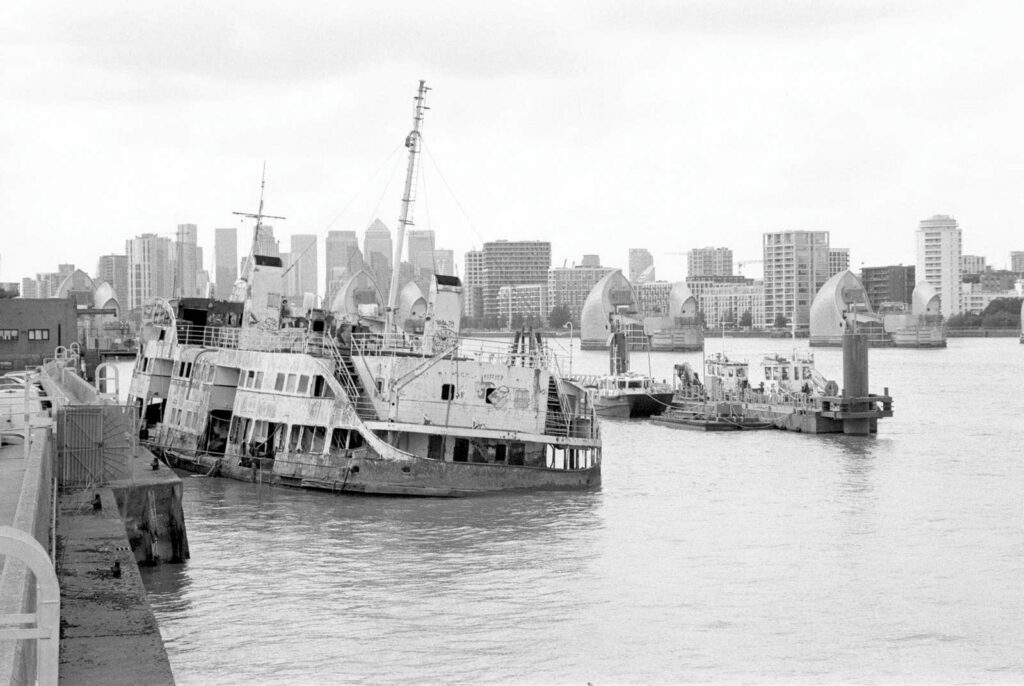
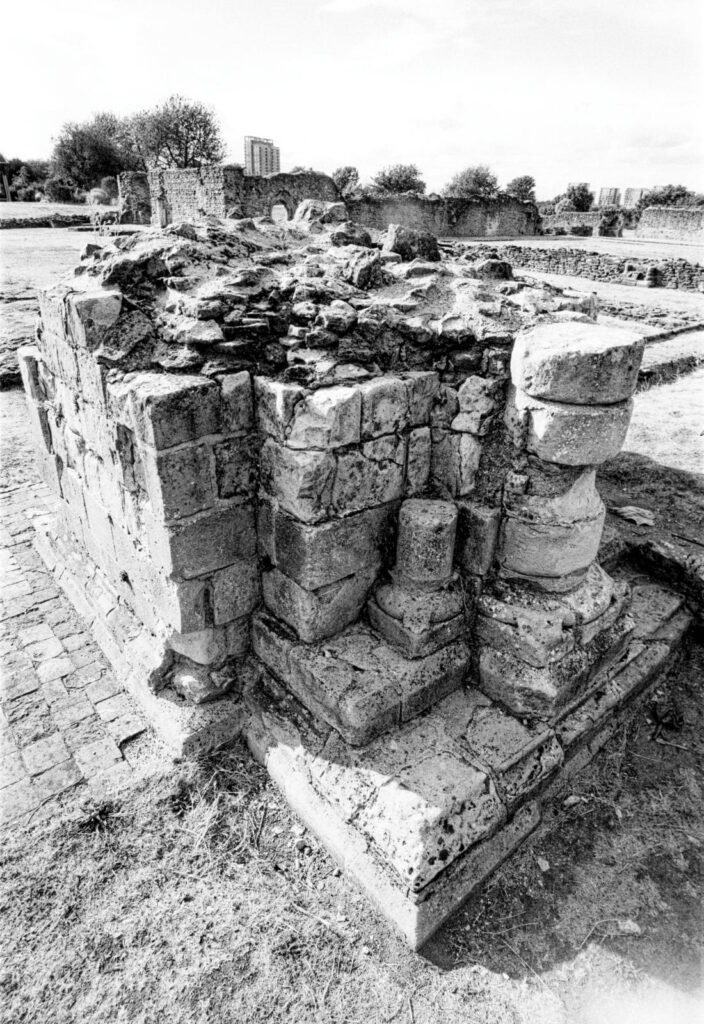
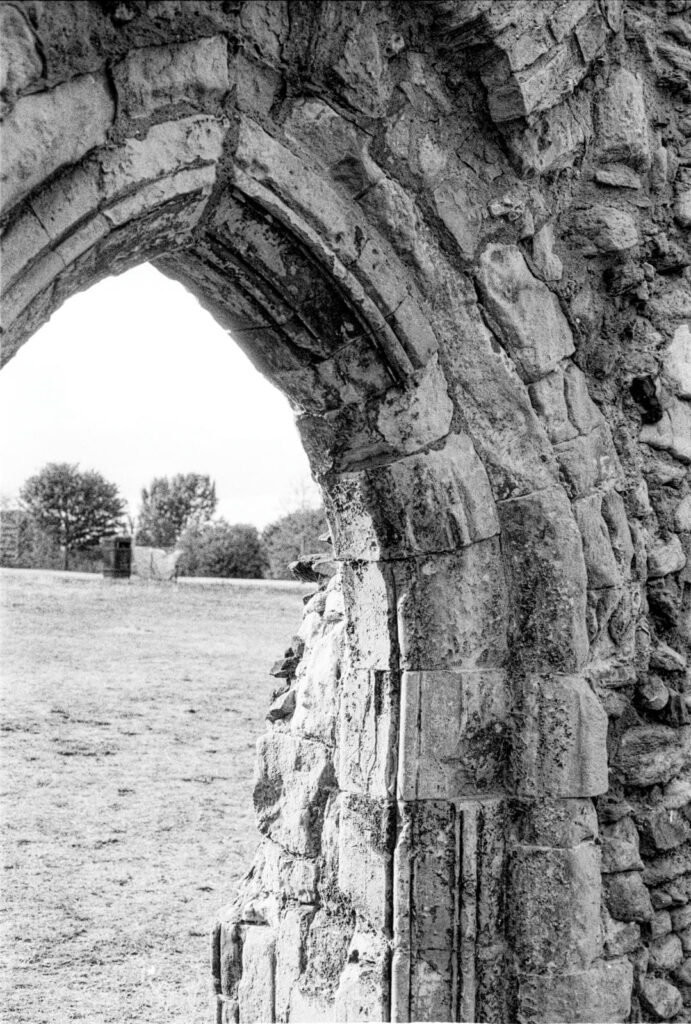
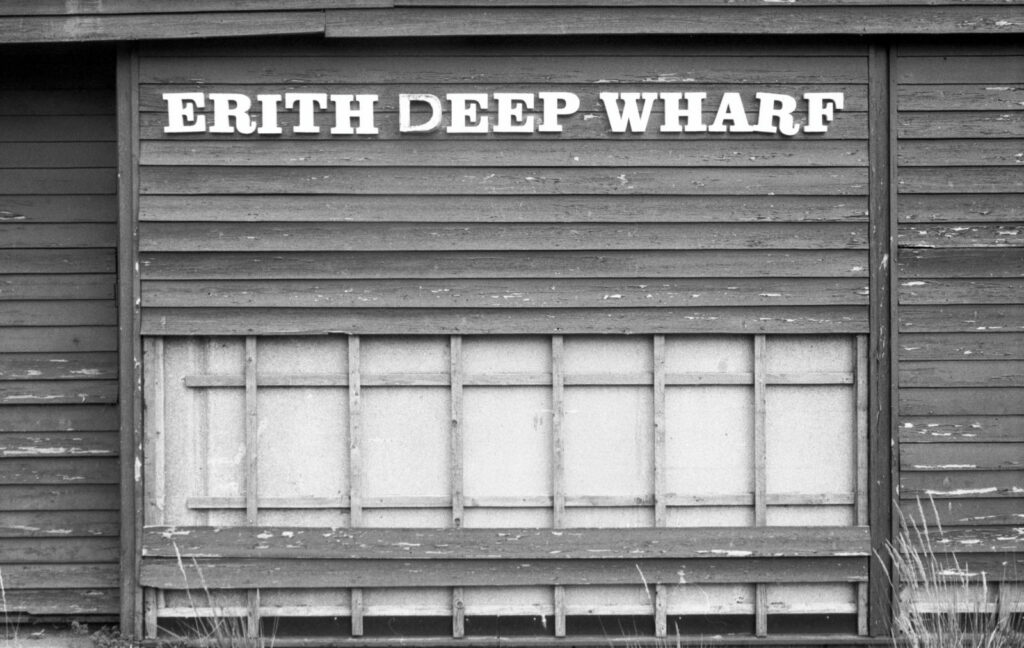
The Dynax 7xi is a highly capable camera. It was voted European camera of the year for 1992. It is solid and well made. I think the photos above show that the matrix metering is very capable and the camera is mechanically reliable.
The problem is that at times I feel that the camera is just not cooperating. Familiarity probably helps here, but the 7xi is not intuitive.
Photographers coming to this camera ‘fresh’ are probably going to have a quite high opinion of it. Someone who has come from the 7000i is probably going to be at least slightly disappointed that opportunities have been missed and blind alleys have been gone down. The build quality is exceptional. The metering is great, and the flash capabilities are still impressive 35 years on. There is nothing wrong with the camera that can’t be worked around, but I do find myself feeling somewhat unsatisfied.
Some regard the aesthetics of the xi camera design very highly; I’m not such an admirer of the look, but I’m aware that sometimes gawky or even plain ugly cameras can still be classics. For me, the 7xi misses being a classic, not by much, but I’m not endeared to it.
The xi cameras have something for everyone, but they also have something for everyone to complain about.
Although they are very capable cameras, it is difficult not to see the xi series as a misstep. Minolta threw all the technology they could at these cameras, and relatively little stuck. The exceptions are the flash control system and the twin control dials.
Other bits like the extra contacts on the mount to supply power to zoom motors in the lens were later redeployed to power in-lens focus motors.
Too much of the other stuff appears, in hindsight, to be a collection of bright shiny ideas that weren’t sufficiently thought through.
The Dynax 7xi is very affordable for a camera with such a high specification. It is very well made and extremely capable. It is a cheap way of using Minolta’s fine collection of screw-drive AF lenses.
You can take great pictures with a 7xi – although your patience may be tested at times.
Oh, and you may find a little roll of black insulating tape useful.
…and then
Just two years later, the Dynax 7xi was replaced by the 700si.
Share this post:



Comments
No comments found