

Last year, I spent three weeks at the beginning of summer in the beautiful Swiss village of Ernen, in Upper Valais. It was not my first time there, because I really like this village, whether in summer or winter.
This charming village is located at the entrance of the Binn Valley Natural Park, whose name in German is « Landschaftspark Binntal ». Binntal means the Valley of Binn, because there is a small village named Binn in the area. This Natural Park is a little-known gem which offers many well-marked and perfectly maintained hiking trails, making it a paradise for hikers. Here is a link to the website.
For the amateur photographer, the landscapes are magnificent, with mountains, lakes, torrents, eternal snow, glaciers, and at the beginning of summer, many flowers are in full bloom.
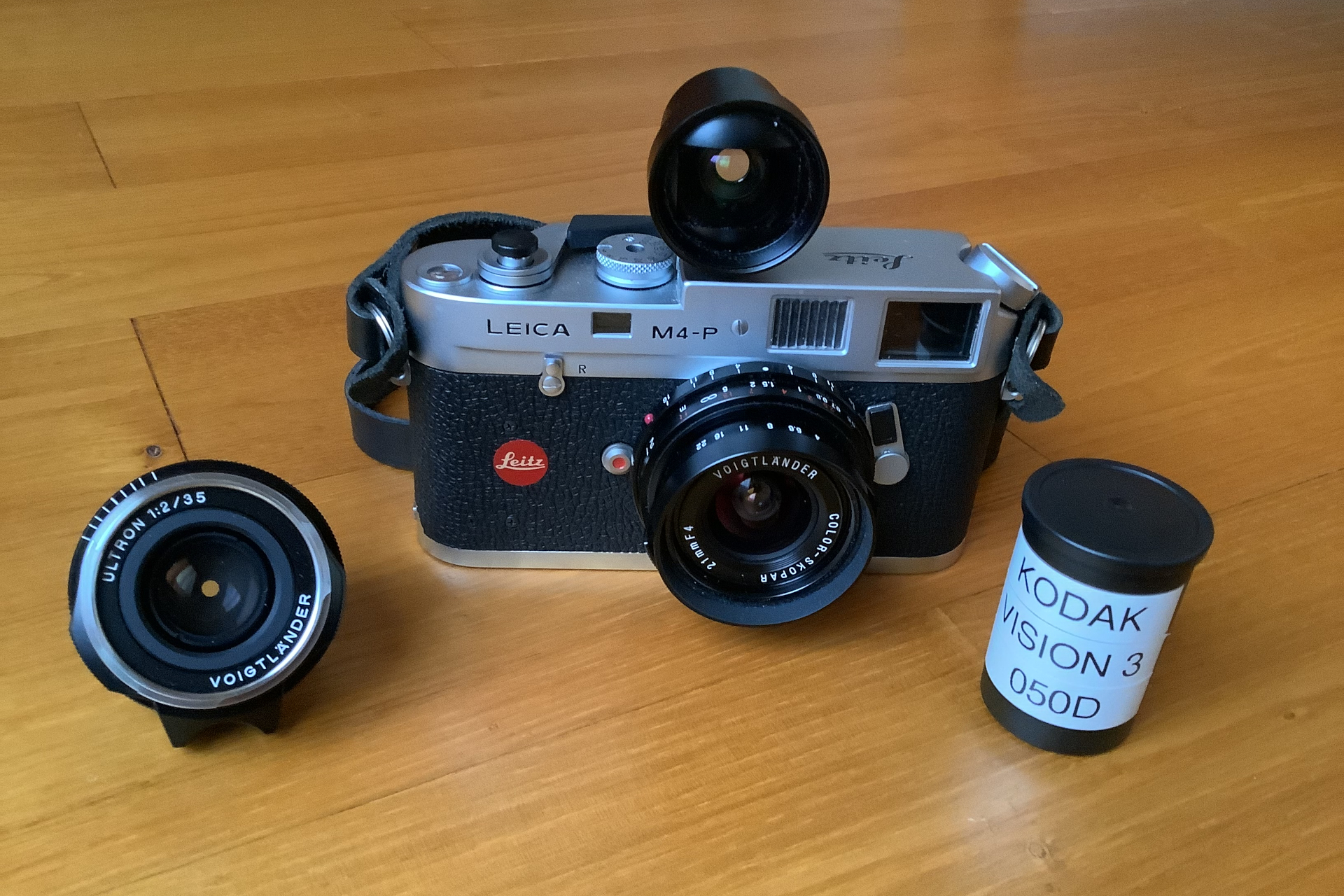
So, on a sunny day, which is not unusual in Valais, I went for a four-hour hike and 700 meters of altitude difference to Lake Mässersee. I had my Leica M4-P with me, as well as a Voigtländer 35mm f/2 Ultron and a Voigtländer 21mm f/4 Color Skopar. The camera was loaded with a roll of my favorite film for landscape photography, which is Kodak Vision 3 050D.
Let us look at some of the pictures I took that day
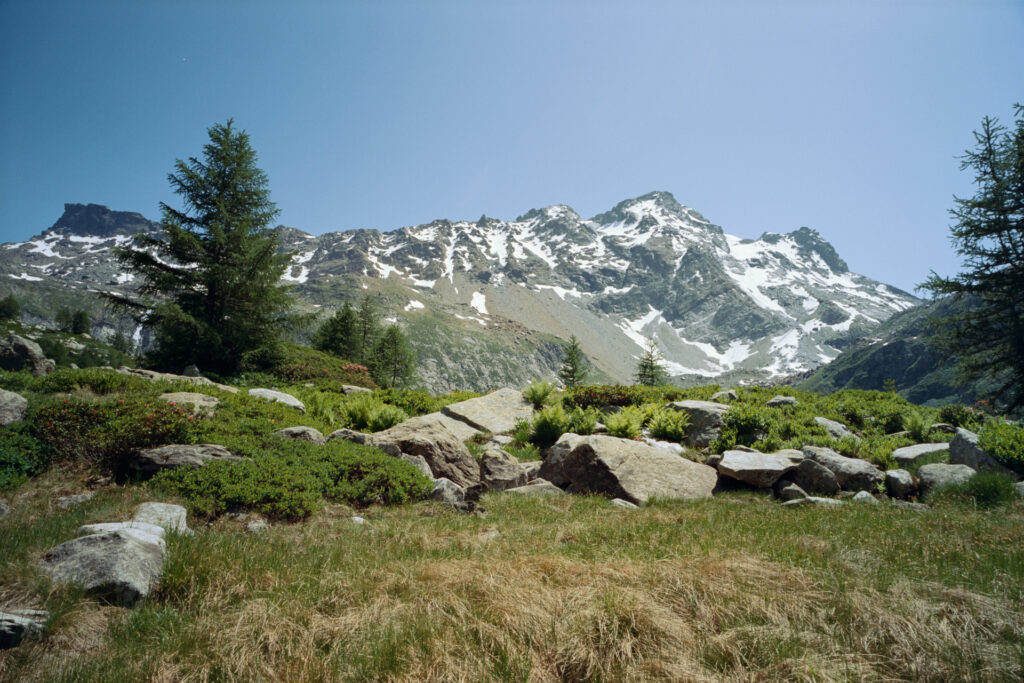
The Natural Park of the Binn Valley is located north of the border chain with Italy, whose average altitude is about 3000 meters. In early summer, the peaks still retain quite a bit of snow.
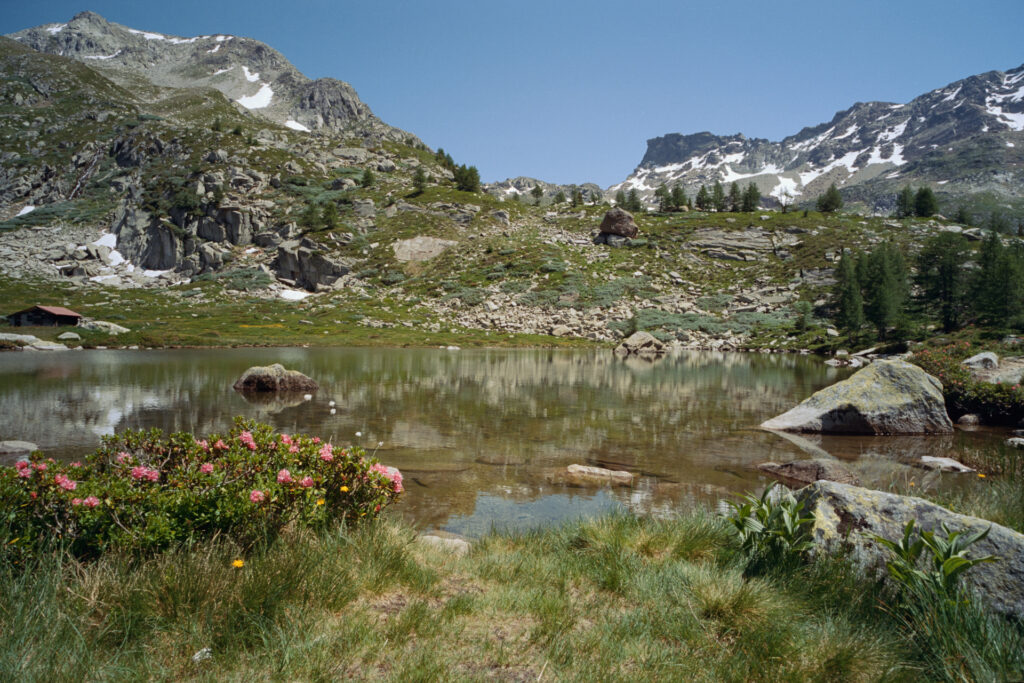
Lake Mässersee is located at an altitude of 2,120 meters. When there is no wind, it is a perfect mirror where the surrounding mountains are reflected, as are the flowers that grow on the shores of the lake.
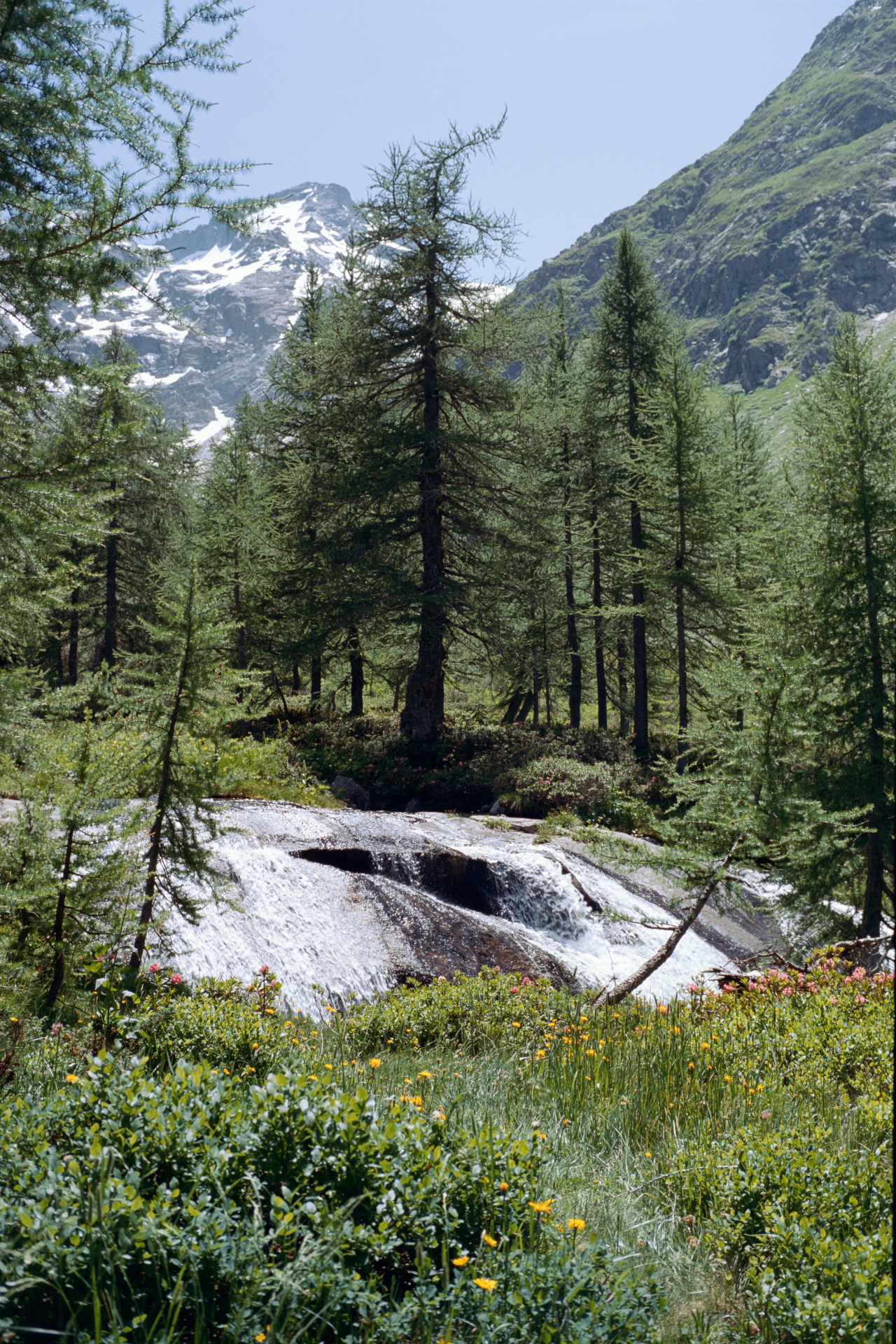
The forests are mainly made up of larch trees, which I really like. Unlike spruce, larch trees lose their foliage in winter, which allows the formation of humus. Their foliage is also lighter and lets in more light, which makes larch forests more pleasant, less oppressive than spruce forests, and also allows the vegetation to develop in the subdrink while the spruces prevent everything from growing around them because of the lack of light. Larches are magnificent trees that contribute to biodiversity.
The natural park does not lack water and it is crossed by many torrents and streams.
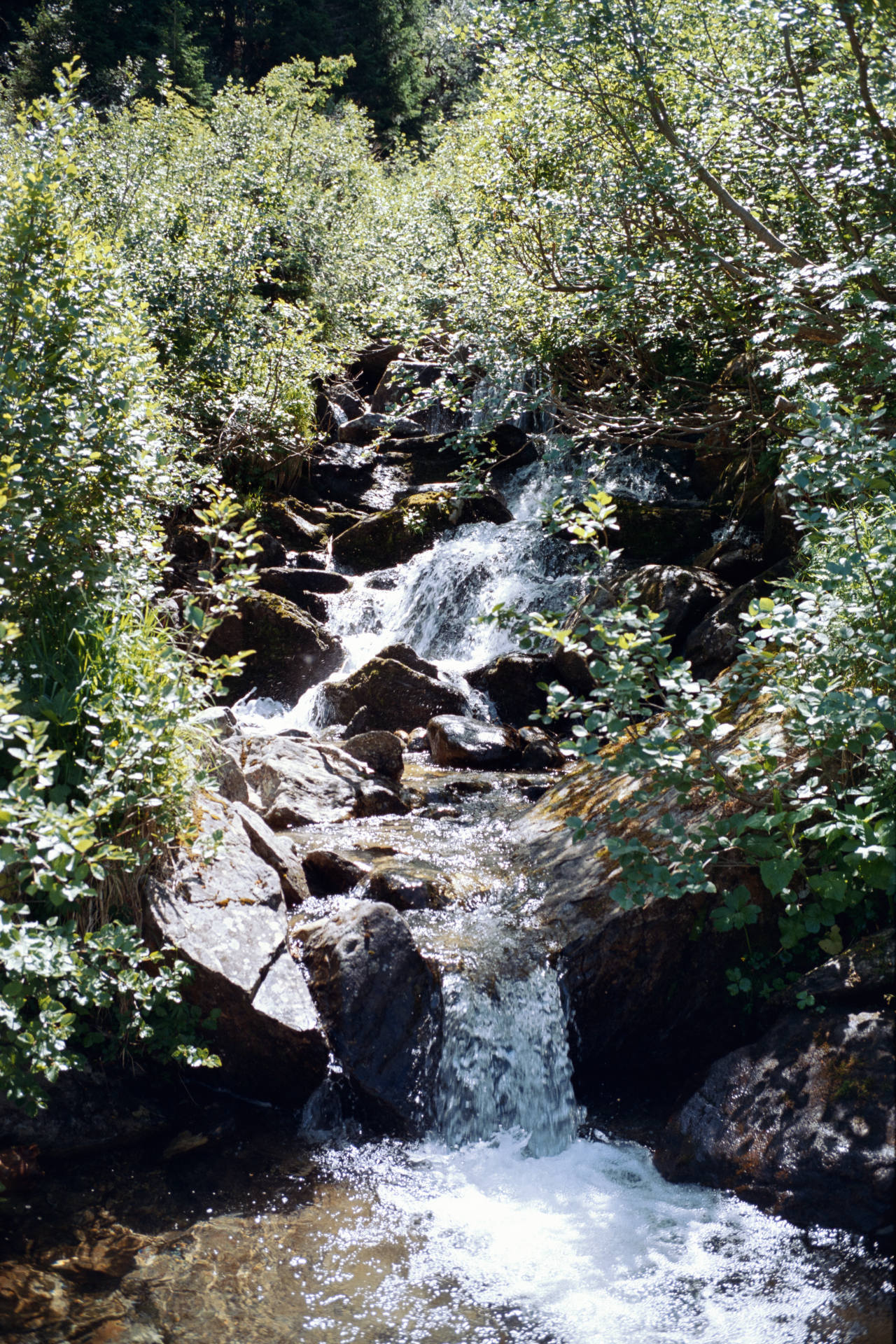
All these torrents flow into the Binna, which finally joins the Rhône.
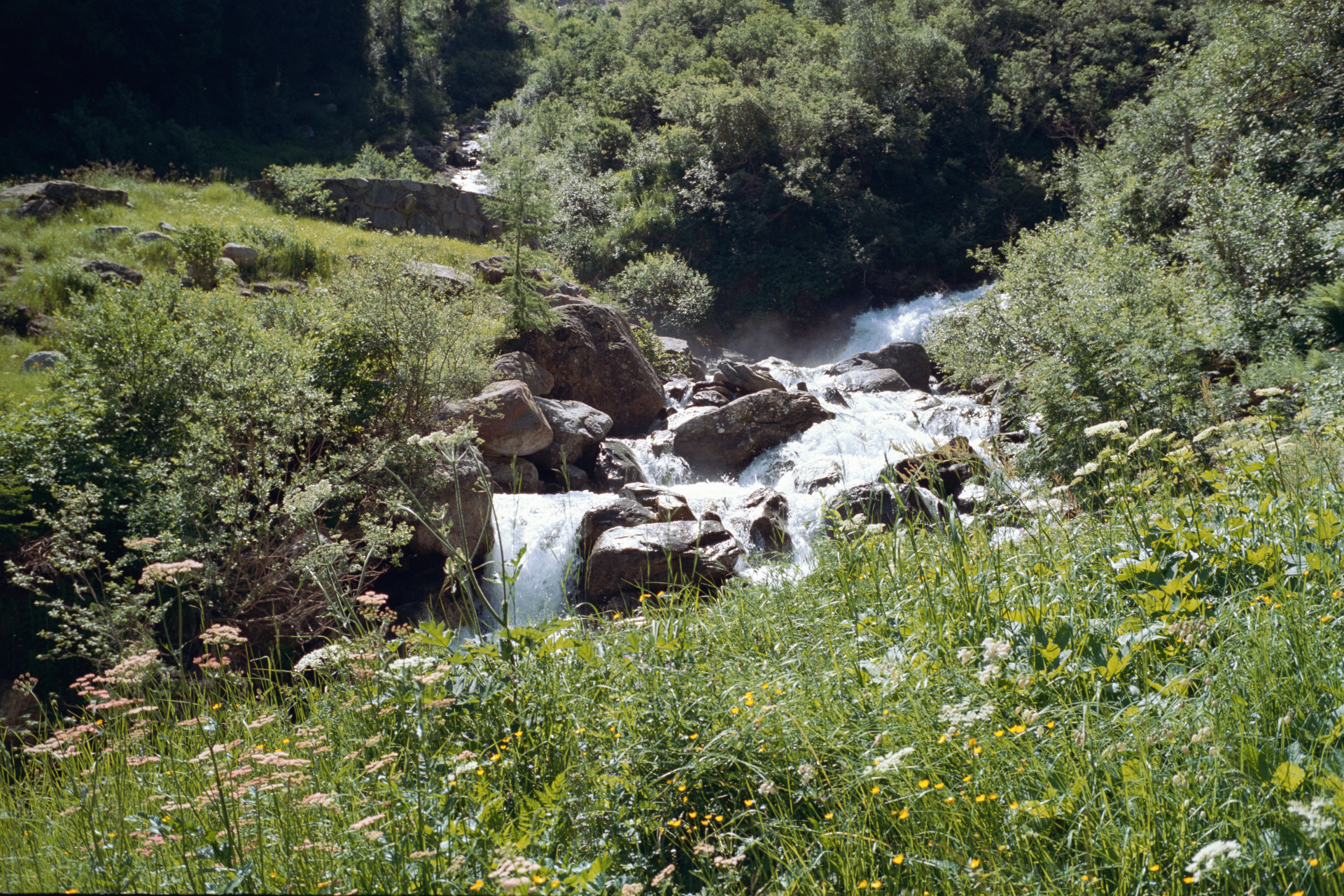
I shot the film at 25 ISO, as is usually recommended. Many will say it is a very low speed but I remember that, when I was a child, my father used to shoot kodachrome 25… When the sun shines, you are good for f/8 or f/5.6 at 1/125 sec, which provides largely enough depth of field with these focal lengths. I really like this film, the colors are subtle, the grain is very fine. The color saturation is not excessive, which facilitates possible adjustments. It is indeed easier to add a bit of saturation than to decrease it.
You will notice that I do not specify the origin of the roll I used, as it seems that the supplier is no longer in business, hence the neutral packaging in the featured image. Other suppliers are however available if you wish to try this film.
Kodak has recently improved this film by replacing the anti-halo surface layer (remjet) with a layer integrated into the emulsion. This also makes this film compatible with the C41 process since it is no longer necessary to remove the remjet before processing. However, the standard processing recommended by Kodak remains ECN2 to take advantage of all the qualities of the film.
The development was carried out through the ECN2 process. The high-resolution scan was performed by the same laboratory in Germany that supplied the film. This was the third time I entrusted this laboratory with films to process, and I was very satisfied with the result. However, it seems that this lab has ceased its activity, which is a shame because their scans were exceptional.
Regarding editing, I used GIMP to remove the black borders and adjust the black and white points. I also adjusted the brightness of the images to my liking using the Curves tool. For some photos, I also corrected the horizontality. Almost no adjustments were necessary for the colors, except to retouch in a tiny way the green curve in order to eliminate a little magenta in the sky on some photos.
Thank you for reading and I hope that this short article will make you want to try out this film stock and maybe also visit the wonderful region of Upper Valais in Switzerland, which besides the “Landschaftspark Binntal” offers many other beautiful sites (which may be the subject of future articles).
Share this post:






Comments
RichardH on 5 Frames in the Binn Valley Natural Park (Switzerland) with Kodak Vision 3 050D
Comment posted: 30/10/2026