

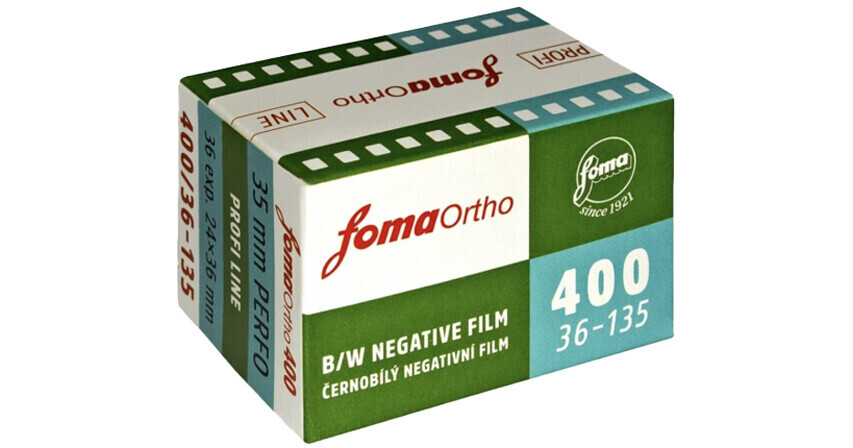
FomaOrtho 400 is one of those films you can’t quite predict until you scan it. I’ll admit I had my doubts — a few of the frames on this roll were ones I really wanted to nail
If you are not familiar with Fomapan (Foma Bohemia), they are a Czech negative film manufacturer with a history of over 100 years, making various types of black and white negative stock and medical films. Known for their classic look, fine grain, and very affordable price, Fomapan films are quite popular with beginners, enthusiasts and experienced film photographers.
FomaOrtho is the only orthochromatic film on the market (not sensitive to red light) that comes in ISO 400 — exactly the speed I want for street photography, where I need shutter speeds of 1/200 and above. I like to freeze motion in most of my shots, so that speed matters. The film ships in a metal canister — unlike most current Foma stock, which has moved to plastic, though functionally there is no difference. The price is excellent, though that likely depends on where you’re buying. I get it in Prague for about 7 euros a roll, which is remarkable given current film prices. I can’t speak to how it compares to other Fomapan films, since I have very little experience with film in general, but FomaOrtho 400 is absolutely worth the money. It’s not a perfect film — but the imperfections are what give it an old, retro, warm character. Photography was never about perfection anyway.
Equipment used and processing
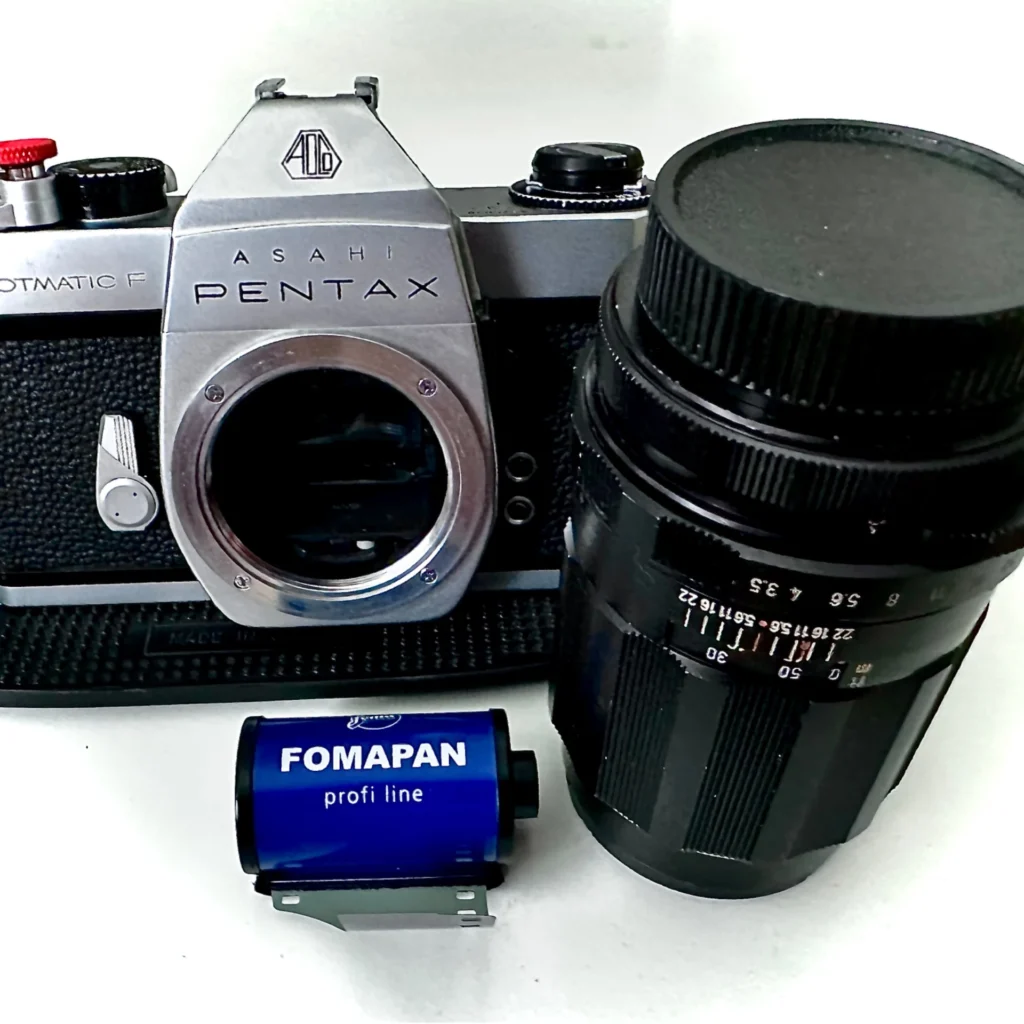
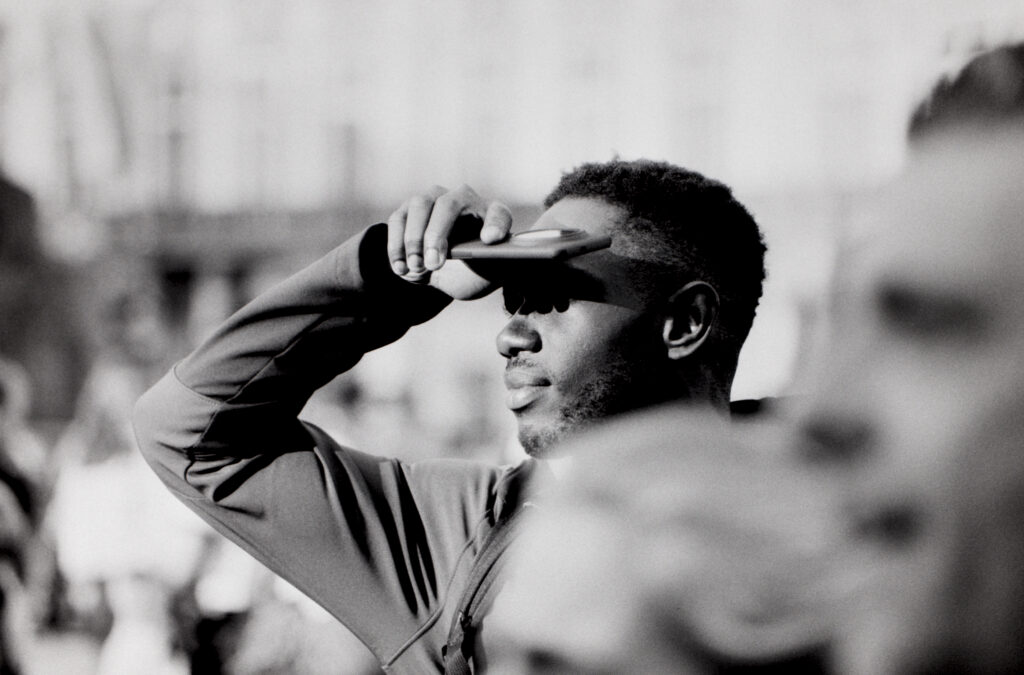
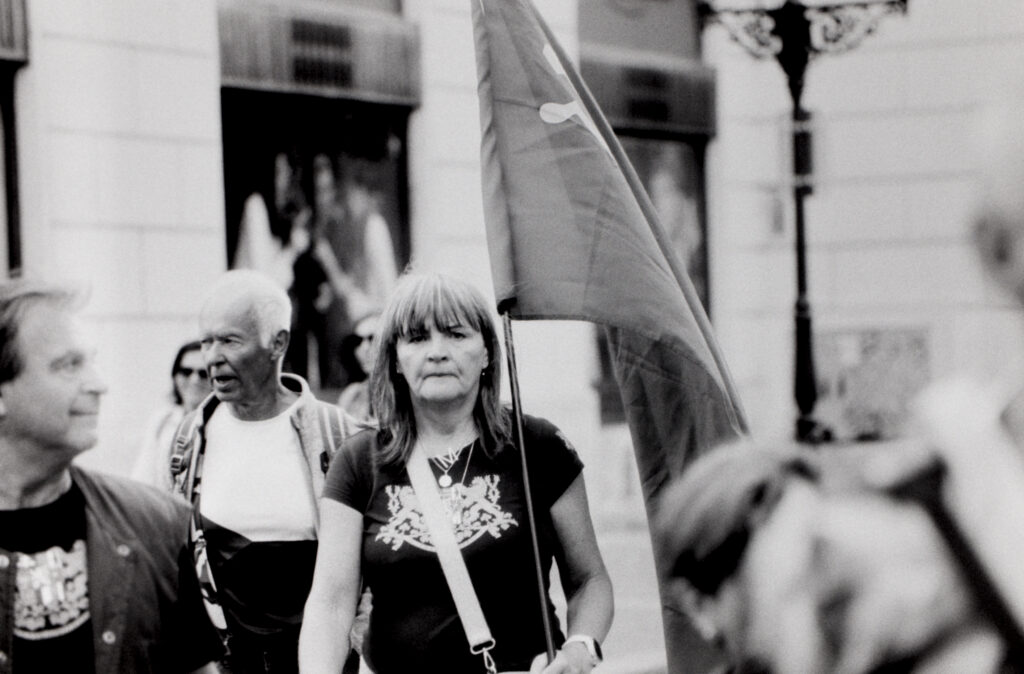
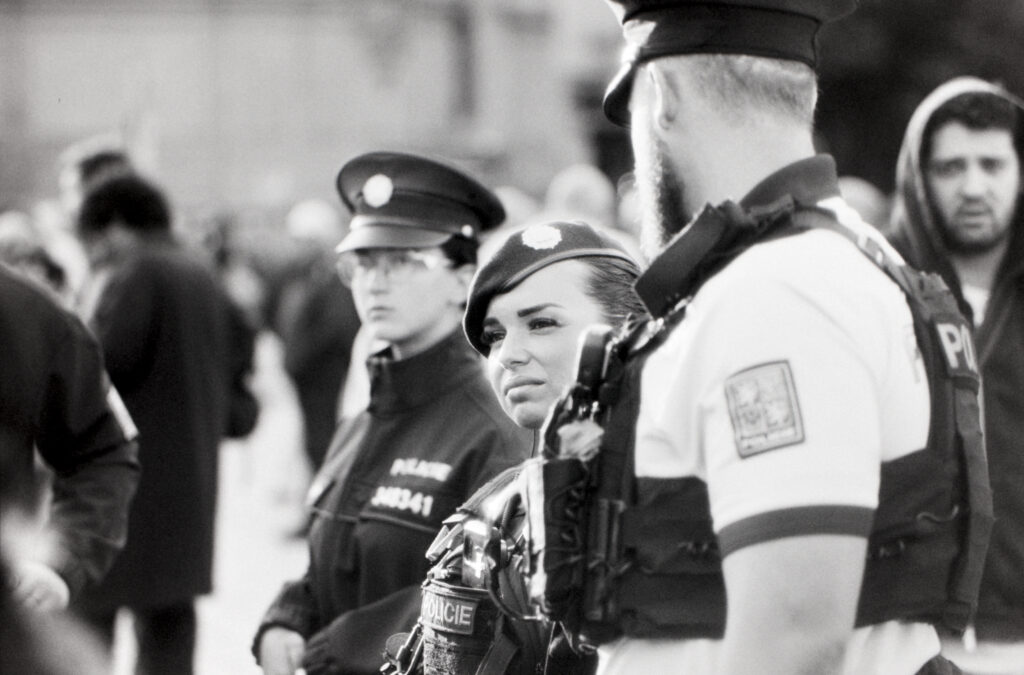
I shoot with one film camera: a Pentax Spotmatic F, probably from 1973. For this roll, I paired it with a Super-Takumar 135mm f/3.5 lens (non-SMC) and focused on candid street portraits.
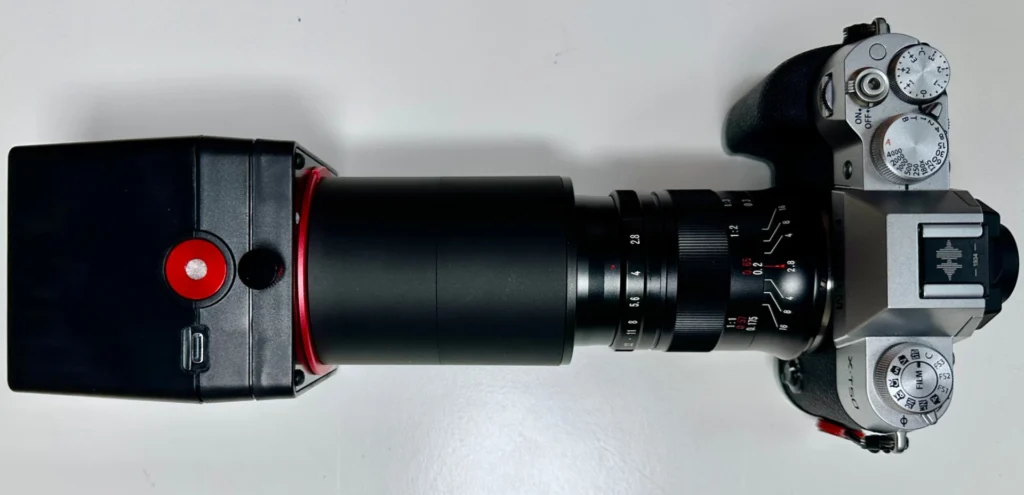
To scan the film, I use my Valoi Easy 35 mounted on a 7Artisans 60mm macro lens, shooting with my Fujifilm X-T50. It’s a setup I trust, giving me 40MP full-resolution scans and complete flexibility in editing. Lab scans tend to be either cheap and low quality, or high-quality RAW and expensive — for roughly the price of seven lab scans, I bought the Valoi and now scan everything at home.
Because I rarely shoot film, buying chemicals to develop it myself isn’t worth it. I send my rolls to a lab I trust instead and they handle the chemistry for me and are very experienced developing Fomapan films.
Editing
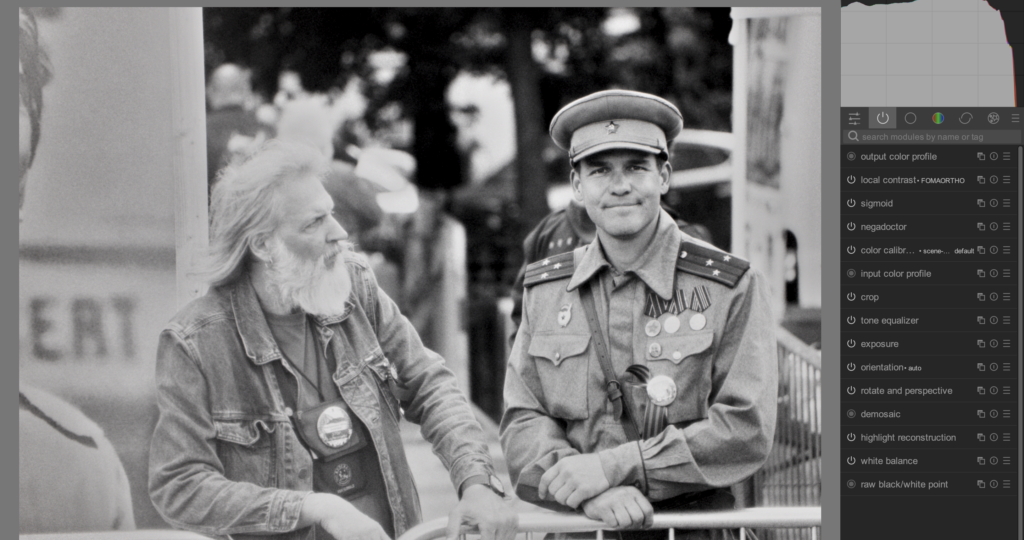
For this project, I chose to edit in darktable, using negadoctor, exposure, local contrast, color calibration and tone equalizer. I don’t spend much time in editing software in general — I believe an image needs to speak for itself straight out of the camera, not after heavy processing. There’s a lot of photography online where the edit is the only interesting part. Strip that away, and what’s left is either a cliché or an ordinary snapshot.
Conclusion
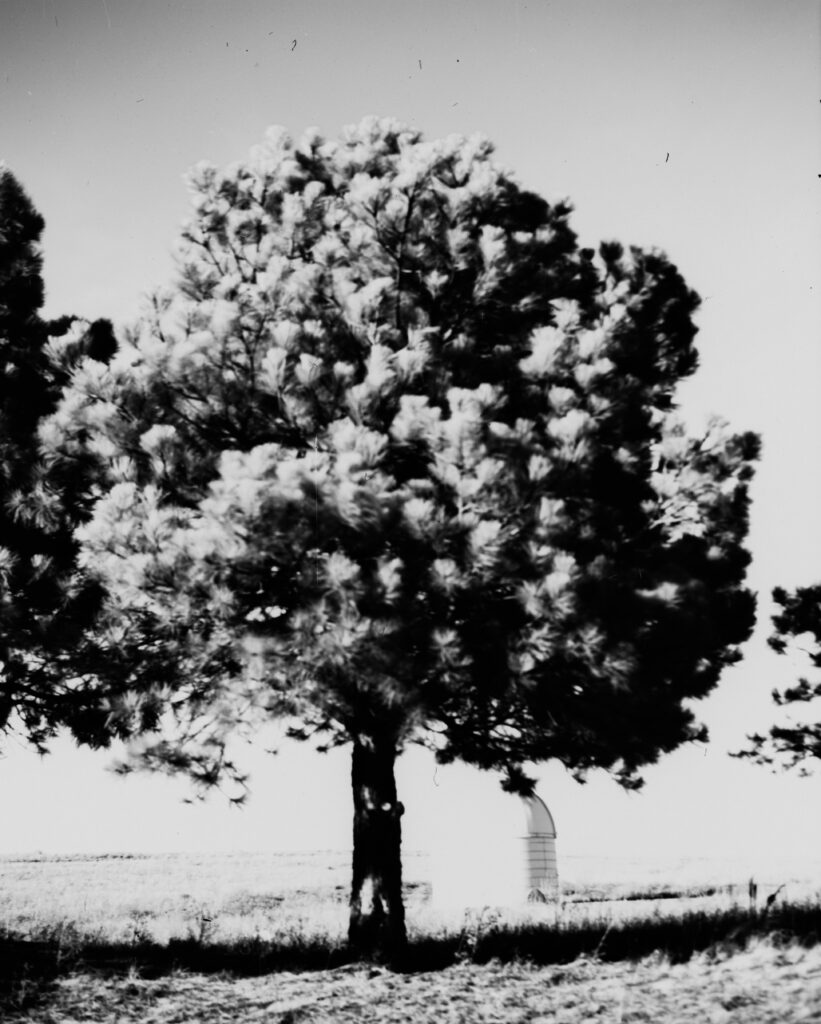
It’s hard to put the results into words, so I’ll let the photographs do the talking. This film has character: it’s sharp, the grain is pleasant, and the contrast is fantastic. Because it’s not sensitive to red light, you can’t fully predict how a scene will render once developed — and that unpredictability is exactly what I love about it.
Would I use it as my daily driver? No — I like knowing roughly what to expect from a roll. But as a film to build a niche project or two, FomaOrtho 400 has earned a permanent spot in my bag. Which reminds me, I need to go buy a few more…



Until next time,
Tero
PS
You can follow my beginner street photography journey on my Instagram or Flickr.
Share this post:




Comments
Chuck on Fomapan FomaOrtho 400 – a film that might inspire you
Comment posted: 05/09/2026
RodinaL.
Chuck
Comment posted: 05/09/2026
Jeffery Luhn on Fomapan FomaOrtho 400 – a film that might inspire you
Comment posted: 05/09/2026
After viewing your nice shots I did some searches on Ortho films. I'm mostly interested in seeing how it renders skin tones. The common comment is that ortho films are not red sensitive and darken skin, but that doesn't seem to be the case in the many examples I viewed. Faces often seemed either normal or lighter than normal. What am I missing? When I want to darken skin in a subtle way, I use a light green filter. It costs me a stop. I was hoping ortho film would allow me to go filterless and shoot at box speed. Nope. Anybody want to chime in? What am I missing?
Comment posted: 05/09/2026
Comment posted: 05/09/2026