

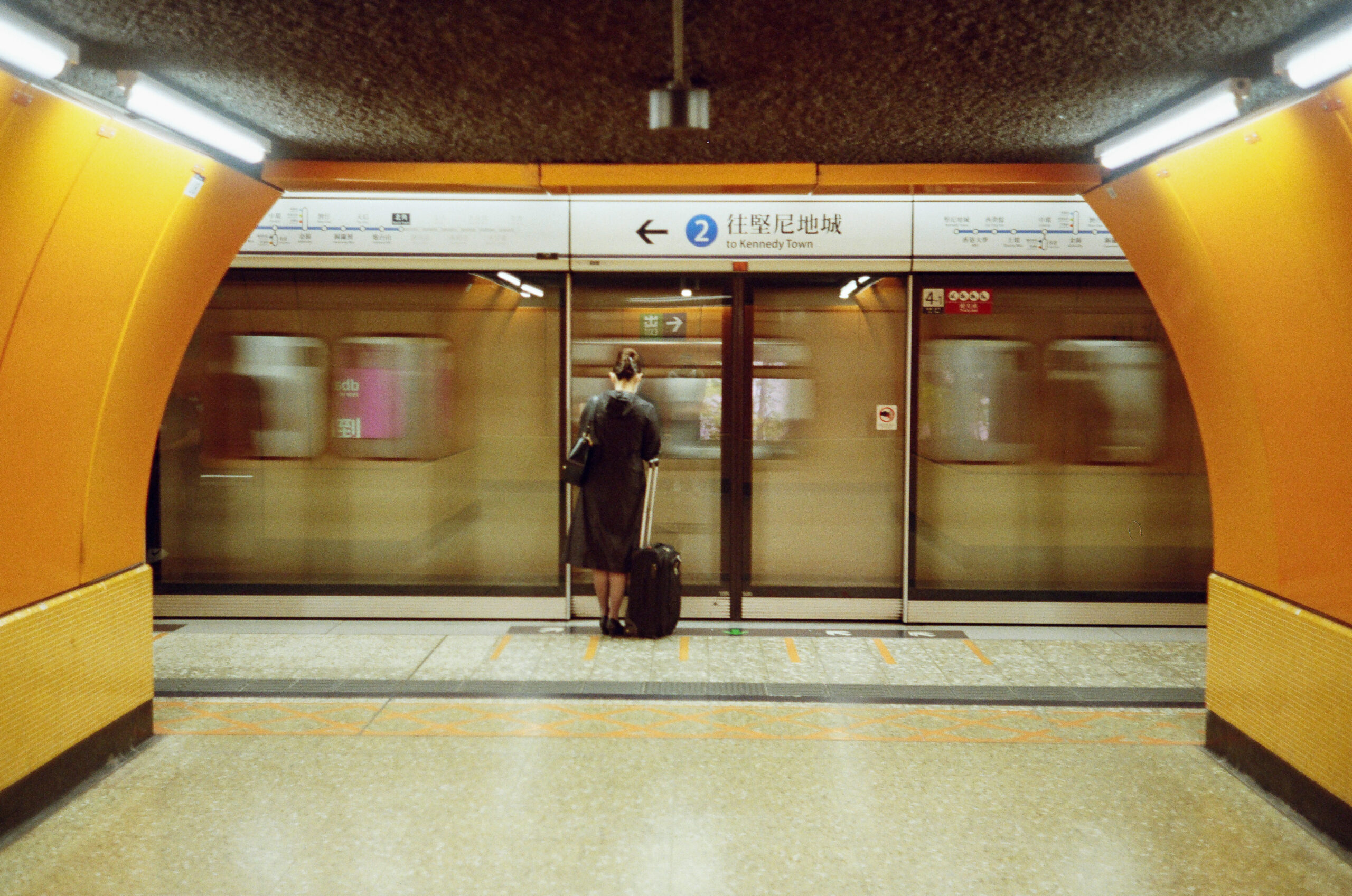
We like to tell ourselves that the photographic journey is a logical progression—a straight line from beginner gear to our ultimate aesthetic baseline. If I had known in my early days how good the 1981 Minolta CLE actually was, I could have theoretically bypassed the entire rangefinder vanity fair. I could have saved myself the immense financial and mental detours of owning a Leica M6 TTL, an M7, and a Konica Hexar RF.
But that is a retrospective lie. The truth is, human curiosity requires contrast. I needed to experience the weight, the electronic quirks, and the premium price tags of those alternative routes just to earn the diagnostic wisdom required to appreciate what this tiny, plastic-shrouded Japanese street scalpel is actually accomplishing.
When my Minolta CLE and M-Rokkor arrived from a dry-stored shelf in Hokkaido last week, I didn’t mount the lens to find a luxury status symbol. I mounted it to find out if early-80s engineering could hold its own against my modern 60-megapixel digital standards. What I found on that first test roll wasn’t the soft, muddy nostalgia of the point-and-shoots we grew up with, but an aggressive, shadow-hungry, hyper-resolving image engine that completely unlocked my street workflow.
Here are five frames that proved why the most unassuming box in the M-mount ecosystem is the one that belongs in my hands.
The lens I chose to go with the CLE was a late-batch M-Rokkor 40mm f/2, intentionally bypassing the earlier Leitz-badged version. The late-production Minolta variant features upgraded multi-coatings, yielding significantly higher micro-contrast. It did not disappoint.
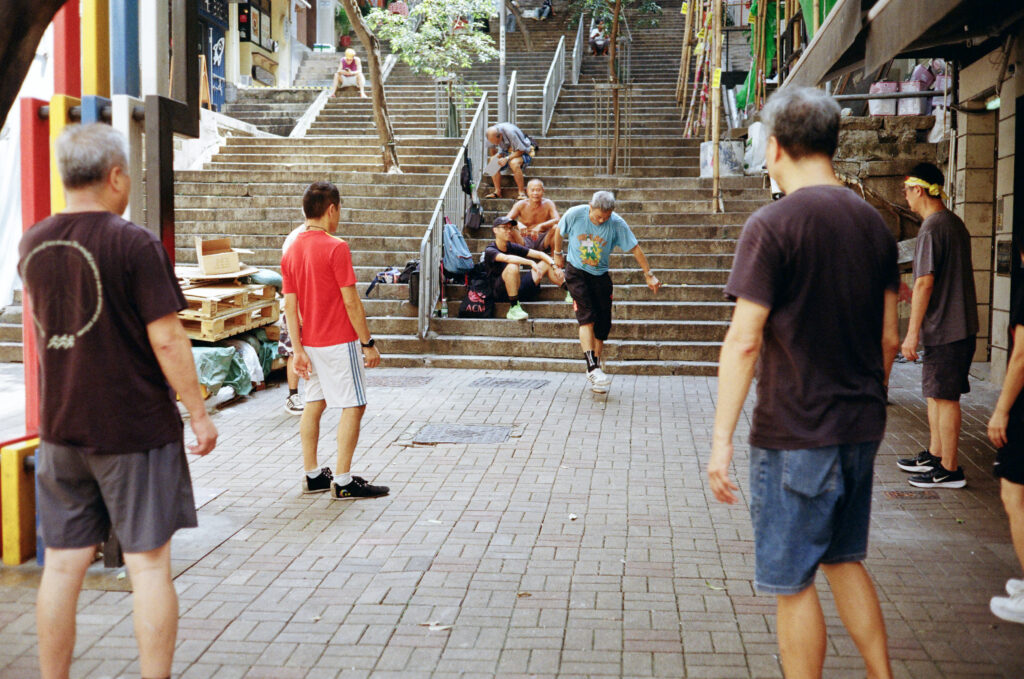
On my test roll of choice—the humble, modern Fujifilm 200 (which is technically rebranded Kodak Gold 200 on the inside)—the lens exhibited a massive tendency for high local contrast, especially under the biting midday sunlight on busy Hong Kong streets. Yet, that isn’t to say it draws with a sterile, purely modern rendering. Wide open, out-of-focus highlights still retain a smeary, dreamy, vintage tendency. The polarized character of the glass effectively gives you two distinct rendering styles in one lens, depending entirely on your chosen aperture.

When I decided to feed the newly purchased CLE a roll of consumer-grade Fujifilm 200, I was mentally prepared for a series of underexposed images with muddy shadows, mediocre color, and flat contrast. Luckily, that didn’t happen.
This haunting anxiety of underexposure began the moment I purchased a brand-new M6 TTL a few years ago. Both the Leica M6 TTL and M7 calculate exposure by reading light reflecting off a central white spot painted onto the shutter curtain, which occupies only about 13 percent of the frame. This essentially turns their metering system into a rudimentary spot meter.
I still remember coming home from a trip to Japan, hoping to see a captured moment of my wife dipping her feet in the cold water of the Kyoto suburbs. Instead, I realized the M7 had been fooled by the bright reflections on the water’s surface, drastically underexposing the frame and rendering the image useless. The Minolta CLE, despite being born two decades ahead of the M7, utilizes a far more sophisticated, real-time off-the-film metering matrix that averages the global scene, delivering incredibly accurate automatic exposures on the fly.
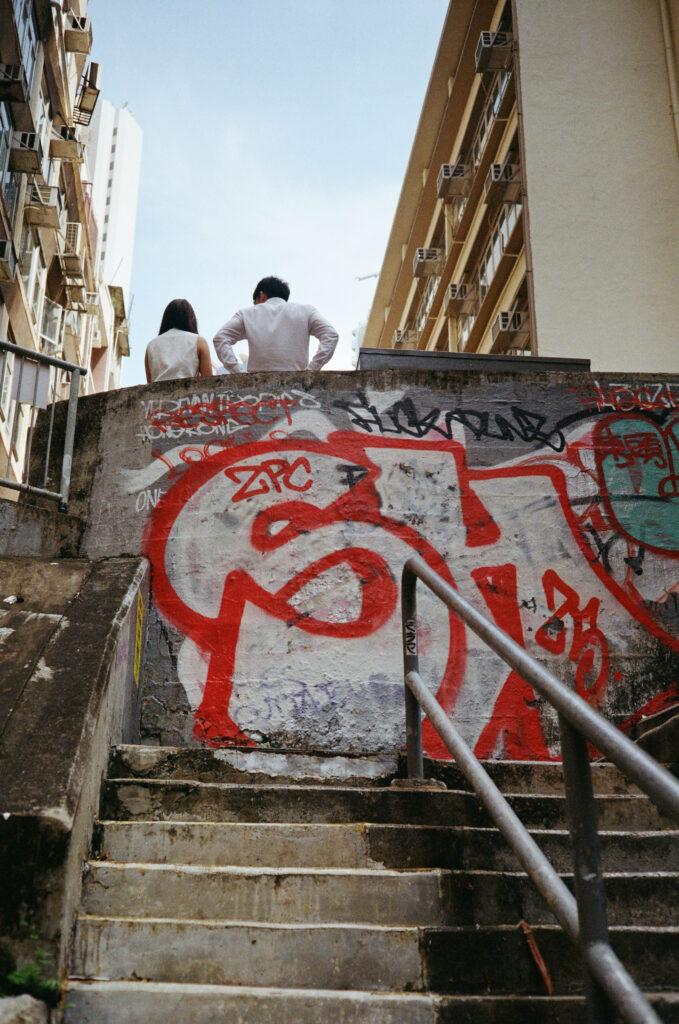
For the most part, I consider myself a wide-angle street photography hobbyist. The close proximity of candid street shooting boosts my adrenaline and keeps me hunting for the next scene. This spatial preference is exactly why I initially gravitated toward the 0.58x viewfinder of the M6 TTL, the Hexar RF, and now, this Minolta.
While I don’t limit myself strictly to a 28mm lens, shooting with glasses (or sunglasses on the street) means that having wide, low-magnification frame lines visible on the perimeter is a massive versatility advantage. Unlike the Leica M6, the CLE’s viewfinder has almost zero focus patch flare or “white-out.” And unlike the Hexar RF, it provides native 40mm frame lines—a focal length I find incredibly intuitive.
A few physical observations on the finder: the actual image captured on film appears to be slightly wider than the 40mm frame lines suggest at longer distances. Furthermore, the focus patch, quite like the Hexar, has a rather narrow eye-placement sweet spot; your eye must be aligned perfectly on-axis to maximize patch contrast, particularly in dim lighting.

A lot of us born in the 1980s grew up carrying multi-packs of Kodak Gold 200 from big-box retailers to our summer family vacations. Although those old photos and scans immediately trigger joyful childhood memories, the objective quality of those images was never great. Back then, my parents’ camera of choice was a premium, consumer-level Olympus Mju Zoom.
Testing this Minolta setup made me realize just how optically advanced elite camera engineering actually was back in the 1980s by comparison. Realizing that a pocketable camera and lens system manufactured over forty years ago can produce absolutely uncompromised, razor-sharp images on modern scan benches never fails to bring a smile to my face.
P.S. After years of lurking as a quiet admirer of the site, it feels incredibly rewarding to step up with my first community contribution. I’m immensely grateful to Hamish for helping me get this piece put together, and it’s a true privilege to finally add something back to the platform that has shaped so much of my own perspective on gear.
Share this post:


Comments
Nigel Gardner on 5 Frames with a Minolta CLE – The Myth of the Straight Line
Comment posted: 22/10/2026
by many.
Thanks for the post and great images.
Martin on 5 Frames with a Minolta CLE – The Myth of the Straight Line
Comment posted: 22/10/2026
Eric Norris on 5 Frames with a Minolta CLE – The Myth of the Straight Line
Comment posted: 22/10/2026
Graham Line on 5 Frames with a Minolta CLE – The Myth of the Straight Line
Comment posted: 22/10/2026
Aperture priority works very well and the light weight of the body and smooth shutter are assets. The finder is absolutely brilliant. My lenses are an assortment of Leitx, Minolta and Voigthander.