


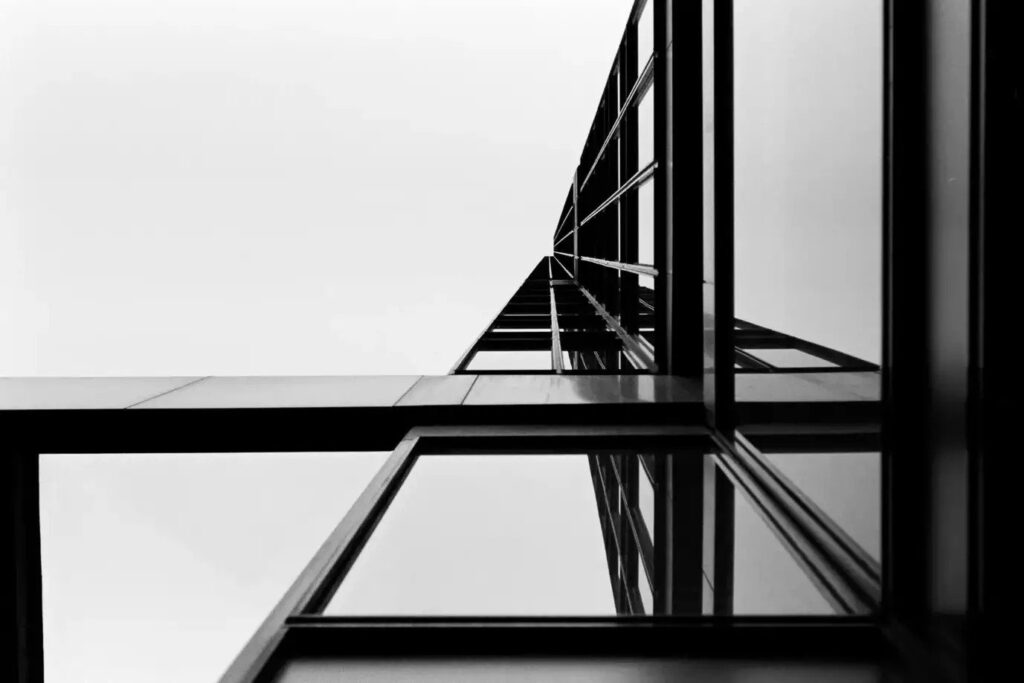
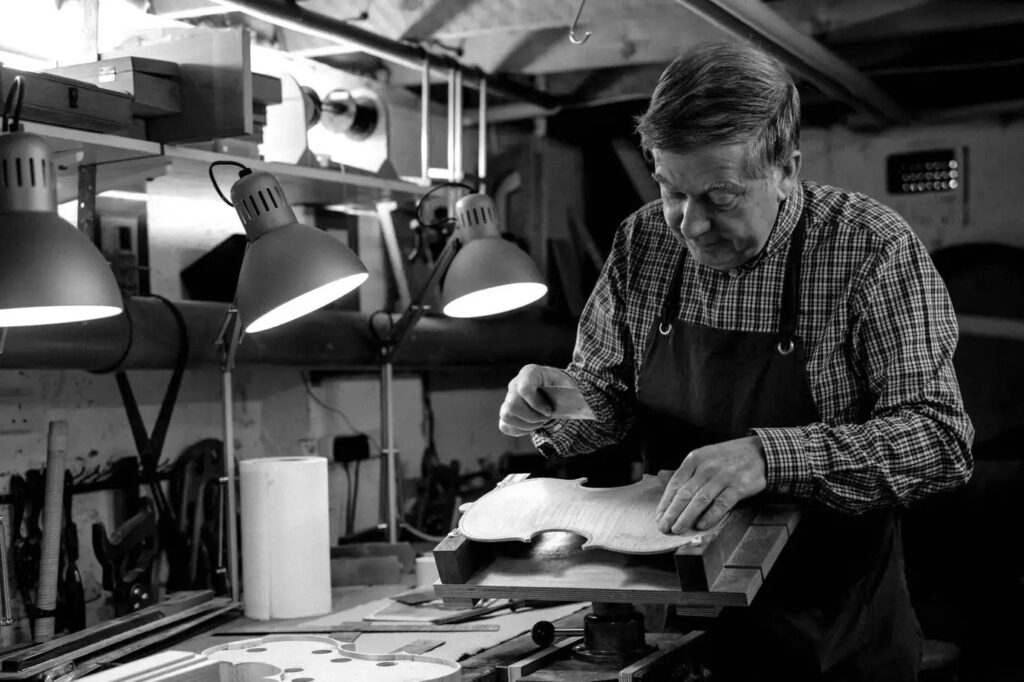
I really like the old fashioned look I get with paper roll film, but there are lots of challenges. These include limited availability of films, low film speeds, low dynamic range and handling issues when developing it. You are not likely to find a lab that will develop it either. Is it worth all that for the look? In my case, it is yes.


What is Paper Roll Film?
It appears that only the world’s smallest company, Film Washi, makes it in France in limited quantities. Thin Japanese Water Color Paper is used as the negative strip after it has been hand coated with a light sensitive emulsion. The 120 format paper films come on recycled film backing paper and can be loaded like any 120 format film.

There are two paper films that you may find from time to time, Washi W and Washi Y and it appears that you are much more likely to find Washi W than Washi Y. I’ve bought my Washi films at Freestyle Photo and the Film Photography Project store. There is a list of dealers at Film Washi. https://filmwashi.com/en/order/
For a better chance of success, you need to put in extra effort on your part that includes reading all the Washi paper film materials. I recommend you go to the Film Washi website and download the Datasheets for each film or click here:
https://filmwashi.com/datasheet/W25_en.pdf
https://filmwashi.com/datasheet/Y100_en.pdf
Read all the information on the datasheets including the tips at the end.
The W film is generally described as having an ISO of 25. Digging into the datasheet reveals ISO values from 3 to 25, depending on the subject and developing. To complicate matters more, it does not have wide exposure latitude. With the subjects that I take and the Ilford Paper Developer that I use, ISO 3 seems to work the best.

Washi W has very strong texture and very strong contrast and can be used with a red darkroom safelight .

I have used Film Washi W the most but have also shot two rolls of Film Washi Y. What are the differences from Washi W?

Washi Y is a panchromatic film with an ISO of 100, a very strong texture, soft contrast and must be handled in total darkness. I’ve only used the films in 120 format but sheet film may be available.
Shooting
After reading the data sheets and loading your camera, you are ready to shoot like you would with any ISO 3 ortho or ISO 100 pan film. I rarely use an exposure meter and shoot in only in bright daylight using Sunny 16 calculations. I never use a tripod with the ISO 3 film and shoot at 1/25 and f/5.6. ISO 100 film is more flexible to shoot, of course. I know it may sound odd to shoot Sunny 16 with films that have very little exposure latitude. That’s just the way I shoot and most of the time, it works very well.

Developing
Hopefully, you will already be experienced with loading tanks and even paper tray developing. Loading tanks requires you to download the Washi Processing Procedure for Hand coated Paper Film in Patterson, Jobo and AP Photo Reels here. Even though the method is found on the Washi Y Datasheet page, you can load Washi W in tanks too. I won’t go into tank loading details as you can read the datasheet. I’ve loaded Washi Y panchromatic film in tanks twice with no problems. After I tape the end of the paper film to the clear negative roll as mentioned in the datasheet, I angle trim the corners so the tape won’t have to go into the slots in my Patterson tank reels and it loads relatively easy this way. Agitate gently during development. I agitated once with my normal more vigorous inversions and ended up with emulsion pieces breaking off. Reread the directions on the Data sheet just before or as you develop.

Now let’s look at tray development. I have not tried tray development in absolute darkness with Washi Y pan film but with the ortho Washi W film, it is relatively easy..
Instructions for Washi W films state that they must be processed with paper developer in open trays under safelight. I use a two minute developing time with Ilford PQ Universal Paper Developer. I once tried a different paper developer that took 8 minutes and had lots of challenges as the paper film kept folding laterally as I developed. Short development seems to be the way to go.
You develop Washi W ortho film under a safelight by see-sawing the film in trays set up for prewash, develop, rinse, fix and final wash. You can use clamps to hold the film but I like rubber gloves instead. I have regular safelights but have found the red light on my headlamp is perfect because Washi W has no sensitivity to it at all.

The paper film hangs flat when wet but cups and curls a lot when dried. The easiest way to flatten it is to tuck the completely dry paper film into the backing paper as you roll it back onto the spool and store it that way overnight or longer.
Scanning
Using my Epson V850 Pro scanner, I lay a strip of the paper film on the glass, add a non glare section of glass on top and scan after first setting Document Type to Film (with Film Area Guide.) You may have to be creative in using other methods of scanning. After scanning, the paper negatives are strong and stiff enough to store in my Print File Archival 120 Negative Preservers.
You can scan as a negative

or scan setting the document type to Reflectance for a positive. I recommend that you scan both ways and see which result you like best.

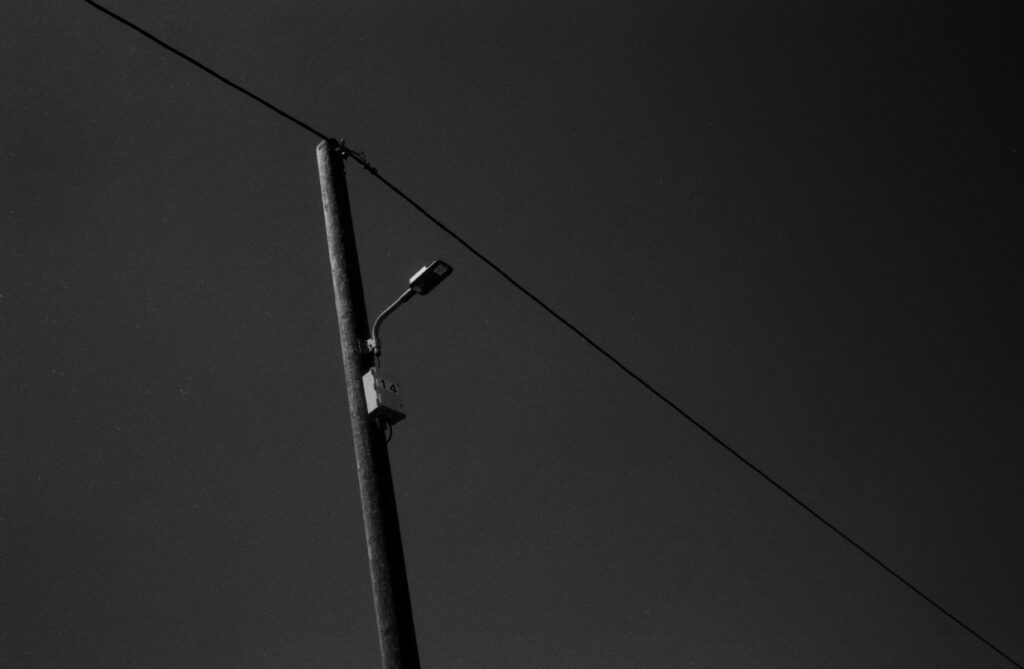
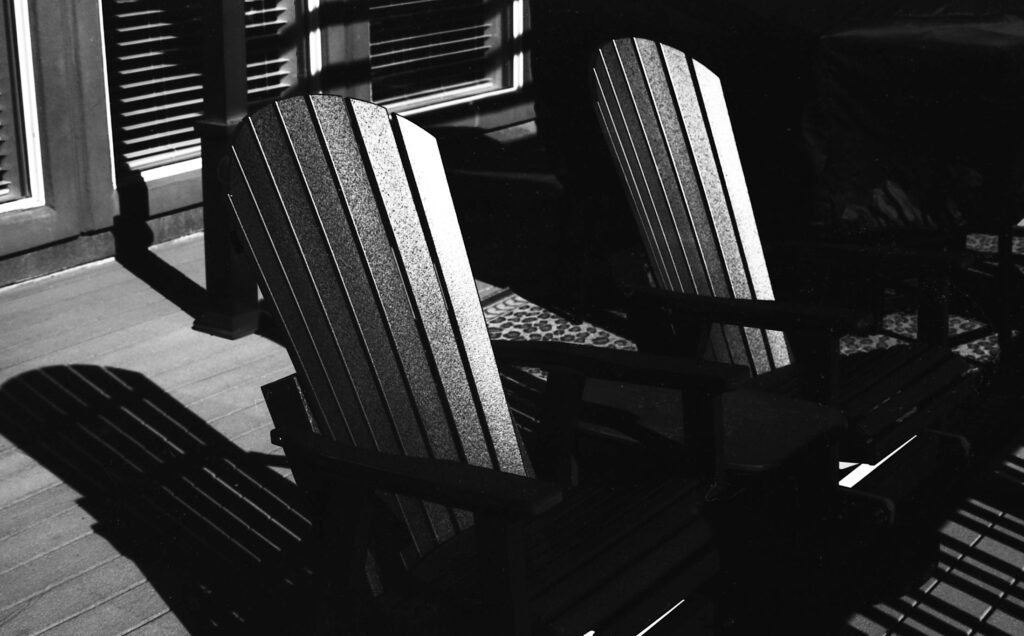
I use Lightroom for post processing but other than straighten and crop, the paper negatives or positives are not very receptive to even minor adjustment with sliders. The somewhat rough look is part of the charm. That is also why I leave the edges of most of my scans with the unfinished look that you have seen here.


Please comment if you have any questions and I wish you Good Luck when you decide to try paper film!
Share this post:

Comments
Erik Brammer on Washi W and Washi Y – Paper Roll Film – If You Are Ready for a Challenge?
Comment posted: 11/09/2026
I have occasionally developed an interest in Washi films, but never to the extent that I would have investigated its ins and outs. I wonder whether this would spool nicely onto my Rondinax 60 spool. Aside of that, I have recently started playing with BW paper reversal, using the kit from Bellini, and I wonder whether the Washi films, W in particular, would allow for a 2-step process of develop - bleach - develop to create a positive image right on the paper. Extending this paper reversal process to 120 would be nice feat.
Cheers,
Erik
Comment posted: 11/09/2026
davesurrey on Washi W and Washi Y – Paper Roll Film – If You Are Ready for a Challenge?
Comment posted: 11/09/2026
Comment posted: 11/09/2026
David Pauley on Washi W and Washi Y – Paper Roll Film – If You Are Ready for a Challenge?
Comment posted: 11/09/2026
Comment posted: 11/09/2026
brad s sprinkle on Washi W and Washi Y – Paper Roll Film – If You Are Ready for a Challenge?
Comment posted: 11/09/2026
Great results with the Washi. The W has given me some of my favorite images. I tray develop, never attempted loading on to reels. I have several rolls of Y waiting in the wings and your results are making my shutter finger twitch!
Cheers!
Comment posted: 11/09/2026
Richard Becker on Washi W and Washi Y – Paper Roll Film – If You Are Ready for a Challenge?
Comment posted: 11/09/2026
Comment posted: 11/09/2026
Alexander Seidler on Washi W and Washi Y – Paper Roll Film – If You Are Ready for a Challenge?
Comment posted: 12/09/2026
Comment posted: 12/09/2026
Omar Tibi on Washi W and Washi Y – Paper Roll Film – If You Are Ready for a Challenge?
Comment posted: 14/09/2026
Comment posted: 14/09/2026