

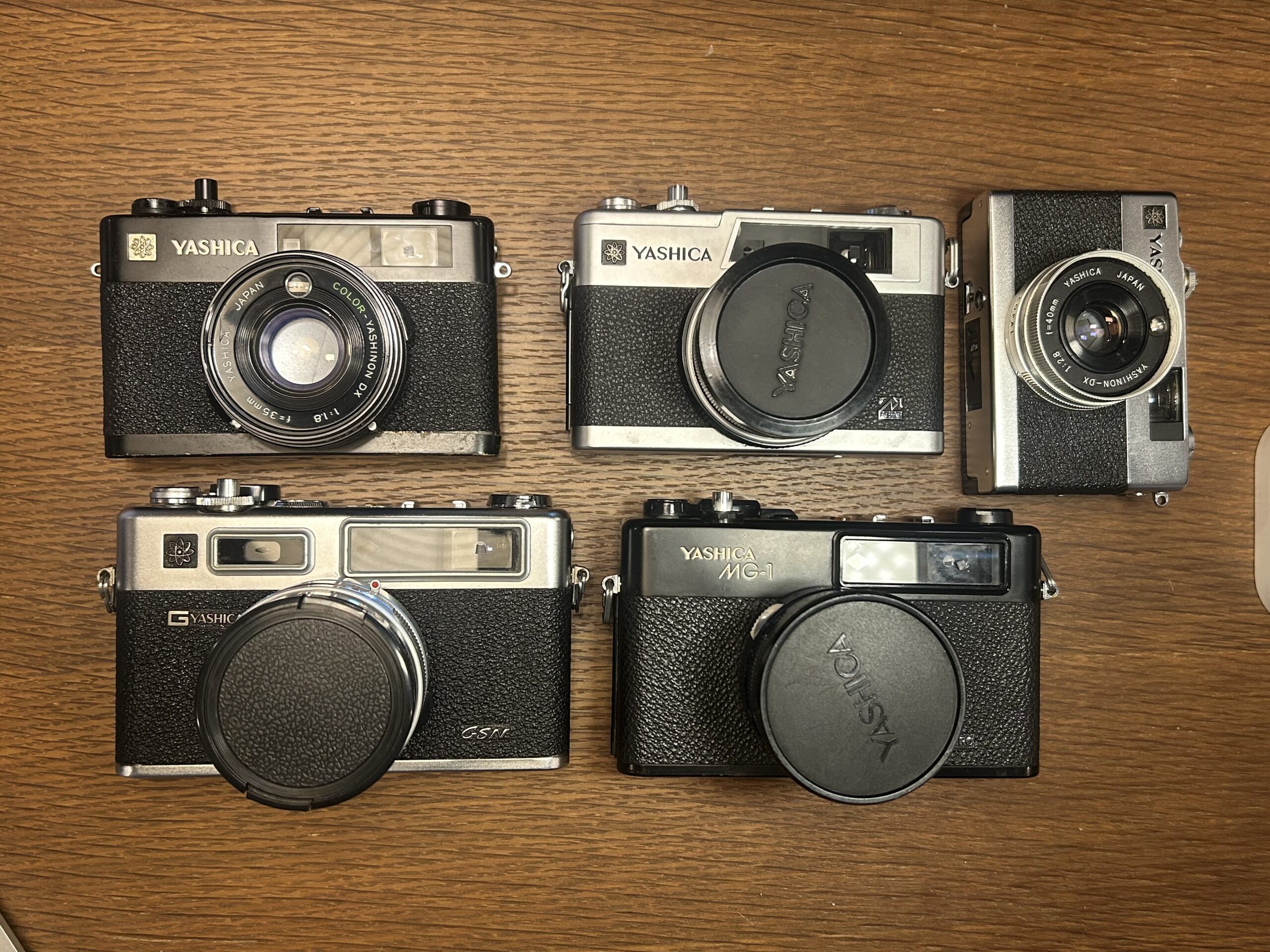
I thought it would be nice to introduce you guys to the Yashica Electro 35 family. I’ll be sharing some of my views and user experience of these cameras, and hopefully, this information will be useful for you if and when you decide to pick one up. Or two. Or three….
In case you’re wondering what I do, I repair film cameras. I then shoot with the cameras I repair, and I also sell the cameras that I’ve fixed. I found a certain joy in fixing them. It’s a nice hobby I discovered. Hours of joy for a small fraction of cost. I learnt so much from it, and I’m hoping to share it with you.
Anyway, introducing you to the Yashica Electro 35 family. The Yashica Electro 35 was the first camera that fully exposed me to the world of film cameras and rangefinder cameras. It was introduced to me by a saxophonist/climber/photographer. I’ve used film cameras before, but never to such depth. This camera here opened my eyes to the world of cameras and photography and gave me a deep understanding of the exposure triangle and a deeper admiration for photographers.
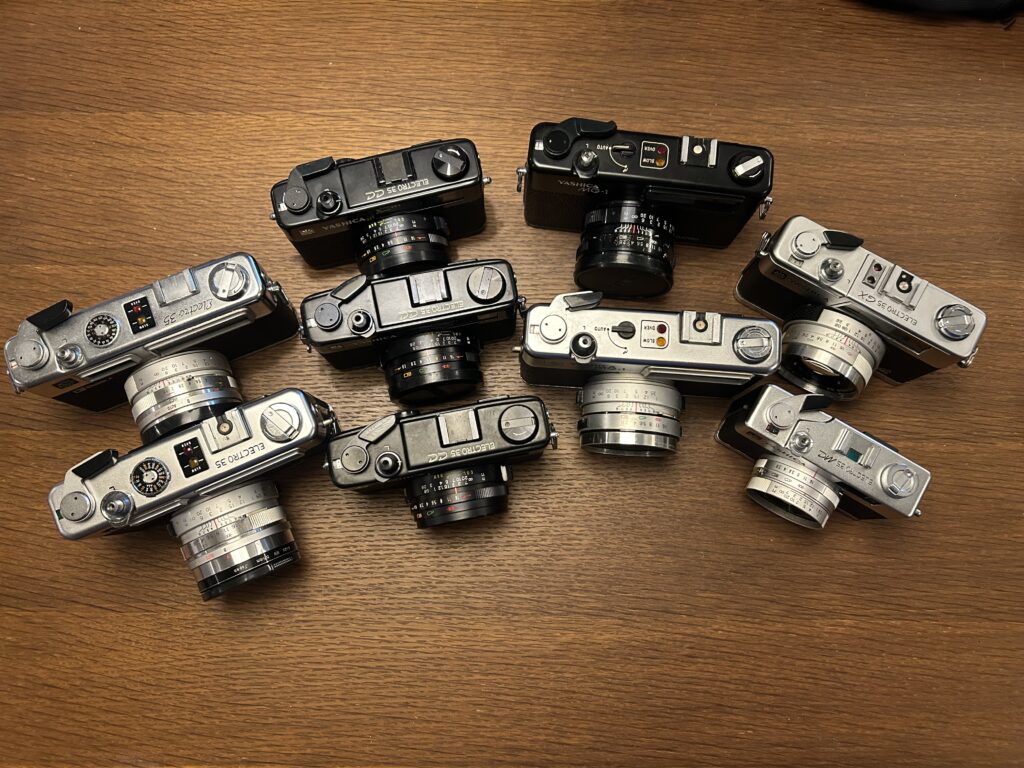
I have 5 cameras here. The G, CC, MC, GX, and MG-1, which I will talk through. I’ve also created a nice timeline for your reference, which I will show later, but you can easily read it in depth here at the camera-wiki page: Yashica Electro 35
The camera and its pros
The original Electro 35 was created in 1966. They were introduced as an automatic exposure rangefinder cameras. These cameras were basically aperture priority cameras. You set the aperture, and the camera does the rest. The “brain”, which is the electronic (Electro) part of it, calculates what is needed and sets the shutter speed accordingly. This allows you to have full creative control over how you want your pictures to look in terms of the focus of your subject. What I found interesting and appreciative of this camera was that it not only does the job for you in terms of exposure, but also TELLS you what to do. There are indicative arrows that tell you if your shots are over- or underexposed. These arrows go one step further to tell you WHICH way to turn your aperture ring. And you don’t even need to take your eye off the viewfinder. It tells you THROUGH the viewfinder too! The amazing part about this camera is that the shutter speeds are basically stepless. They are able to shoot between shutter speeds. If the camera decides you need 1/348s, it will shoot at 1/348. Because of that, your photos will be “almost guaranteed” to be properly exposed. Why I say almost guaranteed is because, don’t forget, these cameras are at least 50 years old in 2026, and electronics fail over time. That being said. What impressed me the most about these cameras that I learnt through repairing them, was that EVEN after 50 years, their electronics are still in pretty good condition compared to the other cameras that I’ve worked on. I think they are at least 80%, if not 90%, still in good condition. I don’t recall any off-hand that aren’t working.
Cons
Of course, every camera has its cons. The greatest con, not just for this camera, but for any aperture priority camera, is that you have no control over the shutter speed. At low light, your camera can shoot at maybe 2-second shutter speed if it decides it needs to. The GSN models go down as slow as 30 seconds, or more, as some have reported. As a general guide, we do not shoot slower than the inverse of your focal length, so for the Electro 35s, nothing below 1/50s; otherwise, camera shake will cause your photos to turn out blurry. The problem with the Electro 35s is that there is no indication of shutter speed, so you DON’T know what shutter speed you’ll be at when shooting at.
Sample shots
Here is an example of a shot that I took when I did not fully understand what aperture priority meant and the relationship between shutter speed and light. As you can see, this was taken indoors, and though it was clear enough exposure-wise, the shutter speed was too slow, and everything was just shaky.
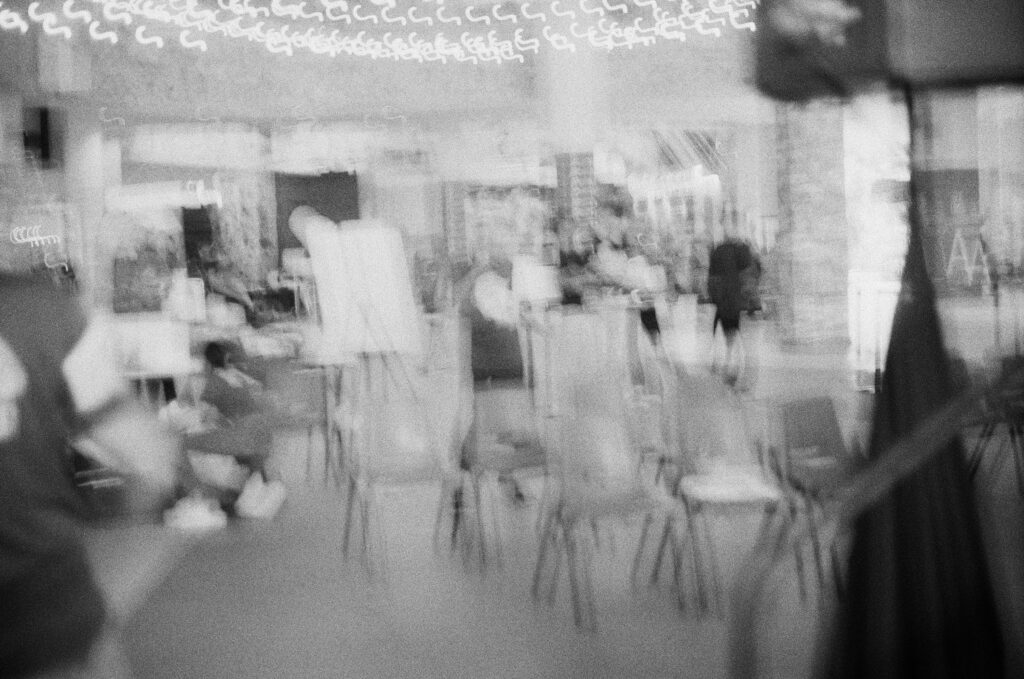
Here is another example of a shaky shot, and when I remembered about the shutter speed, I quickly braced myself to stabilise my camera a bit more and took a second shot.


Of course, after I understood how everything works. I started to have a bit more fun in shooting with low light. Here is an example of playing with lights and movement for a dance piece inside a theatre.
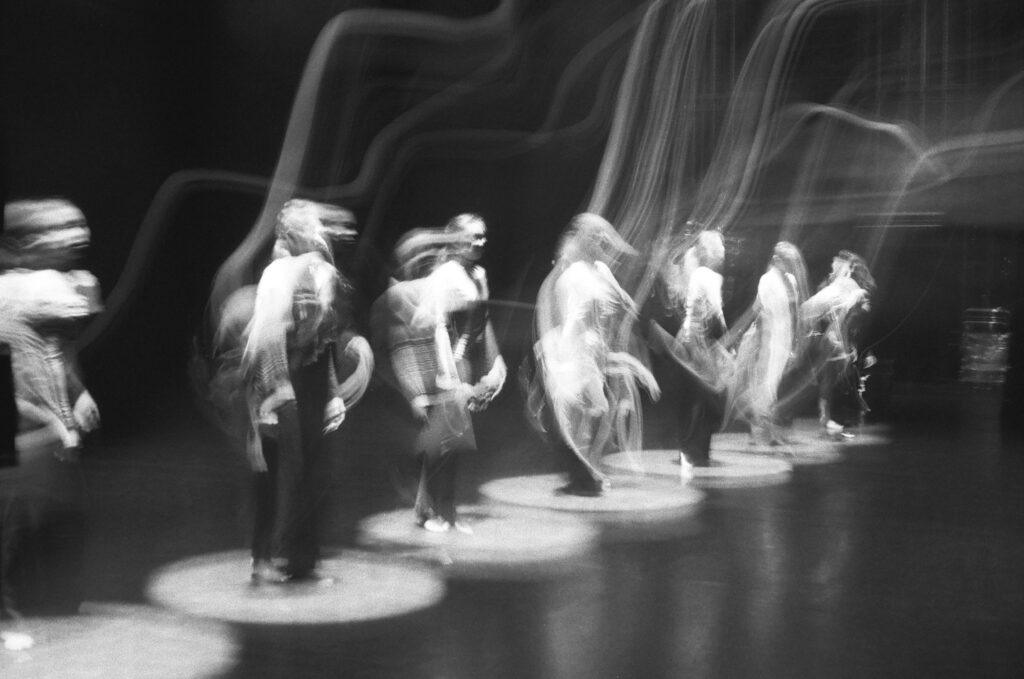
These shots were shot with the GSN on Kentmere Pan 400. Another example would be this. which was shot with the CC on Kodak 400 TX.

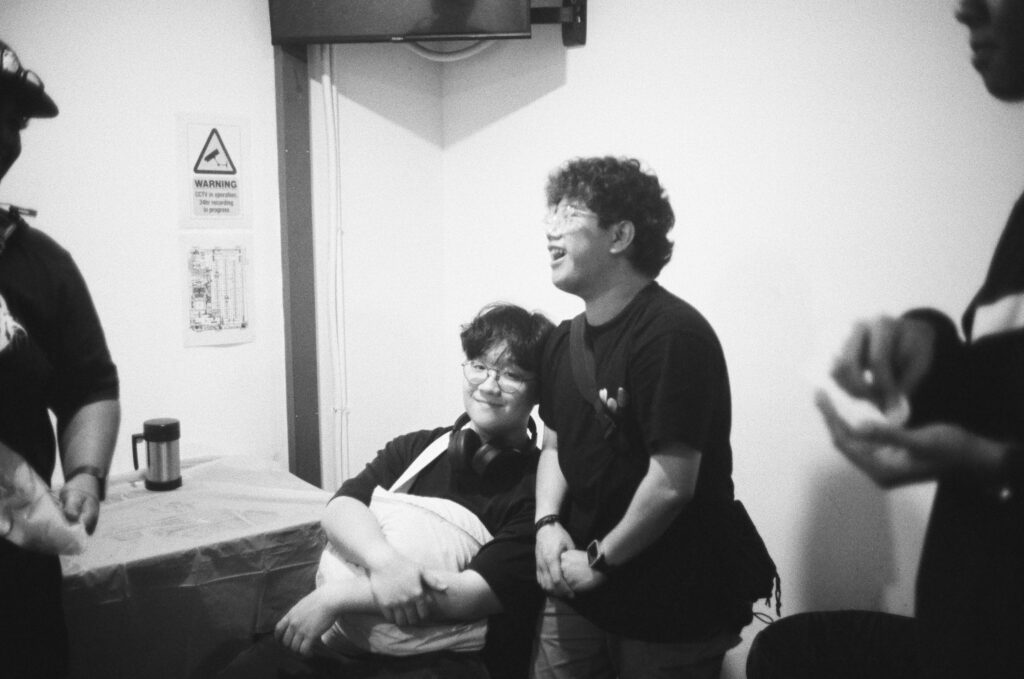
Once I started to get the hang of how this camera worked, I started getting better pictures. GX on YesStar 200

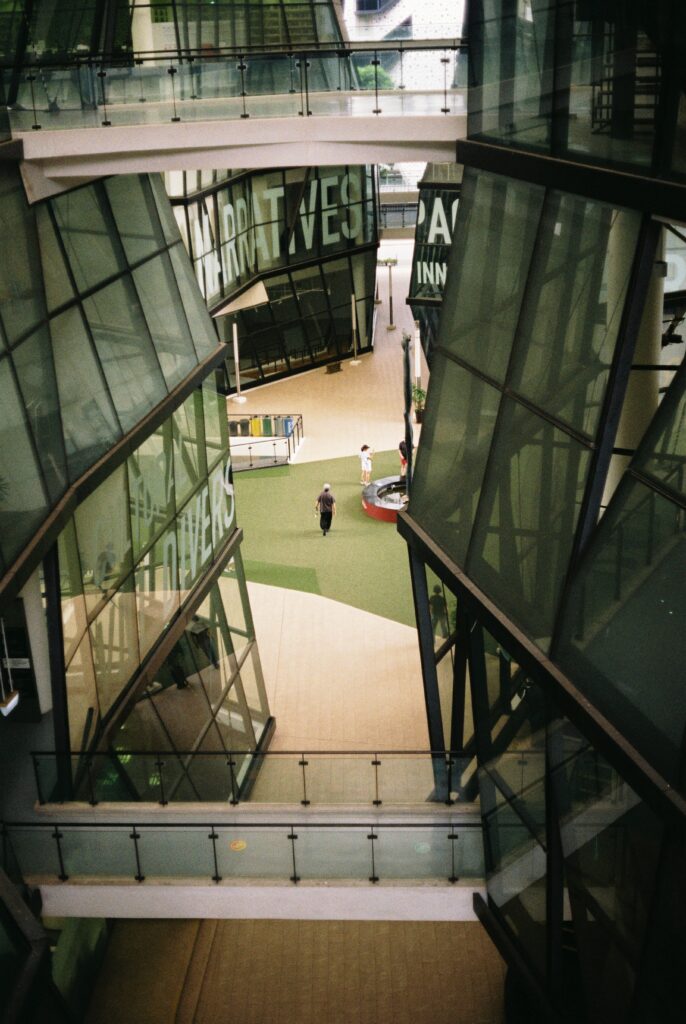
GSN on Fuji 400


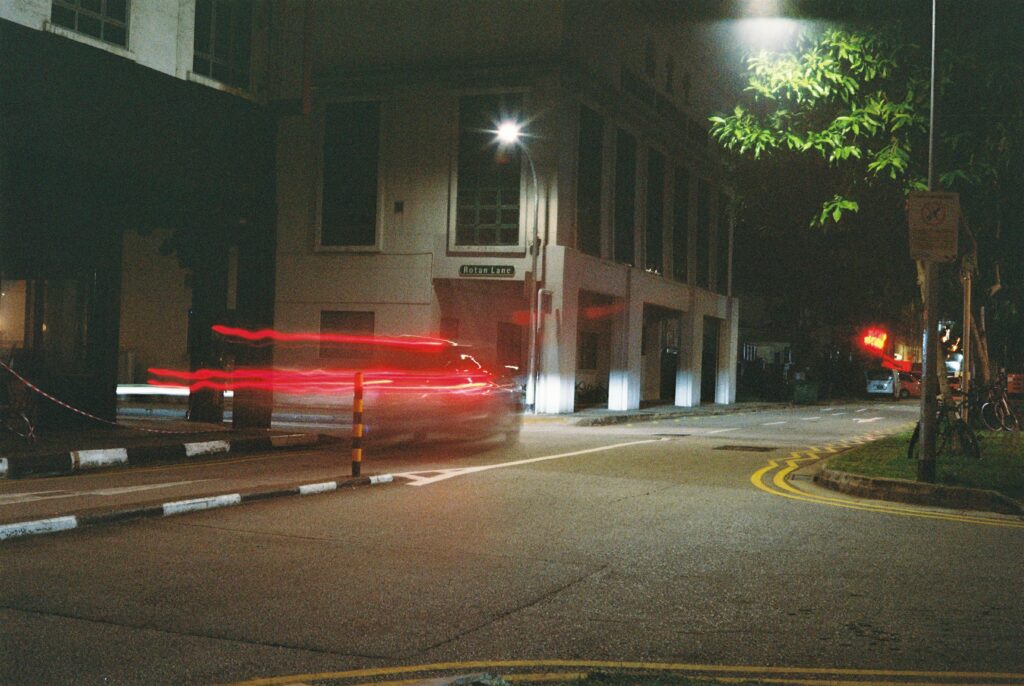
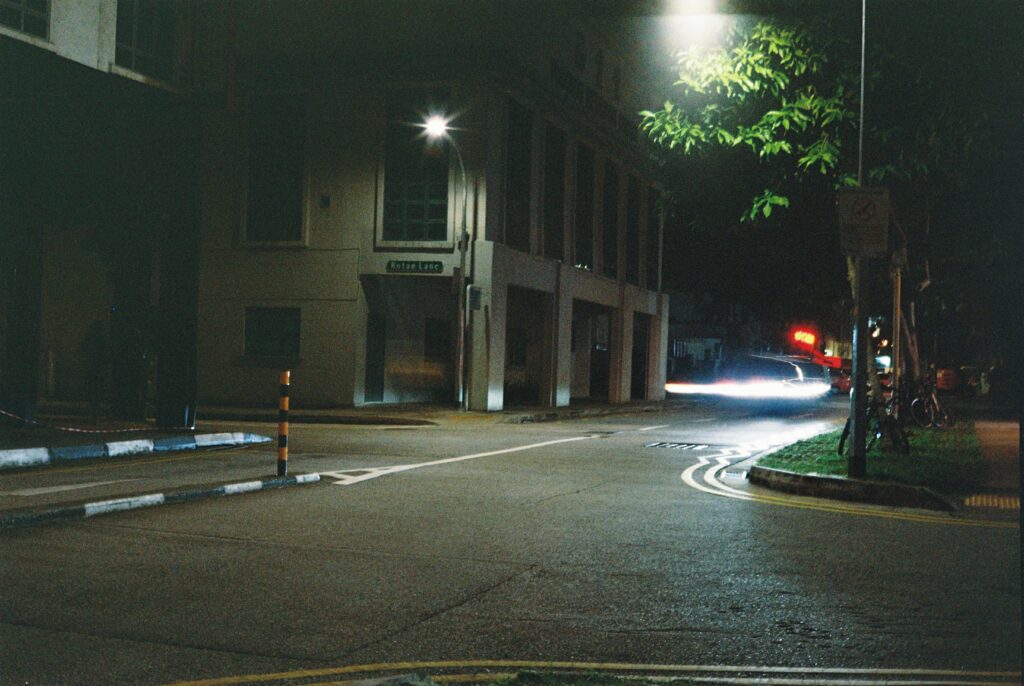
Ok. Enough digressing. Let’s get into the cameras! The 5 cameras I have with me now are the GSN, CC, MC, GX, and MG 1. Looking at the timeline I’ve created, you can see the growth of the Electro 35s and, in some way, what the company was thinking of in terms of progression.
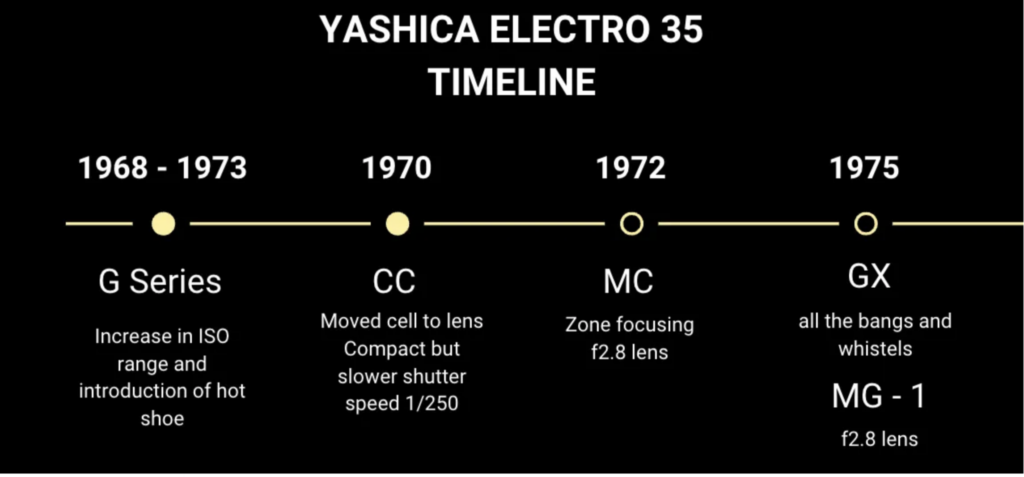
The G, GT, GS, GTN, GSN
When the Yashica Electro 35 was first launched, it was just known, and still is, as the Yashica Electro 35. After which, they launched the ones with the G label. The G simply stood for the gold-plated electrical contacts used in the camera. (Probably that’s why their electronics are still working after so long.) The S and T that follow are just the colour scheme. S meaning silver, or chrome, and T meaning black. (Don’t ask me what T stand for. I don’t know either, and I can’t find any info about it.) The last rendition with the N stands for New. So basically GSN means gold-plated electronics, silver colour, new model, and GTN means Gold-plated electronics, black colour, new model.
The G series (as I call them) is, I would say, their flagship model. EVERYBODY knows them. Andrew Garfield uses it as Peter Parker in the Spider-Man movie. When you use one, people know you’re using a film camera. It speaks vintage without shouting it out loud. The weight and feel of it also make you feel you’re using a vintage film camera as opposed to every other film camera out there. Hefty but not too heavy to carry around your neck all day. Not too chunky, like an SLR camera, that it gets in the way when you’re walking down the street, bumping into others with your loooongg lens. Not too light that you forget that it’s there and accidentally swing it out and smash it on the counter when ordering your matcha-chai-soy-almond-low-fat-pour-over-specialty-natural-honey-stoned-washed-extra-shot-coffee.
The 45mm f/1.7 lens is a perfect balance of wide enough to catch what you want and still able to go tight when needed, and at the same time, the fast lens allows you to open wide enough to tackle low light situations or give you incredible bokeh when needed. The Yashinon lens gives excellent sharpness and contrast for both colour and black and white shots. The almost silent leaf shutter doesn’t wake the sleeping cat, and having a depth of field ruler on the top of the lens so you can quickly figure your, well, depth of field is a nice feature. An extra touch so you know that the company is really thinking about the user, are the icons on the aperture ring, telling you that “these are the settings you can use” if it’s sunny, cloudy, or indoor (window). The viewfinder is big and clear enough that you don’t need to try to squash your eyes in a little glass hole. All in all, I would say, this makes it the perfect camera for street photography.
The CC and MC
Compactness is mindful. Targeted at non-professionals, the CC, besides reducing in size, dropped the shutter speed to 8 seconds — 1/250th second and also opened up the lens to 35mm while retaining its fast shutter of f/1.8. On paper, it might sound like a downgrade, but if you think about it, it’s actually not. Do you really need 30 seconds long shutter speed in your everyday life? And when it’s better to over-expose than under-expose for film, and with the guide of the Sunny 16 rule, shooting with ISO 400 film (Sunny 16 says f/16, 1/500s), on the CC just over-exposes you by 1 stop. And how often are you going to be shooting out in the bright daylight? Most of the time, I shoot at f/8 anyway. A wider lens gives you more coverage, a lighter and smaller body makes it easy to carry around and throw into your sling pouch (or fanny pack), which everybody seems to be carrying one now. I would say it’s a perfect size if you want to have one always with you. They’ve also shifted the sensor from the body to the lens housing, enabling you to use filters without having to worry about exposure compensation.
The MC also follows the same vein of thought, but goes even further. No more rangefinding. Zone focusing basically allows you to set and go. f/2.8 is good enough for low light and everyday shoots without worrying about too tight a depth of field, resulting in unwanted out-of-focus shots. Its smaller and lighter mini/miniature (M) size makes it even easier to just sling it around your wrist and to be there when needed. I love that I can just put this in my pocket and head out without carrying anything else.
GX and MG-1
The GX and MG-1 are the last of their line. Though released in the same year of 1975, they are worlds apart.
The GX basically took ALL the best features of their previous cameras, put them together, and created this ultimate camera that gives you all the form, function, and factor in one package. They’ve also upgraded the light meter sensor to a silicon photodiode as opposed to the previous CdS diode (Cadmium Sulfide). For the non-geeks, basically, the newer diodes are more responsive and more stable over time (don’t forget, these cameras are at least 50 years old).
The MG-1, on the other hand, felt like it was put together with leftover parts. Not as heavy, slower f/2.8 lens. A bit plasticky feel. Don’t expect the preiumness of the Yashica Electro 35. They didn’t even market it as the Yashica Electro 35 MG-1 but just the Yashica MG-1. Still good nonetheless, you still have the Yashinon lens. Though they have fewer lenses (4 elements, 3 groups instead of 6 elements, 4 groups), contrast is not compromised. In a nutshell, this is an alternative to the original GSN, and with the sensor in the lens housing instead of the body, it’s actually 1-up in that sense. Plus, it’s cheaper. Always a plus point.
Pad of Death (POD)
Yes, the all-fearing POD. It’s not AS bad as it seems. Basically, what happens with the Yashicas is that there’s a “CLUNK” every time you cock your shutter. The clunk you hear is basically the action lever springing back to its place. What happens is that there is a plastic wedge that a) sets the lever at it’s correct position, and b) protects the spring from damage over time. If not, it will constantly be hitting metal against metal and over time, something will break. Anyone with any sense of patience, good eyesight, steady hands, the right tools, and some sort of mechanical understanding can easily fix it. Hmm…sounds like a lot. Just bring it to me. It is said that the newer models do not have that issue anymore, but meh…I’ve fixed PODs on newer models before.
Fear not if you can’t fix it. The cameras can still work without batteries. They just fire at it’s maximum shutter speed. So 1/250th for the CCs and 1/500th for all the other cameras. Then you just compensate with your aperture, which is fully manual. Beautiful right?
So… which Yashica Electro 35 should you get?
Well, they’re all under the same camera family — just different experiences with the slightly different tech specs. Without nerding out on the numbers, here’s my take on each of the different cameras.
- G, GS, GT, GSN, GTN.
This is the classic. It’s got weight. It feels premium. And trust me, people will notice. You’re not hiding this. This looks and feels like a vintage film camera. - The MG-1.
Slightly slower lens at f2.8 — but still very usable. Lighter and more affordable than the GSN, but gives you that same solid, classic feel. - The CC.
More discreet. Easier to carry. Great everyday camera. Yes, the max shutter speed is slower, but honestly? Doesn’t really affect most real-world shooting. - The MC.
This one’s pocketable. Super lightweight. You can just pull it out anytime — perfect for quick, spontaneous shots. - The GX.
Think of this as everything refined. All the key features are packed into a smaller, cleaner body. If you want compact and capable — this is it.
I like all of them. If I have to pick only one, though, I’d say the GSN. First love feeling, as it was what started me on this journey. Black is nice, but nothing sums up vintage like the classic chrome colour. The user experience of having the weight in my hand, feeling the winding lever resist slightly as you crank it, and then hearing the satisfying click when you fire a shot. Bliss. All the features I need to go out and enjoy taking pictures. I don’t use filters, nor flash, so all those bits and bops don’t bother me. I just want to load a film and shoot. But I don’t have to choose! I have them all! 🙂 I just rotate them depending on my mood.
Tips and tricks
- Choose the bigger aperture when given the choice. More light good. Less light bad.
- Use a tripod at night or in low light. Or place it on a table or something stable
- Do not use the self-timer. They are the number one part to go, and repairing that requires a certain set of skills which I (currently) do not have. Probably someone else can do it.
That being said. Thank you for reading this seemingly long article. Give old cameras a second life and have fun shooting!
Follow me on:
https://www.instagram.com/atmomentslikethese
https://www.tiktok.com/@plasticblackspecs
https://www.youtube.com/@plasticblackspecsya
About
I’m just a guy who fixes cameras who enjoys washing dishes.
Share this post:



Comments
Cristian Ionescu on Yashica Electro 35 family
Comment posted: 12/06/2026
Comment posted: 12/06/2026
Bob Janes on Yashica Electro 35 family
Comment posted: 12/06/2026
Comment posted: 12/06/2026
Simon Foale on Yashica Electro 35 family
Comment posted: 12/06/2026
Comment posted: 12/06/2026
RW Jemmett on Yashica Electro 35 family
Comment posted: 12/06/2026
Comment posted: 12/06/2026
Tony Warren on Yashica Electro 35 family
Comment posted: 12/06/2026
Comment posted: 12/06/2026
Walter Reumkens on Yashica Electro 35 family
Comment posted: 12/06/2026
Comment posted: 12/06/2026
Jeffery Luhn on Yashica Electro 35 family
Comment posted: 13/06/2026
I enjoyed your article. Thanks! I have a Yashica Electro 35. It looks like the one in the lower left of your group shot, but it doesn't have the 'G'. I guess it's the original. The camera looks mint, but I can't get it to come alive. I've tried using LR44 batteries and tin foil, and also bought a battery adapter on eBay. Nothing. The batteries test button doesn't even light up. Somebody said it sounded like there was a problem in the contacts of the battery chamber. I know it's impossible to do a diagnosis from the opposite side of the planet, but do you have any tips for me? I love Singapore, but don't have any plans to visit again soon. Jeffery
Comment posted: 13/06/2026
Comment posted: 13/06/2026
Benjamin Chan on Yashica Electro 35 family
Comment posted: 13/06/2026
Comment posted: 13/06/2026
Stewart Waller on Yashica Electro 35 family
Comment posted: 13/06/2026
Comment posted: 13/06/2026
Oliver on Yashica Electro 35 family
Comment posted: 06/07/2026
Comment posted: 06/07/2026
Shubroto Bhattacharjee on Yashica Electro 35 family
Comment posted: 08/09/2026
The Electro 35G was my first camera, a gift from my Dad. Still have it, in pristine condition.
A few observations from experience:
The yellow light glows at a (SLOW) shutter speed of 1/30s. The red light glows at an (OVER) speed of 1/500s. I turn the aperture ring until the red light just glows, then turn the other way with each full-step click yielding progressively slower speeds of 1/250, 1/125, 1/60…Voila, “metered Manual mode”! Works similarly if you start with the SLOW light just glowing, then clicking off to 1/30, 1/60, 1/125…
The lightning-bolt setting on the Shutter ring, ostensibly for flash, sets the shutter to 1/30s. For blur-free flash shots I remove the battery; the shutter defaults to 1/500, perfect for even daylight-fill shots. With my favourite TriX (ASA400) film, that 1/500s gives me flawless daylight exposures using the 3 symbol marks!
I offset the speed on the ASA dial for “exposure compensation”.
Thanks for the warning about excessive use of the self-timer!
Comment posted: 08/09/2026