Cemetery culture

By Walter Reumkens

Mourning, remembering, honouring, designing, maintaining, developing: a cemetery is first and foremost a place of mourning and remembrance, but also a significant cultural space which, as a peaceful, green setting, invites people to take a breather and relax.

It is also a meeting place for families and relatives of the deceased and helps to counteract the social isolation of the bereaved.

And a cemetery is a place of integration and peace. “Our cemeteries are also places for the living, which, far beyond personal mourning rituals, have identity-forming significance for our society,” says the representative of the municipal cemetery administration in my home town of Mönchengladbach in North Rhine-Westphalia, Germany, which manages 13 cemeteries in a city with a population of 270,000, situated between Düsseldorf and Cologne and the Dutch border.

Intangible Cultural Heritage: Mönchengladbach Main Cemetery
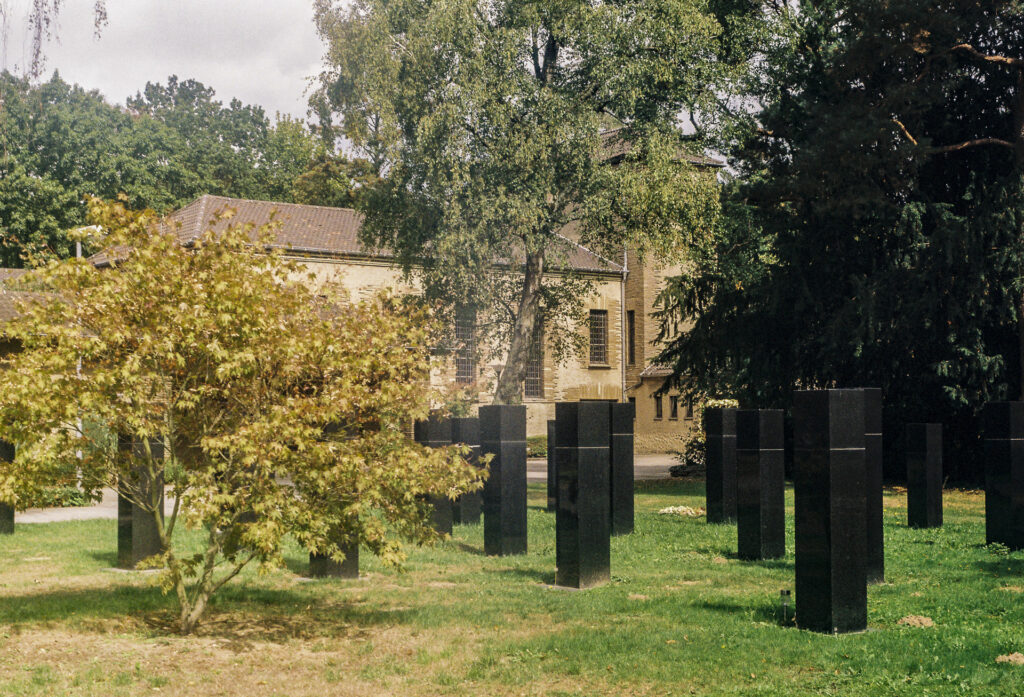
Cemetery culture is exemplified at Mönchengladbach’s Main Cemetery, which has been designated as intangible cultural heritage by the Standing Conference of the Ministers of Education and Cultural Affairs on the recommendation of the German UNESCO Commission. Signs marking this designation can be found in cemeteries across 100 towns and cities nationwide, including at the Main Cemetery and the cemetery in Rheydt. According to the Standing Conference of the Ministers of Education and Cultural Affairs, the fundamental criterion for the designation is ‘the vitality of the cultural expression’.
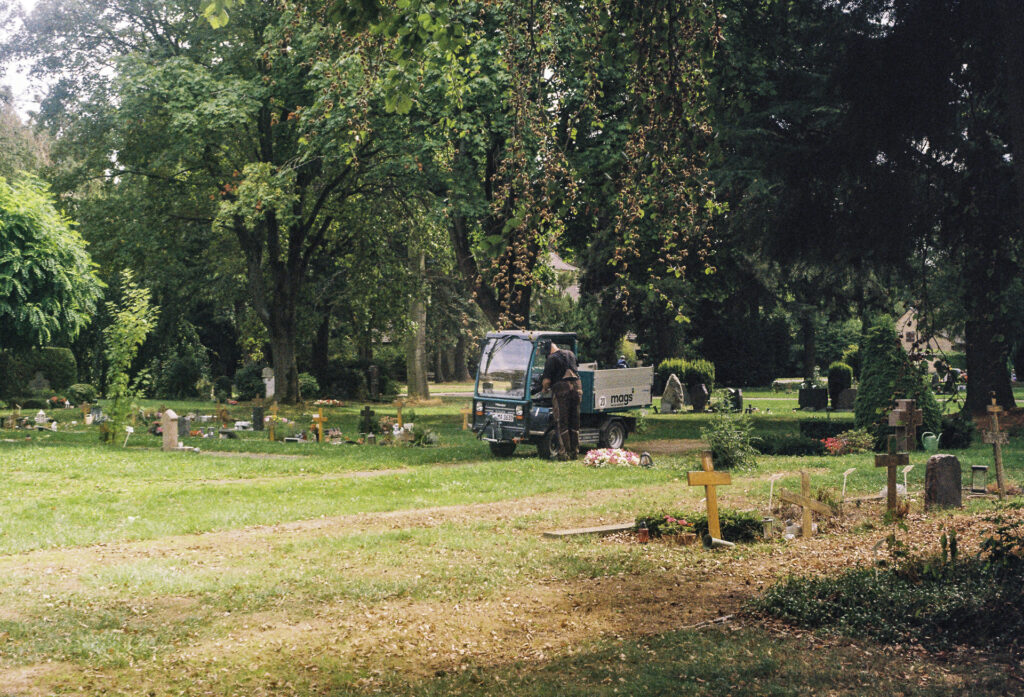
In this context, the focus is also on the contemporary development of cemeteries. Funeral services have been expanded and adapted to meet people’s individual wishes. In addition to traditional coffin and urn graves, urn graves with decorative features and low-maintenance columbaria, the approximately 50-hectare, park-like Main Cemetery also features tree, woodland and rose graves, as well as a scattering ground for ashes.
Cemeteries are for everyone. To facilitate specific religious rites, burial plots are provided for Muslims, Buddhists and Hindus, as well as for Sinti and Roma.
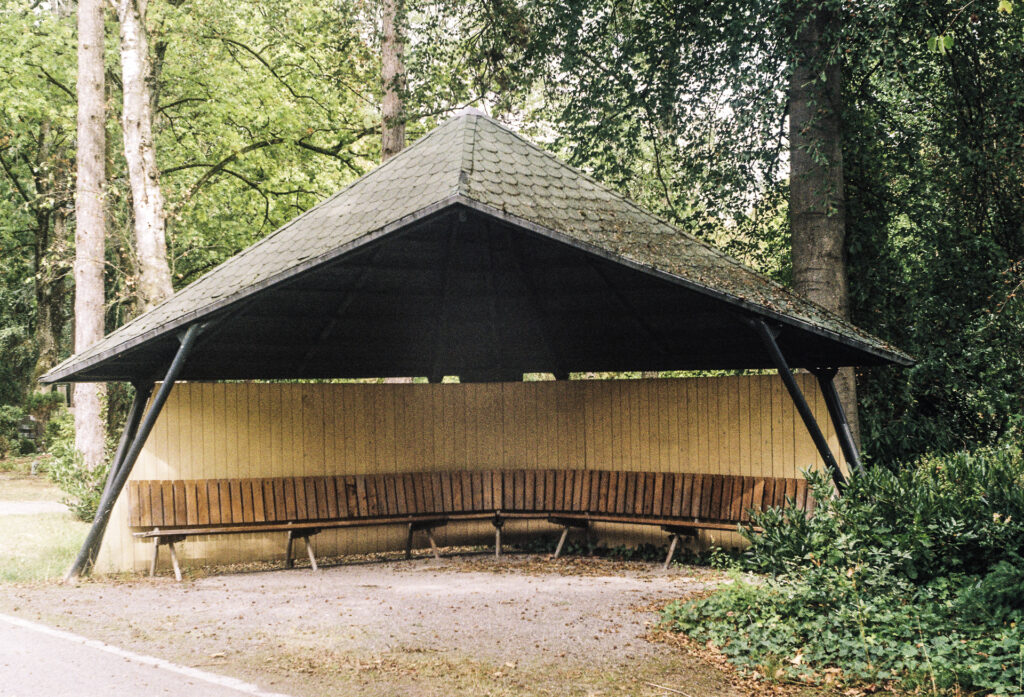
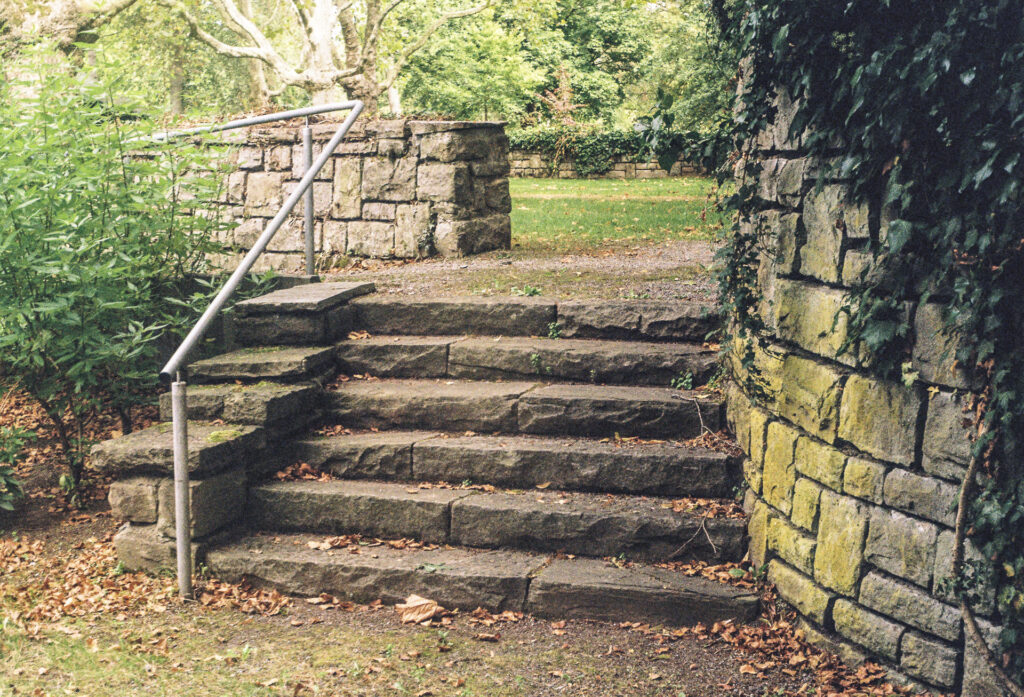
This may be a rather unusual introduction, but I would like to share a few photos of this cemetery that I took on 2 September 2026 whilst strolling through these park-like grounds. The photos have no specific captions; they are simply there to be looked at.
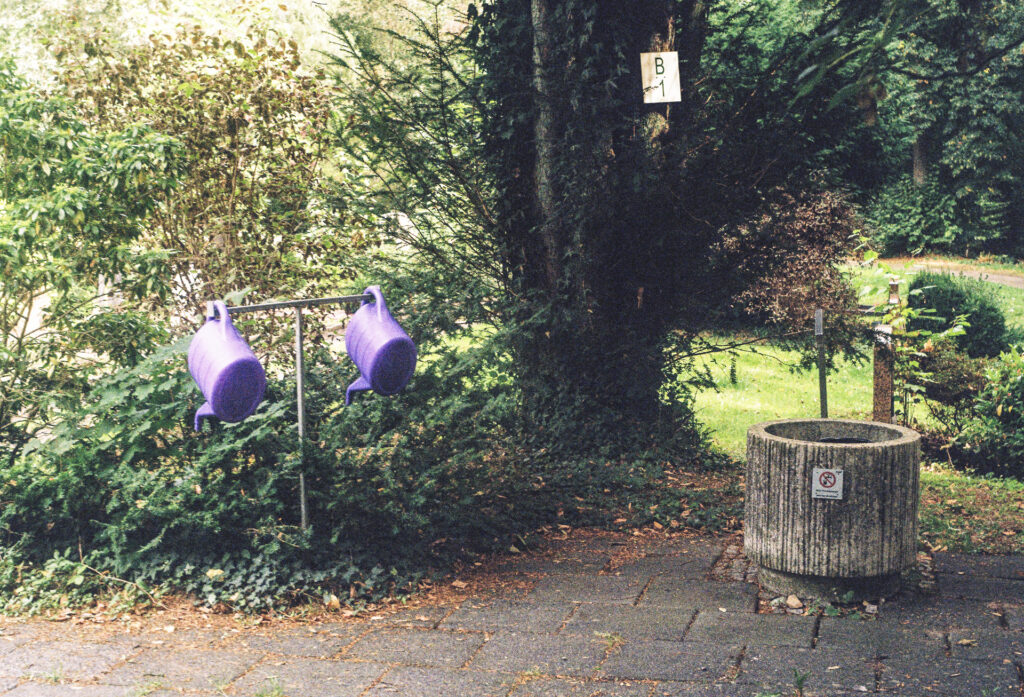
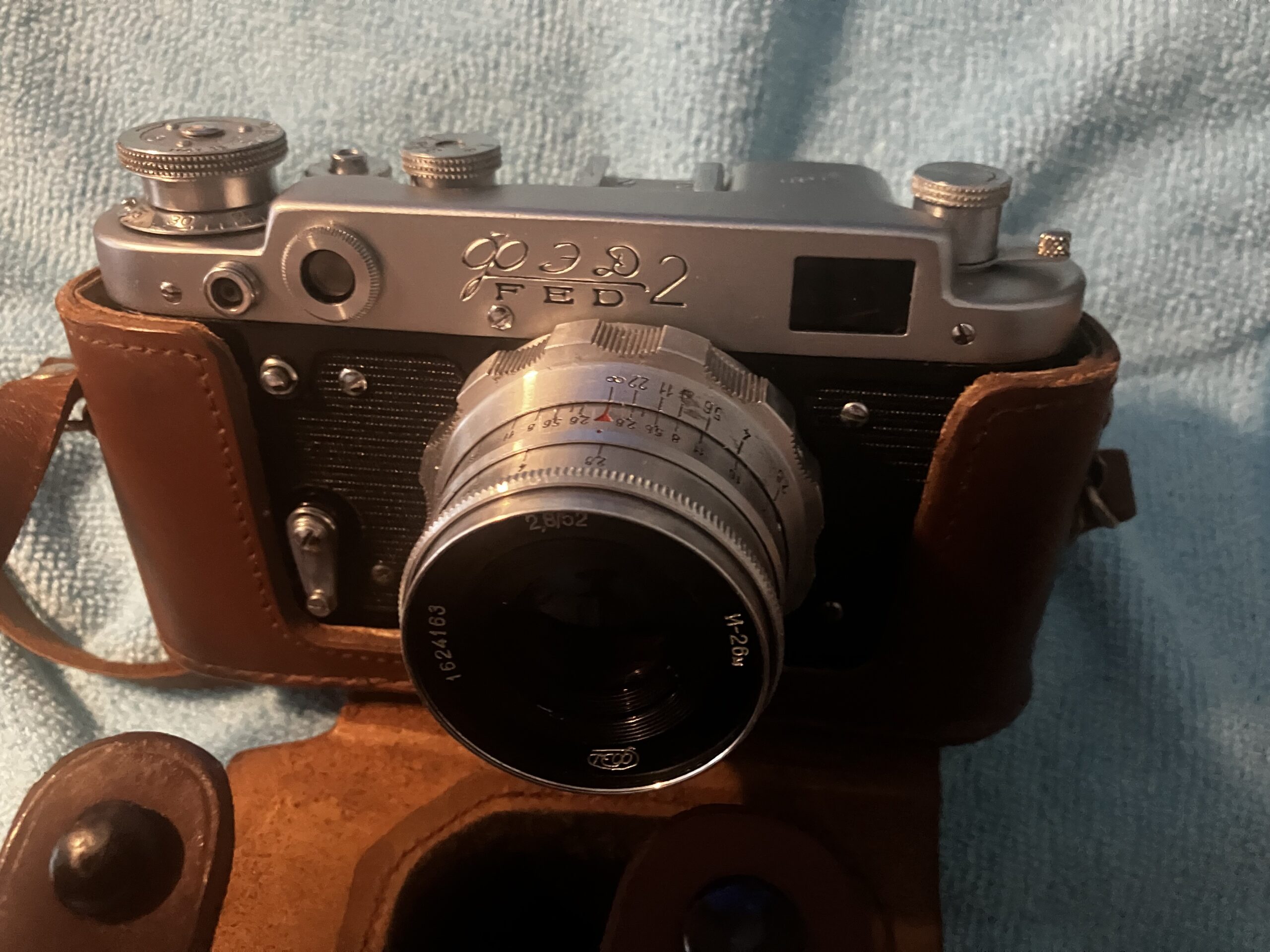
I’m deliberately not highlighting the camera kit, especially as it consists only of a simple rangefinder with a lens from the former USSR. I bought both parts four years ago from a Ukrainian dealer; the camera had been serviced. There are better versions available under the Industar name, which were manufactured by FED and KMZ. At just under €200 for the lot, I couldn’t resist. What can I say? You can take photos with this camera and lens. Everything works; you don’t go unnoticed, but people don’t ask if it’s a Leica M. And that’s just as well!

Equipment: FED-2 (1968 model) with Industar 26M 2.8/50mm (manufactured in 1955, Kodak Gold 200, exposure taken with a Gossen Variosix F, developed and scanned by a specialist laboratory (3578×2433)

Thank you for reading.


Share this post:

About The Author

By Walter Reumkens
Walter Reumkens lives in Mönchengladbach, a medium-sized town in North Rhine-Westphalia, Germany. He is a retired graduate in public administration, worked in the IT sector for 40 years and has been a passionate photographer for over 50 years. In addition to numerous analogue and digital Nikon cameras (SLR, DSLR, DSLM), he also uses cameras and lenses from other manufacturers. To find out whether, alongside the ‘typical, highly touted luxury cameras’, other manufacturers also produce very good, reliable and user-friendly products that fully satisfy experienced photographers.
Read More Articles From Walter Reumkens

Find more similar content on 35mmc

Use the tags below to search for more posts on related topics:

Donate to the upkeep, or contribute to 35mmc for an ad-free experience.

There are two ways to contribute to 35mmc and experience it without the adverts:

Paid Subscription – £3.99 per month and you’ll never see an advert again! (Free 3-day trial).

Subscribe here.

Content contributor – become a part of the world’s biggest film and alternative photography community blog. All our Contributors have an ad-free experience for life.

Sign up here.

Make a donation – If you would simply like to support Hamish Gill and 35mmc financially, you can also do so via ko-fi

Donate to 35mmc here.

Comments

Gary Smith on Cemetery culture

Comment posted: 16/10/2026

The cultural heritage of Mönchengladbach Main Cemetery escapes me. Look up Washington Cemetery in Brooklyn, NY. Often a cemetery will present some inspiring photos however (IMHO) they are primarily for the relatives of the interred not for the rest of us.
Reply

Leave a Reply

Your email address will not be published. Required fields are marked *

Walter Reumkens replied:

Comment posted: 16/10/2026

The cemetery in Brooklyn would be more Scott and David’s sort of thing. But then they’d have to break away from their usual stylistic habits. Thanks, Gary!

Reply

Leave a Reply

Your email address will not be published. Required fields are marked *

Scott Ferguson replied:

Comment posted: 16/10/2026

I've driven past the Washington Cemetery many times, but haven't gone into it, or thought to take a camera. Your color cemetery photos are quite lovely here Walter and don't feel at all funereal -- more of a peaceful calm exterior of a public garden like space. I like seeing the results with the Fed, but I'd be curious to see how the mood might shift if you tried some monochrome. I think the closest I've come to that type of shooting is some public sculpture gardens in the NYC area when I first arrived back from Canada and had not yet developed my current stylistic habits of shooting people. You can see some of those photos in my series comparing lots of black & white stocks in Spring/Summer, 2025. I was fascinated by how much a different film stock could impact the mood and feel of a black & white shot. Cheers,

Reply

Leave a Reply

Your email address will not be published. Required fields are marked *

Walter Reumkens replied:

Comment posted: 16/10/2026

It’s true, a cemetery isn’t necessarily the first place a photographer would go in search of a subject. But you might be pleasantly surprised if it’s set in park-like grounds with mature trees. Looking back, I’ve come up with some more ideas for exploring this theme further when the opportunity arises. Perhaps with some black-and-white film, as you suggested in your lovely comment. Thanks, Scott. Cheers

Reply

Leave a Reply

Your email address will not be published. Required fields are marked *

Michael replied:

Comment posted: 16/10/2026

The Green-Wood Cemetery in Brooklyn is quite photogenic, especially in the spring and fall.

Reply

Leave a Reply

Your email address will not be published. Required fields are marked *

RichardH on Cemetery culture

Comment posted: 16/10/2026

These photos are lovely, Walter. When I was very young, perhaps five years of age, I went with my grandfather on a visit to a cemetery situated on a bluff overlooking a vast river Valley. I can remember being very moved, and not knowing why. As I think back on that now, I cannot articulate the feeling, but your photos have brought me that memory. Thank you very much.
Reply

Leave a Reply

Your email address will not be published. Required fields are marked *

Walter Reumkens replied:

Comment posted: 16/10/2026

I’m glad you liked the photos and that they brought back some memories. Thank you, Richard!

Reply

Leave a Reply

Your email address will not be published. Required fields are marked *

Simon Bohrsmann on Cemetery culture

Comment posted: 16/10/2026

Hi Walter

I enjoyed your post. Thank you. You have left it to to us to consider the choice of camera. Or perhaps not to place any significance on it.


Cheers

Simon
Reply

Leave a Reply

Your email address will not be published. Required fields are marked *

Walter Reumkens replied:

Comment posted: 16/10/2026

You’ve spot on, Simon. We often attach more importance to the camera than it actually deserves, because the impact of an image depends far more on the lighting, the subject and the composition than on the camera itself. You only need to have a look around this blog to see that. Thanks for the lovely comment. All the best!

Reply

Leave a Reply

Your email address will not be published. Required fields are marked *

Jeffery Luhn on Cemetery culture

Comment posted: 17/10/2026

Nice photos and observations, Walter. When I visit a new place and I'm not rushed, I'll ask if there's a nice cemetery. Typically, the nice 'graveyards' in the US are the oldest. I haven't seen any great ones in the western US, but New England has some nice ones. I recently visited a very nice graveyard in New Orleans on a foggy day. They have a lot of above ground crypts there and the place is very well kept. My favorite one is in Copenhagen. Wow, that's a beautiful park! So peaceful.
I have a Fed 3 that performs well.
Jeffery
Reply

Leave a Reply

Your email address will not be published. Required fields are marked *

Walter Reumkens replied:

Comment posted: 17/10/2026

I’m glad you like the photos and that you also enjoy beautiful old cemeteries. I find them a way to relax too – a little break whilst visiting a big city. It’s usually more restful than being in a city park. I have several FEDs, Kievs and Zorkis with matching lenses. My Kiev 4am with a Helios-103 has just come back from a full CLA. I’m quite happy to do without our prestigious German brand with the red dot. Thanks, Jeffery, all the best.

Reply

Leave a Reply

Your email address will not be published. Required fields are marked *

Leon Winnert on Cemetery culture

Comment posted: 17/10/2026

Interesting respectful post Walter. Thank you for it.

I Always find cemeteries interesting place. Peaceful and reflective. Be they well tended, neglected, overgrown. Reading the inscription on the gravestones. Provides a bit of social history of the area and the departed. Their contributions to local and national life. Each grave stone a human story.

London has a series of Victorian cemeteries called the Super 7. Highgate, West Brompton etc. Amazing the lengths the Victorians went to be remembered for posterity. The funeral architecture is quite amazing. Good subjects for B+W.

Then there are the War Graves. Not just the big cemeteries as in north west France and other countries. British and Commonwealth, American, French and German. But combatants of all nations.

Not forgetting the single grave in a local church cemetery. Remembering a local village lad who went to war. Came home wounded and died. Or maybe died in action, body repatriated. Then there are the many memorials to the fallen who have no known grave. All honouring personal sacrifice.

For the record I am a Veteran. We shall remember them.
Reply

Leave a Reply

Your email address will not be published. Required fields are marked *

Walter Reumkens on Cemetery culture

Comment posted: 17/10/2026

You have a very extensive knowledge of cemetery culture, Leon. I can well understand a veteran’s particular interest in military cemeteries. In my youth, I lived very close to a cemetery where my grandparents were buried, and I used to visit it quite often. Now that I’m getting on in years, I like to take a break in a cemetery in one of the neighbouring villages when I’m out on my bike. On my way to a bench, I always take a keen interest in looking at the gravestones. Like you, Scott also mentioned in his comment that black-and-white films are ideal for this. I’ll take up that recommendation at the earliest opportunity. I no longer develop my own film, but I’ve now found a good lab for black-and-white development and will be using black-and-white film more often again. Thank you for your comment, Leon.
*** Translated with www.DeepL.com/Translator (free version) ***
Reply

Leave a Reply

Your email address will not be published. Required fields are marked *

Omar Tibi on Cemetery culture

Comment posted: 18/10/2026

Walter, spectacular shots, glad to see the FED back in action! The phrase "memento mori" really sticks in my mind, with all of these photos and reflections you've shared. The concept of cemetery culture is a very interesting perspective; I really appreciate the quote from your local representative explaining it, and your shots definitely capture the idea that the space is shared between the departed and the living. Coming from a different cultural (Middle Eastern) background, I have to admit, it feels a bit uncomfortable to me - in my culture cemeteries are meant to be simple, where the departed rest and the living come to pray for them & remember that life is temporary. Simply stepping on a grave is a major travesty! So it is very interesting to me, to see a very different, and quite honestly very interesting, outlook on how to treat cemeteries. Thank you for the reflections my friend!

Here in Boston, there is a cemetery, Mount Auburn Cemetery, that is designed according to similar principles. It is a very old and large cemetery, dating back to the earliest years of colonial settlement in North America, and while it still does funeral rites, it is also a well known destination for birdwatching and looking at fall foliage. I'm not sure when they started promoting it as a park rather than just a burial ground, but it feels similar in concept at least to what you've described.
Reply

Leave a Reply

Your email address will not be published. Required fields are marked *

Walter Reumkens replied:

Comment posted: 18/10/2026

Thank you, Omar, for your kind comment. I wasn’t aware of some of that until now. Muslims are also buried in this cemetery, though. I just need to have a look to see exactly where these graves are. The cemetery is very large; it’s rather like a park with mature trees. These are the first photos I’ve taken with the FED-2. I also have a FED-3 in my collection. I published a few pictures taken with that a while ago. Thanks for the comment, all the best, Omar!

Reply

Leave a Reply

Your email address will not be published. Required fields are marked *

Leave a Comment

Leave a Reply

Your email address will not be published. Required fields are marked *