

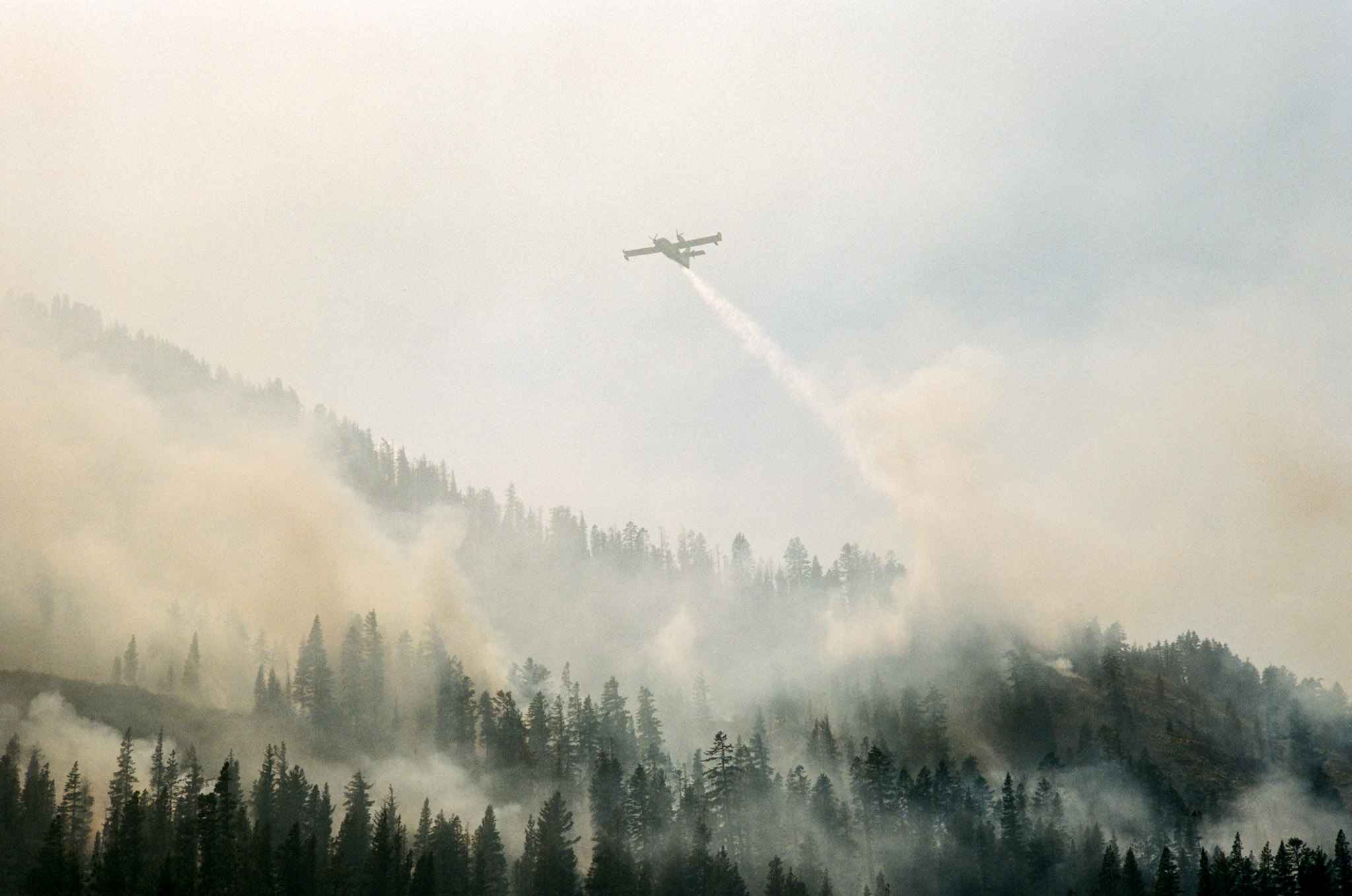
The Caldor Fire began in the California foothills of the Sierra Nevada in the fall of 2021, likely the result of recreational firearms being used in a hot, dense, ready-to-burn landscape filled with rocks and dry brush.
 In keeping with naming conventions of North American wildfire management agencies, the event’s name is drawn from the small town where this first spark took place. Until that year, no recorded forest fire had originated on one side of the Sierra crest and burned over to the other. The Caldor was one of two such fires, along with the Dixie Fire, which also traveled from West to East mere days before.
For two days, the fire burned slowly in a rural area, while firefighting resources were focused on larger, more immediate threats during a period when many significant fires burned across the state. Weather conditions eventually changed. Hot, dry air, and strong winds met the dense undergrowth of a forest that had been growing fuel for decades. Before it would be declared fully contained, the Caldor Fire would burn nearly 40 miles along the American River, over Echo Summit, into South Lake Tahoe.
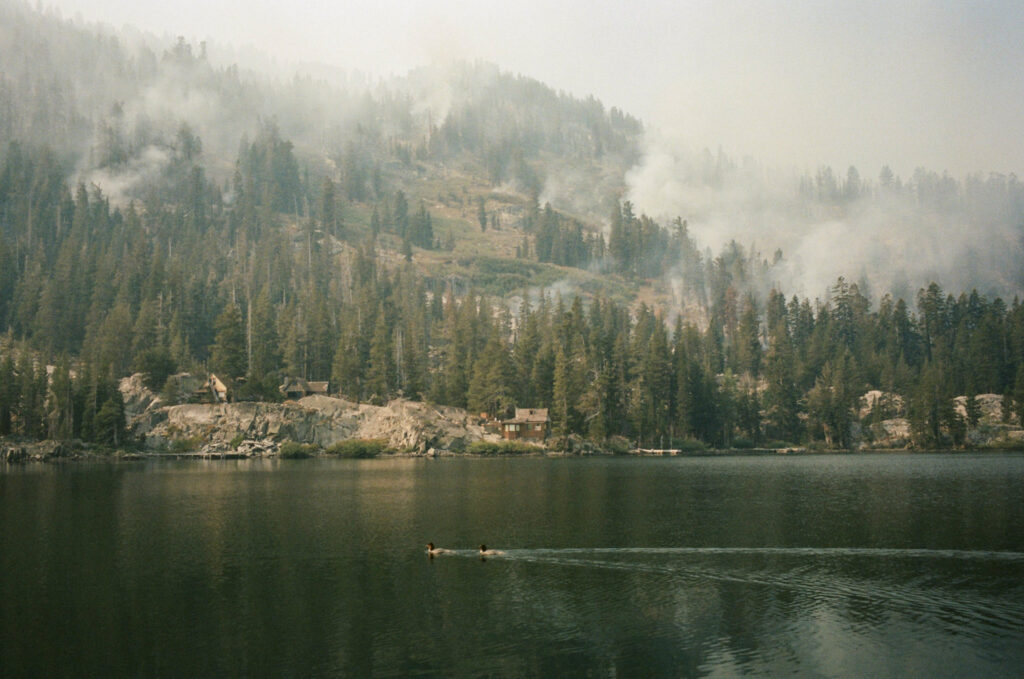
My grandparents bought a small cabin on Echo Lake in 1968. Like most of the cabins in the area, it sits on US Forest Service land, and, like every cabin on the lake, is completely off-grid. Growing up, I would spend most weekends in the summer there with my parents, sister, aunts and uncles, four cousins, and my grandmother. Picture beds and cots in every corner of each room, including the kitchen. Anyone who has lived in areas affected by wildfires will recognize how I felt as the Caldor fire burned up the river, approaching Echo Lake. Each day was spent half-focused on the work in front of me in Seattle, while I was entirely distracted by a constant need to refresh feeds and digest the updates of Cal Fire’s daily briefings, weather forecasts, evacuation zone updates, and maps of the fire’s progress. This drew out in slow motion over a course of two weeks before the fire finally reached the area of the lake and passed through.
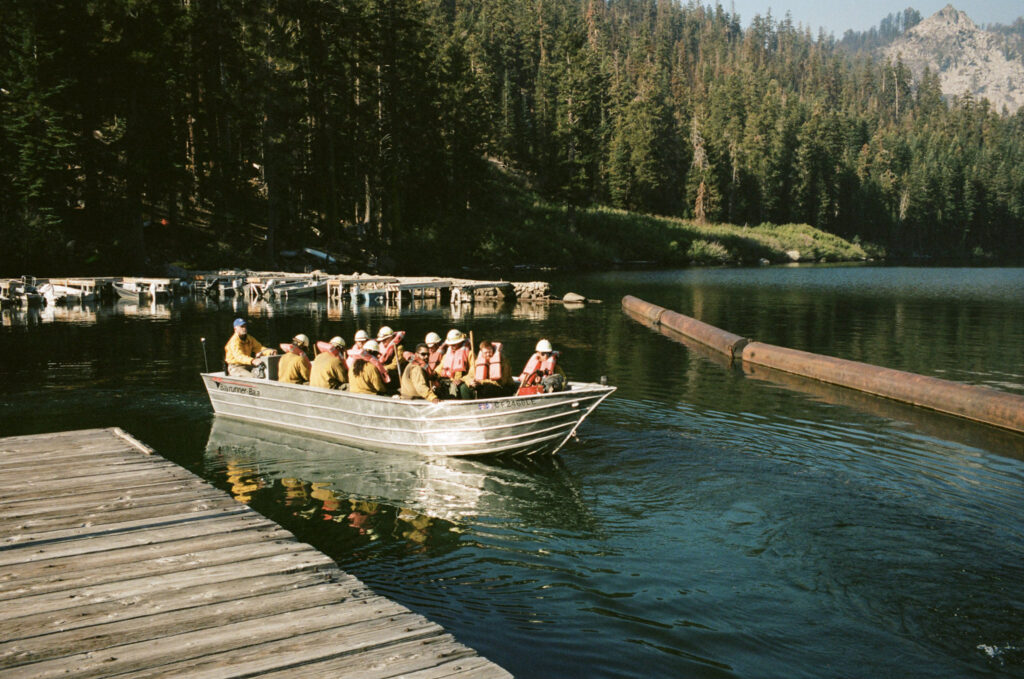
The immediate focus as the fire finally climbed over the summit was the protection of South Lake Tahoe, a city of more than 20,000 people, from the main thrust of the fire. When this seemed to be under control, attention turned back to the areas like Echo where the fire still burned and threatened homes, cabins, and other private property.
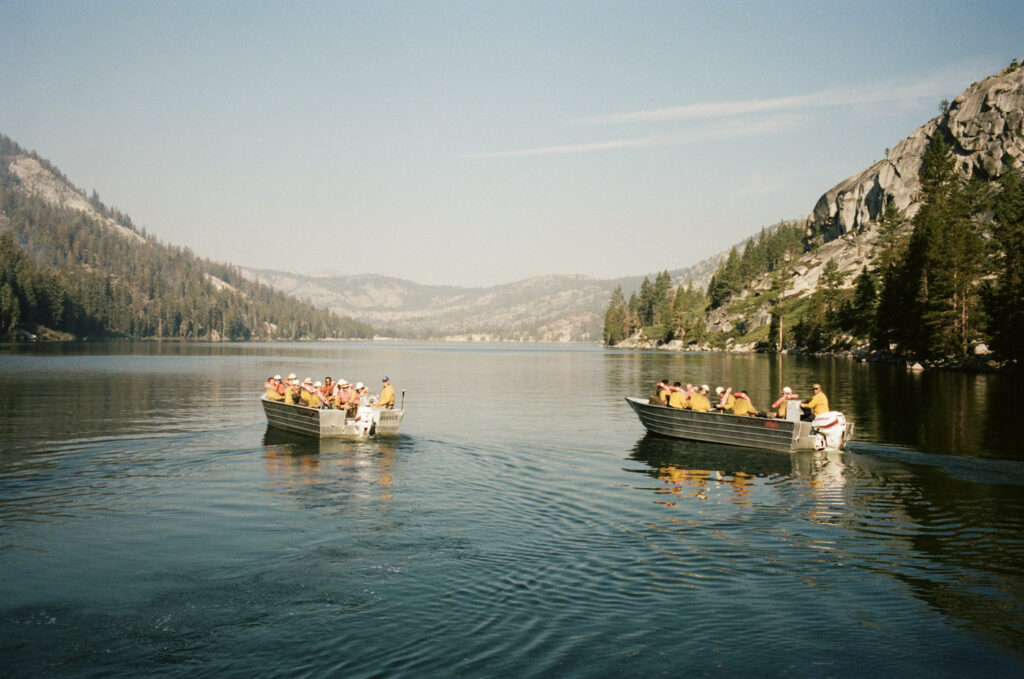 The remaining fire perimeter near Echo Lakes and nearby Desolation Wilderness had the potential to grow into another front that could again threaten South Lake Tahoe, should winds shift north towards still unburned and highly combustible swaths of forest.
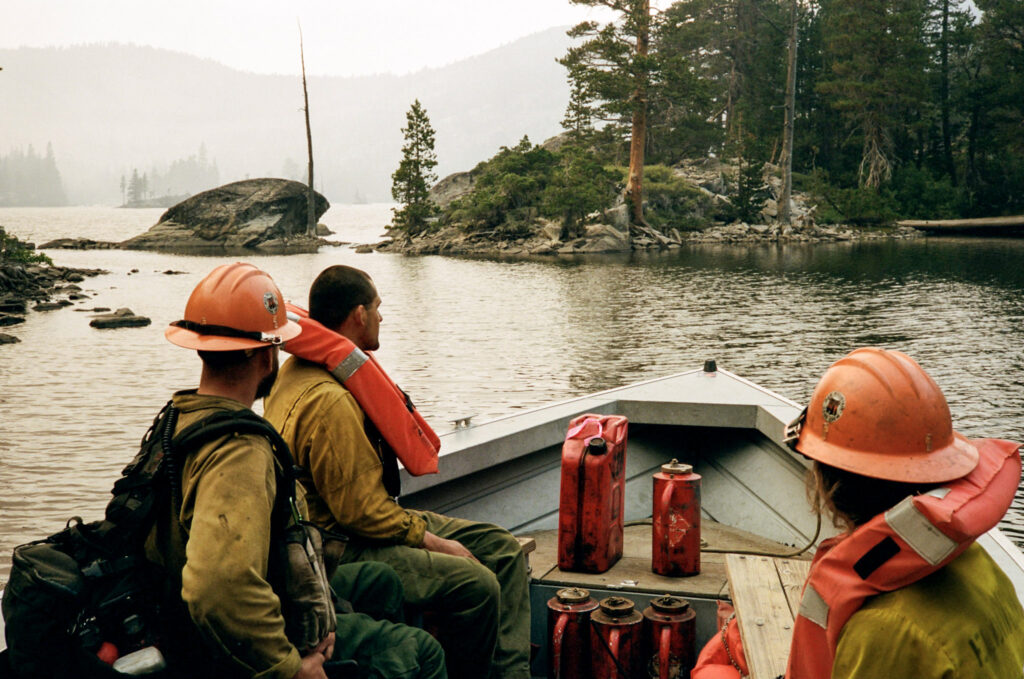
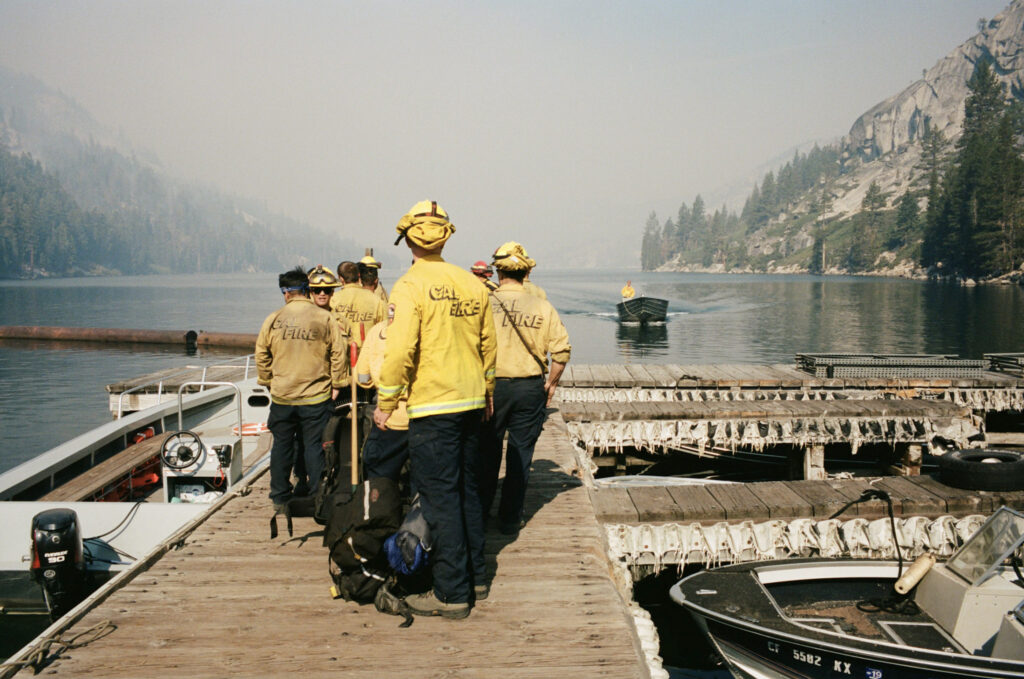
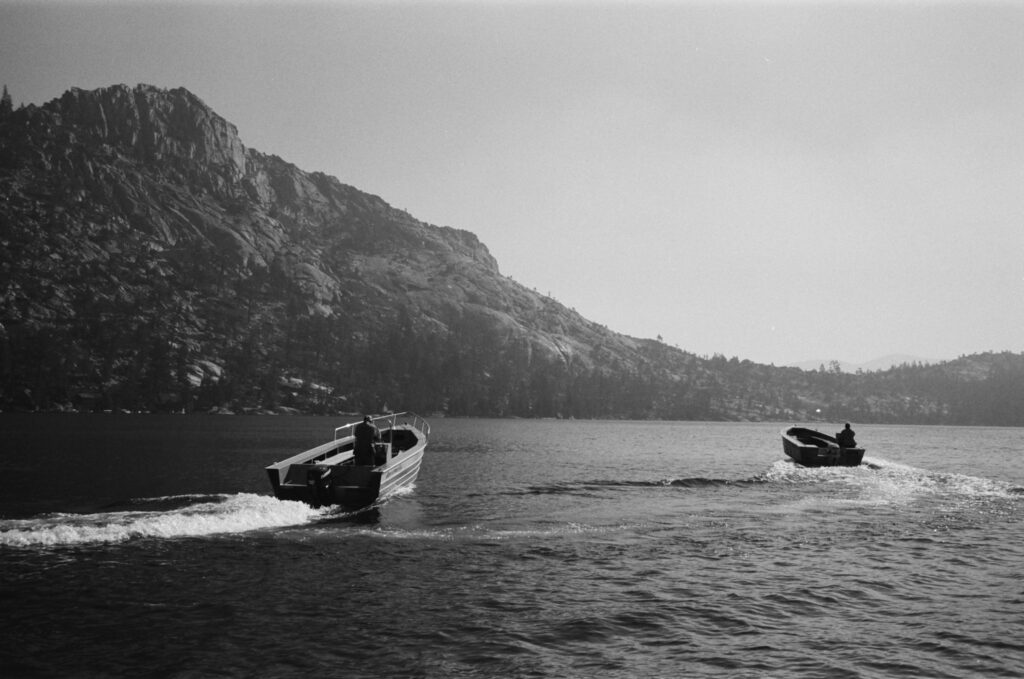
It was around this time that I received a call from a close friend, whose family owns the Echo Chalet, a small business with a general store and a boat taxi service for hikers and backpackers entering nearby Desolation Wilderness. In the summer months during and immediately after college, I worked at the Chalet as a boat taxi driver, and Tyler asked if I could fly down and help drive boats to transport firefighters trying to access the fire along the south side of the lake.
Transporting firefighters is something we had done occasionally over the years, but nowhere near this scale. I once called in a lightning strike that ignited the very top of a pine tree about 30 feet tall. A friend and I hiked up the ridge to where the tree was smoking to see if we could put it out. After tamping out anything burning on the ground, we quickly realized that doing anything about the tree above was well outside of our ability. By the time we hiked back down to the lake’s edge, Tyler was pulling into the cove with a boat full of wilderness firefighters, whom we directed up the hill and who took care of the issue in a few hours.
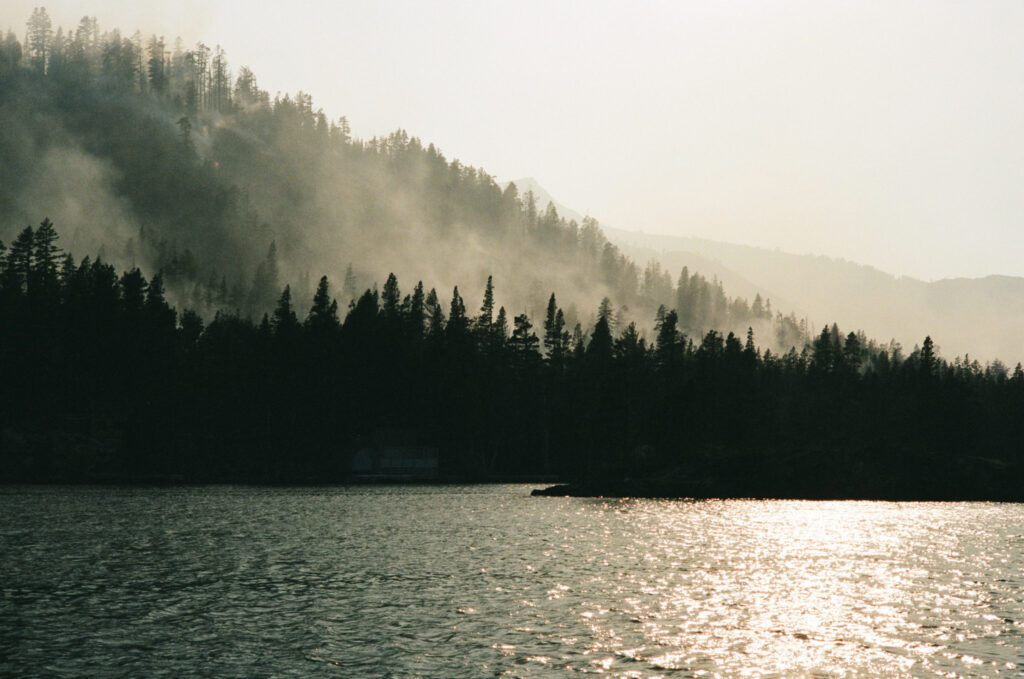
“Echo Lake” is actually two lakes: Upper Echo Lake and Lower Echo Lake. These are connected by a narrow, shallow channel which sits only two or three feet deep in the fall. A single road leads into the Echo Chalet on the eastern most end of Lower Echo, and cabins around lakes are accessed by boat or hiking trail. To navigate the channel in the fall, an outboard motor is tilted up so the propeller is almost out of the water, and the boat is steered so the prop is kept right in the center or deepest part of the channel.
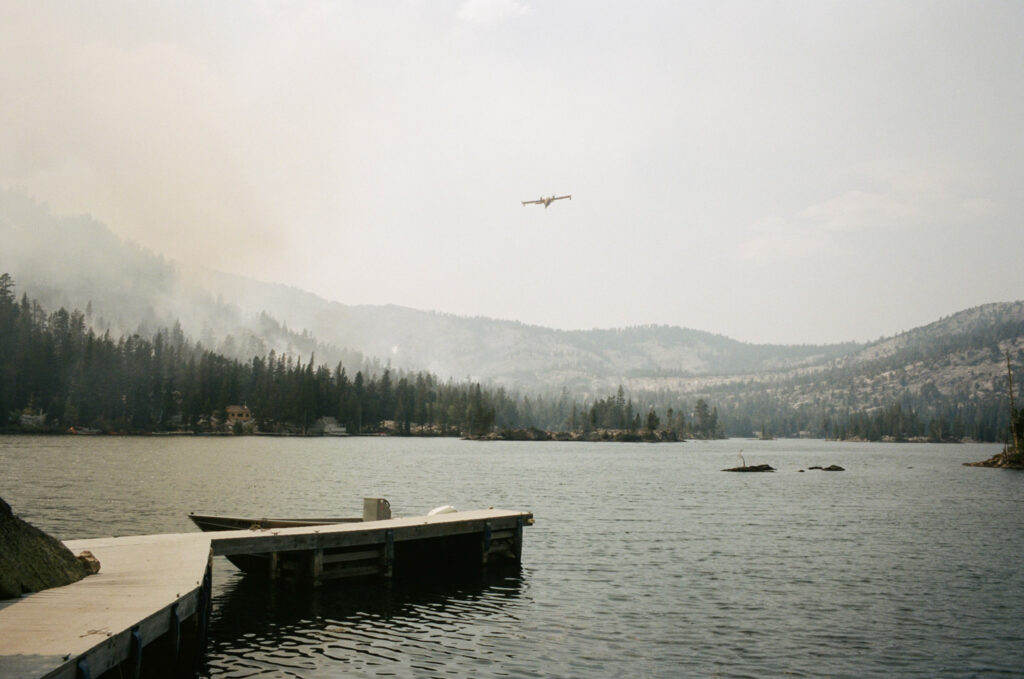
Cal Fire initially asked the Chalet for boat transportation for the Caldor Fire, thinking help would be needed for four or five days. Between Tyler and his dad, and two other boat drivers, they ran 48 hours straight before receiving an update that the effort would be more protracted. Once a few more of us arrived, we were able to keep boats at the ready on the upper and lower lakes at all times as evacuation options, and move firefighter teams, water pumps, fuels, and other supplies around as needed
When I received the call after that first sprint, I booked the first flight down to California the next morning. I debated momentarily whether bringing my camera would be appropriate, but I figured it wouldn’t take up much space and could always remain in my pack. My Leica M-A mounted with a VCII meter, Summarit 50mm, and Summicron 35mm would make the trip, along with the few rolls of Portra 400 and one roll of Tri-X that were already in my fridge.
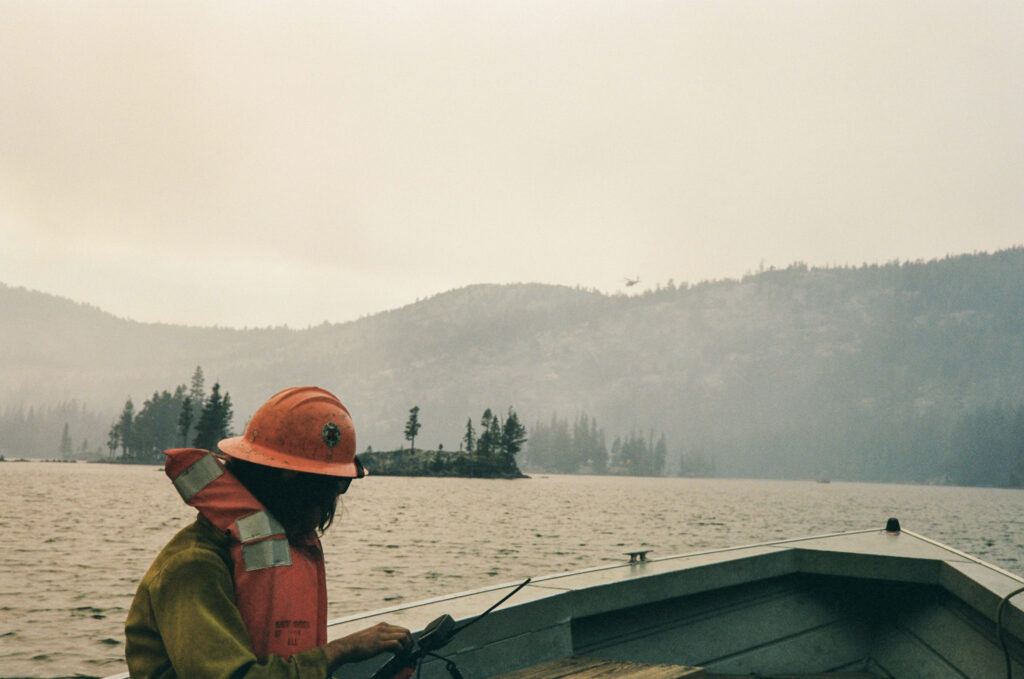
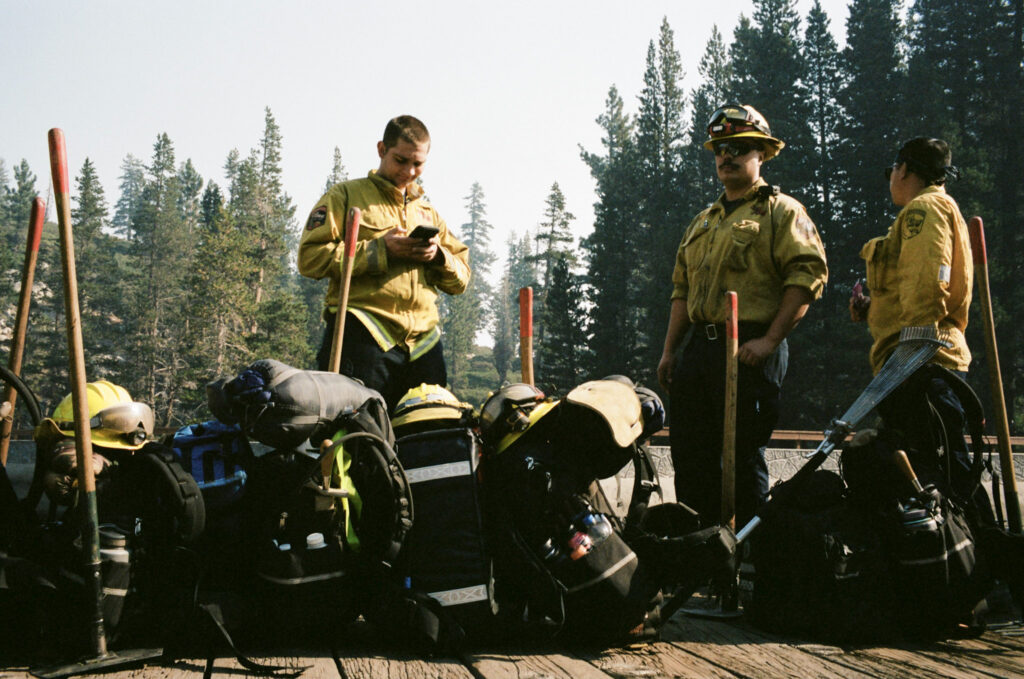
Resources supporting the effort in the Echo basin included two Cal Fire crews, two California Conservation Corps teams, two USFS hand crews from El Dorado forest, one hand crew from New Mexico, one hand crew from Colorado, one hand crew from Kansas, and several contractor groups working under Cal Fire. Cal Fire and CCC teams ran 24-hour alternating shifts, the teams from Colorado and Kansas were camped out in Desolation Wilderness for the week, and the rest of the groups were 12-hour day teams. I even recall seeing a pumping truck from the Los Angeles Fire Department that was helping fire management on the road into the lakes.
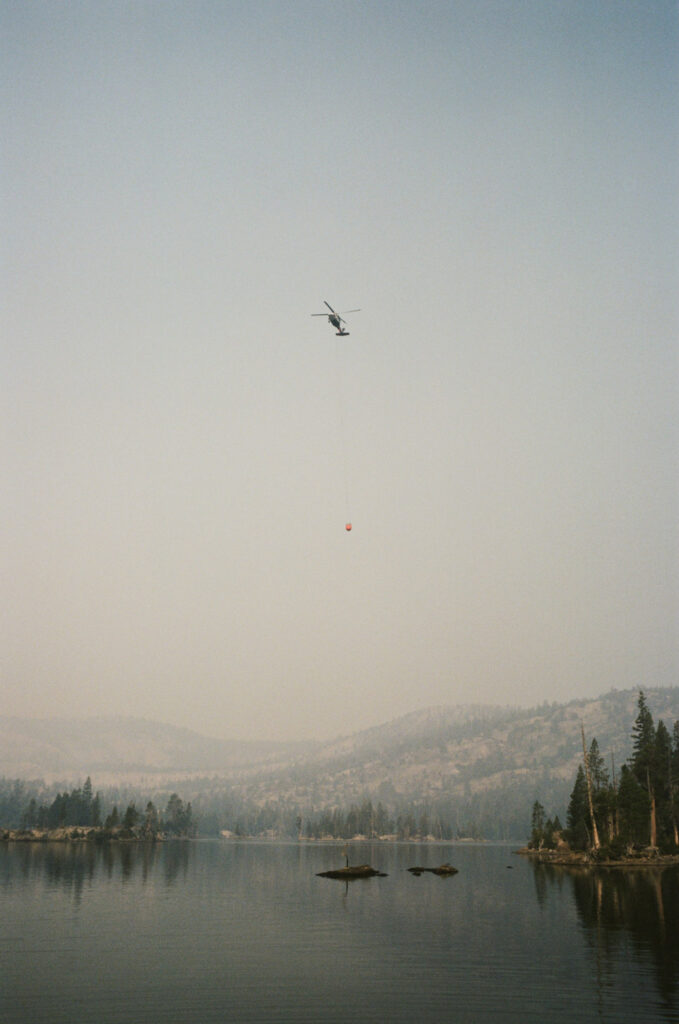
Initially, Cal Fire led the strategy and was attempting to fight the fire at its lines high up on Becker Peak and Talking Mountain. Just before I arrived, the leader of Iron Mountain Hand Crew out of Placerville convinced Cal Fire leadership to make the Echo Lake operation a Task Force, and he took direct control of all the teams operating across the lakes. Before this, they were independently reporting to the division lead who had responsibility far outside of Echo.
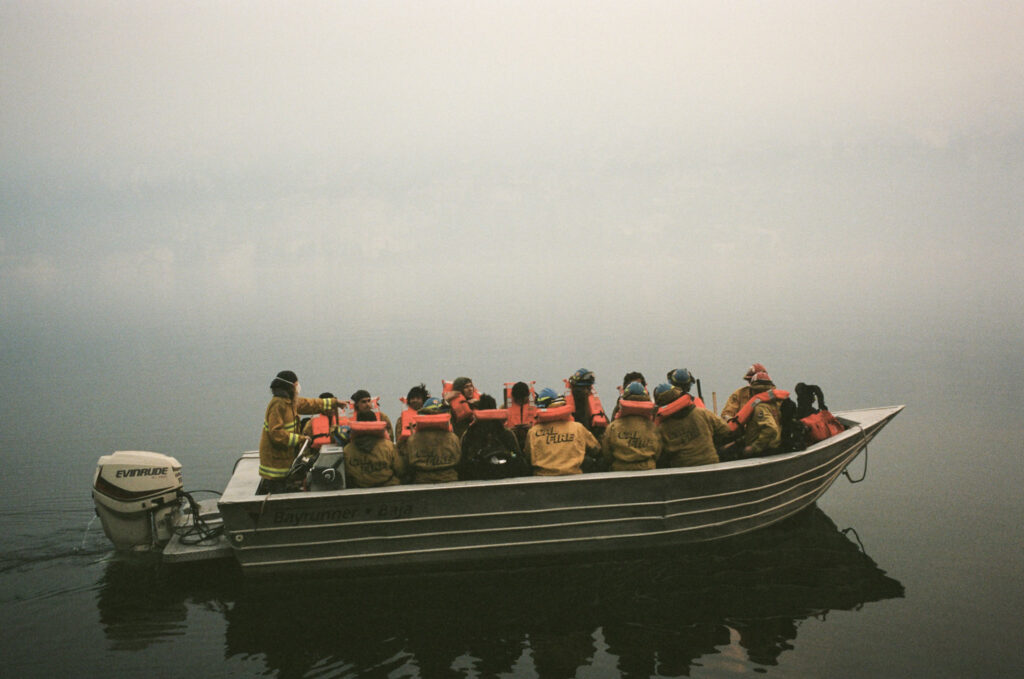
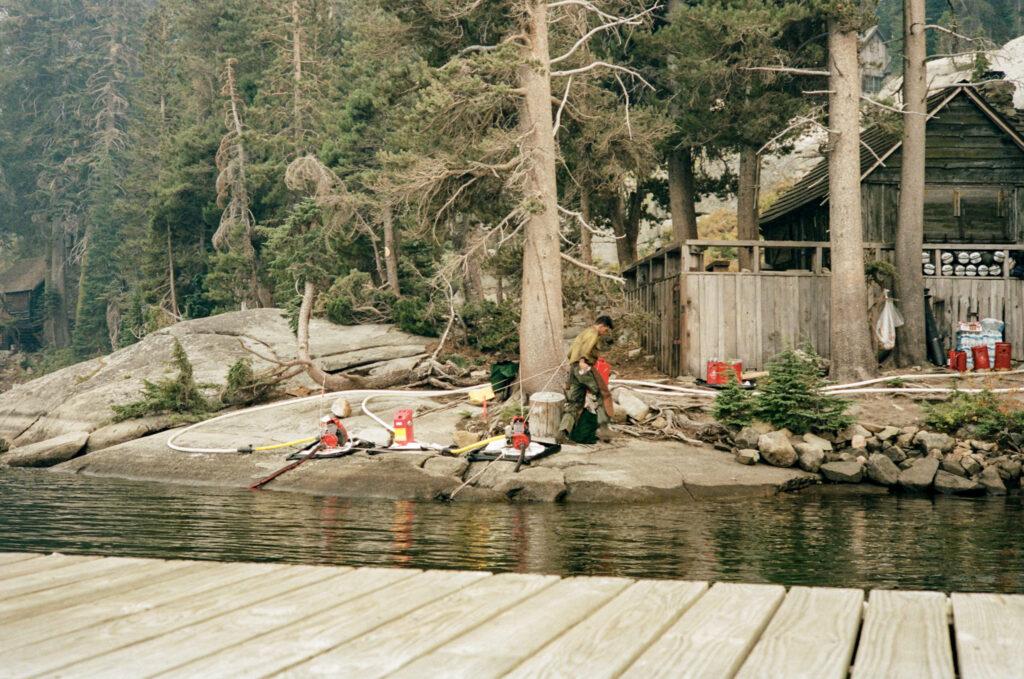
The new leadership changed up the game plan dramatically, pulling teams back to cut line to mineral dirt behind every cabin on upper and lower echo, laying hose to water down the area with sprinklers, and providing teams with the ability to fight fire at every cabin on the south shore with hose lays. This involved placing six Mark-3 pumps on various docks up and down both lakes and running several thousands of feet of hose. The sprinklers saturated the ground, trees, and cabins themselves, and some of the firefighters further prepped directly with hoses.
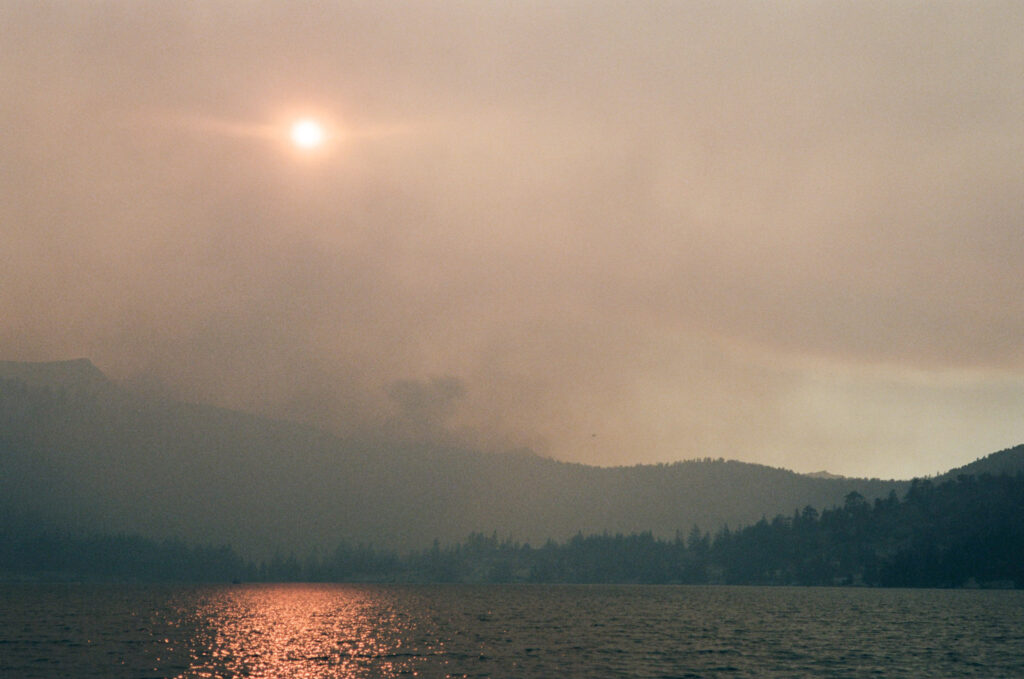
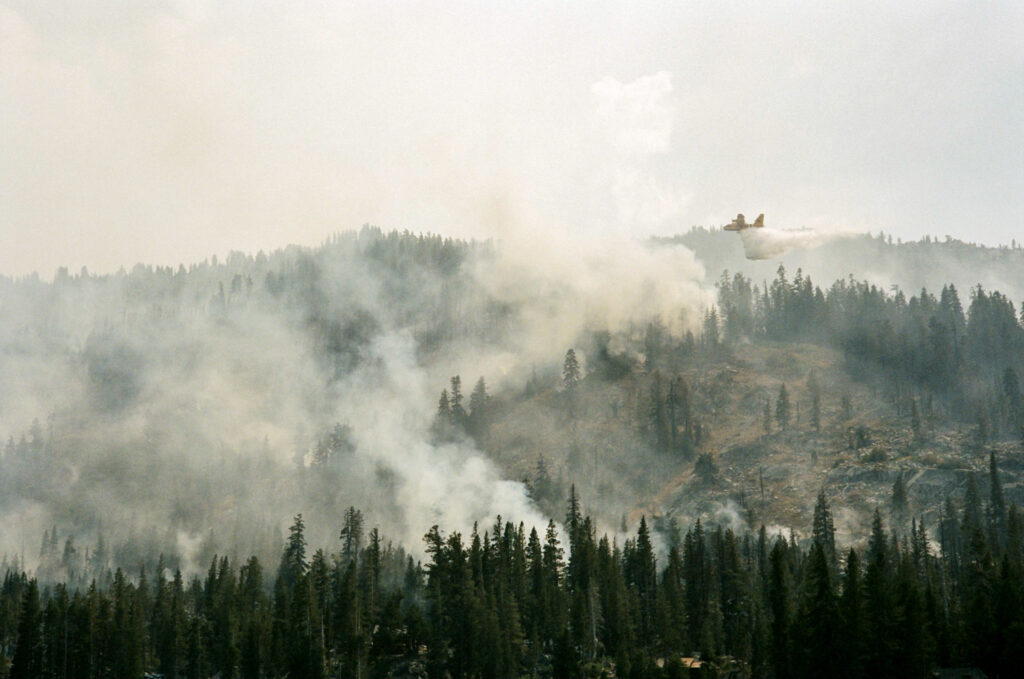
Typically the strategy might be to back burn from the control line, to consume nearby fuels, but the team was concerned this could rapidly burn up and into Talking Mountain and Becker Peak above and potentially get out of hand. Instead, they opted to let the fire gradually burn down to the control line while the weather was favorable. This changed Tuesday morning when the forecast for Thursday called for a storm cell with high winds and lightning. At that point, the team opted to accelerate the burndown, bringing the fire’s edge down from various points on Becker and Talking to the control line. They did this with drip torches containing a mixture of oil and diesel and devices similar to flare guns to reach areas they couldn’t get to on foot. The goal of all this was to consume the burnable fuels in the area before winds created conditions that couldn’t be controlled.
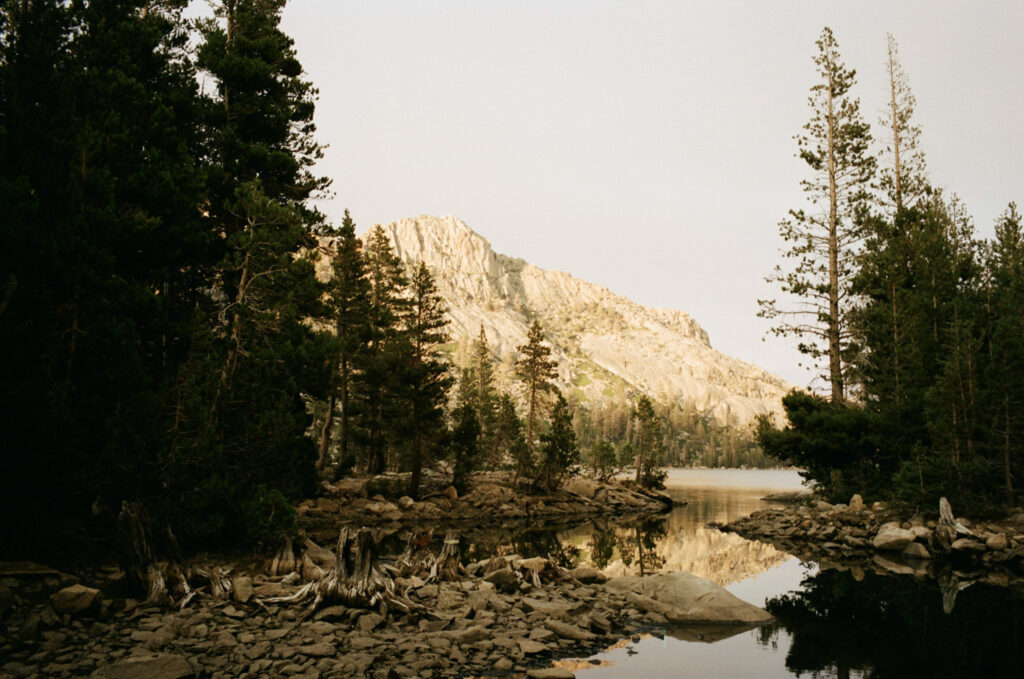
Ultimately, the effort over these days and weeks would be a success. The firefighters managed to protect all 137 cabins on both lakes and prevented the spread of the fire beyond Echo and Desolation into Tahoe. Sadly, there were many cabins and homes lost on the the road into the lake when the fire first crossed over the summit. And in total, more than 1,000 structures burned as the Caldor Fire ran its entire course.
Share this post:


Comments
No comments found