

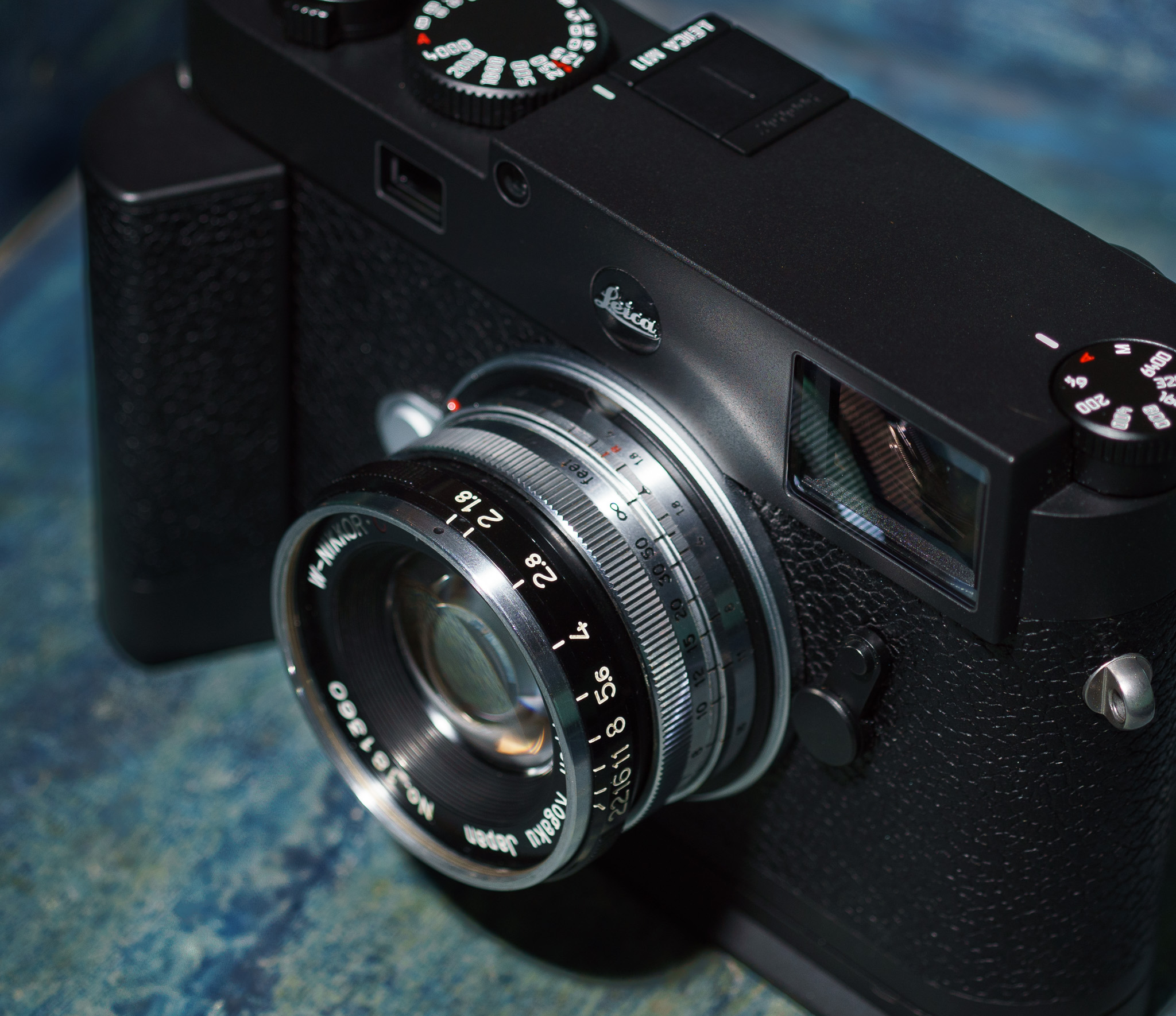
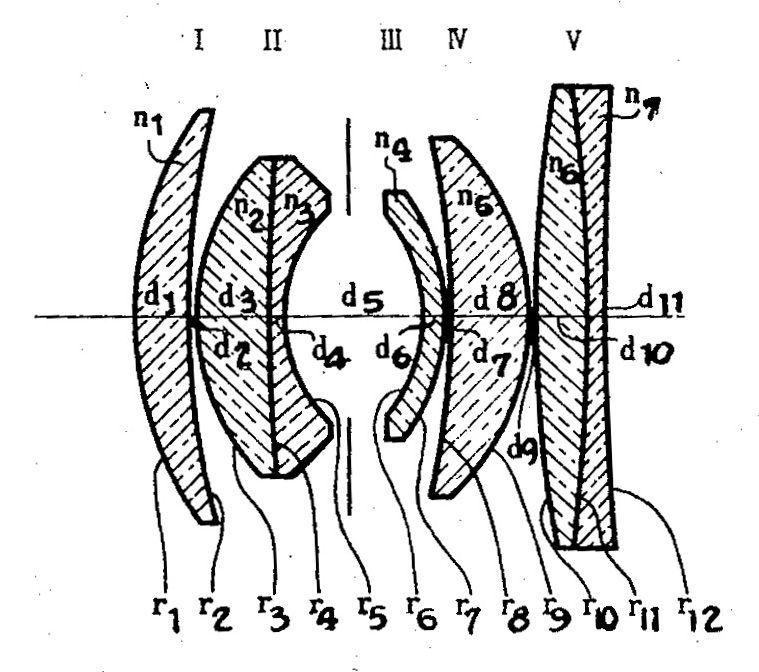
NOTE: If you have not read part 1. I really encourage you to spend the time and read it first as it rounds up all that I have found during my research into Hideo Azuma’s truly unique Nippon Kogaku W-Nikkor. And why I’m calling it “legendary,” specifications and information on the various versions, including the Omnar NK35-18, links to other reviews and film photographs, the patents, info on Lanthanum elements, background on rendering of Sonnar lenses, and many other notions that I refer to here.
Is It Love?
As I shared in Part 1 of my search for a primary 35mm lens, it all started with love, Sonnar love that is. Therefore, I found it pretty ironic when this possible new love arrived a couple days before Valentines Day in 2025. Of course being Iowa, delivery was delayed by a day-long snow storm. The box arrived after spending around eight hours in the back of a UPS truck that day at 15F / -9C, so upon bringing it inside that evening I needed to give it a chance to warm up, or risk tears.
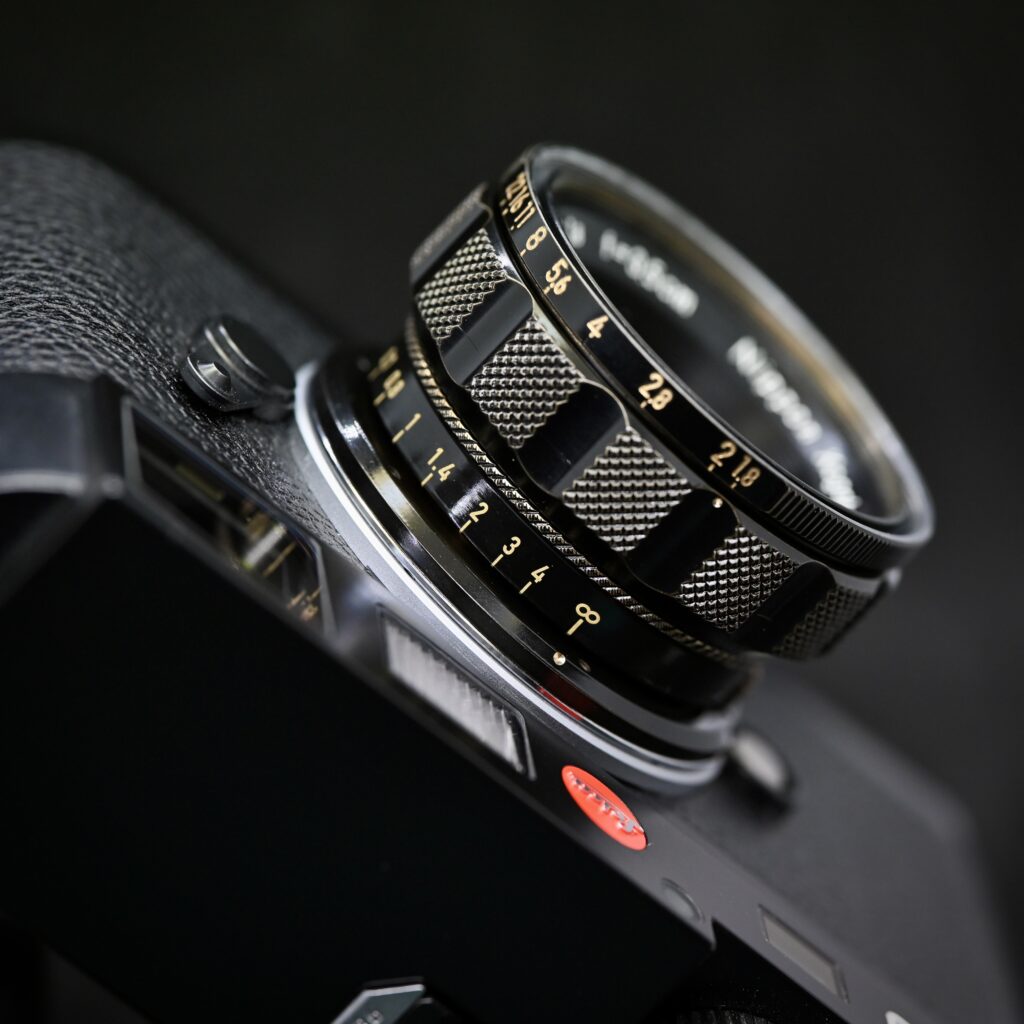
After dinner, when the risk of drops of condensation had passed, I was finally able to open the layers of packaging and inspect my copy of the legendary Nippon Kogaku W-Nikkor 3.5cm/1.8 in Leica Thread Mount (LTM) made almost 70-years ago. After spending months researching and reading, it was a thrill to see that the large, beautiful, cemented Lanthanum rear elements that are a key part of this lens’ magic was in pristine condition:
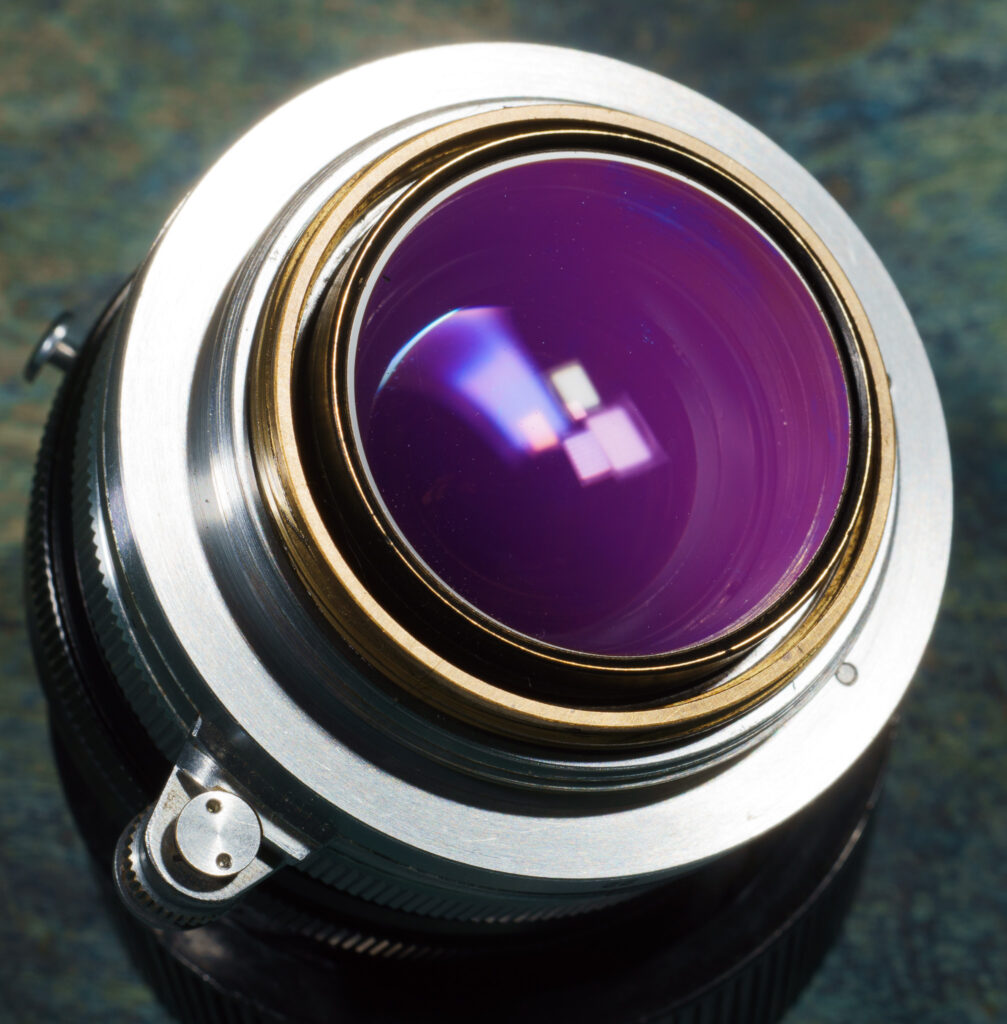
I happened across this LTM copy of the W-Nikkor on Igor’s Camera Exchange website in the States at a decent price as it had a couple minor issues, and I decided to jump at it and not wait to go the Omnar NK35-18 route. I’m not a collector, and actually prefer “user” condition lenses so I’m not worried about taking it out daily, and honestly, to make it a bit more affordable. As had been described by the seller the front element had a difficult to see tiny bit of coating missing, and there was a slight looseness to the lens barrel.
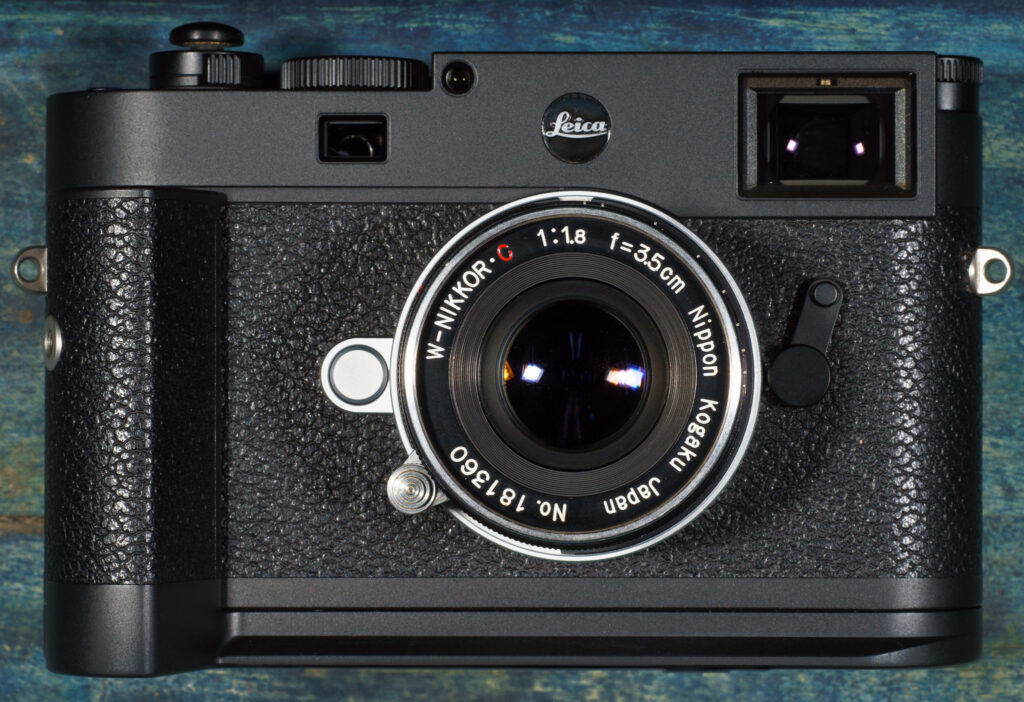
Putting one of less than 1,600 of these 3.5cm W-Nikkors made in LTM on my Leica M11, and taking a couple shots in my desk area, I immediately felt the focus was very, very heavy. I knew our initial time together was going to be short. I decided I would send it right away to DAG Camera Repair for a complete overhaul to take care of this heavy focus and the looseness. As well as a little OCD trigger I had noticed; the aperture numbers did not stop right at the black indicator dot, oh good grief.
And Then 6-Bit Issues
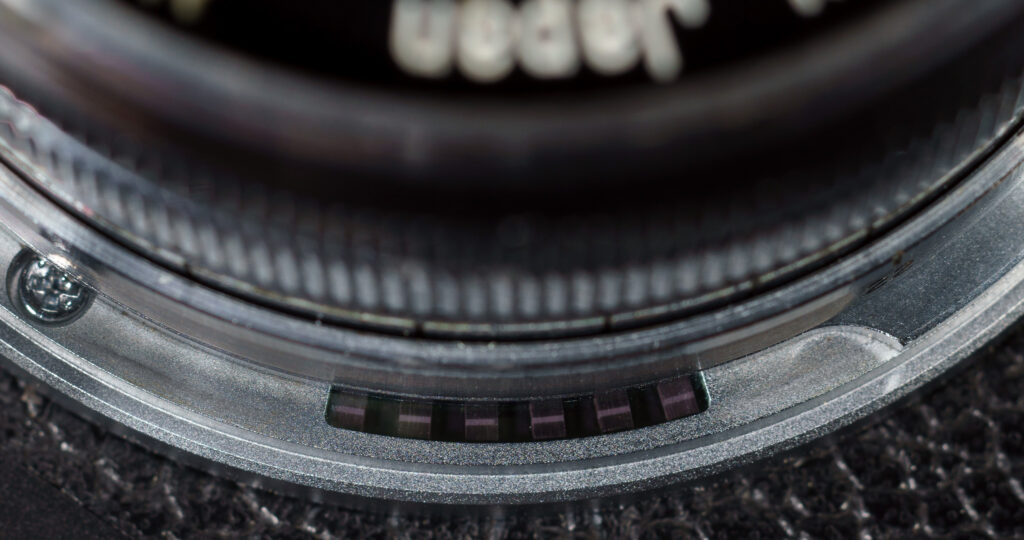
Then I noticed the camera would not change ISO values as I pointed to lighter and darker areas of my room even though I was in auto-ISO. I found that the 6-bit sensor was not covered (below) by the Leitz 35mm LTM to M-mount adapter ring I had sourced in anticipation of this lens and caused the camera to be confused. I have since found some mounts of LTM lenses are large enough to cover this sensor, otherwise need to make sure to have an adapter ring where that part is not cut out like the one I had. I grabbed a workable non-35mm one I had so I could at least try out the lens before sending it out for service, even though it would bring up the wrong frame lines.
Sunny Day
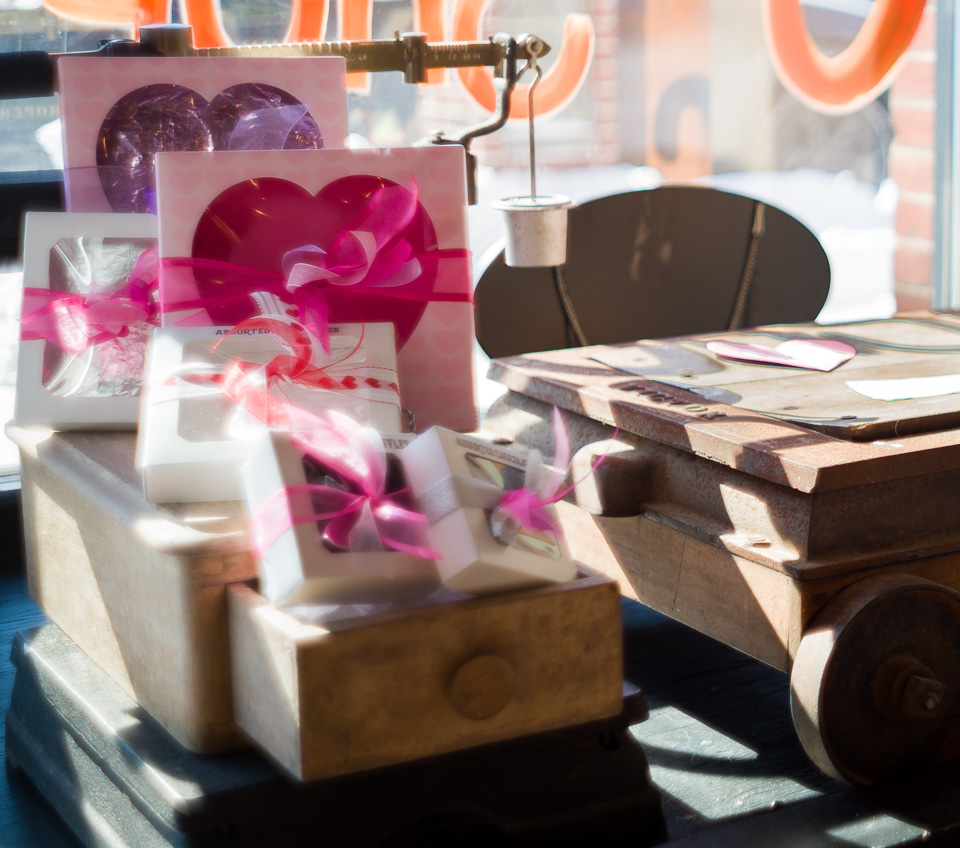
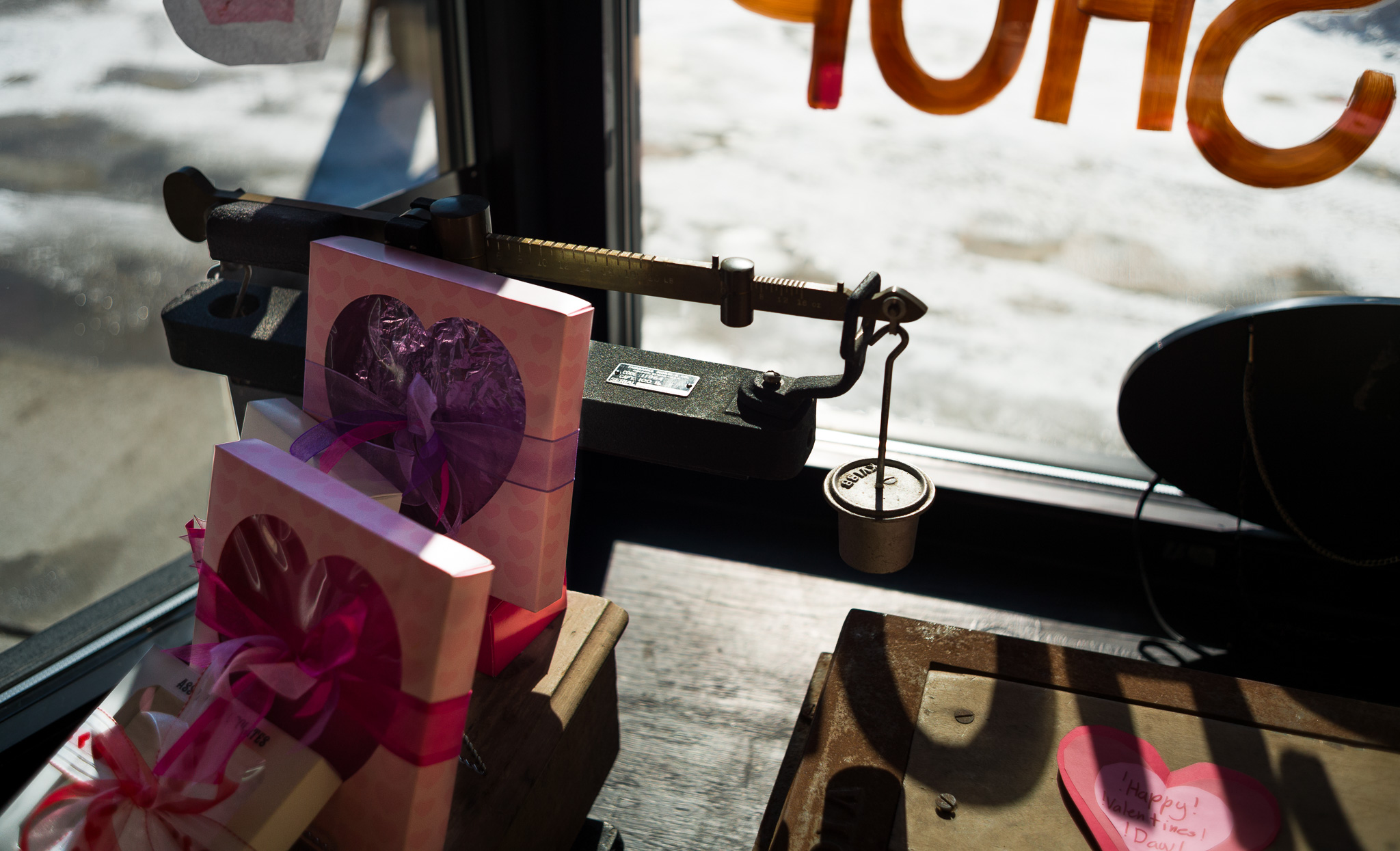
The next day was sunny, but with a busy work schedule I could only manage to make some quick images at various apertures before shipping the lens off. A couple days later when I had time to really look at these images, one stood out that was made while at a local chocolate shop (below) when getting valentines truffles for my wife and my 93-year-old mother-in-law who was visiting us from Canada. Taken at f/2.8, and underexposed to hold the highlights, once I lightened it up almost 3/4 of a stop I was really pleased to see the graduation of tones and that rendering! I encourage you to click on the image to see the details and textures captured. The lower contrast of the lens allowed selective burning and dodging to hold tones where I wanted. Images shot wide open (above) had lots of vintage fast-lens spherical aberration “glow,” but here at f/2.8 it was all “rounded sharpness,” with no distracting “lens character!”
My Goals
Wait! This is a vintage lens, is it not supposed to be all about vintage vibe and loads of character?
Well, not for me. This lens tale started with looking for a 35mm lens to compliment the “somehow organic, something entirely un-clinical, and despite the obvious dose of character, still uncontrived and real” rendering of my beloved Sonnars. What I have called an “honest look.” My hope is this legendary W-Nikkor’s high resolution, with it’s unique lens design – Lanthanum kissed bit of magic – and sweet aberrations will be along the lines of a Sonnar’s rendering as Chris Andreyo, Managing Director and Head Engineer of Skyllaney Opto-Mechanics shared in part 1.
Also, during the time this lens was out for service I decided to get back to my photojournalism roots and volunteer for the staff of a couple local weekly papers and to do most of the assignments with manual focus lenses, like I did when I was first starting out, but back then it was with SLR and film. I really like the smaller size of my digital rangefinder kit, and use the 35mm focal length by fare the most in my reportage photography, so been searching for what will be my primary lens. In this work I usually photograph stopped down a bit to have more story-telling content in my images, and looking for the lens’ honest rendering to carry through not just wide open. My other considerations are it has good handling and flare control, as I had read the latter can be an issue with this W-Nikkor since it has early-tech lens coatings.
The W-Nikkor is Back! And Some Testing
The lens arrived back with the focus working much smoother, no looseness and the aperture numbers now lining up with the dot as they should. Also, while the lens was gone I bought a 35mm Rayqual LTM to M-mount adapter that works with 6-bit readers, and I like the look of its black finish with my black bodied camera. The lens is really small and barely gets into the corner of the 35mm frame lines at the close-focus setting. I never acquired a 43mm lens hood for the lens, so all these photographs are without one. A couple quick test shoots showed its great resolution:

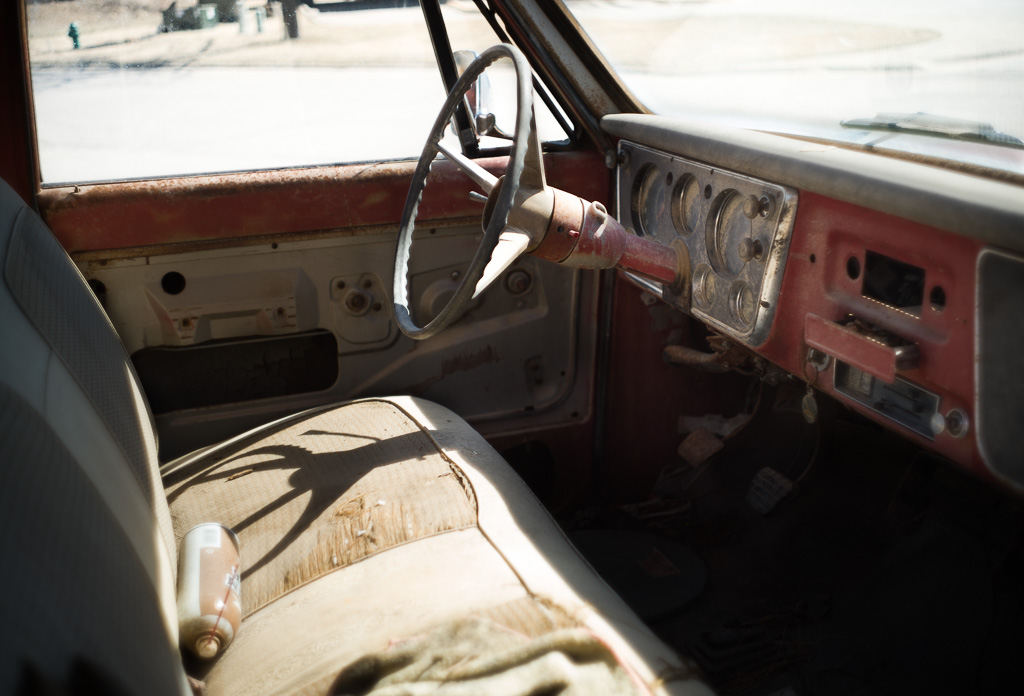
Wide open (above) the spherical aberrations, or glow, is actually really beautiful as just a slight softness, without being overwhelming as I have had on other fast classic lenses.
Pressure Brings Out the Faults, and the Joys
My first assignment for the paper was a community health and safety fair. A good way to ease back into this work since it had been over twenty-five years since I have done a news assignment. I was also looking for this work to sharpen my rangefinder skills as I felt I had stalled out on the steep part of the learning curve as I was just not going out and photographing regularly. I’m usually not big on focus tabs, preferring to grab a focus ring, but found the focus lock did work well as a focus tab on this lens, especially good news since the focus ring is narrow and not really practical to use. I was happy with several images from this first assignment, and especially with this moment taken at f/5.6. And again, like the chocolate shop image, loved how the tones developed up in Lightroom:

The next assignment was a small high school’s graduation of a class of forty-two. The success at the health fair gave me confidence to go a bit more wide open at times. But, boy did my rustiness come out, as well the pressure brought out the faults in the lens! I was slow to anticipate moments, and crashed into the shortcomings in this 70-year old lens. Trying to work quickly the long 180° focus throw was not a good thing. And when trying to photograph this student’s mortar board I slammed into the 35″ / .9m minimum focus as I really wanted to get closer, so relied on a large crop. Also, at this end of the focus range the focus tab just got in the way up towards the top of the camera body. And it was also just in the way when holding the camera vertically. But again, very happy with the resolution and sharpness of the lens! – as this was a horizontal cropped in a lot from all sides to a vertical:

When making my edit of the shoot afterwards the nervous background in this one stood out, also not in a good way, so going to have to keep an eye on that:

But, for this f/8 and be there moment with the camera held over my head after the ceremony, it delivered the joy:
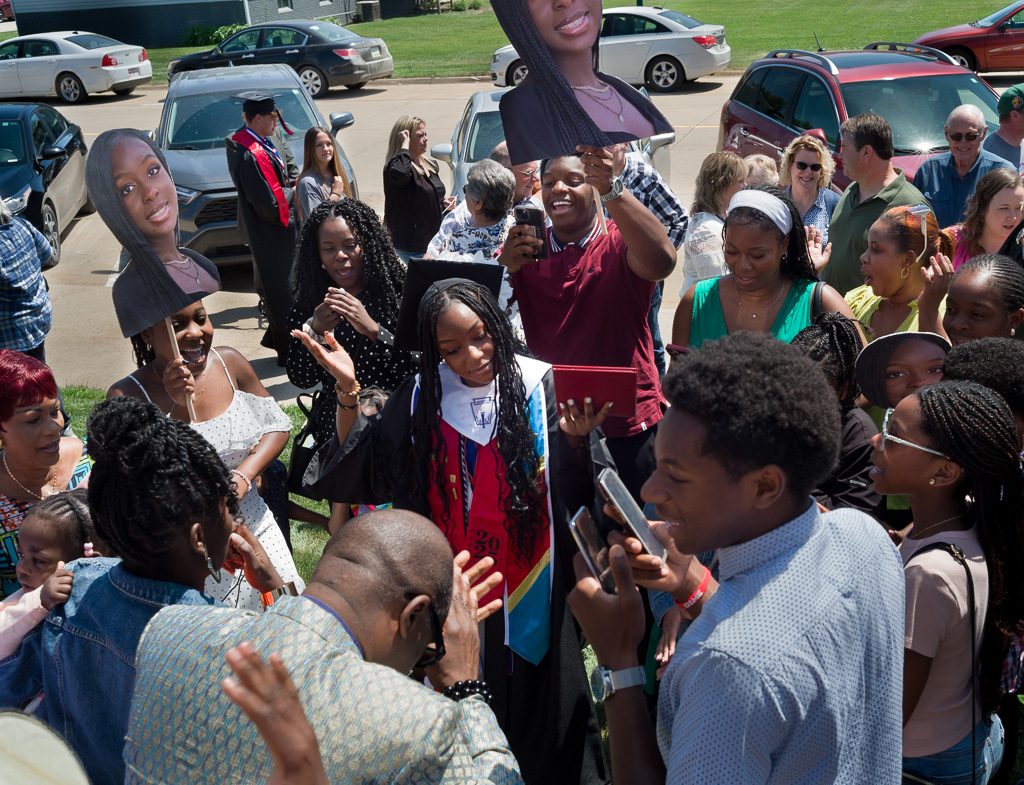
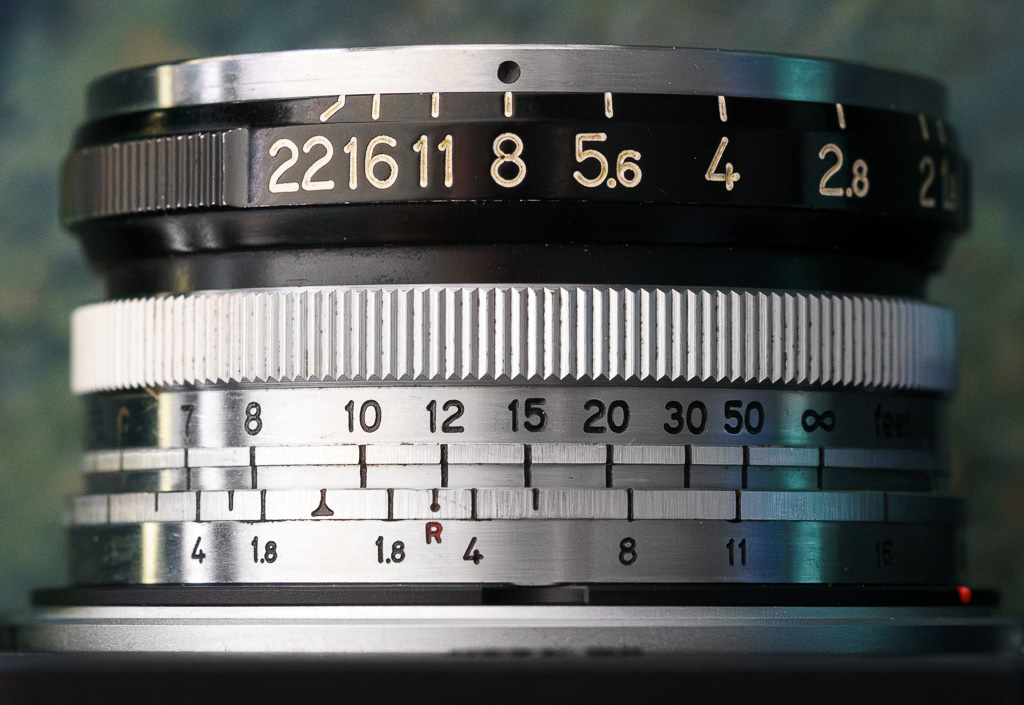
However, another quirk I found annoying while setting up the f/8 zone focus under pressure is the focus mark and depth of field scale (DOF) is set off to the left. So when glancing down I can see at f/8 I’m covered to about 22′ on the long end, but have to tilt the camera to see what the other end is set at:
Next up was the county fair. And boom, did the classic lens type 3D-pop show up!:
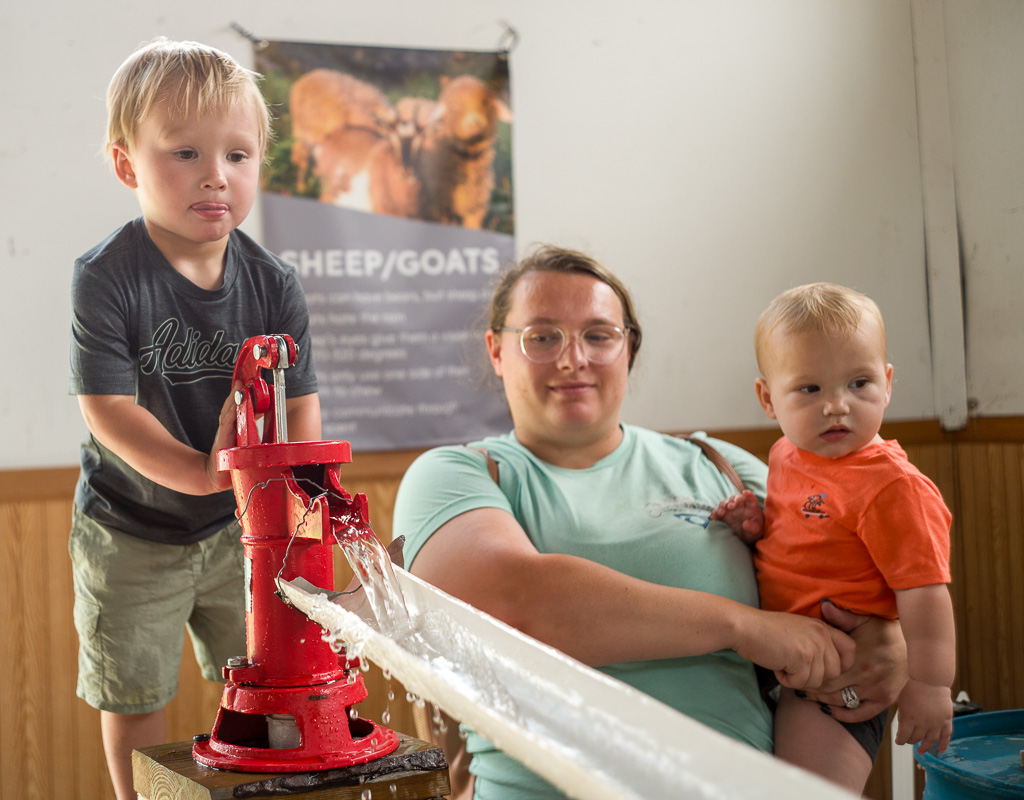
I sent this image to 35mmc founder and Sonnar lover Hamish Gill and he replied “it’s the same as I see from a lot of more simple optical formula lenses – there is just a whole load of 3D-pop that you don’t get with modern lenses that tend to produce more dimensionally-flat images. The water spout and water coming out of it is a great example.” I believe it was shortly after this that Hamish decided to order himself an Omnar NK35-18 version of this lens.
Also at the county fair a calf and some horses, and then an Independence Day parade, and a couple car show assignments:
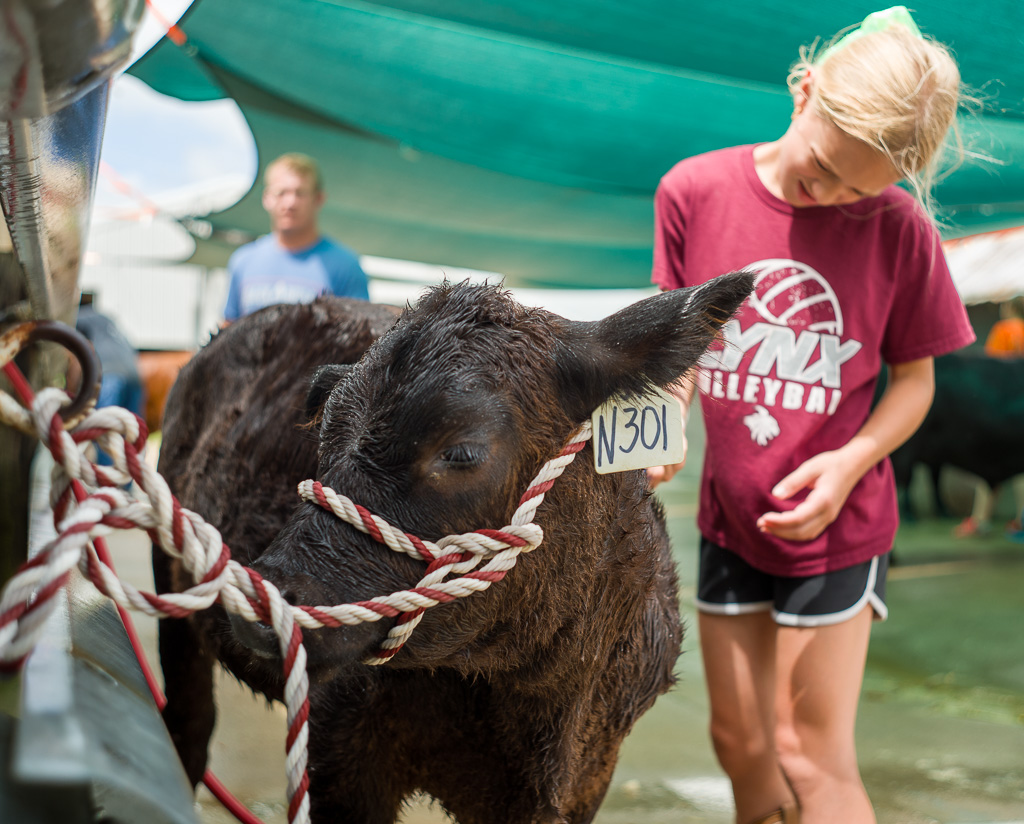
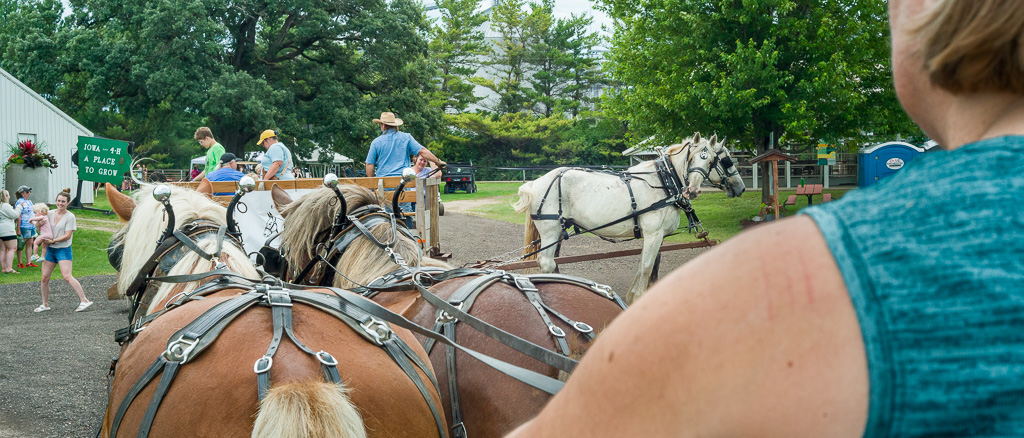



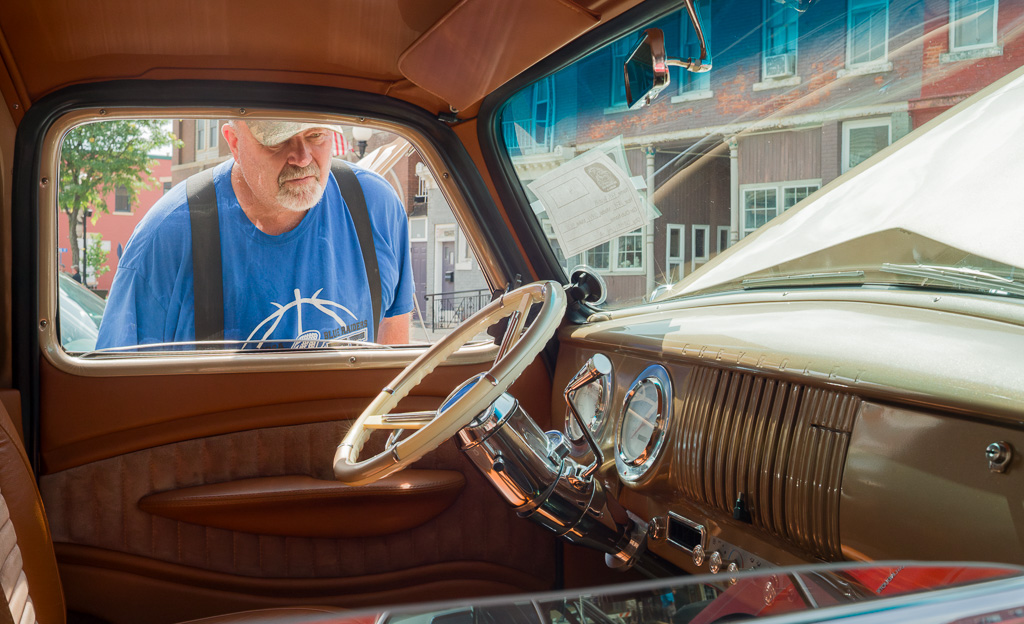
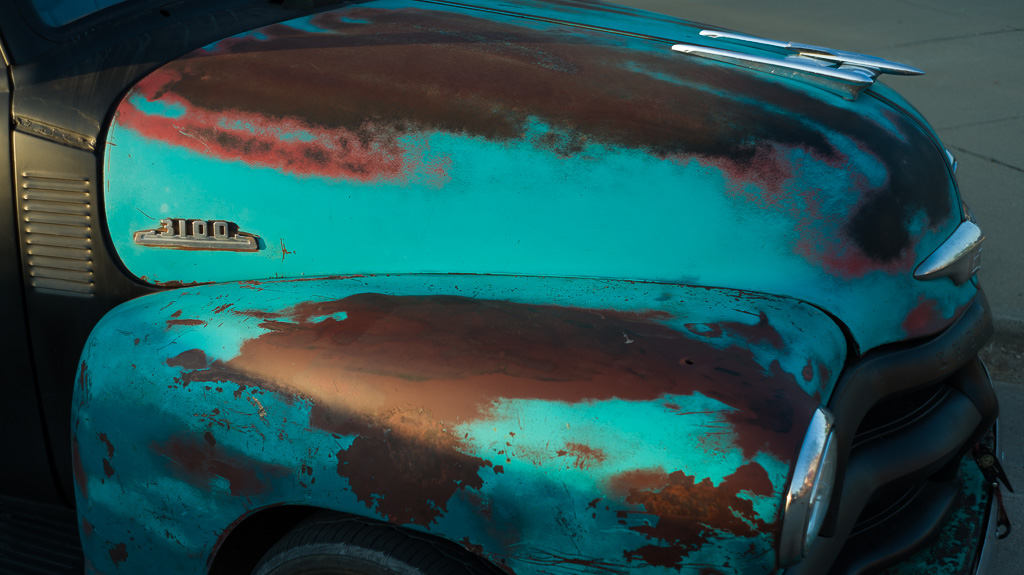


There is just something about the graduation of tones and the detail captured with this W-Nikkor, and that bit lower contrast that again, and again I felt like I was back in the darkroom when working with these RAW files in Lightroom, especially this frame above. Just the way the details and tones responded somewhat organically when dodging and burning. Confirmation bias? – if other users of this lens on digital cameras have found, or not found the same please comment below as like to hear if these toning characteristics are truly unique.
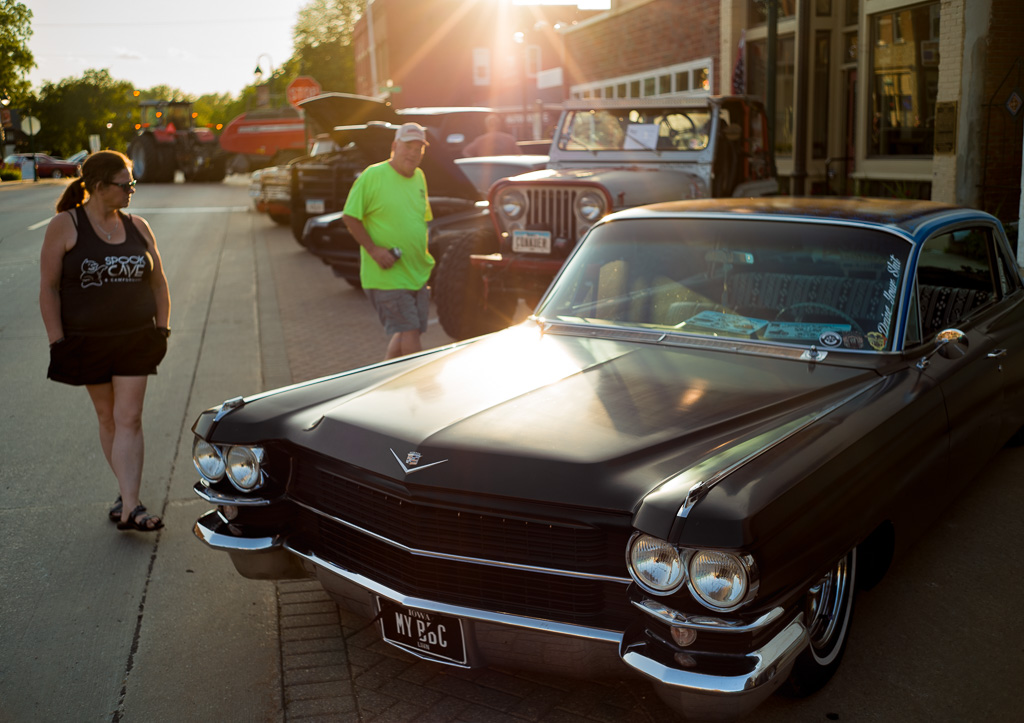
On a lark I tried Lightroom’s Adaptive Color Profile on the scene above with the motorcycle exhibitors seeking shade during a bike, car and truck show on a hot Iowa summer afternoon and liked the results just a bit better than when I set the starting parameters myself. At a different car show with a different black Cadillac, as a tractor rounded the corner and the flare from the sun peaked over the building, I really like what this lens gave me in atmosphere amplification, like a good ‘ol Sonnar. I’m sure a modern 35mm would have knocked down the flare and the sense of a late Iowa summer evening feeling would not have come through:
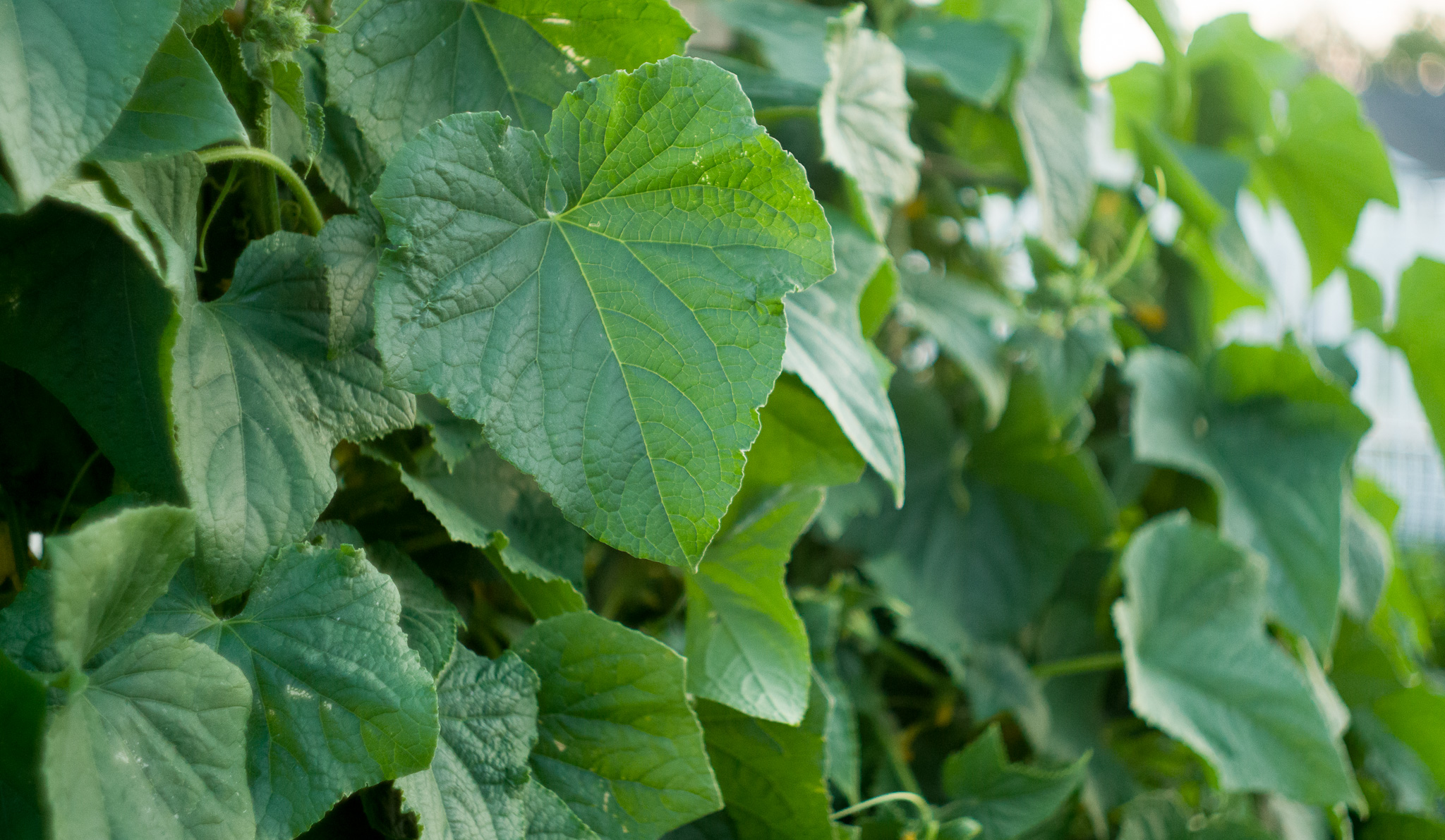
While not on assignment, but in our backyard as the sun went down on our cucumbers I was impressed at the detail held when wide open, while still having that subtle softness at the edges and highlights. The lens seems to have a very good balance between character and resolution – you can click the photograph to open it up larger:
If you can not tell already, I’m really, really liking this lens. It meets my goals, and more. All through this time I also did some simple tests to just gain a better understanding of it . . .
Some More Testing
I shot this scene with the camera locked down on a tripod at multiple apertures to see how it behaves. Just as was said in other reviews, and Nippon Kogaku’s advertising copy – see part 1 – I found no issues with the vignette, which in my opinion is just slight wide open – this is uncropped, with no toning in Lightroom, other than what is done on import, to show the change from f/1.8 (left side) to f/4:
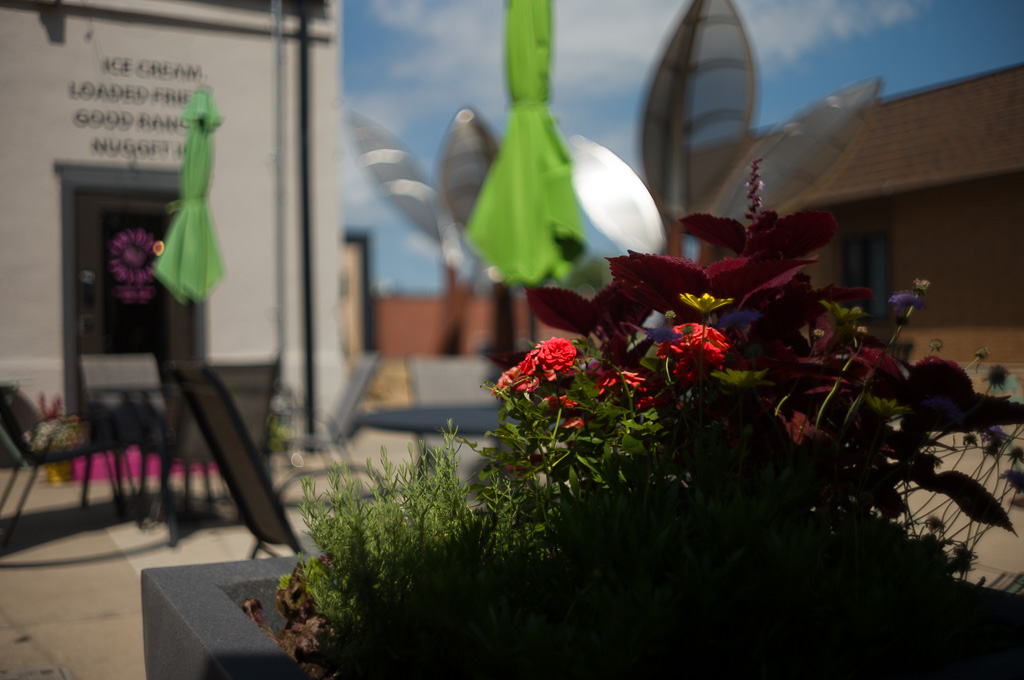
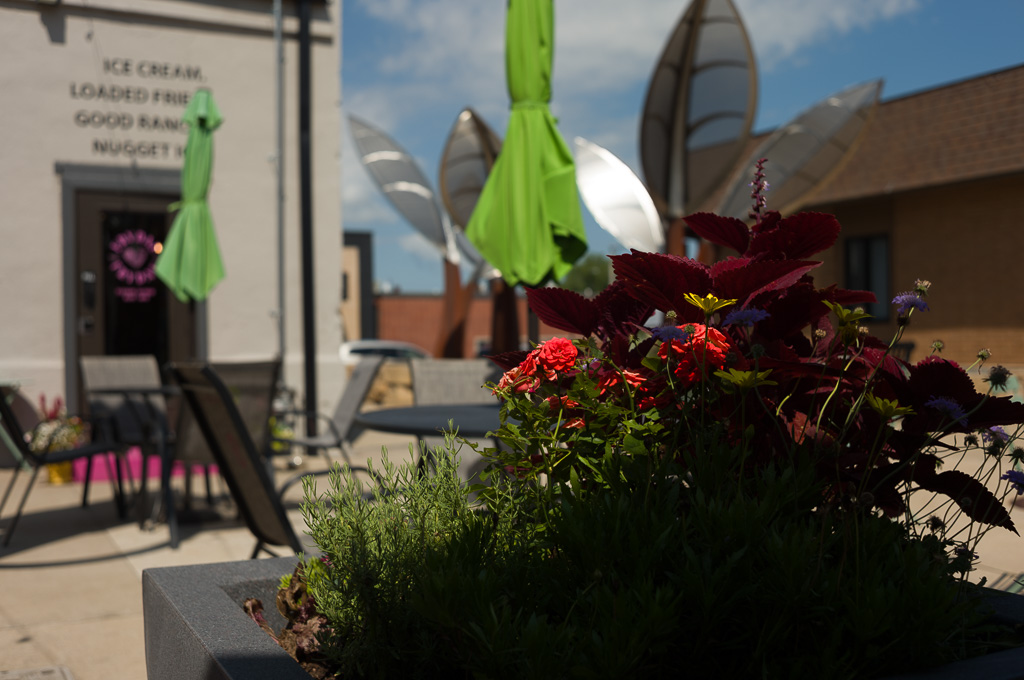
f/1.8 vs. f/4
Like a lot of fast classic lens types you get at least two “brushes” with this lens. At the wide open apertures you can paint some scenes with highlight glows, but when you change this lens from f/2 to f/2.8 there is a big shift, just like the distance between those stops on the aperture ring (below). And again when you change from f/2.8 to f/4, again the distance on the aperture scale represents another character change, though a lot more subtle than the one before, but still noticeable in some scenes as a slightly more refined brush with no spherical aberrations, which continues through the rest of the aperture range.
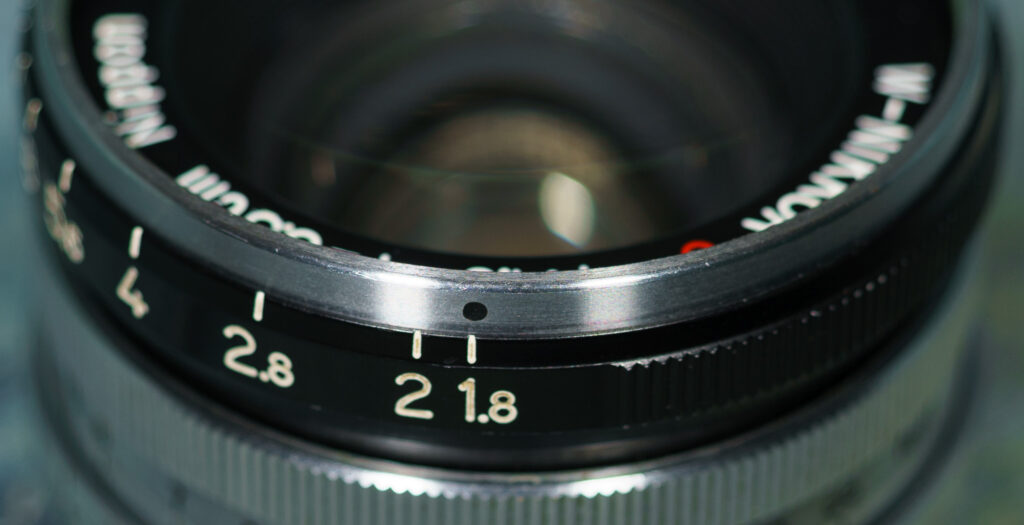
The change in spherical aberrations from f/1.8 to f/2 is very slight:
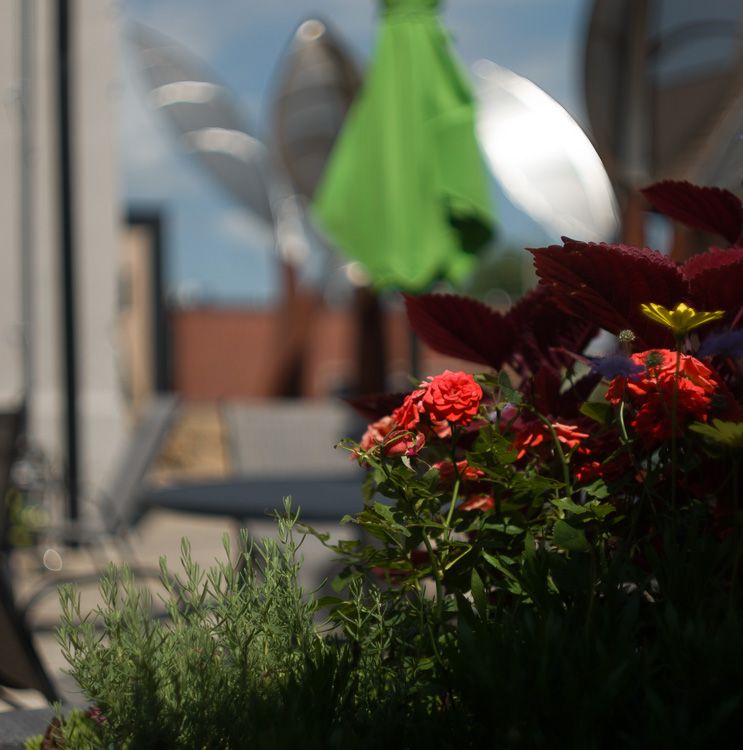
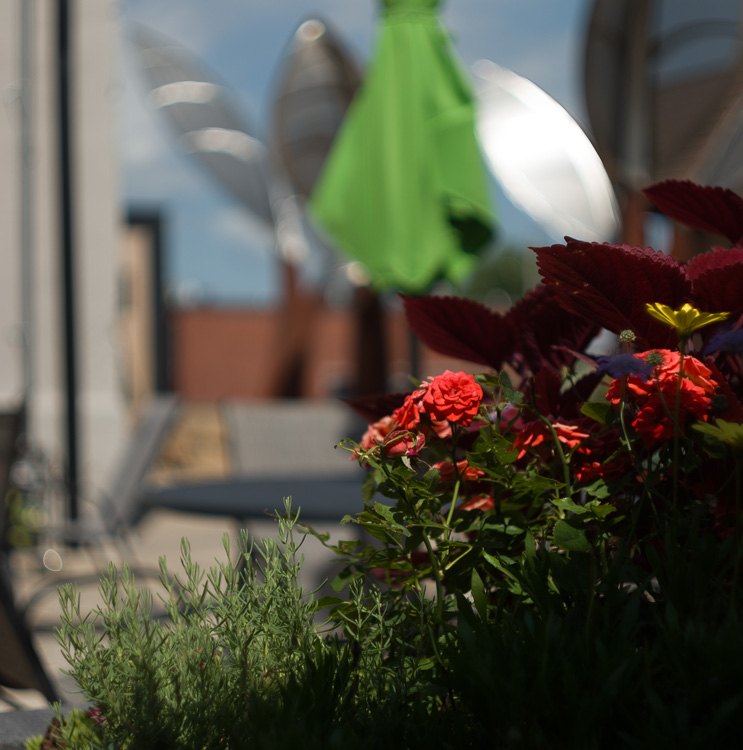
f/1.8 vs. f/2
But, from f/2 to f/2.8 there is that shift to a new brush:
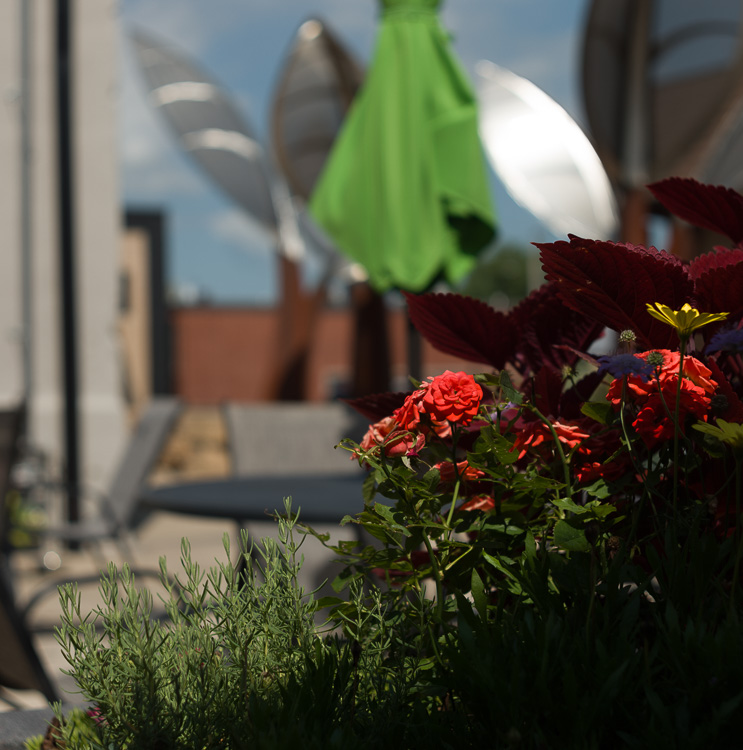
f/2 vs. f/2.8
And then f/2.8 to f/4:
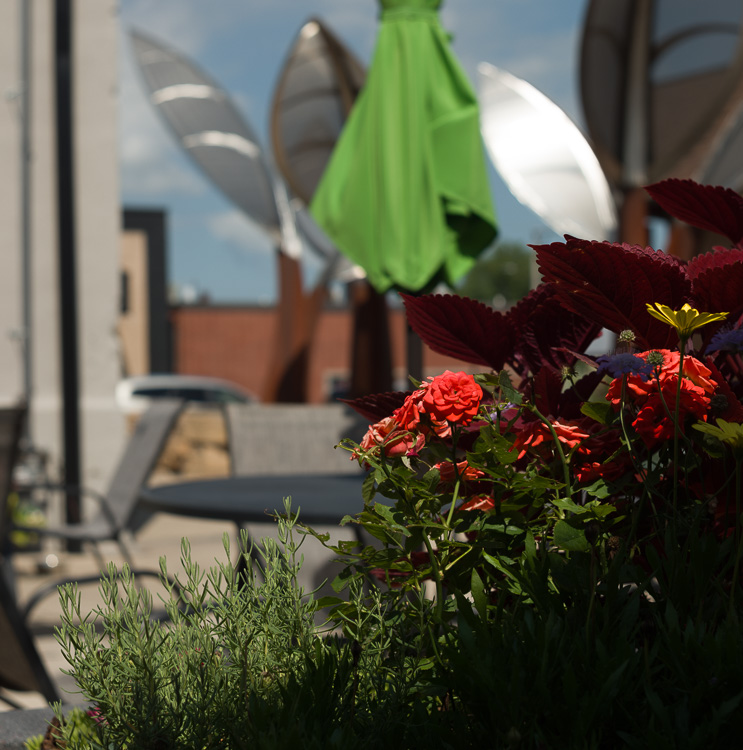
f/2.8 vs. f/4
I also played with different apertures at the closest focus distance while handheld at the fair, again just to get a feel for the lens:
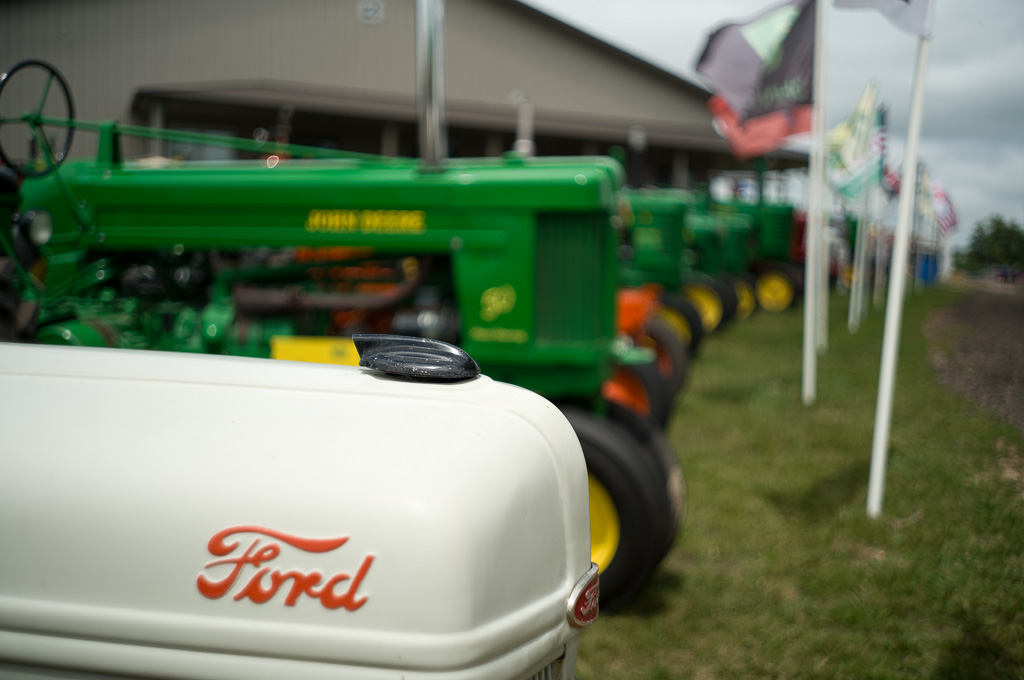
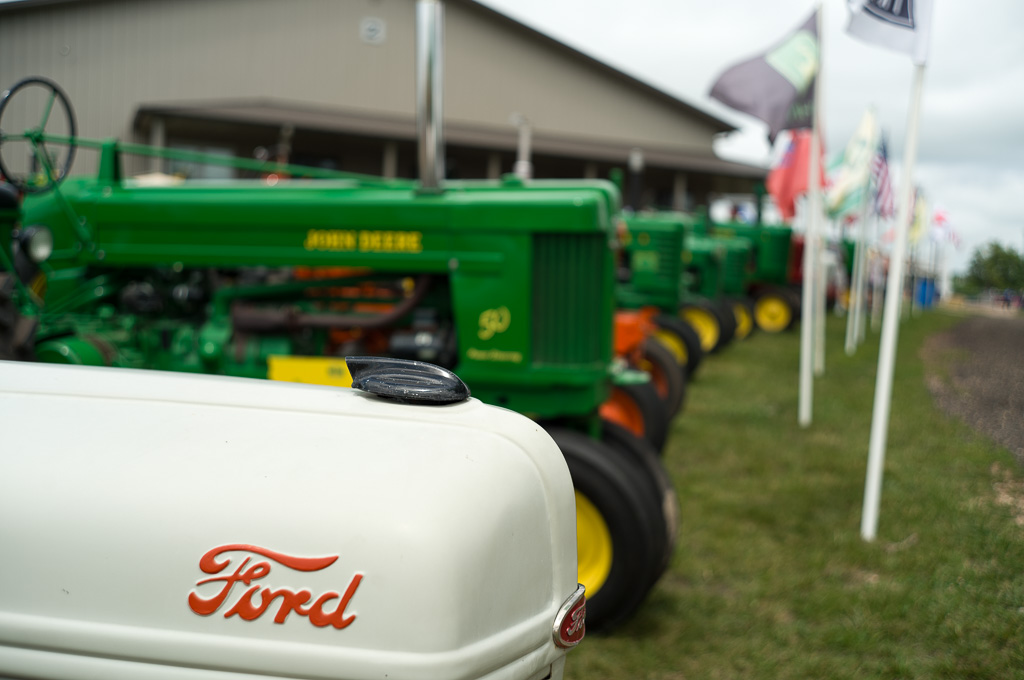
f/2 vs. f/2.8
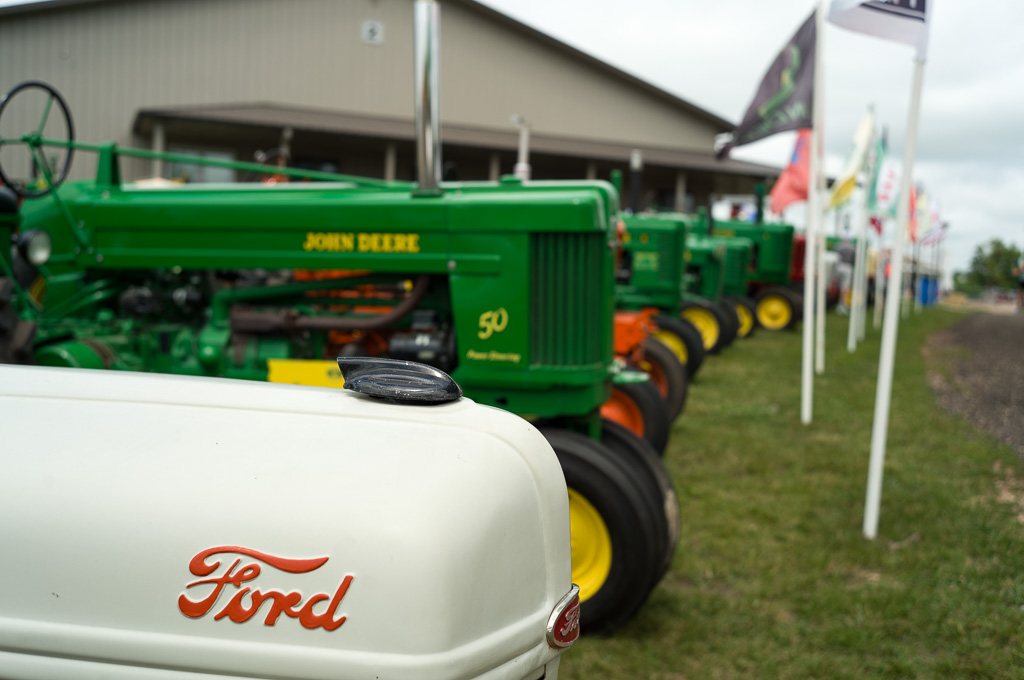
f/2.8 vs. f/4
From what I had read flare control can be an issue with the W-Nikkor 3.5cm f/1.8, but I found it was not troublesome. As shown above at the car show flare can be, dare I say, another brush? – and I generally had to force it to make it ugly in my opinion, like this scene while on vacation in Florida at f/1.8:
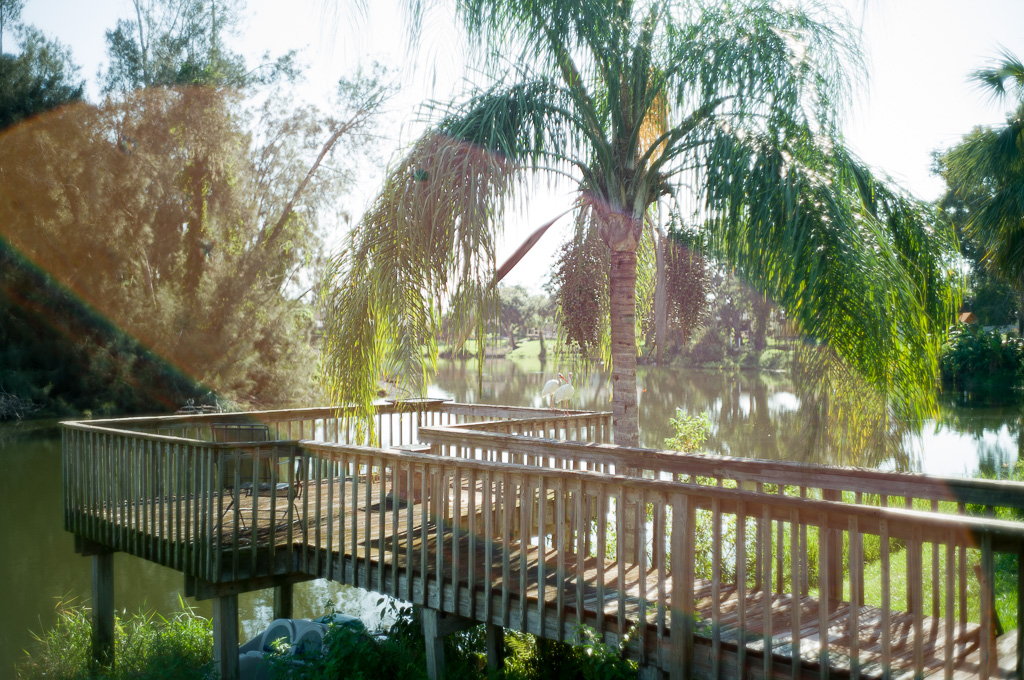
Where just closing down took care of it:
70-Year Old Specs and Handling In Real World Use
This lens is wonderfully small, but starting with the high school graduation and onwards for the way I use it, the 70-year old design is not conducive to quick work. I had no issue with the infinity lock as it was natural to press to disengage while using it as a focus tab, and it needs to be there for those using it on screw-mount cameras. However, the tab just got in the way when taking a vertical image, and was annoying when close to the subject. I was surprised I hit the minimum focus wall enough times it was bothersome. And I found the focus ring just not really big enough to easily use. And that long focus throw was no help either.
Only a bit annoying was the widest apertures to the left on the aperture ring, opposite of most of my other lenses, along with the focus mark and DOF scale set to one side. And I found the small DOF and distance numbers on the silver background to be difficult to read with my eyes where I have to reach for reading glasses often in everyday life. If you are always wide open, or working at a slower pace, then most of this would only be fun vintage quirks, and would probably be no big deal, but early on my thoughts turned to Omnar’s option . . .
The Omnar NK35-18 MkII Rehousing of the S-Mount W-Nikkor 3.5cm f/1.8
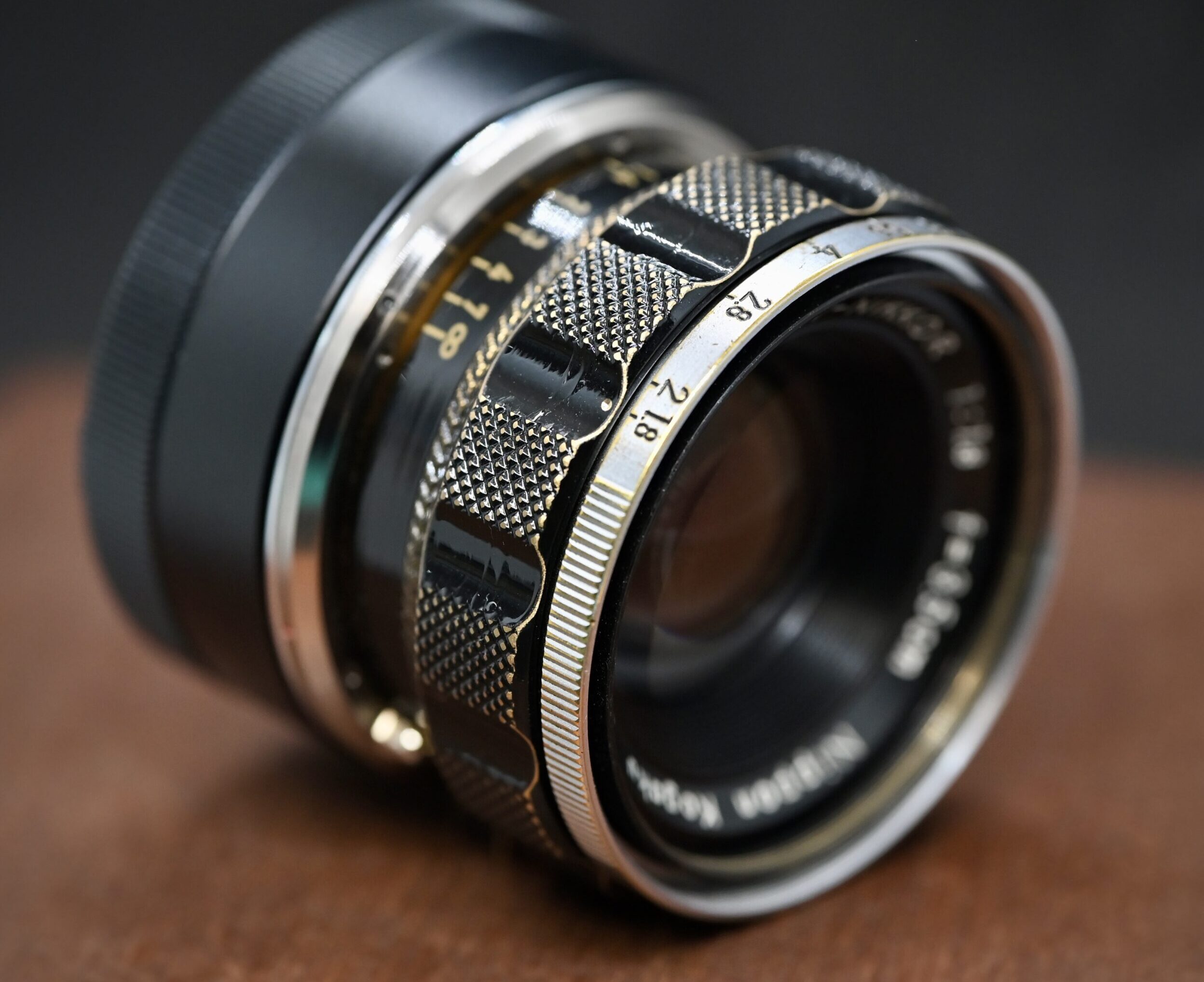
With the larger focus ring, but somehow still keeping it the same small protrusion off the front of the camera and the promise of a build quality and focus smoothness as good as the best modern lenses, I started contemplating the Omnar NK35-18 pretty early on. Made from the abundant supply of S-mount versions of this lens, they shorten the focus throw to a more modern 90° through the coupled range, which now goes to 26″ / 0.65m, which is 9″ / .25m closer than the LTM. And then the bonus of uncoupled focusing down to 13.8″ / 0.35m so over 21″ / .5m closer!
The aperture scale still goes in the opposite direction as it is the original S-mount’s ring, and unlike the LTM, the aperture and focus turn together, so it keeps the S-mount’s dual aperture markings. And more concerning to me is there is no DOF scale and the distance scale is in meters. Me, being me, I have already found the original Nikkor DOF chart and plan to learn f/8 and be there zone focus by a single meter point and not a scale, with numbers that look to be easier to read than on the LTM. Other good things would be the M-mount, and it comes ready to be DIY 6-bit coded.
Since this is the focal length I use by fare the most I decided to go for the NK35-18 MkII as I believe I have found my new 35mm. Chose the matte black finish to go with my all black M11. I hunted for an optically clean copy of the S-mount version of the W-Nikkor 3.5cm f/1.8 and found it in the states from private seller Leitz USA in August, 2025, and sent it off to Scotland, and sold the LTM copy to help fund it.
I want to reaffirm what I said at the end of the previous article in this series, while I have obviously communicated a lot with Chris, Vita and Hamish who own Omnar, in no way does it affect my opinions and the text I write. And, as always with my articles they are in now way written by a machine.
My Conclusion and What is Next
I have not used every LTM or M-mount 35mm lens out there – I have watched and read waaaaaay too many reviews though, LOL. However, I am now in the camp that the Nippon Kogaku W-Nikkor 3.5cm f/1.8 is not only legendary, but one of the best 35mm lens ever made for these mounts, as Chris’ shared before. And, to quote Tim Vanderweert, “Ironic, then, maybe the best 35mm focal length lens ever produced for the venerable Leica was made by” Nippon Kogaku (Nikon).
Am I expecting it to be perfect, heck no – it is not a modern a APO APSH FLE, and I want the imperfect perfection in the rendering to give feeling to my images. And while I can understand the low contrast, especially at f/1.8-2.8 might be a concern for someone printing from negatives, for myself it adds to the magic of how the files work up in my digital processing. I am for one, glad they focused on resolution for their Nikkors, and not contrast. And I am completely smitten by Hideo Asuma’s amazing unique lens design and the lanthanum element’s magic that can not be reproduced again.
As mentioned before, I am not one for wide open shallow DOF photography often, but this lens is making me reconsider! While on vacation waiting to leave a seafood restaurant in Florida and playing with f/1.8 I took this image, and was again surprised by the combination of the Nikkor’s resolution and just a touch of aberrations – you can also click on this image to see it larger:

I can now see the attraction of just a bit of softness this lens gives wide open. I’m actually looking forward to trying using that brush some more, and in black and white too. Now I am in a time of waiting, anxious waiting, and anticipation for the arrival of my copy of the Omnar NK35-18 Mk II, which will be the topic of Part 3 . . .
You can find me on Instagram @rollinphotoj.
Share this post:



Comments
Jonathan Leavitt on Nippon Kogaku W-Nikkor 3.5cm f/1.8 LTM – A Review of a Legendary Lens (Pt. 2 of 3)
Comment posted: 24/08/2026
To add my two cents, basically all spherical lens designs of the era turn into a “steam bath” above F3.5 or perhaps F2.8. The number one quality I look for is good contrast wide-open, and this is the lens that has it, as your sliders and demonstrate. The other lenses worth mentioning are the well-known “eight element Summicron” which I only own as a modern copy by Light Lens Lab, and the Schneider F2.8 LTM, an excellent lens that is really tiny but doesn’t go to F2.
Comment posted: 24/08/2026
Comment posted: 24/08/2026
Comment posted: 24/08/2026
Andrew Moore on Nippon Kogaku W-Nikkor 3.5cm f/1.8 LTM – A Review of a Legendary Lens (Pt. 2 of 3)
Comment posted: 24/08/2026
Comment posted: 24/08/2026
cdlinz on Nippon Kogaku W-Nikkor 3.5cm f/1.8 LTM – A Review of a Legendary Lens (Pt. 2 of 3)
Comment posted: 24/08/2026
Comment posted: 24/08/2026
Jeffery Luhn on Nippon Kogaku W-Nikkor 3.5cm f/1.8 LTM – A Review of a Legendary Lens (Pt. 2 of 3)
Comment posted: 25/10/2026
I know this is a late response to your great posting about the 3.5cm f/1.8. I did read the part 1 posting too. Man, you really dig deep and do some great writing. I was hoping you would do a mention about the 3.5cm f/2.5 Nikon lens. I just acquired a Nikon S2 system with three lenses at that was one. At first blush, it seems sharper than the 50mm. Are there any drawbacks to the slower 3.5cm Nikon lens from the 1.8 you reviewed?
Thanks!
Jeffery Luhn