

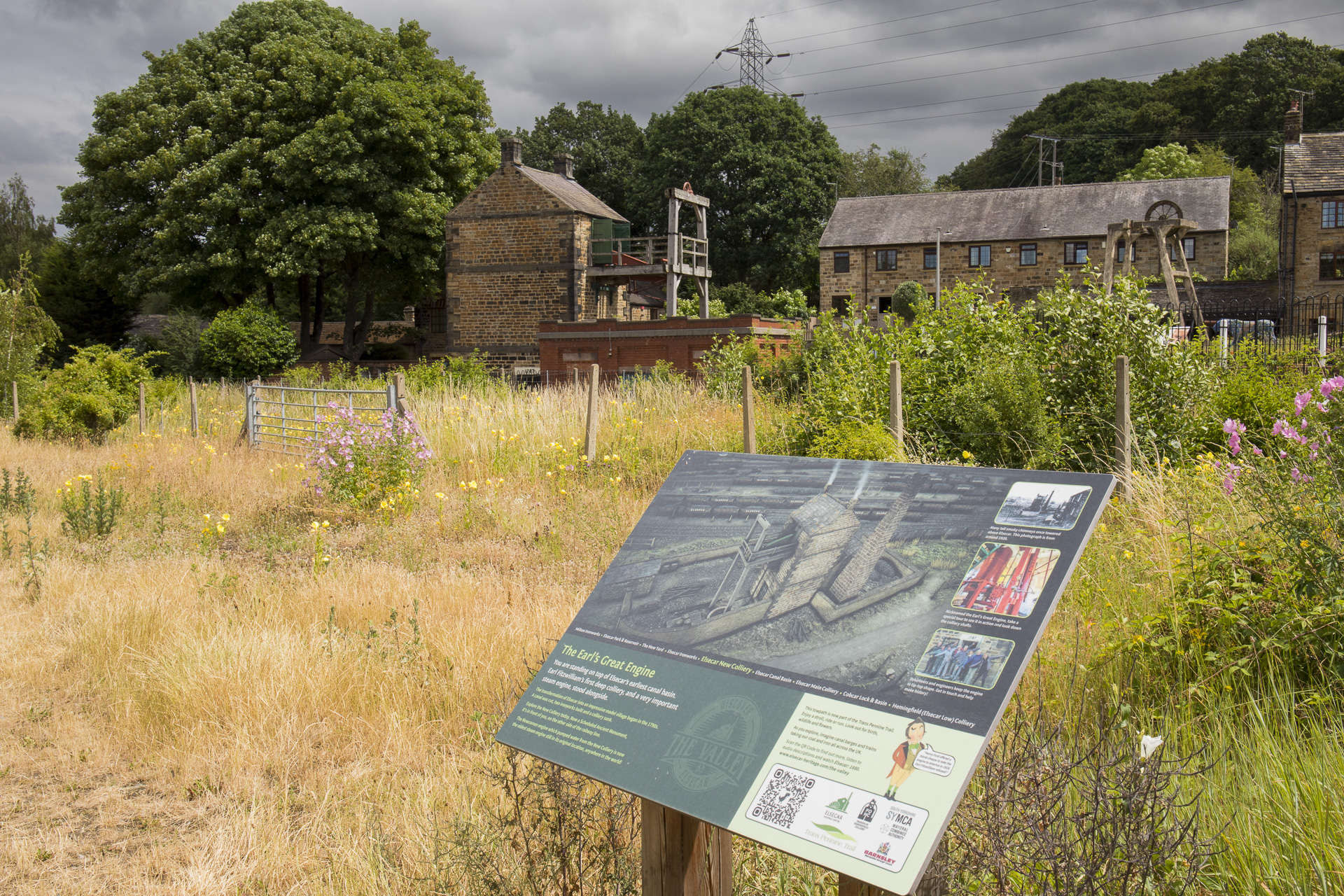
The beam engine at Elsecar near Barnsley in Yorkshire is reputedly the oldest surviving Newcomen engine and thus the World’s oldest steam engine that is still in the location it was built for. The Earl’s Great Engine as it has been known since it’s construction in 1795 was built to pump water from Earl Fitzwilliam’s coal mines, which it did until 1923.
Somehow I had never been to see the engine, as a child family holidays usually included a visit to a preserved railway or engine similar to this one but never to Elsecar, at least that I can remember.
The engine is quite hard to get to see, true on most days it is possible to look through the doorway at the cylinder and working gear, but to get an impression of the engine as a whole is a lot more difficult. Open days are held every now and then but health and safety being what it is actually spending time with the engine is very restricted. So when the opportunity arose I joined one of the small pre-booked groups that are taken into the engine house a few times each year. The large proportion of the engine that is original or nearly so means that the engine cannot be steamed anymore and is moved by a hydraulic ram for demonstrations.
I knew it would be quite dark and cramped inside the engine house and that I would have no opportunity to use a tripod, so I took in with me my Super-Ikonta 530/16 loaded with Delta 3200. For outside photos, or when the light was better I had a Super-Ikonta 534/16 loaded with Tri-X, and also my Canon 5D iv with a 24-70mm lens for digital images inside and out.
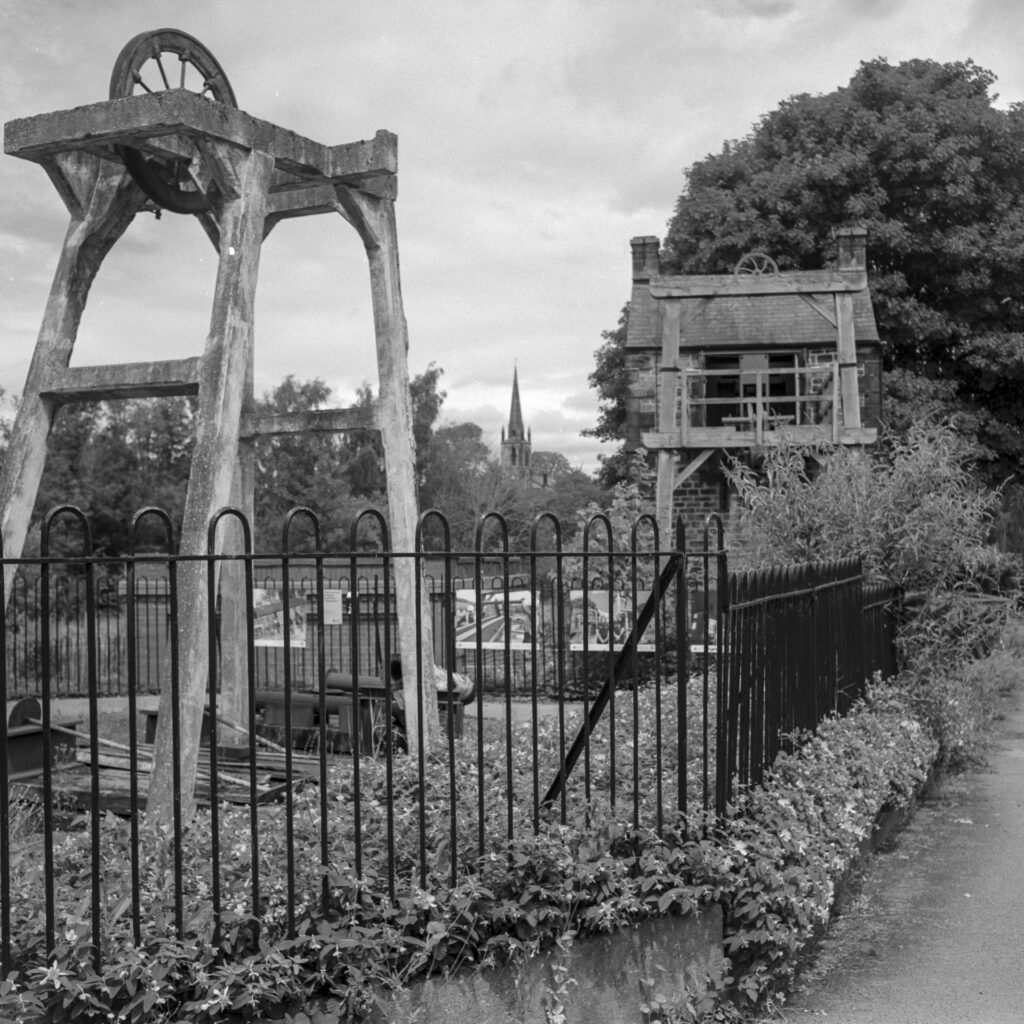
My great-grandfather Clarence visited the engine many times in the last years of it’s working life when the survival of the engine was in doubt, making many notes and drawings and lobbying for the engine to be preserved, he probably took photographs but none have survived. In the end the engine was saved and preserved as a Scheduled Monument, though not without some jeopardy in the late 1920’s when Henry Ford was rampaging through Britain taking historically and culturally important machines back to his museum being constructed in Dearborn. The then Earl Fitzwilliam was offered a blank cheque for the Elsecar engine but refused to sell, others succumbed and engines were ripped from their homes and dragged across the Atlantic, to be displayed in a way that I have yet to find anyone fully approving of. “Out of context and with none of the atmosphere” being one of the more complimentary descriptions I can find of the displays in the Henry Ford Museum. Taken together these engines should be regarded as Britain’s Elgin Marbles.
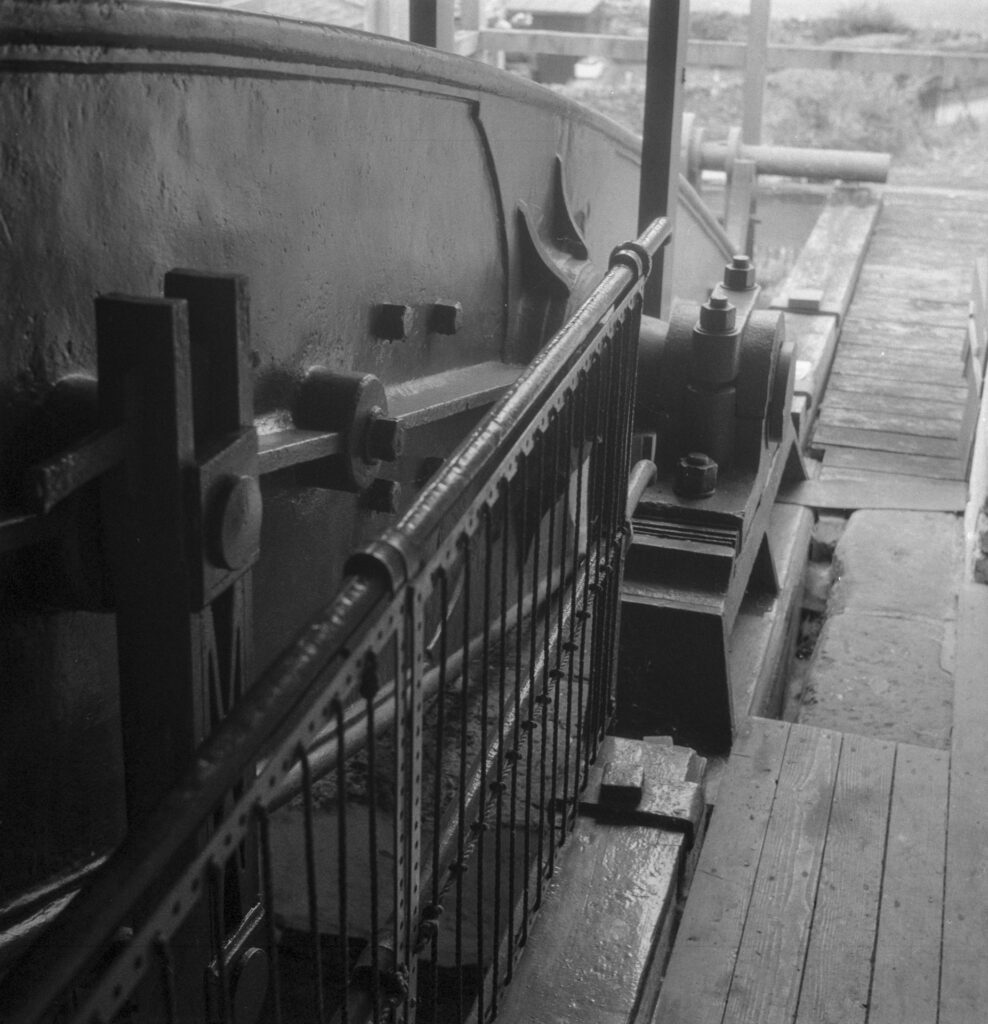
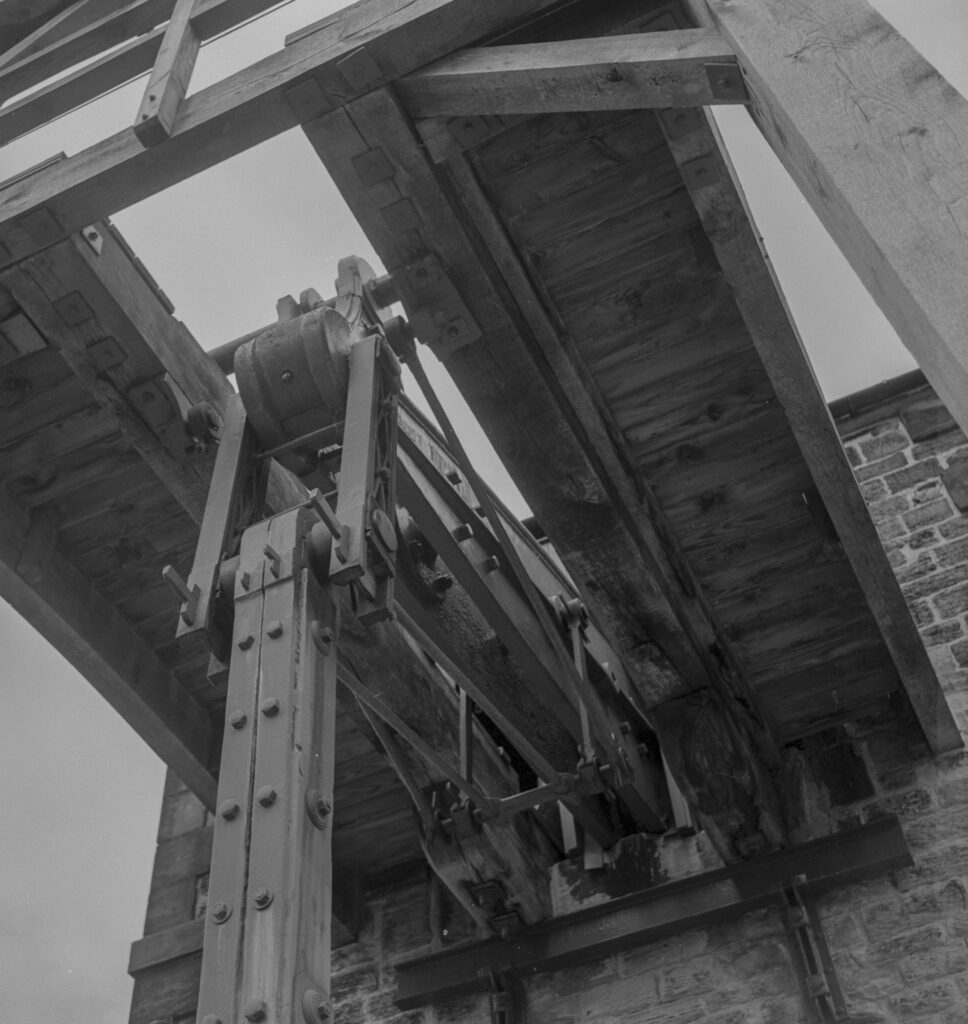
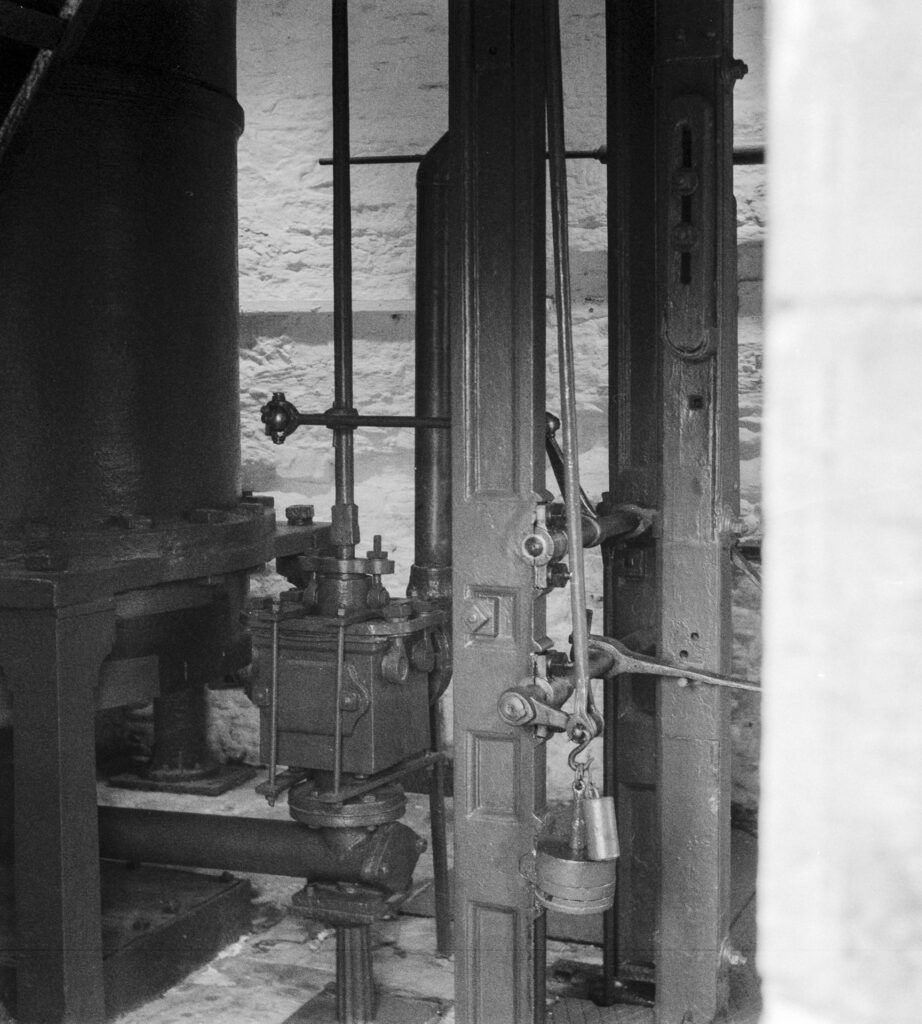
Amongst Clarence’s papers is this drawing of the working gear of the engine. I was finding it difficult to interpret the 2-dimensional representation and understand how it actually worked, I have seen other beam engines working but each one is different. Seeing the engine in situ went a long way to understanding how the engine operated, even if the hydraulic system that moves the engine was not working when I visited.
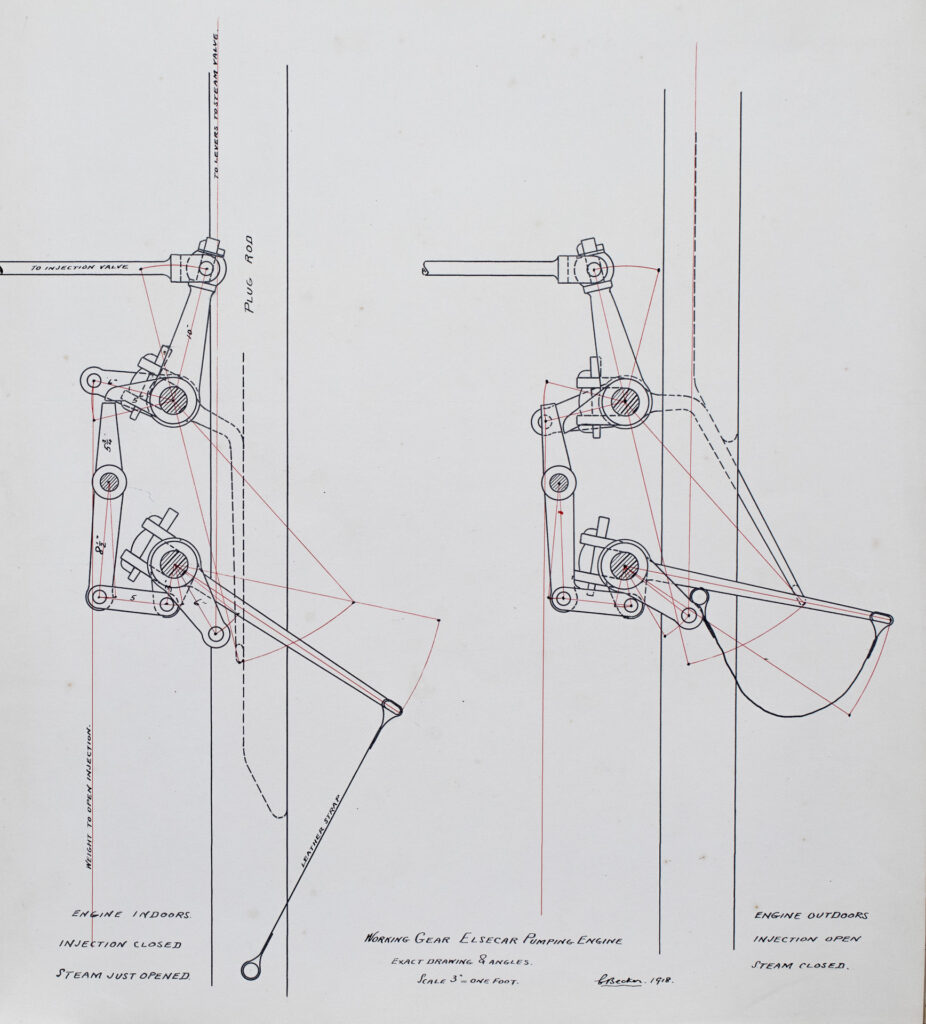 At rest the engine resides in the outside stroke, that is with the piston at the top of the cylinder and the pump rod lowered in the shaft. In the photo below the plug rod is the vertical wooden rod on the right which is connected to the beam and moves up and down with it. The steam valve is operated by the lower horizontal shaft, the injection valve by the upper, both these attached to what is known as the plug frame. In this position (the right-hand side of the drawing) when the engine was working the steam valve is held closed by the peg on the plug rod and the injector valve has just opened, cold water enters the cylinder causing the steam to condense creating a vacuum. Air pressure on the piston pushes it to the bottom of the cylinder, pulling down the beam for the inside stroke and lifting the pump rods and water up the shaft. Simultaneously the plug rod drops closing the injection valve and when it reaches the bottom of the inside stroke (left-hand side of the drawing) the steam valve opens and the vacuum is broken, the leather strap that was in position to help pull open the steam valve has not been preserved. The weight of the pump rod then pulls the beam down again and the cylinder fills with steam as the piston rises. It would do this for about 7 strokes per minute and could be left running for hours unattended.
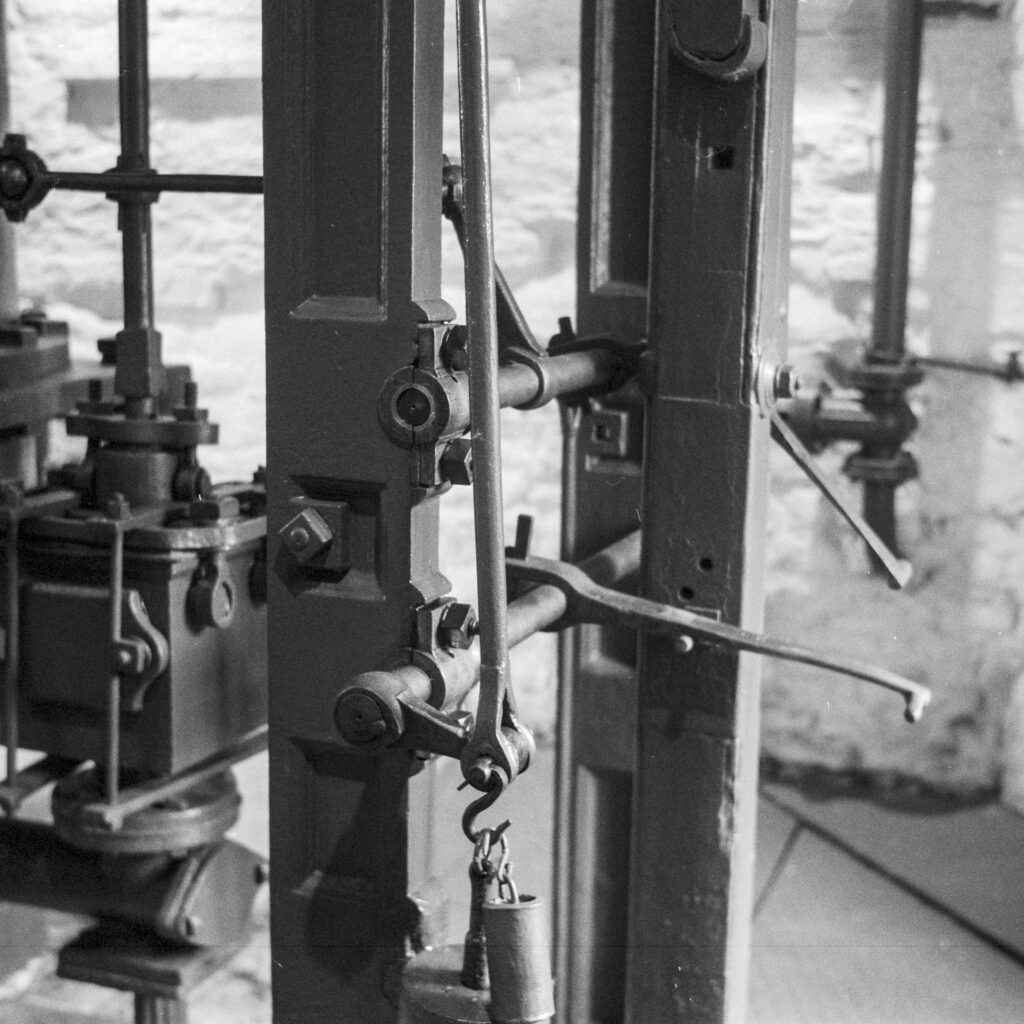
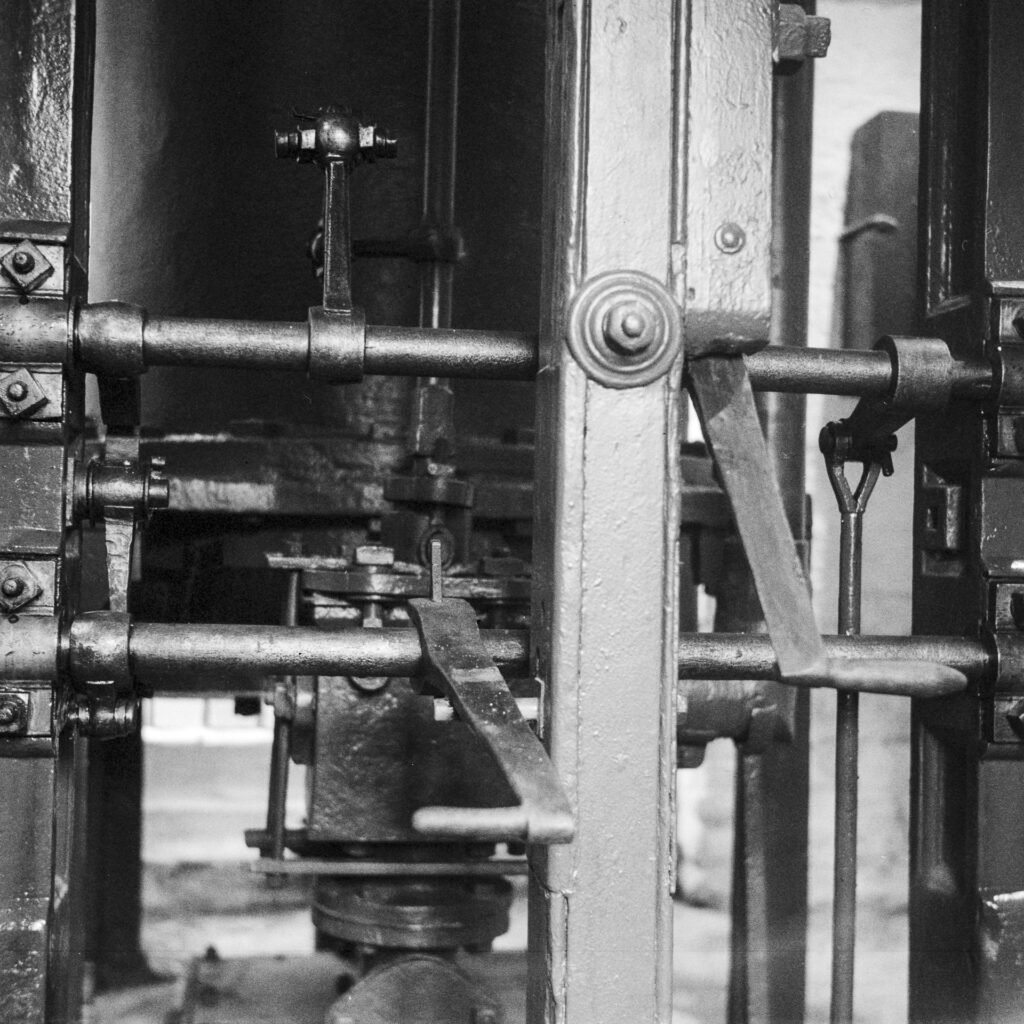
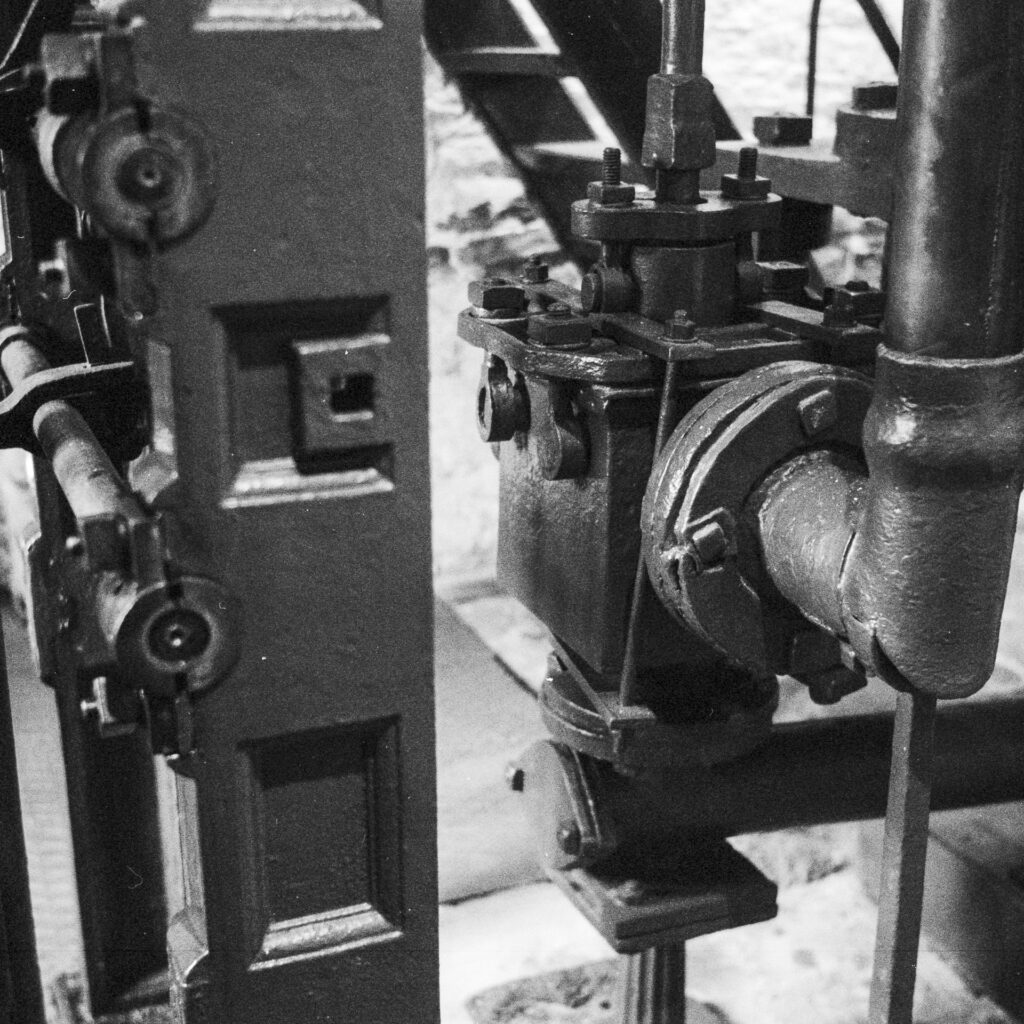
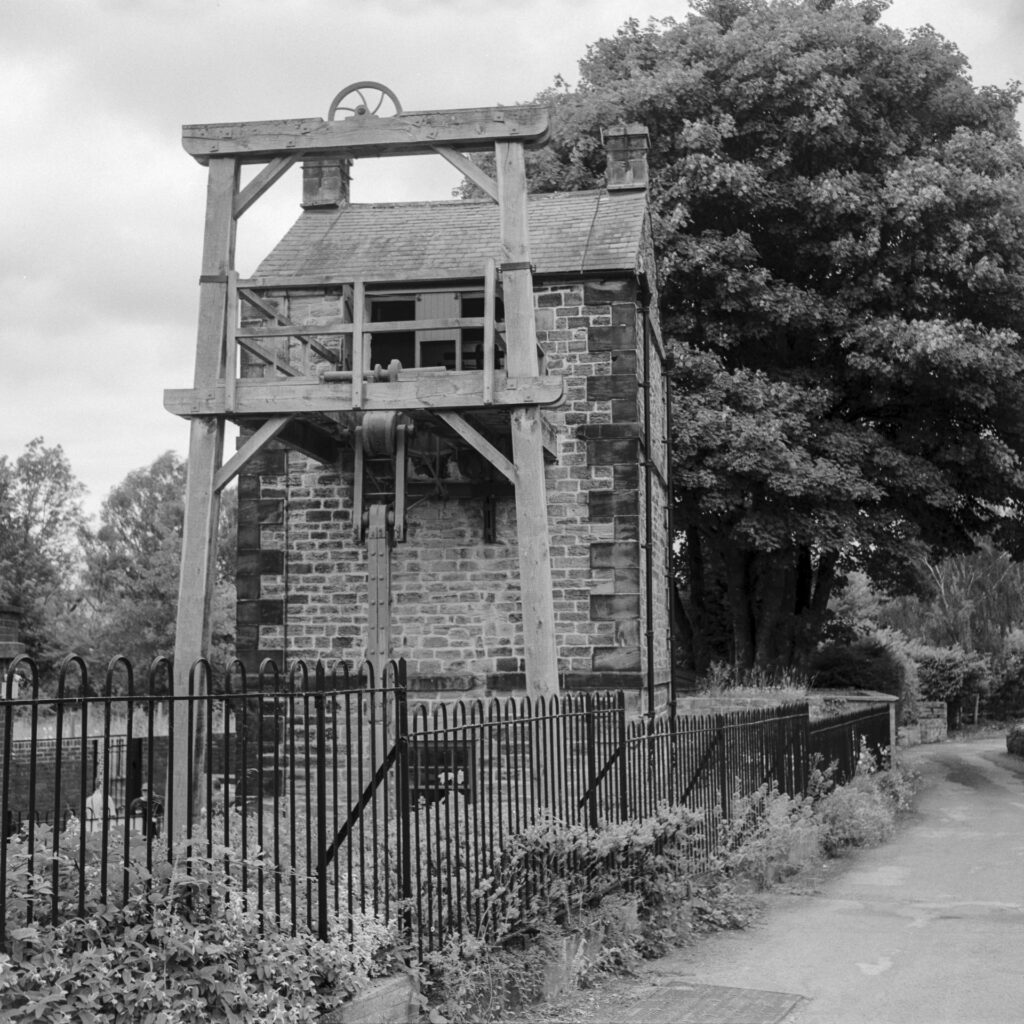
At some point I would like to return and take photos that properly do the engine justice, using a tripod and without the time pressure of an organised visit.
A longer version of this with some more photos and information is on my website.
Share this post:




Comments
No comments found