

You keep seeing the flags, and hearing people talk. Someone remarks that there are “so many flags everywhere these days”, with a faintly conspiratorial smile. Then on my social media feed I come across a post by a “self-made” property developer insinuating that councils may be restricting the display of St George’s flags for St George’s Day, one of the talking points of the Raise the Colours campaign.
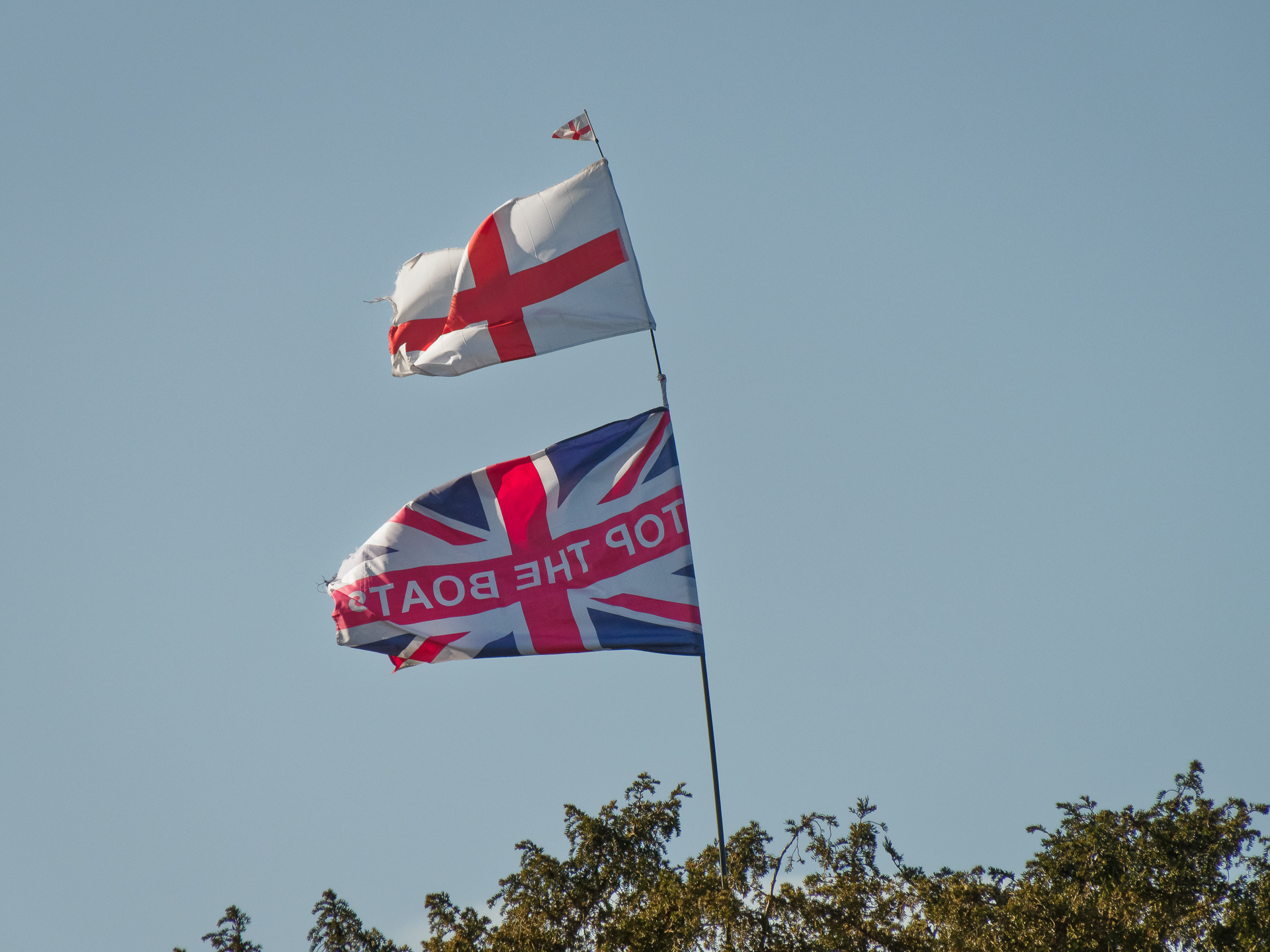
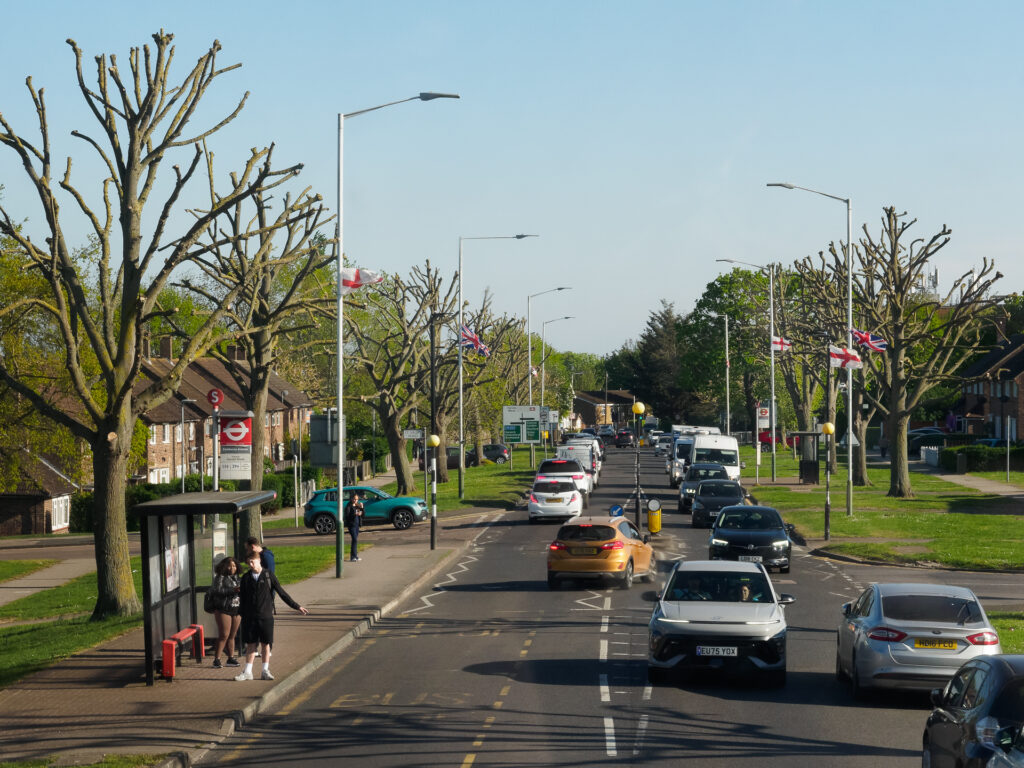
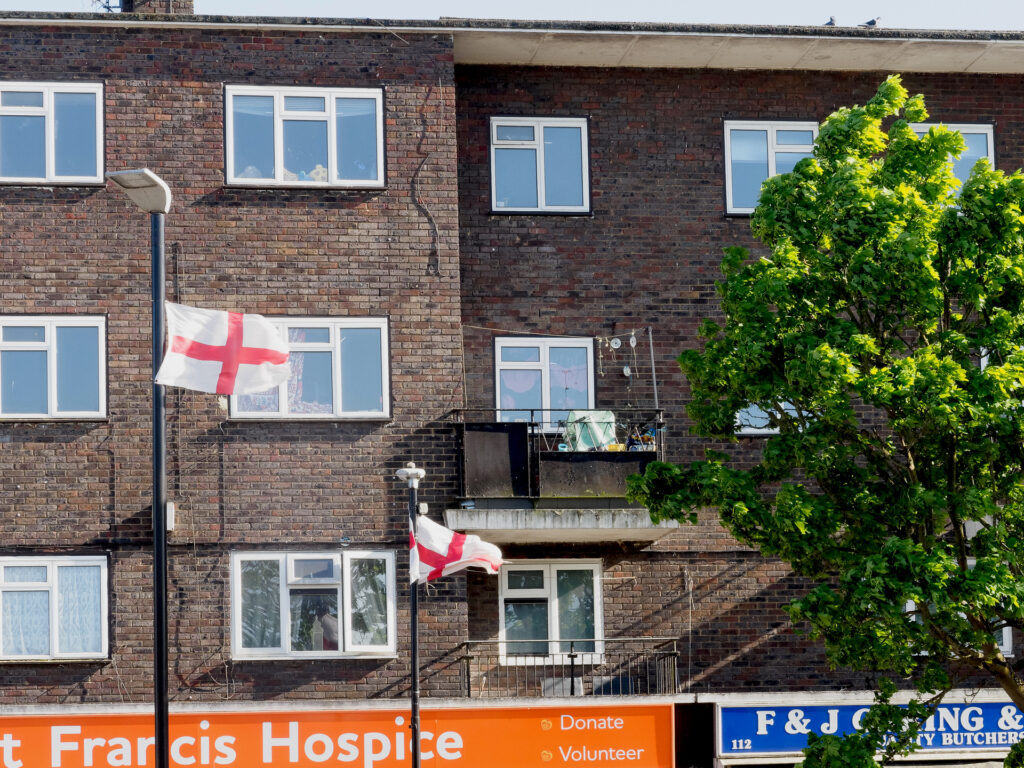
Around the same time, I found myself stopping in Harold Wood, on the eastern edge of London, a place I usually pass through on my way to a monthly meeting in Brentwood. I had noticed a “Stop the Boats” flag flying above the trees, visible from the circular road. Walking through the area, I saw an abundance of Union Jacks and St George’s flags hanging from lampposts.
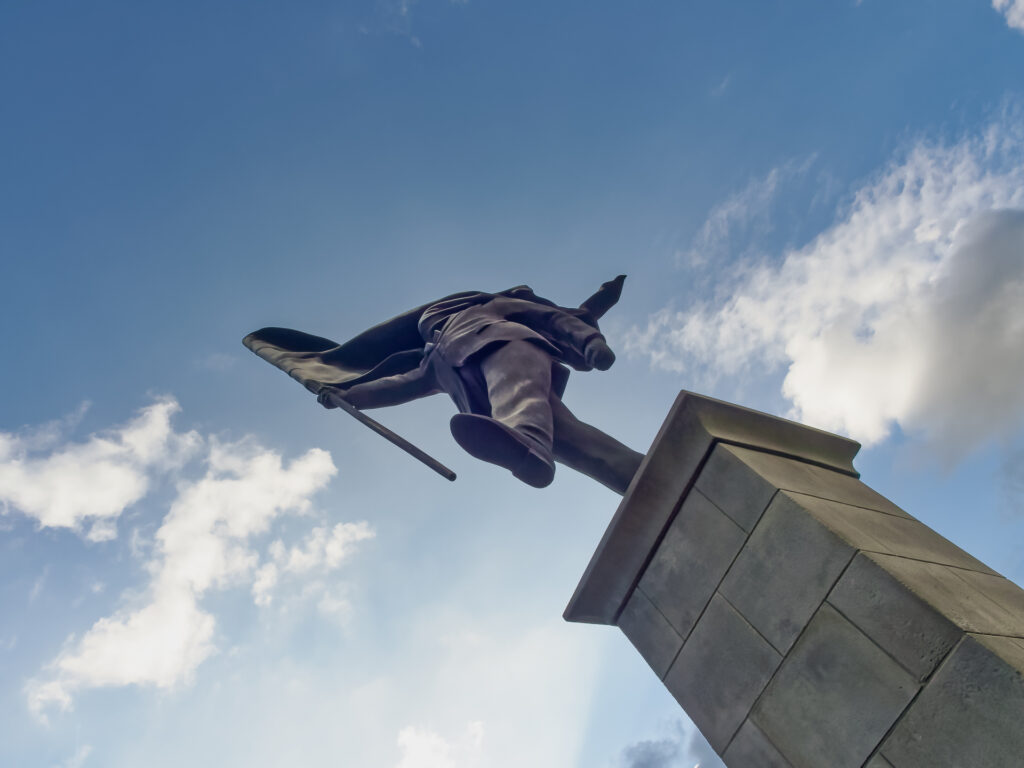
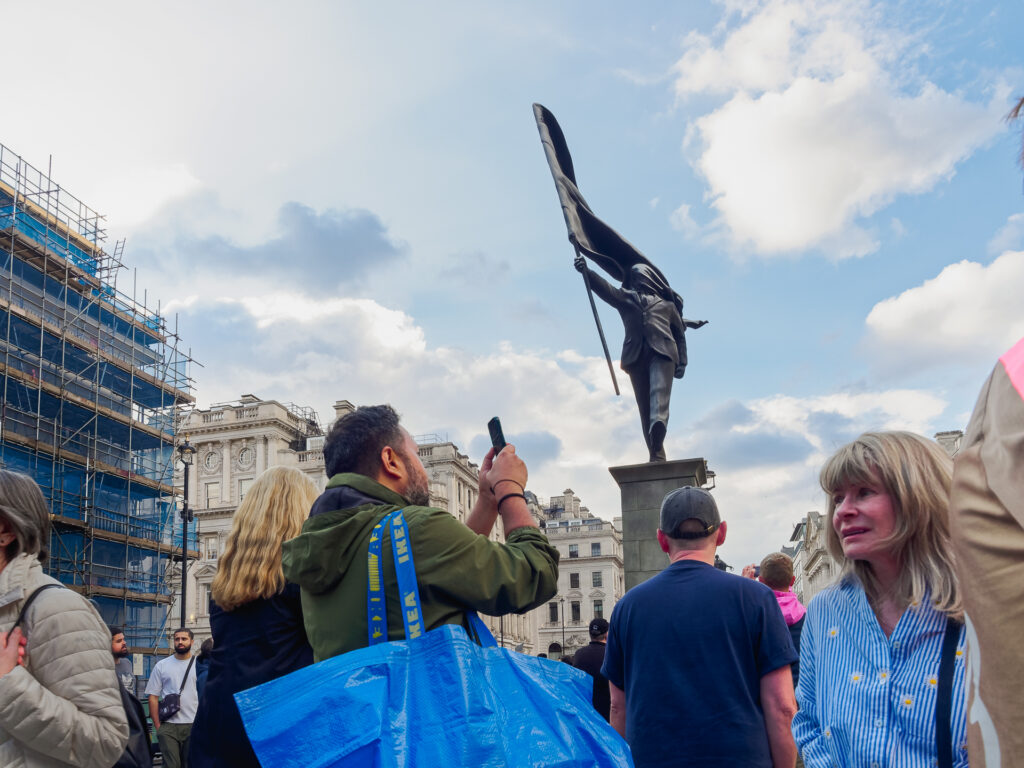
Shortly afterwards, one of those Banksy interventions was on the news: a sculpture on a plinth about a blinding flag had appeared in Waterloo Place, in central London.
Those encounters with flags gave me a sense of overlap. They appeared unrelated, yet they seemed to belong to the same visual field.
Concentration, viewing, single point.
From what I saw, what mattered at least as much as the Banksy sculpture itself was the surrounding situation: people photographing it with their phones, pausing, repositioning themselves, the neoclassical buildings behind them, and the steady movement of images being taken. I noticed how many people were photographing the work or photographing themselves in front of it, compared with those who appeared to spend time looking at it.
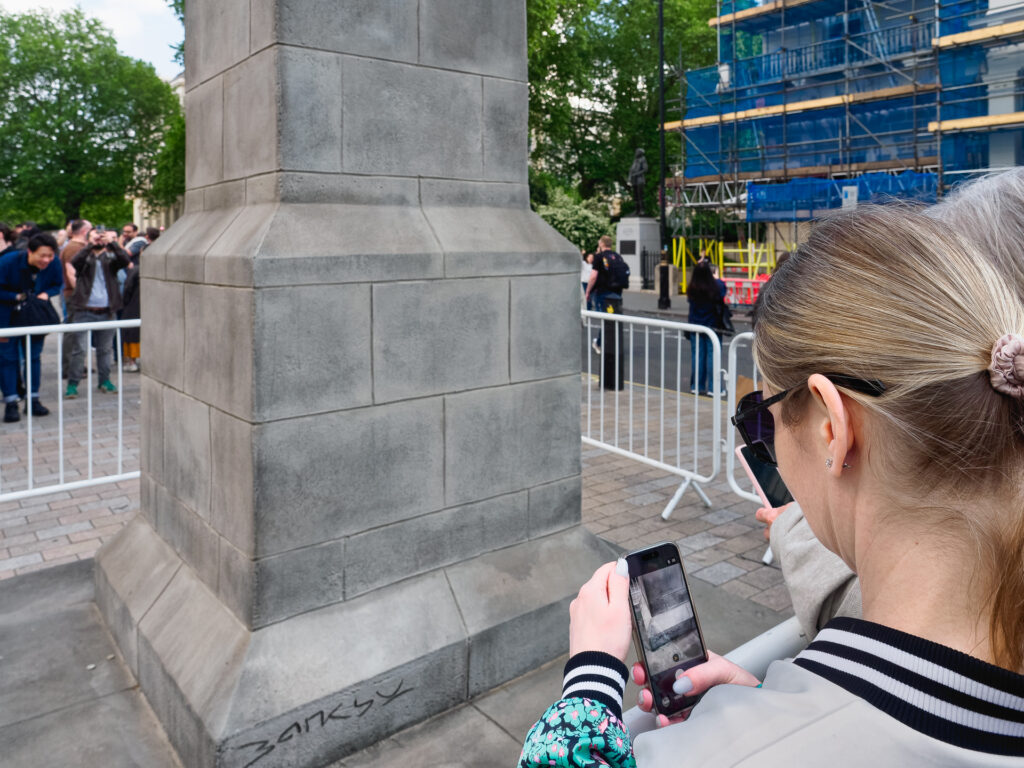
The same scene appeared across social media feeds through countless phone photographs, most of them nearly identical. Individually, the posts were unremarkable. Together, they began to accumulate a kind of weight through repetition.
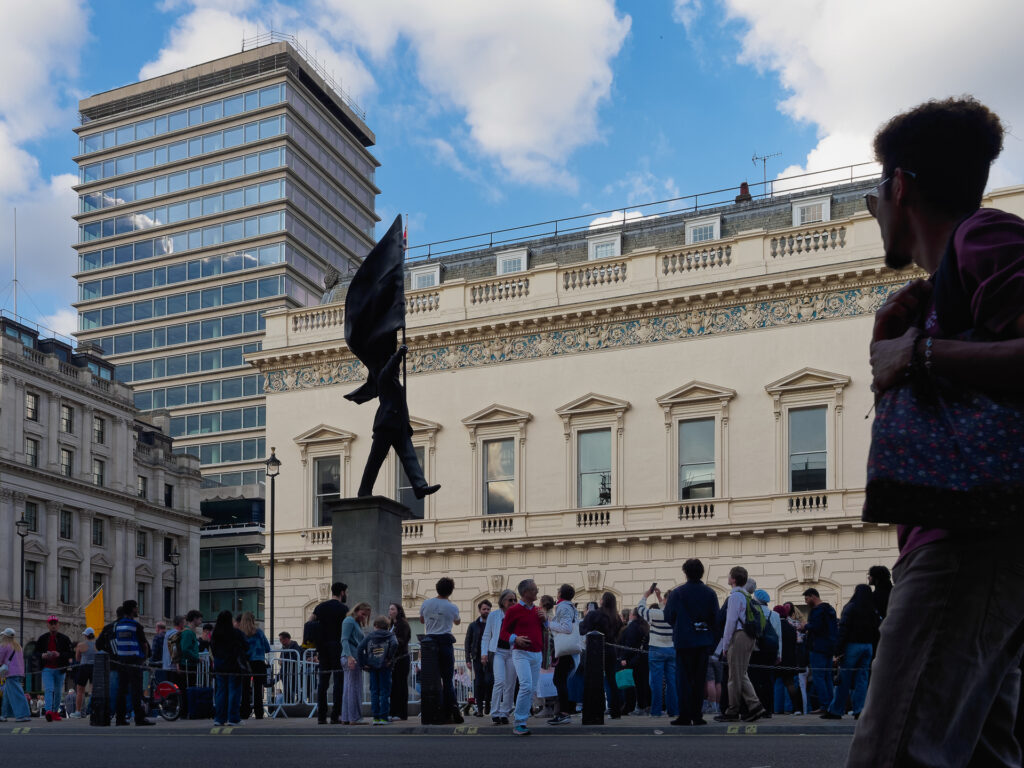
The work seemed to ask very little of the viewer beyond immediate recognition. Much of its effect came from how quickly images of it circulated.
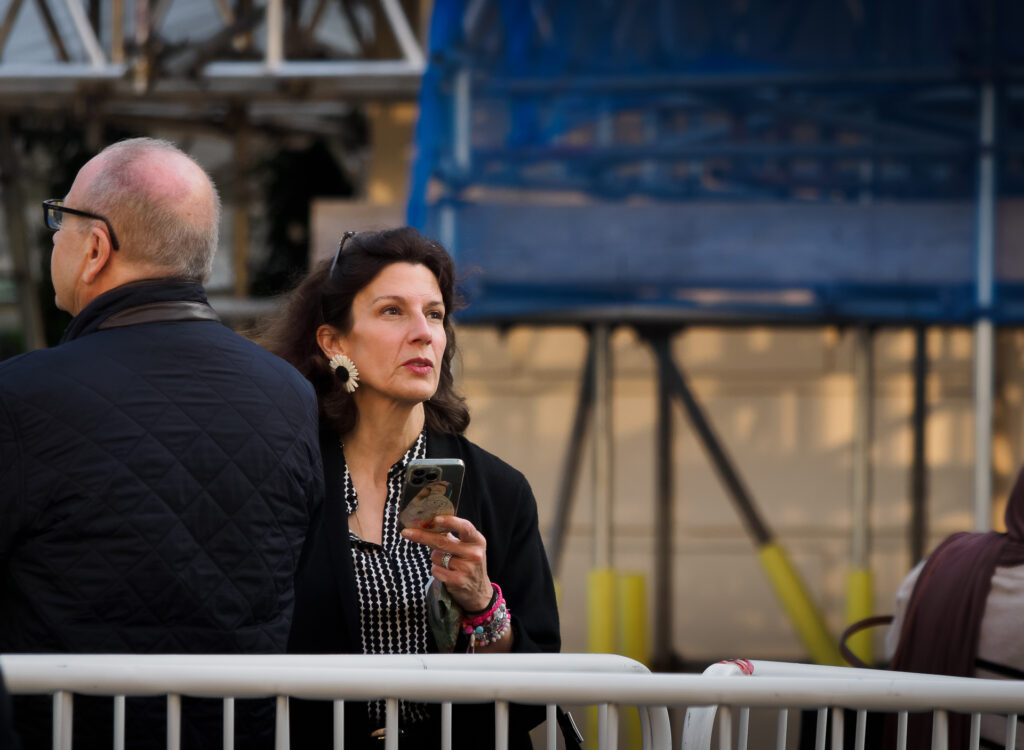
Its presence in that location in central London seemed inseparable from its visibility.
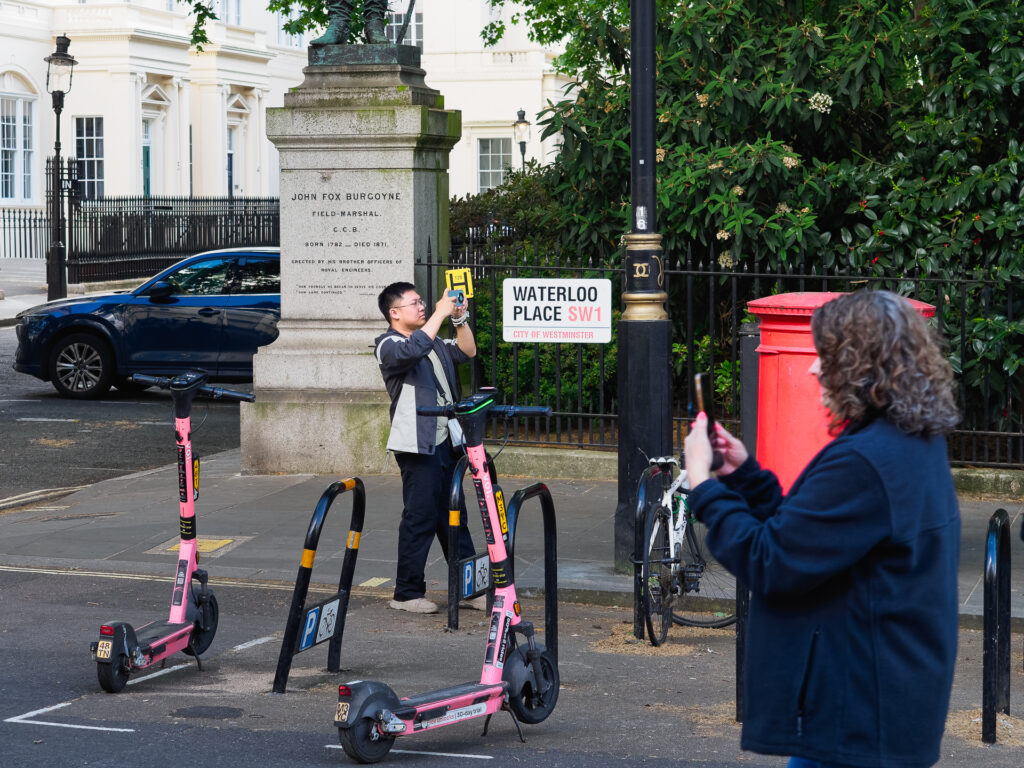
Waterloo Place is not just a random civic space. Banksy’s sculpture stands among a dense collection of monuments to military figures, explorers, royalty, and imperial administrators. Among the nearby statues are those dedicated to Florence Nightingale, Sidney Herbert, Robert Falcon Scott, John Franklin, and Edward VII, as well as the Crimean War Memorial, to name only a few. Whatever disruption Banksy proposed, it arrived in a space already devoted to public memory and national symbolism.
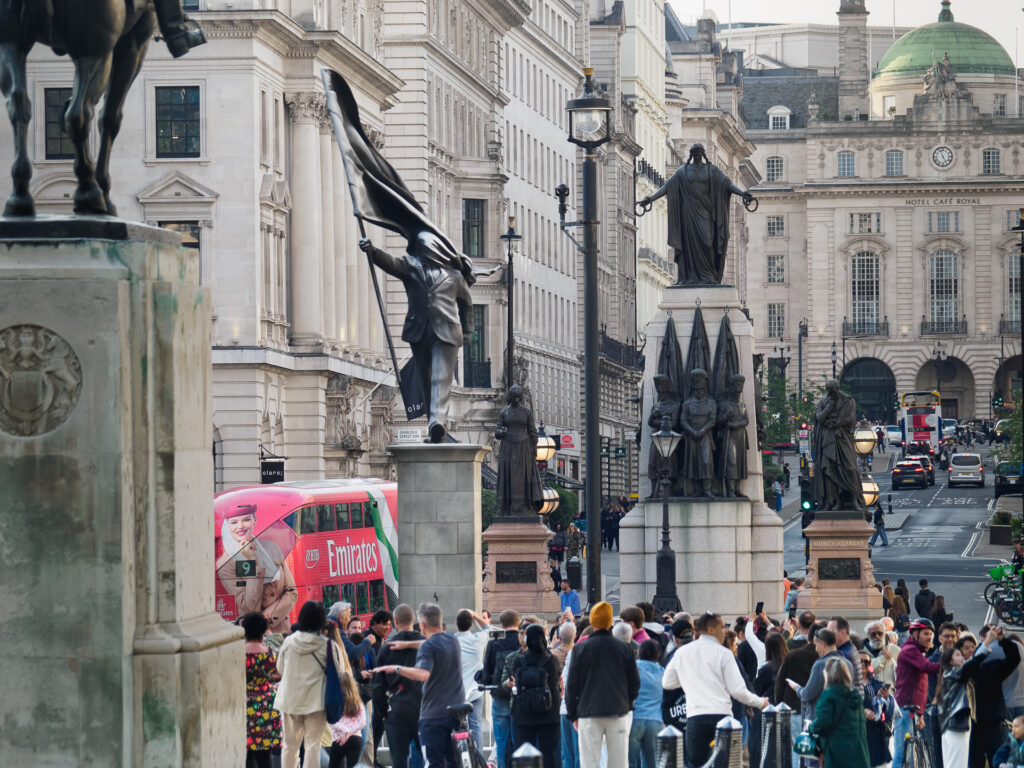
Standing there, it was difficult for me to try to separate the sculpture from the systems of attention gathering around it. At first sight, the Banksy sculpture might appear anti-establishment, briefly disruptive against the backdrop. Yet it was almost immediately folded into tourism, media coverage, and social media. The neoclassical buildings surrounding the sculpture, together with its location near the administrative centre of the city, reinforced the impression that any disruption had already been accommodated. The work may still perform critique, but its visibility appeared at least as significant as its message.
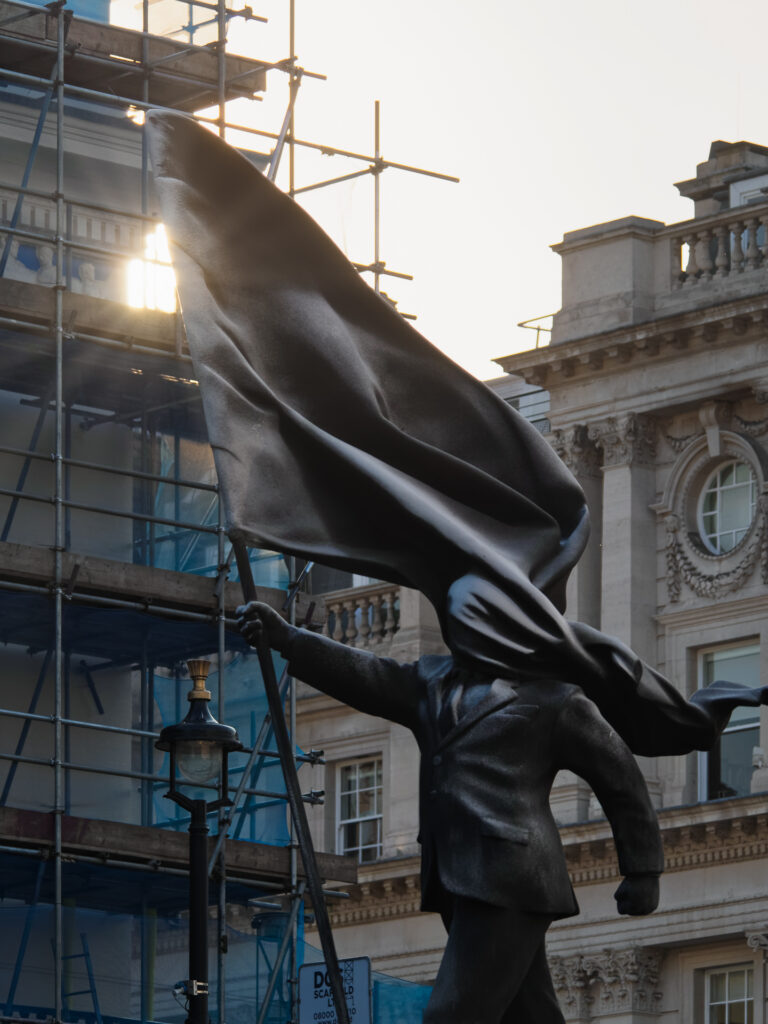
The work appeared highly effective as an image, and less settled as a proposition.
Repeated elements in everyday space.
The suburban “Stop the Boats” flag, Union Jacks and St George’s Crosses operated differently from the spectacle in central London, though perhaps not as differently as it first appears. Housing pressure, stagnant wages, strained public services, insecure work, and the instability of life in an expensive city were compressed into a phrase that is easy to repeat and easy to circulate. The causes of these conditions are complex and long-term. The slogan offers something simpler, if inaccurate, through the language of scapegoating, a pattern that has appeared repeatedly throughout history. The slogan flag, and the other flags peppered the landscape, more like signage. There was no single object drawing attention, no focal point. Instead, repetition spread across an ordinary environment.
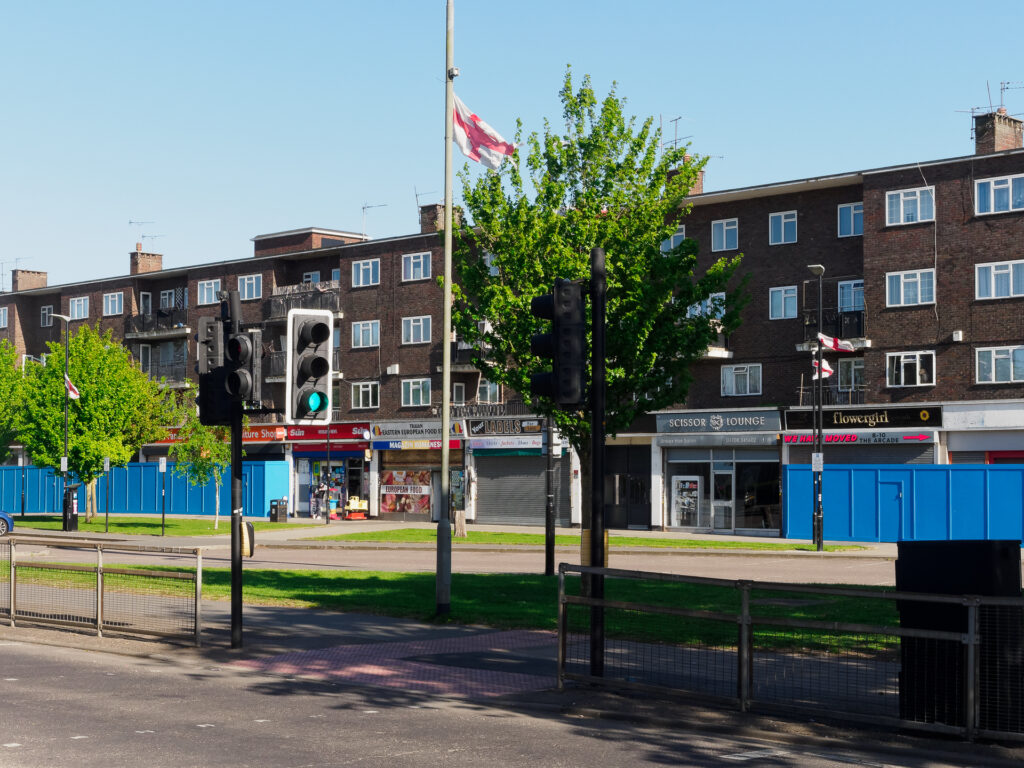
Walking through the area, what stood out was how ordinary such a message had become. The flags above shopfronts, on lampposts in front of the closed units, the independent businesses, the flats: together they formed an atmosphere. In this context, the sudden prominence of national symbols felt difficult to separate from questions of immigration and who is considered to be part of the national community.
What might once have felt sharp, unkind, or alarming had become familiar through repetition. What unsettled me most was the apparent absence of alarm. What was noticeable, perhaps, was how quickly visual repetition established itself across the streets.
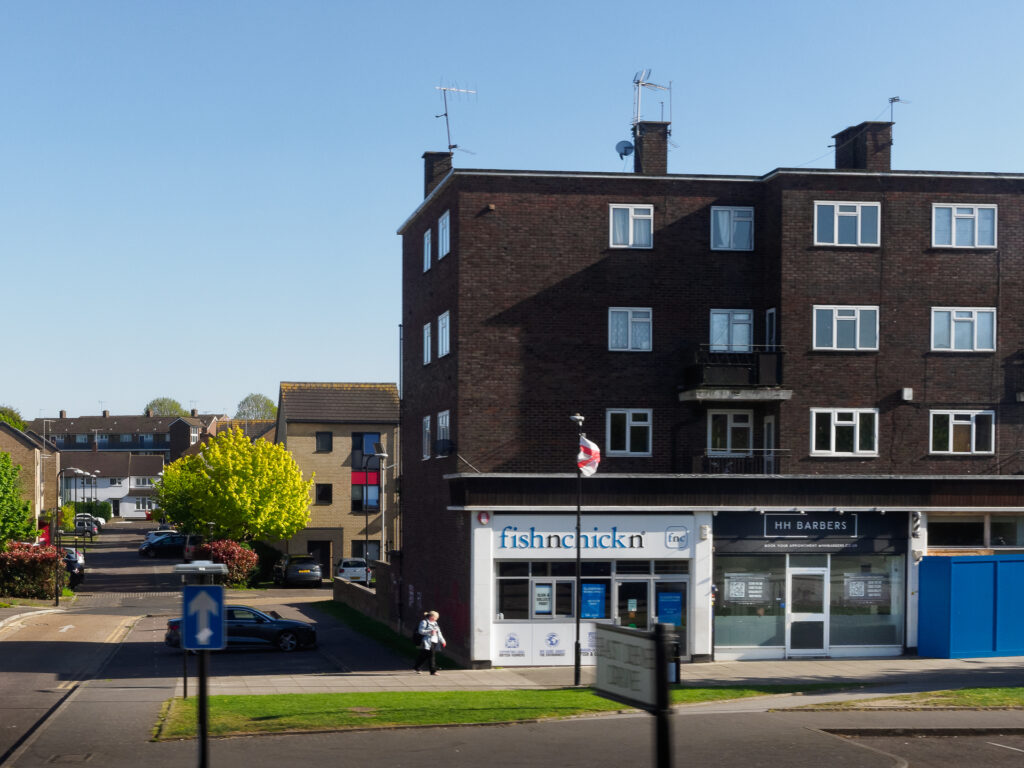
Otherwise, it all looked like what you can see in many other suburban places: chain shops, betting shops, a charity shop, a few independent businesses, flats above retail units, and buildings with that slightly provisional quality so common to British concrete architecture from the 1970s, even when they have stood in place for decades. Some spaces looked as though they were waiting for redevelopment, in an economy increasingly shaped by quick property flips.
Photographing atmosphere.
Photographing in Harold Wood, I found myself looking less for moments than for relationships between things: flags against worn brickwork, repeated flags, slanted sunlight revealing surface details.
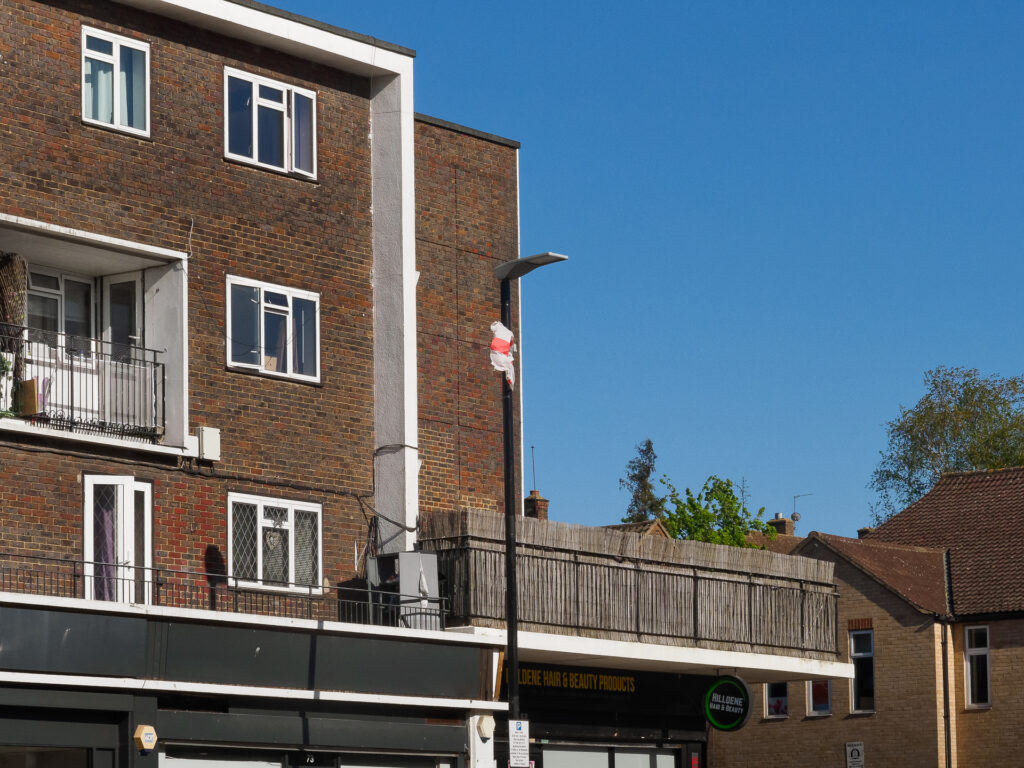
Photography cannot explain what is happening, but it can describe what is present in front of the lens. It cannot photograph people’s inner beliefs. What it can do is observe changes in the appearance of public space. When certain symbols become more common, when messages become familiar rather than exceptional, photography can register those shifts and ask how particular ideas become woven into everyday surroundings.
The moment of recognition.
A single sculpture could mean very little. A single flag could also mean very little. But twenty flags distributed through a landscape begin to suggest a pattern. Equally, a crowd photographing a sculpture may say much more than the sculpture itself.
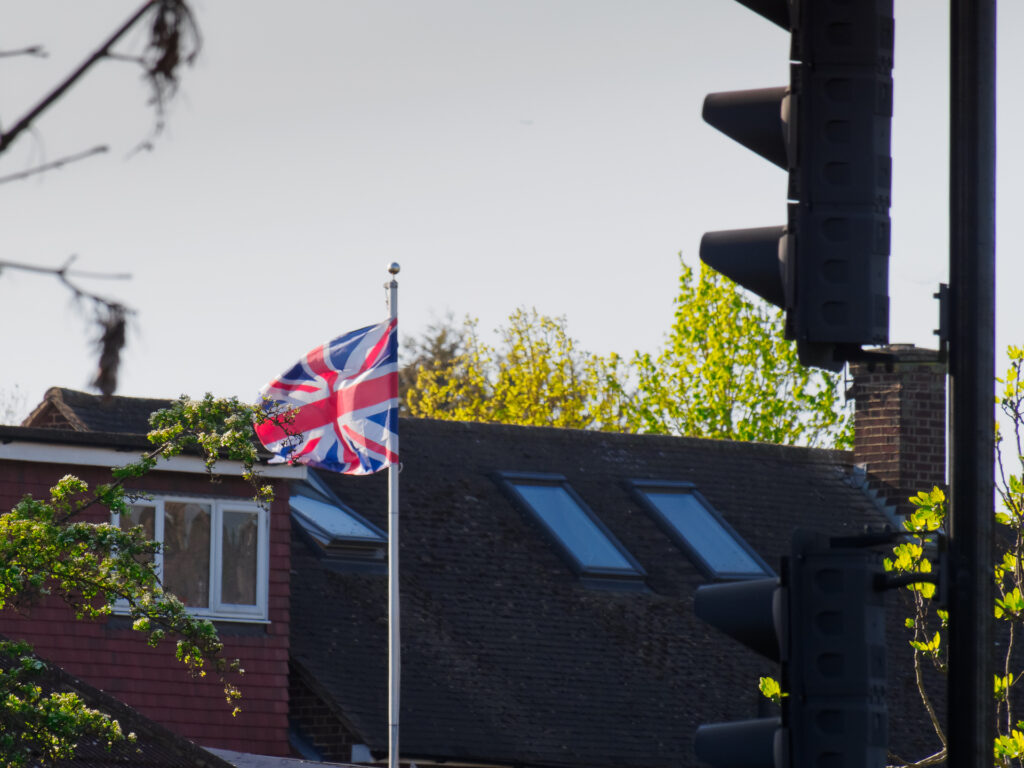
Although they appear to express very different political positions, the flags and the Banksy intervention share a visual characteristic. Both transform complex conditions into readily recognisable symbols. Both depend on immediate readability. Flags and the Banksy sculpture are not equivalent opposites. They may belong to the same image culture, but the consequences of one may be far more significant than the consequences of the other.
The Banksy intervention may reveal something about contemporary image culture, but the flags seemed to point towards a different set of questions. What concerns me is not simply the presence of symbols. It is the possibility that their increasing visibility registers a change in what people are prepared to tolerate, endorse, or overlook in public life.
Photography cannot settle these questions. It can only record the visible traces they leave behind. Sometimes that is enough to notice that something is changing.
Featured image: Visible from the Circular Road, Harold Wood (Olympus EM1 mkIII, Panasonic Lumix 100-300mm f/4-5.6 G-vario mkII)
Share this post:



Comments
Ibraar Hussain on Flags in Two Places
Comment posted: 27/06/2026
Very well written and analysed
Banksy is 100% pro establishment - his or rather the murals and stencils and whatever attributed to ‘him’ are used as a psy op. Much like crop circles his ‘art’ appears suddenly and is then everywhere. Used to further the dialectic.
As for the union jacks and George crosses - I tend to avoid areas where they’re abundantly flown as, as you pointed out they’re the other side of the dialectic. Both there to cause friction and hostility.