


She told me there was a box of old cameras under her bed which started with the letter L. While walking around the northern Kentucky neighborhood of Latonia one afternoon, Sandy stopped me. A bit older in appearance, she must have figured I was the best young whippersnappers to ask. In the blink of an eye, I was standing in her living room anxiously awaiting for this sacred box with cameras she described.
Her father was the first North American mechanic for Bugatti, and they paid him well. Well enough, she said, that he would spend his paycheck on summers in Europe looking for his next barn-find project car with his children, traversing the continent with an assortment of Leicas.
I told sandy I would love to help her restore these beautiful cameras, and help her sell them to pay her mortgage, in exchange for the ability to interview her for a project. Though skeptical, she agreed. We sat on the floor and went through the box one at a time, gently removing each camera, lens, and accessory. At the bottom of the box lay one camera I never thought I’d have in my collection, let alone see in person – the Plaubel Makina 67.
A few months would pass as I CLA’d each Leica in my personal time; however, rebuilding and lubricating lenses, adjusting shutter timing, and cleaning each body was not a small undertaking. By early September I was done, and in return, she offered me the Makina 67. I was shocked. This camera that was so beautiful and unobtainable was suddenly mine?
In the two years since, I’ve stayed in contact with Sandy, and I’ve taken this camera on adventures up and down the U.S. It worked incredibly well for the month I owned it — buttery smooth and blazingly accurate — before I let a friend borrow it and subsequently drop it, leaving the meter nonfunctional. Now atop the hotshoe sits a KEKS KM02, a worthy replacement, albeit not synced to the camera controls. It does look rather at home on top though.
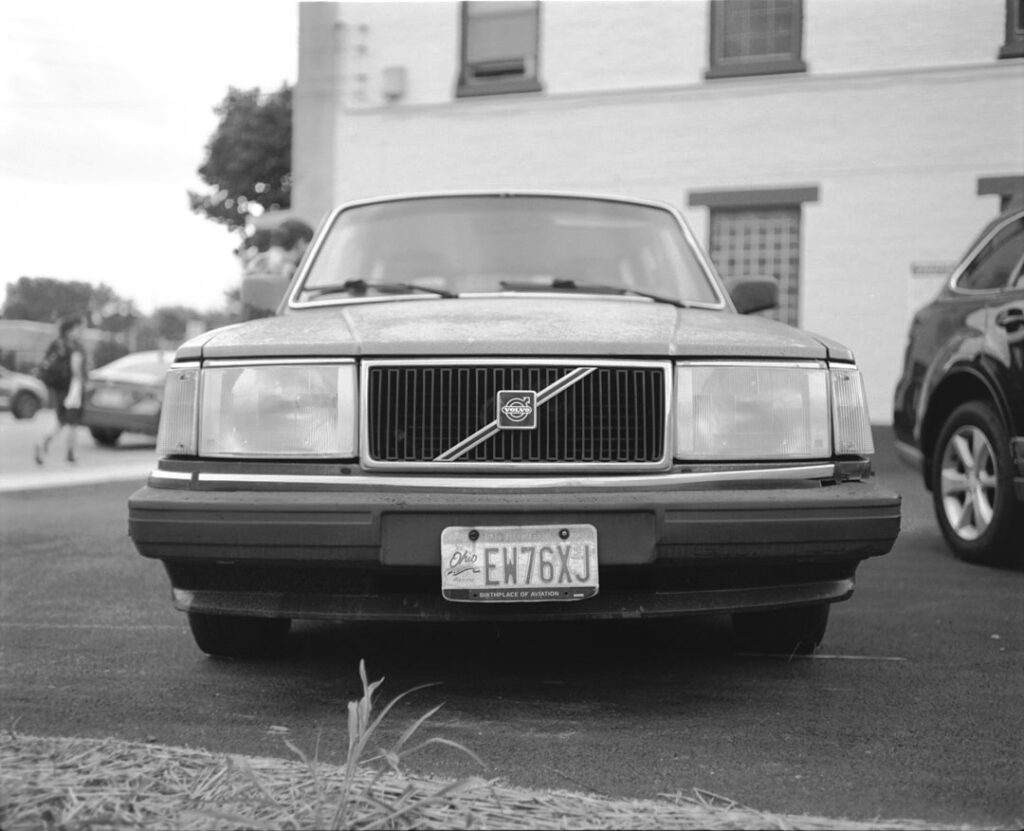
The Nikon lens really shines in this first shot. Pay attention to the crispy lines of this awesome Volvo 240 Sedan. They’re useful for pointing out the very slight lens distortion, bokeh, and, the closest focal plane. The Volvo 240 and Makina 67 don’t have a lot in common. I promise this Volvo will outlive this camera, as one of the most common failure points is its use of brass internal machinery.

Though not a great camera for portraiture, I begin to type. Maybe I’ll eat my words (I’ve been struggling with that lately). After going back through some of the portraiture I’ve done with this camera, this expired roll of Ilford 200 poked out at me, and even though it was one of my first and the meter read a little brighter than I would have liked, I still love the soft bokeh this lens produces at faster aperture stops. Additionally, Trent’s stoic mug and 45 degree backlighting adds a nice contrast.
I can’t get as close as I would have liked for this shot, but then again, that’s not the purpose of a rangefinder to begin with. It doesn’t mean the Makina 67 doesn’t excel at portraiture, it just doesn’t suit my wishes for medium format in full. The 80mm f/2.8 – developed by Nikon – excels at its job, but the last time I shot on 6×7 was with my Mamiya RB67- and I could get a lot closer to the subject filling the frame. However, that was a camera meant for the studio, this is a camera meant for travel. If only Pentax had developed a camera that was the middle ground of both of these.
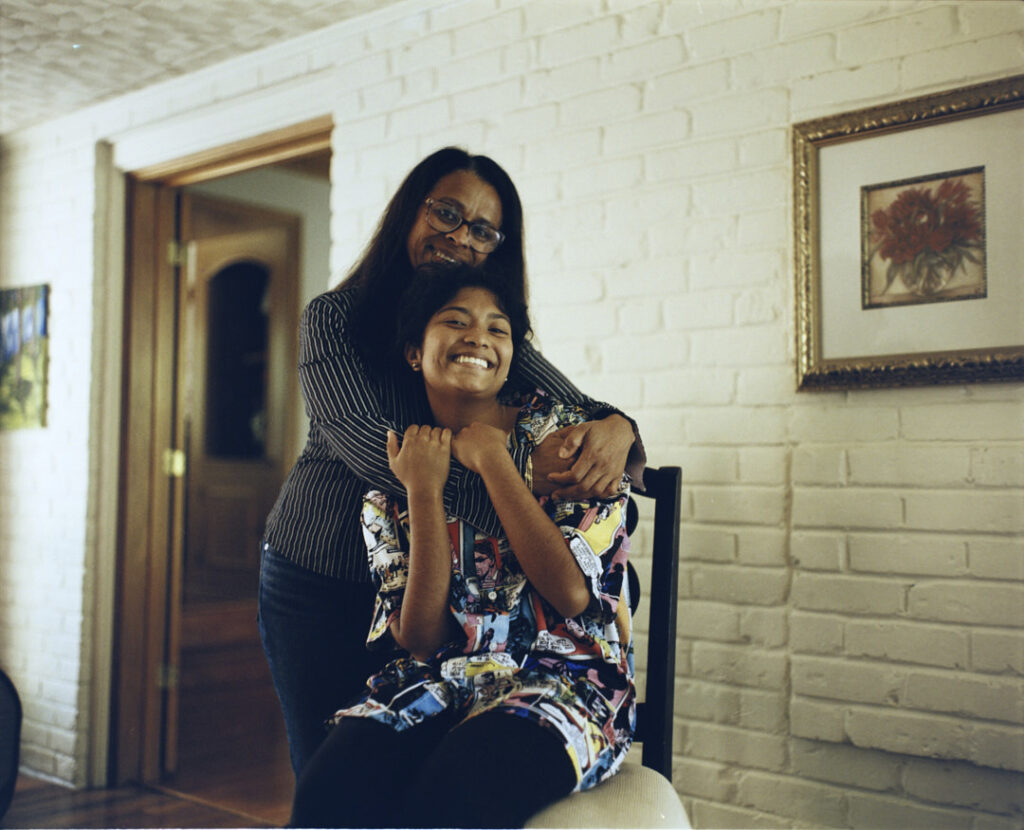
Dinithi Fernando sits on her couch, directing a documentary. Putting the aperture around f/4, there is subtle foreground and background softness. This photo would be even sharper had I correctly calibrated the rangefinder prism, which I did not realize was sorely out of focus until recently.
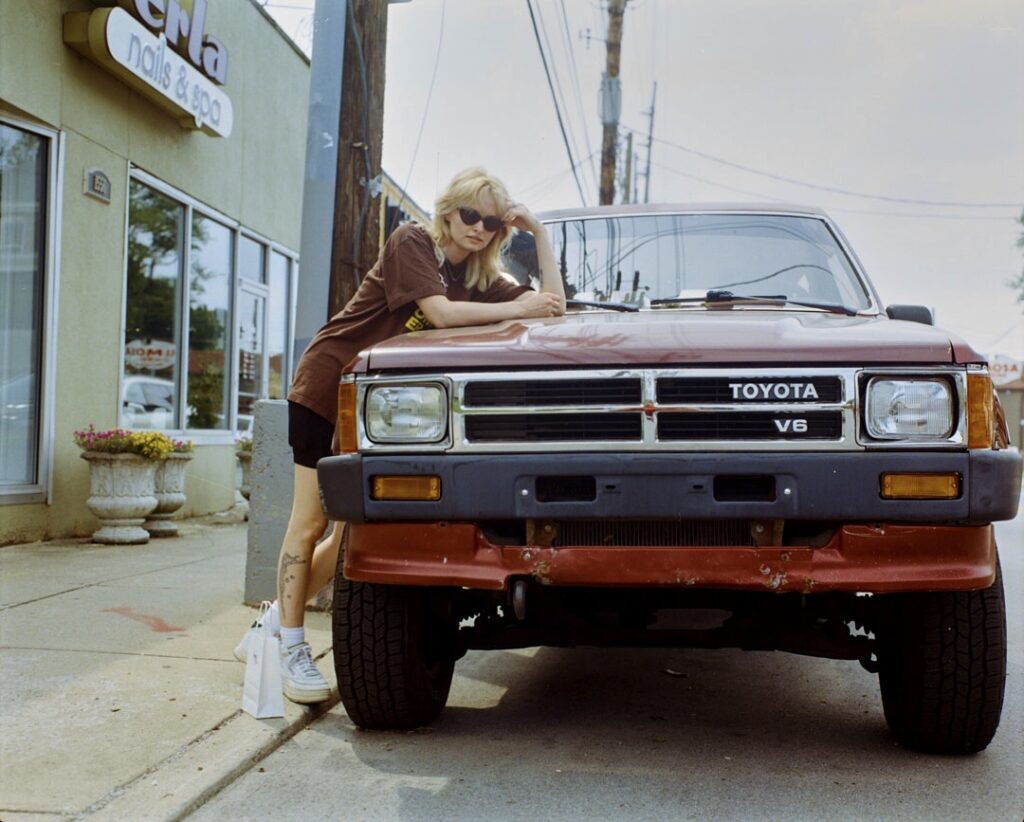
I like this shot. Ellis and I were goofing off in Louisville, Kentucky one afternoon off Bardstown Road when I asked them to lean on this Toyota Hilux. Exposing for shadows left the sky blown out, but as I could not pose the truck, settling for this lighting made sense. It was enough.
It’s a shot that reminds me why I favor 6×7 as a format as opposed to 6×4.5, 6x, or 6×6. Some aspect ratios speak to different people, and for me, the wide scope of 6×7 is reminiscent of a 70mm IMAX still. Actually, it’s exactly that, as a 70mm IMAX rig shoots 6×7 at 24fps. The thought brings me back to a reason not to let go of this: the Plaubel Makina is a 6×7 that folds down to fit in my purse. No other 6×7 camera offers that flexibility.
Downtown Cincinnati Connect
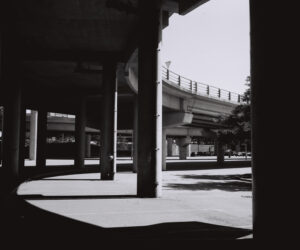
I like these scenes, they’re incredibly overdone, but overpasses and bridges are the perfect way to practice composition skills. The scale of a human in contrast to massive highway infrastructure means that moving yourself around the subject provides a way to assert control in both vertical and horizontal dimensions, following and choosing a form that flows continuously across a frame. It’s not a groundbreaking photo by any means, but it shows the strength of the camera’s sharp lens in a direct way. Expose for highlights during the day in these scenes and you’ll lose the shadows, but using the shape of a shadow and preserving the background of the scene typically shows more purpose. It’s a small detail I find people tend to look over without stopping to consider what might be overexposed in a scene that is more dynamic than it appears on the surface.
Somehow, I wound up with this dusty old Plaubel. A dream camera, a figment of my imagination, a goal to give myself someday. This is the sort of gift you give yourself when you’ve earned it. I know I did not earn this camera I think it chose me in a weird way, and for that reason alone, I’ll most likely never give it up. Sandy told me there was a box of Leicas under her bed. I am forever grateful.
Share this post:

Comments
No comments found