

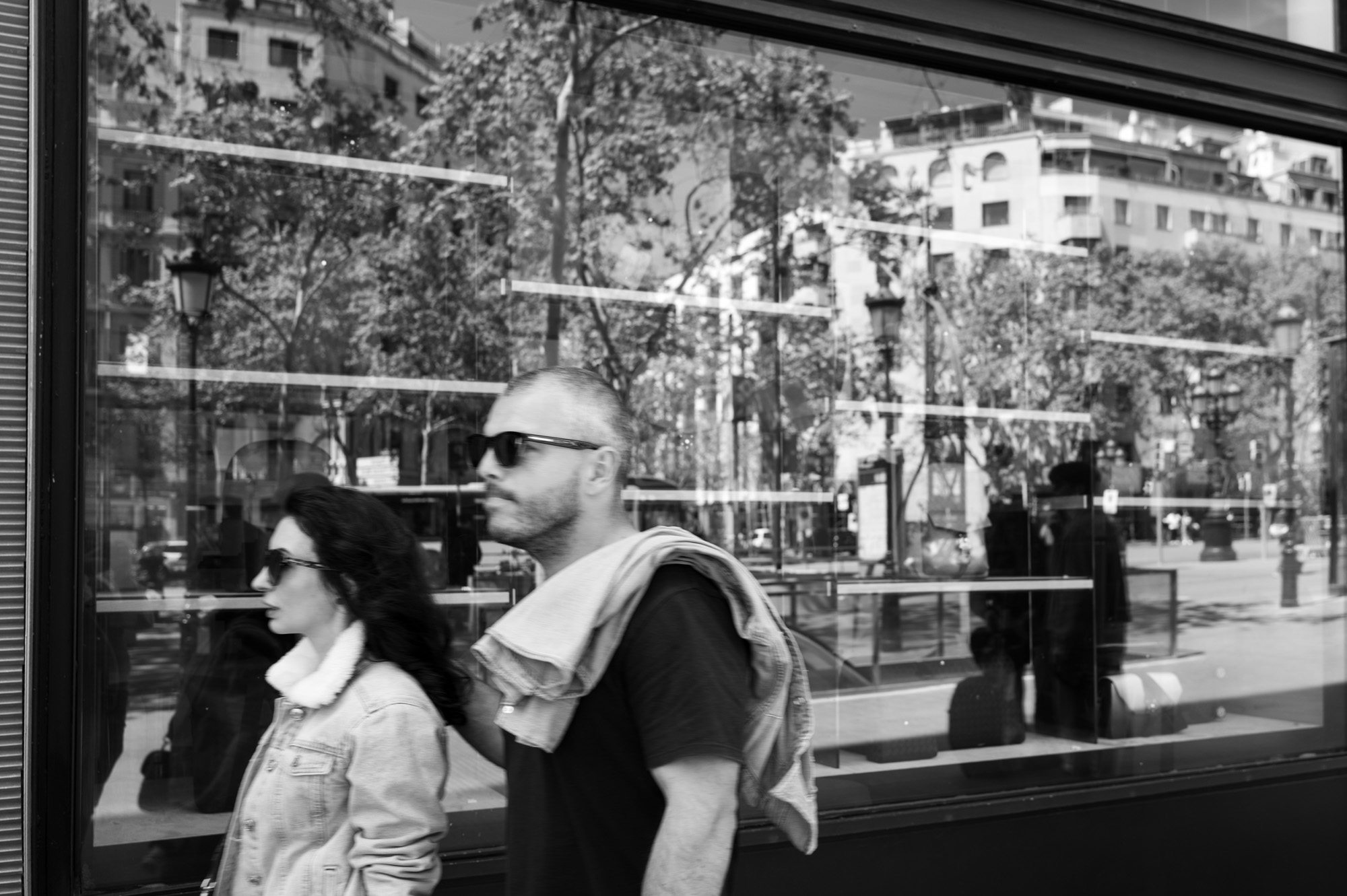
I’ve been photographing for twenty-five years, and for most of that time I’ve lived just outside Barcelona, in Castelldefels — close enough to be in the city in twenty minutes, far enough that I never take it for granted. This year I finally did something I’d been circling for a while: a black-and-white project built entirely around one idea — contrast — shot across the two Barcelonas that don’t usually end up in the same photo essay: the eight-century-old Gothic Quarter, and the glass-and-steel city being built around it right now.
I didn’t go into it expecting a piece about gear. I came out of it with one anyway, because the split ended up being less about taste and more about which camera actually earns its place in the bag for a given kind of light.
Why Two Cameras, Not One
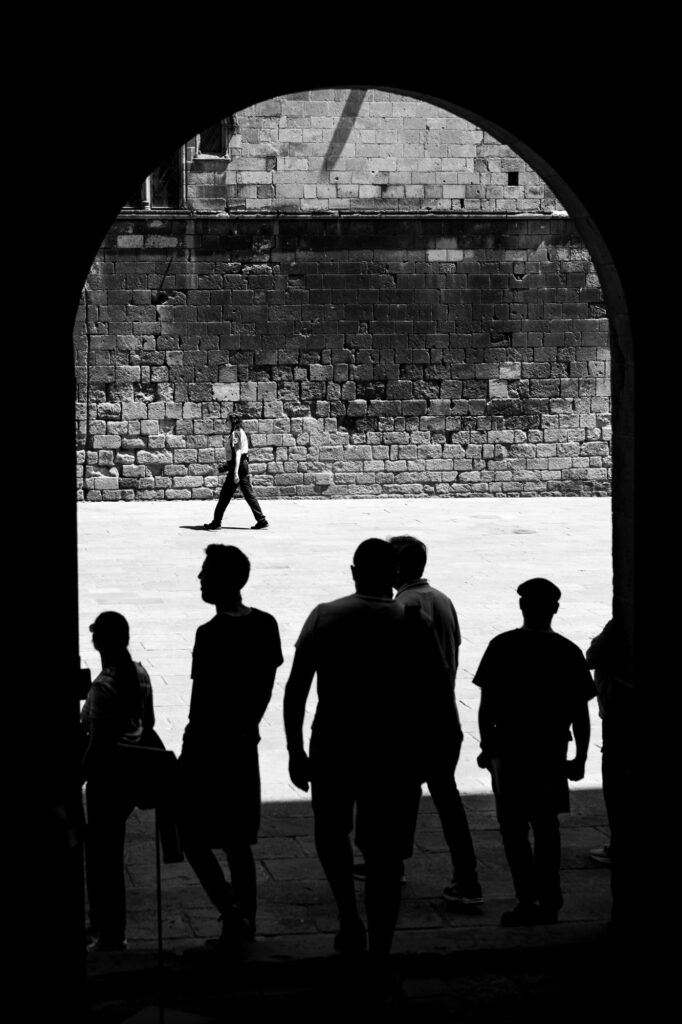
I shoot with a Sony a7R IV and a Leica Q3, and for most of my work I don’t think too hard about which one comes out of the bag. For this project, the split became almost a rule of its own — not a stylistic flourish, but a response to two completely different sets of shooting conditions that happened to sit five kilometres apart in the same city.
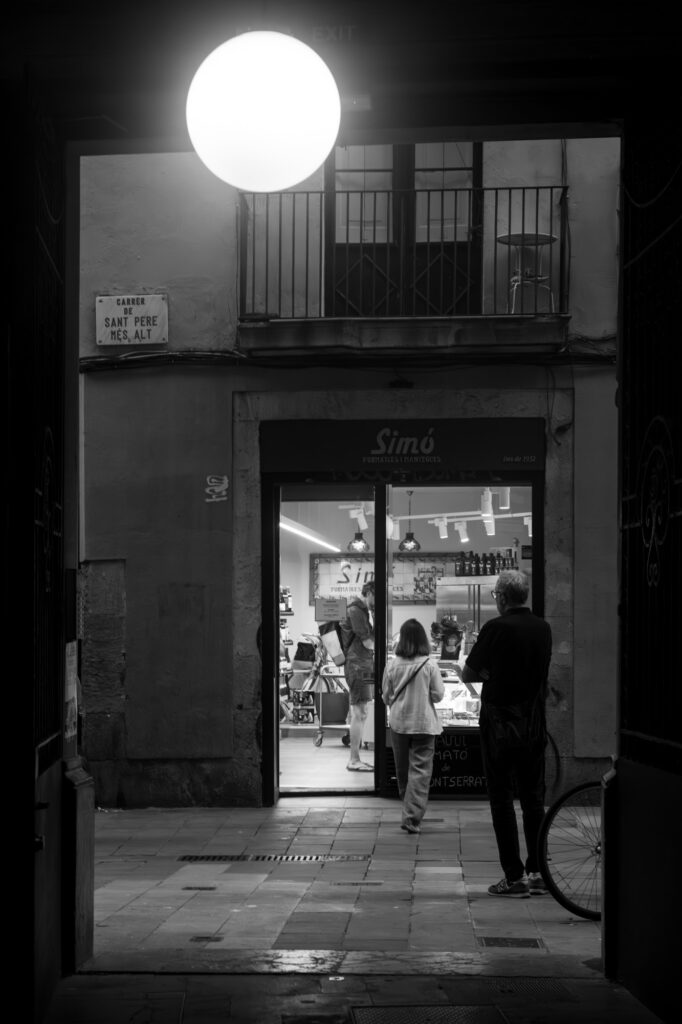
The Gothic Quarter is close, tight, and full of people — narrow lanes, sudden shadows, someone stepping into frame with about half a second of warning. That’s Q3 territory. It’s quiet, it’s fast to bring up, and — this matters more than people admit — it doesn’t look like a “serious camera” to a stranger on the street. Nobody tenses up. The fixed 28mm forces the compositional decision before you even lift the camera, which turns out to matter a lot when you have one chance and no time to zoom your way out of a bad frame.
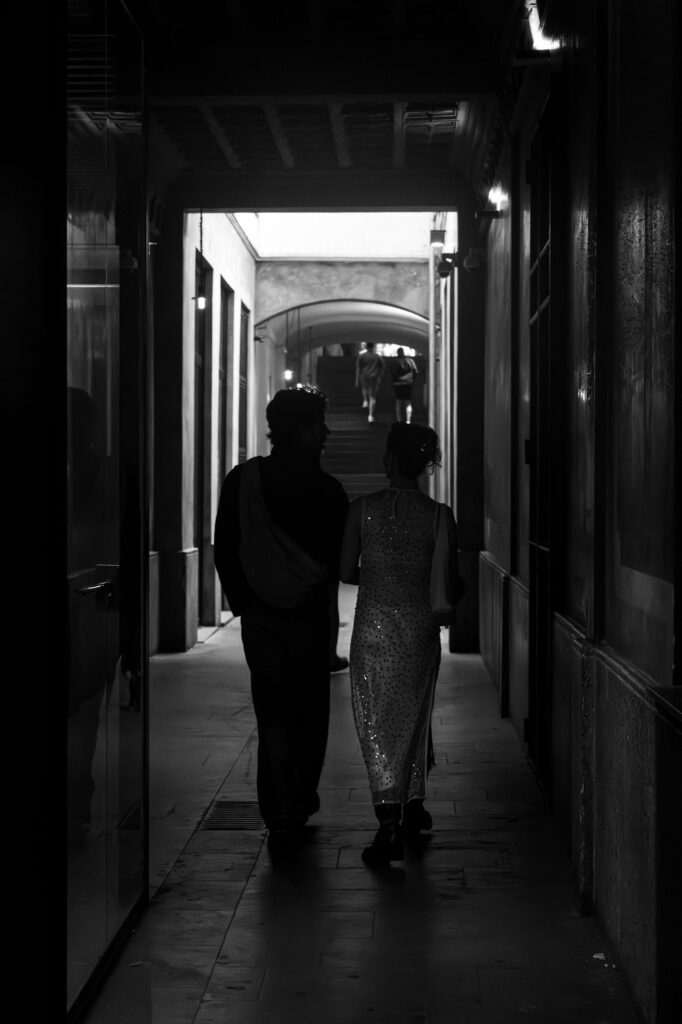
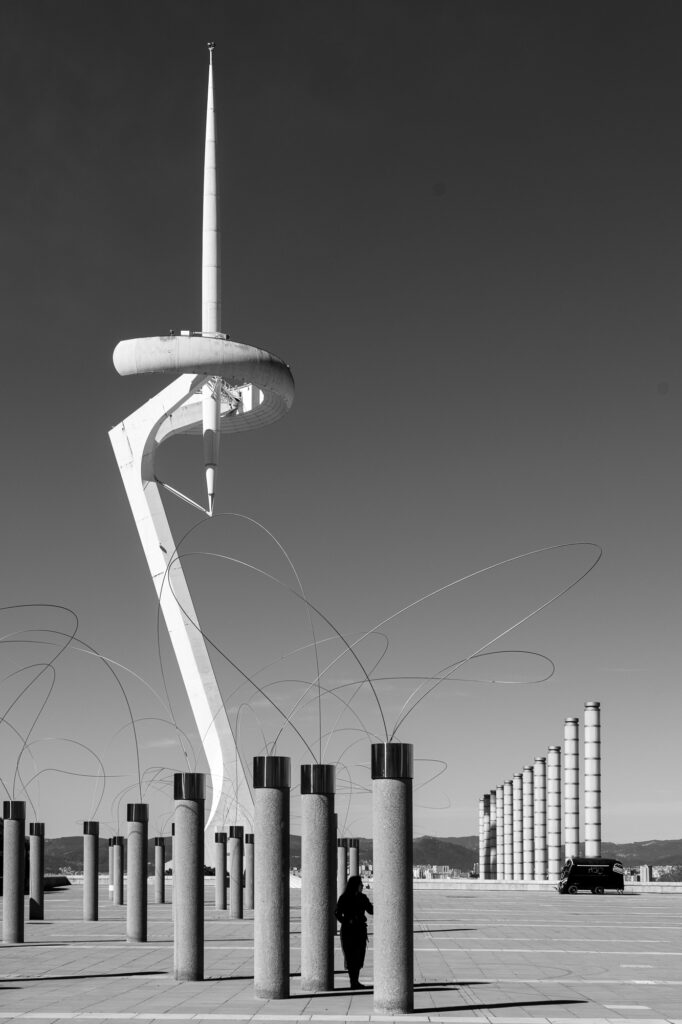
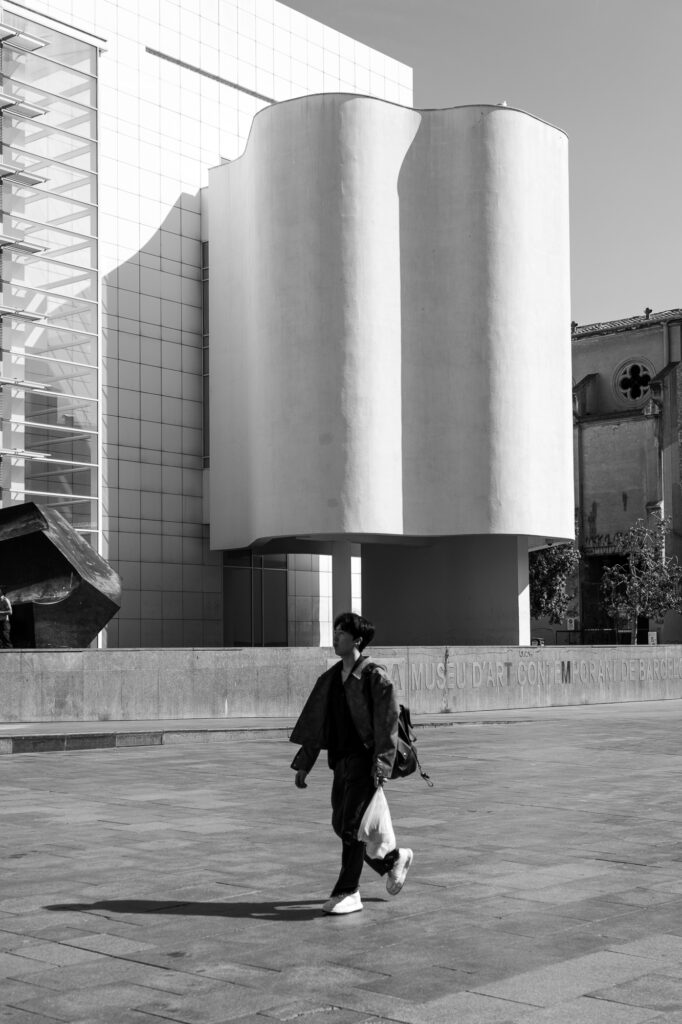
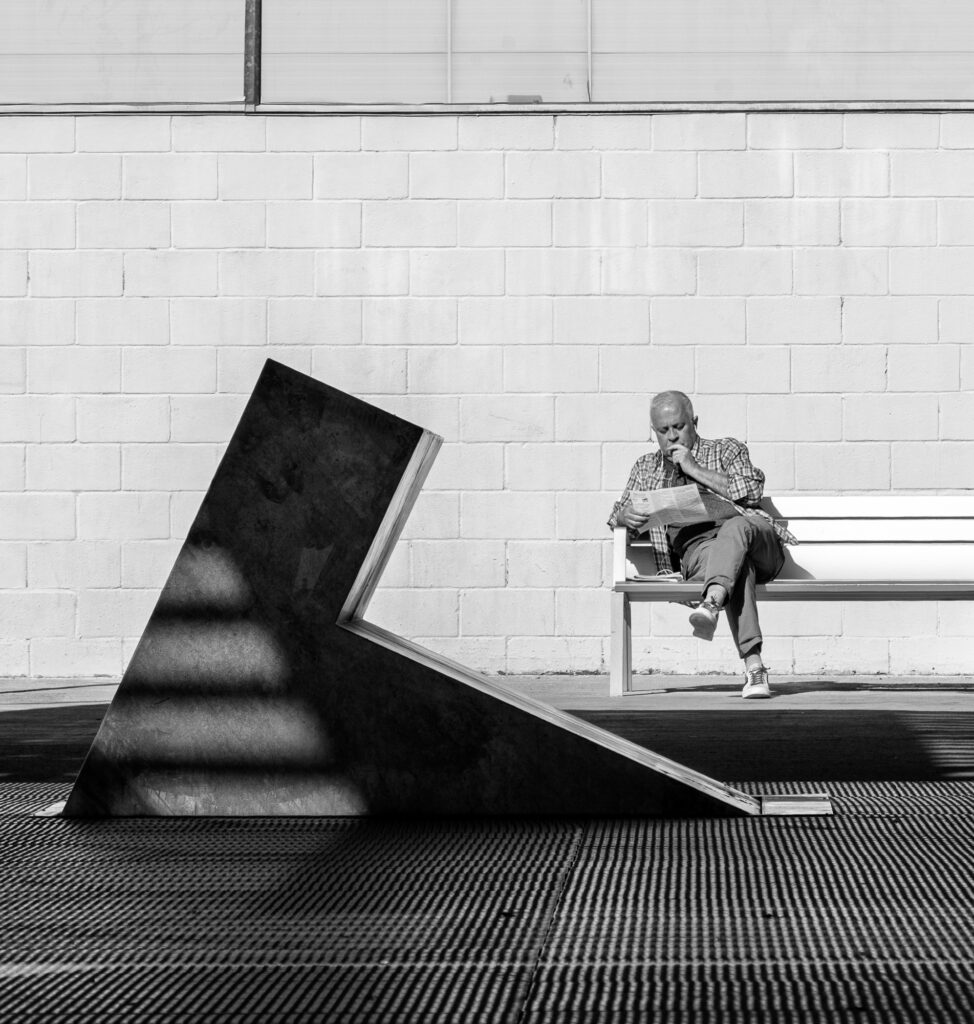
The contemporary architecture chapter was the opposite problem. Buildings like the old Montjuïc communications tower or MACBA’s sculptural white walls need to be photographed against real dynamic range — blown-out sky in one corner of the frame, deep shadow in another, often at the same time. That’s where the a7R IV earns its keep. The extra resolution meant I could crop aggressively in post when a composition needed tightening, and the sensor held detail in both the highlights and the shadows in a way I don’t think the Q3 would have managed as cleanly at that scale.
The Q3: Shooting for a person
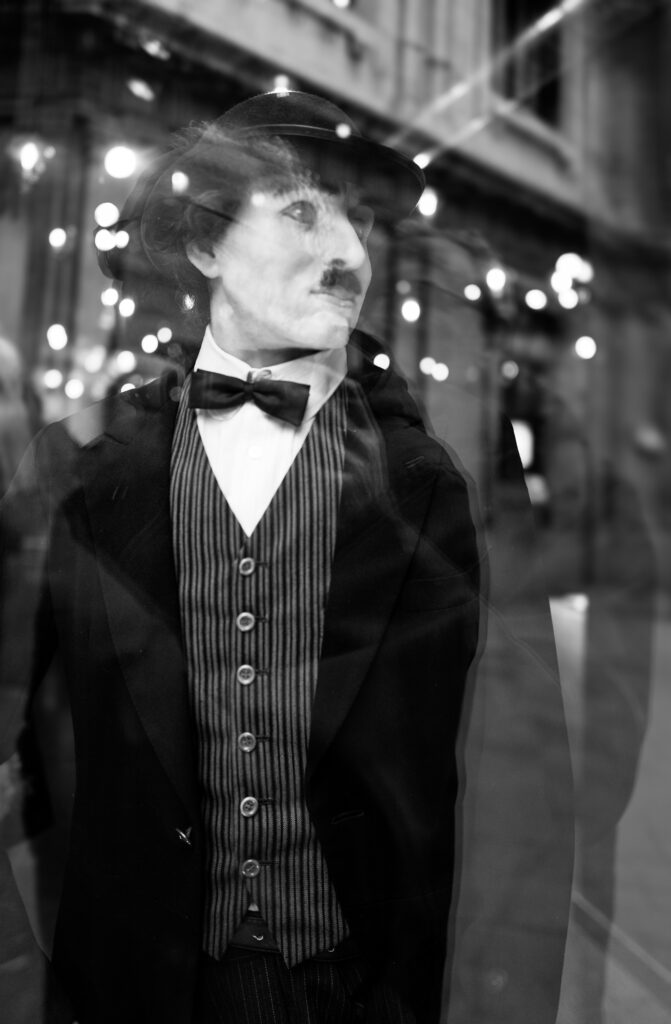
The Leica’s whole case for itself, for me, is discretion plus commitment. No zoom, no silent second-guessing about focal length, a shutter you barely hear. I got a shot of a mannequin dressed as Chaplin reflected in a shop window at night, layered with bokeh and a passerby, that I’m fairly sure I wouldn’t have gotten with anything bigger or slower — by the time a larger body would have focused and fired, the moment reflected in that glass would have moved on. The Q3 rewards standing still and waiting, because the 28mm doesn’t give you anywhere else to hide compositionally. You either found the frame or you didn’t.
The A7R IV – Shooting for a Building
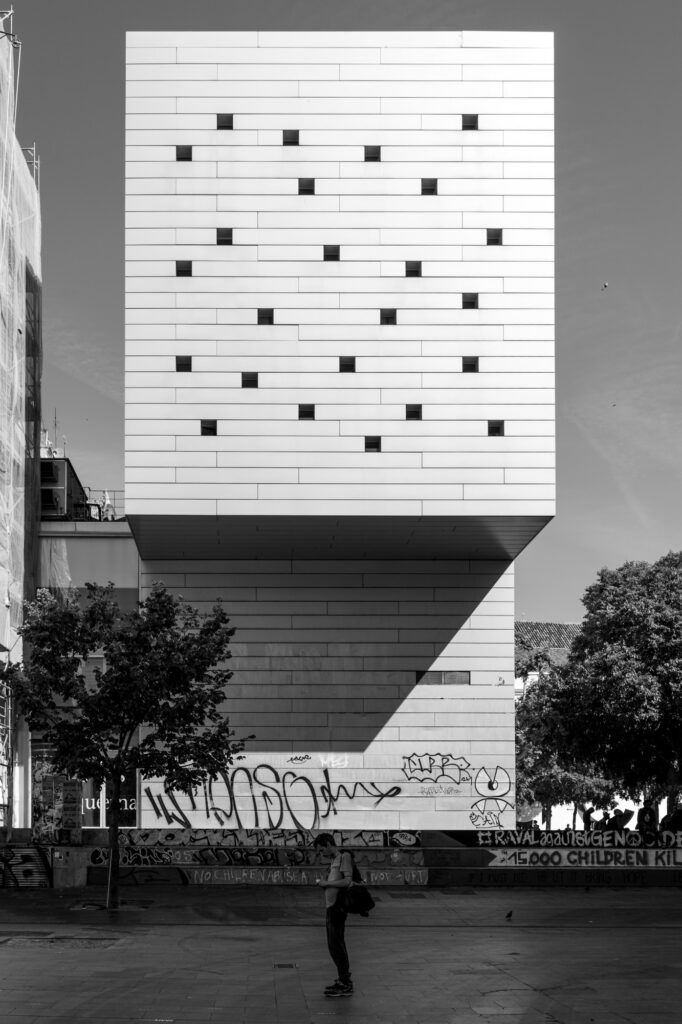
The Sony’s case is almost the inverse. Architecture doesn’t move, but it also doesn’t compromise on how much of the tonal range you need to hold onto. A brutalist tower in the Raval, its facade a grid of small irregular window openings with graffiti and protest text scrawled floor-to-ceiling at its base, needed both ends of the histogram intact in a single frame — sky, glass, and shadowed concrete all exposed correctly at once. That’s a sensor problem, not a composition problem, and it’s the one thing the extra resolution and dynamic range headroom solved cleanly, letting me tighten the crop afterward without shredding detail in the process.
Gear as a Method, Not Identity
I’m not precious about gear-as-identity — I don’t think either camera is “better,” they’re just built for different kinds of waiting. The Leica is for waiting for a person. The Sony is for waiting for a building to give you its best light. What surprised me, going into this project without a thesis, is how much that distinction ended up organising the whole shoot before I’d consciously decided anything: I found myself reaching for one camera or the other based on the shape of the wait, not the subject.
What I Took from it
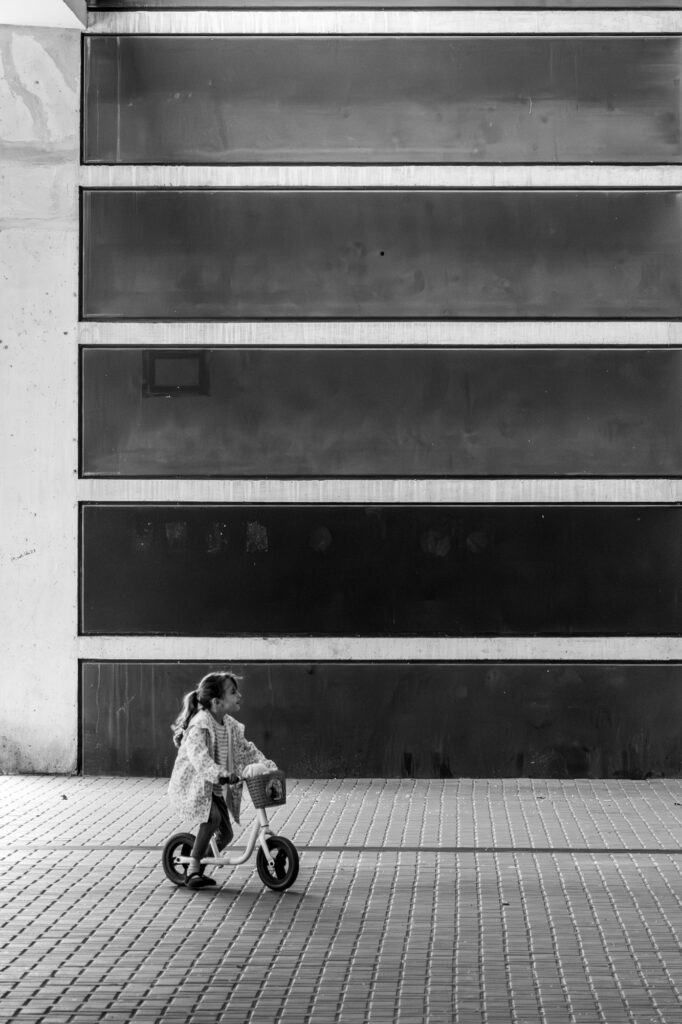
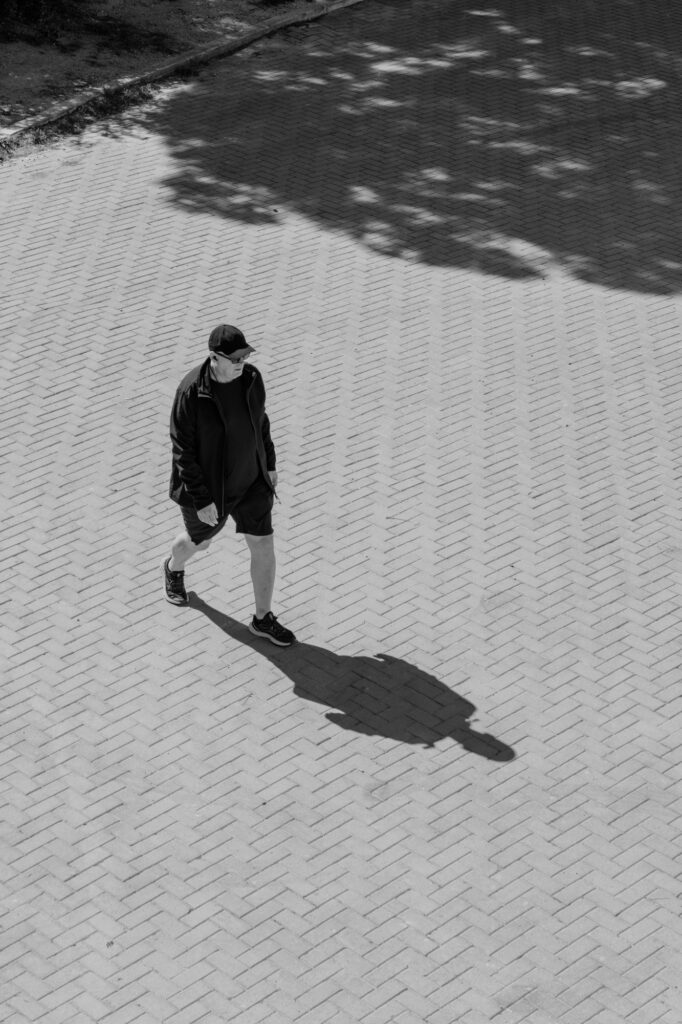
Going back through my own archive while assembling this project, I noticed something that had nothing to do with either camera directly: the photographs I still liked a year later were almost always the ones that would have worked fine without colour — meaning the composition and the light were doing the actual work, not the sky. Twenty-five years in, that’s still the thing I’m chasing. Barcelona, it turns out, is an unreasonably good city for that kind of hunting, if you’re willing to walk both halves of it with the right camera in hand for each.
—
Cosme Lapena shoots street and documentary photography around Barcelona and beyond. More of his work is at bCLPhoto, on Instagram, and on Flickr.
Share this post:





Comments
No comments found