Robert Frank’s Leica (Well, Close)

By John Bennett

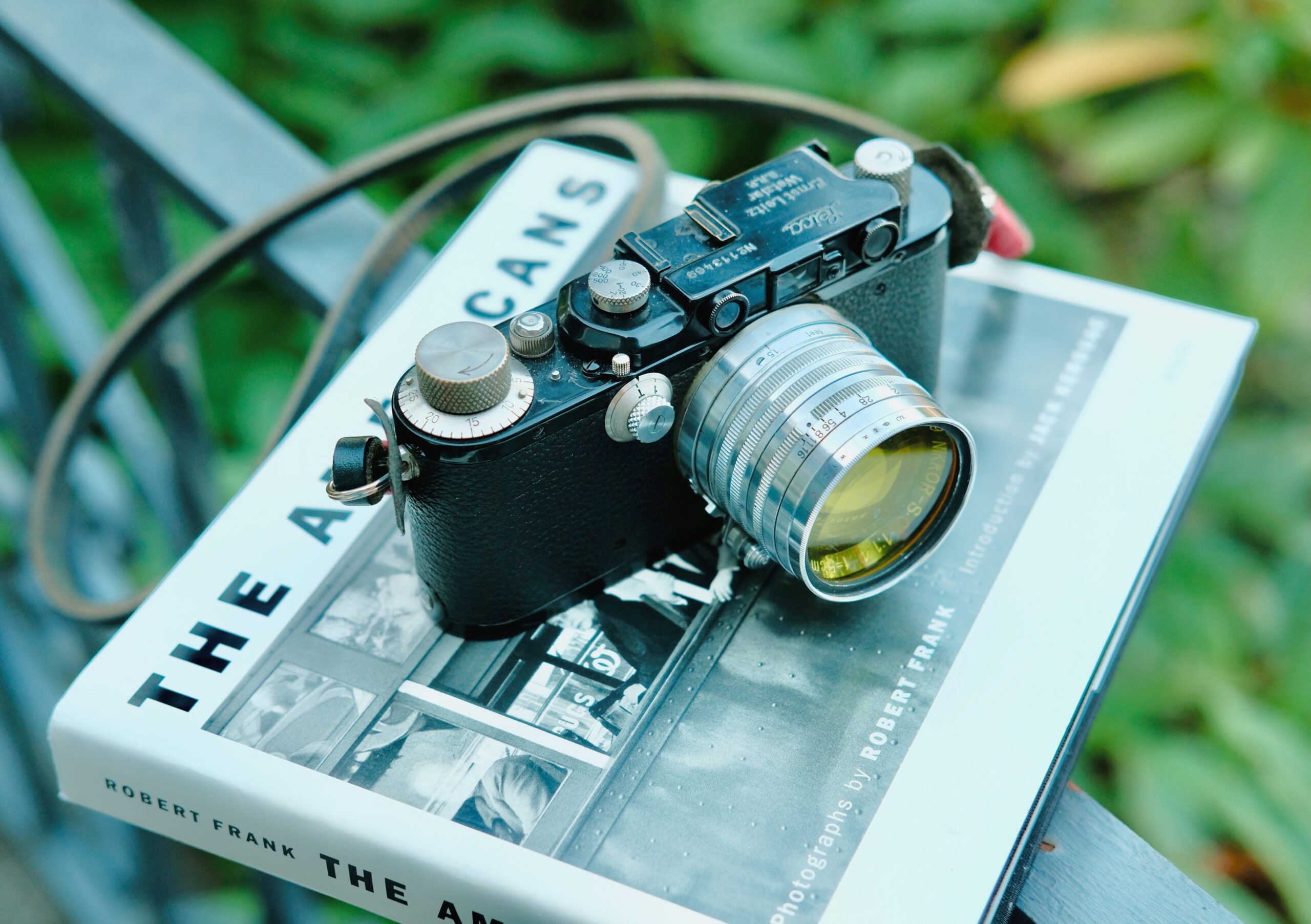
After our recent road trip, which included a night at the Hotel Finlen in Butte, Montana, and a chance to photograph the window where Robert Frank made one of the 83 images included in his landmark book, The Americans, I became mildly obsessed with finding the same camera and lens combination that he used on his Guggenheim-sponsored cross country journey of 1955-56.

A story published by the Swiss Camera Museum got me started, supplying details, dates, and serial numbers.

Fairly quickly, I purchased a black-bodied Leica iii that, according to Red Dot Camera’s online research tool, was thought to have been made in 1934, the same year as Robert Frank’s camera. Wanting as much background as I could gather, I wrote to Leica, seeking additional information. They replied, telling me that mine was actually delivered to Berlin on July 31, 1933.

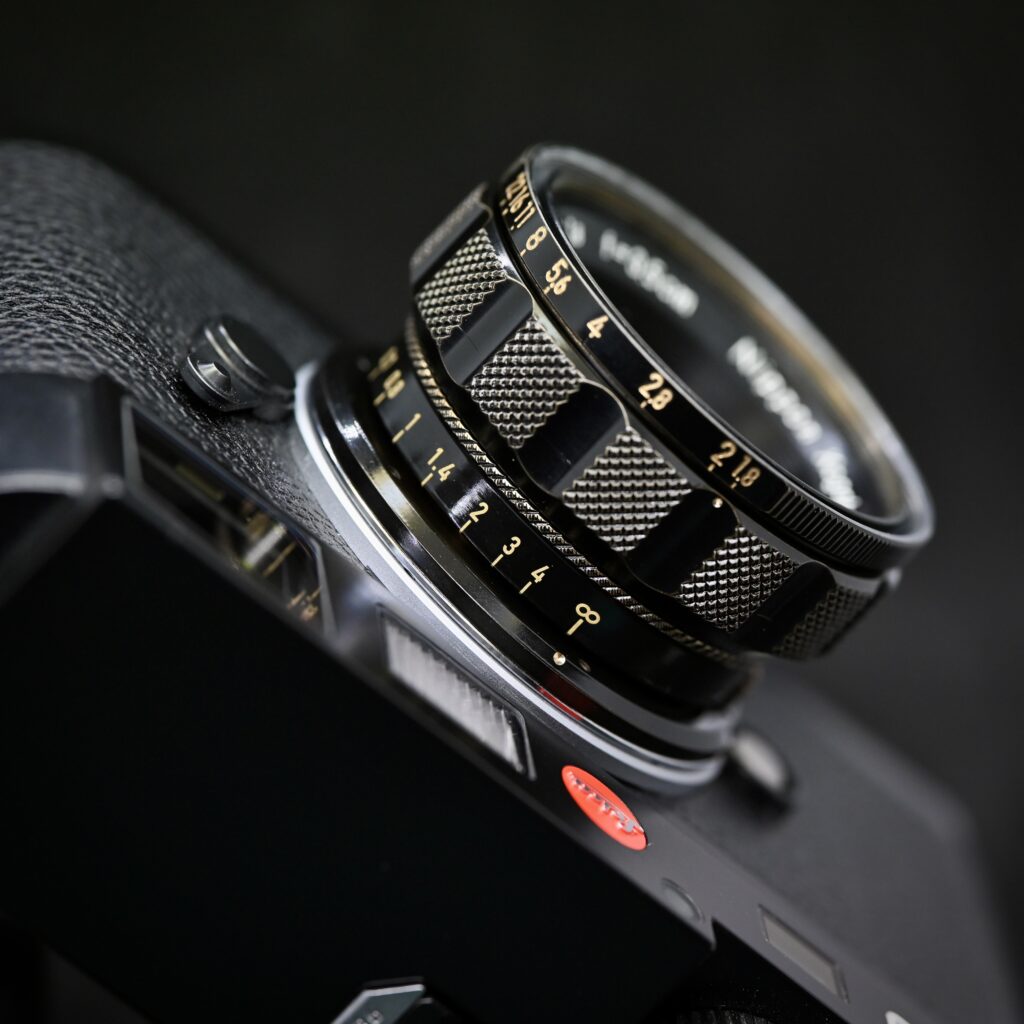
The 50mm f1.4 Nikkor lens required more patience, especially considering that they are not inexpensive —relatively-speaking — and the condition of online offerings varies widely.
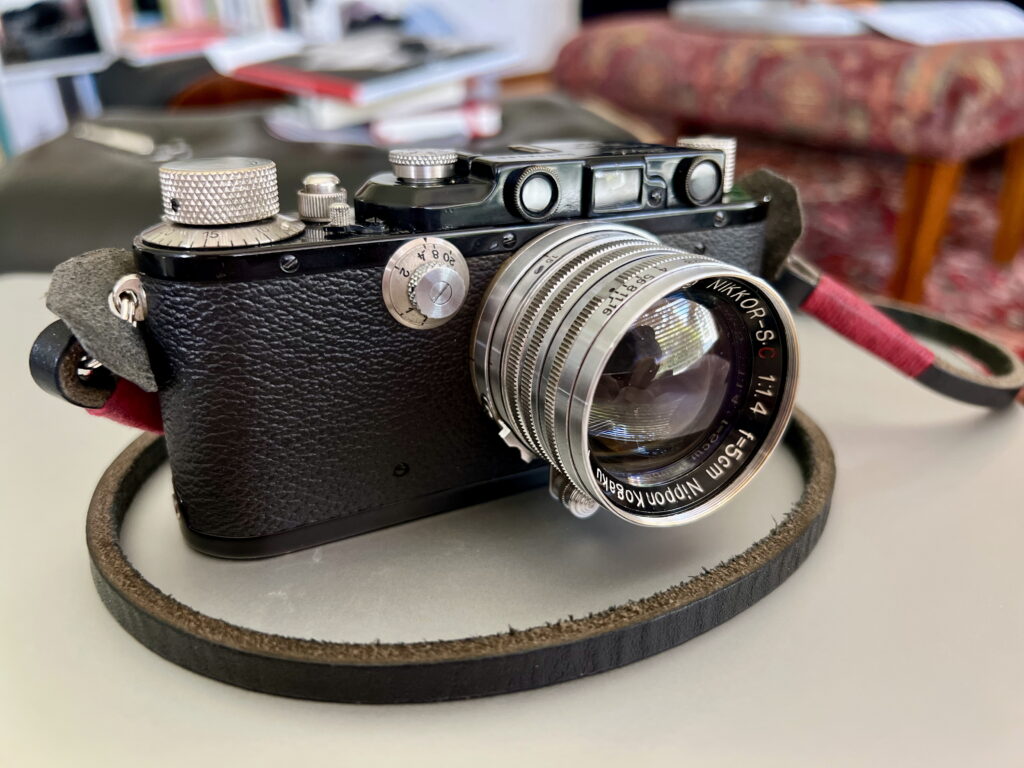
In early August, I mentioned my search on a Leica III Facebook page, and a fellow member said he had noticed such a lens in a small camera repair shop called Vermont Camera Works . By that time, though, it had been several months since he had seen it, and he had no idea if it was still for sale. Google led me to the shop’s site, and I sent an email, expecting to hear that the lens was long gone.

Happily, it was still available. The proprietor said the lens had “cleaning marks,” so I requested photos.
When the pictures arrived, it looked good to my untrained eye and the price was right. “‘l’ll take it!,” I replied.

Initially, because the serial number on the lens I acquired was higher than the one used by Robert Frank, I incorrectly assumed that mine was made after his. I contacted a man named Roland in New Zealand. He manages a detailed database of Nikon serial numbers.

He replied, “Yours is the 189th 5cm f/1.4 lens made. The early series were mostly in Nikon S-mount but a fair number were also M39 (LTM) mount.”

It was manufactured in May of 1950, making it older than the lens I was originally looking for.

Beyond the Swiss Camera Museum’s site, I can find next to nothing describing the specifics of Robert Frank’s camera gear, and even less about his thoughts regarding it. He would certainly have found my recreation of his 1950s kit frivolous. I don’t mind. In his lifetime, he didn’t do much for the approval of others, even from those he admired.

“Black and white are the colors of photography.” – Robert Frank

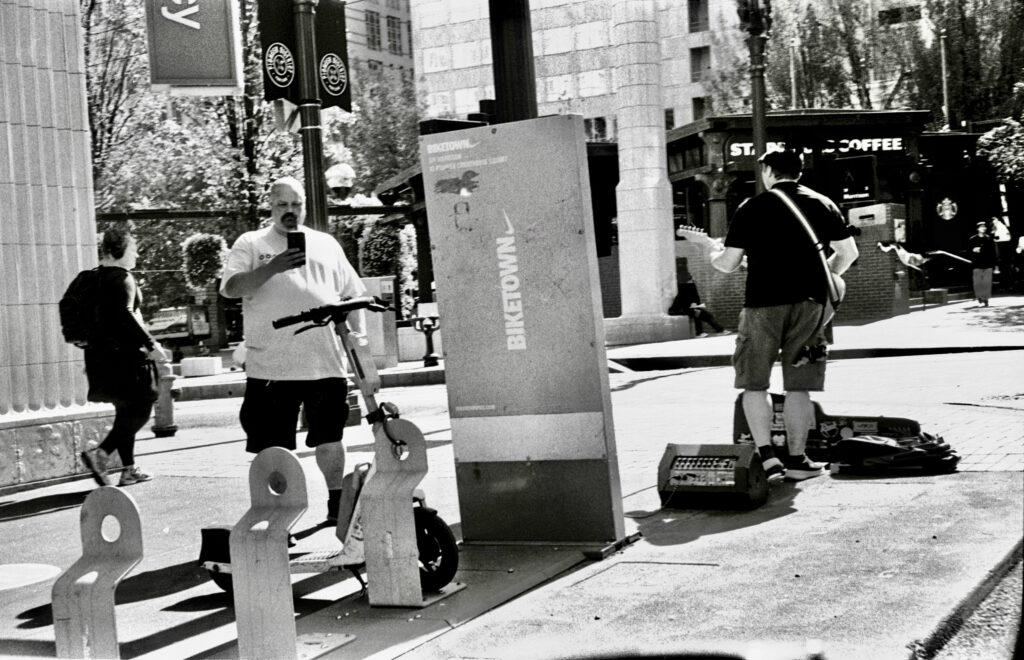
In the past month, I have shot a few rolls of Ilford HP5+ with the new combination. After the first roll, I located a set of filters sold by Tim in Berkeley, and have been experimenting with yellow, red, and blue.

I’ve dropped a few test photos into an album on my Flickr account. Nothing great, so far, but I am happy with the capability of the lens and camera.

The Barnack Leicas — once you get the hang of them — are light & nimble, and a lot of fun to use.
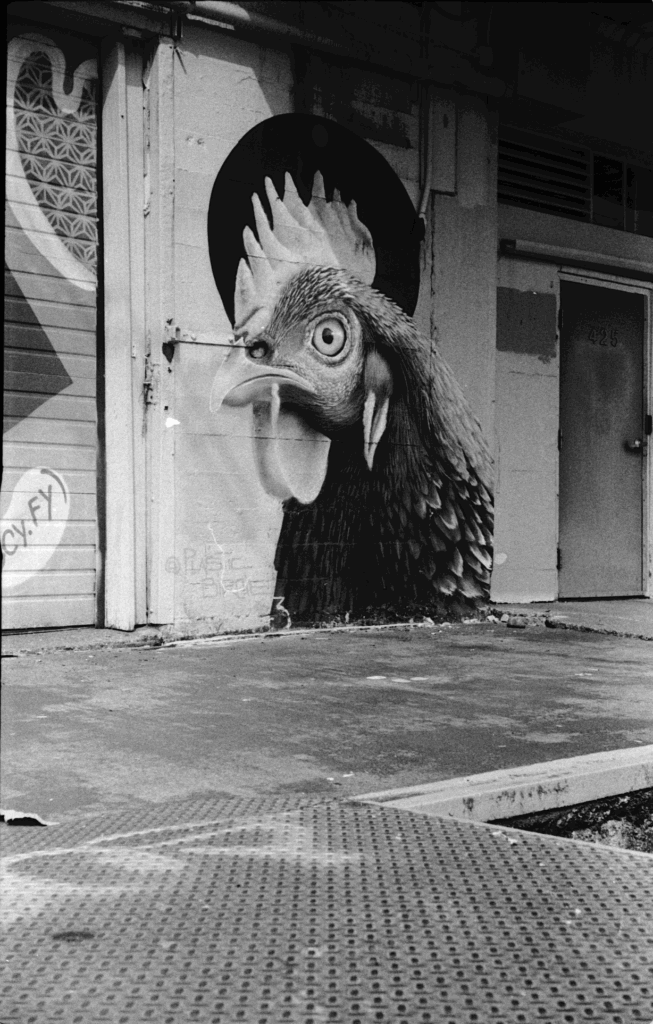
With the red filter
With the yellow filter.


Share this post:

About The Author

By John Bennett
I live in Portland, Oregon, where we are fortunate to have a number of great camera stores and a thriving darkroom scene.
Read More Articles From John Bennett

Find more similar content on 35mmc

Use the tags below to search for more posts on related topics:

Donate to the upkeep, or contribute to 35mmc for an ad-free experience.

There are two ways to contribute to 35mmc and experience it without the adverts:

Paid Subscription – £2.99 per month and you’ll never see an advert again! (Free 3-day trial).
If you think £2.99 a month is too little, then please subscribe and I can manually edit the subscription value for you – thank you very much in advance if this is what you would like to do!

Subscribe here.

Content contributor – become a part of the world’s biggest film and alternative photography community blog. All our Contributors have an ad-free experience for life.

Sign up here.

Make a donation – If you would simply like to support Hamish Gill and 35mmc financially, you can also do so via ko-fi

Donate to 35mmc here.

Comments

Ken Davis on Robert Frank’s Leica (Well, Close)

Comment posted: 30/10/2025

Well done for assembling this unusual combination and following in this important photographer's footsteps.
Reply

Leave a Reply

Your email address will not be published. Required fields are marked *


John Bennett replied:

Comment posted: 30/10/2025

Thanks, Ken. It was fun!

Reply

Leave a Reply

Your email address will not be published. Required fields are marked *


Stephen Hanka on Robert Frank’s Leica (Well, Close)

Comment posted: 30/10/2025

Interesting and informative. Thanks for posting this. I have a Nikon S2 which I now must get out of the closet and take to the street. Vintage rangefinders are fun!
Reply

Leave a Reply

Your email address will not be published. Required fields are marked *


John Bennett replied:

Comment posted: 30/10/2025

They’re great, and easy to use (once you get used to them)!

Reply

Leave a Reply

Your email address will not be published. Required fields are marked *


Gary Smith on Robert Frank’s Leica (Well, Close)

Comment posted: 30/10/2025

When you say we (metro-Portland, OR) have a thriving darkroom scene, what exactly do you mean? When I went looking for community darkrooms in town they were all either "full" or crazy expensive. Do you use one in particular? Do you make wet prints? I agree that having Blue Moon is great. Congrats on assembly a rig that inspires you. I'm becoming somewhat gear agnostic.
Reply

Leave a Reply

Your email address will not be published. Required fields are marked *


John Bennett replied:

Comment posted: 30/10/2025

Gary, I am a long-time student using the Portland Community College’s darkroom on SE Division. The PCC program is not a drop in spot, though. You need to be registered. In addition to classes, there are twice weekly “open labs” for enrolled students. Beyond that, there’s Franklin Foto out in St. Johns (just down the street from Blue Moon): The Portland Darkroom; and I believe, the Multnomah Arts Center (MAC). There *may* be others that I’m forgetting at the moment.

Reply

Leave a Reply

Your email address will not be published. Required fields are marked *


Gary Smith replied:

Comment posted: 30/10/2025

Ah, a student! It might be easy to just register for a photography class. It seems that I looked at both the Portland Darkroom and the MAC. Both were either full with no room or expensive. I live in Gresham, so hauling out to St.Johns would be silly. Maybe I should just bite the bullet and buy an enlarger and use it in the garage.

Reply

Leave a Reply

Your email address will not be published. Required fields are marked *


John Bennett replied:

Comment posted: 30/10/2025

I’ve been at PCC since April 2018, and there are many students who have been enrolled for much longer. Mike, our teacher, has been in his job for over 30 years, and has also worked as a professional photographer for decades. He offers great help. Once you get past the first term, though, you are mostly working on your own. Insight from the instructor and fellow photographers has proven invaluable to me.

Reply

Leave a Reply

Your email address will not be published. Required fields are marked *


shawn granton replied:

Comment posted: 30/10/2025

I mean, Portland Darkroom's four-hour open darkroom session is just $35, which I don't find that expensive. But yeah, it can be hard to get a spot, and yeah, it's not close to Gresham. (Sorry!) I see that Mt. Hood Community College does have a darkroom, so that could be an option. (I'm not sure how their community courses work, though.)

Reply

Leave a Reply

Your email address will not be published. Required fields are marked *


David Pauley replied:

Comment posted: 30/10/2025

Just did a search on Blue Moon's site, Gary -- they have a nice selection of enlargers in the $250-$300 range. Not to encourage anyone's GAS!

Reply

Leave a Reply

Your email address will not be published. Required fields are marked *


Dan on Robert Frank’s Leica (Well, Close)

Comment posted: 30/10/2025

Infested by ads
Reply

Leave a Reply

Your email address will not be published. Required fields are marked *


John Bennett replied:

Comment posted: 30/10/2025

If you register for 35mmc, you can avoid the ads.

Reply

Leave a Reply

Your email address will not be published. Required fields are marked *


Michael Jardine replied:

Comment posted: 30/10/2025

And the best way of doing this is by writing for 35mmc!

Reply

Leave a Reply

Your email address will not be published. Required fields are marked *


John Bennett replied:

Comment posted: 30/10/2025

Exactly!

Reply

Leave a Reply

Your email address will not be published. Required fields are marked *


Erik Brammer replied:

Comment posted: 30/10/2025

Or indeed just pay the monthly fee which very little.

Reply

Leave a Reply

Your email address will not be published. Required fields are marked *


John Bennett replied:

Comment posted: 30/10/2025

Indeed!

Reply

Leave a Reply

Your email address will not be published. Required fields are marked *


cmf on Robert Frank’s Leica (Well, Close)

Comment posted: 30/10/2025

Thank you for the post, very interesting! I know that it is said that he used that camera for The Americans, but are you sure that this is the lens? Based on your shot and his shot, I would bet that he used a 35mm and not a 50mm lens. There is a photo of him on the internet that shows him with the same Leica but a different lens and an external viewfinder. I was not able to identify the lens, but could it be the one?
Reply

Leave a Reply

Your email address will not be published. Required fields are marked *


John Bennett replied:

Comment posted: 30/10/2025

Thanks! Yes, he used multiple lenses. I am basing my set-up on the article linked herein, and a few others that I have come across. My guess is that he used a 90mm lens for the Butte hotel window shot. When I visited there in June, I used a 50mm lens, which is all I had with me. See embedded link.

Reply

Leave a Reply

Your email address will not be published. Required fields are marked *


Rollin Banderob on Robert Frank’s Leica (Well, Close)

Comment posted: 30/10/2025

Interesting read, thank you.
Some posts around the net feel he also used a 35mm for the book - have to wonder if that was a Nippon Kogaku Nikkor too?
Reply

Leave a Reply

Your email address will not be published. Required fields are marked *


John Bennett replied:

Comment posted: 30/10/2025

Good question! If you find out, let me know!

Reply

Leave a Reply

Your email address will not be published. Required fields are marked *


Walter Reumkens replied:

Comment posted: 30/10/2025

I suspect that the many Leica fans will keep asking and searching until they find confirmation that a Leica lens was used for The Americans. However, everything points to the Nikkor mentioned and purchased by John. His link does not lead directly to the article, but here it is: https://www.cameramuseum.ch/en/discover/permanent-exhibition/the-century-of-the-film/the-leica-of-robert-frank-and-the-americans/ According to a discussion in a German Leica forum, even the telephoto lens with the clip-on viewfinder shown somewhere was a Nikkor S.C. 1.5/85mm. Zeiss, Nikon and Canon had at least equivalent optics in their range.

Reply

Leave a Reply

Your email address will not be published. Required fields are marked *


John Bennett replied:

Comment posted: 30/10/2025

Thanks, Walter! The link is on the word “story" in this sentence. Easy to miss. (A “story" published by the Swiss Camera Museum got me started, supplying details, dates, and serial numbers.) David Douglas Duncan, the famed war photographer, used Nikkor lenses on his Leica bodies, too.

Reply

Leave a Reply

Your email address will not be published. Required fields are marked *


Walter Reumkens replied:

Comment posted: 30/10/2025

Sorry John, I overlooked that. Duncan wasn't the only one; there were quite a few, but they just don't talk about it. Here's a link to a German website about the Leica II and III. As a small apology for my misstatement. https://www.klassik-cameras.de/Leica_Barnack.html

Reply

Leave a Reply

Your email address will not be published. Required fields are marked *


John Bennett replied:

Comment posted: 30/10/2025

Thanks, Walter! No worries. Hey, that’s a great site. Amazing lens combinations there.

Reply

Leave a Reply

Your email address will not be published. Required fields are marked *


David Pauley on Robert Frank’s Leica (Well, Close)

Comment posted: 30/10/2025

John, thank you so much for this excellent description of your pursuit of the Leica III, following in the footsteps of one of the 20th century's most influential photographers. I also recently aquired a black-laquer Leica III which dates to 1933, and have seldom enjoyed a camera more. I just made a 16x20 darkroom print taken on the platform of train station in Frankfurt, Germany early last month with a tiny Leitz 28mm lens from 1935. I've always thought the Rolleiflex was my only "forever camera" but I think this little Leica has earned a place alongside it. (So much so that I am selling my two M3s). Thanks for sharing your experience and photos.
Reply

Leave a Reply

Your email address will not be published. Required fields are marked *


John Bennett replied:

Comment posted: 30/10/2025

Thank you, David. Much appreciated! I love shooting with the Barnack-era cameras. They’re very capable. And fun.

Reply

Leave a Reply

Your email address will not be published. Required fields are marked *


Randy Castillo on Robert Frank’s Leica (Well, Close)

Comment posted: 31/10/2025

Left me wanting to hear more of the history and background.
Reply

Leave a Reply

Your email address will not be published. Required fields are marked *


John Bennett replied:

Comment posted: 31/10/2025

Thank you, Randy!

Reply

Leave a Reply

Your email address will not be published. Required fields are marked *


Jeffery Luhn on Robert Frank’s Leica (Well, Close)

Comment posted: 31/10/2025

John,
An interesting pursuit! Note I didn't say obsession. Perhaps that will follow, as you embark on the trans-continental shooting spree. That book greatly influenced me when I was a budding photographer for the Oakland Tribune in 1969. When I look at his work now, it still has the same inspiring effect. I hope you post more images from that camera.
Jeffery
Reply

Leave a Reply

Your email address will not be published. Required fields are marked *


John Bennett replied:

Comment posted: 31/10/2025

Thanks, Jeffrey! And I recall fondly the Oakland Tribune from my many years in the Bay Area.

Reply

Leave a Reply

Your email address will not be published. Required fields are marked *


Scott Ferguson on Robert Frank’s Leica (Well, Close)

Comment posted: 31/10/2025

Cool quest!

Thanks for this post, which led me to revisit The Americans, which is a stunning achievement. I'd love to see more of your photos and will check out Flickr.

I like shooting with vintage gear, but have kind of stayed with post WW2 era gear, with an M3 and lenses mostly ranging from the late 1940's to the early 1960's. I took a hard look at a Barnack iiif about a year ago, but couldn't get used to the tiny framing window on the double viewfinder, and struggled a bit with the controls. I didn't mind the fiddly loading, but I think I made some kind mistake with adjusting the tension on the film and lost more or less an entire roll.

Curious if/how you use a blue filter with b&w? I have an old Leica blue filter that I picked up in case I wanted it for color correction when shooting daylight film in tungsten light, but haven't really used it much. I'll often use a red or orange filter if the skies are particularly dramatic, and I like shooting portraits with a yellow/green filter, but haven't figured out a good use for a blue filter with b&w.
Reply

Leave a Reply

Your email address will not be published. Required fields are marked *


John Bennett replied:

Comment posted: 31/10/2025

Thanks, Scott! I haven’t used a blue filter (yet). Ilford’s site has a good overview: https://www.ilfordphoto.com/colour-filters/

Reply

Leave a Reply

Your email address will not be published. Required fields are marked *


Curtis Heikkinen on Robert Frank’s Leica (Well, Close)

Comment posted: 31/10/2025

Very interesting piece! Was that camera shop by chance Vermont Camera Works in Pittsford? Thanks!
Reply

Leave a Reply

Your email address will not be published. Required fields are marked *


John Bennett replied:

Comment posted: 31/10/2025

Thanks, Curtis! Yes: Vermont Camera Works. I just edited the story, and included their name and a link to the shop. Thanks!

Reply

Leave a Reply

Your email address will not be published. Required fields are marked *


Ibraar Hussain on Robert Frank’s Leica (Well, Close)

Comment posted: 02/11/2025

Thanks for the fascinating and very interesting story
I've never used one of these (nor any Leica camera) before, for some reason I alwways drifted towards the Zeiss Ikon andf Contax lines, because they're cheaper! hehe
Reply

Leave a Reply

Your email address will not be published. Required fields are marked *


John Bennett replied:

Comment posted: 02/11/2025

I understand, although many (but not all) “Barnack” Leicas can be had for < $500. !!

Reply

Leave a Reply

Your email address will not be published. Required fields are marked *


Leave a Comment

Leave a Reply

Your email address will not be published. Required fields are marked *