

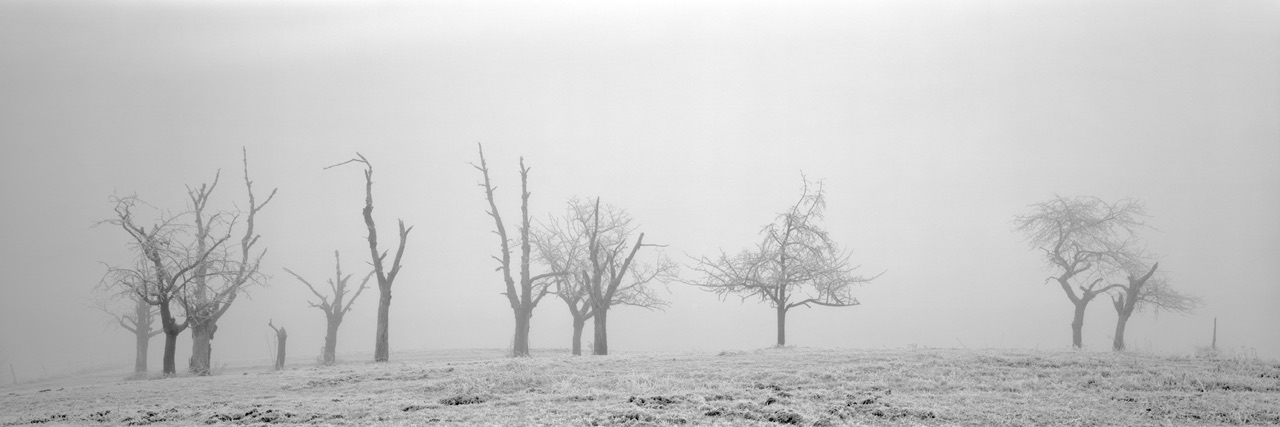
The feedback to my first post about my image of the year 2025 was pleasantly positive which I am very grateful for. This encouraged me to take you on a journey to some other places close to my home. Join me in finding some beauty in the usualness of a stretch of central German countryside in southern Hesse, devoid of national parks and tourist attractions.
We are leaving the spinney of Douglas pines and head southwest to an open meadow orchard landscape called “Eberstaedter Streuobstwiesen”. As the name suggests, it borders a village called Eberstadt which is the southernmost part of Darmstadt, 30 odd kilometres south from Frankfurt. In 20 minutes walking distance from my village Trautheim, it is a fine destination for extended morning walks in all weather conditions in any season. Or Sunday family walks, grumbling teenage boys included.
The overall area is about 3 km2 in size of which 0.37 km2 are protected as an EU bird sanctuary. Quite tiny in size, it is home to the grey and green woodpecker, the red-backed shrike, the wryneck, the hoopoe and the honey buzzard – accompanied of course by the usual suspects like blackbird, thrush, finch, tomtit, starling, nightingale and many others. At night you’ll encounter five different species of bats. Plus lots of grounded creatures, of course. Like my encounter with a wild pig one night that was grunting away what felt like 5 yards away from me, whilst I was taking a very long exposure in almost pitch black darkness. We agreed that I would finish my photographic endeavour, and then both of us would go and mind our own business.
There was a time when mankind would grow wine on these hills. Not sure today’s sommeliers would applaud, but in the days the thirsty throats probably took what they could get, and it was probably a safer bet than the water from the little creeks and rivers around. At around 1880, growing fruit supplanted the vineyards and provided a source of vitamins to the locals which was especially important during those meagre wintertimes. Apple, pear and cherry are the common fruit grown in this part of the country, and those trees were planted in the midst of wheat or rye fields. Growing grain ceased in the 1930s, the fields turned into meadows which were kept under control by a shepherd and his army. That natural mowing was no longer a regular service from the mid 1990s, so a club was formed that oversees the caretaking of the land, part of which is under tenancy by private individuals. Still today, the land will occasionally be invaded by a horde of balls of wool on sticks (and their calefactor) to devour the rolling hills, releasing the remains of the same through their derrières, then wandering off…
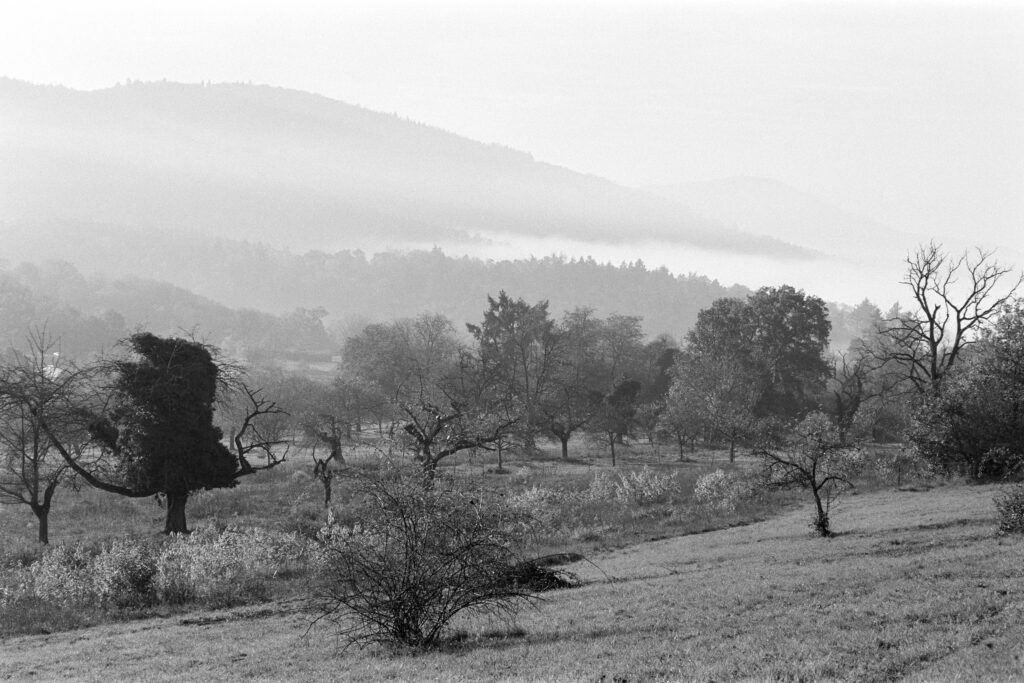
Clear days provide an almost constant view of castle Frankenstein. There are debates whether this castle was the motive for Mary Shelleys novel, whether she just passed by on a journey through the Rhine Valley, picking up the name of the tribe that ruled the region in the 13th century when the existence of the castle was first documented. Further south, we see the Melibokus, a small, yet very characteristic mountain of 517m of altitude, lined up nicely on the Bergstraße which extends along the Rhine Valley further South all the way down to Switzerland, bordering on the northern Black Forest.
So, let’s get going by showing you first what that Douglas pine spinney looks like when taking a more mundane photograph of it.
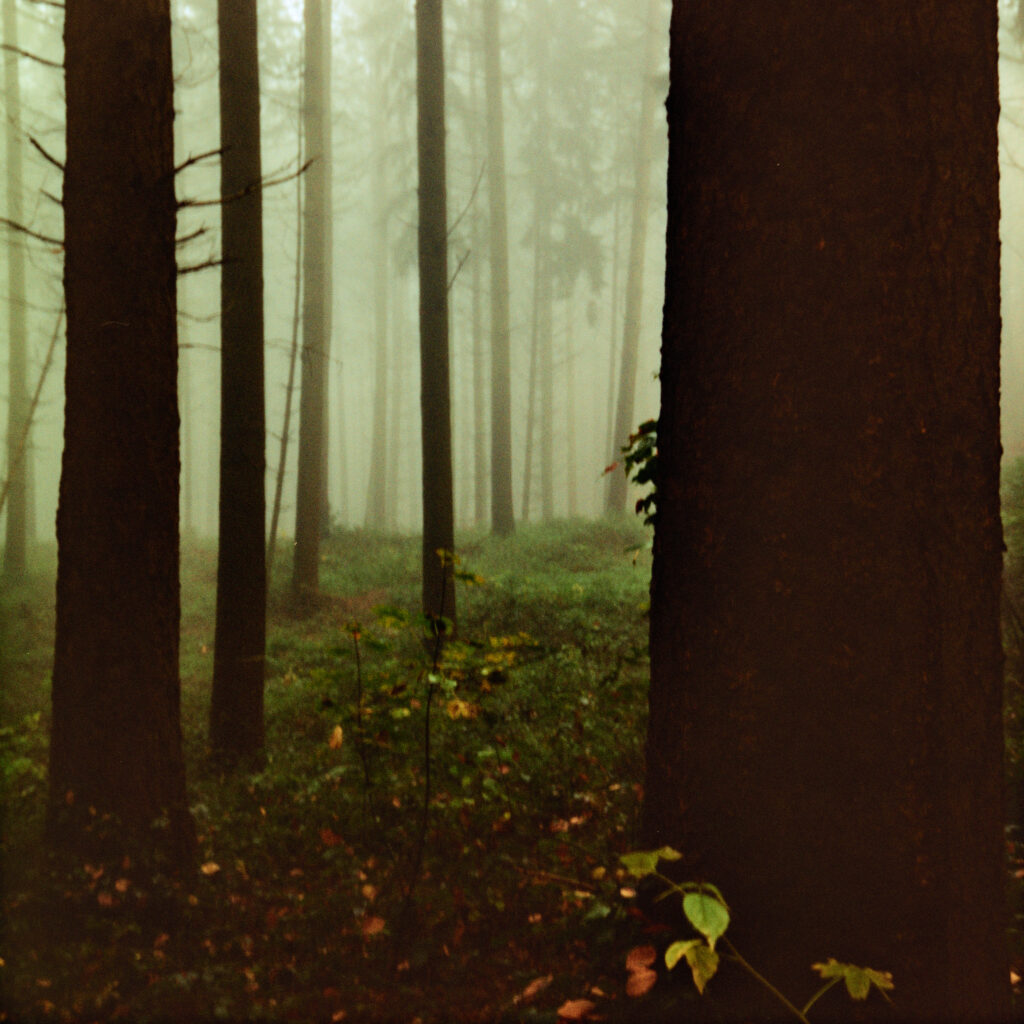
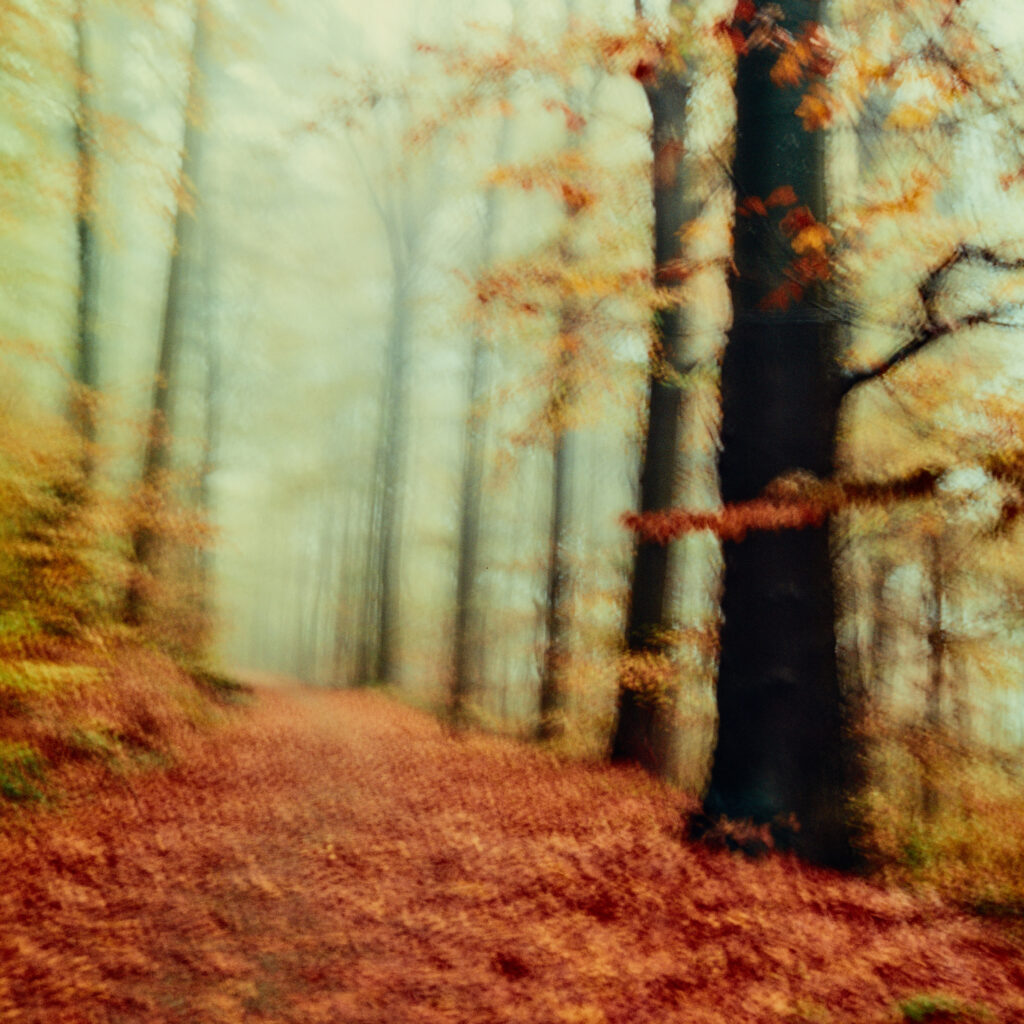
Yes, it does look underexposed, but as you will read in the notes below, this is Harman Phoenix 200 version 1 which has a dynamic range not even coming close to that of colour reversal film, as it seems. In case a dark, moody atmosphere is not the goal, the film produces a rich colour palette. Intentional camera movement is of course optional.
Towards the edge of the forest, there is this estate that never seems to change.
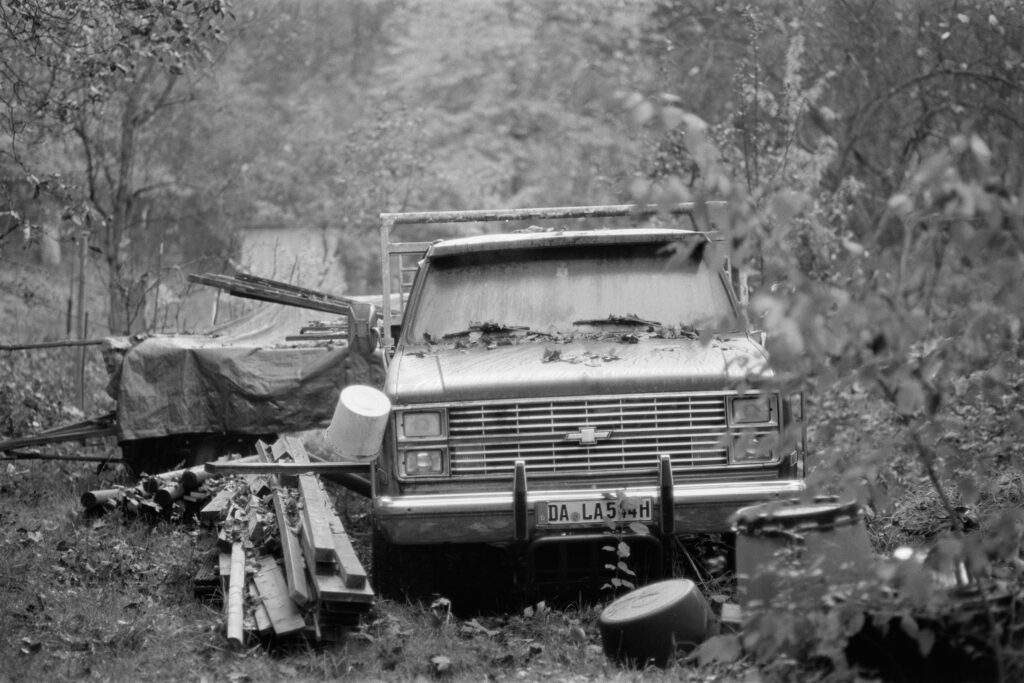
This pickup truck has been sitting there for as long as I can remember, never moved, and all the other objects appear to remain totally static as well.
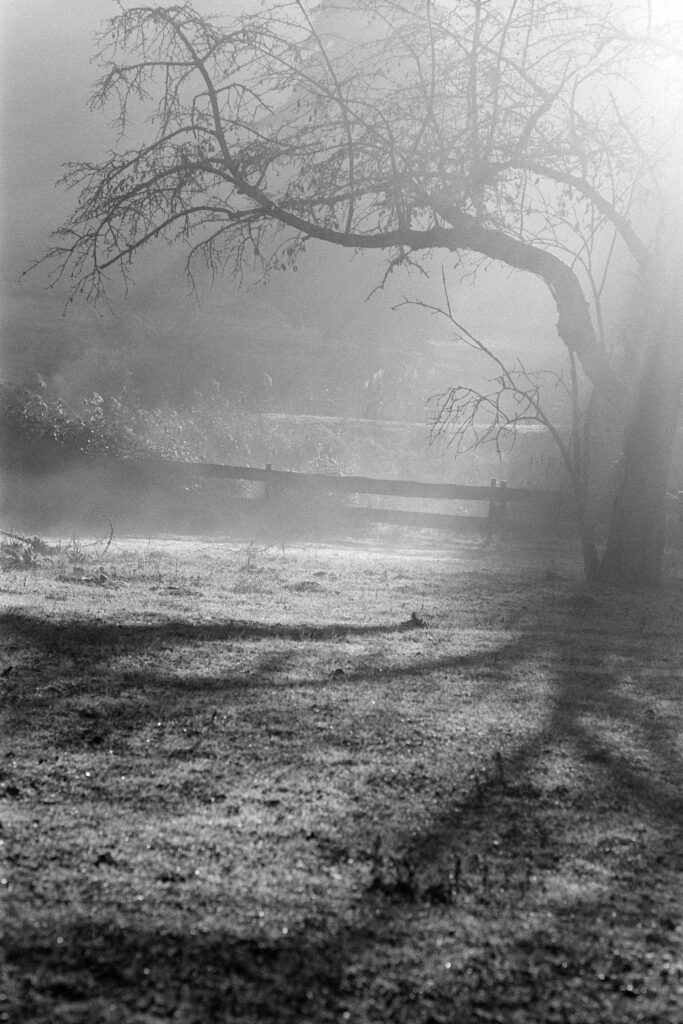
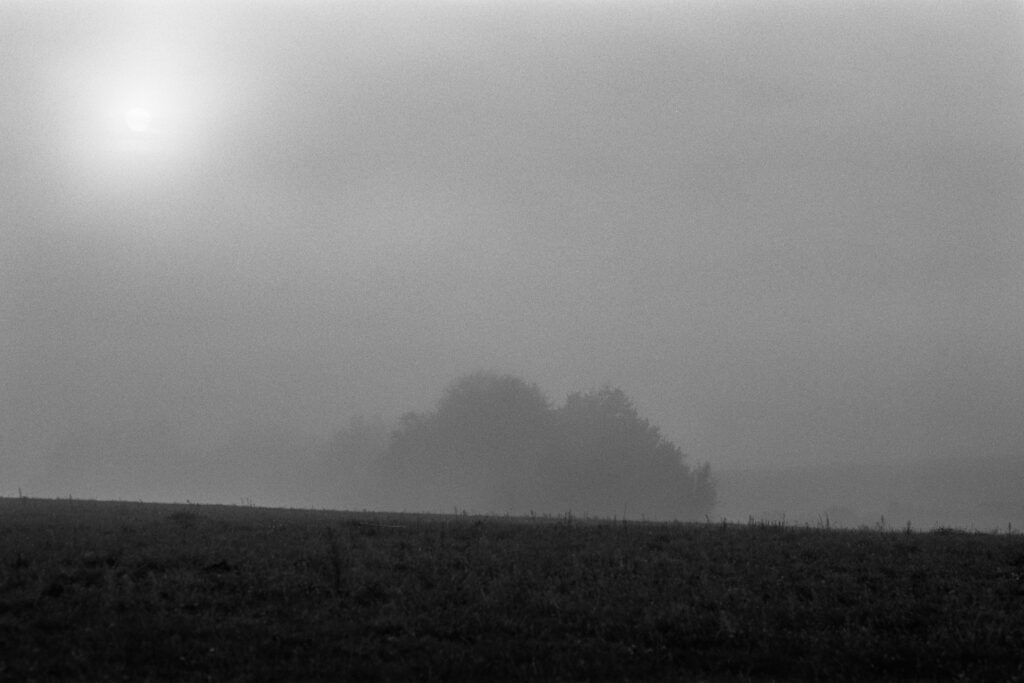
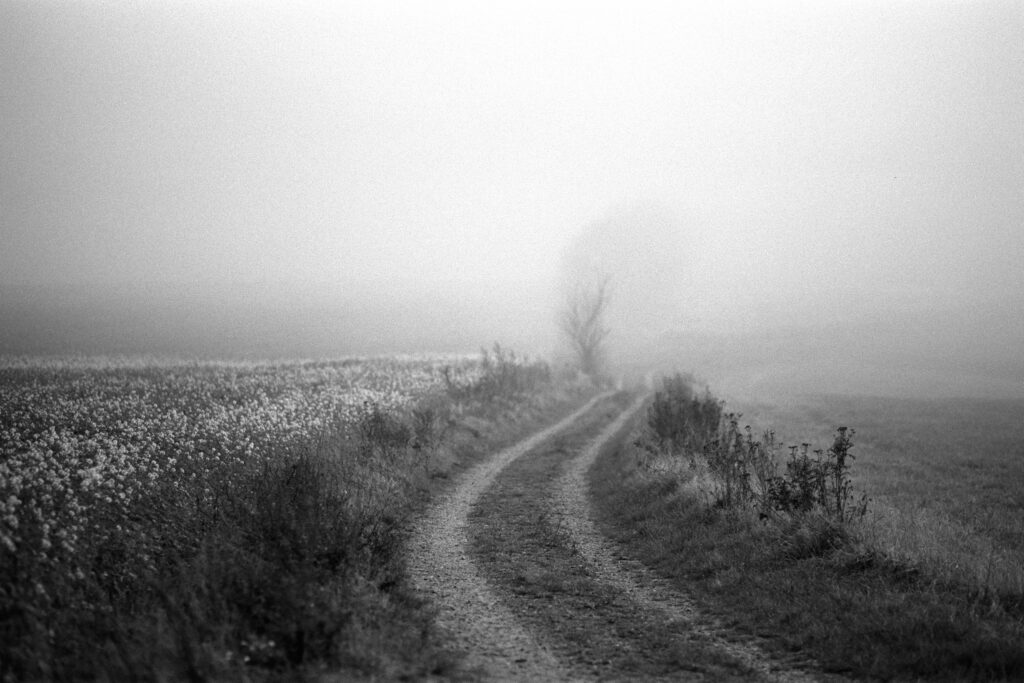
Have I mentioned that I love fog? I guess so. Even nicer when it’s combined with the sun making an effort to peek through. Strolling through the Streuobstwiesen, you can enjoy some grand vistas, when you actually have some visibility. The next image gives us an impression of those vistas, and you can even faintly make out Melibokus in the upper right, that very modest mountain I mentioned earlier.
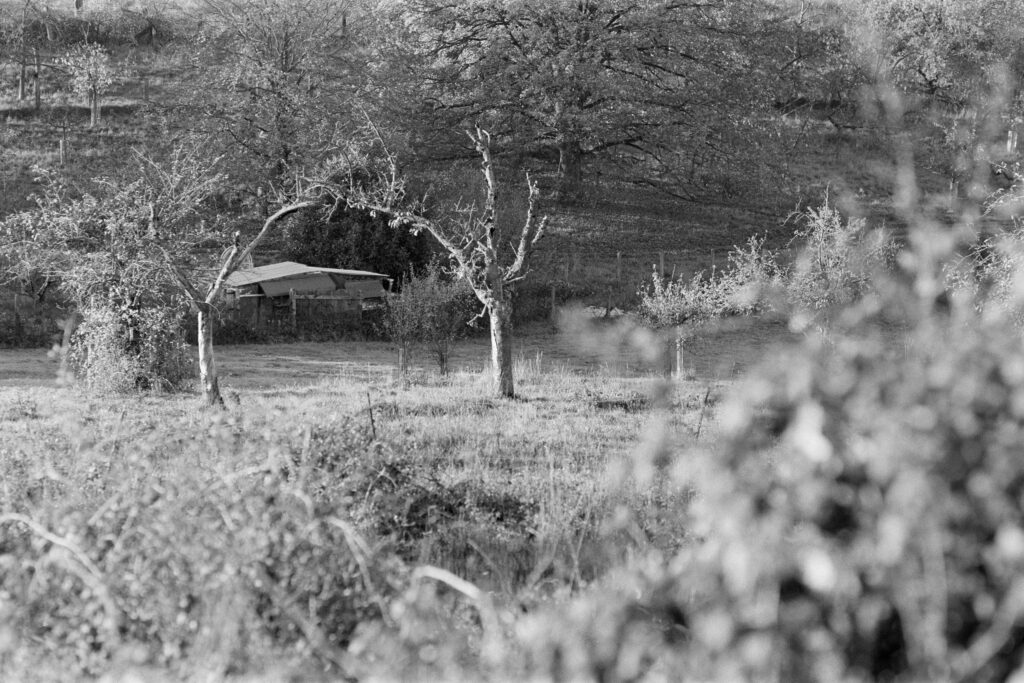
On the Streuobstwiesen, you always find signs of human presence – not only in how the landscape has been shaped and cultivated: sheds and huts are spread all over the place, some of them nicely hidden in the otherwise somewhat chaotic intertwining of areas that are looked after and other spaces that are left to themselves, in the caring hands of Mother Nature.
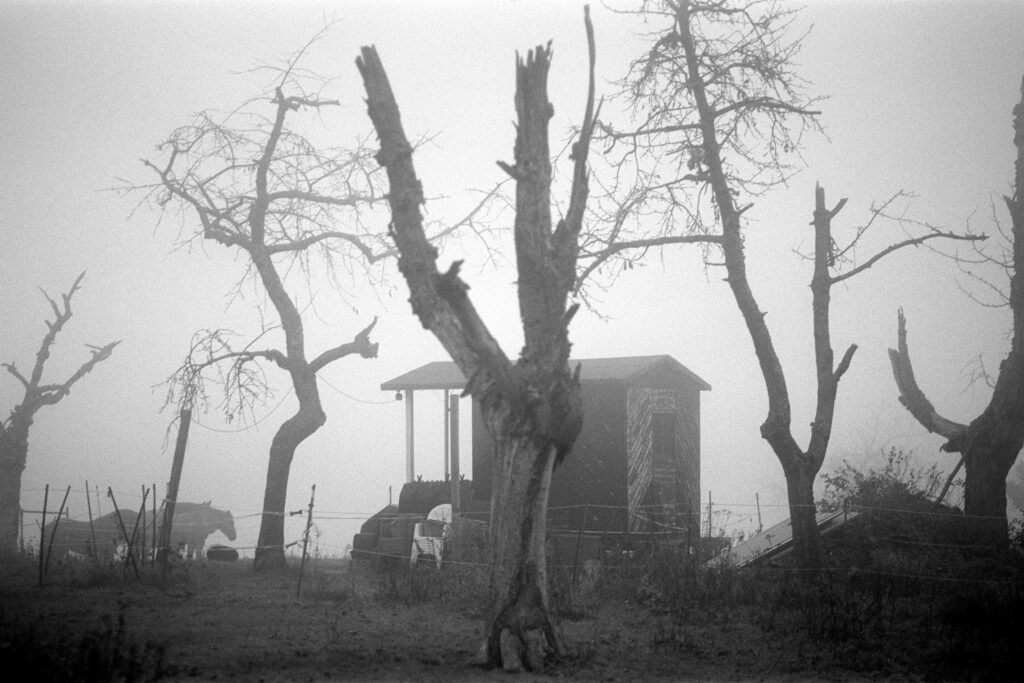
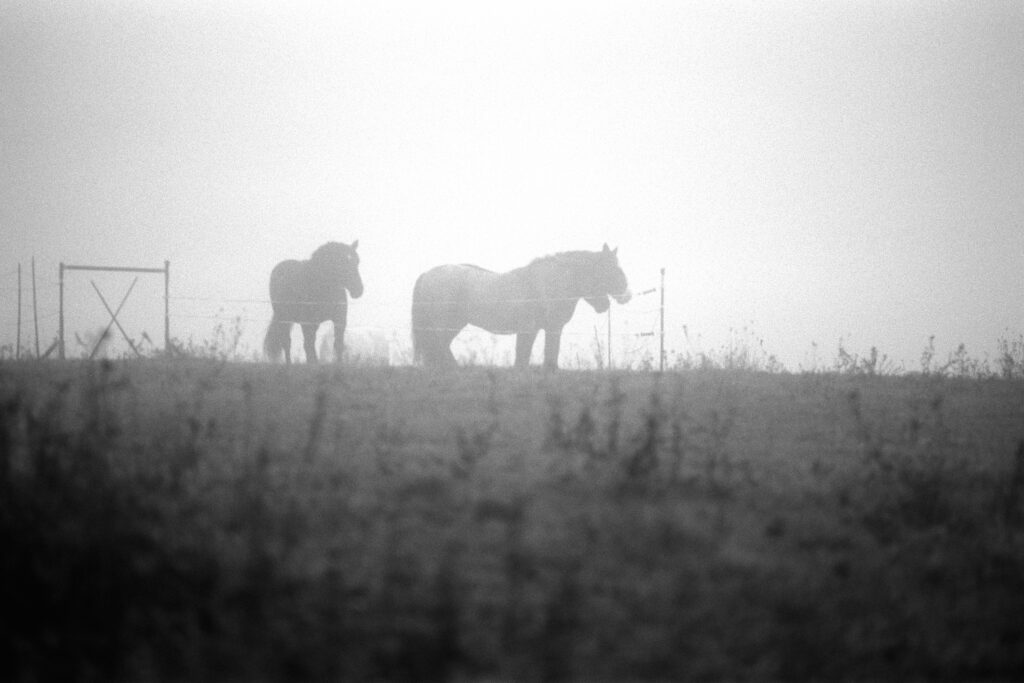
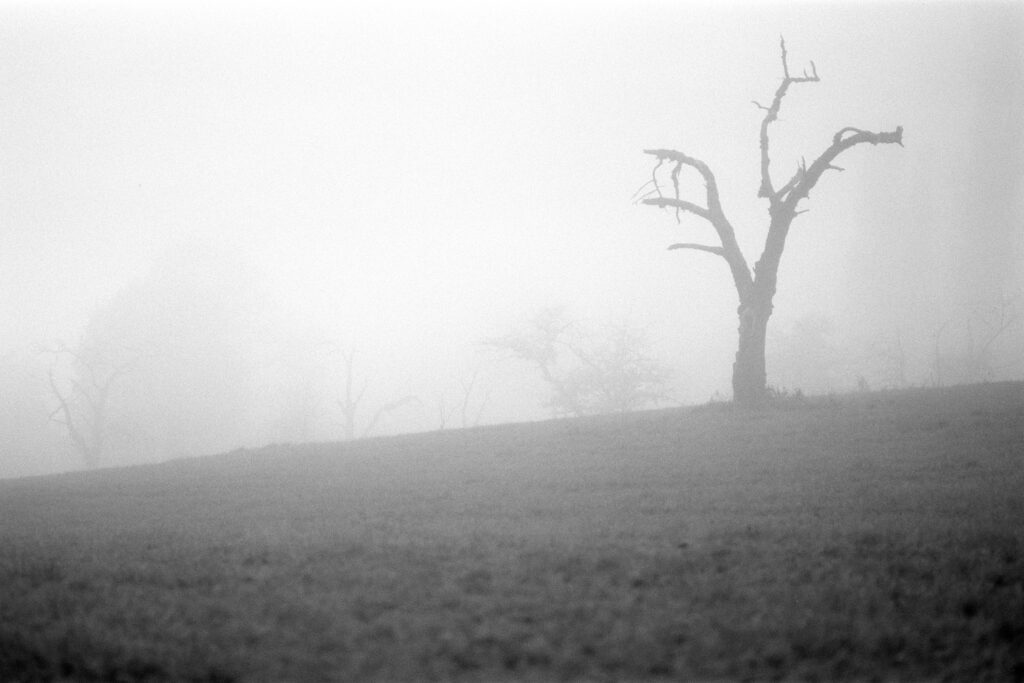
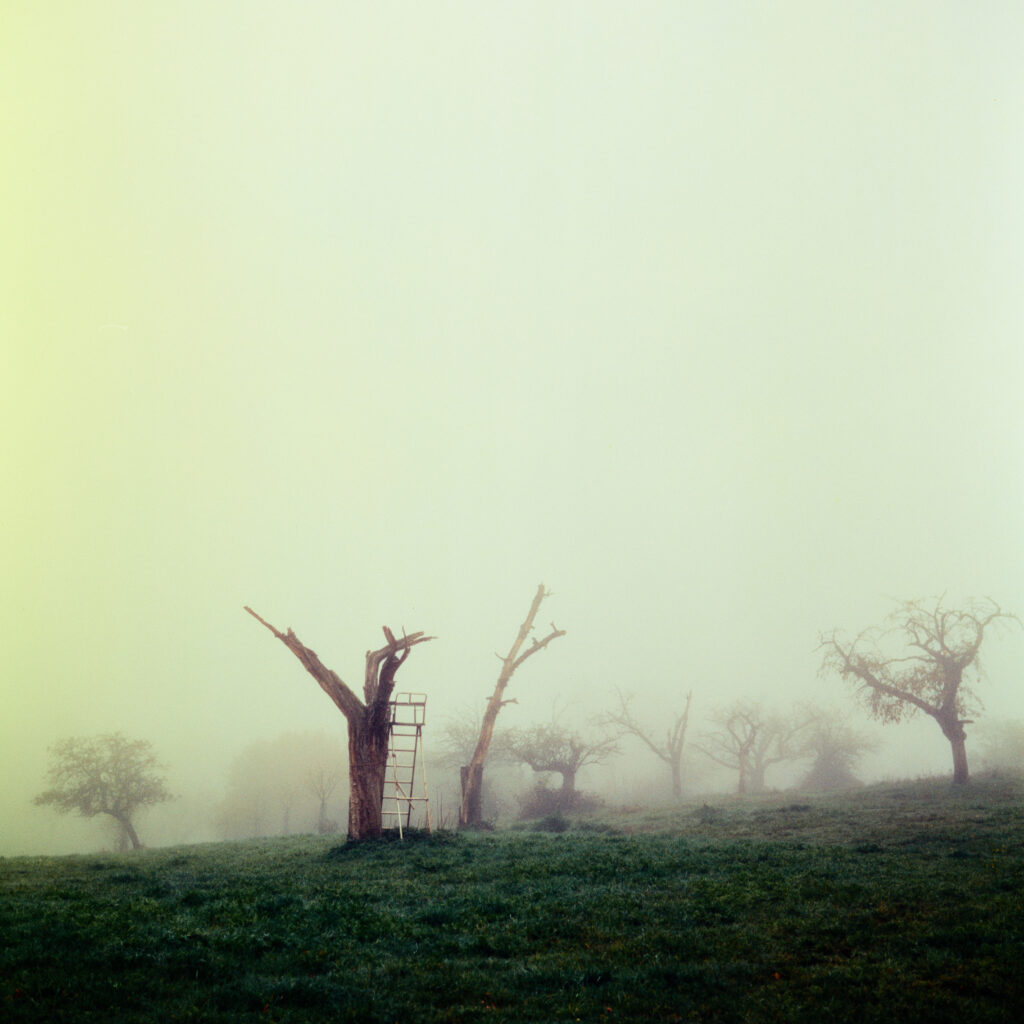
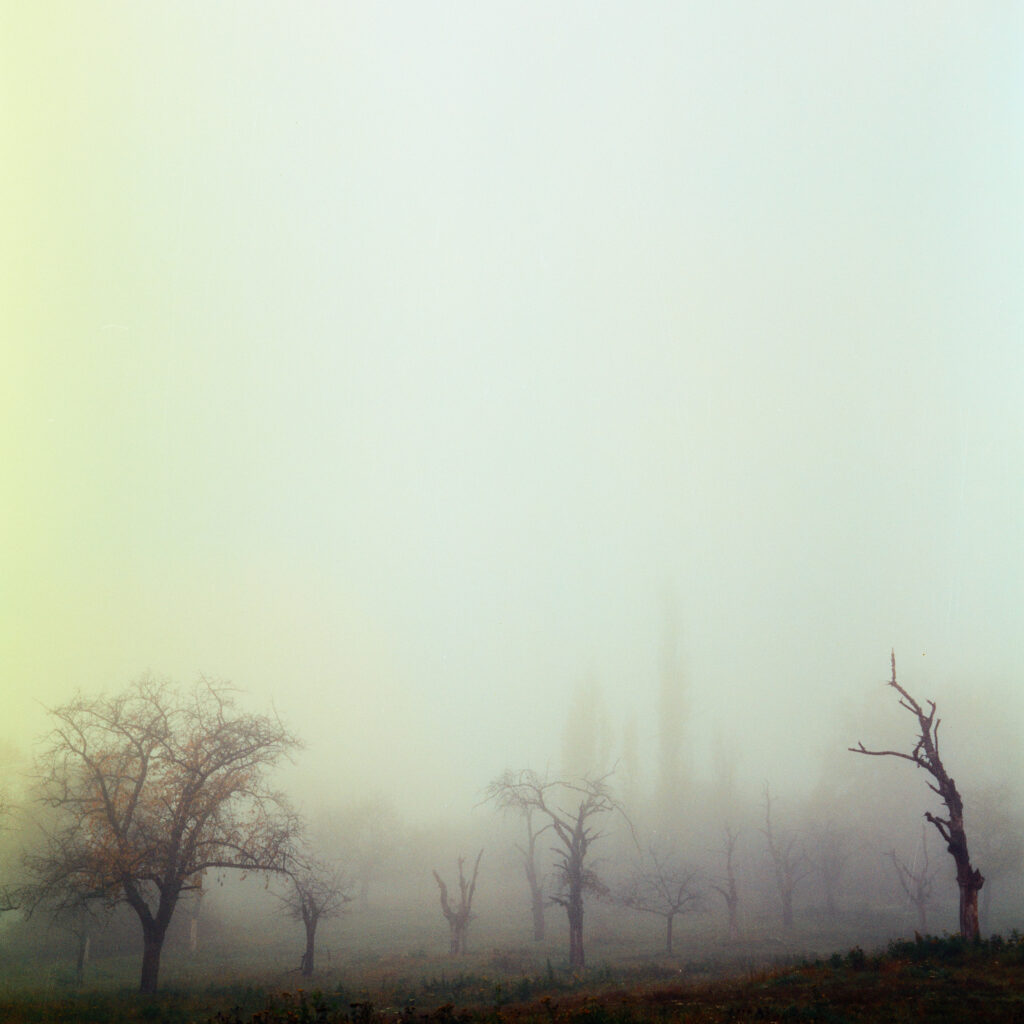
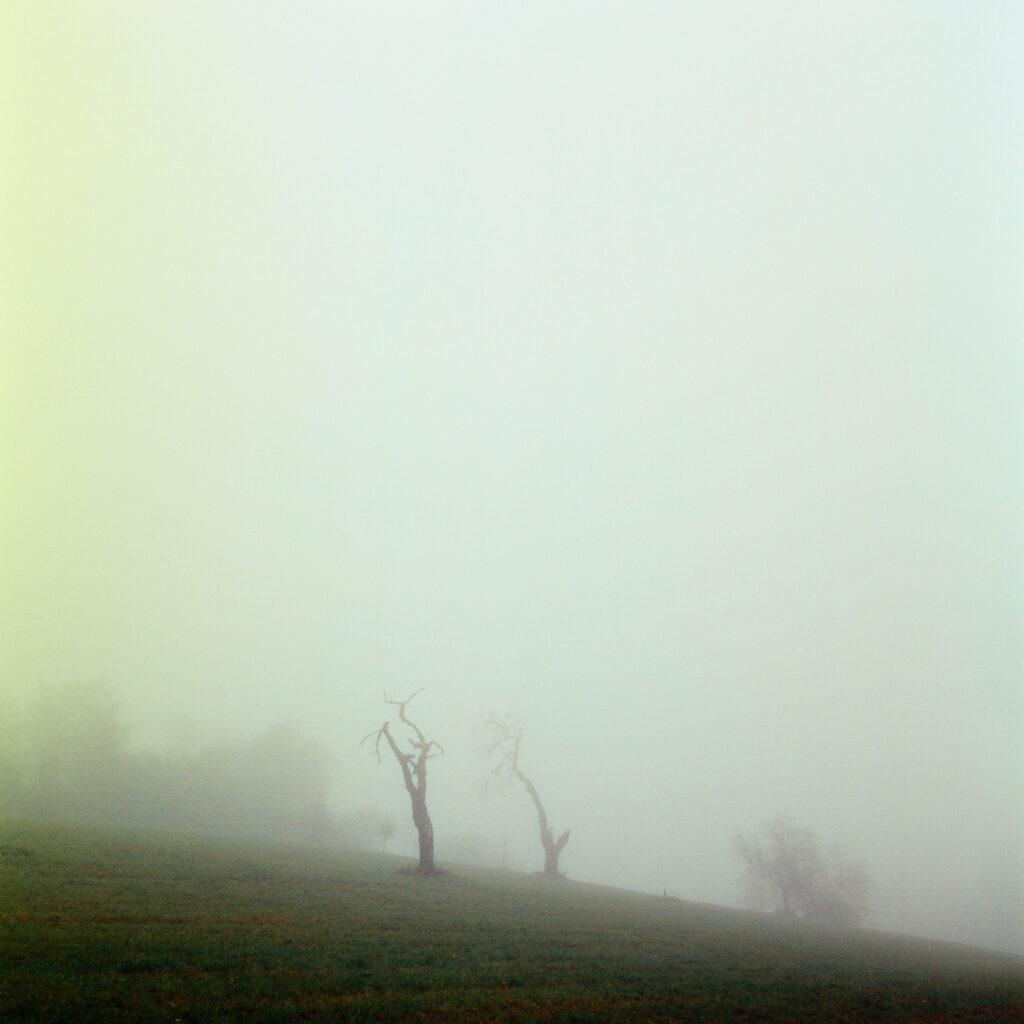
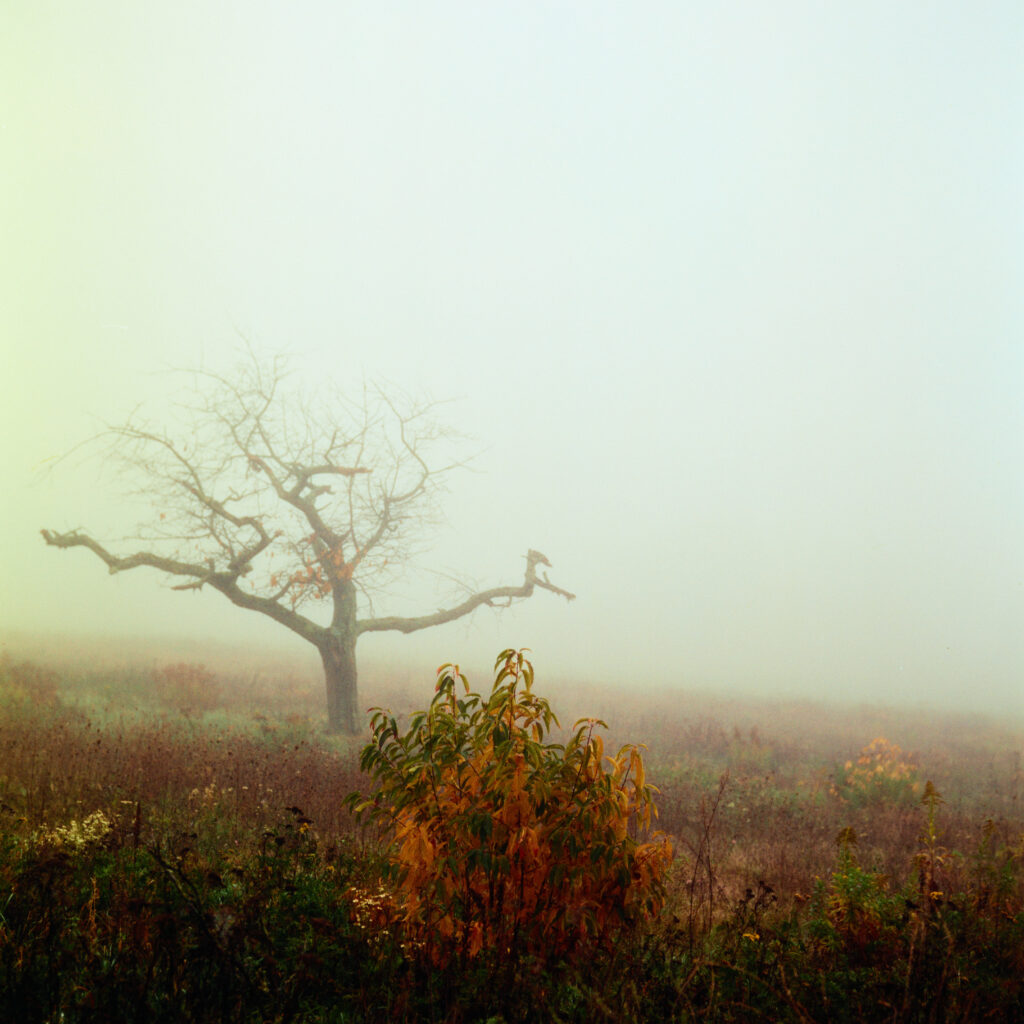
These crippled skeletons of dying trees can be found in many different spots across the Streuobstwiesen. Many of them seem to be dead, but come springtime, a miracle happens and many of them will still grow leaves, if not even blossoms and then fruit later in the summer. And they are accompanied by younger trees that enjoy the peak of their life, and finally some very young trees that have been planted only recently, be it by man or by nature. To me, it appears as if they were extended families spanning multiple generations. And then I wonder whether they know about the other families in the vicinity? I guess the bees take care of forming those inter-familiar bonds.
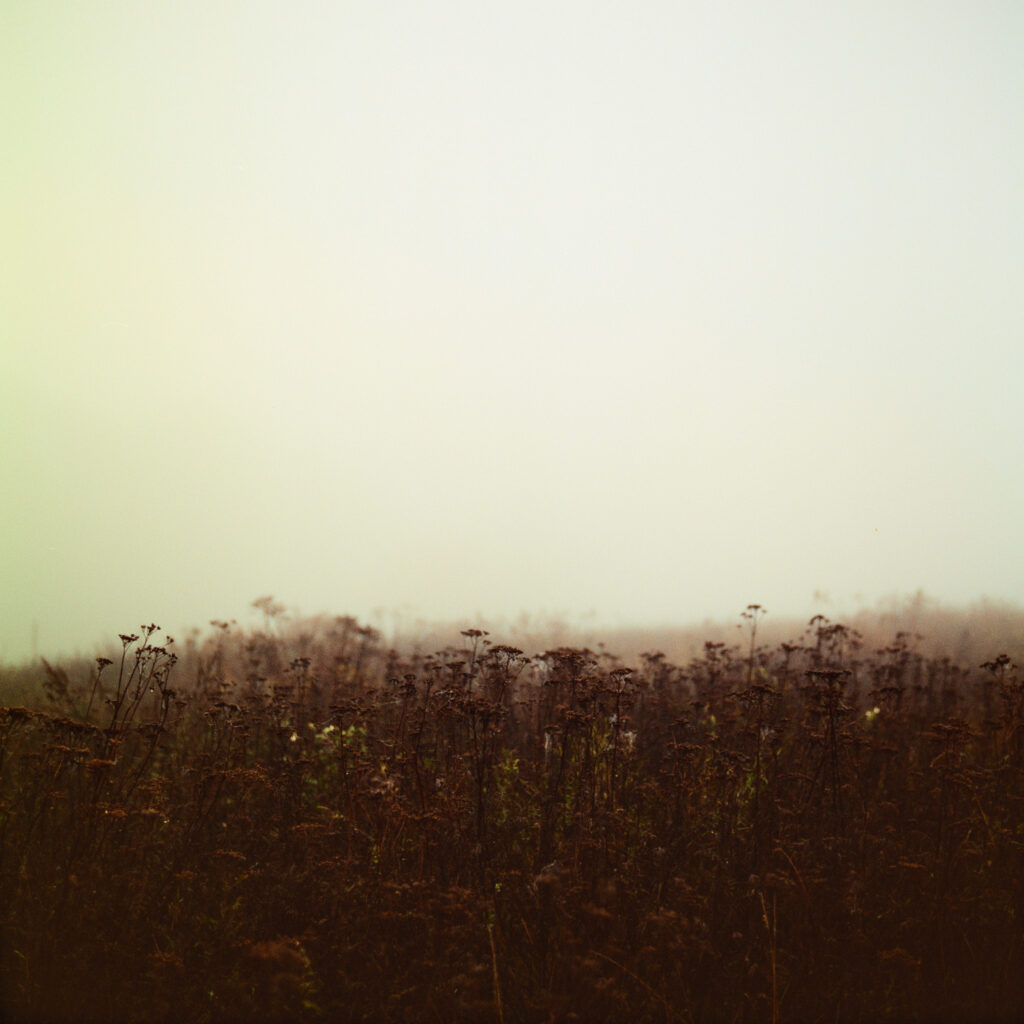
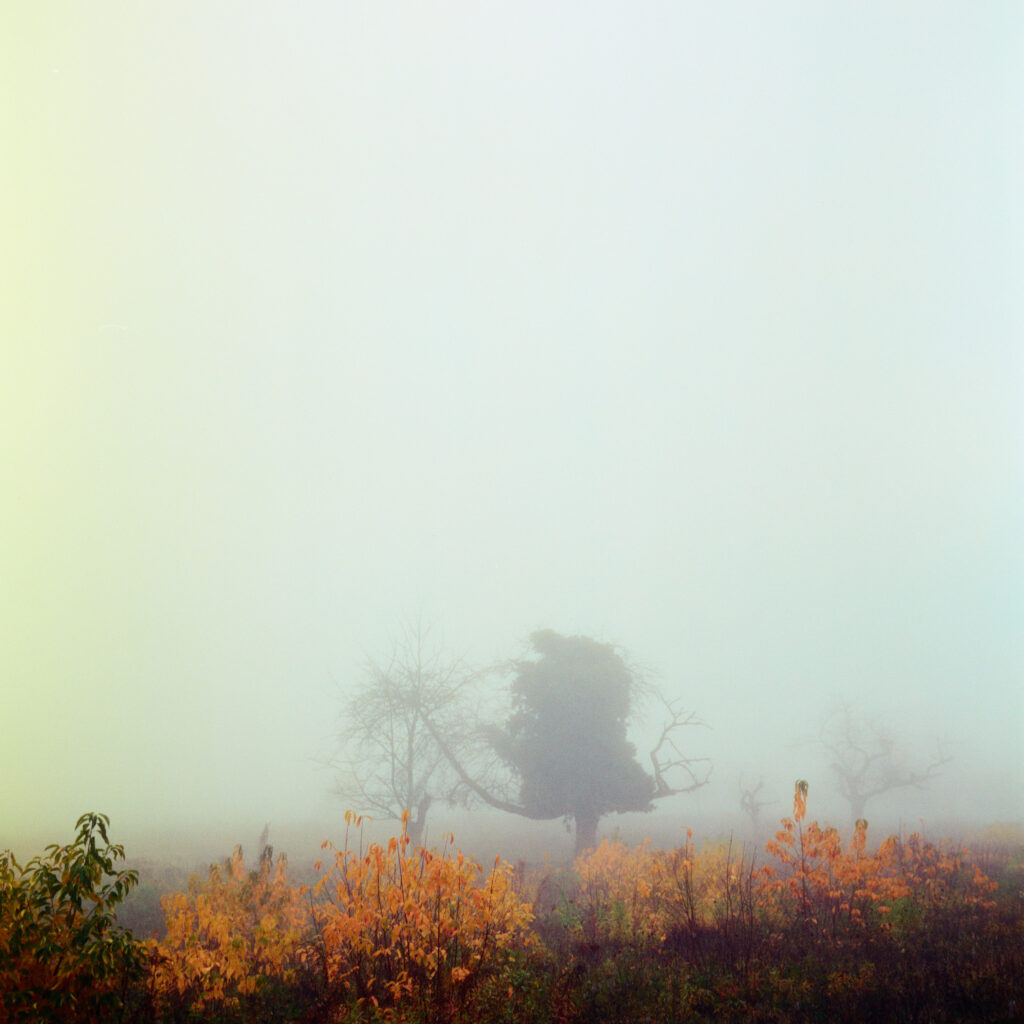
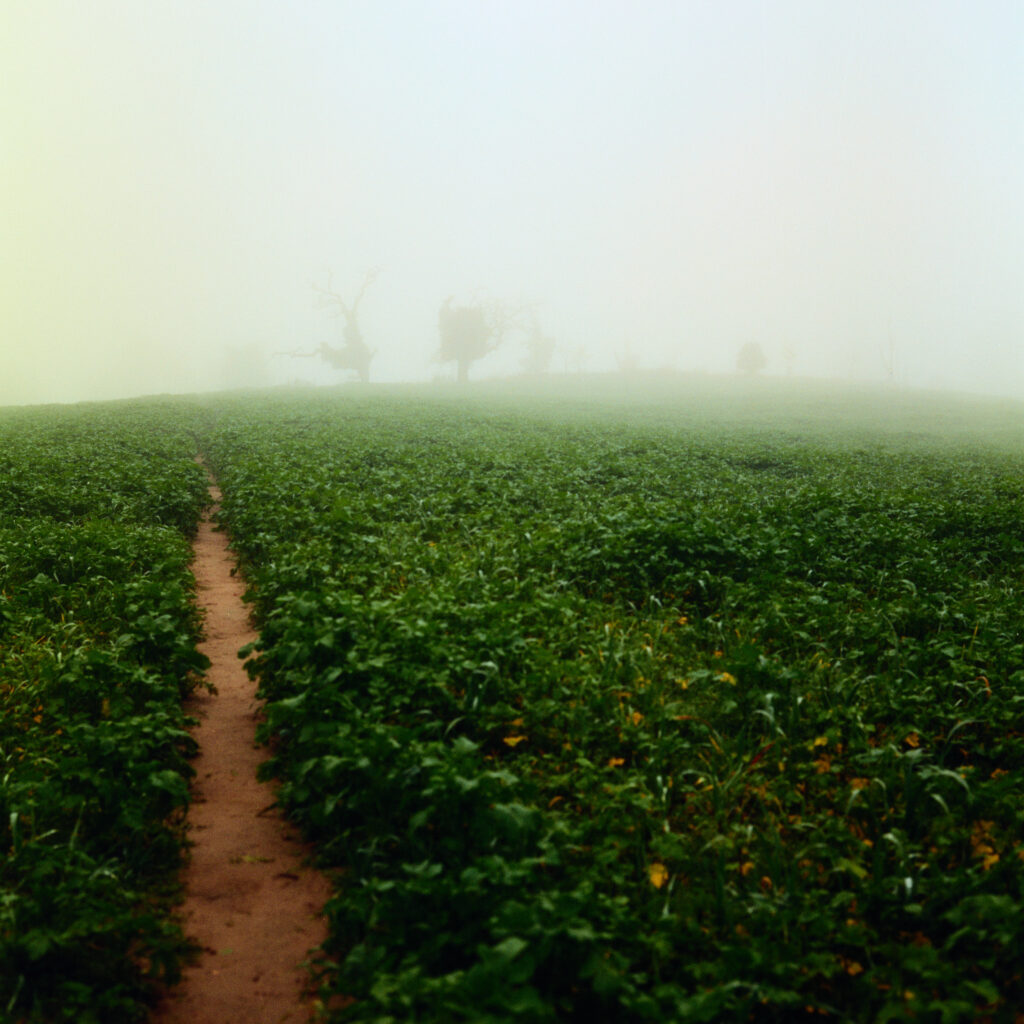
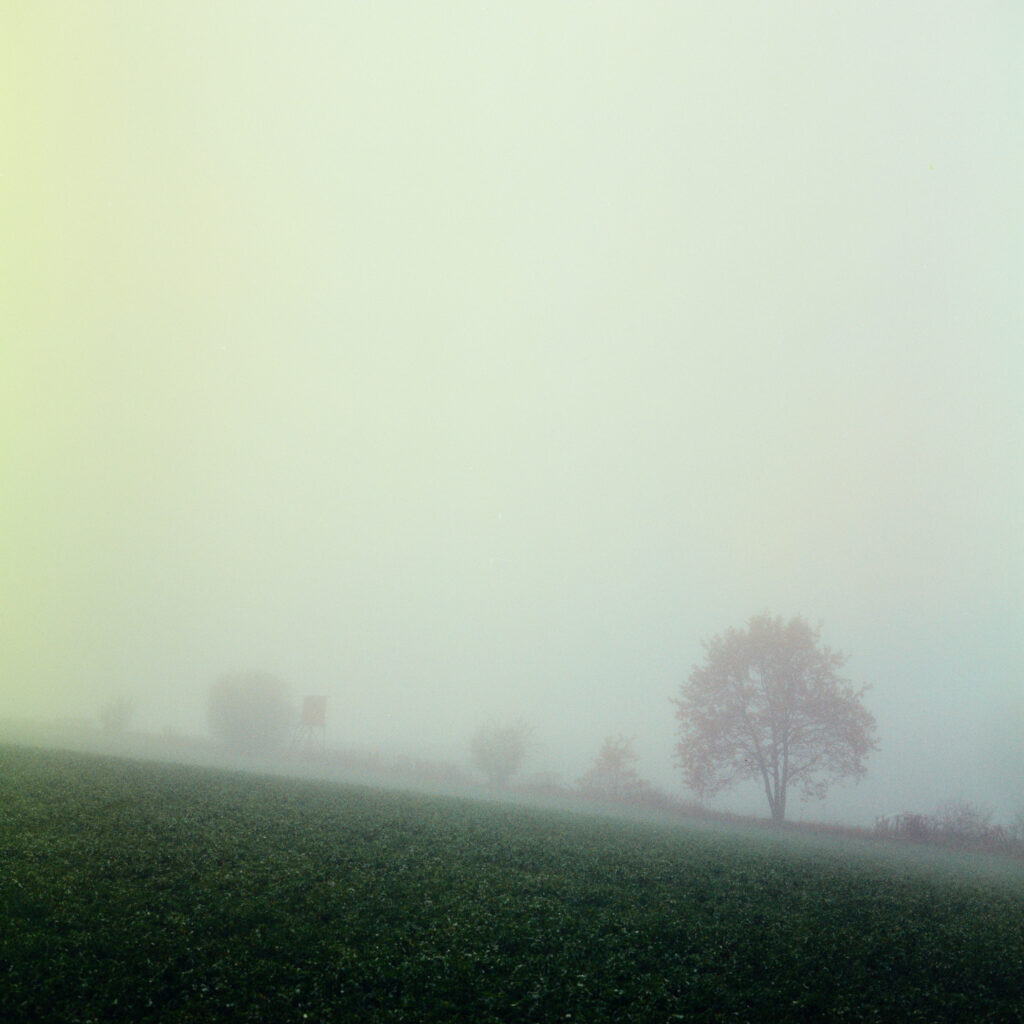
Now let’s enjoy a series of impressions in bold, warm colours…
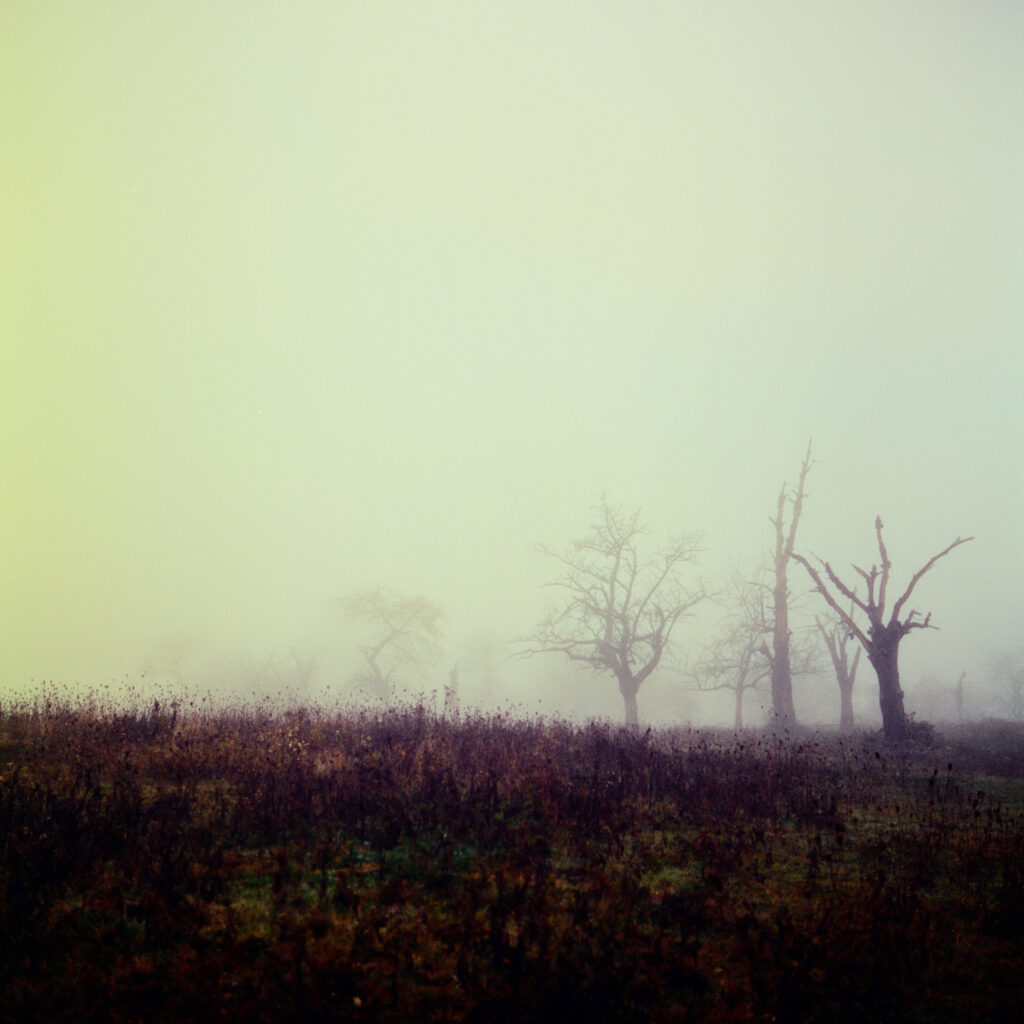
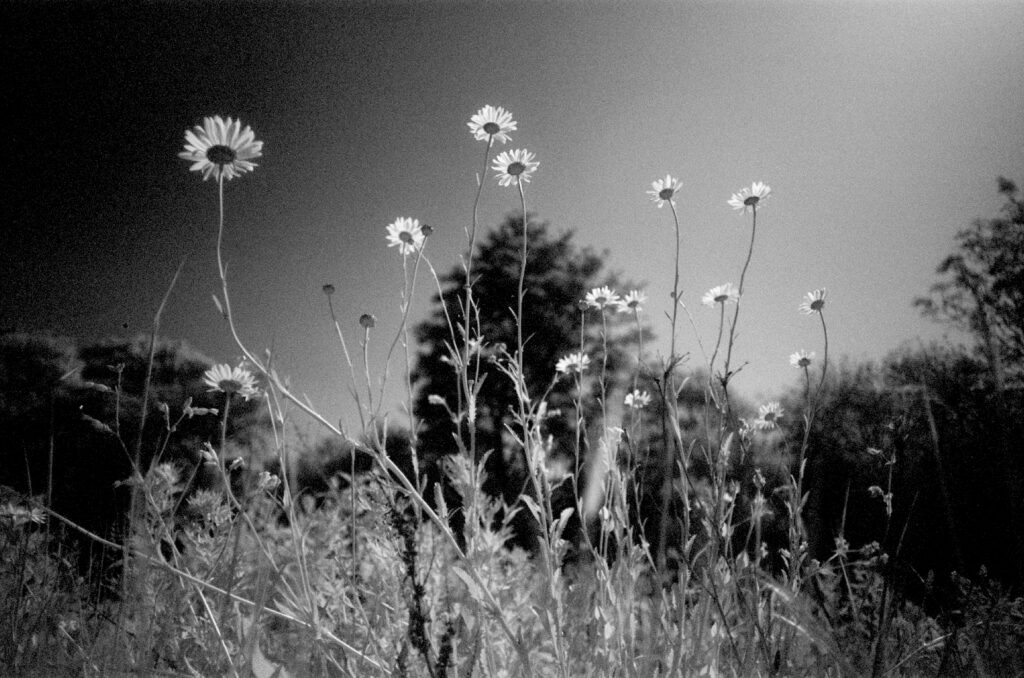
… and in shades of grey:
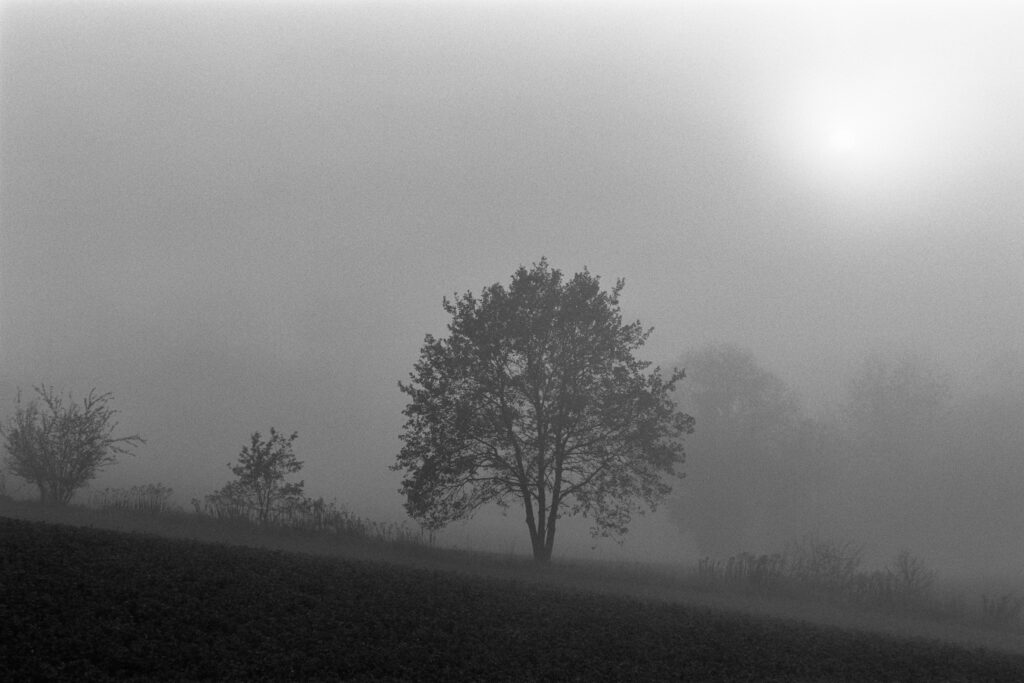
This concludes my walkabout across the Streuobstwiesen and its surroundings. Another walk of some 30 minutes, and I am back home.
Hope you enjoyed this walk with me!
The black and white photographs were captured on Ilford Pan F+ with the Nikon F2 paired with the Zeiss Planar 85/1.4, developed in JOBO Alpha, camera scanned and manually inverted in Capture One. The colour images were captured on Harman Phoenix 200 version 1 with the Rolleiflex 3.5F, lab developed, camera scanned and converted in Capture One with the Analog Toolbox. I allowed the white balance fall where Analog Toolbox put it and then decided to leave this strong yellow cast as it gives the images this apocalyptic atmosphere.
More of my photography can be found at einefragederzeit.de or on Instagram @nureinefragederzeit
Share this post:

Comments
Martin Siegel on Brothers and Sisters Unite!
Comment posted: 08/03/2026
Beautiful pictures, Erik, and a wonderful article, thank you!
Comment posted: 08/03/2026
John Fontana on Brothers and Sisters Unite!
Comment posted: 08/03/2026
Reinhold Graf on Brothers and Sisters Unite!
Comment posted: 08/03/2026
Hope all is well on your side.
Erik Brammer on Brothers and Sisters Unite!
Comment posted: 08/03/2026
Gary Smith on Brothers and Sisters Unite!
Comment posted: 08/03/2026
I really like the shot just above the one where the fruit pickers left their ladder against the tree.
Comment posted: 08/03/2026
Curtis Heikkinen on Brothers and Sisters Unite!
Comment posted: 08/03/2026
Comment posted: 08/03/2026
David Pauley on Brothers and Sisters Unite!
Comment posted: 08/03/2026
Comment posted: 08/03/2026
Omar Tibi on Brothers and Sisters Unite!
Comment posted: 09/03/2026
Keep on shooting and looking forward to hearing more from you.
Comment posted: 09/03/2026
Leon Winnert on Brothers and Sisters Unite!
Comment posted: 09/03/2026
Jeffery Luhn on Brothers and Sisters Unite!
Comment posted: 10/03/2026
Many people already responded with comments I'd say, so in short: I love your fog shots! I had frequent fog in the place we used live. (Santa Cruz, Ca) And now we live in the Sierra Mountains with clear skies and no fog. Sad face. So your photos struck a nostalgic note with me. Keep posting! Jeffery
Erik Brammer on Brothers and Sisters Unite!
Comment posted: 10/03/2026
Niall Keohane on Brothers and Sisters Unite!
Comment posted: 10/03/2026
Comment posted: 10/03/2026