

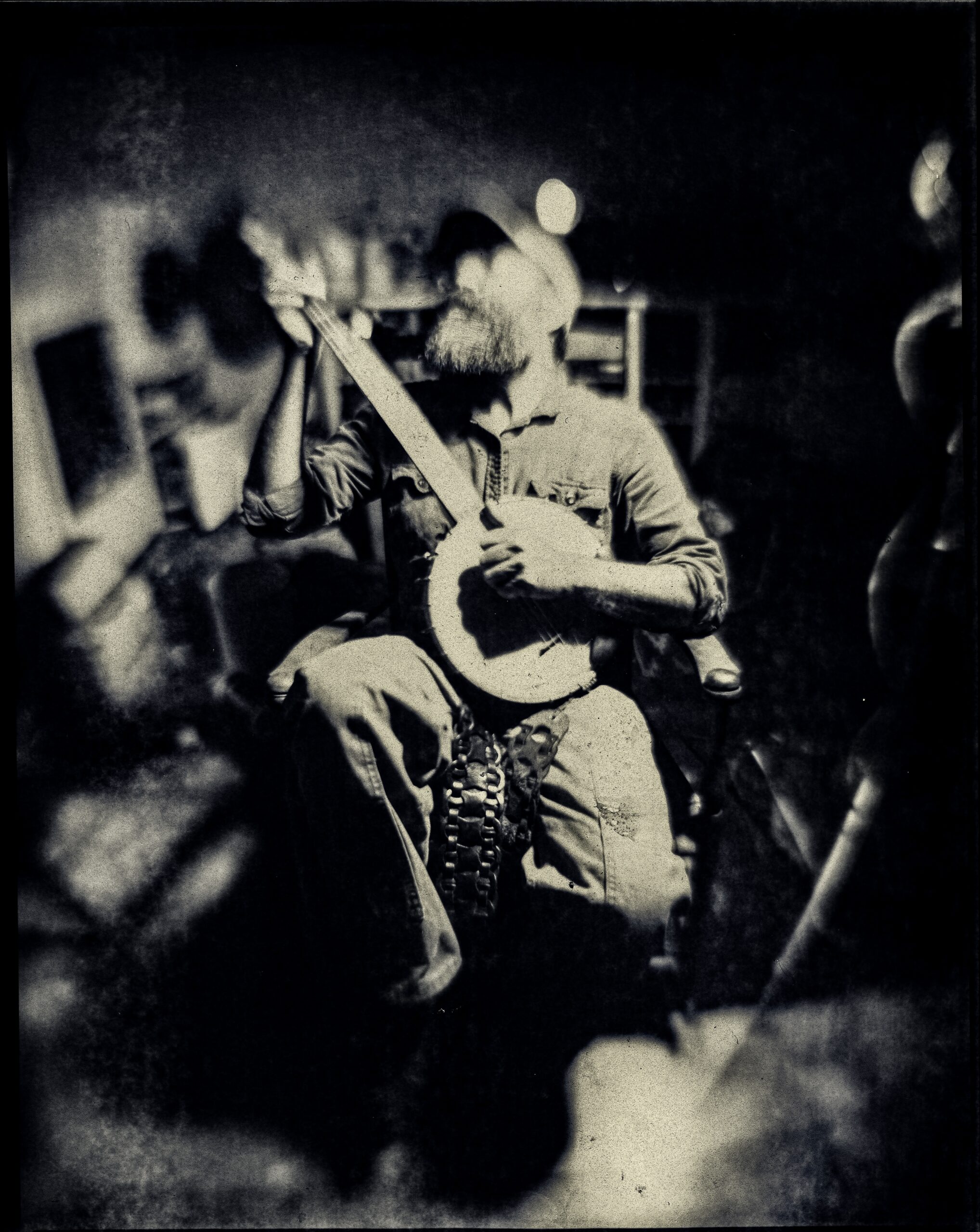
One of my favorite parts of film photography is experimenting with new-to-me gear, processes, and formats. Large format photography is a particularly good venue for this since it is already fundamentally slow, thoughtful, and process-focused. And so I am, like many, often on the lookout for affordable and interesting gear, film, or methods that I have never tried. Recently I saw one of my favorite film nerds, “Zed” Martin, posting some great LF work on Bluesky, using a newly manufactured LF lens I had never heard of: a Wollaston meniscus lens built by Reinhold Schable. These lenses sounded fascinating: newly manufactured barrel lenses, following the design of some of the earliest lenses designed by William Wollaston in the early 19th century! Also: quite affordable!
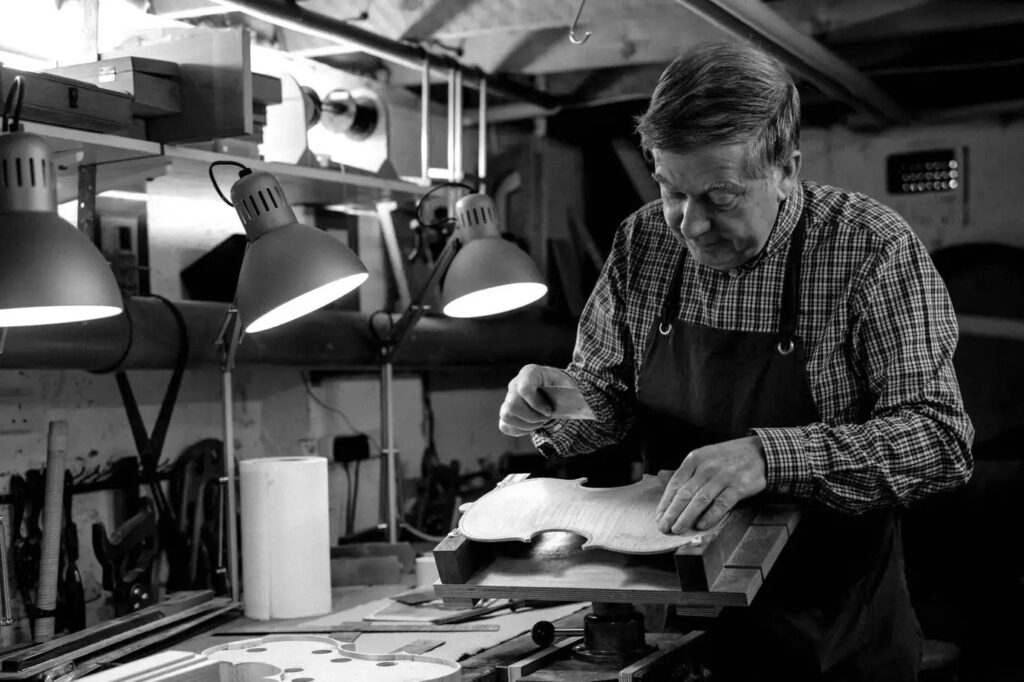
Now 90 years old, Reinhold has been making and selling these lenses for several decades. But his is a small operation, and while there seems to be a small cult following for his lenses, there is not a lot of widespread knowledge about them available online. They are simple, affordable, single element lenses that come with a standard set of waterhouse-style stops that are inserted into a slot in front of the lone glass element. Reinhold sells several focal lengths that cover most large format sizes and even ultra large formats (up to 31″ at infinity!). After some very interesting discussions with both Reinhold and Zed, I decided to try one of the newest meniscus lenses being offered: a 125mm f1.6 meniscus lens with an image circle that should JUST/sort of cover 8×10 at infinity!
Wollaston Meniscus lenses are simple one element meniscus lens with the curved side facing in toward the film. These lenses produce extremely soft images, reminiscent of early pictorialism. Although simple plastic meniscus lenses continue to be used in the present, in cheap 35mm and 120 cameras like the inimitable Holga, it is rare to see one in LF photography. But Reinhold has something like 13 different focal lengths available! In deciding between the different options , I was primarily interested in getting something that did not cover similar ground as the two 8×10 lenses I already have which are in the normal to wide range. I thought about getting the longer 335mm f4.6 lens, which would be good for portraits, but ended up deciding to try the extremely wide (for 8×10) 125mm that he had just started offering. Mainly because it seemed like it would be a challenge. This is the equivalent of a 19mm lens in 35mm format! F1.6 is also fast for a large format lens that can (just) cover 8×10!
Not only are these simple lenses in terms of a single large element, but they are also simply constructed: a glass element mounted in a plastic barrel with a slot for the external waterhouse stops, cut from a stiff paper board. Reinhold offers custom wooden lens boards (which look very nice) as well as front mounted new and reconditioned Packard shutters. But I wanted to keep the cost down, and assumed Id be shooting very slow shutter speeds anyway, so I opted to make my own lens board and to go with the lens-cap shutter method. Reinhold helpfully supplies the lenses with front and rear caps and a few well-labeled cardboard aperture cards, but for an additional fee he will include a more extensive booklet of all potential aperture cards.
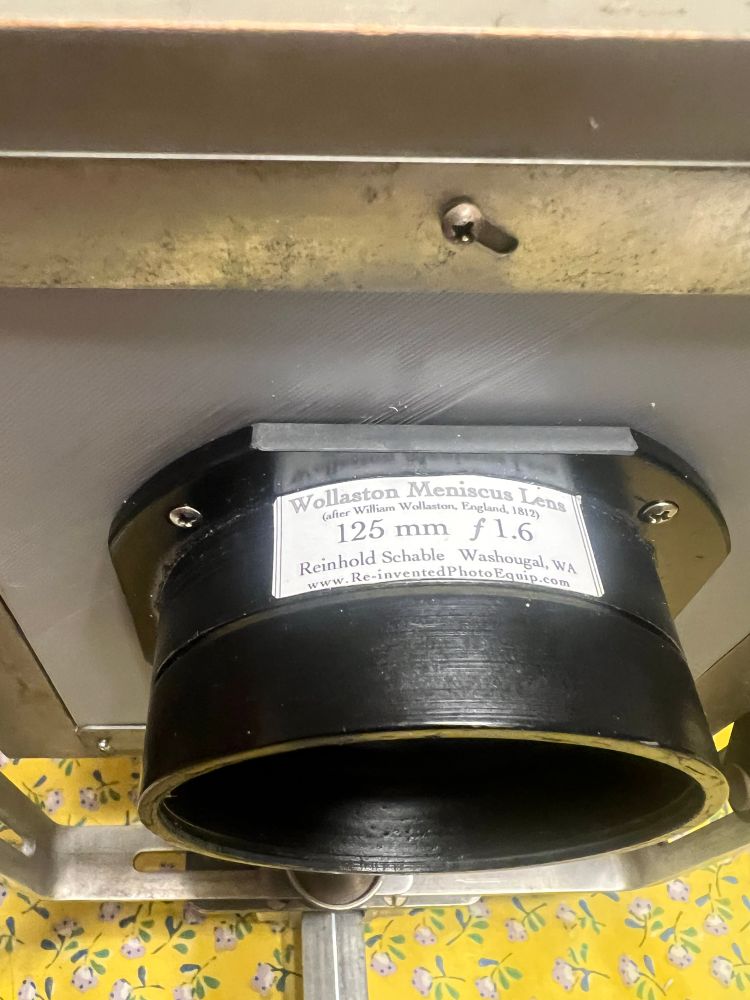
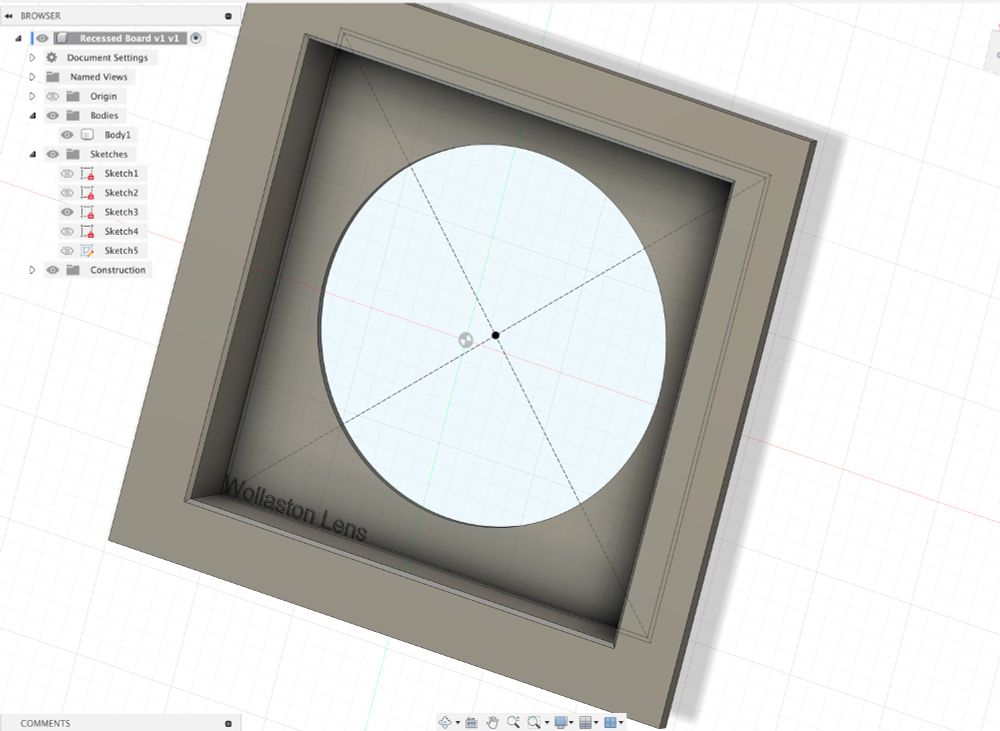
When I first received the lens, my plan was to mount it on my Seneca Improved View 8×10 camera. This is a lovely old camera in good condition that is what Ive done most of my 8×10 shooting with. I designed a newly 3d printable board for the Seneca, and added some recess because I was concerned about reaching infinity. What I didnt count on, though, was the focus rail getting in the way. As soon as I had the lens in my hand I ran into a problem: the 100 year old rail on the camera will not allow both standards to slide to the front of the camera, the way I assumed it would. So there is no way to get the rail out of the frame. I can fold the front rail up, but then I cant adjust the focus at all. I gave up on this combination!
Instead, I whipped up a quick mount to put this on my 4×5 Toyo view and made my first test with the lens!: My usual new-gear mirror selfie in my darkroom. This quick paper negative shot was not great, but gave a first experience with the limitations and also the beautiful renderings possible with this lens!
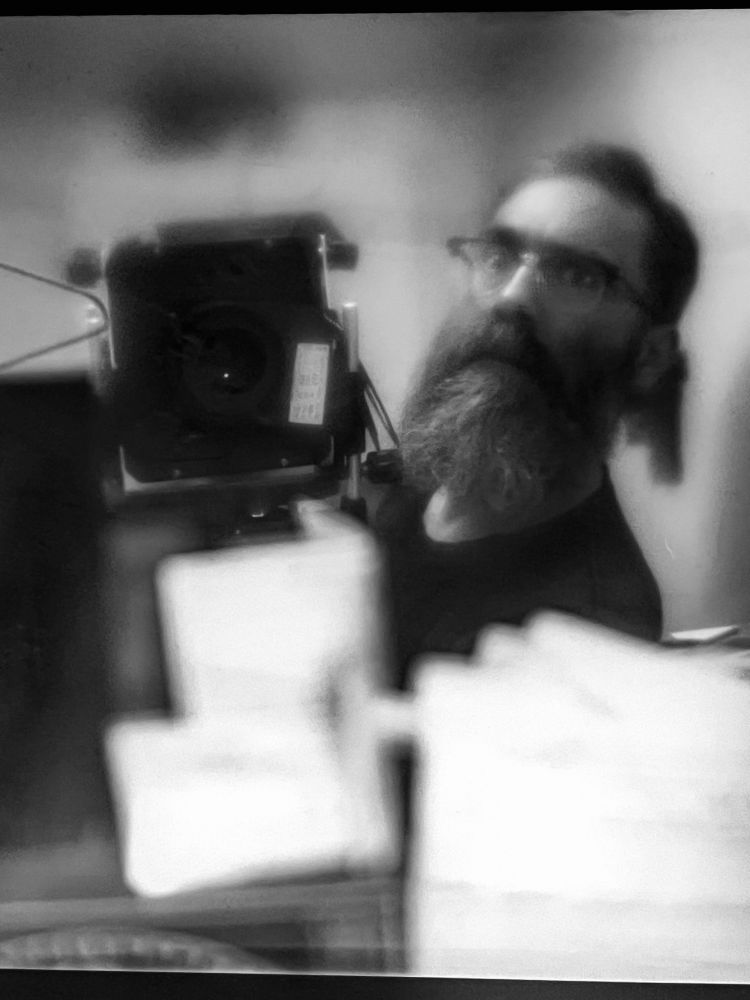
This shot was on a paper negative at f2. It shows the extremely shallow depth of field of the fast lens, but also the way in which sharpness falls off, um, rapidly from the center. Even though my face should be in focus, it is very soft since it is not in the center of the image. And this was only on 4×5! My initial thoughts were that this would be difficult to actually use! I put the lens aside for a few months.
I only came back to it when I happened to stumble on a cheap monorail 8×10 camera that would overcome the problem I was having with my Seneca: a nice Burke and James “Grover” 8×10 monorail. The Grover is an unassuming but functional machine with more flexibility than my older Seneca. I did not think this would be effective field camera, so I was also surprised that it is easy to remove the rail and pack the whole thing in my usual LF backpack! I immediately whipped up a new board to mount the Wollaston on the Grover and started testing the lens in earnest!
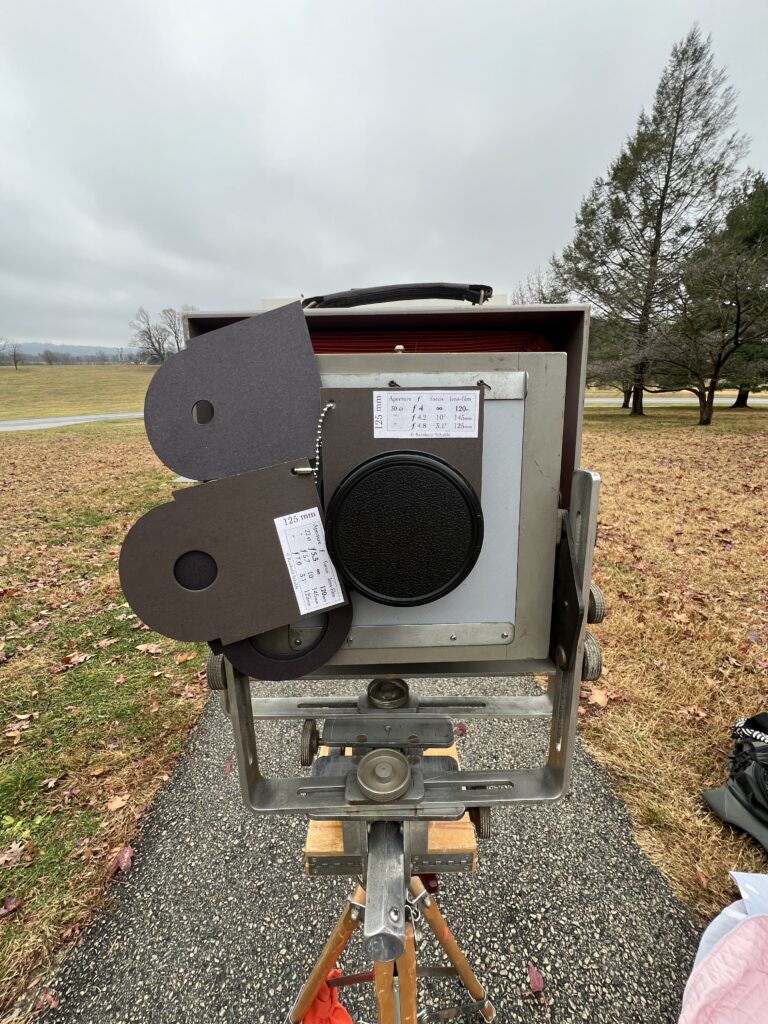
My first test on the B+J was a series of self portraits in my basement “studio”. I set this up with the camera VERY close to me, and a single strobe with bare bulb as close as possible without being in the frame. I shot these as a paper negatives @5.6 with my old 1400ws flash on full.
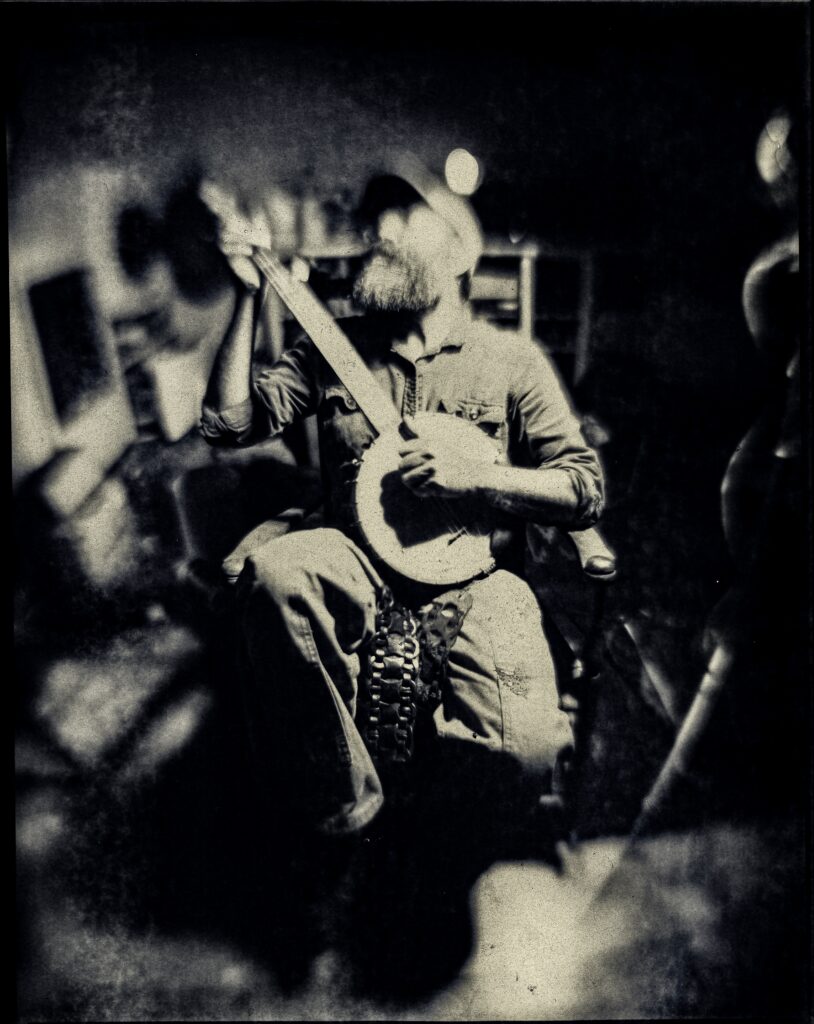
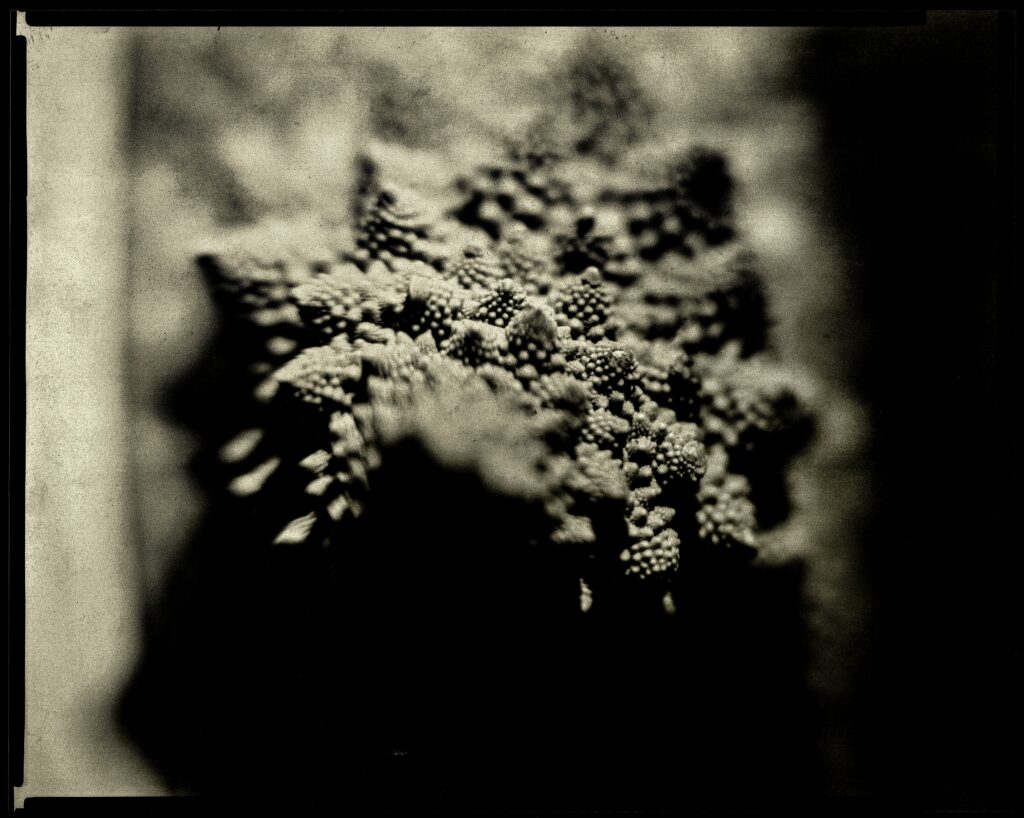
I was surprised by how much I liked this. Yes, the image is only sharp in a very small area in the center, but the OOF areas and the softness gives it an amazing dreamy character. I realized I can work with this. I also did a few tests in my studio with the lens cranked all the way out to see what it looked like as a macro lens. And the result was similarly interesting. The depth of field is tiny, it was difficult to account for the bellows factor at this extremely short distance, and the combination of shallow DOF with the softness outside the center makes for a pretty wild combo. This is a shot from only a few cm away of a romanesco cauliflower.
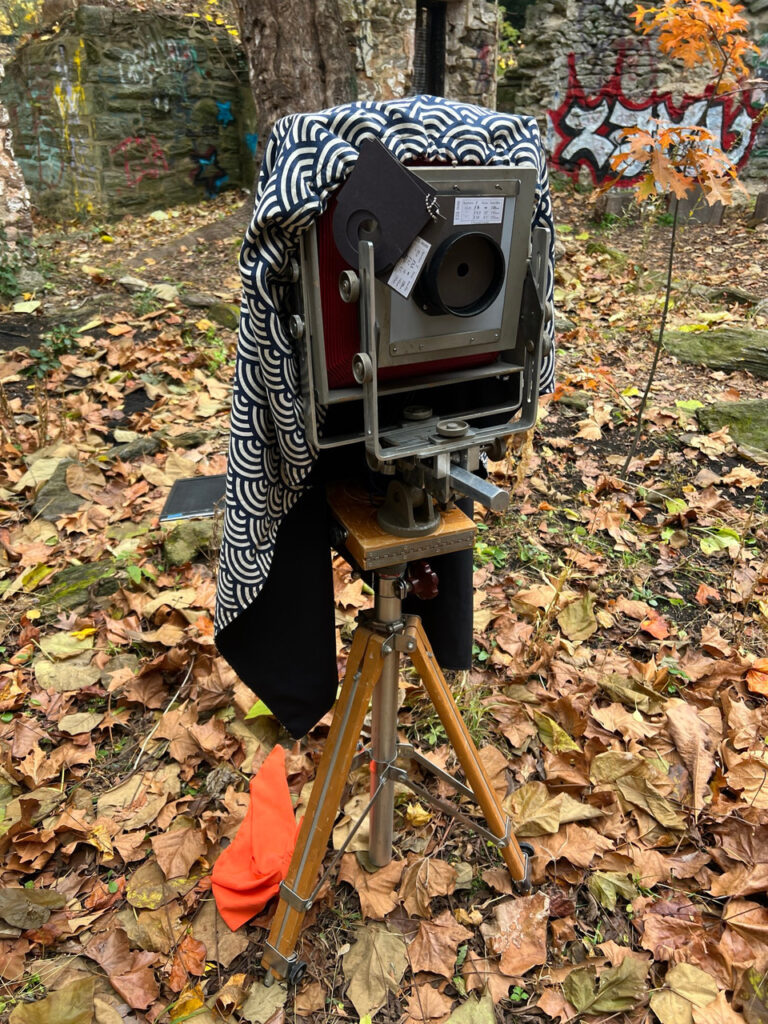
Finally, i was ready to take the lens outdoors and try it in the field. I started at a few of my favorite local outdoor test locations. The results were really cool, but did allow me to identify some potential problems. First, the lens JUST covers 8×10. And it is hard to see the edges of the image in my GG, which means if I am not careful and have either moved the front standard at all, or not seated the aperture card fully, the edge of the image circle can creep in without me noticing! Second: the lens is a little FAST for shooting as a barrel lens without a real shutter. I often shoot paper negatives because they are cheap and create a good workflow for scanning and inverting. Usually this is also a good combo for shooting slow LF barrel lenses with long-ish exposures. But this lens is 1.4 and the aperture cards only go up to f8. So in moderate light, even rating paper at iso 6, the shutter speeds get close to the limit of what I am comfortable shooting with the lens-cap-shutter method. I dont want to mess with exposures faster than about 1 second, but in overcast conditions I was shooting the smallest aperture card, f8, at ~1s. Any brighter and I would not be able to shoot!
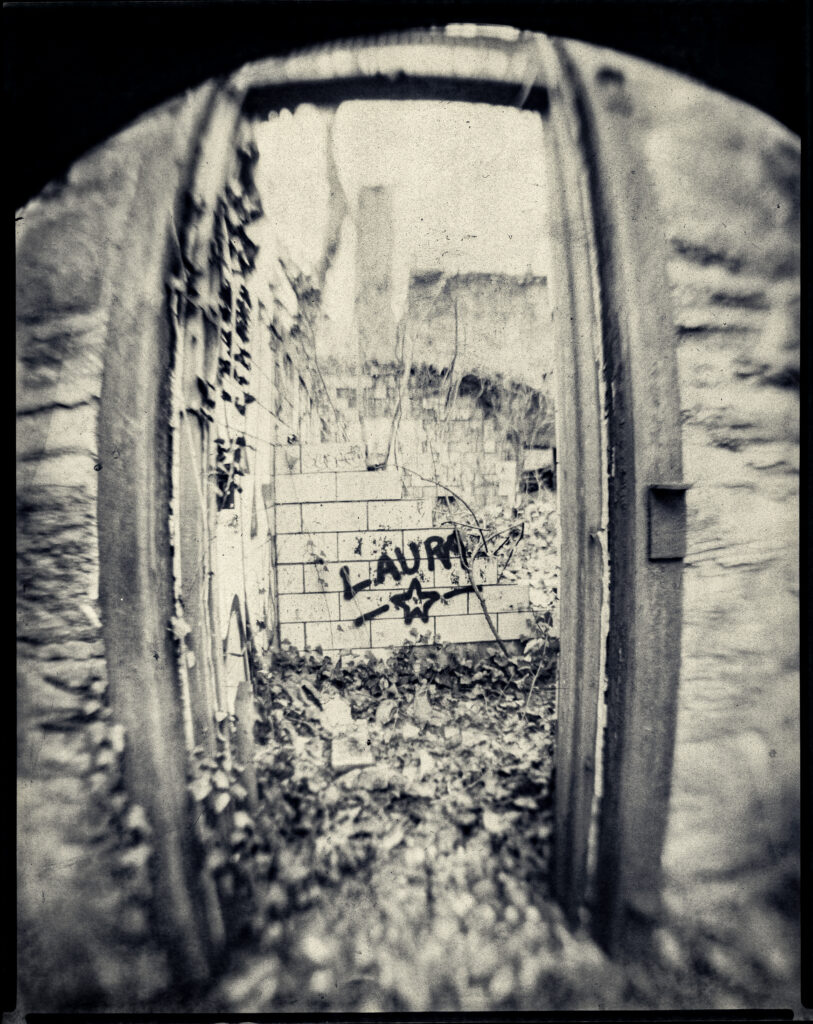
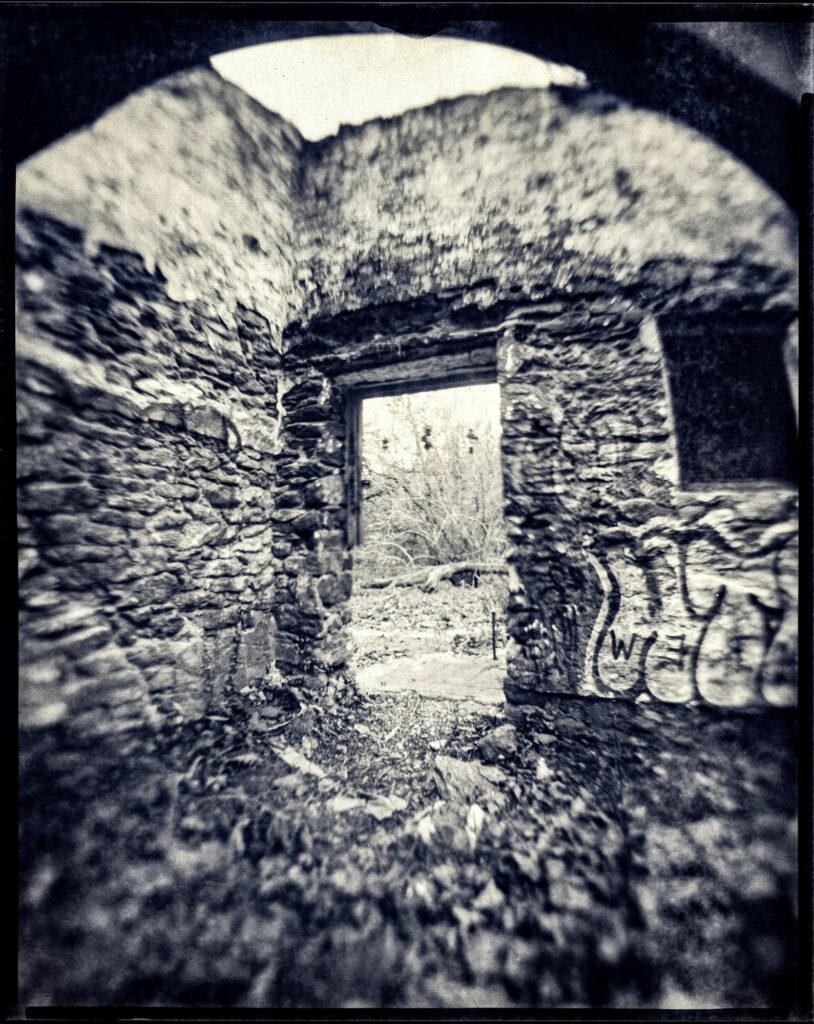
How can I (easily/affordably) get more latitude for longer exposures within the f/1.5-8 range!? Obviously the right answer would be an ND filter to knock down the light. But, as I said, I like an excuse to try new-to-me processes and materials. I decided to try a slower emulsion: I was familiar with contact printing paper, but thought that there was no longer any being produced after Kodak AZO was discontinued. But, after a discussion on Bluesky, I was surprised to find that there may be 2 places to buy new in-date contact paper. ADOX has a line of contact printing paper called Lupex. It is affordable and available from B+H. But the small scale production of Lodima contact paper, that continued after AZO was discontinued, seems like it is also still available!
So, armed with some fresh Lupex paper, I loaded up some more holders and tried again on some brighter days. Lupex, like AZO, is supposed to be 8 stops slower than regular paper. If rating regular paper at ISO 6, that makes lupex an astonishing ISO .02! I have never shot anything anywhere close to this slow.
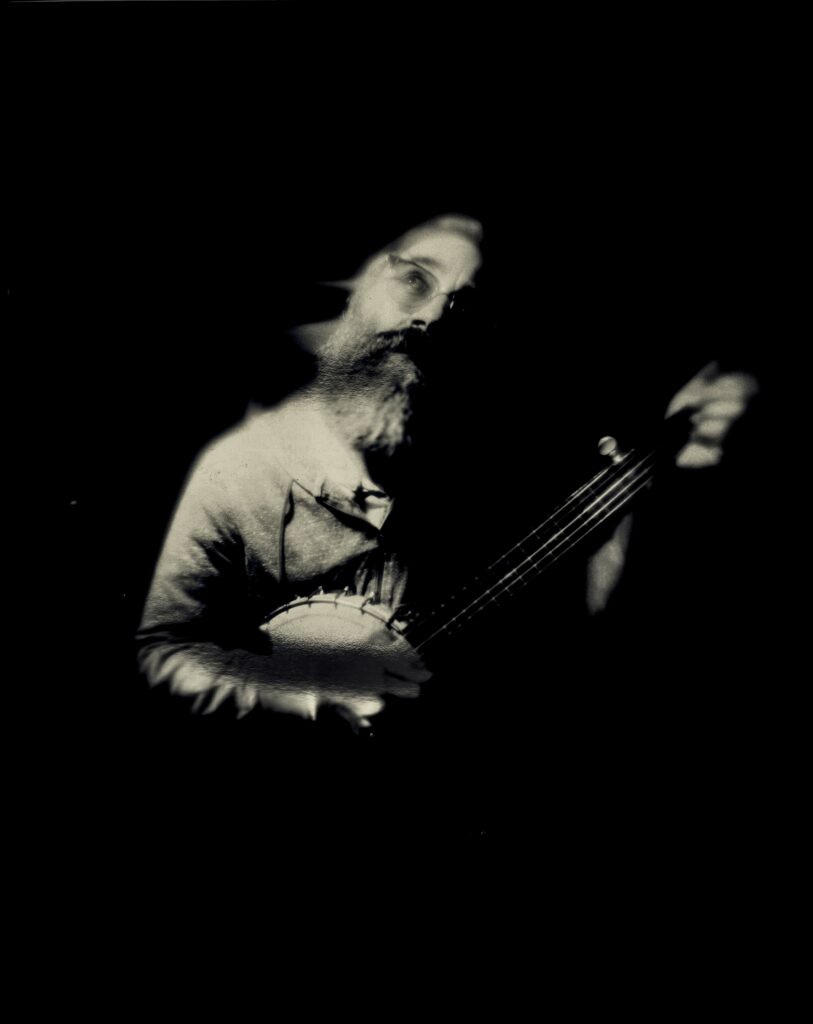
My first test was, once again, in my basement with strobes. Now cranked up to full power (1500ws) and as close as I could get them at f2. The result was pretty wild.
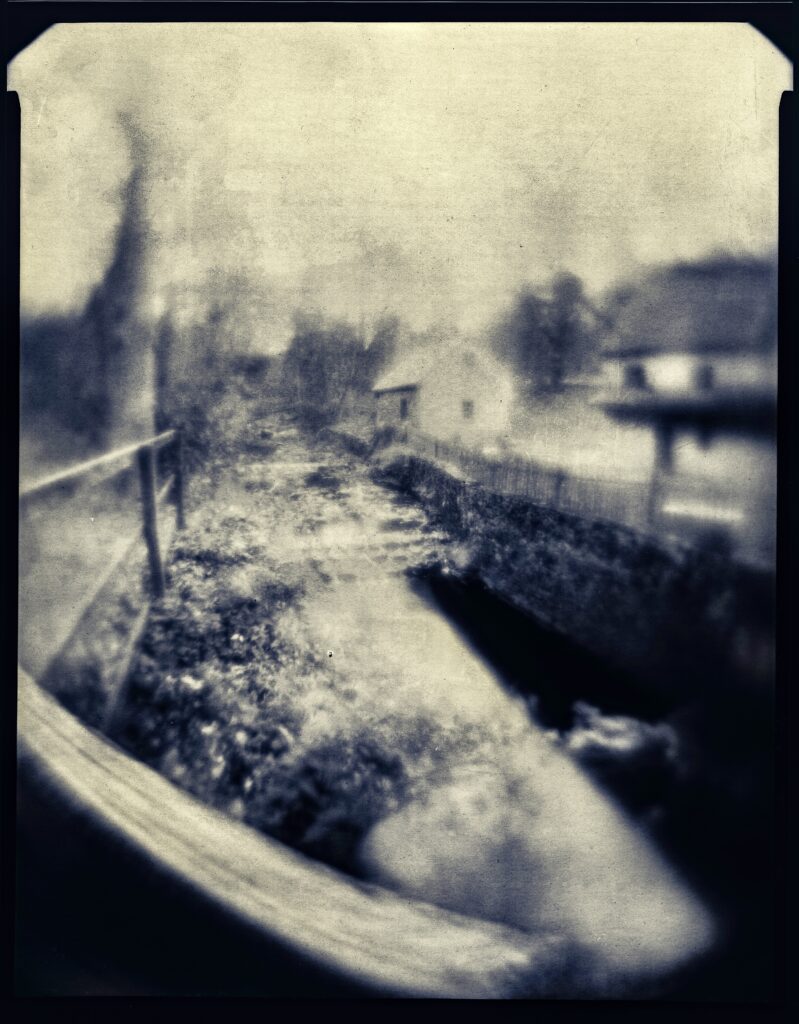
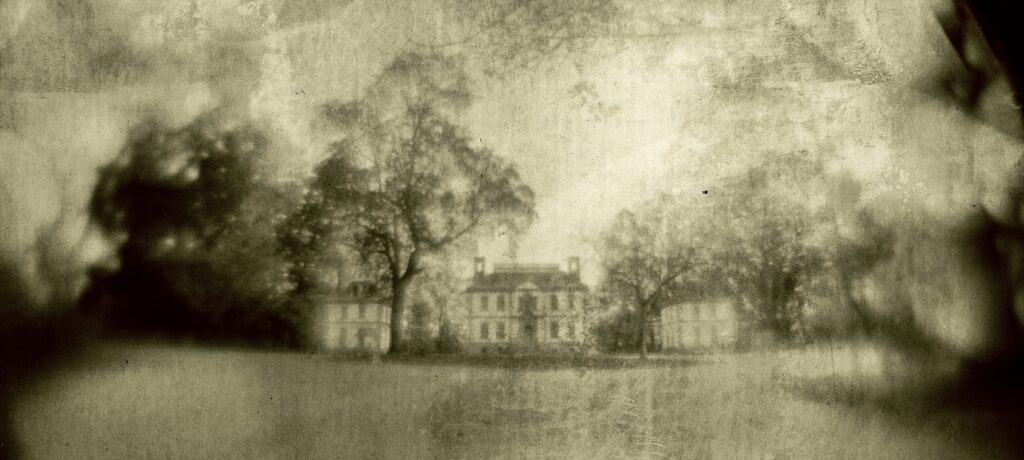
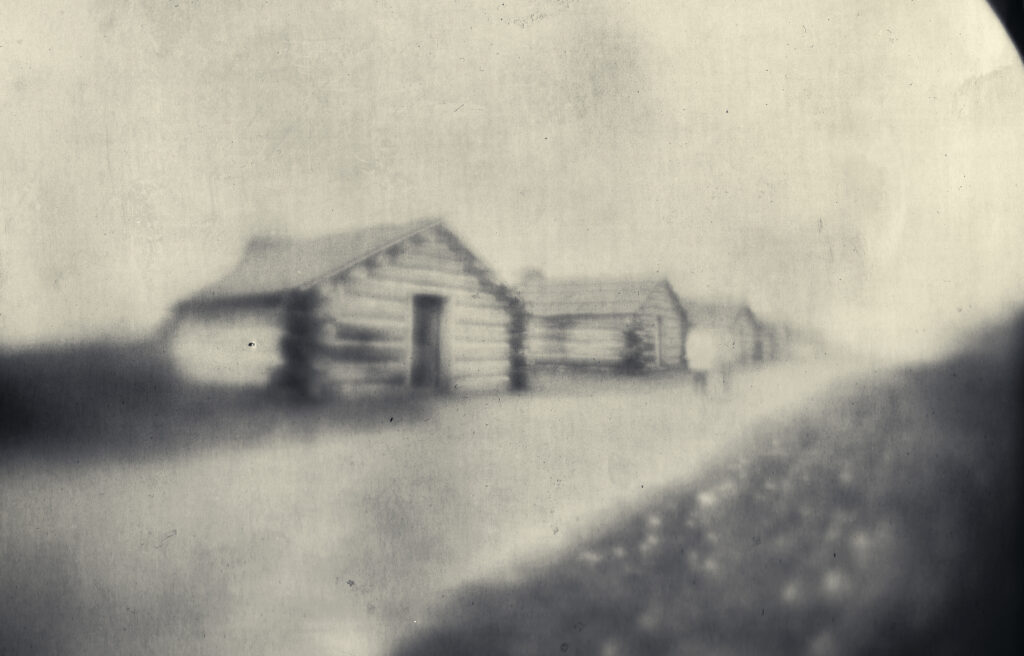
Next, I took it out to a few local historic sites. The results are exactly what I hoped I’d be able to get with this lens: the slow, crazily dreamy effect of early pictorialist landscapes. Hardly anything is sharp, and long exposures add blur to anything in motion in the frame. In variable lighting conditions, the shots below were all taken at f2-2.7 and between 2 and 6s of exposure (my ideal time for lens-cap shutter exposures). I think this is a wild way to shoot LF paper negatives, but it’s also cheap and produces a really neat effect. This is simultaneously similar to both the effect of really shitty toy cameras and older photographic processes while also retaining the enjoyment of shooting slow, thoughtful large format. Im really sold on this lens.
Share this post:

Comments
Erik Brammer on Wollaston Meniscus 125mm f1.6 Review
Comment posted: 31/03/2026
Hoping to see more of your photography produced with this kit or otherwise!
Erik
Giacomo Cecot on Wollaston Meniscus 125mm f1.6 Review
Comment posted: 31/03/2026
Neil Lloyd on Wollaston Meniscus 125mm f1.6 Review
Comment posted: 31/03/2026
David Pauley on Wollaston Meniscus 125mm f1.6 Review
Comment posted: 31/03/2026
David Mackay on Wollaston Meniscus 125mm f1.6 Review
Comment posted: 31/03/2026
Neal Wellons on Wollaston Meniscus 125mm f1.6 Review
Comment posted: 31/03/2026
Charles Young on Wollaston Meniscus 125mm f1.6 Review
Comment posted: 31/03/2026
You may know all this ... but if you want to go simple/cheap you might like these ideas:
1. copy the Afgan "box" cameras ... lotsa documentation. I don't know what those guys use for lenses.
2. I was thinking that you can get meniscus lenses at the dollar store .... sold for "reading glasses" . I think that the "power" is the inverse of the focal length in meters. Thus a "power" of 2 isa 50 cm focal length, etc. You just have to rig a mount and waterhouse stops for the lens.
3. I would be perfectly happy using enlarger paper for "film". The price is right.
Thanks for the portrait with the banjo. I play clawhammer style too, plus other instruments.
Chuck
Scott Ferguson on Wollaston Meniscus 125mm f1.6 Review
Comment posted: 31/03/2026
What a cool post and really interesting photos! I love how you are capturing images that look like they are from the 19th or early 20th century by adapting the tech of that era with some contemporary materials. The look of these large format images with a vanishingly narrow depth of field and fall off in all directions from the center is quite remarkable and beautiful. I haven't seen anything like it. I applaud your adventuresome spirit and inventive solutions! Well done!
Jeffery Luhn on Wollaston Meniscus 125mm f1.6 Review
Comment posted: 31/03/2026
Great looking photos! A wonderful camera to do Instant Ancestors shots of people in costume. I just received a 5x7 camera with a barrel lens. Bausch and Lomb. I plan to shoot paper with it. Thank you for the exposure info. I thought about using contrast control filters when shooting. Any experience with that?
Jeffery
Gary Smith on Wollaston Meniscus 125mm f1.6 Review
Comment posted: 31/03/2026
Thanks for the tip Chad!
Omar Tibi on Wollaston Meniscus 125mm f1.6 Review
Comment posted: 01/04/2026