

This article brings together the history and development of Hokkaido together with some of the images I have taken over the last 20 years or so.
Early Days
Hokkaido is the second largest island of Japan, about 2/3 the size of England, with a current population of about 5 million. The island has only recently been assimilated into Japan (annexed in 1869CE) with a Japanese presence increasing from around the year 1500CE at the expense of indigenous Ainu peoples. Even by the annexation date the Japanese population was still only around 50,000 – 1% of the current population. Population spread was determined by access – so initially coastal towns and along navigable rivers, beginning with Hakodate because of its proximity to the mainland – and gradually spreading through agriculture and forestry into the interior, and through fishing around the periphery of the island. Agriculture required the clearing of land (providing building materials, primarily wood) and farmsteads tended to be self-built or co-operatively built. The island has moved from the iron age to a modern society in a little over 150 years massively aided by the development of the railways which also brought many workers from the mainland to help in the construction, then operation and subsequently transport and building industries.
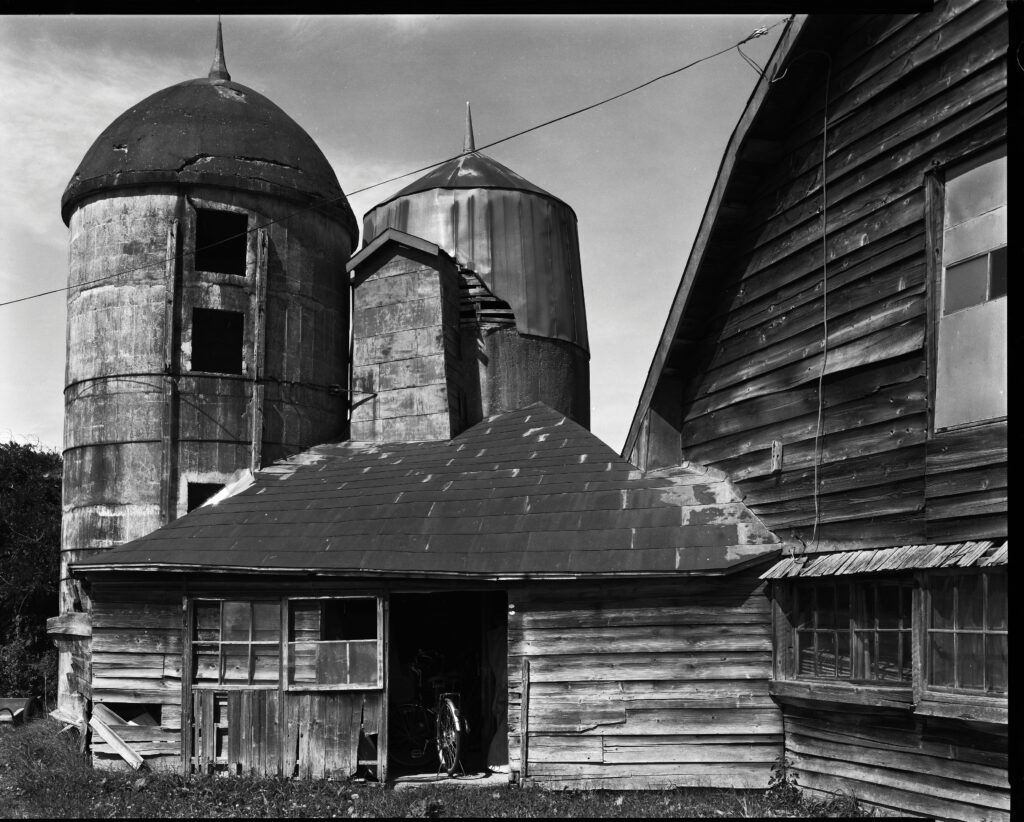
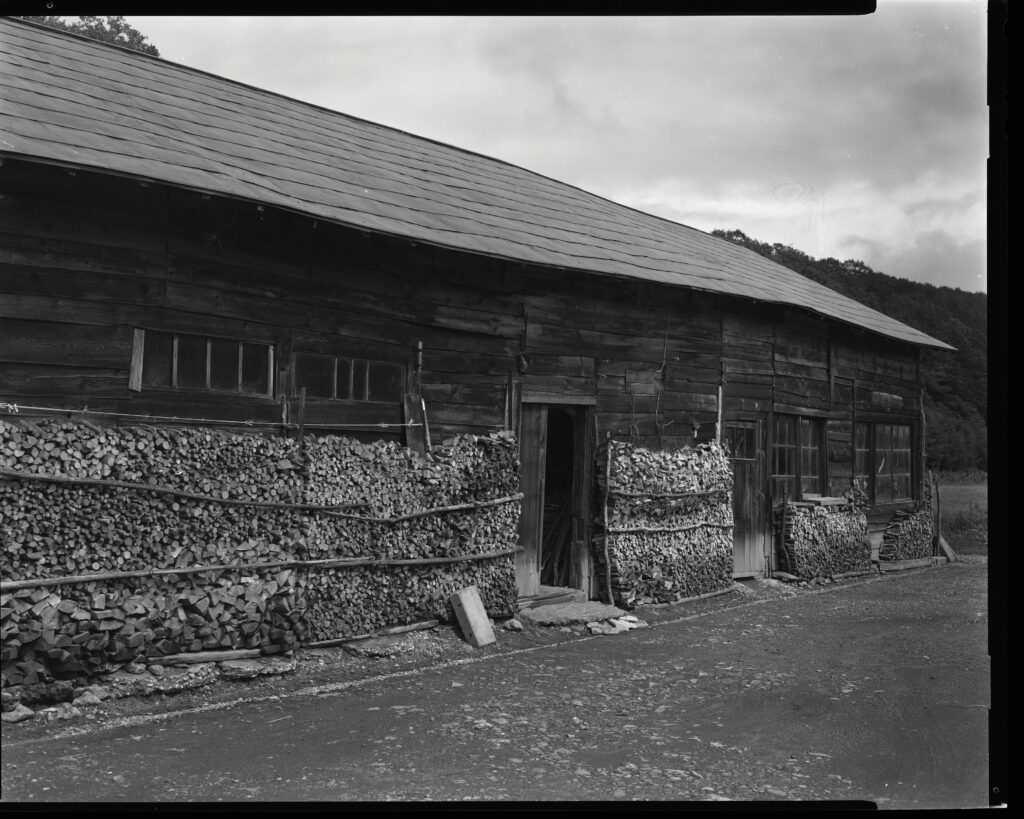
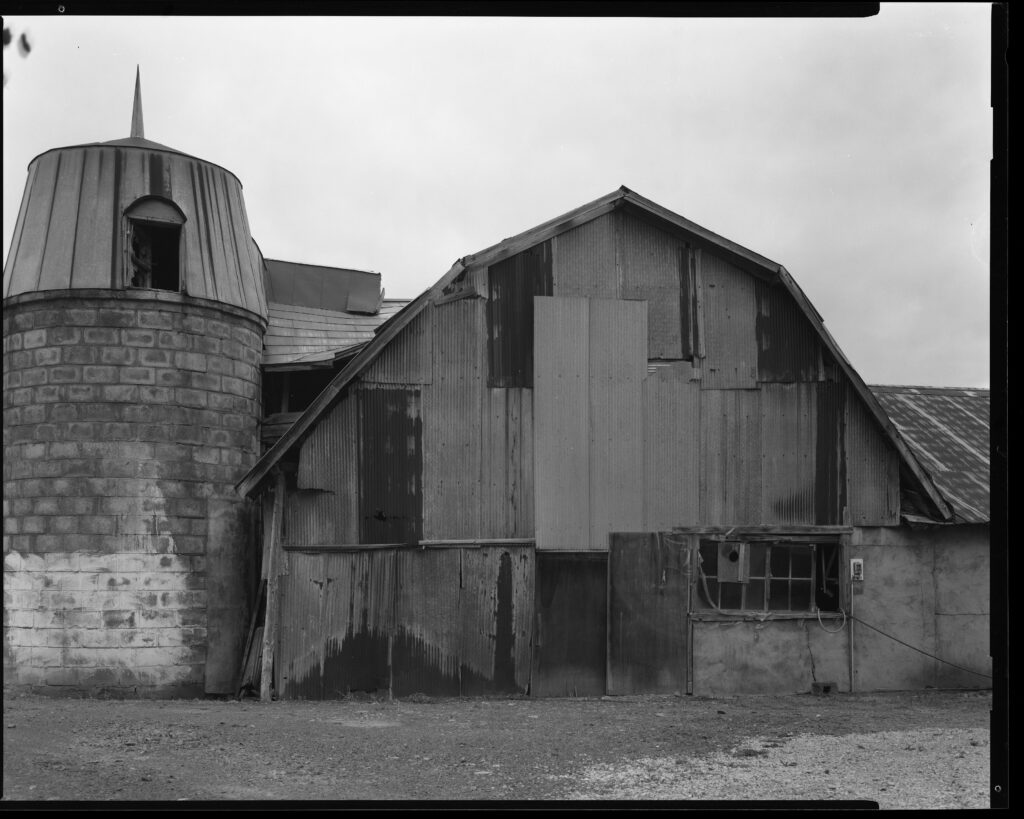
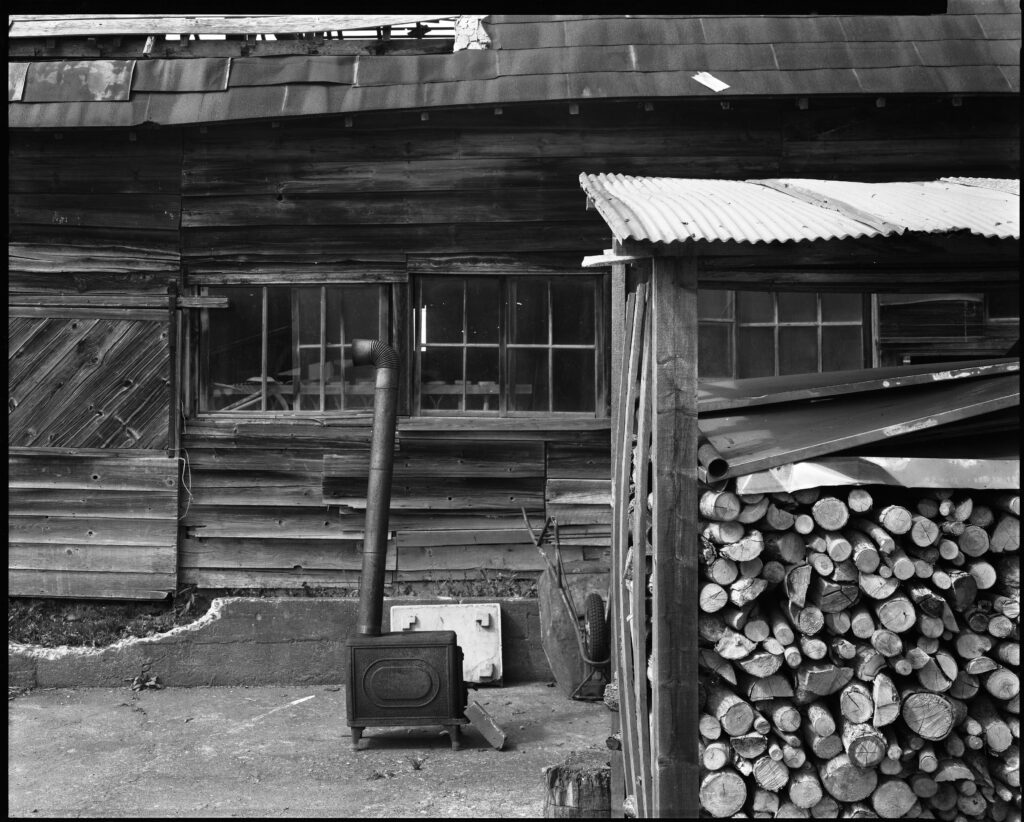
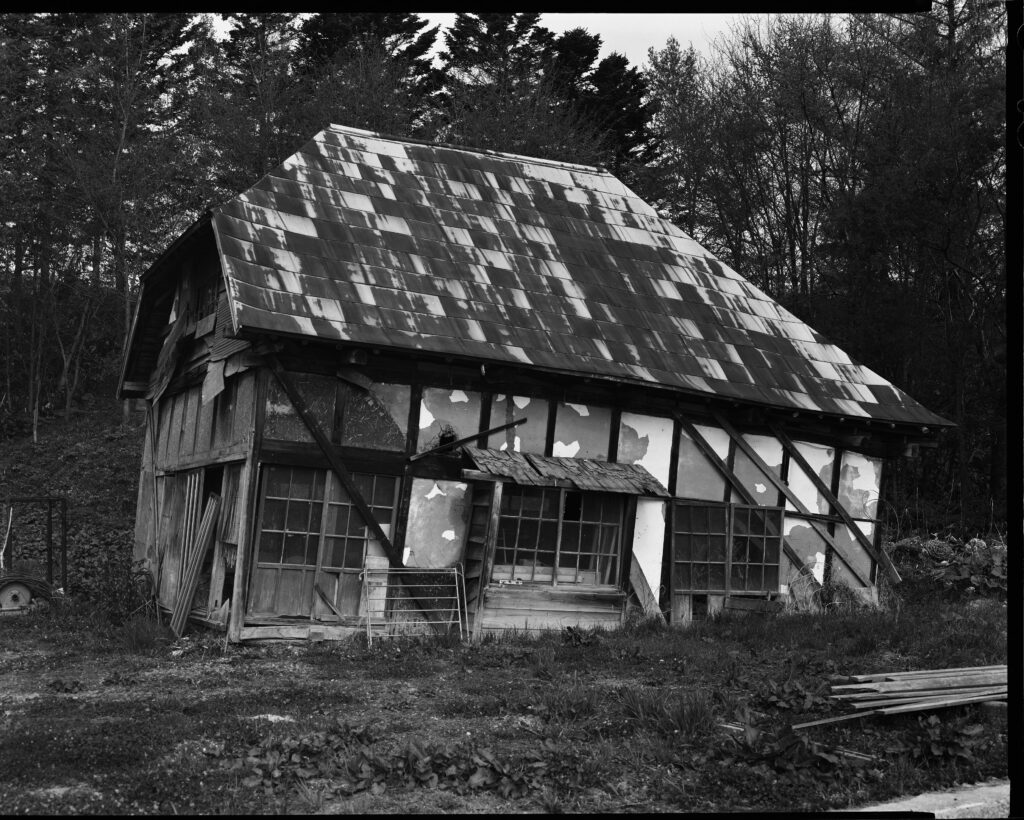
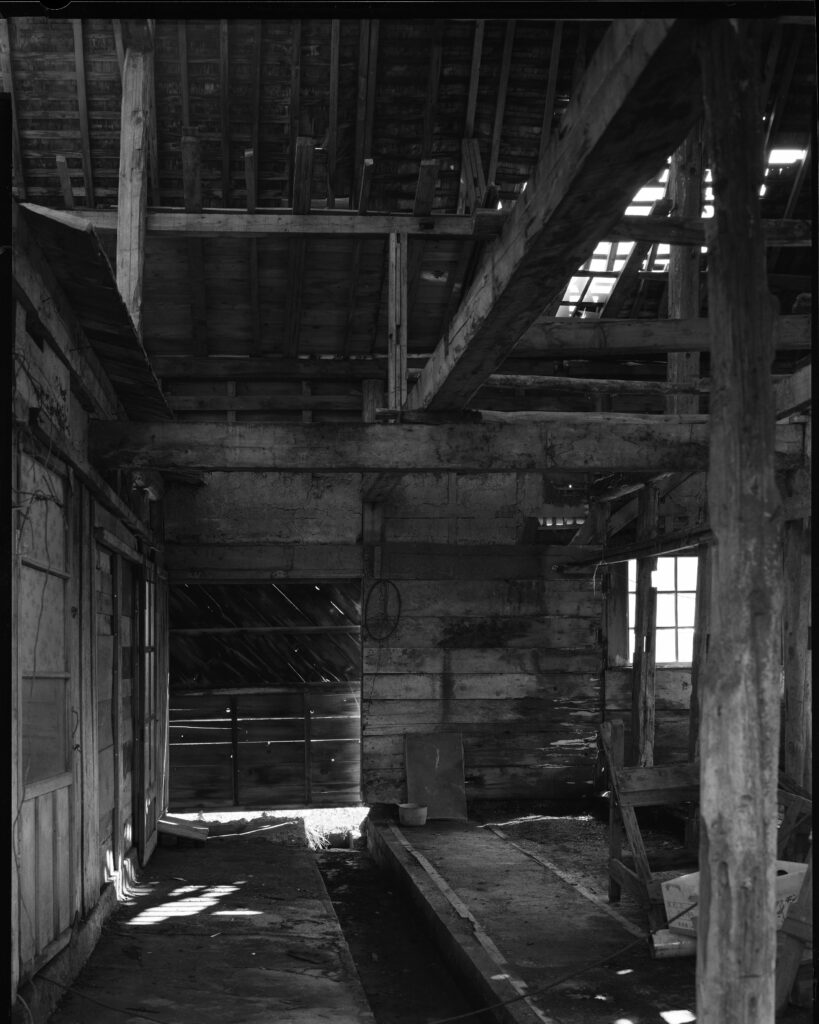
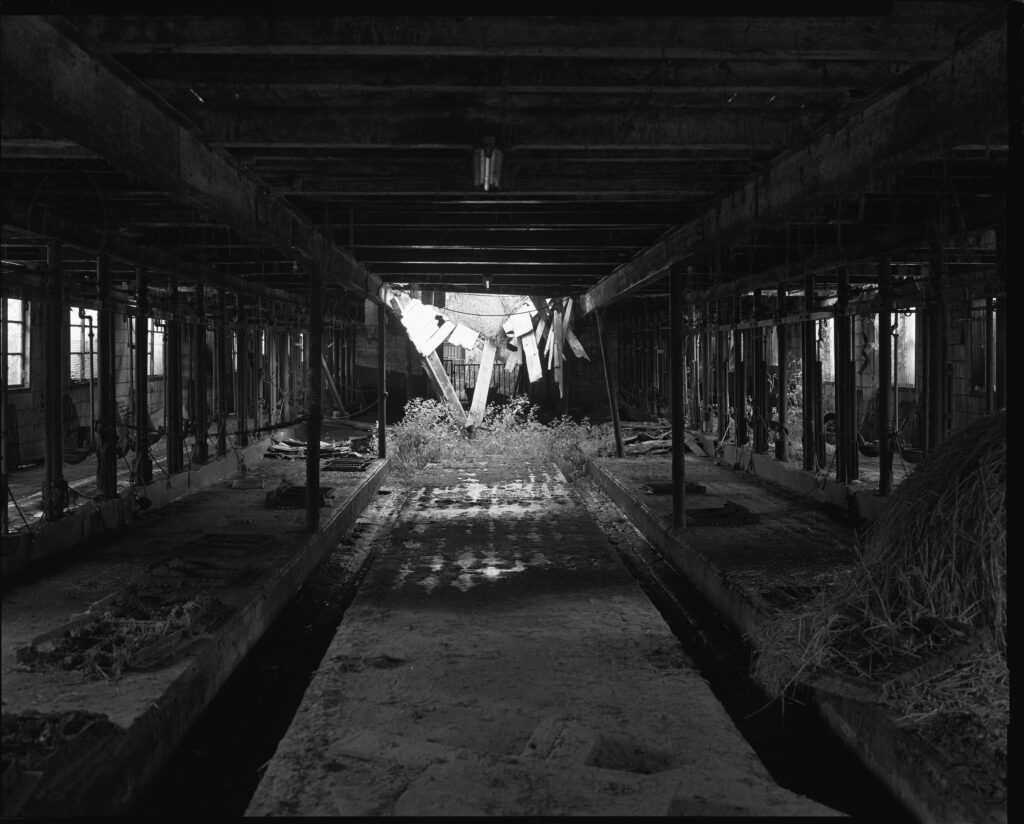
If you have read some of my earlier posts you will already be aware of my interest in the old buildings, farms and infrastructure. Society is changing rapidly in Japan; ‘old’ is seen as ‘dirty’ and consequently abandoned buildings and old homes are cleared, ‘character’ being replaced by ‘smart’. I have been documenting as much as I can find before it’s gone – rusting steel panels found on old homes and agricultural buildings, homes and workplaces in cities, and abandoned farms, abandoned train lines and stations. Original homes of the early settlers no longer exist but we can find homes, workplaces and farms from over 80 years ago that give an indication of what their lives were probably like. I wanted to show some of the original B&W 8×10 negatives used for the glue prints article here. While looking at these images you need to remember that winters here are long and harsh – temperatures down to minus 40 and snow on the ground for up to five months of the year, together with occasional typhoons and earthquakes. Homes were simply built from available materials. My wife remembers that when she was a child she would often enter her home via accumulated snow to the upper floor window. She also remembers lying in bed poking at the wooden wall making a small hole to the outside world – insulation was solely a single layer timber wall.
Cattle farming was new to Hokkaido and the barns and silos were modelled after US style farms.
Looking Back, Looking Forward
“The future influences the present just as much as the past” (attributed to Friedrich Nietzsche)
Sapporo
A vibrant city of 2m (5th largest in Japan) is seen as a desirable place to live by many Japanese because of the more pleasant summer (much lower humidity and less hot) without the cost and travel-time problems of the vast metropolis of Tokyo/Yokohama/Chiba. Extensive tram, rail and metro networks make internal city transport easy, and the nearby (New) Chitose airport gives easy international access and to most airports in Japan.
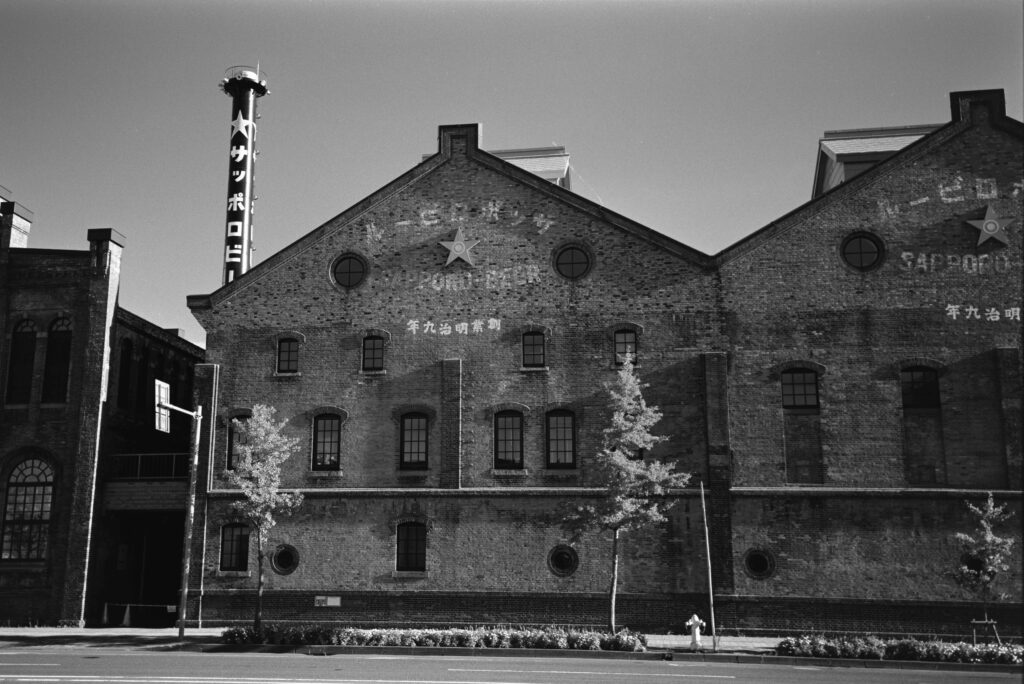
The city began around 1869 with development of the area aided, interestingly, by the US Government (please don’t tell that Trump guy!). A remaining building from 1890 is now the Sapporo Beer Museum (Japan’s only beer museum) originally built for sugar production.
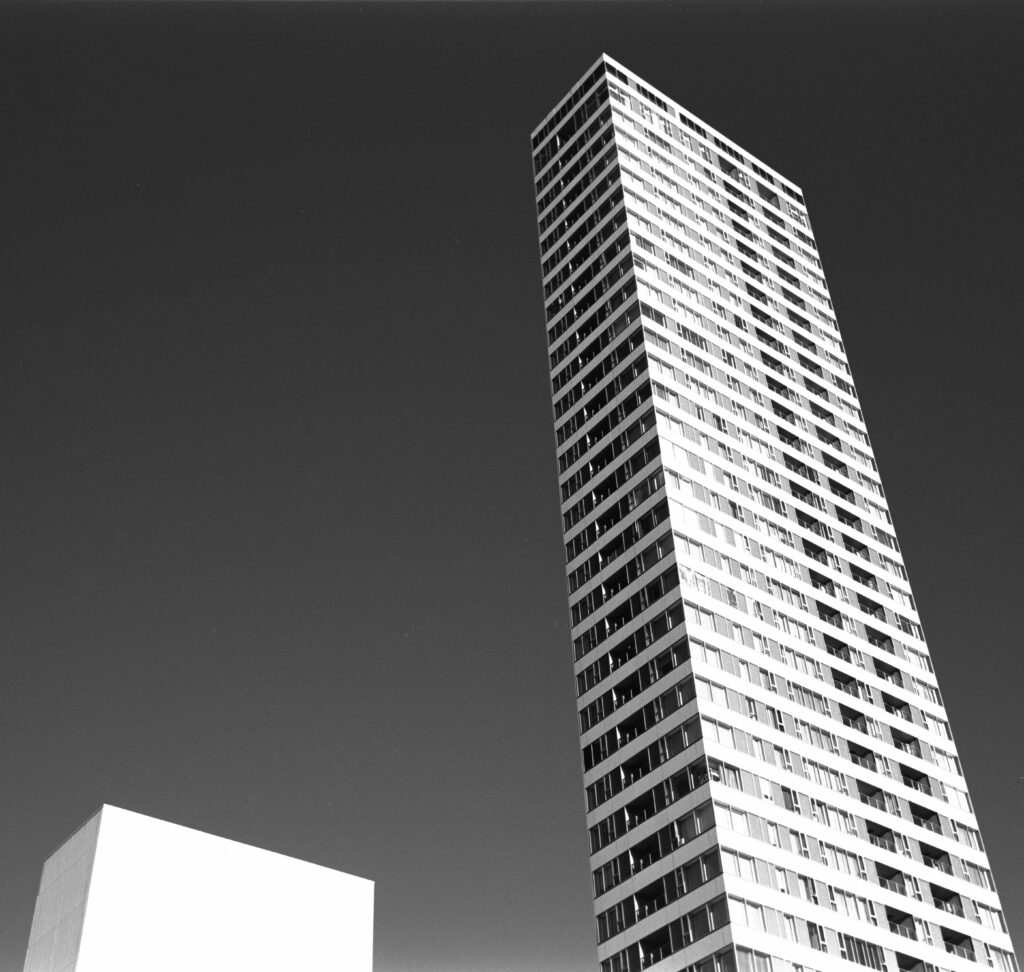
Skyscrapers and now New York style pencil towers are going up; the future is ‘loft living’ and this is what the young aspire to, together with a smart new (but totally unnecessary) Lexus. The city seems to pride itself in being new and clean – spick and span.
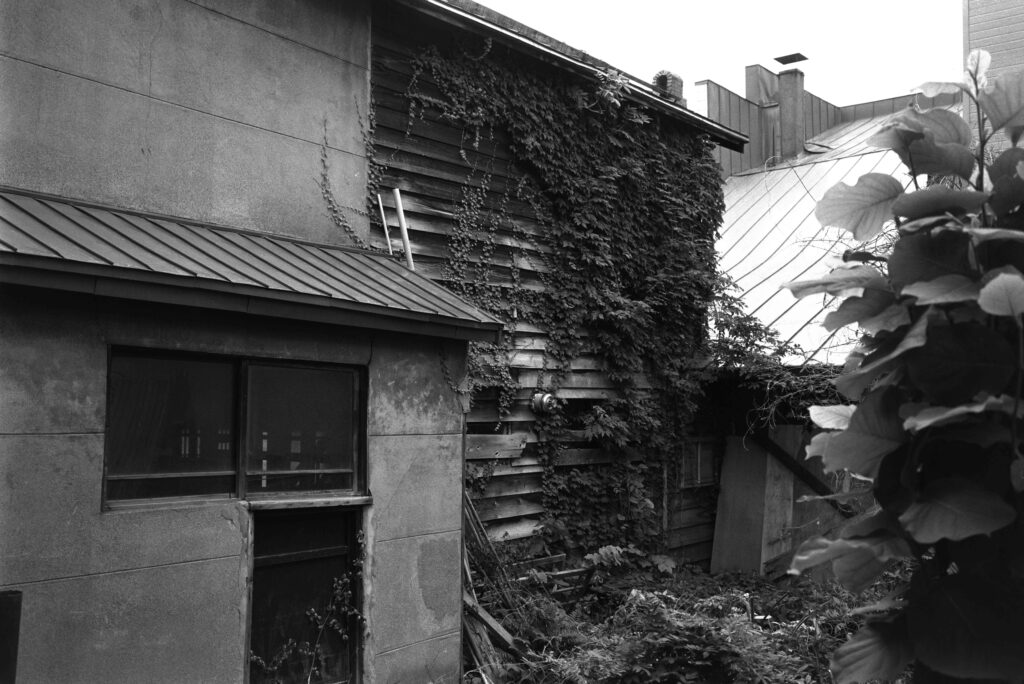
The downside now is that it’s relatively hard to find old homes and businesses. I walked for two hours around one residential area finding only one old wooden home of note. I had to walk down a narrow gap between the old house and a new apartment block and was met by an old lady eyeing me up suspiciously – I said what I was up to and she explained the owner had recently died and the house was empty. The plot would soon be redeveloped no doubt.
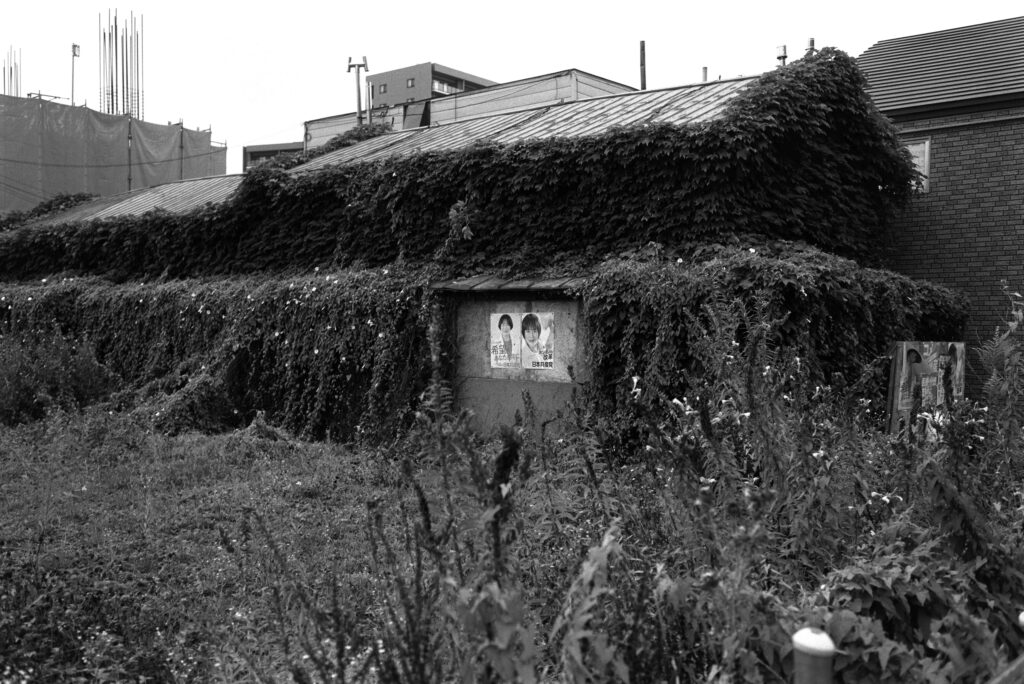
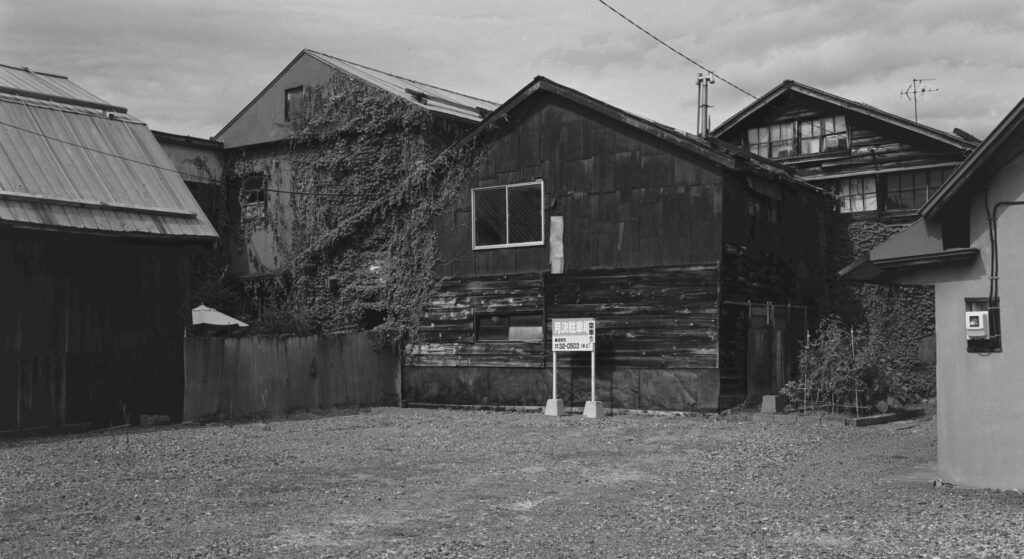
Different areas proved more productive – further east towards industrial buildings and, on the following day, near the Tannuki Koji arcade. Hard to see but the following building was probably a small warehouse and/or workshop and the area in front possibly just parking space. Communist party election signs suggest it was a small individual business. The vertical steel rods on the new construction behind suggest what might soon be happening here.
A little further on was an area that gave an indication of how work and life may well have generally been organised in the past. A group of industrial buildings and a group of residential buildings close by, with some of the residential buildings possibly ‘live-work’, and an attached row of three shops.
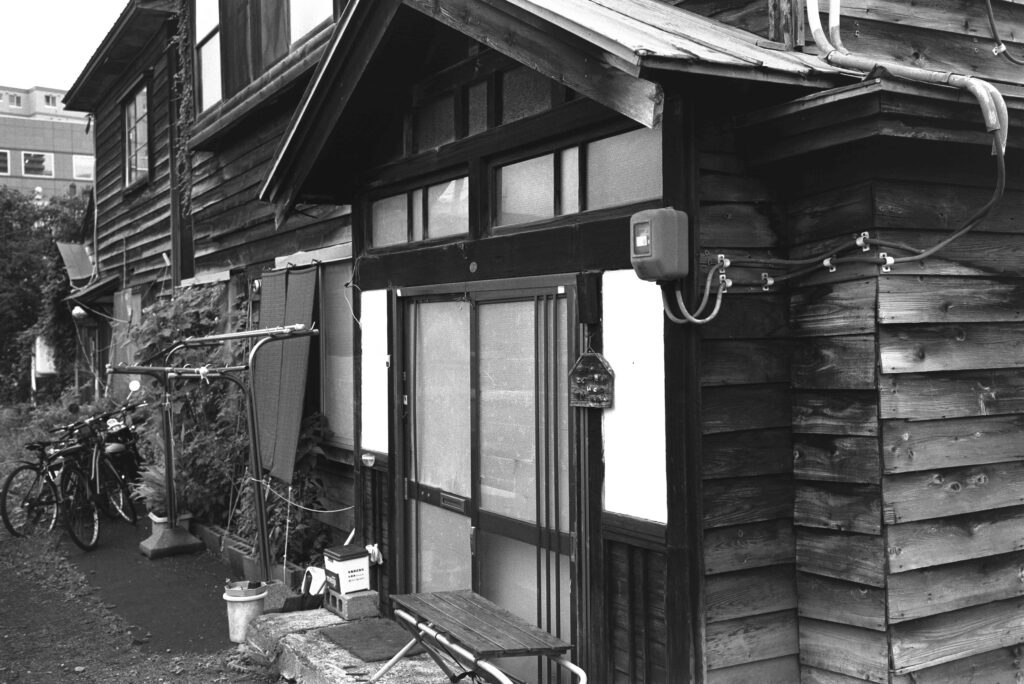
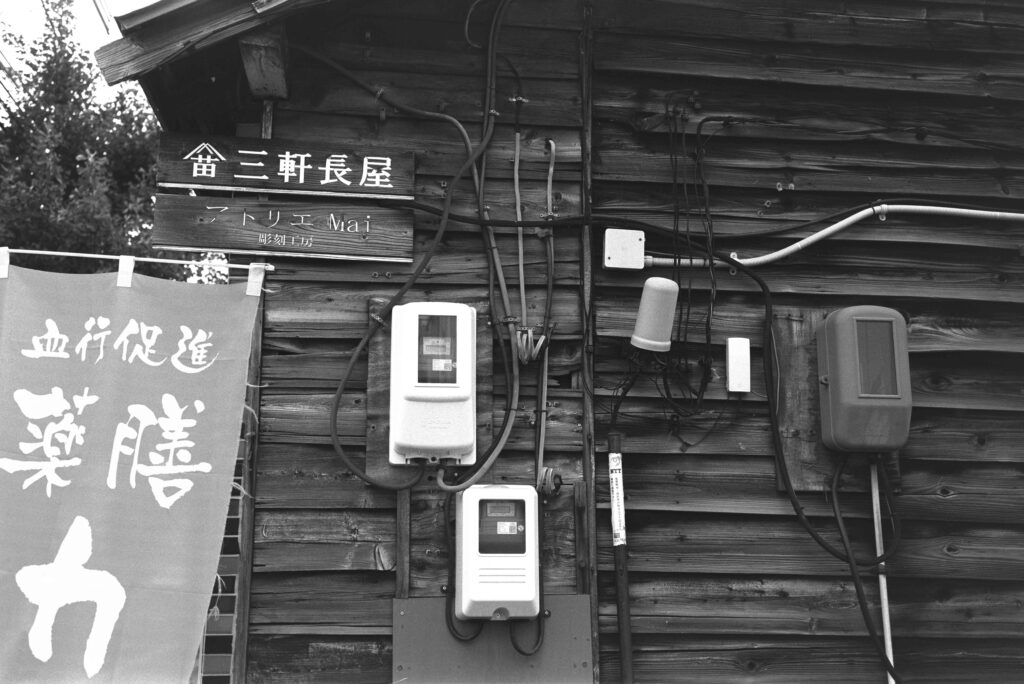
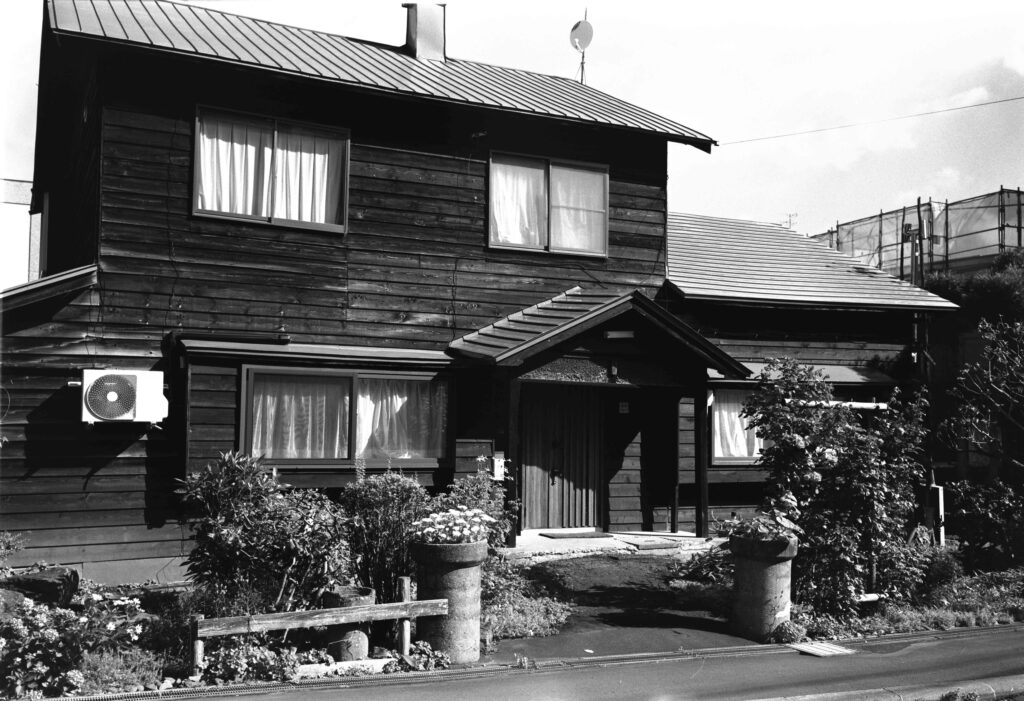
Walking north revealed little apart from this very well preserved traditional home.
Asahikawa
The second city in the centre of the island pales into insignificance when compared to Sapporo. But the city is ‘modernising’ with the first ‘Tower Mansion’ (25 stories) having recently been finished. Nevertheless, even the second city feels very 田舎 (‘the sticks’). This is a shame because in 1972 the city was innovative in creating Japan’s first permanent pedestrian shopping street. Sadly the shops have largely gone out of town and to the rebuilt train station and its shopping mall.
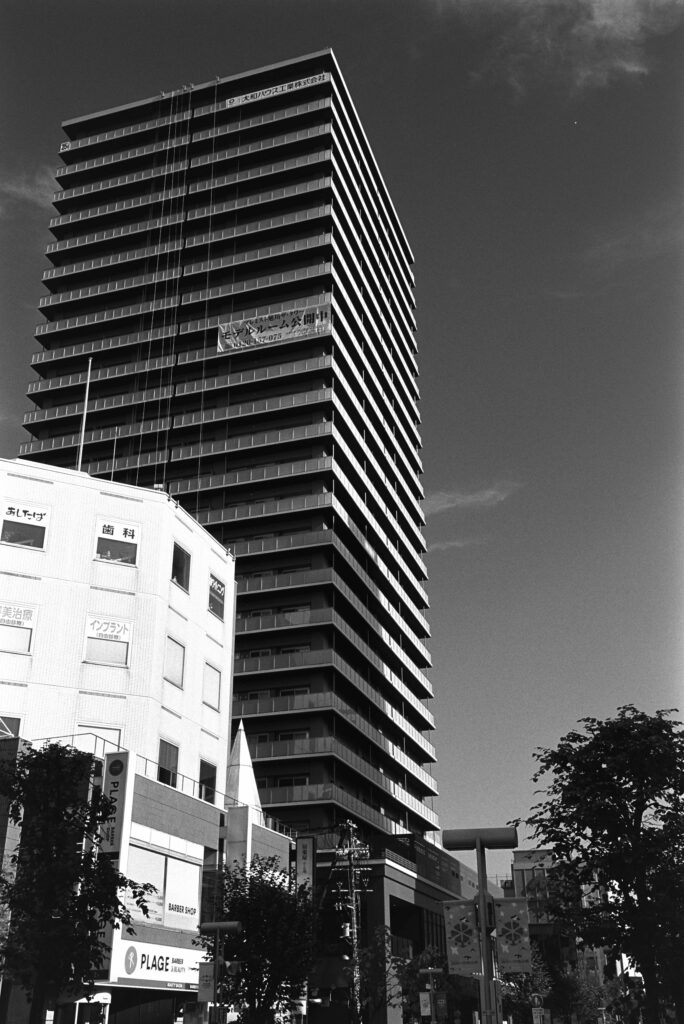
Asahikawa has been a declining city – population down from the peak by over 10% in the last 25 years – declining but faring better than most other cities on the island. The largest national park in Japan close by and an airport with direct flights to Tokyo, China and Korea make Asahikawa increasingly a hub for national and international tourism and the associated service industries.
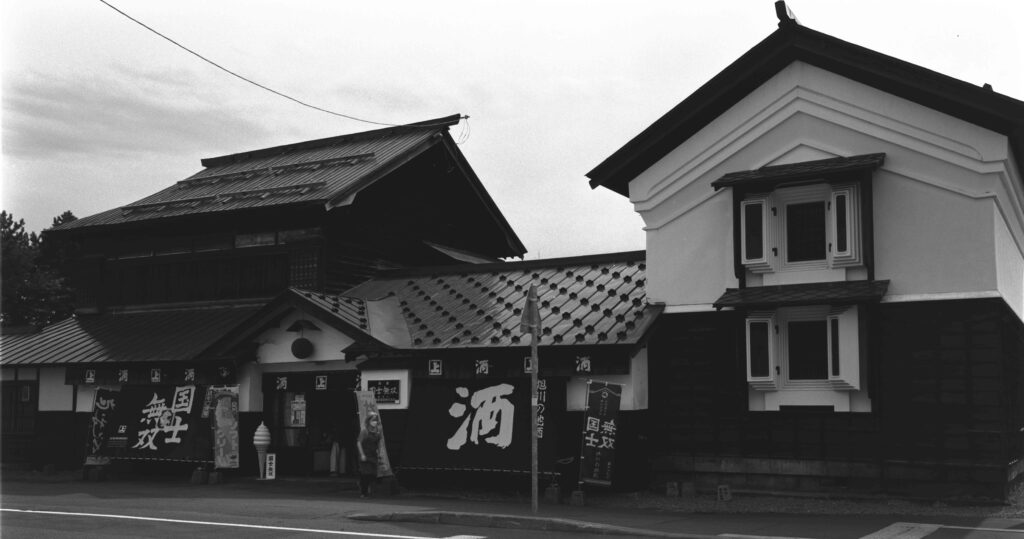
Walking around the city evidence of decline is apparent, abandoned buildings and businesses are not hard to find though changes in Japanese law are coming in allowing the local authorities to demolish abandoned buildings.
Between Sapporo and Asahikawa
The river, railway and road from Sapporo to Asahikawa follow similar routes with multiple towns and cities on (and in) the way – Ebetsu, Iwamizawa, Bibai, Naie, Sunagawa, Takikawa, Moseushi and Fukagawa – forming a near continuous built-up chain connecting the two main cities. Driving even in summer is slow with multiple traffic lights and can easily take 2.5-3 hours. The local train is not much better with multiple stops along the 140km (90m) route.
I drove from my home south of Asahikawa across the mountain “highway” to get to Takikawa. I say “highway” – it is indeed a recognised regional route, number 70, though for much of the way it is a winding narrow gravel track with steep drops to one side or the other and multiple “beware of bears” signs on the way. After descending from the mountains and just before joining the national route 38, several hundred metres of the track had been dug up by heavy rains and turned into a criss-cross pattern of rivulets about 15cm deep. Even driving at walking pace the car was bouncing up and down.
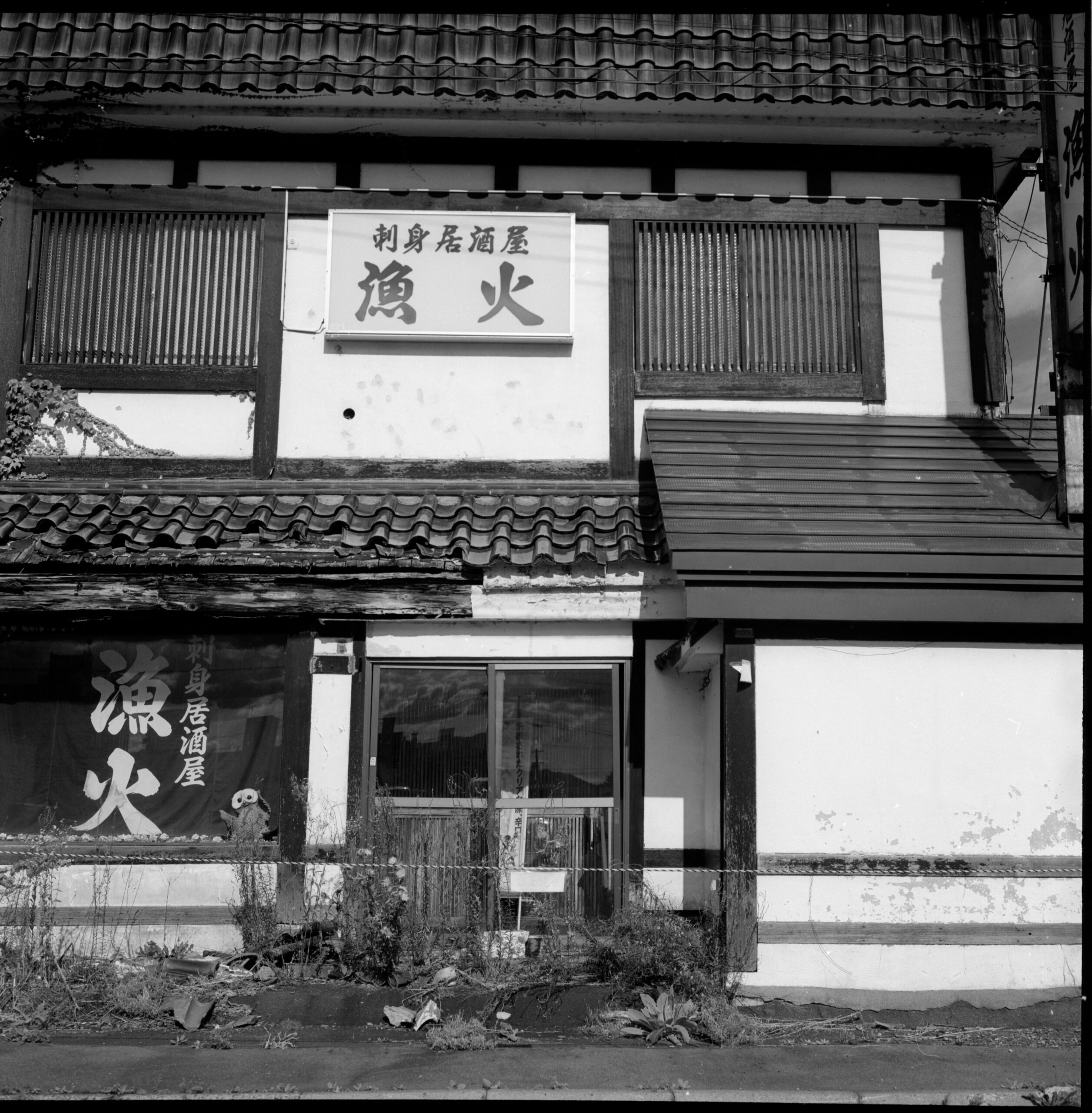
After a short walk in the town I came across two buildings facing each other – both now abandoned – which in their day would have been relatively smart restaurants. The featured image shows a high-end sashimi izakaya in full sun while the slightly downmarket more typical izakaya opposite in full shade used to offer tempura and cutlets plus selected nibbles with alcohol.
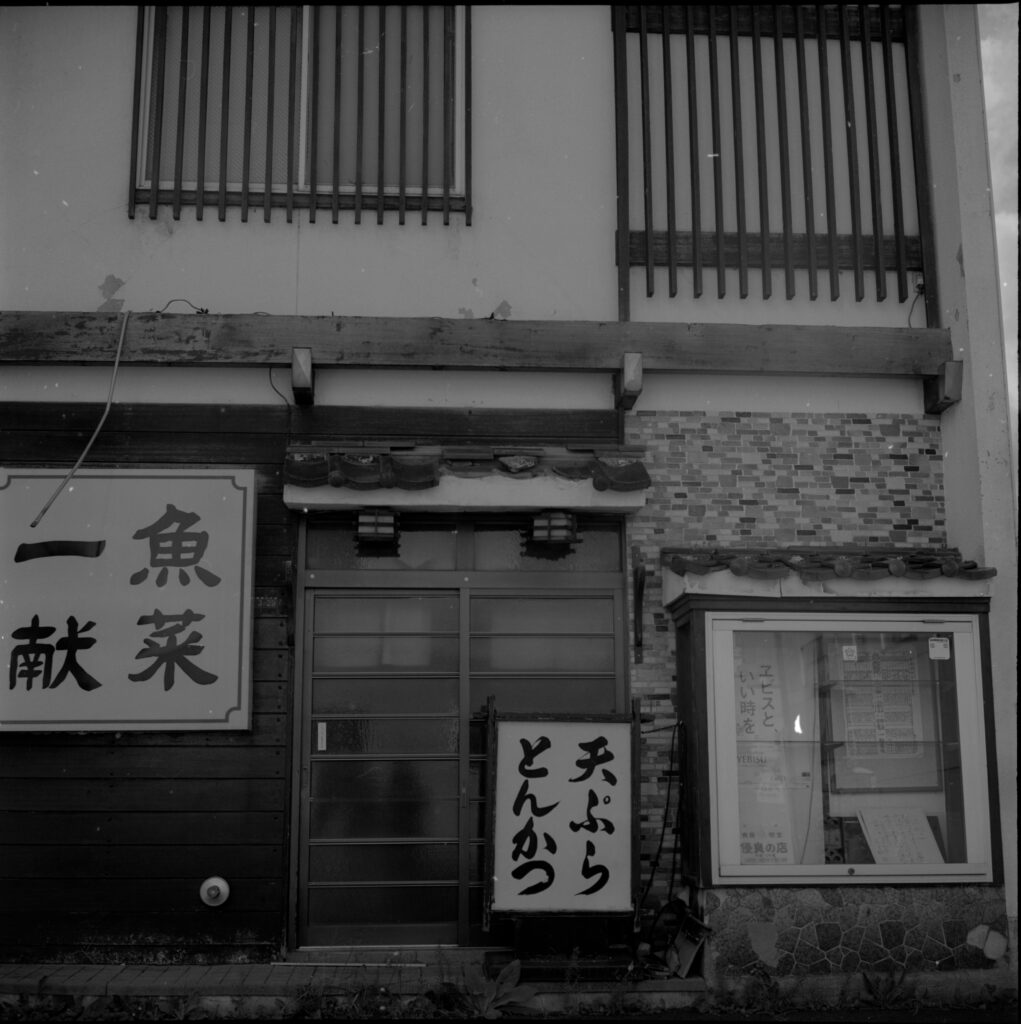
Walking around there were many run-down buildings from concrete industrial structures to shops and izakaya. Not all the izakaya were so smart, and the smarter ones not so old. One building stood out as what must have been a grand home (and remains a well preserved home), the sort of building owned by a successful professional such as a doctor.
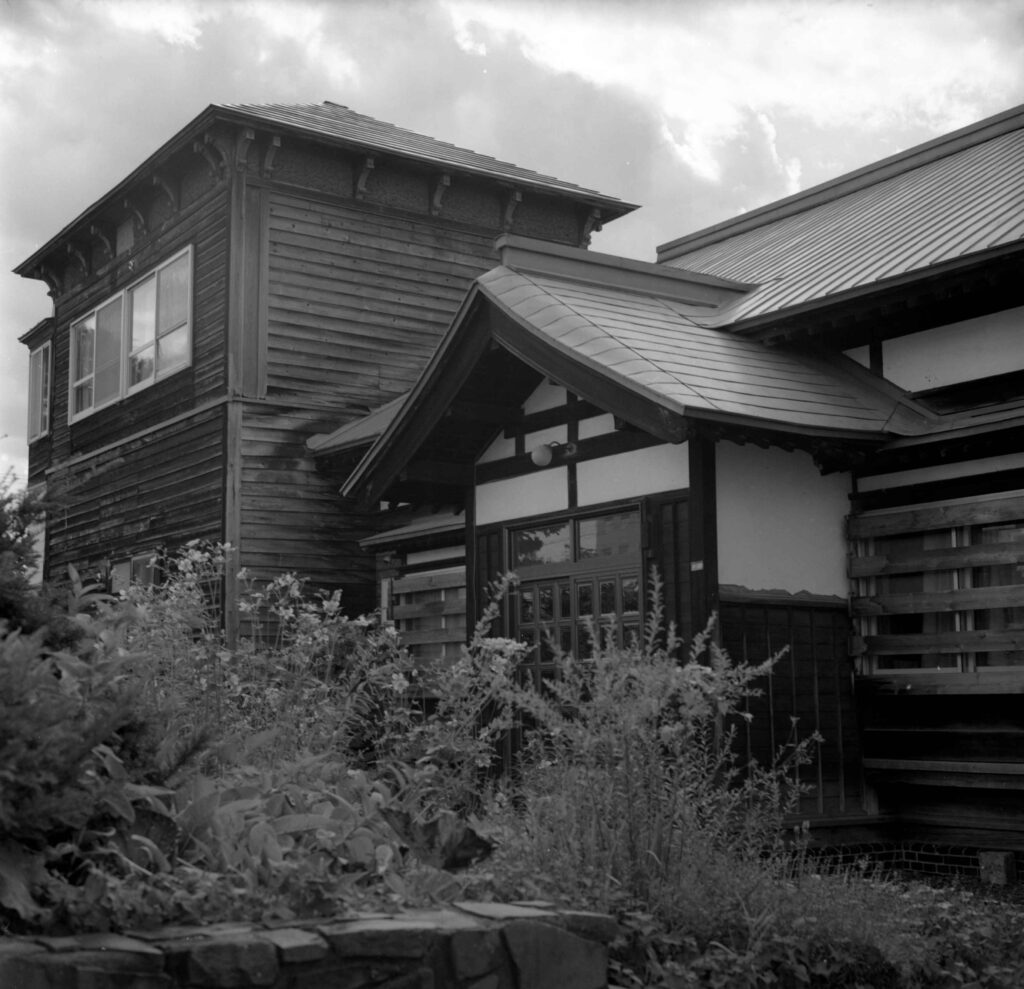
After a slow but short drive we arrived in Fukagawa, with a population of about 20,000 is half the size of Takikawa. Both have a near identical over 100 year old building in the centres. Who could afford to build a solid structure in an impoverished backward land? Banks.
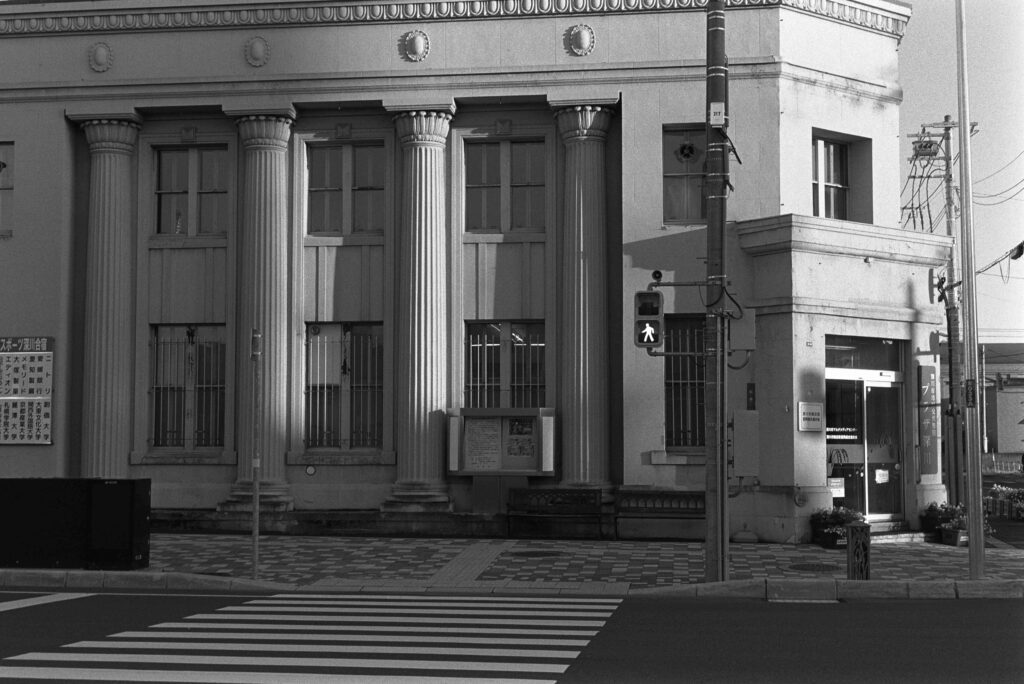
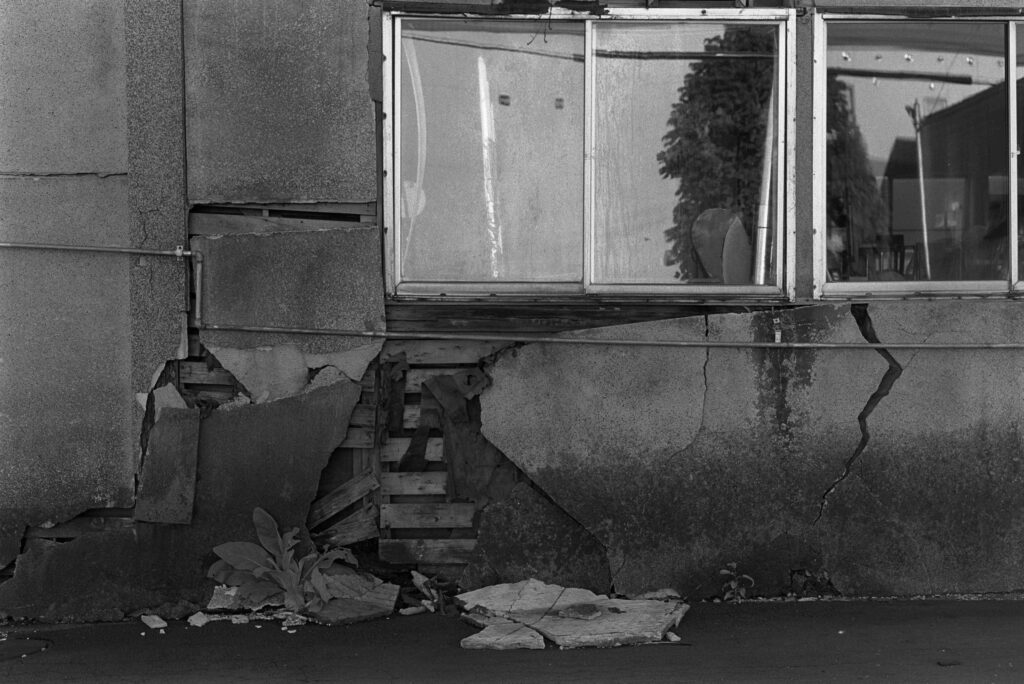
Fukagawa offered more of interest to me, possibly because the run-down areas were larger. This was probably my favourite shot – a building that was still in use. As a builder would say “needs a lick of paint”.
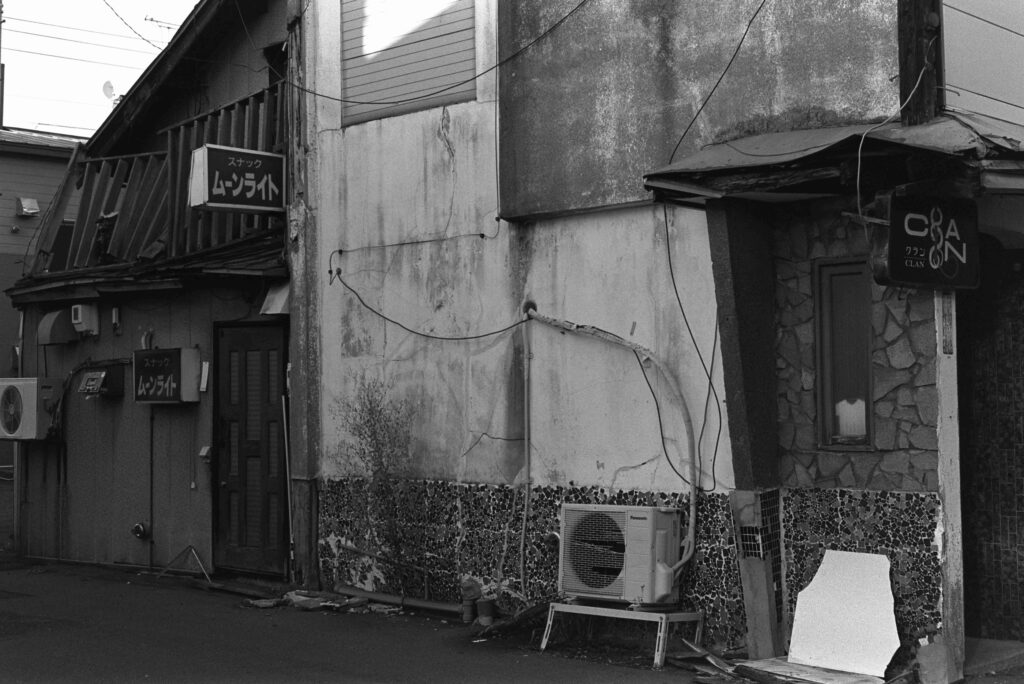
Many grotty old buildings remain in use – and probably offer a very friendly relaxing atmosphere with decent food (albeit a limited menu). The following “Clan” probably specialises in whiskey / whisky and behind “Moonlight” offers a change of atmosphere and female company [don’t get too excited though – she’s could be in her 60s and back-up is her mother].
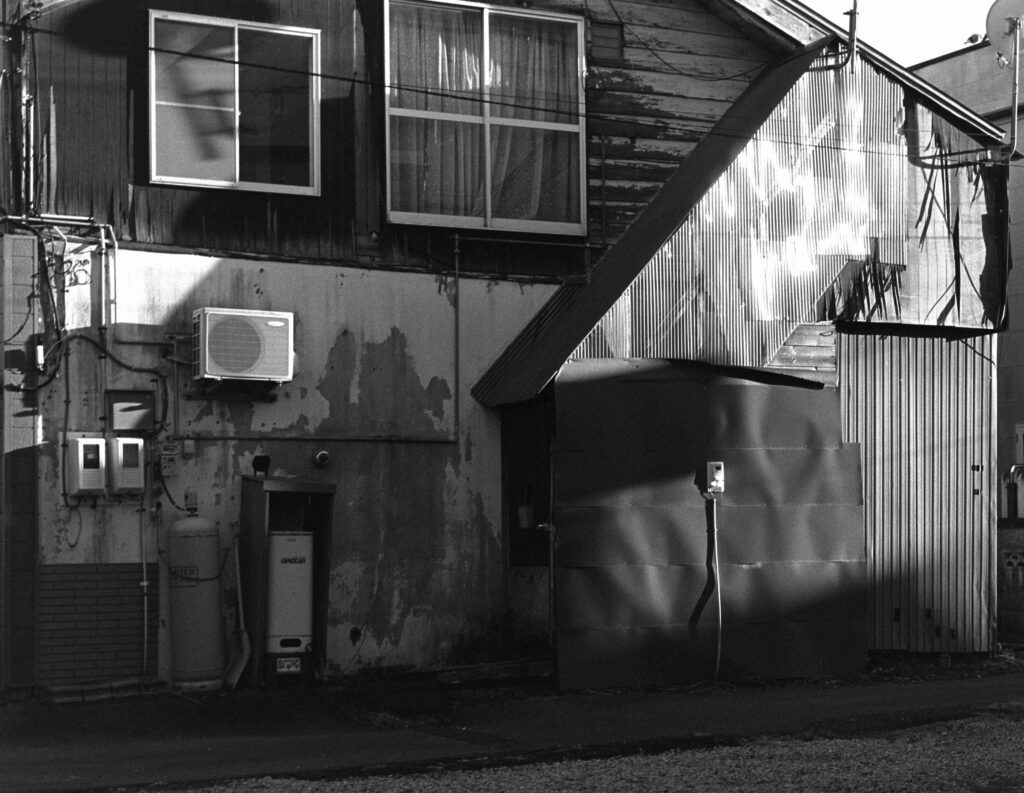
The sun reflecting off the corrugated exterior of part of this wall caught my attention – I managed to grab a shot with the Leica before the light changed.
Finally a collection of old advertising signs
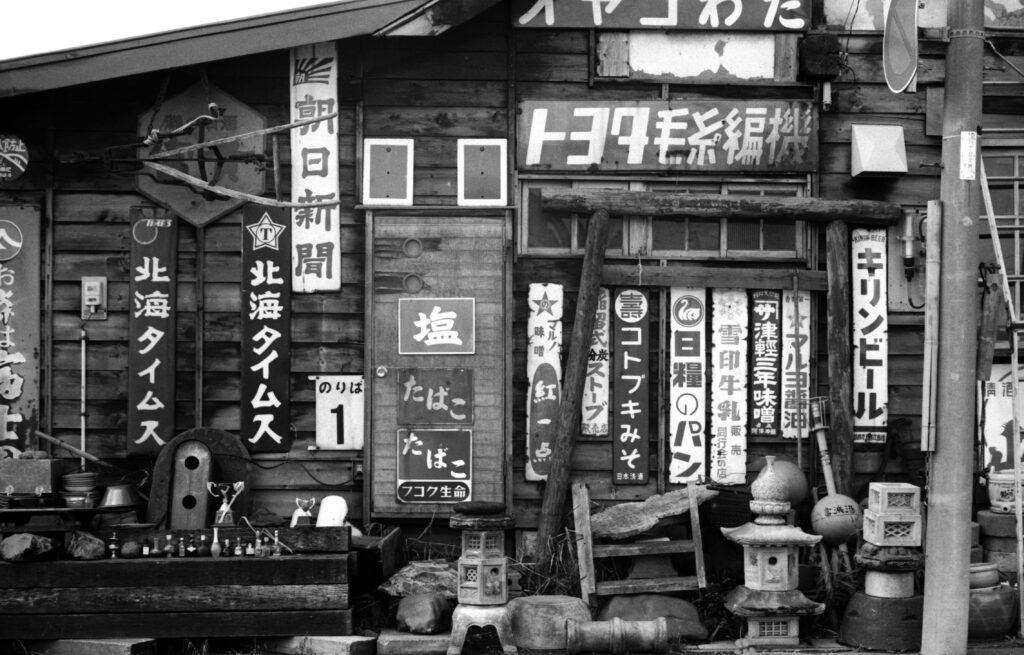
Further images can be seen in some of my earlier posts: Sapporo, Asahikawa and here, Obihiro and “the end of the line”
Images were taken with a variety of equipment: Toyo Field 8×10 with Schneider 110mm and Rodenstock 150mm lenses; Leica MP and M3 with Zeiss 35mm C-Biogon, Zeiss Sonnar and Leica 35mm and 50mm cron lenses; Rolleiflex 2.8GX. Films were Ilford FP4, Delta 100, Pan F and Adox HR-50. Small format films were scanned on my Sony A7Riii with a Sigma 105mm Macro lens, 8×10 scanned on and Epson flatbed scanner. Straight line contrast curves are used with (generally) minimal cropping and straightening.
Share this post:


Comments
jfbonnin on Hokkaido, a historical perspective
Comment posted: 28/02/2026
Comment posted: 28/02/2026
Ralph Turner on Hokkaido, a historical perspective
Comment posted: 28/02/2026
Comment posted: 28/02/2026
David Pauley on Hokkaido, a historical perspective
Comment posted: 28/02/2026
Comment posted: 28/02/2026
Charles Young on Hokkaido, a historical perspective
Comment posted: 28/02/2026
I really enjoy the little gardens in front of individual houses etc. I will search for your other entries.
貴方noしゃしんわだいじょbですの
Chuck
Comment posted: 28/02/2026
Curtis Heikkinen on Hokkaido, a historical perspective
Comment posted: 28/02/2026
Comment posted: 28/02/2026
Gary Smith on Hokkaido, a historical perspective
Comment posted: 28/02/2026
Thanks for another peek at Japan Geoff!
Comment posted: 28/02/2026
Mark Ellerby on Hokkaido, a historical perspective
Comment posted: 28/02/2026
I'm surprised and a bit saddened that the young want to do away with the old and replace it with spic and span and "smart". Isn't this the country that gave us the concept of Wabi Sabi? Perhaps they will miss it when it's gone.
Comment posted: 28/02/2026
Ibraar Hussain on Hokkaido, a historical perspective
Comment posted: 01/03/2026
Your architectural and urban photos are superb with some of the best tones I’ve seen from you!
Thank
You
Comment posted: 01/03/2026
Simon Foale on Hokkaido, a historical perspective
Comment posted: 02/03/2026
Comment posted: 02/03/2026
Omar Tibi on Hokkaido, a historical perspective
Comment posted: 03/03/2026
Comment posted: 03/03/2026