

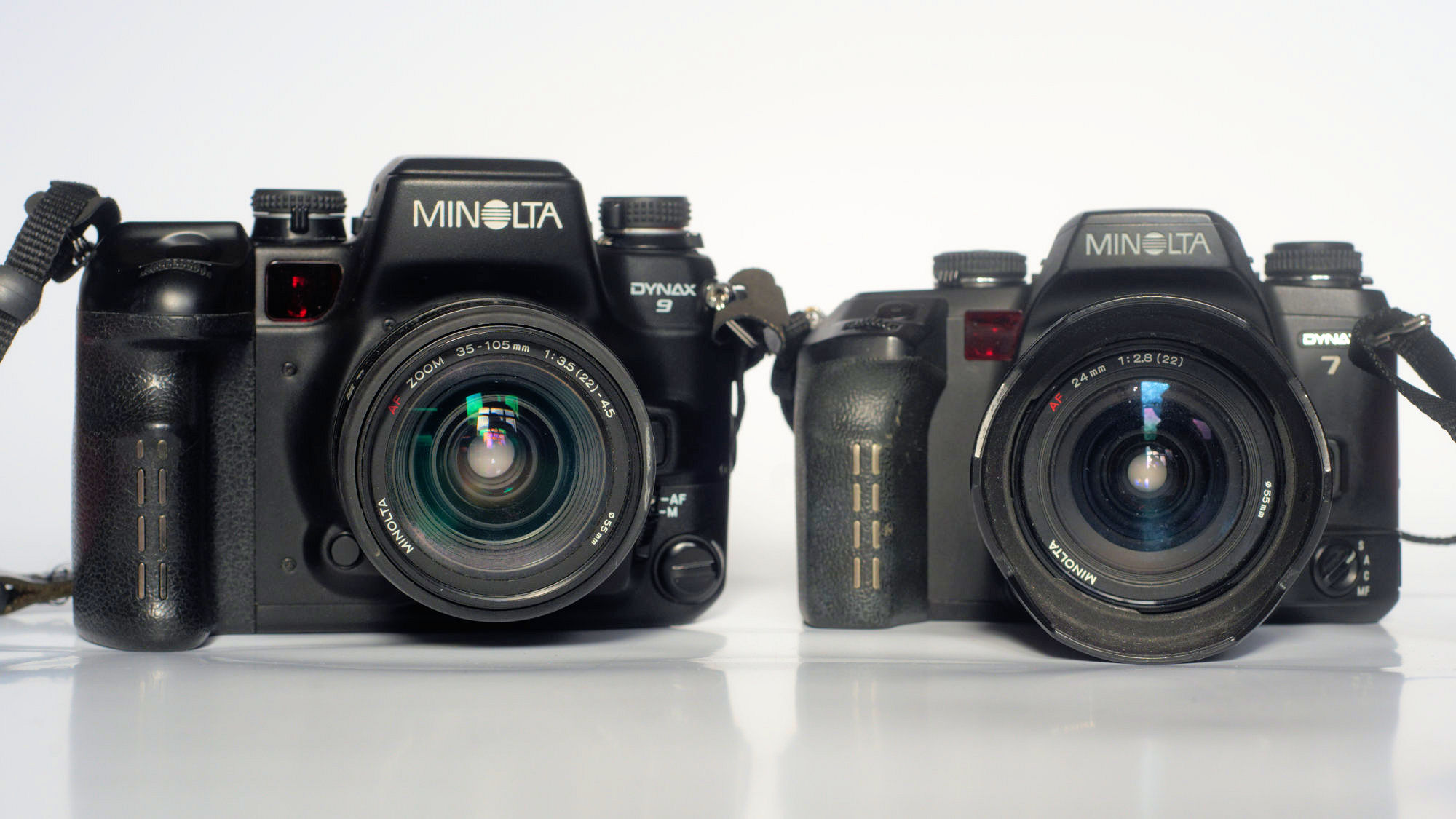
Although these cameras were known in eastern markets as Alpha and in American markets as Maxxum, the copies I’m dealing with are the European Dynax versions – so I will just be referring to them as the Dynax 9 and Dynax 7 – or simply as ‘the 9’ and ‘the 7’. As far as I’m aware, the Dynax versions are the same basic spec as their Alpha and Maxxum equivalents.
To set the scene
By 1998, autofocus technologies had established themselves and had been perfected. Electronics, originally using components that were quite new and untried, had become far more reliable and the benefits of reduced costs and increased reliability were being reaped from solid-state technology.
An unprecedented venture involving co-operation between rival film and camera manufacturers had launched the Advanced Photo System (APS). This provided cameras that could magnetically record shooting information on the film itself, could accommodate different ratio formats shot on the same roll of film and allowed the unloading and reloading of films mid-roll.
Also on the horizon at this time was the prospect of digital photography advancing sufficiently to compete with (or even surpass) film. The possibilities must have frightened the bejabbers out of film manufacturers. Minolta had already experimented back in 1995 with a digital SLR. The RD-175, was a 3MP camera made in association with AGFA and based on the Dynax 500si.
Everything was set to give the whole photo industry a massive disruptive shake-up.
It must have occurred to teams working on developing 35mm SLRs across the industry that the next generation of 35mm SLRs might be the last.
Exciting times. Possibly a bit too exciting for board members and finance officers concerned about costs and company stock values. Imagine what camera projects may have been scrapped in the face of all that APS/Digital uncertainty.
In lens motors
Back in 1985, when what is now called ‘A-mount’ had first been introduced, the idea of controlling aperture and focus from the camera body via mechanical linkages seemed a safe bet. It worked well, and both Nikon and Pentax followed the same route. Canon went on another path, having only electrical connections to control both aperture and focus, with each lens having its own built-in motors and actuators. In the early days of autofocus cameras the mechanical linkages more than held their own. You only needed one reliable, fast motor in the body to drive all your lenses. Over the years, in-lens motors improved and Canon started to reap the benefits of their electronically-controlled mount.
Nikon started to support in-lens motors in 1992. Minolta realised the need to support in-lens motors on A-mount relatively late. A-Mount was capable of supplying power to lenses, as this had been done with some of the power-zoom ‘xi’ lenses earlier in the 1990s, but the technology to support Minolta’s version of in-lens focus motors (which Minolta called Super-Sonic Motors or ‘SSM’) would take time to perfect and introduce.
Minolta’s APS option
In addition to their 35mm autofocus SLR system, Minolta also had an SLR camera as part of their APS Vectis-branded range. A new lens mount had been launched with the high-end Vectis S-1 (which was followed later by a lower-end S-100 model). The new camera had a range of fully electronically-controlled interchangeable lenses (initially 5 zooms and 2 primes), which were newly designed for the new format. The new lenses were incompatible with A-mount as they had a 38mm registration distance. This new V-mount was at one time a strong contender to be used by Minolta for a future digital SLR system – Minolta’s digital RD-3000 would be released (with a third V-mount prime) in late 1999.
The Dynax range was surrounded by competitors, even from within Minolta.
The big birthday
In 1998, Minolta was due to celebrate 70 years of camera manufacture. The powers-that-be may well have wanted a big release to go along with that anniversary, and a top-of-the-range professional SLR camera was certainly a headline grabber.
The ‘single digit’ series
Minolta’s next series of A-Mount 35mm SLRs was set to feature a ‘professional’ model as a follow on from 1985’s 9000 and 1992’s 9xi. The corporate wish to mark the 70th anniversary of camera production by Minolta may have secured resources and helped along the development of the new professional camera.
The choice of a single unadorned digit certainly gave the impression that this was a distinctive and maybe even definitive set of cameras.
The release of the 9
The Dynax 9 was released in time for the birthday celebrations. The promotional material that Minolta released for their 70th birthday highlighted the 9, which they described as “The world’s highest level power spec. 35mm AF SLR camera for professional use.”
Although in-lens motor compatibility was not ready in time for the launch, Minolta threw everything else at the 9.
The Dynax 9 was built like a tank. Like the 9xi before it, the 9 had the highest spec shutter available on any 35mm SLR and it could shoot at 5.5 fps (4.5fps with continuous autofocus). The 9 allowed unrivalled scope for customisation and could be set up to work just how the individual photographer wanted. With a nod to APS, the 9 could also record exposure information for every frame on up to 7 rolls of film. It could do other tricks too, like swapping films mid-roll – all using 35mm film in a standard 135 cassette.
The Dynax 9 was well received, particularly for the quality of its build, the return to a ‘knobs and dials’ interface and for the sophistication of its control software. The only thing that seems to have picked up criticism was the presence of a pop-up flash on a ‘professional’ model (which was actually a useful feature that allows wireless control of flashes without having to add anything else to the body).
The 9 was probably the best received of any of Minolta’s attempts at producing a professional-grade camera. It dropped anything gimmicky. It had a great viewfinder, it looked the part and it oozed quality. If there was ever any danger of Minolta’s autofocus 35mm SLR line being sidelined or even abandoned, the 9 did a good job of showing what could be achieved using ‘old-fashioned’ 35mm perforated film and kept Minolta’s 35mm autofocus system in the game.
In the two years until the release of the Dynax 7, the ‘enthusiast’ position in the Dynax line-up was held secure by the (highly capable) Dynax 600si and Dynax 800si. In 1999 a special edition of the 9 was produced with titanium panels and labelled the ‘9Ti’.
Around the time the 7 was released, Minolta also announced a revised internal board for the 9, which also supported SSM and ADI. A ‘return to base’ upgrade was offered for 9 purchasers. As far as I am aware, no 9 or 9Ti cameras came off the Japanese production lines complete with the upgraded board.
The release of the 7
The Dynax 7 was released in 2000 with built-in SSM and ADI support.
In normal circumstances, you would expect the enthusiast camera of a series to be a cut-down version of the ‘Pro’ model, but in the two years between the release of the 9 and 7, the development team were able to investigate making further improvements to the knobs and dials interface, and included some items of emerging and developing technology.
The 7 was built to a tighter budget, but it was also a slightly more modern camera than the 9.
The 7 does use some cheaper components. In particular:
- The 7 does not have the same leading-edge shutter as the 9, it is only capable of speeds up to 1/8,000, and its synch speed is 1/200, compared to the 1/12,000 and 1/300 capabilities of the 9.
- The focusing screen of the 7 is not user-interchangeable (although you could have it swapped at a service centre). The viewfinder has no shutter blind and it is not calibrated to show 100% of the image that will appear on the filmstock. Slightly less dioptre adjustment is available on the 7 compared to the 9.
- More use is made of plastics in the 7, notably for the pop-up flash and the film door, which is not interchangeable. The original 9 was constructed of zinc alloy and stainless steel. The 9Ti lost some weight by using a magnesium alloy as well as titanium. Magnesium alloy seems to have been used extensively for the 7.
The 7 went down even better than the 9 with reviewers and customers. It would seem to have steered Minolta away from a Vectis-based digital SLR and towards a digital version of the 7 – the Dynax 7D.
Differences
The 7 gains several features absent from the 9:
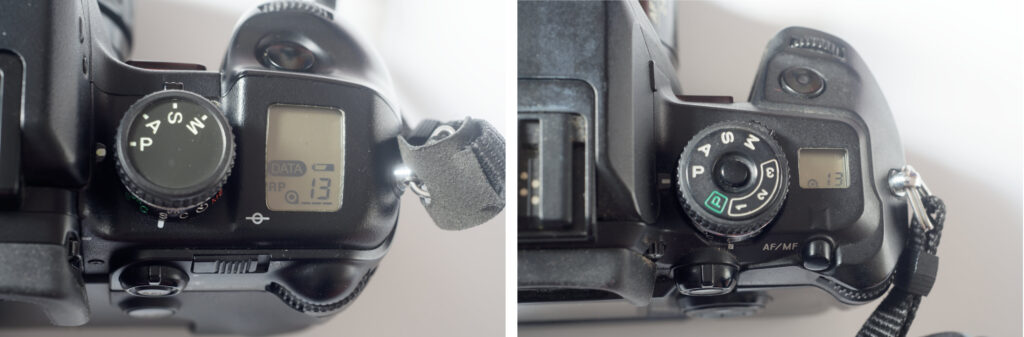
As well as the PASM options on the mode dial, the 7 includes an ‘auto everything’ setting and three numbered positions that hold user-specified camera setups. These can be very useful.
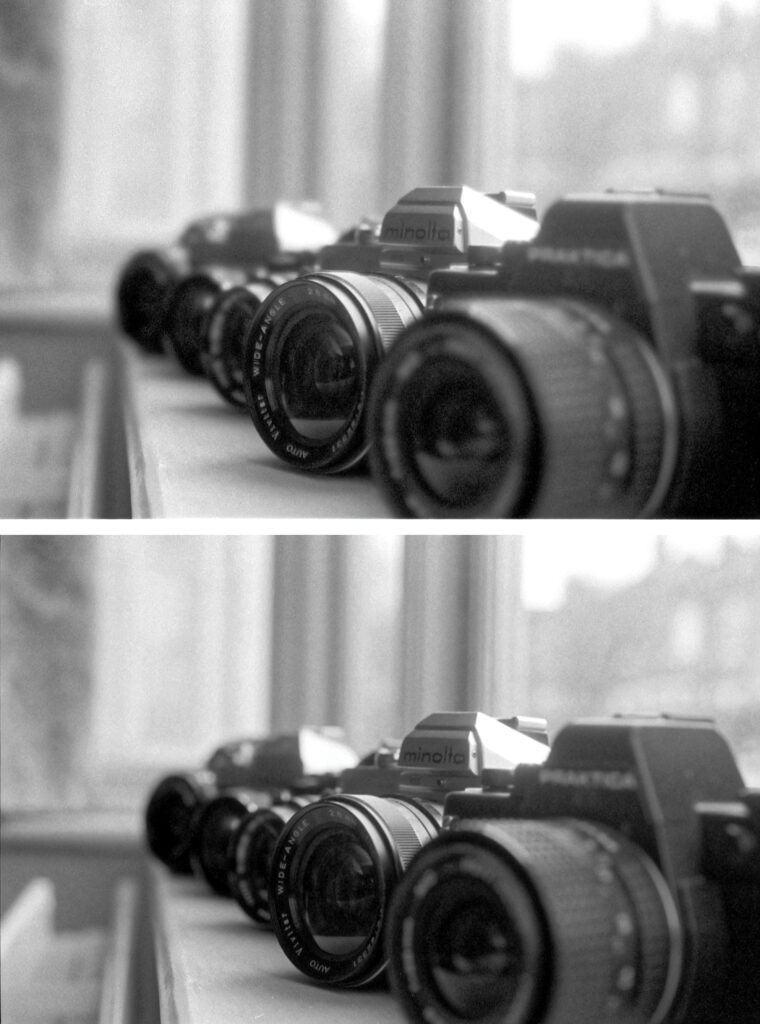
One of the custom functions also allows you to allocate an ‘STF’ setting to one of these positions. This takes a series of overlapping multiple exposures with different aperture settings, in an attempt to emulate the ‘Smooth Trans Focus’ effect of Minolta’s 135mm STF lens (which includes an adopization element to achieve particularly smooth ‘bokeh’).
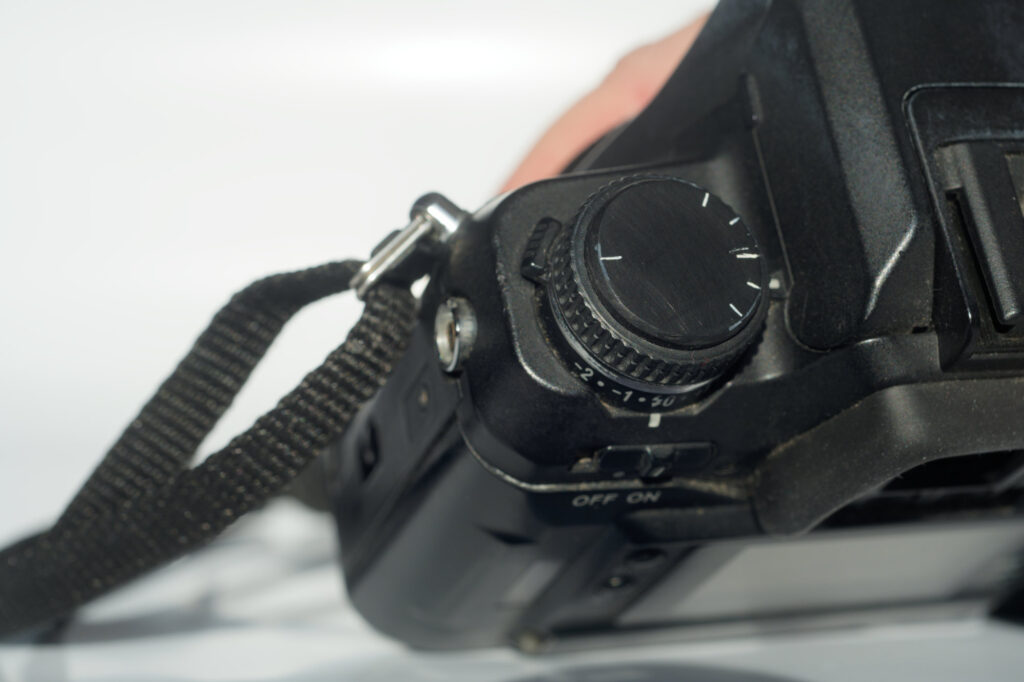
The 7 also gets redesigned compensation and mode dials. Each has a central lock button to stop them from being moved accidentally (I had never found that to be a problem). The compensation dial also simply revolves all the way around between its 1/3 and 1/2 stop options, without needing to be lifted and set one way or the other. Unfortunately, my 7 lost the central plate of the compensation dial with the locking button, so now it is permanently unlocked and sports a home-made cover.
The 7 supports a ‘Direct Manual Focus’ (DMF) option. DMF automatically switches the camera to manual focus once an initial autofocus hit has been made, allowing the photographer to adjust focus manually from there if they wish.
One of the most noticeable features of the 7 is the large rear LCD screen on the back of the film door. The door-mounted screen gives a lot more information than could ever be available on a top-panel LCD. The rear LCD is a definite improvement, making it much easier to read information – particularly regarding shot settings.
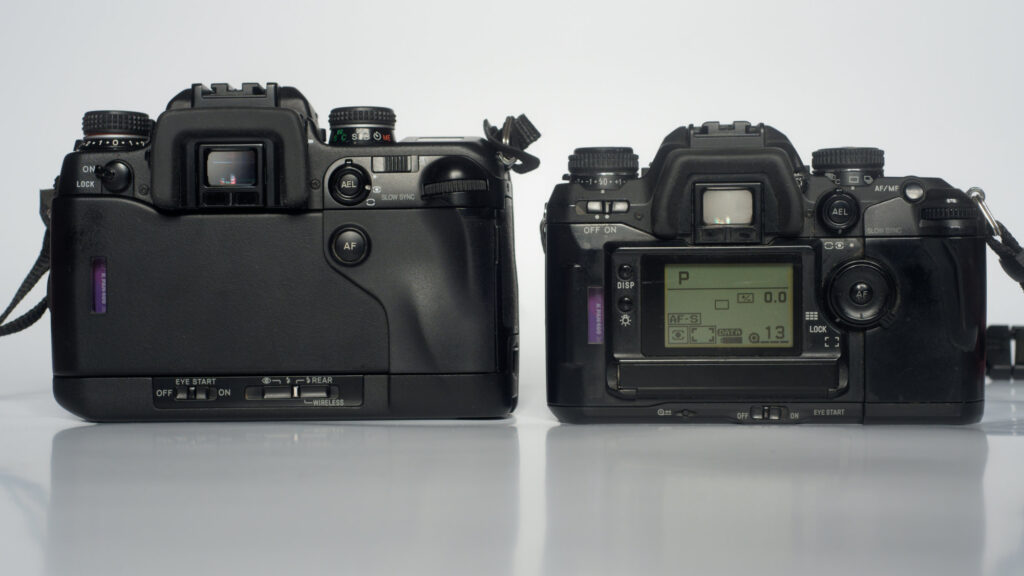
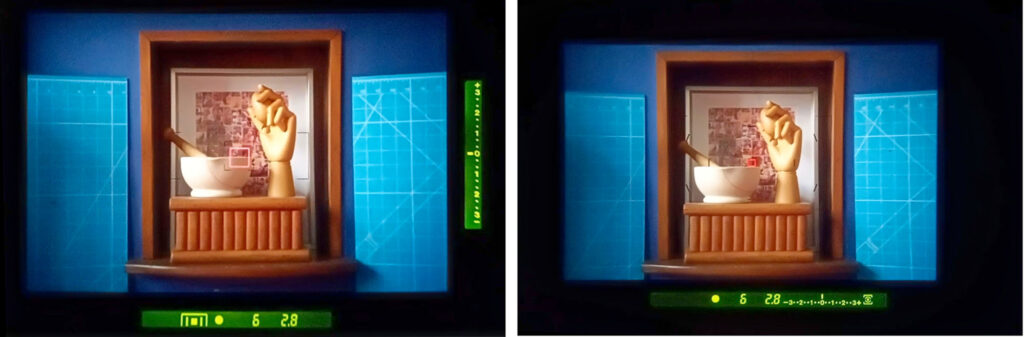
The Dynax 7 has nine focus points in the viewfinder in comparison to the three of the Dynax 9. The centre one is a double-cross (I assume one set + and the other doing x) as opposed to the single-cross centre sensor of the 9. The 7 also gets a new selector around the AF button on the back to control how those extra focus points work.
The 7 has a feature to prevent you from accidentally opening the film door while a film is loaded.
There are 35 custom functions available with the 7, up from the 21 of the 9 and 23 of the 9Ti.
The wireless flash capabilities of the 7 are expanded, with wireless sync available at 1/200 (as opposed to 1/60 on the 9) and HSS being supported for wireless units. Flash compensation on the 7 is limited to plus or minus 2 stops, compared to the 9, which offers up to 3.
The other big gain over the off-the-production-line versions of the 9 is the ability of the 7 to autofocus with SSM and other lenses with built-in focus motors, as well as to use ADI to control direct flash exposure with ‘D’ lenses.
Redesigned controls
Minolta also made some changes to the arrangement of switches and controls for the 7. Some of these will have been for cost savings, others to neaten the interface.
Notable differences are:
- The rotary power switch of the 9 becomes a sliding switch on the 7: I’m assuming that this is a cost thing, as the 9 power switch feels better than the one on the 7 – but that’s not to say that there is anything wrong with the power switch on the 7.
- The base of the 7 is thinner and does not have a rubber ‘sole’. This looks like perfectly reasonable cost-cutting. The thinner base makes for a lower camera profile, but does not have room for the flash options, which move to the side of the grip.
- The less-used buttons that had been under the right-hand door in the grip of the 9 are moved to the back door of the camera and placed under a neat little hinged cover, held closed by tiny magnets.
- Possibly because of all the extra controls on it, the back is not removable and is connected to the rest of the camera by a flexible circuit board. This board would seem to be a possible point of failure (like the card door board of the 9xi).
- While the back of the 7 is not removable, it does have a built-in ability to imprint date and time on the film.
- The catch to open the back is changed from a rotary one on the 9 to a plain slider. I would imagine that the slider catch is easier to set up for the back ‘lock’ when a film is loaded. Although Minolta call it a ‘lock’, this doesn’t quite give the right impression. The catch is actually disengaged from the latch mechanism when a film is loaded, so the slider moves, but doesn’t do anything. This is a perfectly good idea, and it does have an override if you do need to open the back with a film in place; however, accidental opening of the film door, even on cameras that simply have a catch on the bottom edge, is not a big hazard and is quite unlikely to be done by accident. What the lock does lead to, is the assumption by some who are unaware of the lock that there is a problem, which then leads to them attempting to force the door, breaking the plastic catch on the back. A clear reminder that we should all ‘RTFM’ (Read The Manual) in such circumstances. As the back is not detachable, breaking the catch is a big problem and is the source of quite a few spares-and-repairs 7 bodies on auction sites.
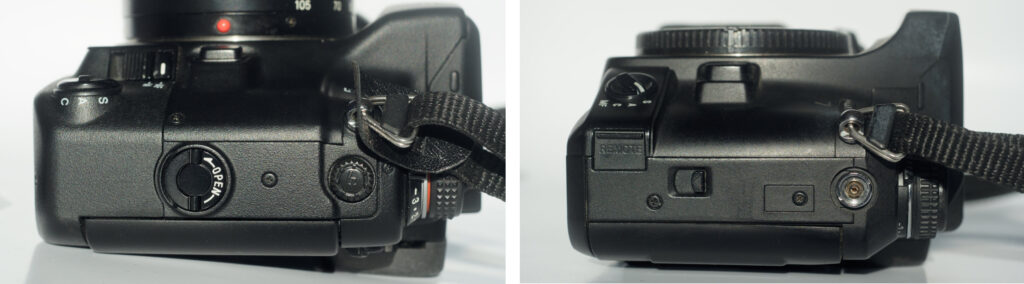
- The terminal for the wired remote is moved from the right to the left-hand edge.
- The DoF button of the 7 allows you to change aperture while it is pressed, it is also quieter than the implementation on the 9.
- Rewind is just slightly slower with the 7 than with the 9 – seven against six seconds for the fast option, 15.5 seconds against 9 seconds for the quiet option. The manual rewind button is moved from among the lesser-used ‘door’ buttons to the rear edge of the base.
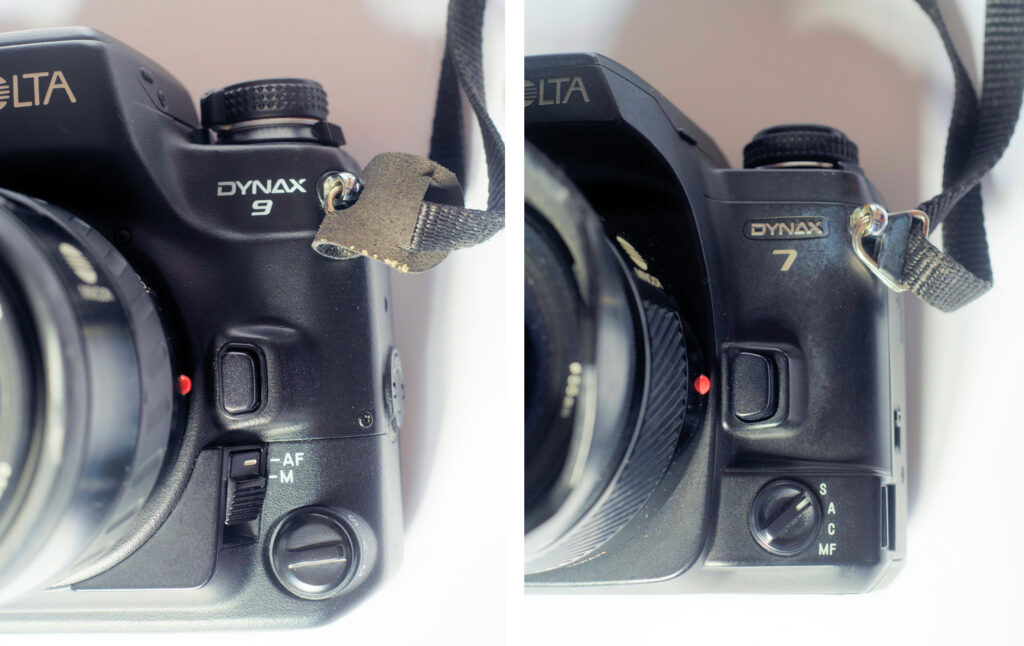
- The 7 merges the front-left AF/MF switch of the 9 with the nearby AF selector, which loses no functionality whatsoever. What the 7 does gain is a push button on the rear of the top-plate that reverses the AF/MF setting while it is depressed.
- The 7 uses an infrared sensor to count film sprockets, as opposed to the mechanical unit in the 9. The infrared and mechanical sprocket counters in both cameras work very well. Both cameras appear to use the film spool to actually drive the film. The use of an infrared counter means that the 7 will fog infrared filmstock.
- Although the 7 cannot use the DM-9 data back to export shooting info via a Smartmedia card, it can use its own DS-100 data saver – this attaches to the lens mount for data transfer and allows shooting information to be saved to a Smartmedia card. A special edition of the 7, titled the ‘7 Limited’ expanded the internal memory to keep info on the last 18 rolls of film.
- The 9 is 11.5mm wider, 13.5mm higher and 9.5mm deeper than the 7. The 7 is a staggering 335g lighter than the standard 9 (that’s less than 2/3 of the weight) and is still 250g lighter than the 9Ti.
- Both vertical grips are well designed, but the one for the 7 has slightly neater connections – the battery door (which also sadly loses its nice rotary catch) does not have to be opened like it does for the VG9 to be attached to the 9. The electrical connections to the grip are hidden under a neat sliding plate on the 7, rather than the ‘lift and stow’ cover for the terminals on the 9.
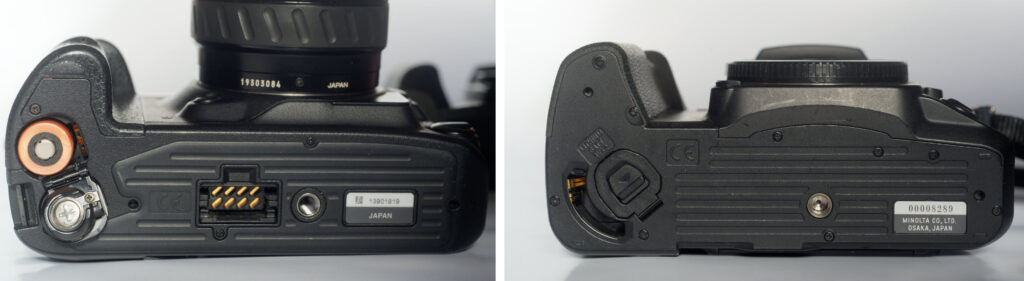
There are references on the internet to the third digit of Minolta lens serial numbers indicating year of manufacture (within the decade), with a suggestion that it might apply for cameras too. This would be consistent with the 9 in the above picture being made in 1999 (which is possible) while the 7 would be from 2000 (which is likely). How this would work with the 4-digit serial numbers of the 9Ti and 7 Limited is anyone’s guess.
I’ve checked back on some older Minolta bodies (SRT 303 and Dynax 7000i) and the serial number thing doesn’t work for them. I’m inclined to think this is one of those bits of ‘lore’ that turn out to be full of holes.
Comparisons
Comparing the 9 and the 7, there are key differences of capability and of usability.
The shutter of the 9 is faster (1/12,000 against 1/8,000) and does a higher flash sync (1/300 against 1/200) than that of the 7.
The difference here is half a stop. In using the 9 and the 9xi, the only times I ever used 1/12,000 was to check that it worked. A fastest speed of 1/8,000 is not a worrying limitation (as Nikon and Canon analogue shooters will doubtless confirm). 1/300 over 1/200 is also just half a stop. It is more likely to be used to enable fill-flash, but there are other options available, such as HSS. It also needs to be remembered that the 9 is limited to 1/60 for sync when using wireless flash.
As far as drive speed is concerned, the 9 can do 5.5fps or 4.5fps with continuous autofocus, against the 7, which achieves 4fps or 3.7fps with continuous autofocus.
There are precious few times these days when I find I need to shoot through film at high speed. High frame rates are probably best left to digital sensors.
The viewfinder of the 9 shows 100% of the image that will be on the filmstock, while the 7 only manages 92×94%.
While a 100% viewfinder is impressive, the 86% offered by the 7 is quite acceptable.
The 7 has more focus points than the 9.
Although the 7 has more autofocus points, they are still clustered towards the centre of the frame. In practice both cameras autofocus faultlessly.
The 7 has various extra features and ergonomic ‘tweaks’.
These tweaks are welcome, but the 9 still has excellent ergonomics. The expression ‘guilding the lily’ springs to mind.
All Dynax 7 cameras can autofocus A-Mount lenses with internal motors and can use ADI with ‘D’ spec lenses, while the 9 can only do so if it has had the SSM/ADI upgrade.
If you have a lot of SSM-type A-Mount lenses or use ADI on a very regular basis, you may want to avoid an original spec 9.
The 9 can use Infrared filmstocks.
If you want to shoot IR film, you may want to avoid the 7.
Pictures
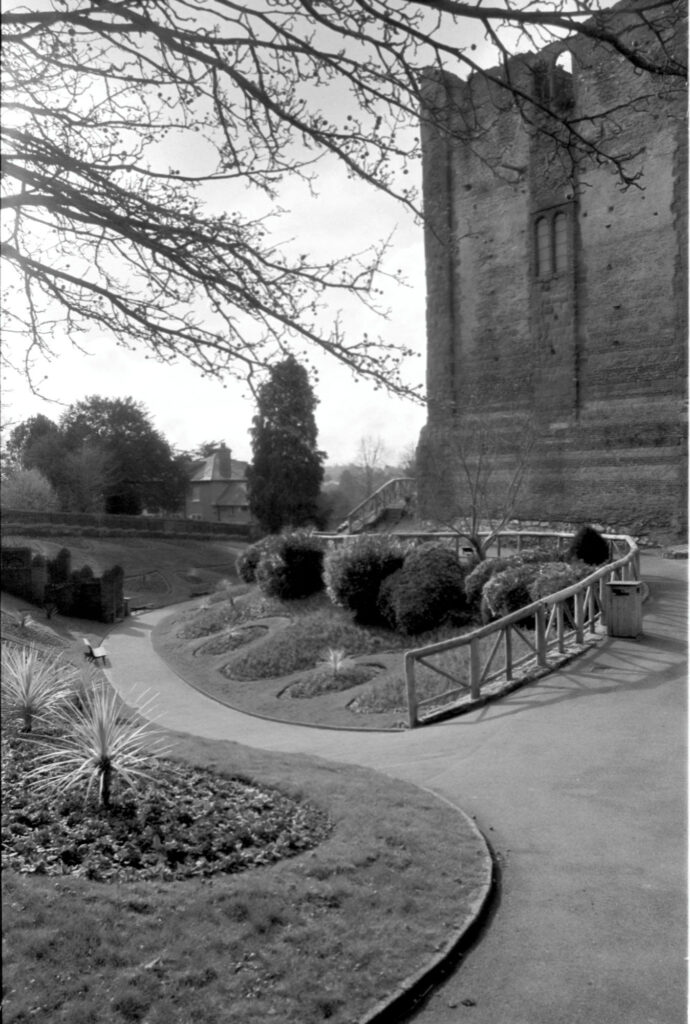
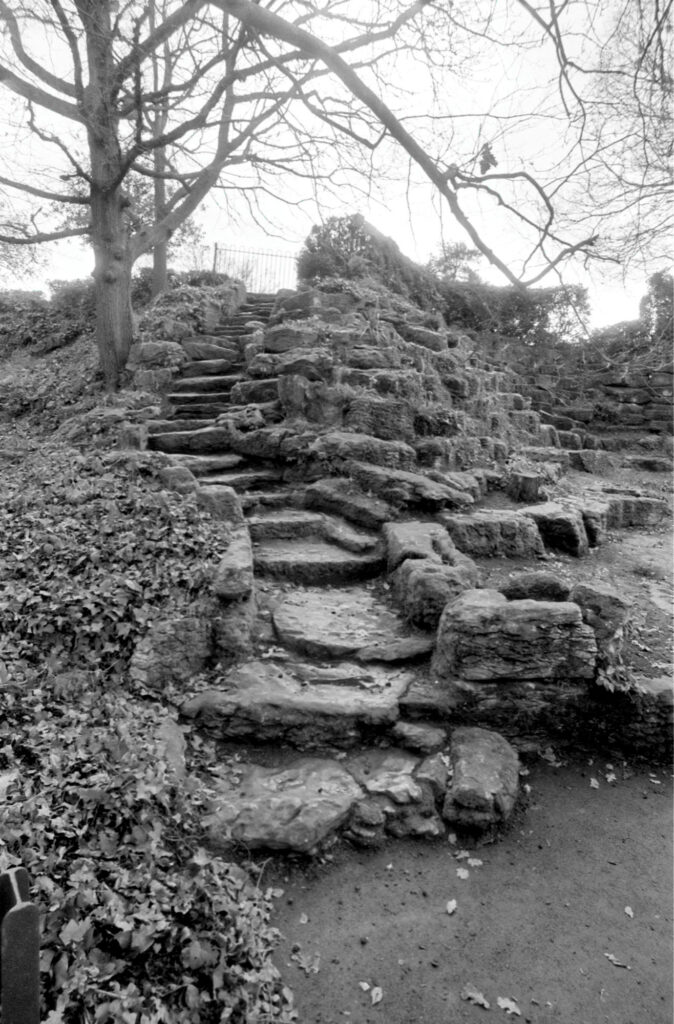


And the best camera is…
Both these cameras are wonderful picture-taking instruments. They won’t necessarily take a better photograph than a budget Minolta body like the Dynax 5 with the same lens, but neither of them is likely to let you down or limit your photography in any meaningful way and they are quite likely to motivate an analogue photographer to go out and find something to take photographs of.
Nothing lasts forever, but the 9 seems built to outlast most things. The 7, while robust by normal standards, is slightly more ephemeral as is witnessed by my missing exposure compensation dial (which may still show up at the bottom of an old camera bag someday_.
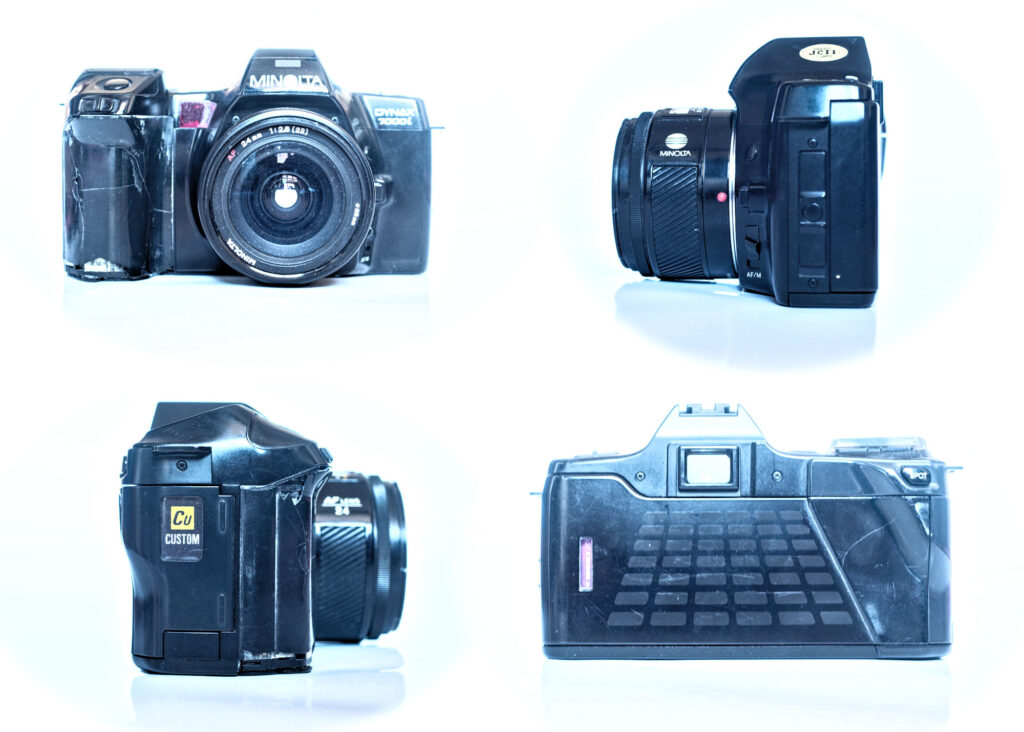
The 9 is the rarer camera, with used prices (at the time of writing) at around £250 for a plain 9 without the upgrade. The 7 tends to be cheaper, but still commands prices well into three figures. As far as I can tell, the 9 was somewhere around £2,000 on release but was being sold for about £1,500 by the time the 7 was released. The 7 seems to have retailed for about £1,000, so price differentials have probably been maintained.
The Dynax 9 is monumental. The Dynax 7 is the more advanced camera. From a bang-per-buck point of view, it is difficult to get past the 7, although if we made all our camera buying decisions on a bang-for-buck basis we would all be shooting with the excellent Dynax 5.
The single-digit series of Minolta Dynax cameras are rather exceptional, with the 9, 7 and 5 all being excellent cameras in their target markets.
I think back to the old truism that the best camera is the one you have with you (or in this case, the one you can get your hands on). If you find either of these at a price that tempts you, you are unlikely to be disappointed. Whether you get the 9 or the 7, you can’t really go wrong.
I feel rather fortunate to have access to both cameras. My cameras are around the same vintage – manufactured just a couple of years apart – but the 9 shows far less sign of ageing. This may simply be due to it having been cosseted in the past, but the build probably helps. I’m aware that the previous owner of my 7 was an active analogue photographer, and that my 7 had a good deal of use before it came to me well over 10 years ago. I’ve also used it a fair bit in turn. I notice that the latest film in the 7 is identified by the data logger as [dn1-0083]. Assuming that the code assigned to the film info is incremental, it suggests that 82 other films have been through it with the data logging on (and possibly more with it off). The equivalent screens for the logger on the 9 don’t show the label, so I can’t tell how many films have been through that camera.
All things being equal, when shooting film with A-Mount lenses, I’m probably more inclined to reach for the 9, but I do only have one SSM A-Mount lens against 8 screw-drive ones, and the 9 still has a distinct novelty value for me. Having both cameras in the bag while preparing for this article has been a treat.
Share this post:



Comments
Martin Siegel on Minolta Dynax 9 and 7 – A Comparison
Comment posted: 30/03/2026
Thanks again
Martin
Comment posted: 30/03/2026
Ibraar Hussain on Minolta Dynax 9 and 7 – A Comparison
Comment posted: 30/03/2026
This will be the go to reference for all for years to come!
I sold my 9, even though I sung its praises I missed the 7, which is a better camera, I now have a JDM a-807si but a 7 will join again at some point.
Comment posted: 30/03/2026
mk3018 on Minolta Dynax 9 and 7 – A Comparison
Comment posted: 30/03/2026
If weight is not a factor, the 9 is a highly recommended camera.
Comment posted: 30/03/2026
Gary Smith on Minolta Dynax 9 and 7 – A Comparison
Comment posted: 30/03/2026
What film stock did you use for your great example shots?
Thanks for your fantastic review!
Comment posted: 30/03/2026
Tony Warren on Minolta Dynax 9 and 7 – A Comparison
Comment posted: 30/03/2026
Colin O'S on Minolta Dynax 9 and 7 – A Comparison
Comment posted: 30/03/2026
Another small point I think is worth pointing out is that APS cameras didn't take different ratio pictures on the film. All photos were always captured in the full "H" ratio, and the user's choice of H or C or P was just recorded magnetically on the film, for communcation to the lab as to which format to print.
Comment posted: 30/03/2026
Omar Tibi on Minolta Dynax 9 and 7 – A Comparison
Comment posted: 30/03/2026
This same song of the more professional vs mid-range being very close cut, seems to repeat itself across different camera systems, such as the Contax ST vs RX. I wonder if it is because of the rapid advance of electronics technology in the late film era? Lucky that you don't have to make a choice between the two! I ended up doing the same with my Contax SLRs, I justify having the second as a backup/different film body :)
Comment posted: 30/03/2026
Kodachomeguy on Minolta Dynax 9 and 7 – A Comparison
Comment posted: 01/04/2026
Something did not work out on photos 1, 4, 5, 6, and 8. On my Dell monitor run by a Mac Mini, they look distinctly low resolution. I hate to use the term "sharp," but data just seems to be lacking or looks low resolution. Does the 35MMC software do something? But the Guildford mural photo looks fine.
Comment posted: 01/04/2026
Walter Reumkens on Minolta Dynax 9 and 7 – A Comparison
Comment posted: 01/04/2026
My go-to brand at the time was Nikon; my first proper SLRs, after a failed attempt with Fujica, were a Nikon FE and FM2. That’s how it stayed even with the introduction of AF and digital technology. I therefore only noticed the launch of the Dynax 9 in passing, but for me it was no reason to switch brands back then. Anyone who loved minimalism got on well with it, and the oft-repeated refrain that the Dynax 9xi wasn’t a professional camera can safely be forgotten. The Canon EOS 1 (1989–1994) was very similar in design to the Dynax 9xi and recognised as a professional camera; the quality was very good. To put it provocatively, the Minolta Dynax 9xi is a camera from the early 90s that simply bears the wrong company name. If it had Canon or Nikon
on it, it would be a super-duper, mind-blowingly advanced SLR camera.
Through my involvement in competitive sport at the time, I had a lot of contact with professional press photographers. None of them had Minolta kit, nor Contax or Leica. Canon and Nikon were the brands of the moment; some professionals switched to Canon for the AF and then switched back again because of the poor performance of the Canon EOS 5D. Although for most it was a financial strain if you didn’t have a permanent job in the media. Here in Germany, at least, Minolta never really made the breakthrough.
I love older cameras, but the positive aspects rightly mentioned – who really needs them? Last week I shot a roll of Kodak Ultramax 400 with my Nikon F100, which was available from 1999 to 2006. Yesterday the scans arrived from my specialist lab; all perfectly exposed, and the camera’s handling was simple, as is typical of Nikon. The only Minolta I own is the SR-T 303 with three Rokkor fixed focal length lenses. And that’s how it will stay.
Thank you very much for sharing the review; it’s a really great piece of work, Bob.