

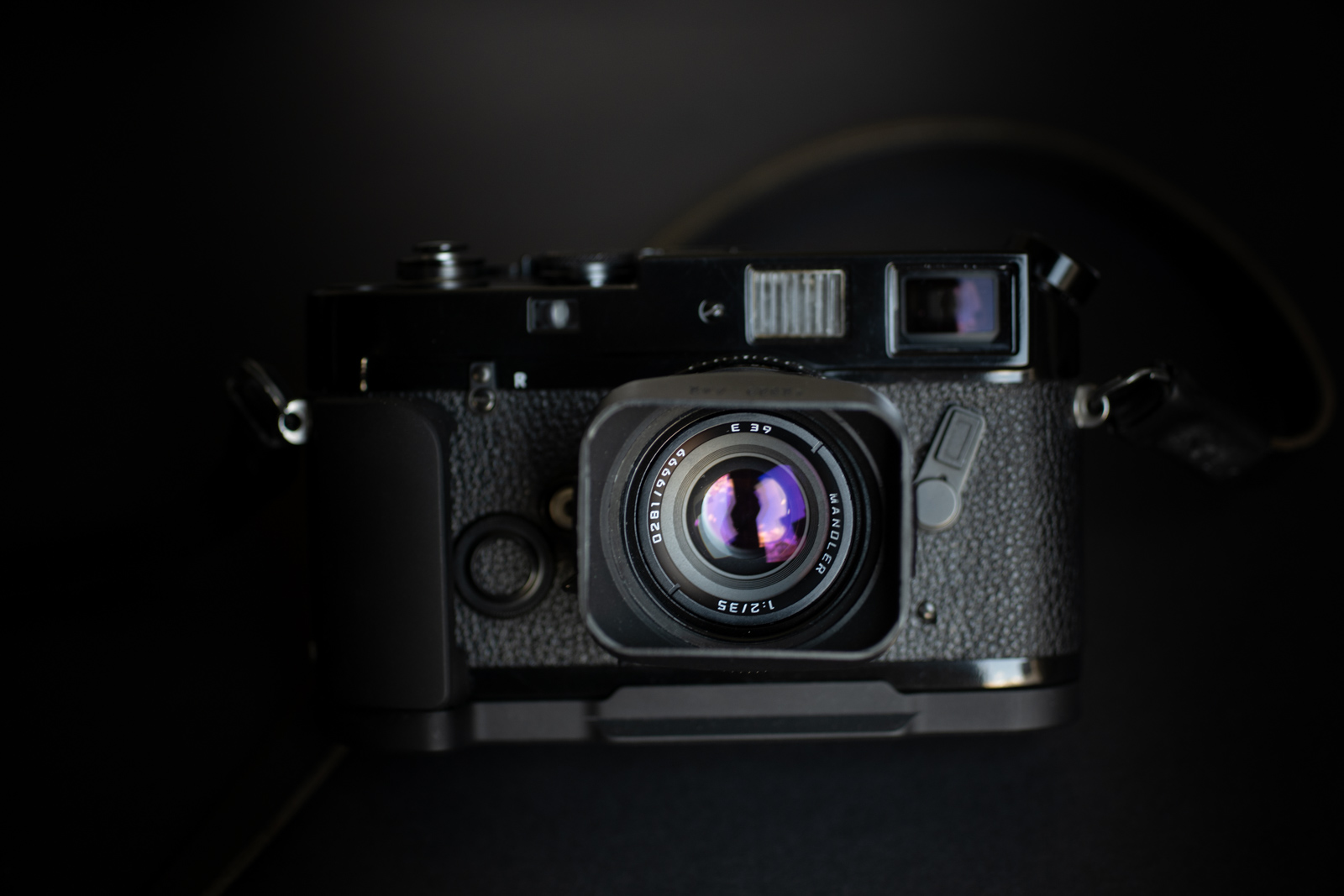
Mandler is one of the most recent brands to enter the M-mount lens market. The Mandler name and branding clearly echo Leica DNA – and their first released lens – Mandler 35mm F2 7 Element – is essentially a cosmetic copy of the legendary Summicron 35mm f2 version 4 (KOB).
At 350 USD, this lens is among the cheapest options available for fast-ish 35mm lenses. It was quite intriguing to see whether Mandler could actually deliver a 35mm f2 lens that performs as advertised at this price point. Getting one was not easy, as demand seems high while production batches are very limited, around 250 units each. I finally managed to get a black aluminum sample with the accessory kit.
Build and haptics
First things first, the packaging uses the same color accents and materials found in vintage Leica gear. Visually, it works quite well.
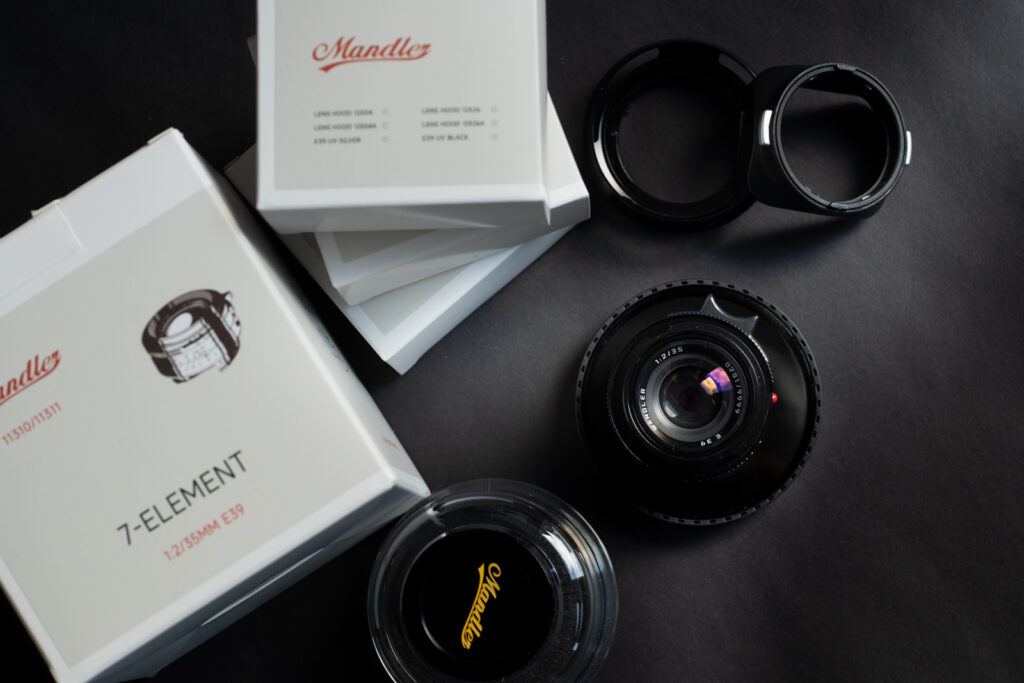
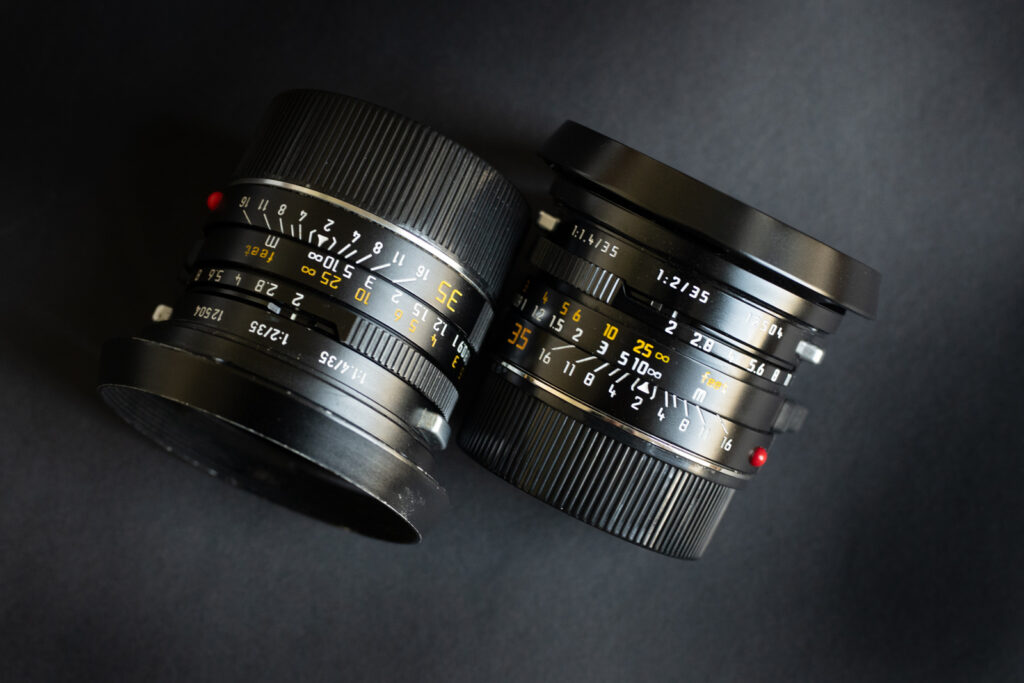
The Mandler 35mm F2 7 Element looks very nice and closely resembles a 1:1 copy of the Summicron. I compared it with the German Summicron I own, and the differences are minor:
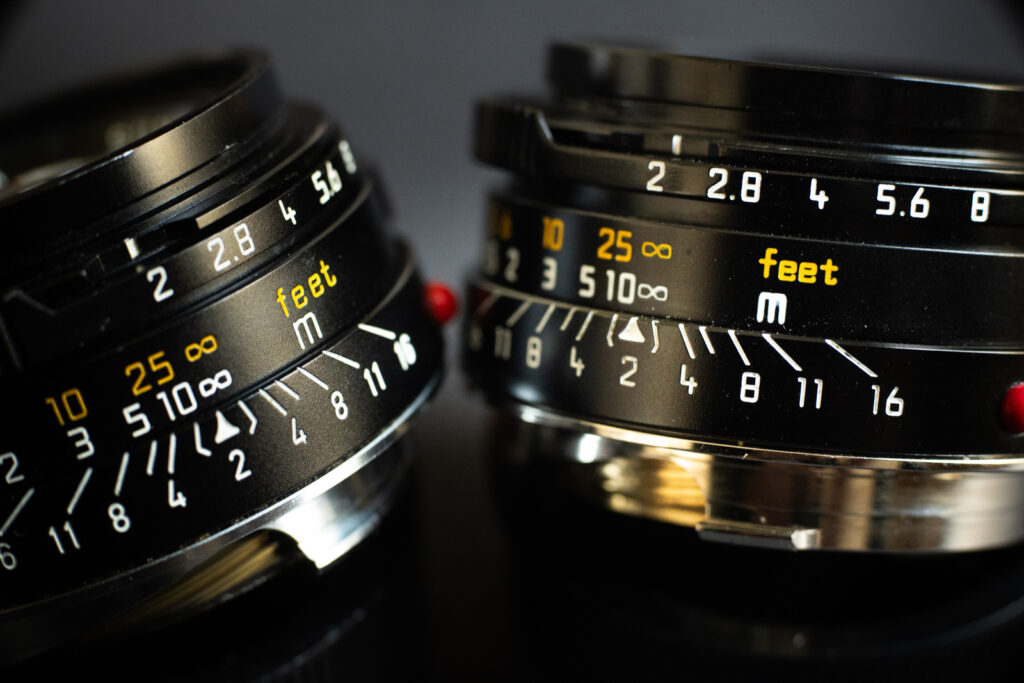
- The lens appears to be painted rather than anodized
- The engravings are slightly uneven and overfilled with paint
- The lens opening from the front looks noticeably smaller, suggesting different optics
- The lens is about one millimeter longer
Other than that, the focus ring is fairly smooth, not perfect, but good for a 350 USD lens. The aperture ring also feels decent, with a bit of friction, very similar to the Summicron.
The accessory pack is surprisingly good. I like both the vented 12504-style hood and the plastic square hood, though I prefer the plastic one in actual use. It performs better against flaring and is more practical for filters thanks to its clip-on design. The accessory pack is worth it if you plan to buy this lens.
Overall, for the price, Mandler 35mm F2 7 Element offers a solid build, though not exceptional which has to be expected considering the selling price.
Optical performances
This is the most important part. As mentioned earlier, the Mandler 35mm F2 7 Element seems to have a smaller effective opening than the Summicron at f2, and smaller than all other f2 35mm lenses I own, despite sharing the same “7-element” diagram.
I quickly noticed that at f2, the lens gives a reading about one stop slower than my other f2 lenses. What does that mean?
After further testing, I found that the lens behaves more like an f2.5 lens than an f2. Interestingly, looking from the rear, the aperture blades are not visible between f2.5 and f2. There seems to be an internal bezel acting as a fixed f2.5 diaphragm, which cannot be removed.
All measurements confirm this. In terms of light transmission, you are not getting f2, but closer to f2.5 or even f2.8. This is disappointing, and a little bit difficult to understand how this lens can honestly be marketed as f2 as the difference is almost a whole stop of light.
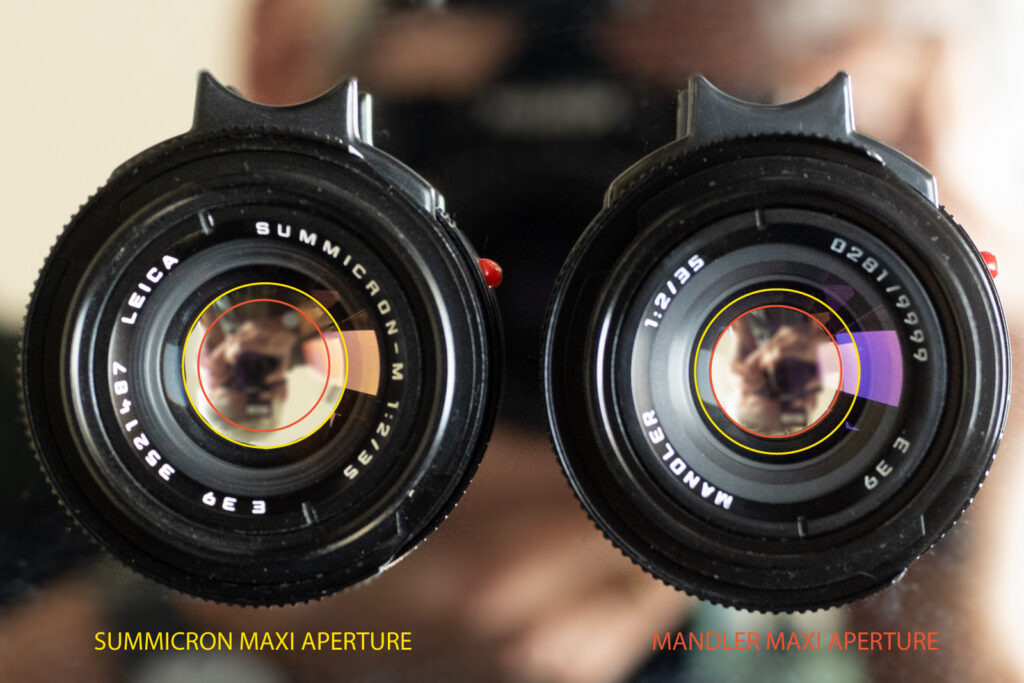
That said, aperture is not everything. Let’s talk about sharpness.
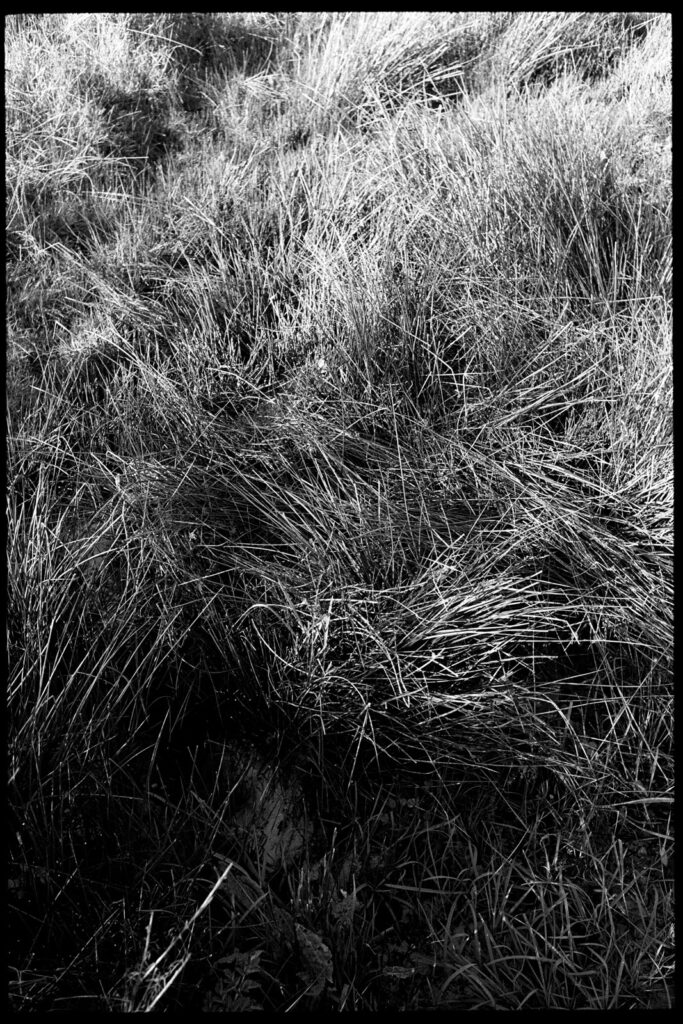
The good news is that center sharpness and contrast from f2.5 are quite strong. The bad news is the heavy field curvature, which causes rapid sharpness falloff toward the edges, even before reaching the corners. To achieve uniform sharpness, you need to stop down to f8. This is my recommendation for street photography or landscapes. At wider apertures, the mid-field becomes seriously blurry and can cause unexpected midfield blur.
This issue is more noticeable on digital sensors, and less problematic on film, where grain tends to mask sharpness flaws.
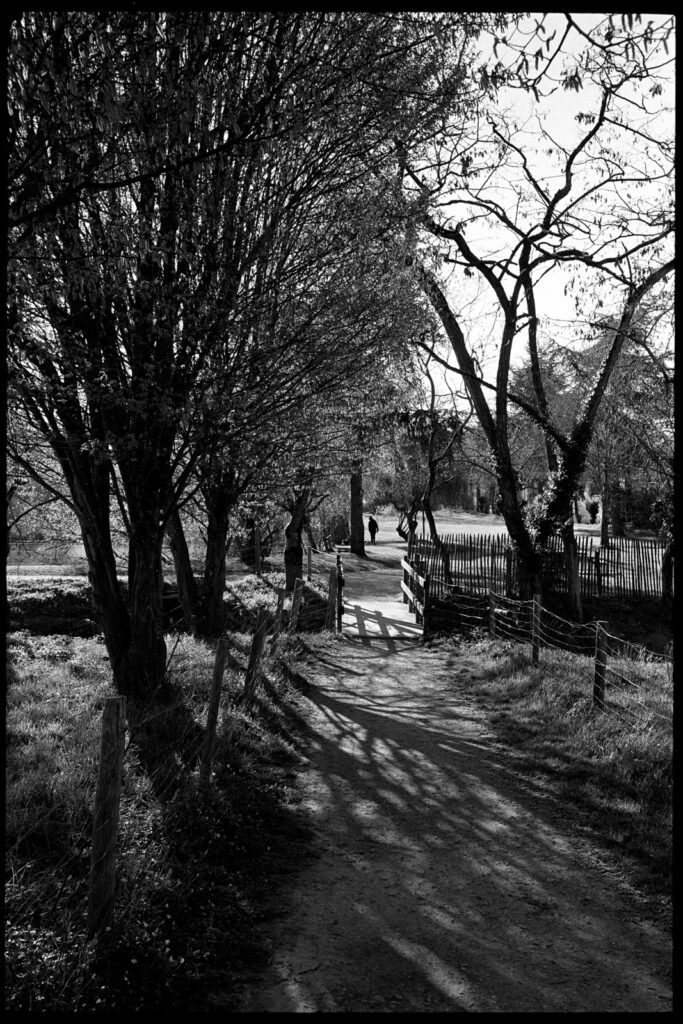
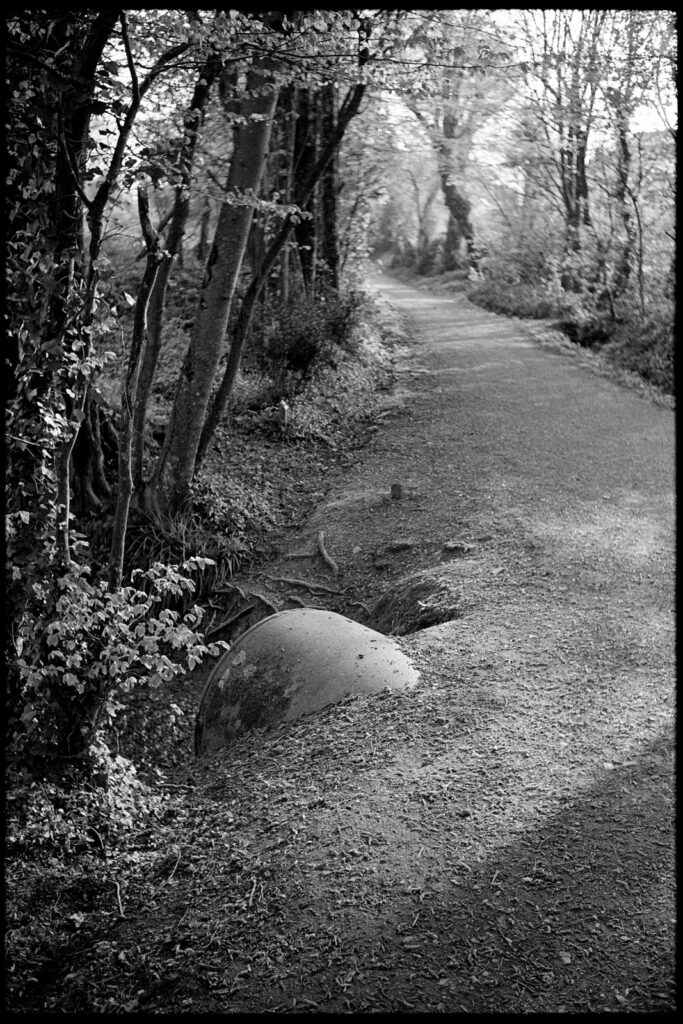
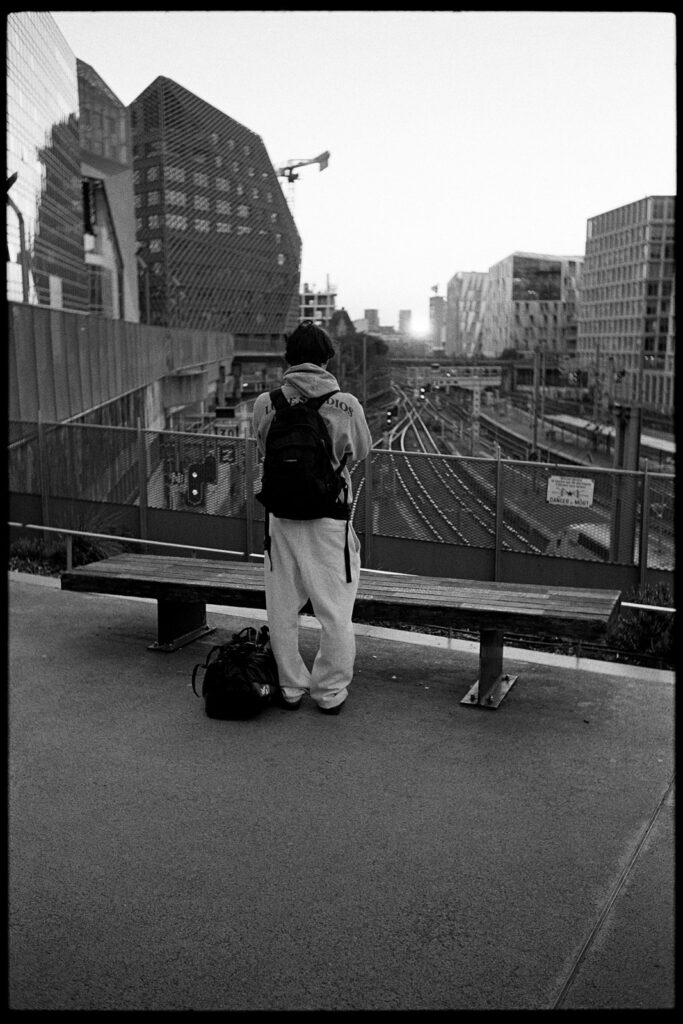
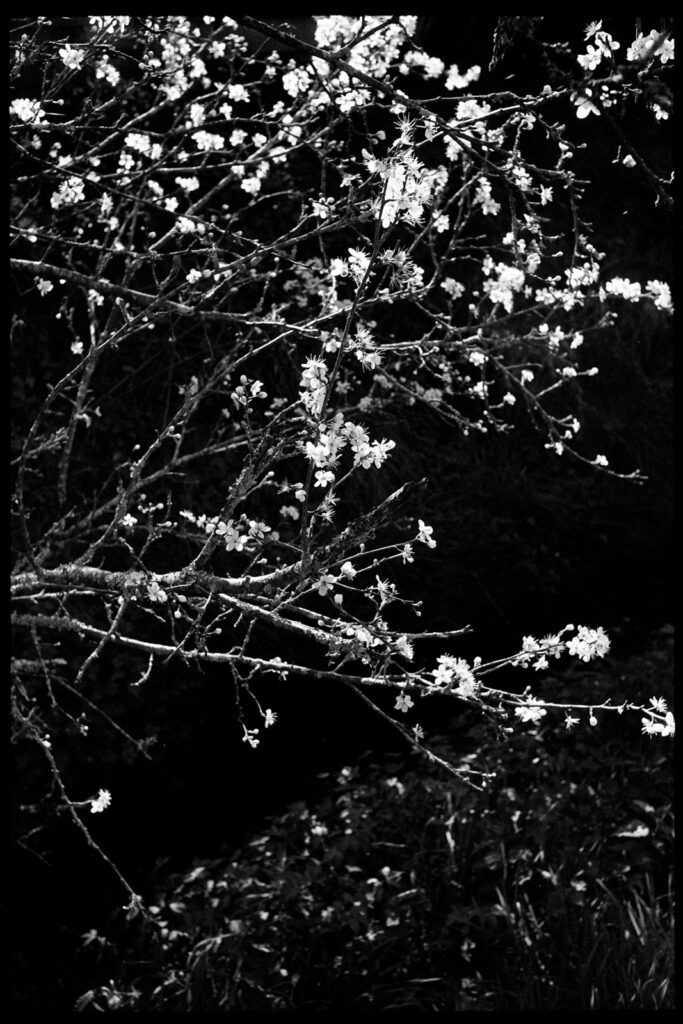
As for out-of-focus rendering, the Mandler 35mm F2 7 Element performs well. The bokeh is soft, with minimal outlining, and has a modern look. Combined with the strong field curvature, it creates pleasing subject separation for what is effectively a 35mm f2.5 lens. It works well for details, close-ups, portraits, and mid-body shots. I found the rendering quite pleasing and tried to use the lens according to its strengths.
Another strong point is distortion control. The lens shows almost none, which is excellent and probably the closest similarity to the Summicron.

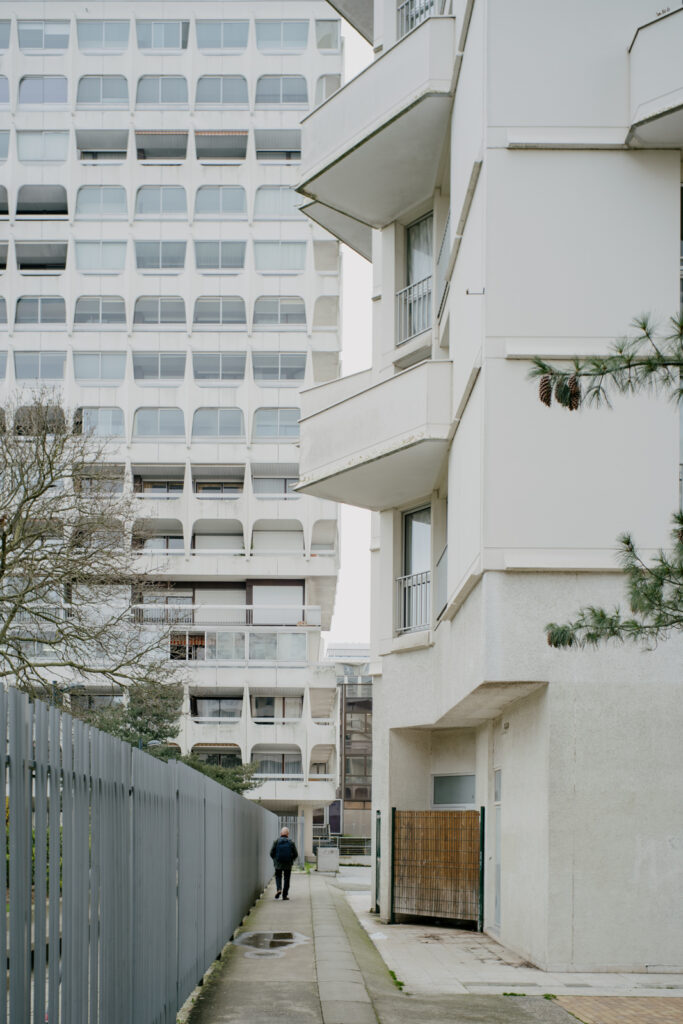
So overall, the Mandler 35mm F2 7 Element is far from bad. However, one thing stands out: Mandler replicated the external design of the Summicron very closely, but chose a completely different optical formula. The Summicron is known for being predictable, reliable, and sharp across the frame at moderate apertures, while the Mandler behaves more like a character lens, similar to the Voigtlander Nokton Classic.
I would not choose this as my only lens, even though it renders nicely wide open. I generally prefer lenses that clean up by f4, which is often the widest aperture I use for film photography in daylight. In that regard, the Summicron is clearly ahead.
Price consideration and competition
The strongest arguments for the Mandler 35mm F2 7 Element are its low price and its resemblance to the Summicron 35mm v4. But what are the alternatives?
The most direct competitor is the 35mm f2.5 Color Skopar, widely available second-hand between 300 and 400 USD. It offers better overall sharpness across the frame at f4 and is slightly smaller, though its bokeh is more nervous.
At this price, you might also find Nokton Classic lenses interesting. They are about one and a half stops faster, render similarly at f2.5, and are a bit sharper in the mid-zone. However, they flare more and show noticeable distortion, around 3.5% for version 1 and 2.5% for version 2, which can be an issue for architectural or straight-line compositions.
The first version of the 7Artisans 35mm f2 is another option. It performs very well but also shows some barrel distortion. It is discontinued but easy to find second-hand at a low price.
I am not considering more expensive lenses as direct competitors, though options like Thypoch, Ultron, Biogon C all offer significantly better performance at an additional cost of, at least, 200-300 USD.
It is difficult to declare a clear winner, as each of these lenses has its own strengths and weaknesses at this price point.
- Choose the Mandler for smooth modern bokeh, straight lines, and strong field curvature look that will work good for portraits, close ups, subject isolation
- Choose the Skopar for a reliable all-rounder with more neutral rendering, great for reportage kind of work, landscape, streets
- Choose the Nokton for a more vintage look wide open, faster aperture, cinematic feel, a bit of a combination of the above two, with added barrel distortion

Pros, cons, and conclusion
Pros
- Ok build quality for the price
- Excellent accessory kit (worth it)
- Pleasant, modern bokeh and subject isolation
- Strong center sharpness and contrast
- Very low distortion
Cons
- Not a true f2 lens, closer to f2.5
- Very weak mid-field sharpness until f8
- Strong field curvature
- Sloppy engraving and paint filling work
Mandler’s first lens is an interesting product, and it is easy to understand the attention it is getting.
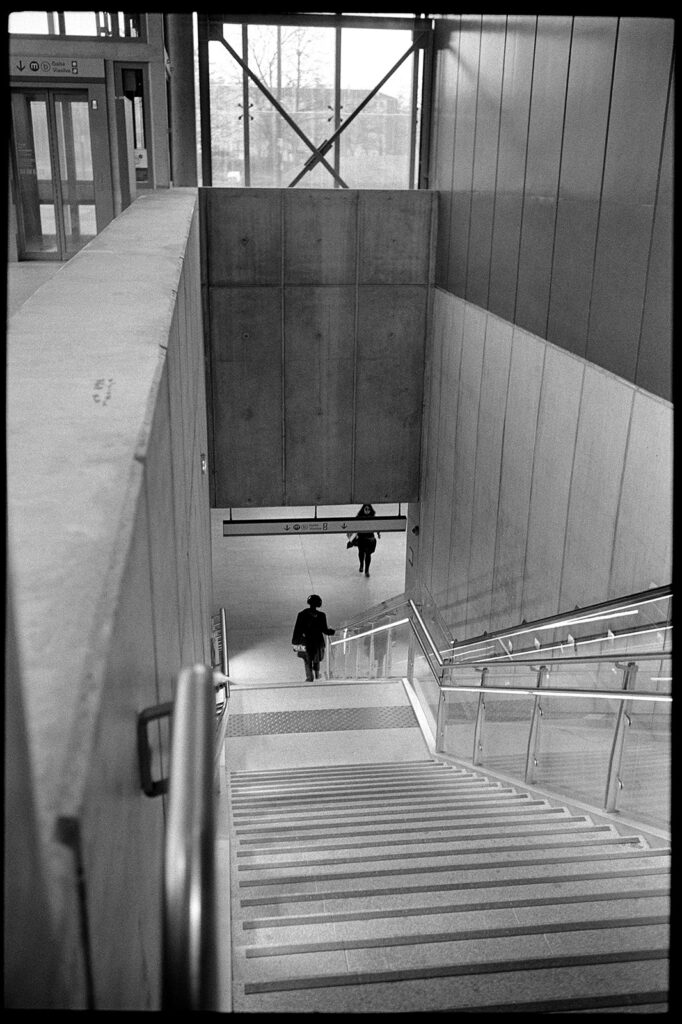
However, two issues stand out. The first is the misleading f2 designation. The second is the weak mid-field sharpness, which limits its versatility in my own point of view. Even though the pictures I made with it were pleasant most of the time.
The Mandler 35mm F2 7 Element comes very close to being a strong all-rounder. It has good center performance, solid build, and excellent distortion control. But the need to stop down to f8 can be restrictive.
It is important to approach this lens with the right expectations. It is not a true Summicron alternative, nor a faithful replica in terms of performance.
Instead, it should be seen as a character lens. Within that context, and at this price, it becomes a compelling and enjoyable option that will appeal to photographers looking for a distinctive rendering.



Thanks for reading! You can find the Mandler 35mm F2 7 Element on their online shop here. And if you haven’t already, feel free to follow me on Instagram. Also, if you’re interested in Leica grips or Nikon Zf thumb rests, check out my website and follow KameraKraft on Instagram.
Cheers!
Share this post:



Comments
GS on Mandler 35mm F2 7 Element review
Comment posted: 11/05/2026
Kodachromeguy on Mandler 35mm F2 7 Element review
Comment posted: 11/05/2026
Adrian Cullen on Mandler 35mm F2 7 Element review
Comment posted: 11/05/2026
Gary Smith on Mandler 35mm F2 7 Element review
Comment posted: 11/05/2026
I have to say that as a simple guy, I'm not sure how one would go about saying that you could determine that an assembled lens has an f/2 v. an f/2.5 aperture.
Comment posted: 11/05/2026
Comment posted: 11/05/2026
Comment posted: 11/05/2026
John F. on Mandler 35mm F2 7 Element review
Comment posted: 11/05/2026
On the other hand, I appreciate the "character" of this lens, and I think it'll be great for portraits, especially environmental portraits. The particular challenge for myself with regards to this lens is that I would like a nice, moderately fast 35mm lens in LTM that's using a relatively classic optical design, that is to say without aspherical elements, and within a reasonable budget. Unfortunately, this is basically the only lens out there that checks all of the boxes.
Thanks for sharing,
John