

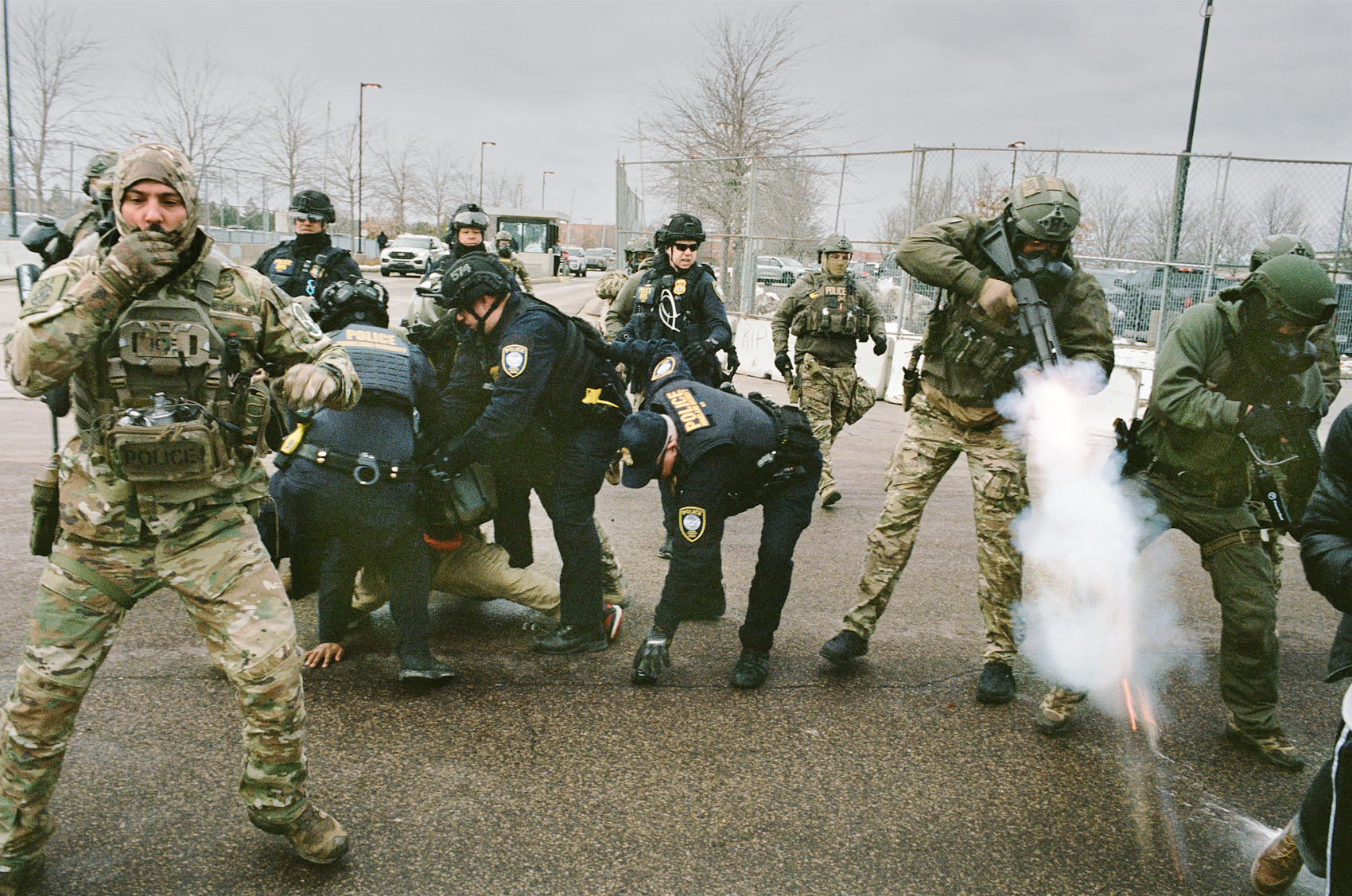
I arrived in Minneapolis on January 9, 2026, two days after Renee Good was killed by US ICE agents. What I saw shocked me. It was not the city’s reaction that stood out, but the sheer, industrial scale of the federal paramilitary occupation.
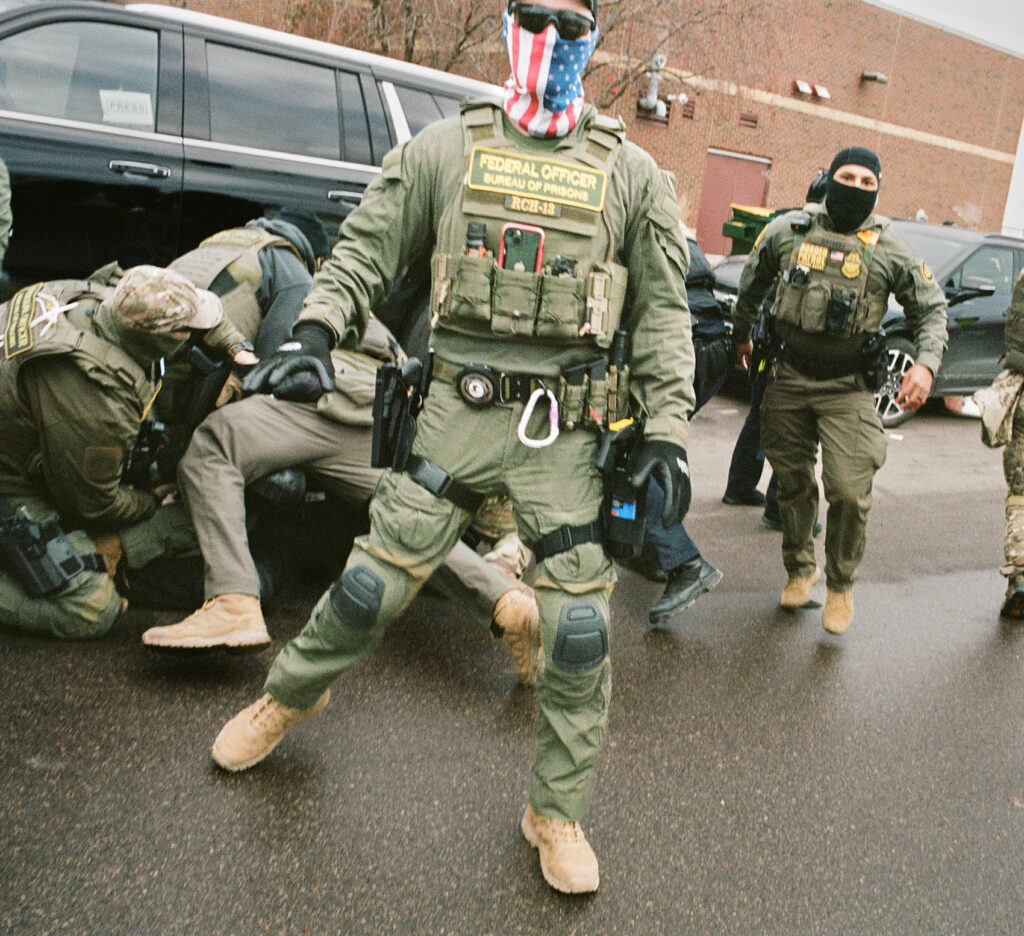
A constant, aggressive kinetic energy defined the deployment. I photographed hundreds of vehicles moving in synchronized groups through residential blocks and downtown corridors. These convoys ran red lights and drove the wrong way down one-way streets with a frantic urgency more characteristic of a combat zone than an American town.
In one instance, I watched a line of federal vehicles circle an elementary school while parents stood on the sidewalk. The vehicles moved in a slow, intentional rotation–a mechanized presence that asserted absolute federal authority over the street.
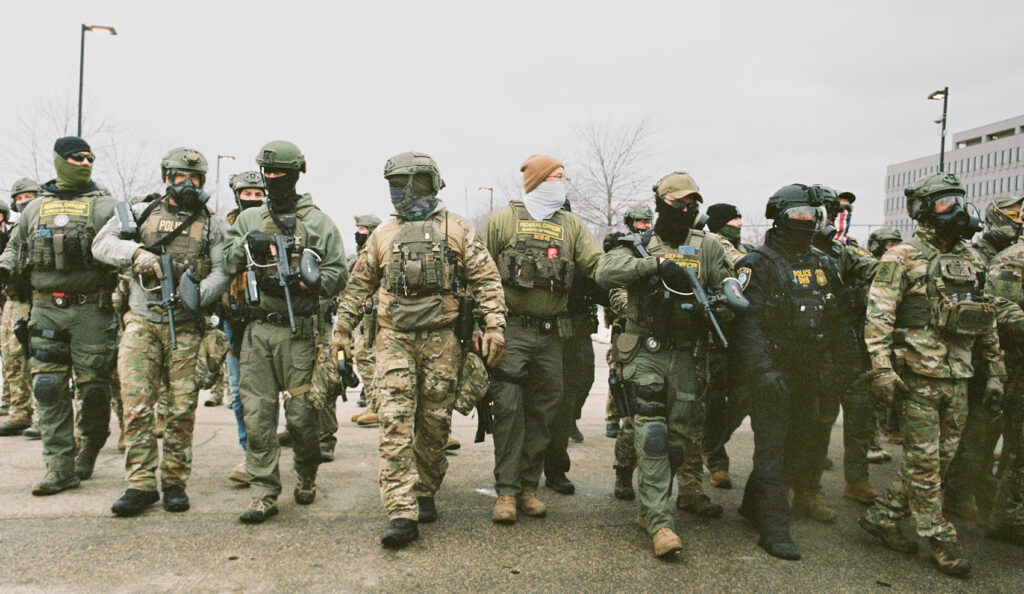
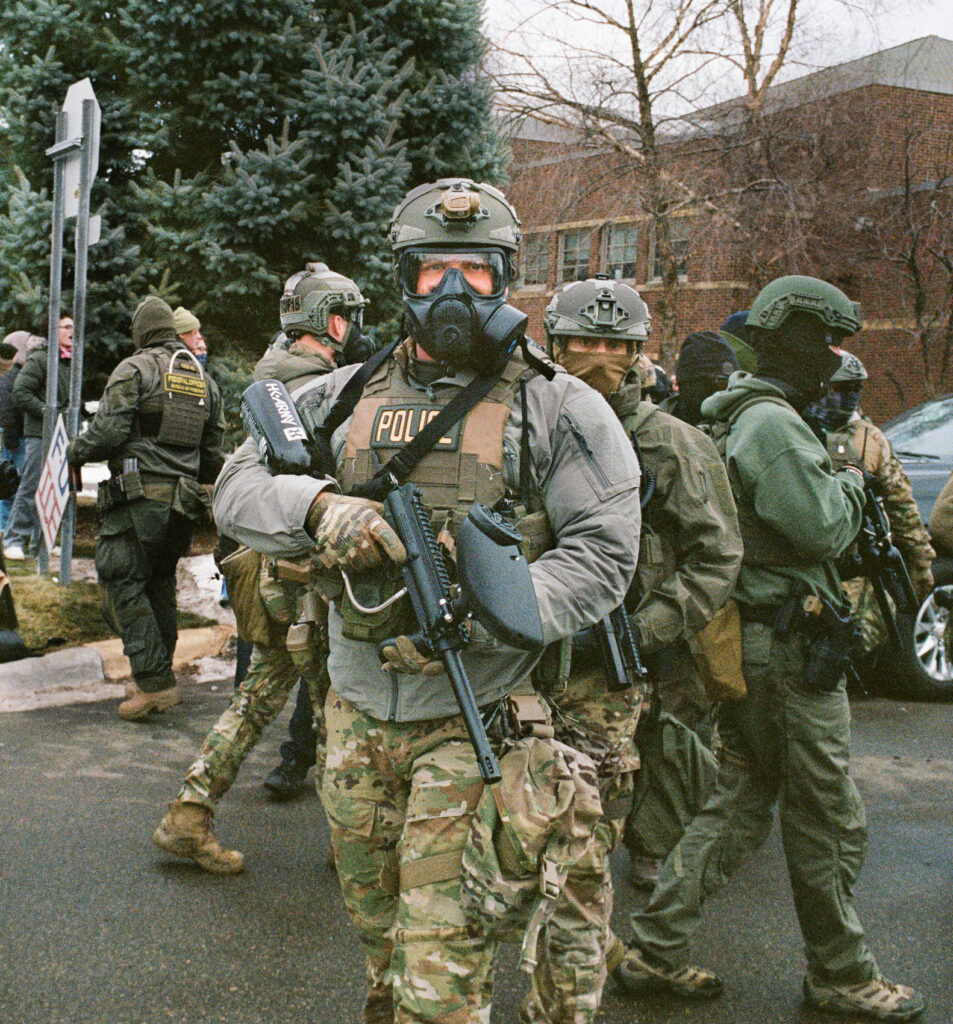 These were not police as most Americans would recognize them. They wore full tactical gear–ballistic helmets, gas masks, body armor–and carried automatic weapons. They had been assembled from across the federal system and deployed together into American neighborhoods. The Whipple Federal Building became a staging area, its surrounding streets and parking lots filled with agents gathering before moving out again.
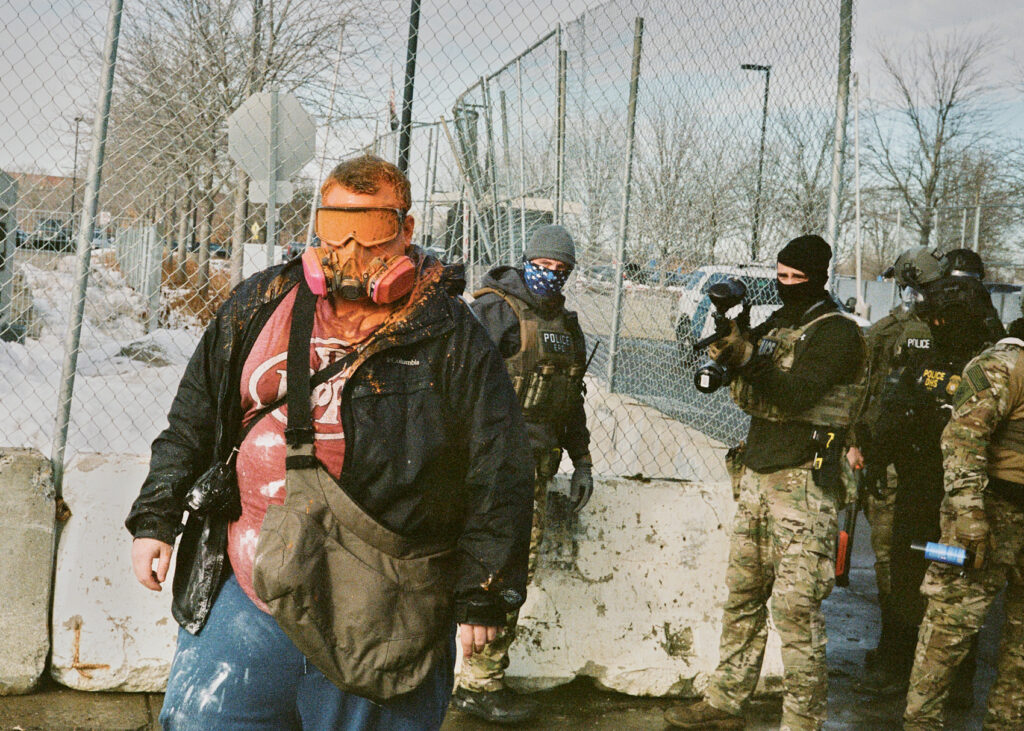
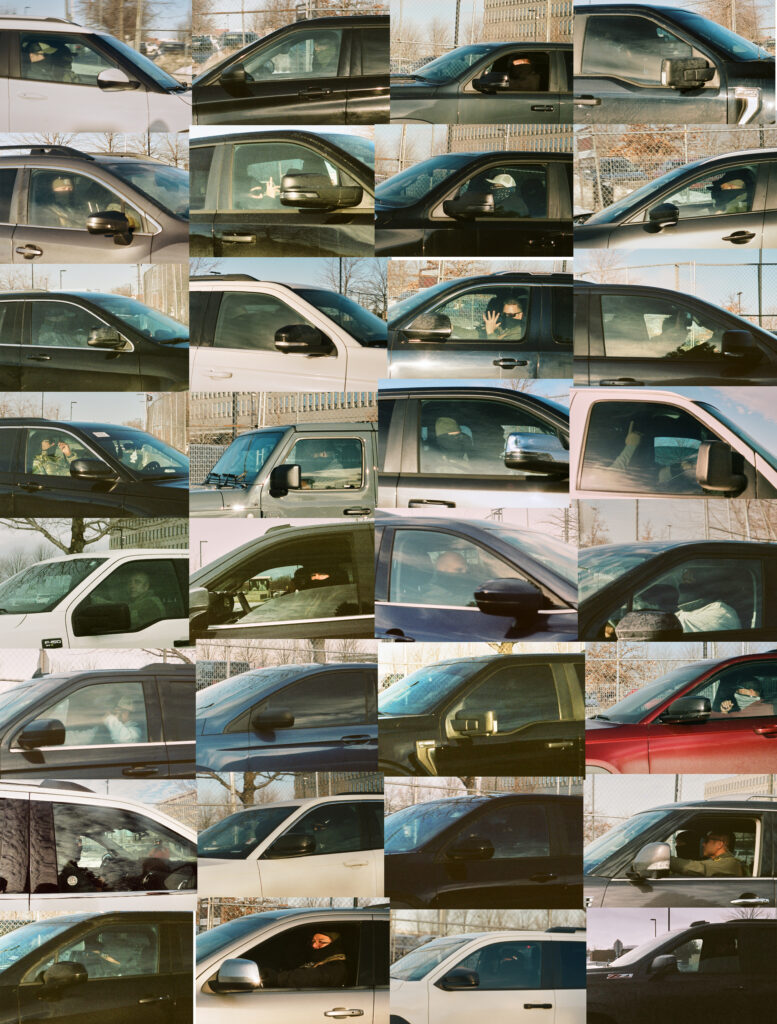
I worked to develop a visual language that was direct and restrained to match this environment. In these images, federal authority is stripped of individual humanity. The agents’ faces were entirely concealed behind balaclavas and tinted goggles, and the absence of name tapes or badge numbers was a recurring detail in every interaction. This lack of identifying markers extended to the vehicles, which frequently operated with blacked-out windows; some had no license plates, while others had plates that were frequently swapped between vehicles. These omissions transformed them into anonymous enforcers of a federal siege. The individual is replaced by the apparatus.
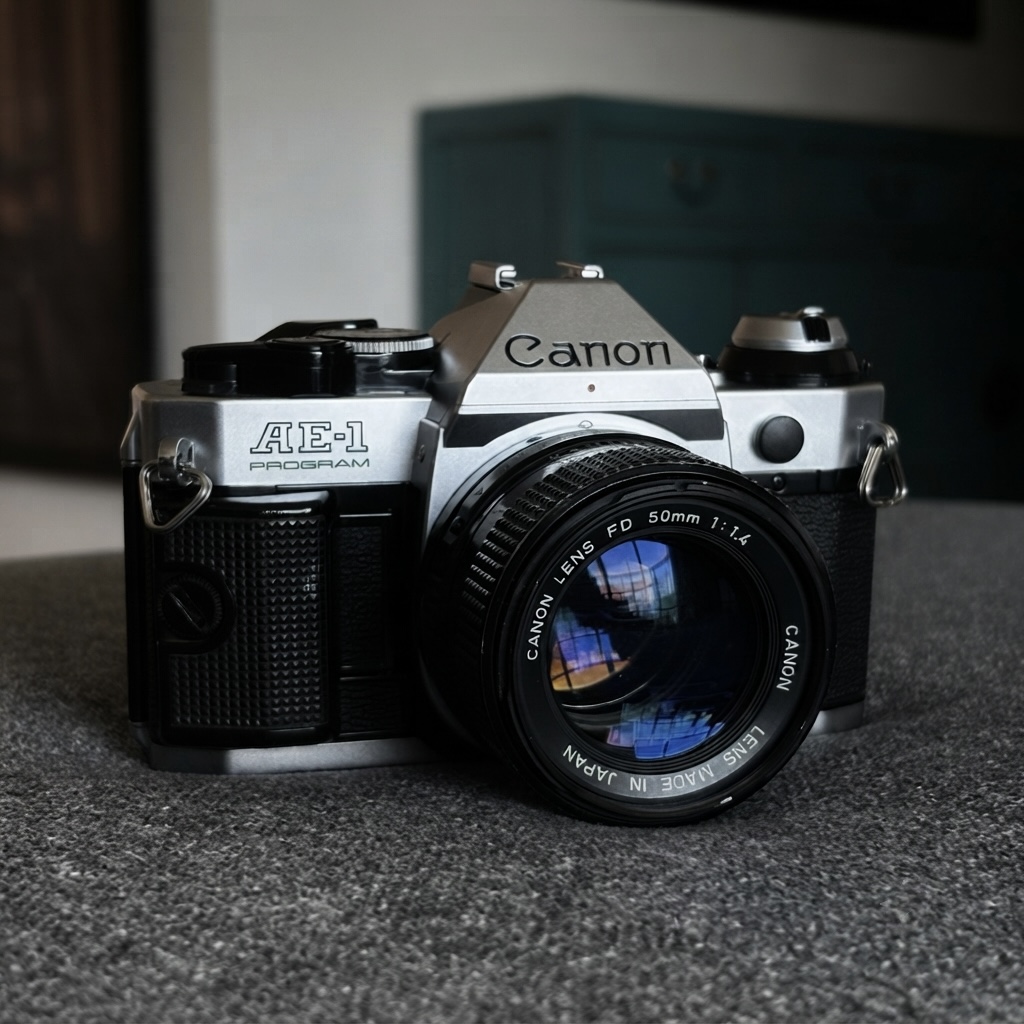
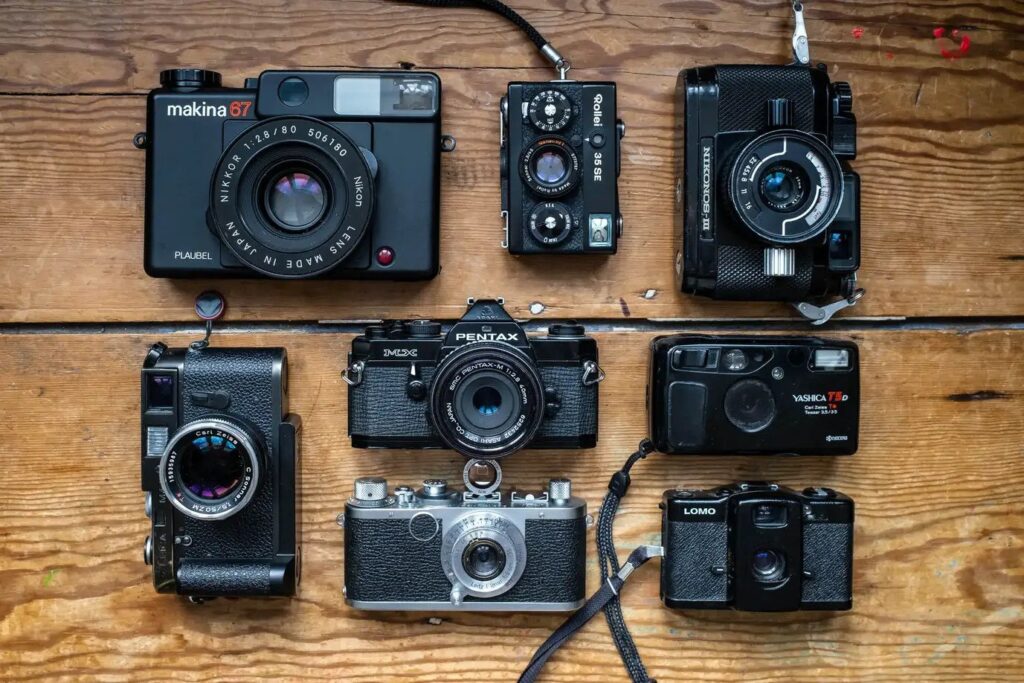
I chose to shoot exclusively on film, using two Leica M3 cameras–one fitted with a 50mm Summicron, the other with a 28mm Elmarit–and Kodak Portra 400. The rangefinder format forced a different kind of attention. There is no motor drive, no burst mode; each frame is a deliberate act. The days I spent waiting for the film to come back from the lab provided a necessary buffer from the instant feedback of digital shooting. Without a screen to check, I was forced to work intuitively, focusing entirely on the physical details of the deployment. This delay prevents the work from becoming a simple reaction to the daily news cycle, allowing the images to function as a long-form study–a way to step back and look at the systemic patterns that emerge once the immediate rush of
events fades.
I am not yet sure what the final use of these images will be. In the past, I have shown projects as outdoor installations, in magazines, and in newspapers. For now, they remain a private archive of a public event.
I see Minneapolis as the beginning of a larger project tracing the expansion of federal power across American cities. I returned twice more that month. I have since been working in Oakland, along the U.S. border, and in Los Angeles, and intend to continue as that presence grows.
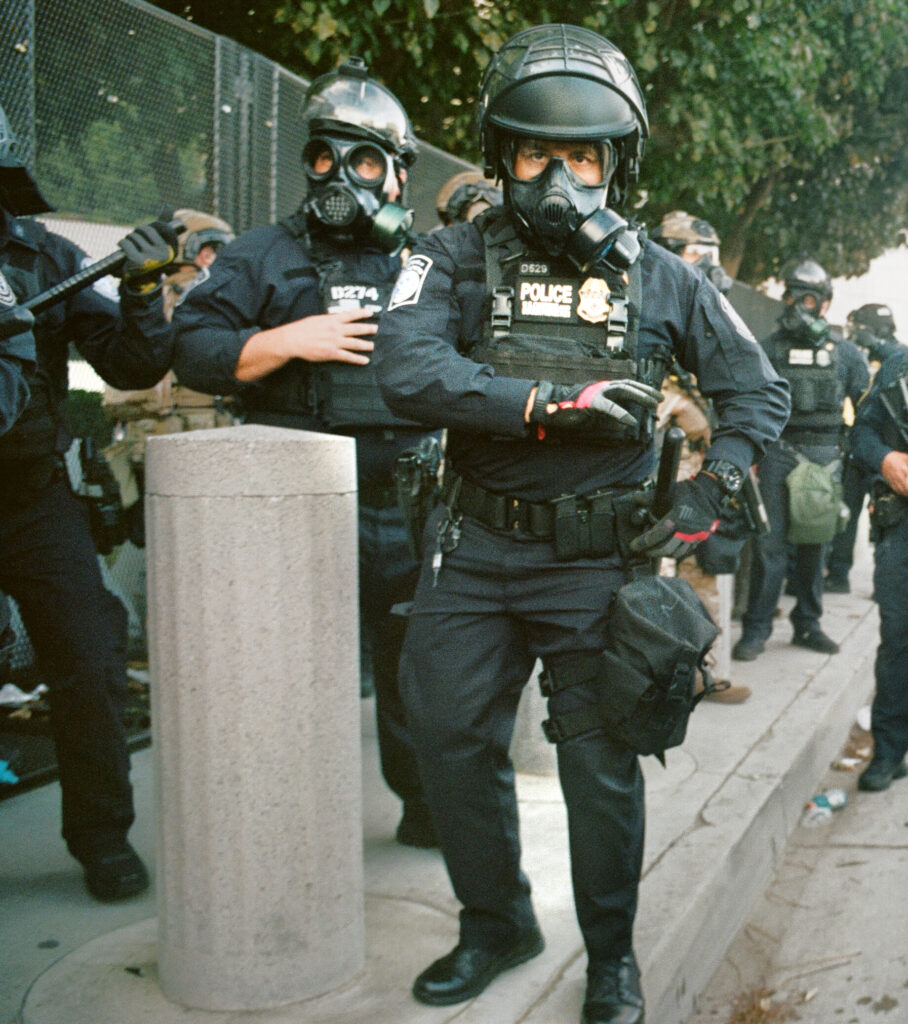
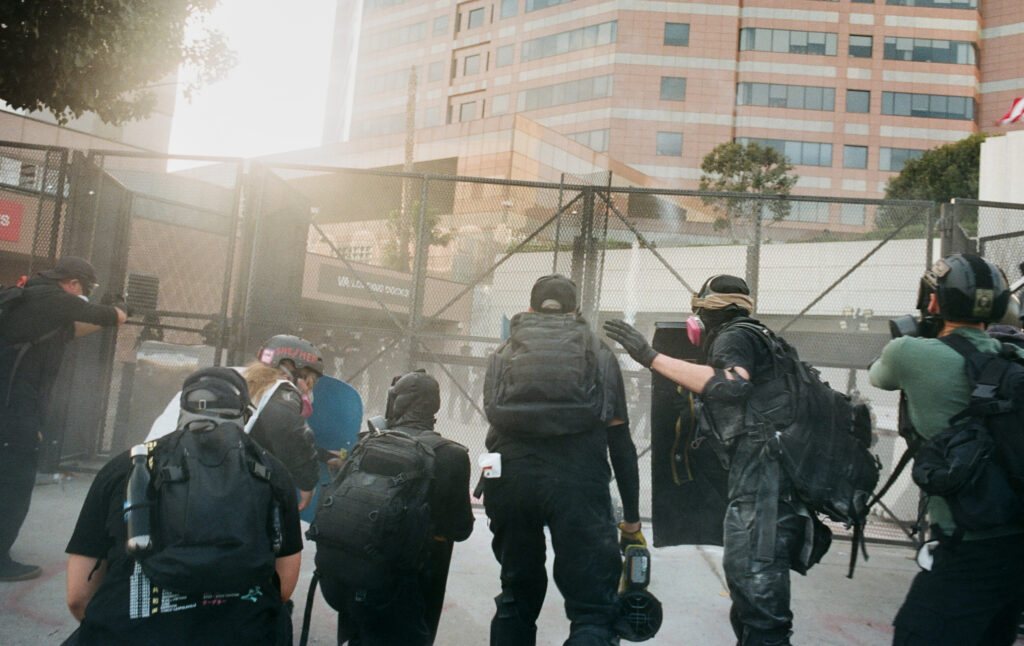
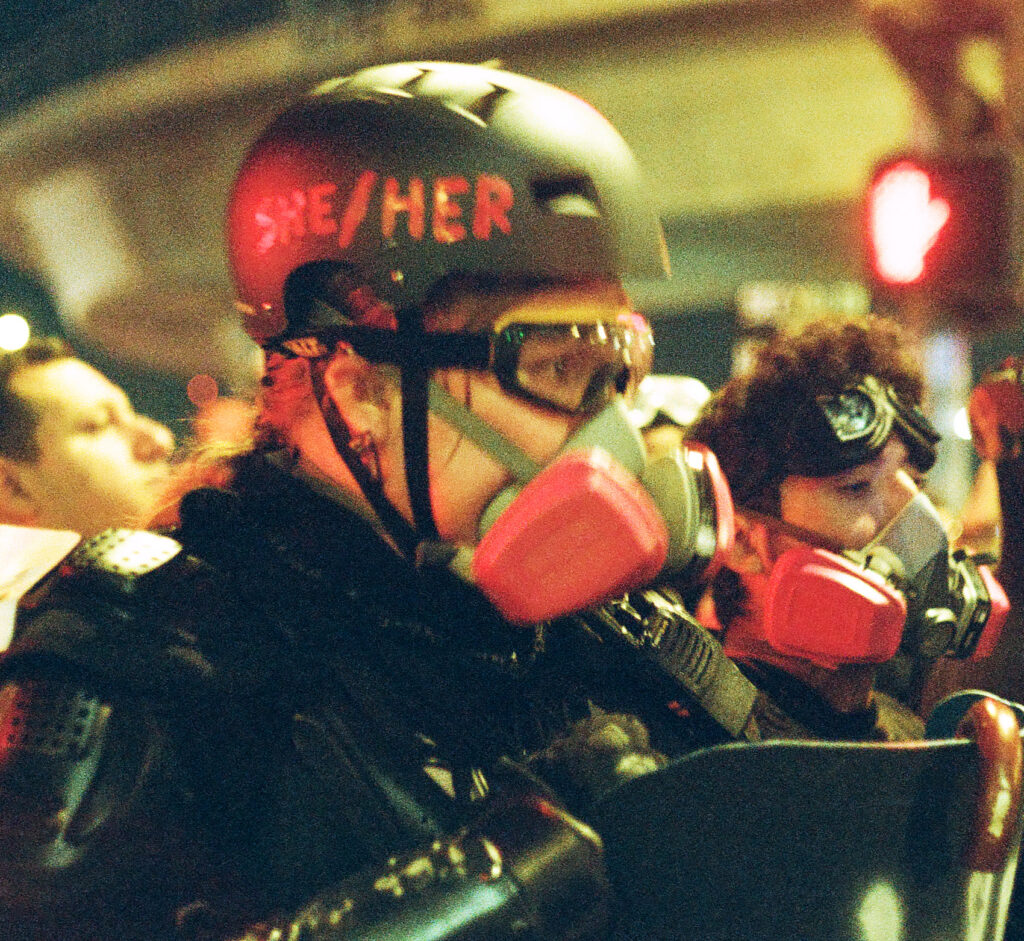
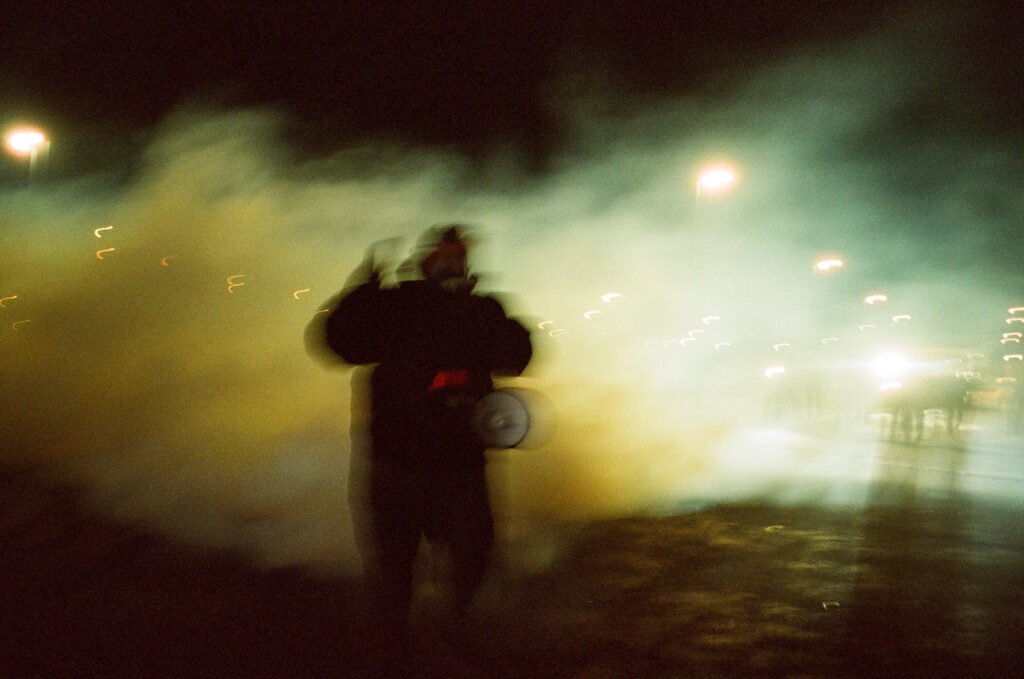
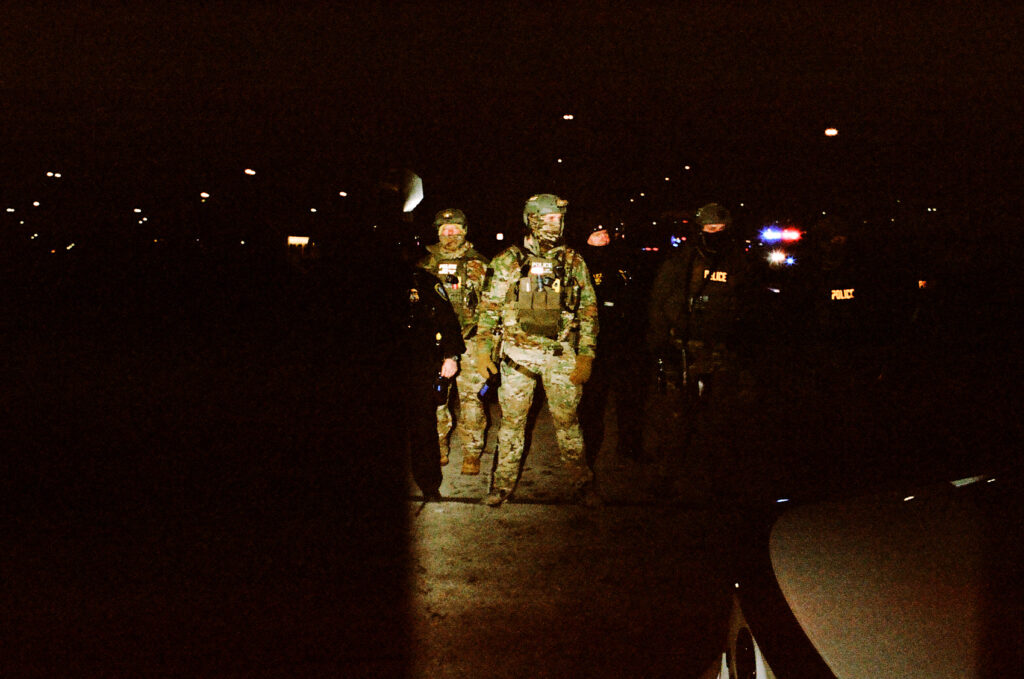
My final visit followed the death of Alex Pretti, a VA nurse who was killed by federal agents on January 24. By then, the patterns I had been documenting–the synchronized movements, the anonymity of the agents, the militarization of residential streets–had solidified into a permanent condition. The presence was no longer an emergency response; it was a fixture.
Share this post:


Comments
Dean Robinson on The Battle for Minneapolis
Comment posted: 15/04/2026
Comment posted: 15/04/2026
Comment posted: 15/04/2026
Comment posted: 15/04/2026
Comment posted: 15/04/2026
Comment posted: 15/04/2026
Comment posted: 15/04/2026
Comment posted: 15/04/2026
Comment posted: 15/04/2026
Comment posted: 15/04/2026
Comment posted: 15/04/2026
Comment posted: 15/04/2026
Comment posted: 15/04/2026
Comment posted: 15/04/2026
Comment posted: 15/04/2026
Comment posted: 15/04/2026
Comment posted: 15/04/2026
BG on The Battle for Minneapolis
Comment posted: 15/04/2026
Manu on The Battle for Minneapolis
Comment posted: 15/04/2026
David Dutchison on The Battle for Minneapolis
Comment posted: 15/04/2026
Charles Young on The Battle for Minneapolis
Comment posted: 15/04/2026
Omar Tibi on The Battle for Minneapolis
Comment posted: 15/04/2026
Tony Warren on The Battle for Minneapolis
Comment posted: 15/04/2026
Comment posted: 15/04/2026
Comment posted: 15/04/2026
Michael Jardine on The Battle for Minneapolis
Comment posted: 15/04/2026
David Pauley on The Battle for Minneapolis
Comment posted: 15/04/2026
I'm so grateful for your article, your photos and for your witnessing of all that's been transpiring at this terrifying moment in Minneapolis and elsewhere in the US, "Propaganda" implies a conspiracy by powerful interests with the intent to deceive, and is the polar opposite of what you've done here. You are courageous citizen—one individual with a film camera—shining a light on appalling abuses. Kudos to you for doing this and to Hamish for allowing your story and gut-churning photos to be seen here on 35mmc. The most significant post here this year for me for certain...
David
Ibraar Hussain on The Battle for Minneapolis
Comment posted: 15/04/2026
Comment posted: 15/04/2026
Comment posted: 15/04/2026
Andrea Monti on The Battle for Minneapolis
Comment posted: 16/04/2026
Gil Aegerter on The Battle for Minneapolis
Comment posted: 16/04/2026
Comment posted: 16/04/2026
Michael Flory on The Battle for Minneapolis
Comment posted: 16/04/2026
Simon Foale on The Battle for Minneapolis
Comment posted: 16/04/2026
Manu on The Battle for Minneapolis
Comment posted: 16/04/2026
Tim Bradshaw on The Battle for Minneapolis
Comment posted: 16/04/2026
Hamish: thanks for having the courage to post this: ignore the haters.
Scott Ferguson on The Battle for Minneapolis
Comment posted: 16/04/2026
These photos and this post are terrific and the content is powerful and important and a direct counter to the propaganda spewing from our government that these militarized attacks on a US city were in the interest of public safety and surgically targeting dangerous criminals.
Further, I don't see any conflict between your photographs and one of the pillars of the art and practice of photography -- documentary photojournalism, going all the way back to Matthew Brady in the US Civil War, and including such giants as Robert Capa, Lee Miller, Donald McCullin and countless others. I'm very happy to see work of this nature on 35mmc and salute your bravery and commitment in documenting Minneapolis right on the 'front lines' of the conflict. I think 35mmc has not shied away from posts that express a photographer's political views -- I've posted photos from a number of pro democracy protests and a Pussy Riot concert, and appreciate Hamish's curation of the forum to allow this. I don't think I've seen any pro MAGA content on the forum, but I would not be in favor of suppressing it, even if I disagree.
Free Speech is foundational to a free society, whether you agree with what someone is saying or not.
Thanks Thomas!
Comment posted: 16/04/2026
Ben Mackey on The Battle for Minneapolis
Comment posted: 16/04/2026
Hamish - thank you for bringing Thomas' images to a broader audience.
Richard Angeloni on The Battle for Minneapolis
Comment posted: 17/04/2026
Comment posted: 17/04/2026
Comment posted: 17/04/2026
Jeffery Luhn on The Battle for Minneapolis
Comment posted: 17/04/2026
What will you do with those photos? You already did something important with them.
Historic. A week that will live in infamy.
Simon Foale on The Battle for Minneapolis
Comment posted: 18/04/2026
John F. on The Battle for Minneapolis
Comment posted: 18/04/2026
Thank you!
cdlinz,
Can you just shut up? Being dumb isn't a crime, but your willful ignorance stinks to high heaven, and contributes nothing to this website, not even the basis for an interesting discussion. You're dragging the site down by your decision to speak.
Perhaps you can find a more right wing/fascist supporting website for you to engage in the "Trump is good" circle jerk?
You clearly have nothing of interest to contribute, and if you're not willing to let the images challenge you, instead of a reflexive bristling against them, perhaps go somewhere else where your fragile worldviews and ego can be supported?
Comment posted: 18/04/2026