

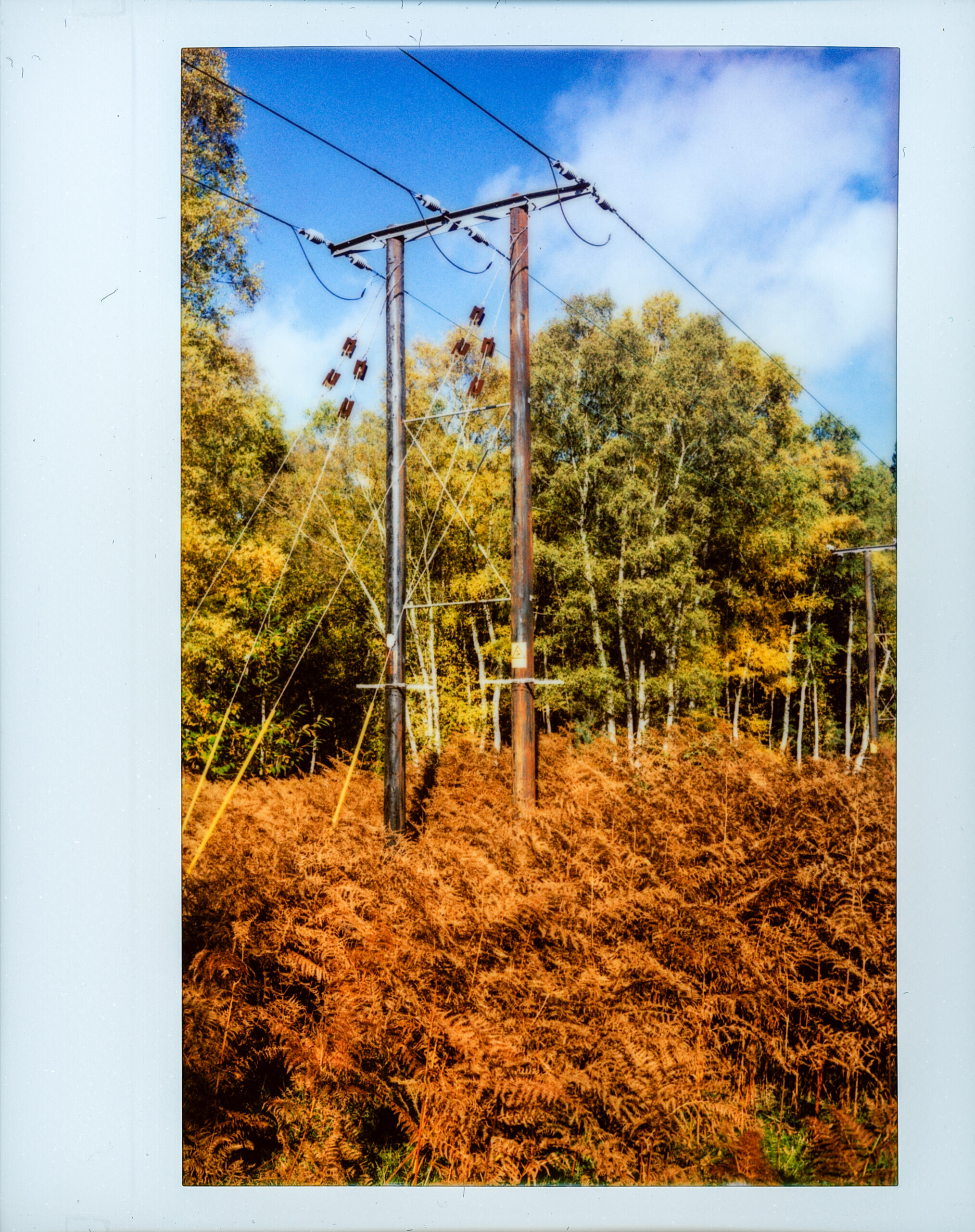
Once upon a time, titans of photography such as Ansel Adams and Andy Warhol were creating art with instant film. Today, when we think of instant photography, we often imagine low-resolution, fuzzy, saturated images. Today, a “Polaroid” camera is typically used for fun and to share original images. That is all true, but instant film, in all its modern forms, is a versatile tool that can be used in many different ways and is an excellent medium for fine art photography. For those of you who have more cynical feelings toward Instant film, I invite you to open your mind and join me on a journey to explore just a few of the artistic possibilities.
Limitations
Instant photography is often seen as the preserve of automatic, fun cameras with poor quality lenses and fuzzy, saturated images. Used by teenagers and millennials at parties and nights out. All of this is probably true, but Instant film can produce higher-quality, sharper images than you might expect. With a small investment of time, you can produce high-quality Fine Art images with this famous analogue technique.
Most instant cameras are designed for consumers with low-quality, plastic lenses and automatic functions. However, there are options to improve this, such as using legacy or modern lenses, or even no lens.
Is Instant photography special?
Yes! Undoubtedly. Firstly, instant photography sits at the intersection of modern immediacy and the unique nature of analogue photography. Every image is unique; whilst copies can be made, the original image is distinctive and irreplaceable. You are creating a physical object. It has immediacy, presence, texture, and it even has physical weight, unlike a digital photograph. As with all analogue photography, you need to embrace imperfection and possibly slow down. You also have that moment of waiting to see the finished picture. My personal journey started with an old Polaroid Sun 600 camera bought from a “British Heart Foundation” charity shop.
Fine art potential
Fine Art photography is the practice of taking photographs to create art. It is done intentionally for the joy, satisfaction, or possibly frustration of creating the image. Most fine art photographers are looking for at least two key properties from film. Typically, they need control and high-quality film. By quality, I am primarily thinking in terms of consistency and high resolution. Let’s consider the film’s quality first. To my knowledge, there are three manufacturers of instant film. Fuji produces Instax film; Polaroid produces Polaroid 600, I-Type (the same emulsion as 600), SX-70, and Large Format film; and Supersense produces peel-apart and 8×10 film.
| Brand | Film Type | Image Dimensions (mm) | Image Dimensions (in) | Options |
| Fujifilm | Instax Mini | 62 × 46 | 2.4 × 1.8 | Colour & Black and White |
| Instax Square | 62 × 62 | 2.4 × 2.4 | Colour & Black and White | |
| Instax Wide | 99 × 62 | 3.9 × 2.4 | Colour & Black and White | |
| Polaroid | SX-70 | 79 × 79 | 3.1 × 3.1 | Colour & Black and White |
| 600 / i-Type | 79 × 79 | 3.1 × 3.1 | Colour & Black and White | |
| Go | 48 × 48 | 1.9 × 1.9 | Colour & Black and White | |
| 8×10 | 190 × 240 | 7.5 × 9.5 | Colour & Black and White | |
| Supersense | ONE INSTANT Type 100 | 74 × 95 | 2.9 × 3.75 | Colour, Black and White & Choco |
| ONE INSTANT 8×10 | 190 × 240 | 7.5 × 9.5 | Black and White |
All of these are medium or large-format films. That offers the fine art photographer the potential for greater depth of field than most digital cameras, even those with typical medium-format sensors. In addition, there is a larger image size and sometimes a larger negative or positive image to work with. Instant film, certainly from Fuji and Polaroid, offers the peculiar property of improving with age, to a point, at least. They seem to keep developing slowly! The image will be slightly sharper after 24 hours than it was 15 minutes after development, and sometimes it looks even better a month post exposure. Another property of interest is that, when scanned, they reveal more detail than the human eye can see. A well-scanned instant photograph is a great starting point for those who are versed in post-production tools such as Photoshop and Lightroom.
The rendition of both black & white and colour varies by film type. Instax film is somewhat saturated, particularly when it comes to capturing greens and blues. Polaroid 600 and I-Type film are less saturated, while Polaroid SX-70 film looks slightly more saturated. That ignores the black and white films produced by both companies and the colour, black and white, and “Choco”, a sepia-like film, produced by Supersense (I won’t address these variants in this article).
There is also considerable variation in film sensitivity: Instax film is rated at ISO 800, Polaroid 600/I-Type at 640, and SX-70 at 160. Instant film, in particular Instax film, has a very narrow exposure tolerance range, and so metering is particularly important, even if you are using a camera with automatic exposure. With Instax, it is best to meter toward the highlights; as a rule of thumb, Polaroid is slightly less prone to blowing out highlights.
Instant photography is an area where precise metering and filters can be invaluable.
The Cameras
For me, I like to have as much control as possible, so I shoot instant film in cameras that can be manually controlled, and I have a variety of such cameras, which could be classified as modern instant cameras, modified legacy instant cameras, legacy non-instant cameras, and pinhole cameras. Examples of these would include:
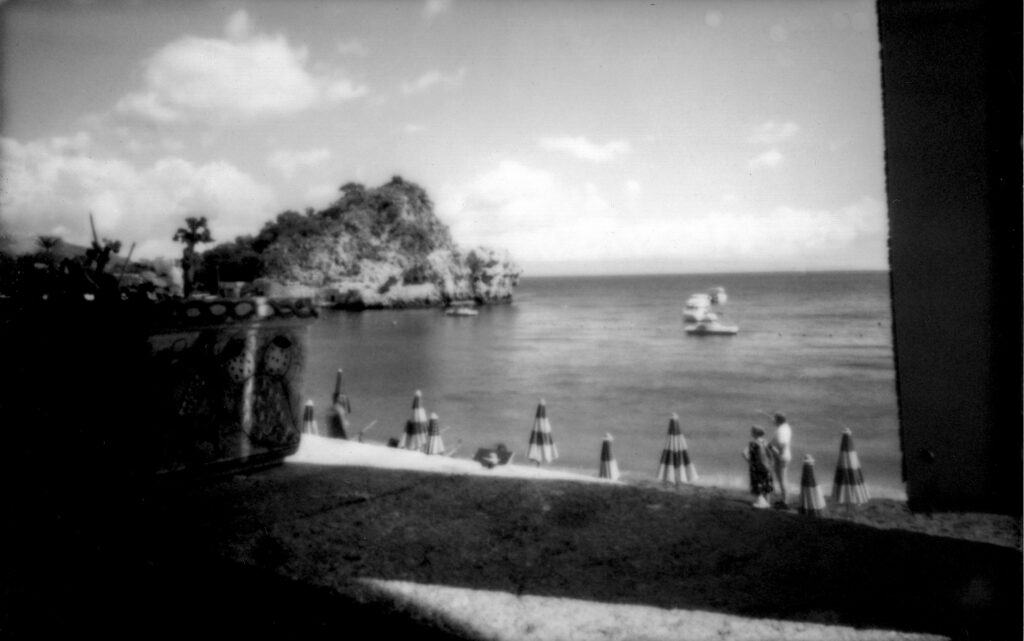
- Pinhole: Custom Vermeer 40mm pinhole camera mounted with the Lomograflok (Instax Wide). A fixed-aperture and focal length camera, without a lens.
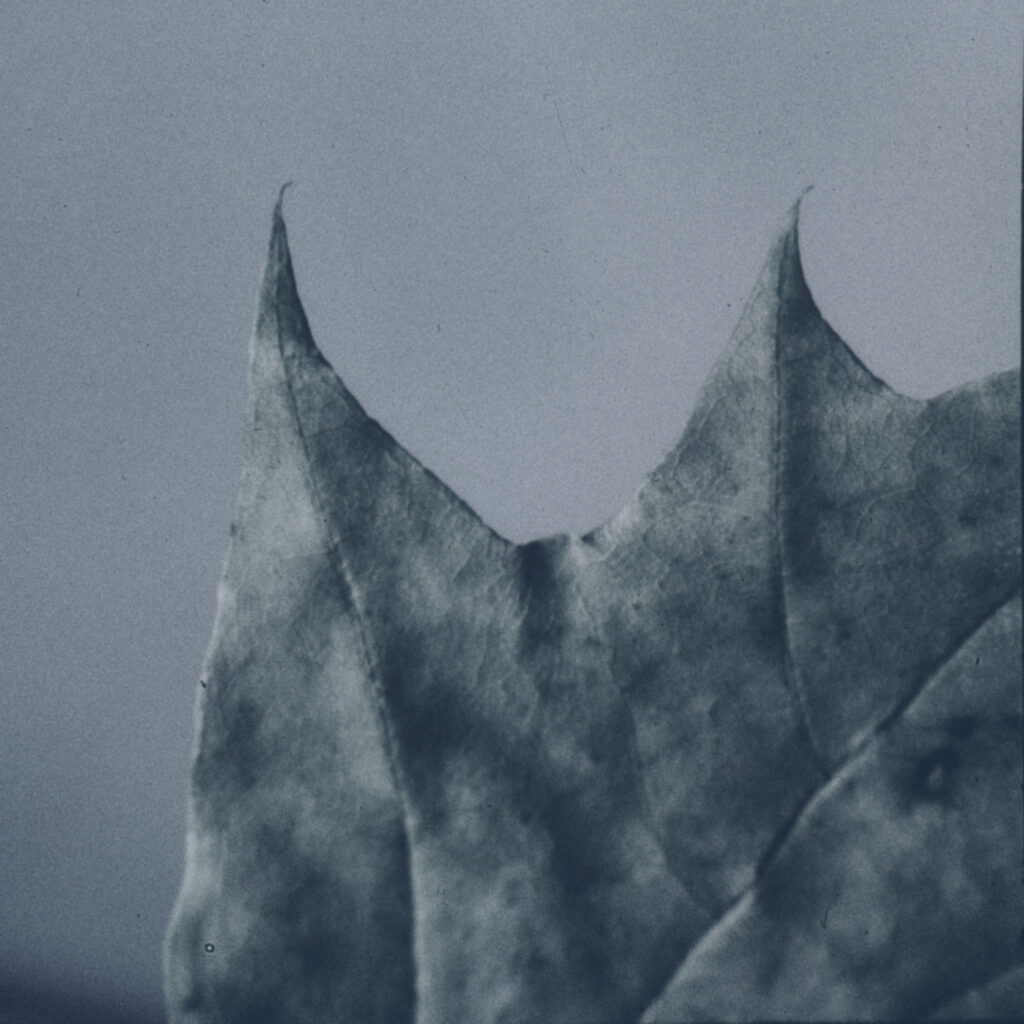
- Legacy Camera: Hasselblad 503cw with a HassyPB Instax back (Instax Square). A classic camera with lot of options and accessories.
- Modern Instant: Polaroid I-2 camera. A modern camera that can offer automatic and manual settings.
- Updated instant: Polaroid 180, modified by Analogue Studio to take a Lomograflok Back. A classic camera with high quality glass lenses and manual controls.
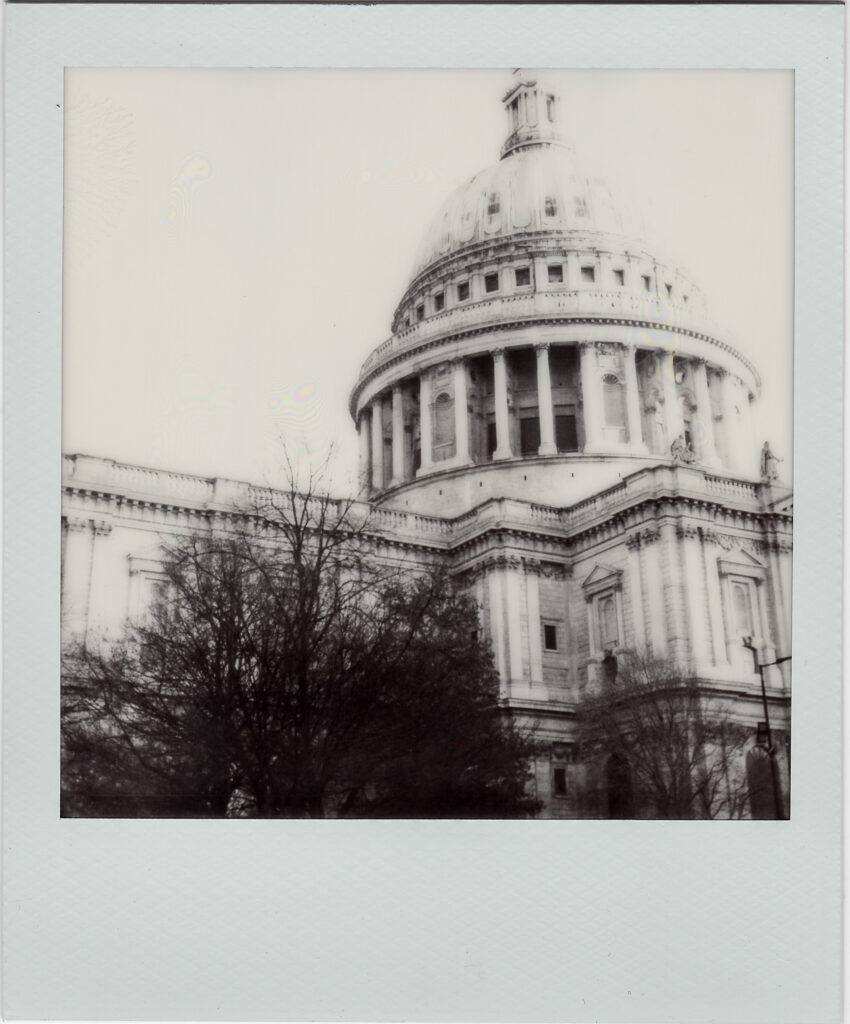
- Non-instant medium or large format cameras. I often use a 1914 ICA Teddy 146 camera with Instax film instead of regular sheet or plate film.
Taking pictures, a few examples, a pinhole camera
Pinhole photography is, to my mind, the purest form of picture taking. I use Instax film, sometimes with ND or Circular polarising filters. At ISO 800, exposure times can be very short, requiring a filter.

Instax colour film reacts with a magenta hue with long exposures. Because of the way Instax Black & White operates, you will see different responses between the red and blue ends of the spectrum. But the results are attractive both in colour and black and white.

Legacy Cameras
One of the benefits of modern instant photography is that you can use film backs on your legacy camera. The photograph, below, shows a standard Hasselblad macro setup with an Instax back from HassyPB. This illustrates two points. The first is that this could be any camera setup, macro, landscape, astro, or anything else you can do with a manual camera.

The second point this illustrates is the image quality you can capture when using a high-quality lens with Instant film. There is a range of different camera backs for medium and large format cameras. When you combine these cameras and lenses available, image quality is not the challenge you might imagine.

Non-instant film camera
If you are comfortable with a dark bag, the range of cameras available to you is vast. That is because you can manually place the film into the camera in the dark and use an instant camera to process the image. Theimage of St. Paul’s Cathedral was taken on a 1914 camera using a sheet of Polaroid film, then processed in a Polaroid I-2 camera with the lens covered to prevent exposure. Fuji Instax, Polaroid, and Supersense instant film is processed by pushing or pulling the film through a set of rollers. This process busts pods filled with chemicals to develop and fix the image. To achieve this when shooting instant film in a non-instant camera, I place the exposed images back into a cartridge, insert the cartridge into a camera, and use the camera to run the film through the rollers, developing the film. This is done inside a dark bag or in a dark room.
Other creative possibilities
Instant film offers all sorts of unusual and sometimes unique creative possibilities. There is not enough space here to cover negative recovery, film soups, image lifts, and multiple exposures, to name a few. One of my favourites is Instax’s creative possibilities, such as solarisation when sufficiently overexposed. Polaroid film does not appear to have this property. An example is shown below in Figure 8 An example of Instax’s solarisation.

Another dimension of film’s creativity to consider is how the film renders an image. Instax is generally very precise and predictable. Polaroid is sometimes more pleasant when slightly underexposed. Supersense film is hand-produced in Vienna and is best considered an artisan product. It is the least predictable but also has the most distinctive look and probably the most attractive if you want some randomness and enjoy “happy accidents!”
There are two other “properties” of instant photography I would like to cover. The first is the satisfaction of having the image shortly after it is captured. I appreciate that it is “instant gratification” and in today’s age, it is something we are used to, but that leads to the other property, which it enhances. This is a physical image. I belong to the school of thought that would say a photograph is not truly completed until it is printed. With instant photography, you have the physical image, and a unique one at that, in your hand. The image is there for you to see, share, and enjoy. There are few other forms of art where the object is completed in minutes.
Conclusion
Instant film is alive and well and is an excellent medium for any Fine Art photographer. My hope is that this short article gives some of you a flavour of the variety of film and cameras available, of what can be done with instant film, and what to expect from it. The creative opportunities are limitless, and since the images scan so well, size is not a limitation for the final product. I encourage you to explore the exciting world. Instant film blends new and old photography. It slows me down, anchors me in the moment, and then it quickly returns the physical photography to its most tactile form.
Resources
I referenced several products and suppliers. I have no affiliation with any of these, but I use their products. Here are references you might find helpful:
- Polaroid: polaroid.com : Manufacture cameras and film
- Fuji Instax: instax.com : Manufacture cameras and film
- HassyPB: hassypb.com : Produce a high quality back for Hasselblad 500 series camera that shoots Instax Square film
- Vermeer (pinhole) cameras: vermeercamera.com : Build to order pinhole cameras
- Analogue Studio: analogue.studio : Camera conversions and camera backs for Instax and Polaroid film.
- Lomography: shop.lomography.com/uk/lomograflok-4-5-instant-back : Produce the Lomograflok back which can be used with many cameras.
- Supersense: the.supersense.com/collections/packfilm: Handmade instant “peel apart” and large format film.
Share this post:


Comments
Jukka Reimola on Instant Fine Art
Comment posted: 11/03/2026
Comment posted: 11/03/2026
Comment posted: 11/03/2026
Comment posted: 11/03/2026
sneakerzoom on Instant Fine Art
Comment posted: 11/03/2026
Comment posted: 11/03/2026
Erik Brammer on Instant Fine Art
Comment posted: 11/03/2026
I would add the NONS Instant Back for Instax Square film for the Hasselblad 500 series. I have the first version which leaves a somewhat uneven black border at the edge of the image, 1 mm to 2 mm. Version 2 extends the distance of the film plane to avoid the black border and offers adapters for correct focussing. It also exposes vertically and thus comes closer to Polaroid, albeit the smaller image size overall. Would love to have version 2 but I don’t use it often enough to justify the cost of upgrading.
Best,
Erik
Comment posted: 11/03/2026
Comment posted: 11/03/2026
Keith Devereux on Instant Fine Art
Comment posted: 11/03/2026
Comment posted: 11/03/2026
Justin on Instant Fine Art
Comment posted: 11/03/2026
It is frustrating that Fuji does not really seem interested in improving their films, nor are they interested in making cameras for anyone other than toddlers. They seem reluctant to show interest in their own film products, so I just moved on.
Comment posted: 11/03/2026
Comment posted: 11/03/2026
Comment posted: 11/03/2026
Danilo Leonardi on Instant Fine Art
Comment posted: 11/03/2026
Comment posted: 11/03/2026
Martin Siegel on Instant Fine Art
Comment posted: 11/03/2026
Michael on Instant Fine Art
Comment posted: 11/03/2026
I can only encourage you. Thanks for your comments.
Michael.
David Hume on Instant Fine Art
Comment posted: 11/03/2026
Comment posted: 11/03/2026
Jeffery Luhn on Instant Fine Art
Comment posted: 11/03/2026
Great article on instant photography! It got me wondering about getting an SX-70. I bought one for my parents when it first came out, and also gave them 20 double packs of film. They took the camera to Europe and had a great time giving away pictures. About half of all exposures went to strangers! It was such a great way to meet people. Then I showed Mom how she could squish the emulsion around and she had a blast doing that. I have no idea where that camera went. After reading your article I thought about buying a used one and trying it out with new film. WOW it's expensive! Unless my calculations are off, it looks like $4.40 a shot. GULP! I guess Polaroid has always been pricey. We went through at least $1,000 per month of 4x5 and 669 for pro shooting in my studios, but I just chalked it up as a business expense that the clients paid for. Now it's on me. Hmmm. Gotta think this through.
Thanks for a great article! Good stuff!
Jeffery
Comment posted: 11/03/2026
Comment posted: 11/03/2026
Michael Flory on Instant Fine Art
Comment posted: 12/03/2026
Comment posted: 12/03/2026
Comment posted: 12/03/2026
Comment posted: 12/03/2026
Comment posted: 12/03/2026
Omar Tibi on Instant Fine Art
Comment posted: 12/03/2026
On Flickr, twice a year, they hold Polaroid Week to celebrate instant film. If you don't already partake I highly recommend it!
Wishing you many more great shots in the year ahead.
Comment posted: 12/03/2026