

Being interested in both the mountains and photography, I am frequently on the lookout for small, light and affordable equipment. In the digital realm, I find that micro four thirds (m43) satisfies my needs (I rarely print above A3 size) and generally exceeds my abilities and shot discipline. Some of the smallest interchangeable-lens digital cameras are of this format (although there was the Nikon 1 series), and most importantly, when considering the system as a whole, the small sensor size and short back-flange distance of the m43 standard are directly reflected in the modest size and weight of many of the lenses.
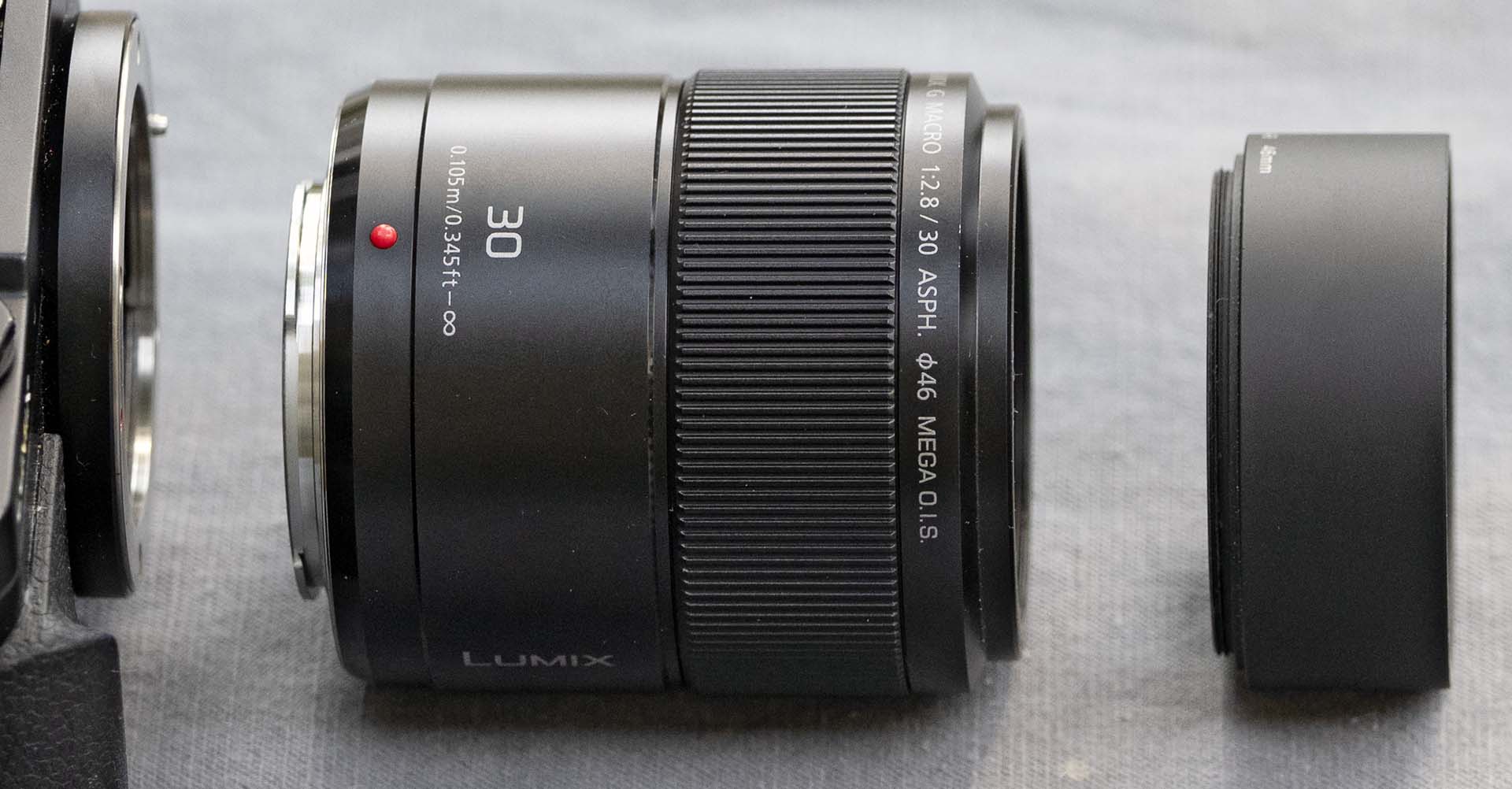
The Panasonic/Lumix 30mm f/2.8 is a 9-element (one aspheric) 9-group lens that can reproduce at up to 1:1 magnification. It has no controls other than an electronic focus ring (no focus limiter, a feature of some other macro lenses). It was introduced in 2015, and perhaps because of its age and because m43 manufacturers have other, higher-specification lenses for macro photography (the Olympus 90mm comes to mind), retails sometimes for a modest price. It weighs only 180 grams, and together with the (discontinued, and now unobtanium) Lumix GM5 camera (211 grams with just battery and card; 254 grams configured with a minimalist strap and a small Arca-compatible plate that does not block the battery/card door), makes the nearly perfect normal-angle compact kit for me. The “nearly” is because neither the lens nor the camera is weather-resistant, and because the tiny electronic viewfinder of the GM5 is woefully inadequate. The front element of the 30mm macro lens is very exposed; I leave a 46mm-thread lens hood (from Kenko, which itself has a 49 mm front thread) attached at all times.
Importantly, when using with the GM5 or other cameras lacking this feature, the 30mm macro has image stabilization. If used on Panasonic cameras that have in-body stabilization, the 30mm can provide “dual” stabilization, which further increases the shooting envelope of the system. Sadly, for those mixing-and-matching Olympus bodies and Panasonic lenses, the built-in stabilization of the latter cannot coordinate with the in-body stabilization of cameras from Olympus/OM System.
So, small, light and cheap(ish), but is the Panasonic 30mm macro any good? Here are three photographs taken in the mountains of central Japan under a steady drizzle (which the camera and lens survived). The 100% crops show that the lens is wringing resolution out of the ancient 16 megapixel GM5 sensor into the corners of the frames. The rear bokeh can leave something to be desired, and is the only substantial shortcoming I have seen. In my hands, the 30mm lens’ image stabilizer helps obtain, reproducibly, sharp shots down to about 1/8 sec.
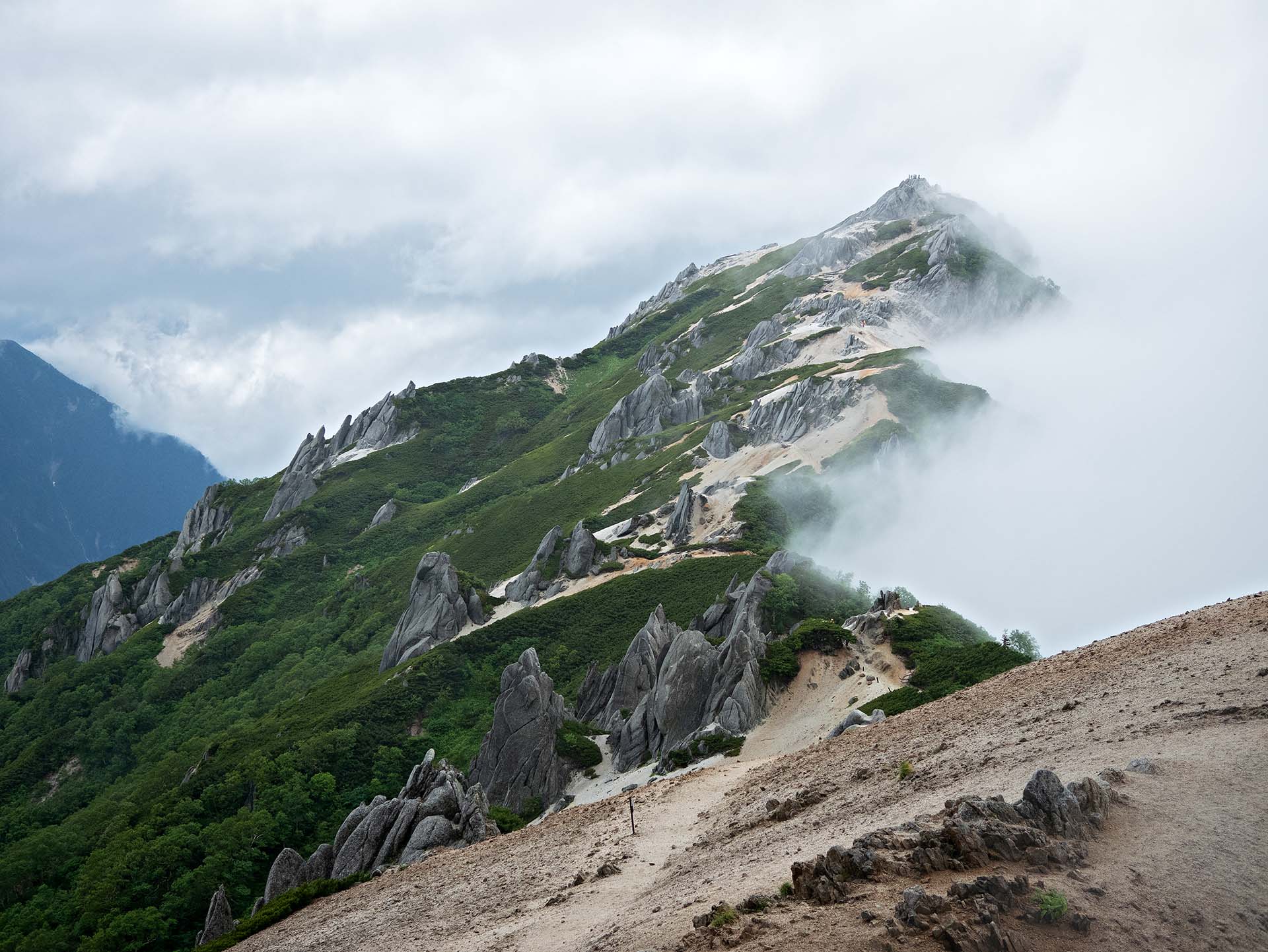




In urban settings, the 30mm lens is unobtrusive and cheap-looking and generally does not attract much attention (I’ve only gotten comments from other photography enthusiasts, and it’s usually been about selling them my GM5, not about the attached lens.) As a “normal” lens, it is slightly longer than typical now (think 58mm lens on a 35mm camera; the m43 format diagonal is about 22mm). I like my normal lenses on the longer side, and I use the 30mm even in situations where weight is not at an absolute premium. I think its sharpness, versatility and spirit (small, not very fast, and can be called on to do macro) make it perhaps analogous (mutatis mutandis) to the storied 50mm f/2.0 Dual-Range Summicron of yore. In closing, here are two travel “postcards” of famous monuments, related only by the equipment and composition.


Share this post:




Comments
No comments found