


Set for release in the near future, Lucky Color 400 is the second in the modern generation of colour negative films to come from the R&D labs at Lucky Film in China. Though there’s some give and take, the areas in which this film has weakened compared to Lucky C200 are definitely outweighed by the improvements to this new emulsion’s design.
Full disclosure: The team at Reflx Lab sent me one of their pre-production sample rolls of this film (which they’d received as an official distributor of Lucky Film products) so I’d have a chance to try it out. Thanks! A full first impressions video will release on Friday 05 June over on my YouTube channel.

Lucky Film Group
Coming from the Lucky Film Group based in the Hebei Province of China, the Lucky Film brand was historically one of the big names alongside Agfa, Fujifilm, and Kodak, though this is admittedly before my own exploration of analogue photography. Their films weren’t ubiquitous in Western markets but were fairly common and popular from what I’m told, largely thanks to their budget-friendly prices and punchy, red-heavy colour palette.

Re-entering the market
After a long hiatus, the Lucky Film Group stepped back into the photographic film space in the latter half of the 2010s with a small range of black and white films including Lucky New SHD 100 and Lucky New SHD 400, in formats from 35 mm through to large format sheets. In 2025, they launched their first new colour negative film, Lucky Color 200, which I was also fortunate enough to try out beforehand. Though generally gorgeous under good light (particularly bright sunlight), Lucky C200 struggled a lot with secondary, mixed hues in spite of its individually great rendering of red, green, and blue shades.

Lucky Color 400
And just a few months later we’re approaching the launch of their second new colour neg film, Lucky Color 400. Set for release in the next 1-2 months (so approximately by mid-to-late July) and with an expected price tag “slightly higher” than Lucky Color 200, I firmly believe that this film will be well received. It’s not just better than their previous emulsion, it’s straight-up a good film. This film will be available in both 35 mm and 120 medium format rolls at launch. Great!
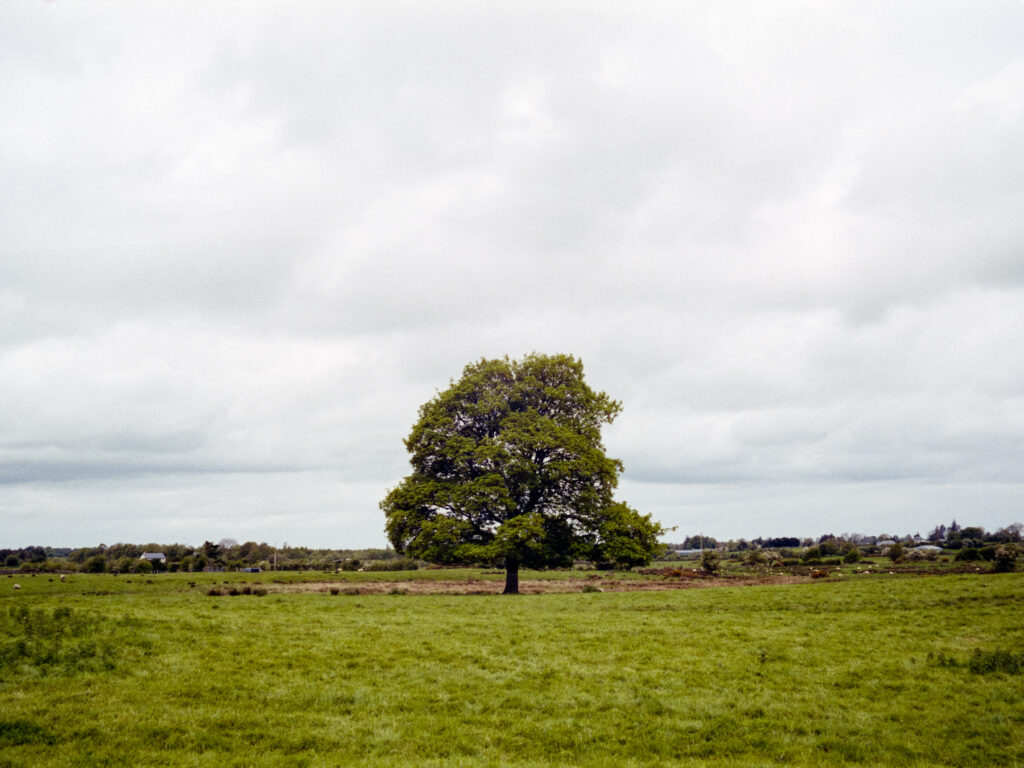
Overall colour rendition has been improved across the board, particularly with those secondary hues, and so my images generally have more pleasant colours than Lucky C200. The level of grain has of course gone up with this increase in film speed, and resolution has dropped slightly as a result, but I wouldn’t say that either one is out of line for a consumer-grade ISO 400 colour film. I even find it to be manageable on a rather overcast day, which is something I am generally very vocally disapproving of with most colour neg films. Compared to its modern peers in the “2020s club”, this film seems to have it all. It’s got the strong colours that the Phoenix films and Wolfen NC200 share but with greater colour accuracy, and also the film speed of the Wolfen NC400/NC500 stocks without their desaturated, grainy look. Along with the improvements brought by Phoenix II and Wolfen NC200 in their respective product lines, this is a great sign that these modern films are collectively “getting there”, and Lucky C400 will undoubtedly put some pressure on the other film manufacturers, which is great for all of us.
The catches
There’s no such thing as a free lunch, and considering C400 is releasing barely half a year after C200, some compromises seem to have been made to achieve everything that they’ve accomplished. The first is that while the strong warm tint this film bears is generally easy to white balance away, when you underexpose Lucky Color 400 the images become vastly more difficult to colour grade with simple adjustments like white balance and tint. I also worry that this rules out push processing, but I’ll have to revisit that when I get more film! The second issue is something many ProImage fans are likely familiar with: it struggles with mixed lighting. Shooting a shaded subject with a sunny background, mixing fluorescent bulbs with incident sunlight through a window, and so on, generally yield results that require extensive work to, well, not even to get the best out of them, but to get anything decent out of them at all. Finally, the film has slightly reduced exposure latitude than its predecessor, with superior overexposure latitude, but a reduction in underexposure latitude to a greater degree, which is unfortunate.

Final thoughts
All in all, Lucky Color 400 is a much better film that its predecessor. Being able to both increase the film speed by a full stop and improve the colour rendition in half a year is a very significant achievement. I mean, I know people who haven’t even gotten their hands on Lucky Color 200 yet and we’re about to see its successor hit the market!
Is this film perfect? No, of course not, but it’s probably only one more iteration from simply being a film with a distinctive look. At that point people can judge whether it’s a good fit for them without worrying about performance in general situations, and the Lucky Film brand can hopefully expand its range of products to faster and slower options. The fact that this film will release in 120 is huge, as this fills the void in the colour negative market left by the absence of medium format UltraMax 400.
I’m very thankful to the Reflx Lab team for their onoging support, and I’m definitely going to grab more of this film as soon as I can. If the price is right, this could more or less end Kodak Gold in 120 for me. I only really shoot that film because it’s cheap, after all (I’d prefer Portra 800 if I could justify it).
Share this post:






Comments
Gary Smith on Lucky Color 400 – 5 Frames with this Soon-to-be-Released Film
Comment posted: 31/05/2026
Chan Wise on Lucky Color 400 – 5 Frames with this Soon-to-be-Released Film
Comment posted: 09/10/2026