


I often see older men (and they are always men – “camera ojisan” in Japan) sporting the latest digital equipment, following in the steps of Shinzo Maeda, the camera standing on a tripod, photographing a sunlit scene that has been photographed 1000 times before possibly to “prove” they are just as good as that pioneering photographer. Maybe they are pixel shifting to get an image that needs printing 2m by 3m to appreciate all the detail – but I think not.
The ‘rule’ for hand held photography is photograph at a speed of 1/focal_length or faster. What does this mean in reality? Different people are different – since childhood I have had a tremor in my right hand which can present difficulties. Some people cannot reliably get sharp images following the rule, some people can do a stop or more better. But in all cases sharpness is not guaranteed, there is a higher probability of getting a sharp shot at faster speeds, and as the shutter speed drops the percentage of fails increases.
Modern digital cameras offer image stabilisation with 4.5 stops (Sony A7Rii), 5.5 stops (A7Riii) or 8 stops (A7Rv – I want to get my hands on one of those!) improvement over the hand holding rule quoted above. The rule then becomes 2^S / focal_length (see the note below) where S = 4.5 or 5.5 in the case of the first two cameras mentioned.
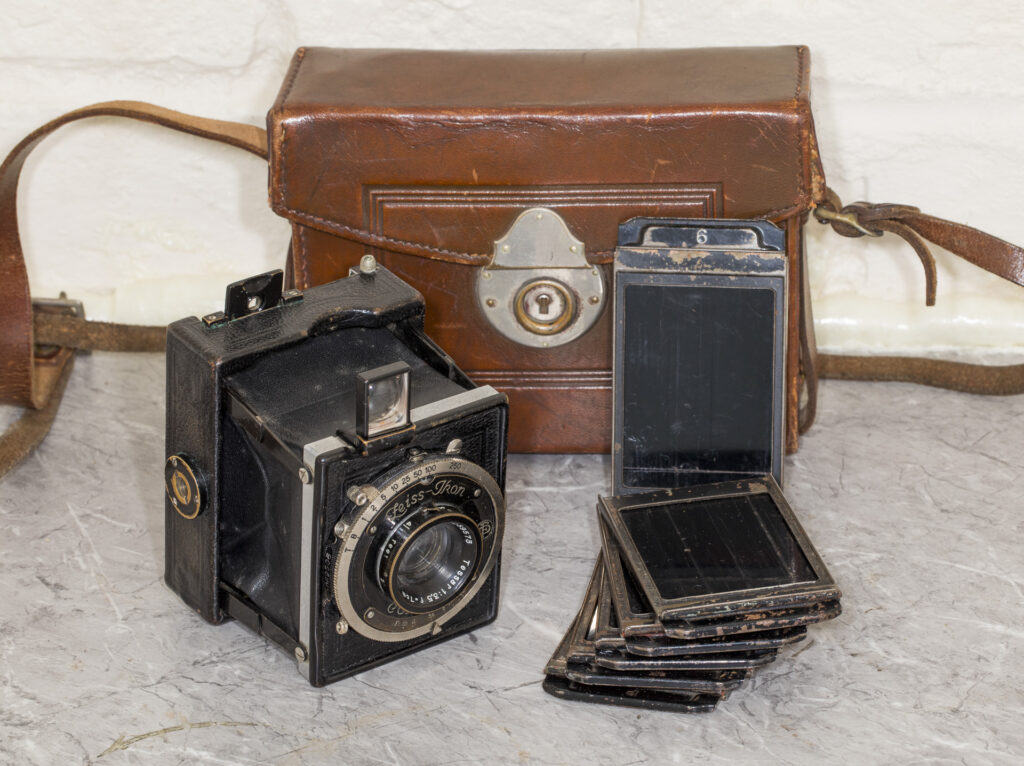
Image blur in a photograph which contains a sharp element – for example a long exposure photograph of a waterfall – is something that I always found attractive. Not being keen on lugging a tripod around I was keen to put the rule to a test. The featured image taken in a museum was using a 55mm lens at f8 and iso100 on an A7Riii with a shutter speed of 1.6 sec. The rule suggests 0.8 sec. Out of six images three were sharp.
The following images were taken on an A7Rii with a 20mm lens at iso100 in an underground pedestrian street in Sapporo. The rule suggest 1 sec.
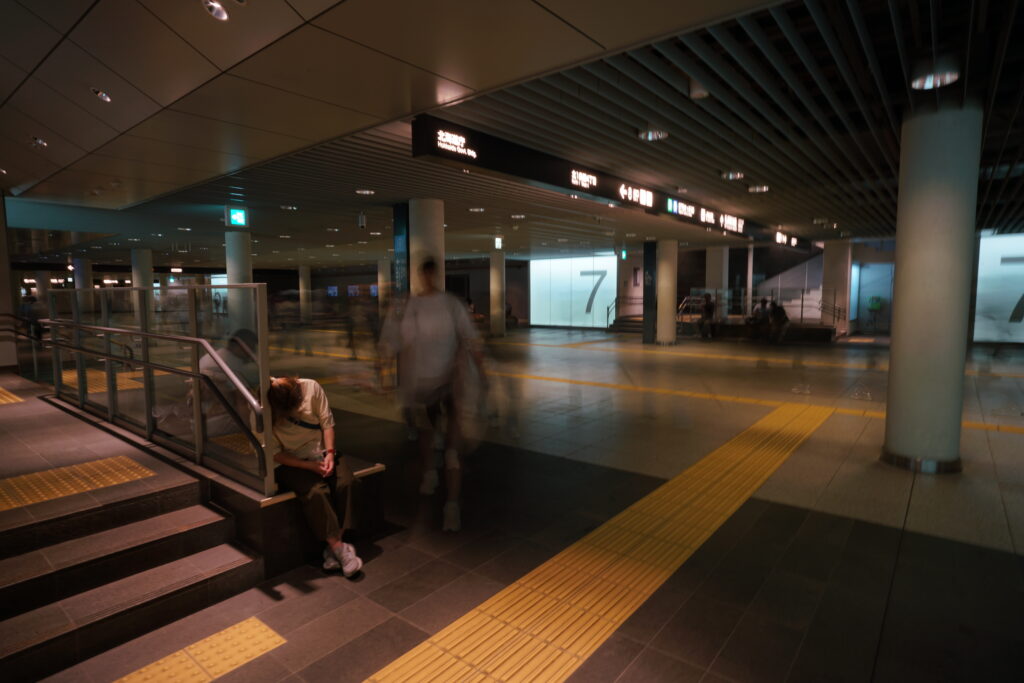
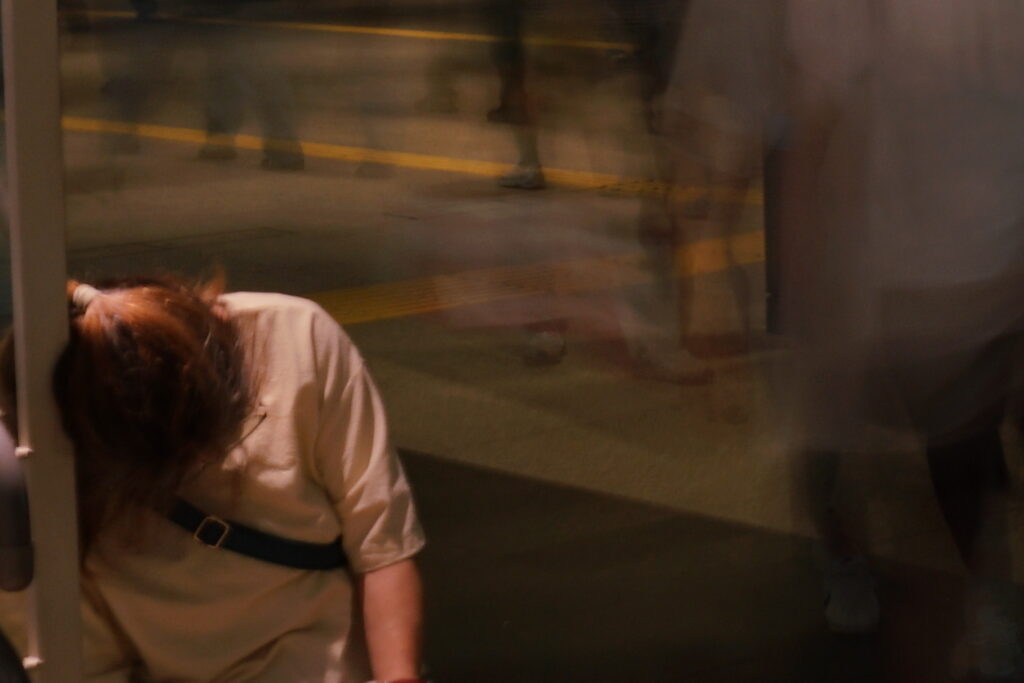

Don’t be afraid of hand holding a digital camera at what might seem like stupidly slow shutter speeds. A little practice is required – the first time you take a one sec exposure the blank screen on pressing the shutter comes as a surprise causing a physical reaction. You need to try this a few times to get used to it. Also if possible make use of some support, either something to lean against or rest on. But once mastered – and don’t expect 100% success – it opens up a new world of possibilities.
NOTE: 2^S means 2 to the power of S. For example if S=3, 2^S = 2x2x2. If you don’t have a scientific calculator and need 4.5 stops calculate 4 and 5 stops (16 and 32) and add one half of the difference – giving 24 (the technically correct answer is 22.6). Shooting a 50mm lens this give 0.48 seconds (i.e. half a second) vs the technically correct 0.45 seconds (also half a second in practice).
Share this post:





Comments
Michael Flory on Just a sec
Comment posted: 04/09/2026
Comment posted: 04/09/2026
Comment posted: 04/09/2026
Comment posted: 04/09/2026
Russ Rosener on Just a sec
Comment posted: 04/09/2026
Truly when it comes to photography, we live in "the best of times and the worst of times".
Comment posted: 04/09/2026
Kodachromeguy on Just a sec
Comment posted: 04/09/2026
Comment posted: 04/09/2026
Jeffery Luhn on Just a sec
Comment posted: 05/09/2026
Comment posted: 05/09/2026