

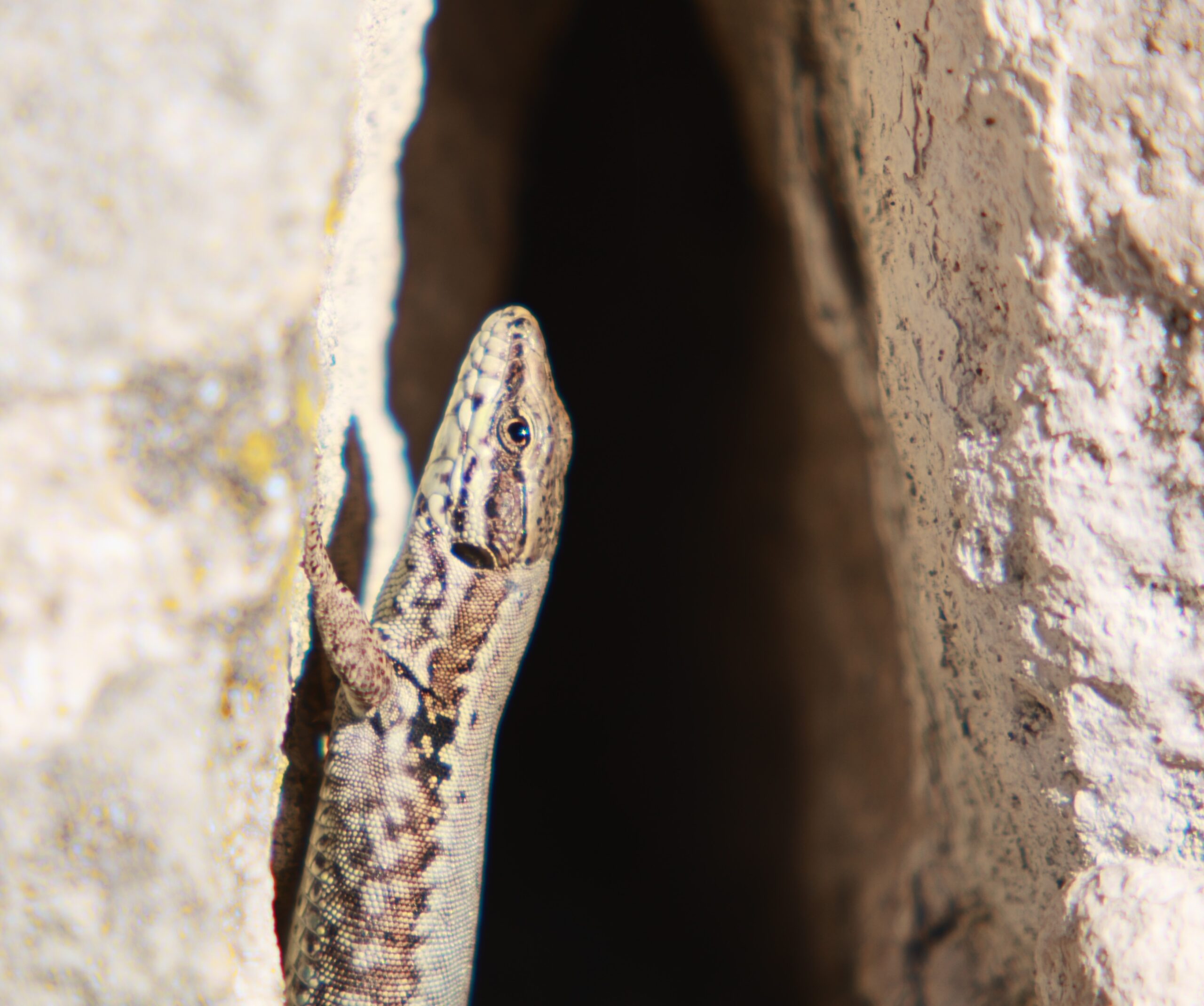
Lizards on my doorstep! I’ve tried for two years to get the little guys on camera, but every time I tried to get them into range of my 70mm macro they scurried into the wall.
So more working distance was needed.
To achieve a long working distance, you need long tele lenses. Sadly there are none for macro photography, it stops at a measly 200mm. So I tried my luck with my trusty 800mm f11 and a diopter. Coming from wildlife photography and wanting to explore the smaller world below without scaring away the tiny critters, the simple solution was the unholy amalgamation of a cine diopter and my 800mm tele lens.
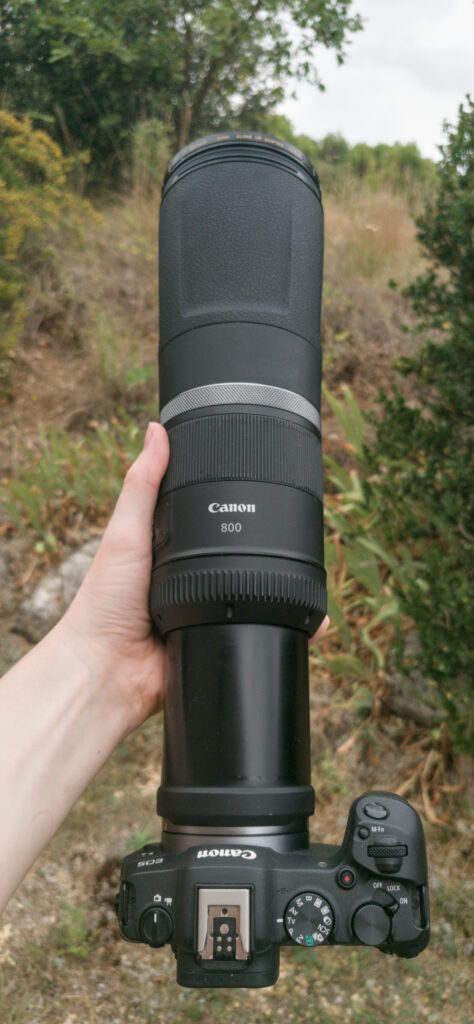
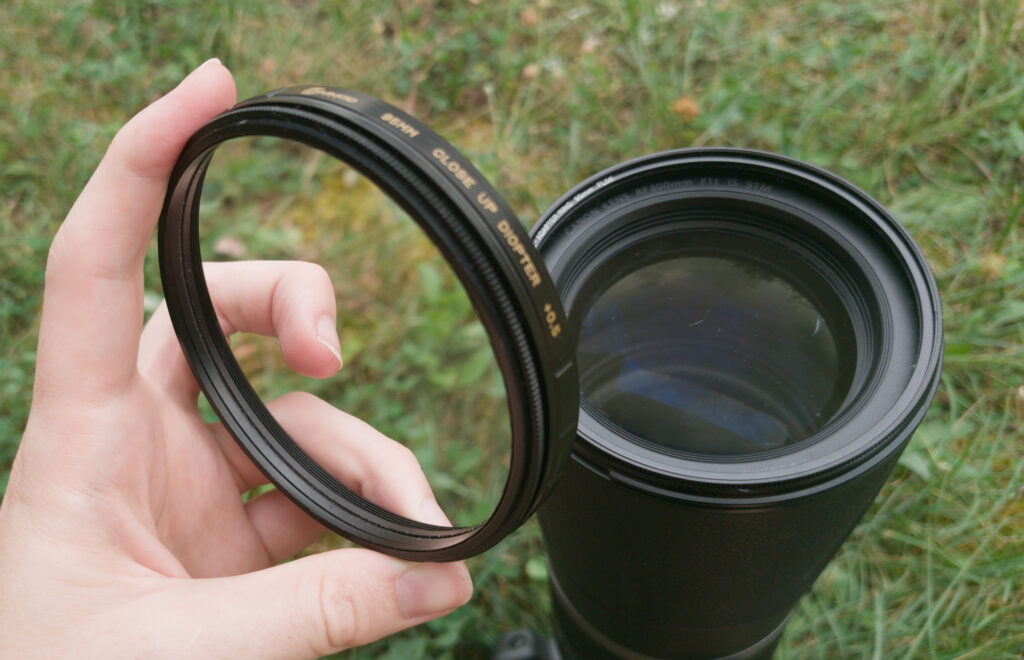
Testing the Setup
The 3-4x Nisi Diopter proved a challenge too great for me. I tried to get even the tiniest bits in focus, but to no avail. So the choice landed on the much more manageable 0.5x Simmod. This resulted in a working distance of 1.4m to 2m and a magnification of about 1.2. Hectic on-and-off screwing of the diopter was quickly replaced by a magnetic adapter ring, and ready we were. No flash or diffuser was used, as I really don’t like the thought of pestering birds with them. Also, it proved best to treat the autofocus as more of a suggestion and focus manually.
Handling
It’s great fun just plopping on the diopter and start delving into the macro world.
Scaring away lizards or dragonflies is a thing of the past, and it’s perfect for a flower and bugs break mid birding sesh.
The Good
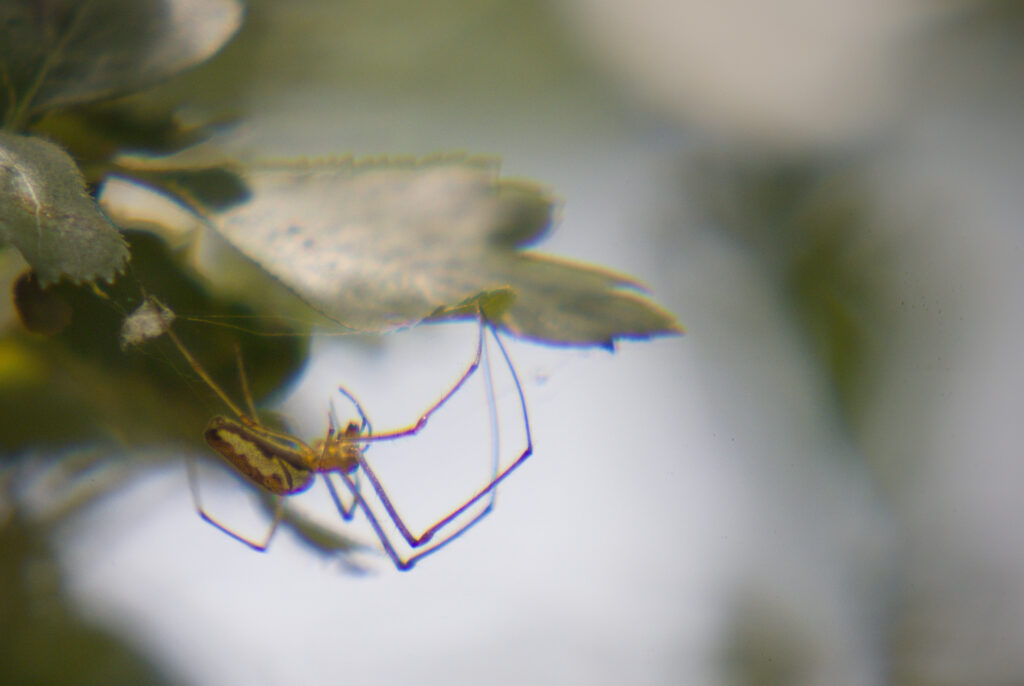
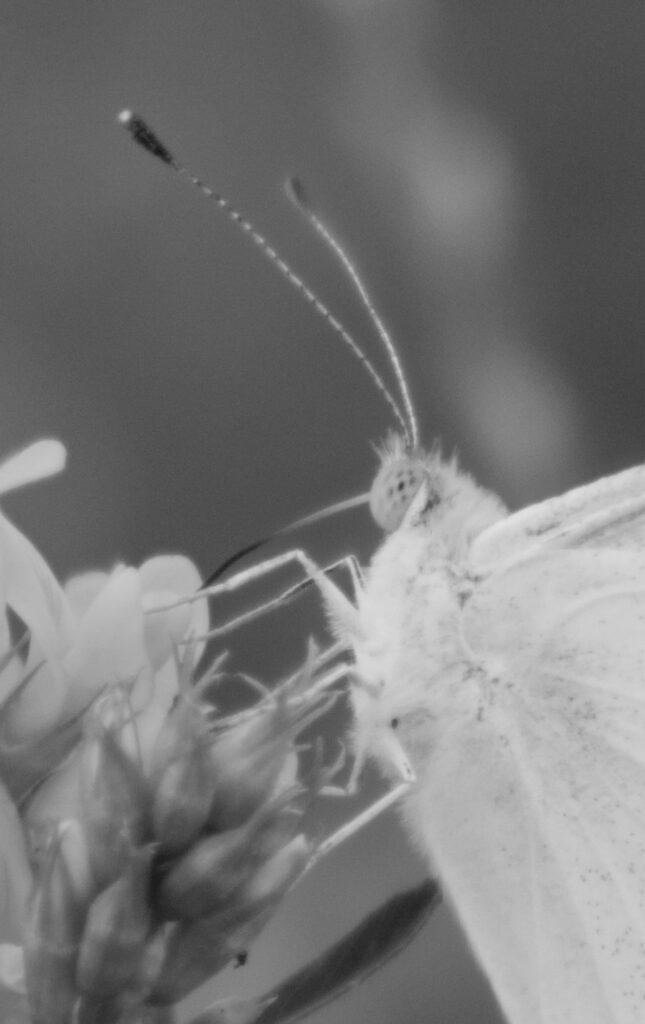
All images were shot on the Canon R8 with this lens. The pictures were edited with Darktable, and slightly cropped.
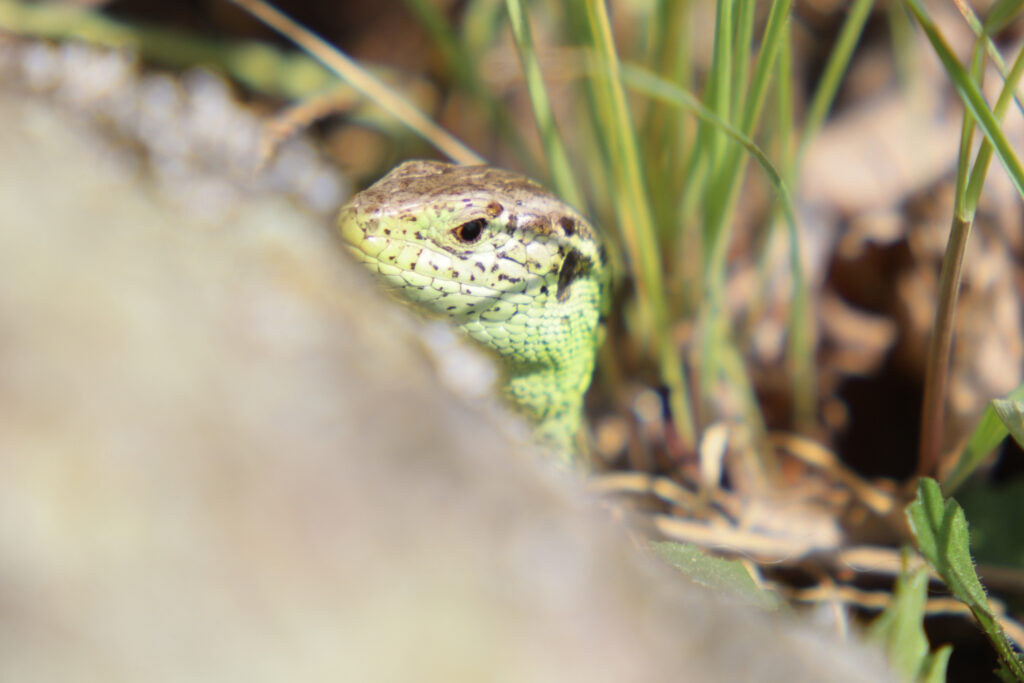
There is something about getting your composition completely on the spot in your viewfinder that I enjoy immensely, no cropping, no zooming, getting to see the movements of the animal up close. That’s what drew me to the 800mm in the first place, I care little for bokeh quality or high ISO. Being there in the moment is what counts for me.
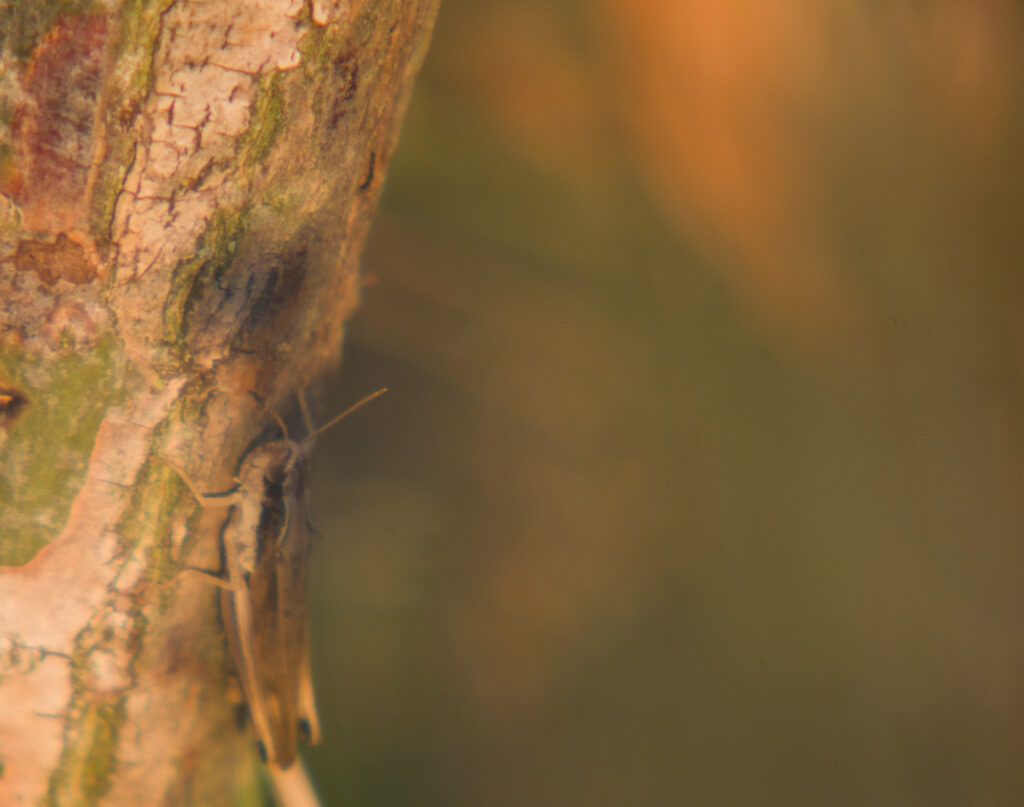
The harshness of a clean digital image is lost, and the subject softly emerges from its environment.
Colour fringes can be mystic veils that give a dreamy quality to the image.
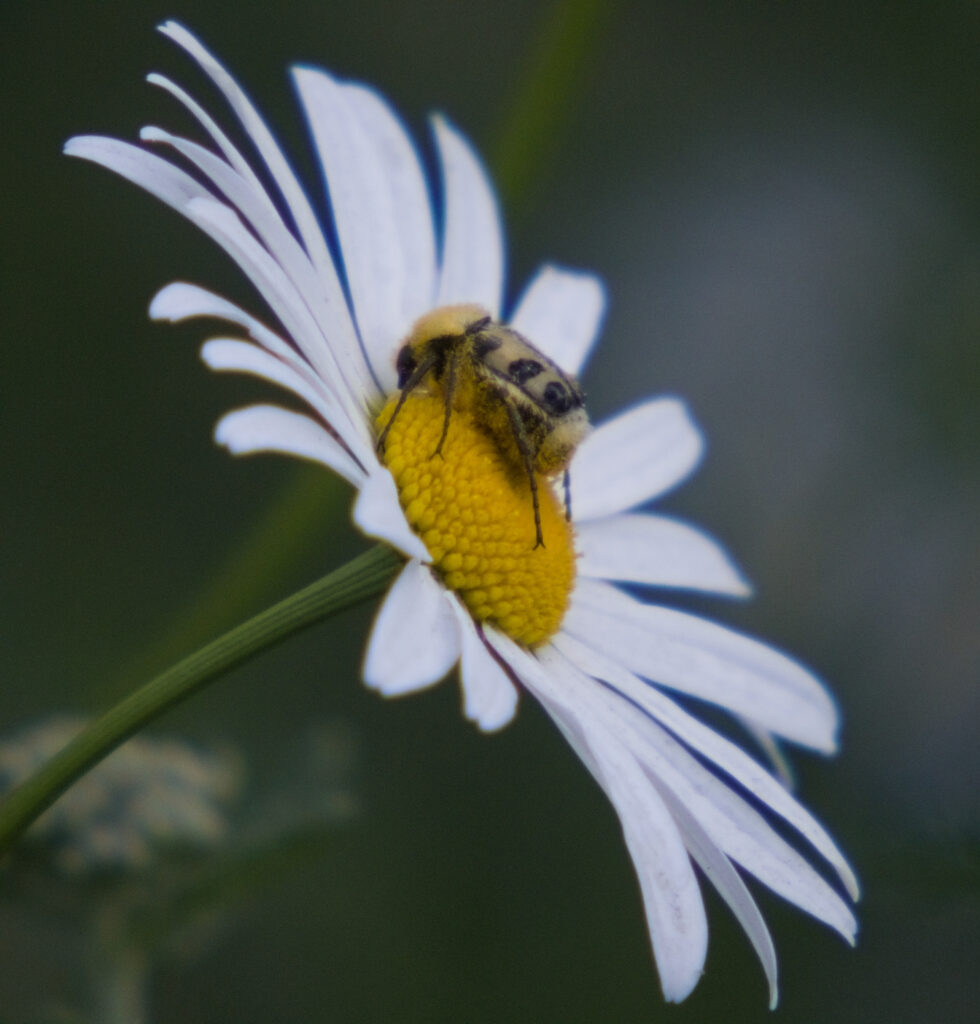
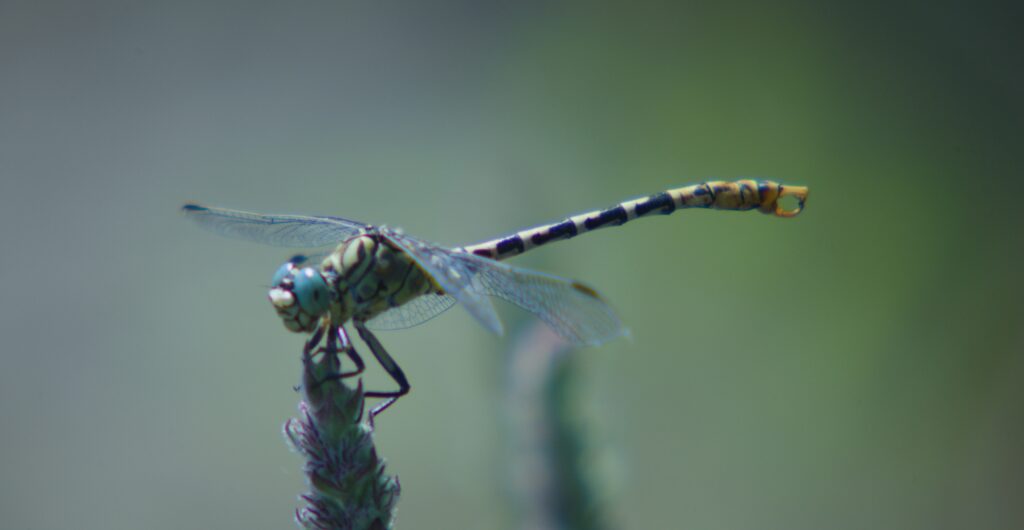
The Bad
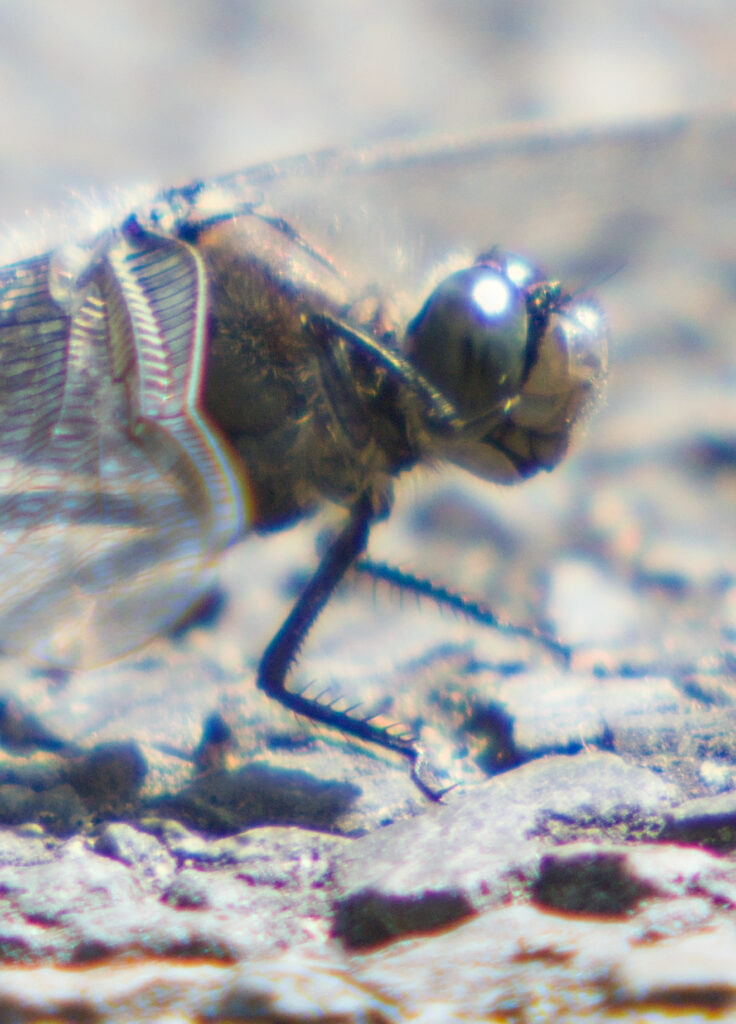
Chromatic aberrations can be overwhelming. Direct sunlight is a clear no, and even on a cloudy day, sharpness has taken a hit compared to the original lens performance.
Alternatives
Extension tubes or a dedicated macro lens would yield much better quality pictures.
But the former would have brought my very long (and made entirely out of plastic) lens to comical proportions while being unpractical in the field. And the latter would need to be hauled around in my bag that’s already heavier than I would like.
The experience of just grabbing my camera with the one lens and going out not knowing where I will land is unrivaled, but truth be told, in the future, a light tele macro will probably find a way into my or my girlfriend’s kit.
If you want to see more, I’m on Bluesky
Share this post:

Comments
No comments found