

Life is too easy for photographers these days! We have wide-ranging, versatile zoom lenses. Those folk using phones also have a choice of focal lengths on many models. Now I usually have a 28/35/50 Tri-Elmar attached to a Leica M digital body. Firstly to enable me to change focal lengths quickly and also to avoid changing lenses and risk getting dust onto the sensor.
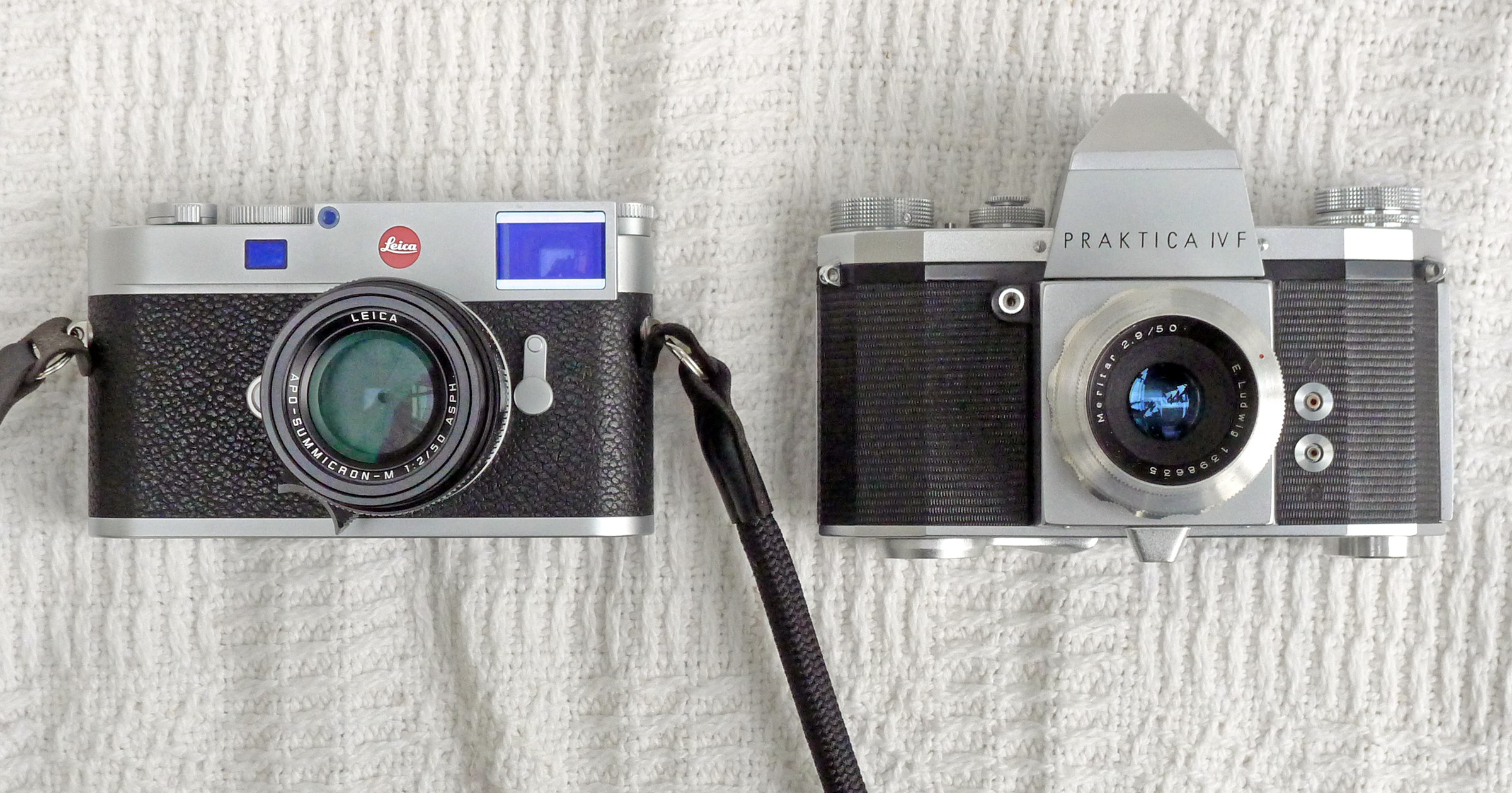
I bought an APO 50mm Summicron f2.0 a little while ago (used), at a ‘good’ price and decided to use just that on the camera. It then occurred to me that imposing this disciple would take me back to my first explorations into serious photography when my parents bought me a Praktica IV with a 50mm f2.9 Ludwig Meritar lens in 1965. (See my Praktica article for more information on this range of cameras).
This discipline Is good for you. There’s nothing original about this theme, many magazine and web articles suggest this approach rather than attaching a super-zoom to your camera. Many rangefinder photographers opt for the 35mm as their preferred focal length. For some reason this is my least favourite focal length. I do like a 50mm for the aspect it provides…
Photos from my First Praktica / Meritar
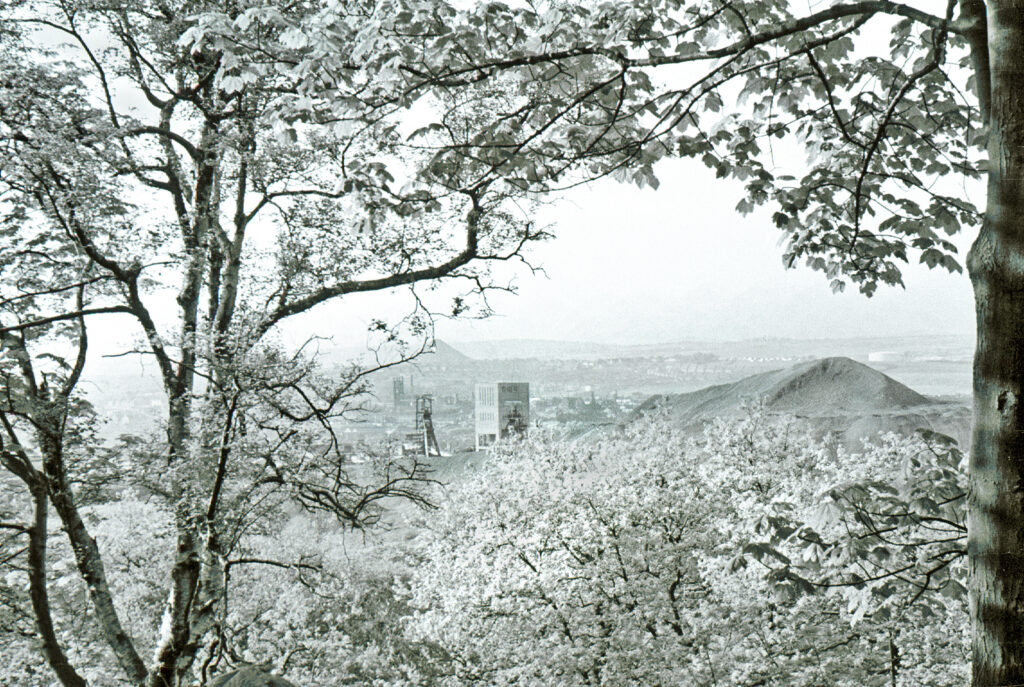
Below two photographs taken with the Meritar back in 1965/66. The first shows the view to Florence Colliery From Cocknage Wood in Stoke on Trent in 1967. While the colliery dominates the middle distance and you can see the industrial town of Longton beyond; the photograph always reminds me of how easy it was for us to get into countryside. We lived close to that colliery and the view from my bedroom window was of the whole workings but a little beyond was Cocknage Wood.
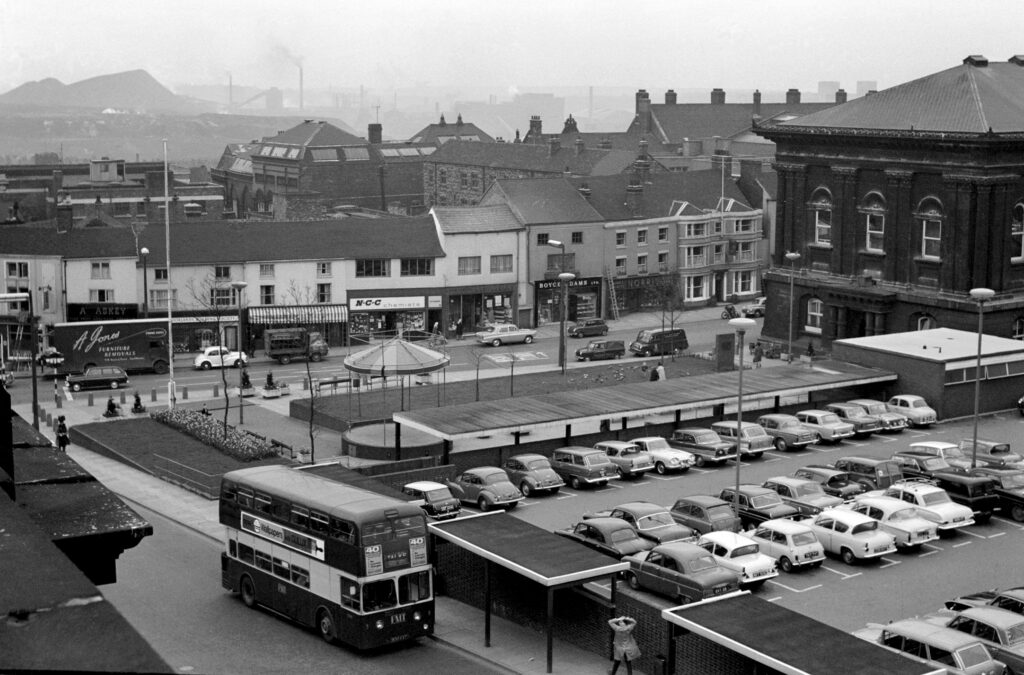
The second photograph is one of a pair. It is taken From the Queen’s Hall Balcony in Burslem looking over the town centre as it was in 1966. Of all the elements in this photograph the only thing that is the same is the old town hall on the right. The shops have all changed. In the distance you will see the misty outline of Shelton Bar Iron and Steel Works, long since closed and, of course, the cars and buses evoke a different age. This photograph was taken on Adox KB14, one of my favourite films, developed in Neofin. It is one of a pair taken to show the whole area. It was enlarged to 20X16 and no one would believe the quality of the result from that little Meritar.
If these interest you then please go and look at some archive photos of Stoke on Trent on my Flickr site. Anyway, enough of the nostalgia.
Photos from my latest 50mm APO Summicron-M
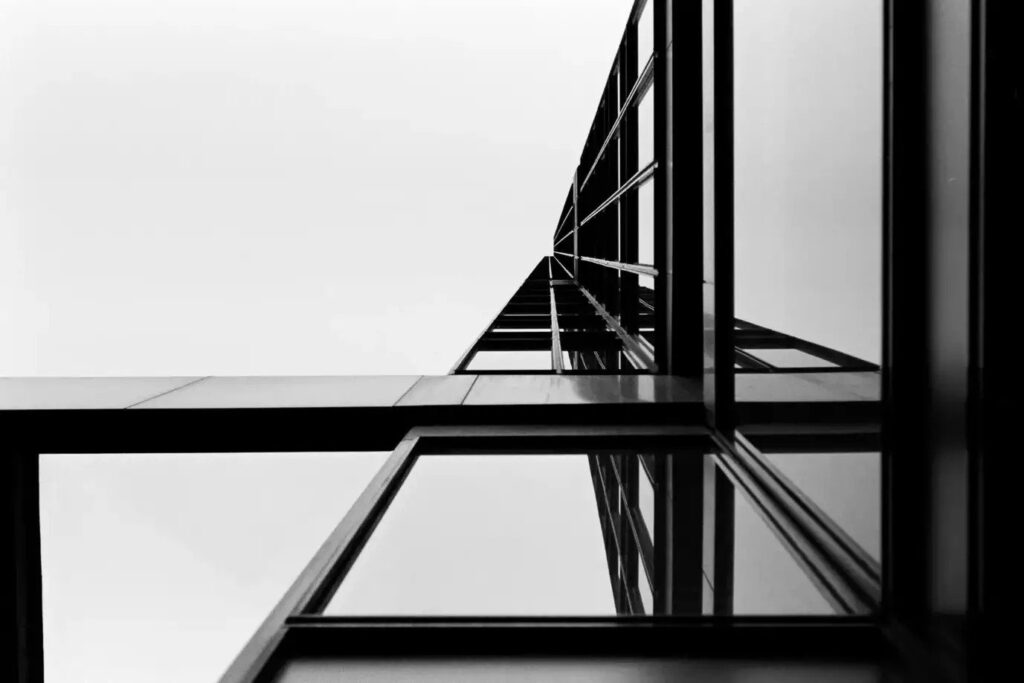
Below are some image I have taken more recently with the 50mm Summicron, reminding myself what can be done when limiting oneself this one focal length.
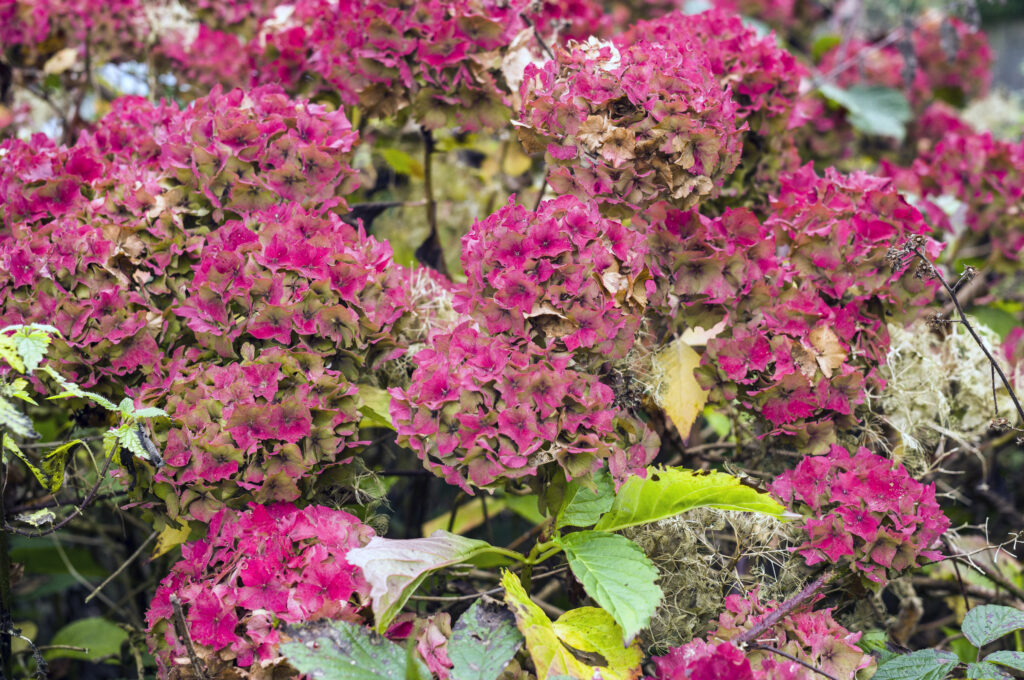
The Hydrangea: I could’ve framed this a thousand different ways but this arrangement appealed as it seemed to catch the bush while it was still colourful but past its best.
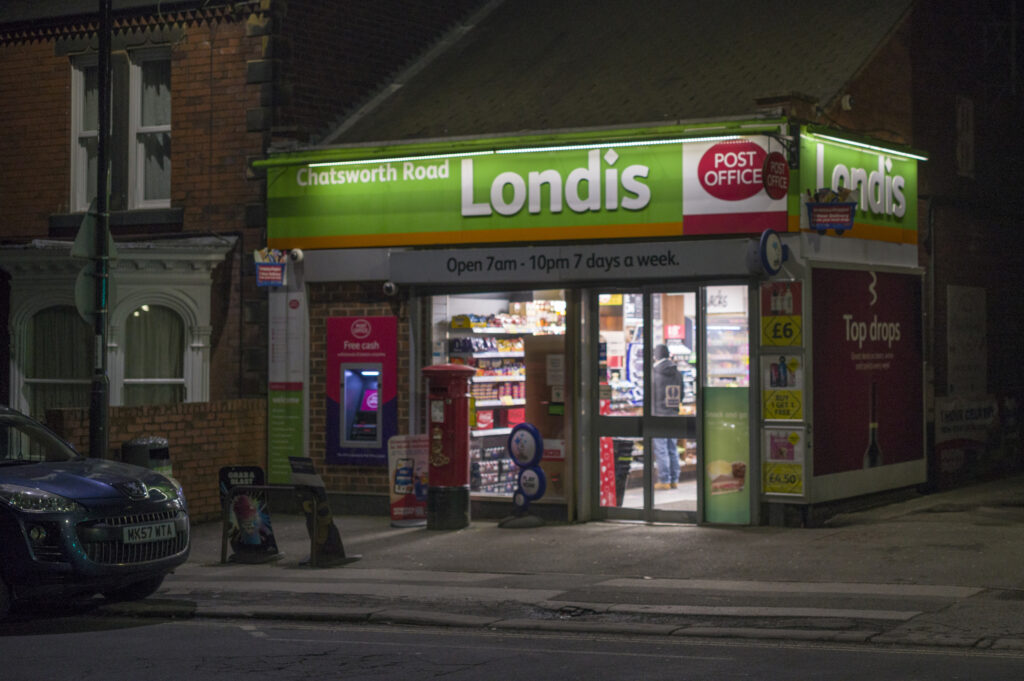
 Chesterfield – Londis: while walking to the weekly Chesterfield Photographic Society meeting I tried to capture some night photos. It was also a good lesson in beating the Leica M11 into submission as it wanted to force everything to 18% grey! I under-exposed by 2 stops and occasionally put the camera in manual mode leaving the ISO at 1600.
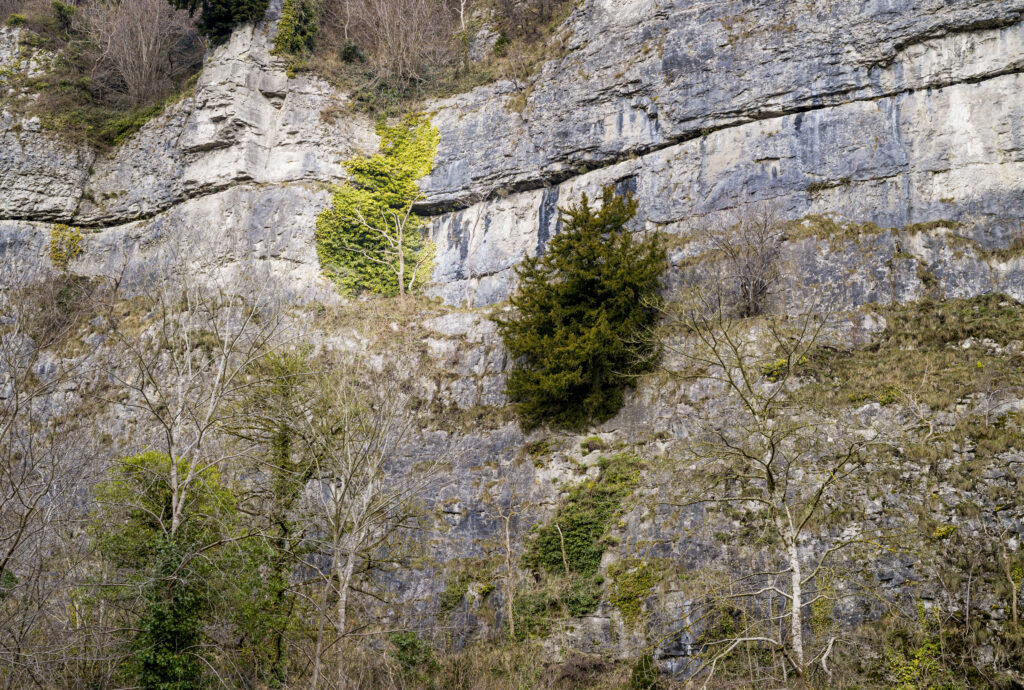
Rock Face – Stoney Middleton: A café has opened in this Peak District village and we tried it for a birthday lunch. Outside is a steep rock face that seems to characterise the Southern Peak District. Again it was a question of framing and hoping the light would behave itself.
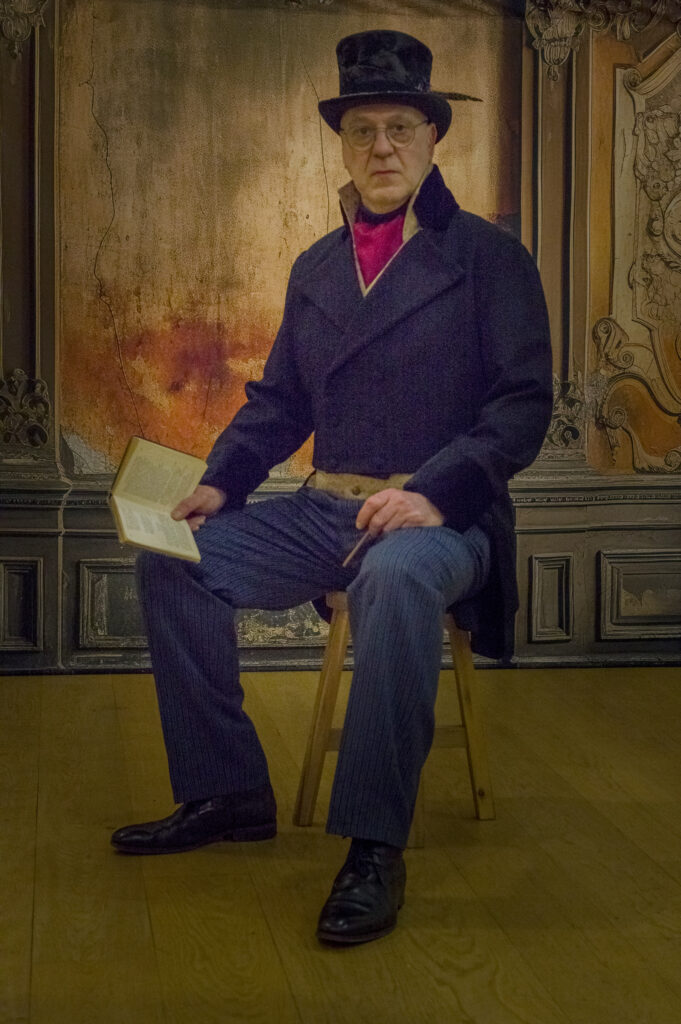
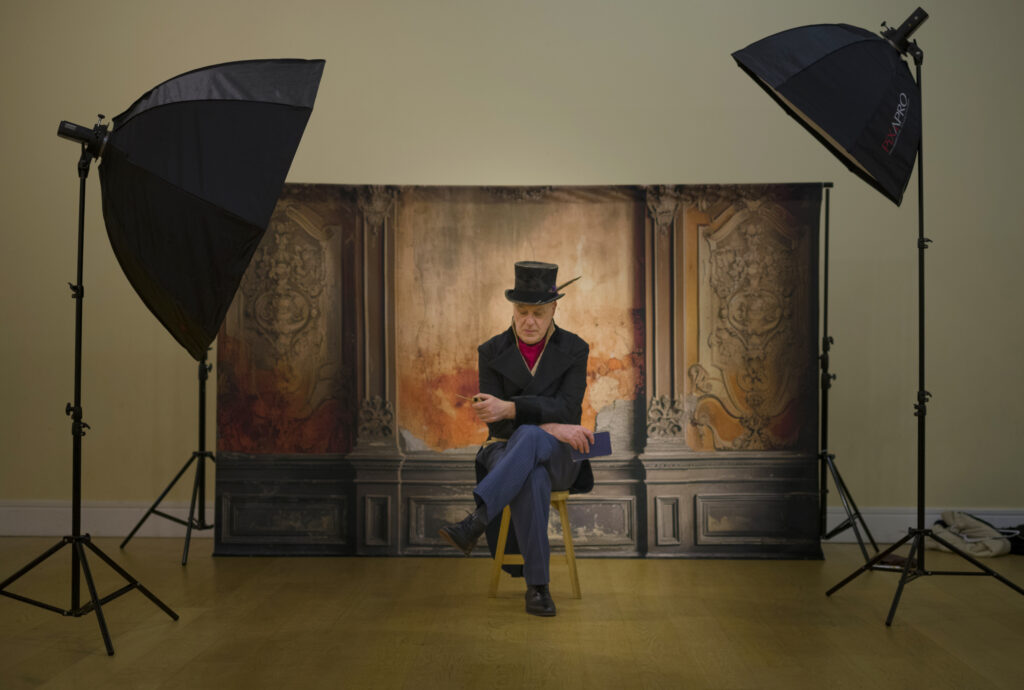
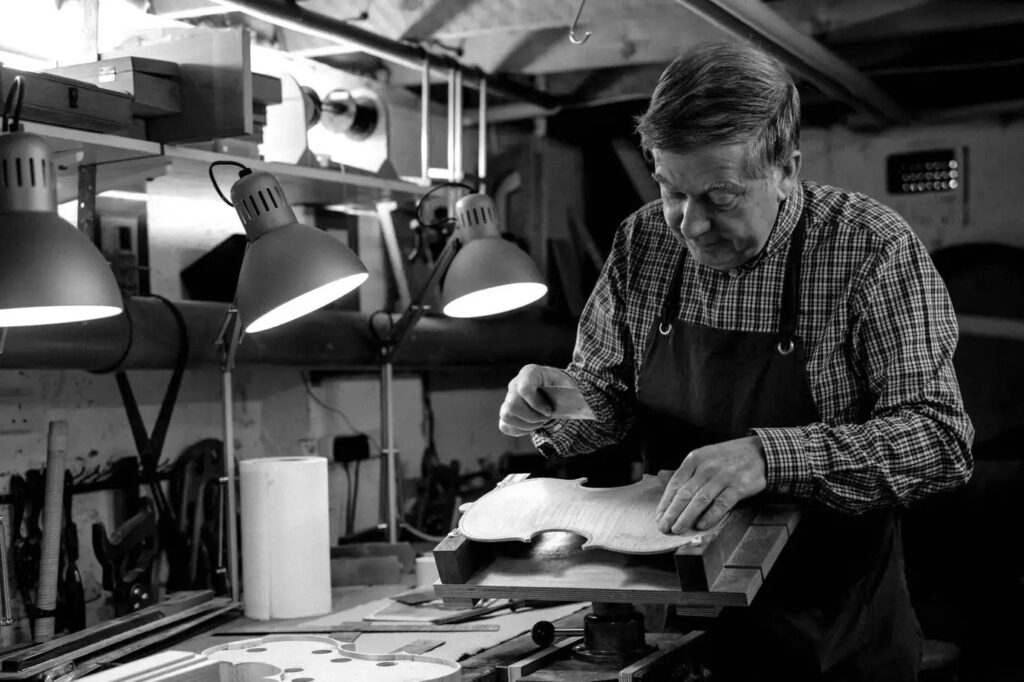
Model Night at Chesterfield Photographic: I thought I’d explore a different approach to everyone else. This professional model and photographer, Graham Curry visited the society and set up his props and strobe lights. He then explained to everyone how to set their cameras to use the strobes at their optimum. He was a bit surprised when I photographed him just using the natural light but his costume and prop seemed to suit a darker, Victorian feel to the set.
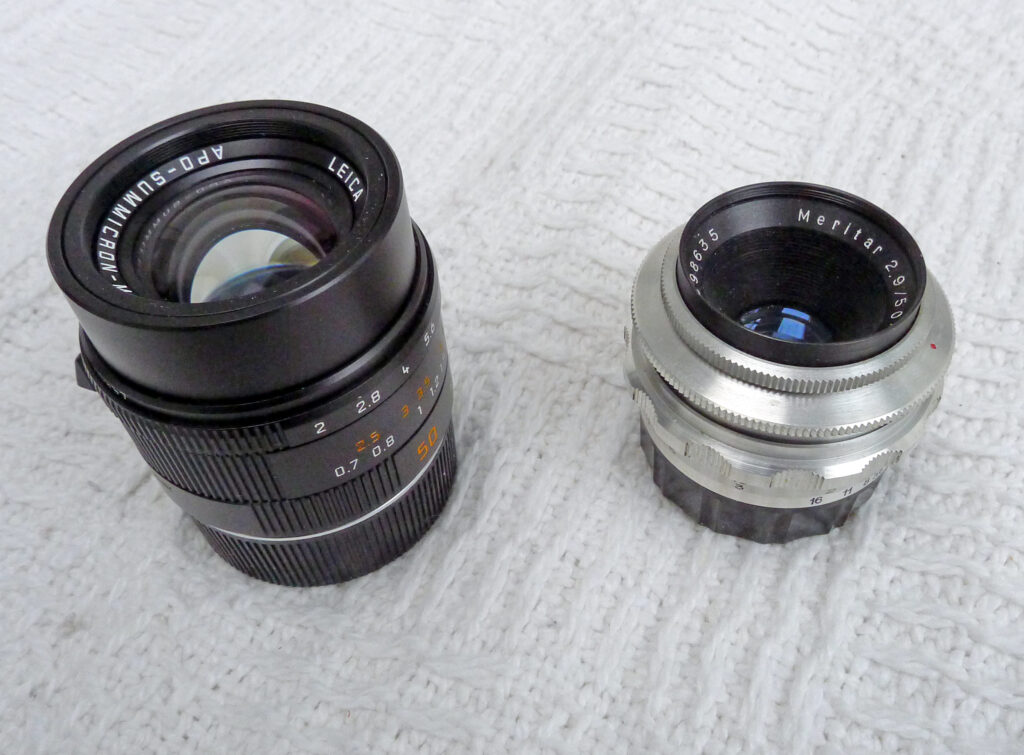
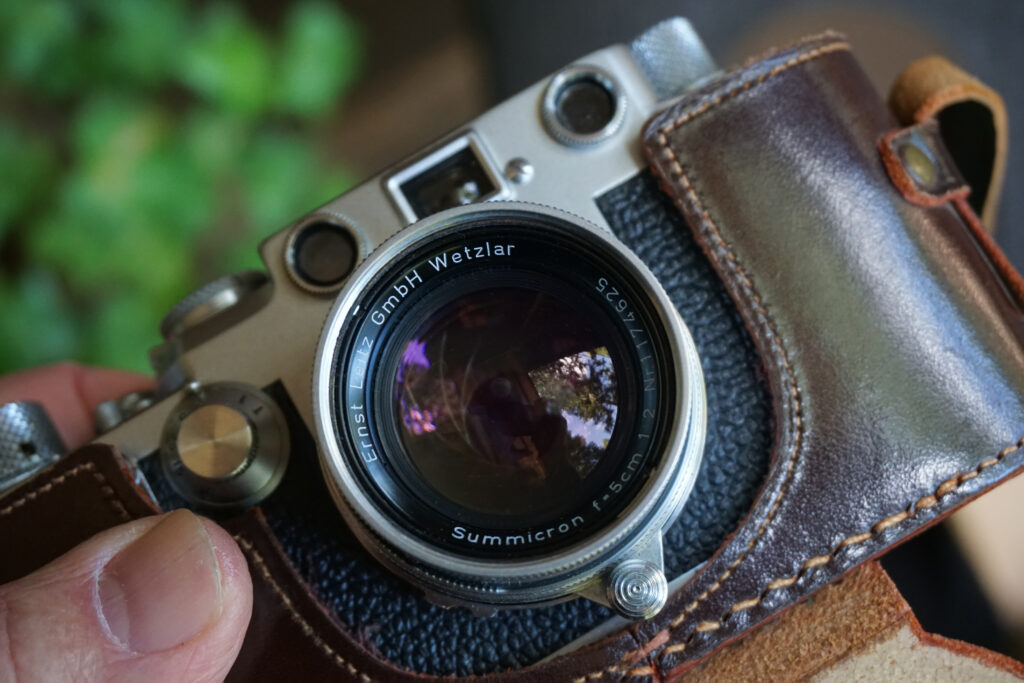
The Lenses.
At the top, you can see the 50mm Summicron attached to an M11 and the 50mm Meritar attached to a Praktica IVF, and below, the lenses on their own. The cameras show my latest main camera in 2025 and my main camera in 1965. I still like using my Prakticas but a Leica M of some sort is my more frequent companion.
In Conclusion
Limitation is good for the photographer. It has been good for me to return again to just shooting this one focal length. It has made me think about the composition and my viewpoint. I have enjoyed it, and I hope I have proved how versatile this one focal length can be, I have certainly reminded myself of this fact!
Share this post:

Comments
Sean Benham on The Discipline of One Lens
Comment posted: 30/12/2025
Comment posted: 30/12/2025
Gary Smith on The Discipline of One Lens
Comment posted: 30/12/2025
Thanks for your article Ken.
Comment posted: 30/12/2025
Jeffery Luhn on The Discipline of One Lens
Comment posted: 30/12/2025
Nice pix! I often shoot with a Rollei TLR or Zeiss folding cameras. No lens changes possible. Oh, how I wish I had one of those models with wider lens. My interchangeable lens choice is a Pentax 645N. The 35mm lens on that medium format is amazing. But to your point, a single lens is a good way to limit yourself. It makes you think.
Ken Davis on The Discipline of One Lens
Comment posted: 30/12/2025
Omar Tibi on The Discipline of One Lens
Comment posted: 30/12/2025
https://www.35mmc.com/02/11/2025/5-frames-planar-ektar-fotograflar-istanbul-in/
Also agreed about 35 vs 50mm FL. I see 35mm keep getting praised, especially on social media, but I also find 50 to be a more comfortable FL. It's more flexible & natural in my opinion, and I generally find myself wanting to go tighter than wider. I've tried 35 via my 35-70 Vario-Sonnar, and there are certain circumstances where it is useful, but I prefer 28 for wide. In that case though, I basically use that lens as a combined 35 mm and 70 mm duo, either fully extended or retracted, I don't use the variable range much. Part of it is because it just seems to make sense, but also partially because I don't want to become a lazy photog :)
Nice to see some great Praktica shots, and happy shooting in the new year Ken!
Comment posted: 30/12/2025
Comment posted: 30/12/2025
John Eaton on The Discipline of One Lens
Comment posted: 31/12/2025
Comment posted: 31/12/2025
Andrew on The Discipline of One Lens
Comment posted: 31/12/2025
Comment posted: 31/12/2025
Comment posted: 31/12/2025
Ken Davis on The Discipline of One Lens
Comment posted: 31/12/2025
Alexandre Kreisman on The Discipline of One Lens
Comment posted: 01/01/2026
First, I think the philosophy of one lens, one body is worth a lot when learning a new lens, especially nowadays with zoom that have a lot less glass and give different results depending on the body and it's firmware/software to convert into dng.
Not wanting to diminished your article the slightest, a few things though : 18% grey is the standard value for any light meter (a light grey) and in the case of an M as the light meter is roughly 30% ovale in the center of the viewfinder, it's normal that it would give you a bad reading depending on where those 30% are facing. You did the right thing going manual. A trick on digital M's is to point your lens to the place in the picture where there is light (or the place you want to light up) and half press the shutter button. you should see a tiny dot between the first 2 digits in the viewfinder, meaning the exposure is blocked and then just frame/focus and shoot.
Now, regarding the 50 APO, it's not just a 50 it's an apo. Apochromatic lenses. Meaning there is a coat of chemicals that was applied to one of the lens, giving you more contrast at the point of focus. It's best suited for for the range of f2-f4. This lens is surgical on film at f2, never tried it on a 50Mb Px, but i guess the result would be a sharp picture and what I like most of it is the transition between in and out of focus. For me this lens is made for proximity, street, portrait and so on. Also, Leica is one of the last (if not) producer that make glass the old way : the have lenses for correction (parallax, ....) which is why (part of) is so costly. Nearly all other producer, put the least amunt of lenses and correct with a software in the body. (don't know if it is relevant, but ...)
I recommend you to try the 50 for portraits head + waist maximum. At something between 3 feet and 6, with the light meter blocked on the face. I'm sure you'll see some gem comes out.
I just had a m11 monochrom in my hand and tried to take a portrait at 1,5 meter with a noct 0.95. I couldn't make a single shot that was in focus, tried a summilux too, better result, but still the patch has become so small and lost so much contrast, I definitely know it's not for me.
Tried the m-e also and much easier but so weird to have a rangefinder with ev.
What are your thoughts about focusing with the 50 apo on your m11 ?
Anyway, wish you the best for this new year!
Cheers
Alex
Comment posted: 01/01/2026
Comment posted: 01/01/2026
Ken Davis on The Discipline of One Lens
Comment posted: 01/01/2026
Regarding size of sensors, I was happy with 24 megapixels on an MP 240 and 18 megapixels on an M9. I have seen some stunning wall size prints from the M8 as well!
However, the 60 megapixels on the M11 can come in useful if I want to capture something that the 135 isn't long enough for and it's ability to recover shadow areas is useful. I have the 75 f1.4 and it's a big beast with the depth of field issues you raised about the Noctilux and I make do with the 75mm Summarit most of the time.
Let's see what 2026 offers in terms of photo opportunities!
Comment posted: 01/01/2026