

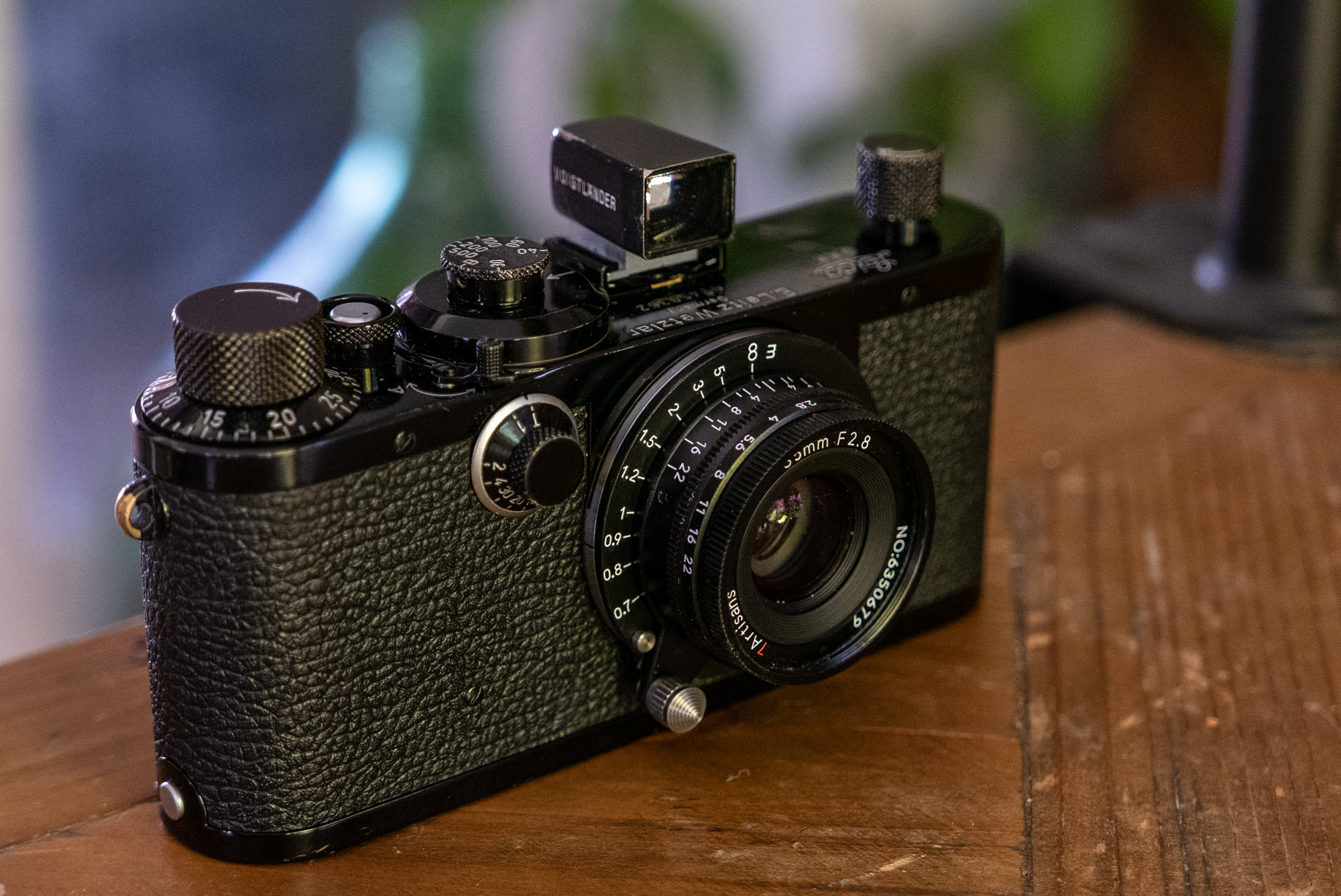
A couple of weeks ago Alex shared his launch day review of the 7Artisans 35mm 2.8. His review makes for a solid overview of this lens, but due to its form factor and LTM mount I thought I might supplement that review with a second article looking at it on my modified Leica Ic.
This lens review has taken me a little longer to write than expected. I started writing it, and before I knew it, I was writing about the camera rather than the lens. I think a review of my modified Leica Ic has been trying to make its way out of my brain for a little while now, so when I put pen to paper, so to speak, it just started flowing and completely took over what was supposed to be a lens review. I have moved most of that content out into a new review that I am now working on, but the summary of that future review is that I just really love my Leica Ic. This new little lens from 7Artisans has, in many respects, proved to have been worthy companion to it too – and that’s actually quite a deal for me, as I only tend to partner it with lenses that have a few very specific attributes.
7Artisans 35mm 2.8 – want over need
I have loads of LTM lenses, though a disproportionate amount of the collection is made up of 50mm lenses. Only one of these ever gets mounted in the Ic, that being the little collapsible Leitz Elmar, and that’s just because it’s small. The rest of my 50mm lenses are too big and too fast to work well or feel comfortable to use on it.
My other LTM lenses are a Canon 25mm (that I don’t really use, and probably just need to sell), a Voigtlander 28mm 3.5 and Voigtlander 40mm 2.8. The 28mm was the lens I bought the Ic for, and the 40mm came a little later as what felt like an ideal second lens for the kit. These two lenses really feel like they could be all I need for that camera. They both feel like a good fit in terms of their shape and size, I have a viewfinder for both of them, I’m comfortable scale focusing both of them, and between them they offer me the framing I most get along with when working with a scale focus camera. One for slightly wide, and one for just-about-normal framing.
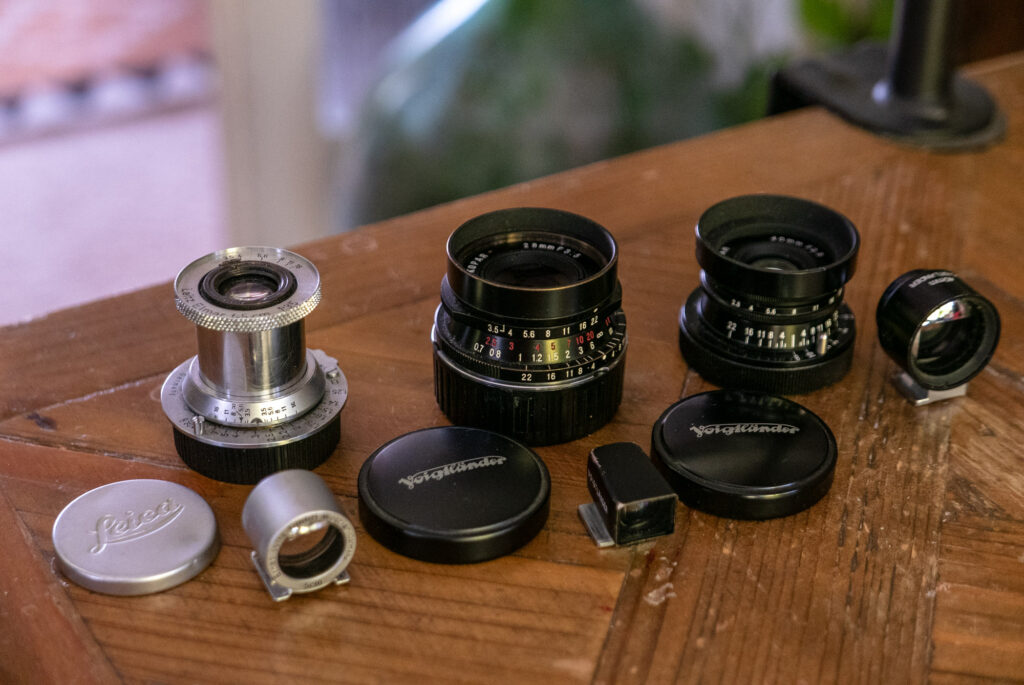
They both look fantastic on the camera too – not that this is a huge factor particularly, it certainly has no impact on the photographic outcome, but as a visual person who enjoys aesthetically pleasing subject matter in my photography, I’m not ashamed to admit that aesthetic appreciation extends to the kit I use too. I’d even say it increases the enjoyment I have when out and about with a camera – certainly this little beauty!
I have in my camera collection a few little mini-kits like this. My Contax 139 has a just 45mm and 85mm partnered with it – I had more lenses, but after a time realised that I just used those two lenses and so I sold the rest. I also have a Contax IIa that I have a 50mm and 85mm for – I don’t have any desire to add any more lenses to that kit. The Nikonnos with a 35mm and 85mm is another example, though I am tempted to add the 28mm to that. I like these little kits of camera and a finite set of lenses as they feel complete somehow, and with that, they feel satisfying to shoot. They represent a bit of a self imposed limitation – a bit like the one camera one lens thing that a lot of people harp on about, but, well, more compatible with me and my ways as a hobbyist photographer. In short, I didn’t need another lens for the Ic, especially a 35mm which sits closely between two lenses that both from a photographic and psychological perspective offer me what I already need between them.
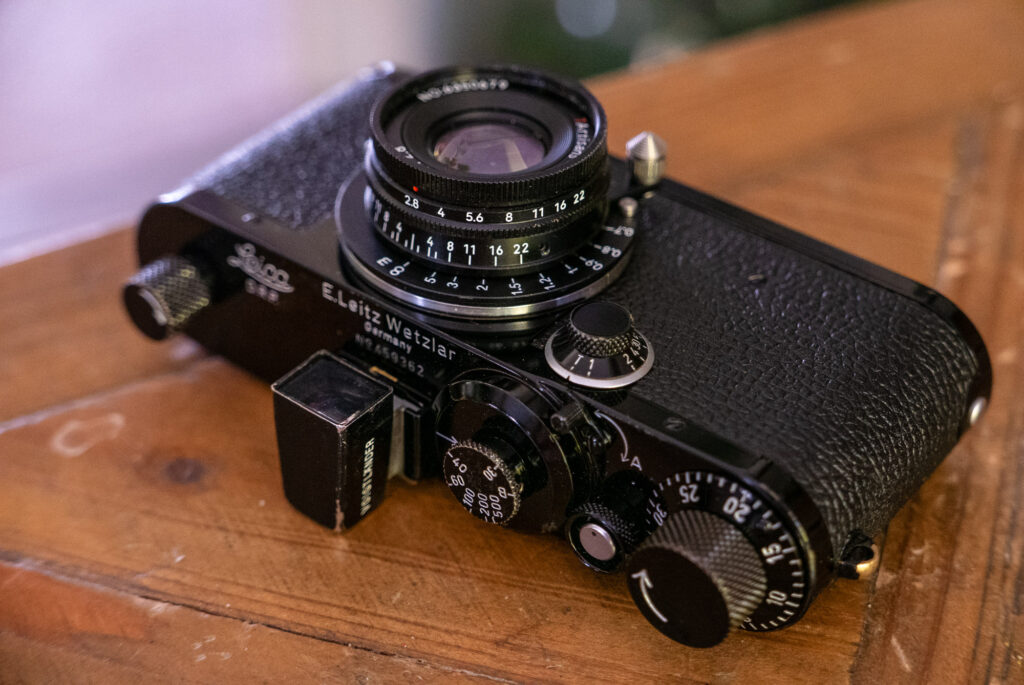
So why reply positively when 7Artisans get in touch to ask if I’d like to review a it then? Well, just look at it – it looks like a perfect match for the Ic. I might not need a 35mm, but outside that self imposed limitation of two lenses, I knew a 35mm lens would work well for me on this camera, my 28mm viewfinder is also a 35mm viewfinder. I also knew Alex had one for review – we caught up at the photography show at the NEC and he told me as much – so after a quick chat with our mutual contact at 7Artisans, it was agreed that he could do a more broad review of the lens which would free me up to write a review more specifically focused on shooting this lens on my Barnack camera. After all, it is an LTM lens, so it felt to me like it deserved some coverage on a camera like this. You can read Alex’s review here, and see the video version here. He’s also worth a follow on YouTube if you’re into that sort of thing – I don’t religiously watch his videos – I don’t religiously watch anyone’s videos – but when I find one of his covering a topic I am searching for, I know I am onto a winner!
Shape, size and usability
The 7Artisans 35mm 2.8 is a small lens! It weighs very little – though as I will come to, this doesn’t really impact how good it feels in use in the context of a small camera like my Ic. More important than the small weight though – at least to me – is the small size! For a lens to work and feel nice on a Barnack Leica, in my opinion at least, it needs to be small – this is especially the case on my Ic. The reason I love this camera is the same reason I set up this website in the first place: I love small cameras. I have lots of pocketable point & shoot cameras in my collection, but the point of this particular one is for it to be totally mechanical, manual, as minimal in functionality as possible, and as small as possible. Out of the 28mm Voigtlander, 40mm Voigtlander and this lens, it’s this one that’s the smallest. Now, admittedly we are only talking about a few millimetres here, but that’s doesn’t take away from the reality of the tiny size.
What’s more, there’s no real caveat to the small size, especially in the context of my way of working with this camera and in comparison to the two Voigtlander lenses. The 28mm is a more modern design of lens whereas the 40mm Voigtlander and 7Artisans 35mm 2.8 both take design cues from older style Leica lenses. There is a little difference between them though. The focusing of the 40mm lens rotates the entire front part of the lens relative to the mount. This of course means that the aperture control rotates too, so it doesn’t always face up. I personally don’t find this to be an issue at all, though I suppose some might. Though the 7Artisans 35mm 2.8 looks very similar in design to the Voigtlander, it doesn’t work like this – focusing the lens just rotates the focus ring, the front of the lens doesn’t rotate. I am comfortable with either style, but the direction 7Artisans have gone is more complex in terms of the mechanical design.
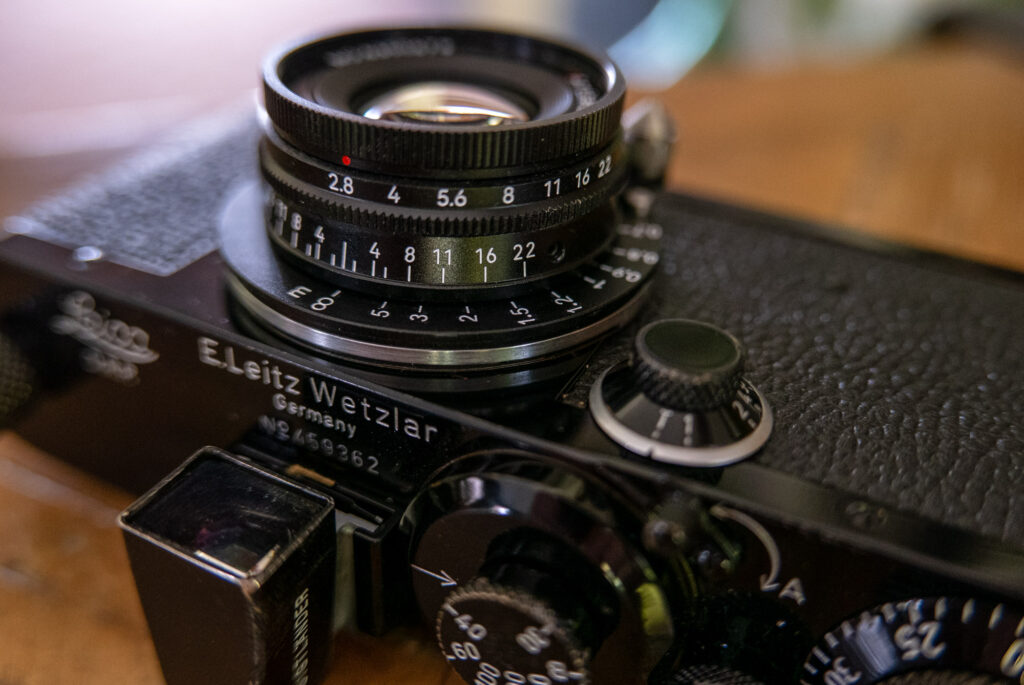
Something Alex picked up on is how the focusing scale feels in use. As with the Voigtlander 40mm, the distance scale is on the mount of the lens and the depth of field markers are on the rotating front part. The distance scale is also around the right of the lens as you look down at it when in use. As a result, certainly if you’re not used to this sort of layout, it can feel a little confusing when compared to a more modern style lens. I’m fairly comfortable using the my old Elmar and my Voigtlander 40mm which also both work like this, so I have been reasonably comfortable with the 7Artisans, but I won’t hide the fact that it certainly threw my off when I first picked it up to use it. The Voigtlander and Elmar have the same impact on me – but it only takes a little while to get back into the flow of the different style of design.
And despite its small size and potentially slightly unusual design style, it really doesn’t feel fiddly to use, especially for a lens this small. Just like both of the tiny Voigtlander lenses, it feels really well proportioned and satisfying in use – especially on my little camera!
Build quality
I’ve been working with 7Artisans in one way or another, on and off, for a long time now. Those who have followed this blog for a while might remember me being one of the first, if not the first person to bring their first lens (the 50mm 1.1) into the UK for direct retail here – though the enterprise didn’t last long. There was two things that stopped me doing this in the end, the first was the ever tightening margins just made it too difficult to make it financially worthwhile, and the second was the quality control. This isn’t even going back as much as a decade, but back then budget brands like 7Artisans came to market with lenses that had much more frequent tolerance issues and fairly significant copy variance. There are loads of lens brands that have come out of China in the intervening near-decade since then, some that punch low in terms of both price and quality, and some that punch quite high in terms of quality compared to their price point. One thing that seems fairly consistent across these brands though is that the average build quality of them has gone up. 7Artisans sit somewhere in the middle of this spectrum with some of their lenses being very cheap and pretty basic, and others offering something actually pretty impressive for the money. In my experience though, and from what I have read, the copy variance isn’t nearly the issue it used to be and the build quality has definitely improved!
Even just on paper this bodes well for the 7Artisans 35mm 2.8, but in practice it is absolutely in the “pretty impressive for the money” category in terms of the build quality. Though it’s actually one of their more expensive rangefinder lenses – as well as being one of their smallest and most lightweight.
LTM lenses that aren’t around 50mm are actually more complicated to manufacture than m-mount lenses due to the need for a secondary helicoid to translate the focal length for the rangefinder mechanism (see this video). I suspect this is part of why it cost more money than most of the rest of their lenses. Aside from that though, it also feels good quality in the hand, and in use, and also has a few attributes that give away a much greater attention to detail than many might expect from a brand like 7Artisans, even today.
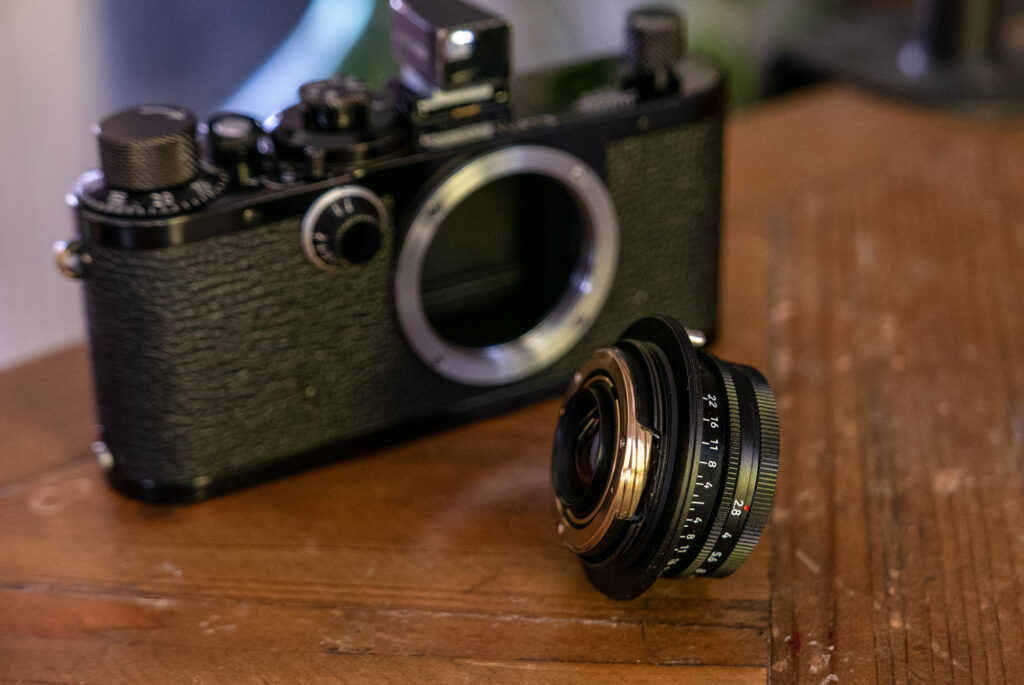
It is, I believe aluminium rather than brass like my little Voigtlander 28mm. But then, my Voigtlander 40mm is also aluminium I think. It’s hard to argue that brass lenses don’t feel nicer – the added weight just gives a feel or more quality. But once on the camera, with an intentionally small setup like this, the difference feels negligible and more comes down to the quality of the mechanical feel in use. Fortunately, the 7Artisans 35mm 2.8 feels really solid in that regard too. This really is important to me when using this camera – as I will come to in my Ic review, this is a camera that gives me a real pleasure to use. The camera looks great and feels precise, so whatever lens I mount to it needs to feel the same.
The feel of the focusing is the first thing to point out. It’s actually pretty much indistinguishable from my Voigtlander lenses in terms of smoothness, and the Voigtlanders are really nice feeling lenses! It’s not massively damped, but it rotates without any sense of mechanical grittiness and is consistent through the rotation. I will concede that the Voigtlander 40mm especially has a nicer feel to the aperture control with more solid detents to the clicks smoother feel between each click, and has half stop clicks too. By comparison, the 7Artisans 35mm 2.8 does have a bit of a mechanical feel, isn’t as clicky and only has full stops, but there’s no looseness to it (which the Voigtlander 28mm has a bit of), and I didn’t really notice or think about the difference until I tried it and the Voigtlander 40mm side-by-side – I’m certainly not worried about 1/2 stop clicks when I’m using this camera as I don’t often even use it with a light meter.
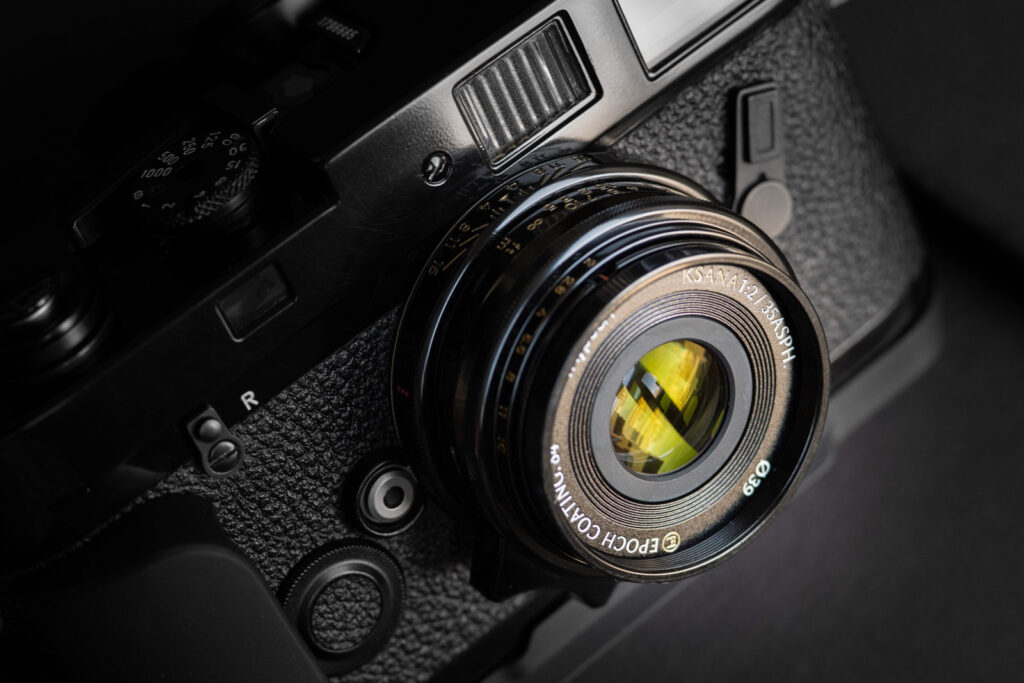
Where the 7Artisans 35mm 2.8 really wins though is in a few more subtle areas of comparison. Firstly, the one thing that really impressed me was how well the lens clocks on the camera. I like an LTM lens to clock with the infinity mark or focus point at a perfect 12 o’clock. I’m not massively fussy about this – it’s certainly no deal breaker if it doesn’t – but I do notice this sort of thing. I have previously noticed the Voigtlander 40mm doesn’t clock right, even my treasured 28mm isn’t quite right either, but this 7Artisans clocks perfectly on the camera! This is either a fluke, or a bit of precision manufacturing – with how the rest of the lens feels, I’m inclined to believe it’s the latter too.
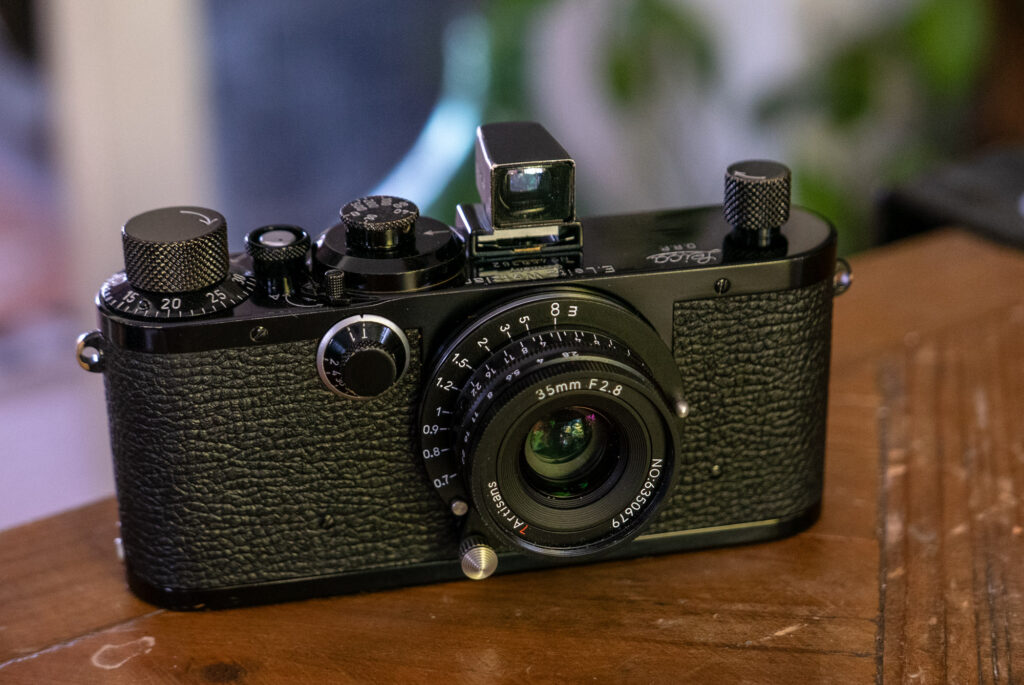
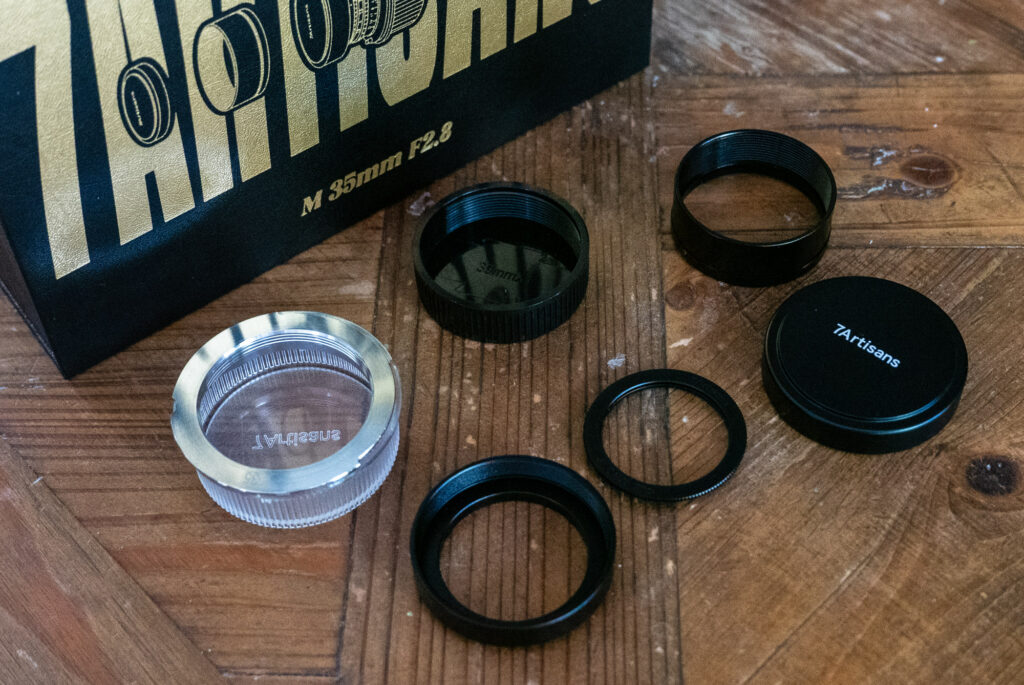
It comes also with a whole series of accessories. These include two hoods: one apparently for flare control and one just as a protective precaution. There’s also a slim UV filter, a pair of lens caps and a pair of rear caps. None of which I imagine represent a particularly large increase in costs to the brand, but all feel precisely made, fit pretty nicely, look the part on the lens, and, are also a nice touch. My only concern here was that the smaller of the two lens caps is a little loose fitting – I’ve lost it in my bag a few times.
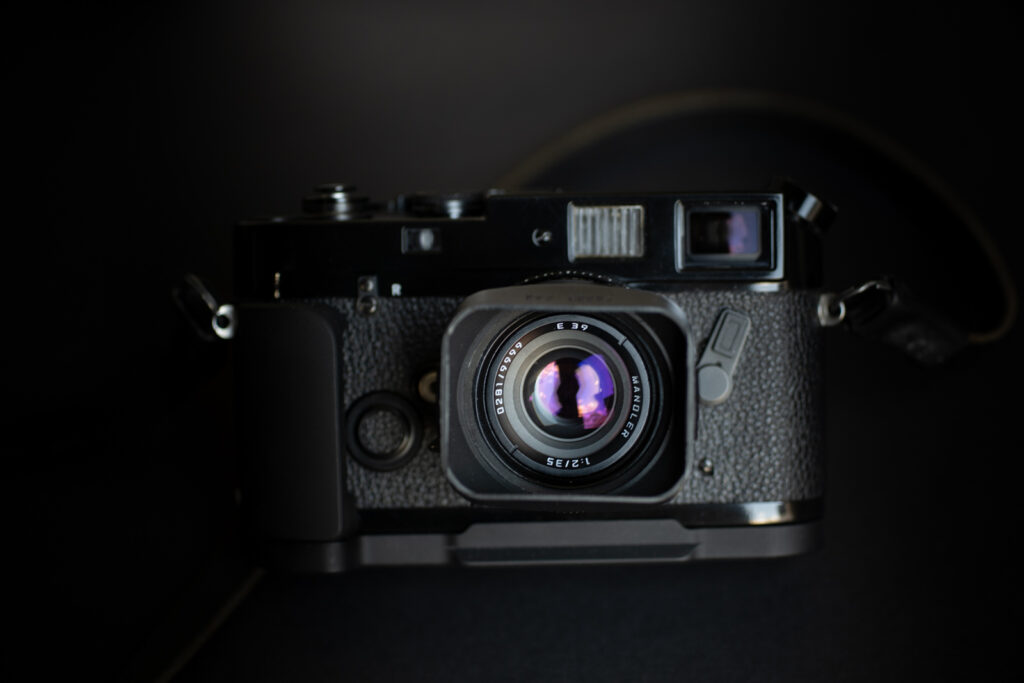
There’s also an LTM to m-mount adapter, though I must admit, this is the one part that more specifically lets down the set. As you can see in Alex’s review, when mounted on an m-mount camera with the 35mm 2.8 attached, the lens doesn’t clock perfectly. Mine does exactly the same, to the near exact angle. Perhaps a future batch of ltm-m adapters will remedy this.
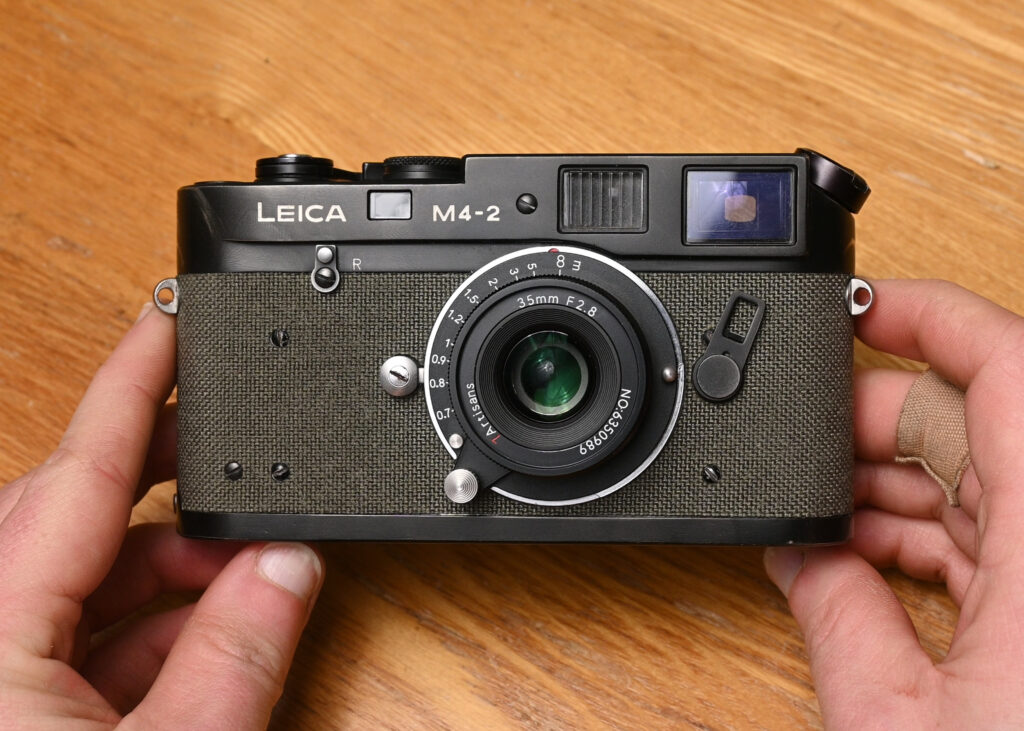
Image quality
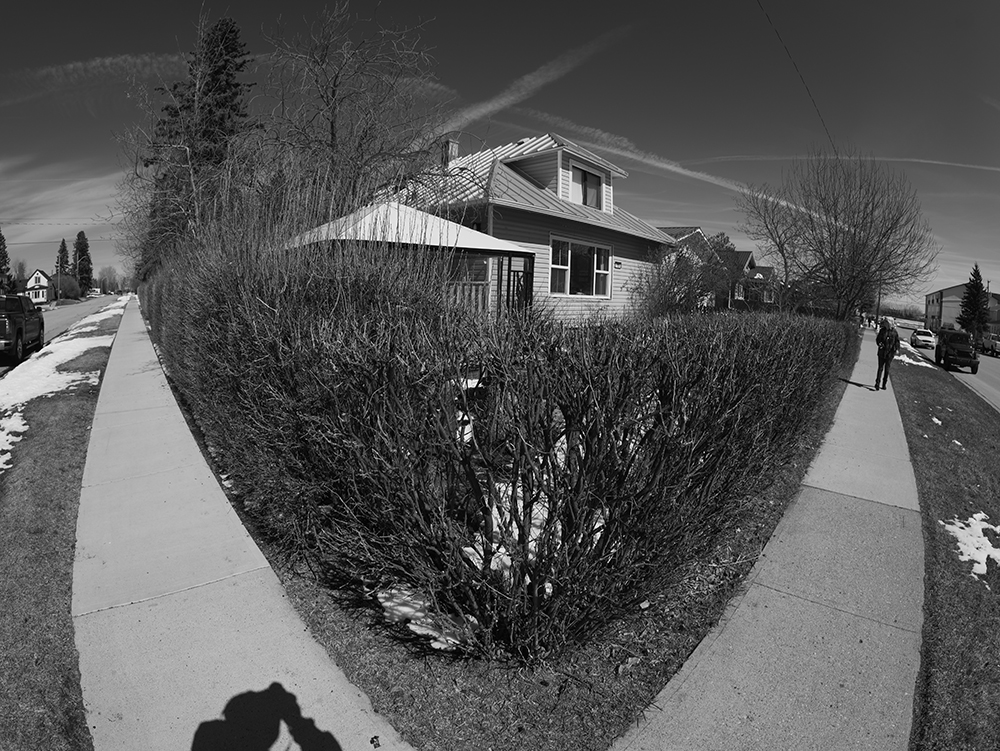
I haven’t even thought to mount this lens on my digital cameras – I’ve just shot it with the Ic, so far with a roll of Ilford XP2 (shot at EI100) and a roll of Kodak E100. I’ve also not bothered with either of the hoods, so the results are indicative of how well it functions in its smallest, hoodless state, though I haven’t really had any issues with flare. In fact, optical quality appears very good. As Alex mentioned in his review, there’s a little softness toward the corners until stopped down. It is nice and modern rendering for the most part though with decent contrast that renders in a modern-lens way.


Aside from my Elmar, this is what I personally want from my Ic set up too. The Elmar is sort of the exception to the rule that I use when I fancy shooting with the goal of a more vintage vibe, but the rest of the time with this camera, my goal is to take images that look quite modern and contrasty. Perhaps this is the contrarian in me, or perhaps I think I’m clever subverting the vintage nature of the camera by just shooting it with modern glass. Judge me however you like, but I enjoy the contrast of a totally modern feeling result from a shooting experience that is really anything but modern. I think I just also enjoy the fact that these lenses can be mounted on such old cameras too.
Of course, I’m probably slightly overplaying the modernness of the lens. It’s still based on an older formula, and possibly still suffers with vignetting and occasional veiling flare (as Alex points out). But the balance is right. It brings some charm that you’d expect from an older lens formula without being specifically vintage in character. I like lenses like this on any camera, but as I’ve said, it feels pretty much the perfect match here that sits very nicely alongside the 28mm and 40mm Voigtlander lenses.
A few more photos


Final thoughts
I’ve been totally suckered in by this lens. I don’t want to discredit 7Artisans by saying I didn’t expect it to be this good, as really, as I’ve said, they definitely deserve a lot more credit these days when it comes to the quality of their lenses. But, I really have been genuinely surprised at how impressed I have found myself. There are a couple of little areas where it feels like there’s been a small slip in terms of attention to detail – the main one being the slightly less smooth feeling aperture control. The tiny-bit-lose lens cap and m-mount adapter that makes the lens clock less than perfectly are other little niggles that bothered me a touch. But really, in use, I’ve not found myself caring much about any of this!
Optically it’s isn’t entirely perfect either, but again, it doesn’t matter to me. What I am personally after from a little lens for my Ic is a bit of modern rendering. I don’t mind a bit of a vignette, and I can even cope with a bit of occasional veiling flare. As long as it’s pretty sharp and contrasty and produces largely modern-looking images, l’m happy!
This review was never supposed to be about this lens by itself though, it’s been my goal to talk about it specifically in the context of my Leica Ic. As Alex has pointed out, and is clear by the inclusion of the accessory lens mount adapter, it can be used on both Leica M and LTM cameras. Really though, the big attraction for a lot of people here is going to be the fact that it’s LTM compatible, and is small. Admittedly, my custom Ic is a bit of an overindulgent Barnack (LTM) camera, but this will look and feel just as great on any Barnack camera.
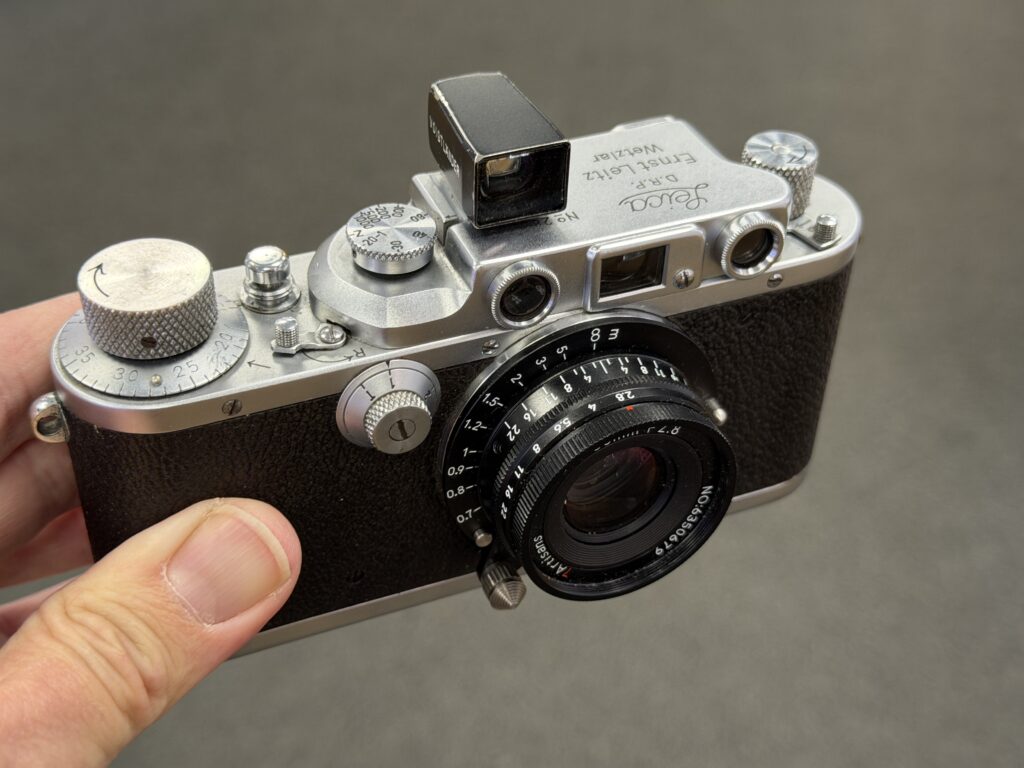
The small size just better matches the proportions of these smaller cameras without much in the way of compromise in terms of the usability. Some might find the depth of field scale being on the rotating part of the lens rather than the mount part to be confusing at first, but it doesn’t take long to get used to at all – it will also feel pretty normal to those already shooting vintage lenses that work in a similar way anyway.
As I made clear earlier on in this review, the 7Artisans 35mm 2.8 is definitely not a lens I needed before writing this. I have a 28 and 40mm lens already for this camera, both that render in a similarly modern way, and both that I am very happy with. If I didn’t own either of these lenses though, and I was looking for a moderately wide angle little lens to go on a Barnack camera, perhaps to compliment a series of more vintage lenses, I would absolutely be considering this lens. I really have been very comfortable with it on my Leica Ic, and am equally comfortable recommending it!
You can find more info and buy the lens on the 7Artisans shop here
Share this post:

Comments
Yant on 7Artisans 35mm 2.8 on my Leica Ic – A Barnack camera based review
Comment posted: 01/06/2026